480. Adam’s Story: The Politics

For anyone new to Adam’s story, here’s an introduction.

I’m tired of real-life politics at the moment, so why don’t we talk about fictional politics instead?

If we have to discuss a bad political situation, let’s at least look at a fictional one.

In previous versions of the Lance Eliot saga, the politics of my imaginary kingdom were simplistic. This time around, I want to craft a more complex political situation for Lance and his companions to navigate.

If this sounds boring, don’t worry! The Lance Eliot saga shan’t be a political thriller, but an adventure story with a sprinkling of political drama. I’m still planning dragons, swordfights, and Other Cool Stuff that I won’t discuss yet; it shan’t all be politics! I just want to create a setting for Lance’s adventures that’s more believable than a generic fairy-tale kingdom.

The Lance Eliot saga takes place mostly on Fyrel, an hourglass-shaped continent in the world of Gea. The northern and southern landmasses are joined at the equator by an isthmus. This strip of land, bordered by ocean on the east and west, is the kingdom of Guardia: a gateway between the northern and southern lands.
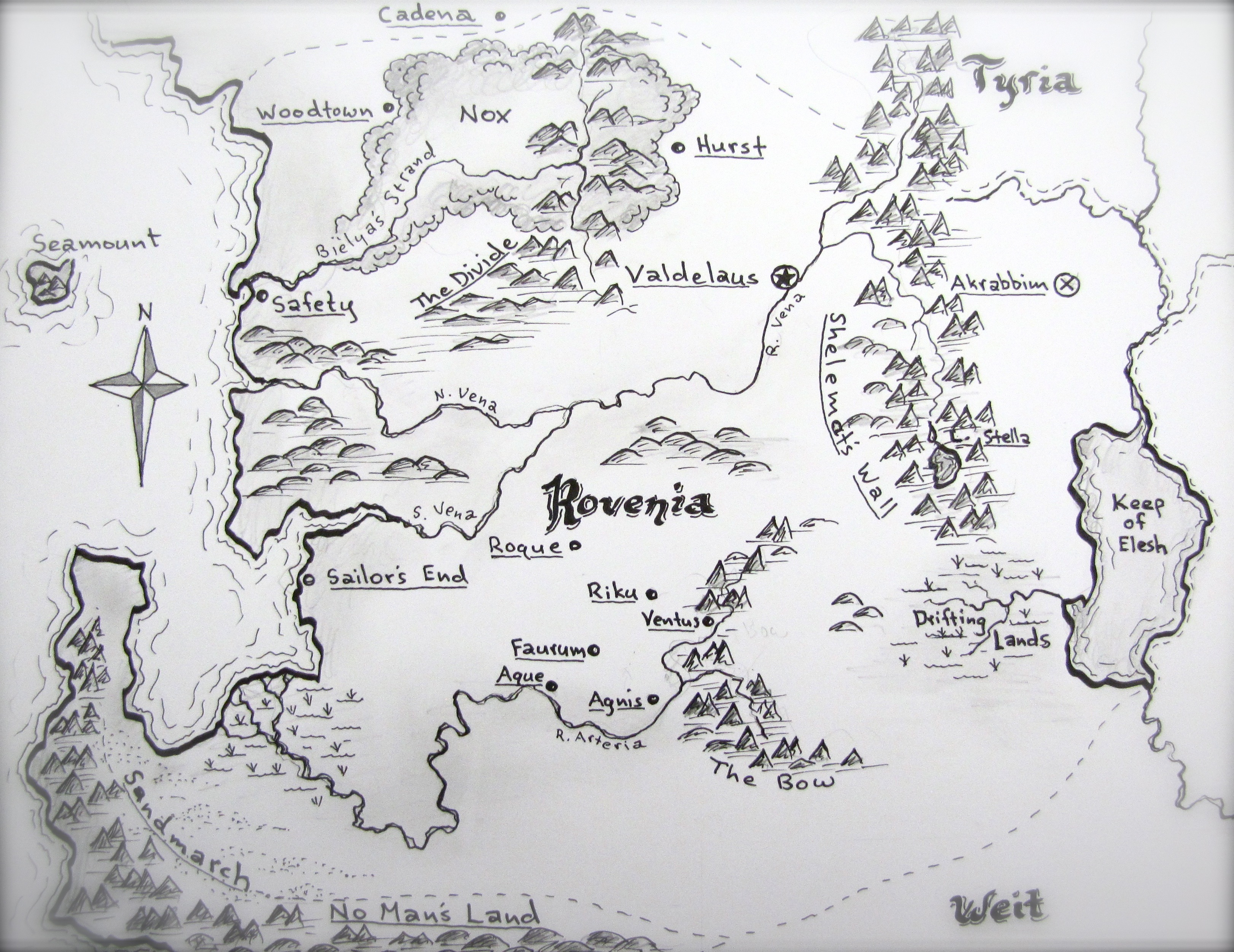
I’m working on an updated map for Guardia. For now, here’s the map I used for previous versions of the Lance Eliot story.

Guardia is bordered by two vast empires: Tyria to the north, and Sanguin to the south. These world powers expanded over centuries to completely conquer the northern and southern landmasses. Only the ocean and the little kingdom of Guardia separate them.

For such a small nation, Guardia is remarkably defensible. Its northern border is largely blocked by mountains and dense jungles; the southern border consists mostly of mountains, deserts, and dangerous marshes. The south is also bordered by a narrow strip of territory known as the Noman’s Land: a lawless neutral zone.

Thanks to its place between two empires, Guardia regulates trade and traffic between North and South. Money, goods, merchants, and travelers—all carefully supervised—flow through the kingdom like sand through the neck of an hourglass. Guardia’s economy, built painstakingly over centuries, depends almost entirely on trade.

The healthy economy funds a strong navy and military to protect the kingdom. Guardia exists in a delicate balance, suspended between two warlike empires, trusting neither, but depending on both.

Tyria and Sanguin are both eager to expand, but conquest is earned by war, and Guardia is the only avenue through which war can be fought. As long as it remains free, shielded by its hostile terrain and strong military, Tyria and Sanguin can’t attack each other.* These empires are locked in a cold war. If either declares war on Guardia itself as a prelude to further conquests, the other empire will immediately fight to defend it.

It’s sort of like the Cold War, but without the nukes.

Guardia’s status as a merchant nation, protected by its military and impenetrable borders, are all that prevents a world war.

None of this has anything to do with Lance Eliot. He doesn’t really care—he’s just a college student in a little Indiana town. Guardia’s politics are not his problem. Gea isn’t even his world. His journey to Gea was a mistake: a supernatural screw-up by someone who tried to invoke Lancelot, the hero of Camelot, but got Lance instead.

Lance Eliot was summoned to Guardia on the order of Eisen, a military leader forced into early retirement by Demas, the King. Eisen retreated to the city of Faurum and founded the Guardian Peace Committee. The purpose of this secret society is to maintain Guardia’s independence, preventing war between the North and South.

King Demas has reigned for decades, keeping the peace with both empires, but rumors have reached Eisen that the King is considering a secret deal to surrender Guardia to Tyria in exchange for personal favors. If Tyria annexes Guardia, Sanguin will retaliate, and war will erupt.

If the King is not stopped, Guardia will become a battleground: a land of blood and ashes trampled by armies.

Eisen doesn’t have a lot of resources. The Guardian Peace Committee has only a small military force of its own. (This includes Tsurugi, a disgraced soldier in Eisen’s service.) With few options, Eisen employs the supernatural gifts of a young woman, Maia, to search beyond Gea for someone—anyone—who can help.

Lancelot can help, right? Right?!

Enter Lancelot of Camelot. By all accounts, this legendary knight of Earth possessed both martial prowess and political savvy. If Maia can use her powers to summon Lancelot and break the language barrier, perhaps he can offer Eisen support, or at least some advice.

Of course, Maia makes the mistake of summoning Lance Eliot instead of Lancelot, and the rest is history… or shall be history once I get around to writing it.


*Neither Tyria nor Sanguin can wage war with the other entirely by sea: it’s far too costly to transport entire armies, with provisions and war machines, hundreds of miles in boats. Apart from the dangers of sea travel, any force small enough to travel in ships would be quickly outnumbered in enemy territory, unable to retreat. The only viable strategy for waging war is through Guardia.
479. TMTF’s Top Ten Detectives in Fiction

Who are the greatest detectives in fiction? I’m no sleuth, but this is one mystery I might be able to solve.

From a young age, I’ve enjoyed detective fiction. I watched Scooby-Doo cartoons as a young child. Almost immediately after learning to read, I devoured stacks of Hardy Boys books. I read the entire Sherlock Holmes canon in my early teens, and picked up a number of classic mysteries in college. Yes, I love a good detective story.

Of course, such a story is only as good as its detective. Here are ten of my favorite mystery-solvers, because top ten lists are my beat.

The game is afoot, ladies and gentlemen, as TMTF presents…

The TMTF List of Top Ten Detectives in Fiction!

10. C. Auguste Dupin

auguste-dupin

Although C. Auguste Dupin appeared in only three short stories, he makes history as one of the earliest fictional detectives. When Edgar Allan Poe created Dupin, the word detective had not even been coined. Heck, the character is even mentioned in the very first Sherlock Holmes story: Watson compares Holmes to Dupin. Sherlock Holmes may be the father of detective fiction, but C. August Dupin is its grandfather. The character’s sharp intellect and analytical methods helped create an archetype for fictional detectives.

9. Batman

worlds-greatest-detective

I was going to put Hercule Poirot on this list, but then remembered that I’ve read only two of his mysteries, and disliked one of them. Who could possibly replace the legendary Poirot, created by the legendary Agatha Christie, in a list of great detectives? The correct answer is Batman. (The correct answer is always Batman.) When he isn’t busy punching bad guys or brooding over his tragic past, Batman earns his nickname of World’s Greatest Detective by dabbling in forensics, solving crimes, and catching bad guys… whom he generally punches before brooding some more. Batman’s gotta Batman.

8. Lord Peter Wimsey

lord-peter-wimsey

Lord Peter Wimsey has the intelligence of a detective like Holmes or Poirot, along with his own gift: an easygoing sense of humor. In a series of novels and short stories by Dorothy Sayers, this British nobleman makes a hobby of solving crimes. Wimsey’s relationship with his valet, the solemn and hyper-competent Bunter, echoes the partnership of Jeeves and Wooster in the stories by P.G. Wodehouse—and believe me, any comparison to Wodehouse is a good thing. Wimsey has all the skill of other famous detectives, and a heck of a lot more charm.

7. Professor Hershel Layton

professor-layton

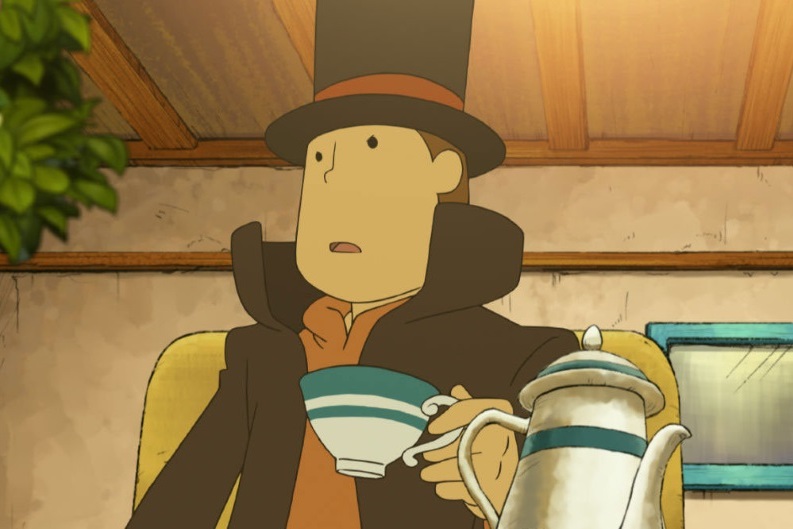
Hershel Layton, the star of the Professor Layton games, wears many hats… figuratively speaking. (The only literal hat he would ever deign to wear is his beloved topper.) Layton is not only a professor of archaeology, but also a puzzle enthusiast, true gentleman, and amateur detective. Even inspectors from Scotland Yard have sought Layton’s help with tough cases. The strangeness of these mysteries is matched only by his ingenuity in solving them. The good Professor is clever and kind, and have I mentioned his magnificent hat?

6. Shawn Spencer

shawn-spencer

Shawn Spencer, the star of television’s Psych, is a “psychic detective” who handles cases too small, sensitive, or just plain weird for the police. Shawn’s alleged psychic powers are actually a front for rigorous training and a photographic memory. Since he’s an immature goofball, his clients find it easier to believe that Shawn has supernatural gifts than to accept that he’s just, y’know, really smart. He runs his detective agency with the help of his friend Gus; their chemistry is easily the best thing about the show, though Shawn’s quips and pop culture references are also a lot of fun.

5. Dick Gumshoe

dick-gumshoe

Dick Gumshoe, the hapless police detective from the Ace Attorney games, is easily the least competent sleuth on this list, but he gets the job done. (His musical leitmotif, which I wish were my own theme music, is aptly titled “I Can Do It When It Counts, Pal!”) What Gumshoe lacks in smarts, he makes up in dedication, tenacity, and fierce loyalty to his friends. There’s a heart of gold under that shabby coat, and a determination behind those bewildered eyes to see justice done. It’s just a shame he can’t afford any meal more expensive than ramen noodles!

4. Edogawa Conan

conan-edogawa

Kudo Shinichi is still in high school, but has already built a reputation as a crime-solving prodigy who has worked with the Tokyo police. However, when he interferes with a criminal syndicate known as the Black Organization, its attempt to murder him with an experimental drug causes an unexpected side effect: Shinichi awakens in the body of a child. Now calling himself Edogawa Conan, he moves into a local detective agency, and solves its cases from behind the scenes as he searches for a lead on the Black Organization. The manga and anime series Detective Conan (known as Case Closed in the West) boasts some of the cleverest mysteries I’ve ever seen, all solved by this adorable little guy. Edogawa Conan is cooler than an action hero and cuter than a kitten—often at the same time!

3. Adrian Monk

adrian-monk

Adrian Monk is afraid of dentists, snakes, nudity, elevators, death, milk, and mushrooms, not necessarily in that order. These are just a few of his phobias, which, along with his obsessive-compulsive disorder, make it hard for the star of television’s Monk even to leave his home, let alone solve crimes… yet he solves them. Monk’s phobias make for terrific comedy, but also create a character whose strength lies in overcoming his worst fears every single day. Adrian Monk is the rare character who can make you laugh in one scene, only to turn on a dime and make you cry in the next.

2. Father Brown

father-brown-alt

He may not have claimed the top spot on this list, but Father Brown is probably my all-time favorite character in fiction. This gentle Roman Catholic priest stars in a number of short stories by G.K. Chesterton. I’ve already written about Father Brown: “He’s a perfect foil to Sherlock Holmes . . . Everyone expects Holmes to be brilliant. In a charming subversion, everyone dismisses Father Brown as a superstitious simpleton, which makes it all the more satisfying when he apologetically solves the mystery right under their noses.” Father Brown’s quiet brilliance, boundless compassion, and no-nonsense worldview make him not only a great detective, but something rarer and more admirable: a good man.

1. Sherlock Holmes

sherlock-holmes

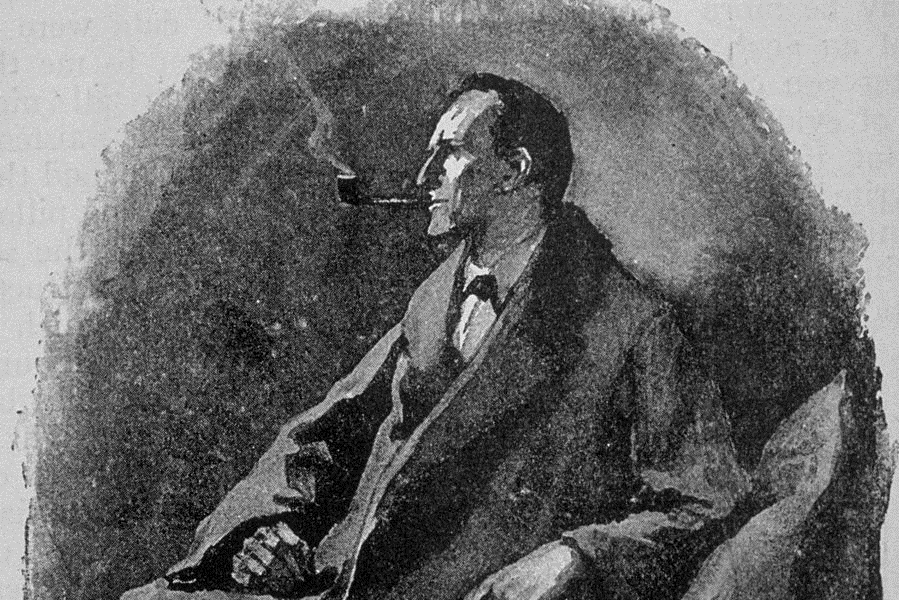
Throughout this blog post, I’ve repeatedly mentioned Sherlock Holmes. How could I not? Sherlock Holmes is the world’s most famous detective, and the standard by which all others are measured. His ruthless logic, unshakable calm, numerous connections, and eclectic talents make him capable of solving practically any crime. In addition to his gifts, Holmes possesses, or is possessed by, a strong determination to use them. (He doesn’t handle boredom well.) This combination of passion and ability make Holmes an unstoppable detective. In addition to the original character in the novels and stories by Sir Arthur Conan Doyle, television’s Sherlock offers an updated take on Holmes that’s perfectly delightful.

Who is your favorite fictional detective? Give us a clue in the comments!

478. Sick

Life is a funny thing. It can be sweet and gentle, patting you on the shoulder and handing you slices of pie or cups of tea. It can also hit you repeatedly with a sack of bricks, breaking your ribs and sending you to the hospital. It depends on the day, really.

My life today is leaning slightly toward the breaking-your-ribs-with-a-sack-of-bricks end of the spectrum. I’m sick. It’s just a cold, fortunately, unless it’s actually the early stages of Ebola virus disease, which it probably isn’t. My state of residence, Indiana, isn’t perfect, but at least it doesn’t have much Ebola.

No Ebola here… I don’t think.

Anyhowz, I had another blog post planned for today, but it shall have to wait. My eyes burn. My head feels like a cannonball, and my left nasal cavity is sealed tighter than Scrooge McDuck’s bank vault. (It’s always the left side that gets congested; why is it always the left?) Alas, I haven’t the strength for a longer post today, so please accept my apologies, along with a bullet list of my miscellaneous (and probably fevered) insights on sickness.

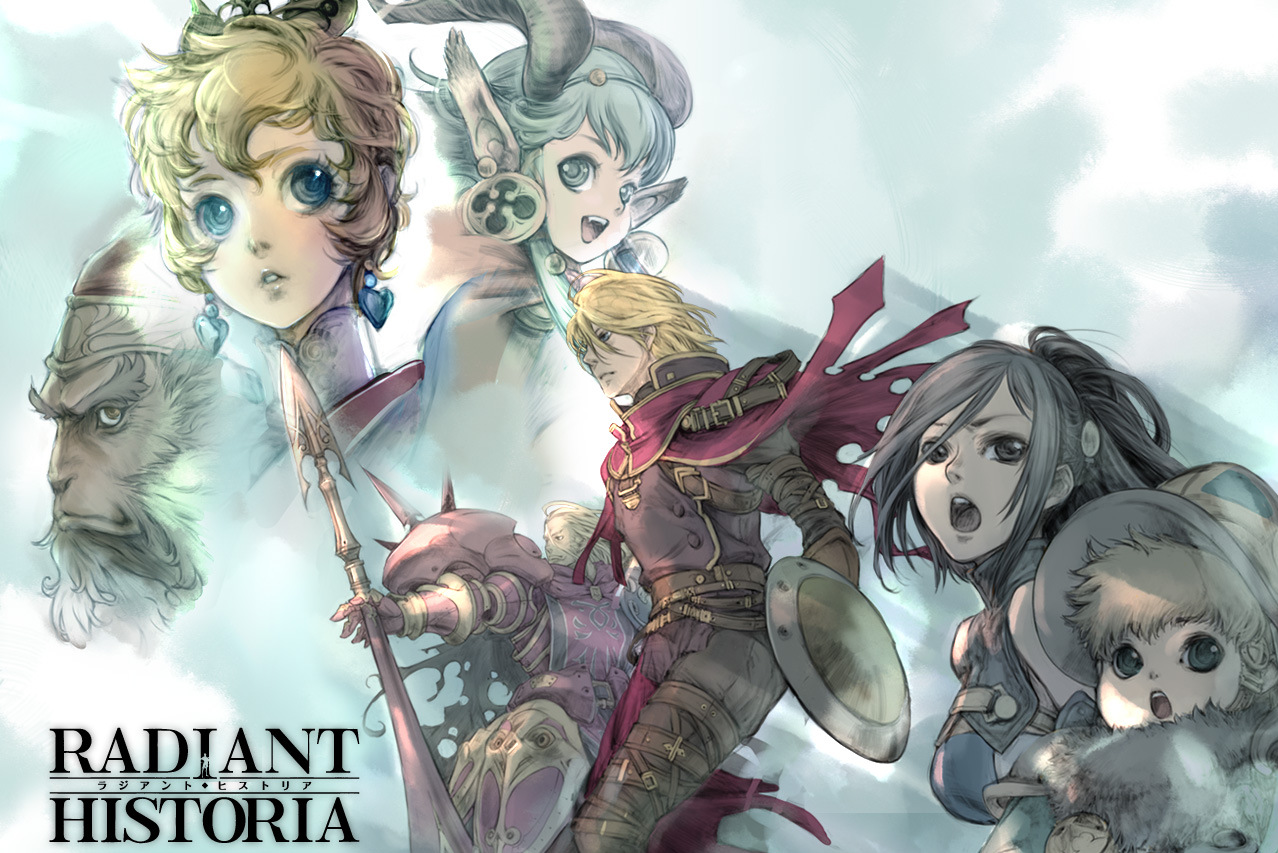
  • Sick days are like enforced Sabbaths: they compel a person, no matter how busy or determined, to slow down and rest. I planned to spend yesterday working on this blog, wrapping gifts, and doing housework. I actually spent it eating pizza, replaying Radiant Historia, and hanging out with my dad and younger brother: a day well spent.
  • All right, this is a digression, but Radiant Historia is easily one of the best JRPGs I’ve ever played—and believe me, I’ve played plenty. If you own a Nintendo DS or 3DS, you should look it up.

Great, great game.

  • According to one of his biographies, C.S. Lewis loved sick days. They allowed him to sit and read without feeling guilty for failing to be productive. Another fun fact: In his earlier years, Lewis read on walks, only occasionally glancing up to admire the changing scenery. How he never tripped and broke his nose the world will never know.
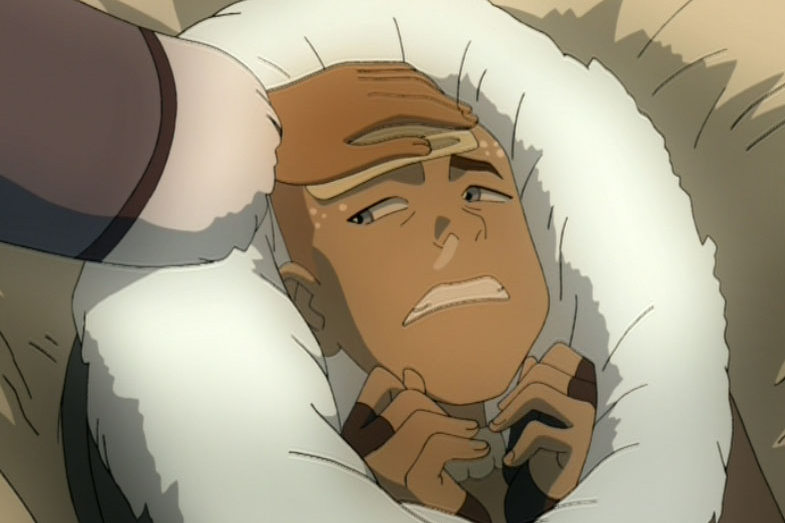
  • Do you remember the episode of Avatar: The Last Airbender in which Sokka gets deliriously, hilariously sick? You haven’t seen it? Go watch Avatar: The Last Airbender, then. It’s a truly great show. At any rate, I like it.

Poor Sokka.

  • Mild sicknesses like colds provide a great explanation for non-depressed people of what depression feels like. A cold leaves a person listless and tired, and occasionally sucks the enjoyment out of things that are usually fun. Depression does the same, but without obvious physical symptoms. What a cold does physically, depression does mentally and emotionally. Since depression has fewer physical symptoms than a cold, it’s generally met with less understanding and compassion, which is a shame. My own depression (which hasn’t acted up in a long time, thank God) comes and goes in phases, much like colds and other mild illnesses.
  • I found myself listening to this chipper song on YouTube yesterday. It seemed apropos.

Well, I should probably get some rest. Radiant Historia isn’t going to finish itself, you know.

I Can’t Even

I can’t even.

I belong to the generation of millennials, but that doesn’t mean I always understand them. Few of their quirks confuse (or amuse) me so much as the phrase “I can’t even.”

These words are meant to represent speechlessness due to shock, dismay, or joy, which are my own reactions to this idiom. It baffles, irritates, and fascinates me: “I can’t even.”

You can’t even… what? You can’t even handle it? You can’t even finish the phrase? What can’t you even do?!

Perhaps this incomplete phrase is meant to represent an inability to express oneself due to strong emotion: “I can’t even,” trailing into overwhelmed silence. A more cynical theory is simply that my generation doesn’t understand how the English language is supposed to work.

For better or worse, “I can’t even” has entered our cultural lexicon. The Babylon Bee, a satirical Christian website, recently broke this “news” report: “Millennial Diagnosed With Tragic Inability To Even.” A geek folk band called the PDX Broadsides wrote a catchy song titled “The Girl Who Couldn’t Even.” Heck, I’ve even heard the phrase at work.

I can’t even, guys. I can’t even “I can’t even.” I am presently afflicted by a tragic inability to even. I can’t. I just can’t.

477. About Storytelling: Comic Relief

Always be comic in a tragedy. What the deuce else can you do?

~ G.K. Chesterton

The Internet is buzzing over Luke Cage, the latest Marvel superhero show from Netflix. I’ve watched only a few episodes, but it’s pretty good so far, with compelling drama, solid acting, a funky soundtrack—and thank heaven, a sense of humor.

Fun so far!

In art, as in life, humor is invaluable. Shakespeare understood this. He wrote a lot of comedies, and even his tragedies have gleams of humor. Romeo and Juliet is full of dirty jokes, and Hamlet has the funny gravedigger. (I don’t even like Shakespeare’s plays, but that scene from Hamlet makes me smile.) William Shakespeare is widely regarded as a master storyteller, and comic relief is a key part of his stories.

Comic relief is a storytelling technique in which humorous moments, characters, or dialogue are included in an otherwise dark or serious story. The purpose of comic relief is generally to relieve tension, softening stories that might otherwise be unpleasant or unpalatable.

(Comedies can’t have comic relief because they’re already comical. Comic relief describes not a comical tone, but a break from a serious one. Incidentally, if tragedies have comic relief, shouldn’t comedies have tragic relief? Just wondering.)

When Netflix began making shows about Marvel superheroes, it began with Daredevil, an outstanding series that I totally lovedDaredevil used comic relief very effectively. It’s a dark show. Its heroes (and, unexpectedly, its villains) wrestle with guilt, rage, self-doubt, and other inner demons. A lot of people die violently. Corruption runs rampant. Heck, there’s even a lot of literal darkness.

Tons of fun!

Fortunately, the darker elements of Daredevil are kept in check by comic relief. My favorite character, Foggy Nelson, brings sarcasm, cheerful pessimism, and warm humanity to a fairly angsty cast of characters. One of the villain’s advisers, Leland Owlsley, reacts to everything with a perfect mixture of snark and grumpiness. Even Daredevil’s mentor, a ruthless killer named Stick, speaks with a dry, sardonic sense of humor. There’s just enough humor (and humanity) in Daredevil to make the darkness and tragedy palatable.

Then came Jessica Jones, Netflix’s follow-up to Daredevil, and lo, it was painfully bleak. Without going into details—believe me, they aren’t pleasant—it’s a show about violence, abuse, betrayal, addiction, and toxic relationships, with some rape metaphors thrown in for good measure. The entire show hinges on the protagonist’s abusive relationship with a super-powered sadist. Yeah. Nasty stuff.

The thing is that Jessica Jones is actually an artistic, thoughtful, well-written, well-acted drama. It’s just painful to watch. There’s nothing to brighten the gloom or ease the tension. (David Tennant is in it, and he’s awesome, but his character is a cruel, rapey, mind-controlling stalker, so… yeah, that doesn’t help.) None of the characters are likable, and there’s no comic relief. Wait, no, I recall one joke. I think it might be repeated once. That’s it. Jessica Jones is thirteen episodes of misery.

No fun at all.

I’ve seen the first season of Daredevil twice. I will never watch Jessica Jones again. The hope and humor in Daredevil make the darker bits bearable. Jessica Jones is all darker bits.

So far, Luke Cage, which follows the events of Jessica Jones, has been really good. There aren’t as many quips as in Daredevil—man, do I ever miss Foggy Nelson—but the characters in Luke Cage at least have a sense of humor, and it makes a world of difference.

Not every tragedy needs comic relief. I can’t help but think of Shūsaku Endō, who wrote such terrific novels as Silence and The Samurai. There’s no humor in these books, and they’re more powerful for it.

Comic relief isn’t an absolute necessity, but it’s often helpful. Stories are told to edify, sure, but also to entertain… and who doesn’t appreciate a laugh?

476. Let’s Think of Better Fall Flavors than Pumpkin Spice

Summer is fading into autumn, and we all know what that means: pumpkin-flavored everything.

brace-yourselves

More specifically, autumn brings pumpkin spice-flavored everything. The difference is important. As certified snackologist Mike Fahey points out, pumpkin spice is generally a mixture of cinnamon, nutmeg, ginger, and allspice. These spices are carefully blended in order to mask the taste of actual pumpkin. Mr. Fahey puts it bluntly: “Pumpkin spice is the name for a combination of spices used to make pumpkin taste less horrible.”

I live in the United States, where the fall season happens every single year. It’s awful. The chilly weather, drab colors, and gaudy Halloween merchandise are bad enough; the pumpkin spice craze just adds insult to injury. Every year, as the weather turns painfully cold and Americans celebrate strange pumpkin rituals, I wonder why I ever left the tropics. Ecuador, my homeland, isn’t flooded by freezing temperatures and pumpkin spice-flavored products year after year. What self-destructive, Lovecraftian madness brought me back to Indiana four years ago?

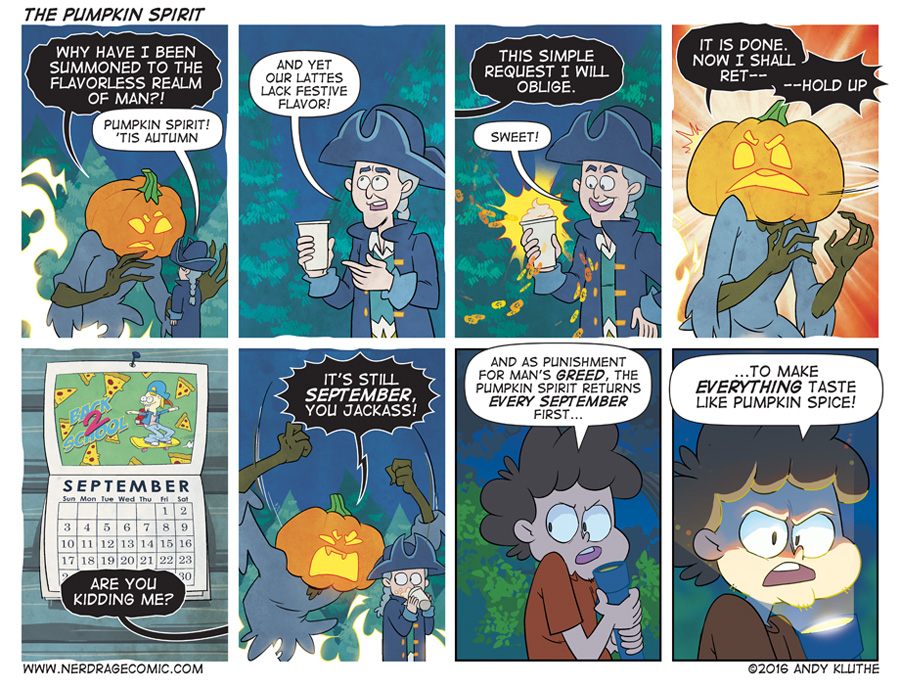
What even started America’s obsession with pumpkin spice? I don’t know, but there are theories. Wikipedia tells me it started in the early aughts, and that Starbucks is to blame.

My favorite theory comes from Nerd Rage, a webcomic about angry nerds.

Seriously, though, this pumpkin spice craze needs to stop. It tinges everything from candles to Oreos to coffee—and when coffee is at stake, I can’t just sit and do nothing.

(For the record, I don’t dislike the pumpkin spice flavor. I’m just tired of it. We need something new!)

Here, then, are some suggestions for alternatives to pumpkin spice. Here are other autumn-appropriate flavors for candy, cookies, coffee drinks, and everything else.

Apple cinnamon

Apples are amazing. Since they’re gathered in the fall, and popular ingredients for cold-weather treats such as pies and dumplings, apples are a perfect flavor for autumn. Just add cinnamon for touch of spicy warmth, and lo! Not only is the apple cinnamon flavor delicious, but evocative of cozy kitchens and fall harvests.

S’more

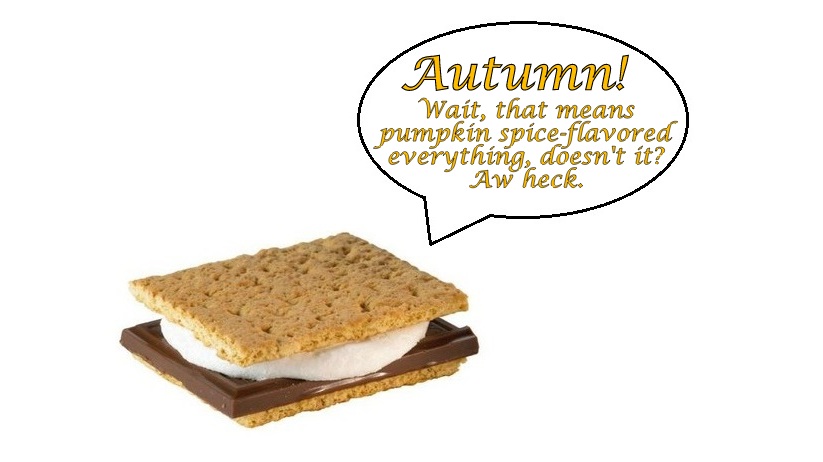
Autumn is the perfect season for bonfires, which also makes it perfect for toasting marshmallows. As I grew up in Ecuador, marshmallows were a rare and delectable treat. (I speak of genuine, toastable marshmallows, mind you, not of the fake, dissolve-into-pink-syrup-upon-contact-with-heat “marshmallows” on Ecuadorian store shelves.) Yes, I love marshmallows. Add chocolate and graham crackers, two hearty ingredients ideal for chilly weather, and you have the s’more.

Nothing says autumn like s’mores.

Marshmallows and chocolate have the added advantages of melting in heat, making them perfect for cookies, brownies, and other baked treats. In cold weather, nothing beats a hot, gooey mess of marshmallows and chocolate.

Gingerbread

The taste of gingerbread is basically identical to the pumpkin spice flavor, but with a hint of molasses and no clichéd association with pumpkins. It’s a win-win!

Maple sugar

Maple is a strong, sweet, distinct flavor that lends itself beautifully to baking and confectionery. Since the leaves of the maple tree are famous for their stunning autumn colors, maple sugar (or maple syrup; take your pick) seems like a great taste for the fall season. And on the subject of maples….

Maple leaves

Maybe Japan has the right idea.

These actually look pretty tasty. I would eat them! (Of course, I’ve eaten such odd things as fried leafcutter ants, but that’s not the point.)

Fried leaves can’t possibly be worse than pumpkin, right?

Nuts

For some reason, nuts remind me of autumn. Is that a rational association, or am I just nuts? (Pun intended. I’m so, so sorry.) Maybe I’m weird, but in my mind, nuts evoke images of baked treats and fall colors. Nuts are not only terrific for baking, but underutilized for coffee beverages. Almonds, walnuts, or pecans complement coffee very nicely!

Fruitcake

Nah, I’m just kidding. Fruitcake is gross.

Colada morada

All right, I admit it: I just really want to drink this seasonal Ecuadorian beverage here in the United States. It’s tasty, and I miss it so much. My parents recently brought me back a bottle of the stuff from Ecuador, and I intend to cherish the heck out of it—and then to drink it, of course.

What are your suggestions for alternatives to pumpkin spice? Let us know in the comments!

Disney’s Darkest Movie

Walt Disney Animation Studios is the most famous, important, and successful animated film studio in history. Its first movie, Snow White and the Seven Dwarfs, was the first ever feature-length animation. Its latest movie, Zootopia, captivated critics and broke box office records. (It was a touching film with catchy music, and I loved it.)

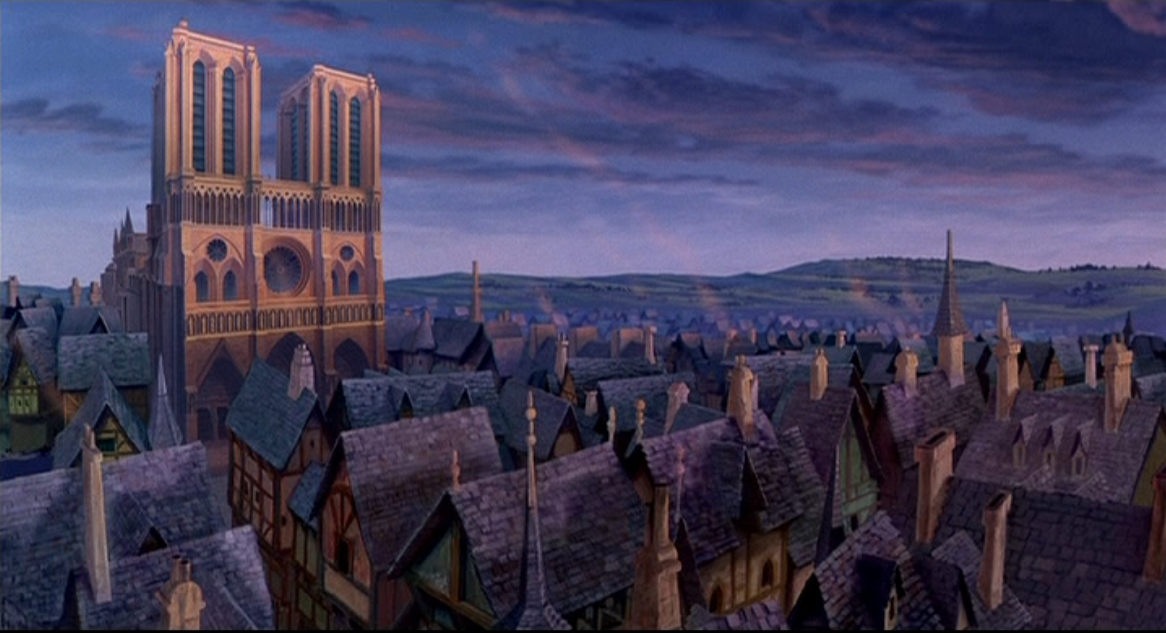
Walt Disney Animation Studios gave us such enduring classics as Beauty and the Beast and The Lion King… and also The Hunchback of Notre Dame, a movie I still can’t believe was actually made and distributed by Disney. It’s dark.

It’s really dark.

I still can’t believe this film saw the light of day.

The Hunchback of Notre Dame is not only grim, but brilliant: a daring film with pathos, beauty, and gleams of humor. That said, it really doesn’t fit Disney’s kid-friendly image. The movie begins with a corrupt official (one of my favorite Disney villains) pursuing and murdering a woman in front of a church, and then almost murdering her baby.

A tense song narrates the scene, and throws in some vengeful Latin lyrics for good measure: Dies irae, dies illa solvet saeclum in favilla (Day of wrath, that day shall consume the world in ashes). The video above is a dark rock cover of this song. It’s a little edgier than the original… but only a little. A few notes foreshadow another song in the film, “Hellfire,” which is exactly as cheerful as it sounds; its lyrics describe unfulfilled sexual desire, murderous intentions, and literal hell.

Lust, fear, fury, and hellfire—y’know, for kids!

After that first scene, The Hunchback of Notre Dame—which, I remind you, is an animated movie by Disney for kids—goes on to address such family-friendly subjects as physical deformity, child maltreatment, lust, genocide, and eternal damnation. I’m serious. I haven’t even mentioned all the creepy statues and gloomy Gothic imagery.

This is a dark film, and it becomes even darker if the viewer chooses a cynical view of the protagonist’s gargoyle friends. These statues come to life when nobody else is around, like Hobbes in the Calvin and Hobbes comic strip, bringing Quasimodo comfort and hope.

Just who are these guys?

Sure, there are optimistic explanations. Maybe these lively gargoyles are just imaginary friends, or perhaps God brings them to life as companions for Quasimodo. He does live in a church, after all, and the film is underscored by religious themes and imagery.

However, a cynical viewer might dismiss Quasimodo’s gargoyle friends as hallucinations: symptoms of psychosis, or his deranged way of coping with the horrors of his lonely life. This theory is unlikely, but given the other grotesque subjects in the film, it wouldn’t be hard to add mental illness to the list.

So yes, The Hunchback of Notre Dame is a dark film, and also a really good one. I recommend it… but probably not if you’re a kid.

On a more cheerful note, the guy who arranged the cover of “The Bells of Notre Dame” in the video above has done some other great covers, including “I’ll Make a Man Out of You” (because no blog can ever have enough covers of that song) and “The Hero,” the epic theme to One Punch Man.

475. Mario Kart and the Art of Not Giving Up

I’m really good at two things. Sure, I have minor gifts such as humor and writing, but they’re hardly worth mentioning. There are only two things in this world at which I’m really gifted.

The first is drinking coffee, in staggering amounts, at fairly high speed, with effortless aplomb. (I’ve had a lot of practice.) My second gift is winning Mario Kart races. Neither of these gifts are useful for professional success or intellectual fulfillment, but I consider them personal triumphs anyway.

Aw yeah.

Mario Kart is a series of racing video games by Nintendo, a company with an important heritage, rich history, and really weird controllers. Each Mario Kart game is packed with humor, color, whimsy, mayhem, and stuff that explodes. (For the record, Mario Kart: Double Dash!! is the best game in the series. Some people say that either Super Mario Kart or Mario Kart 64 is better. Those people are wrong.) I started playing Mario Kart in my teens, and after twelve or thirteen years, I’ve learned a thing or two.

One of the things I’ve learned is the importance of picking up speed. Every kart in the games is valued according to two statistics: speed and acceleration.

There’s technically a third stat, weight, but it’s not all that important.

Going fast is great, sure, but something is guaranteed to bring karts to a full stop. Inexperienced players drive off roads or into obstacles. Even Mario Kart veterans can’t dodge certain hazards. Consider the Red Shell, a projectile weapon that seeks outs other racers. Then there’s the dreaded Blue Shell, an unstoppable missile that wrecks the winning racer within seconds. It really puts the hell in Shell.

This diagram pretty much sums it up. (It comes from a webcomic with a lot of profanity. I guess its creator plays a lot of Mario Kart.)

Sooner or later, every Mario Kart racer ends up in a ditch… or submerged in a glacial ocean, or sinking into glowing lava. (Video games will be video games.) Every racer, no matter how fast, eventually ends up wrecked.

That’s when acceleration comes in handy. It allows players to regain their top speed quickly after obstacles or poor driving slow them down. Depending on the race, a slow kart with good acceleration might have the advantage over a fast kart that takes a long time to get moving.

I think there’s a lesson here. In nearly every day God gives me, I try to do my best. Sometimes I keep it up for days or even weeks at a stretch: making good decisions, working hard, keeping my faith, and being kind. In Mario Kart terms, I maintain a good top speed.

Then, inevitably, I wreck my kart. I make a bad decision, and swerve off the road. Some wrecks aren’t even my fault. The unstoppable Blue Shells of depression, sickness, or bad circumstances bring my kart to a grinding halt.

Aw heckles, I took a wrong turn. It’s going to be a long fall.

I really struggle to get moving again at such times. What good is a high top speed if I’m not even moving? If I’ve lost my momentum, what’s the point? I may as well just sit here. The race is lost. I doubt I can even make second or third place, so I may as well just wait for the next one… but that’s no way to live, is it?

Speed is important, but so is acceleration. It’s important to live well, but also to keep moving after living badly.

Losers sit around moping after wrecking their karts.

Winners keep driving.

474. Adam’s Story: The Lore

For anyone new to Adam’s story, here’s an introduction.

Today we take a look at the lore and mythos underlying my story project. Let’s start at the beginning—the very beginning. There’s a lot of fictional history and made-up legends here, so brace yourself!

Lance Eliot finds himself stranded in the kingdom of Guardia, which lies upon the equator of a world called Gea. The origins of this fantastical place are shrouded in uncertainty. Only legends and fragments of history have survived, preserved in folktales and the sacred writings of the Vigil, Guardia’s predominant religion.

Over time, Lance learns more about the lore and history of Gea. (That’s pronounced “HEY-uh,” by the way.) Its recorded history goes back only centuries; beyond that, only myths and religious accounts remain.

According to the scriptures of the Vigilant religion, there exists a being of infinite wisdom and power known as El. (The Vigil ascribes further titles to him, such as El Enthroned and He Who Is.) El created many worlds in many universes, and Gea was one of these worlds. It doesn’t exist in the same universe as our Earth, but in one connected to it—a sister universe, so to speak.

Looking good, sis!

Gea follows our laws of physics, with the addition of a metaphysical force known as aer. This natural energy pervades everything. (It’s similar to our own concept of qi, and to a lesser extent of magic; Lance speculates these may represent a distorted understanding of aer.) Gifted individuals known as aerists can channel aer to perform supernatural feats. These include sending or summoning objects—or people, as Lance learns the hard way—from one universe to another.

The people of Gea are not indigenous to it, or even to its universe! An ancient event known as the World-storm transported thousands of people to Gea from past ages of Earth. (This might accounts for some of the missing people across our own history.) These interplanetary castaways were the ancestors of Gea’s people, and gleams of our own cultures and languages can still be seen in theirs.

The cause of the World-storm is not known. The Vigil claims it was a miracle by which El brought new life to Gea. Secular scholars theorize irregular movements of aer or cosmic rifts between universes. Whatever its cause, the World-storm left Gea with a faint connection to Earth, to which we, here on Earth, remain mostly oblivious. However, some of Gea’s realities are echoed in the mythologies of Earth, such as dragons and other monsters.

Here there be dragons.

The writings of the Vigilant religion, known collectively as the Book of El, yield no further insight on the creation of Gea or the cause of the World-storm; after these early chapters, its history leaps forward centuries to the founding of the kingdom of Guardia, whose history is mostly corroborated by other texts. The only clues about the intervening dark ages come from myths and legends of dubious historical accuracy.

An ancient myth claims Gea, among all other worlds, was created for a unique purpose: Gea is a divinely-appointed vessel, a cosmic container for… something.

Over centuries, many questioned the nature of that which is allegedly hidden deep within Gea. Poets, prophets, and philosophers speculated, but to no avail. Some claimed Gea contains a treasure of immeasurable worth, or a cache of heavenly wisdom. Others, less optimistic, believed Gea is not a vessel for treasure, but a prison for some powerful demon or devastating catastrophe. Theories abound, but there are no answers.

Other myths tell stories of the dark ages of Gea, filling its blank pages with legends and fairy tales. One such myth claims that a race of celestial creatures ruled Gea long before the World-storm brought human beings to the planet. Ruins dot the landscape of Guardia, predating the World-storm, but nobody is sure of their origin.

Who built these? I didn’t build these. Did you build these?

The Vigil emphasizes the importance of guarding Gea, especially Guardia, from harm, hence the religion’s name. According to the Vigil, El entrusted the kingdom to the gods or archangels known as the Twelve Seraphs. These divine servants are honored in Guardia with shrines and festivals; each Seraph is considered the patron of specific groups, in the manner of patron saints here on Earth.

Guardian folk tales often represent the Twelve Seraphs and their dealings with mortals. Of particular interest to Lance are the stories of Dove Thistle-head, a folk hero who supposedly planted gardens and groves all over Guardia, and outsmarted even the Seraphs in her quest to help Guardia’s people.

Lance is skeptical of Guardia’s myths and religious writings, but remains interested in them. Who knows? There might be some truth in them somewhere. In the end, it hardly matters—Lance has bigger things to worry about!