422. Lance Eliot Is Not Dead

A long time ago, I declared the death of a dream. My attempts to tell the tale of Lance Eliot, a sarcastic and reluctant hero, had finally failed. I pronounced Lance Eliot dead… well, mostly dead.

I announce today that Lance Eliot is alive… well, somewhat alive. (I thought about titling this blog post Lance Eliot Is Alive, but that seemed much too optimistic, so we’ll have to settle for Lance Eliot Is Not Dead.)

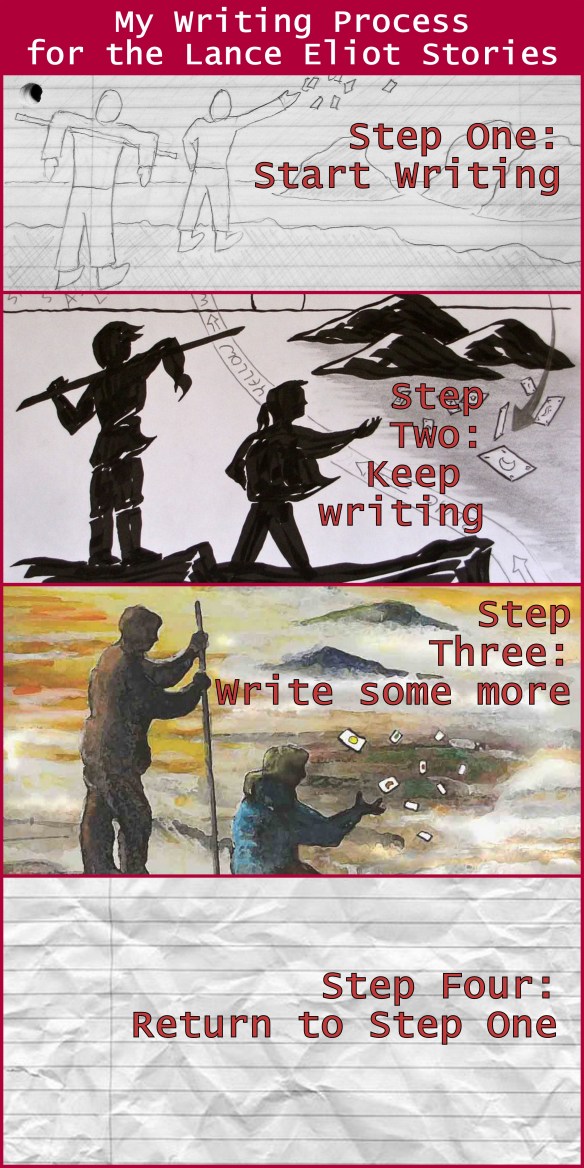
After Typewriter Monkey Task Force concludes later this year, I will rewrite the first part of Lance’s story, The Trials of Lance Eliot, before moving on to its two sequels.

At any rate, that’s the plan. God only knows how many years it will take me to write the Lance Eliot saga, or whether I shall even finish it. I don’t know if I can, but I suppose I’ll try.

The Lance Eliot story cycleAt this point there are three questions I should probably answer. Why am I rewriting The Trials of Lance Eliot instead of working directly on its sequels? Why am I revisiting Lance Eliot’s story instead of starting something totally new? And who the heck is Lance Eliot anyway?
Let’s start with that last one.

Who the heck is Lance Eliot?

From pretty much the moment I could read, I wanted to write a book. Years later, in middle school, I steeped my impressionable imagination in the fantasy novels of J.R.R. Tolkien, C.S. Lewis, and Stephen R. Lawhead; I also played a lot of fantasy games, such as the outstanding Legend of Zelda series. It was then, during my awkward transition from boy to slightly-taller-and-less-chubby-boy, that my vague dream of writing a book crystallized into a clear ambition of writing a fantasy novel.

It wasn’t until my sophomore year of high school that I stumbled upon a decent idea for a story. People in fantasies and fairy tales are often summoned from one place to another by magic. What if a magician summoned the wrong person by mistake? What she tried to summon, say, Lancelot from the Arthurian legends, but got some unsuspecting loser instead?

Over the next six years, the idea became a short story, and then a completed novella, and then one or two incomplete manuscripts, and then finally a published novel—and then it failed spectacularly, failing even to recoup the expenses of publication. I struggled for a year or so to make progress on its sequels, and finally gave up.

This brings us to the next question.

Why am I revisiting Lance Eliot’s story?

I no longer dream of publishing novels. Even if I finish all three parts of the Lance Eliot saga, which is by no means guaranteed, I may not bother publishing them. If I do take another stab at publication, I will probably self-publish instead of working with a literary agent or trying to court a major publishing house.

My reason for revisiting Lance Eliot’s story is a simple one: it’s a story I want to tell. In the vast scheme of things, it isn’t remotely special. It won’t be particularly deep or clever or original. I have no delusions of grandeur this time around. The Lance Eliot saga won’t be a masterpiece. It will be nothing more than a story I want to tell—a story I feel compelled to tell—a story I’ve struggled for more than a decade to tell.

I’ve already told part of it, but not very well. This leads to the final question.

Why am I rewriting The Trials of Lance Eliot instead of moving on to its sequels?

A few people have said ridiculously nice things about my novel; in response, I’m touched, flattered, and grateful. When I look at it, however, I see an embarrassing number of clichés, oversimplifications, cheap coincidences, and lackluster characterizations.

I believe I can do better. There are so many things I want to change about the story, including some I haven’t mentioned. Instead of writing reluctant sequels to a failed novel, I want to start over with more experience and creative freedom, and less emotional and literary baggage.

Am I excited to revisit the Lance Eliot saga? Nah, not really. What I feel is a mixture of resignation, determination, nervousness, and cautious optimism.

After four or five manuscripts, one failed novel, and more than a decade of hard work, I am now almost ready to begin working on the Lance Eliot saga. Oh, boy.

Here I go again.

415. The Bests of 2015

I no longer review stuff on this blog, but I don’t mind taking a day to look back on the best media I experienced in 2015. I didn’t spend as much time reading, watching movies and television, or playing video games as I would have liked, but I did enjoy some notable works, and here are the best of the best. (For clarification, this list includes only media I experienced for the first time in 2015. I’m featuring neither old favorites I revisited nor new episodes of shows I’ve seen.)

After I’ve shared my favorites, feel free to share yours in the comments! What great films, books, television shows, or video games did you enjoy in 2015?

Here are mine.

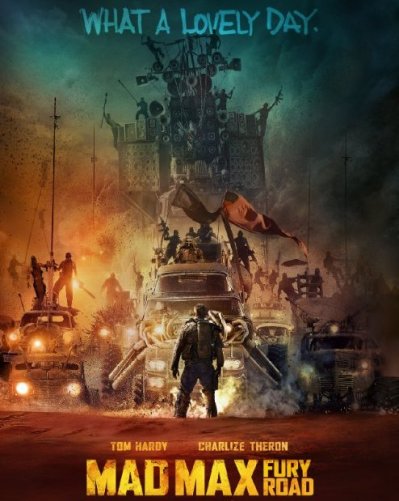
Best Live Action Film: Mad Max: Fury Road

Mad Max

This film is a work of art, and also an action movie with spiky cars and fire-spewing electric guitars. Mad Max: Fury Road is an action film in the purest sense, with sparse dialogue and explosive momentum. The movie is basically a two-hour car chase through a dystopian wasteland, yet manages to convey (amid explosions) meaningful themes such as guilt, redemption, the empowerment of women, and the worth of human life. The film also gets bonus points for its oversaturated, brightly-colored scenery: a welcome change from the bleached, washed-out look of most dystopian movies. Fury Road is stupid, campy action elevated to an art form: a film with all the ferocious beauty and power of an erupting volcano.

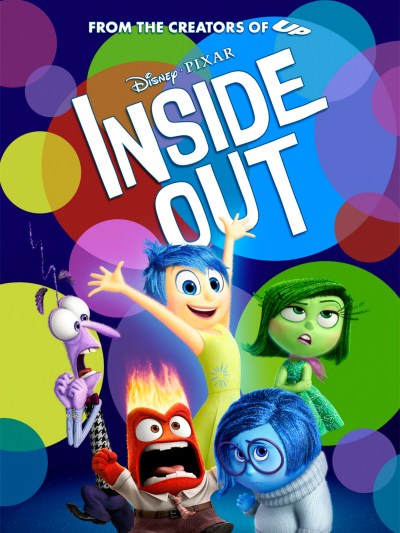
Best Animated Film: Inside Out

Inside Out

Pixar films nearly always leave an emotional impression, so it’s only to be expected that a Pixar film about emotions makes a terrific impact. Inside Out nearly made me cry in the movie theater, and I’m not a person who cries. Pixar’s best movies have a simple premise, and this one is no exception: What if your emotions were tiny people inside your head? Inside Out tells two intertwining stories: the fantastical journey of a little girl’s emotions inside her mind, and the consequent struggles of that little girl to accept the changes in her life. This film warms the viewer’s heart, but only after it has finishing breaking it. Inside Out is a sad, joyful movie… which seems appropriate, as Sadness and Joy are two of its most important characters.

Best Fiction Book: The Once and Future King

The Once and Future King cover

The Once and Future King is a retelling of King Arthur’s life. Like Inside Out, this story is both happy and sad; unlike that film, this novel leans much more heavily toward sadness than happiness. The epic backdrop of the Arthurian legends is used here as a stage for the intimate stories of Arthur, Lancelot, and Guinevere. Fragments of the old legends—the Round Table, the Grail Quest, Mordred’s betrayal—are woven neatly into two stories: the king who spends his life trying to do the right thing, and the knight whose loyalties are forever divided. Both men are great heroes, and both are doomed from the start. As it reinvents old stories for our cynical age, The Once and Future King is funny, sad, and well worth reading.

Best Nonfiction Book: All Groan Up

All Groan Up

Its title is a really bad pun, but this is not a bad book. (Seriously, though, that title causes me physical pain.) This memoir of a young man’s post-college panic, crises of faith, search for employment, and painful transition to adulthood is eerily similar to my own experiences. Paul Angone tells his story with openness, honesty, Jon Acuff-like humor, and way too many silly metaphors. In the end, despite its stylistic quirks, his story is well worth reading for all those college-age adults who feel lost, alone, ashamed, and hopeless. I wish I had read this book five years ago.

Best Console Video Game: Ni No Kuni: Wrath of the White Witch

Ni No Kuni cover

This is probably the most beautiful game I have ever played. With visuals inspired (and some contributed) by the legendary Studio Ghibli, and music by noted composer Joe Hisaishi, this game looks and sounds amazing—and it plays beautifully. The game’s story of a little boy searching for his mother is touching and bittersweet… except for when it’s cute and hilarious, which it frequently is. The Final Fantasy-meets-Pokémon gameplay may be a bit deep for casual players, and the ending is unsatisfying, but these are nitpicks. Ni No Kuni: Wrath of the White Witch is magical. And it’s getting a sequel!

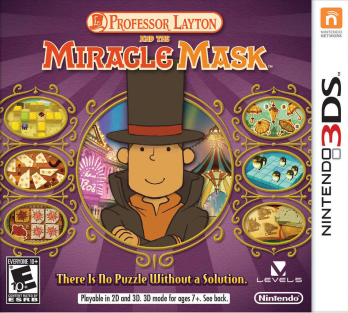
Best Handheld Video Game: Professor Layton and the Miracle Mask

Professor Layton and the Miracle Mask

“A true gentleman leaves no puzzle unsolved,” and Professor Hershel Layton is the truest of gentlemen. Professor Layton and the Miracle Mask is a delightful collection of puzzles, strung together by the most intriguing Professor Layton story I’ve seen yet. The good Professor’s search for the diabolical relic known as the Miracle Mask is packed with interesting characters, charming visuals, good voice acting, and (of course) scores upon scores of puzzles to solve. This is a game for everyone, casual players and veteran gamers alike. In fact, the only people for whom I can’t recommend this game are those with no feeling, soul, or sense of humor.

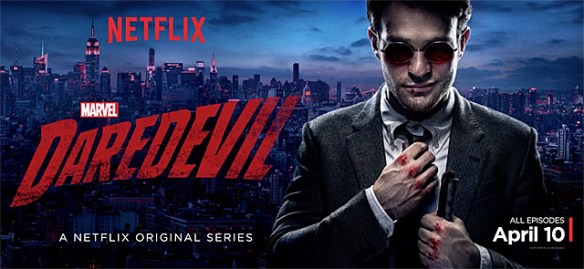
Best Live Action Television Series: Marvel’s Daredevil

Marvel's Daredevil

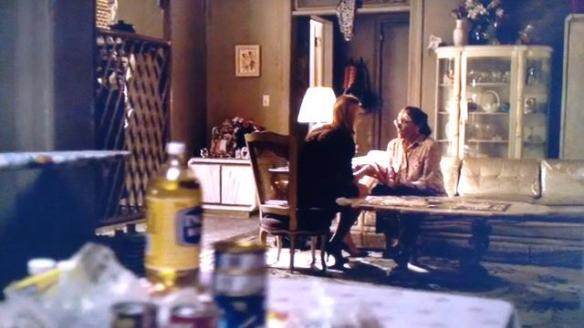
I’ve already written two entire blog posts about the excellence of Marvel’s Daredevil, so I won’t add much here. I’ll just point out one more fun detail: a scene set in a Hispanic lady’s home contains a two-liter bottle of Inca Kola. (I grew up drinking Inca Kola in Ecuador.) That is serious attention to detail.

Daredevil (now with 100% more Inca Kola!)

Marvel’s Daredevil has a breakable hero, a fascinating villain, great writing, brilliant action scenes, a gripping (and grounded) story, and an artistically comic-booky visual style. This show is superb.

Best Animated Television Series: Monthly Girls’ Nozaki-kun

Monthly Girls' Nozaki-kun

This anime isn’t a masterpiece by any means, but there’s something compelling about its unromantic romance writer and his quirky entourage of artists. Monthly Girls’ Nozaki-kun is neither a romantic comedy nor a satire, but something in between. It never feels cynical or mean-spirited as it deconstructs rom-com clichés; the show’s self-aware humor is balanced by a heartwarming charm and innocence. As an added bonus, the show offers fascinating glimpses into the process of making manga (i.e. Japanese comics). It’s fairly short and available only in Japanese with English subtitles, but Monthly Girls’ Nozaki-kun is delightful.

What are some of the best media you experienced in 2015? Let us know in the comments!

399. Review Roundup: Stupidly Long Edition

In the past few months, I finished some stupidly long books, films, and video games. Some are truly lengthy; others feel overlong due to tedium or slow pacing. A few are well worth their length. The rest overstay their welcome.

In this Review Roundup, I’ll take a quick look at Les MisérablesMetal Gear Solid 4The Once and Future KingSecret of Mana, Rise of the Guardians, and The Godfather Parts I and II.

I’ll try to keep this short. Spoilers: I’ll probably fail.

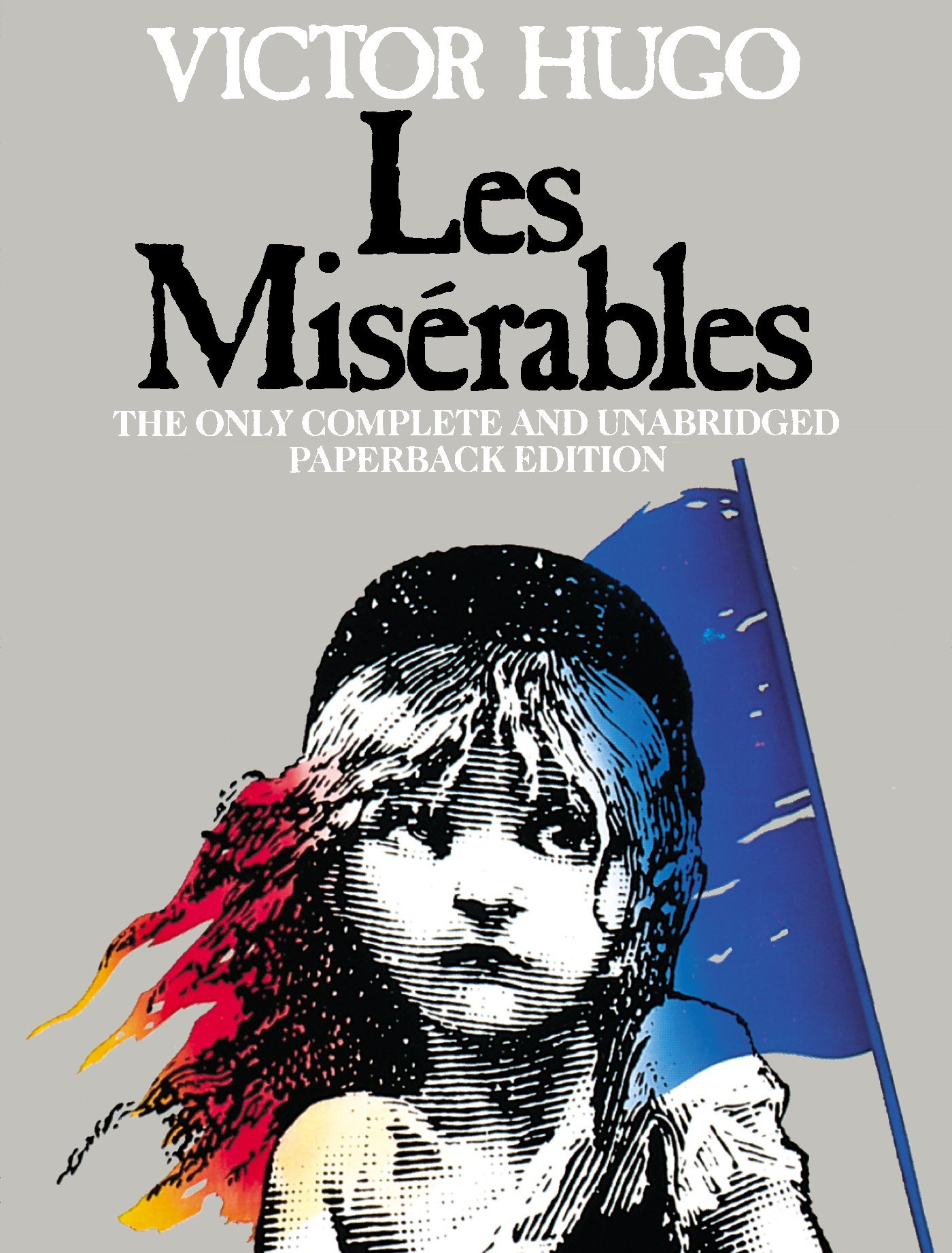
Les Misérables

Lez Miz coverI read the abridged Les Misérables a few years ago. It was fantastic. Set in nineteenth-century France, this epic story follows an escaped convict named Jean Valjean. His journey from grief to grace to redemption spans decades, interwoven with tales of war, crime, revolution, and romance. The abridged Les Misérables is one of the finest novels I have ever read.

The complete, unabridged Les Misérables is a badly-paced novel burdened with boring details and jumbled together with a bunch of essays. The story moves with all the grace of a drunken hippo with a blindfold and only three legs.

As a writer, I usually respect an artist’s original vision. Not this time. In this case, I think the artist’s original vision is deeply flawed. The book has too much detail and a number of subplots that go nowhere, but those aren’t its worst faults. At frequent intervals, the novel is interrupted by rambling essays about minor details. How can readers stay invested in the tale of Jean Valjean when it’s constantly derailed by the author’s digressions on street lingo or the Battle of Waterloo?

For example, at the climax of the novel, a band of freedom fighters makes a heroic last stand against the army in Paris as Jean Valjean flees through the sewers. In the next chapter, the author kills the story’s momentum with an essay describing how much money the city of Paris loses by dumping its sewer waste in the river instead of converting it to manure. Never mind Jean Valjean’s sewer escape! Never mind the martyrs of the revolution! All that must wait until the author finishes ranting about sewers several chapters later.

If the author really felt his opinions were so important, he should have published them separately. Les Misérables was written as a serial, but when it was finally published as a complete work, his digressions could have been included as appendices at the back of the book.

Read Les Misérables—the abridged one. For heaven’s sake, don’t waste your time on the unabridged version.

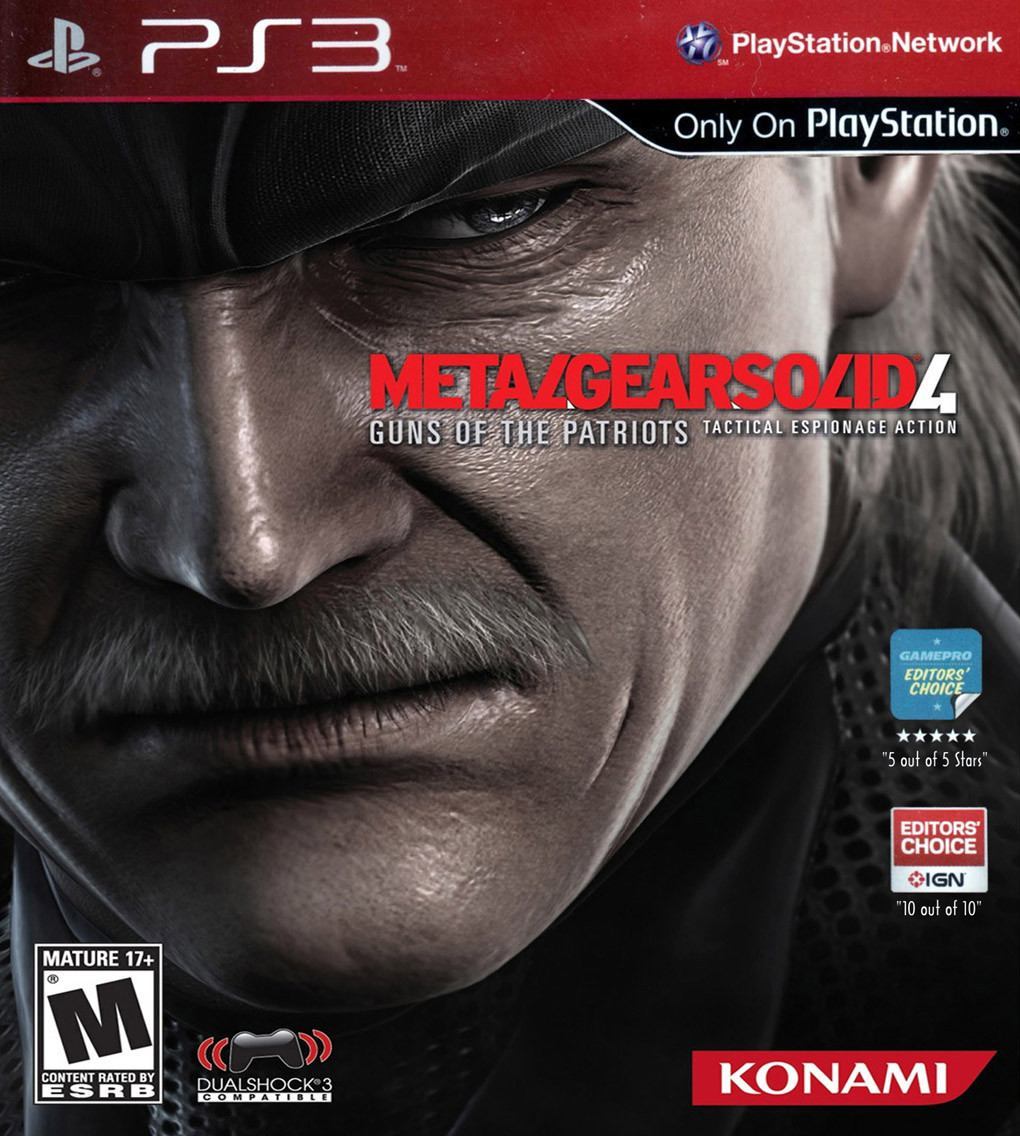
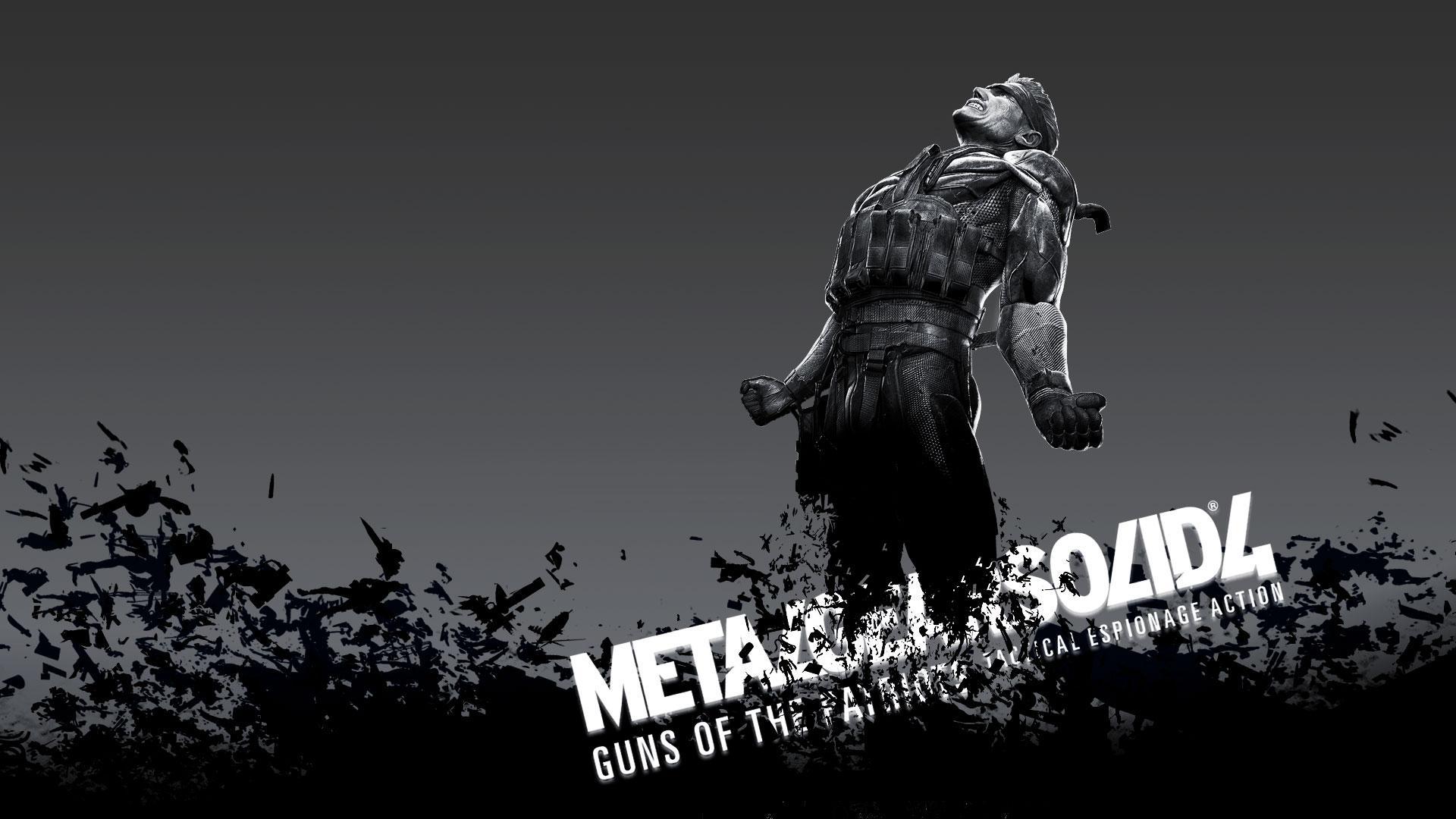
Metal Gear Solid 4: Guns of the Patriots

MGS4 coverMetal Gear Solid 4 is a video game that thinks it’s an action movie.

In the, um, distant future of 2014, war has changed. A group called the Patriots has made war a business. Meaningless battles are fought all over the world by privately-owned mercenary companies, fueling a worldwide war economy. Using technology, economics, and the media—and nanomachines, of course—the Patriots control everything.

War has changed, and so has Solid Snake. This legendary soldier has aged prematurely due to a terminal genetic condition. Snake has become, in his thirties or forties, an old man with less than a year to live. When his former commanding officer asks him to undertake one last mission, Snake sets out to bring down the Patriots and end the cycle of war before the whole world burns. After all, what does he have to lose?

In the past couple of years, I’ve come to love the Metal Gear Solid games. I keep comparing them to the films of Quentin Tarantino. Packed with dialogue and populated by larger-than-life characters, they are violent, campy, stylish, contemplative, and frequently ridiculous.

Metal Gear Solid 4 is characteristically Metal Gear Solid-ish, and it does a superb job of pulling everything together. The games that preceded it are radically different in tone and story. Metal Gear Solid is a military thriller with shades of Tom Clancy’s novels and superhero comics. (It would make a great movie.) Metal Gear Solid 2: Sons of Liberty starts as an action game and spirals off into postmodern intrigue. Metal Gear Solid 3: Snake Eater is a James Bond-style adventure set in the sixties. MGS4 somehow ties together plot threads from previous games, uniting them in a triumphant (and surprisingly cohesive) conclusion to Solid Snake’s story.

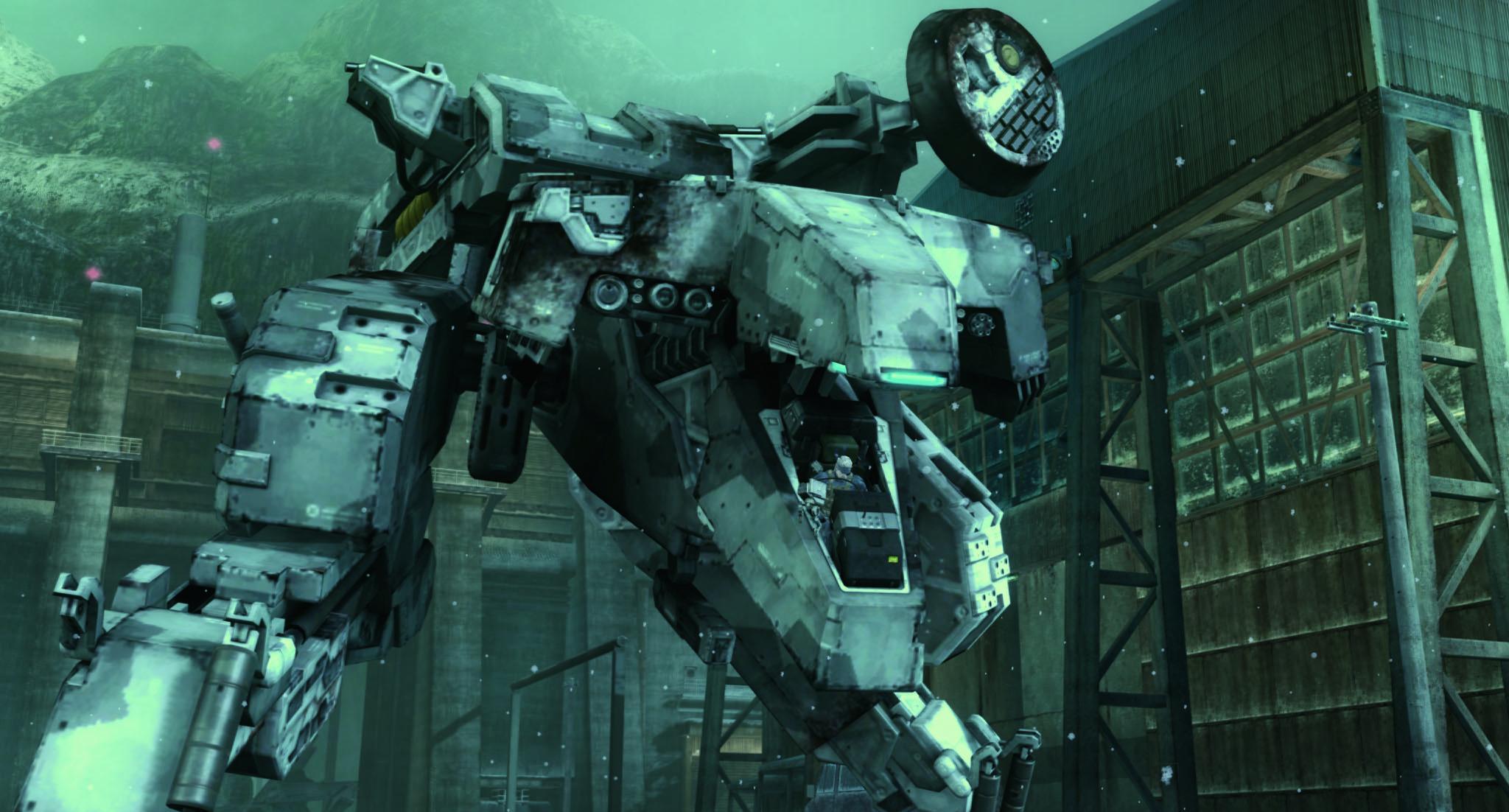
The gameplay and level design of MGS4 are polished for a fairly smooth experience. For the first time in the series, Snake actually pilots one of the eponymous Metal Gears in an exhilarating clash of giant robots. A couple of the other boss fights are brilliantly designed. Tracking and shadowing targets adds a little variety to the usual shooting and sneaking.

Rex Vs. Ray

After three games of sneaking around in the shadows, a giant robot fight was long overdue.

If the game has a problem, it’s the cutscenes—scripted scenes that take away control from the player. These are superbly produced, but also really long. I mean really, really long. I spent probably a quarter of my time with the game watching instead of playing. MGS4 is a movie superimposed on a video game.

I also have a serious problem with the game’s portrayal of women. The Metal Gear Solid series has its share of good-looking ladies, but the babes of MGS4 aren’t sexy spies or cute scientists—they are freaking PTSD victims. Several of the game’s bosses are traumatized women trapped in armored suits and forced back onto the battlefield. When their powered armors are destroyed, these ladies crawl out in skintight bodysuits as the camera ogles their curves. I think it’s supposed to be sexy in a PG-13 kind of way, but it comes off as creepy and insensitive. There are just a few of these scenes, but yeesh.

It had a few disappointments, yet I really enjoyed Metal Gear Solid 4: Guns of the Patriots. The game is a must for fans of the series. For new players, I recommend Metal Gear Solid 3: Snake Eater as a better introduction.

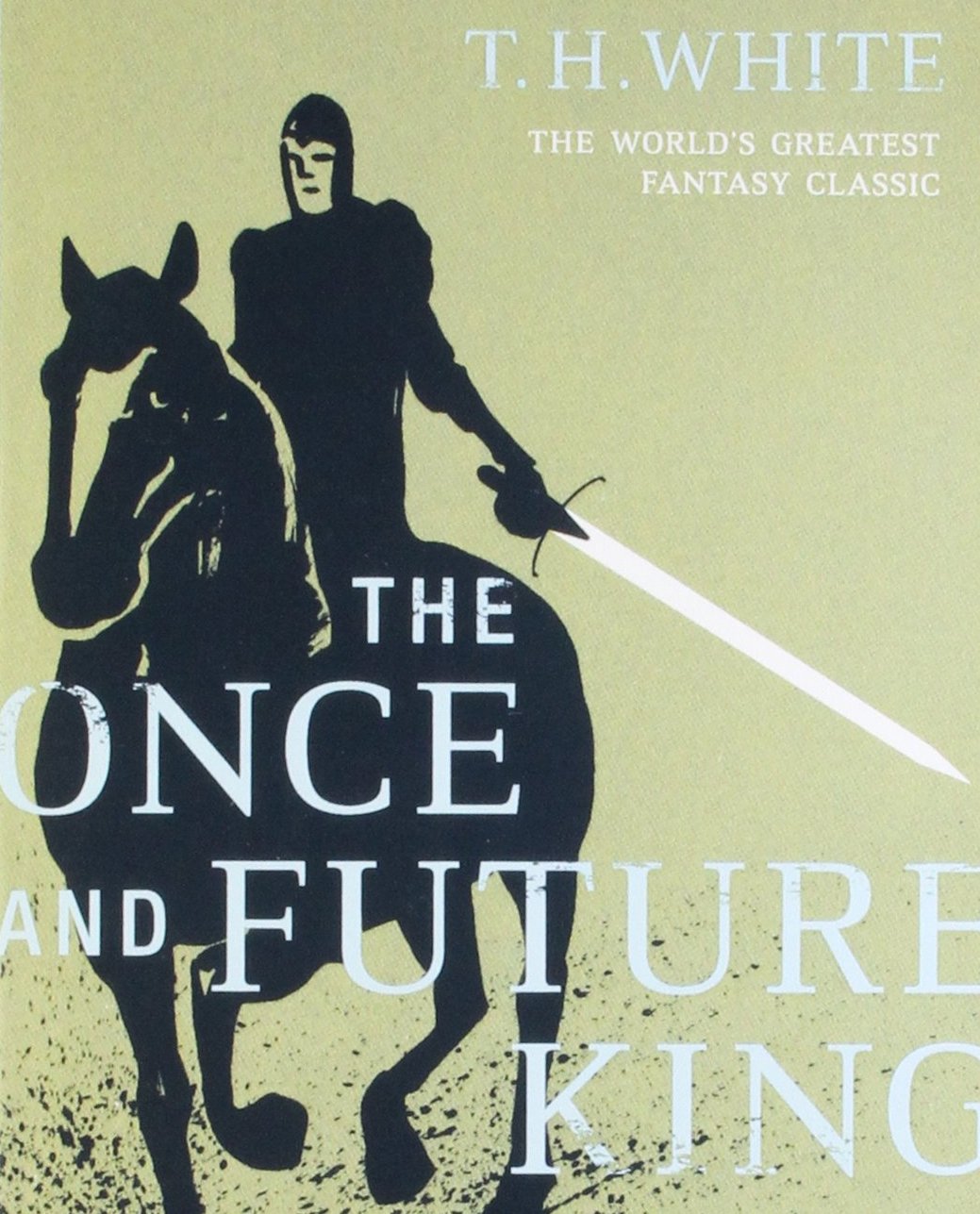
The Once and Future King

The Once and Future King coverThe Once and Future King is a poignant tale of failure. Based on Arthurian legends, the novel follows King Arthur from his childhood studies under Merlin to his final regrets as an old man. Woven into Arthur’s story is the tale of Lancelot, Arthur’s greatest knight, who follows his own ambitions and makes his own mistakes.

It’s quite a long novel, but unlike Les Misérables, every page is worthwhile. It reinterprets the Arthurian legends, setting them centuries later and giving their characters much greater complexity. Arthur, for example, no longer establishes his Round Table (an order of knights governed by chivalry) for the sake of honor or conquest. The Round Table is reimagined as a redirection of violence from selfish to noble ends. Arthur is more than a king. He is an inventor of civilization.

At first, the novel is lighthearted and often hilarious. In fact, the Disney movie The Sword in the Stone is based on the early chapters of The Once and Future King. The difference is that in the film, Arthur’s coronation is a happy ending, whereas in the book, it’s only the beginning of his struggles. The tone goes from funny to tragic as Arthur grows from a boy to a man.

The Once and Future King is easily the finest book I’ve read so far this year, and the definitive retelling of King Arthur’s story for our age. I highly recommend it.

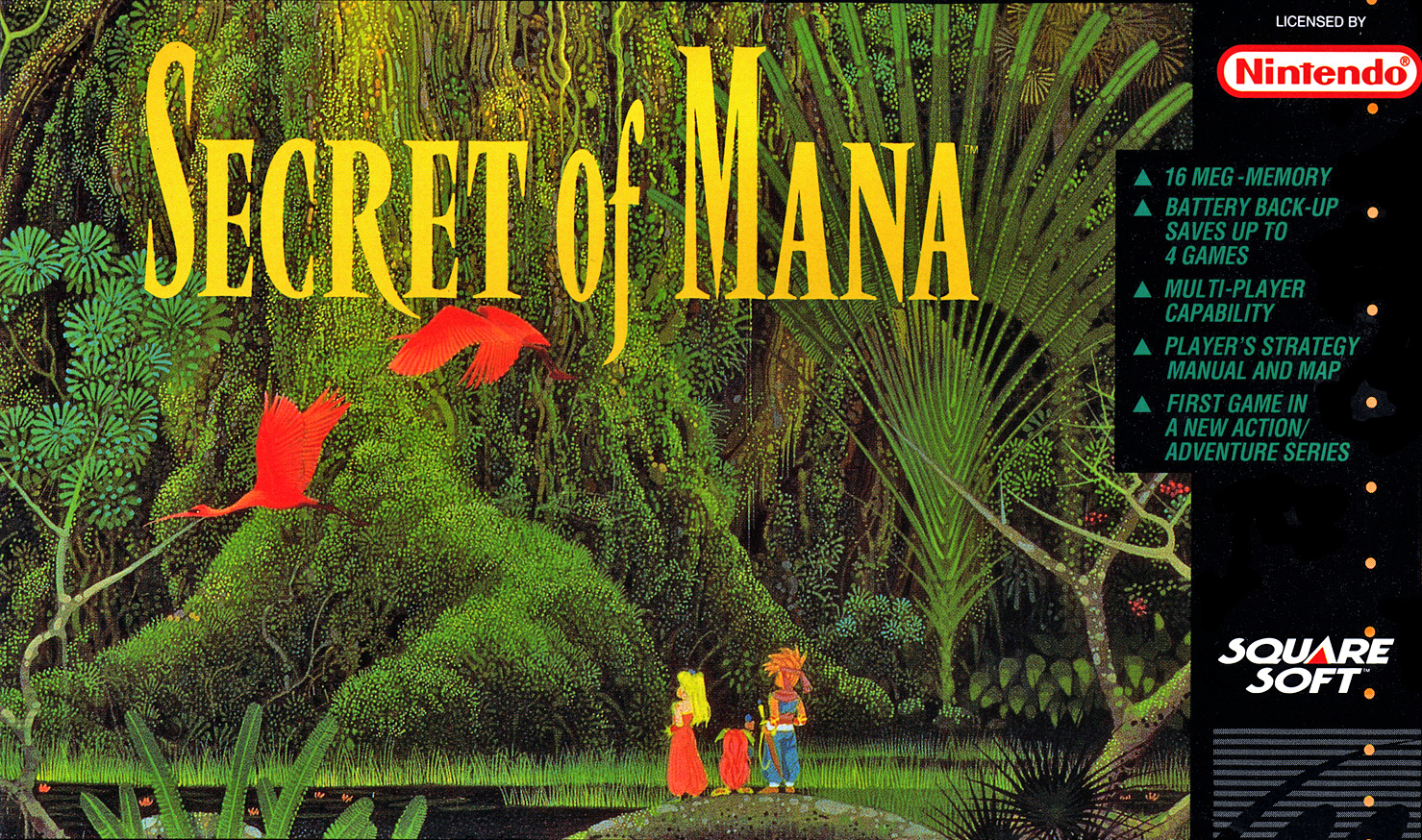
Secret of Mana

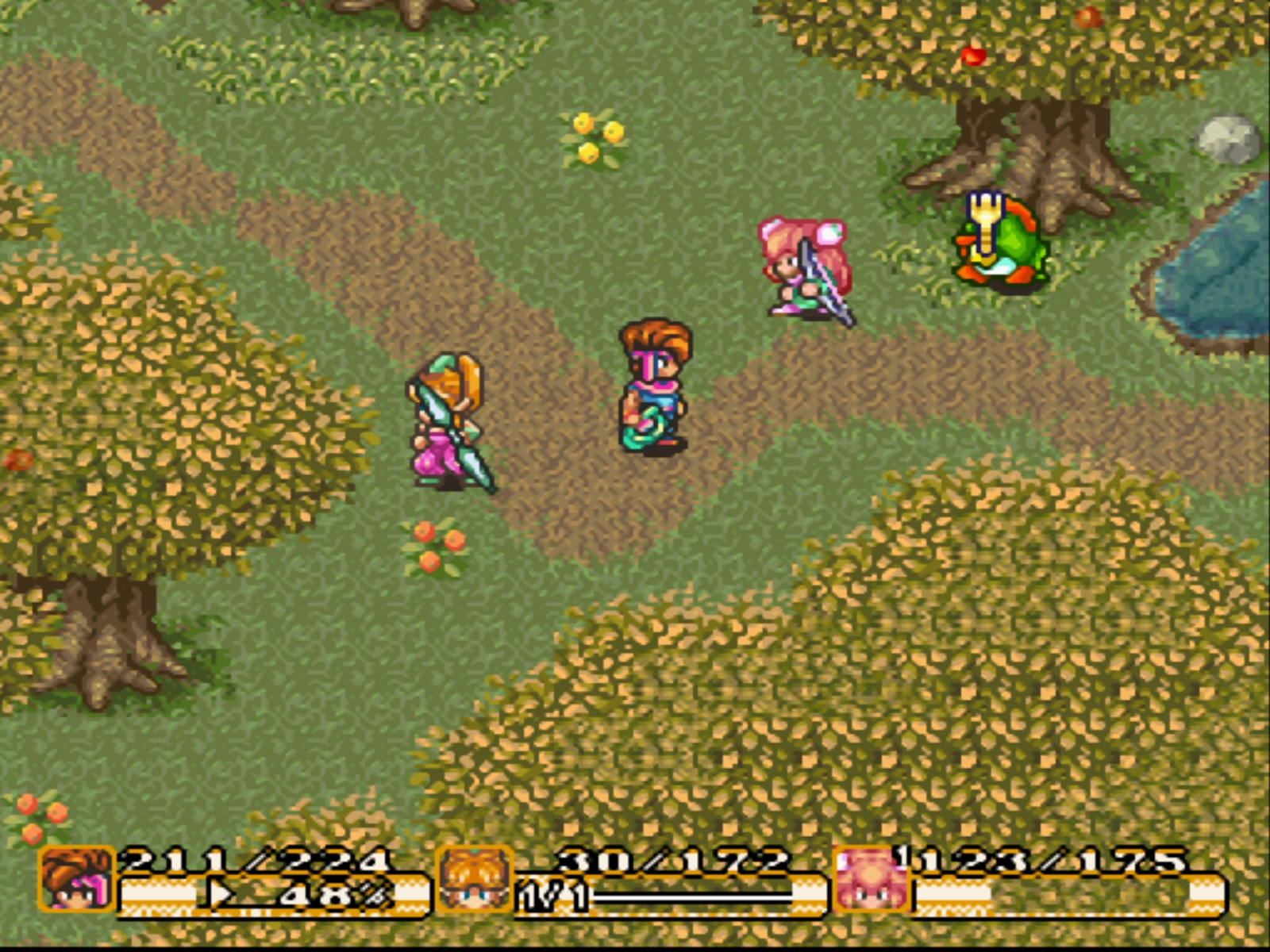
Secret of Mana coverI had wanted to play this game for years. Released around the same time as RPG classics like Chrono Trigger and Final Fantasy VI, for the same system and by the same company, Secret of Mana is widely hailed as a masterpiece of the SNES era.

It’s kind of terrible.

Yeah, it looks nice. Don't be fooled.

Yeah, it looks nice. Don’t be fooled.

There are good things about it. The battle system is robust, engaging, and way ahead of its time. Secret of Mana looks great, with bright colors and attractive old-timey graphics. Its menus are neat. I can understand why the game was so well received in its day. However, its weaknesses greatly outnumber its strengths. The music is forgettable, the story is an undeveloped stream of clichés, the game design is frequently obtuse, and the game settles into a rhythm of dull repetition that lasts way too long.

If you’re looking for an RPG classic, for heaven’s sake play Chrono Trigger and leave Secret of Mana in the nineties where it belongs.

Rise of the Guardians

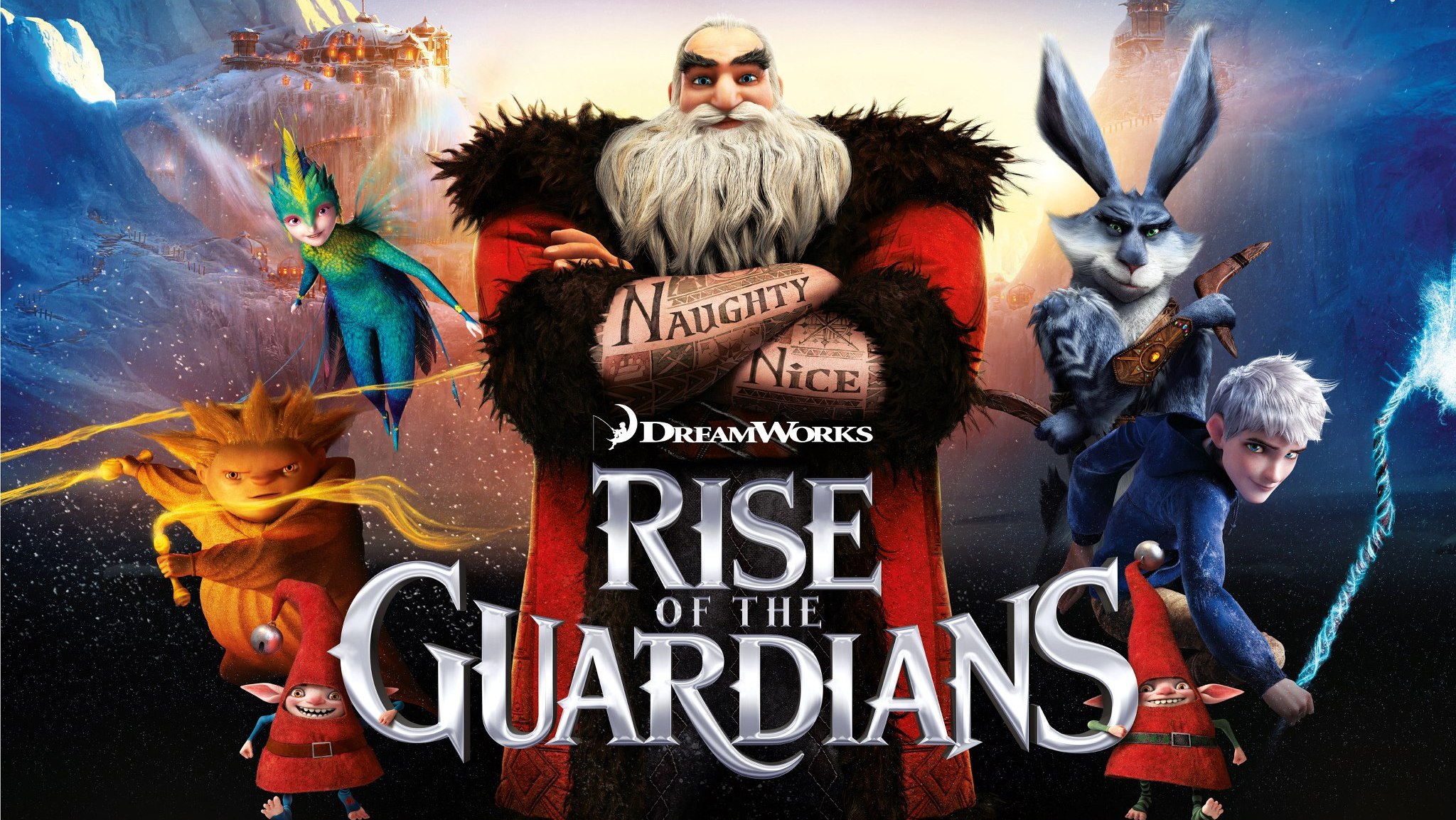
Rise of the Guardians posterI had low expectations for Rise of the Guardians, but it wasn’t bad.

The film recasts Santa Claus, the Easter Bunny, the Tooth Fairy, and other figures of childhood lore as Guardians: members of a league that protects the happiness of children. When the Boogeyman tries to darken the world with nightmares, the Guardians recruit an amnesiac Jack Frost to restore the belief and hope of kids everywhere.

Despite its generic title, Rise of the Guardians is a colorful, well-paced fairy-tale film. (Unlike the other media in this Review Roundup, it doesn’t feel particularly long.) The Guardians are mostly likable; I particularly enjoyed Santa Claus as a gruff Russian and the Sandman as a silent protagonist. The villain is sinister and well-developed. By far the weakest link is Jack Frost, whose angst, amnesia, bland narration, and boy-band looks hit all the wrong notes.

It isn’t a classic, but Rise of the Guardians is all right.

The Godfather Parts I and II

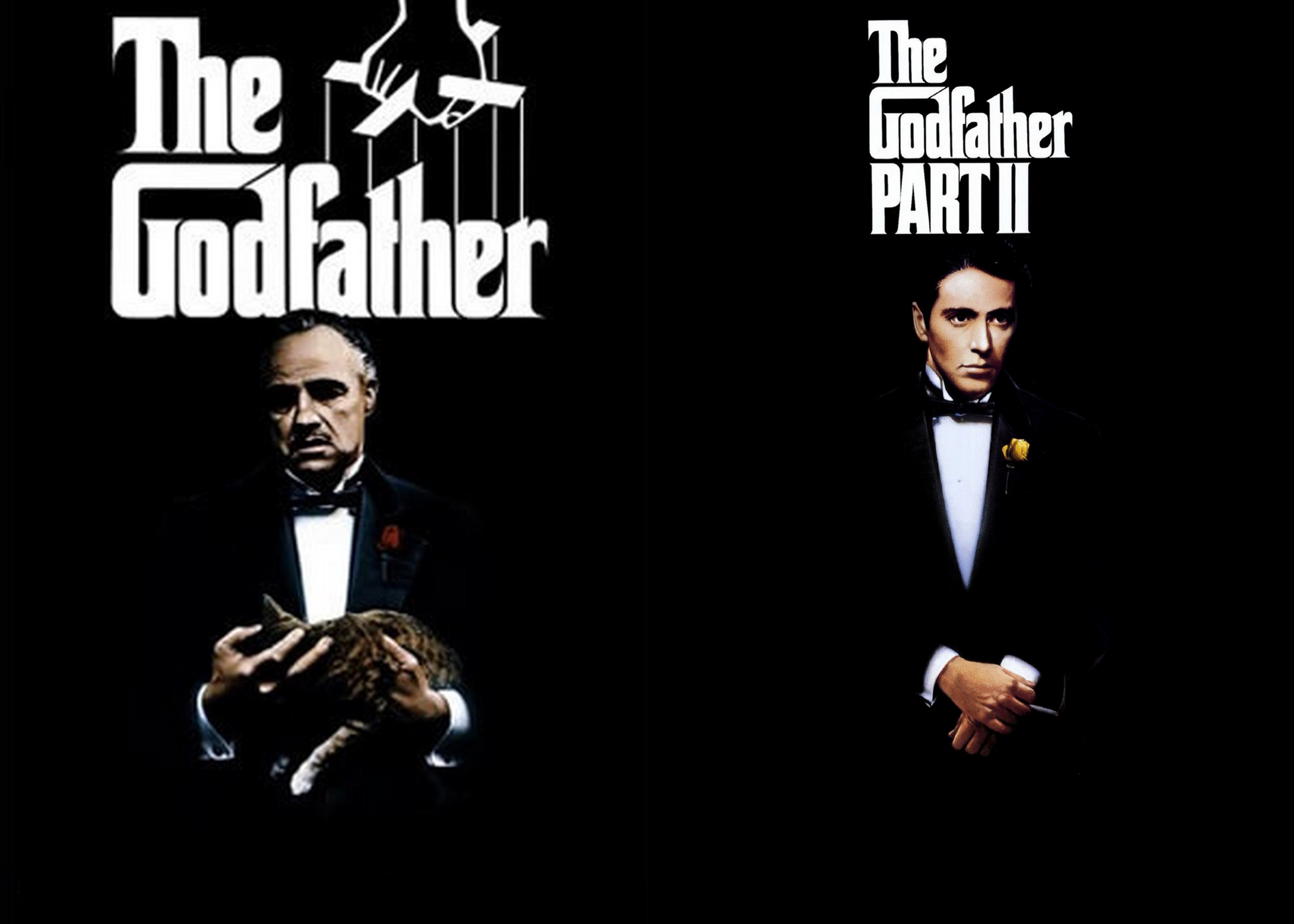
The Godfather covers

The Godfather and The Godfather Part II are allegedly two of the greatest films ever made. I decided I should see them. It was, as the Godfather himself might have put it, a recommendation I could not refuse.

The first Godfather film tells the story of the Corleone family, an Italian-American crime syndicate led by the eponymous godfather, Vito, and later by his son Michael. The second movie follows Michael as he consolidates power, and flashes back to Vito’s arrival in the United States and rise to power as a criminal kingpin.

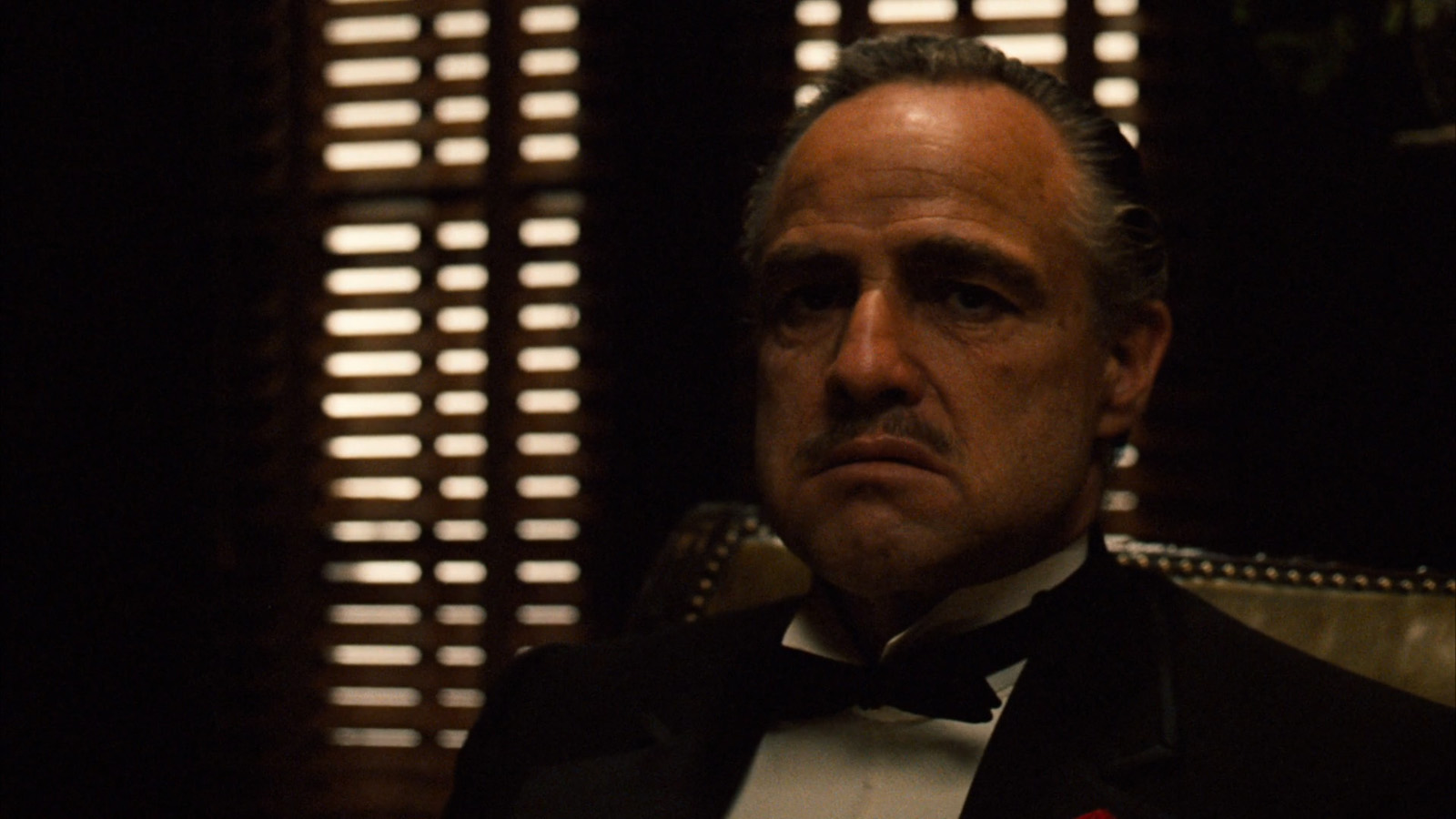
Oh, and the first one consists largely of Marlon Brando making this face:

Marlon Brando scowling

Seriously. This is his default expression.

The Godfather movies are fairly old, and a lot longer and slower than contemporary films. They move at the leisurely pace of novels. (If it were made today, The Godfather would probably be a television miniseries, not a series of films.) The meticulous pacing allows for character development and plenty of subplots, but definitely makes watching the films a chore.

The Godfather movies boast great acting and complex characters. Vito is not just a literal godfather to his godson, but a sort of father-figure to his community. His life of crime is governed by strict rules of honor and loyalty. Michael, at first an innocent young man, hardens into a ruthless mob boss who abandons his father’s principles. In telling their stories, the films touch upon themes such as revenge, responsibility, betrayal, tradition, religion, corruption, and family.

The Godfather and The Godfather Part II reward patient viewers with the epic story of a family’s descent into darkness. If you’re looking for something easy to watch, however, you had better look elsewhere.

What books, films, shows, or video games have you enjoyed lately? Let us know in the comments!

393. About Storytelling: Magic, Destiny, and Nanomachines

Here’s a question for you: What do fate, magic, nanomachines, and sonic screwdrivers have in common?

As I mentioned last time, I’ve been playing a video game called Metal Gear Solid 4. Its blend of military intrigue, science fiction, and social commentary is kinda bonkers, but the story’s strangest turns always have an explanation—or, to be more honest, an excuse. That excuse is nanomachines. These microscopic robots are injected into the bloodstream of many characters in the game, giving them superpowers (or super-weaknesses) that defy all other explanations.

How does a character in the game survive being shot in the head and stabbed through the abdomen? Nanomachines. How are entire armies instantly disarmed, disabled, and defeated? Nanomachines. How is a long-dead character revived in a stunning twist? That’s right—flipping nanomachinesEvery impossible twist in the story is explained by these hard-working little bots.

The answer is nanomachines.

The answer is nanomachines. It’s always nanomachines.

In the end, throughout the Metal Gear Solid series, nanomachines are generally the catch-all explanation for things that otherwise make no sense. The audience never learns exactly how they cause immortality, raise the dead, regulate firearms, or do any of the other crazy things they do. Nanomachines are a vague, easy solution to plot holes that can’t otherwise be filled.

Let’s not cast all the blame upon nanomachines, though. Consider how often, especially in fantasy stories, magic is used to explain away things that make no sense. Science fiction often uses technology in exactly the same way. As Arthur C. Clark reminds us, “Any sufficiently advanced technology is indistinguishable from magic.”

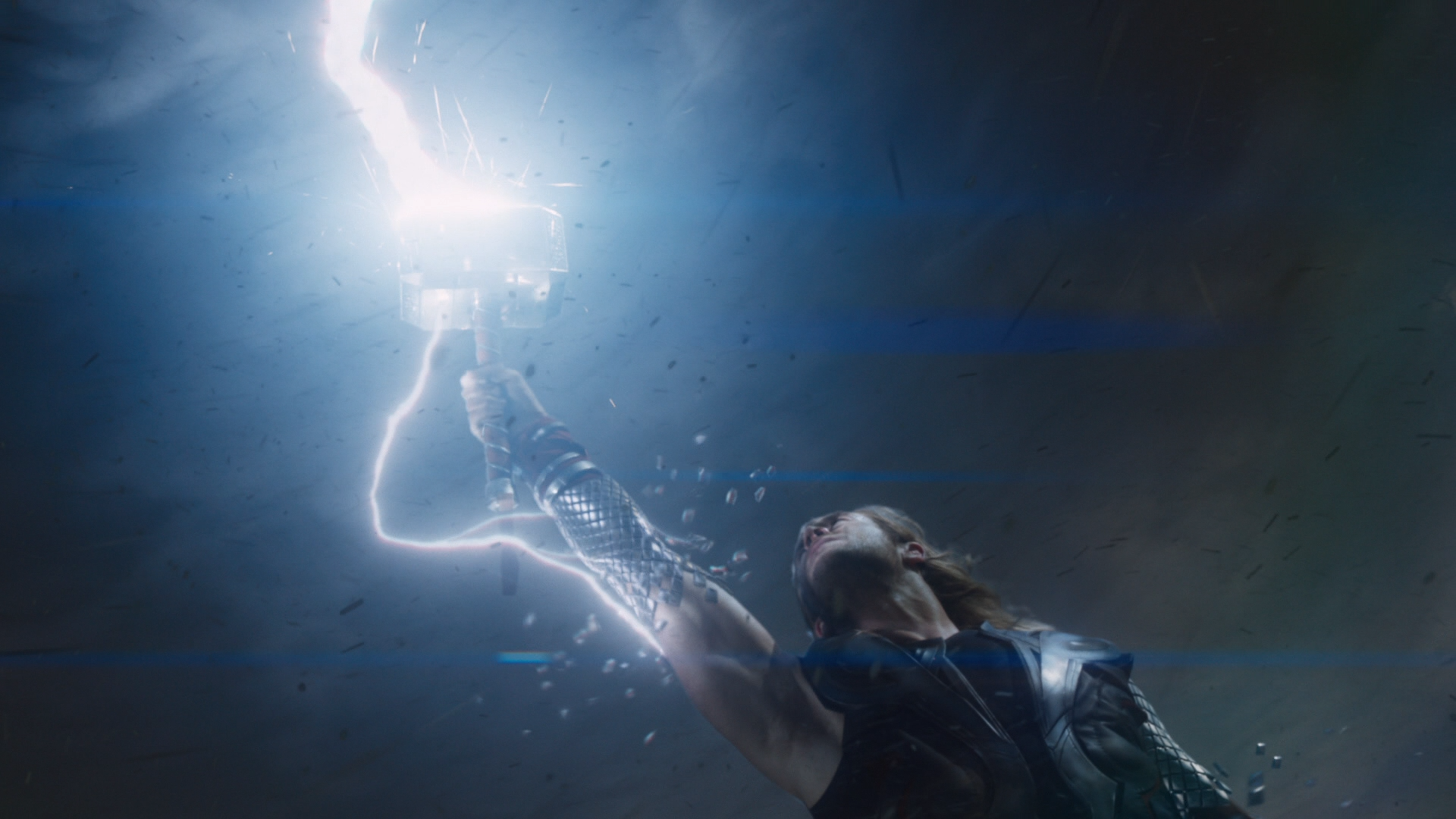
Marvel’s Thor movie openly acknowledges this when its eponymous superhero tells an ordinary human, “Your ancestors called it magic, but you call it science. I come from a land where they are one and the same.” Thor’s hammer makes no sense. Most of the stuff in Marvel’s movies makes no sense. The easiest solution is to claim that it’s incomprehensible technology and call it a day.

Witness the power of... um... technology?

Witness the power of… science?

Fate and destiny can work the same way. In dramas and romances, these vague cosmic forces offer an excuse for crazy coincidences and irrational behavior.

Then there’s Doctor Who. Flipping heck, is there ever Doctor Who. Besides the good Doctor’s sonic screwdriver, which does anything the plot needs it to do, the show’s many plot holes are waved away by the concept of “wibbly-wobbley, timey-wimey… stuff.”

Do you remember the concept of deus ex machina? It’s when a specific problem in a story is resolved by some contrived or impossible solution. This is the same idea, but bigger and more pervasive. It’s when a deus ex machina, instead of resolving a single problem, becomes the storyteller’s go-to resolution for all of the problems.

As cheap or lazy as this sounds, it doesn’t have to be so bad. It all depends on how it’s used. Some stories don’t need to be burdened by a lot of complicated explanations. If media like Doctor Who or Metal Gear Solid 4 obsessed over details, or else cut out everything that lacked a rational explanation, they would be a heck of a lot less fun. If the audience is willing to swallow a vague explanation, and it enables a better, tighter story, then it becomes a good thing.

Used badly, narrative tricks like magic and nanomachines make a story contrived and unbelievable. Used well, they prevent a story from becoming bogged down in details and explanations, and allow storytellers to focus on other areas of storytelling.

I would call my typewriter monkeys my blog’s version of this trick—a vague explanation for the complicated process of how TMTF is kept up and running—except for one thing. My monkeys don’t resolve problems. They cause them!

388. Fans, Geeks, and Waifus: A Momentary Study

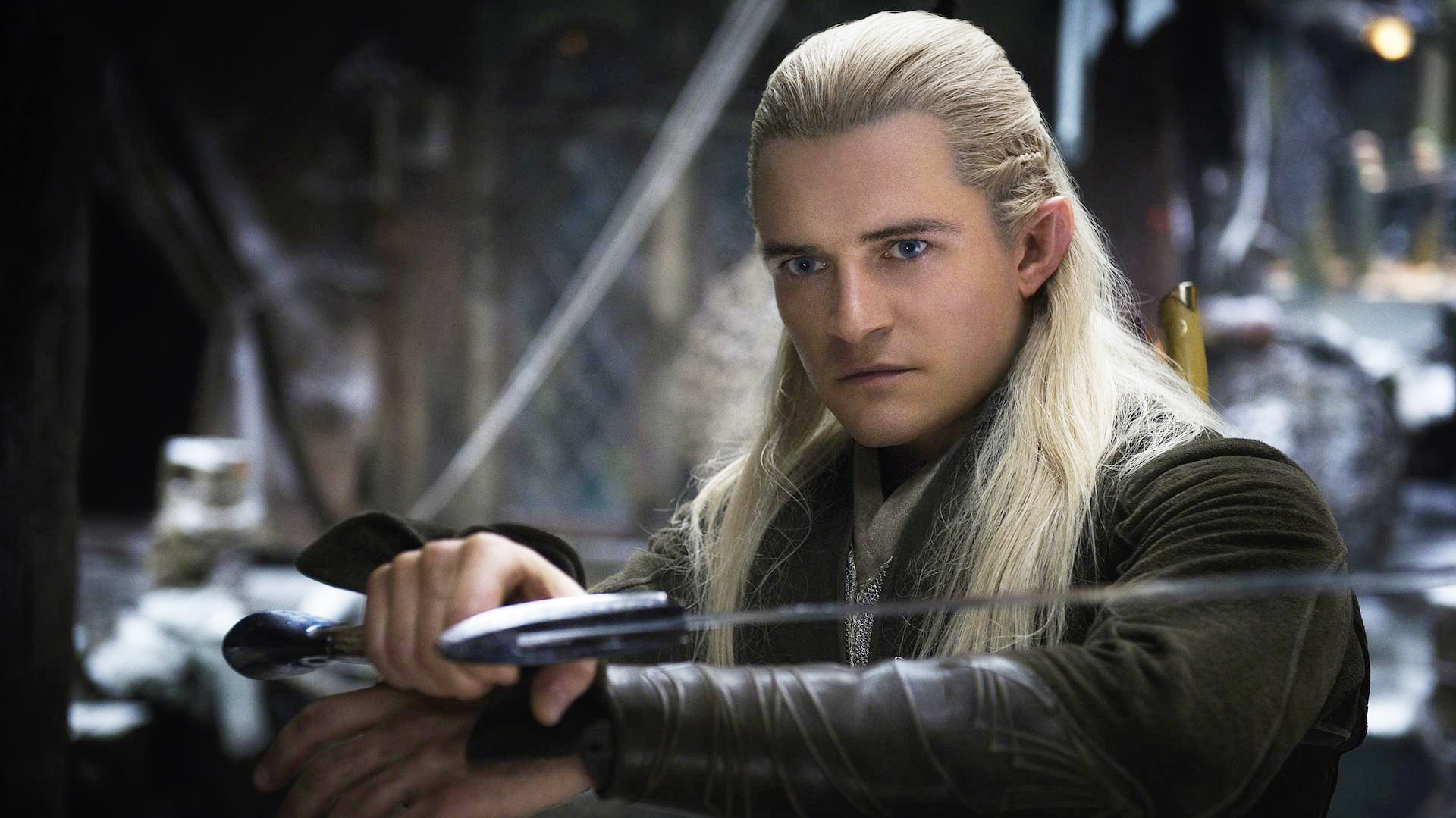
I once had a friend who had a crush on Legolas from The Lord of the Rings. This puzzled me greatly.

Granted, Legolas isn’t ugly. He has two eyes, which is generally the preferred number of eyes. That’s a good start. Legolas also has a nose, all his teeth, and a full head of hair. (At any rate, in the movies, he wears a nice wig.) So far: so good. His skin is healthy—no leprosy there—and he isn’t painfully thin or morbidly obese. Legolas also seems to have “the smolder,” a trait considered desirable by females of the species… I think.

Look, I’m no expert on what ladies find attractive in gentlemen. I’ve simply been told Legolas is a smokin’ hot stud or some such, and I’m not sure I’m qualified to argue.

Legolas

Exhibit A: Legolas the (apparently) sexy elf.

All of this, however, doesn’t explain the adoration my friend (whom I’ll call Socrates) lavished upon this imaginary elf. She thought Legolas was the sexiest thing since Hugh Jackman’s abs in the X-Men movies, and I thought Socrates was crazy.

Nah, my crush was on Daphne from the old Scooby-Doo cartoon.

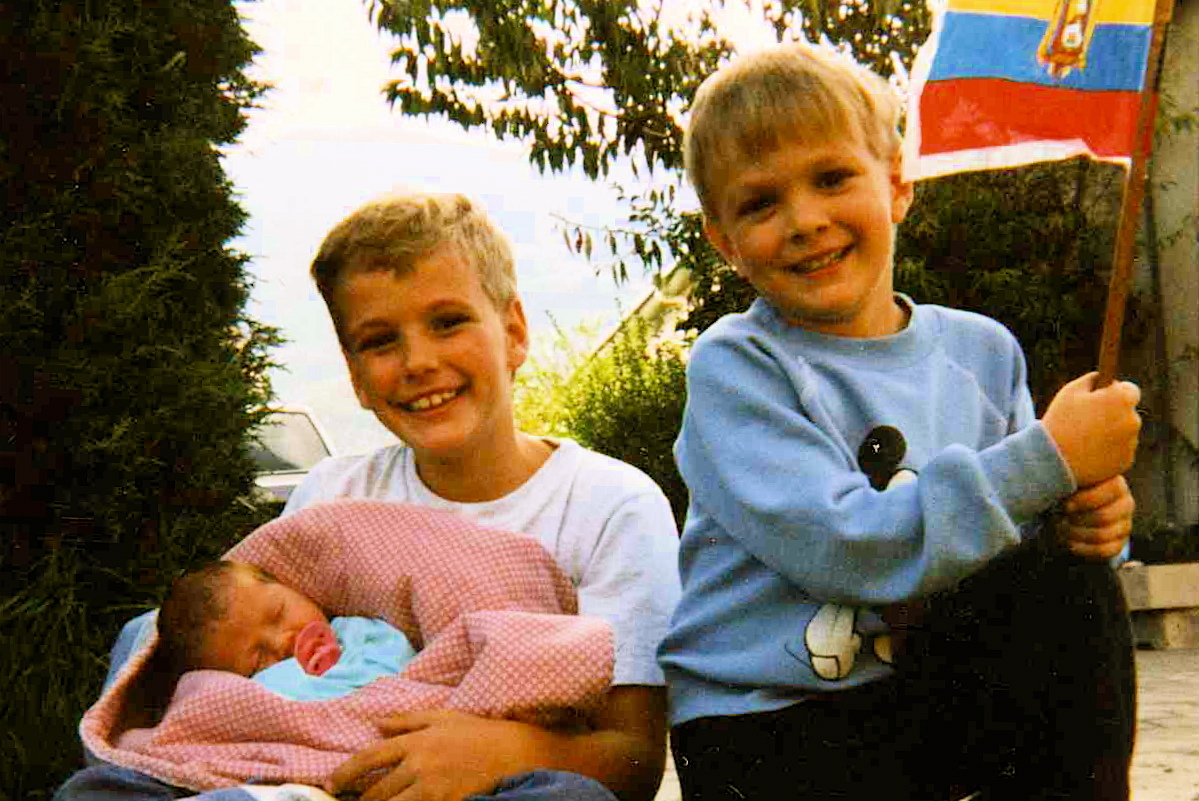
Of course, that was back when I was in kindergarten: a faraway time when I was tiny and blond, barely knew the alphabet, and didn’t drink coffee.

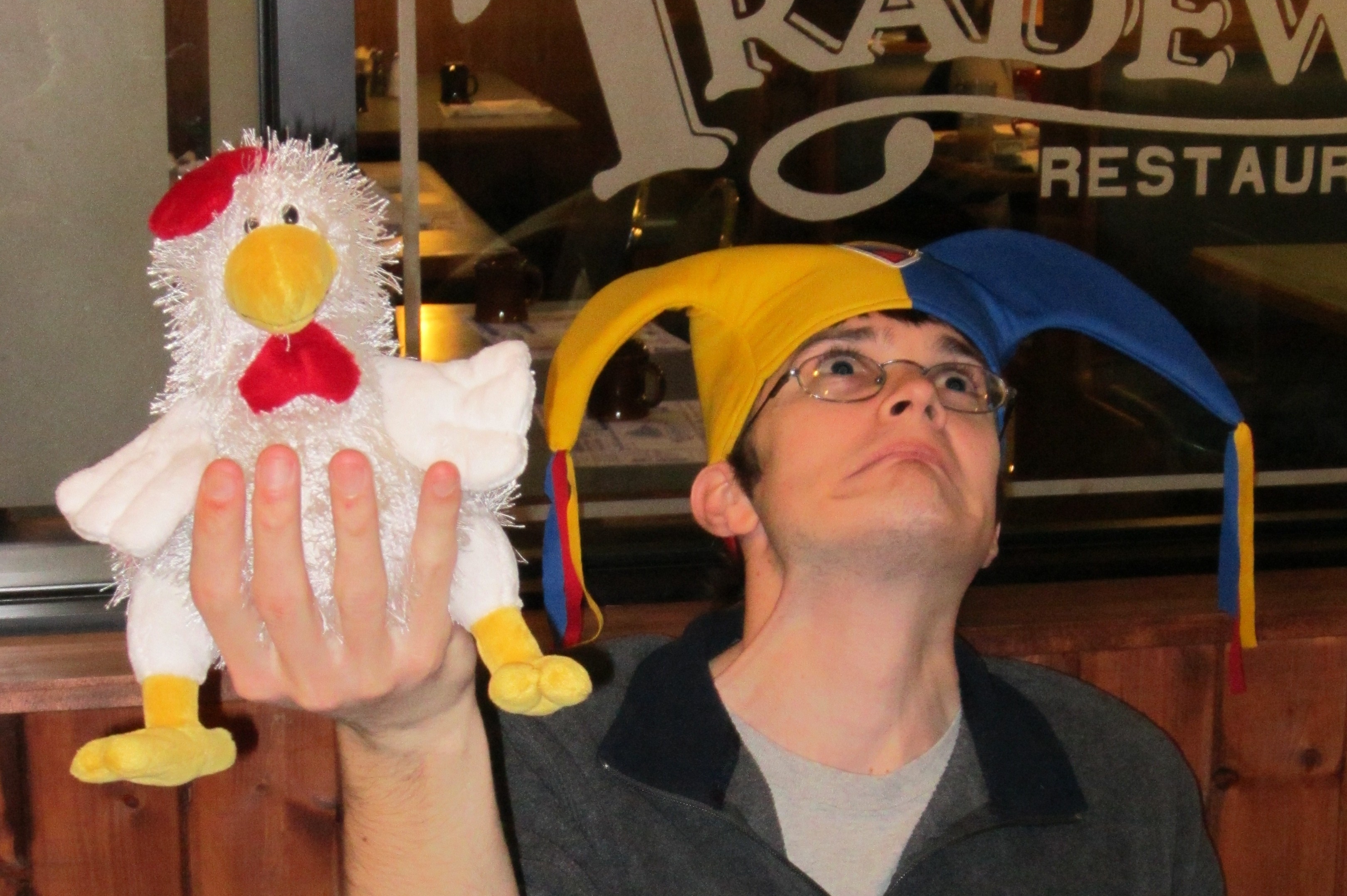
Exhibit B: Adam Stück in kindergarten, roughly nine years B.S. (Before Sideburns).

On the right, Exhibit B: Adam Stück in kindergarten, roughly nine years B.S. (Before Sideburns).

By the time I reached high school and met Socrates, my secret crush on Daphne was a thing of the distant past. As the Apostle Paul wrote, doubtless referring to childhood crushes on fictional characters, “When I was a child, I talked like a child, I thought like a child, I reasoned like a child. When I became a man, I put the ways of childhood behind me.”

By high school, I had put childish ways behind me, and Daphne from Scooby-Doo with them. No, I was enamored of Anne Shirley from Anne of Green Gables.

My point here is that fictional characters can be attractive, and real-life people can be attracted to them. This is a common enough phenomenon. In geek culture, however, it is sometimes embraced wholeheartedly… even to a point that is frankly weird.

Let’s talk about waifus.

No waifu no laifu

Exhibit C: The anime-obsessed President of the United States voices his support for waifus.

A waifu is a fictional character to whom a person is attracted, to the point of considering that character a significant other.

The word waifu comes from an exaggerated Japanese pronunciation of the English word wife. (Thanks to anime and video games, a lot of weird geek culture originates in Japan.) A waifu doesn’t have to be female, by the way; the term can be used for characters of either sex.

By calling a character his waifu, a geek wryly acknowledges his crush on that character. It’s basically a form of shipping in which a real person ships a fictional character with himself.

Is it weird? Yes. Do I support waifus? Nah. Do they worry me? Not really. I’m pretty certain the waifu phenomenon is the sort of harmless, silly nonsense the Internet does best. At any rate, I hope it’s no deeper or darker than that!

385. Review Roundup: Death Game Edition

It has been a while since TMTF’s last Review Roundup. Why don’t we look at some stories about death games?

In these media, protagonists gamble their lives in dangerous games. Some of these are literal: formal competitions with rules. Some are figurative: risky ventures into crime. And one of these stories has nothing at all to do with death games. (I enjoy writing these reviews, but not enough to plan my media consumption around them!)

Let’s talk about The Hunger Games trilogy, Ant-ManThe Big LebowskiIs It Wrong to Try to Pick Up Girls in a Dungeon?, and Whisper of the Heart.

The Hunger Games trilogy

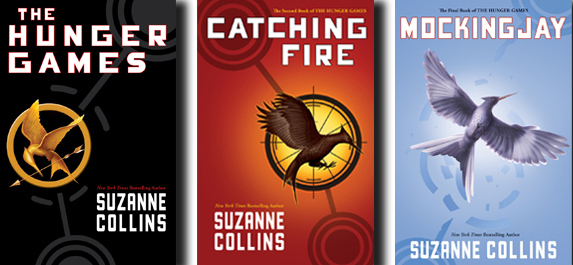
The Hunger Games trilogyFor the first time in years, I picked up a popular Young Adult novel to find out what all the fuss is about. (My last investigation of a literary sensation led me to read Twilight, a mistake from which I never fully recovered.) The Hunger Games is a pop culture phenomenon, and I meant to find out why.

I dunno, guys. I wasn’t all that impressed. Maybe I’m just a grumpy snob, but the Hunger Games trilogy neither dazzled nor entertained me. The books aren’t bad, but I wouldn’t call them classics.

The Hunger Games books tell the tale of Katniss Everdeen, a pragmatic teen trapped in an impoverished district of Panem. The government of this dystopian country rules its outer districts by fear and humiliation, selecting two children from each district every year and forcing them all to fight to the death. This gruesome event, the Hunger Games, is televised throughout Panem as an amusement for the wealthy; for the poor, it’s a reminder of their powerlessness. Katniss is selected for the Hunger Games, and the books follow her rise and fall from gladiator to celebrity to revolutionary to whiny PTSD victim.

The Hunger Games books are lauded for their smart setup and gripping story. I’ll be the first to admit there is truth to these praises. Panem is an interesting setting. The concept of the Hunger Games is fascinating, providing a way for a corrupt government to placate the rich and subjugate the poor. The story has its twists and turns, and the first book is actually pretty engaging.

However, the characters are mostly dull and unlikable. Katniss, who narrates the story, lacks much personality besides a coldly analytical attitude and occasional flickers of affection. As the books wear on, Katniss is traumatized by her horrific experiences, becoming angsty and angry—a change in her personality, sure, but not for the better. More promising characters, such as foppish Effie Trinket and drunken Haymitch Abernathy, end up disappointing.

When it comes to tone and style, I get the impression the Hunger Games books aren’t sure what they want to be. They have a sort of gritty realism concerning poverty and war. I appreciate that. However, this gloomy approach is at odds with the books’ ludicrous sci-fi touches and predictable Young Adult nonsense. (Yes, there’s a love triangle, and it’s annoying.)

In the end, the Hunger Games books have just enough harsh realism to be depressing and just enough teen kitsch not to be taken seriously. They fall in a literary no man’s land, refusing to embrace either realism or sensationalism, and embodying the worst traits of both. I find it hard to recommend these books.

Ant-Man

Ant-ManMoving on to something much more entertaining, Ant-Man is another big, dumb, spectacularly fun Marvel movie. Unlike the Hunger Games books, Ant-Man embraces its own goofiness in a way that’s a joy to see.

Ant-Man begins with Scott Lang feeling very small. This well-meaning ex-convict can’t keep a job or convince his ex-wife to let him spend time with their little girl. When Lang meets an old inventor named Hank Pym—he burgles Pym’s home, actually, but that’s not the point—Pym offers him “a shot at redemption,” meaning an opportunity to put on a high-tech suit, shrink to the size of an ant, and dive back into the life-or-death game of high-stakes burglary.

Look, if you’ve seen any recent Marvel movie, you know what to expect at this point. Ant-Man is full of quotable quips, flashy action scenes, and comic book lore, with a little sentimentality sprinkled here and there.

This time, however, there are two things to make the film stand out. First is an emphasis on father-daughter relationships. This motif isn’t developed as fully as a it could be, but it works. The second thing is that Ant-Man is basically a superhero heist movie, in the same way the first Captain America is a superhero war film and the second one is a superhero cold war thriller. Ant-Man isn’t about saving the world, but stealing stuff… to save the world, I guess.

It’s still a nice touch.

I really enjoyed Ant-Man. It nods at other movies in the Marvel Cinematic Universe without depending on them, and I look forward to seeing Ant-Man in future films. Not bad for such a little guy.

The Big Lebowski

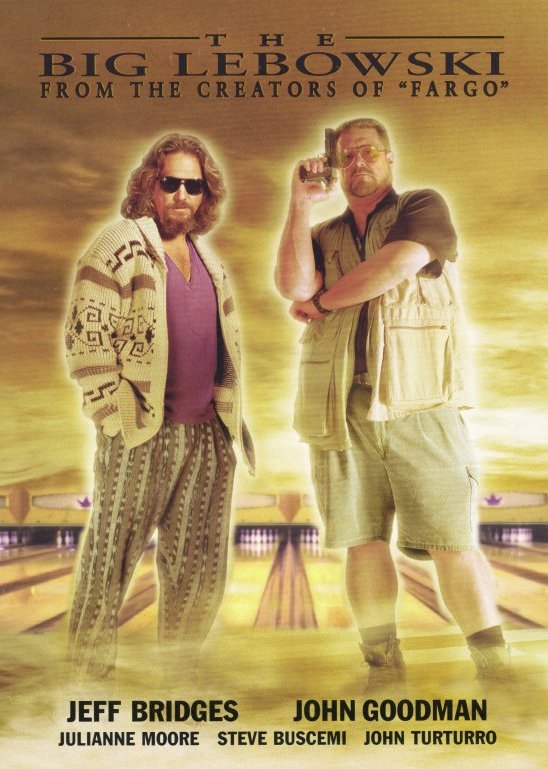
The Big LebowskiWith that, we move on from a small hero to a larger-than-life one in The Big Lebowski. Ironically, however, the film’s hero isn’t actually the Big Lebowski, but a slacker with the same name (I’ll call him the Lesser Lebowski) who loves bowling, booze, and tacking the word “man” to the end of nearly every sentence.

The Big Lebowski begins when thugs storm the home of Jeff Lebowski, a laid-back stoner known as “the Dude,”  and pee on his rug. It was a nice rug, man. It really tied the room together. The thugs threatened the Dude (and peed on his rug) under the impression he was “the Big Lebowski,” a millionaire with the same name. When the Dude takes his bowling buddies’ advice to seek compensation from the Big Lebowski for the rug, he becomes snared in a game of deception, violence, kidnapping, cursing, and postmodern art.

This movie is sort of a black comedy and sort of a noir crime film, but it’s mostly Jeff Bridges bowling, drinking, and wandering around Los Angeles. In the end, the film’s complex web of crime and deception unravels to reveal a whole lot of nothing, and I think that’s the point: there never was one.

This was quite an entertaining movie. It ain’t one for kids—it has bullets, boobs, and f-bombs beyond count—but for adults with a healthy sense of the absurd, The Big Lebowski is a treat.

Is It Wrong to Try to Pick Up Girls in a Dungeon?

Is It Wrong to Try to Pick Up Girls in a DungeonWell, is it?

The oddly-titled anime Is It Wrong to Try to Pick Up Girls in a Dungeon? is the tale of Bell, a nice young man who longs to become an adventurer—to impress the ladies, of course. He lives in a medieval fantasy town whose existence revolves around the eponymous dungeon: a labyrinth teeming with monsters. Adventurers join familias—guilds sponsored by gods or goddesses—and venture into the dungeon in a dangerous game for treasure and glory. In quest to become a dungeon-conquering hero, Bell accepts the sponsorship of a down-on-her-luck goddess named Hestia. This unlikely pair must work together for Bell to have any chance of becoming a master adventurer and impressing the ladies… well, one in particular.

I won’t lie, guys. This anime is incredibly dumb. Remember what I said about Ant-Man embracing its goofiness? This show does the same, but with roughly ten thousand times as much enthusiasm.

I mean, the anime’s opening theme has a momentary scene of Bell and Hestia brushing their teeth. Look at this. Look at it.

Toothbrush dance (GIF)

This is basically the entire show: dumb as all heck, but endearing in its silliness, with some gratuitous cleavage for good measure.

The world of Is It Wrong to Try to Pick Up Girls in a Dungeon? functions exactly like a video game (an MMORPG, to be precise) without actually being a video game. Its adventurers gain experience and level up—heck, they even have statistics (appearing as magical tattoos on their backs) reflecting their competency in various areas. Monsters respawn on a set timetable, and powerful creatures explicitly called bosses guard certain floors of the dungeon. The setting is instantly comprehensible to gamers, but at the cost of making absolutely no sense. Why do adventurers level up? What revives the monsters that respawn? What the heck is going on?!

(It is very faintly hinted that the gods and goddesses of ancient times created this video game-like world for their own enjoyment, but no real explanation is ever given.)

This is a show in which half the female characters have crushes on the hero, like Twilight in reverse, and most female adventurers wear stupid chain mail bikinis. I can’t defend or recommend this anime. It’s really, really dumb.

All the same, I kinda enjoyed it. Bell, who has a massive inferiority complex, is kind and friendly: a welcome change of pace from angsty or arrogant anime heroes. Hestia works odd jobs to support him, despite being, y’know, a goddess. The show seldom takes itself too seriously; the rare occasions it does are some of its weaker moments. For the most part, its good-natured goofiness made it fun to watch, if not intellectually rewarding.

Whisper of the Heart

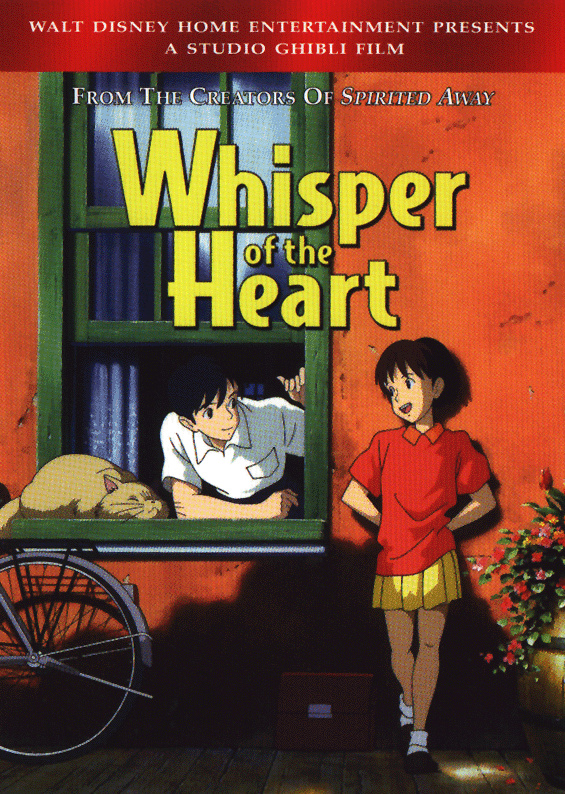
Whisper of the HeartAt last we arrive at a film that not even I can pretend fits the vague “death game” theme of this Review Roundup: Whisper of the Heart. Because of this movie, John Denver’s all-American classic “Take Me Home, Country Roads” will forever remind me of urban Japan.

Shizuku is a bookish Japanese teen, sharing a cramped apartment with her family. She notices one day that all of her library books were previously checked out by someone named Seiji, and wonders who he might be. Shizuku later ends up at an antique shop. Its owner encourages her to pursue her passion for writing stories, and also introduces her to his grandson: the mysterious Seiji. As Shizuku’s love of writing grows, so does another kind of love.

Studio Ghibli is magnificent. Whisper of the Heart was one of the few Studio Ghibli films I had never seen, and I’m glad I finally watched it.

I’ll be honest: Whisper of the Heart is no masterpiece. Nah, it’s merely a touching, charming, beautifully-animated coming-of-age story with a scene that nearly brought tears to my cynical eyes. By lofty Studio Ghibli standards, this is merely a decent film. By any other standards, Whisper of the Heart is wonderful.

I enjoyed the film probably more than most people because I identify with Shizuku’s desire to write stories. I was Shizuku once, in a manner of speaking: young, naïve, hopeful, insecure, eager to share my stories, and scared no one would want to read them—or worse, that they wouldn’t be worth reading.

Whisper of the Heart has its fair share of sentimentality: far more, in fact, than nearly any other Studio Ghibli film. The movie lacks the effortless grace and emotional punch of the studio’s finest works… but there is one scene, in which several musicians strike up their instruments for a joyful, impromptu performance of “Take Me Home, Country Roads,” that brought me closer to crying than any film in recent memory (except Inside Out, of course).

It may not be as popular as Studio Ghibli’s other movies, but Whisper of the Heart is absolutely worth watching, especially if you’re an aspiring writer, a Studio Ghibli fan, or a fan of romance.

What books, films, shows, or video games have you enjoyed lately? Let us know in the comments!

384. Spiders Are Noble and Misunderstood

Nearly everyone I know has an irrational fear of spiders. In fact, most of my friends and relatives react to spiders by terminating them with extreme prejudice. This is a shame. Spiders are noble, innocent, misunderstood creatures. I’m fond of the little guys, and I think they deserve better than to be slaughtered without pity or remorse.

I grew up in Ecuador: a tiny country with a bewildering variety of birds, animals, insects, and other creatures, including several species of spiders. At one point in Quito, my family and I had tarantulas burrowing in our back garden. No spider ever did me harm. Other bugs attacked me, such as mosquitoes; still more tried unsuccessfully to hurt me, such as scorpions and a Giant Mutant Killer Jungle Ant, but spiders were contented to mind their own business and leave me alone.

Most people refuse to return that favor. A friend of mine, whom I’ll call Socrates, once tried incinerating a spider with a flamethrower cobbled together from a lighter and a can of cooking spray. Other friends—less creative than Socrates, but just as violent—have wielded books and shoes in their bloodthirsty crusade against spiders.

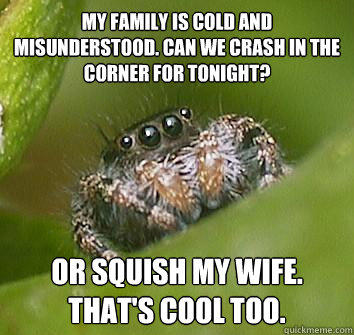
Misunderstood spider is misunderstood

Heck, even J.R.R. Tolkien, a man of enormous creative genius and one of my heroes, hated spiders. A childhood encounter with a tarantula traumatized him for life. His arachnophobia surfaced in his stories; his most famous books, The Hobbit and The Lord of the Rings, both feature wicked giant spiders.

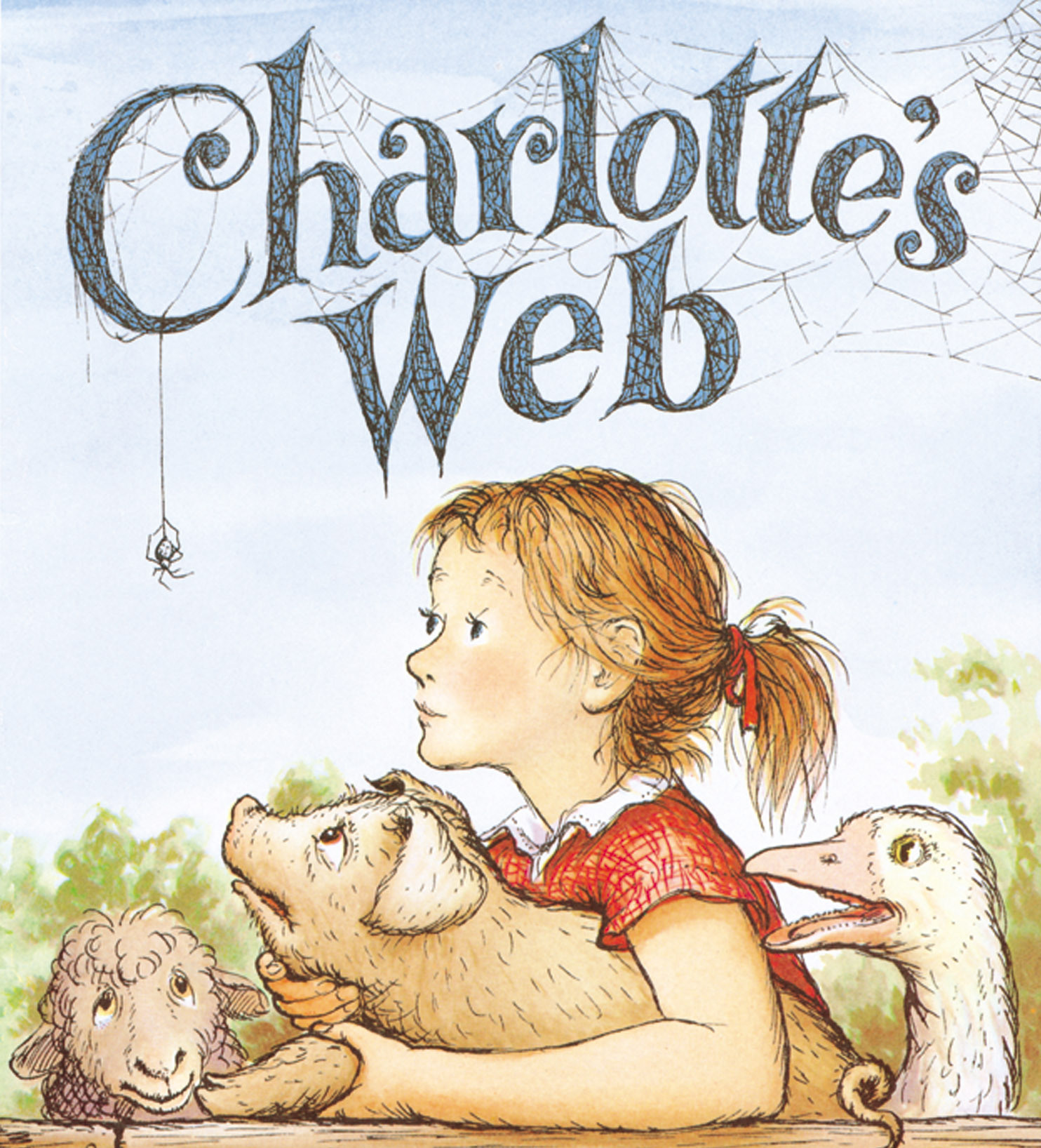
As much as I admire Tolkien, I think E.B. White was closer to the truth when he wrote Charlotte’s Web, a children’s book about a sweet, noble friend who happens to be a spider.

Charlotte's Web

Everyone thinks spiders are awful, but look at that goose! That bird is clearly evil, and probably possessed by many devils.

Charlotte is basically any and every spider: hardworking and considerate, spinning beautiful webs to rid the world of pests like flies and mosquitoes. E.B. White understood, guys.

Flipping heck, even cartoons for young children get it.

Spiders quietly eliminate true pests. Have you ever tried sleeping with a cloud of mosquitoes buzzing around your ears? I have. It sucks. Have you ever been annoyed by flies, stung by bees, or menaced by cockroaches? I have. It sucks. (Cockroaches, my archenemies, are the worst creatures on God’s green earth.) Spiders prevent the proliferation of these wretched beasties. If spiders did not exist, the world would be overrun by filthy pests. Spiders are God’s guardian angels.

Spiders aren’t so bad, really.

Look, I get it. Spiders look scary. They have a lot of legs and too many eyes, and the way they move is a little creepy. Spiders are odd-looking. However, if it were okay to kill things just because they looked odd, Pete Docter would have been murdered ages ago, and Pixar’s Inside Out (which Docter directed and co-wrote) would never have been made. So there.

Pete Docter

I have nothing but respect and admiration for Mr. Docter, but he sure is a goofy-looking guy. He has roughly 70% more forehead than most people.

If we killed everything that looked weird or made us uncomfortable, I probably wouldn’t have made it to my teens.

An expert on Englishing

There’s a reasonable explanation for this. Probably.

Yes, some spiders are venomous. Some can kill you. Do you know what else can kill you? Donkeys. (They have a vicious kick.) Human beings also kill each other occasionally, but I like to think most of us aren’t so bad—and neither are most spiders.

So the next time you want to slaughter a spider out of fear or disgust, consider showing some mercy and putting it outside instead!

Quirky Bible Translations

There are many English translations of God’s Word. How many? I’m not sure, but I prefer not to spend years of my life counting.

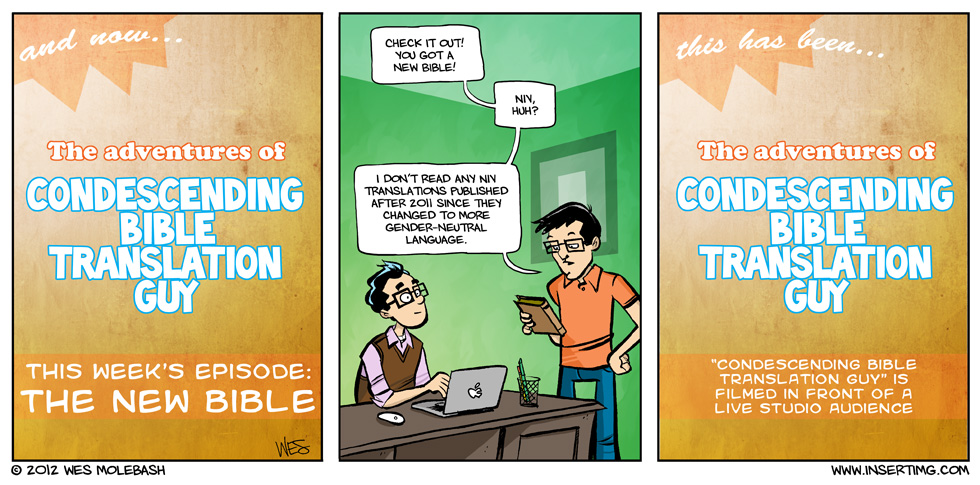
I often read the Bible, and when I do, I prefer the 1984 New International Version.

Yes, I'm this guy.

Confession: I am a Condescending Bible Translation Guy.

In my twenty-two years, I’ve stumbled upon some Bible translations that are best described as… quirky.

Here’s part of 1 Corinthians 13 in the plain English of the New International Version.

Love never fails. But where there are prophecies, they will cease; where there are tongues, they will be stilled; where there is knowledge, it will pass away.  For we know in part and we prophesy in part, but when completeness comes, what is in part disappears. When I was a child, I talked like a child, I thought like a child, I reasoned like a child. When I became a man, I put the ways of childhood behind me. For now we see only a reflection as in a mirror; then we shall see face to face. Now I know in part; then I shall know fully, even as I am fully known.

And now these three remain: faith, hope and love. But the greatest of these is love.

Here’s the same passage in the HWP Bible. That’s the Hawaiian Pidgin Bible, in case you were wondering. Read this excerpt aloud. Read slowly. Savor it.

Wen you get love an aloha, dat no goin pau eva. Da guys dat talk fo God, bumbye no need fo da tings dey say. Wen peopo talk diffren kine, bumbye nobody goin talk lidat. Da stuff da smart guys know, no matta, bumbye no need. You know, we ony know litto bit. Wen we talk fo God, we get ony litto bit fo tell. Bumbye, goin come da time wen everyting stay perfeck. Dat time, no need fo da litto bit kine stuff no moa. Small kid time, I wen talk jalike one small kid. I wen tink jalike one small kid. I wen figga everyting jalike one small kid. Now, I big, dass why I no do da tings da same way da small kids do um.

Right now, us guys can see stuff, but ony jalike wit one junk mirror. Hard fo figga wat we see dea. But bumbye, goin be clear. Us guys goin see everyting jalike was right dea in front our face. Right now, I ony know litto bit. But bumbye, I goin undastan everyting, jalike God undastan everyting bout me.

So now, get three tings dat stay: we can trus God, an we can know everyting goin come out okay bumbye, an we get love an aloha. From da three tings, da love an aloha kine, dass da main ting, an da bestes way.

Then there’s my favorite offbeat translation of Scripture… the lolcat version.

Luv no haz endingz. Tellin the futurez, tungz, an alla stuffz u know wil die. We haz knowingz a bit, an we haz profacy a bit. We no haz two much tho. O, wait. Win teh perfict coemz, teh not perfict will dyez, lolol. Wen i wuz a kitten, i meweded leik a kitten, thinkded liek a kittenz, an I chazed strings liek a kittenz. Wen i wuz becomez a cat, i NO WANT kitten waiz ne moar. For nao we see in teh foggy mirorr like when teh human gets out of teh shower, but tehn we see faec tow faec. Nao i haz knowingz just a bit, tehn i will haz all teh knowingz, as i haz been knownz.

Nao faithz an hoepz an luvz r hear, theses threes, but teh bestest iz teh luv. srsly.

Yes, this is a real translation. The entire Bible has been translated into lolspeak, the Internet language of funny cat picture captions. After all, the Apostle Paul did write about becoming “all things to all people.”

 What’s your preferred version of the Bible? Are you a Condescending Bible Translation Person or do you prefer idiomatic versions like The Message? Let us know in the comments!


This post was originally published on March 22, 2013. TMTF shall return with new content on August 24, 2015!

351. I Am Quitting

A lot has happened since I took a break from this blog three weeks ago. I watched Marvel’s Daredevil on Netflix and acquired a beckoning cat figurine—oh, and I quit the job I’ve held for nearly three years.

Yeah, a lot has happened since I last wrote a blog post. This means today’s post is an extremely personal one. Brace yourself.

Well, first things first: my beckoning cat is wonderful. I’ve christened it Kogoro. It sits upon my bookshelf and waves its paw with leisurely dignity, welcoming high fives from passersby.

Maneki-neko

My maneki-neko, or beckoning cat, is supposed to bring good luck or something, but I use it mostly as a high-five machine.

That’s that for my beckoning cat, and I suppose I’ll save my thoughts on Marvel’s Daredevil for my next post. That brings me to the trivial matters of my impending unemployment and future plans.

For nearly three years, I’ve worked in a group home for gentlemen with disabilities in Berne, Indiana. I have been sort of a nurse, sort of a cook, sort of a housekeeper, and sort of a therapist, but mostly I’ve been a clown and a punching bag for eight special, needy, wonderful gentlemen. I’ll be officially resigned from this job by the beginning of May.

I have a number of reasons for quitting, but this is no place for me to describe them at length. I will state, for the record, that my decision has been pending for a long time. The gentlemen from the group home are one reason I’ve kept my job for so long, but a more selfish reason has been my fear of the future.

In spite of my English Education degree and teacher’s license, I’ve realized I don’t want to spend the next four decades teaching English. I want to work in writing, editing, and publishing.

However, since reaching that conclusion, I’ve been busy enough with work, blogging, and other commitments that I’ve made hardly any progress toward a long-term career. It has been hard enough maintaining the status quo of my day-to-day life: working, paying bills, helping support my younger brother, blogging, and drinking exorbitant amounts of coffee.

However, my workplace, which has always been stressful and a bit dysfunctional, has finally reached a point at which I can no longer meet its competing demands and unrealistic expectations. (In past months, I’ve occasionally been tempted to storm into my supervisor’s office, slam my hands against the desk Ace Attorney-style, and bellow “RAGE QUIT!” at the top of my lungs. I like to think my actual resignation is a little more dignified.) I think it’s time for me to let it go. I’ve mostly put off planning for the future, but my job is finally nudging me to move on.

What’s next?

For now, I’m applying for a part-time job while I look into career options. I’d like to build up freelance writing and editing on the side, and I’ll look for publishing internships willing to accept college graduates. With more time on my hands, I may write some fiction; anything is possible. I’ll continue to help support my younger brother. For as long as I remain in Berne, I’ll visit the gentlemen in the group home. Finally, I’ll continue blogging and drinking coffee and being silly—these things will probably never change.

I’m relieved to be moving on from my job, and excited to seek new opportunities. I’m also really scared. I am scared as heck, guys. It’s the same fear I felt upon graduating from college, and felt again upon ending my post-college visit to Uruguay and returning to Indiana. It’s a lost, shamed, lonely feeling—a nagging conviction that I really ought have it all figured out by now, or at least know where I should go from here. This feeling isn’t fair or rational, but I sure feel it, and it sucks.

I think Jon Acuff has the right idea when he suggests punching fear in the face. As scared and insecure as I feel, I mean to keep moving forward. At the very least, I mean to try. To echo my favorite apostle: I will always trust, always hope, and always persevere.

Long ago, when this blog was new, I wrote a post in which I quoted Anne Shirley from Anne of Green Gables: “My future seemed to stretch out before me like a straight road. I thought I could see along it for many a milestone. Now there is a bend in it. I don’t know what lies around the bend, but I’m going to believe that the best does.”

I’ve reached another bend in the road. What lies beyond? God only knows. Fortunately for me, I still trust God after all these years, so that thought is a comforting one.

Now, if you’ll excuse me, I need to think about my future and give my beckoning cat a high five.

The Mark of Cain

A Short Story

I first saw Cain Adamson when I was eight years old. He wore a dirty overcoat over jeans and a hideous Christmas sweater. (I think he must have rescued it from a dumpster somewhere.) His clothes were shaded by an enormous hat. As he trundled a wheelbarrow along the old train tracks behind my house, he looked like any other vagrant.

One detail made him stand out, however—Cain was young. Most of the hobos who drifted past my house were grizzled old men. Even at the innocent age of eight, I could tell at a glance that the world had not been kind to them. They were lost, adrift in a cold, hungry world, and their faces showed it.

Cain looked like a man in his twenties. He looked, in fact, like someone impersonating a hobo for a stage play. His costume was perfect, from the muddy coat to the hat fluttering in the breeze. (I expected the wind to snatch it off his head and send it sailing into the sky like a paraglider.) Cain had a convincing prop in the form of his wheelbarrow, which was speckled in rust and covered with an old blanket.

Even the stage was ideal. My house stood on the outskirts of my little Indiana town, and not ten feet past my backyard ran an old set of train tracks. A line of trees lay beyond the tracks, and a cornfield beyond that. Those old tracks were the hobos’ highway: easy to navigate, somewhat sheltered from the wind, and out of sight of the police.

The costume, prop, and stage were flawless. The only problem was with the actor. Cain didn’t make a believable vagrant. He walked with a sense of purpose and urgency that none of his aimless contemporaries shared.

I saw him from my bedroom window, and watched him until he and his wheelbarrow passed out of sight. He made quite an impression on my young mind. My imagination suggested ten thousand stories for this mysterious wanderer. Could he be an undercover detective, or a criminal on the run? Was he a disinherited prince (unlikely in Indiana, but still exciting) or foreign spy?

Imagine, then, my wonder when he walked along those very tracks, going in the same direction, three years later, and again two years after that. His clothes had changed—he wore a beanie cap and leather jacket instead of the hat and overcoat—but I recognized him instantly.

Years passed as steadily as the traffic of vagrants along the tracks behind my house. I drifted from junior high to high school to college. At the weary age of twenty-one, I returned home from college one spring to visit my parents over a long weekend. It was then, as I sat on my back porch drinking coffee early in the morning, that I saw a familiar figure plodding through the mist along the tracks.

Cain had a new wheelbarrow—well, a less ancient wheelbarrow. It was newer than his old one, yet probably older than I. He wore a duster over a bathrobe (which looked exactly as ridiculous as it sounds) and a sweatshirt with slacks, and a cloth cap. As he passed my yard, I stared at his face. It hadn’t changed a bit.

To this moment, I’m not sure what came over me. It was unreal to glimpse this apparition from my childhood, and I suppose I didn’t want him to vanish again until I had found some answers. I set down my coffee, leaped off my porch, and ran out to the tracks to meet Cain Adamson.

“Good morning,” I said.

He looked me up and down. “You smell like coffee,” he said. His voice was as young as his face. “Spare a cup for an old man?”

I returned his searching glance. “Sure,” I replied. “You don’t seem dangerous—or old, come to that. Come on over to my porch, and I’ll get you some breakfast.”

Cain touched the brim of his cap. “I’ll stay just a few minutes,” he said.

“You’re welcome to stay all day.”

“A few minutes,” he repeated. “That’s all I can spare.”

“Well, excuse me,” I scoffed. “I didn’t realize you had such a full schedule, Mr.…?”

“Adamson. Cain Adamson.”

“Well, Mr. Cain Adamson, if you’ll deign to give me a few minutes of your valuable time, I’ll set you up with a bagel and some coffee.”

Cain parked his wheelbarrow in the grass next to my porch. I brought out a bagel, an extra cup, and the coffeepot. “Milk or sugar?” I asked.

“Surprise me,” said Cain, and then sank his teeth into the bagel.

“You’re welcome,” I said. I sat down and motioned to the other porch chair. “Have a seat, Mr. Adamson.”

“I can’t,” he mumbled through a mouthful of bagel.

I felt a touch of annoyance. “Have it your way, then: standing room only. At the very least, will you take off your cap?”

My guest shook his head, and I gave it up.

The sun was beginning to shine through the line of trees across the tracks from my house. Its beams stabbed the mist and crept across the wet grass toward Cain’s wheelbarrow.

“What have you got in there?” I asked.

Cain dusted bagel crumbs from his duster. “See for yourself. May I have another?”

After fetching more bagels, I stepped off the porch and grabbed the blanket covering the wheelbarrow. “Are you sure?” I asked.

Cain shrugged.

I yanked off the blanket. The wheelbarrow contained an incredible jumble of books, jewelry, pictures, and miscellaneous junk, with a sword for good measure.

“Where’d you get this?” I asked, picking up the blade. It was one of the Japanese weapons called katanas—elegant, curved swords used by samurai.

“That old thing?” said Cain with visible pride. “That’s one of Miyamoto Musashi’s swords.”

“Nice try,” I said, smiling, “but there’s no way. Musashi is a legend. This is a nice old sword, but it’s not Musashi’s.”

“It is,” insisted Cain. “He gave it to me.”

It was then I realized Cain must be mentally unbalanced. Many vagrants are.

“Musashi lived hundreds of years ago,” I said. “He lived in Japan. That’s a long way from here.”

“It was 1644,” said Cain.

I stared at him as he selected another bagel. “I bumped into Musashi-san in a cave called Reigandō. Lovely place. Pity I couldn’t stay long. He gave me one of his swords and told me there was honor in wandering, the poor deluded fool.”

I was sure the only deluded fool in the whole business was Cain, but put back the sword without comment. He was clearly out of his mind, and I felt a little resentful that the wanderer from my childhood was nothing more than a crazy hobo. Cain had lost his mystique. Disappointed, I sifted through his treasures in the hope of finding something more interesting than their owner.

“What’s this?” I asked, flipping through a book. “The Rime of the Ancient Mariner. Whose autograph is that in the front? Who is—” I paused, squinting at the signature. “—Stephen Wright? I’ve never heard of him.”

“He’s the Ancient Mariner,” said Cain.

I chuckled bitterly. “Of course he is. Cain, The Rime of the Ancient Mariner was written centuries ago. Your edition of the book was printed in 1984. Even if the Mariner had been a real person, which he wasn’t, he would have died ages ago.”

“You haven’t actually read the poem, have you?” asked Cain. “As penance for his sin, the Mariner is cursed to wander the world and tell his story. He’s still wandering, waiting for the Final Judgment.”

I tossed the book back into the wheelbarrow.

“Careful!” said Cain. “That’s my only copy.”

“Where did you meet the Mariner?” I asked sardonically. “Neverland?”

“I met him in Ecuador last year,” replied Cain. “We bumped into each other in a park in Quito—that’s in the Andes Mountains, in case you didn’t know—and kept each other company till we reached Guayaquil on the coast. The book was a parting gift.”

“So you’ve been wandering for hundreds of years,” I concluded, and laughed. “You’re looking pretty good for your age, Cain.”

My guest frowned.

“Have you met many other old wanderers?” I persisted. “I’m guessing Stephen Wright wasn’t exactly a young man—he’s called the Ancient Mariner, after all.”

“I know you’re making fun of me,” said Cain. “For God’s sake, I’m not an idiot. Oh, don’t worry,” he added as I lost my grin, “I’m used to it. At least you’re feeding me. A bit of light mockery is a small price to pay for bagels.”

“I’m sorry,” I said. “I recognized you from when I was a kid, and I was hoping you were, I don’t know, a spy or an exiled prince or something. You’re just a man, and I was taking out my disappointment on you. I was sure you were someone special—I mean, you haven’t changed a bit in all these years!”

Cain Adamson took a long, contemplative drink of coffee. “I’ve changed a lot,” he murmured. “You just can’t see it.” He took a bite out of his bagel and continued, chewing, “To answer your earlier question, I’ve met a few immortals in my time. There was the Ancient Mariner of course, and the Wandering Jew, and Odysseus.”

“I’ve heard of the Wandering Jew,” I said. “He was cursed to wander forever after mocking Christ on his way to the Crucifixion. Odysseus is another story. He made it safely home to his family. I know it—I’ve read The Odyssey.”

“But have you read Dante’s Inferno?” inquired Cain. “Dante missed a few details, but he got two things right: Odysseus abandoned his home and family for more adventures, and his travels didn’t end well. What Dante never learned was that Odysseus was cursed to wander the earth till its end for his unfaithfulness to his family.”

The sun had risen higher, and the mist was clearing. For a few minutes, Cain and I sat in silence. I drank more coffee. He quietly finished off the last bagel.

“I’m seeing a pattern here,” I said at last. “Your imaginary friends are cursed to wander the world for all time.”

“I wish we were imaginary,” said Cain, and took a final swig of coffee. “Better not to have been born than to spend thousands of years walking back and forth, never stopping for more than a meal or a night’s rest, driven onward by the curse of God! We all deserve it. That doesn’t make it any less hellish. Ah, well,” he sighed. “At least I have my souvenirs.”

I glanced at his rusty wheelbarrow and its jumble of rubbish.

“I’ve been collecting for millennia,” said Cain. “Of course, I’ve thrown away most of it. Gathering souvenirs is hard when all you’ve got is a wheelbarrow! Still, it’s quite a collection. I’ve got a gold piece from Rumiñawi’s lost treasure, and Amelia Earhart’s compass, and an autographed picture of Morgan Freeman. None of it matters, but everyone needs a hobby.”

I stared at him as he rose from his chair, adjusted his duster over his bathrobe—it still looked ridiculous—and moseyed from the porch to his wheelbarrow.

“Goodbye, Cain,” I said. “One last thing before you go. I don’t believe your tall tales of immortal wanderers, but that doesn’t mean I’m not interested. What’s your story? How did you end up cursed to wander forever?”

Cain covered his wheelbarrow with its blanket, and then turned to me. “I killed a man,” he said. “Thanks for breakfast,” he added, and lifted his cap in gratitude. For an instant, I saw an ugly mark on his forehead before it was covered again by the dirty cap.

Cain Adamson trundled his wheelbarrow away from my yard, followed the train tracks, and passed out of my life back into legend.


Author’s Note:

Eternal wanderers are an intriguing literary motif. As far back as the book of Genesis in the Bible, people are forced to wander as punishment for their sins. I couldn’t help but notice the way this trope appears throughout literary history, from the Wandering Jew to the unlucky protagonist of The Rime of the Ancient Mariner. (“Yes, I’ve read a poem. Try not to faint.”)

The motif of the cursed wanderer begged a question: What if these stories were all true? What if the earth were full of cursed sinners wandering until doomsday? Would they know each other? Would they form a club? How would they cope?

My original intention was to write a novel, perhaps titled Professional Wanderers, with the Wandering Jew as the protagonist and Cain as the villain. In the end, not having the time, I settled for this short story. I like the idea, though. Maybe, when I’m between jobs, I’ll expand this short story into a book… once I write The Eliot Papers and that detective novel, of course.

(I need more time to write.)

This short story was written as a backer reward for a donor to TMTF’s charity fundraiser. My thanks to that gentleman for allowing me to share the story here on the blog!