A Collection of Fabulous Video Game Mustaches

Stache Stash

Clockwise, beginning at the top right: Yang (Final Fantasy), Mario (Super Mario Bros.), Dr. Eggman (Sonic the Hedgehog), Dr. Wily (Mega Man), Wario (Super Mario Bros.), Naked Snake (Metal Gear Solid), Don Paolo (Professor Layton) and Marvin Grossberg (Ace Attorney).

This is a collection of magnificent video game mustaches: a stache stash, if you will. Which is best? My money is on Mario’s mustache. It lacks the extravagant flair and staggering size of the competition, yet it boasts an understated charm.


This post was originally published on May 8, 2013. TMTF shall return with new content on April 20, 2015!

349. TMTF’s Top Ten Video Games for People Who Don’t Play Video Games

Most of my dear readers aren’t really into video games. If you’re one of those readers, this post is for you!

Like most bloggers, I glance at my blog’s statistics from time to time. My blog host, WordPress, tracks views for each post on TMTF. I’ve noticed that posts about video games are among the least popular on this blog. This realization points to one logical course of action.

What’s that? I should stop writing blog posts about video games? Don’t be ridiculous! If my posts about games aren’t popular with my readers, there is clearly just one rational solution: I must encourage my readers to play more video games!

(Yes, I’m joking.)

Here are ten video games I recommend for anyone who doesn’t play video games. Most of these titles are easy for casual gamers to pick up and play, with a few must-play classics sprinkled in for good measure. These games—which represent a variety of genres and gaming generations—are upbeat, accessible, and fun to play.

The game is afoot, ladies and gentlemen, as TMTF presents…

The TMTF List of Top Ten Video Games for People Who Don’t Play Video Games!

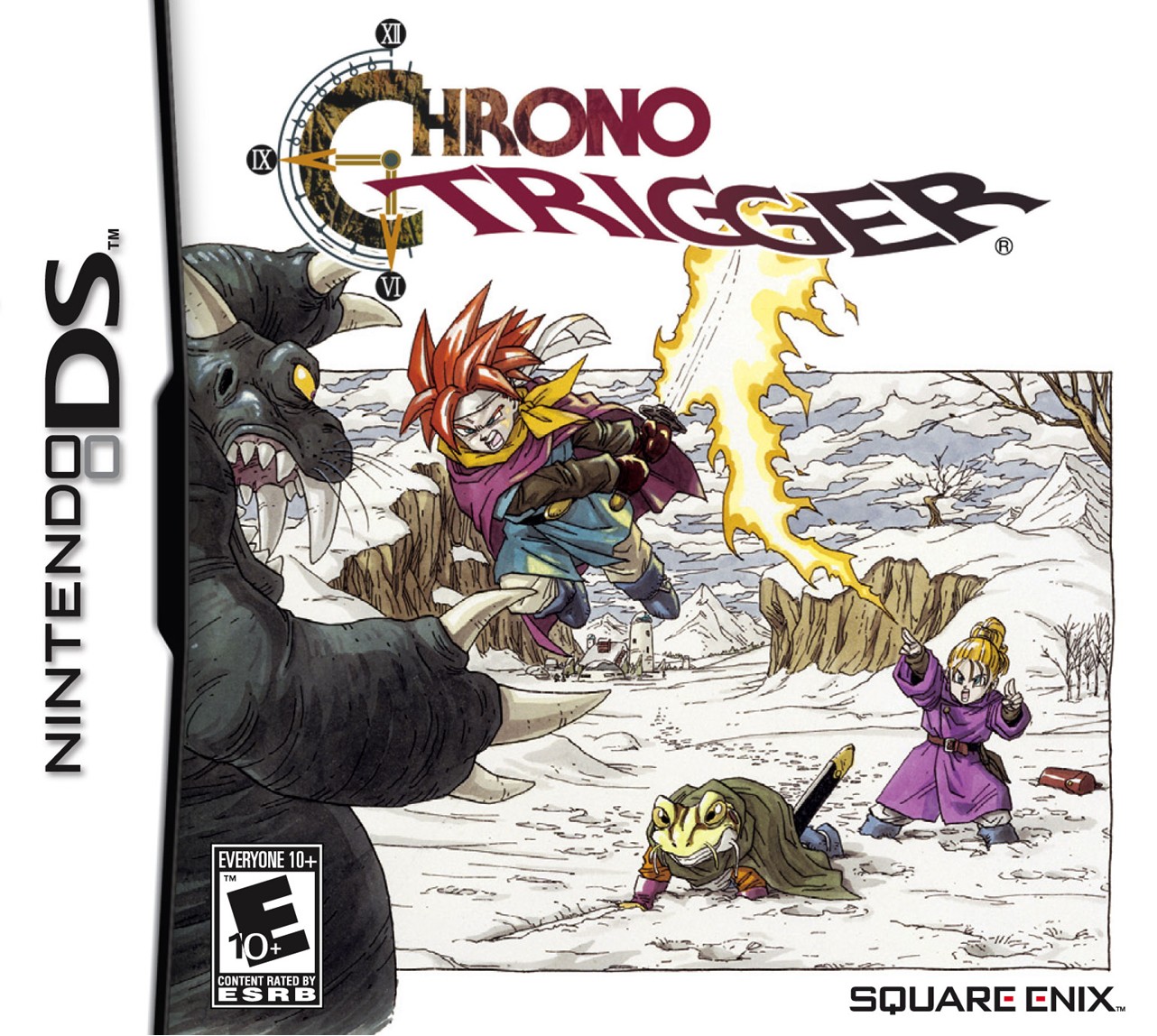
10. Chrono Trigger (Nintendo DS)

Chrono Trigger DSWe’re starting with a masterpiece, which is low on this list because it’s also a bit of a challenge for beginners. I tried to find a short, easy RPG (Role-Playing Game) for casual players, but the easy ones aren’t really worth playing. Chrono Trigger is a little complex, yet simpler than most classic RPGs—and dang if this isn’t a beautiful game.

Chrono Trigger is probably the best RPG I’ve ever played. It was revolutionary in its time, and it has aged well. The music, graphics, characters, and battle system are all superb. I recommend the Nintendo DS version above all others: the translation is vastly improved, a few handy features are added, the game can be played on the go, and it’s far easier to find than previous versions. If you play no other RPG in your lifetime, play this one!

9. Super Mario Bros. (Nintendo 3DS/Wii U eShop)
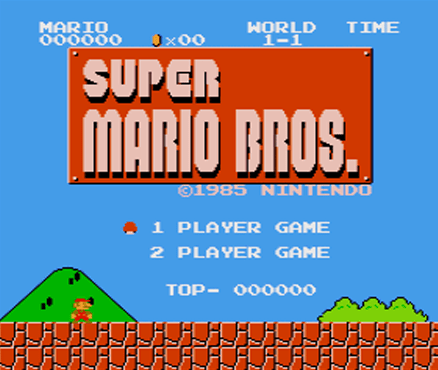
Super Mario Bros.This is where it all began. Super Mario Bros. hearkens back to the early days of video games, when it launched Mario into his shining career as the most famous character in the industry. The game has aged brilliantly: after thirty years, it’s still tons of fun and pretty easy to play.

This is the world’s most recognizable platformer: an iconic iteration in the Jumping on Stuff genre of video games. Nearly all platformers that followed, including greats like the earlier Sonic the Hedgehog games, owed it all to this one. Super Mario Bros. isn’t merely a classic game. It is, unequivocally, the classic game.

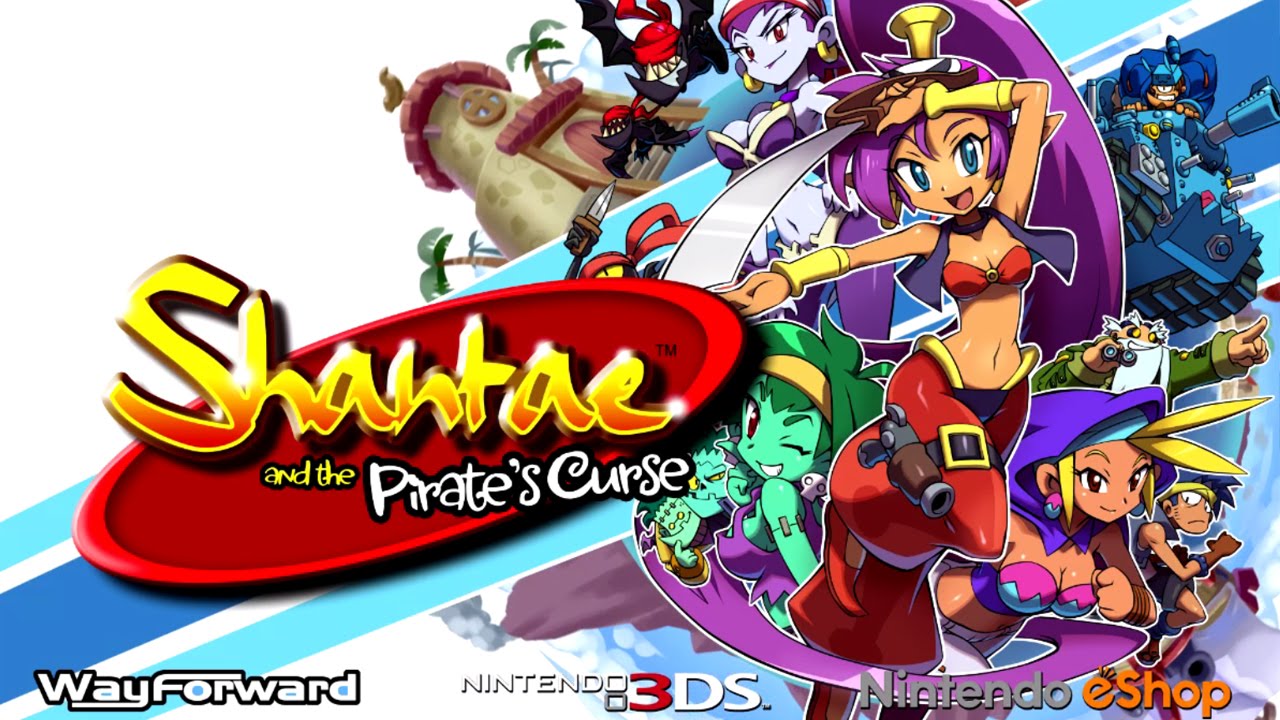
8. Shantae and the Pirate’s Curse (Nintendo 3DS/Wii U eShop)
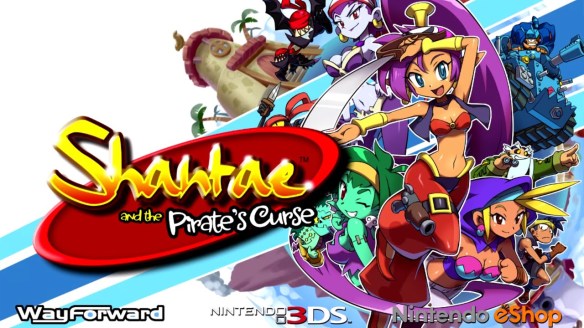
Shantae and the Pirate's CurseShantae and the Pirate’s Curse is a short, sweet, funny introduction to the action-adventure genre: a blend of exploring, fighting, and puzzle-solving. Available on Nintendo’s eShop, the game offers all the retro-styled joy of classics like Metroid, Mega Man, and Cave Story without their nail-biting difficulty and frustration.

This game is superb: a love letter to the games of yore that adds an upbeat tone and zany style. Shantae and the Pirate’s Curse is relatively short, an advantage for casual players. I must also give it bonus points for being absolutely freaking adorable.

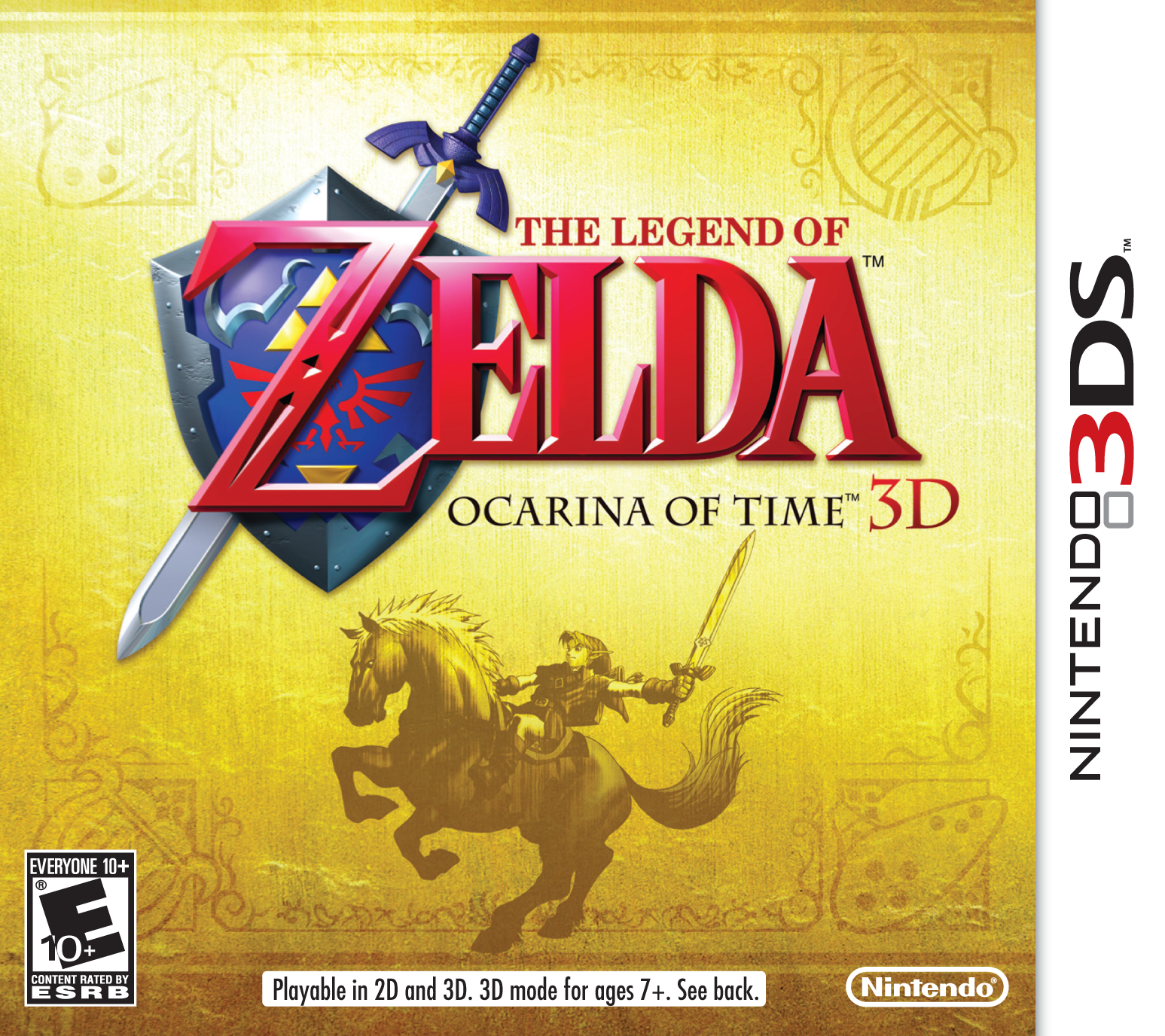
7. Ocarina of Time 3D (Nintendo 3DS)

Ocarina of Time 3DConsidered by many to be the greatest video game ever made, The Legend of Zelda: Ocarina of Time is the quintessential adventure game. I can hardly overstate its excellence. It defined both a genre and a generation.

The original version of Ocarina of Time shows its age, but the Nintendo 3DS version makes the game accessible by putting it on a mobile system with better graphics, redesigned menus, and an elegant hint system to help casual players. Even the Water Temple, a stage of infamous difficulty, has been streamlined. Ocarina of Time may be the world’s best video game, and this is certainly its best version.

6. Elite Beat Agents (Nintendo DS)

Elite Beat AgentsElite Beat Agents is pleasantly bonkers. Imagine someone putting a lot of popular songs (“September,” “Y.M.C.A.,” and “Material Girl,” among others) in a blender along with comic books, Japanese anime on VHS tapes, and disco fashion. This rhythm game is the result, inviting players to tap their way through more than a dozen absurd scenarios.

The premise of Elite Beat Agents is that a secret government agency assists desperate people through the inspirational power of song. It’s every bit as wacky as it sounds, and any player with a sense of rhythm (and a sense of humor) will probably enjoy it.

5. Portal (Microsoft Windows/Xbox 360/PlayStation 3)
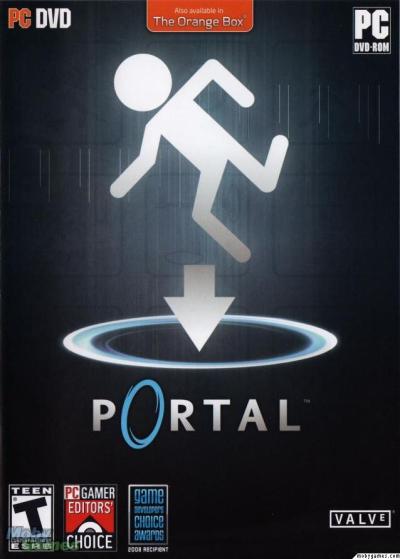
PortalPortal puts players in the high-tech boots of Chell, a woman who wakes up in an abandoned research facility with only a deranged (and delightfully funny) computer for company. Chell must escape armed only with an Aperture Science Handheld Portal Device that opens interconnected gates in three dimensional space. (It’s cooler than it sounds.)

Portal is a puzzle game, and probably the best example I’ve seen of a video game as art. The portal concept seems complicated for the first few minutes, but quickly becomes intuitive as the game puts players through puzzles on a gentle difficulty curve. Portal is brilliant, funny, sophisticated, and conveniently short at just a few hours long. While its sequel, the legendary Portal 2, is the better game, Portal is the perfect place to start.

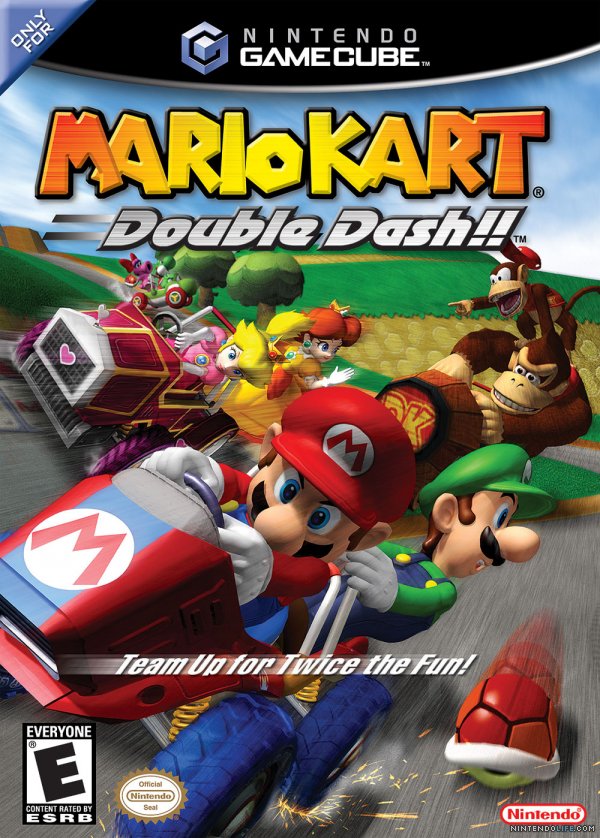
4. Mario Kart: Double Dash!! (Nintendo GameCube)

Mario Kart - Double Dash!!Mario Kart games are one part racing, one part warfare, and all parts fun. The games are all about beating competitors to the finish line… and also beating them with an assortment of damaging objects. Watch out for banana peels, explosives, and high-speed projectiles! Mario Kart games are a blast, sometimes literally.

Mario Kart: Double Dash!! is, in my humble opinion, the best of the bunch. The controls are straightforward and finely tuned. The racetracks are well-designed. Best of all, having two racers per go-kart allows for cooperation between players, not just competition. Newer players can pair up with more experienced ones.

3. Wii Sports (Wii)

Wii SportsThis is the ultimate casual game. All it requires is the ability to wave a controller that looks like a TV remote, and the willingness to look silly doing it. Wii Sports isn’t a deep game, but it doesn’t need to be. It offers fun, simple activities like golf and bowling. They won’t keep you hooked for hours, but they’re quite enjoyable in short sessions or with friends.

The real joy of Wii Sports is in getting up and moving. Motion controls are usually a cheap gimmick, but Wii Sports is one of the few games to use them really well. It may not be long or complex, but it’s an inviting place for casual gamers to start.

2. Phoenix Wright: Ace Attorney – Dual Destinies (Nintendo 3DS eShop)

Ace Attorney - Dual DestiniesWhen I first played an Ace Attorney game, I expected it to be dull—how could a video game about the legal profession be any fun at all? I was absolutely wrong. Ace Attorney is a series of interactive murder mysteries, with some courtroom drama and a ton of humor thrown in for good measure.

In the pretentiously-titled Phoenix Wright: Ace Attorney – Dual Destinies, the courts have entered a “dark age” in which suspicion and corruption run rampant. Wright and his team must defend their clients—including, in one memorable case, an innocent killer whale—as they unravel the mystery behind the dark age of the law. Dual Destinies is the best the Ace Attorney series has to offer, with polished mechanics and stellar storytelling. It’s also a great starting point for players new to the series, demanding no knowledge of previous games.

1. Professor Layton and the Last Specter (Nintendo DS)Professor Layton and the Last SpecterHave you ever picked up a book of puzzles—you know, a collection of mazes, word searches, riddles, math questions, brainteasers, and crosswords? The Professor Layton games are basically those puzzle books, but a thousand times more charming. They also feature tales of intrigue and mystery, all starring the top-hatted Hershel Layton.
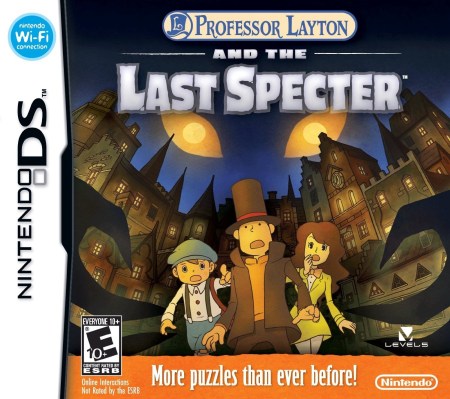
Professor Layton and the Last Specter is the first chapter of Layton’s story, but not the first game in the series. By this point, the series has hit its stride. The puzzles are delightfully varied, the style is charming, and the Professor himself is a refreshingly polite, kindhearted alternative to more traditional video game heroes. For those who don’t play video games, I can offer no higher recommendation than the good Professor’s puzzles!

What casual games do you recommend? Let us know in the comments!

The Not-a-Game Argument

I’m no expert on logical fallacies, but that doesn’t stop me from being annoyed by them. The Not-a-Game Argument is one of the worst. (I’m sure it has a proper name, but I haven’t bothered checking.)

Nintendo recently added some indie games to its online store. One of them, Gone Home, is an interactive story in which the player pieces together a narrative by wandering around a mansion and examining things. There are no bad guys to fight and no obstacles to overcome. It’s not a particularly video game-y video game.

The gaming community is not the friendliest, and some gamers have apparently been outraged by Gone Home. How dare its developers call it a game! It’s just a simulation, a story told passively, an affront to the artistic integrity of video games—including, I suppose, all the sophisticated and highly artistic games dedicated to shooting stuff.

Is Gone Home a video game? I’m not sure it matters. The problem with the Not-a-Game Argument is that it sidesteps the real questions. Is Gone Home good or bad? Is it art? Does it tell a good story? The Not-a-Game Argument refuses to ask these questions. It says, “I don’t like Gone Home, therefore it’s not a game and doesn’t have to be taken seriously. All arguments in its favor are invalidated, and can be ignored, because it doesn’t fit my personal specifications for a video game.”

The Not-a-Game Argument can be applied to anything. I can tell a Twilight fan, “I think the Twilight books are rubbish. Because you like them, your literary opinions must all be wrong.” I can tell an atheist, “I believe your worldview is incorrect, therefore I can ignore all of your views.” The Not-a-Game Argument is just a flimsy excuse for dismissing opinions we dislike.

Whether or not Gone Home is really a game, it’s worth taking seriously. Atheism, the Twilight books, and nearly everything else deserve consideration regardless of whether we end up agreeing with them. Not every conclusion is right, but every argument deserves to be heard.

In other news, Leo in the video above has perhaps the most soothing voice I’ve ever heard. It’s the polar opposite to Gilbert Gottfried’s harsh, grating tone. Gilbert and Leo should get together sometime and read poetry aloud.

312. Gritty or Glittery?

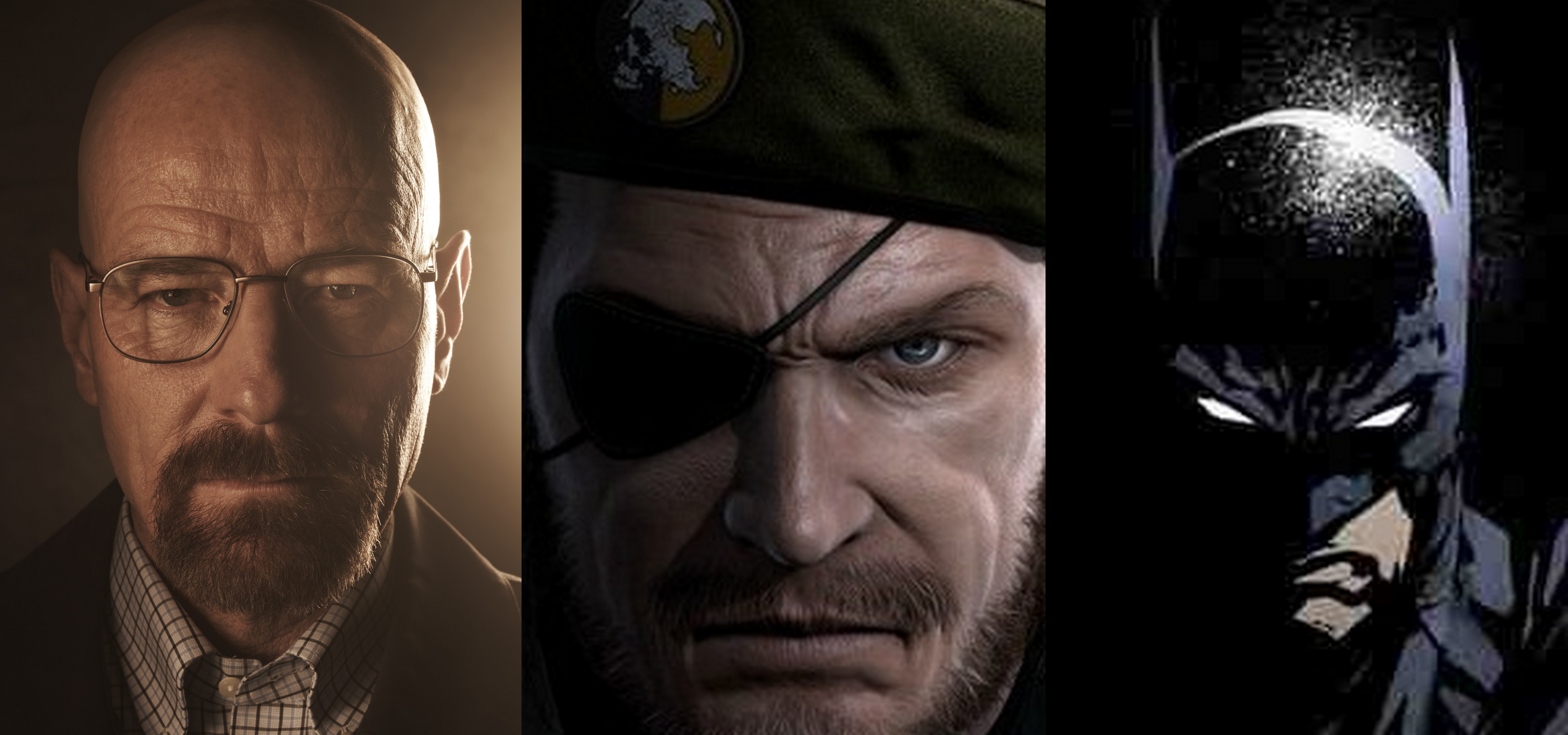
In the past few years, we’ve seen a lot of gritty media: books, films, and video games characterized by darkness, angst, violence, and square-jawed men brooding over inner conflicts. From Wolverine to Walter White, we’ve seen plenty of angsty characters on the large and small screens. Books—even young adult literature—feature people killing (and dying!) in all sorts of creative ways. The video game industry continues making games with guns, gore, and roughly one in every five words of dialogue being the f-bomb.

Angst! Darkness! Square jaws!

Angst! Darkness! Square jaws!

Why is gritty media popular? That’s a tough question to answer. I suppose there’s some truth to the darkness and violence in these media, and it resonates with people. We all feel sadness, discouragement, and anger. Some face depression, abuse, self-destructive impulses, or equally “gritty” problems.

Finally, gritty media often seems mature, sophisticated, or “grown-up.” All of this begs the question: Is it?

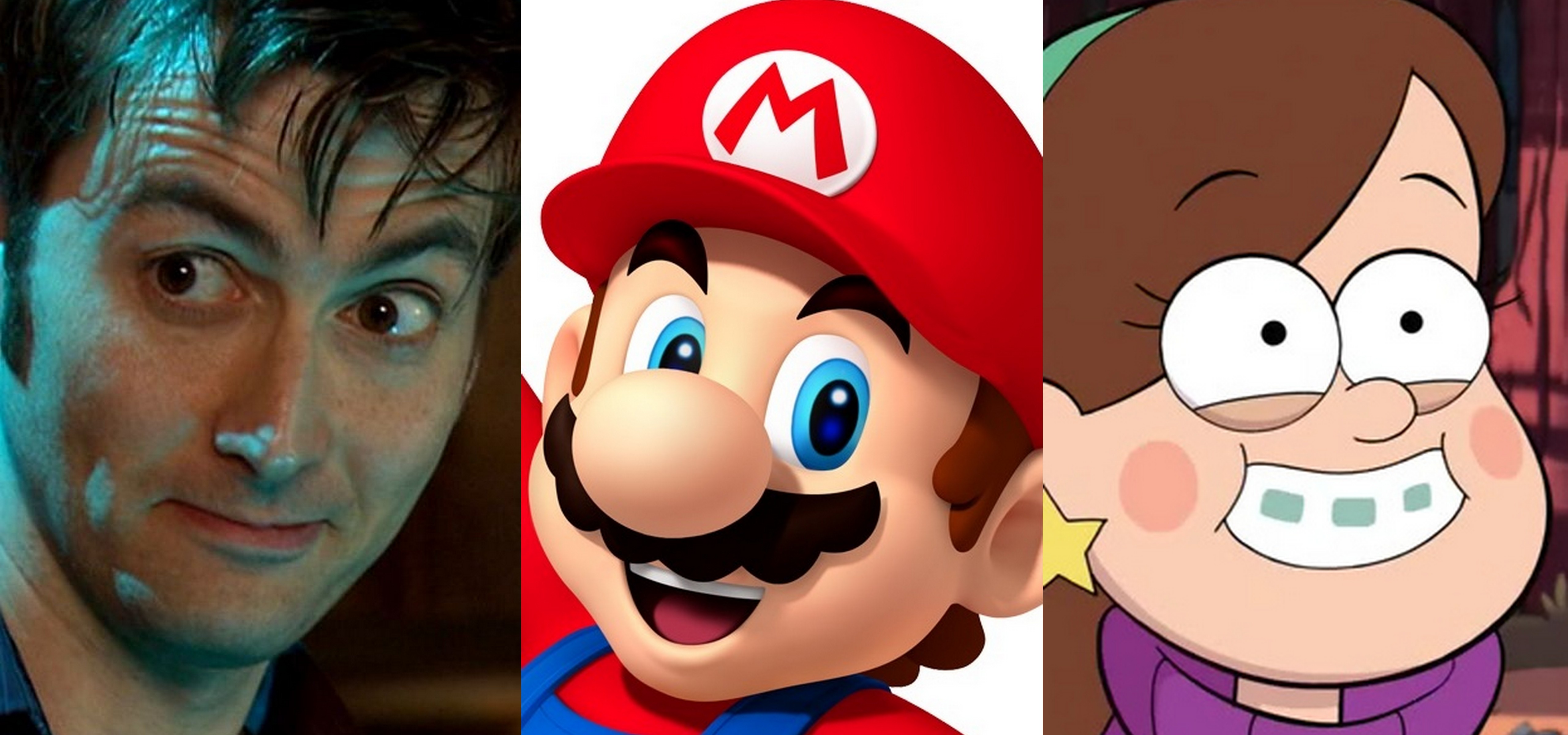
While gritty media has become more popular in past years, there are still plenty of lighthearted books, films, and video games: “glittery” media, so to speak.

Light! Smiles! Goofy braces!

Light! Smiles! Goofy braces!

Throughout history, comedy has nearly always taken a backseat to tragedy. Shakespeare’s most famous plays are his tragedies; Mark Twain’s cynical Adventures of Huckleberry Finn is celebrated over his cheerfuller books; P.G. Wodehouse’s clever comedies are largely eclipsed by the gloomy writings of his contemporaries. It seems humor and optimism can’t be taken seriously.

While there are certainly good things to say for gritty narratives, I don’t believe grittier is necessarily better. A purpose of art is to reflect or represent truth; the truth is that life isn’t always gloomy. A Farewell to Arms or The Things They Carried may be brilliant depictions of the horrors of war, but peace is no less real than violence. I think it’s absurd to suppose, say, Anne of Green Gables is necessarily an inferior book because it reflects joy and sentiment instead of pain and despair.

In the end, it’s a mistake to judge the quality of a thing by whether it’s gritty or glittery, tragic or comic, cynical or optimistic. That said, I would love to see people take glittery media more seriously. Can we study humorists like P.G. Wodehouse or James Thurber more widely in schools? I’m sure students wouldn’t mind putting down The Lord of the Flies. Can we have fewer gritty superhero movies and have more like Marvel’s quirky Guardians of the Galaxy? We could use a break from gloom and doom.

The world is an awfully dark place, but there’s a little light left. Some stories remember that, and I think they’re worth taking seriously.

309. TMTF Reviews: Mario & Luigi – Dream Team

Since deciding to review video games on this blog, I’ve covered a lot of violent ones. I’ve played titles in the Metal Gear Solid and Resident Evil series: games featuring guns, explosions, zombies, guns, death, nuclear weapons, and guns. Heck, I’ve played more violent video games in the past year alone than in all the years that came before.

It’s high time for something quirky and colorful. After so many gritty games, it’s time for a title that’s a little more… dreamy.

Mario & Luigi: Dream Team for the Nintendo 3DS the latest in a series of offbeat RPGs (role-playing games) starring a pair of portly plumbers. Mario’s RPGs are generally something special, and I hoped Dream Team would be no exception.

Does it play like a dream? Is is a nightmarish mess?

Mario & Luigi - Dream Team

Mario & Luigi: Dream Team (Nintendo 3DS, 2013)

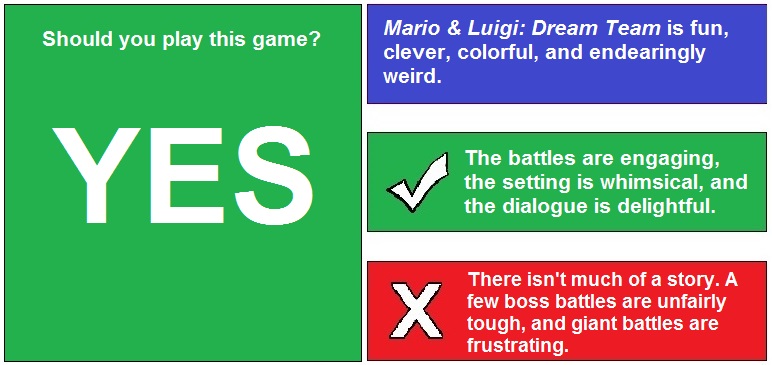
Mario & Luigi: Dream Team may not be the greatest Mario RPG ever made, but it’s superb… and strange. It’s very, very strange.

TMTF Reviews - Dream Team

Fever Dreams

When Mario and Luigi fly to Pi’illo Island for a restful visit, their vacation is disturbed by Antasma, a creature who haunts the world of dreams. Led by the prince of the ancient Pi’illo people, the Mario bros must rescue Pi’illo Island. They have one advantage: Luigi’s ability to nap anywhere allows him to open portals to the dream world, where things get weird.

Mario games are always a bit strange, but Dream Team is absolutely ridiculous. This is a game in which pillows talk, bizarre monsters roam freely, and Russian-accented bodybuilders obsess over beef—and all this in the “real” world. When the Mario bros dive into the dream world, it gets positively trippy. It’s a place in which timeless spirits talk on cell phones and geek out over superheroes.

The Mario RPGs have an unfair share of charm, and Dream Team is absolutely no exception. The setting is colorful, the characters are whimsical, and the dialogue is endearingly goofy. Dream Team is bright, absurd, and occasionally heartwarming.

Sadly, for all its strengths, the game doesn’t have much of a story. RPGs are often defined by strong narratives, and Dream Team doesn’t really have one. It’s a game whose story consists mostly of a series of objectives to be completed. I also lamented the lack of Fawful from previous Mario & Luigi games. His overenthusiastic villainy and mangled English were delightful, and his absence makes Dream Team a tiny bit less special.

Two’s a Crowd

Like the games before it, Dream Team gives the player separate, simultaneous control of both Mario bros. It takes a little practice, but controlling two characters allows for some engaging puzzles and battles.

The battle system is probably the game’s greatest strength. RPGs are built around strategy-based fights. Dream Team continues the Mario tradition of adding rhythm and timing to strategy. Instead of merely punching in commands and watching the battle unfold, the player must use timely button presses to attack and dodge. Battles, which so often become a chore in RPGs, are consistently fun.

I say consistently, not constantly, fun; a few of the tougher fights are frustrating. Casual players may appreciate the option for an “Easy” mode for boss battles. Without it, a couple of fights (especially the very last one) are unfairly tough.

Dream Team also features “giant battles” in which Luigi grows to colossal size in his dreams to take on huge foes. These battles look cool and use the Nintendo 3DS in innovative ways… but also take way too long, demand perfect timing, and allow practically no margin for error. It was hard to appreciate the giant battles when they made me want to smash my younger brother’s Nintendo 3DS against the wall.

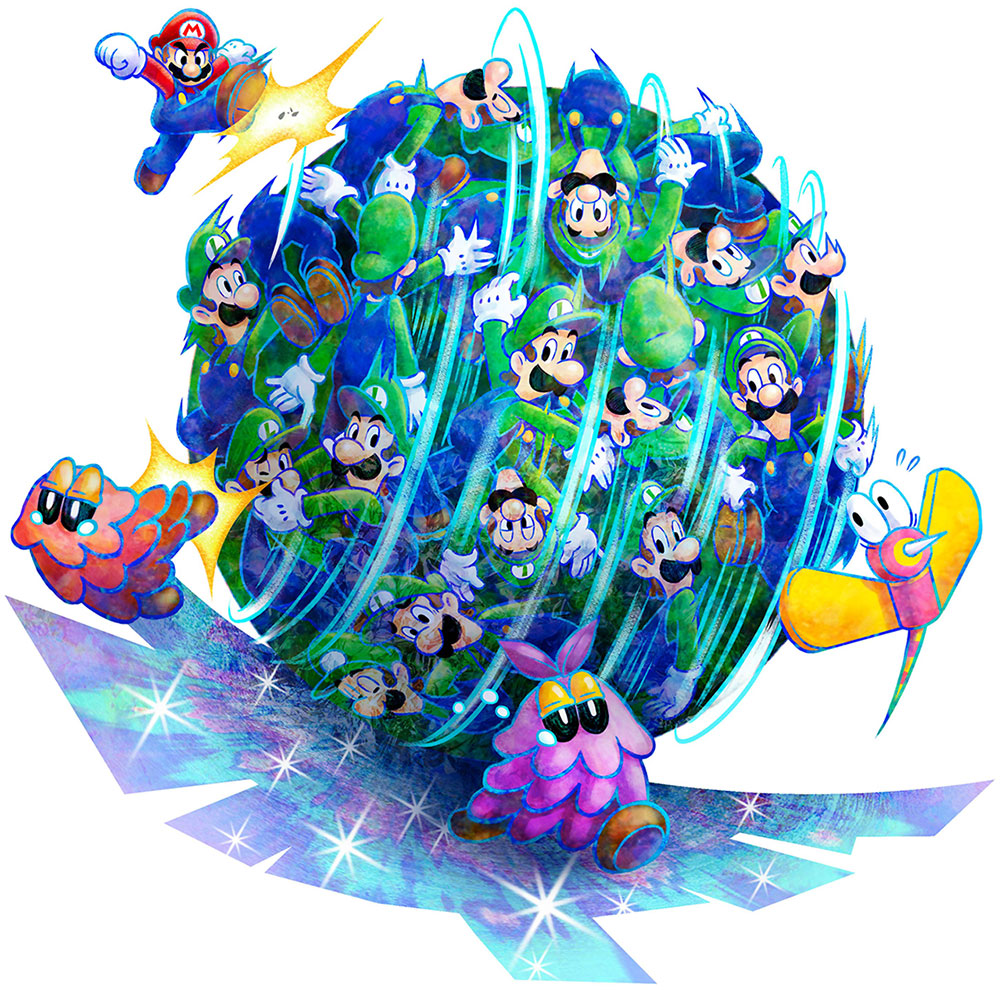
The “real” world in Dream Team is built as an isometrically-viewed RPG. The dream world, however, is viewed horizontally like a traditional Mario side scroller. Switching perspectives is refreshing. Even battles function differently in the dream world. As Mario dives into Luigi’s dreams, the slumbering Luigi is replaced by dream versions of himself. “Dreamy Luigi” can multiply himself to do all sorts of trippy things, from stacking up to rolling around in a ball. It’s surreal, and kinda awesome.

Dreamy!

That’s just how Luigi rolls.

Dreamy!

Although it can be frustrating at times, Mario & Luigi: Dream Team is upbeat, engaging, and fun—and bizarre in the most wonderful ways.

After so many grim games with guns, it was nice to enjoy something lighter, brighter, and altogether more cheerful. I expected charm and whimsy. I wasn’t disappointed. What I didn’t expect was talking pillows and beef-obsessed bodybuilders, but that’s just icing on a very sweet cake.

284. TMTF’s Top Ten Toughest Dudes in Video Games

It would be tough to live in a video game.

Seriously, I wouldn’t last two minutes. If I were extremely fortunate, I might end up in a nice, nonviolent title like Animal Crossing or Professor Layton. I would more likely blunder into a racing game, fantasy RPG or first-person shooter and be run over, beheaded or blown to bits. Even family-friendly titles like Mario Kart offer plenty of opportunities for violence and mayhem. (Curse you, blue shells!)

With perils, pitfalls, monsters, explosions, blades, bullets, traps, tyrants or bottomless pits at every turn, life as a video game character must be tough. It makes sense, then, for video game characters to be tough dudes. Today, dear reader, we will look at ten of the toughest.

For the purpose of this list, toughness is defined as the quality of being durable, stoic, intimidating and that word I can’t use. The usual top ten list rules apply: only characters from games I’ve played, only one character per game series, no licensed characters from other media (e.g. Han Solo or Indiana Jones) and so forth.

Toughen up, ladies and gentlemen, as TMTF presents…

The TMTF List of Top Ten Toughest Dudes in Video Games!

Be ye warned, here there be minor spoilers.

10. Wobbuffet (Pokémon series)

Wobbuffet

At this point there are more than seven hundred Pokémon, representing all kinds of creatures and concepts. It makes perfect sense, then, that there is a punching bag Pokémon. In battle, Wobbuffet doesn’t ever strike first, but receives blows and then counterattacks. The stoic, patient way it takes its enemies’ attacks is astonishing.

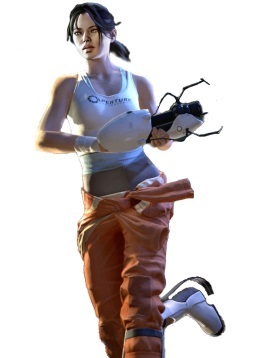
9. Chell (Portal series)

Chell

Chell isn’t a dude, per se, but the mute protagonist of the Portal games is as tough as they come. Unfazed by deadly traps, frightening falls and the childish taunting of a deranged opponent, Chell solves puzzles and cheats death with a deadpan expression and stubborn silence that would make Clint Eastwood proud.

8. Link (Legend of Zelda series)

Tough Link

Link is an all-purpose hero, navigating dark dungeons, solving puzzles, defeating monsters and wielding an endless array of weapons with effortless aplomb. Neither horrifying enemies nor baffling riddles seem to trouble him in the slightest, and no obstacle or pitfall ever derails his adventures. Link would be much higher on this list if he were not so adorable.

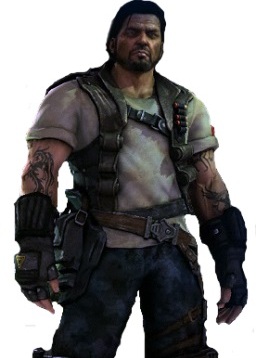
7. Jim Raynor (StarCraft)

Jim Raynor

Jim Raynor—a man covered in tattoos and ammunition, and probably smelling of whiskey, tobacco and engine grease—is a marshal-turned-outlaw-turned-hero. Bringing together the grit of a Wild West lawman and the tactical brilliance of an admiral, this spacefaring marine is betrayed by humans, hunted by space monsters and feared by practically everyone.

6. Bowser (Mario series)

Bowser

Bowser may be surly, self-absorbed and not very bright, but there’s no denying he’s tougher than iron. This hulking monster survives eight plunges into molten lava in his first game alone. The games that follow subject Bowser to falls, beatings and all kinds of injuries, yet the only thing he ever seems to bruise is his ego.

Update: My younger brother corrected me by pointing out that Bowser plunges into lava only once in his first game, not eight times. Notwithstanding this correction, Bowser is a pretty tough dude.

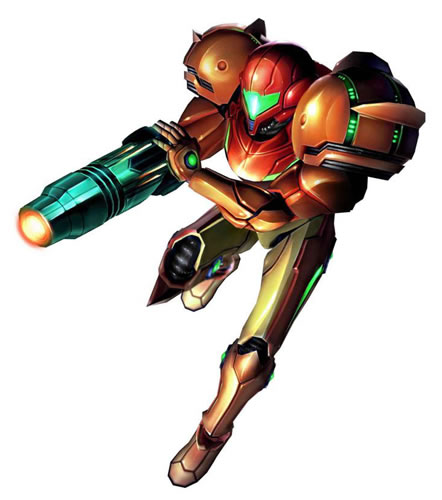
5. Samus Aran (Metroid series)

Samus Aran

Samus Aran, like Chell, isn’t a dude, but that never keeps her from being resourceful, independent and ridiculously tough. Venturing alone onto enemy spaceships and hostile planets, Samus guns down the galaxy’s most dangerous criminals and escapes without a scratch. Truly, hell hath no fury like a woman with a laser cannon.

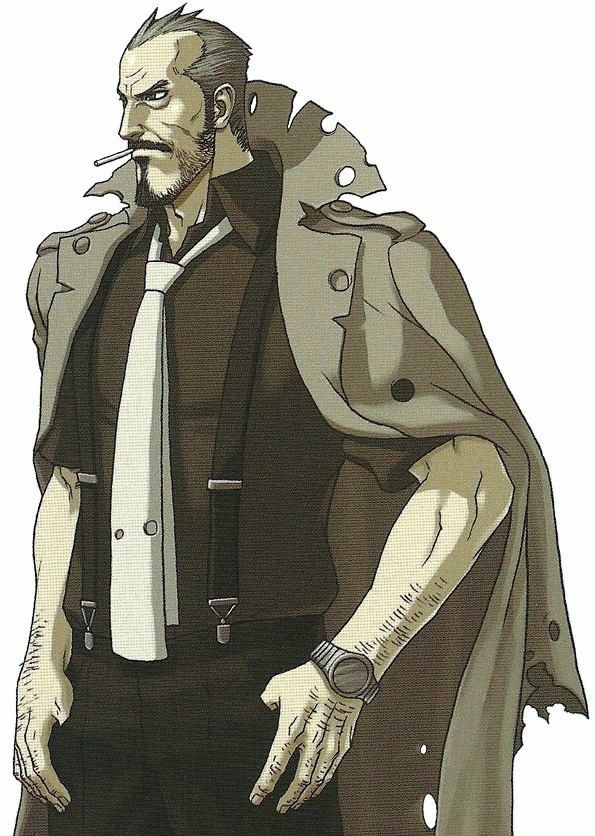
4. Tyrell Badd (Ace Attorney Investigations: Miles Edgeworth)

Tyrell Badd

Look at those bullet holes. Look at them. Even Tyrell Badd’s necktie has bullet holes. I can only surmise that the bullets, after passing through his tie, simply bounced off Badd. This hard-bitten homicide detective is a man of few words. Really, his coat says it all. By the way, that’s not a cigarette in his mouth, nor is he grabbing a gun when he reaches abruptly into his pocket. No, that’s a sucker in his mouth, and he’s reaching for a hand mirror. It’s a testament to his toughness that Badd makes even these effeminate items seem intimidating.

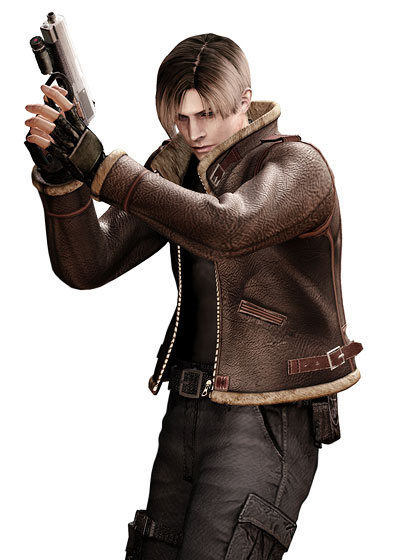
3. Leon S. Kennedy (Resident Evil 4)

Leon S. Kennedy

Nothing seems to faze this tough-as-nails government agent: not homicidal maniacs with chainsaws, not mutated monstrosities, not even the whiny college student he is sent to rescue. Leon S. Kennedy calmly and professionally handles every crisis, making every bullet count, thinking on his feet and suplexing anyone who gets too close. His tireless persistence and grace under pressure are remarkable.

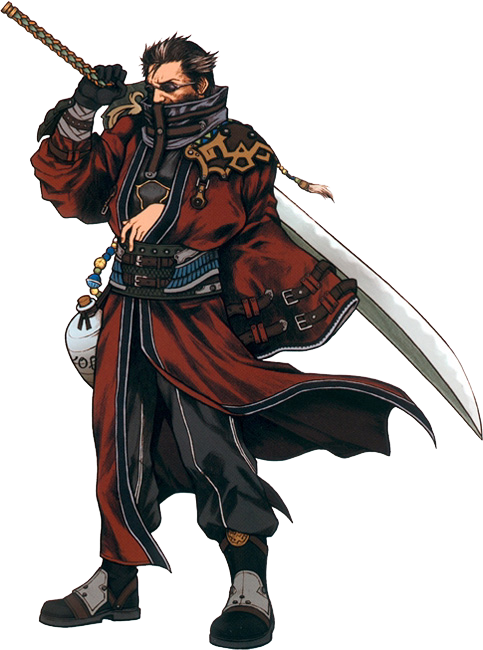
2. Auron (Final Fantasy X)

I’m not sure I even need to say anything about this guy. Auron’s sword is nearly as big as he is, for heaven’s sake! He often fights one-handed simply because he can. His clothes are equal parts samurai and gunslinger, with an awesome pair of shades for good measure. Auron is noble and courteous, but takes no nonsense and will cut any obstacle into very tiny pieces. Oh, and one final thing: Auron is dead. Not even death can stop this man. He lingers for one final adventure simply because he has unfinished business in the land of the living. Heroes hardly get tougher than that!

1. Naked Snake (Metal Gear Solid series)

Naked Snake

Naked Snake is the perfect soldier: an unstoppable combination of sniper, spy and infantryman. He sneaks through jungles and military bases, enduring harsh weather, surviving on rats and snakes, digging bullets out of his body with a knife and patching up his wounds before charging (or sneaking) back onto the battlefield. Snake defeats legendary soldiers, destroys massive war machines and prevents worldwide nuclear war at least three times. Then, tired of serving a corrupt government, he becomes a mercenary, creates his own nation-state and nearly conquers the world. (Note also his wicked eye patch.) There is no tougher dude in video games than this man.

O people of the Internet, what tough video game dudes would you add to this list? Let us know in the comments!

Video Games Need More Gilbert Gottfried

Video games are great and all, but do you know what they need? Gilbert Gottfried, the comedian who voiced the parrot from Disney’s Aladdin. Gilbert Gottfried is what video games need.

That said, here is two minutes and forty-five seconds of Gilbert Gottfried voicing iconic lines from video games, followed by a few very brief observations of my own.

1. Navi, the fairy from The Legend of Zelda: Ocarina of Time, would be less annoying if she were voiced by Mr. Gottfried.

2. Mr. Gottfried’s quiet “Fus ro dah,” a casual performance of a fierce dragon shout, is still enough to send a man plummeting to his death in The Elder Scrolls V: Skyrim. The man’s got skills.

3. The famous opera scene from Final Fantasy VI definitely loses some of its charm and beauty when Mr. Gottfried reads its lyrics. I suppose he can’t win them all.

4. A Mario game in which Mr. Gottfried provided Mario’s voice would be sublime.

5. Mr. Gottfried’s performance is possibly the only thing in the universe that could make Liquid Snake’s monologue about genetics from Metal Gear Solid any cheesier.

Now all we need is a video in which iconic game lines are read by Morgan Freeman. Get on it, Internet!

231. TMTF’s Top Ten Mad Scientists in Video Games

We’re all a little crazy.

Some of us, of course, are crazier than others. In video games, the craziest people generally fall into three categories: villains, mad scientists or both.

I find mad scientists particularly interesting. They abandon morality (and occasionally their own humanity) in their frenzied pursuit of knowledge or power. Like Adam and Eve snatching the forbidden fruit of Eden, these lunatics rebel against God and nature in the name of progress.

Mad scientists may not be good people, but they sure are good characters!

In listing ten remarkable mad scientists in video games, my usual rules apply: I won’t include characters from games I haven’t played (with one notable exception) and will include only one character per game series.

Let’s get crazy, ladies and gentlemen, as TMTF presents…

The TMTF List of Top Ten Mad Scientists in Video Games!

Be ye warned, here there be minor spoilers.

10. Andross (Star Fox series) Andross Andross was once a brilliant scientist, but experiments damaged his sanity and ruined his body. Although he doesn’t have much personality, Andross establishes himself as a notable villain by killing the father of the games’ protagonist and declaring himself emperor of the solar system. I also want to point out that Andross is apparently comfortable with sacrificing his body and becoming a disembodied head. That’s pretty crazy.

9. The Doctor (Cave Story) The Doctor (Cave Story) No, not that Doctor. This Doctor is actually a medical practitioner, albeit one with a terrifying lust for power and a violent disregard for the Hippocratic Oath. The Doctor is merciless, selfish and cruel. He also gets bonus points for using himself as a test subject and becoming a hideous mutant. Besides, I love that he carries around a pen. More villains need pens sticking out of their pockets.

8. E. Gadd (Super Mario Bros. series) E. Gadd Egad! This nutty little gentleman has the distinction of being pretty much the only good guy on this list. Professor Elvin Gadd is an inventor and paranormal researcher whose crowning achievement is a vacuum cleaner that sucks up ghosts. He’s cheerful, egotistical and blithely inconsiderate. He also sounds exactly like an Ewok from the Star Wars films. Coincidence? Yeah, probably. All the same, this pint-sized prof definitely has a few screws loose.

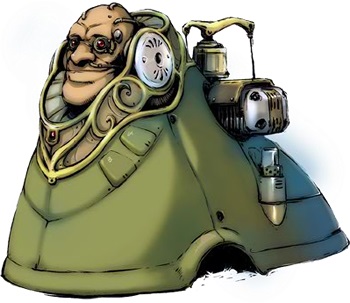
7. Fennel (Radiant Historia) Fennel Fennel is the head of a military research and development team. He’s also just a head. (There might be a body inside that slug-like machine, but I’m not sure.) Working for the warlike nation of Alistel, Fennel develops thaumatechnology: an arcane sort of machinery consisting mostly of weapons and other stuff that can kill you. He’s in love with his work, which takes place in a dim, ironclad labyrinth of underground chambers. Seriously, Fennel is kind of creepy.

6. Jean Descole (Professor Layton series) Jean Descole I haven’t actually played any of the games in which Jean Descole appears, but my brother insisted I put him on the list. (I’ll finish the Professor Layton series sooner or later.) Descole is cold, calm and cunning… except when he’s angry. Then he’s kind of scary. This archaeologist, master mechanic and self-proclaimed scientist manipulates others, shows no remorse and stops at nothing to achieve his goals. Don’t be fooled by that detached smile. Descole is not a sane man.

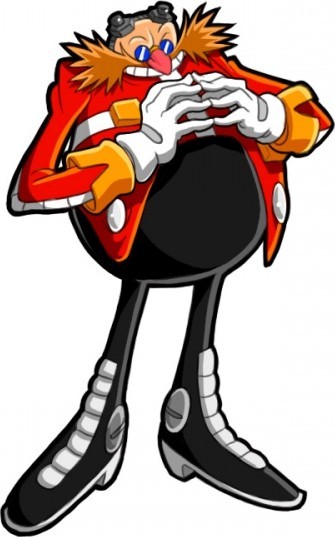
5. Doctor Eggman (Sonic the Hedgehog series) Doctor Eggman As his name and title suggest, Doctor Eggman is a doctor shaped like an egg. Despite being extremely intelligent, he is not particularly bright; his schemes for world domination are invariably foiled by either a hedgehog or his own incompetence. Eggman is short-tempered, egotistical and prone to bouts of maniacal laughter: defining characteristics of a mad scientist. Besides, dat stache.

4. Pamela’s Father (Legend of Zelda: Majora’s Mask) Pamela's Father This poor fool, who is never given a proper name, is so devoted to his study of supernatural phenomena that he moves to a desolate, haunted valley to study ghouls and ghosts… and takes his young daughter Pamela with him. When his research causes him to deteriorate into a monster, she traps him in the basement and bars the front door against the ghouls circling the house. Terrifying? Heck yes. Pamela and her father are eventually rescued and his humanity restored. Regardless, any scientist crazy enough to drag his daughter to an isolated wasteland to study monsters is, well, really crazy.

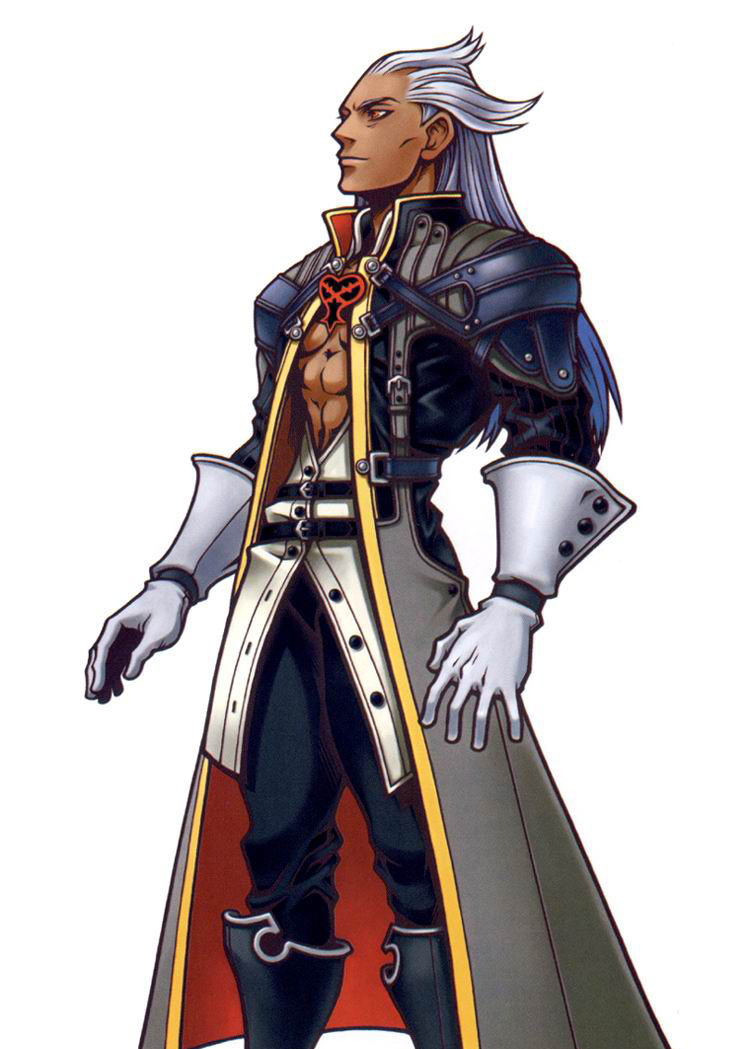
3. Ansem (Kingdom Hearts series) Ansem Without delving too deep into the convoluted lore of the Kingdom Hearts universe, I can confidently declare this man a lunatic. His research into the darkness of the human heart leads to the creation of Heartless, shadowy monsters that swarm across the universe to devour worlds. Ansem himself becomes a Heartless. Then—in the time-honored tradition of mad scientists—he tries to conquer everything. This tanned, stylish scientist gets extra points for inverting the stereotype of the pallid researcher in a lab coat.

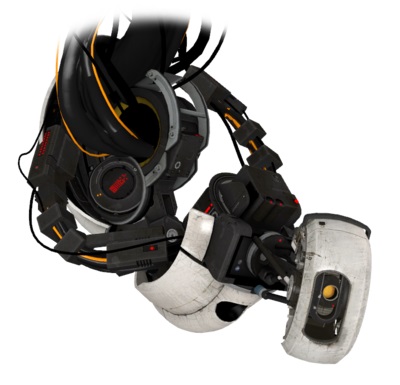
2. GLaDOS (Portal series) GLaDOSThis psychopathic artificial intelligence builds death traps and forces test subjects to solve them. Why? For science, of course! So what if her research methods kill a few people now and then? GLaDOS believes her experiments are worth the cost: “The science gets done and you make a neat gun for the people who are still alive!” I love how this AI becomes unhinged throughout the games, eventually stooping to ranting and petty insults. For complexity of character and degree of insanity, GLaDOS is wonderful.

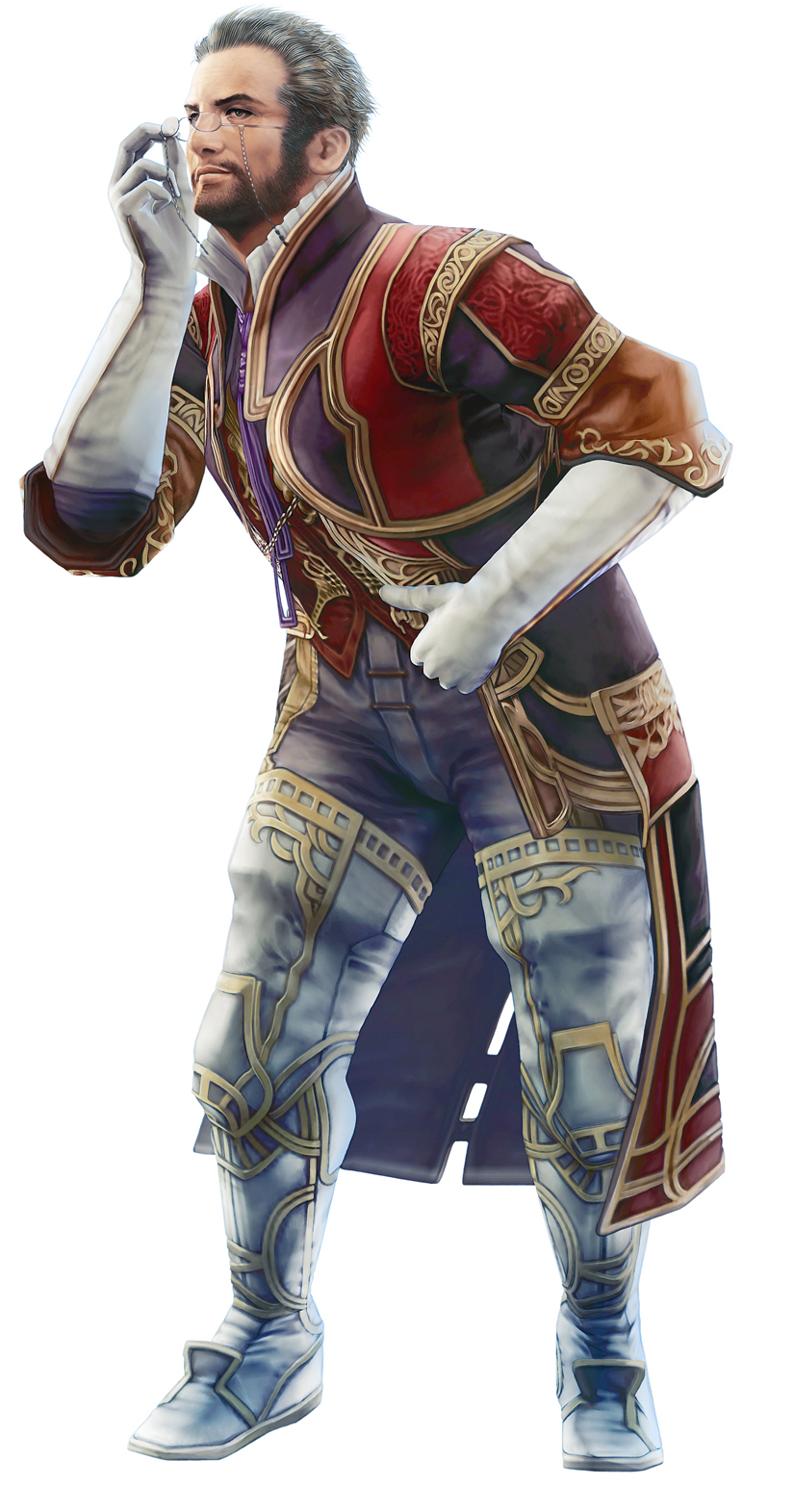
1. Cidolfus Demen Bunansa (Final Fantasy XII) Doctor Cid Cidolfus Demen Bunansa is one of the best video game characters I’ve ever seen: supercilious, brilliant, arrogant, foppish and seemingly insane. He treats tyrants with casual disrespect and talks aloud to an imaginary friend named Venat. I would call Cid a delusional lunatic, except for one minor detail—he’s actually sane. Cid is a rational man obsessed with defying the gods and putting “the reigns of history back in the hands of man,” abetted by the mysterious, invisible Venat. Of course, on his noble quest to liberate humankind, Cid doesn’t mind shedding a little innocent blood: this man ordered the obliteration of an entire city with the magical equivalent of an atomic bomb as a scientific experiment. Cid is fabulous, fascinating, evil, despicable, astonishing and awesome.

O people of the Internet, what video game mad scientists would you add to this list? Let us know in the comments!

213. TMTF’s Top Ten Life Lessons in Video Games

Wisdom can be found in unexpected places.

As we search for truth in literature, faith, philosophy and the lives of great people, we mustn’t overlook the lessons to be learned from BatmanDoctor Who, cartoon ponies and webcomics about video games. Speaking of which, video games have invaluable lessons to impart: useful principles that can be applied for success in real life.

What? You don’t believe me?

All right, then! Ladies and gentlemen, consider these practical principles as TMTF presents…

The TMTF List of Top Ten Life Lessons in Video Games!

10. Be Creative in Solving Problems

As tempting as it can be for gamers to try solving everything with violence, some obstacles can’t be shot, hacked or blown away. Puzzles require critical thinking. Some enemies require timing and strategy, not brute force, to conquer. Players have to be creative in solving problems, and creativity is an invaluable gift.

9. Observation Is Important

Anyone who plays a Legend of Zelda game quickly learns to keep his eyes open for cracked walls. Apply explosives to a damaged wall and—boom!—a way is opened. In video games, good things come to those who notice stuff. Video games teach players not merely to hear and see, but to listen and observe.

8. Appreciate Beauty

I love solving puzzles and defeating enemies as much as the next gamer. All the same, one of my favorite things about video games is how darn pretty they can be. (Yes, video games can be beautiful. Like brushstrokes or pencil shading, pixels can make lovely pictures.) Players are treated to sunrises and forests and ocean views, and appreciating beauty in artificial environments is a step toward appreciating it in natural ones.

7. Plan Ahead

Bad things happen to those who are unprepared. The person playing a Final Fantasy game will be annihilated by a tough boss if she hasn’t leveled up her characters or stocked up on healing potions. The person playing a Mario Kart game will lose if he hasn’t bothered figuring out the controls. This brings us to the real world, where the person taking a test or applying for a job will fail if she hasn’t planned ahead and made necessary preparations. Once again, video games reflect how things work in real life.

6. Stay Calm

The player who panics and starts mashing buttons will most often lose, and gamers get plenty of opportunities to panic. It can be hard to stay calm when facing that tricky jump or twisty racetrack or nigh-invincible boss, but rational decision-making is more likely to lead to success than wild overreaction. People who learn to keep cool under pressure while playing video games are better equipped to keep cool under pressure while doing everything else.

5. Practice Makes Perfect

I stink at fighting games: kicks and combos and Hadoukens baffle me. There is, however, one kind of fighting game in which I will destroy you: a Super Smash Bros. game. (My younger brother is a rare exception to this rule; he defeats me effortlessly.) As a kid, I resolved to learn to play Super Smash Bros. to enjoy the game with friends. Mastering the game took time and effort and many failures… and it was totally worth it. Practice makes perfect. At the very least, practice makes better. Video games remind us of the fact.

4. It’s Dangerous to Go Alone

With these cautionary words, the first Legend of Zelda game echoes something in another famous work: a book called the Bible. Quoth the Teacher in Ecclesiastes, “Two are better than one, because they have a good return for their labor: If either of them falls down, one can help the other up. But pity anyone who falls and has no one to help them up.” In other words, It’s dangerous to go alone.

3. You Reap What You Sow

So you’re playing a Final Fantasy game, slaying monsters, saving the world, when your quest is interrupted by some woman who wants you to gather medicines to heal a wounded traveler. A nuisance? Yes. You gather the medicines, the traveler recovers—and your kindness is rewarded. Another example: You take a break from your adventure in a Legend of Zelda game to attack a chicken. You’re enjoying yourself—after all, hacking away at defenseless fowl is fun—until the chicken decides to fight back, and your cruelty is punished with death. Seriously. For better or for worse, we reap what we sow. This biblical principle is common in video games.

2. Success Is an Investment

You can’t traverse that treacherous pitfall in a Mario game? Keep trying. You can’t conquer that unbeatable boss in a Kingdom Hearts game? Keep fighting. You can’t get your client acquitted in an Ace Attorney game? Keep gathering evidence. Sooner or later, you’ll pass that pitfall or flatten that boss or prove your client’s innocence. Now consider the real world. You can’t pass a class? Keep studying. You can’t afford something? Keep saving. You can’t achieve a goal? Keep working at it. No matter where you turn, success is an investment.

1. Good Guys Win

The world is full of terrible, selfish people who seem to succeed. Video games are no different. There are monsters, jerks and villains who triumph by lying, cheating and backstabbing. In the end, an overwhelming majority of those bad guys are brought to justice. The good guys—the guys who strive and fight and sacrifice to help others—win. You know what? In our world, the same thing happens. We need to be reminded that good guys sometimes win.

O people of the Internet, what useful lessons have you learned from video games? Let us know in the comments!

The Best History Lesson in the History of History

Never before has video game history been so awesome… or so darn catchy.

Fun Fact: Nintendo existed for nearly a century before it began producing video games. It dabbled in everything from card games to cab services before striking gold with franchises like Donkey Kong, Super Mario Bros. and Legend of Zelda in the eighties.