234. TMTF Reviews: The Legend of Zelda – A Link Between Worlds

This blog now reviews video games, because Zelda. I believe no further explanation is needed.

Well, I suppose a little explanation won’t hurt. The Legend of Zelda is a series of games by Nintendo in which a green-clad hero named Link explores the fantasy world of Hyrule: fighting monsters, solving puzzles, conquering dungeons and occasionally rescuing princesses. The Zelda series, which spans over twenty-five years and more than a dozen games, is possibly the most critically-acclaimed in the video game industry. Zelda games are generally classics at worst, and masterpieces at best.

(Except for… those games. We don’t speak of them.)

The Legend of Zelda: A Link Between Worlds for the Nintendo 3DS is the first new Zelda game in a couple of years. As a devoted fan of Zelda games, I was… not very excited.

A Link Between Worlds is an indirect sequel to The Legend of Zelda: A Link to the Past, a game released for the Super Nintendo Entertainment System more than twenty years ago. Even though the game is an undisputed masterpiece, I didn’t enjoy A Link to the Past as much as, well, pretty much any other game in the Zelda series.

I expected A Link Between Worlds to cash in on the longstanding popularity of A Link to the Past. I didn’t like the new game’s art style. What concerned me most of all were the game’s two biggest innovations: a new gameplay mechanic that seemed like a lame gimmick, and a largely nonlinear structure.

In short, I expected not to be impressed by A Link Between Worlds. I knew it would be a good game—heck, it’s Zelda, and Zelda never disappoints—but my expectations were (relatively) low.

How wrong I was. How very, very wrong.
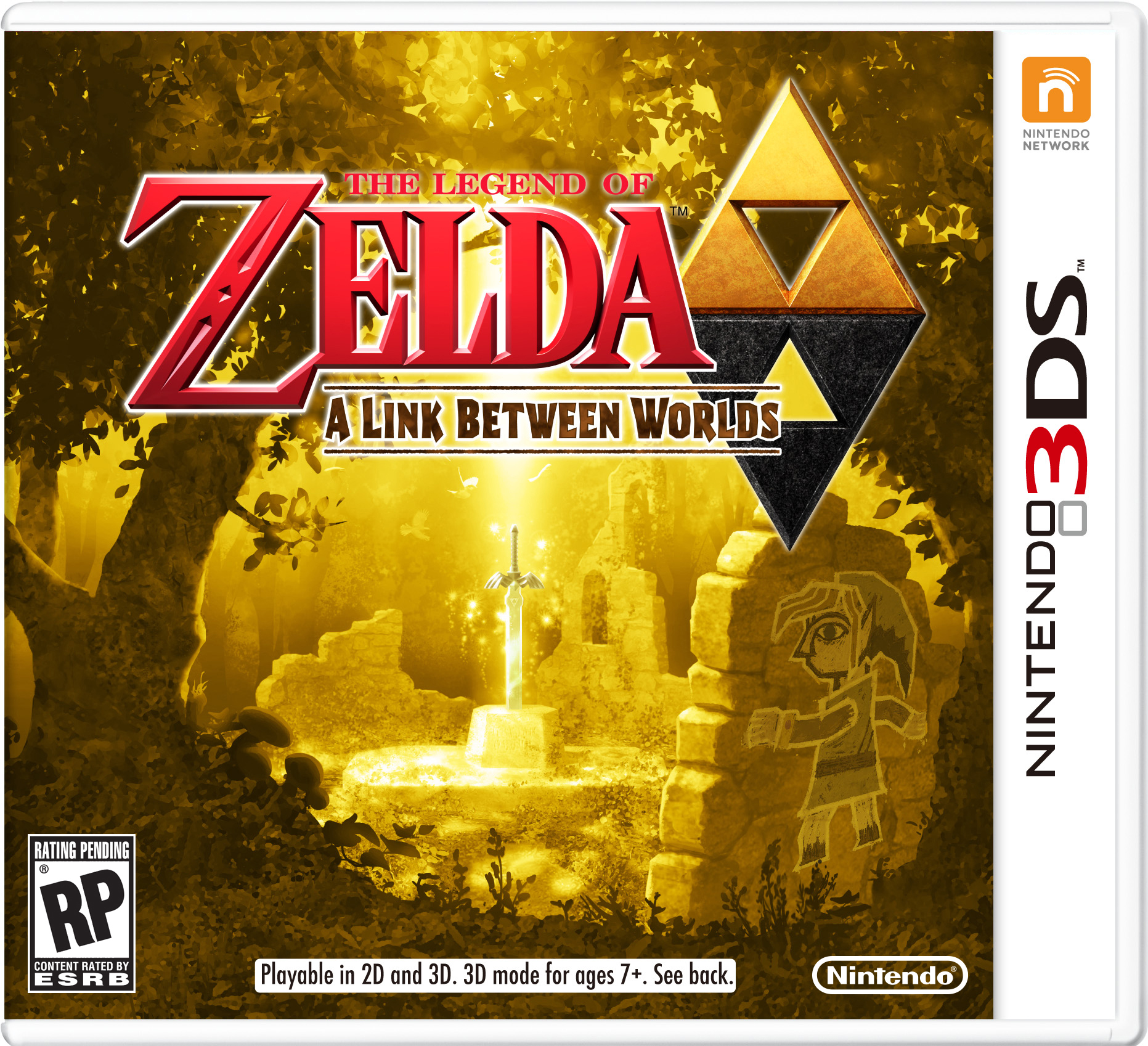
A Link Between Worlds

In all the best possible ways, The Legend of Zelda: A Link Between Worlds feels like a very old game. There are no overbearing tutorials (a problem in recent Zelda games); rather, the player learns by doing, which is much more fun than being told what to do. A Link Between Worlds, like the earliest Zelda games, also takes a minimalistic approach to story. As much as I love a complex plot and nuanced characters, I’ll be the first to admit the game’s narrative simplicity works in its favor.

The game’s production values—music, graphics and all that sort of thing—are top-notch. Advanced graphics have never been Nintendo’s strong suit, but the game’s visuals have a charming storybook quality to them. (They’re especially lovely when viewed in 3D.) As for the music, well, Zelda music has always been superb. This game is no exception.

The basic gameplay in A Link Between Worlds is typically effective Zelda stuff: walk, swing sword, raise shield, etc. This game adds the usual oddball assortment of weapons and tools—bombs, boomerangs, magic rods and so on—but with a twist: they are now rented and bought.

See, there’s this longstanding Zelda tradition of each dungeon containing a tool of some kind, along with puzzles that can only be solved with that tool. It’s kind of a lock-and-key dynamic.

This game throws that tradition out the window. Almost every weapon, tool and item can be rented or bought right from the start of the game. I was skeptical at first of such a system—and frankly, I missed the joy of discovering each dungeon’s new tool—but it worked pretty well.

Since most tools are available to the player from the beginning, dungeons no longer have to be completed in any particular order. The player, after a certain point in the game, is given a map marked with a bunch of red Xs and told, “Those are dungeons. Have fun!” Now, I don’t mind linearity in games. There’s satisfaction in completing linear objectives, and I find it almost reassuring to have a set path to follow. Having such freedom in A Link Between Worlds, however, was awesome. I could go anywhere. With two kingdoms to explore—one light, one dark—that’s a lot of freedom.

Heck, I could even switch dimensions. Players of A Link Between Worlds can merge into flat surfaces to become two-dimensional paintings.
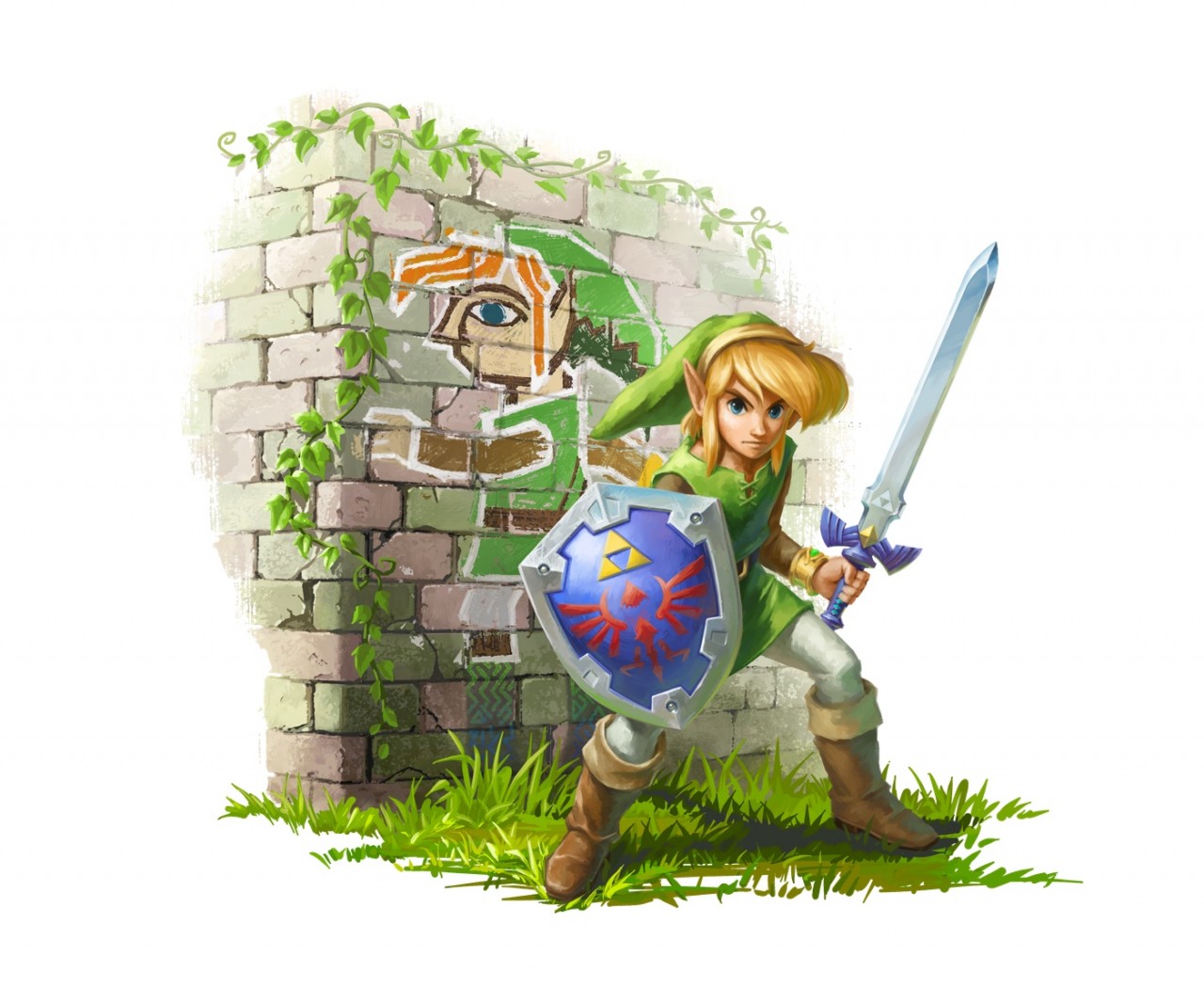
Link with PaintingThis gimmick seemed really lame at first. Becoming a painting? Bah! Boring! Upon actually trying it, however, I realized this gameplay mechanic is brilliant. As painting, players can move around, pop in and out of walls and reach all kinds of unexpected places. Like the portals in the Portal games, this mechanic totally changed my perspective. It’s even used to switch universes; appropriately to the game’s title, it serves as a literal link between worlds.

The dungeons in A Link Between Worlds are, like all Zelda dungeons, excellent: packed with puzzles and monsters and treasures, with a boss (i.e. a uniquely challenging enemy) at the end.

This is not a game for players who hope simply to hack and slash their way to victory. No puzzle is painfully difficult, and there’s an unobtrusive hint system, but most players will do much more thinking than fighting.

And, of course, there’s the usual slew of minigames, side quests and stuff to collect. I should also mention how easy the map and item interfaces are to use; while buttons are used for most gameplay, the 3DS touchscreen is utilized for maps and menus.

Ironically, considering how low my expectations were at first for A Link Between Worlds, I can’t find much to complain about. The game seems just a bit short. I would have liked to have seen the setting and backstory fleshed out more, and the plot lacked the emotional oomph of other Zelda games. This game is one to be remembered for the gameplay, not the story or characters.

The Legend of Zelda: A Link Between Worlds is a great game—not merely a good game, but a truly great one. My only lasting regrets are that it’s over so soon, and I shall have to wait at least a couple of years for the next Zelda.
231. TMTF’s Top Ten Mad Scientists in Video Games

We’re all a little crazy.

Some of us, of course, are crazier than others. In video games, the craziest people generally fall into three categories: villains, mad scientists or both.

I find mad scientists particularly interesting. They abandon morality (and occasionally their own humanity) in their frenzied pursuit of knowledge or power. Like Adam and Eve snatching the forbidden fruit of Eden, these lunatics rebel against God and nature in the name of progress.

Mad scientists may not be good people, but they sure are good characters!

In listing ten remarkable mad scientists in video games, my usual rules apply: I won’t include characters from games I haven’t played (with one notable exception) and will include only one character per game series.

Let’s get crazy, ladies and gentlemen, as TMTF presents…

The TMTF List of Top Ten Mad Scientists in Video Games!

Be ye warned, here there be minor spoilers.

10. Andross (Star Fox series) Andross Andross was once a brilliant scientist, but experiments damaged his sanity and ruined his body. Although he doesn’t have much personality, Andross establishes himself as a notable villain by killing the father of the games’ protagonist and declaring himself emperor of the solar system. I also want to point out that Andross is apparently comfortable with sacrificing his body and becoming a disembodied head. That’s pretty crazy.

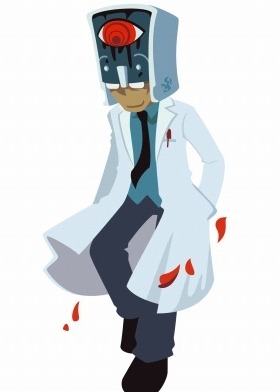
9. The Doctor (Cave Story) The Doctor (Cave Story) No, not that Doctor. This Doctor is actually a medical practitioner, albeit one with a terrifying lust for power and a violent disregard for the Hippocratic Oath. The Doctor is merciless, selfish and cruel. He also gets bonus points for using himself as a test subject and becoming a hideous mutant. Besides, I love that he carries around a pen. More villains need pens sticking out of their pockets.

8. E. Gadd (Super Mario Bros. series) E. Gadd Egad! This nutty little gentleman has the distinction of being pretty much the only good guy on this list. Professor Elvin Gadd is an inventor and paranormal researcher whose crowning achievement is a vacuum cleaner that sucks up ghosts. He’s cheerful, egotistical and blithely inconsiderate. He also sounds exactly like an Ewok from the Star Wars films. Coincidence? Yeah, probably. All the same, this pint-sized prof definitely has a few screws loose.

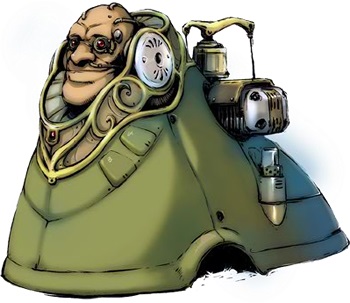
7. Fennel (Radiant Historia) Fennel Fennel is the head of a military research and development team. He’s also just a head. (There might be a body inside that slug-like machine, but I’m not sure.) Working for the warlike nation of Alistel, Fennel develops thaumatechnology: an arcane sort of machinery consisting mostly of weapons and other stuff that can kill you. He’s in love with his work, which takes place in a dim, ironclad labyrinth of underground chambers. Seriously, Fennel is kind of creepy.

6. Jean Descole (Professor Layton series) Jean Descole I haven’t actually played any of the games in which Jean Descole appears, but my brother insisted I put him on the list. (I’ll finish the Professor Layton series sooner or later.) Descole is cold, calm and cunning… except when he’s angry. Then he’s kind of scary. This archaeologist, master mechanic and self-proclaimed scientist manipulates others, shows no remorse and stops at nothing to achieve his goals. Don’t be fooled by that detached smile. Descole is not a sane man.

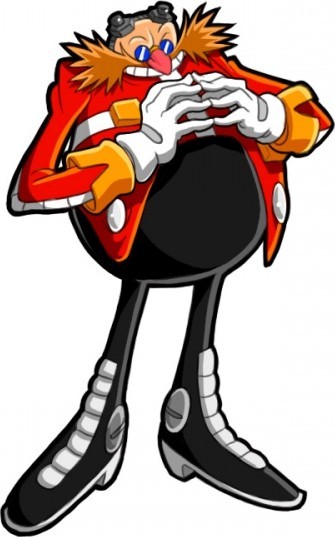
5. Doctor Eggman (Sonic the Hedgehog series) Doctor Eggman As his name and title suggest, Doctor Eggman is a doctor shaped like an egg. Despite being extremely intelligent, he is not particularly bright; his schemes for world domination are invariably foiled by either a hedgehog or his own incompetence. Eggman is short-tempered, egotistical and prone to bouts of maniacal laughter: defining characteristics of a mad scientist. Besides, dat stache.

4. Pamela’s Father (Legend of Zelda: Majora’s Mask) Pamela's Father This poor fool, who is never given a proper name, is so devoted to his study of supernatural phenomena that he moves to a desolate, haunted valley to study ghouls and ghosts… and takes his young daughter Pamela with him. When his research causes him to deteriorate into a monster, she traps him in the basement and bars the front door against the ghouls circling the house. Terrifying? Heck yes. Pamela and her father are eventually rescued and his humanity restored. Regardless, any scientist crazy enough to drag his daughter to an isolated wasteland to study monsters is, well, really crazy.

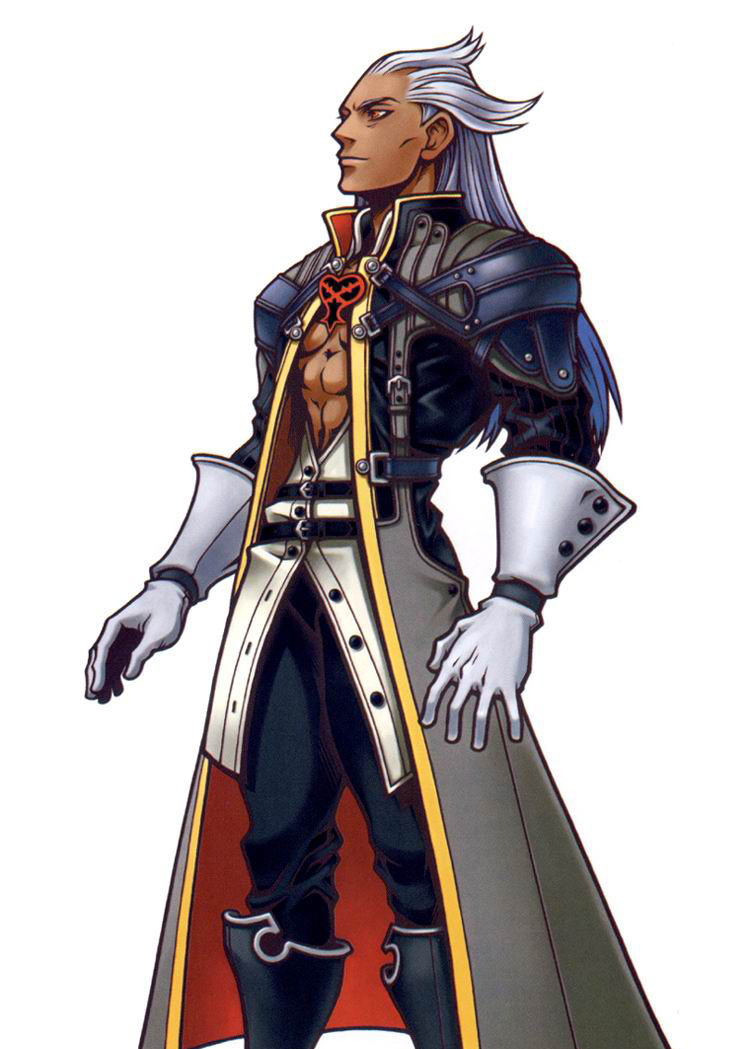
3. Ansem (Kingdom Hearts series) Ansem Without delving too deep into the convoluted lore of the Kingdom Hearts universe, I can confidently declare this man a lunatic. His research into the darkness of the human heart leads to the creation of Heartless, shadowy monsters that swarm across the universe to devour worlds. Ansem himself becomes a Heartless. Then—in the time-honored tradition of mad scientists—he tries to conquer everything. This tanned, stylish scientist gets extra points for inverting the stereotype of the pallid researcher in a lab coat.

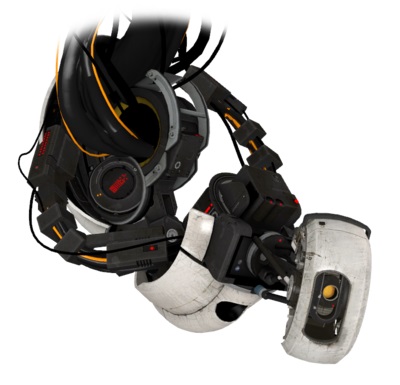
2. GLaDOS (Portal series) GLaDOSThis psychopathic artificial intelligence builds death traps and forces test subjects to solve them. Why? For science, of course! So what if her research methods kill a few people now and then? GLaDOS believes her experiments are worth the cost: “The science gets done and you make a neat gun for the people who are still alive!” I love how this AI becomes unhinged throughout the games, eventually stooping to ranting and petty insults. For complexity of character and degree of insanity, GLaDOS is wonderful.

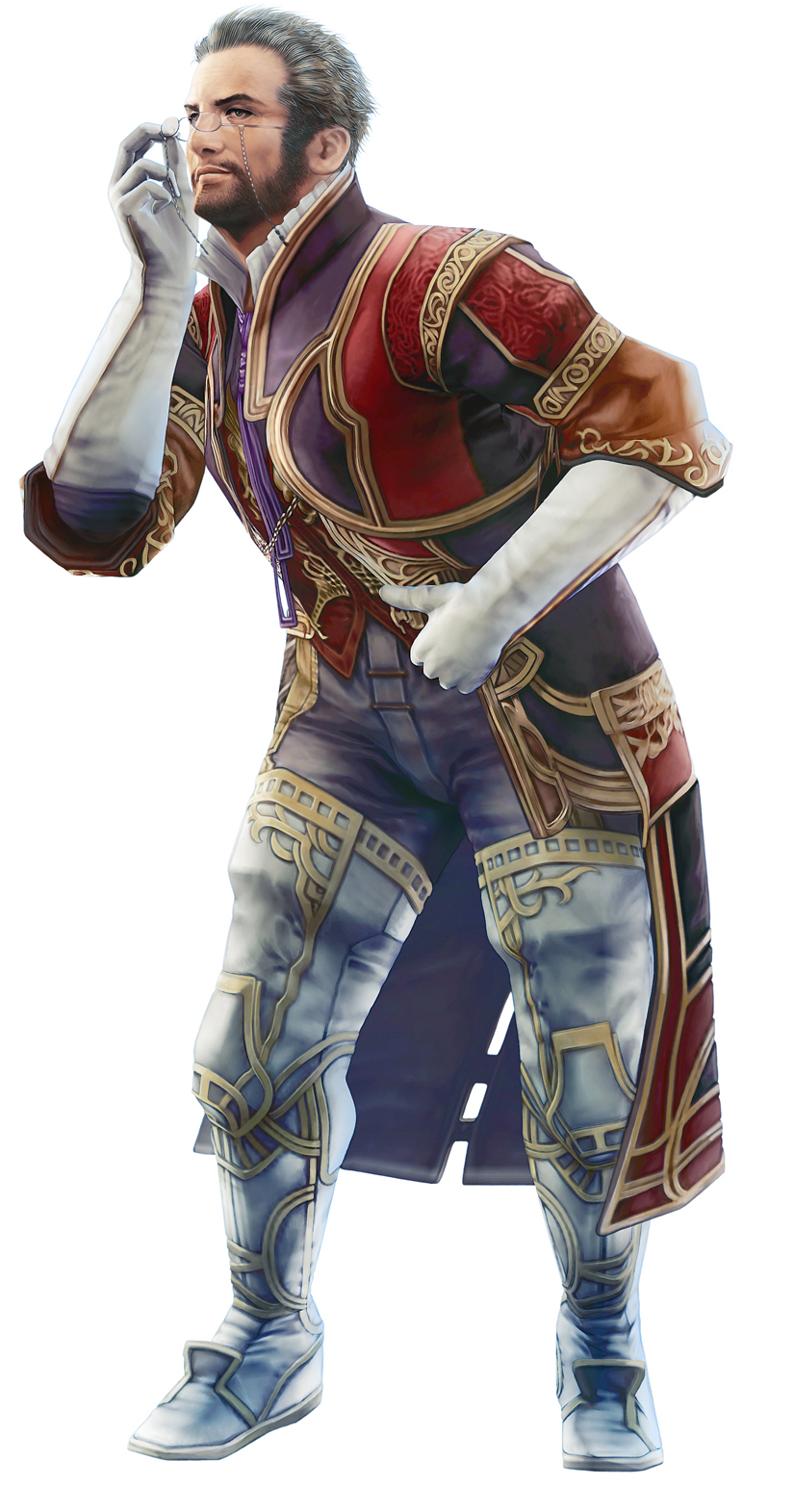
1. Cidolfus Demen Bunansa (Final Fantasy XII) Doctor Cid Cidolfus Demen Bunansa is one of the best video game characters I’ve ever seen: supercilious, brilliant, arrogant, foppish and seemingly insane. He treats tyrants with casual disrespect and talks aloud to an imaginary friend named Venat. I would call Cid a delusional lunatic, except for one minor detail—he’s actually sane. Cid is a rational man obsessed with defying the gods and putting “the reigns of history back in the hands of man,” abetted by the mysterious, invisible Venat. Of course, on his noble quest to liberate humankind, Cid doesn’t mind shedding a little innocent blood: this man ordered the obliteration of an entire city with the magical equivalent of an atomic bomb as a scientific experiment. Cid is fabulous, fascinating, evil, despicable, astonishing and awesome.

O people of the Internet, what video game mad scientists would you add to this list? Let us know in the comments!

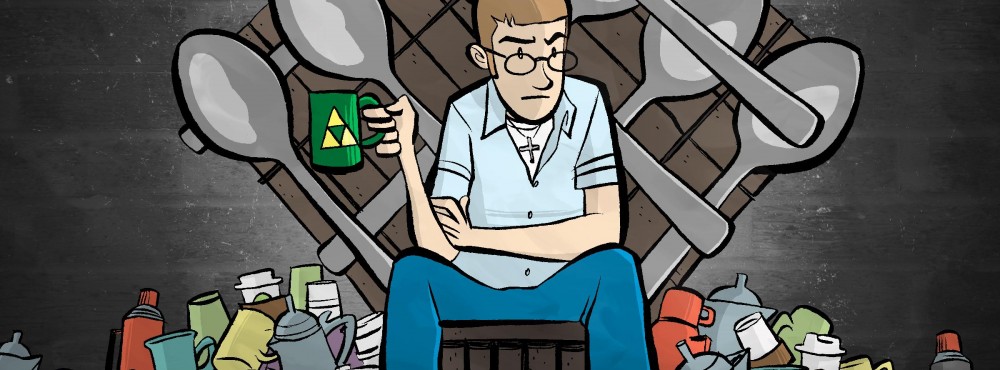
A Portrait of the Artist as a Hero Drinking Coffee

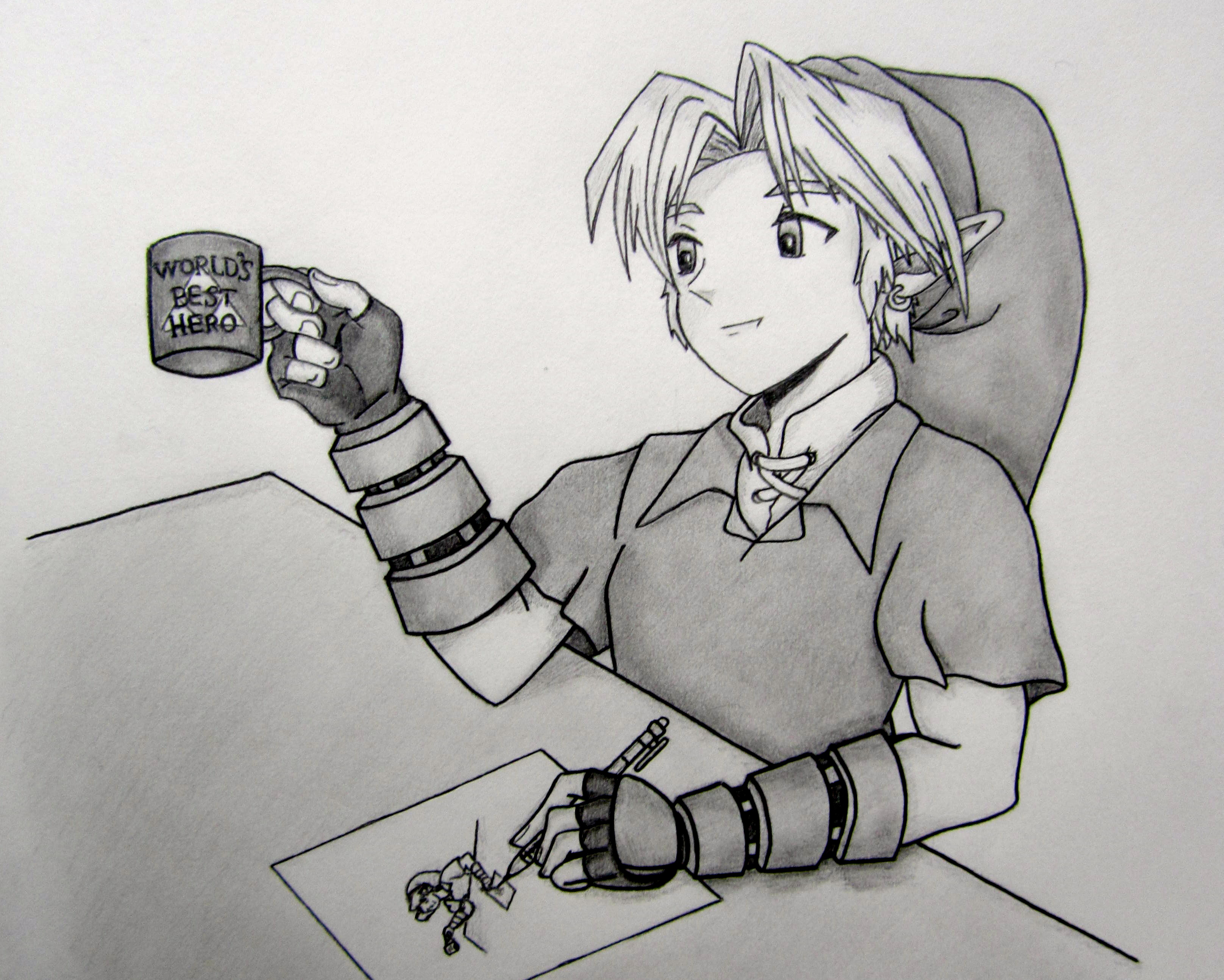
Link Drinking CoffeeLook at that picture. Look at it. I wish I could draw pictures like that.

While I fool around on this blog, my younger brother sketches fantastic pictures in pencil and posts them on his deviantART page. Seriously, I don’t know how he produces drawings like these. I’m guessing pencils and paper are involved somehow; the rest is a glorious mystery.

The image above is my brother’s profile picture: Link, the protagonist of the Legend of Zelda games, drinking coffee and drawing… himself. (If his coffee cup is to be believed, Link is also the World’s Best Hero.) As a Zelda fan, I find my bro’s profile picture clever and hilarious.

I strongly recommend taking a look around my brother’s deviantART profile. Seriously, it’s cool. Check it out!

213. TMTF’s Top Ten Life Lessons in Video Games

Wisdom can be found in unexpected places.

As we search for truth in literature, faith, philosophy and the lives of great people, we mustn’t overlook the lessons to be learned from BatmanDoctor Who, cartoon ponies and webcomics about video games. Speaking of which, video games have invaluable lessons to impart: useful principles that can be applied for success in real life.

What? You don’t believe me?

All right, then! Ladies and gentlemen, consider these practical principles as TMTF presents…

The TMTF List of Top Ten Life Lessons in Video Games!

10. Be Creative in Solving Problems

As tempting as it can be for gamers to try solving everything with violence, some obstacles can’t be shot, hacked or blown away. Puzzles require critical thinking. Some enemies require timing and strategy, not brute force, to conquer. Players have to be creative in solving problems, and creativity is an invaluable gift.

9. Observation Is Important

Anyone who plays a Legend of Zelda game quickly learns to keep his eyes open for cracked walls. Apply explosives to a damaged wall and—boom!—a way is opened. In video games, good things come to those who notice stuff. Video games teach players not merely to hear and see, but to listen and observe.

8. Appreciate Beauty

I love solving puzzles and defeating enemies as much as the next gamer. All the same, one of my favorite things about video games is how darn pretty they can be. (Yes, video games can be beautiful. Like brushstrokes or pencil shading, pixels can make lovely pictures.) Players are treated to sunrises and forests and ocean views, and appreciating beauty in artificial environments is a step toward appreciating it in natural ones.

7. Plan Ahead

Bad things happen to those who are unprepared. The person playing a Final Fantasy game will be annihilated by a tough boss if she hasn’t leveled up her characters or stocked up on healing potions. The person playing a Mario Kart game will lose if he hasn’t bothered figuring out the controls. This brings us to the real world, where the person taking a test or applying for a job will fail if she hasn’t planned ahead and made necessary preparations. Once again, video games reflect how things work in real life.

6. Stay Calm

The player who panics and starts mashing buttons will most often lose, and gamers get plenty of opportunities to panic. It can be hard to stay calm when facing that tricky jump or twisty racetrack or nigh-invincible boss, but rational decision-making is more likely to lead to success than wild overreaction. People who learn to keep cool under pressure while playing video games are better equipped to keep cool under pressure while doing everything else.

5. Practice Makes Perfect

I stink at fighting games: kicks and combos and Hadoukens baffle me. There is, however, one kind of fighting game in which I will destroy you: a Super Smash Bros. game. (My younger brother is a rare exception to this rule; he defeats me effortlessly.) As a kid, I resolved to learn to play Super Smash Bros. to enjoy the game with friends. Mastering the game took time and effort and many failures… and it was totally worth it. Practice makes perfect. At the very least, practice makes better. Video games remind us of the fact.

4. It’s Dangerous to Go Alone

With these cautionary words, the first Legend of Zelda game echoes something in another famous work: a book called the Bible. Quoth the Teacher in Ecclesiastes, “Two are better than one, because they have a good return for their labor: If either of them falls down, one can help the other up. But pity anyone who falls and has no one to help them up.” In other words, It’s dangerous to go alone.

3. You Reap What You Sow

So you’re playing a Final Fantasy game, slaying monsters, saving the world, when your quest is interrupted by some woman who wants you to gather medicines to heal a wounded traveler. A nuisance? Yes. You gather the medicines, the traveler recovers—and your kindness is rewarded. Another example: You take a break from your adventure in a Legend of Zelda game to attack a chicken. You’re enjoying yourself—after all, hacking away at defenseless fowl is fun—until the chicken decides to fight back, and your cruelty is punished with death. Seriously. For better or for worse, we reap what we sow. This biblical principle is common in video games.

2. Success Is an Investment

You can’t traverse that treacherous pitfall in a Mario game? Keep trying. You can’t conquer that unbeatable boss in a Kingdom Hearts game? Keep fighting. You can’t get your client acquitted in an Ace Attorney game? Keep gathering evidence. Sooner or later, you’ll pass that pitfall or flatten that boss or prove your client’s innocence. Now consider the real world. You can’t pass a class? Keep studying. You can’t afford something? Keep saving. You can’t achieve a goal? Keep working at it. No matter where you turn, success is an investment.

1. Good Guys Win

The world is full of terrible, selfish people who seem to succeed. Video games are no different. There are monsters, jerks and villains who triumph by lying, cheating and backstabbing. In the end, an overwhelming majority of those bad guys are brought to justice. The good guys—the guys who strive and fight and sacrifice to help others—win. You know what? In our world, the same thing happens. We need to be reminded that good guys sometimes win.

O people of the Internet, what useful lessons have you learned from video games? Let us know in the comments!

Adventure? Take This with You!

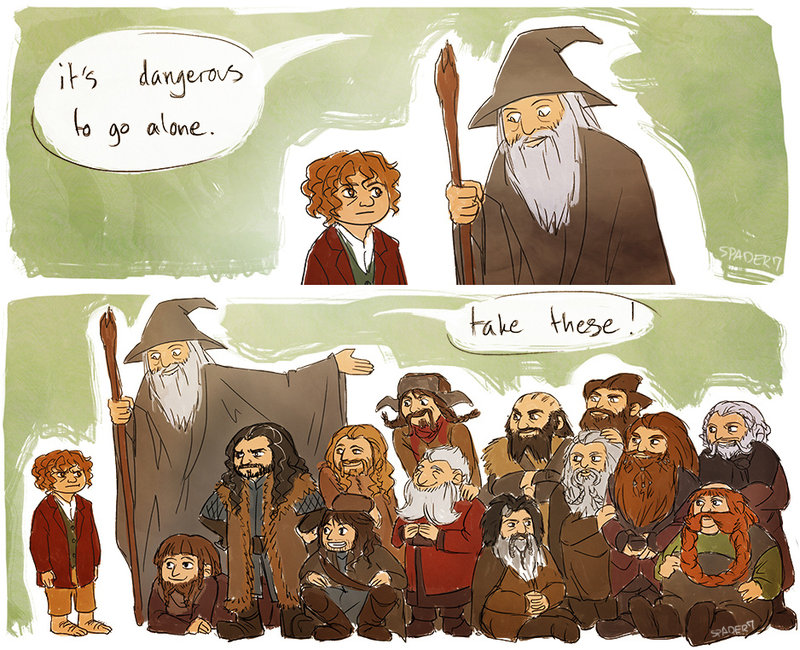
Dangerous to Go Alone

Picture from Spader7 on deviantART.

“It’s dangerous to go alone. Take this.”

These are the famous opening words of The Legend of Zelda, and an age-old motif in mythology, legend, folklore and fantasy. “Going on an adventure? Here, take _____ with you!”

Luke Skywalker got a lightsaber at the start of his journey. Frodo Baggins received a magic ring. The Pevensies (sans Edmund) accepted useful gifts from Father Christmas, and Captain Jack Sparrow was granted a pistol and one shot. Heck, even Perseus got a bunch of neat stuff for his quest from the gods in the old Greek myths.

The hero often seems to get something—a sword, an amulet, a keepsake—at the start of his or her adventure, and whatever it is always turns out to be really useful. A pointless knick-knack is later revealed to be the all-important Map or Key or Talisman of Plot Advancement.

So take my advice. If someone gives you something at the beginning of an adventure, hold on to the darn thing. You’ll be needing it.

The Best History Lesson in the History of History

Never before has video game history been so awesome… or so darn catchy.

Fun Fact: Nintendo existed for nearly a century before it began producing video games. It dabbled in everything from card games to cab services before striking gold with franchises like Donkey Kong, Super Mario Bros. and Legend of Zelda in the eighties.

204. My Childhood Fantasy

As a kid, I loved fantasy stories. My budding imagination teemed with dragons, hobbits, wizards, weapons and those octopus-monsters from The Legend of Zelda that spit rocks. It was only natural, I suppose, for me to build a fantasy of my own.

The hero of this fantasy was an orphan (of course) with a tragic past (naturally) who overcame adversity to become a mighty swordsman, wizard and defender of the innocent. My fantasy hero was—like all true heroes—named after a character in a video game. Inspired by Link from the Legend of Zelda games, named for a challenger from the Pokémon games, my hero was Lance: a green-clad warrior for whom no quest, challenge or cup of tea was too big.

For a childish fantasy, Lance was ahead of his time. He fit the pattern of the wanderer-hero in almost every detail more than a decade before I recognized the archetype in fiction. Years before I knew anything about Doctor Who, Lance traveled through time and space with a box that was bigger on the inside. (However, unlike the Doctor, Lance didn’t travel in his box. Lance kept stuff in it.)

I didn’t feel the slightest qualm as a child about plagiarizing other stories. Lance used magic to travel anywhere, which included Middle-earth from The Lord of the Rings, Hyrule from the Legend of Zelda games, Hogwarts from Harry Potter and a few more copyrighted realms from books, films and games. (How fortunate that imagination is beyond the reach of lawsuits.) Lance rubbed shoulders, bumped elbows and occasionally sparred with many famous fantasy heroes.

After two years of vivid adventures, Lance slipped quietly into retirement when I entered my early teens. It was coincidence that the protagonist of the story I began writing a couple of years later—which grew into my novel, The Trials of Lance Eliot—had the same name as the hero of my childhood fantasy. Lance Eliot was given his name because the plot demanded it, as readers of the novel know.

I think the coincidence is rather funny. Lance the all-powerful hero and Lance Eliot the wry college student could hardly be more different. I suppose they have at least one thing in common… they like tea.

My imagination is less exuberant and more wary than it used to be. When I read, write or see a story, I find myself looking for inconsistencies, holes and weaknesses. Things have to make sense now that I’ve grown up.

All the same, I hope I never lose that spark of imagination. Making up stuff is fun.

Video Game Wedding Music

I’m not planning to get married, but I don’t deny the possibility. Stranger things have happened.

If I get married, I hope my wife doesn’t mind me choosing video game music for the wedding ceremony. Maybe I’ll just make her to listen to songs without telling her they’re from video games. Yeah, that might work.

How can she refuse the stirring notes of the prologue from Final Fantasy in the video above? Or this touching ballad from the latest Legend of Zelda game? Or some slow, sweet piano from Final Fantasy VI? What about this melody from the Kingdom Hearts series? Heck, the song is even titled “Dearly Beloved,” the words which began so many wedding ceremonies.

If my wife rejects all of these lovely songs, maybe I can persuade her to allow a nice, um, upbeat arrangement of “Pachelbel’s Canon.” The melody is a wedding classic, and therefore immune to all objections. I love loopholes!

198. The Art of TMTF

Today’s post highlights some of the great artwork this blog has been privileged to share. Prepare to be dazzled!

A Reasonably Accurate Depiction of the Typewriter Monkey Task Force

This is my blog’s header, the picture that started it all, generously provided by my old man at my request (read: nagging insistence). I recommend opening this image in a new tab or window in order to bask in its full majesty.

A Wes Molebash original!

Wes Molebash, web cartoonist extraordinaire, has generously allowed me to feature some of his comics and artwork (such as this impressive picture of Link) on my blog. Wes even wrote a guest post about creativity and Legend of Zelda games!

There ought to be a law against selling pyrotechnics to monkeys.

Monkeys and pyrotechnics are a bad combination.

Wait, which way to the future?

As I considered changes to my blog, my old man provided yet another lovely sketch.

Not many people know this, but I'm actually a pony.

This is a picture of me working on this blog, except that I’m a cartoon pony. I don’t really have anything else to say about this one.

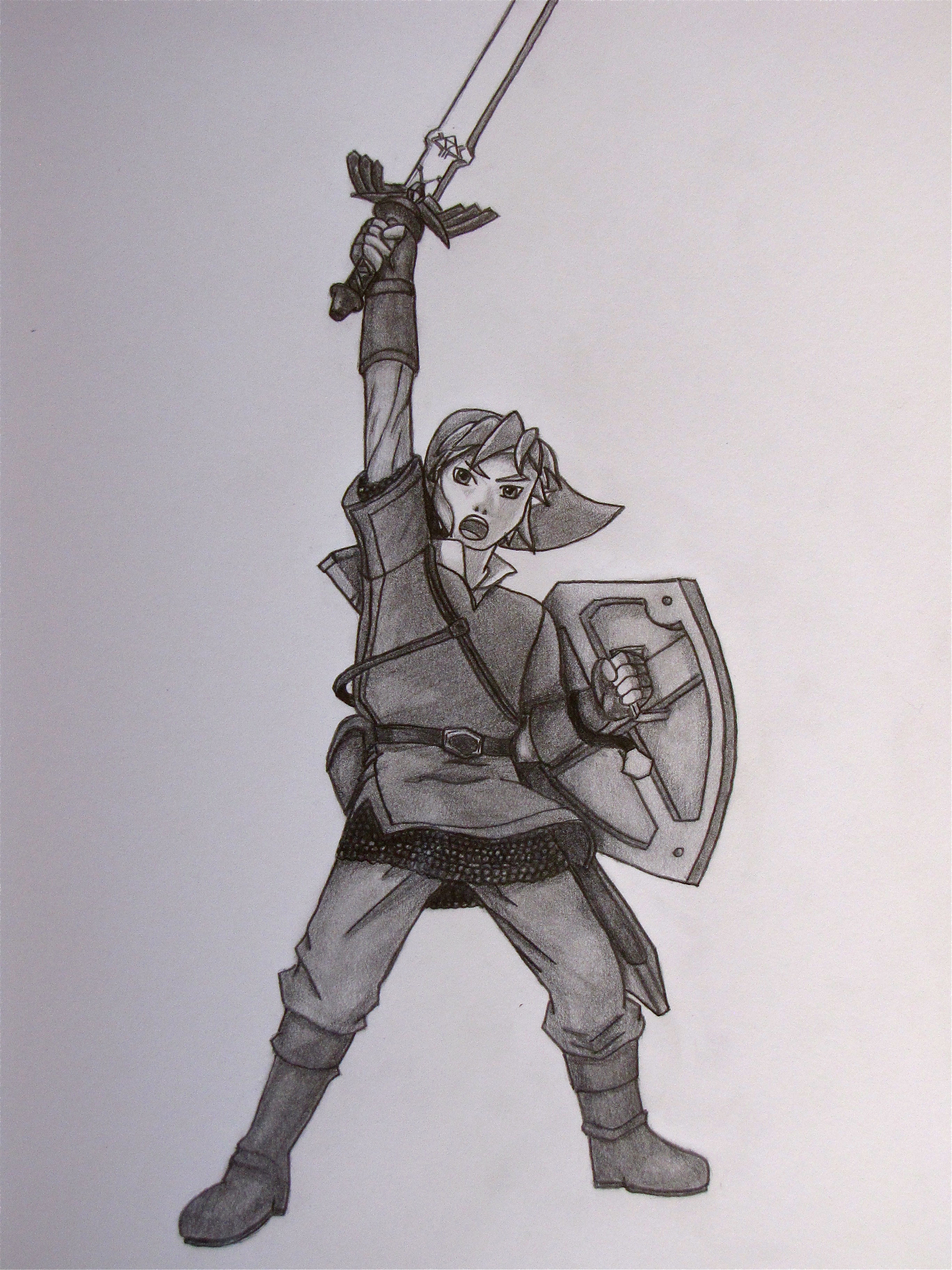
Besides being brave and noble, Link has a great fashion sense.

Little known fact: My blog attracts cool pictures of Link from the Legend of Zelda games. This one’s from my younger bro, whose deviantART page is awesome.

“I don’t always write posts for other blogs, but when I do I write them for Typewriter Monkey Task Force.”

This image, a close-up from my blog’s header, might be my favorite picture from the entire blog.

The Art of the Video Game Top Ten List

I like making silly top ten lists. (You’ve probably noticed.) Video game top tens are particularly fun because of the endless variety in video games. Whether you happen to enjoy solving puzzles, raising livestock, fighting Nazis or launching turtle shells from moving vehicles, video games have got you covered.

The video above was made by a fellow who calls himself Peanut Butter Gamer. He knows a thing or two about top ten lists. (He also looks like Shaggy from Scooby-Doo.) This man has mastered the art of the video game top ten: a deceptively challenging craft requiring experience, creativity, humor and quite a lot of silliness.

My early attempts at video game top ten lists were rather generic. PBG’s videos encouraged me to try making lists that were a bit less ordinary. My newer lists certainly aren’t unique, but I think they’re more engaging than the older ones. They invite the reader to consider things not always noticed or appreciated in video games.

I think goofy top ten lists are important, and for the same reason as childlike things like cartoons: they’re amusing and funny and cheerful. In this sad, serious world, we need all the laughs we can get.

Godspeed, PBG. Our world—this dismal, shadowed vale of tears—needs more lighthearted, frivolous top ten lists about video games.