341. Mole End

If you ever happen to visit my apartment, you will be greeted by a wooden sign immediately upon stepping inside. It depicts a well-dressed mole drinking coffee and reading a book, along with two welcoming words: Mole End.

Mole End

I love the way the mole’s glasses are perched delicately on the end of his snout.

My dad, God bless him, crafted this sign for me many years ago. Although he’s known round these parts for his superb drawings of monkeys, my old man is perfectly capable of drawing other small mammals!

The sign is made of driftwood from an Ecuadorian beach. (The sign fell from the wall a few weeks ago, scattering sand from its deepest crevices all over my floor. I was oddly touched to find my small-town Indiana apartment suddenly dusted with sand from my faraway homeland.) My old man sketched the picture on an ordinary piece of paper, glued it to the driftwood, aged it with cold tea, and applied a layer of finish.

When I moved into my apartment two and a half years ago, I immediately christened it Mole End and put up the sign shortly thereafter. Now, you may wonder why I chose this name for an apartment in a quiet, out-of-the-way corner of Indiana. You wouldn’t be the first!

Some time ago, I was honored to receive a visit from Thomas Mark Zuniga. This wise, wandering blogger had written for my blog. I had written for his, and also reviewed his debut book. It was quite a privilege finally to meet the man (and his splendid beard) in person.

Adam and Tom

Someday, if I am very lucky, I will have a beard half as nice as Tom’s.

Upon entering Mole End, Tom asked about the sign. It took me a moment to stammer out a reply: “Have you ever read The Wind in the Willows?”

For those who haven’t read this enchanting book, The Wind in the Willows is the tale of several animals in the old-timey English countryside. One of these creatures, Mole, reminds me strongly of myself: neat, anxious, insecure, quick to blame himself, and a devoted homebody. In a few other ways, I’m rather like a mole: I’m an introvert, keeping away from social events and enjoying my safe, cozy, solitary burrow.

Mole loves his subterranean home, Mole End, yet leaves it early on in search of fresh experiences. It’s only later in the book, as he chats with a Badger, that Mole remembers how much he enjoys life underground.

“Once well underground,” he said, “you know exactly where you are. Nothing can happen to you, and nothing can get at you. You’re entirely your own master, and you don’t have to consult anybody or mind what they say. Things go on all the same overheard, and you let ’em, and don’t bother about ’em. When you want to, up you go, and there the things are, waiting for you.”

That, dear reader, is why I call my apartment Mole End.

Mole later returns to Mole End in a chapter aptly titled “Dulce Domum,” Latin for sweet home. He is overwhelmed to the point of tears. Mole End is all the sweeter because Mole abandoned it for a while, like the man in the book by G.K. Chesterton who left his house and walked around the world simply for the joy of coming home again.

I love my home—not my Indiana apartment, specifically, but the place I feel secure, comfortable, and relaxed. My home isn’t permanent. There’s a reason the Bible refers to our bodies as a “tent” instead of a house. Quoth the Apostle Paul, “For we know that if the earthly tent we live in is destroyed, we have a building from God, an eternal house in heaven.”

We are all foreigners and strangers on earth. Some of us are searching for a better country—a heavenly one. My apartment in Indiana may be the closest thing to home I shall ever find on earth. I don’t know how long I’ll stay. In the future, I may have many homes… but I will only ever have one Mole End.

Of course, Mole End’s size, appearance, and layout may change occasionally. Its location may vary. Mole End may be found, at various times, in different cities, countries, and continents.

As long as I have the promise of a heavenly home—and the sign, of course—I’ll carry Mole End with me.


339. I Talk Too Much

Update: I just realized that I’ve already written a post about wasting words. Do you see what I mean? I really do talk too much!

Besides death or divine intervention, nothing in the universe can stop me once I start rambling.

I was reminded of this a few days ago. At the time, I was explaining to coworkers how a gerund looks remarkably like a chicken when diagrammed in a sentence. (This fact was pointed out to me by a college professor.) The English language fascinates me, and I’m greatly amused by this quirk of sentence diagramming. I was enthusiastic in sharing my amusement with my coworkers.

My gerund-chicken was met with one or two blank faces, and I realized I was babbling. It probably wasn’t the first time that day. Ah, well. No harm, no fowl. (Pun intended. I’m so, so sorry.)

I ramble all the time, and most people aren’t blunt or brave enough to ask me to stop. A few politely change the subject. Many suffer in silence. If I may, for the sake of illustration, borrow and edit a couple of old comic panels from Gigi D.G. of Cucumber Quest fame: many of my conversations go something like this.

The greatest difference between this illustration and real life is that I hardly ever chat with one-eyed war veterans.

The greatest difference between this illustration and real life is that I hardly ever chat with one-eyed war veterans.

I’m exaggerating a bit for comedic effect, yet the truth is that I talk too much. As an introvert, I generally keep to myself around other people. However, the very second a conversation turns to something that interests me, I begin to talk… and eventually to babble.

One of the things that troubles me most about my lamentable loquacity is that it afflicts my nearest and dearest. Most of the people who meet me will never hear me ramble. It’s my family and friends (along with a few coworkers and acquaintances) who put up with my enthusiastic floods of words. It’s when I feel comfortable around someone that I let down my guard, and when my guard is down that I talk too much.

That said, you should take it as a compliment if I ramble at you… I guess?

Anyhowz, I have three points to make about my tendency to talk too much.

1. Writing is awesome because it allows me to moderate my own words.

Probably my favorite thing about writing is the freedom it gives me to find exactly the right words and phrase them precisely the way I want. Written words can be revised. If I begin to ramble in, say, a Facebook message, I can go back and cut out the fluff.

Speaking doesn’t give me that luxury. It represents immediate, irrevocable communication. There is no revising spoken words, except by speaking more. Once a word is spoken, it can’t be deleted. I wish I could revise and moderate my speaking the way I do my writing.

2. Rambling is selfish.

When I ramble about stuff that matters to me, I forget—or worse, ignore—that it might not matter to other people. I disrespect people by demanding their time and attention, airing my own views and opinions, when they’re not interested. Worse, I don’t spend enough time listening to them.

Talking too much is a way of saying, “I don’t care enough about you to listen.”

3. The Bible says some pretty harsh things about talking too much.

In the Gospel of Matthew, Jesus Christ says, “I tell you that everyone will have to give account on the day of judgment for every empty word they have spoken. For by your words you will be acquitted, and by your words you will be condemned.”

Yikes.

The Proverbs add quite a few cautions against babbling. “When words are many, sin is not absent, but he who holds his tongue is wise,” quoth the author of Proverbs, and later adds, “Even fools are thought wise if they keep silent, and discerning if they hold their tongues.”

I… suppose I’ll end here, actually. Heaven knows I don’t want to ramble.

336. Four Quotes to Guide a Life

In the past few months, I’ve done some redecorating in my apartment. For example, on my desk—well, I suppose I should start by point out that I now use a desk. I had previously slumped in an armchair, balancing my laptop on my knees and probably causing gradual, irreparable damage to my spine.

Yes, I’m now using a desk, and I’ve added a few personal touches. For example, a plush llama stands near my laptop. Beside it, a wooden warrior stands guard and holds his sword high; my dad cobbled together the brave little fellow from acorns and bits of wood.

Llama warrior

“CHARGE ’EM AND THEY SCATTER!”

My desk is decorated by one last personal touch: four quotes scribbled on a piece of paper and framed. The frame is cheap; I picked it up from Walmart a while back. The quotes, unlike their little frame, are invaluable. In past months, as I did my best to tidy up my life, each of these quotes made an impression on me.

I’m sharing these quotes today for a few reasons.

  1. Each of these quotes represents an idea I consider extremely important.
  2. I hope my readers may find these quotes helpful, inspiring, or meaningful.
  3. I didn’t feel like writing a proper blog post.

When I wrote down these quotes, I emphasized a few words because I read some comics recently and liked the way comic-book dialogue puts words in bold for emphasis. Don’t judge me.

With that, I’ll quit babbling and yield this post to four wise people: a web cartoonist, a saint, a writer, and a Savior. Their words inspire me, and I hope they inspire you.

“It is not about you. It is about everyone else.” ~ Matthew Taranto


“Not all of us can do great things, but we can do small things with great love.” ~ Mother Teresa


“If you continue to love Jesus, nothing much can go wrong with you, and I hope you may always do so.” ~ C.S. Lewis


“My grace is sufficient for you, for my power is made perfect in weakness.” ~ Jesus Christ

335. About Storytelling: Christians Are Evil

Those Christians, I tell you! They’re all so evil. All of them! If you don’t believe me, just switch on the television or go to the movies. Hollywood proves that Christians are evil, because Christians are often depicted as villains, and the media is always right.

Right?

Seriously, though—why are Christians so often portrayed as horrible people in the media? Why are books, movies, TV shows, and video games full of perverted priests, prejudiced pastors, and sinister ministers?

Consider Warden Norton from The Shawshank Redemption, a film based on a story by Stephen King. (I haven’t read any of his books, but I’ve heard Stephen King uses Bible-thumping Christians as a lot of his villains.) Warden Norton is an awful person. He mistreats prisoners in his care, denies them justice, accepts kickbacks, murders people, and generally makes himself unpleasant. All the while, he quotes the Bible and assumes God is on his side.

Evil warden

God loves you, but Warden Norton will probably shoot you in the face.

Even when Christians in fiction aren’t evil, they’re often well-meaning but ignorant simpletons. Take Marvel’s Agents of S.H.I.E.L.D. I really enjoyed the series, but one episode irritated me. It was the episode featuring a Christian, and she was a bland, weepy, superstitious ditz.

Why are Christians portrayed so badly in the media? There are actually quite a few reasons.

It can be ironic or scary when a supposedly “good” person is evil.

There’s an artistic irony when a righteous person is actually wicked. It’s also pretty freaking scary. Who isn’t disturbed when a good person turns out to be a bad one?

Religious people have power and influence, which makes them great villains.

Priest and pastors have influence over groups of people. What happens when religious leaders are evil? They command the loyalty of their followers—even when that loyalty is innocent or well-intentioned. Religious leaders have power and authority, which can be easily turned to wicked ends.

Religious people sometimes do horrible things.

I hate to say it, but there’s a little truth in the portrayal of priests as pedophiles and preachers as charlatans. Christians, and people who call themselves Christians, have done some awful things. The media reflects that.

No secular media group wants to be accused of proselytizing.

Media groups exist to make money. Unless they produce religious media, these companies don’t want to be accused of pandering to Christians or spreading religious propaganda. Creating a genuinely Christian character puts media groups at risk of seeming to push a religious agenda. It’s safer to fall back upon familiar stereotypes like the evil or ignorant Christian.

Some religious traditions are spooky.

Have you ever stepped into an old-fashioned cathedral? You should try it. Little noises are echoed and magnified. Candles light the vast, empty gloom. Stained glass windows depict sad, soulless saints. Somber Christs hang in perpetual agony on crosses and crucifixes. Some Christian customs and traditions are frankly a bit creepy. They really build an atmosphere for villainy.

Some people just hate religion.

I’m looking at you, Philip Pullman.

As much as I understand these reasons for creating lousy Christian characters, I’m tired of the stereotypes. Am I the only one who thinks most depictions of Christians in the media are offensive? If other groups were so badly stereotyped, there would be outrage. Why is it socially acceptable to portray Christians as universally evil or ignorant?

It’s a problem, and I have two suggestions for resolving it.

First, do your research and create Christian characters that actually represent Christianity.

I’ve already touched upon this, but I’ll say it anyway: religious stereotypes are not only offensive, but usually incorrect. Joss Whedon, God bless him, understands this. Whedon is an atheist, yet he created a character named Shepherd Book who is genuinely Christlike.

Shepherd Book demonstrates a good understanding of Christian doctrines, and an equally good sense of humor. He is devout, patient, kind, and generous. To put it simply, Shepherd Book is represented by the media as a great character and a good Christian. It can be done.

The good Shepherd

Learn from the good Shepherd.

I’m not asking anyone in the media to create religious propaganda. I’m asking everyone in the media to create Christian characters that aren’t shameless hypocrites, greedy shysters, arrogant bigots, filthy perverts, sociopathic lunatics, or well-intentioned idiots. Is that really so much to ask?

Second, it’s perfectly fine to create characters that are evil Christians—just don’t be lazy about it.

I occasionally recommend an anime called Trigun. Set on an arid planet in the distant future, Trigun is basically the Old West in space. My favorite things about the show are its two main characters, Vash the Stampede and Nicholas D. Wolfwood, and their strained friendship.

Vash is an expert marksman, unbridled optimist, and wandering hero. He lives by a philosophy of “love and peace,” refusing to kill anyone. “Ain’t it better if we all live?” he asks.

Vash and his philosophy are tested by Wolfwood, an itinerant preacher who carries a literal cross wherever he goes. (When a bystander remarks that the cross is heavy, Wolfwood quips, “That, my friend, is because it’s so full of mercy.”) Despite his merciful profession, Wolfwood’s philosophy is a harsh one. There’s an Old Testament justice in his actions. He won’t hesitate to execute a bad man.

The bad shepherd

You do not want to cross this man. (Pun intended. I’m so, so sorry.)

The thing about Wolfwood is that he himself is a bad man. He drinks, smokes, sleeps around, and kills quite a number of people. (Wolfwood’s cross is actually a machine gun with compartments for handguns, which is either blasphemous or awesome.) Even his theology is flawed. However, in spite of his faults, Wolfwood is a complex character. He sees violence as a necessity, and regards the world’s evils (and his own) with determined resignation.

To put it simply, Nicholas D. Wolfwood is a good bad Christian. He manages to be a Christian and a bad person without ever becoming an insulting stereotype. It doesn’t take offensive clichés to portray Christians as bad people. It can be done.

Christians are generally depicted very badly in the media. That needs to change. Christians—even the bad ones—can be treated fairly, and they deserve to be.

333. I Know Nothing

Today’s post was written by JK Riki: animator, blogger, and creator of Fred the Monkey. (FtM is a Homestar Runner-esque collection of web cartoons; I discovered the site a few years back.) As a blog run by monkeys, Typewriter Monkey Task Force is honored to share JK’s reflections on how little we know. For more great stuff from JK, check out his blog and Twitter. You may also want to swing by Animator Island, for which he writes.

I listed one of my 2015 goals on my blog as “Write a guest post for somewhere.” A big thanks to Adam for allowing me to commandeer his blog for the day.

In trying to determine what my goal-achieving guest post might be about, I poked around Typewriter Monkey Task Force to get a feel for its style and purpose. What I found was an amazing collection of thoughts and writings from a clearly deep individual. I started to worry whatever I came up with might not meet the level of aptitude already found on TMTF. (I included the word aptitude here specifically to try to elevate my game.)

[Editor’s note: I did not bribe JK to say nice things about my blog, I swear! He’s just a really kind person.]

Since there is no lack of depth in the topics of this blog, now seems as good a time as any to wade a bit deeper into the Great Pool of Thought and submit a few ideas that most people never bother with. A large number of our human species is content to go about the day-to-day and never really step back to consider alternative perspectives. I love alternative perspectives. Their greatest gift is a swift kick in the rear and exclamation of “There’s so much you don’t know, don’t forget that.”

So I share with you this simple truth: One of the best things you can ever achieve is the realization of how much you don’t know.

There’s a time and place for confidence, of course. If you’re performing brain surgery on someone, that might not be the best time to ponder string theory, dimensional variants, or that cutting into this person’s brain may be affecting atoms directly on another planet someplace light years away and who knows what havoc that is causing.

But when not engrossed in an activity where lives hang in the balance, consider stopping and thinking about how limited we are as humans. We can’t hear color. We can’t smell intention. We don’t know what we don’t know. Think about that. There are things we can’t imagine. They are beyond the scope of our understanding and reality. Yet that doesn’t mean they don’t exist. They could be (and very likely are) floating around us at this very moment, beyond our human senses.

What I discover any time I do this exercise of remembering how little I know is that suddenly I’m a lot more compassionate of everyone around me.

People who know more than me in some areas, and less in others, are in the same boat I am. We’re all on this journey of life, and all at different places on the road. Though it baffles me when I meet someone twice my age who hasn’t realized basic truths I’ve learned, I have more patience with them, knowing there’s plenty I have yet to realize myself. While it’s frustrating to speak with a teenager who “has it all figured out,” I’m able to remember I also once had “it all figured out,” sure that I knew everything there was to know. And in that moment I’m deeply grateful for the knowledge of how little knowledge I actually have. I never want to go back to thinking I knew it all. Dangerous pride lies in wait there.

Of course, any time you take a trip to the deep end of the pool it’s essential that you carry along a life preserver, and that you make certain it’s firmly attached to something that will not let you drown. When you take a swim in deeper thought, and consider the vastness of the universe seen and unseen, I highly recommend tossing the end of that rope to God. He never lets you drown, and He also knows what’s in the very depths of the pool. Plus He’s unbelievably patient. He won’t wander off and leave the rope tied to a fence post!

I have, in the past, handed the rope to people I trusted. Unfortunately, people fail. We’re only human. It is what it is. We don’t mean to let others drown, we just aren’t strong enough to pull them back, and we get distracted easily. So just be careful if you decide to sit and ponder today. The water is warm, but very deep, and we often overestimate our swimming abilities. Take along with you a helping hand, and by all means dive in and see what you see.

What you’ll find is truly amazing.

Batman Syndrome

I have Batman Syndrome.

I wish this meant I were as cool, skilled or accomplished as Batman. It does not. It most certainly does not. What it means is that Batman and I have something in common: we obsess over our mistakes.

If you or someone you love suffers from Batman Syndrome... I feel your pain.

If you or someone you love suffers from Batman Syndrome… I feel your pain.

I like fictional characters who overlook their victories and overemphasize their failures. There’s something compelling about characters who are heroic without realizing it. Take the Doctor from Doctor Who, who has saved every planet in the universe roughly twenty-seven times. In all his travels through space and time, he never leaves behind his insecurity, self-loathing or guilt. Consider Jean Valjean from Les Misérables, who atones for a few petty crimes by spending years serving the poor and helpless. They bless him as a saint. He despises himself as a criminal.

Then we have Batman, the eponymous sufferer of Batman Syndrome, who is so blinded by guilt that he fails to recognize one all-important fact: he is freaking Batman. No matter how many thousands of people he rescues, he remains obsessed with the two he failed to save.

I’m not a savior like the Doctor or a saint like Jean Valjean. I’m certainly not a superhero like Batman. Even so, I occasionally do things right. I also do things wrong. In my mind, the wrong things eclipse the right ones. A mistake cancels out all successes.

This isn’t always such a bad thing. I feel driven by my mistakes to try harder, to be better, to get it right. In the short term, it helps.

In the long term, however, Batman Syndrome wears away my confidence. It also makes me anxious. Dash it all, does it ever make me anxious. Doing anything is hard for someone desperately afraid of making mistakes. Perfection is a lousy minimum standard.

Batman Syndrome haunts me with one dreadful question.

You’ll never get it right, so why even try?

I write a lot about grace and stuff. In the end, I suppose it’s because I’m amazed (and sometimes incredulous) that God loves me. I’ve made a lot of mistakes. More to the point, I make a lot of mistakes. It’s easy for me to accept God’s forgiveness for a sin committed ten years ago. What’s hard for me to accept is forgiveness for a sin committed ten minutes ago.

It can also be hard for me to acknowledge my victories. I want to be humble, but there’s a difference between true humility and false modesty. I’m often reminded of my weaknesses. I think I must also allow myself to be reminded of the strengths God has given me. I’ve a long way to go, but I mustn’t overlook how far I’ve come.

I’m not Batman, and I think I’m finally beginning to accept that I don’t have to be.


This post was originally published on March 18, 2013. TMTF shall return with new content on January 19, 2015!

Gangster Pastors

One of my most prized possessions is a weather-stained, gray cloth cap. If my residence ever burns down, this cap is one of the first things I will try to rescue from the flames. I call it my gangster cap, not because it fits the so-called gangster style, but because a gangster—or rather, an ex-gangster—gave it to me.

I was touched when my ex-gangster friend, whom I’ll call Miguel, gave me his cap, because it has great sentimental value for him. He had once lost it while plunging into a gully to escape from a rival gang. It lay at the bottom of the ravine for four months until he sneaked back to retrieve it.

Miguel was a car thief and a gang leader in Quito, the capital of Ecuador and the city of my birth. Besides his other crimes, Miguel occasionally worked for Mama Lucha, a notorious criminal kingpin. (I guess she should actually be called a queenpin since she was a woman.)

On one occasion, Miguel and his comrades tried to steal a long sheet metal sign welded to a pedestrian bridge. Unfortunately for them, they weren’t able to divide the sign into pieces as they’d planned. In the end they had to carry it whole through the streets of Quito, weaving furtively through city streets like some sort of monstrous metal centipede.

Miguel is currently happily married, working at a government job in Quito and ministering as a lay leader in his church.

It is a source of amazement, amusement and wonder to me how many of the church leaders I knew in Ecuador are former gangsters, thieves or occultists.

I’m not using real names in this post in order to protect the privacy of the leaders whose stories I’m sharing. I assure you, however, that to the best of my knowledge all of these stories are accurate, factual and true.

Paco is a kind, gentle and fiercely amiable pastor from the coast of Ecuador. Like King Saul in the Old Testament, Paco is about a head taller than everyone around him. His skin is black, his frame is muscular and his cheek is scarred by a gash from a knife. He used to be a thief on the streets.

Armed with a knife, Paco once accosted a girl at night with the intention of taking her money. The girl, who was a Christian, began talking with him about God. Although it was a long time before Paco would know Christ, he eventually put away the knife and escorted the girl to her home because—as he explained—it was a dangerous neighborhood and he didn’t want her to get robbed.

Paco eventually wound up in prison. Some of his fellow prisoners were personal enemies who wanted to kill him. However, before they had the opportunity, Paco was released. He didn’t know how or why—the only hint he received was a vague explanation that “some lawyer” had made all the necessary arrangements. What those arrangements were, and who the lawyer was, he doesn’t know to this day. It has been suggested to him that the lawyer might have been an angel. He doesn’t deny the possibility.

Then there’s Luís, another ex-criminal from the Ecuadorian coast. His skin is black, which makes his dazzling white smile all the more striking. Luís is a fantastic storyteller, and my dad has been privileged to hear accounts of several of his escapades.

Luís, while stoned on drugs, once tried to murder another man, also stoned. Having crept up on him from behind, Luís put a pistol to the man’s head and pulled the trigger. The gun misfired. Luís examined the pistol, peering blearily into its barrel, while his victim sat peacefully unaware of the attempt being made on his life. Luís tried again to murder his victim. The gun didn’t go off, but this time the man realized what was happening and fled shrieking while Luís resumed his bewildered examination of the gun.

On another occasion, Luís entered a church and sat down—only for a huge army knife to fall out of his shirt and hit the concrete floor with a thunk. Nearly every head turned to look at him, and a little old lady sitting nearby picked up the knife and sweetly gave it back to him.

A turning point came when a taxi crashed into a light pole as Luís leaned against it. The pole absorbed most of the impact, but Luís flew a considerable distance and landed hard. Just a few minutes later he met a Christian lady from his neighborhood. “Did something just happen to you?” she asked. “God told me to pray for you five minutes ago, so I did.”

After Luís became a Christian, two attempts were made on his life, once with a pistol and once with a sawed-off shotgun. The guns misfired both times—two more miraculous interventions.

All three of these church leaders have told my dad that they’re grateful to God for never letting them kill anybody. They all came frighteningly close to it. Looking back, they can see the hand of God at work in their lives, even when they didn’t care for him.

I believe, if we look hard enough, most of us can see the hand of God at work in our own lives.

I know I can.


This post was originally published on January 17, 2012. TMTF shall return with new content on January 19, 2015!

329. The Post of Resolutions Yet to Come

All right. I’ve reviewed my resolutions for 2014. What of the year ahead? What resolutions have I made for being a better, nicer, wiser person?

Here are my resolutions for 2015.

I will be more intentional in keeping my New Year’s resolutions.

Full disclosure: I make an effort at the start of each year to keep my New Year’s resolutions, and I forget by the end of each year whatever the heck it was that I had resolved to do. I often keep New Year’s resolutions by dint of trying generally to be a better person, not by remembering and keeping specific goals. In the new year, I’ll be intentional in keeping my resolutions—this one included!

I will work on my Spanish.

This is an old resolution, which I mostly failed to keep. My grasp of the Spanish language was never a strong one, and it has only weakened in the six and a half years since I left Ecuador. This will be the year I dust off my old Avatar: The Last Airbender DVDs, pop ’em in my laptop, and watch the Spanish dub of the entire series. After all, cartoons make learning fun bearable!

Spanish teacher

Yes, I will learn Spanish from this irresponsible cartoon twelve-year-old. Teach me, O bald one!

I will practice spinning an old broomstick.

A few people know of my talent for twirling old broomsticks like some sort of janitorial ninja. I haven’t really practiced this useless gift in the past few years. It’s high time I get some regular fresh air and exercise spinning my broomstick in the local park… even if it means little Amish children lining up in a neat, silent row to stare at me. (This really happened, and it was even more awkward than it sounds.)

I will have a more positive attitude.

I am a pessimist, and also a cheerful person. At the root of my paradoxical pessimism is the fact that cheerfulness and hopefulness are not the same thing. Beneath my silliness and sense of humor there is generally a negative outlook and an attitude of defeat. (It’s no coincidence that many humorists, from Mark Twain to James Thurber, were deeply melancholy men.) I will try in the new year not merely to be cheerful, but to trust, and to hope, and to persevere.

The face of a pessimist

This is truly the face of a pessimist.

I will research career options.

Despite having an English Education degree and a teacher’s license, I’ve finally admitted to myself that I don’t want to be a teacher—at least not in a US public school setting. Fortunately, there are other options open for someone with experience in English Education and a writing addiction. While I’m not planning to move on quite yet, this will be the year I figure out where I might go from here.

I will value prayer more.

I don’t value prayer enough. As an orthodox Christian, I believe it’s the single most important thing I do every day. However, in years past, I’ve made prayer just another item on my daily to-do list—and generally the first thing to be cut when I get busy. In the new year, I mean to honor God by honoring prayer.

Do you have any resolutions for the new year that you’re willing to share? Let us know in the comments!

Thanks for reading! If you have a moment, please check out TMTF’s charity fundraisers this month and make the new year awesome for a person in need!

328. The Post of Resolutions Past

Christmas is over, but this is no time for gloom! A new year is nearly here! We must face 2015 with hope, caffeine, and courage. After all, the start of each new year is an opportunity for self-reflection and self-improvement… or despair and apathy, if you’re a pessimist. It’s also a time for reminiscence, celebration, and setting stuff on fire.

Well, I suppose that last one only applies in Ecuador, where effigies are burned in the streets on New Year’s Eve. Every December I remember this tradition fondly, and then make new year’s resolutions instead. I would be arrested for arson if I built a bonfire on the streets of my quiet Indiana town.

Good times, good times.

Oh, Ecuador, how I miss you. Your traditions an inspiration, like a beacon burning brightly—a blazing beacon doused in kerosene and likely to burn down entire city blocks.

Before I list my resolutions for the new year, I should take a few moments to review my goals for the old one. After all, what good are resolutions if I don’t try to keep them?

These were my resolutions for 2014.

I will value variety.

I enjoyed some new things this year, from culinary surprises (who knew fresh spinach made such a good salad?) to gaming discoveries (Metal Gear Solid is pretty rad). However, for the most part, I stuck to familiar comforts. I must consider this resolution a failure.

I will live with confidence.

Much to my own surprise, I kept this resolution. I’m still an anxious person, but I’m learning to have fake greater confidence in myself.

I will be a people person.

I… sort of kept this one, I guess? I didn’t go out of my way to meet people, but I made a couple of new friends and did a slightly better job of keeping in touch with old ones.

I will keep up with this lousy blog.

This resolution was mostly successful. TMTF took a few breaks, but I’m pretty sure it was more consistent this year than before. If it wasn’t, blame my typewriter monkeys. Always blame my typewriter monkeys. (I need that slogan on a T-shirt.)

I will drink tea and coffee while they’re still hot.

I nailed this one.

I will be consistent and faithful in fulfilling my spiritual commitments.

I didn’t spend as much time praying and reading the Bible this year as in years past, but I was also busier this year with work, blogging, and other commitments. Although the quantity of time spent with God was less, I think its quality was improved; I’m getting better at reflecting on Scripture and praying prayers that aren’t completely awful. Let’s call this one a draw.

I have half a dozen new resolutions lined up for next year… but that’s for the next post on this blog.

Speaking of the blog, this was an interesting year for TMTF. I revamped its reviews, embraced the Oxford comma, turned into the Hulk, had an insightful discussion (in an animated video!) with a well-dressed wolf, and reviewed all those Metal Gear Solid games. In fact, I played even more of those games than I reviewed. I may declare 2014 the Year of Metal Gear Solid… or Metal Year Solid for short. (I’m sorry. I’m so, so sorry.)

Now, if you’ll excuse me, I’m going to go daydream about setting fire to stuff in the streets.

Thanks for reading! If you have a moment, please check out TMTF’s charity fundraisers this month and make the new year awesome for a person in need!

327. Thoughts on Christmas

As we draw near Christmas, I’m surrounded by colored lights, holiday decorations, snow flurries, advertisements, and peppermint-flavored things. I’ve wrapped gifts, played Christmas music, grumbled about the cold, drunk too much coffee, and fled in horror from the tawdry inflatable snowmen standing, smiling and sinister, on the front lawns of neighborhood homes. (Those things are evil, man.)

Evil snowmen

The horror! The horror!

I’ve thought a lot about Christmas this year, but none of my thoughts are substantial enough to deserve their own posts on this blog. Thus I’ve decided to throw all of my Christmas musings into a single post. Here we go!

I’m becoming less cynical about the holidays.

A few years ago, I wrote a blog post in which I grumbled about the frivolity of the Christmas season:

I have mixed feelings about Christmas. I enjoy the traditions, the nostalgia, the delicious food, the beautiful lights, the exciting gifts and some of the music. I despise the unapologetic, matter-of-fact way companies use the holiday to make money. I’m also pained by the growing superficiality of Christmas. The birth of Christ has become an afterthought.

Nietzsche informed us that God is dead. I disagree, but suspect Christmas might be dying—slowly passing away in a blaze of colored lights and cacophony of seasonal music.

I’m still a cynical grump about the Christmas season—in fact, I’m grumpy and cynical about a lot of things—but my attitude toward Christmas has softened over the past year or two.

Christmas is a time of peace and goodwill even among nonreligious people. It’s a time for reminiscence, family, forgiveness, generosity, and eating lots of cookies. Apart from the holiday’s spiritual significance, many of its secular aspects are beautiful, good, and meaningful.

Not relevant to this blog post, but adorable.

I certainly don’t consider the secular aspects of Christmas equal to its spiritual ones. For all its warm feelings and bright colors, Christmas is pretty empty without Christ. I cherish the fun traditions of Christmas because of the hope underlying them.

All the same, I’m learning to respect that Christmas has value even as a secular holiday, and I should sometimes keep my sneers and cries of “Humbug!” to myself.

A lot of Christmas music is really stupid.

Amy Green, a phenomenal blogger and aspiring heretic, has already discussed lousy Christmas songs. I will add only one observation. There are sane human beings who enjoy songs like “Here Comes Santa Claus,” “Frosty the Snowman,” and “Grandma Got Run Over by a Reindeer,” and this fact is an appalling indictment of the human race.

Nobody ever seems to remember the historical context of Christmas.

We all know Christmas celebrates the birth of Christ. We’re familiar with the characters and set pieces of the Nativity: the inn, shepherds, angels, and all the rest. What we forget is that Christ’s birth was an event in history. It didn’t have a simple beginning or a neat happily-ever-after ending.

Christmas began in ancient Israel. Prophets hinted vaguely at the arrival of the Messiah, God’s chosen hero, and then prophecies ceased. God’s people were scattered and exiled. For centuries, the descendants of Israel watched empires rise and fall around them, and waited—probably without much hope—for their Messiah.

Jesus Christ was born into a remote corner of the vast Roman empire. He wasn’t the hero anyone expected or wanted. In fact, he baffled everyone, including his own parents, his followers, and the authorities who eventually sentenced him to death. Christ lived, died, and was raised to life by the power of God. He became the founder of a new faith, which has rocked the world for two millennia.

That’s what Christmas is all about, Charlie Brown.

We think of Christmas as merely the Nativity, and that’s a shame. The broader historical context and religious significance of Christ’s birth are fascinating.

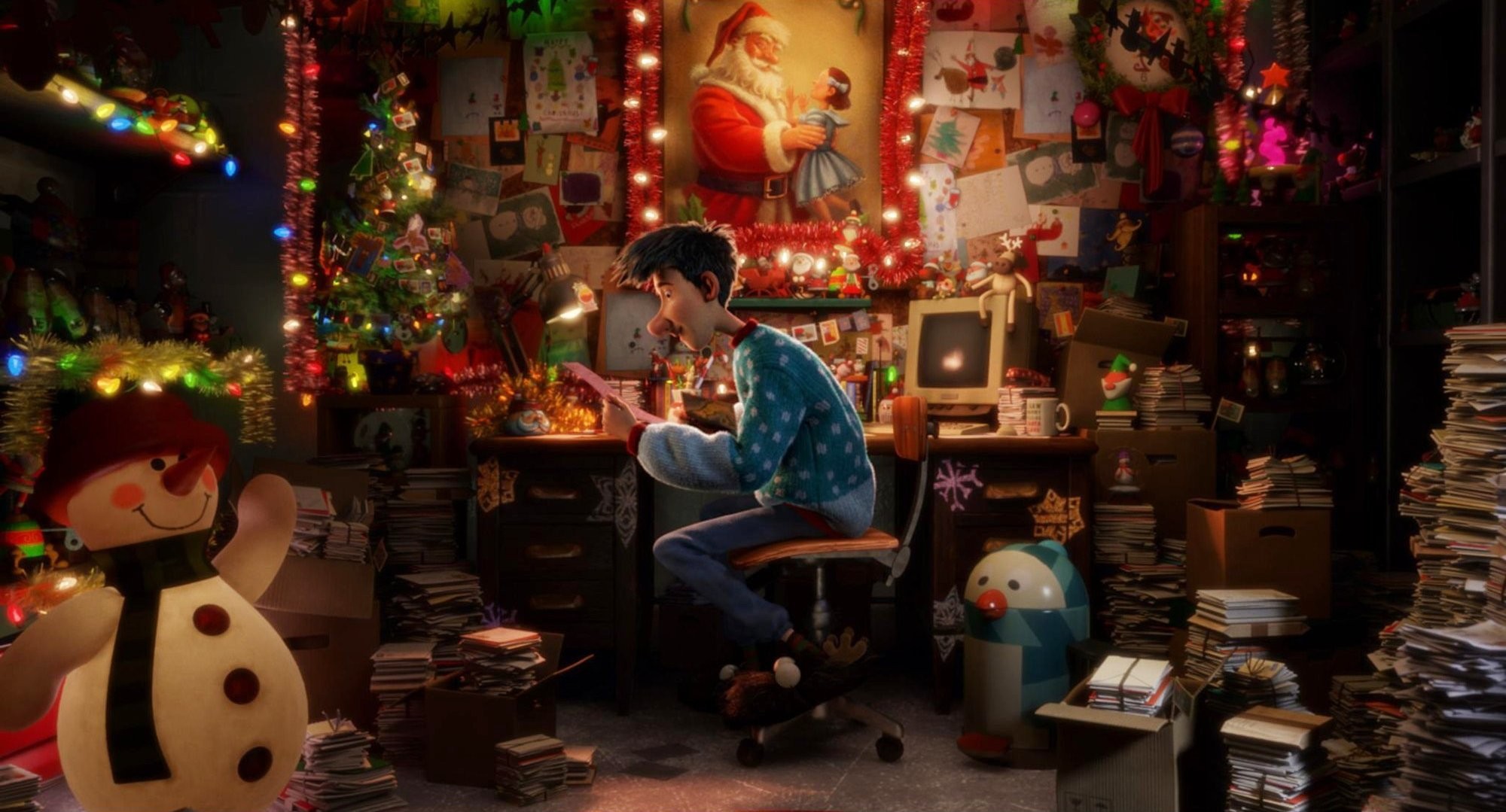
Arthur Christmas is the best Christmas movie I’ve ever seen.

Arthur Christmas

Seriously, go watch it.

Time is running out for TMTF’s Christmas fundraisers!

The Living Water fundraiser will run for a couple of months after Christmas, but I’d love to hit its goal by the end of December. The Child’s Play fundraiser will conclude at the end of the month, so time is running out!

If you’re not sure why I’m blathering about fundraisers, please see here for details.

Working together, we can make this Christmas truly awesome for people in need. Please consider giving!

We wish you a happy Christmas!

My typewriter monkeys and I—well, mostly I—wish you the best of all possible Christmases, and a bright start to the new year!