174. TMTF’s Top Ten Hats in Video Games

I recently learned of an indie game titled Fez. The game’s protagonist wears a fez, presumably because fezzes are cool. (We all know this.) This game reminded me that characters in video games have some pretty sweet hats.

As a gamer, blogger and proud owner of several hats, I believe it’s my solemn duty to decide which video game hats are the best.

The following rules apply: I’ll choose hats only from games I’ve played, and I’ll select no more than one hat from any game series. Only original video game hats are permitted: no hats from licensed characters like Indiana Jones or Donald Duck. Hoods, helmets, headbands, ribbons and all headgear except hats and caps are disqualified from this list.

Now, ladies and gentlemen, hats off as TMTF proudly presents…

The TMTF List of Top Ten Hats in Video Games!

10. Quote’s Baseball Cap (Cave Story)

Quote's Baseball Cap

Quote, the amnesiac hero of indie classic Cave Story, manages to look quite heroic in a simple baseball cap. The hat isn’t particularly fancy or elegant, but its bright white and red design helps Quote’s pixelated figure stand out against the muted blacks and browns of Cave Story‘s subterranean locales. On an entirely different note, do the buttons on Quote’s hat remind anyone else of Mickey Mouse’s shorts?

9. Cormano’s Sombrero (Sunset Riders)
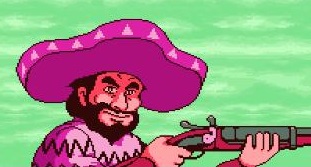
Cormano's Sombrero

This Mexican gunslinger, who has been described as “either groundbreakingly inclusive or an offensive stereotype, take your pick,” is a playable character from Sunset Riders for the SNES. The game consists mostly of shooting stuff. Cormano’s skill with a rifle is belied by his sombrero, which is colored bright magenta and shaped like a taco. Never has the Old West been so fabulous!

8. Shadi Smith’s Pork Pie Hat (Apollo Justice: Ace Attorney)
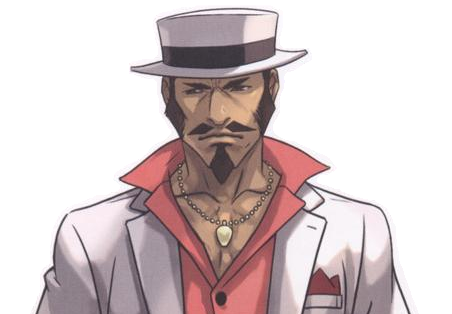
Shadi Smith's Pork Pie Hat

Not since Buster Keaton has anyone looked so good in a pork pie. Despite being a shifty character with questionable ethics, Shadi Smith is a really sharp dresser. There are many fantastic hats in the Ace Attorney series, from magician’s top hats to policewomen’s berets, but none seems more stylish or elegant than Shadi Smith’s classy pork pie hat.

7. Carmen Sandiego’s Fedora (Where in the World is Carmen Sandiego?)

Carmen Sandiego's Fedora

As a child, I played Where in the World Is Carmen Sandiego? on my family’s ancient black-and-white Apple Macintosh. (I’m pretty sure the above picture of Ms. Sandiego comes from another game in the series, but it’s the best I could find.) It was educational gaming at its finest: besides learning about geography and national flags, I got a taste of fashion from Carmen Sandiego’s criminally fabulous fedora.

6. Red’s Baseball Cap (Pokémon FireRed)

Red's Baseball Cap

This one was a toss-up between the hats worn by Red from Pokémon and Ness from Earthbound. Red won because his baseball cap is quite a bit cooler. (Besides, Red’s cap in the original Pokémon Red was the inspiration for Ash Ketchum’s iconic hat in the Pokémon anime.) Like Quote, Red takes a common item of casual apparel and makes it seem dashing and even heroic.

5. Agent Chieftain’s Stetson (Elite Beat Agents)
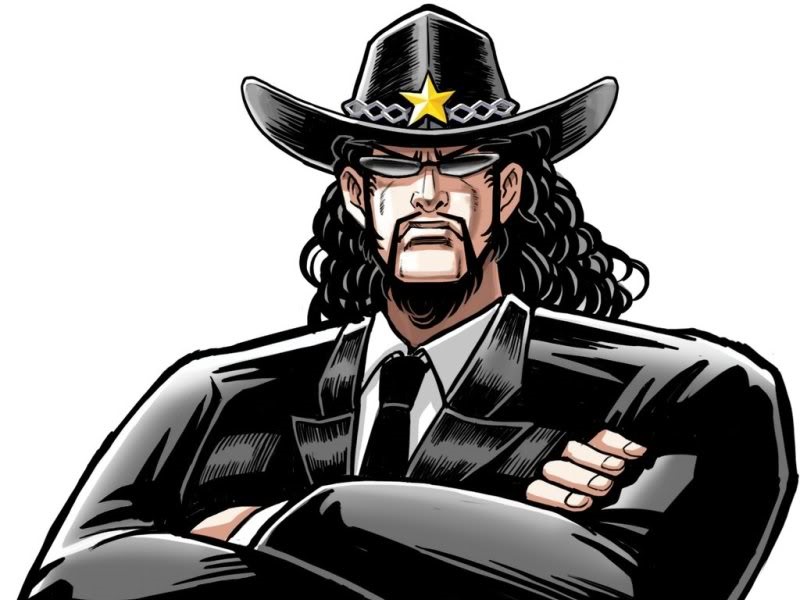
Agent Chieftan's Stetson

Elite Beat Agents is a wonderful rhythm game for the Nintendo DS in which government secret agents assist people in desperate need by invoking the inspirational power of song and dance. (Yes, the game is every bit as weird—and awesome—as it sounds.) Agent Chieftain, a senior agent of the Elite Beat Agency, flaunts a flashy Stetson that adds a dash of cowboy flair to his plain suit and tie.

4. Red Mage’s Wizard Hat (Final Fantasy III)
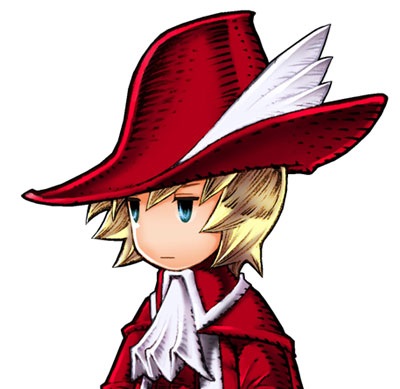
Red Mage's Wizard Hat

Although the Black Mages from the Final Fantasy series have neat hats, the Red Mages earn this place on the list with their gorgeous crimson hats adorned with snowy feathers. Other Final Fantasy characters have clunky helmets, dull hats or plain hoods. Red Mages alone uphold the lofty standards of fashion while defending their worlds from demons, dragons and other monsters.

3. Mario’s Flat Cap (Super Mario 64)
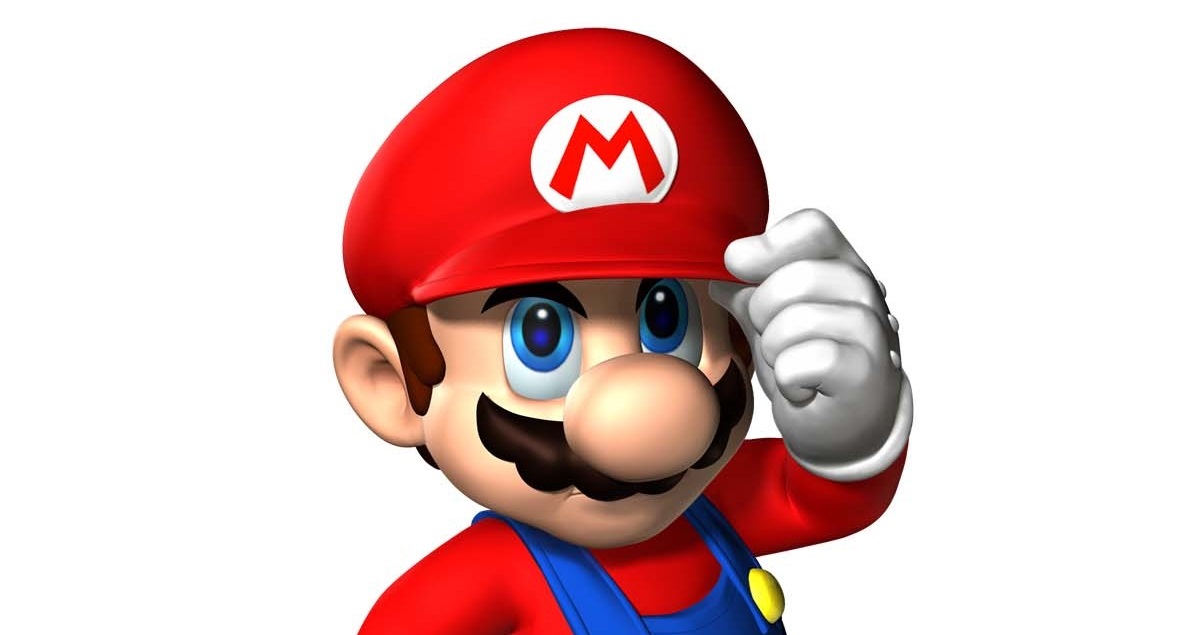
Mario's Flat Cap

How could I not include Mario’s cap? It’s indisputably the most famous video game hat in the world, and definitely one of the neatest. Mario’s cap from Super Mario 64 deserves special mention for giving Mario superpowers, including flight. Few things in video games have been more fun for me than soaring around the game’s locales with Mario’s winged cap. Like its owner, this hat is remarkable.

2. Professor Layton’s Top Hat (Professor Layton and the Curious Village)
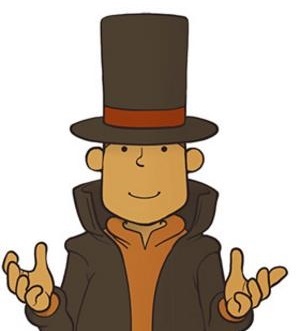
Livewire-AGE

I have absolutely nothing to add.

1. Link’s… Cap? (The Legend of Zelda: The Minish Cap)

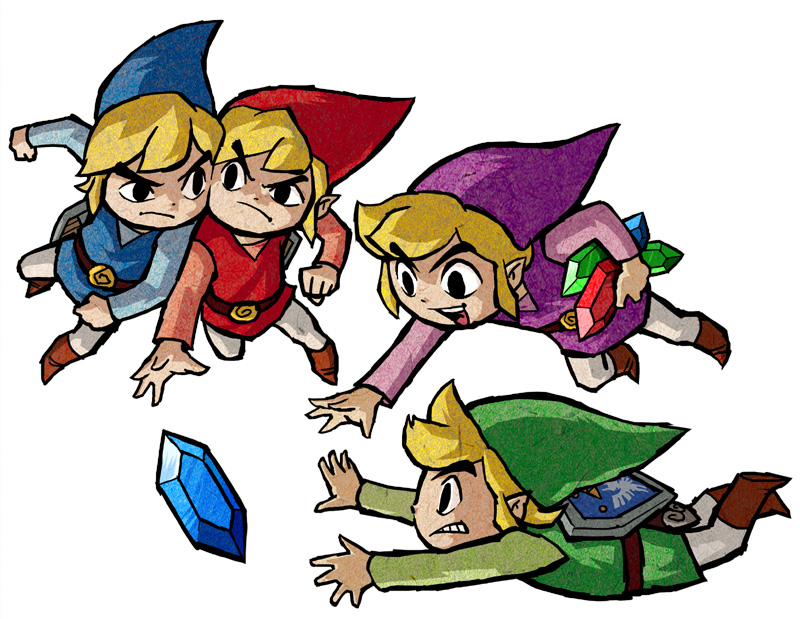
Link's... Cap

Link’s cap is one of the most iconic elements of the Legend of Zelda series. It’s instantly recognizable—seriously, how many legendary heroes wear green pointed caps? Link achieves an incredible feat in every Zelda game by looking cool in a hat that wouldn’t seem out of place on one of Santa’s elves. As much as I like it, I wouldn’t give Link’s cap the number one spot on this list if it weren’t for one detail: it talks. In The Legend of Zelda: The Minish Cap, Link is joined on his quest by Ezlo, an enchanted hat who gives advice, grumbles, cracks jokes and turns out to be one of the most engaging characters in the entire Zelda series. For its iconic status, surprisingly cool appearance and amusing dialogue—I can’t believe I’m saying this about a hat—Link’s cap is TMTF’s pick for the best hat in a video game.

O people of the Internet, what great video game hats would you add to this list? Let us know in the comments!
172. Geeky Wednesdays

Like Pokémon and Darwin’s finches, TMTF has evolved over time. It began as merely a blog about stuff. It has become… well, it’s still a blog about stuff, but I’m better at writing it.

Socrates! I choose you!

Typewriter monkey! I choose you!

Besides its regular posts, TMTF has featured quite a number of extras: a fantasy novella, a series of reflections on Christian living and some creative writing. Even ordinary posts have featured artwork, comics or poetry instead of my usual ramblings about faith, writing, video games, literature, life the universe and everything.

I like things that are different, and I’m thinking of adding something different to this blog.

Posts are published on TMTF every Monday and Friday. What about that midweek gap? Why are there no posts on Wednesdays? Fear not! My typewriter monkeys and I are considering a new feature on this blog we’ve decided to call Geeky Wednesdays.

You see, I’m sort of a geek. (You may have noticed.) I play video games, read biographies of J.R.R. Tolkien and sing songs about psychopathic, science-obsessed computers when I wash the dishes.

Geeky Wednesday posts would consist of something that amuses or interests me (a picture, literary excerpt, Bible verse or YouTube video, for example) and my brief commentary thereupon—anything from a single sentence to several paragraphs.

These Geeky Wednesday commentaries would be shorter and less formal than TMTF’s numbered posts. My observations would range from silly to serious to scholarly. One week I might reflect upon a verse from the Book of Job; the next I might decide which video game character has the best mustache.

At least one previous attempt to add extra features to this blog ended in failure because I was simply too busy. Upon giving the matter some thought, I’ve concluded I can probably handle Geeky Wednesdays without much difficulty. Brief commentaries on geeky things would be much quicker and easier to write than ordinary posts.

What are your thoughts? Would you enjoy impromptu ramblings about geeky things, or should TMTF remain uncluttered by extras?

One more quick question: Is anyone annoyed by links to previous posts? I’ve noticed how often I link to older posts, and I can’t help but wonder how many readers I’m irritating.

Too many Links?

Too many Links?

Should Geeky Wednesdays become a new feature on this blog? Would you prefer fewer links? We need to know! Let us know in the comments!

165. Wishing I Had My Own Theme Music

This Monday, March 4, is Be Nice to Someone on the Internet Day. That said, follow the good (or bad?) example of Scar from The Lion King and be prepared!

People in video games get their own theme music. I envy them.

Take Princess Zelda from the Legend of Zelda games. She has a wonderful musical theme. Seriously, check it out on YouTube. It’s beautiful. The soft, lovely notes of this song reflect Zelda’s character: kind, pure and gentle.

On the other end of the scale we have charming psychopaths like Sephiroth, a truly daunting villain. His musical theme is… not beautiful. It’s actually kind of terrifying. Somewhere between the chanting choir and the screaming guitars, the player gets a strong impression that Sephiroth is not a nice person.

I wish I had a leitmotif, my own personal musical theme that accompanied me everywhere. I would, of course, want to be able to switch it on and off at will. An epic musical theme might not be the best thing to have, say, during a church service.

If I could have my own theme music, here are a few possibilities.

“I Can Do It When It Counts, Pal!”

Dick Gumshoe is an incompetent, good-natured, ramen noodle-munching detective from the Ace Attorney games. This upbeat arrangement of his musical theme is simply fantastic. (Seriously, just listen to dat bass.) I’m generally a cheerful person, so I think the song fits. Besides, I really like ramen noodles.

“Detective Conan Theme”

This song is similar to the last one, but bigger and more exciting. The exuberant bass is toned down and replaced with cheerful brass, epic strings and (why not?) some electric guitar. I’m no detective, but I wish this theme were mine.

“Skyrim Theme”

All right, I admit it. I included this song simply because it’s awesome. It doesn’t fit my personality at all, but I still kind of wish it were my leitmotif. Honestly, who wouldn’t?

“BRODYQUEST”

Yes, I’m joking. Well, sort of joking.

If you could have your own personal musical theme, what would it be? Let us know in the comments!

160. The Wonderful Weirdness of Life

If I were a preacher, I would use the geekiest sermon illustrations Christendom has ever known.

I once joked about using the Millennium Falcon as the basis for a sermon. As a pastor, I probably wouldn’t go that far… but then I might. I’m sure there are parallels between Han Solo’s dilapidated starship and the profound truths of Christianity. I just haven’t found any. At least not yet.

I was recently reminded of a great lesson by Doctor Who. The Doctor has become one of my favorite fictional characters, surpassing even literary greats like Anne Shirley and Bertie Wooster in my esteem.

One of my favorite things about the Doctor is the way he responds to commonplace things—humans, for example—with amazement.

“Look at these people, these human beings,” he exclaims. “Consider their potential! From the day they arrive on the planet, blinking, step into the sun, there is more to see than can ever be seen, more to do than—no, hold on. Sorry, that’s The Lion King.”

Pop culture allusions aside, the point is made: humans are pretty darn awesome.

At one point, the Doctor runs into a research team investigating an unprecedented phenomenon. Their curiosity delights him. “So when it comes right down to it, why did you come here?” he inquires. “Why did you that? Why? I’ll tell you why—because it was there! Brilliant! Excuse me,” he adds, beaming. “Just stand there, because I’m going to hug you.”

In his travels through space and time, the Doctor never fails to appreciate how weird and wonderful they are. Plain old people astound him no less than the greatest marvels of the universe.

Like the Doctor, G.K. Chesterton looked at ordinary things and pronounced them extraordinary. “I do not generally agree with those who find rain depressing,” he wrote. “A shower-bath is not depressing; it is rather startling. And if it is exciting when a man throws a pail of water over you, why should it not also be exciting when the gods throw many pails?”

Michael Card, my favorite songwriter, has this to add: “If you must see a miracle, then just look in the mirror!”

Too often, I live without thinking. I follow a mechanical routine of habits and repetitions without pausing to consider how brilliantly strange my life has been—and is.

With my computer and its microphone, I can carry on conversations with people thousands of miles away. With the flip of a switch or the touch of a button, I can summon light, heat or water instantly to my apartment. With a digital camera, I can create near-perfect images of anything: pictures that are stored securely in a tiny chip of metal and plastic.

My life is weird in ten thousand glorious ways—and I take it for granted. I shouldn’t. Thoughtless repetition leads to ennui, ennui to discontent and discontent to discouragement, ungratefulness and all kinds of nasty things.

How much better it is to appreciate the wonder of simply being alive!

151. Bronies

As much as I like cartoons, I never expected to become a fan of a show about magical rainbow ponies. It’s strange that I did, I suppose, but something far stranger happened.

I became a fan of its fans.

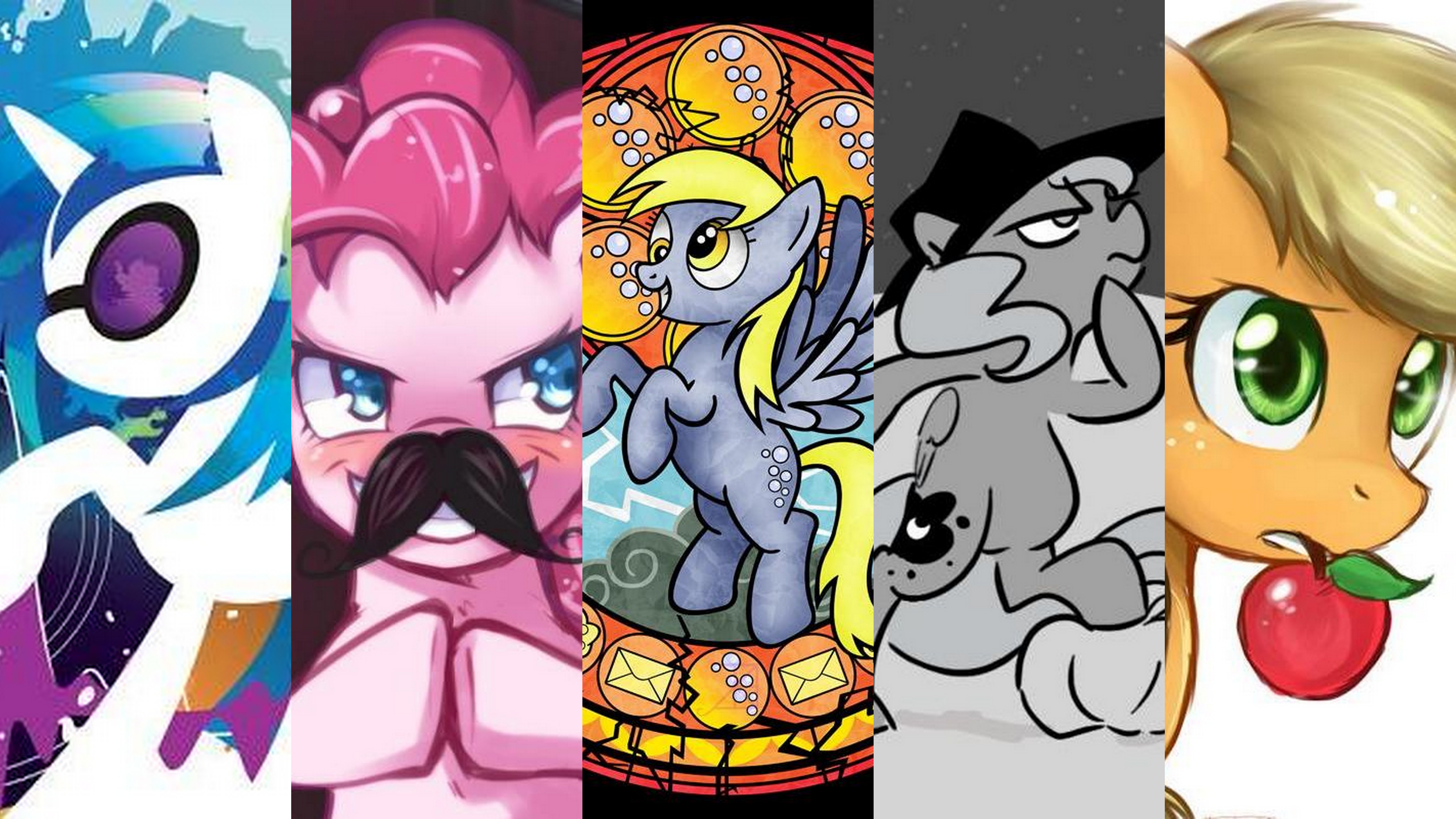
The community inspired by My Little Pony: Friendship Is Magic, though often regarded with suspicion or loathing, is the most creative, quirky, compassionate group of fans I’ve ever seen. Combining bro and ponies in a portmanteau word, these weird, wonderful people are known as bronies.

There is a ridiculous number of artists in the brony community. Besides creating art inspired by the show, they sometimes reimagine real or fictional peopleincluding bloggersas ponies.

Not many people know this, but I'm actually a pony.

Not many people know this, but I’m actually a pony.

The artwork produced by bronies takes innumerable forms: comics, sketches, paintings, woodcuts, stained glass and more. Name any kind of visual art, and bronies are guaranteed to have used it.

I have a sudden, inexplicable urge to buy a fedora. And to grow a mustache.

I have a sudden, inexplicable urge to buy a fedora. And to grow a mustache.

There are nearly as many musicians in the brony community as there are artists, and their music is no less diverse. Besides remixing music from the show, bronies have produced a staggering number of original songs in every style imaginable. Classical? Electronic? Classical remixed as electronic? Progressive bluegrass? Symphonic rock? Bronies have them all covered.

Brony musicians even cover music by other bronies. “Discord,” a catchy Eurobeat song about a villain from the show, has been arranged for orchestra, jazz, electronic and other genres.

I won’t even begin to cover the animations and video games created by bronies. While some are amateur efforts, others are literally of professional quality.

Even my typewriter monkeys (Thanks again to # of deviantArt!)

The Typewriter Monkey Task Force can’t handle the incredible creativity of bronies.
(Special thanks to Derpy Hooves for making a guest appearance!)

The creativity of the brony community seems to know no end, but the thing that impresses me most about bronies is their compassion.

Through fundraisers, auctions and special events, a charity called Bronies for Good recently paid for the construction of an orphanage in Uganda. Bronies for Good is currently funding clean water projects in Uganda and Tanzania. Another charity, the Brony Thank You Fund, is working to endow a scholarshiptentatively titled the Derpy Hooves Scholarship in Animationto the California Institute of the Arts. (Tim Burton, John Lasseter and many notable animators graduated from CalArts, which was founded by Walt Disney.) Various brony initiatives have raised many thousands of dollars for Kiki Havivy, a little girl diagnosed with a brain tumor.

The list of charitable projects goes on and on. It’s ridiculous.

Nothing is perfect, of course. The brony community has its share of conflicts, problems, crude artwork and tasteless fan fiction. In the end, though, it remains the most amazing group of fans I’ve ever seen.

I am, I admit, slightly embarrassed to be a fan of My Little Pony: Friendship Is Magic. It’s a cartoon for little girls, after all.

I am not, however, embarrassed to be a brony.

139. The Wanderer-Hero

I’ve been watching Doctor Who. Besides kindling a strong desire in my heart to own a fez, the show has reminded me of my very favorite character archetype: a rare, strange and wonderful kind of character, comic and tragic, plain and mysterious—the Wanderer-Hero.

(I should wear a fez. Fezzes are cool.)

The Wanderer-Hero is my favorite kind of character in fiction, and a very rare one. I can think of only four characters that fit the description perfectly: the Doctor from Doctor Who, Gandalf from The Lord of the Rings, Vash the Stampede from Trigun and Father Brown from the stories by G.K. Chesterton.

These four—a time-traveling alien, a wizard, a gunslinger and a priest—have hardly anything in common, or so it seems at first glance. They actually share quite a number of traits, all of which characterize the archetype of the Wanderer-Hero.

For fun, let’s take a look at just a few.

The Wanderer-Hero wanders

There is no home for the Wanderer-Hero, whose destiny is to roam.

The Doctor travels in time and space with no home but his TARDIS, a spaceship and time machine. Gandalf wanders across Middle Earth. Vash roams the deserts of Gunsmoke. Even Father Brown, who supposedly lives in Essex and later in London, spends a surprising amount of time rambling throughout England, stumbling onto crime scenes wherever he goes.

The Wanderer-Hero is comic

Outwardly, the Wanderer-Hero is cheerful, witty or clever.

When confronted with deadly peril, the Doctor’s first reaction is to make a joke. Gandalf has a wry sense of humor. Vash makes a fool of himself at every opportunity; for example, while bravely defending a town from bandits, he wears a trash can lid for a hat. Father Brown possesses a gentle wit and a comically unorthodox manner of solving mysteries.

The Wanderer-Hero is tragic

Inwardly, the Wanderer-Hero endures terrible agonies.

The Doctor suffers from deep loneliness, guilt and self-doubt, besides the sorrow of being the only surviving member of his race. Gandalf fights a long, lonely, thankless battle against a nearly invincible enemy. Wherever Vash goes, innocent people die; these tragedies tear him apart. Father Brown admits to solving crimes by possessing a profound, painful understanding of human wickedness.

The Wanderer-Hero is more than human

In some way, the Wanderer-Hero is superhuman.

The Doctor is a Time Lord, the last survivor of an ancient race of extraterrestrials. Gandalf is one of the Maiar: divine beings sent into Middle Earth in the guise of mortals. Vash is a Plant, a humanoid creature possessing incredible power. Father Brown is only a human being, but his gentleness, wisdom and compassion are almost angelic.

The Wanderer-Hero is old

The courage of the Wanderer-Hero is balanced by the wisdom of age.

The Doctor is roughly nine hundred and nine years old. Gandalf spends centuries wandering Middle Earth. Vash is one hundred thirty-one. Father Brown is the only one whose age isn’t numbered in the hundreds, and even he gives the impression of being an ancient saint.

The Wanderer-Hero always happens to be in the right place at the right time

The character is called the Wanderer-Hero, after all.

Quite by accident, the Doctor always finds himself in exactly the right time and place to avert a catastrophe. Gandalf regularly appears just in time to rescue his companions. Vash helps people wherever he goes. By solving every crime he encounters, Father Brown saves the day—and sometimes the criminal.

I suppose the reason I like the Wanderer-Hero so much is that the character is a paradox: funny and sad, silly and wise, plain and mysterious, ordinary and extraordinary. The Wanderer-Hero has a little bit of everything.

Who is your favorite Wanderer-Hero? Should I acquire a fez? Let us know in the comments!

126. TMTF’s Top Ten RPGs Everyone Should Play

What is an RPG, you ask?

Maybe you don’t ask, but I’ll tell you anyway.

An RPG, or Role-Playing Game, is a genre of video game in which the player controls a character or group of characters that becomes stronger by vanquishing enemies. Besides fighting, most RPGs feature great music, engaging stories and vast worlds to explore.

I love RPGs. They offer deep, challenging gameplay and some of the best storytelling I’ve seen in video games. Since TMTF features top ten lists occasionally, I decided to list the top ten RPGs every person on Earth—well, every gamer on Earth—should play.

A few discerning readers may note an egregious lack of The Elder Scrolls, Dragon Age and other Western RPG franchises.

Western RPGs tend to be non-linear, allowing the player to create the story with his or her actions. Japanese RPGs tend to be linear, giving the player fewer opportunities to shape the story. Both approaches are valid, but I prefer the powerful, carefully-scripted stories of Japanese RPGs to the malleable—but often weaker—stories of Western RPGs.

This top ten list demonstrates my preference for Japanese RPGs. My apologies in advance to all the gamers whose favorites didn’t make the cut.

Without further explanation, TMTF is proud to present…

The TMTF List of Top Ten RPGs Everyone Should Play!

10. Final Fantasy VII (PlayStation)

This game hasn’t aged as gracefully as the others on this list, but I had to include it anyway. Despite poor graphics, a slightly confusing story and horrendous localization, Final Fantasy VII is a classic, featuring a huge world to explore, memorable characters, impossibly large (and proportionately awesome) swords and several really touching moments.

9. Mario & Luigi: Bowser’s Inside Story (Nintendo DS)

This is a good game with things like music and graphics and gameplay, but Fawful is the best thing. Fawful, a villain who is evil, stylishly mangles the language of English. His dialogue sparkles with the brilliance of shiny goldfish. Quirky, funny writing is the ham on the delicious sandwich of this game, and Fawful is the mustard on that ham—the mustard of awesome! Fawful guarantees that a winner is you if you play Mario & Luigi: Bowser’s Inside Story.

8. EarthBound (Super Nintendo Entertainment System)

RPGs almost always feature either a medieval or steampunk setting, with a few futuristic sci-fi games rounding out the genre. EarthBound is different. Its world is very much like our own, and its hero is a boy named Ness who goes on a journey with his friends—children wielding baseball bats, frying pans, bottle rockets and psychic powers—to save the world from a malevolent entity known as Giygas. Bright visuals, quirky humor and some surprisingly dark turns make EarthBound one of the most memorable games I’ve ever played.

7. Radiant Historia (Nintendo DS)

With a creative take on time travel, Radiant Historia gives a secret agent named Stocke the ability to travel between two alternative timelines, exploring possible futures in his quest to find “true history” and prevent the world from turning to sand. The story begins slowly and characterization could be stronger, but Radiant Historia gives players clever battle mechanics and two intriguing plotlines. The game feels both new and familiar, blending tradition and innovation in one truly excellent adventure.

6. Final Fantasy Tactics Advance (Game Boy Advance)

In Final Fantasy Tactics Advance, a tactical RPG, a boy named Marche and several of his friends are transported by a magic book into an illusory world imagined into existence by—metafictional plot twist!—a gamer who loves Final Fantasy games. Marche resolves to dispel the illusion, confronting friends and enemies alike in his quest to restore the real world. A compelling story, endless side quests and remarkably deep gameplay make this game a masterpiece.

5. Final Fantasy XII (PlayStation 2)

A refreshing change from turn-based RPGs, Final Fantasy XII uses a simple game mechanic to let players “program” characters to fight automatically and allows players to jump in at any instant and take direct control. This approach has met with mixed reactions, but I think it works well: it cuts out tedious fighting without sacrificing the need for strategy. Besides efficient battle mechanics, this game boasts exotic areas to explore, dangerous monsters to hunt, well-developed characters, superb acting and the best writing I’ve ever seen in a video game.

4. Kingdom Hearts (PlayStation 2)

I won’t lie: Kingdom Hearts is weird. This action RPG throws Disney films and Final Fantasy characters together into a bizarre, strangely captivating story. Its sequels feature gameplay improvements, but I recommend Kingdom Hearts because it’s the first chapter of the series. (The story is complicated enough without the player jumping in partway through.) The game’s presentation is superb, with great acting and catchy music. The gameplay is deeply satisfying. Even the confusing story has a number of poignant moments—and putting Cloud Strife and Donald Duck in a game together is nothing short of brilliant!

3. Paper Mario: The Thousand-Year Door (Nintendo GameCube)

It must be very hard to dislike this game. Bright, paper-like visuals and hilarious writing bring to life a story that never takes itself too seriously yet manages to be compelling. The turn-based battles never become tedious; players are kept engaged by timed button presses and quick tilts of the control stick. Apart from solid gameplay and delightful dialogue, Paper Mario: The Thousand-Year Door stands out as the only game in the world to turn the gaming industry’s most recognizable character into a paper airplane.

2. Final Fantasy VI (Super Nintendo Entertainment System, Game Boy Advance)

It’s hard to know even where to begin. This game refines the traditional turn-based battles of the Final Fantasy series. The characters—ranging from a world-weary gambler to an inquisitive feral child—are characterized brilliantly and developed carefully throughout the game. The music, from “Terra’s Theme” to “Battle,” is incredible. The story is haunting: a tale of friends searching for hope and for each other in a world gone mad. Although it may be a bit old-fashioned for gamers raised on modern RPGs, I can hardly recommend Final Fantasy VI enough. (Play the Game Boy Advance version; the localization of the original SNES release is notoriously bad.)

1. Chrono Trigger (Super Nintendo Entertainment System, Nintendo DS)

I thought long and hard about Chrono Trigger, trying to find some fault to complain about. In the end, the best I could come up with is that the original localization was weak—a problem fixed in the Nintendo DS rerelease—and the bonus content in the rerelease fails to live up to the excellence of the original game. That’s it. Everything else is perfect: epic music, ingenious battle mechanics, beautiful graphics, an eclectic cast of well-developed characters and a unique time-traveling story. Dinosaurs? Check. Enchanted knights? Check. Derelict robot factories? Check. Ancient civilizations and islands floating in the sky? Check and check. This game has everything. Play it!

O people of the Internet, what RPGs would you add to this list? Let us know in the comments!

121. Literature Is a Luxury; Fiction Is a Necessity

I am deeply grateful for the feedback on the previous post! Before making any definite decisions about TMTF’s future, I’ll be taking suggestions, comments and criticisms for one more week. Please check out this post about the blog’s future and comment away!

My tastes aren’t particularly refined. I watch children’s cartoons, listen to video game music and drink cheap, generic blends of coffee.

There is one area, however, in which my tastes are pretty sophisticated: I like literature. Sensational horror tales, thrillers and romances don’t interest me. Give me the classics! Few things delight me as much as a deep, compelling story. I love engaging prose, dynamic characters, intricate plots, thought-provoking themes and clever concepts.

The problem with literature is that it’s not very accessible. The classics aren’t easy to read.

G.K. Chesterton knew all about literature, and he had this to say: “Literature is a luxury; fiction is a necessity.”

We might not all enjoy the classics, but most of us enjoy stories. Whether we see superhero movies, read novels about sparkly vampires or watch professional wrestling, we like fiction. Something about losing ourselves in a story is irresistible.

The ironic thing is how often simple stories succeed where fine literature fails.

When I was in college, I read One Hundred Years of Solitude for a literature class. The greatest work of a Nobel Prize-winning author, the novel features a meandering plot, intriguing symbolism, postmodern perspectives and an unforgettable blend of surrealism with matter-of-fact narration.

I appreciated One Hundred Years of Solitude. With almost every chapter, I found myself thinking, “Ah, I see what you did there, you Nobel Prize-winning author, you. That’s very clever.” Upon finishing the novel, I pronounced it a masterpiece.

The problem with One Hundred Years of Solitude is that it utterly failed to engage my emotions. Reading it was strictly an intellectual experience. It left an impression on my mind, but not on my heart.

More recently, a piece of fan fiction was brought to my attention. It’s impossible for me to be too disapproving of fan fiction because, I confess, I’ve dabbled in it myself from time to time.

All the same, I must point out that most fan fiction is badly written. It’s usually nothing more meaningful than wish-fulfillment. Rather than focus on telling a good tale, too many fans settle for turning their daydreams into stories. Fan fiction may have some trifling literary value, but it can’t begin to compare to original stories.

Some weeks ago, however, I stumbled upon a brief piece of fan fiction that intrigued me. I read it, expecting the usual mix of bad writing and clichéd ideas, and received quite a surprise. The story was actually touching. Reading it was cathartic. It wasn’t especially well written. Like all fan fiction, it shamelessly used situations and characters from an existing story. From a literary perspective, the story was completely unexceptional.

Even so, it made an emotional impact.

That experience set me thinking about the irony of fiction. As Chesterton pointed out, literature is a luxury, but fiction is a necessity. Few of us appreciate the classics, but we all find comfort in stories of one kind or another.

Sometimes a humble piece of fan fiction can touch someone in a way even a literary masterpiece cannot.

It’s a bonus if a story impresses the reader with its depth and complexity. In the end, it’s enough for a story to touch the reader’s heart.

I’m still critical of fan fiction, and I still love the classics deeply. Even so, I must admit that literature is a luxury. In the end, stories are all we need.

118. Video Game Clichés

Video games operate by their own quirky rules, most of which differ wildly from real life. Consider how Mario, a portly plumber with short legs, can jump roughly ten feet into the air without a running start. In real life, Mario might manage ten inches, but not much more.

Many of these strange video game rules have become patterns repeated over the years, and some of these patterns have been worn to clichés. Here are just a few.

Spikes

In video games, deadly spikes are everywhere. A villain’s lair? Spikes. An ancient castle? Spikes. An ordinary meadow? Spikes. Along with bottomless pits, spikes are the standard obstacle in video games.

It would be nice to see some alternatives to spikes. Electric fences, perhaps? Buried explosives? Buckets of piranhas?

On a logistical note, I wonder who installs spikey obstacles in video games. Maybe villains outsource to construction companies for spike installations.

Big swords

I’ve already written about this one, and I don’t really have anything to add except for one brief observation: they may be clichéd, but huge swords are awesome.

Revealing outfits

Ladies in video games often wear tight, revealing outfits. Even when male warriors are clad from head to foot in heavy armor, females charge into battle with bosoms, legs or midriffs exposed. There may be some significant tactical advantage to fighting in a swimsuit, but I can’t imagine what it might be.

Death as a temporary condition

Unlike real life, in which death is permanent, many video games present death as a temporary affliction—much like the common cold. Administer a one-up mushroom, some phoenix down or a fairy in a bottle, and death is cured.

Variations include reviving characters through magic, time travel, advanced science or some other implausible means. Another version of this cliché is to fake the death of important characters.

Not to be cruel, but it’s always a bit of a relief when characters actually die. You know, permanently.

Puppet villains

Too many video game bad guys are revealed to be pawns controlled by greater villains. It’s almost more surprising to me when there’s no unexpected plot twist and the obvious villain turns out to be the bad guy after all!

Ice levels

There’s even a song about this one.

Cheerful, perky sidekicks

From a storytelling perspective, giving the hero a happy, optimistic companion makes sense. Such sidekicks can provide comic relief, act as a foil to more serious characters or brighten the mood of scenes that might otherwise be too bleak.

Even so, I’m tired of cheerful companions. I want a cynical sidekick: one who is pessimistic, sarcastic, gloomy, unsentimental and dryly humorous.

Breaking and entering

People in video games don’t seem to mind you entering their houses and stealing their stuff. As the hero of the game, you’re permitted trespass on private property and take whatever items are left conveniently lying around.

Link, the hero from the Legend of Zelda games, is notorious for smashing pots belonging to other people in his relentless search for cash. Almost every RPG I’ve ever played allows the player to loot the homes of innocent civilians.

What video game clichés have we missed? Let us know in the comments!

117. How to Kill Off Fictional Characters

Be ye warned: Here there be spoilers; specifically, plot details for Radiant Historia, the Harry Potter books and To Kill a Mockingbird.

Every fiction writer, no matter how inexperienced, possesses an ability with the potential to make readers rejoice or rage or weep. Although this ability can be powerful, too many writers fail to use it well.

Fiction writers can kill off their characters.

I’m currently playing Radiant Historia, a delightfully well-crafted RPG for the Nintendo DS. The story is set in a fantasy world in which two nations are at war over their continent’s dwindling supply of fertile land. Stocke, a secret agent, is given the task of saving the world using a magical book called the White Chronicle.

Early on, Stocke meets a young soldier named Kiel who hero-worships him. Although insecure, overenthusiastic and awkward, Kiel longs to serve his country and become a hero like Stocke.

Kiel, Stocke and their companion Rosch are suddenly plunged into a crisis. Rosch is critically injured. Enemy soldiers are patrolling the area, and it’s only a matter of time before Stocke and his companions are found and executed on the spot.

After hesitating for a moment, Kiel proclaims, “I’ll go and draw their attention!” Stocke objects, offering himself as a decoy in order to let Rosch and Kiel escape. Rosch insists they save themselves and leave him to die.

Kiel responds by shouting: “Sergeant Stocke! Thank you for everything!”

Then he’s gone.

In the end, Stocke and Rosch escape to safety. Kiel is surrounded by enemy soldiers and brutally executed.

I was staggered. Kiel was dead. The story fooled me into thinking he was just a background character, and then ended his life in a scene that made me want to cry.

That, dear reader, is how to kill a fictional character.

In the Harry Potter books, Dumbledore seems invincible, untouchable, immortal. He’s too good to die. He dies.

In To Kill a Mockingbird, Atticus Finch defends Tom Robinson with all his heart and soul. When Tom is convicted, Atticus resolves to appeal the sentence. He never has the chance. Tom makes a break from prison and is gunned down. Just like that, Tom Robinson, whom Atticus has spent the entire novel trying to save, is dead.

I’m not an expert when it comes to murdering characters in fiction. I kill off too many people in my novel—and spare one or two characters that probably should have died—but there is at least one death that matters. Those who’ve read The Trials of Lance Eliot know exactly to what I’m referring. One character dies who does not deserve to die.

Killing off characters should not be done lightly. If too many characters are killed, the reader is desensitized to death. Consider action films, in which dozens or hundreds of people are killed (in highly stylized and carefully choreographed scenes) and nobody cares.

Let me give just one more example of how to kill off characters.

There is an excellent anime called Trigun featuring Vash the Stampede (whose beaming face has already been featured on this blog). Despite his unmatched skill as a gunslinger, Vash is a pacifist. He resolves conflicts without killing anybody. When faced with two violent solutions to a problem, he invents a peaceful third solution.

One of the best things about Trigun is how Vash slowly unravels as he witnesses the carnage around him. People die. Lots of people die. Trigun has just as many fights as any action movie. For Vash, however, every casualty is a tragedy. Every death tears him apart. In the end, Trigun is a story about Vash coming to terms with himself and the violent world in which he lives.

When watching Trigun, the viewer comes to care about the victims, even the nameless background characters, because Vash does. He reminds the viewer that each death matters.

Asleep yet? No? Good. Let’s get practical.

Characters should not be killed off lightly

Don’t kill off a character just because you can. Death matters in real life. It should matter in fiction.

Don’t kill off too many undeveloped characters

Let’s face it. Nobody cares about the minor characters. Kill them off when the plot requires it, but don’t get too carried away. Deaths lose their emotional impact if they happen too often. When possible, save it for characters that matter.

The death of characters works well when it’s totally unexpected—or when it’s totally expected

Consider the examples of Kiel and Dumbledore. Part of what makes their deaths so powerful is that they’re unexpected. They happen suddenly, without much warning. Most players and readers are unprepared for them.

At the same time, however, foreshadowing can be a great way to make readers feel for a character. We feel pity when we’re sure a good character is going to die. A doomed character’s actions are poignant, and that character’s death is more moving when it comes.

What writers should avoid is killing off people whom readers suspect might die simply for being a certain type of character. If an obnoxious jerk is featured early in a detective story, for example, he often turns out to be the murder victim.

Quick, brutal deaths work well

There are enough slow, overdramatic deaths in fiction. People don’t usually die in the arms of loved ones after uttering beautiful last words. It’s a mistake to make every death in fiction emotionally satisfying. In real life, how many are?

Killing off minor characters can be a good way to develop major characters

When a military officer executes a civilian for stepping on his toe, we might not be moved by the death of the civilian—but you can bet we learn something about the military officer.

What’s your advice for killing off fictional characters? Let us know in the comments!