Zealot: A Christmas Story – Chapter Three: Caleb

Chapter Two can be found here.

Caleb ran down the street, jostling the others, yelling and whooping and laughing. The night was dark, but the dark did not matter. They had found a light, a light to illuminate Bethlehem and Judea and all the world, a light from which all shadows must flee.

“Halt, you rabble,” called a voice. Caleb stopped and looked around. His companions did the same. They saw no one. The streets, lined with dim buildings, were lit only by faint, flickering threads of lamplight leaking through window lattices. The sky above was a black abyss, untouched by gleam of moon or star.

“Who speaks?” asked Caleb, beaming. “Come, there is no need to be shy.”

“Get inside, you fools,” said the voice, and a man emerged from the gloom. “You must be mad or drunk or possessed by devils. I neither know nor care. However, as a fellow Jew, I give you this advice: get indoors and stay there.”

“We cannot,” said Caleb, and his companions murmured their assent. “We have seen him, and we must spread the news!”

“Seen whom?” demanded the stranger. “What news?”

“The Messiah!” cried one of Caleb’s companions.

The stranger reeled.

“Come, friend, and we will tell everything,” said Caleb, advancing upon the stranger and holding out his hand. “Come with us! We will show you.”

The stranger pulled a sword from beneath his cloak.

Caleb withdrew his hand and backed away. Then, unable to contain his mirth, he burst into a laugh. “Come, come, put it away,” he gasped. “No need for weapons. We mean no harm, friend.”

“Keep your distance,” said the stranger. He pointed the blade at Caleb, but his hand shook. “The Messiah? What in God’s name do you mean?”

“The Messiah,” repeated Caleb. “I cannot make it clearer. The Messiah of God has come to Bethlehem.”

The stranger lowered his sword. “Where is he?” he demanded. “This Messiah—where is he? If God, after so many centuries of silence, has finally given us his chosen leader, I will pledge myself to his service.”

“What is your name, friend?” inquired Caleb.

The question seemed to surprise the stranger. “Jehu the zealot,” he replied.

“I am Caleb the shepherd. These are my fellow shepherds: loyal sons of Jacob. Now that we know each other, let us take you to the Messiah.”

Jehu’s hands stopped shaking, and he wrinkled his nose. “Shepherds,” he muttered. “What a fool I am to be shaken by the gossip of shepherds. I ought to have known you by your smell.”

“Are you coming with us?” inquired Caleb.

“Go to your Messiah,” said Jehu. “If you ask politely, he may give you golden scepters and linen robes to replace your crooks and filthy rags.”

“He is sleeping in a manger,” said one of Caleb’s companions, and Jehu froze.

“What?” he whispered.

“Angels appeared to us as we watched our flocks,” explained Caleb, gesturing toward the fields lost in the darkness somewhere far beyond Bethlehem.

Caleb’s companions broke the silence.

“Brighter than the heart of a furnace!”

“White robes—whiter than I have ever seen—whiter than the clouds of heaven.”

“Like bolts of lightning frozen in the sky!”

“There was one angel,” said Caleb. “Then there were many. They told us of the Messiah, the Christ, the child wrapped in cloths and lying a manger somewhere in the town of David. We found him with his parents in a cave outside Bethlehem.”

“You are fools,” said Jehu. “What of your flocks?”

“Ah, I suppose they are out there somewhere,” said Caleb vaguely. “They no longer matter.”

“They are wiser than you,” said Jehu, and sheathed his sword. “They are witless and wandering, but even your sheep have more sense than to invent stories of angels and a Messiah in a manger. Farewell, and God forgive your insanity.”

Jehu vanished into the darkness. Caleb and his companions stood for a moment, watching. Then someone laughed, and they all laughed, and into the night they ran, ready to tell Bethlehem and Judea and all the world that the Messiah had come.

Chapter Four can be found here.


Author’s Note:

At the time of the Nativity, being a shepherd was not exactly a glorious career. It was a hard, cold, lonely job with few benefits. Shepherds were pretty much the lowest of the low. That’s why it was frankly weird for Christ’s birth to have been announced to shepherds. Angels gave the good news not to kings or priests or philosophers, but to shepherds. Why shepherds? I’m not sure. Christ spent much of his time ministering to lowly people—beggars, lepers and prostitutes, among others—so perhaps it’s not so strange that shepherds were the first to hear the news of his arrival.
233. The Best Christmas Special Ever

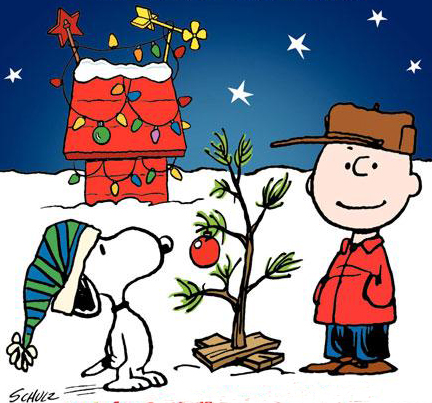
There are one or two Christmas specials which are near and dear to my heart: for example, the Peanuts one.

Charlie Brown Christmas

After the incomparable Peanuts program, I think my favorite Christmas special is a silly sketch from the good folks at The Ceiling Fan Podcast.

The Ceiling Fan Podcast is an audio series produced by fans of Adventures in Odyssey. It’s the tale of Ethan Daniels, hyperactive teenager and self-proclaimed greatest Odyssey fan.

The Ceiling Fan Podcast

I could ramble on about The Ceiling Fan Podcast and how much I enjoy it, but I’m here to talk about Christmas specials.

(I will mention, however, that it was the creator of The Ceiling Fan Podcast who put together a freaking rap battle for this blog. He’s a really cool guy, and it was an awesome rap battle.)

In the classic film It’s a Wonderful Life, which I should probably watch someday, an angel shows a man named George how much worse the world would have been if he had never existed. Without realizing it, George had touched many lives and made an incredible difference for good.

In the best Ceiling Fan Christmas special, a man named John (a recurring character in the podcast) undergoes a similar experience… except his supernatural guides show him how much better the world would have been without him.

For example: John works as a newscaster for a failing radio station—a station confirmed to have only one regular listener. With another newscaster in his position, the station is incredibly successful. Another example: John lives alone with his cats. In his absence, a neighbor finds each of those cats a loving home—as she puts it, “It would be downright awful to have so many cats all living in one place! I can’t imagine any of them would like that very much!”

John’s conviction deepens that his life has been meaningless… and then he encounters a lonely boy named Ethan Daniels. Ethan is spending the holidays with his mom; his dad hasn’t ever been around for Christmas. At the moment, Ethan feels just as depressed as John.

Then Ethan turns on the radio and hears one of John’s newscasts. Ethan likes it, and decides to create a podcast of his own—The Ceiling Fan Podcast.

As they watch Ethan, John and his guide begin to talk, and music wells up in the background, and I shed a few quiet tears.

John’s guide explains: “This is the moment that little boy decides he wants to do a podcast, a podcast that gives him a purpose, and leads him to all kinds of adventures! And he meets some of his closest friends through it. And he has the time of this life. And it all starts at this moment. With you, John. Because of you.”

“And his podcast becomes big and famous, and changes a lot of lives?” asks John.

“No, John,” replies his guide. “It stays small… but it affects some lives.”

John seems to get it.

“Even if I only help this one kid, and it goes no further than that… it was worth it, right?”

“What do you think?”

John continues, stammering slightly. “He—he’s the one, isn’t he? The young man is—is the one who’s still listening to the show.”

“Yes.”

John concludes: “Even if I make a few people laugh, and I have fun and enjoy what I do, then it’s worth it.”

Something tells me the person who wrote this scene wrote it for himself. The Ceiling Fan Podcast isn’t big or famous. It hasn’t changed a lot of lives, but it has affected some. It has definitely affected mine. When I struggled through a bout with severe depression earlier this year, The Ceiling Fan Podcast is one of the things that kept me going.

Every time I hear this scene, I think of my lousy blog. (After wiping away manly tears, of course.) TMTF isn’t really successful. It hasn’t changed a lot of lives. It has stayed small… and it has, I hope, affected some lives.

“Even if I make a few people laugh, and I have fun and enjoy what I do, then it’s worth it.”

In what is becoming a Christmas tradition, this ridiculous holiday special—as far as I’m concerned, the best one ever—reminds me that something doesn’t have to be extravagantly successful to be worthwhile.

After all, a lot of good things have been small. Ethan Daniel’s podcast. Charlie Brown’s Christmas tree. Christmas itself began with an ordinary girl in the ordinary town of Nazareth.

Few of us are great. That doesn’t have to stop the rest of us from trying! We may not change the world, but we can brighten our own little corners of it.

232. About Storytelling: The Unexpected Hero

I love it when heroes don’t start that way.

Some of the most popular heroes in fiction began their journeys as normal people. Luke Skywalker. Bilbo Baggins. Harry Potter. Bruce Wayne. Link from the Legend of Zelda games. The girl from those ridiculous Twilight books. All these characters have something in common: they’re ordinary. At the very least, they seem ordinary. They’re normal people with normal lives who stumble into something extraordinary, and we love them for it.

Why do we like unexpected heroes so much?

Unexpected heroes are relatable

Look at Batman. If he were just a man with a cape and a bunch of gadgets, we might be mildly impressed. The reason we love Batman is because we see the man behind the mask: Bruce Wayne, the child whose parents were murdered, the loner burdened with guilt, the hero determined to make a difference. We can wish we were Batman, but we can’t relate to him—not really. Batman is just a persona. Bruce Wayne is the one to whom we relate: the person whose struggles give depth and meaning to Batman’s adventures.

Heroes are hard for us to understand. Most of us are ordinary people. We can’t relate to good-looking, all-powerful, super-smart adventurers and superheroes. Only when heroes have a human side—or better yet, start out as ordinary people—can we relate to them.

Unexpected heroes inspire us

I find it hard to be inspired by Nelson Mandela, who recently passed away. He was a very great man—so great, in fact, that I can’t imagine how I could ever make one-hundredth as great a difference as he. I find it much easier to be inspired by people I know: my parents, for example, and my grandparents. I look at Nelson Mandela and see unattainable greatness. I look at my grandfather and see a man whose greatness I may someday achieve.

Unexpected heroes begin as ordinary people. When they go on to do amazing things, their example gives us hope that perhaps we can accomplish something worthwhile in our own ordinary lives.

Unexpected heroes are exciting

I don’t like Superman. It’s nothing personal, I just find it hard to get excited about a guy who is practically invincible. He flies, he shoots lasers from his eyes and oh, yeah, he’s nearly invulnerable. With only one weakness, Superman is boring. Batman is another story. He has no superpowers; every one of his strengths could feasibly belong to an ordinary human being. Batman is breakable, which makes him interesting.

When a hero starts off brave or powerful, it’s hard for us to care. We know they’ll win. There’s little excitement, little tension and little interest. When our protagonist is just an ordinary person, however, we wonder whether they’ll succeed. We sympathize with them. We cheer for them. As they grow and mature, we find satisfaction in their progress. At last, when they triumph, we’re overjoyed—because we know they’ve earned it.

O people of the Internet, who is your favorite unexpected hero? Let us know in the comments!

Zealot: A Christmas Story – Chapter Two: Judith

Chapter One can be found here.

Judith peered through the window and saw nothing. Moon and stars had been obscured by a blanket of clouds. Bethlehem had been plunged into darkness.

“When will Papa get home?” asked Rachel, tugging on Judith’s sleeve.

“Soon,” said Judith, and began to pray silently that her husband came home alive.

The Roman census had made Bethlehem a dangerous place. Bandits multiplied, eager to make a profit from the travelers flooding the roads. Hungry and desperate, many travelers were not above stealing anything they could to survive. It was a time for citizens of Bethlehem to bar their doors, wait and pray for God to guard them.

Judith had spent the day preparing for her husband’s homecoming: baking, cooking, cleaning and not daring to lapse into idleness. Idleness meant worry. Judith kept busy.

Someone hammered on the door, and Rachel flew to open it.

“Wait, child,” said Judith, and called, “Who knocks?”

“It is I, Benjamin, your one and only husband,” called a voice she knew. “Kindly open the door.”

Rachel threw open the door, cried “Papa!” and leapt into Benjamin’s arms. He tottered a few steps backward.

“My dear child,” he said, stroking her hair. “Judith, my love, I am home.”

“You are very late,” said Judith, and grinned. It was hard to be upset with Benjamin.

Benjamin carried Rachel inside. “We have a guest, my love.”

“Any guest is welcome,” said Judith.

Jehu stepped inside.

For an instant, Judith’s face betrayed disgust and fear. Then, speaking in a strained, quiet voice, she said, “Any guest but this one. He must go.”

Benjamin sat down on a cushion with Rachel on his lap. “My love, Jehu has come all the way from Jerusalem. We cannot turn him out into the cold.”

“Yes, we can,” said Judith.

“The night is dark, my love. The clouds covered the lights of heaven as we came into Bethlehem. I cannot leave my cousin to sleep in the streets on a night as gloomy as this.”

“I cannot allow a member of the Sicarii in my house,” said Judith. “He must go.”

Rachel looked up at Benjamin. “Papa, what does Sicarii mean?”

“You need not know,” replied Benjamin, biting his lip. “It is not a matter for children.”

“Tell her, my husband,” said Judith. “Rachel deserves to know what sort of man you have brought into her home tonight.”

Judith may not have been the head of the household, but she always had her way in arguments. Benjamin sighed, as usual, and submitted to his wife’s decision.

“You may sit, Jehu,” he said, making an effort to delay the inevitable. “There is no need for you to stand lifeless in the corner like an idol. For the moment, you are welcome here. Make yourself comfortable.”

Judith glanced fiercely at Benjamin. He held his daughter close and said, “Rachel, do you remember the stories of Joshua and David and the other great warriors of Israel?”

Rachel nodded.

“A Sicarii is a warrior who fights in secret. That is all, my daughter.”

Judith smiled. “I love you, my husband, for making the best of an ugly truth. Rachel, my child, the Sicarii are the dagger-men, murderers with sicae up their sleeves—secret blades to steal the lives of their enemies.”

Rachel stared at Jehu. “He has sicae in his sleeves?” she whispered.

“Well, Jehu?” said Judith. “She asks. Answer my daughter.”

Jehu reached up his right sleeve and withdrew a curved blade. “Just one,” he said. “One is all I need.”

Rachel gazed at Jehu, the grim stranger with a sword at his waist and a knife up his sleeve. “Papa, please let me go,” she whispered.

“My child,” said Benjamin, but stopped as his daughter squirmed in his arms.

“Please let me go,” she whimpered.

Benjamin released his daughter, and Rachel scuttled into a back room.

“Even children fear you, Jehu,” said Judith.

He scowled. “Your daughter fears the dark, dreadful dagger-men of your imagination. You frightened Rachel, not I.”

“Why have you come?” demanded Judith. “What brings you to Bethlehem?”

Jehu smiled, but his smile was darker than his scowl. “The Roman census, of course. Everyone is here for the census.”

“Do not lie to me,” snapped Judith.

“Your husband seemed an easy prey to bandits,” said Jehu. “I could not allow my cousin to travel alone.”

“Closer to the truth, yet no less a lie,” said Judith.

“Is this how you receive guests in Bethlehem, old man?” inquired Jehu. “Your child flees, your wife pries and you sit blinking like a drunkard.”

“Quiet,” said Benjamin, and a shadow of fear came over Judith. She had never heard such anguish in his voice.

“Josiah the priest was murdered yesterday,” continued Benjamin, speaking as though in pain. “A servant of the Most High, stabbed and left to die in the streets. Jerusalem erupted. Riots broke out. By the time the uproar had been quelled, the assassin had vanished. I know now where he has gone.”

“We both know Josiah was the governor’s puppet,” said Jehu, not looking at anyone. “A servant of the Most High? No, old man. A servant of Rome.”

“You killed a priest of God!” cried Benjamin, springing to his feet. He stood a moment, breathing heavily, and then sat down again on his cushion.

“I eliminated a traitor.”

There was a long silence. Judith opened her mouth to speak, but remained silent at a look from her husband. Benjamin, a soft man, seldom asserted his authority. When he did, Judith obeyed. Glaring at Jehu, she said nothing.

When Benjamin spoke, the anger had gone out of his voice. He sounded tired. “Jehu, what have you become? My cousin was not a man with blood on his hands. He was a good lad with bright eyes. Your eyes have become dull, Jehu. They are a drunkard’s eyes. You are intoxicated with blood, and it makes me sad.”

“I fight for our freedom,” protested Jehu. “I fight because I must. Rome grinds Israel into the dust. We must retaliate! What else can we do?”

“We can survive,” said Benjamin. “As we have done for hundreds of years, we can endure. It is not for us to overthrow empires. That is God’s business. We must await the Messiah who will set us free.”

“Will he come?” asked Jehu.

“What are you saying?” demanded Judith. She could not remain silent any longer.

“Will the Messiah come? We have waited hundreds of years. There are no more prophets. There are no more prophecies. The teachers of the law stoop to petty legalism, and God’s own temple is rebuilt as a political maneuver by a pagan king.”

“Do you plan to deliver Israel by murdering her priests?” asked Judith.

Jehu made no reply.

“It is best if you leave,” said Benjamin. “I am sorry, Jehu, but this is no place for you. God’s grace go with you, and may he lead you to a life of peace.”

“Get out,” said Judith.

Jehu opened the door and faded into the night. The lights of heaven had not rekindled, and the darkness was absolute.

Chapter Three can be found here.


Author’s Note:

When my old man told me about the Sicarii, the Jewish dagger-men who murdered their enemies in broad daylight and disappeared into the crowd, I was fascinated. Never mind Assassin’s Creed—this is history!

According to my old man, the Sicarii actually carried concealed blades. They would sidle up to their target in a crowd, slip the blade between the ribs, puncture the heart, withdraw the blade and slip away before anyone noticed them.

My tale of zealots and daggers may seem a bit grim for a Christmas story, but I don’t think it is. The Nativity is depicted as a bright, joyous event, but it came at a dark, dreary time in Jewish history. That’s partly why people were so excited about the Messiah. He would make everything right! He would restore Israel! In the meantime, the Sicarii and the zealots fought back. Everyone else endured, and waited, and hoped.

Nothing defines Christmas more than hope, I think.

231. TMTF’s Top Ten Mad Scientists in Video Games

We’re all a little crazy.

Some of us, of course, are crazier than others. In video games, the craziest people generally fall into three categories: villains, mad scientists or both.

I find mad scientists particularly interesting. They abandon morality (and occasionally their own humanity) in their frenzied pursuit of knowledge or power. Like Adam and Eve snatching the forbidden fruit of Eden, these lunatics rebel against God and nature in the name of progress.

Mad scientists may not be good people, but they sure are good characters!

In listing ten remarkable mad scientists in video games, my usual rules apply: I won’t include characters from games I haven’t played (with one notable exception) and will include only one character per game series.

Let’s get crazy, ladies and gentlemen, as TMTF presents…

The TMTF List of Top Ten Mad Scientists in Video Games!

Be ye warned, here there be minor spoilers.

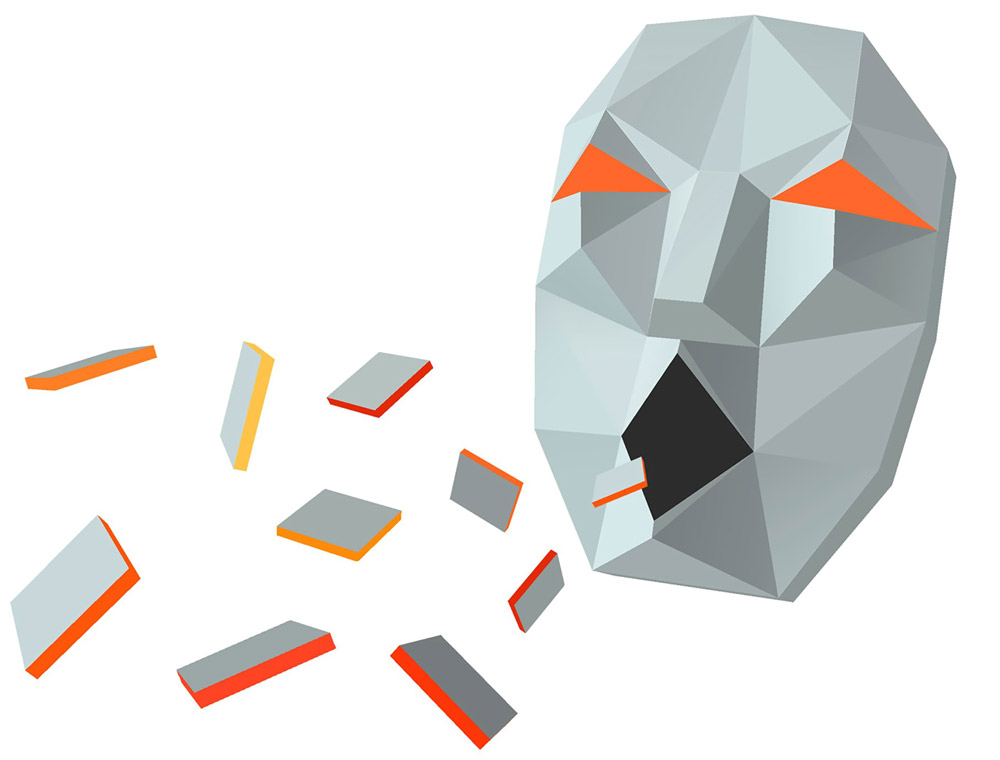
10. Andross (Star Fox series) Andross Andross was once a brilliant scientist, but experiments damaged his sanity and ruined his body. Although he doesn’t have much personality, Andross establishes himself as a notable villain by killing the father of the games’ protagonist and declaring himself emperor of the solar system. I also want to point out that Andross is apparently comfortable with sacrificing his body and becoming a disembodied head. That’s pretty crazy.

9. The Doctor (Cave Story) The Doctor (Cave Story) No, not that Doctor. This Doctor is actually a medical practitioner, albeit one with a terrifying lust for power and a violent disregard for the Hippocratic Oath. The Doctor is merciless, selfish and cruel. He also gets bonus points for using himself as a test subject and becoming a hideous mutant. Besides, I love that he carries around a pen. More villains need pens sticking out of their pockets.

8. E. Gadd (Super Mario Bros. series) E. Gadd Egad! This nutty little gentleman has the distinction of being pretty much the only good guy on this list. Professor Elvin Gadd is an inventor and paranormal researcher whose crowning achievement is a vacuum cleaner that sucks up ghosts. He’s cheerful, egotistical and blithely inconsiderate. He also sounds exactly like an Ewok from the Star Wars films. Coincidence? Yeah, probably. All the same, this pint-sized prof definitely has a few screws loose.

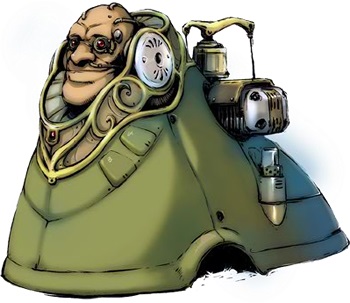
7. Fennel (Radiant Historia) Fennel Fennel is the head of a military research and development team. He’s also just a head. (There might be a body inside that slug-like machine, but I’m not sure.) Working for the warlike nation of Alistel, Fennel develops thaumatechnology: an arcane sort of machinery consisting mostly of weapons and other stuff that can kill you. He’s in love with his work, which takes place in a dim, ironclad labyrinth of underground chambers. Seriously, Fennel is kind of creepy.

6. Jean Descole (Professor Layton series) Jean Descole I haven’t actually played any of the games in which Jean Descole appears, but my brother insisted I put him on the list. (I’ll finish the Professor Layton series sooner or later.) Descole is cold, calm and cunning… except when he’s angry. Then he’s kind of scary. This archaeologist, master mechanic and self-proclaimed scientist manipulates others, shows no remorse and stops at nothing to achieve his goals. Don’t be fooled by that detached smile. Descole is not a sane man.

5. Doctor Eggman (Sonic the Hedgehog series) Doctor Eggman As his name and title suggest, Doctor Eggman is a doctor shaped like an egg. Despite being extremely intelligent, he is not particularly bright; his schemes for world domination are invariably foiled by either a hedgehog or his own incompetence. Eggman is short-tempered, egotistical and prone to bouts of maniacal laughter: defining characteristics of a mad scientist. Besides, dat stache.

4. Pamela’s Father (Legend of Zelda: Majora’s Mask) Pamela's Father This poor fool, who is never given a proper name, is so devoted to his study of supernatural phenomena that he moves to a desolate, haunted valley to study ghouls and ghosts… and takes his young daughter Pamela with him. When his research causes him to deteriorate into a monster, she traps him in the basement and bars the front door against the ghouls circling the house. Terrifying? Heck yes. Pamela and her father are eventually rescued and his humanity restored. Regardless, any scientist crazy enough to drag his daughter to an isolated wasteland to study monsters is, well, really crazy.

3. Ansem (Kingdom Hearts series) Ansem Without delving too deep into the convoluted lore of the Kingdom Hearts universe, I can confidently declare this man a lunatic. His research into the darkness of the human heart leads to the creation of Heartless, shadowy monsters that swarm across the universe to devour worlds. Ansem himself becomes a Heartless. Then—in the time-honored tradition of mad scientists—he tries to conquer everything. This tanned, stylish scientist gets extra points for inverting the stereotype of the pallid researcher in a lab coat.

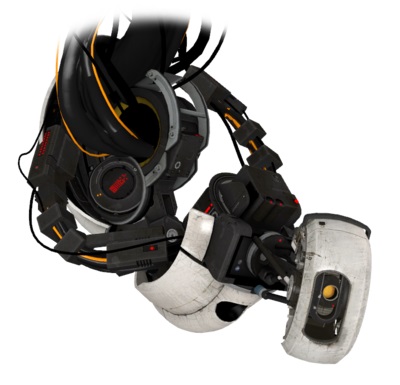
2. GLaDOS (Portal series) GLaDOSThis psychopathic artificial intelligence builds death traps and forces test subjects to solve them. Why? For science, of course! So what if her research methods kill a few people now and then? GLaDOS believes her experiments are worth the cost: “The science gets done and you make a neat gun for the people who are still alive!” I love how this AI becomes unhinged throughout the games, eventually stooping to ranting and petty insults. For complexity of character and degree of insanity, GLaDOS is wonderful.

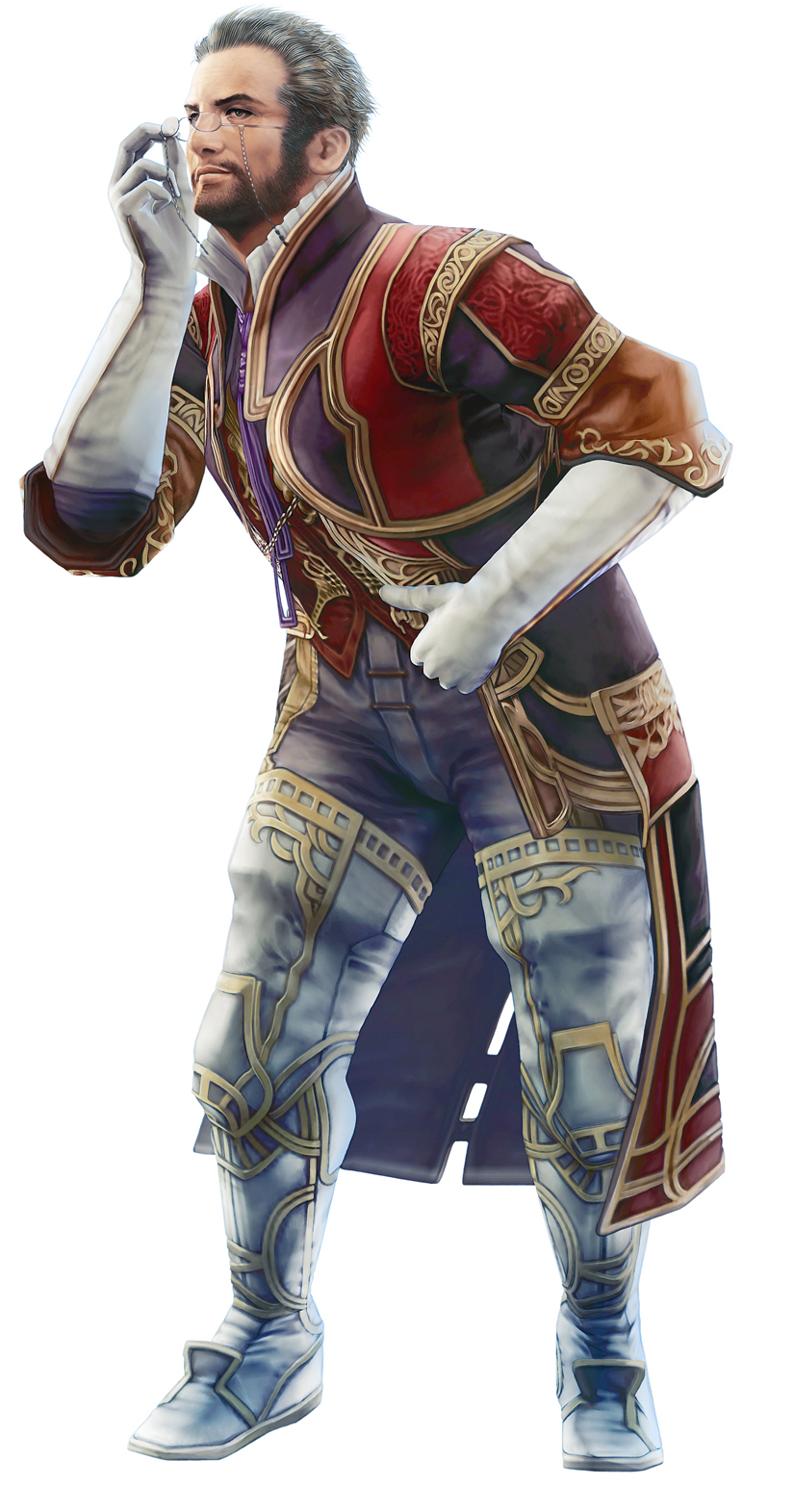
1. Cidolfus Demen Bunansa (Final Fantasy XII) Doctor Cid Cidolfus Demen Bunansa is one of the best video game characters I’ve ever seen: supercilious, brilliant, arrogant, foppish and seemingly insane. He treats tyrants with casual disrespect and talks aloud to an imaginary friend named Venat. I would call Cid a delusional lunatic, except for one minor detail—he’s actually sane. Cid is a rational man obsessed with defying the gods and putting “the reigns of history back in the hands of man,” abetted by the mysterious, invisible Venat. Of course, on his noble quest to liberate humankind, Cid doesn’t mind shedding a little innocent blood: this man ordered the obliteration of an entire city with the magical equivalent of an atomic bomb as a scientific experiment. Cid is fabulous, fascinating, evil, despicable, astonishing and awesome.

O people of the Internet, what video game mad scientists would you add to this list? Let us know in the comments!

230. Advent Conspiracy Is Back!

It’s that time of year again.

Yes, stores are selling, television specials are showing, cynics are sneering and a handful of awesome, crazy people are conspiring to save lives.

I don’t like churchy videos, but this one made such an impression on me years ago that I’ve shared it every Christmas season since. Watch it. I’ll wait for you.

Here are the facts.

1. Americans spend $450 billion on Christmas every year.

2. Lack of clean water kills more people every day than almost anything else on Earth.

3. The estimated cost to make clean water available to everyone on Earth is about $20 billion—roughly 4.5% of how much Americans spend on Christmas every single year.

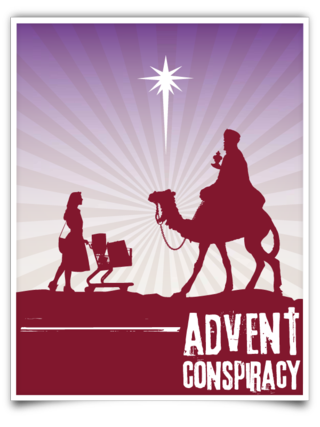
The Advent Conspiracy is a resolution to spend less on stuff and more on people. Of course, buying Christmas gifts isn’t wrong. (I definitely have some holiday shopping planned.) The purpose of the Advent Conspiracy isn’t to stop spending money, but to spend it meaningfully.

Advent Conspiracy

Let’s face it—thirsty people need clean water more than we need Christmas presents.

The Advent Conspiracy is dedicated to providing clean water, but its principles can be applied to other good causes. The hungry, homeless and brokenhearted need our money as much as the thirsty. Where we give doesn’t matter as much as whether we give.

This Christmas, we can rescue people from poverty, thirst and sickness. This Christmas, we can change the world—or we can buy more stuff.

Let’s change the world.

More information about the Advent Conspiracy can be found here.

Happy Christmas!

Zealot: A Christmas Story – Chapter One: Benjamin

A stout man and a thin man walked the road to Bethlehem in silence. Above them, a full moon shone and stars blazed across the sky. Around them, dusty slopes stretched up into the night, gray in the moonlight, broken by trees and rocks and tufts of grass.

The stout man paused to gaze upward. “Turn your eyes to the stars, Jehu,” he said, puffing and wiping his brow. “Their beauty tonight is beyond compare.”

“To gehenna with the stars,” replied the thin man, looking resolutely downward. “We have no time for them. Keep moving, Benjamin.”

Panting, Benjamin spared enough breath to gasp in indignation. “You must not malign the works of the Most High. The heavens declare the glory of God, as it is written in the psalms. The skies proclaim the work of God’s hands. Day after day they pour forth speech—”

“Not unlike a fat old man of my acquaintance,” said Jehu, scowling at his companion. “I have heard enough of your prattle. We are near Bethlehem, and I beg you to hold your tongue until we get there.”

They walked on. Wind swished the grass and made branches creak. From over the hills came the faint noise of sheep bleating and men chatting, the sounds of a shepherd’s camp. As Jehu and Benjamin plodded along, their shadows stretched out before them, sharply black in the moonlight.

Jehu brought forth a sword from under his cloak and began to twirl it. Benjamin took a few steps back. “Do not fear me,” said Jehu. He smiled, which Benjamin did not find comforting. “Whom you must fear, Benjamin, are the bandits. Like the accursed Romans, they prey upon the weak and helpless.”

“Are we in danger?” whispered Benjamin.

“You are, perhaps,” said Jehu. “Fortunately for you, I am neither weak nor helpless. Stay close to me and you may live to see the lights of Bethlehem.”

Keeping a wary eye on the sword flashing in the moonlight, Benjamin moved a little closer to Jehu.

At last, as they came over the crest of a hill, they saw the lamps and fires of Bethlehem twinkling like golden stars far ahead. Still gasping for breath, Benjamin mumbled, “God be praised.”

Jehu said nothing and did not put away his sword.

“I am not a nervous man,” said Benjamin nervously. “Nevertheless, I admit to feeling perhaps just an echo of fear on this dark, dangerous road. It is good to see lights ahead. They speak to me of food and fire and wine—God preserve us, what is that?”

Jehu held his sword before him and peered into the darkness. “Benjamin, what do you see?”

“I see a cross. Some poor fool has been crucified.”

Jehu sighed and sheathed his sword. “Your eyes deceive you, old man. It is nothing but a pillar and crossbeam of wood. There is a cave in the rock. Someone must use it for a stable or storehouse. The cross you see is a support to keep the mouth of the cave from crumbling.”

“It is an omen,” said Benjamin, clutching Jehu’s sleeve. “The Almighty gives you this sign, Jehu. Your plans are folly. Turn away from them! Abandon your dreams of revolution, or a cross will become your future.”

“That is not a cross,” said Jehu, tearing his sleeve out of Benjamin’s grip. “That is a pillar and crossbeam. Only a fool—or a poet, which is no different—can look upon it and see an instrument of death. Gather your wits and stop babbling.”

Benjamin rubbed his face, wiping away sweat and tears. “I am concerned for you, Jehu. You were once my cousin, before you forsook all ties to family. You may not value your life, but I do.”

“We have wasted time enough,” said Jehu. “Bethlehem awaits.”

As they passed the mouth of the cave, they were startled by a cry from within.

“Is that the sound of a child?” whispered Benjamin.

Jehu’s face was grim. “There,” he said, pointing.

Moonlight poured into the cave, illuminating all but the farthest corners. The pillar and crossbeam supporting the ceiling cast the ruthless black shadow of a cross. A manger stood in the shadow. A woman knelt beside the manger. A man stood nearby, holding out a lamp that flickered uselessly in the moonlight.

“By Joseph’s bones,” murmured Benjamin. “A baby in a manger. In such dangerous times as these, what spirit of madness possessed these fools to take refuge in a filthy cave?”

“The Roman census,” said Jehu. “These fools left their home and dragged themselves across the country for this, a stable reeking of manure, because Rome told them to. Why does this child have no better bed than a cattle trough? The answer is simple. Rome felt it necessary to know exactly how many people are left in this country for her to grind beneath her heel.”

“You should not say such things, Jehu.”

“Why should I be silent? Look at that child. He lies in the shadow of a cross. He will live in the shadow of a cross. Unless we rise against Rome, we too shall live in the shadow of a cross, that bloody emblem of Roman brutality.”

Having regained his breath, Benjamin heaved a long, sad sigh. “You sound more like a zealot every day, Jehu. You have certainly mastered the rhetoric of the revolutionary. No, I do not wish to hear more,” he added as Jehu opened his mouth to reply. “I do not want to be told of Rome’s cruelties or your plans to repay them. I want safety and supper and a warm bed. I want to go home to my wife and daughter. Let us leave.”

They left the cave.

Chapter Two can be found here.


Author’s Note:

I wrote Zealot: A Christmas Story about a year ago because there are not enough Christmas stories about assassins.

When we think of the first Christmas, a stable and shepherds and wise men are usually the first things to come to our minds. In our imaginations, the Nativity exists in its own little bubble. As I wrote this story, I had great fun giving the Nativity its historical context, from the predictions of ancient prophets to the struggles of brave revolutionaries. At the heart of this story lies one man, a zealot, whose life of blood and secrecy begins to change when he meets a child born in the shadow of a cross.

Zealot: A Christmas Story will be posted in short chapters, one each Wednesday, until early January. Regular TMTF posts will continue to be posted on Mondays and Fridays.

Thanks for reading!

229. A Christmas Story (with Assassins)

I’ve decided to share one of my old stories on TMTF this month, because recycling is good for the environment.

I wrote “Zealot: A Christmas Story” because there are not enough Christmas stories about assassins. It’s the tale of Jehu, a Jewish revolutionary bent on driving the Roman Empire out of Palestine. His life of hatred and bloodshed is interrupted by an astonishing series of people: a cowardly traveler, some crazy shepherds, a grouchy scholar and a rabbi whose teachings would transform the world.

The story of the Nativity is a familiar one. We all remember the stable, the manger, the angels and the shepherds. What we forget is the historical context. For centuries, the Jews had been subjugated by powerful empires. Ancient prophecies of the Messiah, a hero chosen by God to restore Israel, must have seemed empty and distant.

Jesus was born in an era of hopelessness and disillusionment. Since God seemed to be doing nothing to rescue Israel from Rome, a number of Jews decided to take matters into their own hands. They became zealots: revolutionaries fighting a hopeless battle, struggling to survive and awaiting the Messiah whom God had promised.

In the end, the Messiah came. He lived and died not to rescue Israel from Rome, but to free humankind from death.

“Zealot: A Christmas Story” is the tale of a revolutionary, and how he witnessed the beginning of a revolution infinitely greater than any he could imagine.

Throughout December and early January, chapters of this story will be published on TMTF on Wednesdays, replacing my weekly ramblings about geeky things. Never fear! Geeky Wednesdays will return next month.

I hope you enjoy “Zealot: A Christmas Story.” Have a bright, beautiful December!

A Portrait of the Artist as a Hero Drinking Coffee

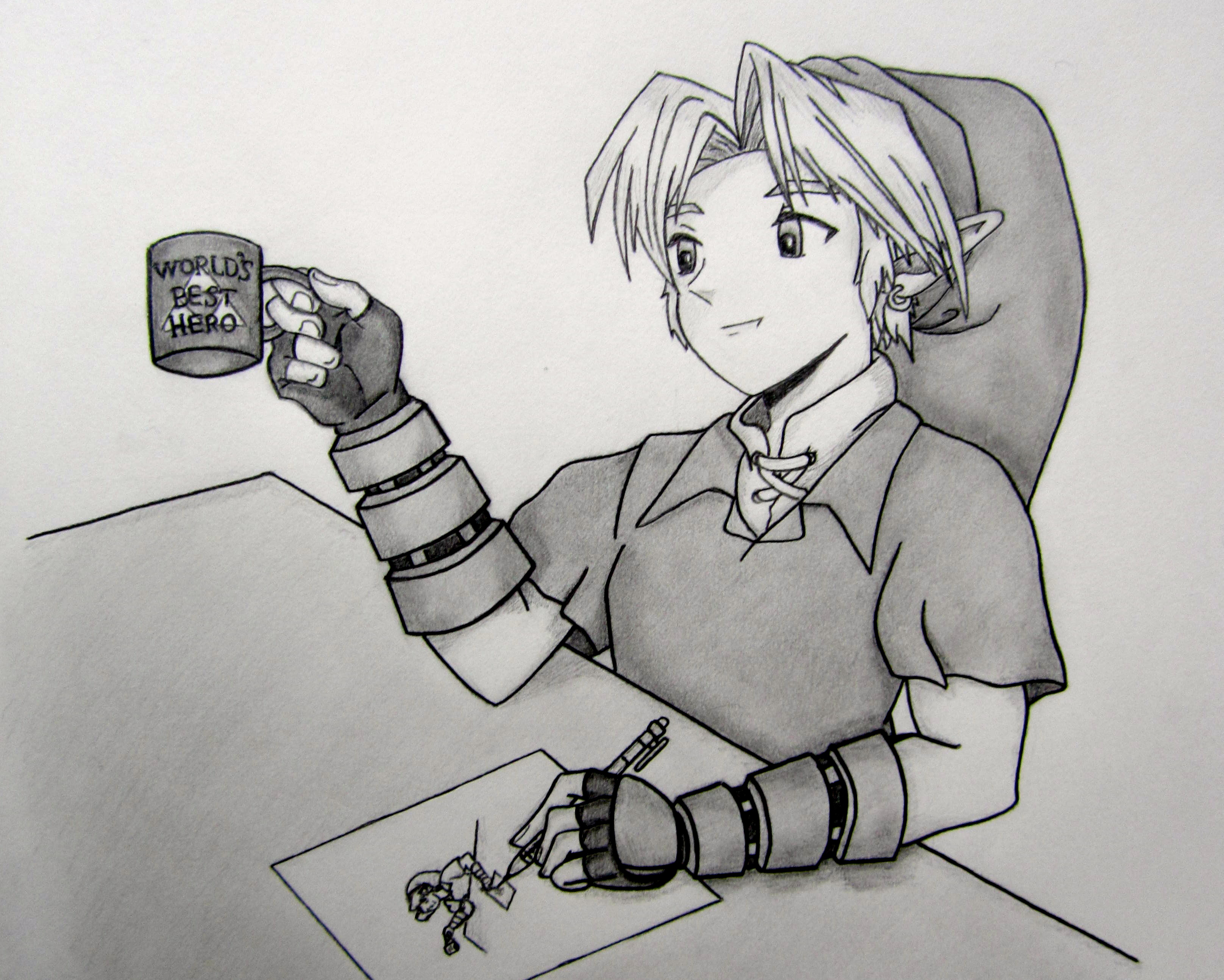
Link Drinking CoffeeLook at that picture. Look at it. I wish I could draw pictures like that.

While I fool around on this blog, my younger brother sketches fantastic pictures in pencil and posts them on his deviantART page. Seriously, I don’t know how he produces drawings like these. I’m guessing pencils and paper are involved somehow; the rest is a glorious mystery.

The image above is my brother’s profile picture: Link, the protagonist of the Legend of Zelda games, drinking coffee and drawing… himself. (If his coffee cup is to be believed, Link is also the World’s Best Hero.) As a Zelda fan, I find my bro’s profile picture clever and hilarious.

I strongly recommend taking a look around my brother’s deviantART profile. Seriously, it’s cool. Check it out!