436. I’m Pretty Sure My Cat Is a Buddhist

I acquired a cat some time ago. She’s a sweetie, and apparently a devout Buddhist.

Pearl-cat

Pearl is the cutest Buddhist I know.

I have four reasons for thinking Pearl has chosen Buddhism as her way of life.

My cat practices meditation.

Pearly spends much of every day sitting on the windowsill, gazing serenely upon worldly things as earth and sky, lost in contemplation of the cosmic infinite. Meditation is an essential doctrine of Buddhism, and one the Pearl-cat practices faithfully.

At any rate, I’m pretty sure that’s what she’s doing. Why else would she spend so much time staring blankly out the window?

My cat practices yoga.

Yoga is another important expression of Buddhist belief. Given her mastery of the physical aspects of yoga—stretching, contortion, forms, and postures—I can only assume that Pearly has also mastered the discipline’s mental and spiritual aspects.
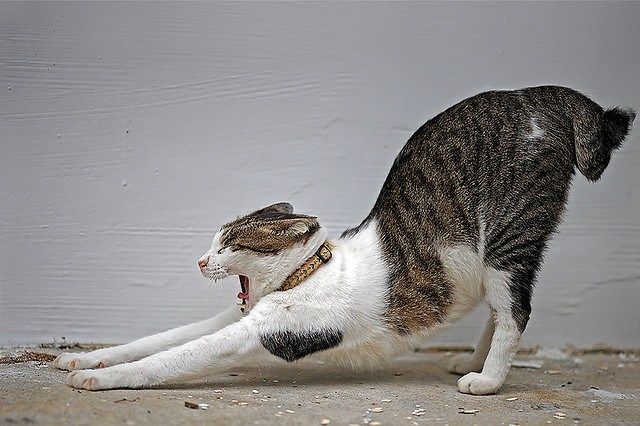
Cat yoga

This is a picture of another cat, not of Pearl. Out of respect for my cat’s devotion to her religious disciplines, I decided not to share photos of them on this blog.

The Pearl-cat frequently stretches, strikes graceful poses, or contorts her body with astonishing flexibility. I assume it’s all part of some esoteric yoga routine, albeit one that involves licking oneself.

My cat practices feng shui.

The ancient Chinese art of feng shui arranges a household to achieve an optimal flow of chi (spiritual energy) and harmonize with the surrounding environment.

This channeling of spiritual energy is a concept similar to bending in Avatar: The Last Airbender, the classic animated series… but much less likely to flood my home, tear it down, or set it on fire. (For that, I have my typewriter monkeys.)

Firebending

So far, my cat has limited herself to feng shui. I sure hope she doesn’t get any other bright ideas for redirecting spiritual energy.

Feng shui owes more to Taoism than to Buddhism, yet related concepts appear in certain schools of Buddhist belief, so it’s not much of a stretch to suppose my cat dabbles in it.

Pearly frequently rearranges my apartment in mysterious ways: knocking over seashells on display, batting magnets off the refrigerator door, and trying to eat the Legend of Zelda poster over my bookcase, among other things. She also carries her toys (stuffed mice which my younger brother and I have named “the Plague Rats”) around the apartment, depositing them in unexpected places.

These baffling rearrangements of my living space have no better explanation. The Pearl-cat is apparently practicing feng shui to redirect my apartment’s spiritual energy. I suppose I should be grateful. After all, some people pay for this sort of thing.

My cat practices zen gardening.

Zen gardens are a form of artistic and spiritual expression at temples of Zen Buddhism. These pebbly works of art, crafted from scattered rocks and rippling gravel, are meant to suggest nature and help meditation.

Pearly’s zen garden is an ever-changing tapestry of sand, into which she etches designs whose meanings I can’t even begin to guess.

Zen garden

My cat’s zen garden isn’t quite this artistic, but I’m certain its scrapes and scratches represent some unfathomable meaning.

The Pearl-cat’s zen garden doubles as her litter box. Despite her lofty contemplations of spiritual things, she’s really quite pragmatic.

I’m not sure how to respond to my Buddhist cat. As a Christian, I feel I really ought to do something. Should I take her to church on Sunday? (My church might not appreciate that.) Should I give her a Bible? (I don’t think she can read.) I don’t know, guys.

If anyone is curious about the religious views of my typewriter monkeys, they’re a mixed bag. A few of my monkeys are Darwinists, appropriately enough. Another says he’s a Roman Catholic “like Daredevil and the Judge from The Hunchback of Notre Dame,” which are not encouraging comparisons. At least one of my monkeys worships the Helix Fossil from Twitch Plays Pokémon. Now that my cat has embraced Buddhism, my blogging team has become even more diverse.

I may not agree with my cat’s religious beliefs, but at least she doesn’t worship the sun.
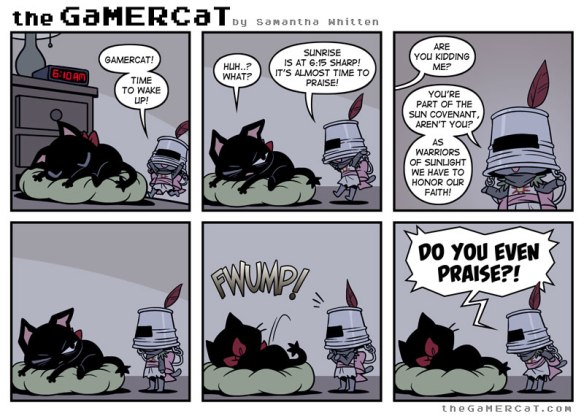
All things considered, it could be worse.
433. I Nearly Left My Faith Last Year

I have put off writing this post for a long time. I was afraid it might cause some of the religious people in my life to shout, “ADAM WHAT IS WRONG WITH YOU HAVE MORE FAITH,” and some of my nonreligious friends to shout, “LET IT GO ADAM BE ENLIGHTENED,” and shouting stresses me out.

That said, this post is an extremely personal one, and I’ll be grateful for sensitivity in the comments. Advice or criticism, however gentle or well-intentioned, probably won’t help today. I’m not asking for any of that.

I’m just telling a story.

I considered leaving my faith last year. I didn’t actually leave it, in case you were wondering. For better or worse, Adam Stück remains a follower of Jesus Christ.

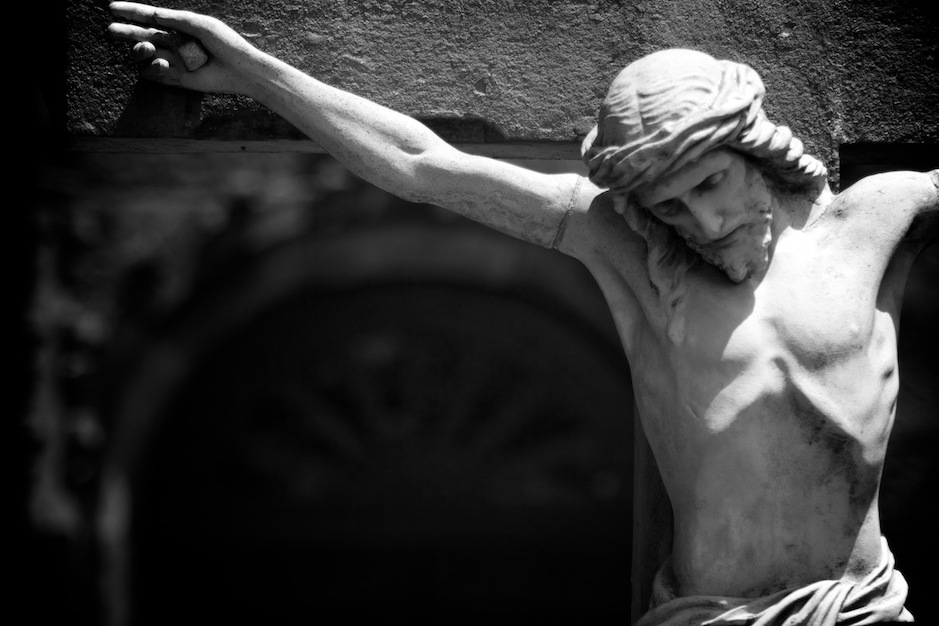
Crucifixion statue

The year 2015 was, all things considered, a memorable one. I quit my old job, started a new one, went on an unexpected adventure, switched job positions, lost a dear friend, grew a scruffy jaw-beard, and got a cat. As I blogged about the turbulent changes of 2015, there was one I didn’t mention.

I have long wrestled with doubts about the existence of God. Of all the posts on this blog, probably the most important to me is the one in which I discussed my uncertain faith. “If I’m a fool,” I wrote long ago, “at least I have the consolation of being God’s fool.”

I’ve been a dedicated Christian since 2004, when I began taking Christ seriously. Faith was effortless in high school, and even college (despite my Thursday Afternoon of the Soul and other rough patches) didn’t dampen my devotion to God. I was convinced he had a plan for my life, and I was following it, and everything would work out if I kept the faith and worked hard.

Cathedral

Then, around the time I started this blog, I realized I didn’t want to follow the career I had studied in college. I panicked, uncertain of where to go next. My plans, which I had always assumed were really God’s plans, suddenly seemed mistaken.

Less than a year later, my most cherished writing project, a little book titled The Trials of Lance Eliot, crashed and burned. I had wondered before whether I had wasted three and a half years of college; now I asked myself whether I had wasted twice that time working on a failed novel.

My career plans had gone awry. My book plans had failed. I was stuck in a really bad job situation. However, I didn’t give up. I assumed my situation was some sort of spiritual desert: a test after which God would lead me to my “real” future. I clung to faith. I endured.

Then, when I finally left that lousy old job last year, I didn’t arrive at my long-sought promised land—I just reached another dead end. (Sure, it was a much nicer dead end, but just as dead.)

It made me question things.

Was there ever a bigger plan?

What if there never was?

Where is God?

Along with these questions came the all of the familiar ones with renewed urgency: Why does Scripture seem so inconsistent and self-contradictory? Why has Christ’s life been followed by two thousand years of empty silence? Why is the world so broken? Why do so many religious people seem hypocritical or out of touch?

As I set aside my long-held religious preconceptions, a naturalistic worldview began to seem more rational than a religious one. I asked myself, “If I give up faith in Christ, what happens?” Do I put in two weeks’ notice? Is there paperwork? Do I sing “Let It Go” on a snowy mountaintop somewhere, or what?

As I pondered who I would become without Christ, an ugly picture emerged: a bitter, self-centered geek wrapped in a cocoon of video games, television, and other anesthetics, reveling in theretofore forbidden pleasures like porn and alcoholism, grieving the death of his faith, and pursuing his own comfort and happiness at any cost.

I didn’t like that picture.

Jerk [resized]

I don’t want to believe in Christianity because it’s convenient or well-intentioned. I want to believe in it because it’s true. Is it? I wish I knew. A lot of evidence supports it, but no conclusive proof. I hope Christianity is true. I choose to believe it is, and I’m trying to live my life according to that belief.

Whatever good I’ve done, I’ve done because of my Christian faith. Whatever good I’ve done, I’ve done for Christ. There’s something in that, even if my beliefs turn out to be mistaken. I would rather live for Christ, and die in hope, than live for myself, and die miserable.

I conclude with a scene from one of the Chronicles of Narnia by C.S. Lewis. (Spoilers, I guess?) In one of the books, the heroes are trapped deep underground with a beautiful witch. She enchants them into believing the world has no surface. There is no sky, she says, and no sun. There is no land called Narnia, and no king named Aslan. The only world is underground, the only lights are lamps, and the only ruler is the witch herself.

Everyone falls under the witch’s spell, except an old grump named Puddleglum, who has this to say:

One word, Ma’am. One word. All you’ve been saying is quite right, I shouldn’t wonder. I’m a chap who always liked to know the worst and then put the best face I can on it. So I won’t deny any of what you said. But there’s one thing more to be said, even so.

Suppose we have only dreamed, or made up, all those things—trees and grass and sun and moon and stars and Aslan himself. Suppose we have. Then all I can say is that, in that case, the made-up things seem a good deal more important than the real ones. Suppose this black pit of a kingdom of yours is the only world. Well, it strikes me as a pretty poor one. And that’s a funny thing, when you come to think of it.

We’re just babies making up a game, if you’re right. But four babies playing a game can make a play-world which licks your real world hollow. That’s why I’m going to stand by the play-world. I’m on Aslan’s side even if there isn’t any Aslan to lead it. I’m going to live as like a Narnian as I can even if there isn’t any Narnia.

I’m less certain of my faith than ever before, but I’m going to stand by it. I’m on Christ’s side even if Christ doesn’t live to lead it. I’m going to live as a Christian even if Christianity isn’t true—and I believe it is.

Either way, for better or worse, I’ll stand by Jesus Christ.

430. Revelation Is a Weird, Weird Book

Donald Trump is all over the news these days. He reminds me of the book of Revelation, and of the end of the world.

Nah, I’m just kidding. When the author of Revelation described trumps resounding, I doubt he had this particular Trump in mind. Then again, maybe he did. It is a weird book.

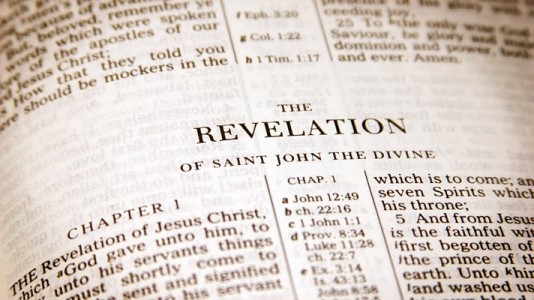
Revelation

Brace yourself. Things are about to get weird.

A high school teacher of mine once declared, “I hope this doesn’t offend anyone, but Revelation almost makes me wonder if John was tripping on something when he wrote it,” or words to that effect.

Revelation is a bizarre book, full of visions that seem more like hallucinations. A closer look reveals something even stranger. Revelation is a bit like Frankenstein’s monster: a book stitched together from bits of other books. It combines concepts and images from Old Testament prophets like Ezekiel, Daniel, and Zechariah with New Testament events such as the life of Christ and the spread of the Christian Church.

Revelation is weird, man.

The book is a bizarro mixture of warnings, prophecies, and visions, practically all of which are incredibly vague, and some of which are just weird. There are plagues, earthquakes, beasts, angels, demons, and locusts with human faces and scorpion stings. (I’m not making up that last one, I swear.)

La Virgen

This statue from my hometown of Quito represents a vision in Revelation.

Opinions on Revelation are extremely divided. Some interpret these visions and prophecies as literally as possible, which is the basis for the Left Behind books. (They’re pretty terrible.) Others believe the visions are somehow symbolic of world events. A few lunatics believe the mystical “secrets” of Revelation can be somehow “unlocked,” which is rubbish.

I have no idea how to interpret Revelation, but the most sensible theory I’ve read is that its visions and prophecies applied not to events in our own future, but to events that occurred nearly two millennia ago. According to this view, Revelation prophesied imminent events such as the Siege of Jerusalem in 70 AD. This theory isn’t perfect, but it seems more rational than most of the ideas floating around these days.

Of course, there’s more to Revelation than its unanswered questions. Certain elements of Revelation have captured imaginations everywhere and left a huge cultural impact.

Consider the number 666. “This calls for wisdom,” wrote the author of Revelation. “If anyone has insight, let him calculate the number of the beast, for it is man’s number. His number is 666.” Many have tried to solve this riddle, but none have figured it out.

The best theory I’ve heard, based on established traditions of biblical numerical symbolism, is that it represents someone who challenges the sovereignty of God. The number three represents God, who is three Persons, and the number seven symbolizes perfection. The number 666 (three sixes) represents an imperfect trinity that falls short of perfect divinity.

Nowadays, the number 666 is used mostly in horror movies and stuff. Superstitions surround the number to a point at which some people are a little scared of it. This fear is called hexakosioihexekontahexaphobia. (Seriously, I’m not making this up.)

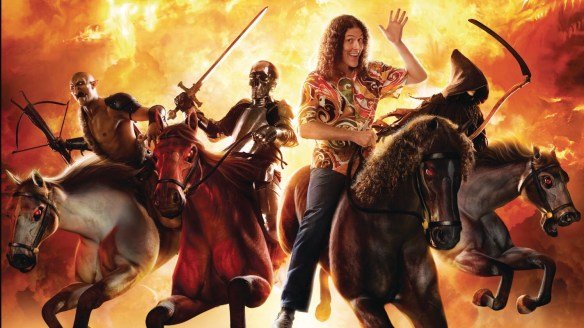
Another popular image from Revelation is the Four Horsemen of the Apocalypse. These bringers of divine judgment ride differently-colored horses and are widely believed to represent cataclysmic events. The riders of the white, red, black, and pale horses are thought to symbolize conquest (or possibly plague), war, famine, and death, respectively.

Alpocalypse

The Four Horsemen of the Apocalypse, more or less.

The Four Horsemen have been embraced by pop culture, even becoming characters in superhero comics. (Heck, the trailers for the next X-Men movie suggest the Horsemen will make an appearance.) There are even unofficial My Little Pony versions of the Horsemen, because this is the Internet.

Revelation is full of weird images and intriguing concepts, but the note on which it ends is a hopeful one. The final chapters of Revelation paint a picture of a world no longer broken, but restored and renewed. God wipes away the pain, the injustice, the suffering. He makes things right.

The older I get, the more I see the brokenness of the world. In my twenty-something years, I’ve glimpsed the sickening realities of poverty, abuse, depression, mental illness, and addiction—and God only knows what horrors I haven’t seen. It makes me long for everything to be fixed.

This brings me to a song. It is, honestly, the most beautiful song I know. No song in the universe stirs my soul quite so deeply as Michael Card’s “New Jerusalem.” It makes me long for a time when there will be no more hunger, no more child soldiers, no more senseless massacres, and no more pain.

That is the great message of Revelation, which not even its weirdest visions can eclipse: God will someday set things straight.

428. An Open Letter to Hollywood 2: The Sequel

Dear Hollywood Executives,

I know you’re all very busy, so I’ll try to keep this short. It’s been a while since my last letter, which I assume you all read, and another one is due. Consider it a sequel.

You’ve made a few small improvements since my last letter. For example, you actually made a Deadpool movie. I haven’t seen it, but I’ve heard it’s pretty good. (I’ve also heard that it’s extremely vulgar, but Deadpool’s gotta Deadpool, I guess.) So many superhero movies are all doom and gloom, because, y’know, heaven forbid comic-book stories be fun for anybody. Irreverent takes on the genre like Deadpool and Marvel’s Guardians of the Galaxy are a welcome change. It’s okay for superhero movies not to take themselves so seriously. We don’t mind, honest!

Speaking of superhero movies, can we get a bit more diversity? Please? Take the Avengers, otherwise known as the League of White Guys. (They have only one female member: a token femme fatale with no superpowers.) I don’t read Marvel comics, but I know they feature more than white dudes. I don’t have anything against white dudes—I am one, as a matter of fact—but flooding superhero movies with them is unfair, uncool, and frankly kinda boring.

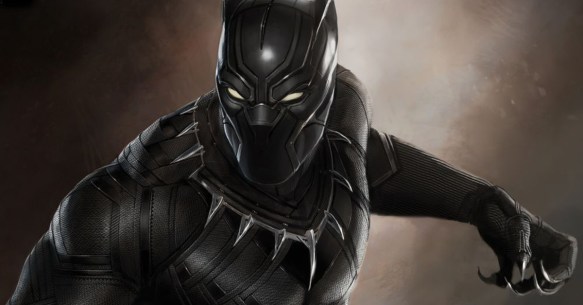
To be fair, I must congratulate you on giving Black Panther, the no-nonsense African superhero, a part in the new Captain America movie, and working toward giving him his own film in a couple of years. For a change, the black guy won’t be just a sidekick. He’ll be the hero.

Black PantherIt will be nice, after more than a dozen Marvel movies, finally to have one whose hero isn’t a white American (or quasi-British) male. It’s a step in the right direction. Keep stepping, ladies and gentlemen. Keep stepping.

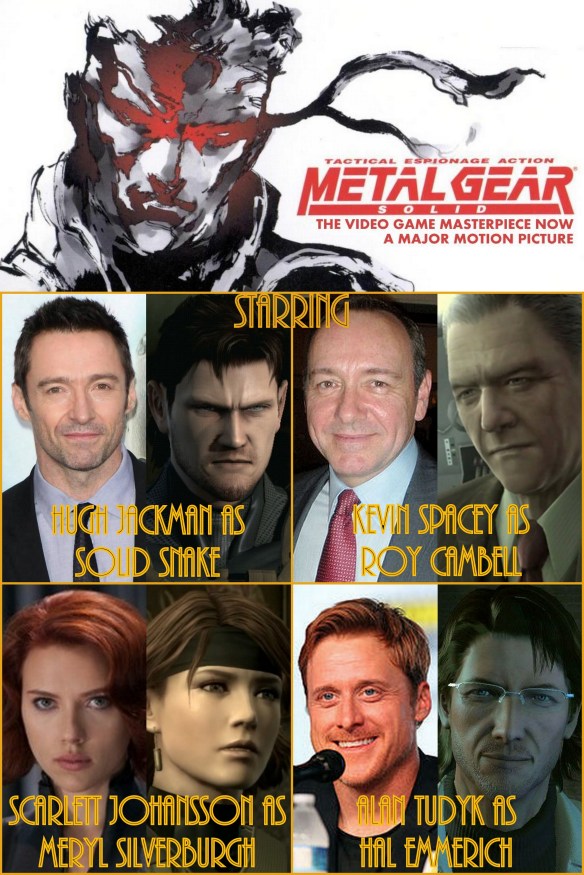
I’ve already written about video game movies and portrayals of Christians in secular media, so I won’t repeat myself here. Just go read those blog posts. I will, however, emphatically repeat my appeal for a Metal Gear Solid movie. It should happen. It needs to happen. Please, please, please, make it happen. I will give you anything to make a Metal Gear Solid movie, unto half my kingdom. (I won’t actually give you anything for making the movie, but I will buy tickets to see it.)

Look, I’ve even done some of the casting for you.

Metal Gear Solid movie Now you just need to make the movie. Please do.

As long as we’re discussing film adaptations: Why don’t you adapt more old books? As you struggle to come up with ideas, consider the thousands of terrific stories available at your local library. I once made a list of books that would make great films, and you’ve made only one of them (Ender’s Game) with a second (Ben-Hur) on its way. Seriously, I want a film version of The Man Who Was Thursday almost as much as I want that Metal Gear Solid movie.

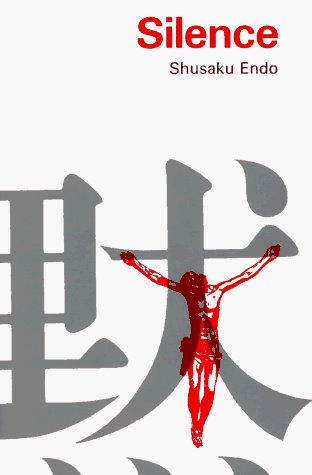
Incidentally, I hear Martin Scorsese is working on an adaptation of Shūsaku Endō’s Silence: a brooding and powerful novel about the silence of God.

SilenceIt’s exactly the sort of obscure, slow-paced book you Hollywood execs won’t touch with a ten-foot boom pole. Mr. Scorsese thinks differently. Learn from Mr. Scorsese, Hollywood.

Moving on from a good director to some really bad ones: Why are you still letting Michael Bay and M. Night Shyamalan make movies? Why?! Just stop. Stop. Staaahhhp.

On a brighter note, Disney and Pixar have been making some outstanding movies lately. I’m glad to see that animation is not merely surviving on the Hollywood scene, but evolving and thriving. As long as you have Disney and Pixar, Hollywood, I think you’ll be all right.

I could go on, but that’s probably enough for one letter. I hope it doesn’t seem too harsh or demanding. For all of my grumbling, I really appreciate good movies, and I suppose I have you Hollywood people to thank for them. Thanks, ladies and gentlemen, for making my life a little brighter, and occasionally a little more explode-y.

Peace,

Adam

P.S. I don’t suppose there’s any chance you could just put Disney’s John Lasseter in charge of everything? No? Well, there was no harm in asking.

426. I Want to Make You Feel

I recently announced my decision to revive the Lance Eliot saga, my greatest and most personal writing project. Today I will tell you why I made that big decision, but there is something else, something important, I must discuss first.

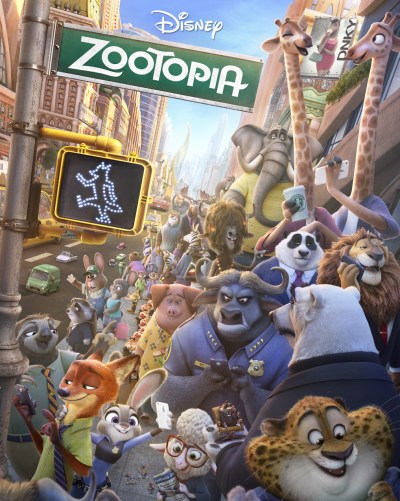
Excuse me, Sir or Madam, but have you heard the good word about Disney’s Zootopia?

Zootopia movie poster

Not far from my home in the little town of Berne there stands a cozy cinema called the Ritz Theatre. (I discovered it when I ventured forth to see The Lego Movie a couple of years ago.) The Ritz has two theater rooms, one of which is fairly small, and an old-timey lobby with a big plaster model of an Oscar trophy. I love the Ritz Theatre. It wraps the sound and fury of Hollywood movies in the charm of a friendly small business.

My younger brother and I recently made a pilgrimage to the Ritz Theatre to see Zootopia, Disney’s latest animated movie. It was fantastic. However, as much as I would love to spend this blog post explaining why the movie is fantastic, that’s not really the point. (Seriously, though, go watch Zootopia.)

The point is that Zootopia made me feel things. It evoked far deeper feelings of catharsis and happiness than any kids’ movie has any right to do. I am not an emotional person. I am, despite my sense of humor and typically sunny disposition, pragmatic and logical.

Thus, when the feels hit me, they hit me hard.

HRRRNNNGGG

I just can’t take the feels, man.

Zootopia is far from the first story to make me make me feel things. Heck, nearly every new animated Disney film since Bolt back in 2008 has left an emotional impression. For some reason, while movies for adults appeal to my intellect, movies for kids are the ones that appeal to my feelings. (Disney, Pixar, and Studio Ghibli, I’m looking right at you.)

I like positive feelings. Most people do. I’m not often emotionally overwhelmed by a story, but when I am, it’s an amazing experience. It’s a fleeting encounter with the power of storytelling: as J.R.R. Tolkien suggested, “a far-off gleam or echo” of a happy ending to our own story, which is being told by the greatest Storyteller of all.

Speaking of Tolkien, I admit few stories have made me feel as much as The Lord of the Rings. Tolkien’s masterpiece, especially the last chapters of its final book, The Return of the King, warms even my impassive old heart.

I haven’t read The Lord of the Rings since 2009 or so, and much of it had faded from my memory, but something happened last year to change that.

A few days after Christmas, my brother and I visited a family friend. I’ll call him Socrates here. (In real life, I call him Barabbas. It’s a fun story.) After welcoming us into his home, Socrates made snacks and put on the film adaptation of The Return of the King. It had been almost as long since I had seen the film as it had since I had read the book!

Return of the King movie poster

Something happened that night. The movie was as good as I remembered, but beyond that, something woke up inside me. I felt an overwhelming peace and happiness: the nostalgia of fond memories in harmony with the catharsis of seeing beloved characters reach a happy ending. It was then I realized something: I knew I once wanted to write a story of my own, but I had forgotten why.

This was why.

That night reminded me of why I decided to write stories in the first place: I wanted to feel, and I wanted to make other people feel, too. Stories like Zootopia and The Return of the King gave me moments of cathartic happiness, peace, and comfort. I wanted to give someone else those moments.

I still do.

That’s my story and I’m sticking to it. That’s my excuse for picking up the Lance Eliot saga once this blog bites the dust. I want to make you feel.

Blame Tolkien and Zootopia.

423. I Have a Million Neighbors

Most of us have neighbors. We may be separated by a wall, street, or building—or cornfield, if you live in Indiana. However close our neighbors may be, there is nearly always a separation of some kind.

Then there’s the Internet, where all that separates me from millions of other people are a few clicks or keystrokes. Privacy can be an elusive privilege on the World Wide Web. Almost anyone can find you. Almost anyone can be your neighbor, and you can be a neighbor to almost anyone. We’re all neighbors on the Internet. Every time I open my web browser, I enter a space with a million neighbors.

So what?

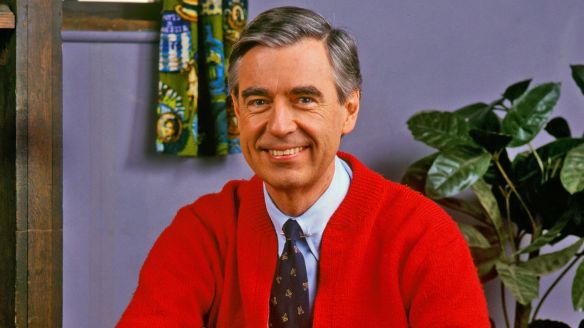
There once lived a humble, gentle, and kindhearted man, who taught of the importance of loving your neighbor as yourself.

I speak, of course, of Mr. Rogers.

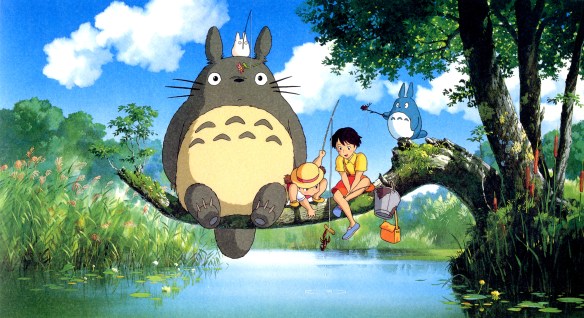
Mr. RogersDo you know who else knew how to be a good neighbor? Totoro. Totoro knew how to be a good neighbor. Heck, I wish I were neighbors with Totoro, and I’m definitely not the only one. I couldn’t ask for a better neighbor than this fuzzy forest spirit.

Totoro

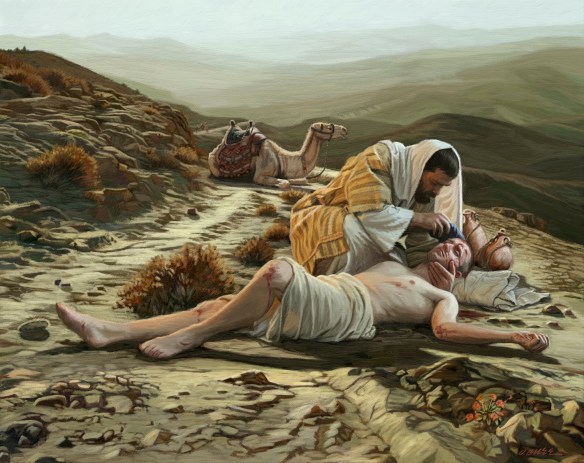
I can think of yet another good neighbor. There’s an old, old story of a traveler who was attacked by robbers and left half dead on the road. (You’ve probably heard this one.) A couple of people ignored the wounded man, but a stranger took pity on him, bandaged his wounds, and carried him to safety.

Good Samaritan

Art by Dan Burr.

That story of a good neighbor was told by Jesus Christ, the leading expert on loving people. According to Jesus, “Love your neighbor as yourself” is one of the most important rules in the universe.

We must love our neighbors. I mean, we can hardly disagree with Mr. Rogers, Totoro, and Jesus Christ, can we?

We’re all neighbors on the Internet, and we must love our neighbors, so what now? Well, this Friday is March 4, and if you’ve been around this blog for a while, you know what that means.

March 4 is Be Nice to Someone on the Internet Day. This Friday marks the event’s fifth year—and, due to the end of TMTF later this year, the last one to be celebrated on this blog. (After TMTF concludes, I plan to celebrate the event every year on Facebook and Twitter.)

Be Nice to Someone on the Internet Day is, well, a day for being nice to someone on the Internet. On March 4, or any time this week, go to someone’s personal profile, account, channel, blog, or webpage, and leave an uplifting comment. Send someone an encouraging message, note, tweet, or email. Find a person you appreciate—whether a content creator, friend, or total stranger—and be a good neighbor.

We’re all neighbors on the Internet. On Friday, March 4, let’s be good ones!

421. The Beginning of the End

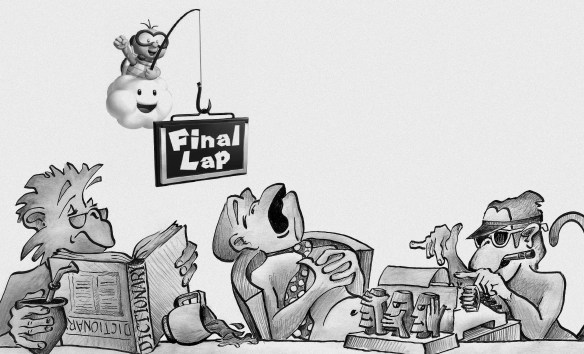
Well, dear reader, this is it. This is the beginning of the end. After four and a half years of caffeinated rants and geeky ramblings, Typewriter Monkey Task Force is starting its final laps.

Final lap! (Watch out for banana peels.)

Final lap! (Watch out for banana peels.)

I’m ending this blog, but not quite yet. TMTF shall conclude with its five hundredth numbered post, which will probably be published toward the end of this year. I don’t yet have an exact date for that post; it depends on how many more breaks I take from blogging.

(You know, this bittersweet blog post could use an appropriately bittersweet soundtrack, such as “The Best Is Yet to Come” from Metal Gear SolidHere you go. No need to thank me.)

Why am I ending this blog? Well, that’s a good question. (I’m glad I asked.) Ending TMTF is a big decision, and I’m not the only one it affects—if you follow this blog, it probably affects you, too.

You may be a little saddened by TMTF’s impending demise. If you’ve enjoyed something over a long time, it can be hard to see it end. (Gravity Falls ended just a few days ago, so believe me, I know the feeling.)

Then again, you may just be wondering why I didn’t put this blog out of its misery ages ago.

There are a few reasons for my decision to end TMTF.

It’s getting harder for me to come up ideas for new posts.

As I think of posts to write for this blog, I feel like I’m beginning to scrape the bottom of the barrel. I would much rather give TMTF a respectable finish than drag it out endlessly: as Tolkien put it, “like butter scraped over too much bread.”

TMTF has lost its purpose.

I began this blog years ago with a strong sense of purpose. TMTF originally had three clear objectives.

  1. I wanted to build up an audience for the novel I was finishing at the time.
  2. I wanted to make some sort of positive difference with my God-given talents for writing, humor, and creativity.
  3. I wanted to try something new and exciting.

At this point, TMTF has either completed or failed these objectives; either way, they hardly matter anymore.

  1. My novel failed, and it won’t be getting sequels anytime soon, so there is no longer any point in finding an audience.
  2. At this point, I think TMTF has made pretty much all the difference it can. I’ve said most of the things I really wanted to say… except for the word pulchritude, of course, and now I’ve said it.
  3. After four and a half years, TMTF is neither new nor exciting. Writing this blog has been a great experience, but I’ve lost my passion for it.

When I started TMTF, I was motivated to write blog posts by a sense of purpose. Now I write them because I have to keep the blog’s publishing schedule. I’m trying to live more purposefully; it’s one of my resolutions for this year. My writing should be driven by a sense of purpose, not feelings of obligation. I owe that much to my readers, and to myself, and to God.

I want to work on a new project.

I could say more, but that’s another post for another day.*

I’m thankful for this blog, and I don’t regret the time and effort I’ve put into it. Working on TMTF over the years has brought me satisfaction, laughter, gleams of insight, and moments of catharsis… not to mention quite a lot of harmless fun.

I’ve met a number of amazing people through this blog whom I would never have met otherwise: JK Riki, the animator and creativity expert; Tom Zuniga, the wandering blogger; Rev Kev Niebuhr, the manliest Methodist of our generation; and more. I’ve also had the privilege of collaborating with awesome folks like Paul McCusker, a veteran writer for Adventures in Odyssey; Kevin McCreary, a YouTube and podcast creator; and colorful YouTube personalities like DRWolf and Crowne Prince, among many others.

This blog motivated me to write a fantasy novella and some short stories, not to mention hundreds of pointless rants thoughtful reflections upon faith, writing, video games, literature, TV, movies, life, the universe, and everything. With the help and support of its fabulous readers, TMTF raised hundreds and hundreds of dollars for charity. I even invented a holiday on this blog: Be Nice to Someone on the Internet Day—which is coming up on March 4, by the way!

I’m thankful for Typewriter Monkey Task Force—and it ain’t over yet, folks! It shall continue yet for months and months, and there’s one thing I want to make very clear about its end. I’m not abandoning this blog. I’m finishing it.

Finally: Thank you, my dear readers. Thanks for the past four and a half years. I welcome you to stick around for whatever is left, and for whatever comes after!


*And that day shall be Friday.

411. Operation Yuletide Reached Its Goal!

You did it again, you beautiful people, you.

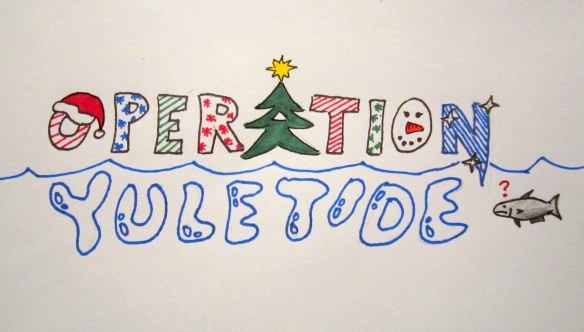
Operation Yuletide reached its goal!

Operation Yuletide

Operation Yuletide, this blog’s 2015 Christmas charity fundraiser, reached its goal of $700 USD. Thanks to donations from a few generous donors, Living Water International can help provide clean water to more impoverished people this year. Once again, you did it, guys. You made this happen. You made the world a better, wetter place.

Thank you. On behalf of every single person whom your donations will help this year, thank you so much.

For Operation Yuletide, I promised rewards to donors. I wanted to use my creative gifts (such as they are) to encourage donations, and especially to thank donors. A few awesome people supported Operation Yuletide, but only one person admitted to it. The other donors remained anonymous.

To you mysterious donors, I say this: Thank you so much, whoever you are. I would love to thank you personally, but I will respect your anonymity if you prefer to remain anonymous. If any of you would like any of the donor rewards for Operation Yuletide, please let me know via social media or TMTF’s Contact page. I owe you those rewards, and if you’re interested, I’m more than happy to provide them!

To the one person who donated openly, the ever kind and supportive JK Riki, I say this: Thank you so much for being generous, supportive, and generally awesome. (To everyone who isn’t JK Riki, I say this: You should check out his his blog on creativity.)

Now that Christmas is over and Operation Yuletide has reached its goal, I suppose I should retire the fundraiser’s mascot, Oswald Grimm the disgraced Christmas elf.

Oswald Grimm

Grimm spent the fundraiser sitting in a corner of my kitchen, muttering to himself and occasionally swigging from a little black bottle in his pocket. He gives me the creeps. As long as I’m on the subject of Grimm, is anyone, um, interested in adopting a Christmas elf? He may not be any good for the Christmas season, but I bet he would be great for Halloween. At any rate, I need to do something to get him out of my kitchen.

Operation Yuletide could have succeeded without Oswald Grimm, but it could never have reached its goal without you wonderful readers. You guys… you did a really good thing. You did something awesomeThank you for your generosity and compassion! God bless you!

The Smoker’s Pew

A Short Story

The silence of the church was broken by the click-click-click of a cigarette lighter. Late afternoon sunshine streamed through stained-glass windows, lighting up the floor in patches of fiery color, and casting a saintly glow upon the man sitting in the back pew.

At the front of the sanctuary there hung a wooden cross. It bore a life-sized image of the crucified Christ, frozen in perpetual agony, its head bowed. Before lighting a cigarette, the man glanced up at the crucifix.

“Mind if I smoke?”

The image of Christ did not reply. The man lit his cigarette.

In the golden light, the smoke shone like a halo around the man’s head. He gave an impression of casual elegance in a suit tailored to his lanky frame. The only untidy touches were his face, which was unshaven, and his tie, which was loosely knotted and askew. He smelled faintly of cologne and strongly of alcohol.

“Nice place you’ve got,” he said. He leaned back, crossed his legs, and stretched out his arms along the back of the pew. “Dazzling and sleepy at the same time, like a sunset. Beautiful and quiet. Very nice.”

The Christ on the cross said nothing.

“The front door’s unlocked,” said the smoker. “Look, I know that’s your thing. You welcome everyone with open arms, I get that, but you still might want to think about putting a lock on your door. There are some awful people out there.”

The man smoked for a few minutes in silence.

“It’s nice to be back,” he said at last. “Nice to see some things never change. I guess it’s—well, hello,” he exclaimed, for another man came padding into the sanctuary to join him and the crucified Christ.

The newcomer, a balding gentleman with glasses and a bushy brown beard, smiled in amiable bewilderment. “May I help you?”

“No, thank you,” said the smoker, rising to throw away the stub of his cigarette. He shook a fresh cigarette from the box as he returned to his pew. “Damn,” he said, clicking his lighter in vain. “Out of juice. Hey buddy, you got a light?”

The bearded gentleman disappeared for a couple of minutes, and returned with a box of matches. The smoker had not moved. He sat in the back pew, legs crossed, gazing at the Christ.

At the sound of a match striking, the smoker held out his cigarette. The bearded man lit it.

“Hey thanks,” said the smoker after a deep puff. “You’re a good man. What brings you here on a Thursday night? You the janitor?”

The bearded man chuckled. “The pastor. May I join you?”

“Knock yourself out, Padre.”

The pastor sat beside the smoker, and they watched the evening light fade. The smoker began a third cigarette.

“Why the back pew?” asked the pastor at last. “If you’re here to talk with God, wouldn’t you rather sit up front?”

The smoker shook his head. “Nah, I like the back. Someone once told me that two kinds of people sit in the back pew of a church: those on their way in, and those on their way out.”

“Which kind are you?”

“Well, when I leave here, I’m going to blow a man’s brains out. That probably puts me in the second category.” The smoker grinned crookedly. “I’m pretty sure the Big Guy frowns on that kind of thing. Ah, well. Don’t mind me.”

With that, he pulled out a handgun and began rummaging in his other pocket for bullets.

If the pastor felt anything, it was hidden by his beard and glasses, and by the gathering gloom. He sat implacable, like a statue, as the smoker fumbled with the handgun. Only the pastor’s hands moved, and they trembled.

“I don’t approve of murder,” said the pastor.

“Didn’t think you would,” muttered the smoker.

“I don’t approve of suicide, either.”

The smoker paused, puffed twice on his cigarette, and put down the gun. “All right, Padre, you got me. How’d you know? I didn’t say anything about suicide.”

“Lucky guess.”

“Not a divine revelation?”

It was the pastor’s turn to smile crookedly. “If that makes you feel better, sure. Divine revelation. Look here, man, why in God’s name do you want to kill yourself?”

The cigarette smoke, which the afternoon sun had transfigured into gold, now hung over the smoker like a storm cloud in the twilight. He no longer seemed saintly. He looked diabolical.

“Have you read Ecclesiastes, Padre? Wait—you’re a goddamn pastor; of course you’ve read it. Do you remember what the Teacher wrote? ‘Meaningless! Meaningless! Everything is meaningless!’”

“‘Remember your Creator in the days of your youth,’” said the pastor gently. “I’m pretty sure that’s also in there somewhere.”

The smoker picked up the gun. “Those aren’t the Teacher’s final words. You know that. ‘Everything is meaningless!’ That’s his conclusion, and I can’t live with it.”

“Do you really believe in it?”

“I grew up in the church. After leaving it, I turned to science and philosophy and social justice. After that mess of contradictions, I tried everything else. Everything, Padre. Nothing makes sense. Nothing even feels good anymore. There’s nothing left.”

The pastor laid a shaking hand on the smoker’s arm. “So what brought you here?”

“I guess I wanted one last moment of peace,” said the smoker. “Besides,” he added, glancing up at the Christ on the cross, “I had to say goodbye to the Big Guy. He walked right into his own death. I like to think he’s got a little sympathy toward suicide.”

The pastor frowned, and held his companion’s arm a little tighter. “Jesus was a martyr and a sacrifice,” he said. “There’s a big difference between martyrdom and suicide.”

“What difference? They’re people killing themselves, for God’s sake.”

“For absolutely different reasons! The suicide kills himself because he thinks nothing matters. The martyr kills himself because he believes in something that matters more than his own life.”

The smoker shook his head. “You know, I never got the whole crucifixion thing. It seems bloodthirsty. I don’t understand why the Big Guy had to die.”

“Nobody gets the crucifixion thing,” replied the pastor. “Nobody truly understands it, but that’s not the point here. Listen to me. Something matters. Somewhere, here in this church, or out there in the dark, something matters enough for you to keep living. I believe it’s right here.” The pastor motioned toward the cross. “I pray that you find it here. Maybe you’ll look elsewhere. Wherever you look, I’m convinced that somewhere, something matters. If you shoot yourself tonight, you’ll never find it.”

The smoker and the pastor sat in silence. Shadows filled the sanctuary as the last gleam of daylight disappeared. At last, the smoker plucked the stub of his cigarette from his lips.

A light flared in the darkness, and the smoker caught a whiff of sulfur. The pastor had lit another match.

“Need a light?” asked the man of God.

The man in the suit shook his head. “Nah, I’m quitting. I just decided. Never liked cigarettes much anyway. Besides,” he added with a tired chuckle, “those things will kill you.”

“They’re not the only things,” said the pastor. His hands had stopped shaking. “You won’t be needing this anymore,” he said, and took the gun.

“I paid good money for that,” said the man in the suit. “Did you just rob me? In your own church?” He looked up at the image of Christ, now a silhouette in the gloom. “Did you see that, Big Guy?”

“Get over it,” said the pastor. “It couldn’t have cost you that much. You’ll live.”

“Yes,” said the man in the suit, rising and dusting flecks of cigarette ash from his coat. “Yes, I suppose I will.” He sidled out of the back pew and strolled to the exit, pausing at the door.

“Hey Padre,” he said. “Thanks for the light.”


Author’s Note:

I wrote this short story on a Sunday afternoon just to get it out of my system. That’s pretty much all I have to say about it.

However, I will make an important clarification. I actually wrote this story in March or April 2017, months after this blog ended its run in December 2016, but labeled this post with a past date in order to keep it from replacing the blog’s final post on the homepage. I must clarify: Typewriter Monkey Task Force is finished. I have no plans whatsoever to revive it. That said, I might occasionally use it as a place to dump creative writing. We’ll see.

Thanks for reading!

410. Looking Ahead, and Hoping for the Best

It’s a new year! By the grace of God, Planet Earth and its population of grouchy humans staggered through 2015. The year 2016 has begun, promising new adventures and opportunities, and also a new Legend of Zelda game.

This is going to be a good year. At any rate, that’s what I keep telling myself.

Zelda Wii U

Nothing brightens up a new year like the promise of a new Legend of Zelda title!

For me, 2015 was a year of change. I quit a lousy job, found a better one, changed job positions, lost a dear friend, grew a beard, and acquired a cat. What lies ahead this year? God only knows. I begin 2016 hopeful, highly caffeinated, and armed with several New Year’s resolutions.

In my last post, I reviewed my old resolutions for 2015. What are my resolutions for the new year? Well, I’m glad I asked. Here they are!

I will be more purposeful.

I’m easily distracted, and my life is full of distractions. Consider my cat, Pearl, who jumped onto my lap while I was trying to write this blog post and began licking my arm. I’m not sure whether to be flattered or concerned. Is the licking a gesture of affection, or is she making up her mind whether to eat me?

Do you see what I mean? I try to make a point about distractions, only to end up worrying about my cat. In my day-to-day life, I often drift from meaningful activities to worthless ones. I spend too much time reading random articles on Wikipedia and brooding over frivolities, and too little time reading books and writing stuff that matters to me.

I work in a nursing home. Surrounded by old people, I realize that I too shall be old someday (assuming my cat doesn’t eat me first). At that time, I don’t want to look back with anguish, regret, and gnashing of teeth. (Heck, I may not have any teeth left to gnash.) When I’m old, I want to look back on a life well spent.

That must begin now, here, today, this year, with purposeful living. It begins with little day-to-day decisions. I have to start somewhere, right?

I will value prayer more.

As an orthodox Christian, I believe prayer is the most important, powerful, significant thing I can do, yet I don’t spend as much time in prayer as in years past. Why is this? There are a number of reasons, but I won’t discuss them today. What I will say is this: I need to value prayer, and to pray faithfully.

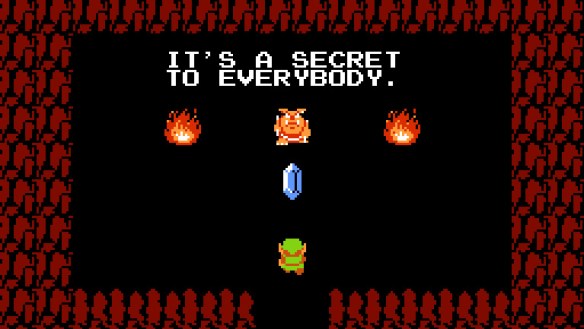
It’s a secret to everybody.

My final resolution is a well-kept secret, locked carefully in a well-kept chest in the tidy depths of a well-kept dungeon. (I like to keep things neat.)

It's a secret to everybody

Today is a day for Legend of Zelda references. I regret nothing.

If I make enough progress on this resolution, I’ll announce it later this year. At this point, it’s either a surprise I don’t want to spoil, or a plan I won’t reveal in case it fails; take your pick.

These are my resolutions for 2016. Yes, I know there are only three, and in years past I’ve had six. As 2015 reminded me, six is too many. The more resolutions I set, the easier it is for me to forget or ignore them. By setting only three, I’m more likely to remember and keep them.

At any rate, that’s the plan.

Do you have any resolutions for this year? Let us know in the comments!