415. The Bests of 2015

I no longer review stuff on this blog, but I don’t mind taking a day to look back on the best media I experienced in 2015. I didn’t spend as much time reading, watching movies and television, or playing video games as I would have liked, but I did enjoy some notable works, and here are the best of the best. (For clarification, this list includes only media I experienced for the first time in 2015. I’m featuring neither old favorites I revisited nor new episodes of shows I’ve seen.)

After I’ve shared my favorites, feel free to share yours in the comments! What great films, books, television shows, or video games did you enjoy in 2015?

Here are mine.

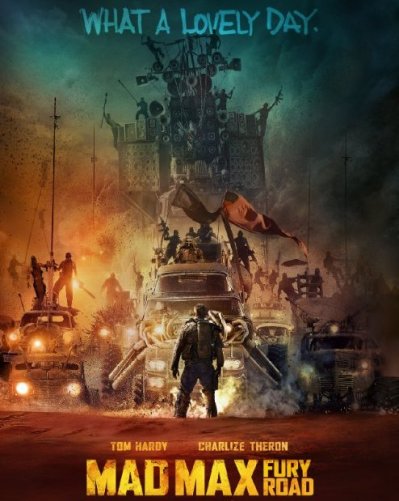
Best Live Action Film: Mad Max: Fury Road
Mad Max

This film is a work of art, and also an action movie with spiky cars and fire-spewing electric guitars. Mad Max: Fury Road is an action film in the purest sense, with sparse dialogue and explosive momentum. The movie is basically a two-hour car chase through a dystopian wasteland, yet manages to convey (amid explosions) meaningful themes such as guilt, redemption, the empowerment of women, and the worth of human life. The film also gets bonus points for its oversaturated, brightly-colored scenery: a welcome change from the bleached, washed-out look of most dystopian movies. Fury Road is stupid, campy action elevated to an art form: a film with all the ferocious beauty and power of an erupting volcano.

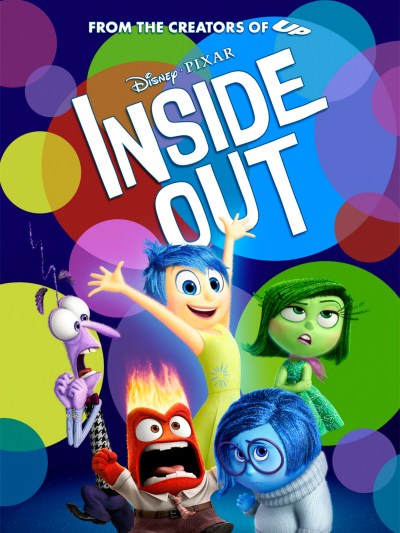
Best Animated Film: Inside Out
Inside Out

Pixar films nearly always leave an emotional impression, so it’s only to be expected that a Pixar film about emotions makes a terrific impact. Inside Out nearly made me cry in the movie theater, and I’m not a person who cries. Pixar’s best movies have a simple premise, and this one is no exception: What if your emotions were tiny people inside your head? Inside Out tells two intertwining stories: the fantastical journey of a little girl’s emotions inside her mind, and the consequent struggles of that little girl to accept the changes in her life. This film warms the viewer’s heart, but only after it has finishing breaking it. Inside Out is a sad, joyful movie… which seems appropriate, as Sadness and Joy are two of its most important characters.

Best Fiction Book: The Once and Future King

The Once and Future King cover

The Once and Future King is a retelling of King Arthur’s life. Like Inside Out, this story is both happy and sad; unlike that film, this novel leans much more heavily toward sadness than happiness. The epic backdrop of the Arthurian legends is used here as a stage for the intimate stories of Arthur, Lancelot, and Guinevere. Fragments of the old legends—the Round Table, the Grail Quest, Mordred’s betrayal—are woven neatly into two stories: the king who spends his life trying to do the right thing, and the knight whose loyalties are forever divided. Both men are great heroes, and both are doomed from the start. As it reinvents old stories for our cynical age, The Once and Future King is funny, sad, and well worth reading.

Best Nonfiction Book: All Groan Up
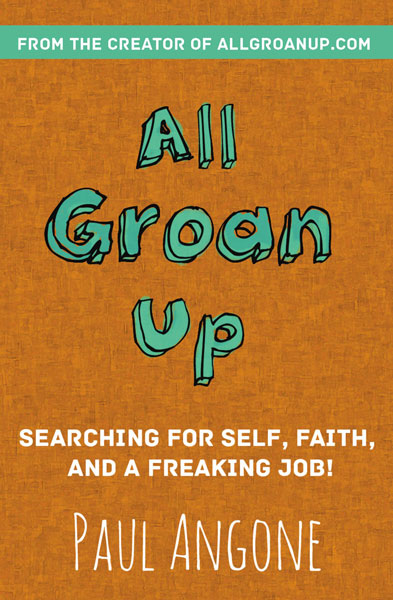
All Groan Up

Its title is a really bad pun, but this is not a bad book. (Seriously, though, that title causes me physical pain.) This memoir of a young man’s post-college panic, crises of faith, search for employment, and painful transition to adulthood is eerily similar to my own experiences. Paul Angone tells his story with openness, honesty, Jon Acuff-like humor, and way too many silly metaphors. In the end, despite its stylistic quirks, his story is well worth reading for all those college-age adults who feel lost, alone, ashamed, and hopeless. I wish I had read this book five years ago.

Best Console Video Game: Ni No Kuni: Wrath of the White Witch
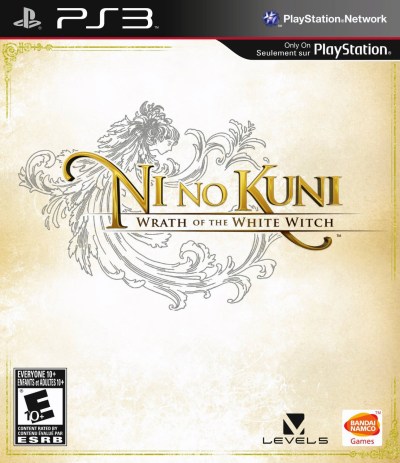
Ni No Kuni cover

This is probably the most beautiful game I have ever played. With visuals inspired (and some contributed) by the legendary Studio Ghibli, and music by noted composer Joe Hisaishi, this game looks and sounds amazing—and it plays beautifully. The game’s story of a little boy searching for his mother is touching and bittersweet… except for when it’s cute and hilarious, which it frequently is. The Final Fantasy-meets-Pokémon gameplay may be a bit deep for casual players, and the ending is unsatisfying, but these are nitpicks. Ni No Kuni: Wrath of the White Witch is magical. And it’s getting a sequel!

Best Handheld Video Game: Professor Layton and the Miracle Mask
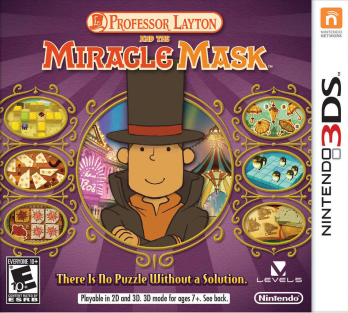
Professor Layton and the Miracle Mask

“A true gentleman leaves no puzzle unsolved,” and Professor Hershel Layton is the truest of gentlemen. Professor Layton and the Miracle Mask is a delightful collection of puzzles, strung together by the most intriguing Professor Layton story I’ve seen yet. The good Professor’s search for the diabolical relic known as the Miracle Mask is packed with interesting characters, charming visuals, good voice acting, and (of course) scores upon scores of puzzles to solve. This is a game for everyone, casual players and veteran gamers alike. In fact, the only people for whom I can’t recommend this game are those with no feeling, soul, or sense of humor.

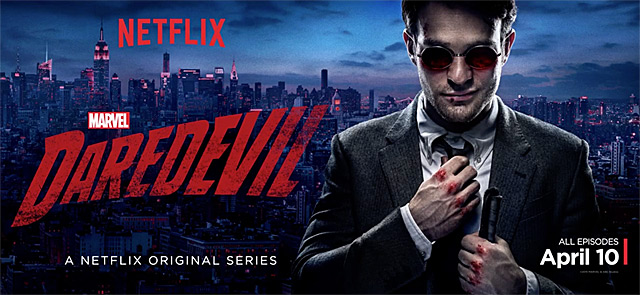
Best Live Action Television Series: Marvel’s Daredevil
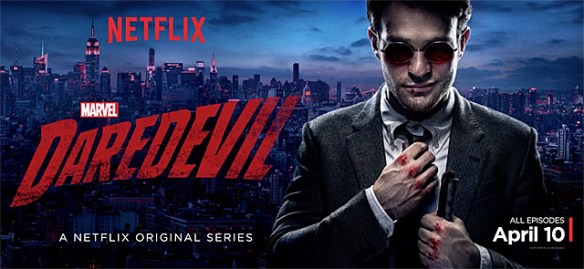
Marvel's Daredevil

I’ve already written two entire blog posts about the excellence of Marvel’s Daredevil, so I won’t add much here. I’ll just point out one more fun detail: a scene set in a Hispanic lady’s home contains a two-liter bottle of Inca Kola. (I grew up drinking Inca Kola in Ecuador.) That is serious attention to detail.

Daredevil (now with 100% more Inca Kola!)

Marvel’s Daredevil has a breakable hero, a fascinating villain, great writing, brilliant action scenes, a gripping (and grounded) story, and an artistically comic-booky visual style. This show is superb.

Best Animated Television Series: Monthly Girls’ Nozaki-kun

Monthly Girls' Nozaki-kun

This anime isn’t a masterpiece by any means, but there’s something compelling about its unromantic romance writer and his quirky entourage of artists. Monthly Girls’ Nozaki-kun is neither a romantic comedy nor a satire, but something in between. It never feels cynical or mean-spirited as it deconstructs rom-com clichés; the show’s self-aware humor is balanced by a heartwarming charm and innocence. As an added bonus, the show offers fascinating glimpses into the process of making manga (i.e. Japanese comics). It’s fairly short and available only in Japanese with English subtitles, but Monthly Girls’ Nozaki-kun is delightful.

What are some of the best media you experienced in 2015? Let us know in the comments!

Comic Book Sound Effects

BTYANG!Comic book sound effects are weird.

I didn’t read comics until the past few years. Oh, I read a few graphic novels—mostly critically-acclaimed stuff like Maus and Scott Pilgrim—and a couple of comic series, but nothing particularly comic-booky: no superheroes, noir mysteries, or slice-of-life romances.

Then, quite a number of months ago, a kindly relative began sending me and my younger brother books and comics. These literary care packages contained works of interest he had picked up at comics events and used bookstores. His latest gift was a little stack of free comics he had gleaned from a Halloween comics festival.

It was a fascinating collection. Among others, there was an old-timey Spiderman comic, written by Stan Lee and drawn by Jack Kirby; the first issue of a famous Batman series, which later influenced Christopher Nolan’s Batman film trilogy; a couple of contemporary Marvel superhero comics; and some licensed stuff based on television and video games. With its blend of classics, current issues, and promotional fluff, that stack of comics was like a cross section of the comic book industry.

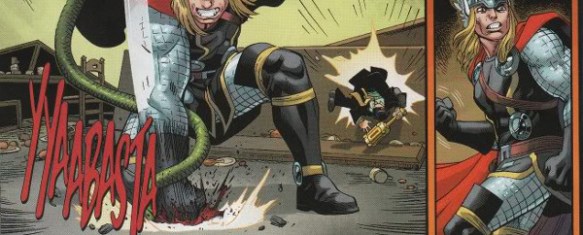
Anyhowz, one of the things that stood out to me about those comics was the weird sound effects. I knew odd sounds were a thing in comics, but… dang. Rather—if I may spell the word like a sound effect in a comic book—DHAAANG!

Out of curiosity, I googled “weird comic book sound effects,” and yep, there sure are some weird ones. Consider “YYAABASTA,” which sounds exactly like Spanish for “That’s enough!”

YABASTA!

The weirdest sound effects of all, however, came not from the Internet, but from one of the comics my relative sent me. It was a Donald Duck comic. The sounds were “SPUZZLE,” which is the sound of whipped cream sprayed from a can, and “SPLOMP,” which is the sound of twelve tons of chocolate cremes hitting a street from a height of roughly twenty or thirty feet.

…Yeah, don’t ask.

397. More Thoughts on Marvel’s Daredevil

I mentioned last time that my family has been visiting for a couple of weeks from Uruguay and the Dominican Republic. How did my dad and I spend this rare and wondrous opportunity?

We watched Marvel’s Daredevil on Netflix, of course.

Well, we also traveled and did some other stuff, but Marvel’s Daredevil was definitely high on our priority list. My dad hadn’t seen it. I felt it was my duty as a loving son to sit him down and make him watch all thirteen episodes. It was rewarding for me to revisit Daredevil, and I noticed a few things I had missed the first time.

As a follow-up to my thoughts on Marvel’s Daredevil, here are more thoughts on Marvel’s Daredevil.

Marvel's Daredevil

Everyone gets hurt.

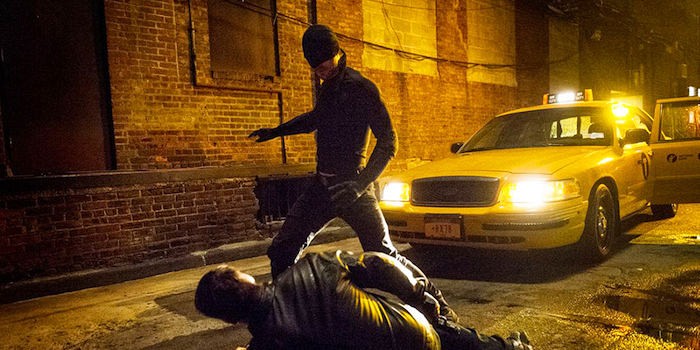
I know I mentioned this last time, but the fights in Marvel’s Daredevil are terrific. They aren’t the boring, bland, bloodless brawls of Marvel’s other superheroes. People get hurt in Daredevil, including Daredevil.

Superheroes in other stories are usually invincible. Iron Man has his armor. Captain America has his shield. Wolverine’s metal-coated skeleton and miraculous healing powers make him nearly immortal. The Hulk is literally invulnerable. Even Batman shrugs off a broken back in a matter of months because, well, he’s flipping Batman. Except when it’s convenient to the story, superheroes don’t get hurt.

Daredevil gets hurt all the time. He gets tired. He bleeds. He stumbles and faints. He gets cut open and stitched up. Daredevil is extremely tough, but believably so. His fights are tense and exciting because he could die at any moment—all it would take is one bullet, blade, or blunt object. By comparison, the fight scenes in movies like Man of Steel and The Avengers are dull, by-the-numbers affairs that never put the heroes in any real peril.

Primary colors, especially yellow, are all over the place.

I don’t how I missed this last time—my excuse is that I was too absorbed in the show’s plot and characters—but the color palette of Marvel’s Daredevil is dominated by strong primary colors. New York City has a deep bluish tinge at night. Neon lights give scenes a red or yellow cast. Colored windows flood rooms with golden light. The show’s colors are rich and saturated, giving Daredevil an appropriately comic-book aesthetic.

I really dig it.

Yellow

Marvel’s Daredevil is basically a drama with superheroes.

If I had to describe the series, I would call it a crime thriller with some political drama and one or two superheroes thrown in for good measure. It’s a story with superheros, not a superhero story. As in the case of The Dark Knight, the superhero elements feel almost incidental.

The Marvel Cinematic Universe needs to change its approach to storytelling.

The Marvel Cinematic Universe (MCU) is a remarkable achievement: a series of loosely-connected films and television shows that all tell stories within the same fictional universe. The concept is exciting from a narrative standpoint, and has proved profitable for Marvel from a financial one. However, the MCU has been around long enough that it’s starting to stagger under its own weight.

The Avengers: Age of Ultron was a decent movie, which is almost a miracle considering all the ways it connected to past and future films in the MCU. It was forced to continue subplots from The Avengers and Captain America: The Winter Soldier, set up the conflict for Captain America: Civil War, hint at events in Thor: Ragnarok, introduce story elements for the Black Panther movie, and progress the Infinity Stones story arc.

Does that sound confusing and exhausting? It is. The MCU, like so many of the comics that inspired it, is becoming hard to follow.

Marvel’s Daredevil is technically part of the MCU, but it makes only a few passing references to The Avengers and leaves it at that. Daredevil is mostly a self-contained story. It leaves one or two loose ends for future series to tie up, yet remains accessible.

The MCU needs to be less like a complicated serial, and more like an anthology. We don’t need more Iron Man movies. What we need is more stand-alone stories like Daredevil—stories that share a universe without necessarily continuing the same tired plots.

Marvel’s Jessica Jones, a related series, comes out on Netflix in less than a month.

Marvel’s Daredevil is the first of several interconnected series from Netflix based on lesser-known Marvel superheroes. The next, Marvel’s Jessica Jones, comes out next month. I don’t know much about it, but the series will star David Tennant (AKA the Tenth Doctor from Doctor Who) as the villain. Early screenings of Jessica Jones have been positive. If it’s even one-half as good as Daredevil, I’m certain I will enjoy it.

What shows have you been watching lately? Let us know in the comments!
393. About Storytelling: Magic, Destiny, and Nanomachines

Here’s a question for you: What do fate, magic, nanomachines, and sonic screwdrivers have in common?

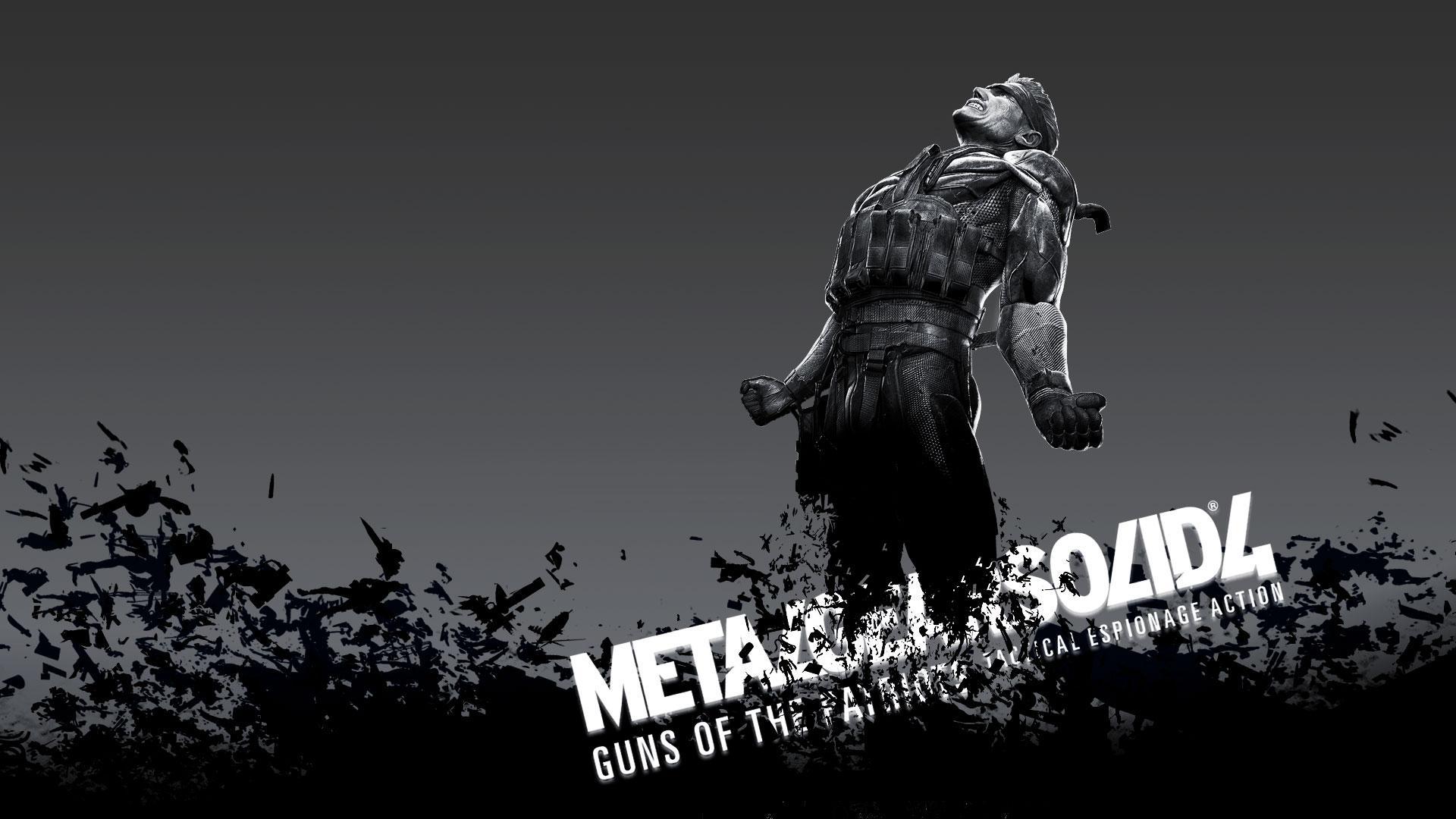
As I mentioned last time, I’ve been playing a video game called Metal Gear Solid 4. Its blend of military intrigue, science fiction, and social commentary is kinda bonkers, but the story’s strangest turns always have an explanation—or, to be more honest, an excuse. That excuse is nanomachines. These microscopic robots are injected into the bloodstream of many characters in the game, giving them superpowers (or super-weaknesses) that defy all other explanations.

How does a character in the game survive being shot in the head and stabbed through the abdomen? Nanomachines. How are entire armies instantly disarmed, disabled, and defeated? Nanomachines. How is a long-dead character revived in a stunning twist? That’s right—flipping nanomachinesEvery impossible twist in the story is explained by these hard-working little bots.

The answer is nanomachines.

The answer is nanomachines. It’s always nanomachines.

In the end, throughout the Metal Gear Solid series, nanomachines are generally the catch-all explanation for things that otherwise make no sense. The audience never learns exactly how they cause immortality, raise the dead, regulate firearms, or do any of the other crazy things they do. Nanomachines are a vague, easy solution to plot holes that can’t otherwise be filled.

Let’s not cast all the blame upon nanomachines, though. Consider how often, especially in fantasy stories, magic is used to explain away things that make no sense. Science fiction often uses technology in exactly the same way. As Arthur C. Clark reminds us, “Any sufficiently advanced technology is indistinguishable from magic.”

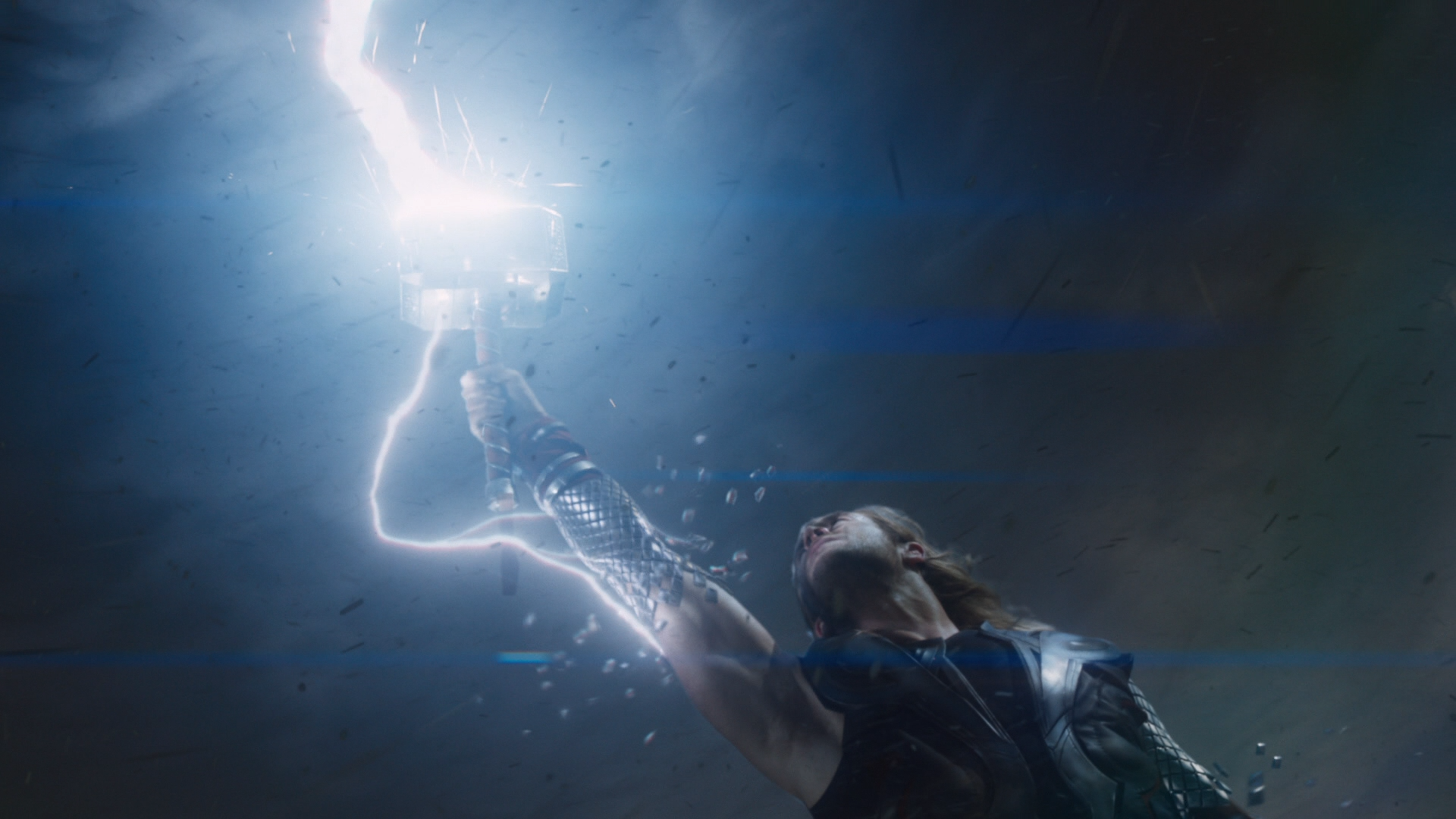
Marvel’s Thor movie openly acknowledges this when its eponymous superhero tells an ordinary human, “Your ancestors called it magic, but you call it science. I come from a land where they are one and the same.” Thor’s hammer makes no sense. Most of the stuff in Marvel’s movies makes no sense. The easiest solution is to claim that it’s incomprehensible technology and call it a day.

Witness the power of... um... technology?

Witness the power of… science?

Fate and destiny can work the same way. In dramas and romances, these vague cosmic forces offer an excuse for crazy coincidences and irrational behavior.

Then there’s Doctor Who. Flipping heck, is there ever Doctor Who. Besides the good Doctor’s sonic screwdriver, which does anything the plot needs it to do, the show’s many plot holes are waved away by the concept of “wibbly-wobbley, timey-wimey… stuff.”

Do you remember the concept of deus ex machina? It’s when a specific problem in a story is resolved by some contrived or impossible solution. This is the same idea, but bigger and more pervasive. It’s when a deus ex machina, instead of resolving a single problem, becomes the storyteller’s go-to resolution for all of the problems.

As cheap or lazy as this sounds, it doesn’t have to be so bad. It all depends on how it’s used. Some stories don’t need to be burdened by a lot of complicated explanations. If media like Doctor Who or Metal Gear Solid 4 obsessed over details, or else cut out everything that lacked a rational explanation, they would be a heck of a lot less fun. If the audience is willing to swallow a vague explanation, and it enables a better, tighter story, then it becomes a good thing.

Used badly, narrative tricks like magic and nanomachines make a story contrived and unbelievable. Used well, they prevent a story from becoming bogged down in details and explanations, and allow storytellers to focus on other areas of storytelling.

I would call my typewriter monkeys my blog’s version of this trick—a vague explanation for the complicated process of how TMTF is kept up and running—except for one thing. My monkeys don’t resolve problems. They cause them!

385. Review Roundup: Death Game Edition

It has been a while since TMTF’s last Review Roundup. Why don’t we look at some stories about death games?

In these media, protagonists gamble their lives in dangerous games. Some of these are literal: formal competitions with rules. Some are figurative: risky ventures into crime. And one of these stories has nothing at all to do with death games. (I enjoy writing these reviews, but not enough to plan my media consumption around them!)

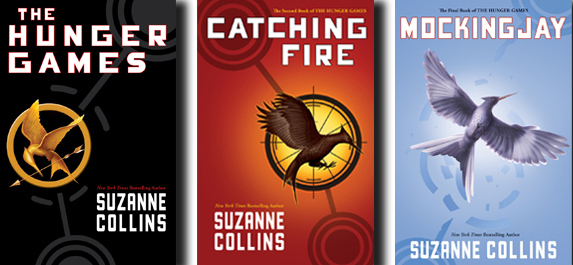
Let’s talk about The Hunger Games trilogy, Ant-ManThe Big LebowskiIs It Wrong to Try to Pick Up Girls in a Dungeon?, and Whisper of the Heart.

The Hunger Games trilogy

The Hunger Games trilogyFor the first time in years, I picked up a popular Young Adult novel to find out what all the fuss is about. (My last investigation of a literary sensation led me to read Twilight, a mistake from which I never fully recovered.) The Hunger Games is a pop culture phenomenon, and I meant to find out why.

I dunno, guys. I wasn’t all that impressed. Maybe I’m just a grumpy snob, but the Hunger Games trilogy neither dazzled nor entertained me. The books aren’t bad, but I wouldn’t call them classics.

The Hunger Games books tell the tale of Katniss Everdeen, a pragmatic teen trapped in an impoverished district of Panem. The government of this dystopian country rules its outer districts by fear and humiliation, selecting two children from each district every year and forcing them all to fight to the death. This gruesome event, the Hunger Games, is televised throughout Panem as an amusement for the wealthy; for the poor, it’s a reminder of their powerlessness. Katniss is selected for the Hunger Games, and the books follow her rise and fall from gladiator to celebrity to revolutionary to whiny PTSD victim.

The Hunger Games books are lauded for their smart setup and gripping story. I’ll be the first to admit there is truth to these praises. Panem is an interesting setting. The concept of the Hunger Games is fascinating, providing a way for a corrupt government to placate the rich and subjugate the poor. The story has its twists and turns, and the first book is actually pretty engaging.

However, the characters are mostly dull and unlikable. Katniss, who narrates the story, lacks much personality besides a coldly analytical attitude and occasional flickers of affection. As the books wear on, Katniss is traumatized by her horrific experiences, becoming angsty and angry—a change in her personality, sure, but not for the better. More promising characters, such as foppish Effie Trinket and drunken Haymitch Abernathy, end up disappointing.

When it comes to tone and style, I get the impression the Hunger Games books aren’t sure what they want to be. They have a sort of gritty realism concerning poverty and war. I appreciate that. However, this gloomy approach is at odds with the books’ ludicrous sci-fi touches and predictable Young Adult nonsense. (Yes, there’s a love triangle, and it’s annoying.)

In the end, the Hunger Games books have just enough harsh realism to be depressing and just enough teen kitsch not to be taken seriously. They fall in a literary no man’s land, refusing to embrace either realism or sensationalism, and embodying the worst traits of both. I find it hard to recommend these books.

Ant-Man

Ant-ManMoving on to something much more entertaining, Ant-Man is another big, dumb, spectacularly fun Marvel movie. Unlike the Hunger Games books, Ant-Man embraces its own goofiness in a way that’s a joy to see.

Ant-Man begins with Scott Lang feeling very small. This well-meaning ex-convict can’t keep a job or convince his ex-wife to let him spend time with their little girl. When Lang meets an old inventor named Hank Pym—he burgles Pym’s home, actually, but that’s not the point—Pym offers him “a shot at redemption,” meaning an opportunity to put on a high-tech suit, shrink to the size of an ant, and dive back into the life-or-death game of high-stakes burglary.

Look, if you’ve seen any recent Marvel movie, you know what to expect at this point. Ant-Man is full of quotable quips, flashy action scenes, and comic book lore, with a little sentimentality sprinkled here and there.

This time, however, there are two things to make the film stand out. First is an emphasis on father-daughter relationships. This motif isn’t developed as fully as a it could be, but it works. The second thing is that Ant-Man is basically a superhero heist movie, in the same way the first Captain America is a superhero war film and the second one is a superhero cold war thriller. Ant-Man isn’t about saving the world, but stealing stuff… to save the world, I guess.

It’s still a nice touch.

I really enjoyed Ant-Man. It nods at other movies in the Marvel Cinematic Universe without depending on them, and I look forward to seeing Ant-Man in future films. Not bad for such a little guy.

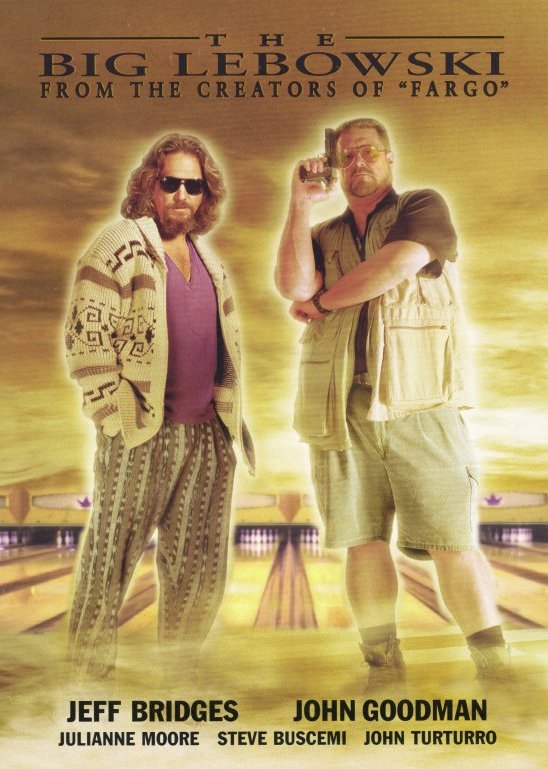
The Big Lebowski

The Big LebowskiWith that, we move on from a small hero to a larger-than-life one in The Big Lebowski. Ironically, however, the film’s hero isn’t actually the Big Lebowski, but a slacker with the same name (I’ll call him the Lesser Lebowski) who loves bowling, booze, and tacking the word “man” to the end of nearly every sentence.

The Big Lebowski begins when thugs storm the home of Jeff Lebowski, a laid-back stoner known as “the Dude,”  and pee on his rug. It was a nice rug, man. It really tied the room together. The thugs threatened the Dude (and peed on his rug) under the impression he was “the Big Lebowski,” a millionaire with the same name. When the Dude takes his bowling buddies’ advice to seek compensation from the Big Lebowski for the rug, he becomes snared in a game of deception, violence, kidnapping, cursing, and postmodern art.

This movie is sort of a black comedy and sort of a noir crime film, but it’s mostly Jeff Bridges bowling, drinking, and wandering around Los Angeles. In the end, the film’s complex web of crime and deception unravels to reveal a whole lot of nothing, and I think that’s the point: there never was one.

This was quite an entertaining movie. It ain’t one for kids—it has bullets, boobs, and f-bombs beyond count—but for adults with a healthy sense of the absurd, The Big Lebowski is a treat.

Is It Wrong to Try to Pick Up Girls in a Dungeon?

Is It Wrong to Try to Pick Up Girls in a DungeonWell, is it?

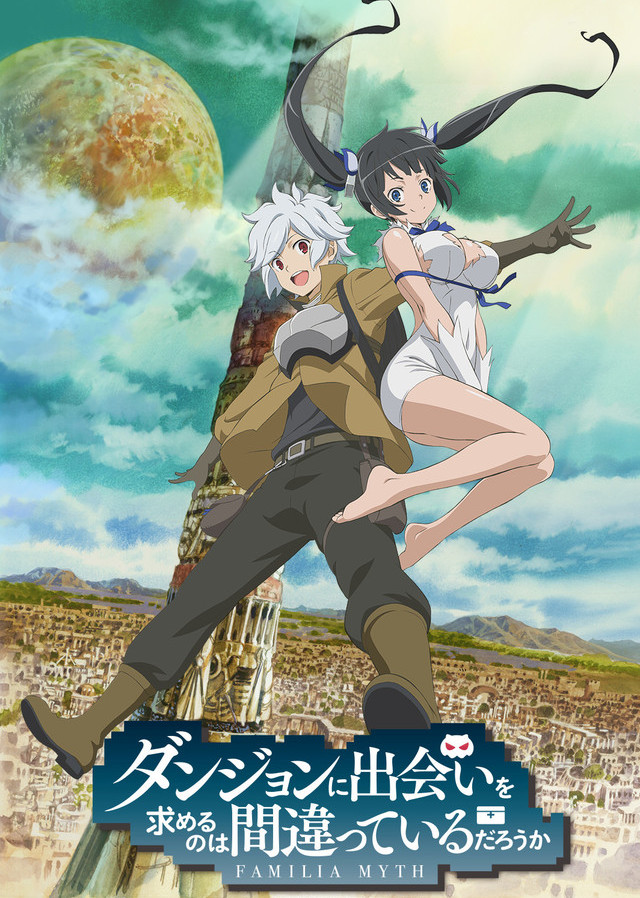
The oddly-titled anime Is It Wrong to Try to Pick Up Girls in a Dungeon? is the tale of Bell, a nice young man who longs to become an adventurer—to impress the ladies, of course. He lives in a medieval fantasy town whose existence revolves around the eponymous dungeon: a labyrinth teeming with monsters. Adventurers join familias—guilds sponsored by gods or goddesses—and venture into the dungeon in a dangerous game for treasure and glory. In quest to become a dungeon-conquering hero, Bell accepts the sponsorship of a down-on-her-luck goddess named Hestia. This unlikely pair must work together for Bell to have any chance of becoming a master adventurer and impressing the ladies… well, one in particular.

I won’t lie, guys. This anime is incredibly dumb. Remember what I said about Ant-Man embracing its goofiness? This show does the same, but with roughly ten thousand times as much enthusiasm.

I mean, the anime’s opening theme has a momentary scene of Bell and Hestia brushing their teeth. Look at this. Look at it.

Toothbrush dance (GIF)

This is basically the entire show: dumb as all heck, but endearing in its silliness, with some gratuitous cleavage for good measure.

The world of Is It Wrong to Try to Pick Up Girls in a Dungeon? functions exactly like a video game (an MMORPG, to be precise) without actually being a video game. Its adventurers gain experience and level up—heck, they even have statistics (appearing as magical tattoos on their backs) reflecting their competency in various areas. Monsters respawn on a set timetable, and powerful creatures explicitly called bosses guard certain floors of the dungeon. The setting is instantly comprehensible to gamers, but at the cost of making absolutely no sense. Why do adventurers level up? What revives the monsters that respawn? What the heck is going on?!

(It is very faintly hinted that the gods and goddesses of ancient times created this video game-like world for their own enjoyment, but no real explanation is ever given.)

This is a show in which half the female characters have crushes on the hero, like Twilight in reverse, and most female adventurers wear stupid chain mail bikinis. I can’t defend or recommend this anime. It’s really, really dumb.

All the same, I kinda enjoyed it. Bell, who has a massive inferiority complex, is kind and friendly: a welcome change of pace from angsty or arrogant anime heroes. Hestia works odd jobs to support him, despite being, y’know, a goddess. The show seldom takes itself too seriously; the rare occasions it does are some of its weaker moments. For the most part, its good-natured goofiness made it fun to watch, if not intellectually rewarding.

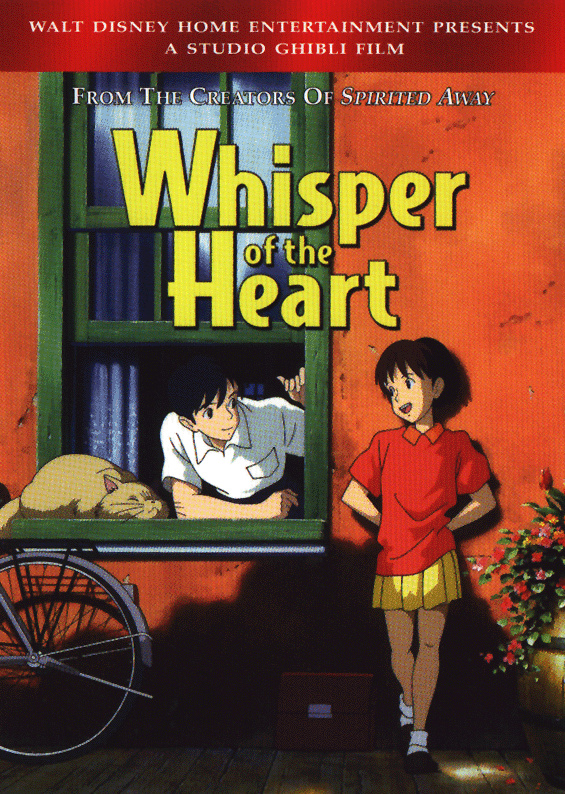
Whisper of the Heart

Whisper of the HeartAt last we arrive at a film that not even I can pretend fits the vague “death game” theme of this Review Roundup: Whisper of the Heart. Because of this movie, John Denver’s all-American classic “Take Me Home, Country Roads” will forever remind me of urban Japan.

Shizuku is a bookish Japanese teen, sharing a cramped apartment with her family. She notices one day that all of her library books were previously checked out by someone named Seiji, and wonders who he might be. Shizuku later ends up at an antique shop. Its owner encourages her to pursue her passion for writing stories, and also introduces her to his grandson: the mysterious Seiji. As Shizuku’s love of writing grows, so does another kind of love.

Studio Ghibli is magnificent. Whisper of the Heart was one of the few Studio Ghibli films I had never seen, and I’m glad I finally watched it.

I’ll be honest: Whisper of the Heart is no masterpiece. Nah, it’s merely a touching, charming, beautifully-animated coming-of-age story with a scene that nearly brought tears to my cynical eyes. By lofty Studio Ghibli standards, this is merely a decent film. By any other standards, Whisper of the Heart is wonderful.

I enjoyed the film probably more than most people because I identify with Shizuku’s desire to write stories. I was Shizuku once, in a manner of speaking: young, naïve, hopeful, insecure, eager to share my stories, and scared no one would want to read them—or worse, that they wouldn’t be worth reading.

Whisper of the Heart has its fair share of sentimentality: far more, in fact, than nearly any other Studio Ghibli film. The movie lacks the effortless grace and emotional punch of the studio’s finest works… but there is one scene, in which several musicians strike up their instruments for a joyful, impromptu performance of “Take Me Home, Country Roads,” that brought me closer to crying than any film in recent memory (except Inside Out, of course).

It may not be as popular as Studio Ghibli’s other movies, but Whisper of the Heart is absolutely worth watching, especially if you’re an aspiring writer, a Studio Ghibli fan, or a fan of romance.

What books, films, shows, or video games have you enjoyed lately? Let us know in the comments!

When Batman Has a Bad Day

A wise person once said, “Always be yourself, unless you can be Batman. Then be Batman.”

Batman is my favorite superhero. Christopher Nolan’s excellent films introduced me to the brilliant, skilled martial arts prodigy who decided the best way to cleanse his city of corruption was to dress up like a bat, throw pointy objects at evildoers and drive around in a really neat car.

Batman is interesting because he has no superpowers. His abilities are the fruit of determination, intelligence and self-discipline, augmented with some sweet technology.

More significantly, Batman is a conflicted character. I like conflicted characters. Granted, most superheroes have insecurities. Batman is different. As Charlie Brown would say, his anxieties have anxieties; Batman is the eponymous sufferer of Batman Syndrome. Nevertheless, he keeps going. He sees no joy and little hope in doing the right thing, yet he does it anyway. I admire that.

On a less intellectual level, Batman is really cool.

However, like every other person on Earth, Batman has bad days. The charming animation above depicts a day when the Caped Crusader just can’t seem to catch a break. Keep an eye out for an appearance from comics legend Stan Lee!


This post was originally published on May 22, 2013. TMTF shall return with new content on August 24, 2015!

360. Review Roundup: Violent Movie Edition

I like to think I’m not a particularly violent person. Sure, I own five machetes, three swords, and a few knives, but I don’t use them. In fact, I seldom show aggression, except when playing video games. All’s fair in love, war, and Mario Kart.

Despite my peaceable nature, I occasionally watch violent movies. I saw quite a few in the past month: films full of epic car chases, superheroes, dystopian futures, demonic possessions, and British cops eating Cornetto ice cream cones. I may not be doing formal reviews, yet here are some brief impressions of Mad Max: Fury RoadAvengers: Age of UltronSnowpiercerThe Exorcist, and Hot Fuzz.

Hold on to your hats.

Mad Max: Fury Road

Mad Max

Mad Max: Fury Road consists of a brutal car chase and little else. Do you know what? I am five thousand percent fine with that.

Most of the film is a chase in which an entire convoy of cars follows an armored tanker truck across a desert. The cars—which were built, I can only assume, by psychopathic punk rockers with welding torches—bristle with spikes and assorted weaponry. One truck serves as a stage for a man playing an electric guitar that shoots flames.

Yes, this is that kind of movie.

In the film, a warlord named Immortan Joe reins unchallenged over refugees in a post-apocalyptic wasteland. When one of his lieutenants betrays him and flees with his wives in a tanker truck, Joe sends a convoy to reclaim his prized “possessions.” One of the outrageous vehicles in the convey has an unusual hood ornament in the form of a wanderer named Max. He may be strapped to the front of a war machine, but Max is a survivor. Explosions and mayhem ensue.

Mad Max: Fury Road doesn’t have much dialogue, but it hardly needs it. This is an action film in its purest sense. The chase sequences were filmed mostly with practical effects and minimal CGI—meaning the film shows real cars, real stuntmen, and real explosions. It’s impressive stuff, and stylish as heck.

For having little dialogue—and being, y’know, flipping ridiculous—Mad Max: Fury Road tells quite a good story. The characters aren’t terribly well-developed, but they are memorable and clearly defined. In this film with sparse dialogue and relentless explosions, profound themes emerge: survival, longing for home, and empowerment of women. Mad Max: Fury Road is a far more intelligent film than it has any right to be, while never losing its sense of good, stupid fun.

I really enjoyed Mad Max: Fury Road. If you enjoy, or have any tolerance for, over-the-top action movies, I recommend it.

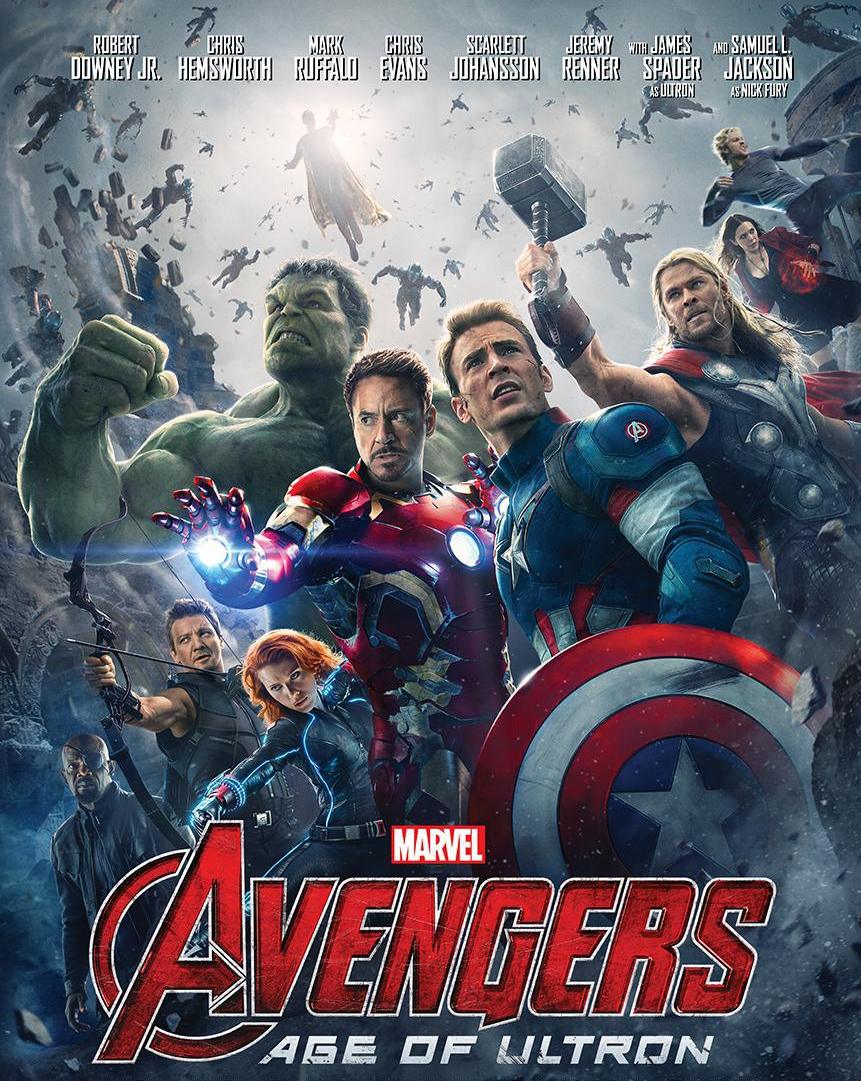
Avengers: Age of Ultron

Age of Ultron

Eh, it was all right.

What? You want more of a review than that? Here goes: It was all right, but it needed more Andy Serkis.

In seriousness, Avengers: Age of Ultron wasn’t bad. In the film, the Avengers, a colorful band of superheroes, battle Ultron: a rogue AI that deems humanity unfit to live. There’s a little more to the movie, of course, but that’s the gist. If you’ve seen any of the recent Marvel movies, you probably know the drill at this point.

I liked a lot of things about the film. First of all, Ultron is a marvelous villain with a menacing appearance and a personality defined by sardonic contempt. (I appreciate a bad guy with a sense of humor.) Ultron has a vision for a better, brighter future. It just happens to be a future without human beings. It’s nothing personal.

I was impressed by how the obligatory action scenes were balanced by a surprising amount of character development. The Avengers get plenty of scenes without spectacular fights or expository dialogue—scenes that allow them simply to be themselves. Hawkeye, the least popular Avenger, gets an astonishing amount of characterization. Andy Serkis makes a brief but memorable appearance as a South African arms dealer, stealing the scene from everyone but Ultron.

This brings me to one more outstanding feature of the film: It takes place all over the world. Look, I like America, but I’m tired of seeing it in Marvel’s superhero movies. Avengers: Age of Ultron spends most of its time in Asian, African, and Eastern European countries. I really appreciated the change of scenery.

There are, of course, things I didn’t appreciate about Avengers: Age of Ultron. The film feels slightly suffocated by the weight of all the Marvel movies that came before it. Too many characters are stuffed into the film, including a pair of twins that have no business whatsoever being there. With a couple of minor tweaks, Avengers: Age of Ultron could have worked perfectly without them. One or two unexplained plot elements stick out egregiously. Unlike the breakable hero of Marvel’s Daredevil, the Avengers are invulnerable, and therefore boring.

My final problem with the movie (slight spoiler ahead) is the introduction late in the film of a messianic character in the form of a heroic android. This good AI is a foil to Ultron, sure, but it’s also a literal deus ex machina. Besides, a theme of the movie is that creating self-aware machines like Ultron is a bad idea. The Avengers defeat the godlike AI… by creating another godlike AI. Hmm.

In the end, despite its faults, Avengers: Age of Ultron is another solid entry in the Marvel movie canon. In other news, I think Ultron and GLaDOS would probably get along really well, to the detriment (and possible extinction) of humans everywhere.

Snowpiercer

Snowpiercer

In Snowpiercer, a new ice age has wiped out nearly all life on Earth. The only survivors are the passengers of a high-tech train, the eponymous Snowpiercer, that circles the globe once a year. Built for doomsday, the train is entirely self-sufficient with a powerful engine and carefully regulated ecosystems. The privileged passengers ride in luxurious cars toward the front of the train. Middle cars contain necessities such as orchards and water tanks. The squalid rear cars of the train are reserved for the stowaways. Tired of living in filth and fear, these stowaways revolt against the train’s authorities. The rebels, led by a tough-as-nails passenger named Curtis, must fight their way forward one car at a time.

Snowpiercer is brilliant. Its absurd dystopia is compelling and unique: a society whose socioeconomic classes are divided by train cars. The train doesn’t merely represent a social order—it is a social order, laid out in a neat line. There is a golden simplicity in the structure of Snowpiercer‘s dystopia, and it was gripping to watch Curtis and his crew advance through the train. The train itself is a fascinating chain of set pieces, starting with filthy rear cars and getting progressively more interesting the farther Curtis and company advance.

Although Snowpiercer is a South Korean film, it stars mostly English-speaking actors. I was surprised by how many of them I recognized. Curtis is played by Chris Evans, with other roles filled by Tilda Swinton, John Hurt, and Ed Harris. Snowpiercer has all the visual polish of a Hollywood blockbuster, but is a much smarter film than most American action flicks.

It isn’t a cheerful film, and it’s definitely not for kids, but Snowpiercer is superb: easily one of the best sci-fi movies I’ve seen. I highly recommend it, especially for viewers who like intelligent action films or dystopian fiction.

The Exorcist

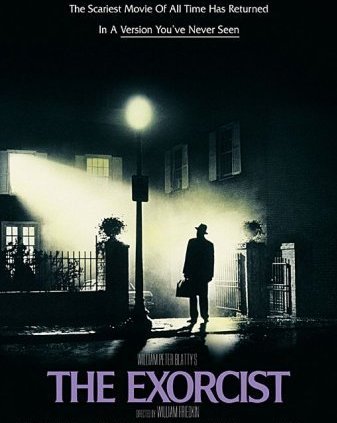
The ExorcistI’m no fan of horror films, but I decided to watch this one. For science. The Exorcist, an iconic and culturally significant film, depicts the gradual demonic possession of a girl, and the attempts of two priests to drive out the demon.

My strongest impression of The Exorcist is that it’s really slow. This is both a strength and a weakness. On the one hand, I appreciate that the film takes time to develop its characters instead of rushing to sensational scares. I don’t know much about horror movies, but my impression is that their characters are often treated not as people, but as objects for death and dismemberment. The Exorcist acknowledges its characters as people, which makes their suffering at the hands (claws?) of the demon all the more gut-wrenching. However, while I appreciated the film’s slow-but-steady approach, I found it too slow. The movie’s ponderous pacing leads to an all-too-short denouement, which left me asking, “Heck, that’s it?”

I didn’t find The Exorcist all that scary. The buildup to the demon was excellent, and the scene in which it fully possesses the girl is terrifying, but from that point on the demon-possessed child is mostly silly. Her appearance is blatantly fake, like a Halloween outfit, and it just ain’t scary. By the point the girl starts vomiting lime-green goo, I couldn’t take the demon seriously. A subtler approach, with a lot less makeup, would have been far creepier.

The famous scene in which the demon takes over the girl is easily the scariest in the film, and it’s frankly shocking: especially for a film released in the seventies. Among other things, the girl repeatedly jams a crucifix into her vagina. (The scene isn’t explicit, but it is disturbing.) It’s disgusting and profane—but then, that’s the point. The artist in me is impressed by the strong characterization of the demon. The rest of me is grossed out.

Despite its solid characterization and few scary scenes, the poor pacing and tasteless schlock of The Exorcist make it hard to recommend.

Hot Fuzz

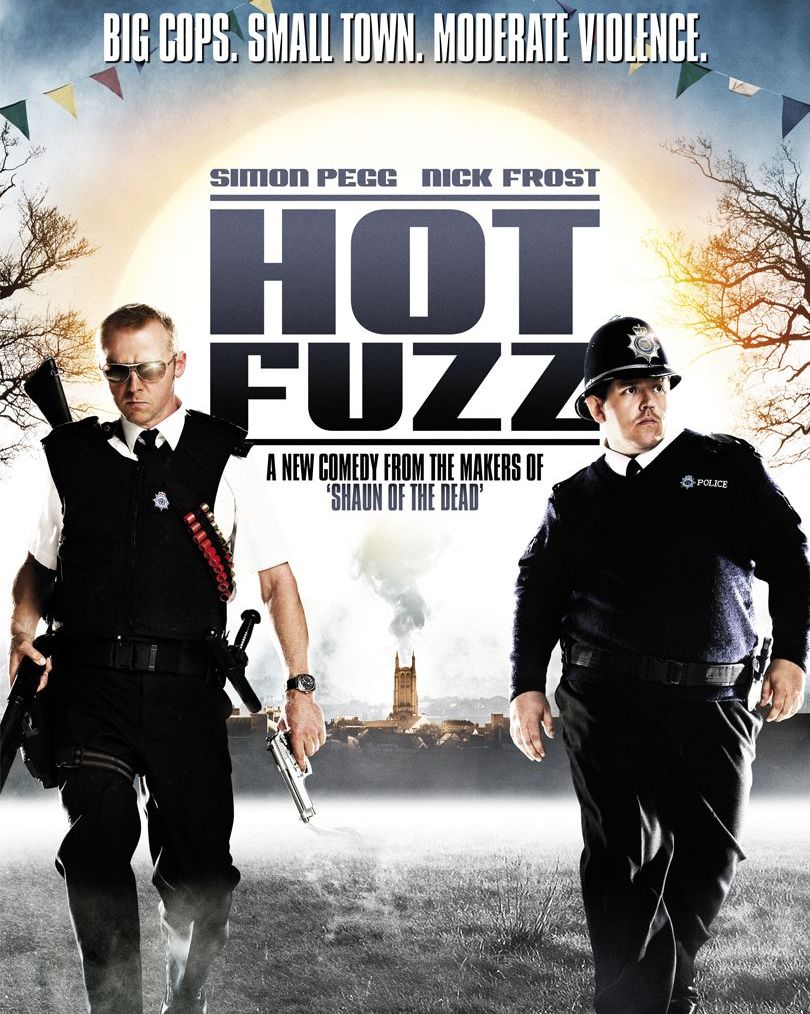
Hot FuzzQuestion: Is Hot Fuzz A) an action movie, B) an old-fashioned murder mystery, or C) a fantastic comedy? The correct answer, of course, is D) all of the above.

In Hot Fuzz, straight-laced policeman—sorry, police officer—Nicholas Angel is transferred from London to the sleepy town of Sandford for making his colleagues look bad. Although Sandford is practically free of crime, a string of suspicious deaths leads Angel to believe the quiet town hides a conspiracy. With his incompetent partner, Danny Butterman, in tow, Angel sets out to solve the gruesome Sandford murders, watching action movies and eating Cornetto ice cream cones along the way.

Hot Fuzz is a unique blend of genres. It has a bit of an Agatha Christie feel with its murders in a rural British village. The gunfights near the end are an affectionate send-up of Hollywood action movies. Most of all, Hot Fuzz is a superbly-written comedy. I watched it because of this glowing review on Kotaku, which perfectly describes the film’s tight screenplay: “Nearly every line of dialogue is either an explicit joke, a set-up to a future joke, or a call-back to a joke that was set up earlier. Some manage to be all three at once.”

As noted in the Kotaku review, Hot Fuzz satirizes action movies in its cinematography. In one scene, two cops run from a bomb about to explode, the camera pulls back expectantly, and… the bomb doesn’t explode. Its a neat subversion of the stereotypical Hollywood explosion. There are also tons of quick, Michael Bay-esque edits, but instead of showing glimpses of action—explosions, gunshots, car crashes!—they punctuate ordinary tasks—filling out paperwork, opening doors, watering plants!

I have only two significant criticisms of Hot Fuzz. First is a jarring tonal shift near the end. The film transitions none too gracefully from detective-story satire to blazing action, with a number of people acting out of character. It feels forced. The other problem is the gore. This film has an astonishing amount of blood, including an icky scene in which a man’s head is crushed by a falling piece of masonry. The gory violence, all of which is flagrantly fake, is probably meant to be funny, but I found it a tasteless blemish in otherwise brilliant comedy.

Despite its overblown violence and some foul language, Hot Fuzz is a clever, well-written satire of British mystery and American action. I highly recommend it.

The Joker

The Joker is one of the greatest comic-book villains of all time. I consider him to be the best of the worst: one of the most iconic and interesting baddies in pop culture.

Why is Batman’s greatest foe such a great character? Part of it, I suppose, is that he is a perfect foil. Like Batman, the Joker has no superpowers. They are mere men, driven to opposite extremes by their obsessions. The Dark Knight fights for order and justice; the Joker stirs up chaos and violence. Batman wants to see Gotham happy and safe; the Joker wants to watch Gotham burn.

In the video above, Kevin McCreary lists a few facts you may not know about the Joker. (This is the same Kevin with whom I performed a rap battle back in the day. He’s a really cool dude.) The video follows the recent reveal of the Joker’s latest incarnation for the forthcoming Suicide Squad movie, which reimagines the classic killer clown as a goth rocker with a headache.

FOR THE LOVE OF COMICS GIVE ME SOME TYLENOL!

I NEED TYLENOL!

I’m not impressed by this edgy take on Batman’s iconic foe. I think comedian Brock Wilbur put it well in a recent tweet: “oh wow I can tell this version of the Joker is a real bad dude because his origin story involves falling into a vat of hot topic.”

This Joker is a disappointment after Heath Ledger’s chilling performance as the Clown Prince of Crime in The Dark Knight. Ledger’s mirthless Joker was excellent, but my favorite version of the character is Mark Hamill’s gleeful, unhinged Joker. Hamill’s cackling psychopath scares me far more than Ledger’s mumbling criminal.

Why is the Joker scary? It may be because he loves violence and cruelty for their own sake. He is impulsive, childish, sadistic, and—this is what disturbs me most—maniacally cheerful. The Joker is an evil guy with a strong sense of humor, and that’s creepy.

352. Thoughts on Marvel’s Daredevil

If you read the tagline for this blog, you may notice that television is conspicuously absent. Typewriter Monkey Task Force is a blog about “faith, writing, video games, literature, life, the universe, and everything.” When I discuss television, it falls into the same “and everything” category as muffins, snow, and fist bumps.

Update: Well, I added TV and movies to the tagline, and also as a category. I suppose it was inevitable.

This blog has a number of posts about Doctor Who and kids’ cartoons, but hardly any for more serious shows. I seldom write about grown-up shows for the reason that I seldom watch grown-up television. Not for me the Breaking Bads and Walking Deads of modern programming; I prefer to relax with something pleasant, not tales of violence, crime, sex, or scandal.

A few times, however, a show for adults has come along that absolutely blows me away. The last one was Sherlock, the BBC’s outstanding adaptation of the old Holmes stories. This time it’s Marvel’s Daredevil, a recent Netflix original series. It does so many things right that I’m taking a post to list a few of them, along with some miscellaneous observations.

Marvel's Daredevil

First, a little background: Daredevil is based on a Marvel comic about Matt Murdock, a blind lawyer whose other senses are heightened to an incredible degree, allowing him to “see” without eyes. Every night, he hits the streets of Hell’s Kitchen, a neighborhood of Manhattan, to beat criminals senseless: a lawless lawyer, so to speak.

The Netflix show happens in the same world as all those Marvel movies from Disney—the MCU, or Marvel Cinematic Universe—but takes a more mature, grounded tone. One final note: Marvel’s Daredevil has no connection, thank heaven, to that dreadful movie starring Ben Affleck.

As promised earlier this week, here are my thoughts on Marvel’s Daredevil.

Be ye warned: Here there be minor spoilers.

The villain

The grand villain in Daredevil, criminal kingpin Wilson Fisk, is one of the best baddies I’ve seen on television. Too many stories disrespect their villains by treating them not as characters, but as plot elements. Fisk, by contrast, is a brilliantly developed character: menacing, memorable, and oddly vulnerable. Despite being “merely” a villain, he gets flashbacks and a love story—considerations usually reserved for the protagonist!

At first, Fisk seems completely in control. He fits the stereotype of the criminal genius pulling strings from the shadows. Only as the story unfolds is Fisk revealed to be an unstable, emotional mess of a man, a character with noble dreams and zero compassion. Fisk is a magnificent bad guy.

The booze

The characters in Daredevil drink with alarming frequency. It’s a wonder they manage to stay mostly sober for thirteen episodes. Daredevil‘s Matt Murdock and Iron Man‘s Tony Stark probably need an intervention.

The sidekick

Matt’s business partner is a wry young lawyer named Foggy Nelson. I expected Foggy to be shallow comic relief or the bumbling Watson to Matt’s Holmes, but he surpassed my expectations in every way. Foggy is certainly funny, and he lacks Matt’s poise, yet he winds up being a smart, independent, and thoroughly likable character.

Matt Murdock and Foggy Nelson

The fight scenes

I’ve become jaded toward practically every single fight scene in the MCU. I can only watch Thor or Captain America punch people in the face so many times before I lose interest. These fight scenes are bland and bloodless. The heroes, who are practically invincible, knock out nearly every enemy in a single punch. What’s the point?

Daredevil offers a superior take on fight scenes. Matt Murdock is breakable. Many of his battles end with Matt bruised, gashed, and bloodied. He is regularly bandaged and stitched up by a sympathetic friend. Because he’s not some invincible superman, his fights are tense and engaging in a way Thor’s or Captain America’s will never be. Matt is weaker than the average superhero, and his enemies are tough. When he knocks them down, they sometimes get back up and keep fighting—a refreshing change from the one-punch knockouts of Marvel’s movies.

Finally, the fights in Daredevil aren’t flagrantly choreographed dances. They’re all-out brawls. Matt gets tired. He stumbles. His fights have the weight, momentum, and wild physicality missing in the MCU’s other media. I like Marvel’s big-budget movies, but they have so much to learn from Daredevil.

The writing

Following up on things Daredevil can teach the rest of the MCU, its writing is really good. Marvel’s movies have plenty of heavy exposition, clever quips, and inspirational speeches, but not a lot of honest-to-God conversation between characters. When Daredevil‘s characters talk to each other, they sound like people talking to each other, not actors reading a screenplay. I know Daredevil has more airtime than the average Marvel movie, but the MCU could try to mix in a little believable dialogue with its jokes and expositions.

The violence

Daredevil is really, really violent. Its blood and broken bones are earned by the story’s mature themes and gritty realism, but this show sure ain’t one for the kiddos.

The religion

Matt Murdock is nominally Roman Catholic, and I didn’t expect to be impressed by the show’s treatment of religion. The media hardly ever depicts Christians well. To my astonishment, Daredevil offers an excellent Christian character in the form of Matt’s priest, Father Lantom.

Many Christian characters in secular media are broad caricatures of religion, but Father Lantom seems authentic in both his concern for Matt and his knowledge of Christian theology. In one scene, he discusses the doctrine of the devil in astonishing detail, mentioning the fact that Satan is the Hebrew word for adversary and alluding to the liberal theory (with which he disagrees) that the devil is merely a misinterpretation of Scripture.

This is heavy stuff for a superhero show. The show’s writers really did their homework, and I love the way they wove the religious motifs of the devil, sin, and redemption into Matt’s journey. I’m impressed by Father Lantom. The heroes of Daredevil aren’t saints, but the show’s informed, respectful depiction of religion is exemplary.

The verdict

Marvel’s Daredevil is one of the best shows I’ve seen in ages. It isn’t as action-packed or colorful as Marvel’s other stuff, but I loved its serious tone, smart writing, and superb fight scenes. In all the right ways, Daredevil is a show for adults, and I highly recommend it.

My Neighbor Baymax

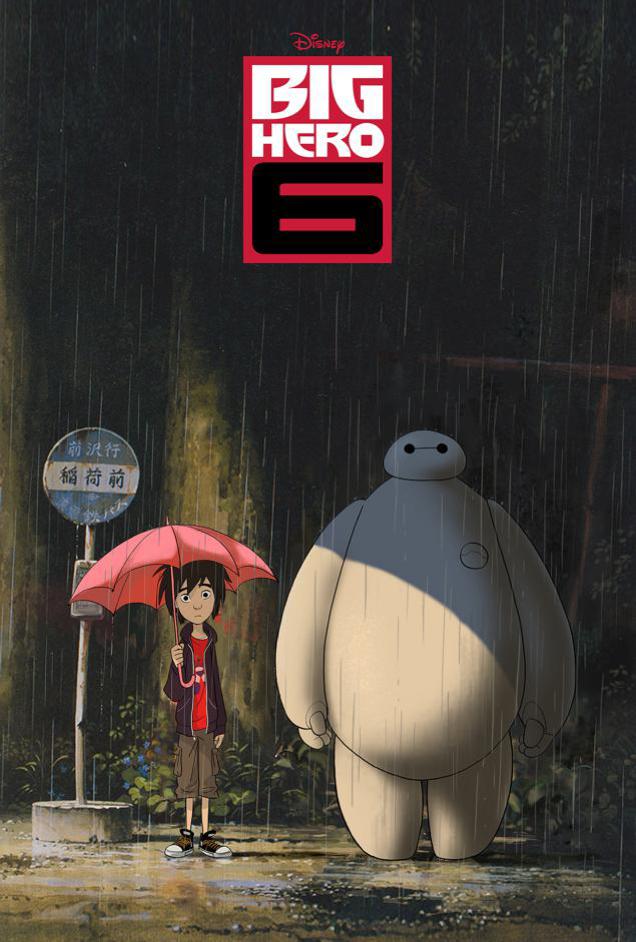
My Neighbor BaymaxBravo, Disney. Bravo.

This lovely art was drawn by Jin Kim, a character designer for Walt Disney Animation Studios. It uses the Japan-inspired setting of Disney’s Big Hero Six to pay homage to Japan’s greatest animation studio, the amazing Studio Ghibli.

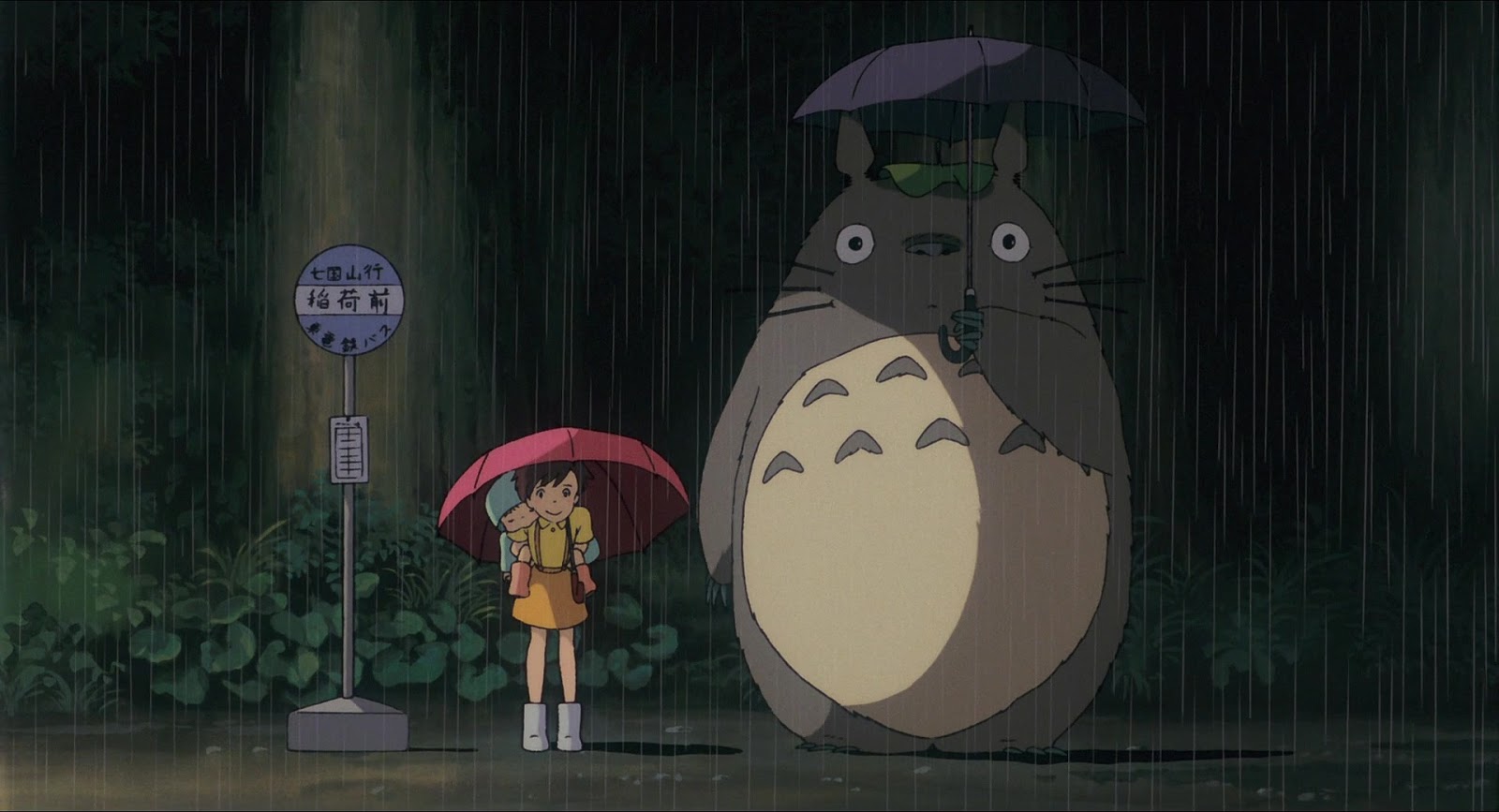
For comparison, here’s the image from My Neighbor Totoro on which Kim’s picture is based.

Totoro in the rainI really enjoyed Big Hero Six, the first animated Disney movie based on Marvel comic book characters. In fact, it’s one of my favorite films of the past five years. Its story hit all the right notes for me, and its visuals are jaw-dropping. Despite being much more Disney than it is Marvel, Big Hero Six avoids most of Disney’s clichés. There are no princesses; there is no romance; the villain is not pointlessly evil. Big Hero Six is a film about brotherly love, coping with loss, and the futility of revenge. It’s pretty deep stuff… for Disney, anyway.

Anyway, if you haven’t seen Big Hero Six, you should go watch it. And then, regardless of whether you’ve already seen it, you should watch My Neighbor Totoro. You’ll thank me later.