379. Writing Tips from Gravity Falls

Today’s post was written by JK Riki: rogue writer, animator, and cool dude. For more great stuff from JK, check out his websites on creativity and animation, and find him on Twitter!

If you’re a regular reader here at TMTF, you know Mr. Stück is a big fan of the animated show Gravity Falls. His thoughts on the series are short and sweet, encouraging you to watch without mincing words. In case you need an extra push, though, today we’re going to take a longer look at what makes Gravity Falls so compelling (and some tips you might take away from the show).

Gravity Falls1. Gravity Falls knows where it’s going.

In an interview, GF creator Alex Hirsch talked about the process of creating the show. He explained, “We have a storyline. There is a broad storyline that we’ve come up with—a beginning, middle, and end.”

In today’s television, that is a rarity. Studios and networks are so keen to drag things out for as long as possible that they begin a story with mystery and intrigue, and have no clue where it will end up. If they do know where it might go, they put obstacles in the way for the sole purpose of extending the shelf-life of the series. If it gets renewed for an additional season, up pop more meaningless obstacles. If it does not, hopefully there was warning of the cancellation early enough to produce a reasonable final episode (but often not).

There needs to be a lot of wiggle room in writing. You can’t be so strict that you don’t allow characters to take things in new directions on a whim. That said, if you don’t have a vague idea where you’re headed, it can lead to a mess farther down the road.

2. Gravity Falls isn’t afraid to change.

Possibly because the show has a planned beginning, middle, and end, it isn’t afraid to change. The Simpsons, bless its heart, reverts to status ­quo at the end of almost every episode. Some episodes even make note of that fact for humor purposes. It’s not alone, either. A vast majority of shows have this sort of reset, especially in animation.

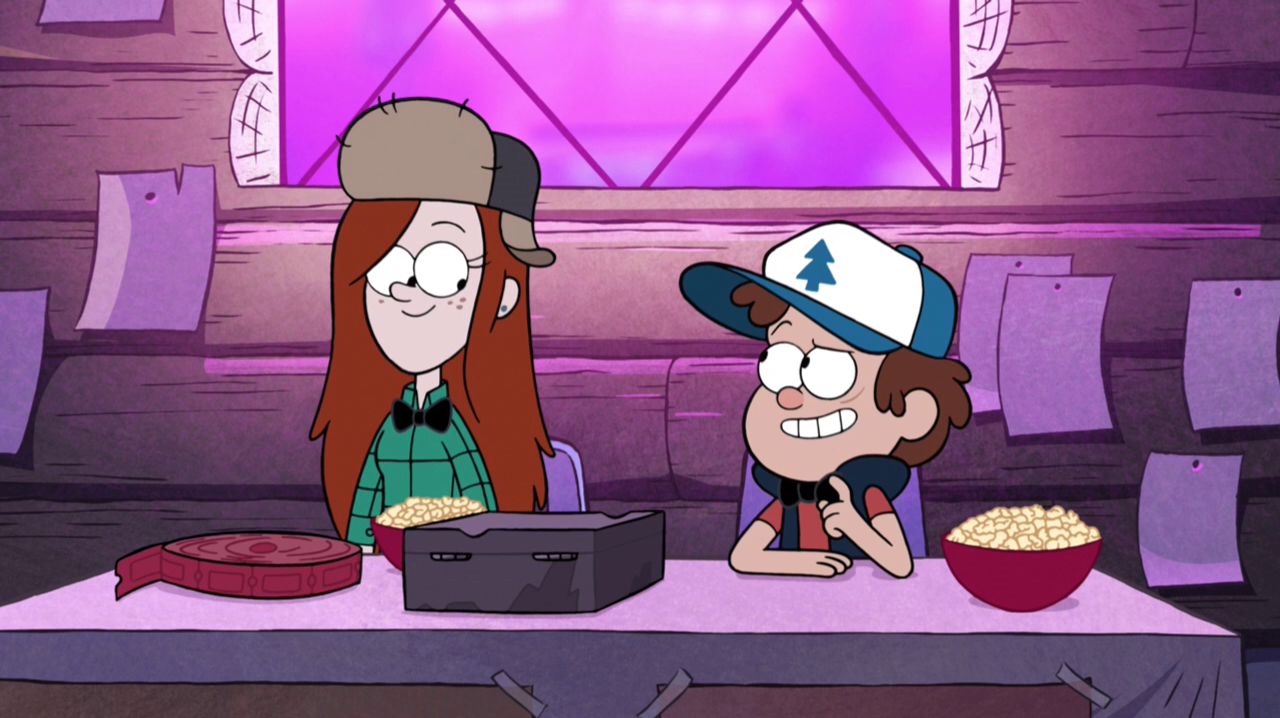
Gravity Falls bucks that trend by allowing progress to be made. Overarching mysteries unfold, and characters grow. One example of this (spoiler warning) is that the protagonist’s crush on a local girl actually plays out, instead of becoming a forced motif for the entire series. I was sad to see it go—I’m a sucker for secret crushes—but giving it closure improved the series.

Dipper and WendyIt’s important when writing a series to allow room for growth. It can be tricky, because some fans of early work will hate later stuff and pine (loudly) for “the good old days.” (This happens a lot in music with long-­running bands, too.) It’s still worth allowing for change to happen, because frankly that’s how life works, and you want there to be a foundation of truth in any creative work you do.

3. Gravity Falls is about characters.

In another interview, Mr. Hirsch mentioned, “Gravity Falls is a show about mysteries and magic, but first and foremost it’s a show about characters.”

The reason Gravity Falls is as charming as it is has very little to do with its marvelous story twists and hilarious jokes. It succeeds because the characters are true and compelling. They have soul and depth. They connect with each other, and the relationships feel solid and real.

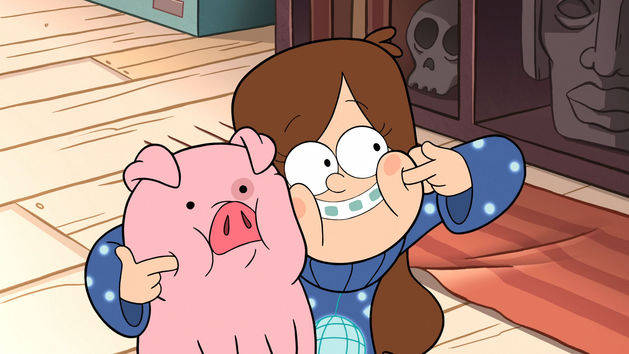
Mabel and WaddlesIf you have one take­away from Gravity Falls as a creator, let it be this: Living, breathing, compelling characters will take you farther than any other writing device.

An audience will watch a compelling character do his laundry, but will quickly grow bored with a flat, one-note character even if they are piloting space ships in a fascinating alternate dimension. Do not skimp on knowing your characters; invest time in them, and you will be handsomely rewarded.

376. Metal Gear Solid Absolutely Needs to Be a Movie

I realize that most of the people who read this blog don’t play video games, so this post will be ignored by nearly everyone in the universe. I accept this. You see, there are sometimes truths so obvious and self-evident that they must be stated—nay, shouted from the rooftops!—regardless of whether anyone listens.

I may be only a voice crying in the wilderness, unheard and unheeded, yet this must be known: Someone needs to make a Metal Gear Solid movie.

Metal Gear Solid movie (with TMTF logo)How can I describe the Metal Gear Solid series? If someone blended Tom Clancy’s Cold War thrillers, the James Bond movies, some Batman and X-Men comics, and all of Quentin Tarantino’s films, Metal Gear Solid would be the stylish, complex, campy, violent, and weird-as-all-heck result.

Released in the late nineties for the PlayStation, the first Metal Gear Solid follows Solid Snake as he infiltrates a nuclear weapons facility on a remote Alaskan island known as Shadow Moses. The facility has been seized by FOXHOUND: an elite unit of the US military that has gone rogue, taken two high-profile hostages, and acquired a weapon called Metal Gear REX. This superweapon, a bipedal tank armed with nuclear warheads, is now in the bloodstained hands of terrorists. Snake’s orders are to rescue the hostages and neutralize the Metal Gear before FOXHOUND can carry out its threats of nuclear reprisal.

Metal Gear REX artMetal Gear Solid could make a terrific movie. In my last post, I discussed three pitfalls in adapting video games into movies. First, many games lack a strong story; second, too many filmmakers make films that appeal only to people who play games; third, the cyclical structure of most video games can’t be compressed into movies.

Metal Gear Solid can easily dodge all of these problems. The game has a strong story, complete with a highly cinematic presentation. (The game’s director, Hideo Kojima, is a film aficionado whose tagline on Twitter reads: “70% of my body is made of movies.”) The game’s plot requires little backstory or gaming knowledge, and can be easily revised to require none.

Finally, while Metal Gear Solid only slightly follows the ubiquitous looping structure of video games. A few edits to the story would yield a focused narrative that lends itself beautifully to film.

What should be cut? The two hostages taken by FOXHOUND could be reduced to one. Several characters—FOXHOUND member Vulcan Raven and cyborg Gray Fox, among others—could be removed. The plot could be streamlined by leaving out the less interesting parts of Snake’s mission from the original game. One or two action scenes could be omitted, and the others rearranged for the sake of pacing. Finally, the villain’s angsty monologues (which are silly even in the game) could be extremely abridged.

What should be kept? I recommend abbreviating the story’s action-packed climax, keeping Snake’s epic battle against the Metal Gear and subsequent fistfight with the villain, but leaving out the vehicle chase. I also suggest keeping the character of Psycho Mantis, a member of FOXHOUND. This deranged psychic isn’t essential to the plot, yet remains one of the most iconic elements of the story. He is the kind of villain who peers into the flawed hero’s soul and pronounces judgment on him. In the hands of a good writer, Mr. Mantis could contribute a lot to the film’s mood and characterization.

Whatever else is kept for a film adaptation, Snake must, at some point, outsmart his enemies by hiding under a cardboard box.

In a perfect world, the Metal Gear Solid film would be written by David Hayter: the screenplay writer whose credits include X-Men and its sequel X2—and also, by glorious coincidence, the actor who voiced Solid Snake in the Metal Gear Solid games. Mr. Hayter actually wrote a treatment for a Metal Gear Solid movie, but it was rejected. Ours is truly a broken world.

My top picks to direct a Metal Gear Solid film are J.J. Abrams and Jon Favreau, but I would settle cheerfully for any competent action movie director. (The worst potential directors are Michael Bay and Uwe Boll; they should never direct a Metal Gear Solid movie… or any movie, honestly.) The obvious choice for the film’s composer is Harry Gregson-Williams, who wrote much of the score for the Metal Gear Solid games.

MGS artThe casting for Solid Snake is of utmost importance; I consider it no exaggeration to say a Metal Gear Solid movie would be made or broken by Snake. His actor must appear as tough, determined, and dangerous as any action hero. However, that action-movie persona must be accompanied by two things: first, a dry sense of humor; second, an attitude of philosophical resignation—a weary resignation to the fact that he is nothing more than a pawn in the hands of authorities no less corrupt than his enemies.

If Solid Snake is played as merely an action hero, the movie is lost. He is more than that, and also less. Appropriately to the title, he is a gear in the vast, impersonal machines of warfare and politics. He doesn’t make the rules or choose his morality. His mission is to do what he is told. Snake’s tired acceptance of his fate, along with an irrepressible vein of humor, are what make him such an interesting character.

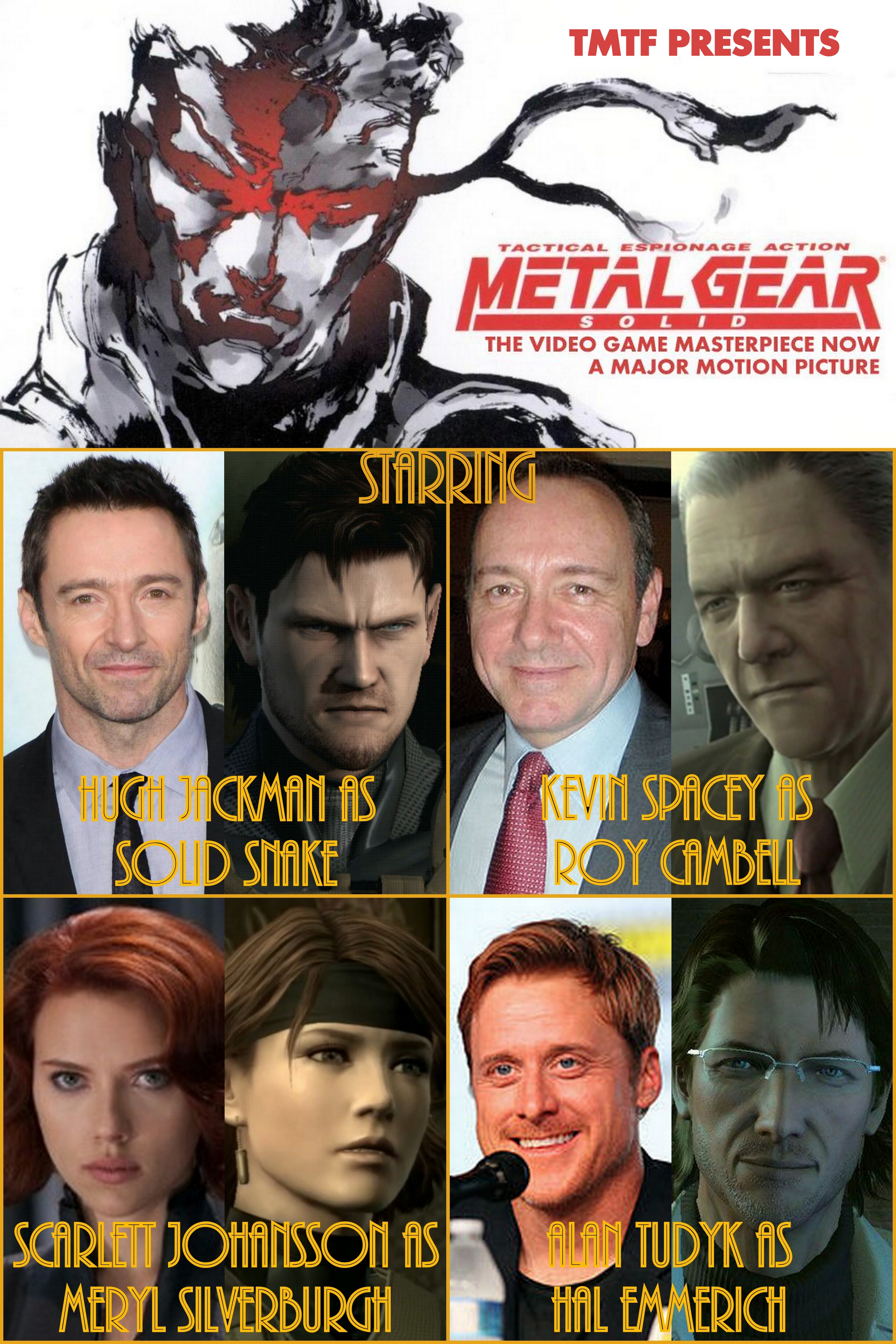
I think Hugh Jackman would make an excellent Solid Snake.

My other casting picks are Kevin Spacy as Roy Cambell, Snake’s commanding officer; Scarlett Johansson as Meryl Silverburgh, Cambell’s niece stationed on Shadow Moses; Alan Tudyk as Hal “Otacon” Emmerich, the nerdy designer of the Metal Gear weapon; Tom Hiddleston as Liquid Snake, the leader of FOXHOUND; Willem Dafoe as Psycho Mantis, a FOXHOUND member and homicidal psychic; Anne Hathaway as Sniper Wolf, another FOXHOUND member and expert sniper; and Jeff Bridges as Revolver Ocelot, Liquid Snake’s enigmatic ally. Besides being a film fanatic, Hideo Kojima has a staggering ego, so he could cameo as an enemy soldier or something.

There have been persistent rumors of a Metal Gear Solid movie for years, but nothing is certain. This is a movie that needs to be made. Please make it happen, Hollywood.

375. Why Video Game Movies Suck

Name three good video game movies.

Yeah, that’s what I thought.

You see, video game movies suck.

Granted, movies about games as a medium are sometimes good, like Disney’s superb Wreck-It Ralph. I love that movie.

Wreck-It Ralph coverMovies adapted from games, however, are another story: a sad, depressing story. I’ve seen a number of video game movies, and most of them are awful.

Why is this? There are many excellent films based on books; why not on video games? There are at least three reasons.

First, many games have either no story or only the barest semblance of one.

The plot of nearly every Super Mario Bros. game, for example, consists of a monster (Bowser) kidnapping a princess (Peach) and a brave man (Mario) setting out to rescue her. That’s it. This story (and minor variations thereupon) appears in game after game after game.

For a video game, such a simplistic story is perfectly fine—after all, the story is just an excuse to play the game. What matters in the Super Mario Bros. games is the what of the adventure; the why is a minor afterthought. It’s such fun to guide Mario through challenging levels that his reason for facing them in in the first place is hardly more than a footnote.

Unlike a game, which can be fun for its own sake, a film needs a story. The what is not enough; it also needs the why. Many video games don’t offer a strong enough why to be adapted into compelling movies.

The second reason video game movies often fail is that too many filmmakers, assuming their film has a guaranteed audience in fans of its source material, make it inaccessible to broader audiences: people who don’t play video games.

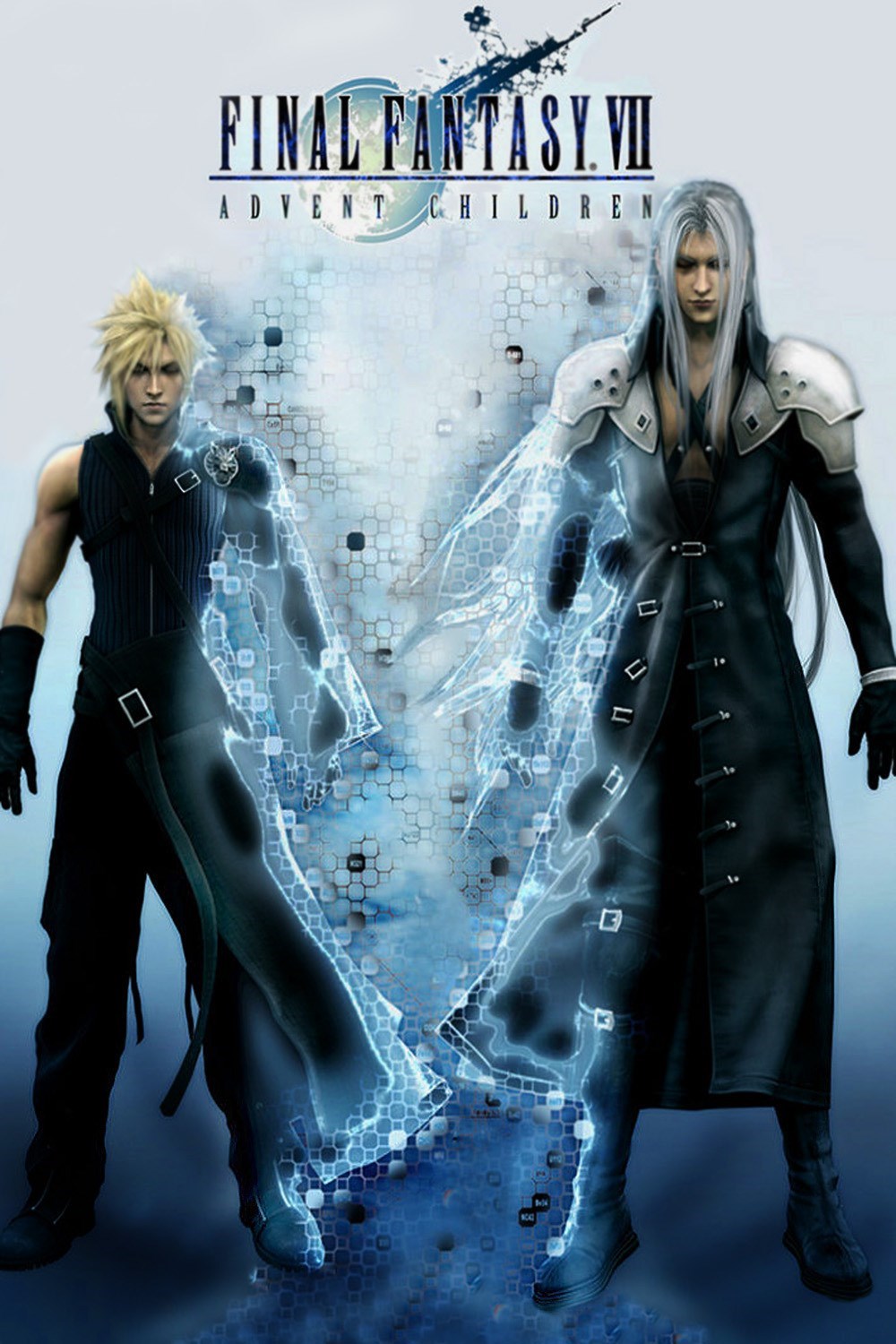
Final Fantasy VII - Advent ChildrenThe clearest example of this is my all-time favorite action movie, Final Fantasy VII: Advent Children. This computer-animated movie’s action scenes are ridiculous—this movie has a sword fight on motorcycles, guys. The animation looks great nearly a decade after the film’s release, the music is excellent, the characterization is compelling, and the ending is genuinely touching.

However, Advent Children has one damning flaw: it’s practically incomprehensible to anyone has hasn’t played an old PlayStation game called Final Fantasy VII. Even for those of us who have played the game, the movie can be a little tough to follow. This is a shame. In every other respect, Advent Children is an excellent film—but that excellence is locked away from most audiences.

The third reason games hardly ever make good movies is in the medium itself. Most video games are a repeating pattern of stages; many are nothing more than a series of levels. That’s hard to adapt to film.

Other games offer a more subtle take on this structure. Role-playing games, for example, generally feature a robust story, yet follow the same pattern: the player progresses from a town, to the open world, to a dungeon, and then back to a town, there to begin the cycle anew.

This approach works well for video games as a medium. It even works for television, in which a set of episodes allows for repeated rising and falling action. A film, however, is too short for this structure. The repeating pattern of a video game doesn’t fit in a movie. A game’s cyclical narrative can’t be compressed into a two-hour film.

Every now and then, however, there comes a game whose narrative isn’t a repeating cycle, but a focused story that could be brilliantly adapted to film. I can think of at least one video game movie that absolutely needs to be made… but I’ll save that for next time.

Are there any good video game movies?

Vide game movies that don't suckOf those I’ve seen, I can think of a few good ones. Professor Layton and the Eternal Diva, an animated film spin-off of the Professor Layton games, is accessible and charming, though it drags a bit. The aforementioned Final Fantasy VII: Advent Children boasts phenomenal action, epic music, and stunning visuals for viewers who don’t mind having no idea what the heck is going on. For those who like foreign films, Takashi Miike’s live-action Ace Attorney is really good, despite its absurd hairstyles.

Um, that’s it. Flipping heck, someone needs to make a good video game movie.

Question: Have you seen any video game movie that you would recommend? Let us know in the comments!

371. Ladies in Fantasy Fiction Need Better Armor

I’m no expert, but I’ve noticed a difference between armor for men and women in fantasy fiction: men wear more of it.

I’m no feminist, but I do believe in treating people with decency and respect. I’m also fairly pragmatic. Most female armor in fantasy fiction isn’t respectful or decent, and pragmatic it most certainly is not.

Here, for example, are male and female warriors from one of the Dragon Quest video games. In the game, they have exactly the same role on the battlefield. Is unreasonable to expect them to wear roughly the same armor?

Amor differencesIn the picture above, the male warrior gets a padded tunic over mail hauberk, along with leather gauntlets, a sturdy helm, a kite shield, and articulated armor plating for his legs. The female warrior, by contrast, gets a tiny mail blouse, half a mail skirt, and random bits of plate armor on her arms and legs.

There are several problems here.

The most glaring issue is sexism, of course. It just ain’t fair for male characters to be fully armored while female characters wear swimsuits. (I’ve touched upon this before.) It exemplifies the concept known as the male gaze: the way visual arts often assume the viewer is male. The male gaze ogles female characters or puts them in revealing clothes, like the chain mail swimsuit above. It’s insulting to women.

(For those ready with the “fantasy fiction is not supposed to be realistic” arguments, I believe at least a small amount of realism makes fiction more believable. If a woman wears dangerously revealing armor, there had better be a good reason for it! For those ready with the “you should stop taking everything so seriously” arguments, I don’t believe fiction is a valid excuse for sexism or double standards.)

This is not, however, a blog post about sexism. Nah, today’s post provides a more pragmatic rationale for giving female characters better armor: the kinds of armor worn by most female characters in fantasy fiction would get them killed.

Let’s take armor styles one at a time.

The chain mail bikini

Chain mail bikiniIt was challenging to find a picture illustrating this style of armor that wasn’t NSFTMTF. (For those who don’t know, NSFTMTF stands for Not Safe For Typewriter Monkey Task Force: a designation covering vulgar language, extreme violence, sexually explicit material, and any media related to Kristen Stewart or Justin Beiber.) Even the picture above pushes the boundaries of good taste.

The chain mail bikini describes any style of armor that (sometimes barely) covers only the naughty bits of a lady’s anatomy. I need hardly describe the practical difficulties of such armor. It exposes vital organs such as the stomach and lungs, providing practically no protection whatsoever. More often than not, what little armor is worn looks like it could fall off at any moment. High heels, which are often worn with chain mail bikinis, don’t allow for quick movement or proper balance.

Are there benefits to chain mail bikinis? I’m really reaching here, but I suppose they could offer good mobility, and might prove distracting to enemies.

Nah. Who am I kidding? Chain mail bikinis are completely useless.

The boob plate

Boob plate armorAs the name suggests, the boob plate is a breastplate with breasts.

Opinions are divided on the usefulness of the boob plate, but the most logical view is that it would probably kill you.

You see, armor doesn’t merely shield the body from sharp or spiky things. It also deflects the force of blows from weapons. A blow from, say, a club will do far less damage if it glances off a breastplate than if it strikes it squarely. In other words, armor is meant to deflect blows, not to absorb them.

The problem with boob plates is that they wouldn’t necessarily deflect blows away from the chest. They could also deflect them inward, funneling them into the cleavage between the breasts—and right into the wearer’s breastbone. Even if a weapon didn’t penetrate the armor, it could fracture the wearer’s sternum. Flipping heck, even falling forward could slam the ridge of metal separating the breasts into the breastbone, breaking it.

As it happens, people who wore armor usually wore padding beneath it, so a woman’s chest would probably be wrapped or padded and wouldn’t require a form-fitting breastplate in the first place.

The battle dress

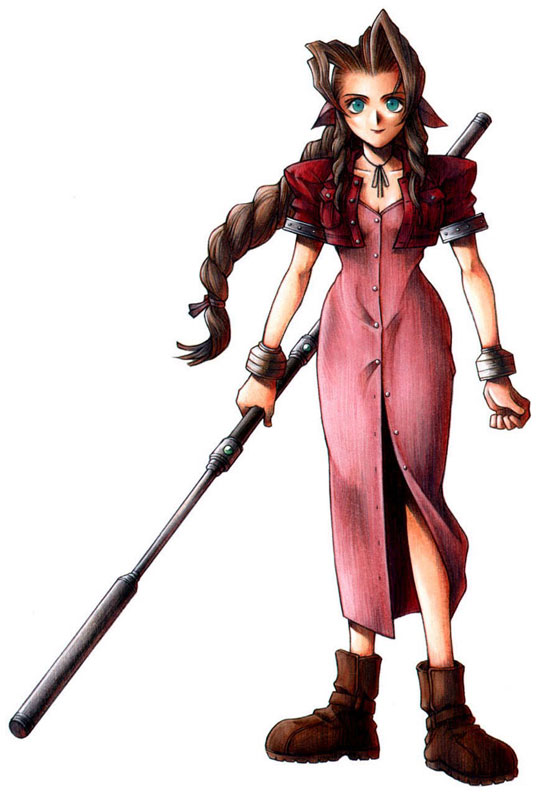
Aerith

A battle dress is a dress worn into battle. Like the boob plate, it’s fairly self-explanatory.

I applaud the battle dress for being less blatantly sexist than other styles of female armor… but it still gets low marks for practicality. Long skirts and dresses have the same problem as capes in The Incredibles: they get caught on stuff. A woman can hardly run, ride a horse, or vault over bushes in a dress. Sooner or later, it will snag on something.

Besides, dresses offer no protection… unless they have chain mail or plate armor sewn into them. Then, unless the armored sections are kept close to the body, such weighted dresses are even more likely to snag on stuff. Besides, any heavy part of the dress left hanging, such as a skirt or long sleeve, impedes movement by swinging awkwardly.

The sensible armor

Sensible lady's amorThe armor in the picture above isn’t perfectly practical—it should lose the flowing skirt, and the breastplate really ought to cover more of the abdomen—but it isn’t bad. (I would cut off the braid and add a helmet, but what do I know?) The shoulders, chest, and legs are protected, leaving the arms free and allowing bend at the waist for wielding so large an axe. The armor also looks awesome as all heck.

Women can wear more or less the same styles of armor as men, with minor adjustments for shoulder width. Even adding a slight outward bulge for breasts is fine, provided it doesn’t include the sternum-shattering cleavage mentioned above; a gentle convex curve can deflect blows as well as anything. Designing sensible female armor doesn’t have to be that difficult.

Is impractical lady armor ever appropriate in fiction? I suppose it has its place, such as in comedic tales and parodies of fantasy fiction. In more serious stories, styles of lady armor which would be useless in battle could be used for ceremonial purposes: parades, coronations, etc.

In the end, however, I think practical armor is definitely the best way to go.

369. Review Roundup: Fairy Tale Edition

Once upon a time, in the faraway land of Indiana, Adam the blogger enjoyed a number of whimsical stories and contemporary fairy tales. Here are his impressions of three animated films, a video game, and an anime: Inside OutBraveBrother Bear, Ni No Kuni, and Monthly Girls’ Nozaki-kun.

These are the stories of a plucky princess, an Inuit tribesman, a brave little boy, a Japanese manga artist, and the personifications of a girl’s emotions. Do they live happily ever after?

Let’s find out.

Inside Out
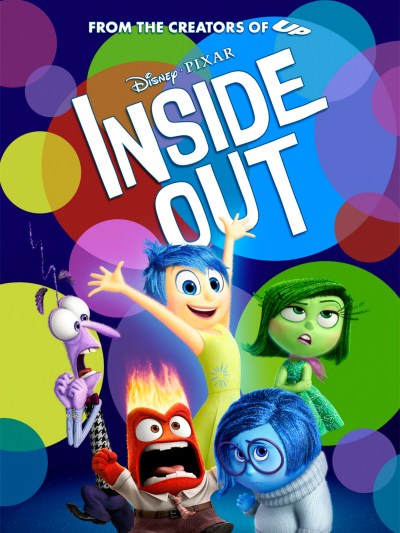
Inside Out

Inside Out brought me closer to weeping openly in a movie theater than any other film has done. (Fortunately, I have a heart of stone, sparing myself and my younger brother the embarrassment of annoying our fellow theatergoers.) This is a brilliant movie, and I have literally nothing bad to say about it.

Pixar’s Inside Out pictures the human mind as a control room operated by five engineers, each representing an emotion: Joy, Sadness, Anger, Fear, and Disgust. In the mind of Riley, a girl from Minnesota, her emotions struggle to keep her happy as she moves with her parents to California. When an accident sends Joy and Sadness to the farthest reaches of Riley’s mind, these unlikely partners must make it back to the control center before Riley breaks down.

This film boasts the usual Pixar polish, with top-notch animation, writing, and performances. Beyond that, Inside Out is the first Pixar movie in years to feature a truly original concept. (Of the past four Pixar films, two were sequels, one was a prequel, and one had the style of a traditional fairy tale—more on that last one in just a bit.) The movie’s concept of the mind is creative, clever, and—importantly—consistent. The way the mind works in Inside Out isn’t hard to understand, and the film does a fine job of sticking to it.

As I hinted above, this is a film with emotional punch. Pixar has a gift for depicting emotion with heartfelt sincerity and simplicity: Carl’s irritable despondency in Up, the toys’ sense of loss in Toy Story 3, Mike’s resignation to his limitations in Monsters UniversityInside Out is quite literally a film about emotions, so you can bet it hits the viewer—at any rate, this viewer—with feels.

This is pretty much how I felt at the end of the film.

This is pretty much how I felt at the end of the film.

Inside Out is a fantastic film. Somewhere deep inside my mind, my sense of Joy is fiddling with whatever knobs and buttons affect my actions, willing me to recommend this film. Watch it. Your own sense of Joy will thank you.

Brave
Brave

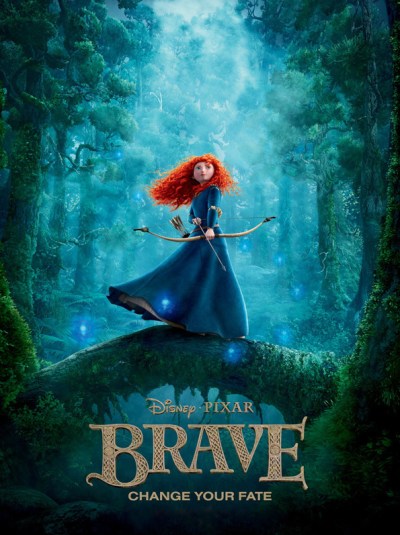
Here’s another Pixar classic, this time telling the age-old story of a princess who falls in love with a prince and—what’s that? She doesn’t fall in love with a prince? Well, that’s different.

Brave is an original fairy tale. Set in Scotland, it tells the tale of a princess named Merida, who decides she doesn’t want to let her parents marry her off to any of the local chieftains’ sons. Merida tries to change her fate… and accidentally transforms her mother into a bear. Mother and daughter must shelve their pride, settle their differences, and somehow make things right.

The film’s independent, self-reliant heroine is a refreshing change of pace from the mild princesses of other fairy-tale movies, and I appreciate the way the Merida and her mother learn to understand, respect, and trust each other. Merida’s family is a colorful bunch. Even the chieftains and their sons, who could easily have been throwaway characters, have some personality.

As a Pixar movie, Brave doesn’t feel particularly, well, brave. It’s a fairy tale. Even with its feminist undertones and emphasis on family relationships, it treads a lot of familiar ground. It’s a fine film nevertheless, and I appreciate it as a deeper alternative to the princess-flavored romances Disney loves so much.

By the way, does the Scottish setting of Brave give anyone else flashbacks to How to Train Your Dragon? No? I guess it’s just me, then.

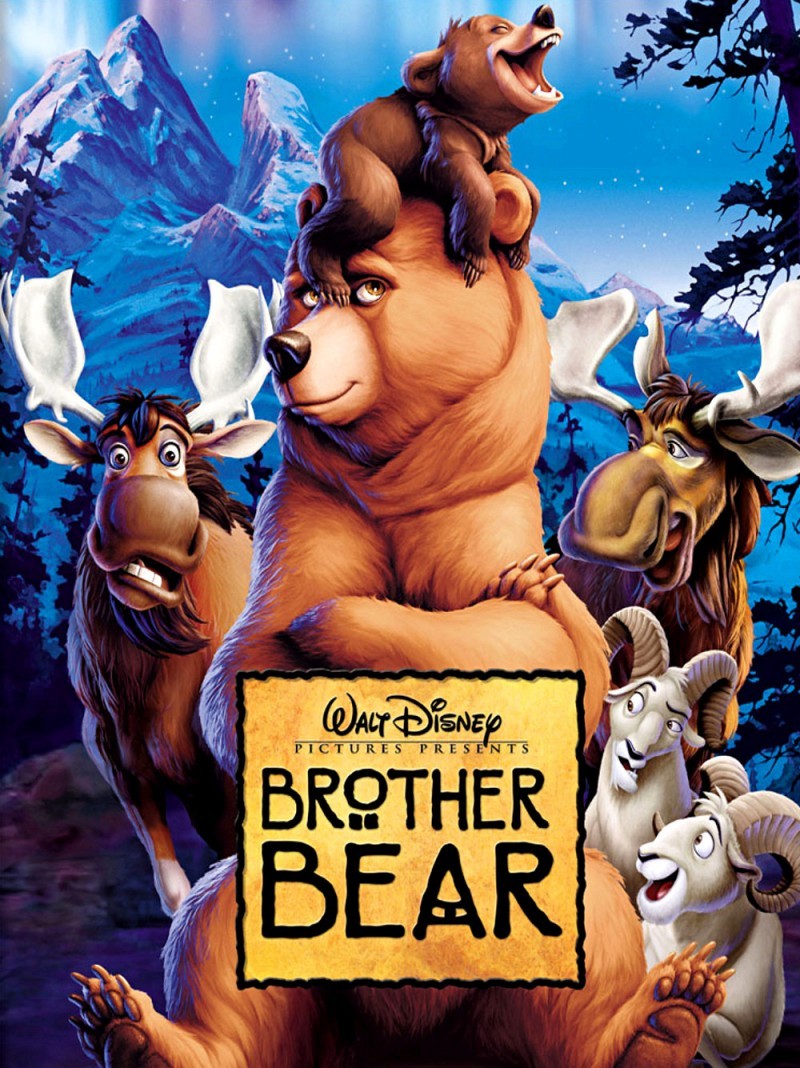
Brother Bear
Brother Bear

Here’s another animated movie about people turning into bears. Why do people keep turning into bears? I just can’t bear it. (I’m so, so sorry.)

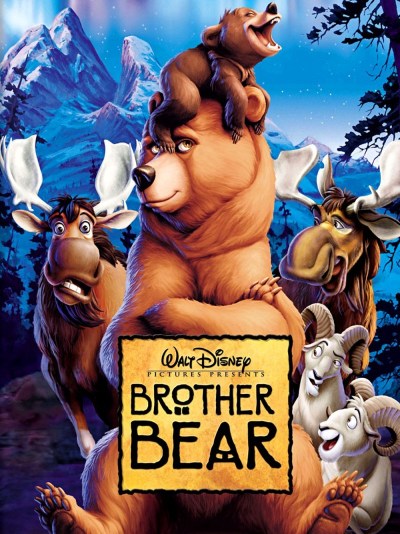
Brother Bear is a Disney animated film from the early two thousands: that nebulous stretch of Disney history whose movies nobody remembers. In the film, an Inuit tribesman named Kenai seeks revenge on a bear that killed a loved one, and is turned into a bear for his trouble. He must go on a quest, and learn the power of love, and—y’know, forget it. If you’ve ever seen a Disney film, you know where this is going.

This is not a bad movie. The Canadian wilderness is a great setting, and Inuit culture is largely unexplored in pop fiction. The acting, animation, and story were all perfectly adequate. I just couldn’t help feeling that this film didn’t really need to be made. Brother Bear is an uninspired blend of other Disney movies. Its plot borrows heavily from The Emperor’s New Groove: a man turned into an animal finds a buddy and goes on a trip to regain his (literal and figurative) humanity. The film’s music channels the soundtrack of Tarzan, down to a song from Phil Collins. It’s all been done before.

Brother Bear does have its moments. A couple of moose with heavy Canadian accents wander in and out of the movie, providing comic relief and stealing every scene in which they appear. The movie lacks a traditional villain, which is a refreshing change from Disney’s usual black-and-white morality.

In the end, however, Brother Bear is nothing special. I recommend The Emperor’s New Groove instead: pretty much the same story, but much funnier.

Ni No Kuni: Wrath of the White Witch

Ni No Kuni cover

Flipping heck, this game is amazing. I’ve already discussed the excellence of Ni No Kuni, so I’ll try not to ramble!

Ni No Kuni is a beautiful fairy tale. (It also happens to be a JRPG for the PlayStation 3.) It tells the story of Oliver, a little boy who sets out on a quest to save his mum. Accompanied by Drippy, the “Lord High Lord of the Fairies,” Oliver must mend broken hearts, defeat an evil jinn, and rescue a parallel world.

That world is one of the most charming and beautiful places I’ve seen in a video game. The look of Ni No Kuni was based on the work of the legendary Studio Ghibli, which handled the game’s animated cutscenes. This a lovely game. Apart from the cutscenes, which are nothing less than I expected of the Oscar-winning animation studio, the game itself is gorgeous.

I mean, look at it. Just look at it.

This is a gameplay screenshot, not an animated cutscene. This is what the game looks like. Ain't it pretty?

This is a gameplay screenshot. This is what the game looks like, more or less. Ain’t it pretty?

Ni No Kuni is visually appealing, but its excellence doesn’t stop there. The music, composed by renowned film composer Joe Hisaishi and performed by a live orchestra, is fantastic. Most importantly, the game is flipping fun to play.

The gameplay blends the fighting and adventuring of Final Fantasy games and the creature-catching of Pokémon. Oliver and his companions command familiars, adorable monsters that handle most of the fighting. Like Pokémon, familiars can be caught, trained, and metamorphosed into stronger creatures. Outside of battle, exploration is fun and sidequests abound.

Ni No Kuni even includes the full text of an original book, The Wizard’s Companion, which contains maps, spells, descriptions of familiars, old-fashioned illustrations, runes to decipher, and fairy tales. Yes, this fairy tale contains fairy tales of its own, and they’re delightful. In fact, The Wizard’s Companion is so good that I wish I owned a hard copy. As Oliver travels, he gathers the book’s scattered pages, unlocking more reading material.

Alas, Ni No Kuni is not quite perfect. It’s hard to read The Wizard’s Companion on a television screen, and flipping through its pages is a pain.

By far the biggest flaw of Ni No Kuni is its ending. Without spoiling anything, I must admit that it feels tacked on. The game reaches a satisfying conclusion, with Oliver reaching his goal and finishing his character arc… and then the game goes on for another four to six hours, limping doggedly to an anticlimax. Although the game’s final chapter answers some lingering questions, a little rewriting would have tied up those loose ends sooner, giving the game a stronger finish.

Despite its weak ending, this game is one of the finest I’ve ever played. RPGs aren’t for everyone, but for anyone with the patience, Ni No Kuni is a gem.

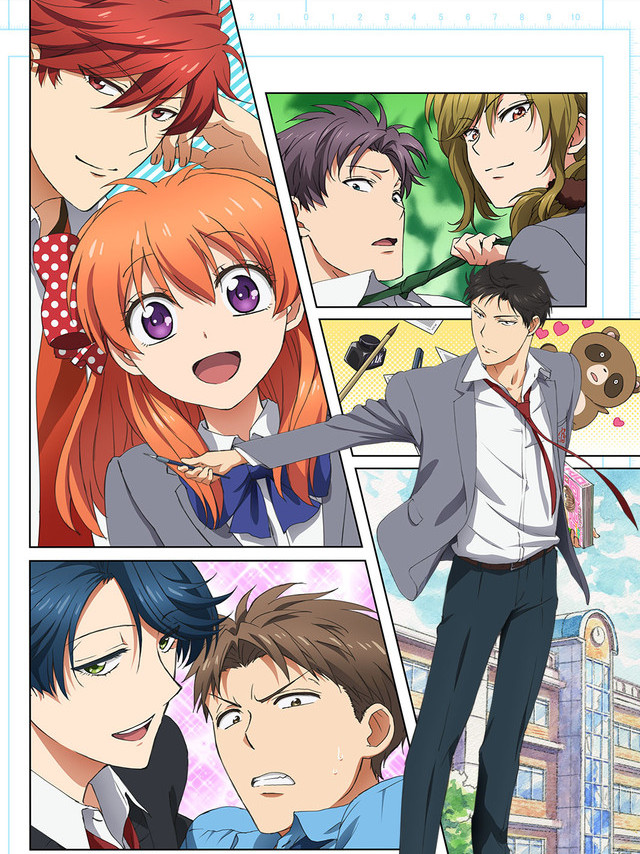
Monthly Girls’ Nozaki-kun

Monthly Girls' Nozaki-kun

I can’t decide whether Monthly Girls’ Nozaki-kun is a heartwarming parody or a self-aware romantic comedy. Either way, it’s brilliant.

In Japan, there is a genre of manga (comics) called shojo. This genre is aimed at teenage girls, generally focusing on romance and emotional characters. Monthly Girls’ Nozaki-kun is the story of a high school student named Sakura. When she tries to confess romantic feelings for Nozaki, one of her classmates, he mistakes her for a fan of his work. You see, Nozaki—an analytical, unromantic wet blanket—is secretly the writer and artist behind a popular shojo manga series, Let’s Fall in Love. When Nozaki invites Sakura to be his assistant, she agrees, hoping to get closer to him.

This twelve-episode series is a hilarious deconstruction of romantic comedies. The eponymous Nozaki-kun is intrigued by romance, but only from an academic point of view. For example, he loves St. Valentine’s Day, but only because observing romantic couples gives him ideas for his manga series. The thought of actually being romantic never crosses his mind. This makes for some delightful moments when Sakura is convinced he is finally falling in love with her… only to realize he’s testing out ideas for his manga.

For example, Nozaki realizes it’s romantic for a man and woman to share a bicycle, but he doesn’t understand why. He tests the scenario repeatedly with Sakura, eventually acquiring a tandem bike and riding down city streets with Sakura reluctantly in tow. Once he figures out the most romantic method for sharing a bike, he reasons, he can use it in his story for optimal effect.
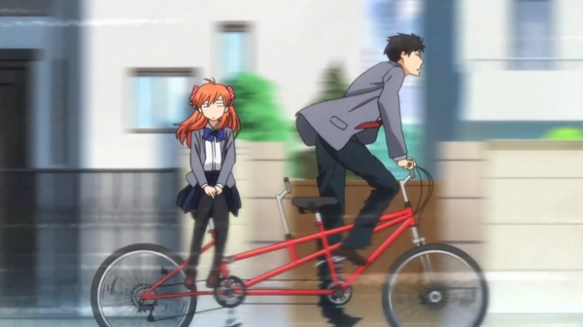
Romantic, I guess

This is romantic, right? Right?!

As Sakura becomes acquainted with Nozaki and his other assistants, she realizes how much of his manga is based on people she knows. For example, the heroine of Let’s Fall in Love is based on Mikoshiba, a flirtatious male friend of Nozaki’s who is secretly very insecure.

Monthly Girls’ Nozaki-kun deconstructs rom-com clichés, yet the series is never bitter or mean-spirited. I was also pleasantly surprised by the show’s family-friendly tone. Japanese anime is notorious for its inappropriate content. As I began this anime about high school romance, I resigned myself to the saucy innuendos and panty shots that plague other series. Monthly Girls’ Nozaki-kun rises above cheap lewdness, keeping things at a PG level. I found the show’s innocence added to its charm, which is already considerable.

Like many anime, this one offers fascinating glimpses into Japanese culture. I was particularly interested by the creative process of writing and drawing manga, which is gradually shown in the series as Nozaki enlists more assistants.

I highly recommend Monthly Girls’ Nozaki-kun to anyone who likes anime or romantic comedies. I’m not a particular fan of either, yet I really enjoyed it.

What books, films, shows, or video games have you enjoyed lately? Let us know in the comments!
367. Notes from the Road

Well, I’m back.

My journey to Wisconsin was refreshing, wonderful, exhilarating, highly caffeinated, occasionally uncomfortable, and a smashing success. Here, in no particular order, are some of my thoughts from the trip.

The pastor who invited me to speak at his church is a really cool dude.

Rev Kev, the pastor who invited me to Wisconsin, is a tough-looking dude with epic tattoos, pierced ears, manly stubble, and massive biceps. He could probably have snapped my spine with his bare hands.

Adam and Rev KevFortunately, the good Reverend turned out to be a true gentleman and total geek. He and his family—which included a dog, three cats, and a colorful assortment of friends and honorary family members—were welcoming and kind. I was treated not as a guest, but as a friend.

Rev Kev has an amazing story. One of the highlights of my trip was sitting in his dining room, drinking coffee and listening to his testimony. His faith and story inspire me.

In other news, Rev Kev has a wonderful church office. Surrounded by Star Wars and comic book posters, a large plastic Hulk stands on his desk, wielding an Adam West Batman action figure like a club. ’Nuff said.

My only concern about the good Reverend is that he might be a Sith Lord. No doctrine in Christianity states a person can’t be a Sith and a pastor, but I still consider it cause for concern.

Sith pastor

I drank a lot of coffee.

For all my jokes about coffee, I do really love the stuff. In two days of traveling, I drank roughly eight cups of brewed coffee, two bottled frappuccinos, a latte, and a double shot of espresso. I also drank a masala chai tea latte, because variety is important.

I ate the best burger I’ve ever eaten.

My humble road trip was transformed into a glorious pilgrimage by a quick stop at a tiny burger shack called Wedl’s. This burger vendor serves such good food that it was featured on the Travel Channel. Wedl’s grills its burgers on a skillet that has been in use for nearly a century.

Wedl'sA drunk driver once totaled Wedl’s and broke its skillet. Fortunately for all of humankind, the shattered skillet was repaired. Just as the broken shards of Narsil were reforged into Andúril in The Lord of the Rings, so Wedl’s skillet was restored to its divinely-appointed purpose of grilling tasty burgers.

Rev Kev and I discussed the legend of Wedl’s skillet, weaving a story of how the skillet’s greasy shards were held by a weeping maiden in a lonely meadow, only for a kingly elf to ride up on a stallion and pledge to restore it. He worked in secret, reforging the skill on a magical anvil, his furnaces blazing hotter than ten thousand suns—and it was done. Wedl’s skillet was resurrected, and its noble work continues to this day.

When I bit into my Wedl’s burger, my reaction was pretty much the same as Samuel L. Jackson’s in Pulp Fiction, but roughly seven hundred percent more excited.

Wisconsin has beautiful scenery.

On my way home, I following winding roads past green hills, lovely woods, and beautiful streams. It was fantastic. Indiana occasionally has nice scenery, but approximately ninety-six percent of the state is covered by cornfields. What I saw of southern Wisconsin was breathtaking.

I don’t know how I lived without a GPS.

As usual, I seem to be a decade or two behind everyone else in my generation when it comes to technology. I finally acquired a GPS, and it is amazing. It made traveling so, so much easier. My GPS, GLaDOS, is a gift of God.

Hell has a tenth circle, and its name is Chicago.

As much as I appreciate my GPS, I must quote its namesake, GLaDOS from the Portal games: “Remember when you tried to kill me twice? Oh, how we laughed and laughed, except I wasn’t laughing.” My GPS made two attempts to murder me by taking me through Chicago going and coming back.

I have an embarrassing fear of city driving. (My decision to buy a GPS in the first place was prompted by a stressful visit to Fort Wayne.) For all my travels, I haven’t done much driving in big cities, and I have long made a point of staying away from Chicago. Unfortunately, my GPS took me through Chicago twice.

The Chicago freeways were vast rivers of faded asphalt, channeling streams of vehicles over, under, and through an arid wasteland of concrete, weeds, and rusting metal. The summer sun blazed overhead. (My car lacks air conditioning.) The traffic was predictably slow. My trips through Chicago were all sweat, noise, fumes, desperate prayers, and hopes for the sweet release only death could bring.

This brings me to my next point.

It did me good to work through some of my anxieties.

Besides my fear of city driving, I’m stressed out by traveling alone, public speaking, and prolonged social commitments. My trip to Wisconsin consisted of driving hundreds of miles by myself, hanging out with new people for hours on end, and speaking in front of a church congregation.

My anxieties are silly and irrational, but also very real. I was forced to confront them, and I lived to tell the tale. As George Orwell wrote, “You have talked so often of going to the dogs—and well, here are the dogs, and you have reached them, and you can stand it. It takes off a lot of anxiety.” I survived my anxieties, and that’s encouraging.

It was nice to get away from my typewriter monkeys.

For two glorious days, I didn’t see a single banana peel, hear a single explosion, or smell a single whiff of burning apartment. It was nice.

Now that the trip to Wisconsin is done, what’s next? I wish I knew. I suppose I’ll resume my quiet, caffeinated, day-to-day life, and daydream about my next road trip.

365. Collectible Card Games

A few days ago, as I chatted with a dear friend from Ecuador, our conversation turned to his brave but ill-fated attempts to teach me to play a collectible card game. Years ago in Quito, my friend and I sat down with colorful packs of Magic: The Gathering cards. He wanted to teach me to play; I wanted to learn to play. It seemed simple enough.

However, there were two things neither of us considered. That first is that I am easily distracted. The second is that I have a deplorable memory: especially in the case of rules and systems. As my friend, whom I’ll call Socrates, explained the rules of the game, I flipped through his cards, looking at the pretty pictures and reading incomprehensible bits and pieces of game instructions.

Magic The Gathering cards

The rules for most collectible card games are only slightly less comprehensible than Finnegans Wake. (I’m sorry; I can’t help making lit jokes occasionally.) The pictures are nice, though!

When Socrates and I tried playing a round of Magic: The Gathering, I asked him an average of thirty-seven questions per turn. We gave up in the end, opting for Mario Kart or Super Smash Bros. or some other game that wasn’t so far beyond my feeble intellect.

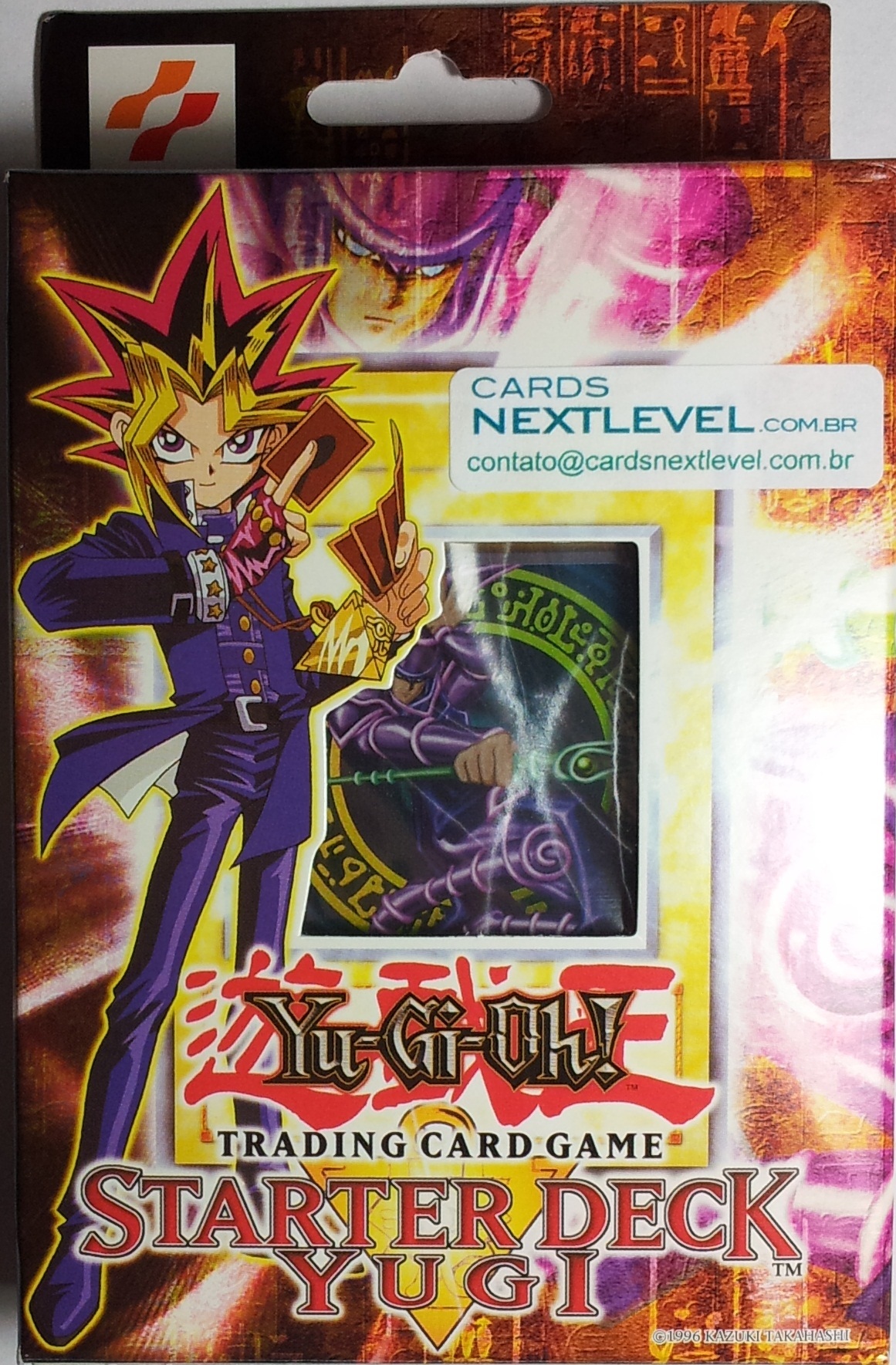
For years, I could hardly sit down at a table without having to brush away collectible cards. My friends in middle and high school collected cards from all kinds of games: Magic: The Gathering, which featured fantasy elements in the vein of Dungeons & DragonsPokémon, starring Nintendo’s cutesy Pocket Monsters; World of Warcraft, which had leaped from computers to tabletops; and Yu-Gi-Oh!, which featured the most egregious anime hair I have ever seen.

Yu-Gi-Oh! hair

Yu-Gi-Oh my gosh that hair is horrible.

I never got into collectible card games, except for a brief fascination with Pokémon cards as a kid. I went through what I can only call a Pokémon phase in fifth grade, in which I collected dozens and dozens of cards. I never learned the rules of the game, but that didn’t stop me from playing it with friends. Fortunately, my friends were as clueless as I, and our card games turned into anarchic free-for-alls with rules made up as we needed them. (It was sort of like Calvinball.)

I’m not sure what happened to all of my Pokémon cards. They probably slipped away to whatever inscrutable corner of the world swallowed up Amelia Earhart.

Pokemon cards

To this day, I have not forgotten the value of a holographic Charizard.

Since I finished high school, collectible cards seem to have vanished from my life, though news occasionally reaches me. I hear there’s a new My Little Pony: Friendship Is Magic collectible card game making the rounds, and Magic: The Gathering seems to be doing well. World of Warcraft cards have been replaced by an online card game. The anime hair in Yu-Gi-Oh! is probably just as bad as it was eight years ago, but I’m too disinterested to find out.

I enjoy looking at them, but I don’t plan to buy collectible cards any time soon. My money must go to necessities like rent, gas, coffee, and food. Besides, my life is complicated enough without the unintelligible rules and instructions for card games! If I tried to learn all the rules to a new game, I would probably lose whatever sanity I have left, and end up eating grass like old Nebuchadnezzar. No card is worth that!

Well… a Charizard might be; I suppose it depends on whether it’s holographic.

361. Fans, Geeks, and Conventions: A Momentary Study

My studies of geeks have taken me to some strange places: fan websites, video game stores, and even Hot Topic. (When I walked into a Hot Topic store for the first time last month, I turned to my brother and whispered, “I have found my people!”) One of the strangest places my researches have taken me was a fan convention.

Geeks, bless them, can be social creatures. Despite the stereotype of lonely, basement-dwelling troglodytes, many geeks enjoy social events. These often involve geeky media: trips to the cinema, meetups for role-playing or board games, card game tournaments, and so on. The largest social events for geeks are called conventions, often abbreviated to cons.

A con is an organized gathering of fans, generally devoted to a particular franchise or medium. Common features of cons include appearances from special guests, autograph signings, live performances, vendors, previews of upcoming media, announcements, contests, cosplay, and waiting endlessly in line. (You may never have heard of cosplay, but that’s another study for another time.)

This is a typical con, minus the suffocating crowds of geeks.

This is a typical con, minus the suffocating crowds of geeks.

Probably the most famous convention is the San Diego Comic-Con. Although SDCC is named for comics, this yearly event covers films, video games, books, manga, anime, toys, and other media. E3 (Electronic Entertainment Expo) is technically an annual trade fair for the video game industry, yet boasts many features of cons, such as previews, announcements, cosplay, and live presentations. Both SDCC and E3 happen in the next couple of months, and I look forward to their announcements and media trailers.

I have attended only one convention. For science.

Nah, I actually went to a con a few years back to pick up voice actors’ autographs for my younger brother’s birthday. My experiences were mixed. The venue, a hotel, was nice, but the lines were endless. They wound serpent-like through the hotel, twisting, bending, and occasionally intersecting. When lines became too long to fit the venue, new lines formed to get in the old ones. It was ridiculous.

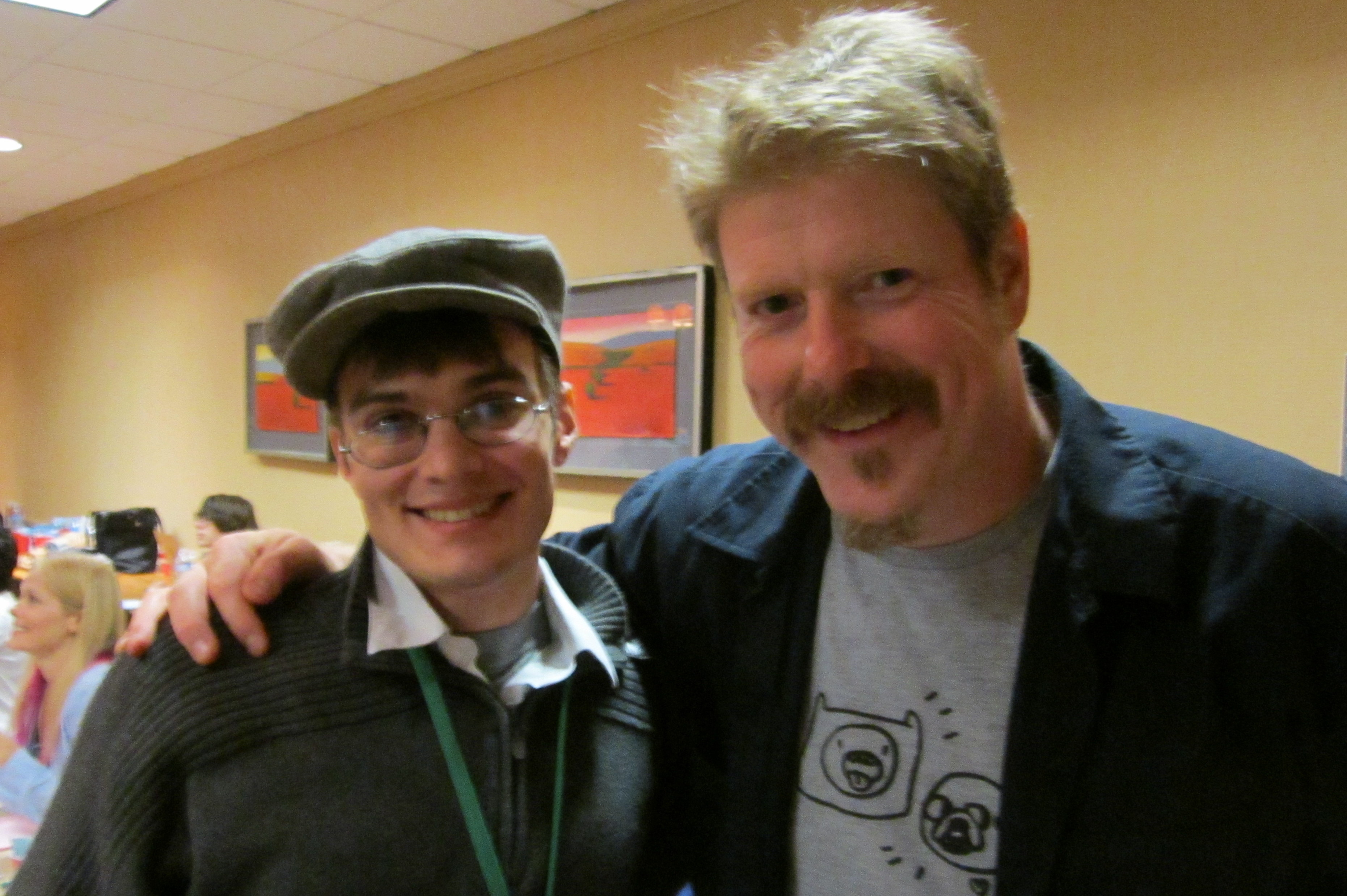
Armed with Radiant Historia, a book, and some apples, I endured the lines and collected my brother’s autographs. I also got to meet voice actors like John DiMaggio and Grey DeLisle, albeit very briefly. It was neat.

"Where have you gone, John DiMaggio? Our nation turns its lonely eyes to you."

Mr. DiMaggio was a very nice man, and DAT STACHE.

My intentions in attending a con may not have been strictly academic, but I learned a lot by observing geeks in their natural habitat. Those I met were pleasant, cheerful, and friendly, if occasionally a little odd. Contrary to stereotypes, there was not a pale, acne-covered misfit in sight. There were guys with guitars, and gals wearing silly costumes, and people exhausted from standing in lines for eighty-nine consecutive hours to meet Tara Strong.

As I knew from the start, geeks were nice, ordinary people who happened to be fans of stuff. Cons give geeks the opportunity to be geeky together, and I think that’s pretty neat.

352. Thoughts on Marvel’s Daredevil

If you read the tagline for this blog, you may notice that television is conspicuously absent. Typewriter Monkey Task Force is a blog about “faith, writing, video games, literature, life, the universe, and everything.” When I discuss television, it falls into the same “and everything” category as muffins, snow, and fist bumps.

Update: Well, I added TV and movies to the tagline, and also as a category. I suppose it was inevitable.

This blog has a number of posts about Doctor Who and kids’ cartoons, but hardly any for more serious shows. I seldom write about grown-up shows for the reason that I seldom watch grown-up television. Not for me the Breaking Bads and Walking Deads of modern programming; I prefer to relax with something pleasant, not tales of violence, crime, sex, or scandal.

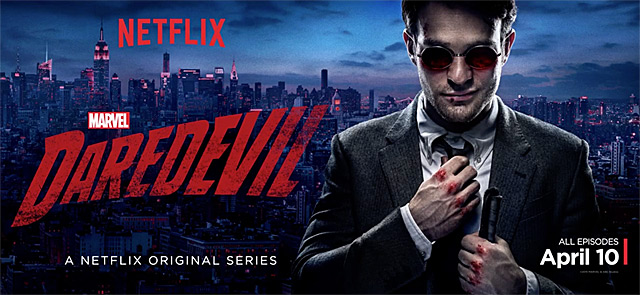
A few times, however, a show for adults has come along that absolutely blows me away. The last one was Sherlock, the BBC’s outstanding adaptation of the old Holmes stories. This time it’s Marvel’s Daredevil, a recent Netflix original series. It does so many things right that I’m taking a post to list a few of them, along with some miscellaneous observations.

Marvel's Daredevil

First, a little background: Daredevil is based on a Marvel comic about Matt Murdock, a blind lawyer whose other senses are heightened to an incredible degree, allowing him to “see” without eyes. Every night, he hits the streets of Hell’s Kitchen, a neighborhood of Manhattan, to beat criminals senseless: a lawless lawyer, so to speak.

The Netflix show happens in the same world as all those Marvel movies from Disney—the MCU, or Marvel Cinematic Universe—but takes a more mature, grounded tone. One final note: Marvel’s Daredevil has no connection, thank heaven, to that dreadful movie starring Ben Affleck.

As promised earlier this week, here are my thoughts on Marvel’s Daredevil.

Be ye warned: Here there be minor spoilers.

The villain

The grand villain in Daredevil, criminal kingpin Wilson Fisk, is one of the best baddies I’ve seen on television. Too many stories disrespect their villains by treating them not as characters, but as plot elements. Fisk, by contrast, is a brilliantly developed character: menacing, memorable, and oddly vulnerable. Despite being “merely” a villain, he gets flashbacks and a love story—considerations usually reserved for the protagonist!

At first, Fisk seems completely in control. He fits the stereotype of the criminal genius pulling strings from the shadows. Only as the story unfolds is Fisk revealed to be an unstable, emotional mess of a man, a character with noble dreams and zero compassion. Fisk is a magnificent bad guy.

The booze

The characters in Daredevil drink with alarming frequency. It’s a wonder they manage to stay mostly sober for thirteen episodes. Daredevil‘s Matt Murdock and Iron Man‘s Tony Stark probably need an intervention.

The sidekick

Matt’s business partner is a wry young lawyer named Foggy Nelson. I expected Foggy to be shallow comic relief or the bumbling Watson to Matt’s Holmes, but he surpassed my expectations in every way. Foggy is certainly funny, and he lacks Matt’s poise, yet he winds up being a smart, independent, and thoroughly likable character.

Matt Murdock and Foggy Nelson

The fight scenes

I’ve become jaded toward practically every single fight scene in the MCU. I can only watch Thor or Captain America punch people in the face so many times before I lose interest. These fight scenes are bland and bloodless. The heroes, who are practically invincible, knock out nearly every enemy in a single punch. What’s the point?

Daredevil offers a superior take on fight scenes. Matt Murdock is breakable. Many of his battles end with Matt bruised, gashed, and bloodied. He is regularly bandaged and stitched up by a sympathetic friend. Because he’s not some invincible superman, his fights are tense and engaging in a way Thor’s or Captain America’s will never be. Matt is weaker than the average superhero, and his enemies are tough. When he knocks them down, they sometimes get back up and keep fighting—a refreshing change from the one-punch knockouts of Marvel’s movies.

Finally, the fights in Daredevil aren’t flagrantly choreographed dances. They’re all-out brawls. Matt gets tired. He stumbles. His fights have the weight, momentum, and wild physicality missing in the MCU’s other media. I like Marvel’s big-budget movies, but they have so much to learn from Daredevil.

The writing

Following up on things Daredevil can teach the rest of the MCU, its writing is really good. Marvel’s movies have plenty of heavy exposition, clever quips, and inspirational speeches, but not a lot of honest-to-God conversation between characters. When Daredevil‘s characters talk to each other, they sound like people talking to each other, not actors reading a screenplay. I know Daredevil has more airtime than the average Marvel movie, but the MCU could try to mix in a little believable dialogue with its jokes and expositions.

The violence

Daredevil is really, really violent. Its blood and broken bones are earned by the story’s mature themes and gritty realism, but this show sure ain’t one for the kiddos.

The religion

Matt Murdock is nominally Roman Catholic, and I didn’t expect to be impressed by the show’s treatment of religion. The media hardly ever depicts Christians well. To my astonishment, Daredevil offers an excellent Christian character in the form of Matt’s priest, Father Lantom.

Many Christian characters in secular media are broad caricatures of religion, but Father Lantom seems authentic in both his concern for Matt and his knowledge of Christian theology. In one scene, he discusses the doctrine of the devil in astonishing detail, mentioning the fact that Satan is the Hebrew word for adversary and alluding to the liberal theory (with which he disagrees) that the devil is merely a misinterpretation of Scripture.

This is heavy stuff for a superhero show. The show’s writers really did their homework, and I love the way they wove the religious motifs of the devil, sin, and redemption into Matt’s journey. I’m impressed by Father Lantom. The heroes of Daredevil aren’t saints, but the show’s informed, respectful depiction of religion is exemplary.

The verdict

Marvel’s Daredevil is one of the best shows I’ve seen in ages. It isn’t as action-packed or colorful as Marvel’s other stuff, but I loved its serious tone, smart writing, and superb fight scenes. In all the right ways, Daredevil is a show for adults, and I highly recommend it.

Adam Turns into the Hulk and Rants about Church Music

Caution: This blog post contains furious ranting. Sensitive readers, and readers averse to things being smashed, are advised not to continue.

Being a blogger is great fun, but it’s not without risks. In a small number of cases, frequent exposure to wireless Internet connections has caused bloggers to develop unexpected conditions. I am one of these unfortunates. I and at least one other blogger have become tragic victims of HBS (Hulk Blogging Syndrome).

What does this mean? Well, there’s really only one thing about HBS you should know: Don’t make me angry. You wouldn’t like me when I’m angry.

That said, today’s blog post is all about contemporary church music, and the way classic hymns are rewritten with new music or lyrics. Well, rewritten may be too kind a word. Hymns are mutilated. They are trampled upon. They are… ugh… I suddenly don’t feel well…

I… I…

BLOG SMASH!

BLOG SMASH!

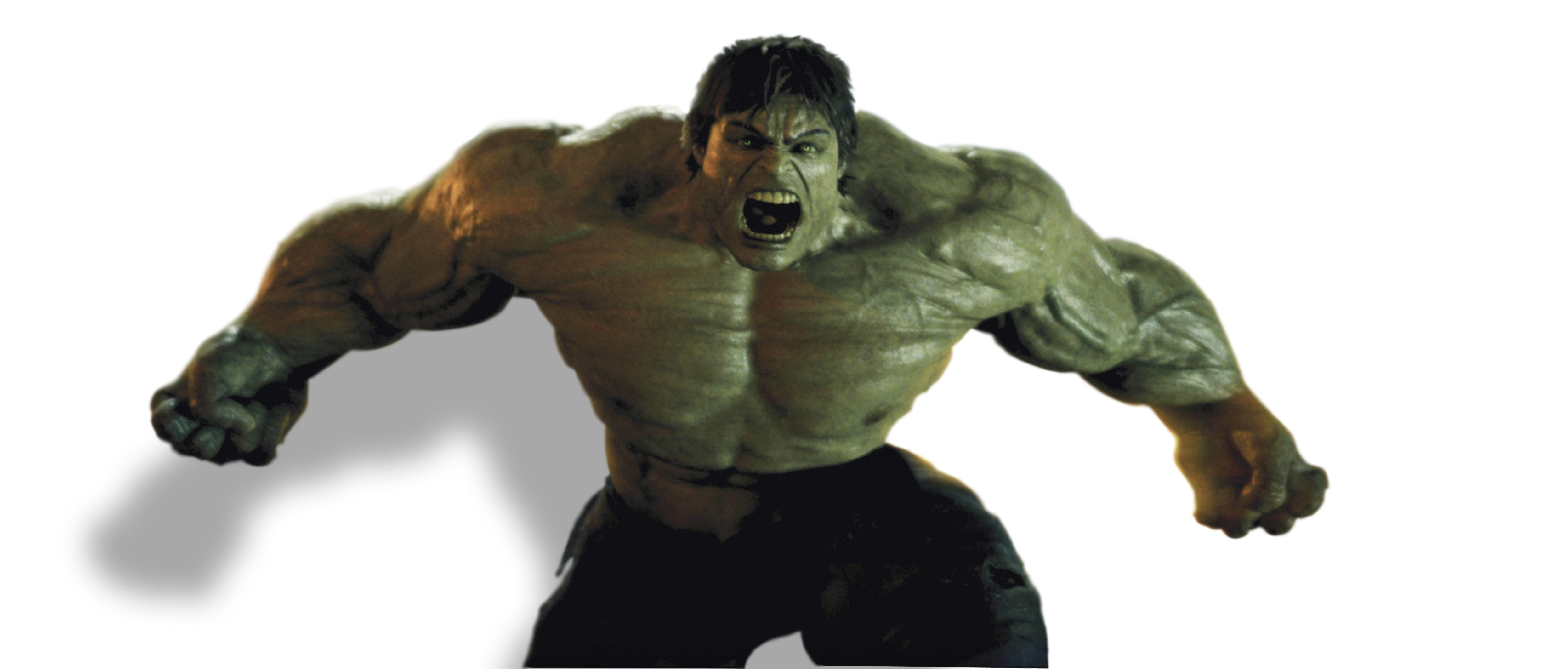
ADAM IS GONE. NOW THERE IS ONLY HULK. HULK HERE TO DISCUSS CHURCH MUSIC. AND TO SMASH.

HULK DOES NOT LIKE MODERN CHURCH MUSIC. ITS SONGS SEEM MUSICALLY WEAK AND NONDISTINCT. THEY ALL SOUND THE SAME TO HULK. THEIR LYRICS ARE OFTEN NOT VERY MEANINGFUL. THEY ARE SOMETIMES DOWNRIGHT STUPID.

(HULK DISCLAIMER: SOME MODERN WORSHIP SONGS ARE FANTASTIC.)

MANY PEOPLE LOVE MODERN CHURCH MUSIC. THAT IS OKAY WITH HULK. HULK DOES NOT WANT TO BE PHARISEE. WHATEVER MUSIC BRINGS PEOPLE CLOSE TO GOD IS GOOD MUSIC.

CHURCHES ARE WELCOME TO THEIR NEW MUSIC… BUT LEAVE OLD MUSIC ALONE!

SOME OF US LIKE OLD HYMNS. “IT IS WELL.” “AMAZING GRACE.” “BE THOU MY VISION.” “COME THOU FOUNT OF EVERY BLESSING.” THESE ARE GOOD SONGS. THEY ARE FINE THE WAY THEY ARE. SOME PEOPLE FIND THEM TOUCHING AND MEANINGFUL, FULL OF BEAUTY AND TRUTH.

STOP TACKING ON NEW VERSES, CHANGING MELODIES, ADDING UNNECESSARY BRIDGES AND MAKING POINTLESS CHANGES.

PLAYING OLD HYMNS IN NEW STYLES IS FINE. HULK LOVE HEARING HYMNS PERFORMED IN CONTEMPORARY STYLES. THAT IS AWESOME. OLD HYMNS ARE AWESOME. GO AHEAD. JAZZ THEM UP. BUT DO NOT CHANGE THEM.

HULK RECENTLY WENT TO CHURCH. CHURCH SANG “IN CHRIST ALONE.” THIS IS NOT OLD HYMN, BUT IT IS BEAUTIFUL IN EXACT SAME WAYS. “IN CHRIST ALONE” HULK’S FAVORITE SONG. EVER.

CHURCH ON SUNDAY CUT OUT AN ENTIRE VERSE OF “IN CHRIST ALONE.” WHY? ADDED BRIDGE WITH WEAK MELODY AND THESE LYRICS: “Oh, Oh, Oh.” HULK NOT MAKING THIS UP. THOSE WERE WORDS ON SCREEN. “Oh, Oh, Oh.”

THOSE WORDS NOT AN IMPROVEMENT OVER THESE WORDS:

In Christ alone, who took on flesh: fullness of God in helpless babe,

This gift of love and righteousness—scorned by the ones he came to save.

Till on that cross as Jesus died the wrath of God was satisfied,

For every sin on him was laid. Here in the death of Christ I live.

THESE WORDS ARE BETTER THAN “Oh, Oh, Oh.” WHY DID CHURCH STRIP AWAY BEAUTIFUL WORDS FROM HYMN AND REPLACE THEM WITH MEANINGLESS NOISES?

HULK NOT KNOW. HULK NEVER KNOWS.

HULK ASK ALL CHURCHES EVERYWHERE. PLEASE. LEAVE OLD HYMNS ALONE. THEY ARE FINE AS THEY ARE. PLAY YOUR NEW MUSIC. HULK GIVE YOU THAT. BUT GIVE HULK THIS ONE THING. MAKE ONE CONCESSION FOR HULK. YOU CAN HAVE NEW SONGS. DON’T RUIN OLD ONES.

PLEASE. PLEASE. HONOR BEAUTY AND TRUTH IN OLD HYMNS.

HULK OUT!

Whoa… I… what just happened? Why is there a mound of splintered wood where my desk used to be? Who ripped apart my shirt? Why are my typewriter monkeys fleeing in terror?

I suddenly feel sick, so I’m afraid I must cut this post short. Sorry. Now I’m going to yell at my monkeys for wrecking my bedroom, and then go put on some clothes.


This post was originally published on June 20, 2014. TMTF shall return with new content on April 20, 2015!