They’ll Make a Man Out of You

I haven’t heard such a rockin’ arrangement of “I’ll Make a Man Out of You” since… well, the last one. This epic number from Disney’s Mulan has been my favorite since I was just a kid. (I’m not sure it made a man out of me, but then I’m not sure anything ever will.) This arrangement from guitar duo With Ether is flipping fantastic. Bonus points to Al Poon, the gentleman on the right, for wearing what appears to be a lampshade.

I’ve lately listened to a lot of With Ether’s music on YouTube; it’s a great soundtrack for blogging. They’ve arranged a lot of songs from video games and pop culture, in addition to writing some sweet original stuff. Among my favorites are their versions of the Sherlock theme, Metal Gear Solid music, and one of the catchiest songs from Shovel Knight.

These people. These people. Thank you, With Ether, and all the rest of you Internet people who make cool stuff.

394. TMTF’s Top Ten Disney Villains

All right, guys. We all knew this was coming. It was only a matter of time.

I like villains—from a safe distance, of course. Bad guys are often so much more interesting than good ones. Whether misguided, damaged, or simply evil, a striking or well-developed villain is often the best part of a story. Walt Disney Animation Studios understands this. In its seventy-something years of filmmaking, it has created an entire pantheon of memorable bad guys.

Prepare yourself for the best of the baddies, ladies and gentlemen, as TMTF presents…

The TMTF List of Top Ten Disney Villains!

Be ye warned: Here there be minor spoilers.

10. Cruella de Vil (One Hundred and One Dalmations)

Cruella de VilleNot every villain needs to be an all-powerful menace. Cruella de Vil is merely a bad person: shallow, selfish, cruel, unbalanced, and a little sociopathic. I would call her a crazy cat lady, but she’s more of a dog person—but only if “dog person” means “person who wants to kill puppies and turn their skins into coats.” Her visual design is incredible, from the bulky furs dangling from her skeletal body to the sneer on her blood-red lips. Cruella de Vil is a maniac, and a refreshingly low-key change from the large-scale evil of other Disney villains.

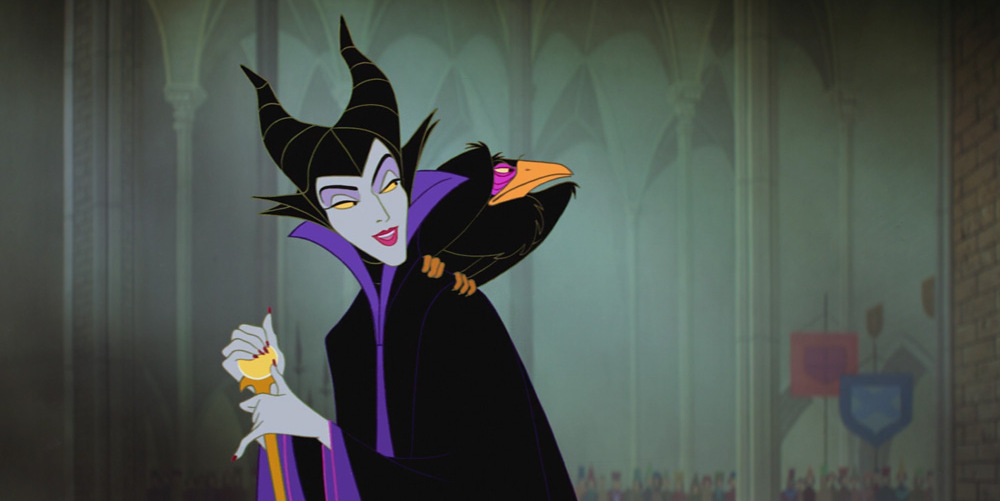
9. Maleficent (Sleeping Beauty)

MaleficentMaleficent isn’t a complex villain, or even a particularly interesting one, but she gets bonus points for making an impression. She may be the most recognizable baddie in the Disney pantheon. Maleficent perfects the gaunt-and-sinister-old-lady character type. By comparison, the queen from Snow White and the Seven Dwarfs and the stepmother from Cinderella seem like mere prototypes. Maleficent also turns into a dragon, which is pretty rad.

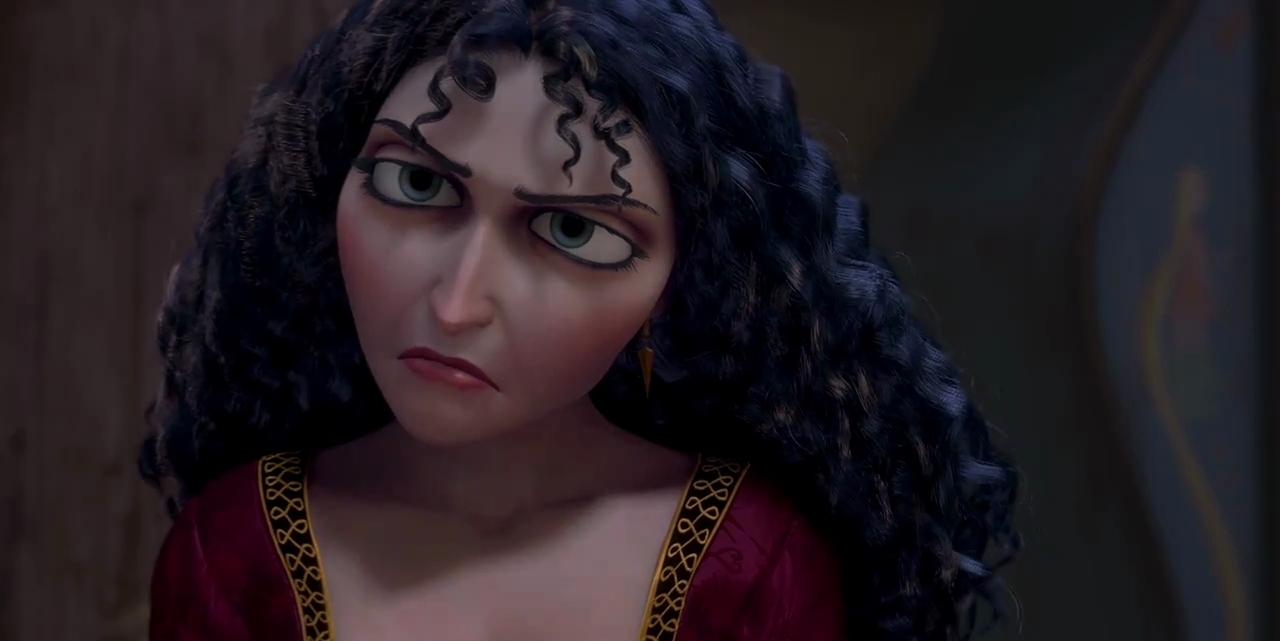
8. Mother Gothel (Tangled)

Mother GothelI’m going to be lazy and let another blogger explain this one: “What makes Mother Gothel terrifying is the fact that Rapunzel loved her. That makes Mother Gothel more than a villain in the traditional hey-I’m-going-to-kill-you way. It makes her a liar, deceiver, and traitor, violating one of the deepest bonds we can think of (mother-daughter).” (As long as I’m stealing ideas from Amy Green, you should go read her old two-part post on Disney villains.) Mother Gothel isn’t as powerful as other villains on this list, but she’s far more relatable—and that scares me more.

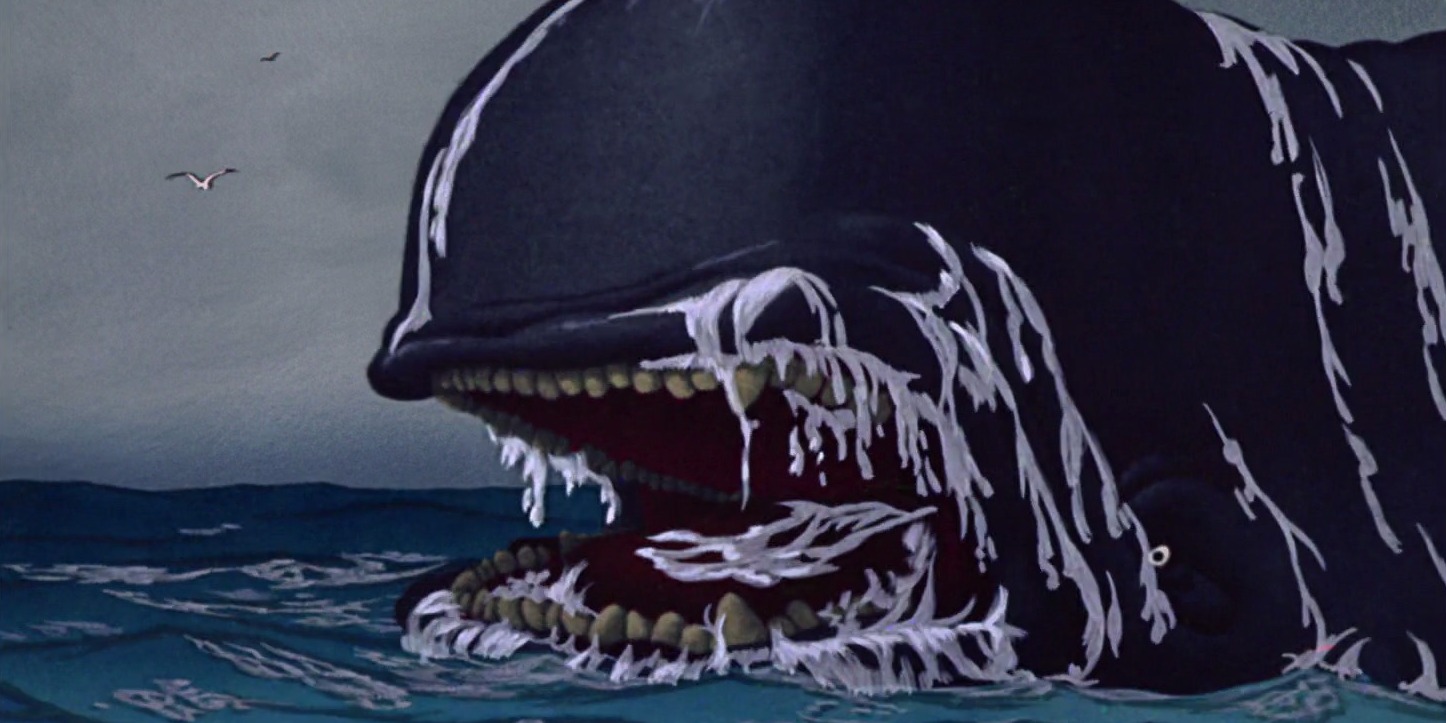
7. Monstro (Pinocchio)

Monstro

Monstro is not a well-developed character—or any kind of character, for that matter. Monstro is a whale. He has no dialogue, and his only apparent motivation is rage. Like Sauron in The Lord of the Rings or Cthulhu in the works of H.P. Lovecraft, Monstro is not so much a character as a force of evil. Monstro is a monster, true to his name, in the truest sense of the word: inscrutable, elemental, destructive, powerful, incomprehensible, angry, and terrifying.

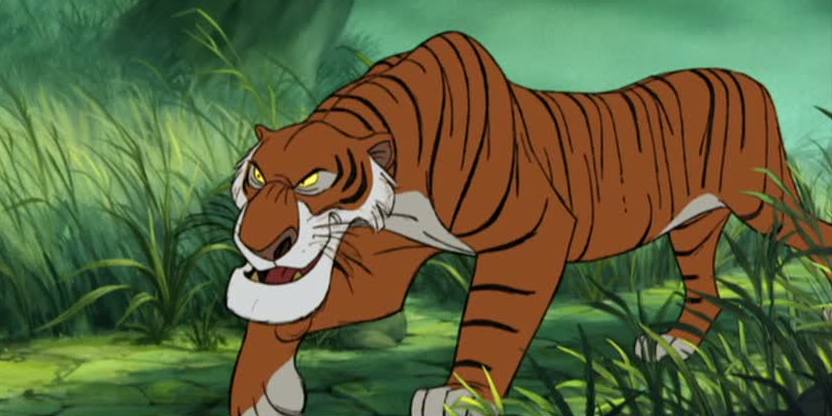
6. Shere Khan (The Jungle Book)

Shere Khan

Shere Khan is an implacable predator. He isn’t exactly evil, but lives according to his nature, and his nature is to kill. Here is another example of superb visual design creating a memorable character: his massive jaw and tiny yellow eyes give him a predatory look, and his smooth, cat-like movements convey power and confidence. The unsettling way Shere Khan swings from politeness to savagery reminds me of Hannibal Lector from The Silence of the Lambs. Shere Khan isn’t out to conquer the world. He just wants to kill, and he’s creepily nice about it.

5. Scar (The Lion King)

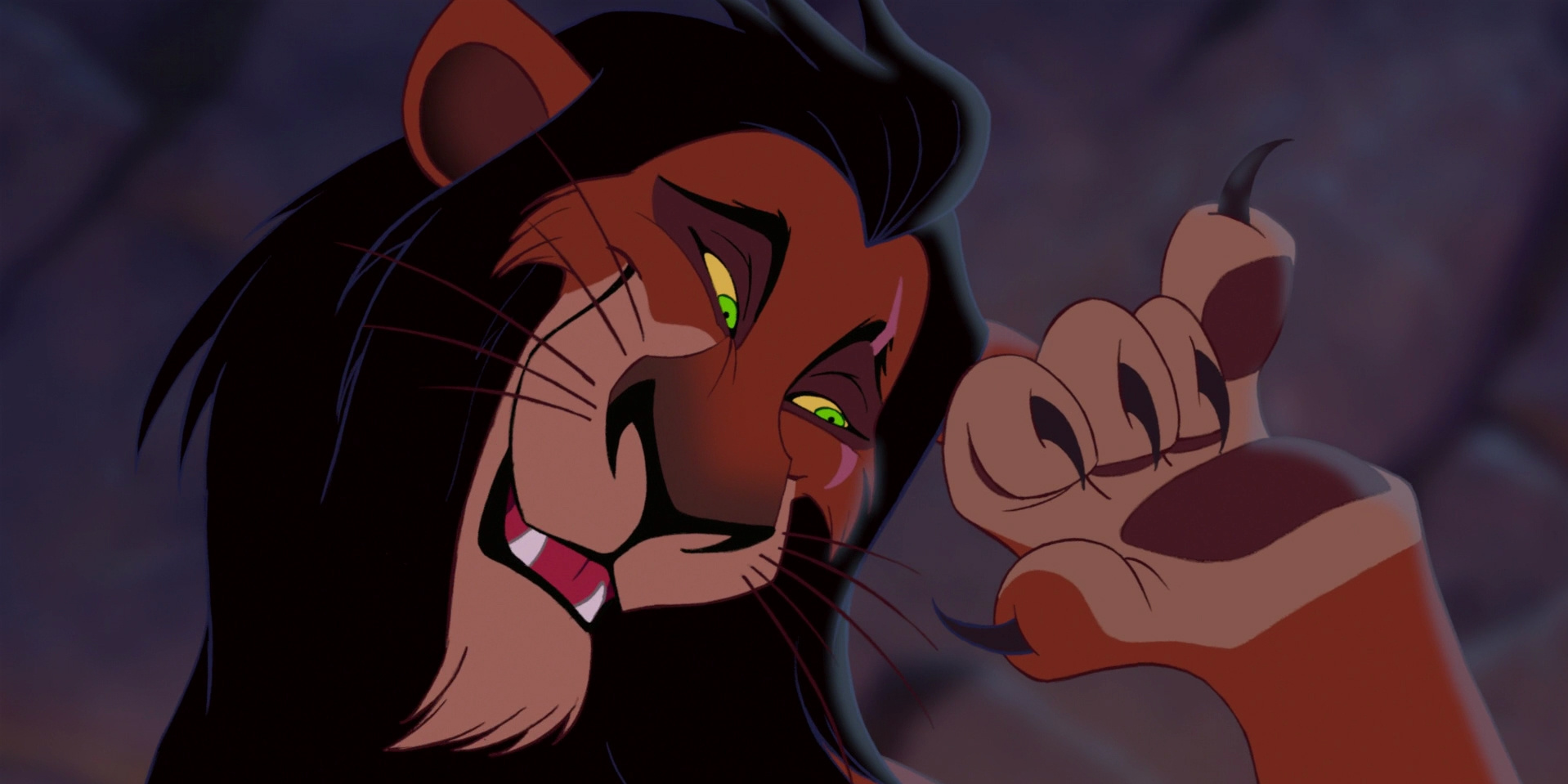
ScarScar is delightful and charming, insofar as a treacherous tyrant can be either of those things. As a king’s younger brother, he resents his young nephew for taking away his claim to the throne. (It’s all very Shakespearean, which is appropriate since The Lion King is based loosely on Shakespeare’s Hamlet. Scar reminds me more of Richard III, though.) I can think of a lot of words to describe Scar: sarcastic, scheming, ruthless, resentful, and vicious, among others. He has a lot in common with other Disney villains, but his underhanded charm sets him apart.

4. Hades (Hercules)

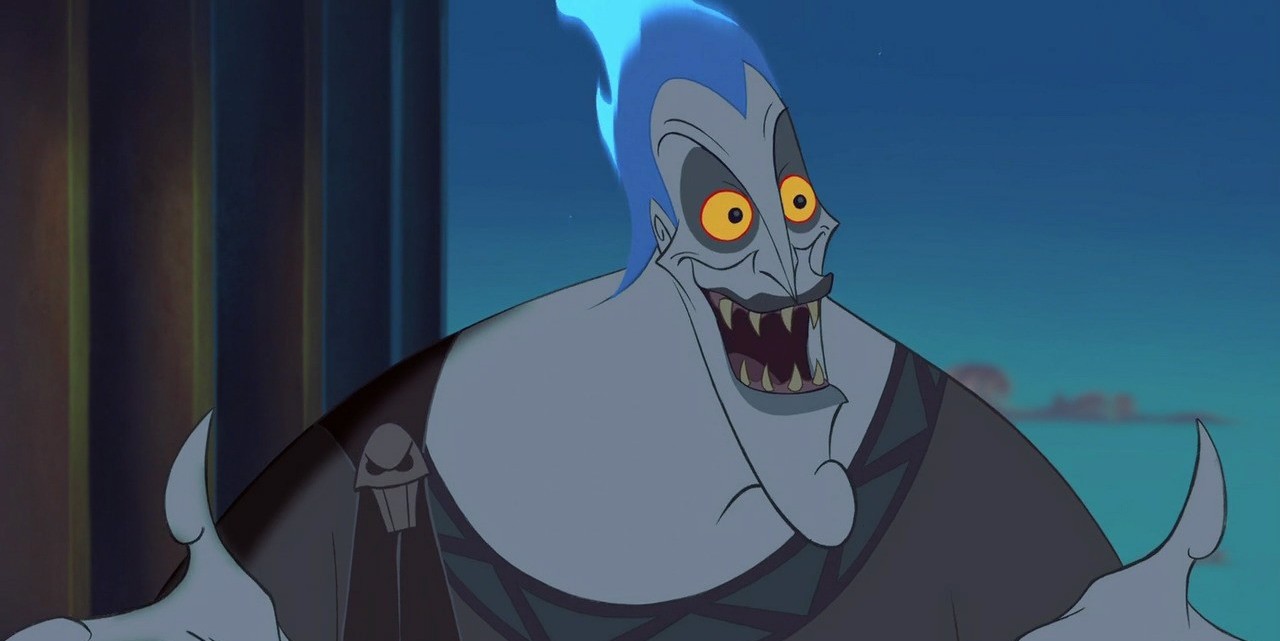
HadesThis smooth-talking scoundrel gives the impression of a shady used car salesman. His friendly manner can’t hide his short temper and ill intent. Did I mention that Hades is the god of the dead? He’s the god of the dead. His character in the film is never quite as funny as I remember, yet I absolutely adore the combination of a sleazy personality with the almighty power of a mythical god. Villains tend to be serious, sometimes to the point of tedium or predictability. Hades joins baddies like the Joker and Kefka Palazzo as a really bad guy with a really good sense of humor.

3. Judge Frollo (The Hunchback of Notre Dame)

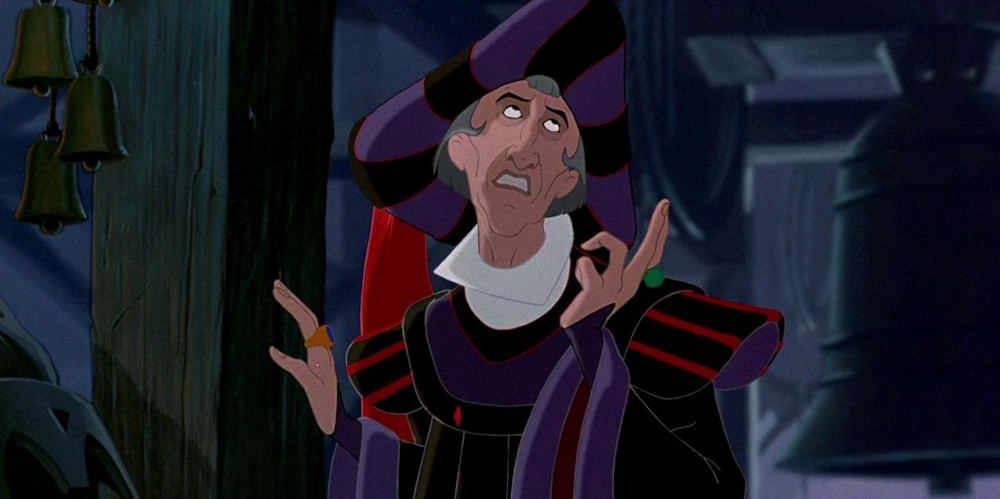
Judge FrolloTo this day, I can hardly believe Disney allowed The Hunchback of Notre Dame to be made. It’s an excellent film, but definitely doesn’t fit Disney’s kid-friendly image. Take Claude Frollo. This judge plans a genocidal crusade to murder the gypsies of Paris: a heartless ethnic cleansing in the name of religion. Judge Frollo clings to hypocritical self-righteousness, yet desperately fears that his lust for a gypsy woman will damn him to an eternity in hell. Yeah. Heavy stuff. Just listen to his villain song, “Hellfire.” Most Disney baddies get a villain song, but Frollo’s is the only one about sexual desire and everlasting damnation. Judge Frollo is a complex, tormented man, and a haunting antagonist for one of Disney’s most daring films.

2. Yzma (The Emperor’s New Groove)

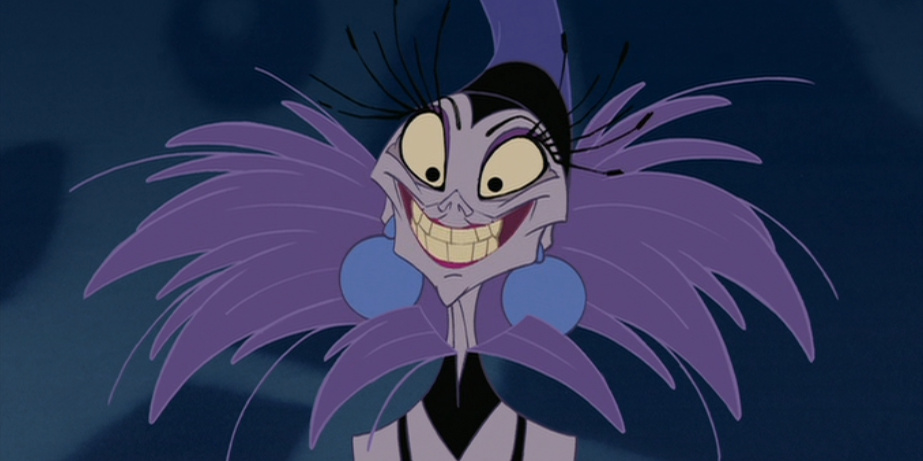
YzmaNot every villain has to be dark and brooding. If you haven’t already seen The Emperor’s New Groove, stop reading this blog post and don’t come back until you have. Yzma is flipping hilarious. This resentful old woman, whom other characters describe as “scary beyond all reason,” swings madly from manic cheerfulness to furious grumpiness. When she finally loses patience with her laid-back, self-centered emperor, she plans his assassination… only for the plan to go awry and the emperor to end up transformed into a llama. Throughout the film, Yzma and her adorkable henchman Kronk try (unsuccessfully) to track down and kill the emperor before he can reclaim his throne. Hilarity ensues, proving that a villain doesn’t have to be scary to be awesome.

1. Rourke (Atlantis: The Lost Empire)

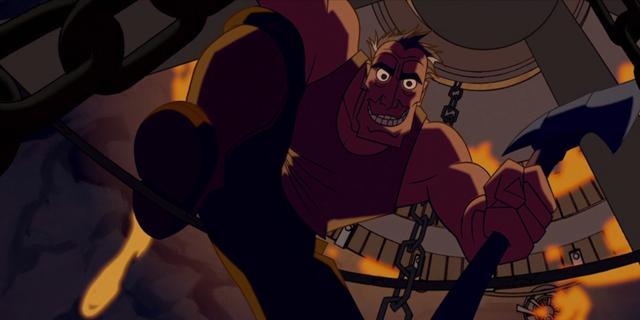
Commander RourkeI doubt anyone saw this one coming. Atlantis: The Lost Empire was released in the dark age between the Disney Renaissance in the nineties and the so-called Disney Revival of the past six or seven years. Most of Disney’s films from the early aughts have faded from memory. In the case of Atlantis: The Lost Empire, it’s a shame: I consider this steampunk adventure an underappreciated gem. Its villain, Rourke, is the kind of pragmatic, no-nonsense killer I would never have expected from Disney. Rourke, the leader of an expedition to discover Atlantis, reveals himself to be a mercenary—or to use his preferred term, an “adventure capitalist.” He plans to plunder a magical artifact from Atlantis, killing all of its inhabitants in the process. Rourke stands out for his dry sense of humor, absolute self-interest, and complete disregard for human life. Did I mention the scene in which he snaps and tries to murder the protagonist with an axe? Rourke is a fantastic villain, and I think Disney has none better.

Who are your favorite Disney villains? Let us know in the comments!

379. Writing Tips from Gravity Falls

Today’s post was written by JK Riki: rogue writer, animator, and cool dude. For more great stuff from JK, check out his websites on creativity and animation, and find him on Twitter!

If you’re a regular reader here at TMTF, you know Mr. Stück is a big fan of the animated show Gravity Falls. His thoughts on the series are short and sweet, encouraging you to watch without mincing words. In case you need an extra push, though, today we’re going to take a longer look at what makes Gravity Falls so compelling (and some tips you might take away from the show).

Gravity Falls1. Gravity Falls knows where it’s going.

In an interview, GF creator Alex Hirsch talked about the process of creating the show. He explained, “We have a storyline. There is a broad storyline that we’ve come up with—a beginning, middle, and end.”

In today’s television, that is a rarity. Studios and networks are so keen to drag things out for as long as possible that they begin a story with mystery and intrigue, and have no clue where it will end up. If they do know where it might go, they put obstacles in the way for the sole purpose of extending the shelf-life of the series. If it gets renewed for an additional season, up pop more meaningless obstacles. If it does not, hopefully there was warning of the cancellation early enough to produce a reasonable final episode (but often not).

There needs to be a lot of wiggle room in writing. You can’t be so strict that you don’t allow characters to take things in new directions on a whim. That said, if you don’t have a vague idea where you’re headed, it can lead to a mess farther down the road.

2. Gravity Falls isn’t afraid to change.

Possibly because the show has a planned beginning, middle, and end, it isn’t afraid to change. The Simpsons, bless its heart, reverts to status ­quo at the end of almost every episode. Some episodes even make note of that fact for humor purposes. It’s not alone, either. A vast majority of shows have this sort of reset, especially in animation.

Gravity Falls bucks that trend by allowing progress to be made. Overarching mysteries unfold, and characters grow. One example of this (spoiler warning) is that the protagonist’s crush on a local girl actually plays out, instead of becoming a forced motif for the entire series. I was sad to see it go—I’m a sucker for secret crushes—but giving it closure improved the series.

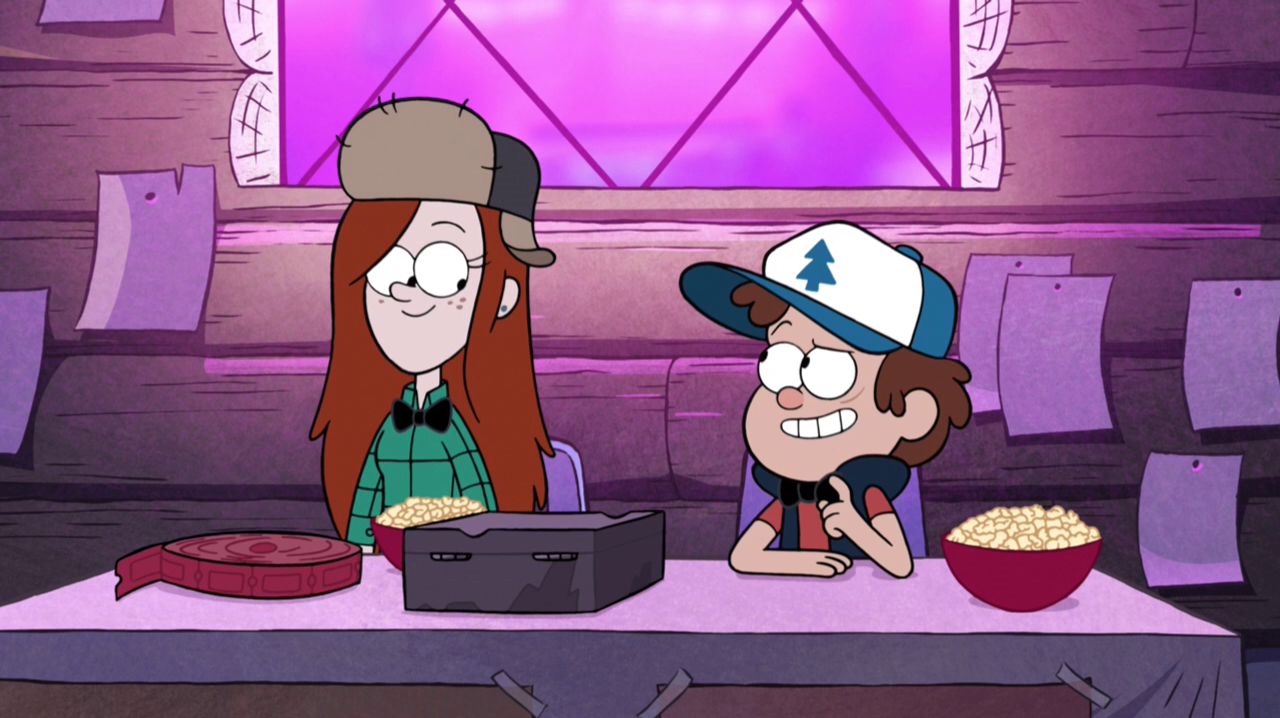
Dipper and WendyIt’s important when writing a series to allow room for growth. It can be tricky, because some fans of early work will hate later stuff and pine (loudly) for “the good old days.” (This happens a lot in music with long-­running bands, too.) It’s still worth allowing for change to happen, because frankly that’s how life works, and you want there to be a foundation of truth in any creative work you do.

3. Gravity Falls is about characters.

In another interview, Mr. Hirsch mentioned, “Gravity Falls is a show about mysteries and magic, but first and foremost it’s a show about characters.”

The reason Gravity Falls is as charming as it is has very little to do with its marvelous story twists and hilarious jokes. It succeeds because the characters are true and compelling. They have soul and depth. They connect with each other, and the relationships feel solid and real.

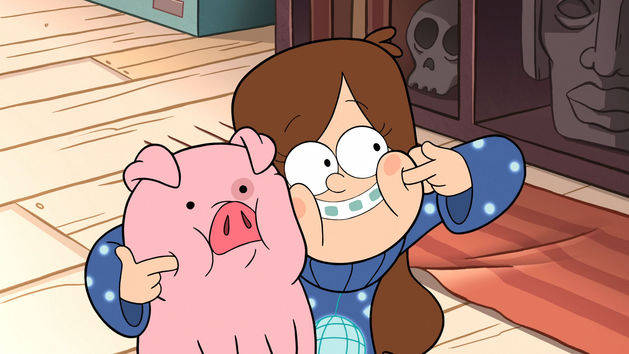
Mabel and WaddlesIf you have one take­away from Gravity Falls as a creator, let it be this: Living, breathing, compelling characters will take you farther than any other writing device.

An audience will watch a compelling character do his laundry, but will quickly grow bored with a flat, one-note character even if they are piloting space ships in a fascinating alternate dimension. Do not skimp on knowing your characters; invest time in them, and you will be handsomely rewarded.

How Cartoons Are Made (and Why It Takes So Long)

When my favorite animated shows undergo hiatuses—those bleak times when no new episodes are released—I am left alone in grief and misery to ponder the cruelty of the universe. Why must all good things end? Why must I dwell in a twilight existence of interruptions, cliffhangers, and mid-season breaks? Why? Why?!

The good folks at Disney have offered a brief but illuminating explanation. (They have also reminded me that I need to watch Wander Over Yonder sometime.) Apart from the animation itself, which takes a long time, every episode is bounced between teams of artists, writers, actors, musicians, and producers, with executives weighing in regularly. Many studios ship stuff to animators overseas to cut costs. Amid the chaos, I assume, scurry interns: answering phones, running errands, serving coffee in foam cups, and greasing the gears of the mighty machines known as animation studios.

Of course, I can’t discuss how cartoons are made without also sharing the following video, in which the creators of Disney’s Phineas and Ferb explain the process in a rap song. Yes.

http://www.youtube.com/watch?v=9UaOO7hyb4c

Fun fact: This video convinced me to watch Phineas and Ferb a few years ago. That show revived my interest in cartoons and animation, thus guiding me toward a brighter existence… albeit one with hiatuses.

375. Why Video Game Movies Suck

Name three good video game movies.

Yeah, that’s what I thought.

You see, video game movies suck.

Granted, movies about games as a medium are sometimes good, like Disney’s superb Wreck-It Ralph. I love that movie.

Wreck-It Ralph coverMovies adapted from games, however, are another story: a sad, depressing story. I’ve seen a number of video game movies, and most of them are awful.

Why is this? There are many excellent films based on books; why not on video games? There are at least three reasons.

First, many games have either no story or only the barest semblance of one.

The plot of nearly every Super Mario Bros. game, for example, consists of a monster (Bowser) kidnapping a princess (Peach) and a brave man (Mario) setting out to rescue her. That’s it. This story (and minor variations thereupon) appears in game after game after game.

For a video game, such a simplistic story is perfectly fine—after all, the story is just an excuse to play the game. What matters in the Super Mario Bros. games is the what of the adventure; the why is a minor afterthought. It’s such fun to guide Mario through challenging levels that his reason for facing them in in the first place is hardly more than a footnote.

Unlike a game, which can be fun for its own sake, a film needs a story. The what is not enough; it also needs the why. Many video games don’t offer a strong enough why to be adapted into compelling movies.

The second reason video game movies often fail is that too many filmmakers, assuming their film has a guaranteed audience in fans of its source material, make it inaccessible to broader audiences: people who don’t play video games.

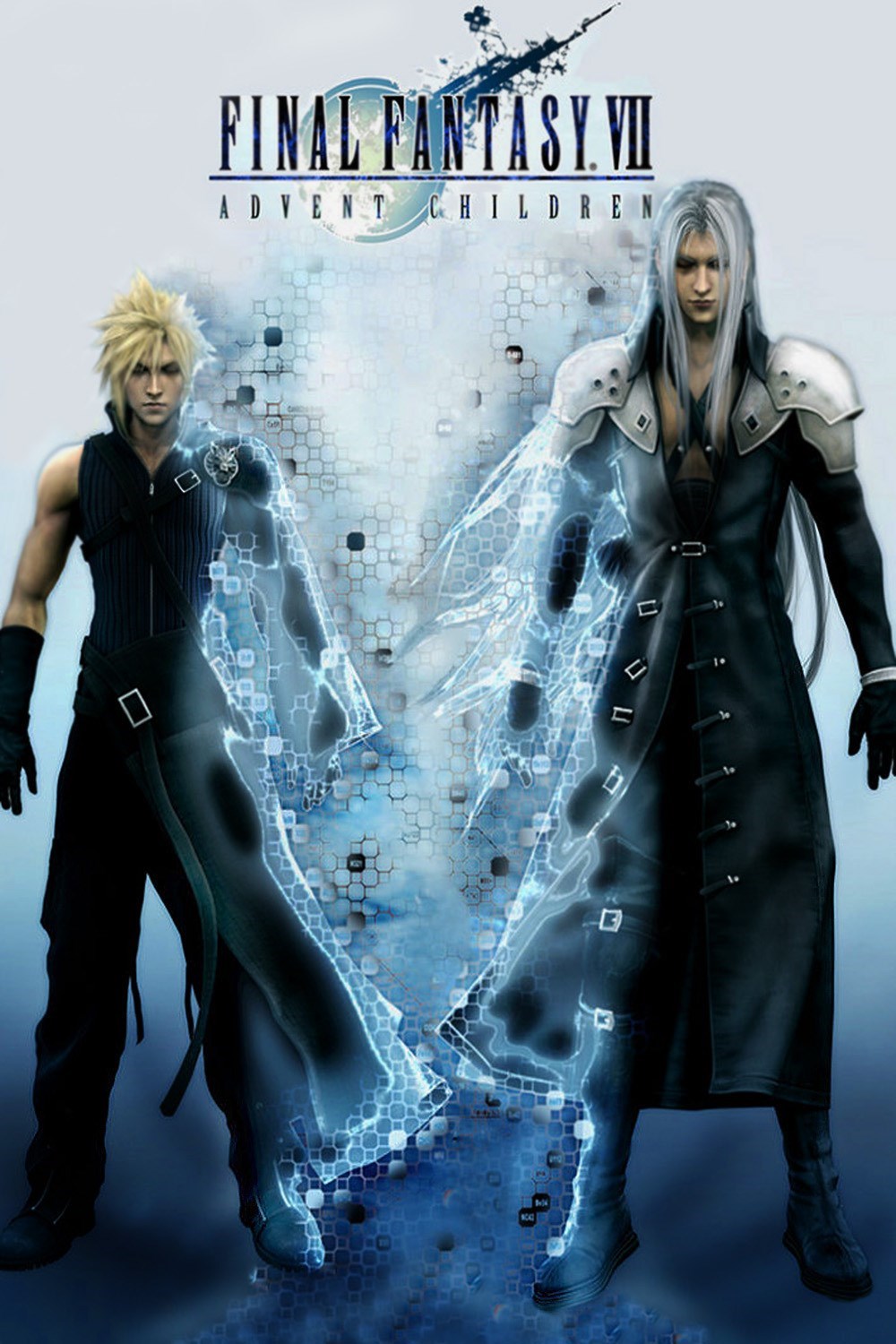
Final Fantasy VII - Advent ChildrenThe clearest example of this is my all-time favorite action movie, Final Fantasy VII: Advent Children. This computer-animated movie’s action scenes are ridiculous—this movie has a sword fight on motorcycles, guys. The animation looks great nearly a decade after the film’s release, the music is excellent, the characterization is compelling, and the ending is genuinely touching.

However, Advent Children has one damning flaw: it’s practically incomprehensible to anyone has hasn’t played an old PlayStation game called Final Fantasy VII. Even for those of us who have played the game, the movie can be a little tough to follow. This is a shame. In every other respect, Advent Children is an excellent film—but that excellence is locked away from most audiences.

The third reason games hardly ever make good movies is in the medium itself. Most video games are a repeating pattern of stages; many are nothing more than a series of levels. That’s hard to adapt to film.

Other games offer a more subtle take on this structure. Role-playing games, for example, generally feature a robust story, yet follow the same pattern: the player progresses from a town, to the open world, to a dungeon, and then back to a town, there to begin the cycle anew.

This approach works well for video games as a medium. It even works for television, in which a set of episodes allows for repeated rising and falling action. A film, however, is too short for this structure. The repeating pattern of a video game doesn’t fit in a movie. A game’s cyclical narrative can’t be compressed into a two-hour film.

Every now and then, however, there comes a game whose narrative isn’t a repeating cycle, but a focused story that could be brilliantly adapted to film. I can think of at least one video game movie that absolutely needs to be made… but I’ll save that for next time.

Are there any good video game movies?

Vide game movies that don't suckOf those I’ve seen, I can think of a few good ones. Professor Layton and the Eternal Diva, an animated film spin-off of the Professor Layton games, is accessible and charming, though it drags a bit. The aforementioned Final Fantasy VII: Advent Children boasts phenomenal action, epic music, and stunning visuals for viewers who don’t mind having no idea what the heck is going on. For those who like foreign films, Takashi Miike’s live-action Ace Attorney is really good, despite its absurd hairstyles.

Um, that’s it. Flipping heck, someone needs to make a good video game movie.

Question: Have you seen any video game movie that you would recommend? Let us know in the comments!

369. Review Roundup: Fairy Tale Edition

Once upon a time, in the faraway land of Indiana, Adam the blogger enjoyed a number of whimsical stories and contemporary fairy tales. Here are his impressions of three animated films, a video game, and an anime: Inside OutBraveBrother Bear, Ni No Kuni, and Monthly Girls’ Nozaki-kun.

These are the stories of a plucky princess, an Inuit tribesman, a brave little boy, a Japanese manga artist, and the personifications of a girl’s emotions. Do they live happily ever after?

Let’s find out.

Inside Out
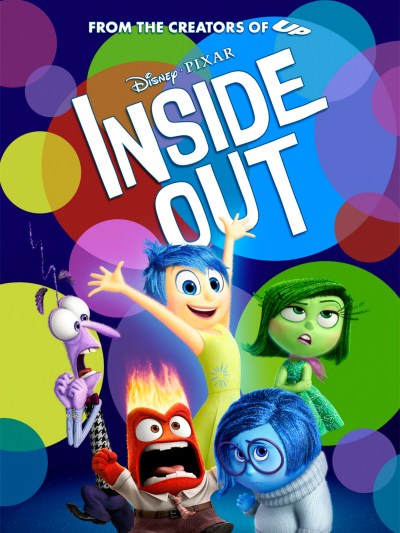
Inside Out

Inside Out brought me closer to weeping openly in a movie theater than any other film has done. (Fortunately, I have a heart of stone, sparing myself and my younger brother the embarrassment of annoying our fellow theatergoers.) This is a brilliant movie, and I have literally nothing bad to say about it.

Pixar’s Inside Out pictures the human mind as a control room operated by five engineers, each representing an emotion: Joy, Sadness, Anger, Fear, and Disgust. In the mind of Riley, a girl from Minnesota, her emotions struggle to keep her happy as she moves with her parents to California. When an accident sends Joy and Sadness to the farthest reaches of Riley’s mind, these unlikely partners must make it back to the control center before Riley breaks down.

This film boasts the usual Pixar polish, with top-notch animation, writing, and performances. Beyond that, Inside Out is the first Pixar movie in years to feature a truly original concept. (Of the past four Pixar films, two were sequels, one was a prequel, and one had the style of a traditional fairy tale—more on that last one in just a bit.) The movie’s concept of the mind is creative, clever, and—importantly—consistent. The way the mind works in Inside Out isn’t hard to understand, and the film does a fine job of sticking to it.

As I hinted above, this is a film with emotional punch. Pixar has a gift for depicting emotion with heartfelt sincerity and simplicity: Carl’s irritable despondency in Up, the toys’ sense of loss in Toy Story 3, Mike’s resignation to his limitations in Monsters UniversityInside Out is quite literally a film about emotions, so you can bet it hits the viewer—at any rate, this viewer—with feels.
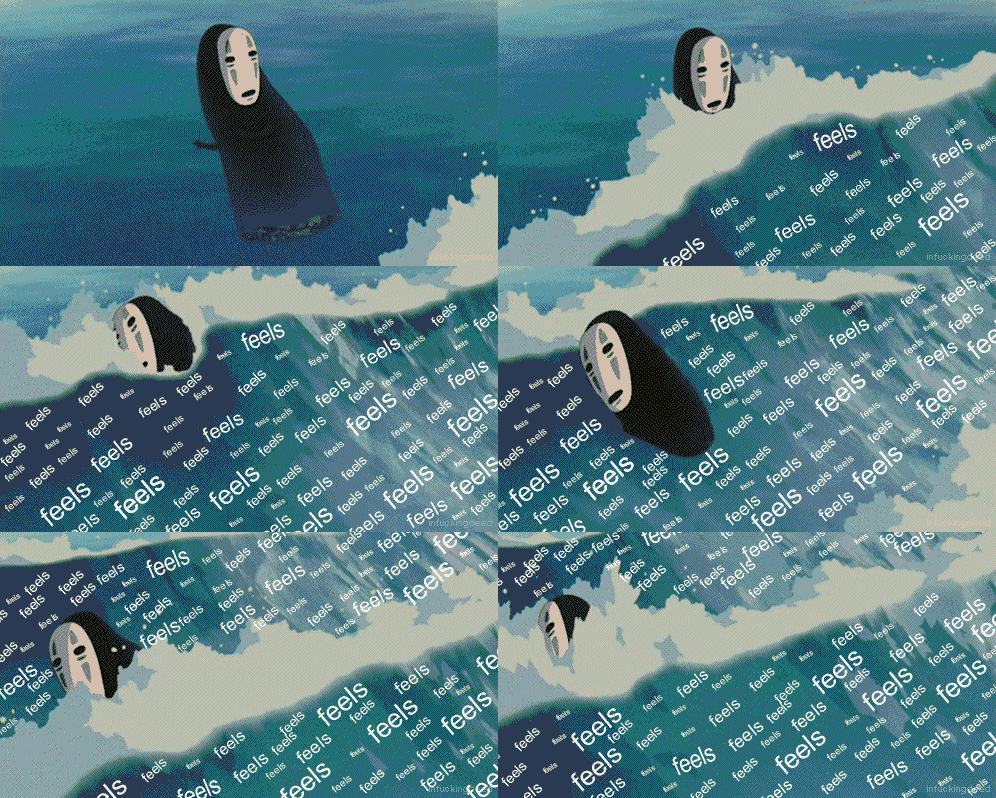
This is pretty much how I felt at the end of the film.

This is pretty much how I felt at the end of the film.

Inside Out is a fantastic film. Somewhere deep inside my mind, my sense of Joy is fiddling with whatever knobs and buttons affect my actions, willing me to recommend this film. Watch it. Your own sense of Joy will thank you.

Brave
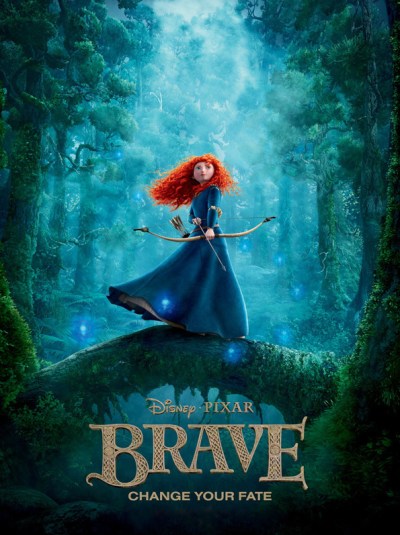
Brave

Here’s another Pixar classic, this time telling the age-old story of a princess who falls in love with a prince and—what’s that? She doesn’t fall in love with a prince? Well, that’s different.

Brave is an original fairy tale. Set in Scotland, it tells the tale of a princess named Merida, who decides she doesn’t want to let her parents marry her off to any of the local chieftains’ sons. Merida tries to change her fate… and accidentally transforms her mother into a bear. Mother and daughter must shelve their pride, settle their differences, and somehow make things right.

The film’s independent, self-reliant heroine is a refreshing change of pace from the mild princesses of other fairy-tale movies, and I appreciate the way the Merida and her mother learn to understand, respect, and trust each other. Merida’s family is a colorful bunch. Even the chieftains and their sons, who could easily have been throwaway characters, have some personality.

As a Pixar movie, Brave doesn’t feel particularly, well, brave. It’s a fairy tale. Even with its feminist undertones and emphasis on family relationships, it treads a lot of familiar ground. It’s a fine film nevertheless, and I appreciate it as a deeper alternative to the princess-flavored romances Disney loves so much.

By the way, does the Scottish setting of Brave give anyone else flashbacks to How to Train Your Dragon? No? I guess it’s just me, then.

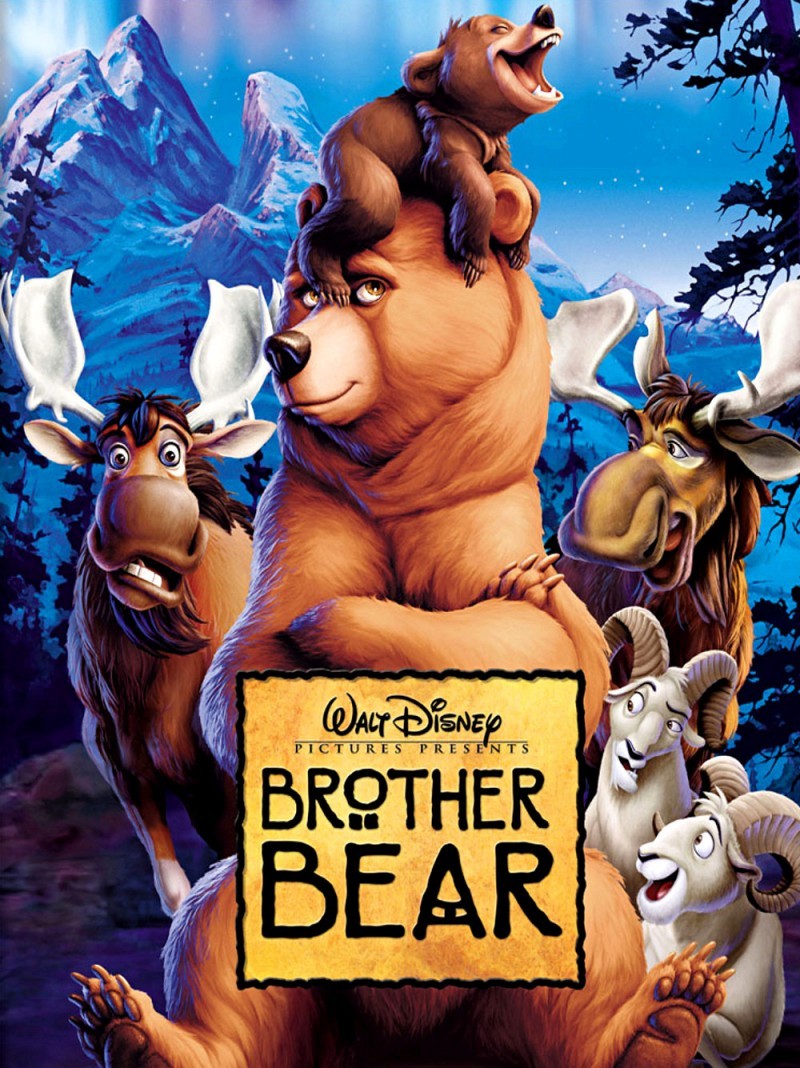
Brother Bear
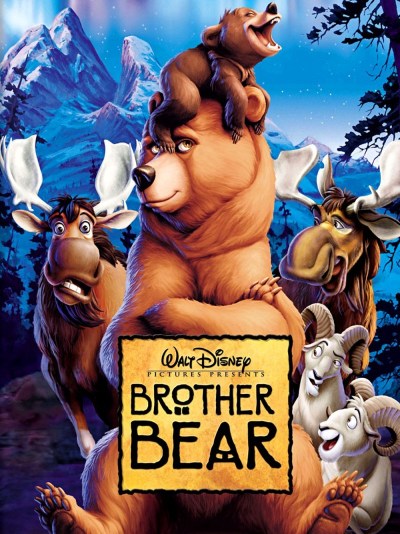
Brother Bear

Here’s another animated movie about people turning into bears. Why do people keep turning into bears? I just can’t bear it. (I’m so, so sorry.)

Brother Bear is a Disney animated film from the early two thousands: that nebulous stretch of Disney history whose movies nobody remembers. In the film, an Inuit tribesman named Kenai seeks revenge on a bear that killed a loved one, and is turned into a bear for his trouble. He must go on a quest, and learn the power of love, and—y’know, forget it. If you’ve ever seen a Disney film, you know where this is going.

This is not a bad movie. The Canadian wilderness is a great setting, and Inuit culture is largely unexplored in pop fiction. The acting, animation, and story were all perfectly adequate. I just couldn’t help feeling that this film didn’t really need to be made. Brother Bear is an uninspired blend of other Disney movies. Its plot borrows heavily from The Emperor’s New Groove: a man turned into an animal finds a buddy and goes on a trip to regain his (literal and figurative) humanity. The film’s music channels the soundtrack of Tarzan, down to a song from Phil Collins. It’s all been done before.

Brother Bear does have its moments. A couple of moose with heavy Canadian accents wander in and out of the movie, providing comic relief and stealing every scene in which they appear. The movie lacks a traditional villain, which is a refreshing change from Disney’s usual black-and-white morality.

In the end, however, Brother Bear is nothing special. I recommend The Emperor’s New Groove instead: pretty much the same story, but much funnier.

Ni No Kuni: Wrath of the White Witch

Ni No Kuni cover

Flipping heck, this game is amazing. I’ve already discussed the excellence of Ni No Kuni, so I’ll try not to ramble!

Ni No Kuni is a beautiful fairy tale. (It also happens to be a JRPG for the PlayStation 3.) It tells the story of Oliver, a little boy who sets out on a quest to save his mum. Accompanied by Drippy, the “Lord High Lord of the Fairies,” Oliver must mend broken hearts, defeat an evil jinn, and rescue a parallel world.

That world is one of the most charming and beautiful places I’ve seen in a video game. The look of Ni No Kuni was based on the work of the legendary Studio Ghibli, which handled the game’s animated cutscenes. This a lovely game. Apart from the cutscenes, which are nothing less than I expected of the Oscar-winning animation studio, the game itself is gorgeous.

I mean, look at it. Just look at it.

This is a gameplay screenshot, not an animated cutscene. This is what the game looks like. Ain't it pretty?

This is a gameplay screenshot. This is what the game looks like, more or less. Ain’t it pretty?

Ni No Kuni is visually appealing, but its excellence doesn’t stop there. The music, composed by renowned film composer Joe Hisaishi and performed by a live orchestra, is fantastic. Most importantly, the game is flipping fun to play.

The gameplay blends the fighting and adventuring of Final Fantasy games and the creature-catching of Pokémon. Oliver and his companions command familiars, adorable monsters that handle most of the fighting. Like Pokémon, familiars can be caught, trained, and metamorphosed into stronger creatures. Outside of battle, exploration is fun and sidequests abound.

Ni No Kuni even includes the full text of an original book, The Wizard’s Companion, which contains maps, spells, descriptions of familiars, old-fashioned illustrations, runes to decipher, and fairy tales. Yes, this fairy tale contains fairy tales of its own, and they’re delightful. In fact, The Wizard’s Companion is so good that I wish I owned a hard copy. As Oliver travels, he gathers the book’s scattered pages, unlocking more reading material.

Alas, Ni No Kuni is not quite perfect. It’s hard to read The Wizard’s Companion on a television screen, and flipping through its pages is a pain.

By far the biggest flaw of Ni No Kuni is its ending. Without spoiling anything, I must admit that it feels tacked on. The game reaches a satisfying conclusion, with Oliver reaching his goal and finishing his character arc… and then the game goes on for another four to six hours, limping doggedly to an anticlimax. Although the game’s final chapter answers some lingering questions, a little rewriting would have tied up those loose ends sooner, giving the game a stronger finish.

Despite its weak ending, this game is one of the finest I’ve ever played. RPGs aren’t for everyone, but for anyone with the patience, Ni No Kuni is a gem.

Monthly Girls’ Nozaki-kun

Monthly Girls' Nozaki-kun

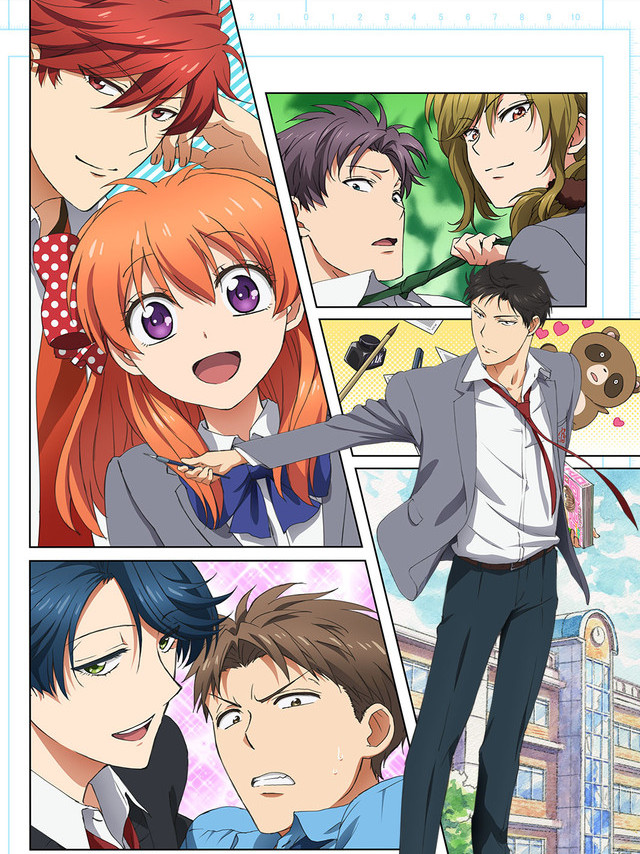
I can’t decide whether Monthly Girls’ Nozaki-kun is a heartwarming parody or a self-aware romantic comedy. Either way, it’s brilliant.

In Japan, there is a genre of manga (comics) called shojo. This genre is aimed at teenage girls, generally focusing on romance and emotional characters. Monthly Girls’ Nozaki-kun is the story of a high school student named Sakura. When she tries to confess romantic feelings for Nozaki, one of her classmates, he mistakes her for a fan of his work. You see, Nozaki—an analytical, unromantic wet blanket—is secretly the writer and artist behind a popular shojo manga series, Let’s Fall in Love. When Nozaki invites Sakura to be his assistant, she agrees, hoping to get closer to him.

This twelve-episode series is a hilarious deconstruction of romantic comedies. The eponymous Nozaki-kun is intrigued by romance, but only from an academic point of view. For example, he loves St. Valentine’s Day, but only because observing romantic couples gives him ideas for his manga series. The thought of actually being romantic never crosses his mind. This makes for some delightful moments when Sakura is convinced he is finally falling in love with her… only to realize he’s testing out ideas for his manga.

For example, Nozaki realizes it’s romantic for a man and woman to share a bicycle, but he doesn’t understand why. He tests the scenario repeatedly with Sakura, eventually acquiring a tandem bike and riding down city streets with Sakura reluctantly in tow. Once he figures out the most romantic method for sharing a bike, he reasons, he can use it in his story for optimal effect.
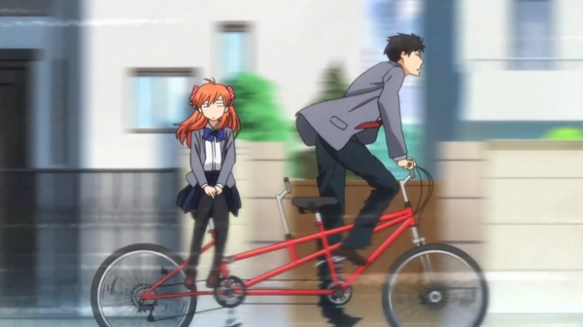
Romantic, I guess

This is romantic, right? Right?!

As Sakura becomes acquainted with Nozaki and his other assistants, she realizes how much of his manga is based on people she knows. For example, the heroine of Let’s Fall in Love is based on Mikoshiba, a flirtatious male friend of Nozaki’s who is secretly very insecure.

Monthly Girls’ Nozaki-kun deconstructs rom-com clichés, yet the series is never bitter or mean-spirited. I was also pleasantly surprised by the show’s family-friendly tone. Japanese anime is notorious for its inappropriate content. As I began this anime about high school romance, I resigned myself to the saucy innuendos and panty shots that plague other series. Monthly Girls’ Nozaki-kun rises above cheap lewdness, keeping things at a PG level. I found the show’s innocence added to its charm, which is already considerable.

Like many anime, this one offers fascinating glimpses into Japanese culture. I was particularly interested by the creative process of writing and drawing manga, which is gradually shown in the series as Nozaki enlists more assistants.

I highly recommend Monthly Girls’ Nozaki-kun to anyone who likes anime or romantic comedies. I’m not a particular fan of either, yet I really enjoyed it.

What books, films, shows, or video games have you enjoyed lately? Let us know in the comments!
If Pixar Made a Video Game

I don’t plan to play this game, but dang if this isn’t the most entertaining video game trailer I’ve ever seen.

After a brief, faux-propaganda introduction, the trailer for Overwatch shifts to a style more like Pixar or Disney: let us say, The Incredibles meets Big Hero 6. There’s a gorilla wearing glasses, a sprightly gunslinger, a couple of brave kids, and (of course) some explosions. I really enjoyed this trailer.

The video game industry is full of games with guns. (These games are widely known as shooters.) They’re nearly always gritty and gory. Some of them are actually quite good, yet their unrelenting doom and gloom are depressing… and some of the people who play games with guns are just mean. Bullying is common among players of shooters.

It’s nice to see the developer of Overwatch, Blizzard, taking the games-with-guns genre in a brighter, friendlier direction.

Chris Metzen, a developer for Blizzard, shared a refreshingly positive philosophy for the game: “Is it even possible to build a shooter that doesn’t feel cynical, that doesn’t feel cruel, that doesn’t feel nasty? Can you build one that really promotes teamwork and relationship and having fun with your friends, and not getting killed with a thrown knife from halfway across the map as soon as you jump in?”

I hope it’s possible. Overwatch seems like a great step in the right direction. At any rate, I must give it bonus points for the gorilla.

344. Four Lessons in Storytelling from Disney’s Latest Animated Films

Disney’s three latest animated films—Wreck-It RalphFrozen, and Big Hero 6—offer important lessons in storytelling. I wrote about four of them in today’s blog post, which… um… isn’t actually for this blog.

My post can be read on Animator Island, a community for artists, animators, and people who like animated movies (i.e. cool people). Special thanks to JK Riki for inviting me to write for the site despite my absolute lack of talent for the visual arts!

My latest post, “Four Lessons in Storytelling from Disney’s Latest Animated Films,” can be read here!

My Neighbor Baymax

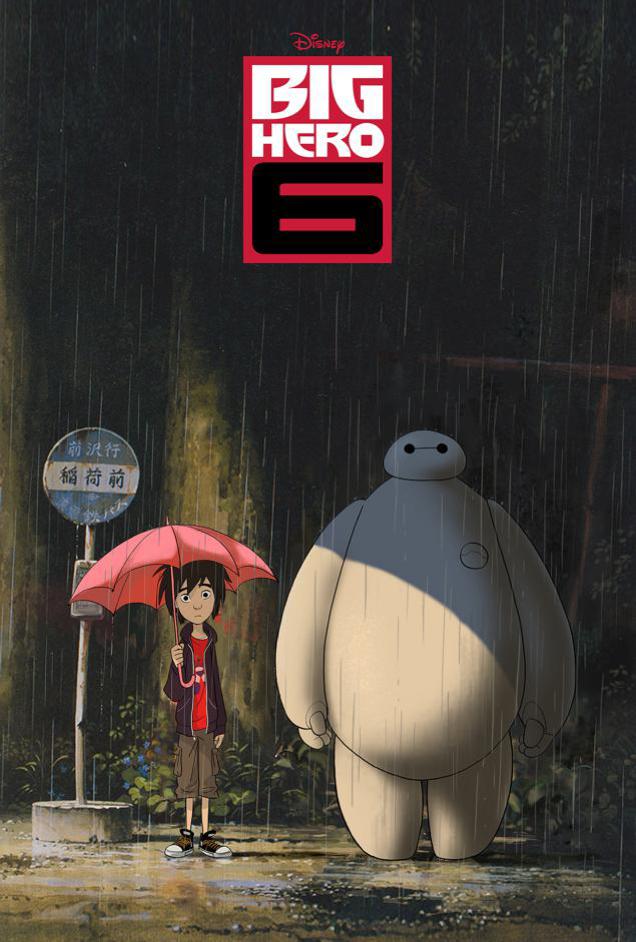
My Neighbor BaymaxBravo, Disney. Bravo.

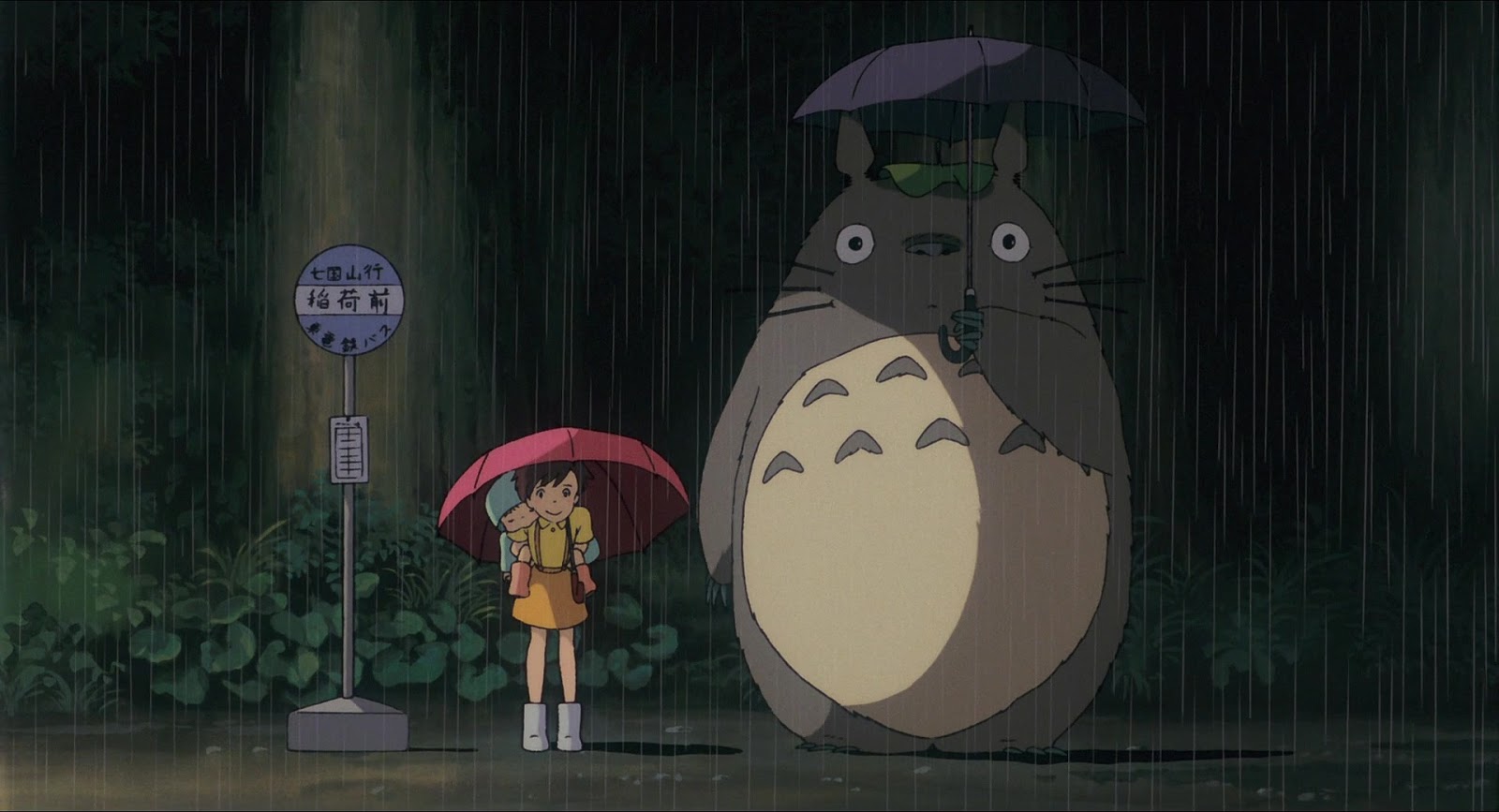
This lovely art was drawn by Jin Kim, a character designer for Walt Disney Animation Studios. It uses the Japan-inspired setting of Disney’s Big Hero Six to pay homage to Japan’s greatest animation studio, the amazing Studio Ghibli.

For comparison, here’s the image from My Neighbor Totoro on which Kim’s picture is based.

Totoro in the rainI really enjoyed Big Hero Six, the first animated Disney movie based on Marvel comic book characters. In fact, it’s one of my favorite films of the past five years. Its story hit all the right notes for me, and its visuals are jaw-dropping. Despite being much more Disney than it is Marvel, Big Hero Six avoids most of Disney’s clichés. There are no princesses; there is no romance; the villain is not pointlessly evil. Big Hero Six is a film about brotherly love, coping with loss, and the futility of revenge. It’s pretty deep stuff… for Disney, anyway.

Anyway, if you haven’t seen Big Hero Six, you should go watch it. And then, regardless of whether you’ve already seen it, you should watch My Neighbor Totoro. You’ll thank me later.

I Really Don’t Hate Christmas

I can be a bit of a grump when it comes to Christmas, but I can’t find it in the darkest corners of my cynical heart to resist the joys of the season for long. The hope and beauty of Christmas outweigh the frivolous nonsense of the holiday it has become. Not even Ebenezer Scrooge or the misanthropic Dr. Doofenshmirtz can really hate Christmas.

Yes, the good Doctor—well, the bad Doctor—from Disney’s Phineas and Ferb is back, this time lamenting the fact he can’t seem to work up a nice, healthy hatred for America’s favorite holiday. Doofenshmirtz is one my favorite television characters, and I applaud him for flinging about words like ambivalenceinvective, and animosity in a kid’s cartoon. A large vocabulary is most admirable… even if it’s mostly spent griping about the holidays.