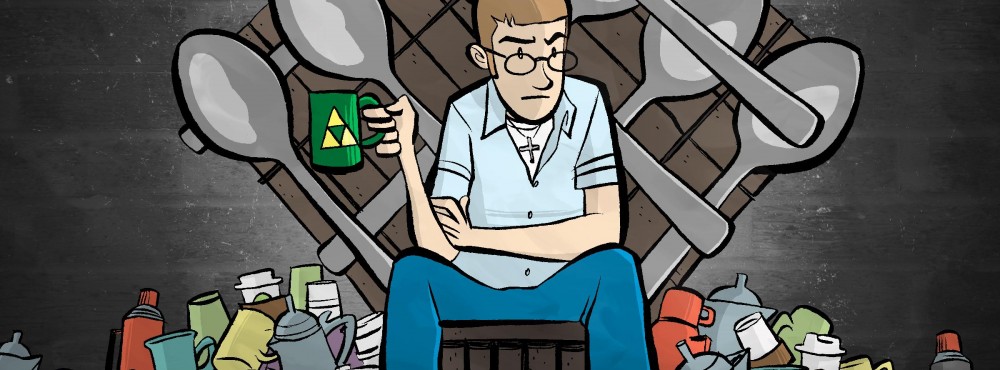
170. Batman Syndrome

I have Batman Syndrome.

I wish this meant I were as cool, skilled or accomplished as Batman. It does not. It most certainly does not. What it means is that Batman and I have something in common: we obsess over our mistakes.

If you or someone you love suffers from Batman Syndrome... I feel your pain.

If you or someone you love suffers from Batman Syndrome… I feel your pain.

I like fictional characters who overlook their victories and overemphasize their failures. There’s something compelling about characters who are heroic without realizing it. Take the Doctor from Doctor Who, who has saved every planet in the universe roughly twenty-seven times. In all his travels through space and time, he never leaves behind his insecurity, self-loathing or guilt. Consider Jean Valjean from Les Misérables, who atones for a few petty crimes by spending years serving the poor and helpless. They bless him as a saint. He despises himself as a criminal.

Then we have Batman, the eponymous sufferer of Batman Syndrome, who is so blinded by guilt that he fails to recognize one all-important fact: he is freaking Batman. No matter how many thousands of people he rescues, he remains obsessed with the two he failed to save.

I’m not a savior like the Doctor or a saint like Jean Valjean. I’m certainly not a superhero like Batman. Even so, I occasionally do things right. I also do things wrong. In my mind, the wrong things eclipse the right ones. A mistake cancels out all successes.

This isn’t always such a bad thing. I feel driven by my mistakes to try harder, to be better, to get it right. In the short term, it helps.

In the long term, however, Batman Syndrome wears away my confidence. It also makes me anxious. Dash it all, does it ever make me anxious. Doing anything is hard for someone desperately afraid of making mistakes. Perfection is a lousy minimum standard.

Batman Syndrome haunts me with one dreadful question.

You’ll never get it right, so why even try?

I write a lot about grace and stuff. In the end, I suppose it’s because I’m amazed (and sometimes incredulous) that God loves me. I’ve made a lot of mistakes. More to the point, I make a lot of mistakes. It’s easy for me to accept God’s forgiveness for a sin committed ten years ago. What’s hard for me to accept is forgiveness for a sin committed ten minutes ago.

It can also be hard for me to acknowledge my victories. I want to be humble, but there’s a difference between true humility and false modesty. I’m often reminded of my weaknesses. I think I must also allow myself to be reminded of the strengths God has given me. I’ve a long way to go, but I mustn’t overlook how far I’ve come.

I’m not Batman, and I think I’m finally beginning to accept that I don’t have to be.

169. Kingdom Hearts

Do you remember when I claimed the Super Mario Bros. games are weird?

Forget about them. For video game weirdness, look no further than Kingdom Hearts.

Kingdom Hearts

I may have mentioned this series once or twice before, but it’s worth taking an entire post just to examine how incredibly strange it is.

In fact, the only thing stranger than the Kingdom Hearts games is that they’re actually pretty awesome.

I won’t even try to explain the story of Kingdom Hearts. Frankly, I’m not sure I understand it. The plot is endlessly convoluted, hinging on a complicated cosmology that’s never really explained. Locations in the Kingdom Hearts games might be illusions, memories, computer-generated virtual realities or even real places. Characters might be Heartless, which are ex-people; Nobodies, which are pseudo-people; computer programs, which aren’t any kind of people; or even—wonder of wonders!—ordinary people.

Odd as these things are, they don’t begin to compare to the thing that’s strangest about the Kingdom Hearts games: they’re a collaboration between Disney and Square Enix, which means Final Fantasy characters rub shoulders and bump elbows with characters from classic Disney films.

Yes, this means a murdering, genocidal psychopath like Sephiroth is in the same game as Winnie-the-Pooh. Complex, brooding heroes like Cloud Strife and Auron interact with Goofy and Donald Duck.

Oh, and did I mention the protagonists of the Kingdom Hearts games fight with oversized keys?

I'm desperately resisting the urge to make several key-related puns.

I’m desperately resisting the urge to make key-related puns.

Even though the story of the Kingdom Hearts games is all but incomprehensible, it manages to deliver many surprisingly touching moments. The plot may be confusing, but the characters are easy enough to understand. Wonderful character moments such as poignant goodbyes and tragic sacrifices leave the player misty-eyed. At least, they left this player misty-eyed.

The Kingdom Hearts series belongs to the genre known as hack and slash, in which gameplay consists mostly of hitting things with swords… or keys. Fortunately, the series adds exploration, platforming, role-playing elements, minigames and other gameplay mechanics to prevent the games from becoming stale.

Although its story is hard to follow, the Kingdom Hearts games have some of the best presentation I’ve ever seen in video games. The music is fantastic, whether it happens to be upbeat or heart-rending, and the voice acting is superb. (Disney got most of the voice actors for its classic characters to reprise their roles for the Kingdom Hearts games.) The cutscenes are impressive and occasionally a bit trippy.

You know, trippy is a fine word for the Kingdom Hearts series. The games are trippy in the best possible way. If you ever play a Kingdom Hearts game, don’t try to understand it. Just enjoy the ride, and try not to lose your keys.

168. That Time I Was Robbed… Twice

I’m running out of That Time I _____ posts, which is why this blog hasn’t had one since August. I don’t allow myself to make up any of these stories, so they’re in limited supply.

Since I settled last year in small-town Indiana, it has gradually dawned upon me that I probably won’t get mugged if I go out at night. Years of living in Ecuador conditioned me to be cautious. After dark, the streets in cities like Quito are not exactly the safest place.

I once fell prey to a band of thieves on the streets at night, and it was rather a dull business.

Honestly, I’m not sure whether to be disappointed or thankful the incident wasn’t more exciting. There were no knives, guns, blackjacks, nunchakus or venomous snakes. As I strolled along a sidewalk in Quito, three or four hoodlums descended upon me, ripped a silver chain off my neck and snatched some items out of my backpack.

With tremendous sagacity and presence of mind, I skedaddled.

I hailed a taxi once the thieves were out of sight. Now there’s something I need to make clear. Taxi drivers, known as taxistas in Ecuador, sometimes swindle their passengers by charging too high a fee—especially if their passengers are gringos. (There is a widespread and decidedly false notion in parts of Ecuador that all gringos are wealthy.) The best way to avoid being swindled is to keep an eye on the taximetro, or taximeter, making sure the taxista turns it on and charges not a cent more than it indicates.

Well, I was too flustered after being robbed to check the taximetro. I hopped blithely into the taxi, gave the taxista directions and sat in stunned silence. When the taxi stopped just a few minutes later, the taxista demanded five dollars.

This was ridiculous. Taxis are pretty inexpensive in Ecuador—they’re used mostly by people too poor to buy cars—and we hadn’t spent even five minutes driving.

I objected. The taxista repeated his demand. I played my trump card and threatened to summon a policeman. The taxista made a reply I’ve forgotten, but the gist was something like “Bring it!”

Tired, angry and desperate to get home, I paid the taxista. I was twice a victim of robbery that night, but it didn’t matter. I was home.

Looking back, I have to admire that taxista. Any petty criminal can snatch a necklace or a bag. It takes an artist to persuade the victim to surrender his money.

These days, I don’t worry much about getting robbed on the streets. My town seems to be populated mostly by Amish, squirrels and senior citizens, so muggings are rare.

167. About Writing: Narrative Structure

Two brief personal notes: First, my ever-changing schedule has reverted to normal. For now, I’m back to working during the day and sleeping at night like an ordinary person. Second, my thanks to everyone who took part in Be Nice to Someone on the Internet Day! It’s totally happening again on March 4 next year!

This blog hasn’t had a proper About Writing post since… October. Ouch.

Let’s fix that.

Narrative structure is a phrase I use to describe the way a story is told: a catch-all term for those fun, creative storytelling techniques that make a story different.

There are many ways to tell a story. Most stories begin at the beginning and end at the end. Many stories use only one narrator.

These are great ways to tell a story, but they aren’t the only ones.

Consider the following story: A, B, C. Let’s pretend is the start of the story, chronologically speaking. That makes the middle and the conclusion. My story is linear: it happens in order.

What if I want to tell my story out of order? It could be B, A, C. The reader can be introduced to a story in progress, with earlier events in the narrative revealed through flashbacks and the conclusion at the end. I could even tell my story backwards—C, B, A—as movie director Christopher Nolan (who is famous for films like The Dark Knight and Inception) did in Memento, a disturbing yet excellent film about a man with short-term memory loss.

Let’s consider another aspect of narrative structure: perspective.

One of my favorite narrative tricks is to switch perspectives as I tell a story. Two stories I’ve posted on this blog, The Infinity Manuscript and Zealot: A Christmas Story, give each chapter from the perspective of a different character. As a writer, it’s refreshing to bounce from one perspective to another as the story unfolds.

Things get even more fun when stories use multiple first-person narrators with different voices. A single scene can be described or interpreted in many different ways. It all depends on who does the describing or interpreting!

Then there are side stories. I love side stories.

There’s a word I like in Japanese: gaiden, the romaji form of the word rendered がいでん in hiragana and kana syllabaries. (This is what Wiktionary tells me. I don’t actually know Japanese.) A gaiden is a side story: a narrative that supplements or completes another narrative.

Call it a gaiden or a side story or whatever else you like: it’s awesome.

Orson Scott Card published a novel titled Ender’s Game, in which a boy named Ender is trained by the military to be humanity’s greatest asset in an interstellar war. Fourteen years later, Card published a companion novel: Ender’s Shadow.

The later novel tells roughly the same story as the first, but Ender is no longer the protagonist. The spotlight follows Bean, a supporting character from Ender’s Game. It’s the same story from a completely new perspective: introducing new characters, expanding the role of familiar ones and introducing fascinating subplots.

By intersecting with the original story at key points, Ender’s Shadow greatly improves Ender’s Game while being a fantastic novel on its own.

Here’s a geekier example: one of my favorite games in the Ace Attorney series is the criminally underappreciated Ace Attorney Investigations: Miles Edgeworth. This game takes the two most important characters in the series, Phoenix Wright and his assistant Maya Fey, and relegates them to the briefest of background cameos. Supporting characters Miles Edgeworth and Dick Gumshoe become the protagonists.

The other games in the Ace Attorney series merely lengthen its story. This particular game broadens its story. By giving center stage to secondary characters, the game gives a delightful alternate take on the series… and proves its story is compelling enough to survive without its usual protagonists.

There are all kinds of clever narrative tricks, but I’ll mention just one more.

My all-time favorite episode of my all-time favorite television show is, without question, “Tales of Ba Sing Se” from Avatar: The Last Airbender. Up to that point, nearly every episode of the show follows a predictable pattern: a primary plot following the protagonists interweaves (and sometimes intersects) with one or two secondary plots following the antagonists. This narrative structure is simple and effective—and “Tales of Ba Sing Se” throws it out the window.

“Tales of Ba Sing Se” is a series of vignettes or character sketches. There are no great adventures, just glimpses of the characters’ daily lives. Some of these tales are funny. One character gets caught up in a haiku contest that seems suspiciously like a rap battle. Some of these tales are sad. One character visits his son’s grave to wish him a happy birthday.

Tragic or comic, these tales develop the characters and give the viewer a wonderful break from the plot-heavy episodes that come before. “Tales of Ba Sing Se” is a deep breath before the show plunges into a season finale: a chance to get to know the characters a little better before they’re swept off again by their adventures. I love it.

Innovative narrative structures can make a story refreshingly different, but they can also sabotage it. Not every story needs to be a gaiden told in a nonlinear way from multiple perspectives. Some stories are best told straight. It’s easy for a creative narrative structure to become a distracting gimmick.

In certain cases, however, a clever narrative structure can make a story brilliant.

166. A Blog Post with Many Exclamation Points!

Today is Be Nice to Someone on the Internet Day!

Go to someone’s Facebook profile, blog page, YouTube channel, deviantART page, Twitter profile or Tumblr account and leave a sincere, encouraging comment! Send someone an appreciative note, message or email! Find some other way to be nice to someone on the Internet!

Go quickly, before I run out of exclamation points! Let someone know he or she is appreciated! This is your mission!

That’s it, I’m out of exclamation points.

In seriousness, take a minute today to make the Internet awesome, and spread the word about Be Nice to Someone on the Internet Day.

In the meantime, I’ll order more exclamation points for this blog. I’m also short on the letters Q and K. I wonder why that is. I hardly ever use those letters. Oh, well.

Hey, here’s one last exclamation point. I’d better use it carefully.

Here goes: Go be nice to someone on the Internet!

165. Wishing I Had My Own Theme Music

This Monday, March 4, is Be Nice to Someone on the Internet Day. That said, follow the good (or bad?) example of Scar from The Lion King and be prepared!

People in video games get their own theme music. I envy them.

Take Princess Zelda from the Legend of Zelda games. She has a wonderful musical theme. Seriously, check it out on YouTube. It’s beautiful. The soft, lovely notes of this song reflect Zelda’s character: kind, pure and gentle.

On the other end of the scale we have charming psychopaths like Sephiroth, a truly daunting villain. His musical theme is… not beautiful. It’s actually kind of terrifying. Somewhere between the chanting choir and the screaming guitars, the player gets a strong impression that Sephiroth is not a nice person.

I wish I had a leitmotif, my own personal musical theme that accompanied me everywhere. I would, of course, want to be able to switch it on and off at will. An epic musical theme might not be the best thing to have, say, during a church service.

If I could have my own theme music, here are a few possibilities.

“I Can Do It When It Counts, Pal!”

Dick Gumshoe is an incompetent, good-natured, ramen noodle-munching detective from the Ace Attorney games. This upbeat arrangement of his musical theme is simply fantastic. (Seriously, just listen to dat bass.) I’m generally a cheerful person, so I think the song fits. Besides, I really like ramen noodles.

“Detective Conan Theme”

This song is similar to the last one, but bigger and more exciting. The exuberant bass is toned down and replaced with cheerful brass, epic strings and (why not?) some electric guitar. I’m no detective, but I wish this theme were mine.

“Skyrim Theme”

All right, I admit it. I included this song simply because it’s awesome. It doesn’t fit my personality at all, but I still kind of wish it were my leitmotif. Honestly, who wouldn’t?

“BRODYQUEST”

Yes, I’m joking. Well, sort of joking.

If you could have your own personal musical theme, what would it be? Let us know in the comments!

164. Awake, Alive and Highly Caffeinated

Do you remember the recent post in which I announced I would be switching from the overnight shift at my job back to a daytime shift?

Yeah, that didn’t happen. I guess that’s what I get for expecting my life to be predictable.

On the day I published that post, I switched back to my old schedule at work: working a daytime shift instead of an overnight one. The very next morning I received a phone call from my employer asking me to switch back to the overnight shift… at a completely different workplace.

Having just inverted my sleeping pattern completely, I was somewhat annoyed at having to invert it again after one day. I was also apprehensive about adjusting to a new workplace. It has taken me half a year to learn the ins and outs of the group home where I work, and I didn’t think I could possibly adapt to an unfamiliar workplace in just a few nights.

However, to paraphrase dear old Alfred Tennyson, mine not to make reply, mine not to reason why, mine but to do and die. I agreed to my employer’s request.

Having made such a fuss about my switch from overnight shifts back to daytime ones, I wanted to come clean on this blog and announce that I wasn’t switching after all. However, the two weeks that followed my move to the new workplace were… challenging, to put it euphemistically.

My new schedule is a strange mix of daytime and overnight shifts. (I want to smack whoever thought it was a good idea to put daytime and overnight shifts together in the same weekly schedule.) It has taken me a long time to figure out a healthy sleeping pattern.

In the meantime, sleep deprivation made work difficult and kept me from getting things done at home. I’m thankful to have had posts prepared in advance for this blog and grateful to Josh Hamm for his recent post, which spared me from writing one!

Adjusting to a new workplace turned out not to be so difficult after all, and things have finally gone back to normal… or whatever passes for normal in this weird, wonderful life of mine.

I’m not sure when I’ll be returning to my old schedule at my usual workplace. My employer told me it would be several weeks, but I’m not sure what to expect.

For the moment, I’m thankful simply to be awake, alive and highly caffeinated.

163. Jerks, Trolls and Other Hazards of the Internet

The Internet is not a friendly place.

Penny Arcade, a popular webcomic, proposed the following theory: Normal Person + Anonymity + Audience = Total Jerk. (The original theory used a stronger word than Jerk, but I altered it because my mother reads this blog.) Secure in their anonymity, quite a number of ordinary people become insufferable gits on the Internet.

This high population of total jerks defaces the Internet with hatred, strife and bad grammar. Vicious arguments, packed with swearwords and poor spelling, are everywhere.

The Internet has issues, to put it politely. You can hardly swing a USB cable without hitting a hacker, a stalker or a Twilight fanatic. The infamous law known as Rule 34 makes the following proposition: If a thing exists, there is a pornographic depiction of it on the Internet.

Then there are the trolls.

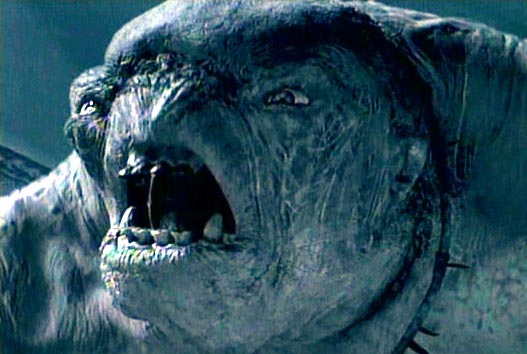
Troll

This troll and the monster in Jabba the Hutt’s basement must be distant cousins or something.

I’m not talking about the monsters who live under bridges and wander into the bathrooms at Hogwarts. No, I’m talking about a different kind of monster: people who amuse themselves by making deliberately offensive or provocative statements.

Trolling can be in good fun, but it can also be horribly cruel. In an article I once read, an anonymous troll admitted to leaving a mocking comment on the Facebook profile of a girl who had recently committed suicide.

Yes, the Internet can be an awful place.

Let’s make it a better one.

You see, March 4 is Be Nice to Someone on the Internet Day. Think of the holiday as a celebration of kindness. If that’s too sappy for you, think of it as a defiant, quixotic stand against the senseless cruelties running rampant across the Internet.

The milk of human kindness hasn’t soured and turned to yogurt quite yet, and on March 4 we’re going to prove it.

On Monday, March 4, go to someone’s Facebook profile, blog page, YouTube channel, deviantART page, Twitter profile or Tumblr account and leave a sincere, encouraging comment. Find someone whom you appreciate—whether an artist, a musician, a blogger, a friend or a total stranger—and let that person know he or she is appreciated.

Years ago, my life was brightened by a slip of paper: a random note of appreciation. It must have taken five minutes to write. I kept it for years. A sincere, thoughtful word of encouragement can brighten someone’s day. It can even change someone’s life.

If you feel inspired, take a minute sometime before March 4 to spread the word about Be Nice to Someone on the Internet Day. You’re welcome to share this blog post, and you’re also welcome not to share it. Just tell people to go be nice to someone on the Internet. Write your own blog post. In your own creative, unique, wonderful way, do something to make the Internet a better, nicer, kinder place.

On Monday, March 4, let’s make the Internet awesome.

162. A Day in the Life of a Writer

Today’s post was written by Josh “The Scholar” Hamm. For more great stuff from Josh, check out his previous guest post for this blog!

“I don’t know why you would be reading this. I don’t know why anyone would be reading this.”

That’s the kind of thing I tend to think others would say when they read my work. I’ve been writing for a long time. I still have the first story I wrote when I was six, a story brilliantly titled “A Knight at Night.”

At least that explains why I’ve always had a penchant for bad puns.

But even with all the writing I’ve done, and all the reading, and deciding that I wanted to be a writer since I was fifteen, I am a terrible writer.

Well, at least I tend to think of myself as a terrible writer. I have somewhat of a self-confidence problem regarding my writing. For the longest time, I wouldn’t let anyone read anything I wrote.

I lived in a state of fear that whatever I did would be mocked by others.

I could live with criticism in essays and such, but in creative works, if anything other than my grammar was corrected without helpful advice on how to improve, I felt hurt. Like my work was worthless drivel.

The problem is that I couldn’t accept praise either. I came to a point where I didn’t think that any work of mine is good enough to receive compliments.

But the real reason I was scared of writing, and of being praised for my writing, is because I was completely terrified that I wouldn’t be able to meet people’s expectations.

My solution?

I stopped writing.

Because if I don’t write, then I can’t suck at writing, because I haven’t written anything to be judged.

Yes, of course, absolutely brilliant. I should give myself a pat on the back for that
idea. Genius.

So I can go around thinking in my head, “Yeah, I’m a writer—maybe even a good writer if I try.” But I don’t try because I’m scared of not being a good writer. See the problem here? If I don’t write, I’m a bad writer, but I don’t write because I’m scared of being a bad writer.

The irony is hilarious. I love it.

So I started writing again. I write personal essays, music and movie reviews. I write about culture, society, religion, philosophy. I’ve started two novels (and have twenty thousand words in one) and various short stories. Some of it makes to my blog, some of it doesn’t.

And guess what?

Almost everything I write is awful.

And I’m (almost) completely all right with that.

Writing isn’t something you can just be good at. No one can write a bestselling novel without a bit of practice. Sure, some people have natural talent, but it’s worthless without practice.

Even though lots of authors like to look smart and say they write things on a whim, inspired by their muse on the “viewless wings of poesy,” nine out of ten times it takes months or years of hard work.

Many renowned English poets claim to be inspired by a moment of nature and able to write an entire poem in a single sitting.

Coleridge claimed this for his poem “The Eolian Harp,” but he actually spent twenty-five years editing and refining it. William Butler Yeats published poems and then tinkered with them throughout his life.

Alexander Pope, in an excerpt from “An Essay on Man,” writes:

“True ease in writing comes from art, not chance, / As those move easiest who have learn’d to dance.”

What I’m trying to say is that you’re not a writer just because you say you are. You actually have to write.

Practice doesn’t make perfect, but it makes you competent. Your first book is not going to be a bestseller, your blog isn’t going to be frequented by millions of people, and you’re not going to be rich and famous, but you may get good enough to make a living doing something you love. That’s my dream: to make a living writing in some form or fashion.

If you share a similar vision, you have to stop being passive and take action: Write, write, read, write, read, and write some more.

It can’t hurt. Unless you get carpal tunnel syndrome. That might hurt a bit.

And here are some words of wisdom from one of my favourite writers, Thomas Merton:

“If you write for God you will reach many men and bring them joy. If you write for men—you may make some money and you may give someone a little joy and you may make a noise in the world, for a little while. If you write for yourself, you can read what you yourself have written and after ten minutes you will be so disgusted that you will wish that you were dead.”

Keep that in mind when you’re writing.

161. A Conversation with Myself

Hello, Adam.

Go away. Trying to write a blog post here.

Ah, yes. A post for your typewriter monkey blog—the one that’s read by tens of people. Some of them may even be mildly interested in what you have to say.

I happen to like my blog, thank you very much.

Of course. I suppose you must. I mean, who else will?

Seriously, go away.

Why don’t you take a break from your blog and work on your novel? Oh, that’s right. You’re still stuck on that chapter. The one you started six months ago.

Hey! The past six months have been crazy and busy and stressful. Survival comes before creative writing. To quote Louisa May Alcott, “First live, then write.”

Ah, it was only a matter of time before you quoted somebody. You really, really enjoy quoting people, don’t you? You think it makes you seem smart and bookish. I think it makes you sound like a pretentious twit.

Yes, I like quoting people. So what? I haven’t given up on my novel, by the way. This is the year I finish the deuced thing.

We don’t use words like deuced in America, son.

I like dated British idioms.

I know, and I think it’s really cute that you use them. Wait, did I say cute? I meant annoying.

Do you know what? I kind of hate you.

That’s funny, Adam, because you and I happen to be the same person. Therefore, if you dislike me, who is it you really dislike?

I wouldn’t mind so much if you were… you know… cooler. A shadow version of me with glowing red eyes, maybe. The Shadow Adam. The Anti-Adam. My evil doppelganger. But you’re not any of these things. You’re just annoying.

The truth is sometimes annoying, but that doesn’t make it any less true. I’m here to give you healthy doses of realism when you get drunk on excitement and optimism. I’m here, Adam, because I care.

You’re twisting the truth and you know it. You’re exaggerating the nasty facts and hiding the good ones and generally making things seem much worse than they are.

Just listen to you! I know you like big words, so here’s one for you to chew on: pontificating. More to the point, stop pontificating!

Would you kindly go away? I need to finish this blog post.

You’ll never be Jon Acuff, you know.

Go away.

You’ll certainly never be C.S. Lewis.

Go away!

You won’t make a difference.

That’s it. Listen here! I will make a difference. It may not be a big difference. It may be a very small difference, but even a small difference can cause a whole lot of good.

Why do I get the feeling I’m about to hear another one of your fancy quotes?

Well, you are. “Sometimes you can feel like what you have to offer is too little to make a difference, but today I learned that every pony’s contribution is important, no matter how small.”

Wait. Wait. Are you quoting that stupid cartoon about rainbow ponies? That’s pathetic, Adam.

Hey! You can’t blame me for being pretentious, and then fault me for being childish.

I can, because you’ve somehow managed to be both. Congratulations.

Dash it, at least I’m trying to do something worthwhile!

Yes, yes you are. Trying and failing.

“Next to trying and winning, the best thing is trying and failing.”

Ah! Do you never stop quoting people?

Shut up and listen. In the vast scheme of things, I might not have much to offer. Individually, few people can change the world. But what if everybody tries? What then?

What if everybody fails?

God used a little boy’s lunch to feed thousands of people. What might he do with a person who tries to be useful?

Fine. Keep trying. See how little difference you make.

I will. Now tell me something. What are you doing to make a difference?

That’s a stupid question.

You don’t have an answer, do you? That’s what I thought. Now go away. It’s too late for me to finish this blog post, so I guess I’ll have to improvise… or maybe not.

You’re going to post this conversation on your blog, aren’t you?

Yup.

Your readers will think it’s an awkward confession or a plea for attention or something. Besides, this has been a really lame conversation.

Hey! That’s as much your fault as mine! I have to post something today. This conversation is better than nothing. Who knows? Maybe it’ll encourage someone to make a difference—or at least to try. Now go make us some coffee, will you?