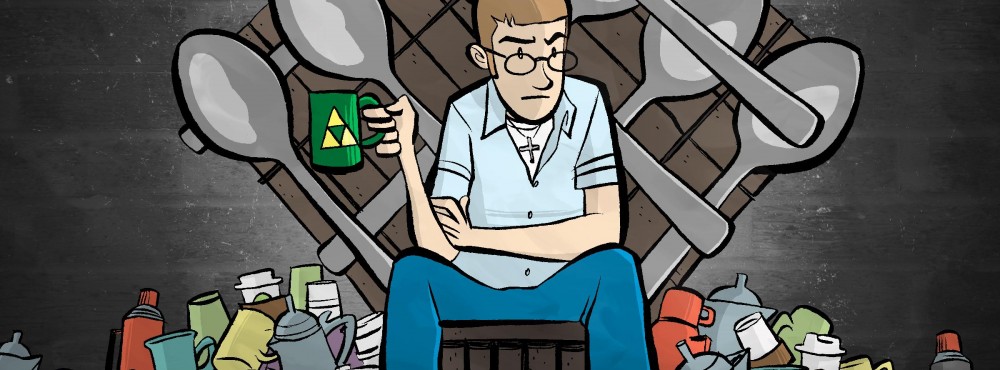
406. TMTF Reviews No More

I won’t be reviewing stuff anymore on this blog.

(That’s the short version of this post, so you may stop reading here if you like.)

Since the dawn of time—well, since late 2011—I have reviewed media for this blog. Yes, I know I have a problem. I have the spiritual gift of nitpicking. I can’t help it. Since I already reviewed things in the privacy of my muddled mind, it seemed logical to write expanded versions of those reviews for TMTF.

I wound up tearing through books (and later video games) faster than I could review them, so I eventually decided to review things in groups instead of individually. A single Review Roundup could replace five or six individual blog posts. Perfect!

A problem arose, however: Reviews become really tedious to write. In a small way, they also made reading books, playing video games, and watching movies kind of a chore. I found myself frequently making mental notes: I have to remember to mention this in the review. I can’t forget to talk about that. Oh, I’ve got to bring up this point. With so many notes and observations rattling about in my head, I found it harder to enjoy whatever I was doing.

In other words, reviews took the fun out of fun.

I’m always reluctant to remove features from this blog. I like consistency, and I don’t like giving up on things. All the same, like other abandoned features before it, Review Roundups shall cease. TMTF shall blunder on without them, with heavy heart and lighter step.

I don’t regret reviewing stuff. Reviews were good mental exercises. Besides, I’ll continue making mental reviews; I just won’t write ’em down anymore. Ending this blog’s formal reviews leaves more room for… um… whatever it is we do around here. Heck if I know.


There is at least one good thing we’re doing around here—we’re raising money to provide clean water to impoverished people for Christmas! Please take a moment to check out Operation Yuletide. There are even rewards and stuff! Check it out here!

Everything I Know about Creativity I Learned from The Legend of Zelda

Today’s post was written by Wes Molebash, blogger and cartoonist extraordinaire. Be sure to check out MOLEBASHED, his latest webcomic!

Like most people my age, I grew up playing the Legend of Zelda video game series. I loved every minute of those games, and Ocarina of Time played a defining role in my young adulthood.

Now I like to consider myself a “creative person.” What I mean by this is that I love to create art and I’m always scheming of my next “big” project. Ideas are cheap; art is work, and I’m absolutely in love with the creative process.

That being said, I realized the other day as I was toiling in my basement office that everything I know about creativity was learned from playing the Legend of Zelda video games.

For instance:

It doesn’t matter how small you are or what tools you are using

In several of the Zelda games, Link starts his journey as a little boy who wields a measly wooden sword and a Deku shield. A DEKU shield! No one is afraid of a Deku shield. But he doesn’t let this stop him. He goes straight into his first dungeon and defeats the baddie with his slingshot David-and-Goliath-style. The journey has begun. He’s received his first taste of victory, and he’s off to the next dungeon.

So what does this tell me about the creative process? Simple: It doesn’t matter how skilled you are or how big your platform is or how expensive your tools are, just create! Don’t be hindered by your limited experience or lack of resources. I know famous cartoonists who draw awesome cartoons on three-thousand-dollar computer tablets. I also know a lot of amateur cartoonists who draw awesome cartoons using Ticonderoga No. 2 pencils and Sharpie markers. Take the resources you have and use them to the best of your ability.

Every obstacle has a weak spot—exploit it!

The Legend of Zelda series has been around since the eighties and it continues to follow a familiar formula: go into dungeons, collect maps and compasses and special weapons, and fight seemingly indestructible beasts who all have a glaring Achilles heel. Does the beastie have one huge, rolling eyeball? It’s a safe bet that you’ll want to shoot some arrows into the beast’s ocular cavity. Does the baddie occasionally stop to roar for a prolonged period of time? I’d grab some bombs and make it rain inside that guy’s maw. No matter how big the monster is, his weak point is right there in front of you begging to be struck.

The same holds true with our creative obstacles. They seem impossible to topple, but—the fact is—they’re quite easy to destroy! If I had to guess, I’d say that 99% of our creative obstacles can be toppled by simply CREATING. Are you having a hard time motivating yourself? Get out your tools and create. Do you have some naysayers telling you that you suck at life? Tune them out and create. Are you swimming in a sea of rejection letters from agents and publishers? Take the critiques and criticism with a grain of salt and create.

It really is that simple. Once you get started it’ll be hard to stop. The weak spot of your obstacle is right there staring you in the face. Exploit it.

You’re going to get better

As I said above, when Link starts his journey he is just a little boy with a crappy sword and shield and three hearts in his life meter. However, as he continues his quest he gets better. He collects more weapons. He becomes more resilient. He ages. By the end of the game he’s got the Hyrule Shield, the Master Sword, some rad magic powers, a pair of flippers that help him swim and hold his breath under water, a bunch of sweet weapons in a bag that would be impossible to carry in the real world, and eighteen hearts in his life meter. He finally ends up at Ganon’s door and he’s ready to—as they say in the UFC—“bang.”

The same is true for your creative endeavors. The more you create, the better you’ll get. You’ll also acquire new tools and awesome advice from other creators. Most importantly, you’ll gain experience. No longer will you feel completely daunted by project proposals, pitches, and rejections. It’s all part of the process and you’ll get better and better at those things.

So wipe your brow, keep creating, and—when you need to take a break—dust off your N64, pop in Ocarina of Time, and wander around Hyrule Field for a spell.

What have you learned from video games? Let us know in the comments!


This post was originally published on November 18, 2011. TMTF shall return with new content on November 30, 2015!

400. The Five Stages of Blogging, and Other TMTF Trivia

TMTF will be taking a three-week break, during which it shall republish old posts on its usual schedule. The blog shall return with new content on November 30!

Today we celebrate four hundred posts on TMTF with a rare, behind-the-scenes look at the Five Stages of Blogging.

These describe the creative process experienced by people who write blogs. (They are unrelated to the Kübler-Ross model and its five stages of grief.) Of course, some bloggers may experience more than five stages. Some may experience fewer. The stages may vary from person to person. After all, every blogger is unique!

In writing posts for this blog, I have experienced five distinct stages. The easiest posts took only one or two, whereas the most difficult ones demanded all five.

In this extra-long and extra-special blog post, we’ll take a quick look at the Five Stages of Blogging. (This post took me through all of them.) Then I’ll share a few bits of TMTF trivia before concluding with grateful acknowledgements and a couple of announcements.

Here we go!

Blogging Stage One: Optimism

Blogging Stage 1, OptimismI enjoy thinking of ideas for new blog posts. It’s the effortless part of blogging: the deceptively easy warm-up to sitting down and, y’know, actually writing something.

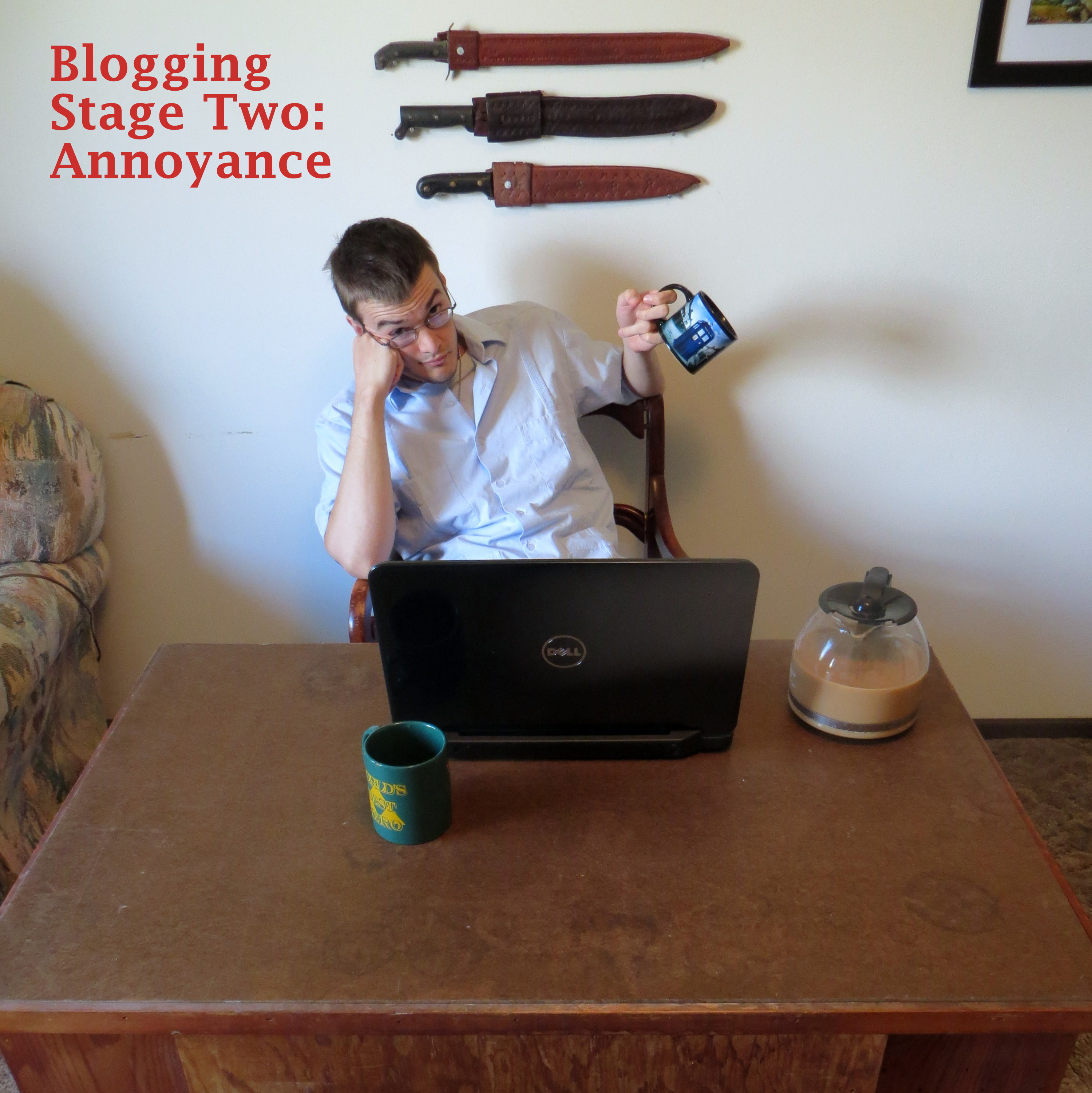
Blogging Stage Two: Annoyance

Blogging Stage 2, AnnoyanceAt some point, I struggle to translate the exciting ideas in my head to words on a computer screen. Ideas are elusive. They don’t like to be pinned down. Sometimes, when written down, ideas change and grow in alarming ways. This is sometimes an amazing thing to see—except that by “sometimes” I mean “roughly 0.086% of the time.” It’s usually just annoying.

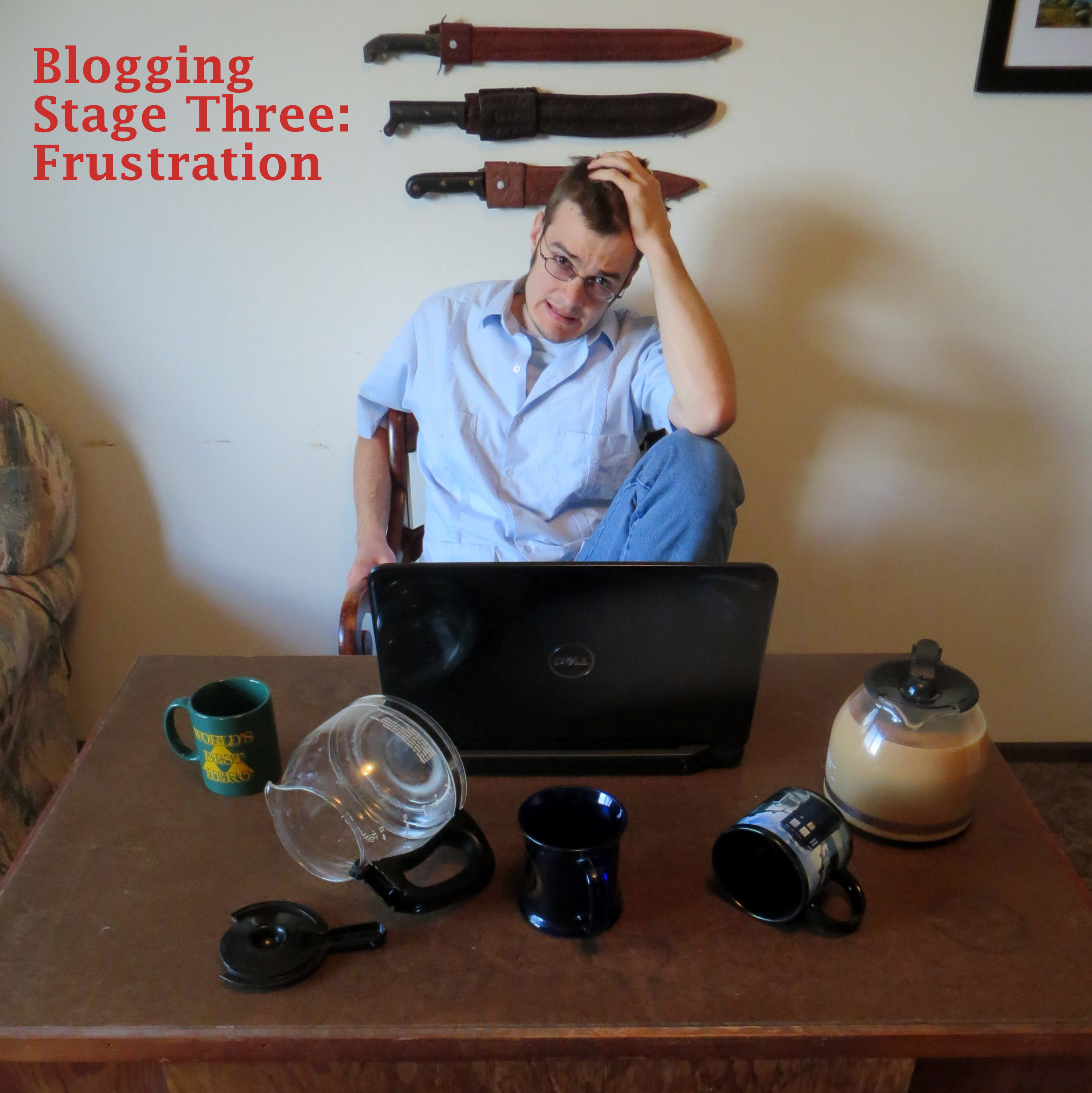
Blogging Stage Three: Frustration

Blogging Stage 3, FrustrationAt some point, annoyance escalates to frustration. I scowl at my laptop, mutter under my breath, brew another pot of coffee, and wish I had chosen a better hobby than blogging. I could have been a cyclist or amateur voice actor, after all. TMTF was an awful idea. At any rate, whatever post I’m trying to write is clearly a stinker. I should really just give it up.

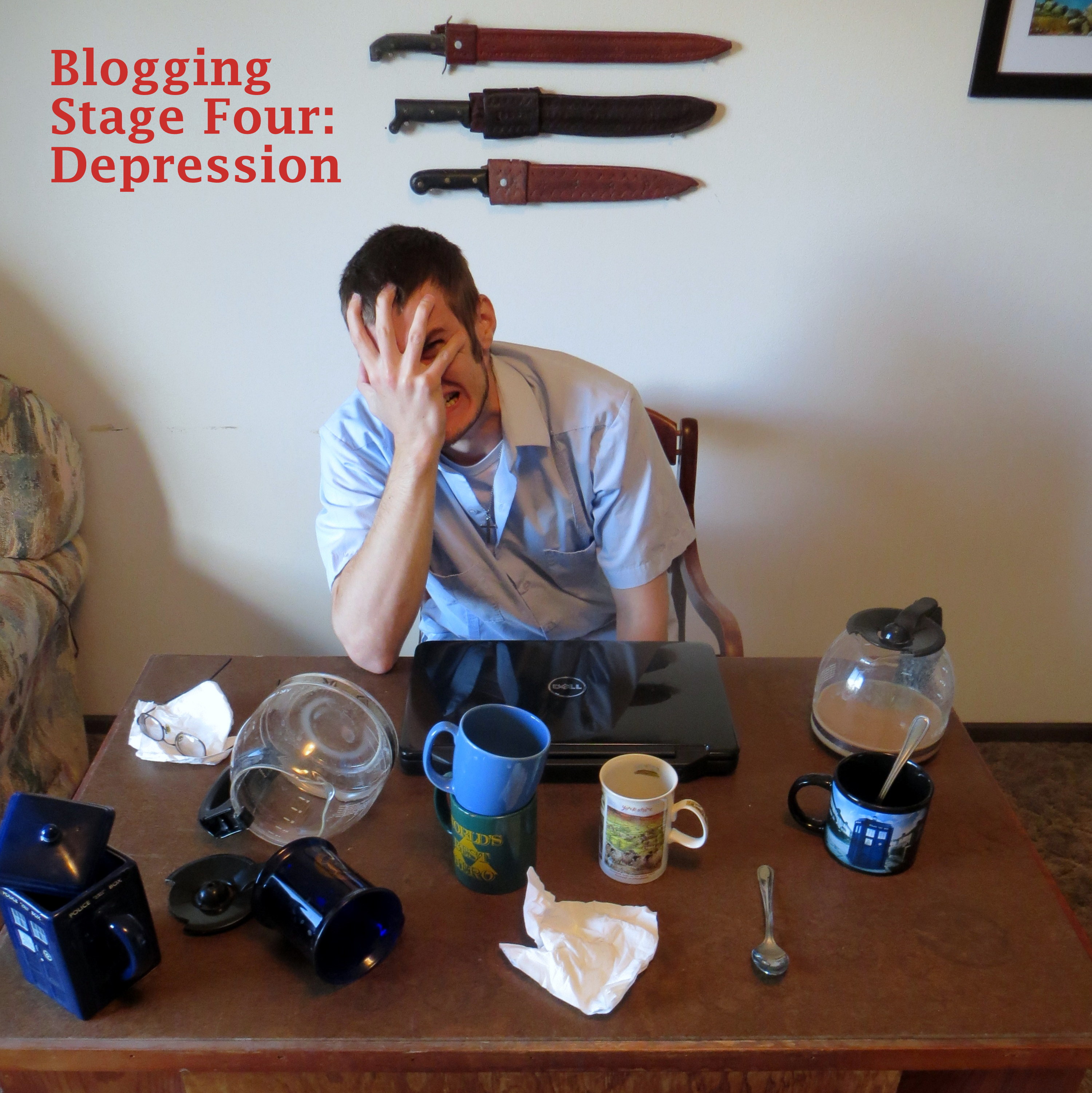
Blogging Stage Four: Depression

Blogging Stage 4, DepressionFrustration darkens to depression, anguish, and bitter regret.

“I just… I just wanted to have a blog, y’know? I didn’t ask for this. This is impossible. I’ve put so much time and stuff, y’know, into this post, this one flipping post, man, and it’s a mess. It’s such a mess.

“Even if I fix it, and I’m not sure I can, it’ll take hours. Hours wasted, man, for one flipping blog post. Then I’ll write another post, and another post, and another flipping post. It never ends. Nothing new under the sun. It’s like that poem, y’know, about the mariner and the albatross. ‘Day after day, day after day, we stuck, no breath nor motion, as idle as a painted ship upon a painted ocean.’ I’m stuck, man. This blog is my albatross.”

Then I stare into my empty coffee cup, crying on the inside.

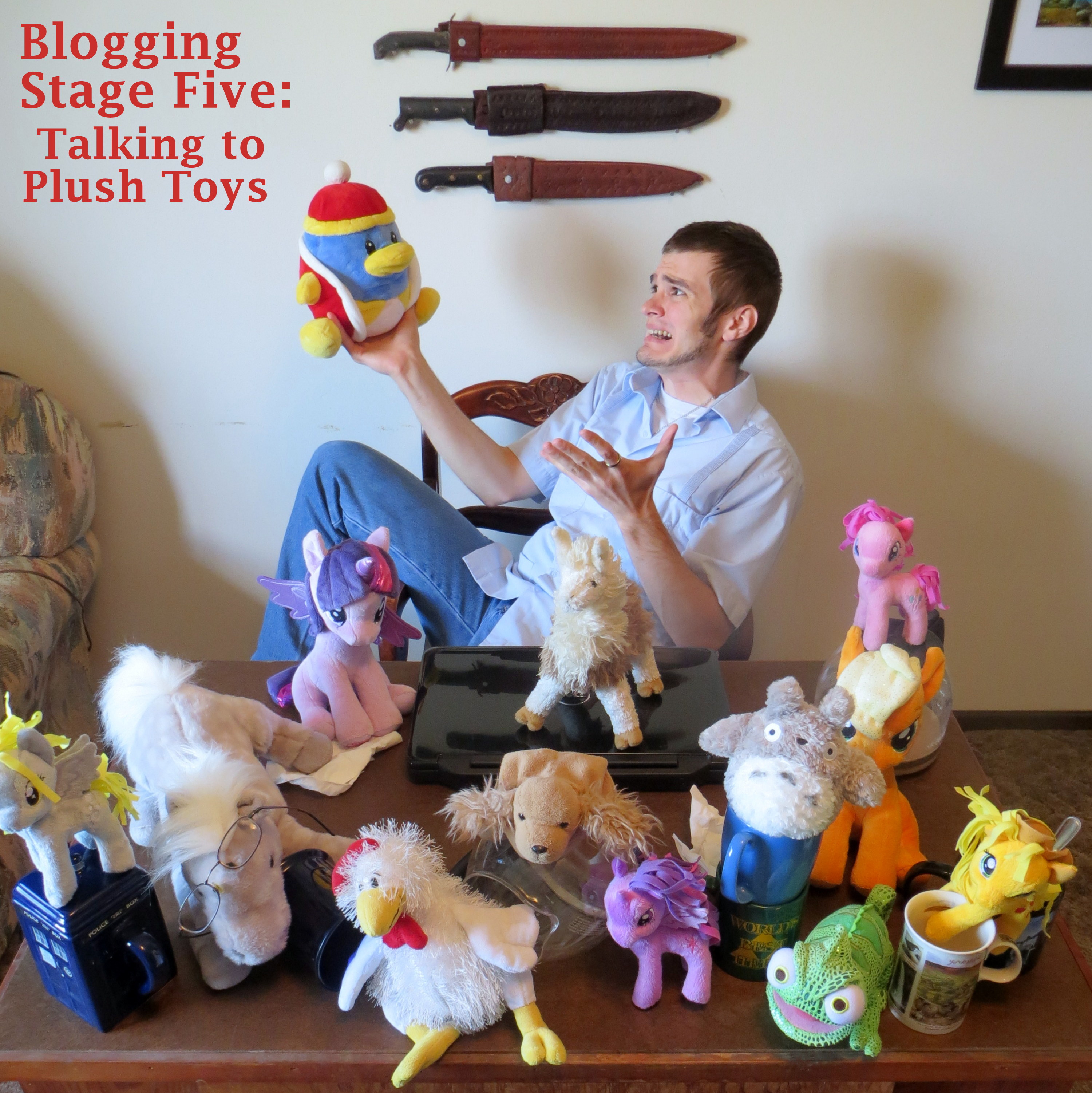
Blogging Stage Five: Talking to Plush Toys

Blogging Stage 5, Talking to Plush ToysI can’t afford counseling. Don’t judge me.

Everything You Always Wanted to Know About TMTF (but Were Afraid to Ask)

Moving on, here are a few pieces of TMTF trivia in celebration of four hundred posts.

  • This blog was inspired by Jon Acuff’s Stuff Christians Like. His blog used humor to say meaningful things about culture, religion, and side hugs. I wanted to do the same kind of thing as Acuff, but with less hugging and more coffee jokes. I also wanted to build an audience (or as the publishing biz calls it, a platform) for my novel. Although the novel bombed, TMTF has stuck around.
  • At first, I treated blogging the way I treated creative writing. I constantly fussed and tweaked and revised, going so far as to edit old posts long after their release. It took me time to realize that a blog isn’t really a work of art, but a journey. Blog posts are footsteps. They represent a writer’s changing experiences, moods, beliefs, and opinions. Instead of worrying about the past, a blogger should keep moving forward.
  • For every hundred posts on this blog—not counting Geeky Wednesdays and creative writing—I try to do something extra-special. The hundredth post coincided with the release of my ill-fated novel. For the two hundredth post, I collaborated with Kevin McCreary (video and podcast producer) on an EPIC RAP BATTLE. (I had never rapped before, and it was a learning experience.) The three hundredth post featured an original animation by Crowne Prince (self-described rogue animator and antagonist) in which I sought counseling from DRWolf (YouTube personality and literal wolf) for my blogging problems. (The good doctor was a much better counselor than any of my plush toys.) I had planned something more ambitious for today in celebration of four hundred posts, but as Robert Burns reminds us, “The best-laid schemes o’ mice an’ men gang aft agley.” (Translation: Stuff happens.)
Frolicking

I love collaborating with creative people!

  • The format of this blog has changed gradually over time. (I’m a bit obsessive-compulsive about it, actually.) In a recent experiment, I’ve put key points in bold type in an attempt to make this blog more accessible. The idea is to let readers skim through blog posts, reading only the bold text and getting abbreviated versions. I’m honestly not sure how well this is working, and I could really use some feedback. Does the bold text help? Is it annoying? Distracting? Let me know in the comments!
  • My jokes about typewriter monkeys, as well as the name Typewriter Monkey Task Force, began on September 10, 2010 in an email to my family. My monkeys quickly became a running joke. When I decided to start a blog, I settled on typewriter monkeys as a consistent motif. It’s nice to have someone to blame when things go wrong.
TMTF clean (paper)

My dad, God bless him, handles most of the original art for this blog—monkeys and all.

Grateful Acknowledgements and Obligatory Threats

Speaking of typewriter monkeys, I have a few words for my blogging assistants, who have just set fire to a corner of my desk. These words aren’t appropriate for this blog, however, so I’ll have to settle for threats: If you monkeys don’t start behaving and put out that fire right this instant, I will end your employment and donate you to the zoo. I mean it this time.

Besides my usual threats, I guess I owe my dirty dozen a reluctant thank-you. Here’s to you, Sophia, Socrates, Plato, Hera, Penelope, Aristotle, Apollo, Euripides, Icarus, Athena, Phoebe, and Aquila. Thanks for working on my blog. I love you guys. At any rate, I’m trying.

As always, I owe my readers many thanks for their support and encouragement. Thank you so much for reading, commenting, liking posts here or on Facebook, writing guest posts, taking part in Be Nice to Someone on the Internet Day, and generally being wonderful. I appreciate every one of you.

You are awesomeSpecial thanks to my parents for their support over the years. My dad deserves an extra round of thanks for all the kind emails and monkey pictures. Thank you, old man. Special thanks also to JK Riki for being the most thoughtful and supportive reader in the history of people who read things. Seriously, JK, thank you.

As always, as I write about Disney villains, chain mail bikinis, and other nonsense, soli Deo gloria—to God be glory.

What Next?

TMTF will be taking a three-week break, during which I will republish old posts on its usual schedule. The blog shall return with new content on November 30!

In other news, TMTF will sponsor a Christmas fundraiser this December for charity! I’m still working on the details, but it will be very similar to last year’s fundraiser, with donor rewards and whatnot. I’m open to suggestions for rewards and fundraising, so feel free to share ideas via Twitter or the Contact page. I’ll release more information about the Christmas fundraiser at the end of this month.

We’ll be back!

398. Five Tips for a Starting Blogger

Not long ago, I received a message from one of my readers. I suppose I’ll call him Socrates. He had recently started his own blog, and wanted to know if I could offer any advice.

I’m not an expert on blogging, but after four years of writing stuff and throwing it at the Internet, I like to think I’ve learned a thing or two.

I responded to Socrates with five tips for a starting blogger—well, to be perfectly honest, I responded with six. Here’s the last one: “Always be on the lookout for tips, tricks, ideas, hacks, and shortcuts.” As I wrote that final piece of advice, I thought, “You know, I could easily turn these tips into a blog post,” and here we are. I try to practice what I preach.

Here are five tips for people who are just starting their own blogs.

1. Figure out a publishing schedule that works for you, and stick to it.

When I started TMTF, I published three posts a week. That was too much. I eventually dialed it back to two posts a week, and later added the Geeky Wednesday feature as a quick and easy alternative to a third weekly post. It took me a while to figure out a publishing schedule for TMTF that I could actually keep.

If you decide to follow a strict publishing schedule, figure out one that you can keep, and then keep it. Readers appreciate consistency! If you publish whenever you feel like it—which is totally a valid way to run a blog, by the way—be transparent about your blog’s lack of a predictable schedule.

Either way, make sure your readers know what to expect, and make sure to deliver on whatever commitments you make.

2. Enjoy blogging for what it is, and don’t expect wild success or instant popularity.

I’ve been blogging for roughly four years, and TMTF still has quite a small audience. For a while, I felt discouraged because my blog hadn’t become as big or popular as others. This led me to ask myself some important questions: Why am I doing this? Is TMTF worth the effort I pour into it? Am I wasting my time?

In the end, of course, I decided my blog was worth keeping. TMTF is (usually) rewarding to write. It’s great writing practice. It has allowed me to keep in touch with old friends, and even to make new ones. This blog has also opened up some cool opportunities, including collaborations with all sorts of awesome people. At the very least, TMTF has given me a voice to share some of the things that matter to me.

TMTF hasn’t become popular or earned a big audience. From that perspective, my blog is a failure. However, from my perspective, my blog is a success.

If you’re serious about blogging, ask yourself why. Do you write your blog to develop your talents? To avoid boredom? To become popular? To share your passions? To meet people? Figure your purpose for your blog, and decide whether the time and effort of blogging are worth that purpose.

3. A community is worth so much more than a fandom, and people matter more than statistics.

When I started blogging, I hoped to earn fans. I’ve learned since that fans are overrated. A small community of people who really care is worth a huge following of half-interested fans. As nice as it is to see those blog stats rise, one nice comment or meaningful discussion means so much more.

4. Do unto others what you would have them do unto you.

I sometimes Like posts from other bloggers, and occasionally leave comments on other blogs. I’m not trying to manipulate anyone into returning the favor. I just know from long experience how encouraging those Likes and comments are to me, and want to pass on that encouragement to others. People appreciate a considerate reader, and it’s a great way to connect with other bloggers!

5. Reply to comments whenever possible.

When I started blogging, I made the colossal mistake of not responding to comments. I received so few that I had no good reason to ignore them, yet I ignored so many. At some point, I think certain readers assumed I didn’t care, and stopped commenting. I deeply regret not showing my appreciation for their comments by replying to them.

By responding to comments, a blogger shows that he cares about his readers. Not every single comment needs a reply, of course, but it’s often worth the few extra minutes it takes to write a response. Besides, that’s how discussions get started!

What’s your best blogging advice? Let us know in the comments!

393. About Storytelling: Magic, Destiny, and Nanomachines

Here’s a question for you: What do fate, magic, nanomachines, and sonic screwdrivers have in common?

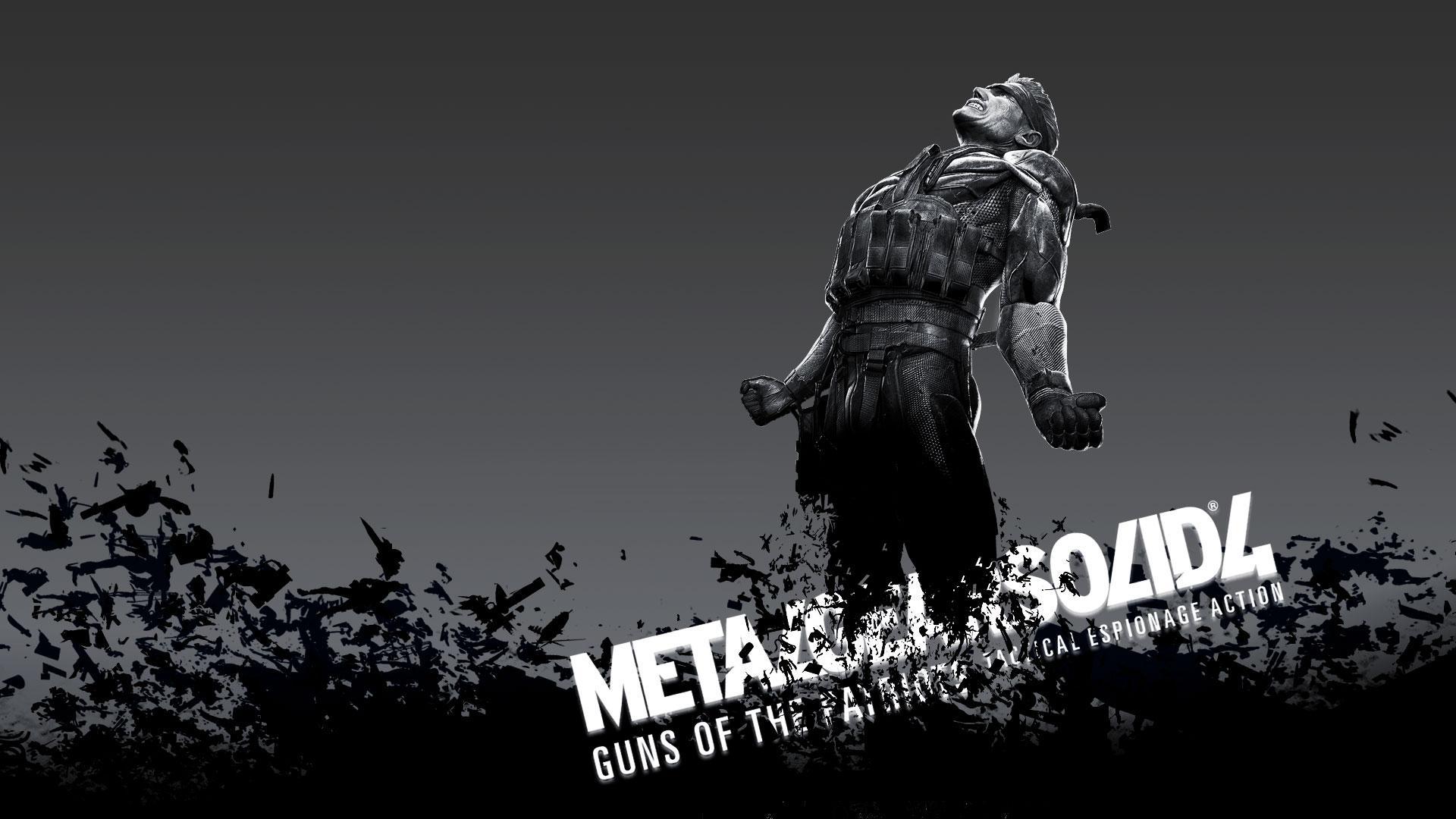
As I mentioned last time, I’ve been playing a video game called Metal Gear Solid 4. Its blend of military intrigue, science fiction, and social commentary is kinda bonkers, but the story’s strangest turns always have an explanation—or, to be more honest, an excuse. That excuse is nanomachines. These microscopic robots are injected into the bloodstream of many characters in the game, giving them superpowers (or super-weaknesses) that defy all other explanations.

How does a character in the game survive being shot in the head and stabbed through the abdomen? Nanomachines. How are entire armies instantly disarmed, disabled, and defeated? Nanomachines. How is a long-dead character revived in a stunning twist? That’s right—flipping nanomachinesEvery impossible twist in the story is explained by these hard-working little bots.

The answer is nanomachines.

The answer is nanomachines. It’s always nanomachines.

In the end, throughout the Metal Gear Solid series, nanomachines are generally the catch-all explanation for things that otherwise make no sense. The audience never learns exactly how they cause immortality, raise the dead, regulate firearms, or do any of the other crazy things they do. Nanomachines are a vague, easy solution to plot holes that can’t otherwise be filled.

Let’s not cast all the blame upon nanomachines, though. Consider how often, especially in fantasy stories, magic is used to explain away things that make no sense. Science fiction often uses technology in exactly the same way. As Arthur C. Clark reminds us, “Any sufficiently advanced technology is indistinguishable from magic.”

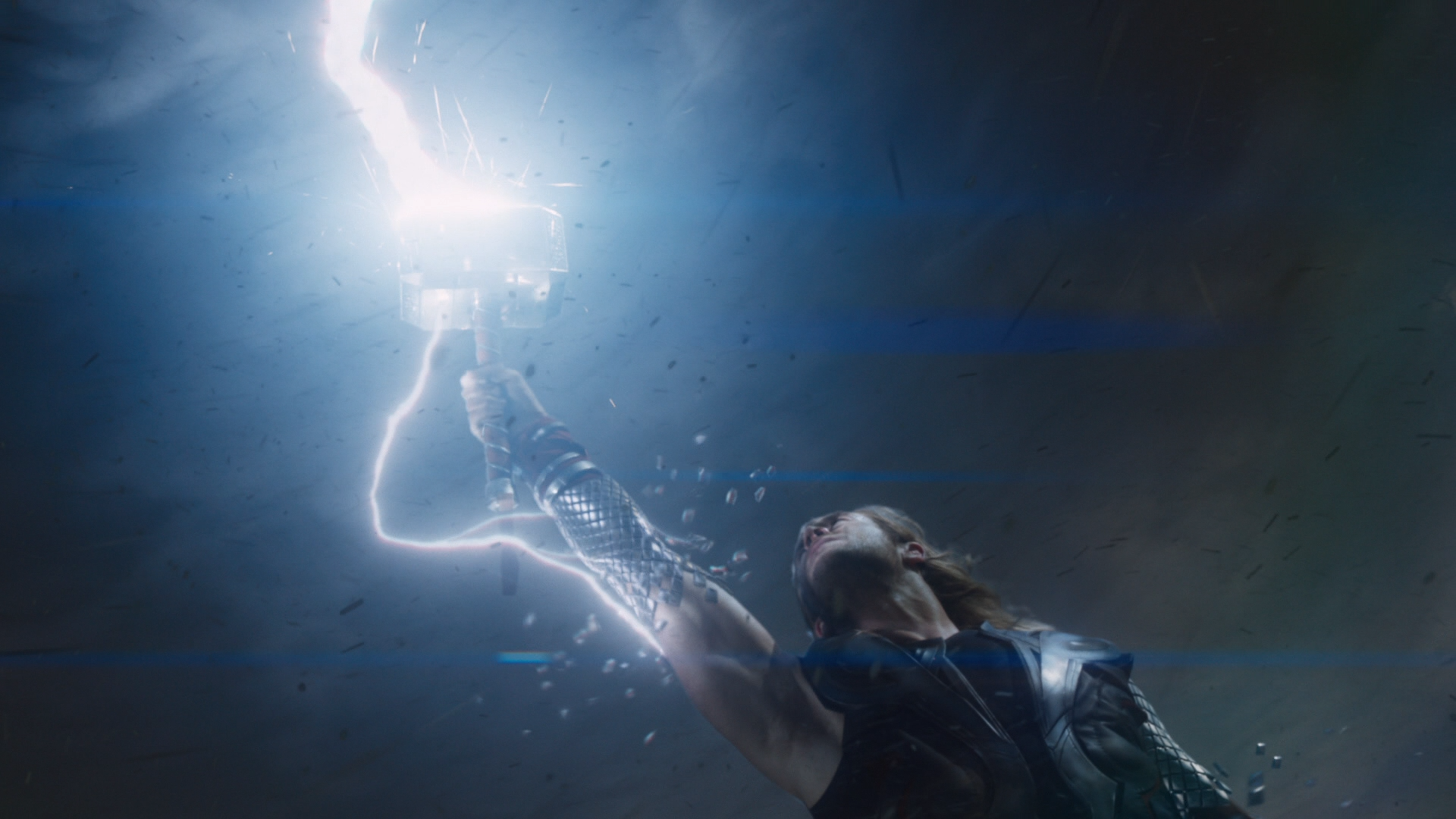
Marvel’s Thor movie openly acknowledges this when its eponymous superhero tells an ordinary human, “Your ancestors called it magic, but you call it science. I come from a land where they are one and the same.” Thor’s hammer makes no sense. Most of the stuff in Marvel’s movies makes no sense. The easiest solution is to claim that it’s incomprehensible technology and call it a day.

Witness the power of... um... technology?

Witness the power of… science?

Fate and destiny can work the same way. In dramas and romances, these vague cosmic forces offer an excuse for crazy coincidences and irrational behavior.

Then there’s Doctor Who. Flipping heck, is there ever Doctor Who. Besides the good Doctor’s sonic screwdriver, which does anything the plot needs it to do, the show’s many plot holes are waved away by the concept of “wibbly-wobbley, timey-wimey… stuff.”

Do you remember the concept of deus ex machina? It’s when a specific problem in a story is resolved by some contrived or impossible solution. This is the same idea, but bigger and more pervasive. It’s when a deus ex machina, instead of resolving a single problem, becomes the storyteller’s go-to resolution for all of the problems.

As cheap or lazy as this sounds, it doesn’t have to be so bad. It all depends on how it’s used. Some stories don’t need to be burdened by a lot of complicated explanations. If media like Doctor Who or Metal Gear Solid 4 obsessed over details, or else cut out everything that lacked a rational explanation, they would be a heck of a lot less fun. If the audience is willing to swallow a vague explanation, and it enables a better, tighter story, then it becomes a good thing.

Used badly, narrative tricks like magic and nanomachines make a story contrived and unbelievable. Used well, they prevent a story from becoming bogged down in details and explanations, and allow storytellers to focus on other areas of storytelling.

I would call my typewriter monkeys my blog’s version of this trick—a vague explanation for the complicated process of how TMTF is kept up and running—except for one thing. My monkeys don’t resolve problems. They cause them!

379. Writing Tips from Gravity Falls

Today’s post was written by JK Riki: rogue writer, animator, and cool dude. For more great stuff from JK, check out his websites on creativity and animation, and find him on Twitter!

If you’re a regular reader here at TMTF, you know Mr. Stück is a big fan of the animated show Gravity Falls. His thoughts on the series are short and sweet, encouraging you to watch without mincing words. In case you need an extra push, though, today we’re going to take a longer look at what makes Gravity Falls so compelling (and some tips you might take away from the show).

Gravity Falls1. Gravity Falls knows where it’s going.

In an interview, GF creator Alex Hirsch talked about the process of creating the show. He explained, “We have a storyline. There is a broad storyline that we’ve come up with—a beginning, middle, and end.”

In today’s television, that is a rarity. Studios and networks are so keen to drag things out for as long as possible that they begin a story with mystery and intrigue, and have no clue where it will end up. If they do know where it might go, they put obstacles in the way for the sole purpose of extending the shelf-life of the series. If it gets renewed for an additional season, up pop more meaningless obstacles. If it does not, hopefully there was warning of the cancellation early enough to produce a reasonable final episode (but often not).

There needs to be a lot of wiggle room in writing. You can’t be so strict that you don’t allow characters to take things in new directions on a whim. That said, if you don’t have a vague idea where you’re headed, it can lead to a mess farther down the road.

2. Gravity Falls isn’t afraid to change.

Possibly because the show has a planned beginning, middle, and end, it isn’t afraid to change. The Simpsons, bless its heart, reverts to status ­quo at the end of almost every episode. Some episodes even make note of that fact for humor purposes. It’s not alone, either. A vast majority of shows have this sort of reset, especially in animation.

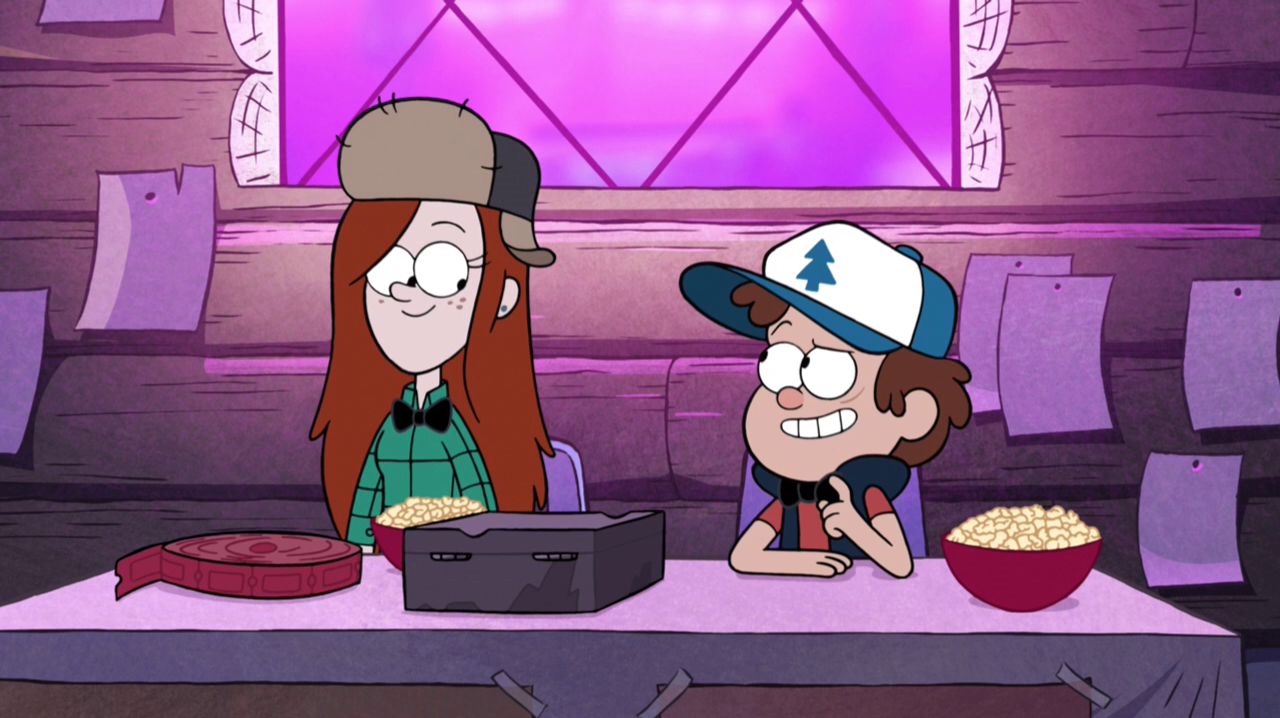
Gravity Falls bucks that trend by allowing progress to be made. Overarching mysteries unfold, and characters grow. One example of this (spoiler warning) is that the protagonist’s crush on a local girl actually plays out, instead of becoming a forced motif for the entire series. I was sad to see it go—I’m a sucker for secret crushes—but giving it closure improved the series.

Dipper and WendyIt’s important when writing a series to allow room for growth. It can be tricky, because some fans of early work will hate later stuff and pine (loudly) for “the good old days.” (This happens a lot in music with long-­running bands, too.) It’s still worth allowing for change to happen, because frankly that’s how life works, and you want there to be a foundation of truth in any creative work you do.

3. Gravity Falls is about characters.

In another interview, Mr. Hirsch mentioned, “Gravity Falls is a show about mysteries and magic, but first and foremost it’s a show about characters.”

The reason Gravity Falls is as charming as it is has very little to do with its marvelous story twists and hilarious jokes. It succeeds because the characters are true and compelling. They have soul and depth. They connect with each other, and the relationships feel solid and real.

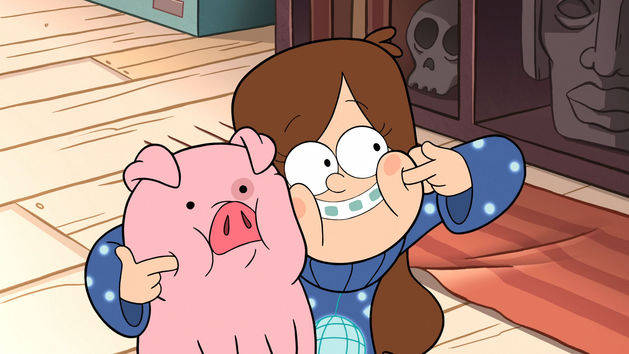
Mabel and WaddlesIf you have one take­away from Gravity Falls as a creator, let it be this: Living, breathing, compelling characters will take you farther than any other writing device.

An audience will watch a compelling character do his laundry, but will quickly grow bored with a flat, one-note character even if they are piloting space ships in a fascinating alternate dimension. Do not skimp on knowing your characters; invest time in them, and you will be handsomely rewarded.

372. About Storytelling: Lampshading

How do you make something more obvious?

You put a lampshade on it, of course. Observe.

Lampshading

In fiction, there are sometimes implausible elements or plot holes that can’t be resolved by the author of the story. How can a storyteller respond to such a thing? That’s easy! The author can simply acknowledge the thing, whatever it is, and then move on.

Of course, this doesn’t fix the thing, but it reassures the audience that the storyteller is aware of it. By drawing attention to the thing—putting a lampshade on it, figuratively speaking—the author can dispense with it and get on with the story. This technique is called lampshade hanging or simply lampshading.

Lampshading is a great technique for writers because, sooner or later, most of us run into plot holes, clichés, or other issues we simply can’t fix. By lampshading those things, we don’t make them go away, but we at least make them easier to swallow.

This is such a notable technique that the logo of TV Tropes, a website that catalogs tricks and tropes used by storytellers, has a literal lampshade hung on it.

TVTropes logo

One of my favorite examples of lampshading comes from Monk, a television show about an obsessive-compulsive private detective. Many detective stories, including Monk, constantly kill off minor characters in order to give the detectives murders to solve. It really stretches the story’s credibility after a while. After all, in real life, people aren’t ingeniously murdered left and right as they are in detective stories.

In Monk, murders and mysteries abound. Everywhere the detective goes, people die. The show never explains this implausible fact, but one episode lampshades it hilariously. After yet another murder victim turns up, the show’s detective, Adrian Monk, has the following conversation with his assistant Natalie and a police officer, Captain Stottlemeyer.

Natalie: Everywhere you go, every time you turn around, somebody is killing somebody else.

Captain Stottlemeyer: That’s true.

Monk: What?

Captain Stottlemeyer: Well, there was the time you went on vacation, and then on the airplane.

Monk: These things happen.

Captain Stottlemeyer: Oh, and then that that stage play.

Monk: It happens.

Natalie: To you! Not to me, not to anybody else. It follows you around. You’re not just unlucky, it’s—it’s something else.

Monk: Bad karma?

Natalie: You’re like a magnet.

Captain Stottlemeyer: Bad karma.

Natalie: It’s like you’re causing it somehow. You’re the Prince of Darkness!

Captain Stottlemeyer: No, he’s not the Prince of Darkness. I’ve seen him vacuuming the ceiling. You wouldn’t see the Prince of Darkness doing that.

Natalie: No, I can picture the Prince of Darkness vacuuming the ceiling, to trick us. He’s very tricky.

Monk: Stop calling me the Prince of Darkness! That’s how rumors get started.

Monk’s tendency to show up wherever murders happen doesn’t make sense, and the show never explains it. By simply acknowledging it, however, the show makes this unbelievable fact a little easier to accept.

Another superb use of lampshading comes from Doctor Who, the enduring British series about a time-traveling wanderer-hero. This show practically wrote the book on lampshading. I can’t find the quote, but I remember one of the show’s writers stating that the plot holes in Doctor Who are explained by the time travel in the show and the resulting butterfly effect. That’s fifty years of plot holes lampshaded by a single statement. Most impressive.

My favorite example of lampshading from Doctor Who is the Tenth Doctor’s explanation of time travel, which posits that time is not a straight line of cause and effect, but “more like a big ball of wibbly-wobbly, timey-wimey… stuff.”

This isn’t an explanation. It’s a statement lampshading the fact that time travel in Doctor Who doesn’t really make sense. We should all just assume that time travel is too difficult for humans to comprehend, leave it in the clever hands of the Doctor, and dismiss any narrative inconsistencies with the words “wibbly-wobbly, timey-wimey.”

If you’re writing fiction, and you’re stuck in an unavoidable plot hole or cliché, consider acknowledging it and getting on with your story. Now, if you’ll excuse me, I need to get this lampshade off my head.

371. Ladies in Fantasy Fiction Need Better Armor

I’m no expert, but I’ve noticed a difference between armor for men and women in fantasy fiction: men wear more of it.

I’m no feminist, but I do believe in treating people with decency and respect. I’m also fairly pragmatic. Most female armor in fantasy fiction isn’t respectful or decent, and pragmatic it most certainly is not.

Here, for example, are male and female warriors from one of the Dragon Quest video games. In the game, they have exactly the same role on the battlefield. Is unreasonable to expect them to wear roughly the same armor?

Amor differencesIn the picture above, the male warrior gets a padded tunic over mail hauberk, along with leather gauntlets, a sturdy helm, a kite shield, and articulated armor plating for his legs. The female warrior, by contrast, gets a tiny mail blouse, half a mail skirt, and random bits of plate armor on her arms and legs.

There are several problems here.

The most glaring issue is sexism, of course. It just ain’t fair for male characters to be fully armored while female characters wear swimsuits. (I’ve touched upon this before.) It exemplifies the concept known as the male gaze: the way visual arts often assume the viewer is male. The male gaze ogles female characters or puts them in revealing clothes, like the chain mail swimsuit above. It’s insulting to women.

(For those ready with the “fantasy fiction is not supposed to be realistic” arguments, I believe at least a small amount of realism makes fiction more believable. If a woman wears dangerously revealing armor, there had better be a good reason for it! For those ready with the “you should stop taking everything so seriously” arguments, I don’t believe fiction is a valid excuse for sexism or double standards.)

This is not, however, a blog post about sexism. Nah, today’s post provides a more pragmatic rationale for giving female characters better armor: the kinds of armor worn by most female characters in fantasy fiction would get them killed.

Let’s take armor styles one at a time.

The chain mail bikini

Chain mail bikiniIt was challenging to find a picture illustrating this style of armor that wasn’t NSFTMTF. (For those who don’t know, NSFTMTF stands for Not Safe For Typewriter Monkey Task Force: a designation covering vulgar language, extreme violence, sexually explicit material, and any media related to Kristen Stewart or Justin Beiber.) Even the picture above pushes the boundaries of good taste.

The chain mail bikini describes any style of armor that (sometimes barely) covers only the naughty bits of a lady’s anatomy. I need hardly describe the practical difficulties of such armor. It exposes vital organs such as the stomach and lungs, providing practically no protection whatsoever. More often than not, what little armor is worn looks like it could fall off at any moment. High heels, which are often worn with chain mail bikinis, don’t allow for quick movement or proper balance.

Are there benefits to chain mail bikinis? I’m really reaching here, but I suppose they could offer good mobility, and might prove distracting to enemies.

Nah. Who am I kidding? Chain mail bikinis are completely useless.

The boob plate

Boob plate armorAs the name suggests, the boob plate is a breastplate with breasts.

Opinions are divided on the usefulness of the boob plate, but the most logical view is that it would probably kill you.

You see, armor doesn’t merely shield the body from sharp or spiky things. It also deflects the force of blows from weapons. A blow from, say, a club will do far less damage if it glances off a breastplate than if it strikes it squarely. In other words, armor is meant to deflect blows, not to absorb them.

The problem with boob plates is that they wouldn’t necessarily deflect blows away from the chest. They could also deflect them inward, funneling them into the cleavage between the breasts—and right into the wearer’s breastbone. Even if a weapon didn’t penetrate the armor, it could fracture the wearer’s sternum. Flipping heck, even falling forward could slam the ridge of metal separating the breasts into the breastbone, breaking it.

As it happens, people who wore armor usually wore padding beneath it, so a woman’s chest would probably be wrapped or padded and wouldn’t require a form-fitting breastplate in the first place.

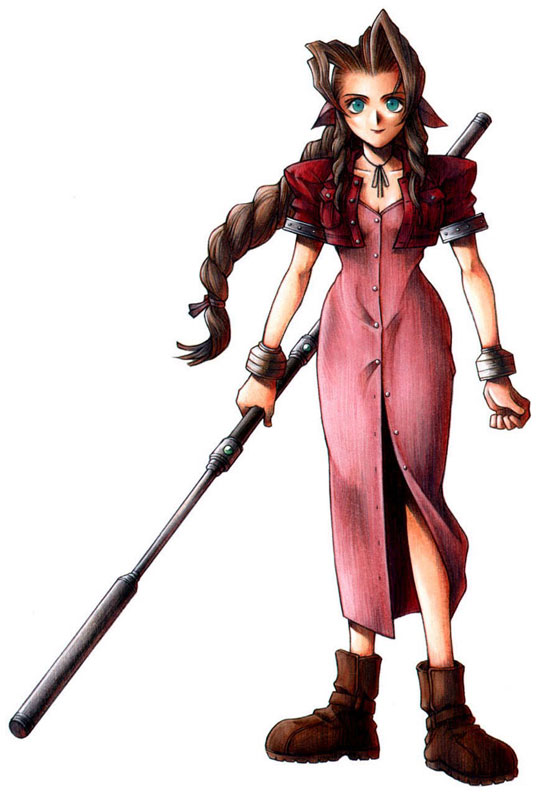
The battle dress

Aerith

A battle dress is a dress worn into battle. Like the boob plate, it’s fairly self-explanatory.

I applaud the battle dress for being less blatantly sexist than other styles of female armor… but it still gets low marks for practicality. Long skirts and dresses have the same problem as capes in The Incredibles: they get caught on stuff. A woman can hardly run, ride a horse, or vault over bushes in a dress. Sooner or later, it will snag on something.

Besides, dresses offer no protection… unless they have chain mail or plate armor sewn into them. Then, unless the armored sections are kept close to the body, such weighted dresses are even more likely to snag on stuff. Besides, any heavy part of the dress left hanging, such as a skirt or long sleeve, impedes movement by swinging awkwardly.

The sensible armor

Sensible lady's amorThe armor in the picture above isn’t perfectly practical—it should lose the flowing skirt, and the breastplate really ought to cover more of the abdomen—but it isn’t bad. (I would cut off the braid and add a helmet, but what do I know?) The shoulders, chest, and legs are protected, leaving the arms free and allowing bend at the waist for wielding so large an axe. The armor also looks awesome as all heck.

Women can wear more or less the same styles of armor as men, with minor adjustments for shoulder width. Even adding a slight outward bulge for breasts is fine, provided it doesn’t include the sternum-shattering cleavage mentioned above; a gentle convex curve can deflect blows as well as anything. Designing sensible female armor doesn’t have to be that difficult.

Is impractical lady armor ever appropriate in fiction? I suppose it has its place, such as in comedic tales and parodies of fantasy fiction. In more serious stories, styles of lady armor which would be useless in battle could be used for ceremonial purposes: parades, coronations, etc.

In the end, however, I think practical armor is definitely the best way to go.

368. Ten Steps to Being a Writer

I had planned to publish a longer post today, but unforeseen complications (read: typewriter monkeys) prevented me from writing one. Instead, here are ten essential steps to being a writer. (I originally shared them on Twitter some time ago.) I’ll do my best to publish a proper blog post next time. For now, dear reader, consider these steps, and write your way to success!

Step 1: Wear glasses. I’ve mastered this step.

Step 2: Acquire a computer, typewriter, pen, or Etch A Sketch pad.

Step 3: Obtain a comfortable chair. Nothing kills creativity like cramps.

Step 4: Write. This is the hardest step.

Step 5: Submit your writing, face rejections, weep, revise, repeat.

Step 6: Become dependent upon an addictive substance. Mine is coffee. (Disclaimer: Don’t really do this.)

Step 7: Be grateful to your readers. Don’t skip this step.

Step 8: Be jealous of better writers. If none are better than you, congratulations: You are P.G. Wodehouse.

Step 9: If you think your writing is never good enough, you’re probably doing it right.

Step 10: Profit. Unless you’re a religious writer, in which case: Prophet.

What are your best writing tips? Let us know in the comments!

Romeo and Juliet and Dave

A Sequel to “A Portrait of the Artist as a Performing Monkey”

“Ave, Imperator! Morituri te salutant,” grumbled Gabriel Green, fumbling with his scarf and scattering snowflakes over the carpet.

The lady at the desk giggled. “I don’t speak Spanish, Mr. Green.”

“Latin,” corrected Gabe. “It means, ‘Hail, Emperor! Those who are about to die salute you.’” He looped the scarf around his neck and pulled it upward like a noose, doing his best impression of a hanged man. “Is Phil in his office?” he asked, somewhat ruining the effect.

“Oh, don’t be such a drama queen,” tittered the secretary. “I’ll let him know you’re here.” She pressed a button and leaned forward to speak into a little microphone on the desk. “Mr. Lector? It’s Mr. Green. Should I send him in?”

“Gabe!” crackled a familiar voice. “Come in, come in, come in! Just the man I wanted to see.”

“You can hang your stuff on the wall over there,” said the secretary, waving vaguely toward some coat hooks on the wall.

“Can I hang myself?” inquired Gabriel. “I mean, will the hooks take my weight, or should I find a sturdy tree?”

Moments later, as he stepped into Phil’s office, Gabriel was met with the comforting smell of old coffee.

“Gabe!” boomed his agent, rising from his desk. “Been waiting for you! Have a cuppa joe. It’s old and sludgy, but I don’t charge.”

Gabriel needed no encouragement. Filling a foam cup, he recited, “Out of the gloom that covers me, when wind is cold and sky is gray, I thank whatever gods may be for coffee on a winter day.”

“That’s good, that’s good,” said Phil, beaming. “An original?”

“From a poem by William Ernest Henley,” admitted Gabriel. “More or less. You wanted to see me?”

Phil motioned to a leather chair across the desk from his own. “Have a seat, Gabe. We gotta talk.”

Gabriel sat down, feeling like a student in the principal’s office. “What have I done this time?”

“The problem’s with your latest book,” said Phil, frowning. “I won’t mince words, Gabe. The Sun and the Spire didn’t sell.”

“It wasn’t exactly a bestseller,” he conceded, “but the critics loved it. The review from The Typewriter Ribbon called it—”

“I don’t care what reviews called it. I call it a loss.” Phil’s tone softened. “Look, Gabe, I love your stuff. You know that. As an agent, I like representing at least one brainy writer for bragging rights. You’re my trophy author.”

“Thanks a lot, Phil.”

“But even trophy authors have to earn a few bucks now and then, and my kids occasionally need to eat. We’re counting on you, Gabe. We need a bestseller: something for Young Adults.”

Gabriel sipped his coffee, stared at his hands, and asked in a small voice, “What did you have in mind?”

“Glad you asked!” exclaimed Phil, slapping his desk. “I’d suggest a vampire novel to entice publishers, but since that’s apparently, ahem, ‘impossible,’ we’ll have to try another angle. How’s a love triangle sound?”

A pained noise, something between a moan and a wail, escaped from somewhere deep inside Gabriel Green.

“You okay?” asked his agent.

“I’ll be damned.”

Phil smirked. “Language, Gabe.”

“A love triangle?”

“You know, a romance where a character has to choose between two lovers. Haven’t you read Twilight or The Hunger Games? They’re hot sellers. They’ve got love triangles.”

“Do you know what else is a hot seller? Romeo and Juliet. Two lovers: great romance. There’s a reason Shakespeare didn’t call it Romeo and Juliet and Dave. Three’s a crowd.”

Phil dismissed the Bard of Avon with a wave. “Shakespeare’s ancient history. We’re talking Young Adults, Gabe. They want love triangles, and publishers want to give them love triangles, and it’s our job to keep publishers happy. Give them a love triangle. And Gabe,” he added, “this time it had better not be impossible.”

Gabriel Green drained his cup, crushed it in his fist, and dropped it in the trashcan as he slunk out of his agent’s office. As he gathered his coat and scarf from their hooks on the wall, the secretary asked, “Where to next, Mr. Green?”

“To find a sturdy tree,” he spat, wrapping his scarf tightly around his neck.

When Gabriel returned to his apartment, he left his winter clothes in a heap on the floor and went straight to the kitchen to brew coffee. Then, reluctantly, he fished a cell phone out of his pants pocket, sifted through his contacts, and selected a number labeled BARBARA.

“Gaby Baby!” cried a breathy voice on the other end of the line.

Gabriel cringed. “Hello, Barbara.”

“When will you learn to call me Babs like everyone else in the universe? Oh, never mind. You haven’t called in forever, Gaby.”

Gabriel,” he corrected. “I’ve been busy: the life of a writer, you know.”

“That’s no reason not to call your big sister now and then,” she pouted. “What do you need? I’m sure you’re not calling because you miss me.”

“I miss you lots,” he lied, “but my reason for calling is that I have some questions about, um, teen romance novels.”

He pulled away the phone from his ear as shrill laughter rang from the earpiece. “You’re writing a teen romance?” gasped his sister. “I never thought I’d see the day.”

“Since you read a lot of romances,” he persisted, “I thought you might, um, have some pointers.”

“Sex!” she exclaimed. “Put in lots of sex.”

“For heaven’s sake, Barbara, I’m writing for teens. They don’t need sex.”

“But they sure want it,” she replied, and giggled.

“These are the times that try men’s souls,” he muttered, and added more loudly, “Moving on, dear sister, what sort of things do writers put in romance novels?”

“Besides sex? Well, the main characters have to be beautiful. The gal should be adorably awkward and clumsy—are you writing this down?—and the guy should have abs, and maybe be a werewolf or a vampire or something.”

“Barbara, I’ve got to go,” said Gabriel. “Something is boiling over on the stove.”

“Wait! Before you go, let me recommend some romances for you. In the Light of the Blood Moon is good, and so is Once Bitten, Twice Loved, and Only a Farm Girl.”

“All right—thanks—bye,” he said, and stuffed his phone back in his pocket. The stove top lay before him, cold and empty, and he grinned crookedly. “A lie is an abomination before the Lord, and an ever-present help in time of trouble. Ah, coffee’s done.”

After a few cups of coffee and a humiliating trip to the library, Gabriel threw himself onto his sofa and picked up Once Bitten, Twice Loved: the first of a short stack of teen romances.

“As Leonard lay burning with fever,” he read aloud from the middle of page sixty-three, “Isabelle sat beside him, her eyes shining with compassion. His hard, flat chest heaved with the effort of breathing. She stroked his raven-black hair. ‘I love you,’ she whispered, but as the words left her lips, she thought guiltily of Alexander. His soft brown eyes and warm smiled filled her mind.

“I think,” added Gabriel, dropping Once Bitten, Twice Loved, “I’m going to be sick.” He lay back on the sofa and closed his eyes. “I can’t do this. Love triangles are an appalling cliché.” Sitting up again, he cast a venomous glance at the stack of romances on the stand beside the sofa, and then moseyed to the window. Snow was falling in the dying light.

“I can’t do this,” he repeated slowly. “Love triangles are an appalling cliché.” His face brightened. “I can’t do this!” he exclaimed, and laughed. “Love triangles are an appalling cliché!”

Six months later, Gabriel Green found himself sitting across the desk from Phil Lector, sipping old coffee from a foam cup, and looking at his hands.

“Gabe, Gabe, what am I going to do with you?” asked his agent, holding up a newspaper. “Ink Blot Quarterly reviewed your book. Listen to this: ‘Gabriel Green’s latest opus, Romeo and Juliet and Dave, is a ruthless satire of contemporary romance novels. It spares no fault or foible of the genre, and deconstructs the cliché of love triangles with vindictive glee.’ I could go on, Gabe, but you get the idea.”

“Did it sell?” asked Gabriel.

“Well, yes,” admitted Phil, and burst into a laugh. “Your book sold in the thousands, and the publisher’s satisfied. You struck gold, you magnificent bastard.”

Gabriel smiled. “Language, Phil.”

“It’s not too early to think about your next book. I hear dystopian fiction is pretty hot in the Young Adult market these days. How does something post-apocalyptic sound?”

Gabriel grabbed the end of his necktie and pulled it upward, pretending to hang himself.

“Excellent!” exclaimed his agent, beaming. “I want the first chapter on my desk next Tuesday.”


Author’s Note:

I’ve been reading the Hunger Games trilogy lately. It has become a pop culture phenomenon, so I decided to find out what all the fuss is about. The books are full of intrigue, near escapes, and… romantic tension. Of course.

The love triangle in the Hunger Games books set me thinking about the ubiquity of complicated romances in Young Adult fiction. That made me want to poke fun at the concept; that, in turn, reminded me of a snarky little story I once wrote poking fun at a literary trend.

This seemed like a fine time for a sequel to “A Portrait of the Artist as a Performing Monkey,” so I brought Gabriel Green out of retirement and put him through a new gauntlet of discomforts. The title of this story, like the last, is a pun on a famous literary work. I would like to chronicle further misadventures of Gabriel Green in a series of short stories, but I’m not sure how many I could write before they became repetitive. At any rate, this one was fun to write!

Thanks for reading!