386. Marching Home

TMTF will be taking a one-week break. The blog shall return on September 21.

A dear friend of mine recently passed away. I’ve mentioned him before on this blog, calling him Socrates, but today I’m going to call him Nick. His friends and family are devastated by his death, and I’m dealing with it in exactly the same way I deal with a lot of things—by writing about it.

I mentioned Nick in TMTF’s very first post; he was the friend who pretended to rip out and eat my still-beating heart every time we worked together. Nick and I met a few years before I started this blog. I was on a bus to Chicago when Nick, who was sitting in the seat behind mine, got my attention and said, “Okay, this is kind of a random question, but have you heard of a show called Avatar: The Last Airbender?”

Avatar - The Last Airbender

Nick and I were friends from that day onward.

I was starting my first semester at Bethel College in Indiana, and had just begun the nightmarish chapter I call my Thursday Afternoon of the Soul. It was about a year and a half of deep depression. That was a dark time, but there were flickers of light, and some of the brightest were the nights I spent watching Avatar: The Last Airbender with Nick and another dear friend, whom I’ll call Socrates. (I have to call someone Socrates.)

Although Nick and I had seen the show, Socrates had not. Nick and I took it upon ourselves to introduce Socrates to the epic adventure and captivating world of Avatar: The Last Airbender. (Seriously. If you haven’t already seen the show, you should. It’s a good one.) Starting at the beginning of our freshman year and ending on its final day, we watched the entire series together, averaging a couple of episodes every week.

It may sound silly or trivial, but those nights were gulps of sweet, fresh air in a year spent drowning in depression, anxiety, and loneliness. My best memories of that year are of those nights, which I called Avatar Evenings. Between episodes of the show, we munched junk food, discussed life, and laughed.

Nick, Socrates, and I hardly knew each other when we began watching the show. When we finished it, we were good friends.

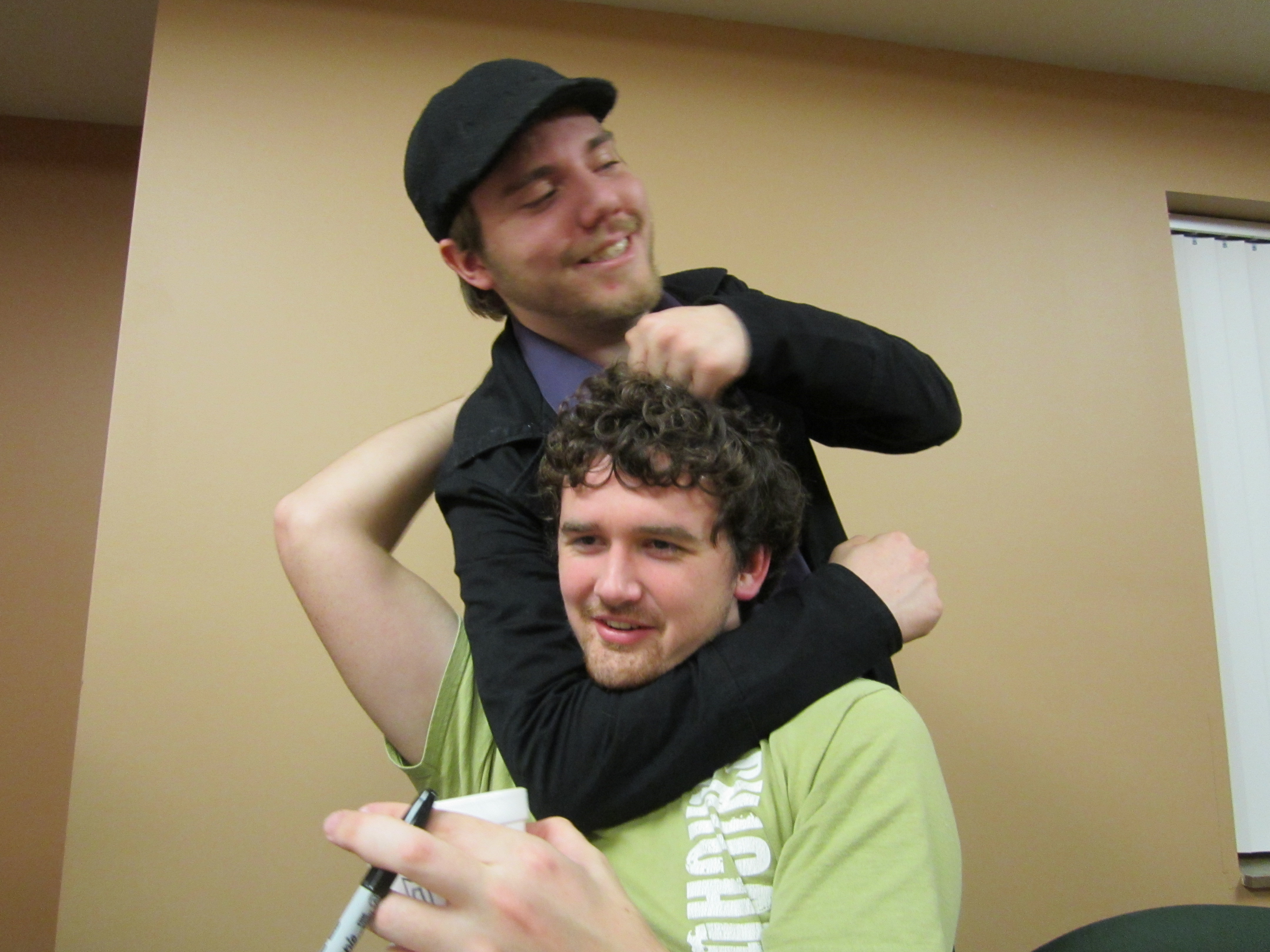
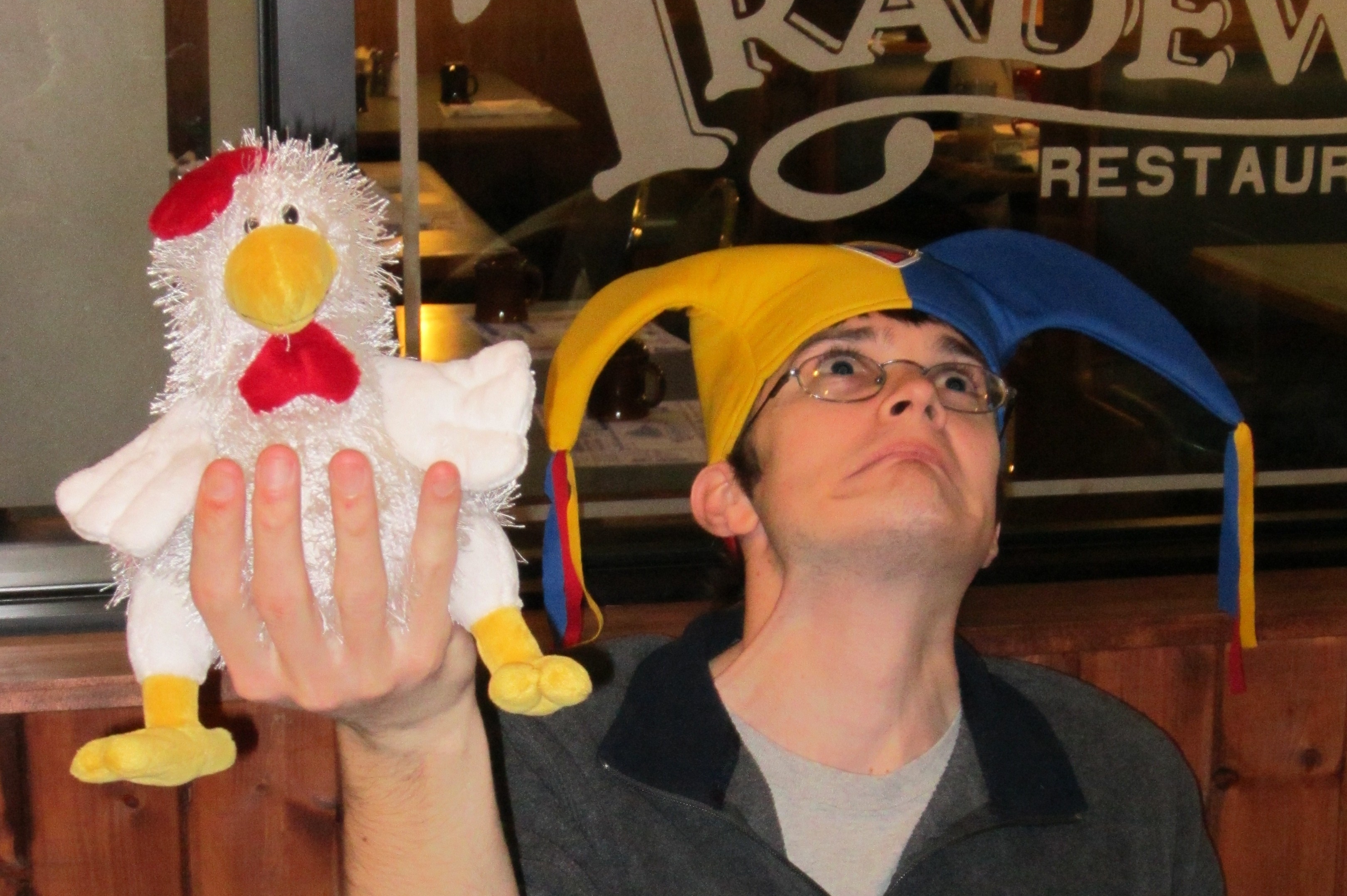
Nick, pictured here choking Socrates. Good times.

Nick, here pictured choking Socrates. Good times.

Life went on. Our friendship endured through our college years. Nick, Socrates, and I were housemates for nearly as long as we attended college. We watched a couple of Pixar movies in theaters, and suffered through M. Night Shyamalan’s wretched film adaptation of Avatar: The Last Airbender. (It was really bad; we left the theater laughing at its awfulness.) It was only in our final year that we began to drift apart.

I sporadically kept in touch with Nick. In fact, he suggested the book I’m currently reading; I won’t be able to pick it up again without thinking of him. We remained fans of Avatar: The Last Airbender. Our final conversation a few weeks ago was a short series of Facebook messages about the show’s sequel series.

Earlier this week, the news reached me that a health complication had taken Nick’s life.

Nick suffered from depression and existential anxiety, and in later life, from medical problems. Through all of it, he never gave up. He was honest, creative, and compassionate. I’m glad we were friends.

At the moment, I find myself even more thankful than usual for the dear friends God has given me. For all of my friends who are reading this, I have this to say: Thank you for being my friend. I wish I had told Nick how much I loved, admired, and appreciated him. I wish it were easier for me to say how much I love, admire, and appreciate every one of you.

On a less sentimental note, I will be taking a one-week break from this blog. My transition toward becoming a CNA at work has been stressful and a bit rough. I could use a little extra time to catch up with other things. Finally, after the tragic news about Nick, I’m not sure I have the heart right now for this blog’s usual geeky nonsense. TMTF shall return on September 21. There will be no posts until then.

I conclude with a song. No, really. It’s an odd, geeky way to say goodbye to a friend, but I think Nick would have approved.

There was a scene in Avatar: The Last Airbender that Nick and I loved, and discussed at length. It’s my favorite moment in the series. I’m not sure I shall ever be able to watch it again without remembering Nick and Socrates and our Avatar Evenings.

In this scene, a wise old man named Iroh bustles around town gathering items for a picnic. Everywhere he goes, he helps someone. When he sees a flower wilting, Iroh gives its owner advice on how to make it bloom. When a thug tries to rob him, Iroh disarms the man, makes him tea, and eventually convinces him to find a legitimate job.

And when Iroh passes a crying child, he calms the little one with a lullaby.

At the end of the day, Iroh sets up his picnic… as a memorial for his son, who died long before. “Happy birthday, my son,” says Iroh tearfully. “If only I could have helped you.”

Then Iroh sings that lullaby again. It was at this point, when we watched the series, that Nick and I held back tears of our own.

In much the same way Iroh brightened the lives of others, Nick brightened mine.

God rest your soul, Nick.

Leaves from the vine

Falling so slow

Like fragile, tiny shells

Drifting in the foam

Little soldier boy

Come marching home

Brave soldier boy

Comes marching home

385. Review Roundup: Death Game Edition

It has been a while since TMTF’s last Review Roundup. Why don’t we look at some stories about death games?

In these media, protagonists gamble their lives in dangerous games. Some of these are literal: formal competitions with rules. Some are figurative: risky ventures into crime. And one of these stories has nothing at all to do with death games. (I enjoy writing these reviews, but not enough to plan my media consumption around them!)

Let’s talk about The Hunger Games trilogy, Ant-ManThe Big LebowskiIs It Wrong to Try to Pick Up Girls in a Dungeon?, and Whisper of the Heart.

The Hunger Games trilogy

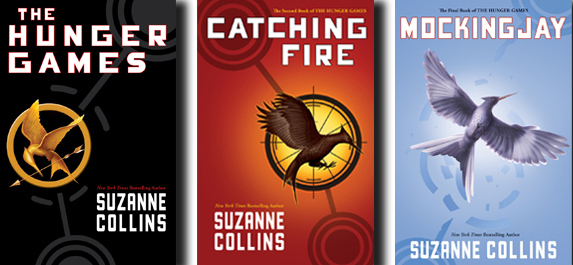
The Hunger Games trilogyFor the first time in years, I picked up a popular Young Adult novel to find out what all the fuss is about. (My last investigation of a literary sensation led me to read Twilight, a mistake from which I never fully recovered.) The Hunger Games is a pop culture phenomenon, and I meant to find out why.

I dunno, guys. I wasn’t all that impressed. Maybe I’m just a grumpy snob, but the Hunger Games trilogy neither dazzled nor entertained me. The books aren’t bad, but I wouldn’t call them classics.

The Hunger Games books tell the tale of Katniss Everdeen, a pragmatic teen trapped in an impoverished district of Panem. The government of this dystopian country rules its outer districts by fear and humiliation, selecting two children from each district every year and forcing them all to fight to the death. This gruesome event, the Hunger Games, is televised throughout Panem as an amusement for the wealthy; for the poor, it’s a reminder of their powerlessness. Katniss is selected for the Hunger Games, and the books follow her rise and fall from gladiator to celebrity to revolutionary to whiny PTSD victim.

The Hunger Games books are lauded for their smart setup and gripping story. I’ll be the first to admit there is truth to these praises. Panem is an interesting setting. The concept of the Hunger Games is fascinating, providing a way for a corrupt government to placate the rich and subjugate the poor. The story has its twists and turns, and the first book is actually pretty engaging.

However, the characters are mostly dull and unlikable. Katniss, who narrates the story, lacks much personality besides a coldly analytical attitude and occasional flickers of affection. As the books wear on, Katniss is traumatized by her horrific experiences, becoming angsty and angry—a change in her personality, sure, but not for the better. More promising characters, such as foppish Effie Trinket and drunken Haymitch Abernathy, end up disappointing.

When it comes to tone and style, I get the impression the Hunger Games books aren’t sure what they want to be. They have a sort of gritty realism concerning poverty and war. I appreciate that. However, this gloomy approach is at odds with the books’ ludicrous sci-fi touches and predictable Young Adult nonsense. (Yes, there’s a love triangle, and it’s annoying.)

In the end, the Hunger Games books have just enough harsh realism to be depressing and just enough teen kitsch not to be taken seriously. They fall in a literary no man’s land, refusing to embrace either realism or sensationalism, and embodying the worst traits of both. I find it hard to recommend these books.

Ant-Man

Ant-ManMoving on to something much more entertaining, Ant-Man is another big, dumb, spectacularly fun Marvel movie. Unlike the Hunger Games books, Ant-Man embraces its own goofiness in a way that’s a joy to see.

Ant-Man begins with Scott Lang feeling very small. This well-meaning ex-convict can’t keep a job or convince his ex-wife to let him spend time with their little girl. When Lang meets an old inventor named Hank Pym—he burgles Pym’s home, actually, but that’s not the point—Pym offers him “a shot at redemption,” meaning an opportunity to put on a high-tech suit, shrink to the size of an ant, and dive back into the life-or-death game of high-stakes burglary.

Look, if you’ve seen any recent Marvel movie, you know what to expect at this point. Ant-Man is full of quotable quips, flashy action scenes, and comic book lore, with a little sentimentality sprinkled here and there.

This time, however, there are two things to make the film stand out. First is an emphasis on father-daughter relationships. This motif isn’t developed as fully as a it could be, but it works. The second thing is that Ant-Man is basically a superhero heist movie, in the same way the first Captain America is a superhero war film and the second one is a superhero cold war thriller. Ant-Man isn’t about saving the world, but stealing stuff… to save the world, I guess.

It’s still a nice touch.

I really enjoyed Ant-Man. It nods at other movies in the Marvel Cinematic Universe without depending on them, and I look forward to seeing Ant-Man in future films. Not bad for such a little guy.

The Big Lebowski

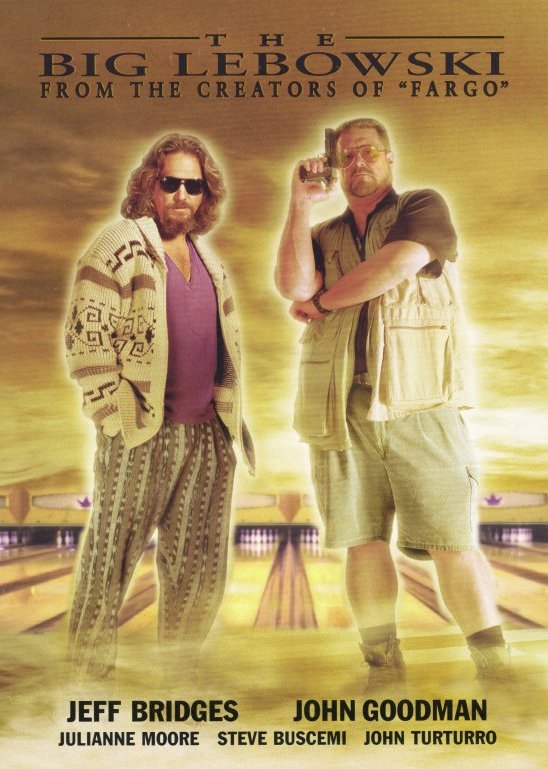
The Big LebowskiWith that, we move on from a small hero to a larger-than-life one in The Big Lebowski. Ironically, however, the film’s hero isn’t actually the Big Lebowski, but a slacker with the same name (I’ll call him the Lesser Lebowski) who loves bowling, booze, and tacking the word “man” to the end of nearly every sentence.

The Big Lebowski begins when thugs storm the home of Jeff Lebowski, a laid-back stoner known as “the Dude,”  and pee on his rug. It was a nice rug, man. It really tied the room together. The thugs threatened the Dude (and peed on his rug) under the impression he was “the Big Lebowski,” a millionaire with the same name. When the Dude takes his bowling buddies’ advice to seek compensation from the Big Lebowski for the rug, he becomes snared in a game of deception, violence, kidnapping, cursing, and postmodern art.

This movie is sort of a black comedy and sort of a noir crime film, but it’s mostly Jeff Bridges bowling, drinking, and wandering around Los Angeles. In the end, the film’s complex web of crime and deception unravels to reveal a whole lot of nothing, and I think that’s the point: there never was one.

This was quite an entertaining movie. It ain’t one for kids—it has bullets, boobs, and f-bombs beyond count—but for adults with a healthy sense of the absurd, The Big Lebowski is a treat.

Is It Wrong to Try to Pick Up Girls in a Dungeon?

Is It Wrong to Try to Pick Up Girls in a DungeonWell, is it?

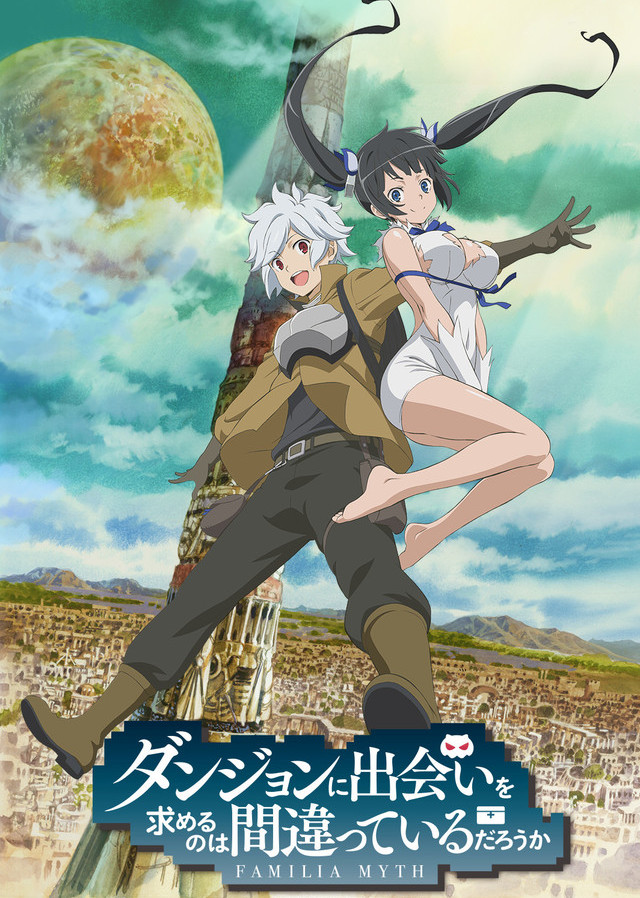
The oddly-titled anime Is It Wrong to Try to Pick Up Girls in a Dungeon? is the tale of Bell, a nice young man who longs to become an adventurer—to impress the ladies, of course. He lives in a medieval fantasy town whose existence revolves around the eponymous dungeon: a labyrinth teeming with monsters. Adventurers join familias—guilds sponsored by gods or goddesses—and venture into the dungeon in a dangerous game for treasure and glory. In quest to become a dungeon-conquering hero, Bell accepts the sponsorship of a down-on-her-luck goddess named Hestia. This unlikely pair must work together for Bell to have any chance of becoming a master adventurer and impressing the ladies… well, one in particular.

I won’t lie, guys. This anime is incredibly dumb. Remember what I said about Ant-Man embracing its goofiness? This show does the same, but with roughly ten thousand times as much enthusiasm.

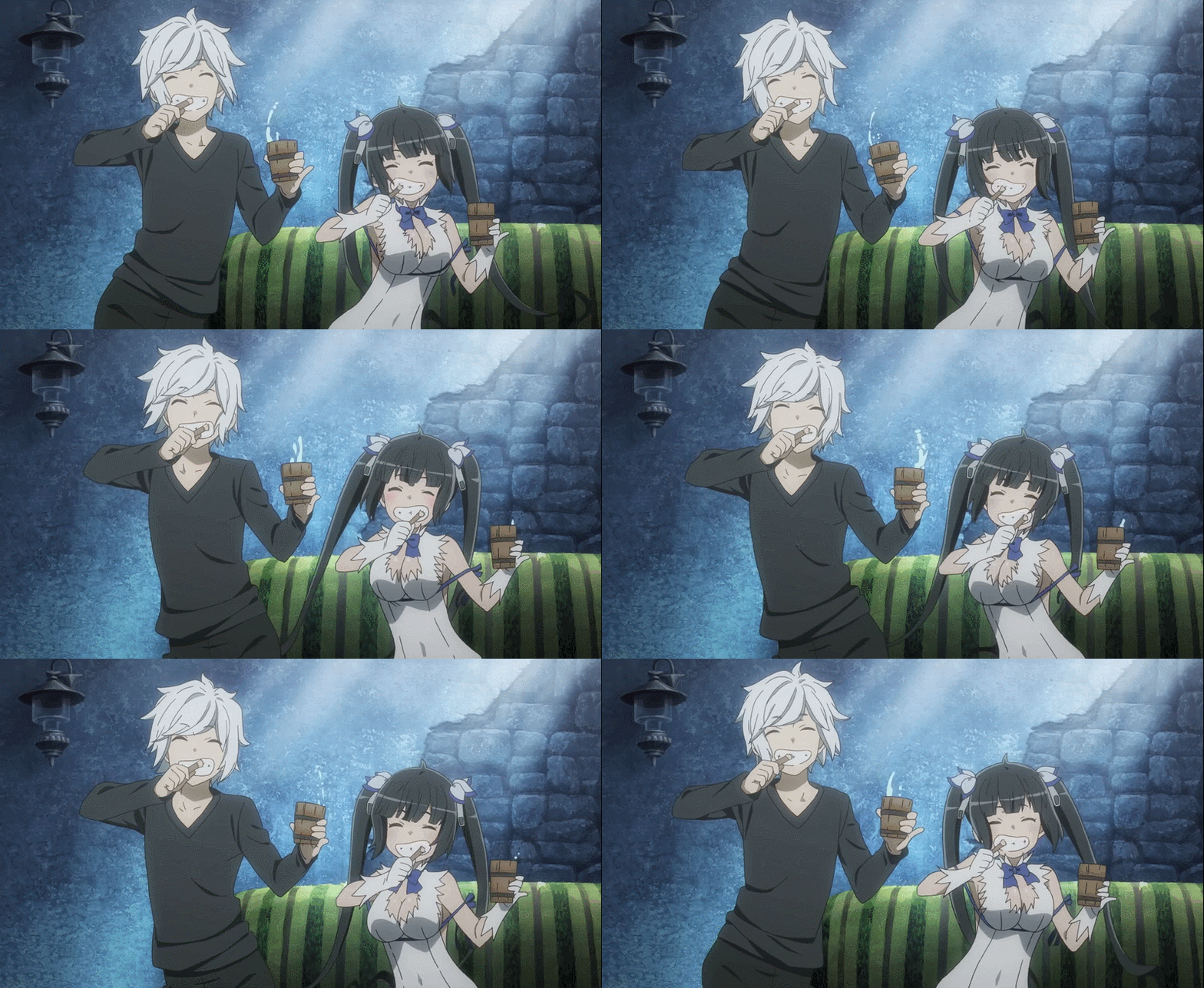
I mean, the anime’s opening theme has a momentary scene of Bell and Hestia brushing their teeth. Look at this. Look at it.

Toothbrush dance (GIF)

This is basically the entire show: dumb as all heck, but endearing in its silliness, with some gratuitous cleavage for good measure.

The world of Is It Wrong to Try to Pick Up Girls in a Dungeon? functions exactly like a video game (an MMORPG, to be precise) without actually being a video game. Its adventurers gain experience and level up—heck, they even have statistics (appearing as magical tattoos on their backs) reflecting their competency in various areas. Monsters respawn on a set timetable, and powerful creatures explicitly called bosses guard certain floors of the dungeon. The setting is instantly comprehensible to gamers, but at the cost of making absolutely no sense. Why do adventurers level up? What revives the monsters that respawn? What the heck is going on?!

(It is very faintly hinted that the gods and goddesses of ancient times created this video game-like world for their own enjoyment, but no real explanation is ever given.)

This is a show in which half the female characters have crushes on the hero, like Twilight in reverse, and most female adventurers wear stupid chain mail bikinis. I can’t defend or recommend this anime. It’s really, really dumb.

All the same, I kinda enjoyed it. Bell, who has a massive inferiority complex, is kind and friendly: a welcome change of pace from angsty or arrogant anime heroes. Hestia works odd jobs to support him, despite being, y’know, a goddess. The show seldom takes itself too seriously; the rare occasions it does are some of its weaker moments. For the most part, its good-natured goofiness made it fun to watch, if not intellectually rewarding.

Whisper of the Heart

Whisper of the HeartAt last we arrive at a film that not even I can pretend fits the vague “death game” theme of this Review Roundup: Whisper of the Heart. Because of this movie, John Denver’s all-American classic “Take Me Home, Country Roads” will forever remind me of urban Japan.

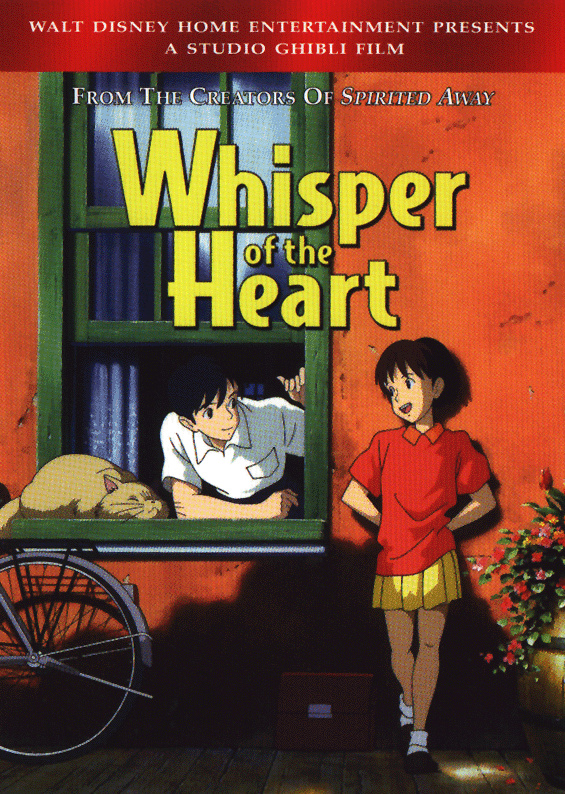
Shizuku is a bookish Japanese teen, sharing a cramped apartment with her family. She notices one day that all of her library books were previously checked out by someone named Seiji, and wonders who he might be. Shizuku later ends up at an antique shop. Its owner encourages her to pursue her passion for writing stories, and also introduces her to his grandson: the mysterious Seiji. As Shizuku’s love of writing grows, so does another kind of love.

Studio Ghibli is magnificent. Whisper of the Heart was one of the few Studio Ghibli films I had never seen, and I’m glad I finally watched it.

I’ll be honest: Whisper of the Heart is no masterpiece. Nah, it’s merely a touching, charming, beautifully-animated coming-of-age story with a scene that nearly brought tears to my cynical eyes. By lofty Studio Ghibli standards, this is merely a decent film. By any other standards, Whisper of the Heart is wonderful.

I enjoyed the film probably more than most people because I identify with Shizuku’s desire to write stories. I was Shizuku once, in a manner of speaking: young, naïve, hopeful, insecure, eager to share my stories, and scared no one would want to read them—or worse, that they wouldn’t be worth reading.

Whisper of the Heart has its fair share of sentimentality: far more, in fact, than nearly any other Studio Ghibli film. The movie lacks the effortless grace and emotional punch of the studio’s finest works… but there is one scene, in which several musicians strike up their instruments for a joyful, impromptu performance of “Take Me Home, Country Roads,” that brought me closer to crying than any film in recent memory (except Inside Out, of course).

It may not be as popular as Studio Ghibli’s other movies, but Whisper of the Heart is absolutely worth watching, especially if you’re an aspiring writer, a Studio Ghibli fan, or a fan of romance.

What books, films, shows, or video games have you enjoyed lately? Let us know in the comments!

384. Spiders Are Noble and Misunderstood

Nearly everyone I know has an irrational fear of spiders. In fact, most of my friends and relatives react to spiders by terminating them with extreme prejudice. This is a shame. Spiders are noble, innocent, misunderstood creatures. I’m fond of the little guys, and I think they deserve better than to be slaughtered without pity or remorse.

I grew up in Ecuador: a tiny country with a bewildering variety of birds, animals, insects, and other creatures, including several species of spiders. At one point in Quito, my family and I had tarantulas burrowing in our back garden. No spider ever did me harm. Other bugs attacked me, such as mosquitoes; still more tried unsuccessfully to hurt me, such as scorpions and a Giant Mutant Killer Jungle Ant, but spiders were contented to mind their own business and leave me alone.

Most people refuse to return that favor. A friend of mine, whom I’ll call Socrates, once tried incinerating a spider with a flamethrower cobbled together from a lighter and a can of cooking spray. Other friends—less creative than Socrates, but just as violent—have wielded books and shoes in their bloodthirsty crusade against spiders.

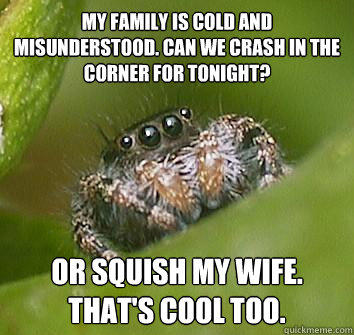
Misunderstood spider is misunderstood

Heck, even J.R.R. Tolkien, a man of enormous creative genius and one of my heroes, hated spiders. A childhood encounter with a tarantula traumatized him for life. His arachnophobia surfaced in his stories; his most famous books, The Hobbit and The Lord of the Rings, both feature wicked giant spiders.

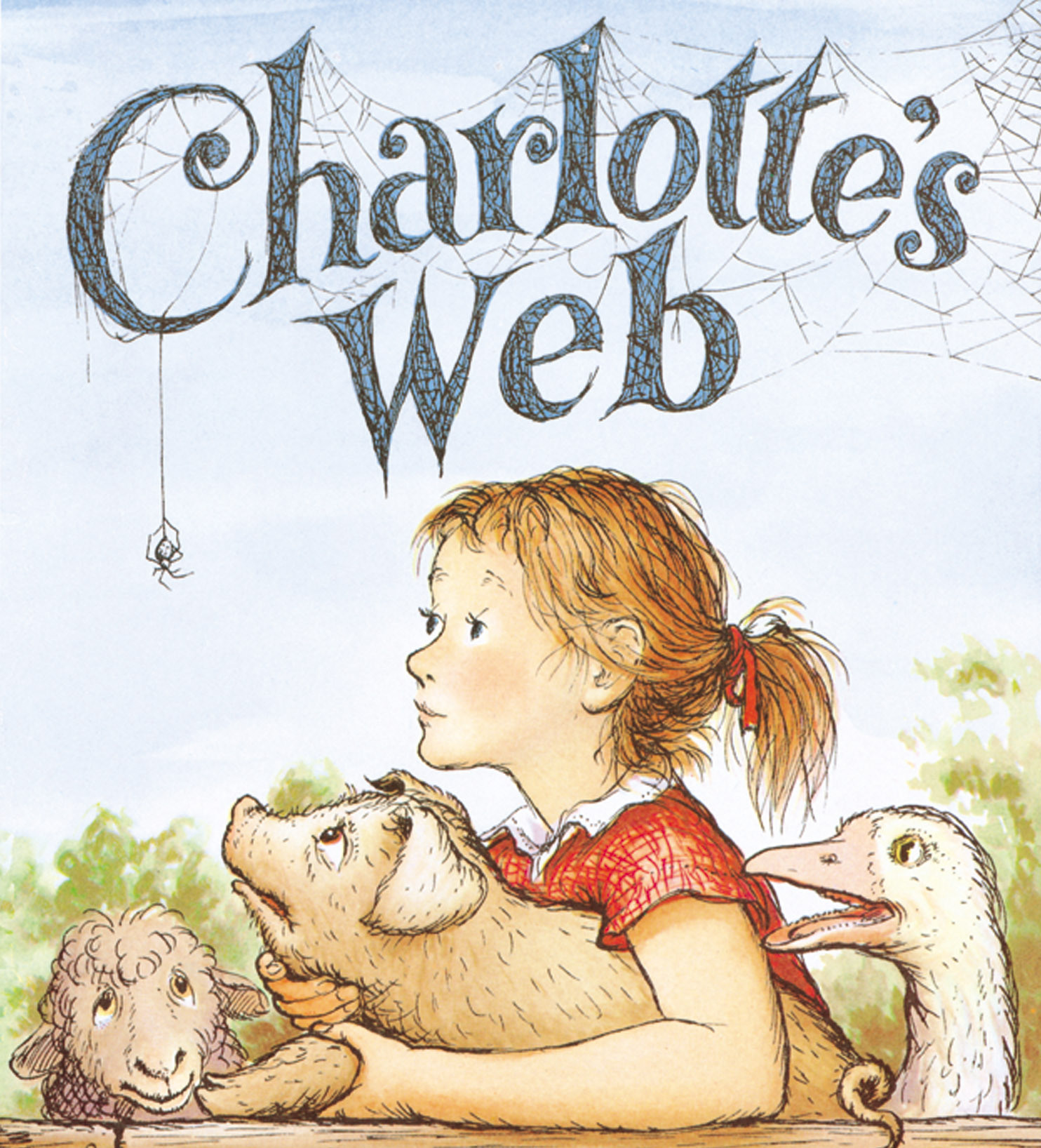
As much as I admire Tolkien, I think E.B. White was closer to the truth when he wrote Charlotte’s Web, a children’s book about a sweet, noble friend who happens to be a spider.

Charlotte's Web

Everyone thinks spiders are awful, but look at that goose! That bird is clearly evil, and probably possessed by many devils.

Charlotte is basically any and every spider: hardworking and considerate, spinning beautiful webs to rid the world of pests like flies and mosquitoes. E.B. White understood, guys.

Flipping heck, even cartoons for young children get it.

Spiders quietly eliminate true pests. Have you ever tried sleeping with a cloud of mosquitoes buzzing around your ears? I have. It sucks. Have you ever been annoyed by flies, stung by bees, or menaced by cockroaches? I have. It sucks. (Cockroaches, my archenemies, are the worst creatures on God’s green earth.) Spiders prevent the proliferation of these wretched beasties. If spiders did not exist, the world would be overrun by filthy pests. Spiders are God’s guardian angels.

Spiders aren’t so bad, really.

Look, I get it. Spiders look scary. They have a lot of legs and too many eyes, and the way they move is a little creepy. Spiders are odd-looking. However, if it were okay to kill things just because they looked odd, Pete Docter would have been murdered ages ago, and Pixar’s Inside Out (which Docter directed and co-wrote) would never have been made. So there.

Pete Docter

I have nothing but respect and admiration for Mr. Docter, but he sure is a goofy-looking guy. He has roughly 70% more forehead than most people.

If we killed everything that looked weird or made us uncomfortable, I probably wouldn’t have made it to my teens.

An expert on Englishing

There’s a reasonable explanation for this. Probably.

Yes, some spiders are venomous. Some can kill you. Do you know what else can kill you? Donkeys. (They have a vicious kick.) Human beings also kill each other occasionally, but I like to think most of us aren’t so bad—and neither are most spiders.

So the next time you want to slaughter a spider out of fear or disgust, consider showing some mercy and putting it outside instead!

382. TMTF’s Top Ten Worst Video Game Movies

Today’s post was written by Brittni Williams: writer, gamer, and movie aficionado. It is a truth universally acknowledged that video game movies suck, and Brittni was brave enough to review the worst ones ever made. For more musings from Brittni, find her on Twitter!

In the past decade or so, video games have increasingly cribbed from the world of film to deliver so-called “cinematic experiences” to gamers and non-gamers alike. This has brought us franchises like Half-Life, Call of Duty, Uncharted and The Last of Us, as well as films which called upon a wide range of auteur expertise, from Steven Spielberg to Michael Bay.

It’s a conundrum, then, why video game-based films have been largely unable to draw from the deep well of inspiration that inspired them in the first place. As anyone who harbors a passion for both can attest, it’s been a long and treacherous road of both critical and financial failures.

Following is a list of ten of the most impressively awful video game-movie adaptations: the cream of the crop of the worst of the worst.

[Editor’s note: The films on this list are not ranked numerically, as their sheer awfulness defies all attempts at neat categorization.]

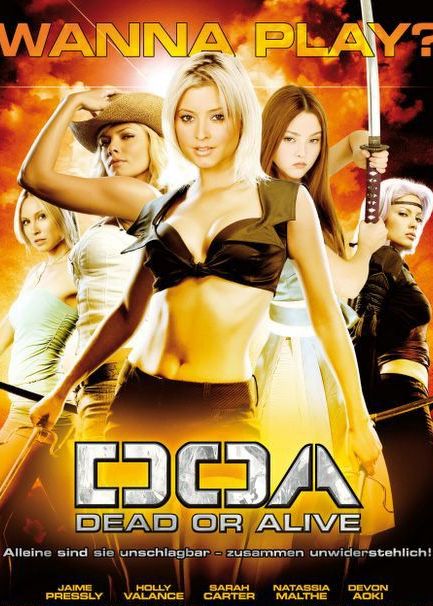
Dead or Alive (2007)

Bad video game movies - Dead or AlivePerhaps it shouldn’t be surprising that a game which derives most of its appeal from seductive female eye candy rather than a meaningful plot doesn’t translate very well to the big screen. Starring a roster of models-turned-actresses (Devon Aoki and Jamie Pressly both appeared on the runways of major designers in the early aughts) this movie is little more than a  middle-school boy’s fantasy brought to life. And it doesn’t help matters that DOA’s action scenes refuse to obey the laws of physics.

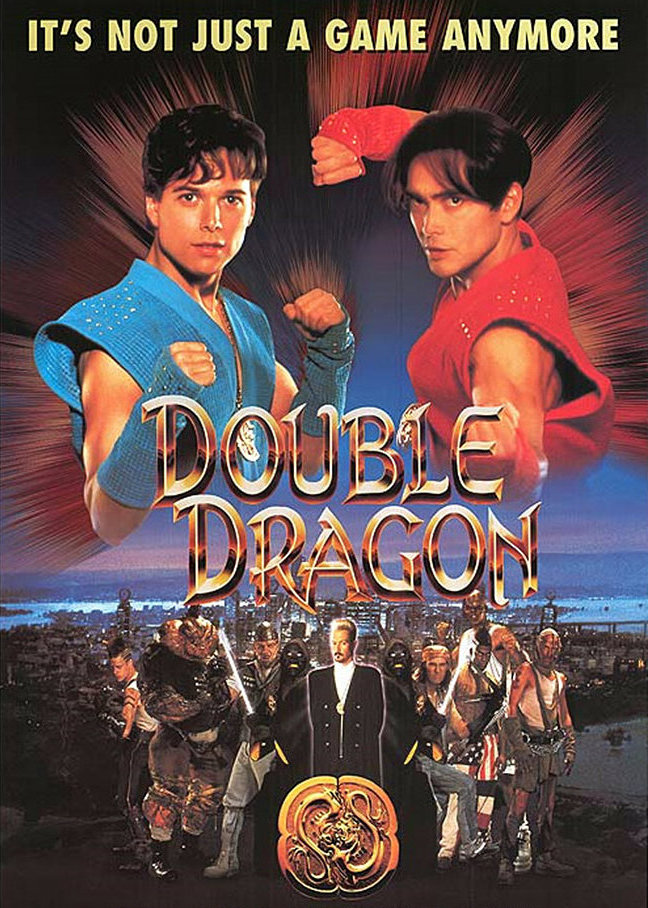
Double Dragon (1994)

Bad video game movies - Double DragonHere’s another video game film which put hardly any thought into its plot, which made a cinematic adaptation pointless. The movie, which is based very loosely on the game’s premise, is predictable and even somewhat racist. Alyssa Milano stars as the love interest of two brothers on the run from a gang of LA thugs hell-bent on recovering a lost talisman.

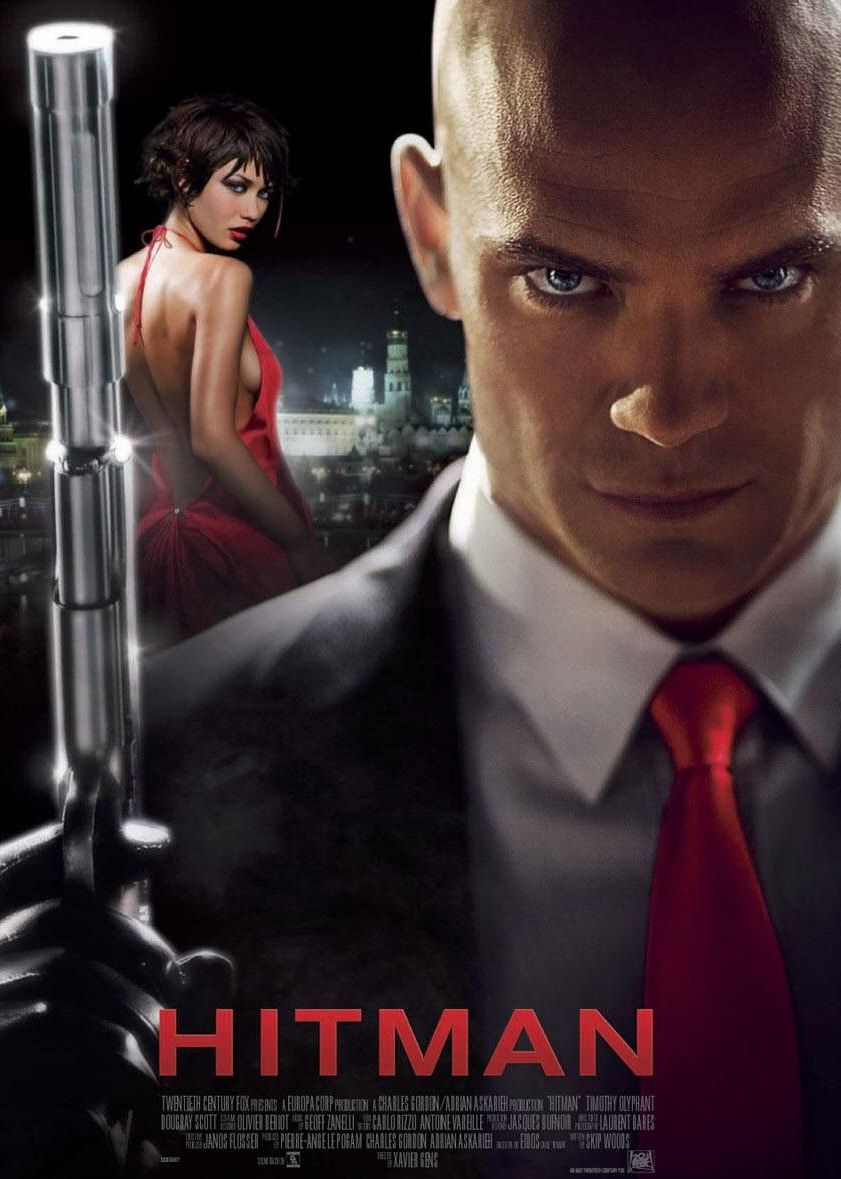
Hitman (2007)

Bad video game movies - HitmanOne would think that an action and adventure game with a fairly interesting story would work well condensed into a couple hours of film, but Hitman unfortunately couldn’t pull off this seemingly easy task—even with a worthwhile leading man, Timothy Olyphant, playing the Hitman. Of course, it didn’t help that the movie’s director, who seemed to have a true appreciation of the game, was pulled midway through production.

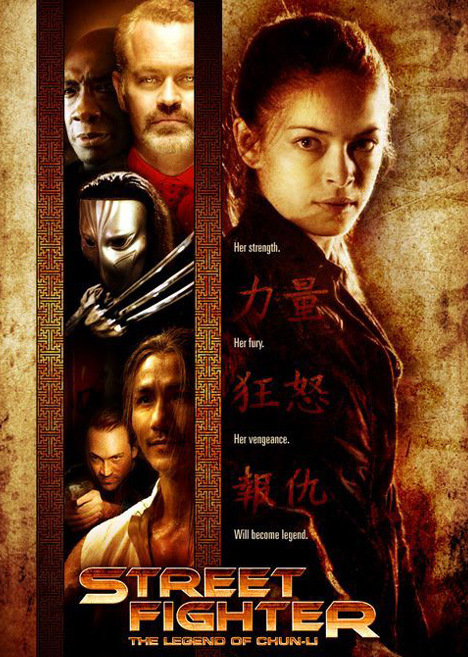
Street Fighter (2009)

Bad video game movies - Street FighterAnother fighting game. Another bizarrely bad plot. And cast. And directing. And just about everything. The worst part—among the many—is how seriously the movie takes itself despite being based on a game which doesn’t take its story seriously at all. Despite a few well-choreographed fight scenes, Street Fighter should have kept off the pavement and stuck around the arcade where it belongs.

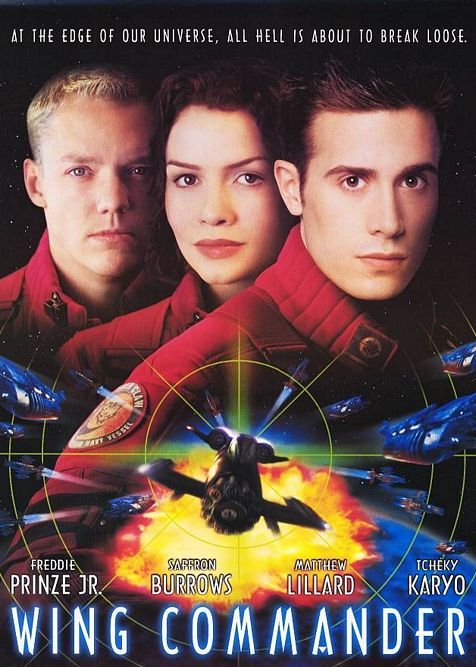
Wing Commander (1999)

Bad video game movies - Wing CommanderMost failed adaptations suffer from the disconnect between the game’s creation and the movie’s—particularly the absence of the creator. Unfortunately for Wing Commander, it had no such excuse as it was the game’s creator himself who directed this financial and critical bomb, and turned futuristic space ships into flying hunks of junk.

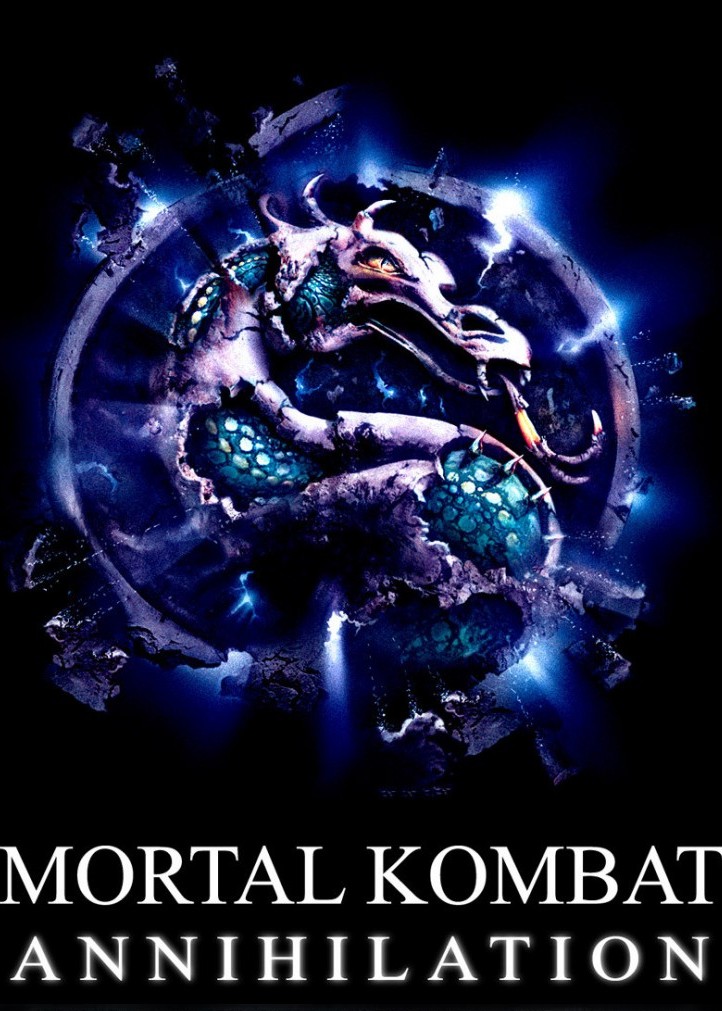
Mortal Kombat: Annihilation (1997)

Bad video game movies - Mortal Kombat AnnihilationThe original Mortal Kombat just barely skated along the silliness/self-awareness line to be accepted into guilty pleasure territory. This sorry sequel unfortunately fell over the mark as it threw away what was good in the original and kept all the bad, the shallow acting (from Liu Kang in particular). In the end, you’re probably better off wasting your quarters trying to beat Tekken 2.

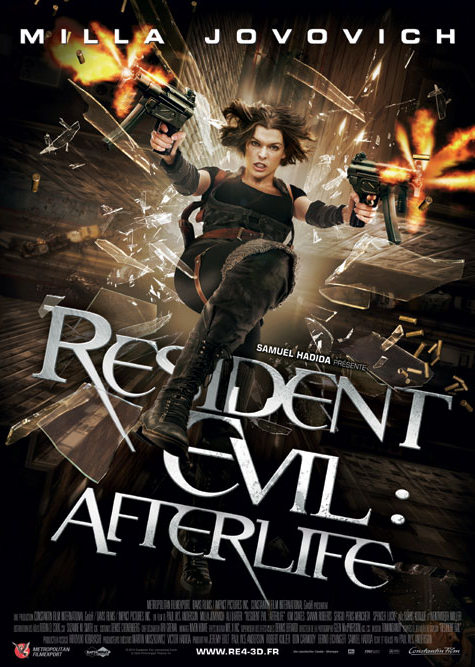
Resident Evil: Afterlife (2010)

Bad video game movies - Resident Evil AfterlifeThe title is appropriate, considering the fact that this was just another sequel that disappointed fans of the previous adaptations. A film series that has surely overstayed its welcome on Earth (the franchise continues to live on via iTunes and various streaming services), this incarnation in particular lacked compelling action scenes, and of course offered little in the way of substantial storytelling. Dull and lifeless, here the afterlife brings no promise of redemption.

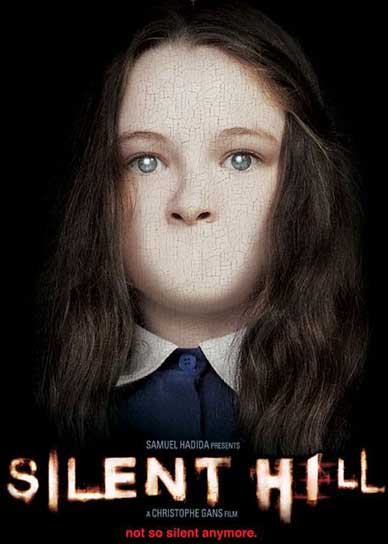
Silent Hill (2006)

Bad video game movies - Silent HillVideo games are often panned for their abysmally poor writing, so it’s rather strange that movie makers are unable to remedy that problem with the various talents at their disposal. Silent Hill is another adaptation that is utterly destroyed by a poor effort from screenwriters, suffering from both a baffling plot and cringe-worthy dialogue. The film might be an aesthetic achievement but it flounders in every other regard.

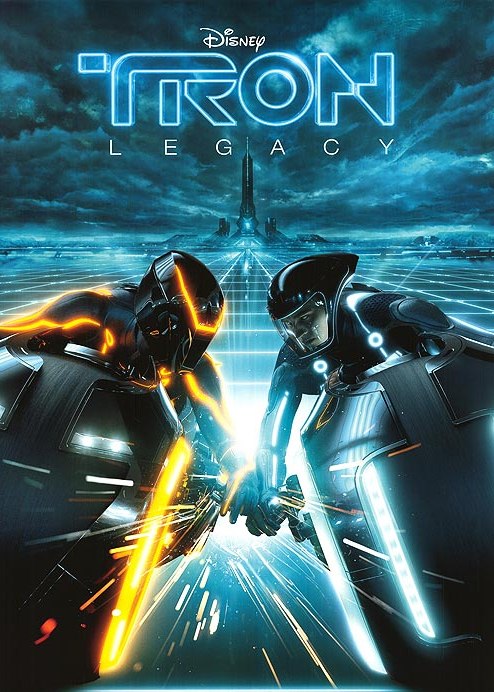
Tron Legacy (2010)

Bad video game movies - Tron LegacyThis adaptation offers stunning visual spectacles, but little else. The studio definitely got its money’s worth from the aesthetically-pleasing action scenes and remarkable depictions of new technology, but the lack of a real story and a compelling human element is probably why they didn’t make much of their money back. From start to finish, the sleek form swallows the shallow attempts at a compelling storyline.

BloodRayne (2005)

Bad video game movies - BloodrayneOf course, the worst of the worst of the worst was directed by Uwe Boll. The video game was actually well-regarded for its inventive story, so it’s a shame that movie magic and a decent cast couldn’t break free from the double curse of video game adaptations and Uwe Boll. Everything about this picture is painful.

Are video game films forever doomed to failure? Considering the fact that modern games are essentially cinematic experiences in and of themselves, the (growing) heap of filmic disasters only serves as further proof that the bridge from console to megaplex is perhaps one best avoided. Life-like is good enough, and there is simply no replacing the experience of role-player fantasy.

379. Writing Tips from Gravity Falls

Today’s post was written by JK Riki: rogue writer, animator, and cool dude. For more great stuff from JK, check out his websites on creativity and animation, and find him on Twitter!

If you’re a regular reader here at TMTF, you know Mr. Stück is a big fan of the animated show Gravity Falls. His thoughts on the series are short and sweet, encouraging you to watch without mincing words. In case you need an extra push, though, today we’re going to take a longer look at what makes Gravity Falls so compelling (and some tips you might take away from the show).

Gravity Falls1. Gravity Falls knows where it’s going.

In an interview, GF creator Alex Hirsch talked about the process of creating the show. He explained, “We have a storyline. There is a broad storyline that we’ve come up with—a beginning, middle, and end.”

In today’s television, that is a rarity. Studios and networks are so keen to drag things out for as long as possible that they begin a story with mystery and intrigue, and have no clue where it will end up. If they do know where it might go, they put obstacles in the way for the sole purpose of extending the shelf-life of the series. If it gets renewed for an additional season, up pop more meaningless obstacles. If it does not, hopefully there was warning of the cancellation early enough to produce a reasonable final episode (but often not).

There needs to be a lot of wiggle room in writing. You can’t be so strict that you don’t allow characters to take things in new directions on a whim. That said, if you don’t have a vague idea where you’re headed, it can lead to a mess farther down the road.

2. Gravity Falls isn’t afraid to change.

Possibly because the show has a planned beginning, middle, and end, it isn’t afraid to change. The Simpsons, bless its heart, reverts to status ­quo at the end of almost every episode. Some episodes even make note of that fact for humor purposes. It’s not alone, either. A vast majority of shows have this sort of reset, especially in animation.

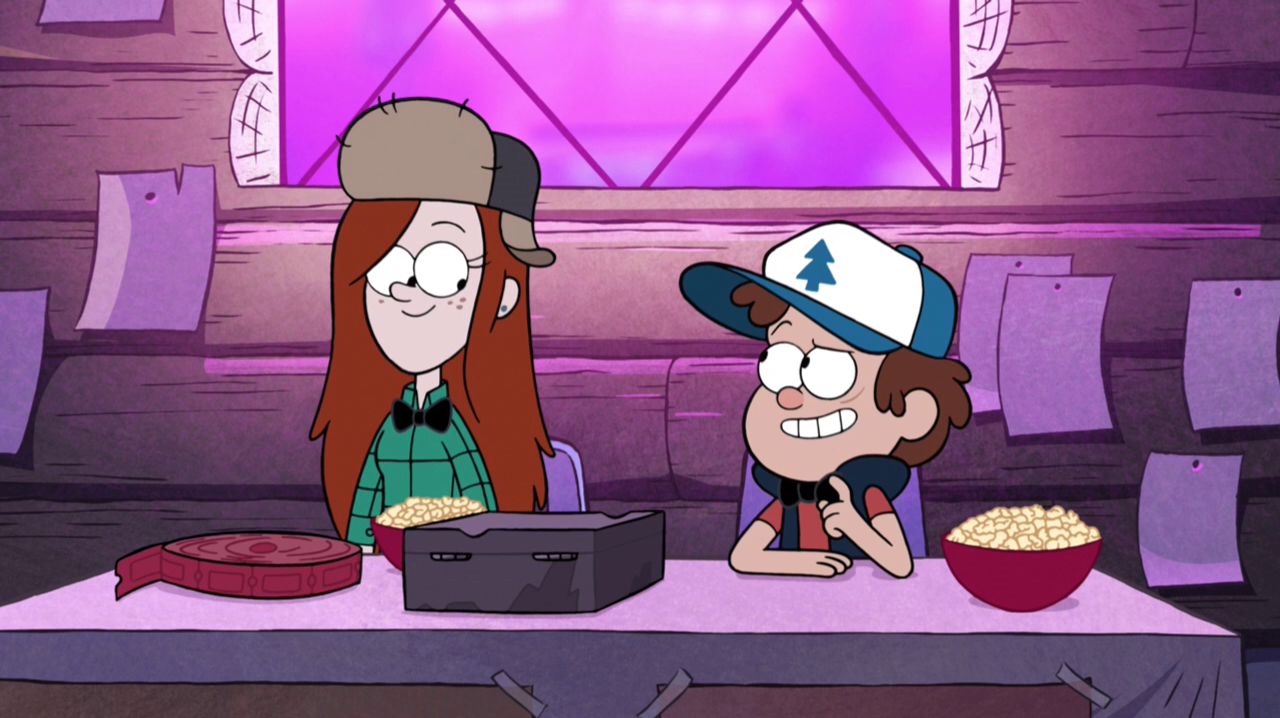
Gravity Falls bucks that trend by allowing progress to be made. Overarching mysteries unfold, and characters grow. One example of this (spoiler warning) is that the protagonist’s crush on a local girl actually plays out, instead of becoming a forced motif for the entire series. I was sad to see it go—I’m a sucker for secret crushes—but giving it closure improved the series.

Dipper and WendyIt’s important when writing a series to allow room for growth. It can be tricky, because some fans of early work will hate later stuff and pine (loudly) for “the good old days.” (This happens a lot in music with long-­running bands, too.) It’s still worth allowing for change to happen, because frankly that’s how life works, and you want there to be a foundation of truth in any creative work you do.

3. Gravity Falls is about characters.

In another interview, Mr. Hirsch mentioned, “Gravity Falls is a show about mysteries and magic, but first and foremost it’s a show about characters.”

The reason Gravity Falls is as charming as it is has very little to do with its marvelous story twists and hilarious jokes. It succeeds because the characters are true and compelling. They have soul and depth. They connect with each other, and the relationships feel solid and real.

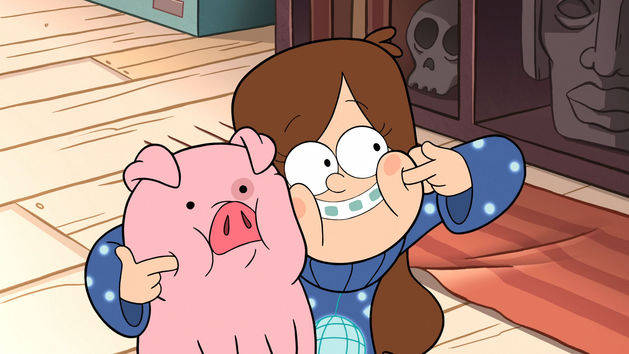
Mabel and WaddlesIf you have one take­away from Gravity Falls as a creator, let it be this: Living, breathing, compelling characters will take you farther than any other writing device.

An audience will watch a compelling character do his laundry, but will quickly grow bored with a flat, one-note character even if they are piloting space ships in a fascinating alternate dimension. Do not skimp on knowing your characters; invest time in them, and you will be handsomely rewarded.

376. Metal Gear Solid Absolutely Needs to Be a Movie

I realize that most of the people who read this blog don’t play video games, so this post will be ignored by nearly everyone in the universe. I accept this. You see, there are sometimes truths so obvious and self-evident that they must be stated—nay, shouted from the rooftops!—regardless of whether anyone listens.

I may be only a voice crying in the wilderness, unheard and unheeded, yet this must be known: Someone needs to make a Metal Gear Solid movie.

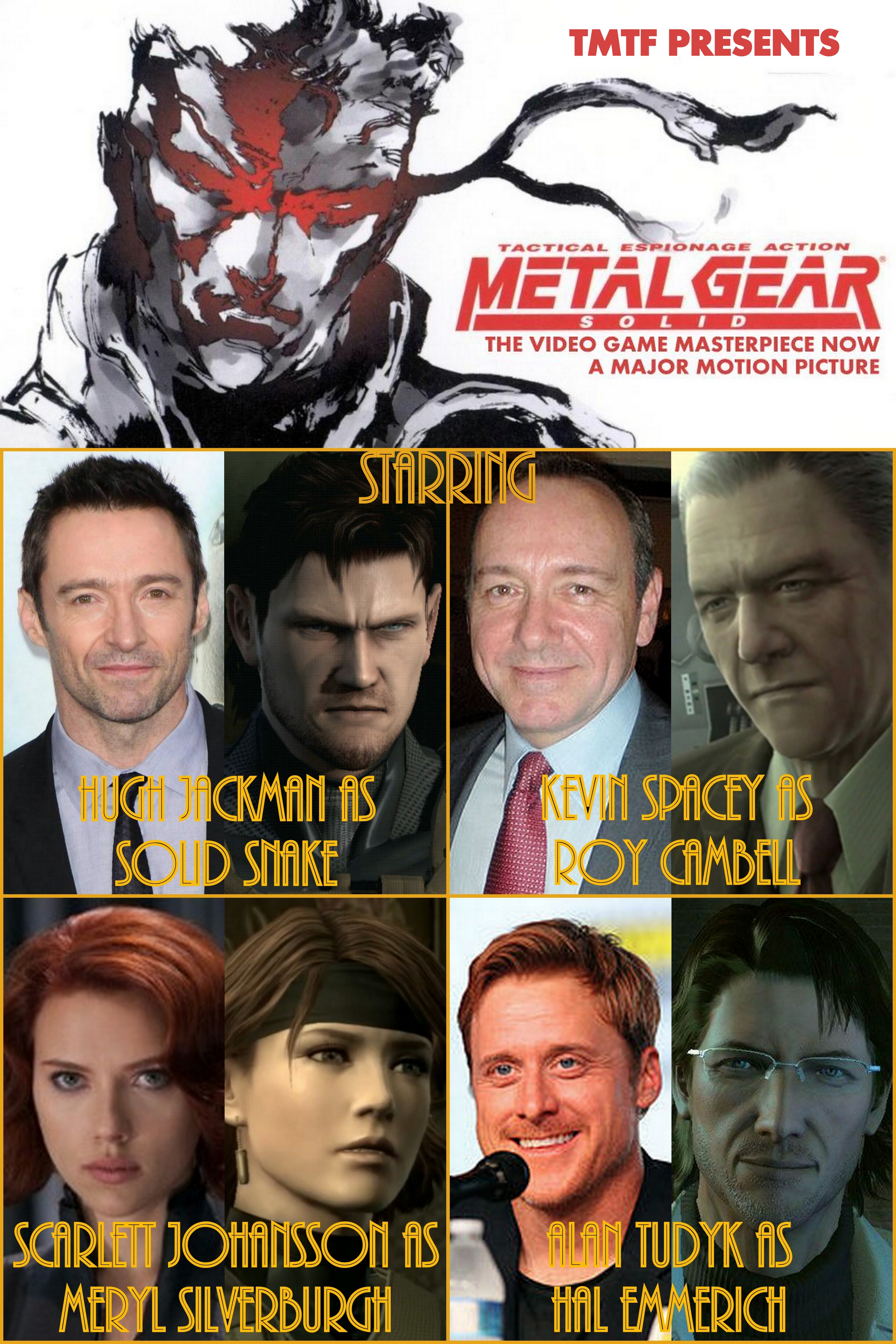
Metal Gear Solid movie (with TMTF logo)How can I describe the Metal Gear Solid series? If someone blended Tom Clancy’s Cold War thrillers, the James Bond movies, some Batman and X-Men comics, and all of Quentin Tarantino’s films, Metal Gear Solid would be the stylish, complex, campy, violent, and weird-as-all-heck result.

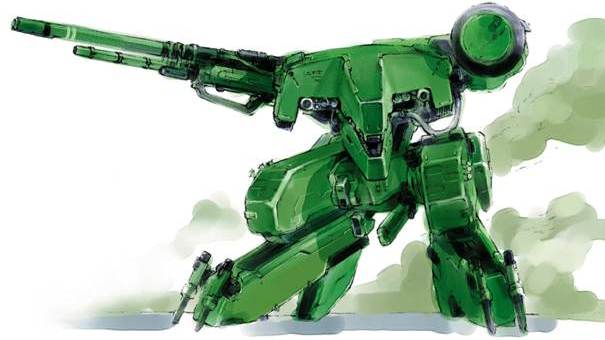
Released in the late nineties for the PlayStation, the first Metal Gear Solid follows Solid Snake as he infiltrates a nuclear weapons facility on a remote Alaskan island known as Shadow Moses. The facility has been seized by FOXHOUND: an elite unit of the US military that has gone rogue, taken two high-profile hostages, and acquired a weapon called Metal Gear REX. This superweapon, a bipedal tank armed with nuclear warheads, is now in the bloodstained hands of terrorists. Snake’s orders are to rescue the hostages and neutralize the Metal Gear before FOXHOUND can carry out its threats of nuclear reprisal.

Metal Gear REX artMetal Gear Solid could make a terrific movie. In my last post, I discussed three pitfalls in adapting video games into movies. First, many games lack a strong story; second, too many filmmakers make films that appeal only to people who play games; third, the cyclical structure of most video games can’t be compressed into movies.

Metal Gear Solid can easily dodge all of these problems. The game has a strong story, complete with a highly cinematic presentation. (The game’s director, Hideo Kojima, is a film aficionado whose tagline on Twitter reads: “70% of my body is made of movies.”) The game’s plot requires little backstory or gaming knowledge, and can be easily revised to require none.

Finally, while Metal Gear Solid only slightly follows the ubiquitous looping structure of video games. A few edits to the story would yield a focused narrative that lends itself beautifully to film.

What should be cut? The two hostages taken by FOXHOUND could be reduced to one. Several characters—FOXHOUND member Vulcan Raven and cyborg Gray Fox, among others—could be removed. The plot could be streamlined by leaving out the less interesting parts of Snake’s mission from the original game. One or two action scenes could be omitted, and the others rearranged for the sake of pacing. Finally, the villain’s angsty monologues (which are silly even in the game) could be extremely abridged.

What should be kept? I recommend abbreviating the story’s action-packed climax, keeping Snake’s epic battle against the Metal Gear and subsequent fistfight with the villain, but leaving out the vehicle chase. I also suggest keeping the character of Psycho Mantis, a member of FOXHOUND. This deranged psychic isn’t essential to the plot, yet remains one of the most iconic elements of the story. He is the kind of villain who peers into the flawed hero’s soul and pronounces judgment on him. In the hands of a good writer, Mr. Mantis could contribute a lot to the film’s mood and characterization.

Whatever else is kept for a film adaptation, Snake must, at some point, outsmart his enemies by hiding under a cardboard box.

In a perfect world, the Metal Gear Solid film would be written by David Hayter: the screenplay writer whose credits include X-Men and its sequel X2—and also, by glorious coincidence, the actor who voiced Solid Snake in the Metal Gear Solid games. Mr. Hayter actually wrote a treatment for a Metal Gear Solid movie, but it was rejected. Ours is truly a broken world.

My top picks to direct a Metal Gear Solid film are J.J. Abrams and Jon Favreau, but I would settle cheerfully for any competent action movie director. (The worst potential directors are Michael Bay and Uwe Boll; they should never direct a Metal Gear Solid movie… or any movie, honestly.) The obvious choice for the film’s composer is Harry Gregson-Williams, who wrote much of the score for the Metal Gear Solid games.

MGS artThe casting for Solid Snake is of utmost importance; I consider it no exaggeration to say a Metal Gear Solid movie would be made or broken by Snake. His actor must appear as tough, determined, and dangerous as any action hero. However, that action-movie persona must be accompanied by two things: first, a dry sense of humor; second, an attitude of philosophical resignation—a weary resignation to the fact that he is nothing more than a pawn in the hands of authorities no less corrupt than his enemies.

If Solid Snake is played as merely an action hero, the movie is lost. He is more than that, and also less. Appropriately to the title, he is a gear in the vast, impersonal machines of warfare and politics. He doesn’t make the rules or choose his morality. His mission is to do what he is told. Snake’s tired acceptance of his fate, along with an irrepressible vein of humor, are what make him such an interesting character.

I think Hugh Jackman would make an excellent Solid Snake.

My other casting picks are Kevin Spacy as Roy Cambell, Snake’s commanding officer; Scarlett Johansson as Meryl Silverburgh, Cambell’s niece stationed on Shadow Moses; Alan Tudyk as Hal “Otacon” Emmerich, the nerdy designer of the Metal Gear weapon; Tom Hiddleston as Liquid Snake, the leader of FOXHOUND; Willem Dafoe as Psycho Mantis, a FOXHOUND member and homicidal psychic; Anne Hathaway as Sniper Wolf, another FOXHOUND member and expert sniper; and Jeff Bridges as Revolver Ocelot, Liquid Snake’s enigmatic ally. Besides being a film fanatic, Hideo Kojima has a staggering ego, so he could cameo as an enemy soldier or something.

There have been persistent rumors of a Metal Gear Solid movie for years, but nothing is certain. This is a movie that needs to be made. Please make it happen, Hollywood.

375. Why Video Game Movies Suck

Name three good video game movies.

Yeah, that’s what I thought.

You see, video game movies suck.

Granted, movies about games as a medium are sometimes good, like Disney’s superb Wreck-It Ralph. I love that movie.

Wreck-It Ralph coverMovies adapted from games, however, are another story: a sad, depressing story. I’ve seen a number of video game movies, and most of them are awful.

Why is this? There are many excellent films based on books; why not on video games? There are at least three reasons.

First, many games have either no story or only the barest semblance of one.

The plot of nearly every Super Mario Bros. game, for example, consists of a monster (Bowser) kidnapping a princess (Peach) and a brave man (Mario) setting out to rescue her. That’s it. This story (and minor variations thereupon) appears in game after game after game.

For a video game, such a simplistic story is perfectly fine—after all, the story is just an excuse to play the game. What matters in the Super Mario Bros. games is the what of the adventure; the why is a minor afterthought. It’s such fun to guide Mario through challenging levels that his reason for facing them in in the first place is hardly more than a footnote.

Unlike a game, which can be fun for its own sake, a film needs a story. The what is not enough; it also needs the why. Many video games don’t offer a strong enough why to be adapted into compelling movies.

The second reason video game movies often fail is that too many filmmakers, assuming their film has a guaranteed audience in fans of its source material, make it inaccessible to broader audiences: people who don’t play video games.

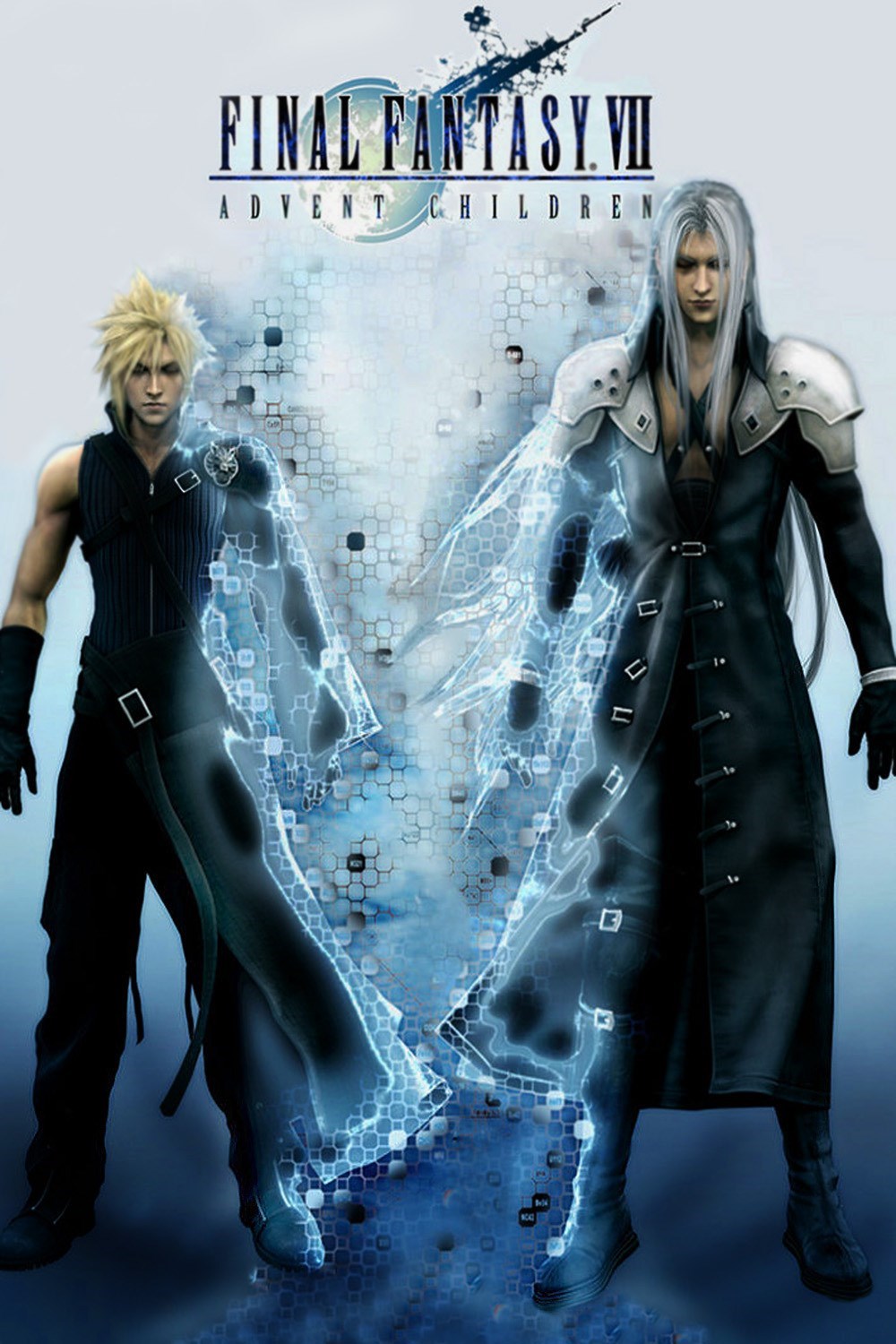
Final Fantasy VII - Advent ChildrenThe clearest example of this is my all-time favorite action movie, Final Fantasy VII: Advent Children. This computer-animated movie’s action scenes are ridiculous—this movie has a sword fight on motorcycles, guys. The animation looks great nearly a decade after the film’s release, the music is excellent, the characterization is compelling, and the ending is genuinely touching.

However, Advent Children has one damning flaw: it’s practically incomprehensible to anyone has hasn’t played an old PlayStation game called Final Fantasy VII. Even for those of us who have played the game, the movie can be a little tough to follow. This is a shame. In every other respect, Advent Children is an excellent film—but that excellence is locked away from most audiences.

The third reason games hardly ever make good movies is in the medium itself. Most video games are a repeating pattern of stages; many are nothing more than a series of levels. That’s hard to adapt to film.

Other games offer a more subtle take on this structure. Role-playing games, for example, generally feature a robust story, yet follow the same pattern: the player progresses from a town, to the open world, to a dungeon, and then back to a town, there to begin the cycle anew.

This approach works well for video games as a medium. It even works for television, in which a set of episodes allows for repeated rising and falling action. A film, however, is too short for this structure. The repeating pattern of a video game doesn’t fit in a movie. A game’s cyclical narrative can’t be compressed into a two-hour film.

Every now and then, however, there comes a game whose narrative isn’t a repeating cycle, but a focused story that could be brilliantly adapted to film. I can think of at least one video game movie that absolutely needs to be made… but I’ll save that for next time.

Are there any good video game movies?

Vide game movies that don't suckOf those I’ve seen, I can think of a few good ones. Professor Layton and the Eternal Diva, an animated film spin-off of the Professor Layton games, is accessible and charming, though it drags a bit. The aforementioned Final Fantasy VII: Advent Children boasts phenomenal action, epic music, and stunning visuals for viewers who don’t mind having no idea what the heck is going on. For those who like foreign films, Takashi Miike’s live-action Ace Attorney is really good, despite its absurd hairstyles.

Um, that’s it. Flipping heck, someone needs to make a good video game movie.

Question: Have you seen any video game movie that you would recommend? Let us know in the comments!

372. About Storytelling: Lampshading

How do you make something more obvious?

You put a lampshade on it, of course. Observe.

Lampshading

In fiction, there are sometimes implausible elements or plot holes that can’t be resolved by the author of the story. How can a storyteller respond to such a thing? That’s easy! The author can simply acknowledge the thing, whatever it is, and then move on.

Of course, this doesn’t fix the thing, but it reassures the audience that the storyteller is aware of it. By drawing attention to the thing—putting a lampshade on it, figuratively speaking—the author can dispense with it and get on with the story. This technique is called lampshade hanging or simply lampshading.

Lampshading is a great technique for writers because, sooner or later, most of us run into plot holes, clichés, or other issues we simply can’t fix. By lampshading those things, we don’t make them go away, but we at least make them easier to swallow.

This is such a notable technique that the logo of TV Tropes, a website that catalogs tricks and tropes used by storytellers, has a literal lampshade hung on it.

TVTropes logo

One of my favorite examples of lampshading comes from Monk, a television show about an obsessive-compulsive private detective. Many detective stories, including Monk, constantly kill off minor characters in order to give the detectives murders to solve. It really stretches the story’s credibility after a while. After all, in real life, people aren’t ingeniously murdered left and right as they are in detective stories.

In Monk, murders and mysteries abound. Everywhere the detective goes, people die. The show never explains this implausible fact, but one episode lampshades it hilariously. After yet another murder victim turns up, the show’s detective, Adrian Monk, has the following conversation with his assistant Natalie and a police officer, Captain Stottlemeyer.

Natalie: Everywhere you go, every time you turn around, somebody is killing somebody else.

Captain Stottlemeyer: That’s true.

Monk: What?

Captain Stottlemeyer: Well, there was the time you went on vacation, and then on the airplane.

Monk: These things happen.

Captain Stottlemeyer: Oh, and then that that stage play.

Monk: It happens.

Natalie: To you! Not to me, not to anybody else. It follows you around. You’re not just unlucky, it’s—it’s something else.

Monk: Bad karma?

Natalie: You’re like a magnet.

Captain Stottlemeyer: Bad karma.

Natalie: It’s like you’re causing it somehow. You’re the Prince of Darkness!

Captain Stottlemeyer: No, he’s not the Prince of Darkness. I’ve seen him vacuuming the ceiling. You wouldn’t see the Prince of Darkness doing that.

Natalie: No, I can picture the Prince of Darkness vacuuming the ceiling, to trick us. He’s very tricky.

Monk: Stop calling me the Prince of Darkness! That’s how rumors get started.

Monk’s tendency to show up wherever murders happen doesn’t make sense, and the show never explains it. By simply acknowledging it, however, the show makes this unbelievable fact a little easier to accept.

Another superb use of lampshading comes from Doctor Who, the enduring British series about a time-traveling wanderer-hero. This show practically wrote the book on lampshading. I can’t find the quote, but I remember one of the show’s writers stating that the plot holes in Doctor Who are explained by the time travel in the show and the resulting butterfly effect. That’s fifty years of plot holes lampshaded by a single statement. Most impressive.

My favorite example of lampshading from Doctor Who is the Tenth Doctor’s explanation of time travel, which posits that time is not a straight line of cause and effect, but “more like a big ball of wibbly-wobbly, timey-wimey… stuff.”

This isn’t an explanation. It’s a statement lampshading the fact that time travel in Doctor Who doesn’t really make sense. We should all just assume that time travel is too difficult for humans to comprehend, leave it in the clever hands of the Doctor, and dismiss any narrative inconsistencies with the words “wibbly-wobbly, timey-wimey.”

If you’re writing fiction, and you’re stuck in an unavoidable plot hole or cliché, consider acknowledging it and getting on with your story. Now, if you’ll excuse me, I need to get this lampshade off my head.

369. Review Roundup: Fairy Tale Edition

Once upon a time, in the faraway land of Indiana, Adam the blogger enjoyed a number of whimsical stories and contemporary fairy tales. Here are his impressions of three animated films, a video game, and an anime: Inside OutBraveBrother Bear, Ni No Kuni, and Monthly Girls’ Nozaki-kun.

These are the stories of a plucky princess, an Inuit tribesman, a brave little boy, a Japanese manga artist, and the personifications of a girl’s emotions. Do they live happily ever after?

Let’s find out.

Inside Out
Inside Out

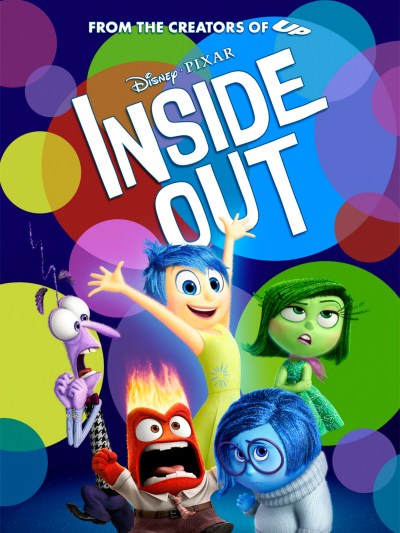
Inside Out brought me closer to weeping openly in a movie theater than any other film has done. (Fortunately, I have a heart of stone, sparing myself and my younger brother the embarrassment of annoying our fellow theatergoers.) This is a brilliant movie, and I have literally nothing bad to say about it.

Pixar’s Inside Out pictures the human mind as a control room operated by five engineers, each representing an emotion: Joy, Sadness, Anger, Fear, and Disgust. In the mind of Riley, a girl from Minnesota, her emotions struggle to keep her happy as she moves with her parents to California. When an accident sends Joy and Sadness to the farthest reaches of Riley’s mind, these unlikely partners must make it back to the control center before Riley breaks down.

This film boasts the usual Pixar polish, with top-notch animation, writing, and performances. Beyond that, Inside Out is the first Pixar movie in years to feature a truly original concept. (Of the past four Pixar films, two were sequels, one was a prequel, and one had the style of a traditional fairy tale—more on that last one in just a bit.) The movie’s concept of the mind is creative, clever, and—importantly—consistent. The way the mind works in Inside Out isn’t hard to understand, and the film does a fine job of sticking to it.

As I hinted above, this is a film with emotional punch. Pixar has a gift for depicting emotion with heartfelt sincerity and simplicity: Carl’s irritable despondency in Up, the toys’ sense of loss in Toy Story 3, Mike’s resignation to his limitations in Monsters UniversityInside Out is quite literally a film about emotions, so you can bet it hits the viewer—at any rate, this viewer—with feels.
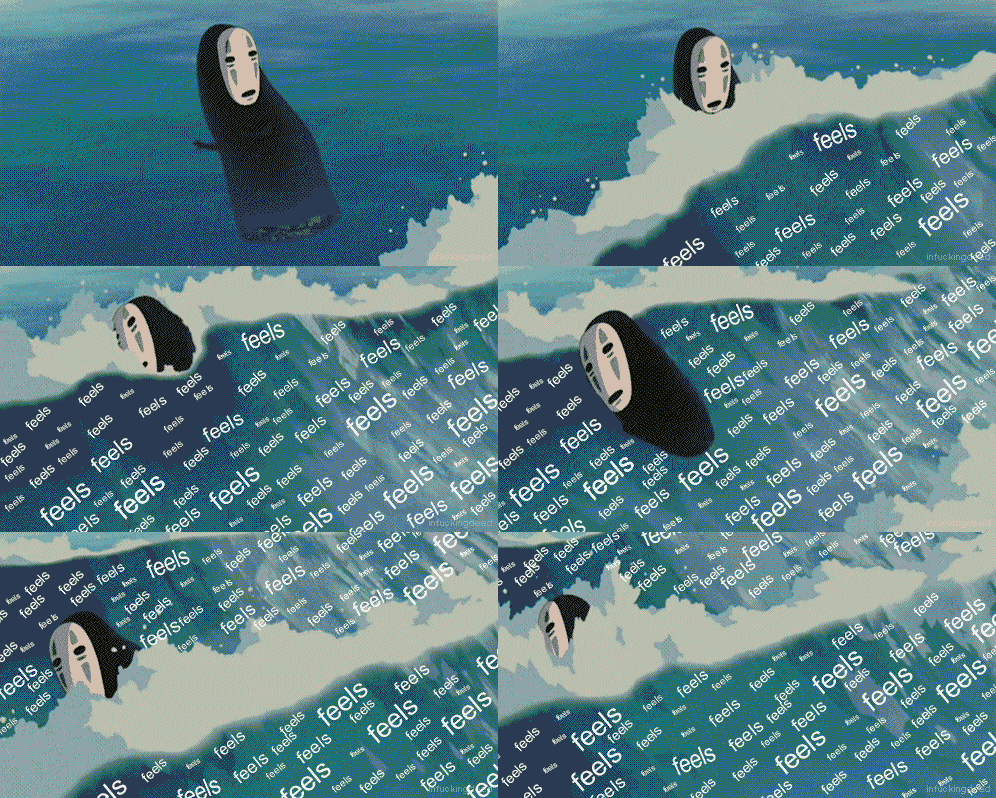
This is pretty much how I felt at the end of the film.

This is pretty much how I felt at the end of the film.

Inside Out is a fantastic film. Somewhere deep inside my mind, my sense of Joy is fiddling with whatever knobs and buttons affect my actions, willing me to recommend this film. Watch it. Your own sense of Joy will thank you.

Brave
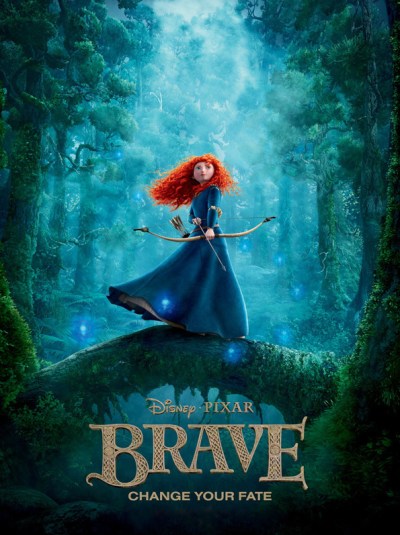
Brave

Here’s another Pixar classic, this time telling the age-old story of a princess who falls in love with a prince and—what’s that? She doesn’t fall in love with a prince? Well, that’s different.

Brave is an original fairy tale. Set in Scotland, it tells the tale of a princess named Merida, who decides she doesn’t want to let her parents marry her off to any of the local chieftains’ sons. Merida tries to change her fate… and accidentally transforms her mother into a bear. Mother and daughter must shelve their pride, settle their differences, and somehow make things right.

The film’s independent, self-reliant heroine is a refreshing change of pace from the mild princesses of other fairy-tale movies, and I appreciate the way the Merida and her mother learn to understand, respect, and trust each other. Merida’s family is a colorful bunch. Even the chieftains and their sons, who could easily have been throwaway characters, have some personality.

As a Pixar movie, Brave doesn’t feel particularly, well, brave. It’s a fairy tale. Even with its feminist undertones and emphasis on family relationships, it treads a lot of familiar ground. It’s a fine film nevertheless, and I appreciate it as a deeper alternative to the princess-flavored romances Disney loves so much.

By the way, does the Scottish setting of Brave give anyone else flashbacks to How to Train Your Dragon? No? I guess it’s just me, then.

Brother Bear
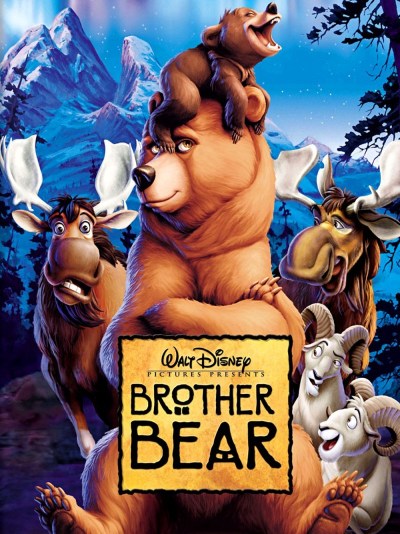
Brother Bear

Here’s another animated movie about people turning into bears. Why do people keep turning into bears? I just can’t bear it. (I’m so, so sorry.)

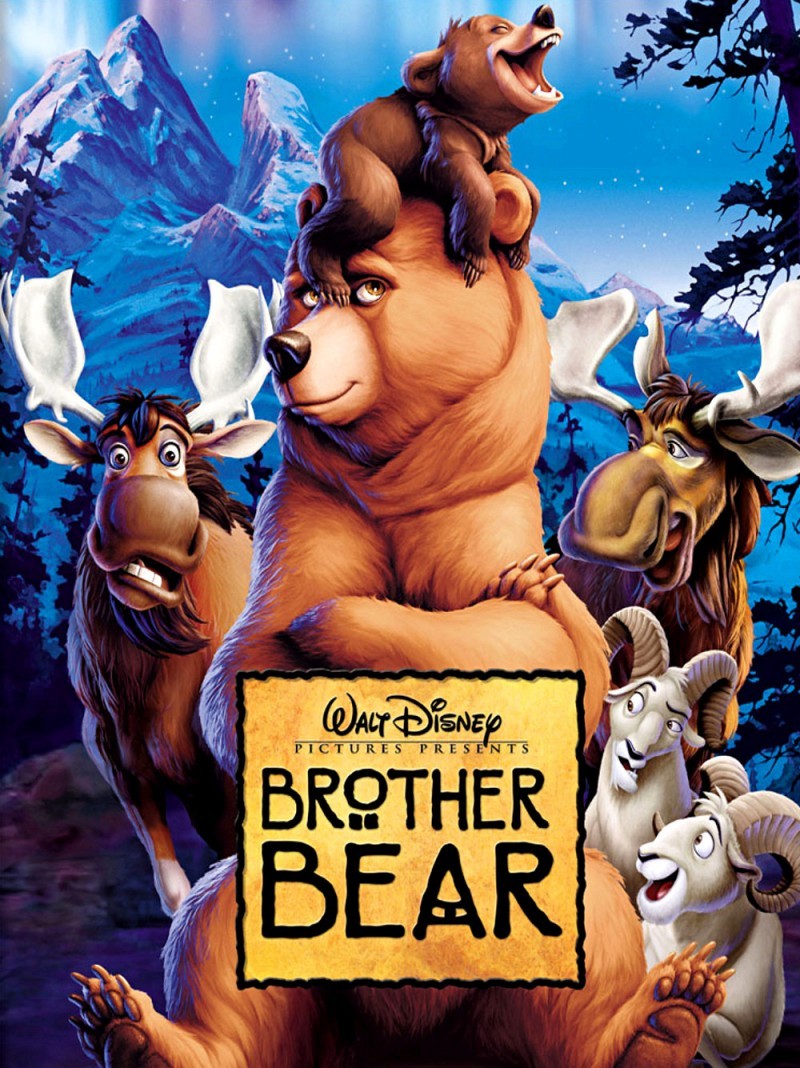
Brother Bear is a Disney animated film from the early two thousands: that nebulous stretch of Disney history whose movies nobody remembers. In the film, an Inuit tribesman named Kenai seeks revenge on a bear that killed a loved one, and is turned into a bear for his trouble. He must go on a quest, and learn the power of love, and—y’know, forget it. If you’ve ever seen a Disney film, you know where this is going.

This is not a bad movie. The Canadian wilderness is a great setting, and Inuit culture is largely unexplored in pop fiction. The acting, animation, and story were all perfectly adequate. I just couldn’t help feeling that this film didn’t really need to be made. Brother Bear is an uninspired blend of other Disney movies. Its plot borrows heavily from The Emperor’s New Groove: a man turned into an animal finds a buddy and goes on a trip to regain his (literal and figurative) humanity. The film’s music channels the soundtrack of Tarzan, down to a song from Phil Collins. It’s all been done before.

Brother Bear does have its moments. A couple of moose with heavy Canadian accents wander in and out of the movie, providing comic relief and stealing every scene in which they appear. The movie lacks a traditional villain, which is a refreshing change from Disney’s usual black-and-white morality.

In the end, however, Brother Bear is nothing special. I recommend The Emperor’s New Groove instead: pretty much the same story, but much funnier.

Ni No Kuni: Wrath of the White Witch

Ni No Kuni cover

Flipping heck, this game is amazing. I’ve already discussed the excellence of Ni No Kuni, so I’ll try not to ramble!

Ni No Kuni is a beautiful fairy tale. (It also happens to be a JRPG for the PlayStation 3.) It tells the story of Oliver, a little boy who sets out on a quest to save his mum. Accompanied by Drippy, the “Lord High Lord of the Fairies,” Oliver must mend broken hearts, defeat an evil jinn, and rescue a parallel world.

That world is one of the most charming and beautiful places I’ve seen in a video game. The look of Ni No Kuni was based on the work of the legendary Studio Ghibli, which handled the game’s animated cutscenes. This a lovely game. Apart from the cutscenes, which are nothing less than I expected of the Oscar-winning animation studio, the game itself is gorgeous.

I mean, look at it. Just look at it.

This is a gameplay screenshot, not an animated cutscene. This is what the game looks like. Ain't it pretty?

This is a gameplay screenshot. This is what the game looks like, more or less. Ain’t it pretty?

Ni No Kuni is visually appealing, but its excellence doesn’t stop there. The music, composed by renowned film composer Joe Hisaishi and performed by a live orchestra, is fantastic. Most importantly, the game is flipping fun to play.

The gameplay blends the fighting and adventuring of Final Fantasy games and the creature-catching of Pokémon. Oliver and his companions command familiars, adorable monsters that handle most of the fighting. Like Pokémon, familiars can be caught, trained, and metamorphosed into stronger creatures. Outside of battle, exploration is fun and sidequests abound.

Ni No Kuni even includes the full text of an original book, The Wizard’s Companion, which contains maps, spells, descriptions of familiars, old-fashioned illustrations, runes to decipher, and fairy tales. Yes, this fairy tale contains fairy tales of its own, and they’re delightful. In fact, The Wizard’s Companion is so good that I wish I owned a hard copy. As Oliver travels, he gathers the book’s scattered pages, unlocking more reading material.

Alas, Ni No Kuni is not quite perfect. It’s hard to read The Wizard’s Companion on a television screen, and flipping through its pages is a pain.

By far the biggest flaw of Ni No Kuni is its ending. Without spoiling anything, I must admit that it feels tacked on. The game reaches a satisfying conclusion, with Oliver reaching his goal and finishing his character arc… and then the game goes on for another four to six hours, limping doggedly to an anticlimax. Although the game’s final chapter answers some lingering questions, a little rewriting would have tied up those loose ends sooner, giving the game a stronger finish.

Despite its weak ending, this game is one of the finest I’ve ever played. RPGs aren’t for everyone, but for anyone with the patience, Ni No Kuni is a gem.

Monthly Girls’ Nozaki-kun

Monthly Girls' Nozaki-kun

I can’t decide whether Monthly Girls’ Nozaki-kun is a heartwarming parody or a self-aware romantic comedy. Either way, it’s brilliant.

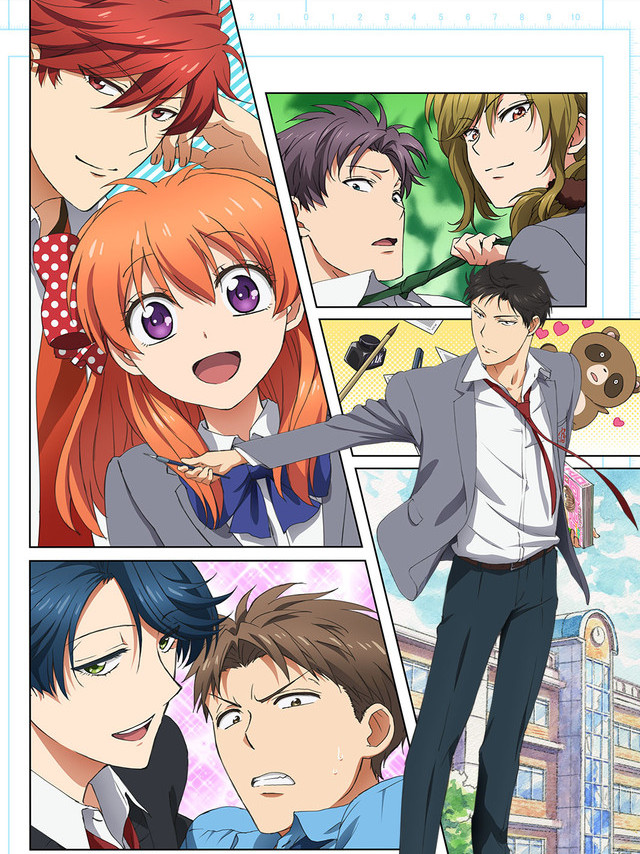
In Japan, there is a genre of manga (comics) called shojo. This genre is aimed at teenage girls, generally focusing on romance and emotional characters. Monthly Girls’ Nozaki-kun is the story of a high school student named Sakura. When she tries to confess romantic feelings for Nozaki, one of her classmates, he mistakes her for a fan of his work. You see, Nozaki—an analytical, unromantic wet blanket—is secretly the writer and artist behind a popular shojo manga series, Let’s Fall in Love. When Nozaki invites Sakura to be his assistant, she agrees, hoping to get closer to him.

This twelve-episode series is a hilarious deconstruction of romantic comedies. The eponymous Nozaki-kun is intrigued by romance, but only from an academic point of view. For example, he loves St. Valentine’s Day, but only because observing romantic couples gives him ideas for his manga series. The thought of actually being romantic never crosses his mind. This makes for some delightful moments when Sakura is convinced he is finally falling in love with her… only to realize he’s testing out ideas for his manga.

For example, Nozaki realizes it’s romantic for a man and woman to share a bicycle, but he doesn’t understand why. He tests the scenario repeatedly with Sakura, eventually acquiring a tandem bike and riding down city streets with Sakura reluctantly in tow. Once he figures out the most romantic method for sharing a bike, he reasons, he can use it in his story for optimal effect.
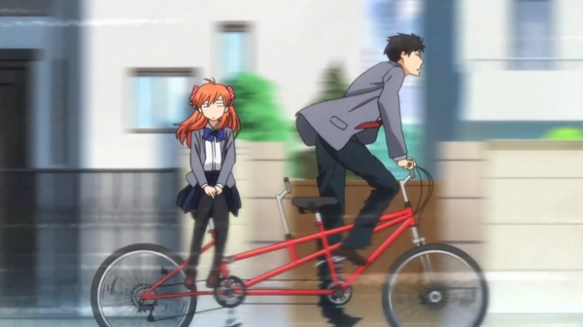
Romantic, I guess

This is romantic, right? Right?!

As Sakura becomes acquainted with Nozaki and his other assistants, she realizes how much of his manga is based on people she knows. For example, the heroine of Let’s Fall in Love is based on Mikoshiba, a flirtatious male friend of Nozaki’s who is secretly very insecure.

Monthly Girls’ Nozaki-kun deconstructs rom-com clichés, yet the series is never bitter or mean-spirited. I was also pleasantly surprised by the show’s family-friendly tone. Japanese anime is notorious for its inappropriate content. As I began this anime about high school romance, I resigned myself to the saucy innuendos and panty shots that plague other series. Monthly Girls’ Nozaki-kun rises above cheap lewdness, keeping things at a PG level. I found the show’s innocence added to its charm, which is already considerable.

Like many anime, this one offers fascinating glimpses into Japanese culture. I was particularly interested by the creative process of writing and drawing manga, which is gradually shown in the series as Nozaki enlists more assistants.

I highly recommend Monthly Girls’ Nozaki-kun to anyone who likes anime or romantic comedies. I’m not a particular fan of either, yet I really enjoyed it.

What books, films, shows, or video games have you enjoyed lately? Let us know in the comments!
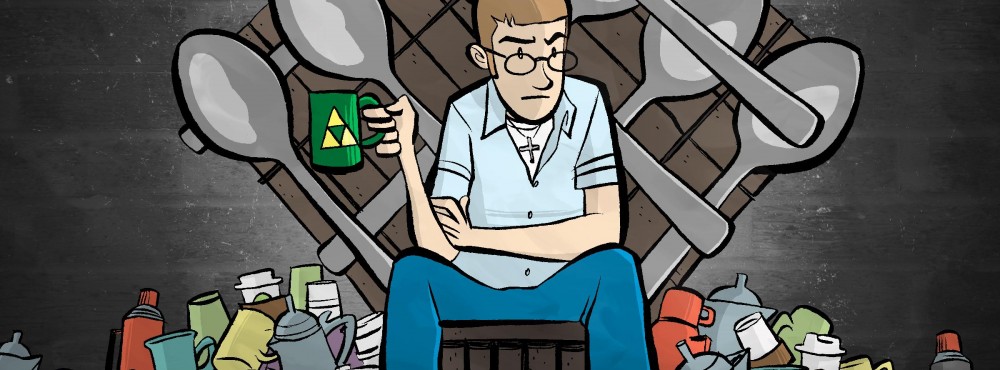
363. About Storytelling: Shock Value Is Overrated

This blog post discusses subjects exploited for shock value in fiction, including atrocities like torture and sexual violence. I have done my best to address these subjects in an appropriate way, yet sensitive readers may want to give this post a miss.

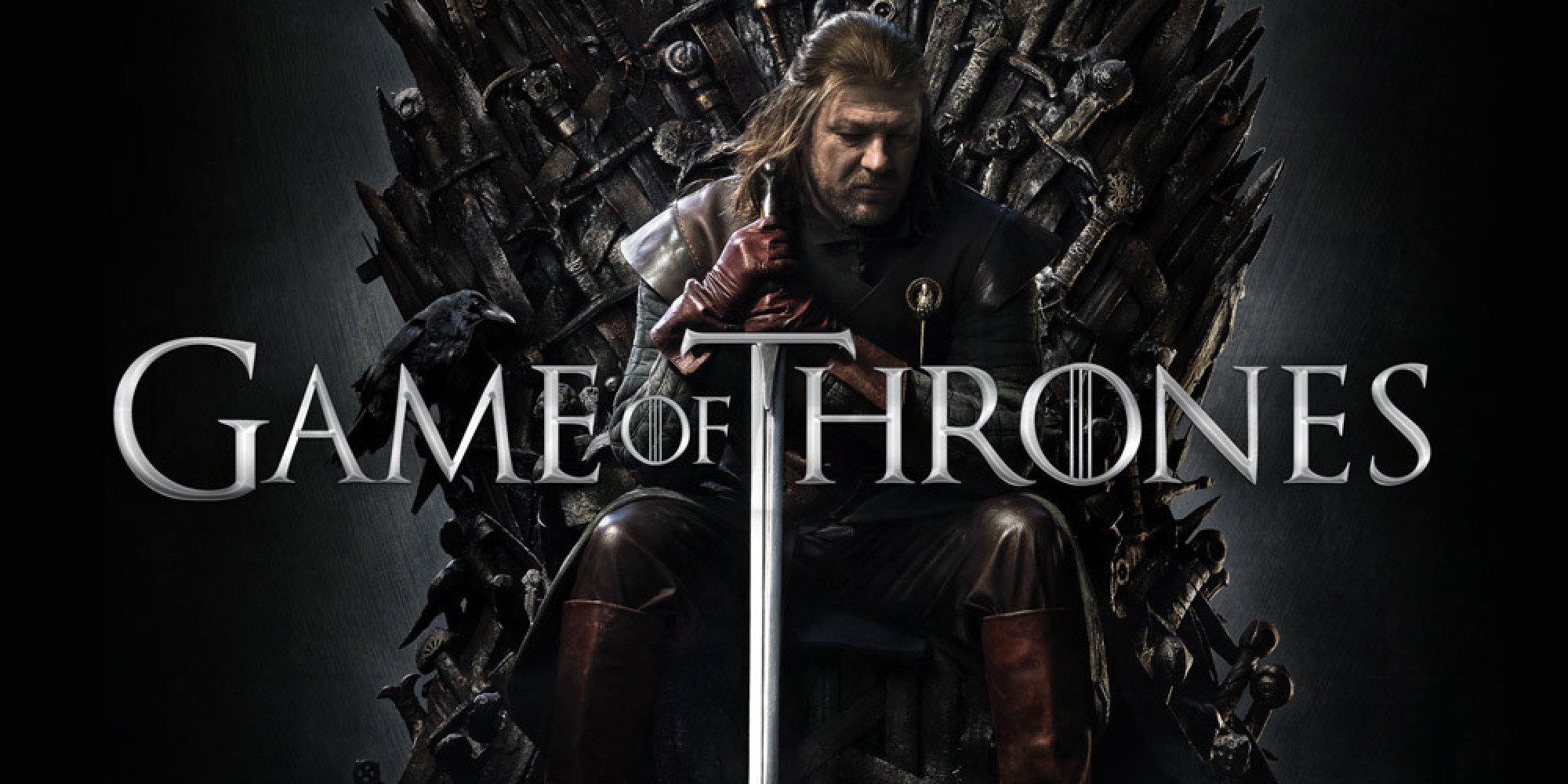
There has been a lot of buzz lately over Game of Thrones and its sexual violence. I’ve never watched Game of Thrones, yet I’ve gathered the impression that it is not—to put it as gently as possible—a family-friendly show.

That looks... familiar.

This picture looks… familiar.

Some weeks ago, the controversy over the show inspired a sensible article explaining why subjects like rape must be handled very carefully by storytellers. (I would link to the article, but I can’t find it.) The gist was that rape is a monstrous crime and should not be taken lightly.

Can such atrocities be used effectively in fiction? Of course they can. Are such atrocities used effectively in fiction? Far too often, they are not. Subjects like rape, torture, and pedophilia are sometimes used by storytellers merely for shock value. Such atrocities are a cheap way to make a villain seem evil, a setting seem dark, or story seem gritty and “mature.”

Here are a few problems with such a shallow approach.

Stories that include heinous crimes too often focus on the criminals and ignore the victims.

If storytellers have the guts to depict a vicious crime, they had better also have the guts to show its effects on its victims. Using an atrocity like rape or torture for shock value, but glossing over its horrific consequences, is not only disrespectful—it’s bad storytelling. The cost of such crimes is too great to be ignored.

Shallow or tasteless use of monstrous crimes in fiction is deeply disrespectful to real-life victims of those crimes.

Before depicting a shocking crime, storytellers should ask themselves: What if anyone in my audience has been a victim of this crime? What will that person think of this scene? Fiction can explore atrocities in a meaningful way, but using them merely for shock value is cruelly disrespectful to those who have suffered them in real life.

There are endless ways to depict evil or depravity in fiction without using horrific atrocities as a cheap shortcut.

In my twenty-something years, I’ve read a lot of disturbing books: Lord of the FliesMausHeart of Darkness, and The Road, among others. (Twilight was equally horrifying, but for entirely different reasons.) These novels are chilling in their depiction of evil. So far as I can remember, none of them relies on torture, sexual perversions, or sexual violence for shock value. The depravity of humankind isn’t limited to these atrocities!

Shock value has its place in storytelling, but it must be treated with caution. Using shock as schlock, treating monstrous crimes as shortcuts to edgy storytelling, is a terrible mistake. Shock value can be used effectively—but it must be used carefully.