352. Thoughts on Marvel’s Daredevil

If you read the tagline for this blog, you may notice that television is conspicuously absent. Typewriter Monkey Task Force is a blog about “faith, writing, video games, literature, life, the universe, and everything.” When I discuss television, it falls into the same “and everything” category as muffins, snow, and fist bumps.

Update: Well, I added TV and movies to the tagline, and also as a category. I suppose it was inevitable.

This blog has a number of posts about Doctor Who and kids’ cartoons, but hardly any for more serious shows. I seldom write about grown-up shows for the reason that I seldom watch grown-up television. Not for me the Breaking Bads and Walking Deads of modern programming; I prefer to relax with something pleasant, not tales of violence, crime, sex, or scandal.

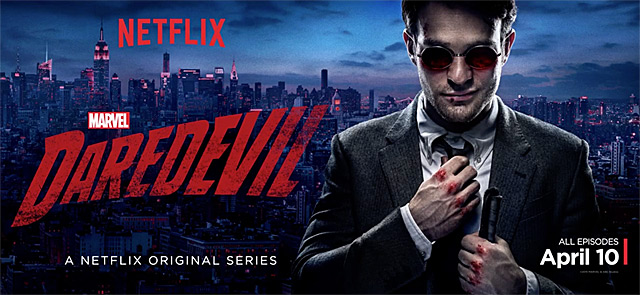
A few times, however, a show for adults has come along that absolutely blows me away. The last one was Sherlock, the BBC’s outstanding adaptation of the old Holmes stories. This time it’s Marvel’s Daredevil, a recent Netflix original series. It does so many things right that I’m taking a post to list a few of them, along with some miscellaneous observations.
Marvel's Daredevil

First, a little background: Daredevil is based on a Marvel comic about Matt Murdock, a blind lawyer whose other senses are heightened to an incredible degree, allowing him to “see” without eyes. Every night, he hits the streets of Hell’s Kitchen, a neighborhood of Manhattan, to beat criminals senseless: a lawless lawyer, so to speak.

The Netflix show happens in the same world as all those Marvel movies from Disney—the MCU, or Marvel Cinematic Universe—but takes a more mature, grounded tone. One final note: Marvel’s Daredevil has no connection, thank heaven, to that dreadful movie starring Ben Affleck.

As promised earlier this week, here are my thoughts on Marvel’s Daredevil.

Be ye warned: Here there be minor spoilers.

The villain

The grand villain in Daredevil, criminal kingpin Wilson Fisk, is one of the best baddies I’ve seen on television. Too many stories disrespect their villains by treating them not as characters, but as plot elements. Fisk, by contrast, is a brilliantly developed character: menacing, memorable, and oddly vulnerable. Despite being “merely” a villain, he gets flashbacks and a love story—considerations usually reserved for the protagonist!

At first, Fisk seems completely in control. He fits the stereotype of the criminal genius pulling strings from the shadows. Only as the story unfolds is Fisk revealed to be an unstable, emotional mess of a man, a character with noble dreams and zero compassion. Fisk is a magnificent bad guy.

The booze

The characters in Daredevil drink with alarming frequency. It’s a wonder they manage to stay mostly sober for thirteen episodes. Daredevil‘s Matt Murdock and Iron Man‘s Tony Stark probably need an intervention.

The sidekick

Matt’s business partner is a wry young lawyer named Foggy Nelson. I expected Foggy to be shallow comic relief or the bumbling Watson to Matt’s Holmes, but he surpassed my expectations in every way. Foggy is certainly funny, and he lacks Matt’s poise, yet he winds up being a smart, independent, and thoroughly likable character.

Matt Murdock and Foggy Nelson

The fight scenes

I’ve become jaded toward practically every single fight scene in the MCU. I can only watch Thor or Captain America punch people in the face so many times before I lose interest. These fight scenes are bland and bloodless. The heroes, who are practically invincible, knock out nearly every enemy in a single punch. What’s the point?

Daredevil offers a superior take on fight scenes. Matt Murdock is breakable. Many of his battles end with Matt bruised, gashed, and bloodied. He is regularly bandaged and stitched up by a sympathetic friend. Because he’s not some invincible superman, his fights are tense and engaging in a way Thor’s or Captain America’s will never be. Matt is weaker than the average superhero, and his enemies are tough. When he knocks them down, they sometimes get back up and keep fighting—a refreshing change from the one-punch knockouts of Marvel’s movies.

Finally, the fights in Daredevil aren’t flagrantly choreographed dances. They’re all-out brawls. Matt gets tired. He stumbles. His fights have the weight, momentum, and wild physicality missing in the MCU’s other media. I like Marvel’s big-budget movies, but they have so much to learn from Daredevil.

The writing

Following up on things Daredevil can teach the rest of the MCU, its writing is really good. Marvel’s movies have plenty of heavy exposition, clever quips, and inspirational speeches, but not a lot of honest-to-God conversation between characters. When Daredevil‘s characters talk to each other, they sound like people talking to each other, not actors reading a screenplay. I know Daredevil has more airtime than the average Marvel movie, but the MCU could try to mix in a little believable dialogue with its jokes and expositions.

The violence

Daredevil is really, really violent. Its blood and broken bones are earned by the story’s mature themes and gritty realism, but this show sure ain’t one for the kiddos.

The religion

Matt Murdock is nominally Roman Catholic, and I didn’t expect to be impressed by the show’s treatment of religion. The media hardly ever depicts Christians well. To my astonishment, Daredevil offers an excellent Christian character in the form of Matt’s priest, Father Lantom.

Many Christian characters in secular media are broad caricatures of religion, but Father Lantom seems authentic in both his concern for Matt and his knowledge of Christian theology. In one scene, he discusses the doctrine of the devil in astonishing detail, mentioning the fact that Satan is the Hebrew word for adversary and alluding to the liberal theory (with which he disagrees) that the devil is merely a misinterpretation of Scripture.

This is heavy stuff for a superhero show. The show’s writers really did their homework, and I love the way they wove the religious motifs of the devil, sin, and redemption into Matt’s journey. I’m impressed by Father Lantom. The heroes of Daredevil aren’t saints, but the show’s informed, respectful depiction of religion is exemplary.

The verdict

Marvel’s Daredevil is one of the best shows I’ve seen in ages. It isn’t as action-packed or colorful as Marvel’s other stuff, but I loved its serious tone, smart writing, and superb fight scenes. In all the right ways, Daredevil is a show for adults, and I highly recommend it.
348. About Storytelling: Getting Drunk on Milk

In fiction, as in real life, bad things happen. When tragedy strikes, fictional characters sometimes try to drown their grief in alcohol.

We’ve all seen this in the movies. In one scene, a man loses his job or girlfriend; in the next, we find him drinking or drunk. It’s an age-old trope of storytelling. Heck, even I’ve used it. Lance Eliot, the protagonist in my novel, is quite a drinker.

What about stories for children? Here we have a problem. A story may need its characters to drink away their sorrows, but that sure ain’t appropriate for the kiddos! Storytellers, crafty creatures that they are, have discovered a family-friendly alternative to getting drunk on alcohol: getting drunk on nonalcoholic things, of course!

(In writing this blog post, I discovered this trope actually has a name: drunk on milk. Thanks, TV Tropes.)

Here are some examples of characters in family-friendly media drowning their sorrows in things that aren’t alcohol.

Tea (Toy Story)

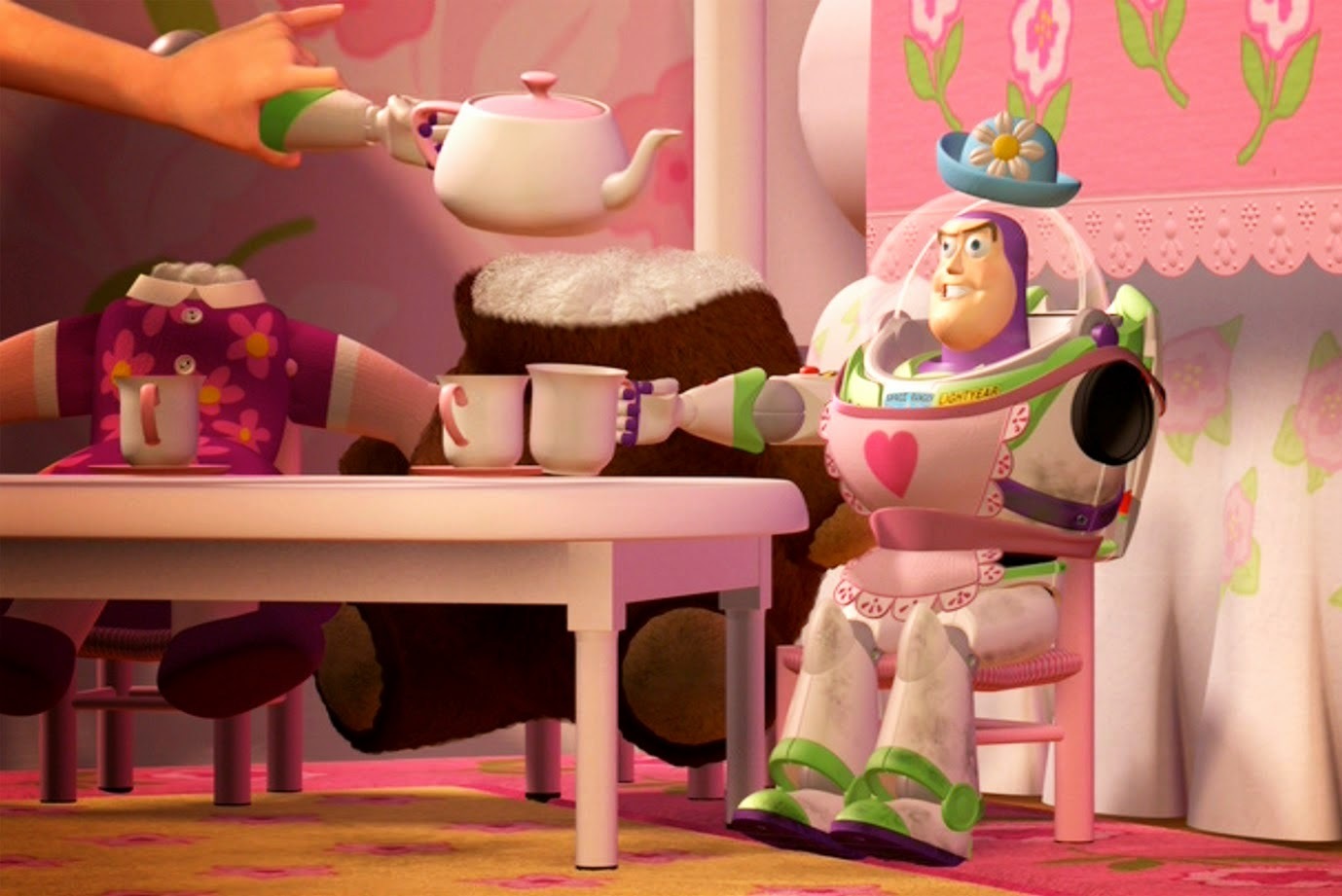
Tea drunkI’ve drunk Darjeeling tea before, and let me tell you: the stuff Buzz Lightyear drinks (or pretends to drink) in Toy Story is like no Darjeeling I’ve ever tasted. Whatever is in those teacups, Buzz gets buzzed. (Pun intended. I’m so, so sorry. By the way, in case one bad pun isn’t enough for you, “Buzz” is pronounced “booze” in a Hispanic accent.) Buzz’s, um, tea is strong enough that he doesn’t seem to mind being called “Mrs. Nesbitt,” which must be humiliating for an intergalactic hero. Darned Darjeeling!

Doughnuts (My Little Pony: Friendship Is Magic)

Drunk 'n' donutsA happy cartoon about magical rainbow ponies can’t show its characters consuming alcohol, despite the fact that one of its protagonists is apparently named after a hard liquor. The alternative? Doughnuts. When Spike the dragon is left behind by his pony pals, he hits the local doughnut shop—the name of which, I can only presume, is Drunk ’n’ Donuts. (Pun intended, but I’m not sorry for this one!) Spike may not get a hangover from his excesses, but I don’t envy him the inevitable sugar crash.

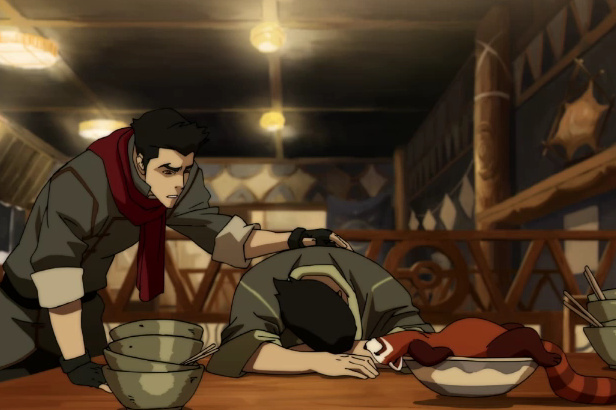
Ramen noodles (The Legend of Korra)

Bowls and BolinBolin—the young man passed out on the table in the picture above—deals with romantic rejection as heartbroken men do: by heading to the local ramen joint and eating too many bowls of noodles. This early scene from The Legend of Korra makes me chuckle; I’m especially amused by Bolin’s pet ferret lounging in an empty bowl. The Legend of Korra is a good show… I should catch up with it someday.

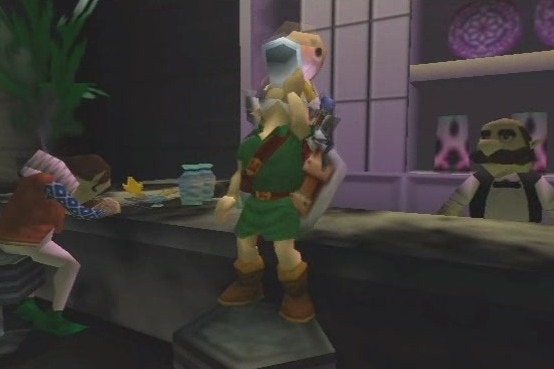
Milk (The Legend of Zelda: Majora’s Mask)

Milk drunkThe Legend of Zelda: Majora’s Mask is, without question, one of the greatest games I have ever played. It’s also one of the few to feature a milk bar. (Yes, I’ve seen a milk bar in more games than this one!) Open late at night, the milk bar caters exclusively to adults and offers both live entertainment and a variety of dairy drinks. I think the Shakespearean-looking gent in the picture above says it best: “Milk… It’s miiiilk… Can you get tipsy from something like milk?!? Hic!”

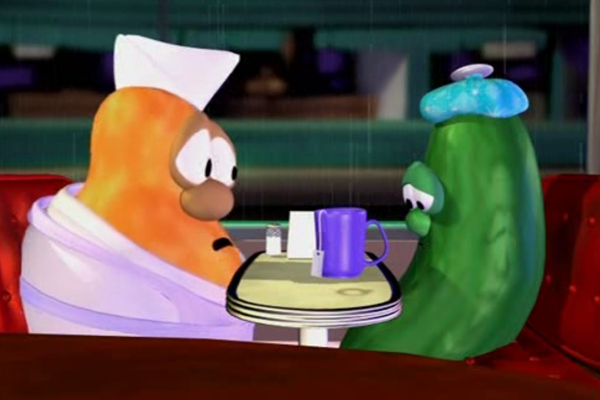
Ice cream (VeggieTales)

Ice cream drunkI’m digging deep into my childhood memories for this one. At one point, Larry the woebegone cucumber responds to bad news by eating too much ice cream at a diner. (VeggieTales is not just a kids’ show, but a Christian kids’ show, so they really had to keep it family-friendly!) In the picture above, Larry recovers with a warming cup of tea. Let’s hope it’s not Darjeeling.

Juice boxes (Jan Animation Studios)

Bar buddiesAll right, I’m kinda reaching here, but I suppose this short video counts. Bar Buddies, a brief animation from the brony community, has a kid getting wasted on juice boxes. Apple juice, apple cider, applejack—what’s the difference? They’re all made of apples, right? This one makes me laugh because of the disparity between the well-dressed, hard-drinking guy on the left and the silly kid on the right.

What’s drunk-on-milk scenarios did we miss? Let us know in the comments!

344. Four Lessons in Storytelling from Disney’s Latest Animated Films

Disney’s three latest animated films—Wreck-It RalphFrozen, and Big Hero 6—offer important lessons in storytelling. I wrote about four of them in today’s blog post, which… um… isn’t actually for this blog.

My post can be read on Animator Island, a community for artists, animators, and people who like animated movies (i.e. cool people). Special thanks to JK Riki for inviting me to write for the site despite my absolute lack of talent for the visual arts!

My latest post, “Four Lessons in Storytelling from Disney’s Latest Animated Films,” can be read here!

335. About Storytelling: Christians Are Evil

Those Christians, I tell you! They’re all so evil. All of them! If you don’t believe me, just switch on the television or go to the movies. Hollywood proves that Christians are evil, because Christians are often depicted as villains, and the media is always right.

Right?

Seriously, though—why are Christians so often portrayed as horrible people in the media? Why are books, movies, TV shows, and video games full of perverted priests, prejudiced pastors, and sinister ministers?

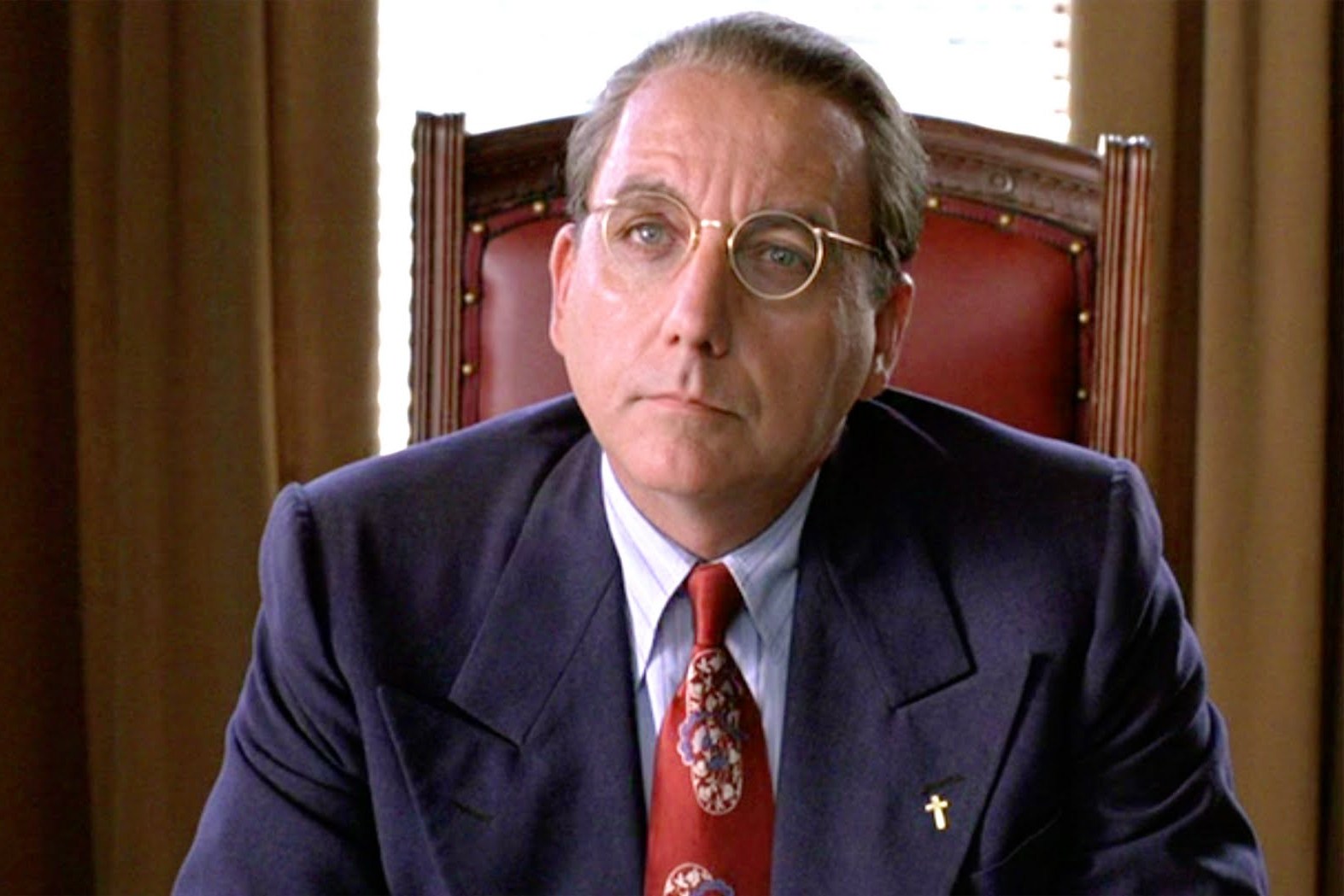
Consider Warden Norton from The Shawshank Redemption, a film based on a story by Stephen King. (I haven’t read any of his books, but I’ve heard Stephen King uses Bible-thumping Christians as a lot of his villains.) Warden Norton is an awful person. He mistreats prisoners in his care, denies them justice, accepts kickbacks, murders people, and generally makes himself unpleasant. All the while, he quotes the Bible and assumes God is on his side.

Evil warden

God loves you, but Warden Norton will probably shoot you in the face.

Even when Christians in fiction aren’t evil, they’re often well-meaning but ignorant simpletons. Take Marvel’s Agents of S.H.I.E.L.D. I really enjoyed the series, but one episode irritated me. It was the episode featuring a Christian, and she was a bland, weepy, superstitious ditz.

Why are Christians portrayed so badly in the media? There are actually quite a few reasons.

It can be ironic or scary when a supposedly “good” person is evil.

There’s an artistic irony when a righteous person is actually wicked. It’s also pretty freaking scary. Who isn’t disturbed when a good person turns out to be a bad one?

Religious people have power and influence, which makes them great villains.

Priest and pastors have influence over groups of people. What happens when religious leaders are evil? They command the loyalty of their followers—even when that loyalty is innocent or well-intentioned. Religious leaders have power and authority, which can be easily turned to wicked ends.

Religious people sometimes do horrible things.

I hate to say it, but there’s a little truth in the portrayal of priests as pedophiles and preachers as charlatans. Christians, and people who call themselves Christians, have done some awful things. The media reflects that.

No secular media group wants to be accused of proselytizing.

Media groups exist to make money. Unless they produce religious media, these companies don’t want to be accused of pandering to Christians or spreading religious propaganda. Creating a genuinely Christian character puts media groups at risk of seeming to push a religious agenda. It’s safer to fall back upon familiar stereotypes like the evil or ignorant Christian.

Some religious traditions are spooky.

Have you ever stepped into an old-fashioned cathedral? You should try it. Little noises are echoed and magnified. Candles light the vast, empty gloom. Stained glass windows depict sad, soulless saints. Somber Christs hang in perpetual agony on crosses and crucifixes. Some Christian customs and traditions are frankly a bit creepy. They really build an atmosphere for villainy.

Some people just hate religion.

I’m looking at you, Philip Pullman.

As much as I understand these reasons for creating lousy Christian characters, I’m tired of the stereotypes. Am I the only one who thinks most depictions of Christians in the media are offensive? If other groups were so badly stereotyped, there would be outrage. Why is it socially acceptable to portray Christians as universally evil or ignorant?

It’s a problem, and I have two suggestions for resolving it.

First, do your research and create Christian characters that actually represent Christianity.

I’ve already touched upon this, but I’ll say it anyway: religious stereotypes are not only offensive, but usually incorrect. Joss Whedon, God bless him, understands this. Whedon is an atheist, yet he created a character named Shepherd Book who is genuinely Christlike.

Shepherd Book demonstrates a good understanding of Christian doctrines, and an equally good sense of humor. He is devout, patient, kind, and generous. To put it simply, Shepherd Book is represented by the media as a great character and a good Christian. It can be done.

The good Shepherd

Learn from the good Shepherd.

I’m not asking anyone in the media to create religious propaganda. I’m asking everyone in the media to create Christian characters that aren’t shameless hypocrites, greedy shysters, arrogant bigots, filthy perverts, sociopathic lunatics, or well-intentioned idiots. Is that really so much to ask?

Second, it’s perfectly fine to create characters that are evil Christians—just don’t be lazy about it.

I occasionally recommend an anime called Trigun. Set on an arid planet in the distant future, Trigun is basically the Old West in space. My favorite things about the show are its two main characters, Vash the Stampede and Nicholas D. Wolfwood, and their strained friendship.

Vash is an expert marksman, unbridled optimist, and wandering hero. He lives by a philosophy of “love and peace,” refusing to kill anyone. “Ain’t it better if we all live?” he asks.

Vash and his philosophy are tested by Wolfwood, an itinerant preacher who carries a literal cross wherever he goes. (When a bystander remarks that the cross is heavy, Wolfwood quips, “That, my friend, is because it’s so full of mercy.”) Despite his merciful profession, Wolfwood’s philosophy is a harsh one. There’s an Old Testament justice in his actions. He won’t hesitate to execute a bad man.

The bad shepherd

You do not want to cross this man. (Pun intended. I’m so, so sorry.)

The thing about Wolfwood is that he himself is a bad man. He drinks, smokes, sleeps around, and kills quite a number of people. (Wolfwood’s cross is actually a machine gun with compartments for handguns, which is either blasphemous or awesome.) Even his theology is flawed. However, in spite of his faults, Wolfwood is a complex character. He sees violence as a necessity, and regards the world’s evils (and his own) with determined resignation.

To put it simply, Nicholas D. Wolfwood is a good bad Christian. He manages to be a Christian and a bad person without ever becoming an insulting stereotype. It doesn’t take offensive clichés to portray Christians as bad people. It can be done.

Christians are generally depicted very badly in the media. That needs to change. Christians—even the bad ones—can be treated fairly, and they deserve to be.

317. About Storytelling: Deus Ex Machina

Be sure to vote in this week’s poll!

There come moments when storytellers feel trapped. A story has a problem with no easy solution. The hero is cornered by ravenous wolves, pushed off a cliff, or given a toothpick for a duel instead of a sword. No happy ending is possible.

This is when storytellers use a dirty little trick called deus ex machina. This fancy-sounding phrase is used to describe contrived or impossible resolutions in storytelling.

In the first problem mentioned above, the hero might be saved by the wolves dropping dead of simultaneous heart attacks. The second problem can be solved by an angel catching the hero in midair, and the third by the hero’s opponent abruptly putting down his sword and becoming a pacifist.

These solutions are ridiculously improbable, and that’s the point: deus ex machinas (or dei ex machinis if you want to be really fancy) are not believable. They are jarring reminders that fiction is completely made-up.

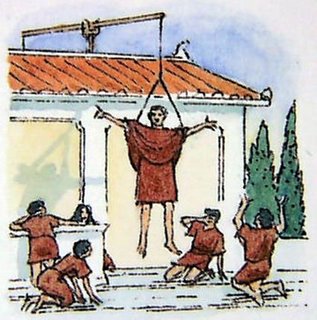
The phrase deus ex machina is Greek for god from the machine. In ancient Greek theater, actors representing gods entered the stage using literal machines, such as platforms that raised them up through trapdoors or lifts that lowered them down from above. These “gods from machines” represented divine beings capable of doing anything. Was the hero stuck in a problem with no solution? Presto! Here came a god to solve his problem miraculously!

Deus Ex Machina

Fear me, mortals! Be awed by my divine splendor! Pretend not to notice the crane!

Thanks to this theatrical convention, deus ex machina has entered the vocabularies of writers everywhere.

One of the most infamous deus ex machinas in recent history is the convenient arrival of giant eagles to save the heroes at the last possible moment in The Lord of the Rings. In The Adventures of Tintin, the hero is frequently saved by lucky coincidences such as landmines turning out to be duds when he drives over them. Charles Dickens, bless him, used deus ex machinas all the time to give his characters happy endings.

Aspiring writers should be familiar with the concept of deus ex machina for two reasons. First, they can avoid using it unnecessarily. Nothing ruins the excitement or verisimilitude of a good story like a cheap deus ex machina. Second, writers aware of the concept can use it meaningfully.

Yes, it can actually be a good thing for problems to be resolved in a contrived fashion. Deus ex machinas can be used for ironic or humorous effect, such as heroes escaping a monster because its animator has a sudden heart attack. They can also be used seriously to make a point, as in the final scenes of the movie Signs. In the climax of the film, a family survives a crisis due to an incredible set of coincidences… which begs a question asked earlier in the movie: “What if there are no coincidences?”

(Signs was quite a good film, but I will never forgive its director for what he later did to The Last Airbender. That movie, based on a truly superb television show, is a disaster no deus ex machina could save.)

Why am I writing about deus ex machinas? Well… I’m writing this post less than a day before it’s due. The subject of last-minute resolutions seems appropriate!

303. About Storytelling: Temporary Death

Death is one of life’s few absolute certainties. Others include taxes and the fact that every person will, at some point, step in a puddle of water on the bathroom floor while wearing socks. Yes, life can be cruel.

Death is inevitable. For the most part, even fiction acknowledges this. What some stories don’t guarantee is that characters will stay dead. I’ve discussed how to kill off fictional characters, and even mentioned temporary death as a video game cliché, but I think it’s still worth taking a look at how characters in some stories recover from death as easily as getting over a cold.

There are endless possibilities for cheating death in fiction, going all the way back to classical mythology. In Greco-Roman myths, death was a literal place from which a surprising number of people managed to escape: Heracles and Orpheus, among others.

The past few decades have given us an endless array of methods for cheating death, especially in geekier media like comics, video games, and fantasy fiction.

Here are some of my favorites.

Be ye warned, here there be minor spoilers.

Time travel

How often dead characters have been restored to life because someone went back in time to rescue them! Thanks to the butterfly effect, tiny decisions in the past can have huge consequences in the future. Probably my favorite example of time travel resurrecting a dead character comes from Chrono Trigger, pretty much the greatest RPG ever made, in which characters travel to the exact moment of a man’s death to save his life.

Superhero comics

There is no single explanation for this one—comic book characters are revived in such a staggering variety of ways that I can’t even begin to list them all. A mutant’s seeming death triggers her evolution into a more advanced mutant. A superhero’s innate healing abilities pull him back from the brink of death. A villain fakes his death by a stupidly elaborate scheme. Really, the possibilities are countless.

Magic

When in doubt, magic is the ultimate deus ex machina. Magic is mysterious and inexplicable by its very nature. If a writer resurrects characters by magic, who is there to argue? Miracles, such as the triumphant return of Aslan or Gandalf, fall into this category, which also includes medicines like the chocolate-coated pill from The Princess Bride.

Supposed to be dead

What? I’m supposed to be dead? Well, this is awkward.

Technology

By technology I mean magic as it is called in sci-fi stories. Let’s face it: advanced technology and supernatural magic are practically the same thing in some science fiction.

Reincarnation

This metaphysical concept has been lifted from various religions and adapted to everything from Avatar: The Last Airbender to Doctor Who. (The Doctor’s regeneration is basically sci-fi reincarnation.) Characters may technically die, but reincarnation allows the narrative to bring them back.

Afterlives

This brings us to ghosts, phantoms, and other not-alive states of being. Again, even if the story considers characters dead, they’re still fulfilling the roles of living persons by lingering as spirits.

Fake deaths

This one annoys me. (All the same, I’ve used it more often in my writing than I care to admit!) When a character seems to die, the narrative treats them as dead… until they turn out to have been alive all along. Fake deaths generally cheapen the reactions of living characters. Responses like mourning, grief, and anger become less meaningful when they’re revealed to have been unnecessary. Besides, fake deaths are generally predictable.

I think temporary death is a valid storytelling trope, but I prefer death in fiction to be permanent. Death is more realistic, and carries much more weight, when it’s treated as an everlasting reality instead of a fleeting condition.

Anyone who knows anything about video games probably knows that Aerith dies in Final Fantasy VII. Partway through the story, this cheerful flower vendor is impaled by the villain. That’s it. There’s no resurrection, no last-minute deus ex machina. In the game, she is dead. The other characters mourn her… and so does any player whose heart isn’t made of stone.

Death is tragic. It often seems meaningless. However, in storytelling, that miraculous medium which makes all things meaningful, death matters—especially when it lasts more than a few minutes.

287. About Storytelling: Intertextuality

As long as we’re talking about The Avengers, I want to point out that Marvel’s superhero stories have a lot in common with the Bible, Little Women and the Teenage Mutant Ninja Turtles.

Why, you can hardly tell them apart!

The similarities here are obvious… aren’t they?

(I also want to point out for the record that Jo and Donatello are the best March sister and Ninja Turtle, respectively. I’m just throwing that out there.)

These stories are extremely different, but they share at least one notable characteristic: intertextuality. This fancy (and somewhat dirty-sounding) word refers to the way an artistic work is shaped by another artistic work.

Still confused? I sure am. Let’s make it simpler by looking at these stories one by one.

Little Women is a novel by Lousia May Alcott about sisters growing up and getting married. It’s basically Pride and Prejudice, but better. (Fans of Jane Austen, please spare my family.) The first half of the book, which follows the March sisters as they become young ladies, loosely parallels The Pilgrim’s Progress by John Bunyan. As these little women read Bunyan’s allegory, they find it mirrored in their own pilgrimages from childhood to adulthood.

The Bible is packed with intertextuality. The number of times Scripture references itself is practically beyond count. The New Testament alludes constantly to the Old. Many books of Scripture cite passages from other books. Jesus Christ, as he hung dying upon the cross, quoted a phrase from the Psalms. Stephen, in turn, repeated some of Christ’s final words during his own execution. The Bible echoes itself constantly.

The Avengers is a tale woven from several different stories. Every one of its heroes has some kind of history; the film is built upon the foundation of other films. Without Iron Man and Thor and all those other Marvel movies, The Avengers probably wouldn’t even exist.

As for my favorite band of crime-fighting reptiles, well, the Ninja Turtles began as a parody of several gritty comics popular at the time. Even its details were drawn from the works it parodied: the Turtles’ teacher Splinter was a jab at a comic book character named Stick, and the villainous Foot Clan poked fun at a supervillain group called The Hand. The Teenage Mutant Ninja Turtles exist as a lighthearted response to darker comics.

All these stories are shaped by other stories. So what?

Intertextuality can be either a brilliant asset or a horrible nuisance. It can give a story depth or make it incomprehensible.

The benefits of intertexuality are too many to list in a single blog post, so I’ll mention just a few. Referring to other works can establish a strong narrative framework, as in Little Women. The Bible shows how intertexuality can help explain and clarify ideas. In The Avengers, the way separate narratives converge in one big adventure is, if I may express it so bluntly, really freaking sweet. Finally, intertextuality can provide humor or insight in the form of parody or satire of existing works.

Of course, intertextuality can go wrong. G.K. Chesterton is probably my favorite author, and also really awesome, but he sometimes makes the mistake of assuming all his readers are just as smart and educated as he is. His book Orthodoxy is full of allusions to other thinkers, but without context or background these references only confuse ignorant readers like me.

We’re all shaped by other people. It’s only natural, then, for our ideas and stories to be shaped by those of other people.

274. About Storytelling: Chekhov’s Gun

There was once a writer named Anton Chekhov. Besides writing a play that trapped me in a stage kiss, this contemplative Russian also established the literary principle that has come to be known as Chekhov’s gun.

Chekhov once stated, “Remove everything that has no relevance to the story. If you say in the first chapter that there is a rifle hanging on the wall, in the second or third chapter it absolutely must go off. If it’s not going to be fired, it shouldn’t be hanging there.”

This concept of a background element becoming an important plot point has become known as Chekhov’s gun. Something that seems trivial becomes extremely significant. The thing you forgot from twenty chapters ago defeats the villain or break the hero’s heart.

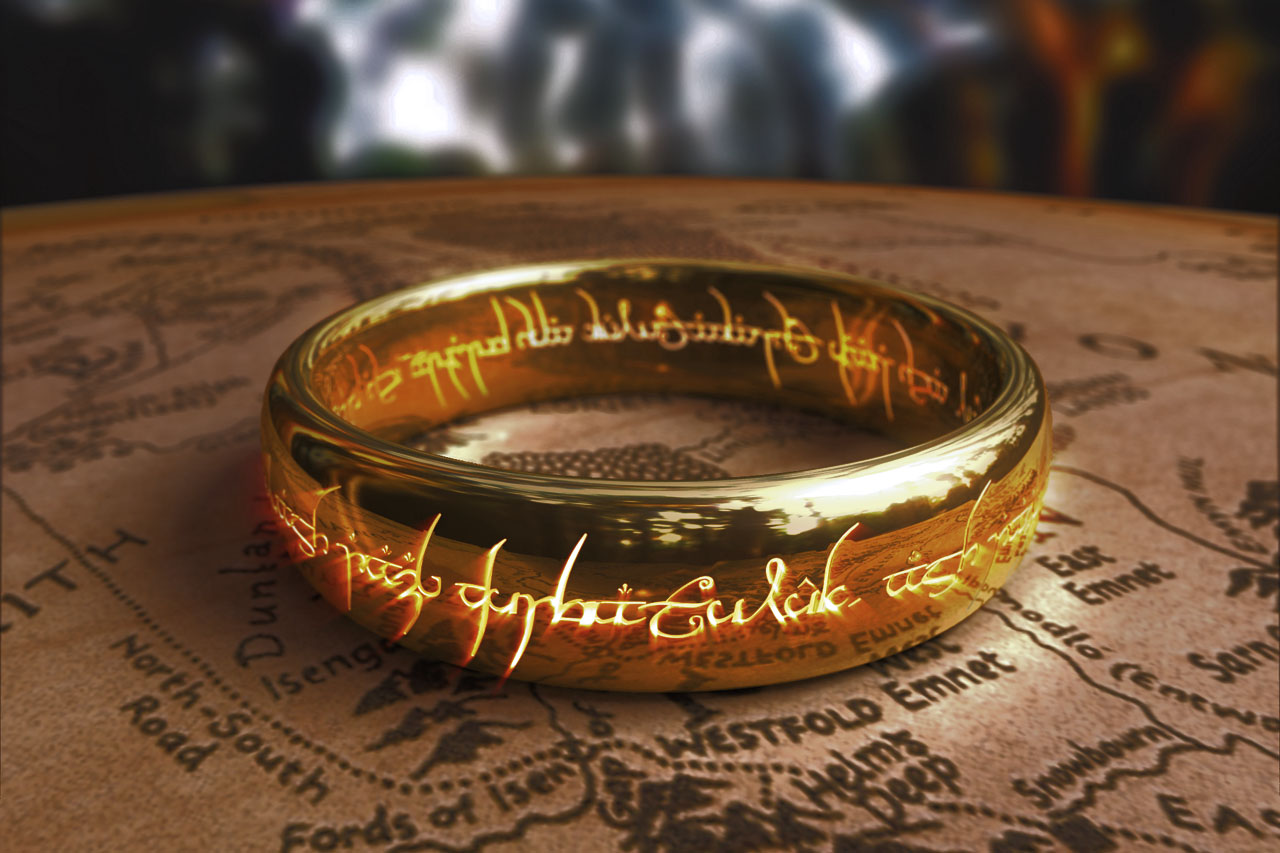
A famous example of this can be found in The Hobbit and The Lord of the Rings by dear old Tolkien. The all-important Ring that ends up driving the whole story starts out as a convenient escape for Bilbo Baggins early in his adventures. When Tolkien brought a magic ring into the story, he originally had no plans for it. The Ring was a handy deus ex machina, a trinket discovered just in time to save Bilbo’s life.

Chekhov's... ring

This is an example of Chekhov’s gun. Yes, I know it’s not really a gun.

Only later did Tolkien decide to make the Ring more than a magical accessory. It became the crux of the story, the thing around which all other things revolved—one Ring to rule them all, so to speak. The rifle had gone off.

Chekhov’s guns tend to be common in plot-driven stories. J.K. Rowling uses this principle all the time in her Harry Potter books, in which later plot developments hinge on minor incidents and random rubbish from earlier books.

Although less common in character-driven stories, Chekhov’s gun can apply to people as well as objects and events. In The Lion, the Witch and the Wardrobe, kindly Professor Kirke seems unperturbed by wild claims of magical worlds inside his furniture. His composure doesn’t make much sense until the reader gets to The Magician’s Nephew. Here it is revealed that Kirke actually visited magical worlds as a child, explaining his lack of surprise as a grownup.

While Chekhov’s gun is a wonderful dramatic technique, it’s best used with subtlety and restraint. It’s a treat for careful readers and devoted fans to notice trivial things becoming important, but overuse of this principle makes stories seem contrived or confusing.

Incidentally, while I haven’t any rifles hanging on my walls, I do have swords. As much as I appreciate the principle of Chekhov’s gun, I hope my assorted blades stay on my walls in later chapters of my life.

261. About Storytelling: Nazis

Nazis are bad. If you carry away one thing from this blog post, it’s that Nazis are bad.

Nazis Swastika

Protip: This is not a good design for interior decorating.

In fact, Nazis have become a handy shortcut in storytelling for representing evil. Need a bad guy? Make him a Nazi. No reader of books or viewer of films or player of video games thinks twice if Nazis die. They are evil. They are all evil!

There’s only one problem with this convenient idea.

Not all Nazis are evil—rather, Nazis are not all evil.

You see, people are complicated. No person—Nazi or not—is absolutely, one hundred percent wicked. No person is completely good, either. Bad people have virtues, and good people have flaws.

As satisfying as black-and-white moral struggles are in storytelling, they’re not very realistic. It’s hardly ever as simple as “good versus evil.” It’s usually “something versus a different something.” Even in cases of clear-cut good and bad, it tends to be “something mostly good versus something mostly bad.”

It’s hardly ever good storytelling to make the good guys perfect and the bad guys irredeemable. In real life, when does that ever happen?

Granted, it can work. J.R.R. Tolkien, who somehow managed to write great books while ignoring a lot of basic rules for storytelling, pits (mostly) good and selfless hobbits, men, elves and dwarves against orcs—twisted creatures damned to an existence of pain, war and cruelty. Tolkien’s black-and-white struggles work because they’re sort of symbolic. Orcs seem almost like Tolkien’s fairy-tale representation of absolute evil in his fairy-tale realm of Middle-earth. The villain, Sauron, is more like the concept of badness than an actual bad guy. (I should note that Tolkien did manage some morally ambiguous characters, such as Gollum and Boromir.)

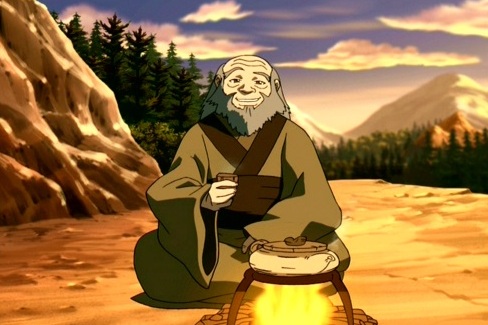
For the most part, however, the best stories have good guys that are sort of bad and bad guys that are sort of good. Consider Avatar: The Last Airbender, the fantastic fantasy show. In its world, the Fire Nation is a lot like Nazi Germany. It attempts to conquer, exploit and control other countries: in this case, the Water Tribe and Earth Nation.

Guess what? The “good” countries have their fair share of bad guys. A psychotic criminal belongs to the Water Tribe. The Earth Kingdom is the home of thugs and thieves, not to mention a corrupt official and the merciless secret police under his control. The “evil” Fire Nation is populated largely by innocent, well-meaning citizens.

Iroh

The Fire Nation also has this guy.

Hayao Miyazaki also does a great job of creating morally ambiguous characters. Probably his best films in this regard are Princess Mononoke and Spirited Away, in which the villains are… no one, really. Princess Mononoke has a bunch of characters fighting selfishly for their own survival and prosperity; they’re self-centered, but not really evil. Spirited Away has characters that seem bad, but when you get to know them you realize they’re just gruff and insensitive.

People are hardly ever all good or all bad, and conflicts are usually more complicated than “good versus evil.” Ambiguity and subtlety are invaluable assets for any story or character!

252. About Storytelling: Endearing Quirks

When I was in high school, I had a teacher named Mr. Quiring whose legendary silliness I have mentioned one or twice before on this blog.

For example, he once removed his necktie and unbuttoned his shirt during class to reveal a T-shirt emblazoned with the Batman logo. (He wasn’t really Batman, sadly.) At various times, Mr. Quiring pelted me with chocolate, brandished a meat cleaver and leaped off a chair shouting “To infinitives and beyond!”

The reason Mr. Quiring’s antics amused me so much is that he is not a silly person. Quite the contrary: Mr. Quiring is one of the most intelligent, dignified gentlemen I have ever known. It’s as though he compressed all the humor and silliness of ordinary people into short, intense bursts. Every time he did something outrageous, he reverted immediately afterward to his solemn self.

Mr. Quiring provides fine examples of endearing quirks: those funny little habits of real people or fictional characters that make us love them.

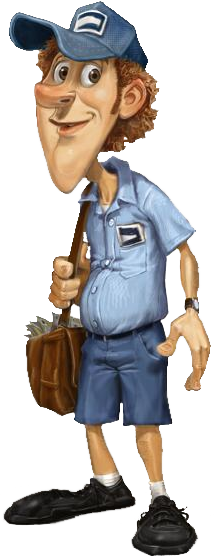
Some fictional characters are simply masses of endearing character quirks. Wooton Bassett, the mailman from Adventures in Odyssey, has too many odd habits to count: collecting fast food toys, expressing his feelings by the color of his slippers, baking jellybean casseroles and exiting his house via a slide. Wooton is fully capable of thoughtful introspection, but he’s mostly just hilarious.

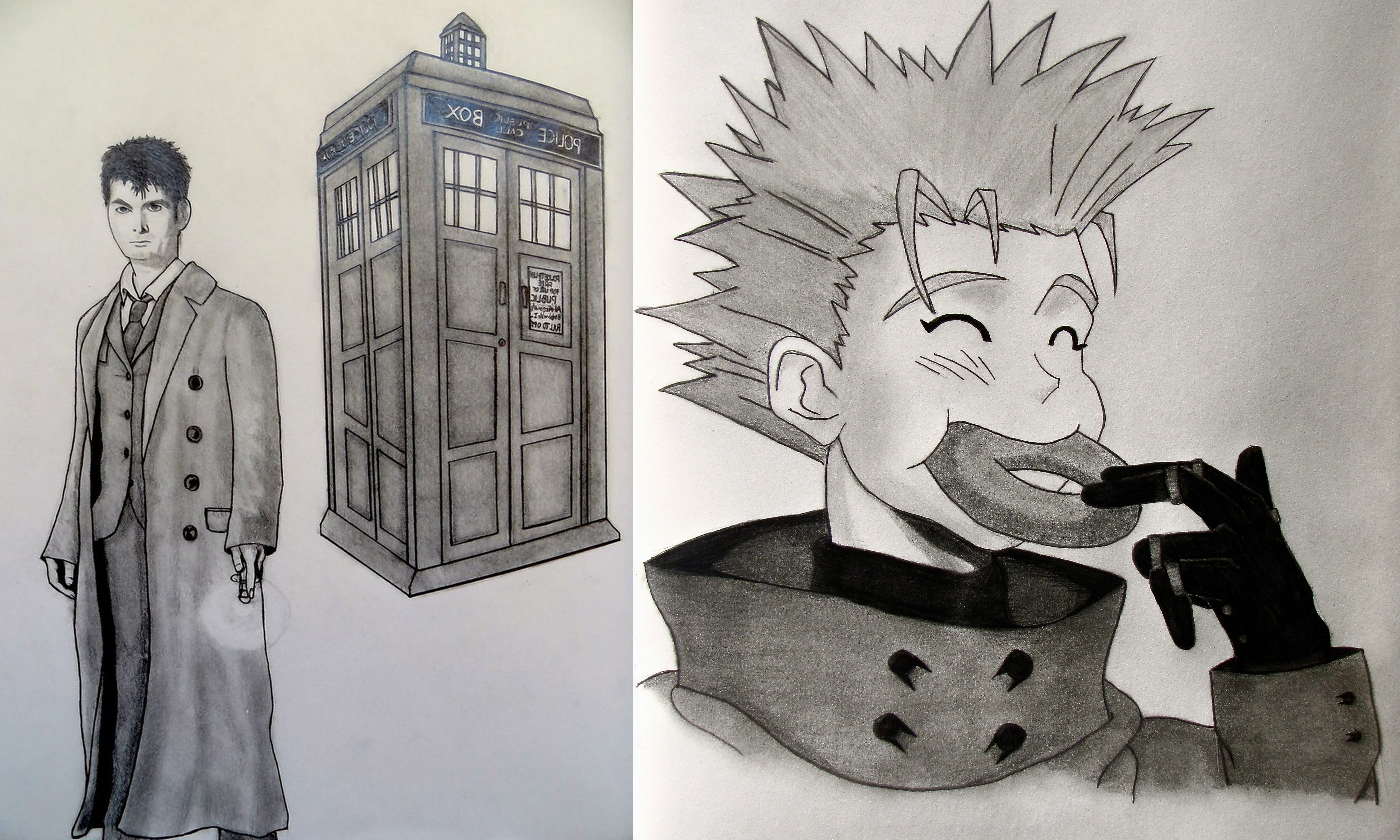
Wooton BassettSome characters are less silly, balancing funny quirks with tragic flaws or struggles. Consider the Doctor from Doctor Who and Vash the Stampede from Trigun. The Doctor is an intergalactic goofball, bouncing around the universe with a beaming face and a slew of witty remarks. Vash is a gunslinger who obsesses over doughnuts, whines like a child and walks into a firefight with a trashcan lid on his head.

My thanks to my younger bro for permission to use his artwork!

My thanks to my younger bro for permission to use his artwork!

Vash and the Doctor seem sillier than Wooton, but their quirks mask profound inner turmoil. The Doctor despises himself. His travels throughout space and time are not a careless vacation, but his way of running away from past mistakes. Vash also has a lot to hide. The body beneath the overcoat is covered in horrific scars, and the man behind the goofy grin is tormented by regret for the lives he couldn’t save.

In the case of Wooton, endearing quirks are a form of comedy. The quirks of Vash and the Doctor serve a different purpose. Their odd habits hide sad struggles, and make the viewer feel more when their stories take turns for the tragic. After all, it’s easier to feel sorry for funny characters than for serious ones.

Then there is Miles Edgeworth, the friendly rival of Phoenix Wright from the Ace Attorney series. Like Mr. Quiring, Edgeworth is dignified, composed and intelligent.

Miles Edgeworth

Edgeworth also has a secret.

This respected prosecutor is secretly a fan of Steel Samurai, a cheesy show for kids about a futuristic warrior and his neverending fight for justice. Edgeworth vehemently denies liking the show, of course… but there’s his inexplicable knowledge of Steel Samurai trivia and the Steel Samurai action figure in his office.

In the case of super-serious people like Mr. Edgeworth, a single quirk can make a cold, distant character seem a little more human. Liking Steel Samurai is a weakness, but not a sin. We can respect Edgeworth, and we can also laugh at him.

Carelessly loading a character with endearing quirks is a mistake: too many odd habits, or quirks that seem out of place, are irritating. Used intentionally, however, endearing quirks can develop great characters—and make us laugh!