For When the World Seems Dark

In the centuries since the invention of the printing press, Christians everywhere have perfected the fine art of writing in their Bibles.

Some readers of Scripture create complex systems involving symbols or different colors of highlighter markers. Others cram notes, observations and questions into the margins.

I write in my Bible, though my notations are pretty simple. A couple of years ago, for example, I labeled the psalms in order to keep track of them. I came upon the seventy-seventh psalm a few days ago. Its label intrigued me.

For when the world seems dark

The psalm begins: I cried out to God for help; I cried out to God to hear me. When I was in distress, I sought the Lord; at night I stretched out untiring hands and my soul refused to be comforted.

Well, that’s cheerful.

Moving forward a few verses: Will the Lord reject forever? Will he never show his favor again? Has his unfailing love vanished forever? Has his promise failed for all time? Has God forgotten to be merciful? Has he in anger withheld his compassion?

What a bright, happy psalm this is turning out to be.

As I read the first few verses, I was wondered why I’d given Psalm 77 a title like For when the world seems dark. When the world seems dark, I want it to seem lighter—not more depressing!

Then the theme of the psalm takes an abrupt turn: I will remember the deeds of the Lordyes, I will remember your miracles of long ago. I will meditate on all your works and consider all your mighty deeds.

The psalmist goes on to describe one of God’s great miracles, and ends with these words:You led your people like a flock by the hand of Moses and Aaron.

Some great Christian thinker (I don’t remember which) once wrote, “Do not forget in the darkness what you have learned in the light.”

The psalmist didn’t forget. When God seemed far away, he paused to remember two things: the great deeds God had done, and the great love God had shown.

Psalm 77 came at a good time. At the moment, I’m under some emotional strain. Leaving loved ones, adjusting to a new place, facing an uncertain future—these things are hard. It’s easy to lose perspective and become lost in depression, anxiety or fear.

It’s at times like these that I must stop and remind myself of two things: the great deeds God has done for me, and the great love he’s shown toward me.

I remember those scholarships that allowed me to graduate from Bethel College. I remember how, when I was depressed during my third semester, I enjoyed the much-needed blessing of a long, solitary Thanksgiving break spent writing, watching Disney movies and playing Final Fantasy VII. I remember the glorious evenings spent watching Avatar: The Last Airbender and drinking tea with my friends from college. I remember all those mornings my old man brought me coffee in bed, and all those times my mum told me, “You’re a treasure.”

I remember how often God has made things right.

When the world seems dark, remember what you’ve learned in the light.


This post was originally published on June 8, 2012. TMTF shall return with new content on April 20, 2015!

345. Always Winter but Never Christmas

I’m tired, guys.

I look out my window at a desert of old snow. Once soft and shining, it has become an icy crust over withered grass and frozen mud. The sun shines now and then, melting snow, only for the water to freeze overnight into slick, dangerous patches of ice. I haven’t had even a glimpse of green leaves in months. The landscape is a gloomy muddle of white and brown and gray. Overhead, the sky is a weary, faded blue… when it isn’t covered by clouds. It’s cold.

I’m so tired.

Work has been ghastly. We’ve been short-staffed, putting everyone under pressure. My workplace has become toxic with complaints, accusations, gossip, and abusive remarks. No matter how hard I work, I seem to take an unfair share of blame. I often feel unappreciated at work, but I’m beginning to feel unwanted. It hurts.

At the end of the day, exhausted, I go to bed, trying not to think about work, blogging, or any of the things on my to-do list. That list never seems to get any shorter: like the hydra, which grows two heads for each one cut off, my to-do list defies my attempts to conquer it.

I’m so, so tired.

C.S. Lewis once described a curse that made it “always winter but never Christmas.” I’m amused by the childlike clarification about the holiday. After all, when confronted by eternal winter, only children would be concerned by its effect on Christmas; the grownups would be too busy worrying about food, warmth, shelter, and the collapse of Society As We Know It.

C.S. Lewis knew a thing or two about winter.

I feel cold just looking at this picture.

All the same, I admit that “always winter but never Christmas” paints a bleak picture. It suggests gloom, bitterness, and suffering with no consolation. There are no holidays to brighten the darkness: no parties, presents, or carols to keep hope alive. “Always winter but never Christmas” is an awful thing. It wears away a person.

In the end, though, that curse was broken. No winter lasts forever. Sooner or later, spring melts the snow and breathes life into the grass and trees. Spring is a resurrection. Spring is a promise, echoing the very words of God: “I am making everything new!”

I should also point out, for the record, that I had a very nice Christmas.

As it happens, beyond the holidays, my winter hasn’t lacked for blessings. I haven’t run out of coffee. I grumble about winter from the warmth of a cozy apartment. My job has hit a rough patch, yet I’m thankful to be employed. My life isn’t really “always winter but never Christmas.” It’s occasionally winter and sometimes Christmas, and there’s one more consolation.

Spring is coming.

002

This tree stands outside my window: at this moment, a desolate skeleton sticking out of the snow. As this photo reminds me, spring will make it new.

I’m waiting to see some blossoms on the skeletal trees outside my apartment. I’m trusting, hoping, and persevering—at least, I’m trying. (I’m certainly drinking a lot of coffee, so that helps.) Spring will arrive with warmth and sunshine and explosions of pink petals. I know it will.

As I blunder onward, one day at a time, I’m trying not to forget it.

344. Four Lessons in Storytelling from Disney’s Latest Animated Films

Disney’s three latest animated films—Wreck-It RalphFrozen, and Big Hero 6—offer important lessons in storytelling. I wrote about four of them in today’s blog post, which… um… isn’t actually for this blog.

My post can be read on Animator Island, a community for artists, animators, and people who like animated movies (i.e. cool people). Special thanks to JK Riki for inviting me to write for the site despite my absolute lack of talent for the visual arts!

My latest post, “Four Lessons in Storytelling from Disney’s Latest Animated Films,” can be read here!

341. Mole End

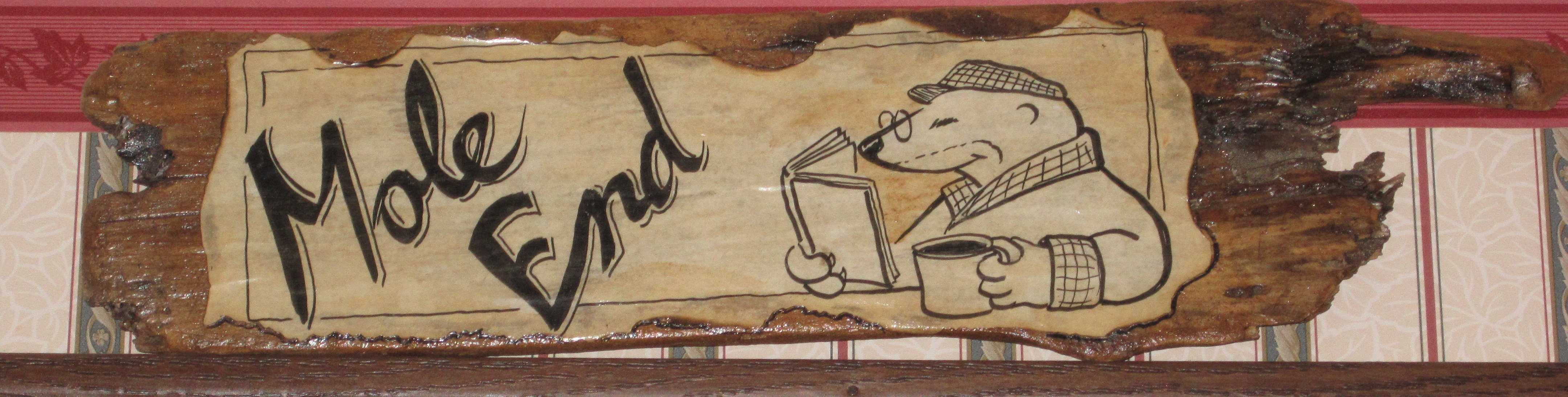
If you ever happen to visit my apartment, you will be greeted by a wooden sign immediately upon stepping inside. It depicts a well-dressed mole drinking coffee and reading a book, along with two welcoming words: Mole End.

Mole End

I love the way the mole’s glasses are perched delicately on the end of his snout.

My dad, God bless him, crafted this sign for me many years ago. Although he’s known round these parts for his superb drawings of monkeys, my old man is perfectly capable of drawing other small mammals!

The sign is made of driftwood from an Ecuadorian beach. (The sign fell from the wall a few weeks ago, scattering sand from its deepest crevices all over my floor. I was oddly touched to find my small-town Indiana apartment suddenly dusted with sand from my faraway homeland.) My old man sketched the picture on an ordinary piece of paper, glued it to the driftwood, aged it with cold tea, and applied a layer of finish.

When I moved into my apartment two and a half years ago, I immediately christened it Mole End and put up the sign shortly thereafter. Now, you may wonder why I chose this name for an apartment in a quiet, out-of-the-way corner of Indiana. You wouldn’t be the first!

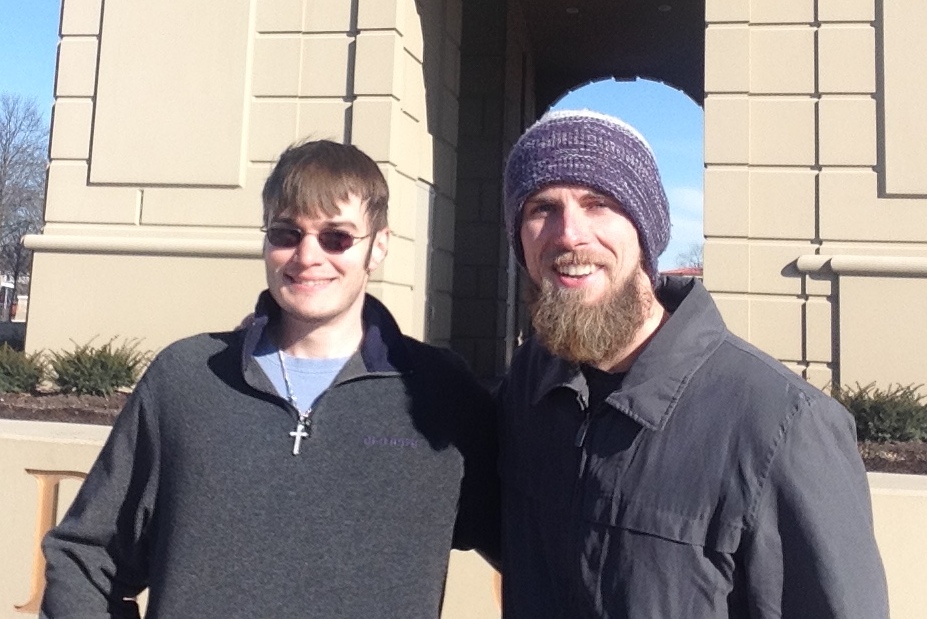
Some time ago, I was honored to receive a visit from Thomas Mark Zuniga. This wise, wandering blogger had written for my blog. I had written for his, and also reviewed his debut book. It was quite a privilege finally to meet the man (and his splendid beard) in person.

Adam and Tom

Someday, if I am very lucky, I will have a beard half as nice as Tom’s.

Upon entering Mole End, Tom asked about the sign. It took me a moment to stammer out a reply: “Have you ever read The Wind in the Willows?”

For those who haven’t read this enchanting book, The Wind in the Willows is the tale of several animals in the old-timey English countryside. One of these creatures, Mole, reminds me strongly of myself: neat, anxious, insecure, quick to blame himself, and a devoted homebody. In a few other ways, I’m rather like a mole: I’m an introvert, keeping away from social events and enjoying my safe, cozy, solitary burrow.

Mole loves his subterranean home, Mole End, yet leaves it early on in search of fresh experiences. It’s only later in the book, as he chats with a Badger, that Mole remembers how much he enjoys life underground.

“Once well underground,” he said, “you know exactly where you are. Nothing can happen to you, and nothing can get at you. You’re entirely your own master, and you don’t have to consult anybody or mind what they say. Things go on all the same overheard, and you let ’em, and don’t bother about ’em. When you want to, up you go, and there the things are, waiting for you.”

That, dear reader, is why I call my apartment Mole End.

Mole later returns to Mole End in a chapter aptly titled “Dulce Domum,” Latin for sweet home. He is overwhelmed to the point of tears. Mole End is all the sweeter because Mole abandoned it for a while, like the man in the book by G.K. Chesterton who left his house and walked around the world simply for the joy of coming home again.

I love my home—not my Indiana apartment, specifically, but the place I feel secure, comfortable, and relaxed. My home isn’t permanent. There’s a reason the Bible refers to our bodies as a “tent” instead of a house. Quoth the Apostle Paul, “For we know that if the earthly tent we live in is destroyed, we have a building from God, an eternal house in heaven.”

We are all foreigners and strangers on earth. Some of us are searching for a better country—a heavenly one. My apartment in Indiana may be the closest thing to home I shall ever find on earth. I don’t know how long I’ll stay. In the future, I may have many homes… but I will only ever have one Mole End.

Of course, Mole End’s size, appearance, and layout may change occasionally. Its location may vary. Mole End may be found, at various times, in different cities, countries, and continents.

As long as I have the promise of a heavenly home—and the sign, of course—I’ll carry Mole End with me.

340. TMTF’s Top Ten Things Learned in Ten Years of Animation

Today’s post was written by JK Riki: animator, blogger, and creator of Fred the Monkey, who is probably a bad influence on my typewriter monkeys. All the same, Typewriter Monkey Task Force is honored to share JK’s reflections on what he’s learned from ten years as an animator. For more great stuff from JK, check out his blog and Twitter. You may also want to swing by Animator Island, for which he writes.

After I sent my first guest post to Adam, he responded positively: “It’s good stuff.” Two sentences later came a spirit-crushing qualification: he was more interested in my creative process, particularly from the class of “animator” in which I dwell.

“Surely you can do better than this last, terrible post,” he noted in his email, though it may have actually been written, “I think your thoughts on the creative process may be even more valuable.” (I can read between the lines, you see. I know what he meant.)

[Editor’s note: What I, Adam, really meant was, “I think your thoughts on the creative process may be even more valuable, and I could really use a cup of coffee.” That last part is subtext to nearly everything I say or write, so I left it out.]

So fine, I’ll set aside my deeper thoughts on philosophy and the universe and give the audience what it wants. Plus I’ll do it in a time-honored tradition of TMTF: a top ten list!

That said, please consider…

The Top Ten Things I’ve Learned From Ten Years as an Animator!

10. Mediocre entertainment > unrealized genius

I can’t tell you the amount of time I’ve wasted waiting to get “good enough” to do certain projects. “This is a brilliant idea,” I’ve thought, “but I really need to up my skill level to pull it off properly. Back you go into the Sack of Potential Greatness!”

Poor Sack. It’s been bursting at the seams for years now.

The truth is, a brilliant idea unrealized is pointless. Isn’t an inferior version that exists better than a wasted concept that, let’s face it, will never be made? Honestly, it’s unlikely you’ll ever be “good enough.” You’ll never reach that standard. It’s not worth the wait; go do it now. Save perfection for the next life!

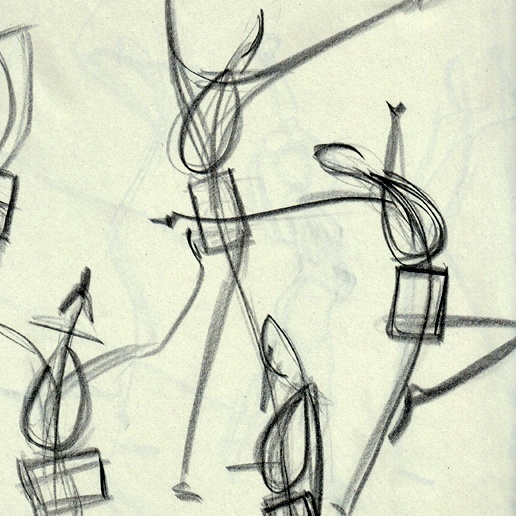
Even the best animations start as rough, quick sketches!

Even the best animations start as rough, quick sketches!

That said, 10b. Always strive to do better!

9. Enthusiasm fades

Animation is a brilliant form of art for one unique reason: It takes forever. Because it takes forever, you have millions of opportunities to tweak things or change directions or quit and become an accountant. When you work on a single piece of art that takes weeks, months, or years for what seems like very little return, at some point you question what you’re doing.

The thing that divides the people who have done great animation (or really, anything at all) from those who only wish they could is pushing past this doldrum and pressing on, enthusiasm or no enthusiasm. Those days happen, and it’s up to you to not let them string together day after day, week after week.

8. Animation is hard

It does not take much physical effort to drag a wooden stick affixed with graphite across compressed tree pulp. It doesn’t even take much physical effort to do that billions of times so you can photograph them in sequence and watch the lines dance across a screen.

Despite the lack of physical energy required, animation is so, so hard.

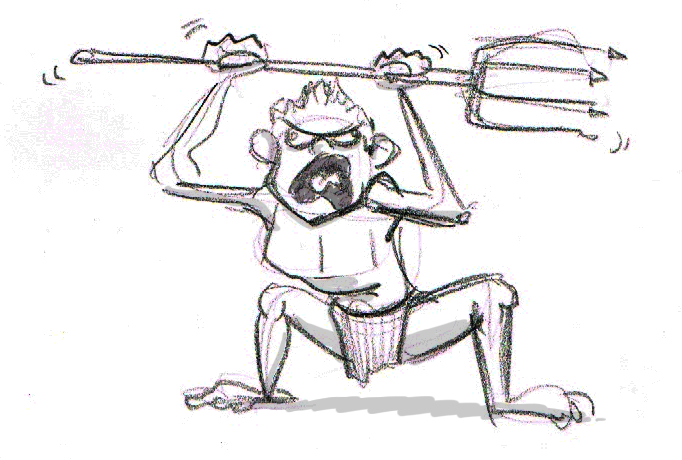
JK's inner animator expresses the difficulties of the craft in the most eloquent way possible: shaking a sharp, pointy object.

JK’s inner animator eloquently expresses the difficulties of his craft.

People are used to watching movement. When you’re attempting to mimic that movement they know so well with pencil or 3D model, your audience are all experts. If you make a mistake, they’ll know about it, because it doesn’t match the decades of real-world experience they have with movement.

At the same time…

7. People are forgiving

In animation, you cheat. A lot. One of my favorite descriptions of animation is from Pixar director Peter Docter, who said “Animation is life with the volume turned up.”

As animators, we’re called to go beyond reality and create things that “look right.” Sometimes, in order to get something to look right, you have to throw all the rules out the window and make things up. The wonderful thing about this process is that people will accept your made up nonsense if it looks right. They’ll forgive your strange motion blurs and broken joints just as long as it feels the way it should. It’s because of this that…

6. Mistakes aren’t as huge as you think

One of the greatest moments in animation is when you finish roughing out a shot and you hate it with every fiber of your being. You look at the individual drawings and think “This is garbage. I should quit and become an accountant!” Then you play it in real time and oh! The beauty! The majesty! The countless hours were worth it, and for reasons unknown it works. There is reason to live again!

Life is long, and it’s a process. The mistakes of a “single frame” that seem overwhelming at the time may just work in unison with the images around it and turn out beautifully. Then the key becomes remembering that even the close-up errors really aren’t as dooming as they seem.

5. Things change
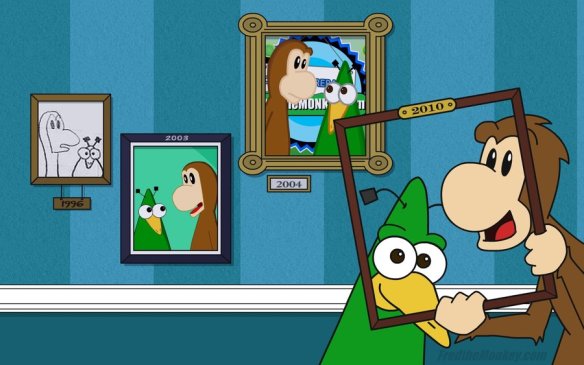
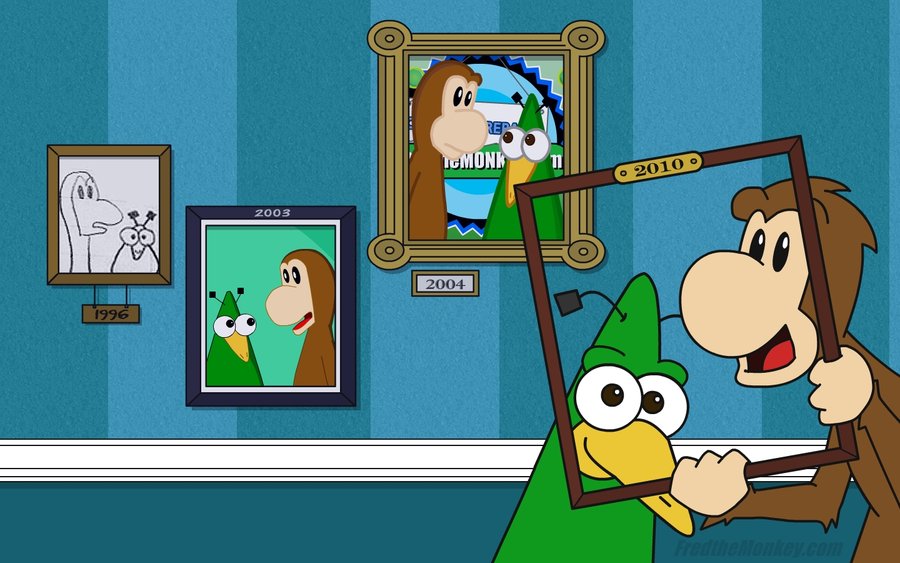
Fred the Monkey sure has changed over the years!

Fred the Monkey affirms that yes, things sure change!

If you aren’t growing as a person, you’re doing life wrong. We’re here to grow, to learn, and to become better every day. Knowing this, one should expect to change over time. When we expect this change to happen, we can better deal with the feelings of “failure” when it arrives. I once kicked myself for failing to keep FredtheMonkey.com updated consistently. Wait, to be fair, I kicked myself for that dozens of times.

The longer I live, the more I see that the goals I set at twenty-two are not the goals I have today. As the Bible says in Ecclesiastes, “There is a time for everything, and a season for every activity under the heavens: A time to make Flash cartoons about monkeys, and a time to focus on family life and remodeling a house.” (Paraphrasing here a bit, so go look up the full non-cartoon-including list in Ecc. 3.)

Things change; it’s part of life. When we know this, we can…

4. Manage expectations to find happiness

Consider this scenario. You decide to go see a film this weekend. You’ve seen a trailer, and it looks absolutely terrible, but a friend/family/cute member of the opposite sex really wants to go, so you oblige. After two hours in the theater, the film turns out to be pretty average, but certainly not completely awful, and you realize, “Hey, that wasn’t as bad as I thought!”

Using the power of hypothetical situations, let’s go back in time. (Time travel is fun!) This time, a friend has told you about the film and how it’s the most incredible work of movie making ever crafted by human hands. Your heart beats quicker as the previews rush by and finally the film begins. Your hands grip the plastic theater chair arms in anticipation. Your knees tremble in spite of your feet being glued to the floor by soda and popcorn grease. This is it!

And… it’s decidedly average.

Now what? Chances are you’re going to walk out of the theater this time grumbling, “That wasn’t amazing at all, what were they thinking? I counted a dozen plot holes and the main character was an idiot. What a waste of two hours….”

What’s the difference here? Spoiler alert: It’s not the film, it’s your expectations.
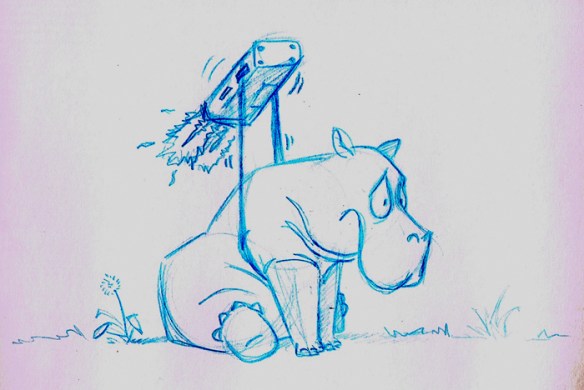
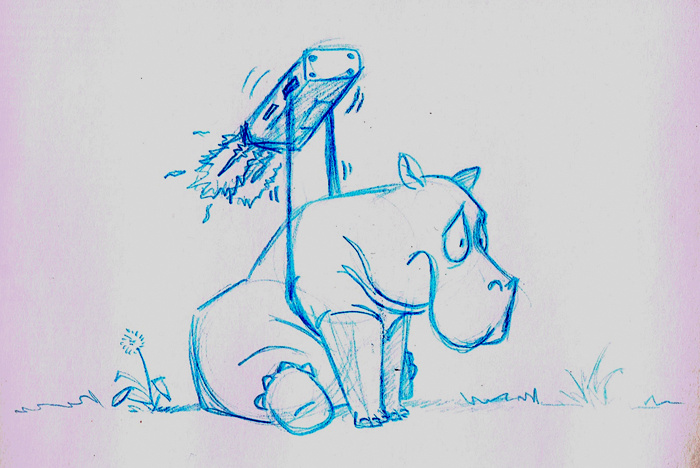
Hippo with a jet pack

It’s easy to be disappointed when your expectations aren’t realistic!

Over ten years of animating, I’ve had many expectations. Some cartoons I knew were great, and would do so well on Newgrounds.com. They flopped. Some animations were rushed and I almost didn’t release them because they weren’t ready (see point #10, though). Reviews were glowing, and they made front page. Lol, what?

I’ve learned (and continue to learn) to manage expectations. There’s nothing wrong with hope, or wanting things to be wonderful. There’s a big difference between hoping for good things and expecting them. If you manage the expectation part, life goes so, so much better.

3. Edit well

Cut out all things you don’t need in order to make your point or tell your story.

[Author’s note: I’m still learning this one, because Adam had to edit this post for clarity and to remove most of my ramblings. The original was 518 words longer in total. Clearly there’s still work for me to do regarding Lesson #3.]

2. There is nothing like doing what you love

I have held several jobs in my life, ranging from things I’ve enjoyed to “I’d really rather be having teeth pulled, thank you.” For me, animation is a passion. It goes beyond enjoyment to a very strange place that shares borders with the lands of “Obsession” and “Madness.”

Someone once asked me if animation was fun. I thought about it for a moment and then said “No, not at all.” At the time I was surprised by my response, but if I could go back in time, I’d add, “I can’t imagine not doing it, though.”

I love animation. It is one of the things I think I was put on this Earth to do. As a result, no matter how difficult it becomes (see #8), I am filled with joy when I’m engrossed in it. It’s not about “having fun” as much as it is “bathing in the joy of purpose and meaning.” Do what you love and life becomes awe-inspiring every dang day.

1. Understanding the why is the most important thing

We devalue the why in our world today. We’ve gotten so caught up in the who, what, when, and where that we’ve forgotten all about the final W of the Big 5. It’s rather ironic, actually, because when something big (often tragic) happens our first reaction is “Why is this happening?!”

In animation, you must understand the why. Why is this character doing what he’s doing? Why is this prop in the scene? Why didn’t I go to school to become an accountant?

Life is the same way.

When I started FredtheMonkey.com more than a decade ago, I had conflicting dreams for it. On the one hand, I wanted to make the world a better place by producing funny cartoons that brightened someone’s day.

At the same time, I wanted HomestarRunner-level success. If I could just reach that level of popularity, boy, I could sure make this planet a better place. I could change people, convince them of things, and have influence. No doubt the money I’d make could help millions as well. Yes, that would be the day it all came together!

The further I unconsciously veered towards the second why during those ten years of animating poor-quality Flash cartoons, the more miserable I was. The more it was work, instead of joy. The more I didn’t want to keep doing it. I had lost the purpose that drove my initial creative process. I burned out a lot.

Each time I remembered my mantra of “If I make one person’s life better with this cartoon, it will have been worth it,” the peace and love of what I was doing came rushing back. I had to constantly stave off the allure of fame and wealth so I could be content with whatever came from my efforts.

And that contentment was far better than anything I’ve ever gained materialistically. Know the why of what you do, and remind yourself of it always.

I hope that these lessons I’ve learned can be of some help to someone out there. If it gives hope or inspiration to a single person, the decade of struggles will be worth every effort.
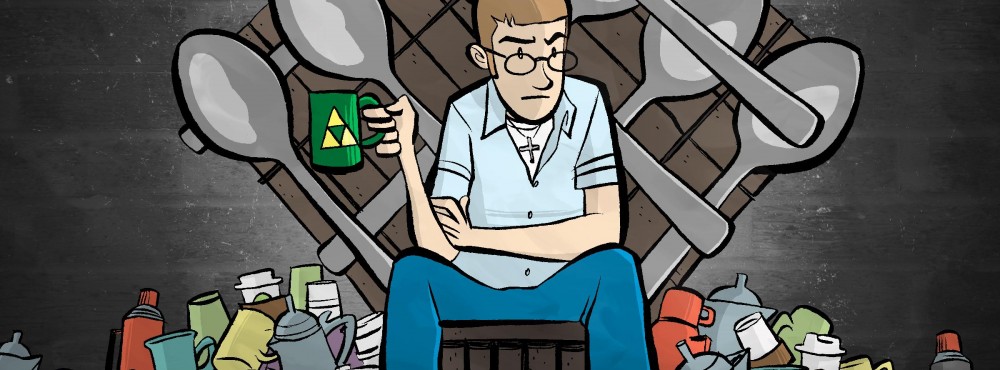
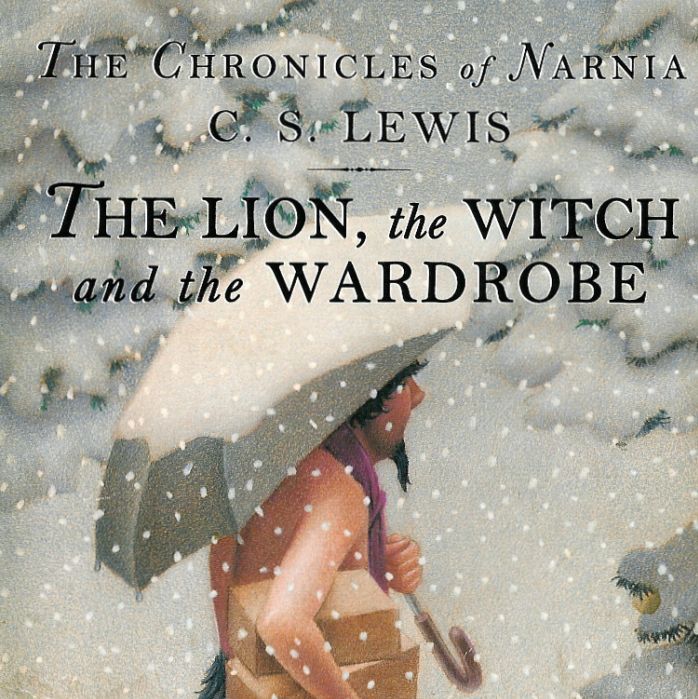
337. Hello Darkness, My Old Friend

Do know what I hate?

Yes, I detest cockroaches. I despise butchered hymnsshady Internet ads, and the fact Black Friday happens one day after Thanksgiving. I dislike the Twilight books, and I loathe M. Night Shyamalan’s wretched film adaptation of Avatar: The Last Airbender. (I’m trying to forgive you, Shyamalan, but your abysmal Airbender movie tests even the Christian virtues of grace and mercy.) These are all awful things.

There is something I hate more than any of them.

I hate feeling bad and not knowing why.

Have you heard the (scientifically dubious) anecdote of the boiling frog? As the story goes, a frog placed in boiling water will jump out immediately, but a frog submerged in lukewarm water that is heated gradually will eventually be cooked to death.

Depression slowly boils me alive. It sneaks up on me so slowly and insidiously that I sometimes go days without realizing it. The world simply goes dark. I find it harder and harder to work, write, smile, relax, or do anything but slump in a chair and keep breathing. My descent into depression is so gradual that I don’t ask, “Why am I depressed?” My question is usually more like, “Has the universe always been this awful?”

Then, nearly always, there comes a moment—a blinding flash of hope and clarity when I realize, “Hold on a moment. I’m depressed. Huh, that explains a lot.” The moment I realize the universe isn’t really quite as dark and hopeless as it seems is generally the turning point in every bout with depression.

For my readers wondering how a person can be depressed without knowing it, I must ask a question. When you dream, do you realize you’re dreaming? Few people have the self-awareness to recognize a dream until they awaken. In the same way, I apparently lack the self-awareness to recognize depression right away.

Recognizing depression is generally my all-important first step in recovering from it. Depression makes it seem as though something is wrong with everything. When I realize I’m depressed, I understand there is merely something wrong with me. The problem no longer lies with the entire universe, but with one person in it. Believe me when I tell you that depression, however unpleasant, is a nicer problem than everything in existence being awful.

If I may put it so tritely: naming a fear is taming a fear. A problem is less scary when it’s a familiar one—especially when I know it’s one I’ve conquered before. When the world seems dark, I can smile grimly and echo the words of Paul Simon.

“Hello darkness, my old friend.”

I might add a few words to Mr. Simon’s and say, “I’m afraid you can’t stay long; I’ve got stuff to do.”

336. Four Quotes to Guide a Life

In the past few months, I’ve done some redecorating in my apartment. For example, on my desk—well, I suppose I should start by point out that I now use a desk. I had previously slumped in an armchair, balancing my laptop on my knees and probably causing gradual, irreparable damage to my spine.

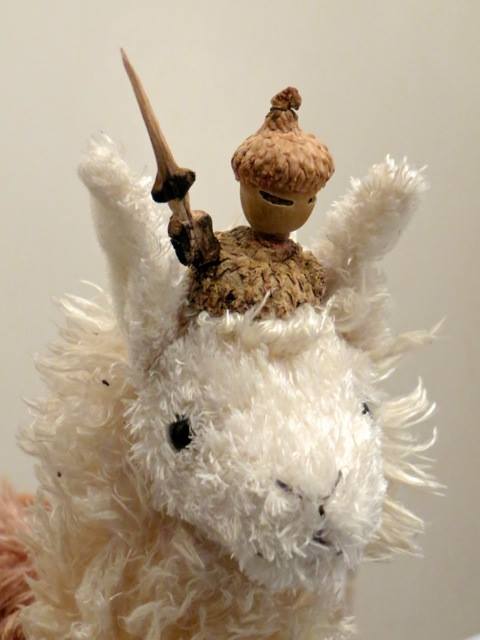
Yes, I’m now using a desk, and I’ve added a few personal touches. For example, a plush llama stands near my laptop. Beside it, a wooden warrior stands guard and holds his sword high; my dad cobbled together the brave little fellow from acorns and bits of wood.

Llama warrior

“CHARGE ’EM AND THEY SCATTER!”

My desk is decorated by one last personal touch: four quotes scribbled on a piece of paper and framed. The frame is cheap; I picked it up from Walmart a while back. The quotes, unlike their little frame, are invaluable. In past months, as I did my best to tidy up my life, each of these quotes made an impression on me.

I’m sharing these quotes today for a few reasons.

  1. Each of these quotes represents an idea I consider extremely important.
  2. I hope my readers may find these quotes helpful, inspiring, or meaningful.
  3. I didn’t feel like writing a proper blog post.

When I wrote down these quotes, I emphasized a few words because I read some comics recently and liked the way comic-book dialogue puts words in bold for emphasis. Don’t judge me.

With that, I’ll quit babbling and yield this post to four wise people: a web cartoonist, a saint, a writer, and a Savior. Their words inspire me, and I hope they inspire you.

“It is not about you. It is about everyone else.” ~ Matthew Taranto


“Not all of us can do great things, but we can do small things with great love.” ~ Mother Teresa


“If you continue to love Jesus, nothing much can go wrong with you, and I hope you may always do so.” ~ C.S. Lewis


“My grace is sufficient for you, for my power is made perfect in weakness.” ~ Jesus Christ

333. I Know Nothing

Today’s post was written by JK Riki: animator, blogger, and creator of Fred the Monkey. (FtM is a Homestar Runner-esque collection of web cartoons; I discovered the site a few years back.) As a blog run by monkeys, Typewriter Monkey Task Force is honored to share JK’s reflections on how little we know. For more great stuff from JK, check out his blog and Twitter. You may also want to swing by Animator Island, for which he writes.

I listed one of my 2015 goals on my blog as “Write a guest post for somewhere.” A big thanks to Adam for allowing me to commandeer his blog for the day.

In trying to determine what my goal-achieving guest post might be about, I poked around Typewriter Monkey Task Force to get a feel for its style and purpose. What I found was an amazing collection of thoughts and writings from a clearly deep individual. I started to worry whatever I came up with might not meet the level of aptitude already found on TMTF. (I included the word aptitude here specifically to try to elevate my game.)

[Editor’s note: I did not bribe JK to say nice things about my blog, I swear! He’s just a really kind person.]

Since there is no lack of depth in the topics of this blog, now seems as good a time as any to wade a bit deeper into the Great Pool of Thought and submit a few ideas that most people never bother with. A large number of our human species is content to go about the day-to-day and never really step back to consider alternative perspectives. I love alternative perspectives. Their greatest gift is a swift kick in the rear and exclamation of “There’s so much you don’t know, don’t forget that.”

So I share with you this simple truth: One of the best things you can ever achieve is the realization of how much you don’t know.

There’s a time and place for confidence, of course. If you’re performing brain surgery on someone, that might not be the best time to ponder string theory, dimensional variants, or that cutting into this person’s brain may be affecting atoms directly on another planet someplace light years away and who knows what havoc that is causing.

But when not engrossed in an activity where lives hang in the balance, consider stopping and thinking about how limited we are as humans. We can’t hear color. We can’t smell intention. We don’t know what we don’t know. Think about that. There are things we can’t imagine. They are beyond the scope of our understanding and reality. Yet that doesn’t mean they don’t exist. They could be (and very likely are) floating around us at this very moment, beyond our human senses.

What I discover any time I do this exercise of remembering how little I know is that suddenly I’m a lot more compassionate of everyone around me.

People who know more than me in some areas, and less in others, are in the same boat I am. We’re all on this journey of life, and all at different places on the road. Though it baffles me when I meet someone twice my age who hasn’t realized basic truths I’ve learned, I have more patience with them, knowing there’s plenty I have yet to realize myself. While it’s frustrating to speak with a teenager who “has it all figured out,” I’m able to remember I also once had “it all figured out,” sure that I knew everything there was to know. And in that moment I’m deeply grateful for the knowledge of how little knowledge I actually have. I never want to go back to thinking I knew it all. Dangerous pride lies in wait there.

Of course, any time you take a trip to the deep end of the pool it’s essential that you carry along a life preserver, and that you make certain it’s firmly attached to something that will not let you drown. When you take a swim in deeper thought, and consider the vastness of the universe seen and unseen, I highly recommend tossing the end of that rope to God. He never lets you drown, and He also knows what’s in the very depths of the pool. Plus He’s unbelievably patient. He won’t wander off and leave the rope tied to a fence post!

I have, in the past, handed the rope to people I trusted. Unfortunately, people fail. We’re only human. It is what it is. We don’t mean to let others drown, we just aren’t strong enough to pull them back, and we get distracted easily. So just be careful if you decide to sit and ponder today. The water is warm, but very deep, and we often overestimate our swimming abilities. Take along with you a helping hand, and by all means dive in and see what you see.

What you’ll find is truly amazing.

Batman Syndrome

I have Batman Syndrome.

I wish this meant I were as cool, skilled or accomplished as Batman. It does not. It most certainly does not. What it means is that Batman and I have something in common: we obsess over our mistakes.

If you or someone you love suffers from Batman Syndrome... I feel your pain.

If you or someone you love suffers from Batman Syndrome… I feel your pain.

I like fictional characters who overlook their victories and overemphasize their failures. There’s something compelling about characters who are heroic without realizing it. Take the Doctor from Doctor Who, who has saved every planet in the universe roughly twenty-seven times. In all his travels through space and time, he never leaves behind his insecurity, self-loathing or guilt. Consider Jean Valjean from Les Misérables, who atones for a few petty crimes by spending years serving the poor and helpless. They bless him as a saint. He despises himself as a criminal.

Then we have Batman, the eponymous sufferer of Batman Syndrome, who is so blinded by guilt that he fails to recognize one all-important fact: he is freaking Batman. No matter how many thousands of people he rescues, he remains obsessed with the two he failed to save.

I’m not a savior like the Doctor or a saint like Jean Valjean. I’m certainly not a superhero like Batman. Even so, I occasionally do things right. I also do things wrong. In my mind, the wrong things eclipse the right ones. A mistake cancels out all successes.

This isn’t always such a bad thing. I feel driven by my mistakes to try harder, to be better, to get it right. In the short term, it helps.

In the long term, however, Batman Syndrome wears away my confidence. It also makes me anxious. Dash it all, does it ever make me anxious. Doing anything is hard for someone desperately afraid of making mistakes. Perfection is a lousy minimum standard.

Batman Syndrome haunts me with one dreadful question.

You’ll never get it right, so why even try?

I write a lot about grace and stuff. In the end, I suppose it’s because I’m amazed (and sometimes incredulous) that God loves me. I’ve made a lot of mistakes. More to the point, I make a lot of mistakes. It’s easy for me to accept God’s forgiveness for a sin committed ten years ago. What’s hard for me to accept is forgiveness for a sin committed ten minutes ago.

It can also be hard for me to acknowledge my victories. I want to be humble, but there’s a difference between true humility and false modesty. I’m often reminded of my weaknesses. I think I must also allow myself to be reminded of the strengths God has given me. I’ve a long way to go, but I mustn’t overlook how far I’ve come.

I’m not Batman, and I think I’m finally beginning to accept that I don’t have to be.


This post was originally published on March 18, 2013. TMTF shall return with new content on January 19, 2015!

327. Thoughts on Christmas

As we draw near Christmas, I’m surrounded by colored lights, holiday decorations, snow flurries, advertisements, and peppermint-flavored things. I’ve wrapped gifts, played Christmas music, grumbled about the cold, drunk too much coffee, and fled in horror from the tawdry inflatable snowmen standing, smiling and sinister, on the front lawns of neighborhood homes. (Those things are evil, man.)

Evil snowmen

The horror! The horror!

I’ve thought a lot about Christmas this year, but none of my thoughts are substantial enough to deserve their own posts on this blog. Thus I’ve decided to throw all of my Christmas musings into a single post. Here we go!

I’m becoming less cynical about the holidays.

A few years ago, I wrote a blog post in which I grumbled about the frivolity of the Christmas season:

I have mixed feelings about Christmas. I enjoy the traditions, the nostalgia, the delicious food, the beautiful lights, the exciting gifts and some of the music. I despise the unapologetic, matter-of-fact way companies use the holiday to make money. I’m also pained by the growing superficiality of Christmas. The birth of Christ has become an afterthought.

Nietzsche informed us that God is dead. I disagree, but suspect Christmas might be dying—slowly passing away in a blaze of colored lights and cacophony of seasonal music.

I’m still a cynical grump about the Christmas season—in fact, I’m grumpy and cynical about a lot of things—but my attitude toward Christmas has softened over the past year or two.

Christmas is a time of peace and goodwill even among nonreligious people. It’s a time for reminiscence, family, forgiveness, generosity, and eating lots of cookies. Apart from the holiday’s spiritual significance, many of its secular aspects are beautiful, good, and meaningful.

Not relevant to this blog post, but adorable.

I certainly don’t consider the secular aspects of Christmas equal to its spiritual ones. For all its warm feelings and bright colors, Christmas is pretty empty without Christ. I cherish the fun traditions of Christmas because of the hope underlying them.

All the same, I’m learning to respect that Christmas has value even as a secular holiday, and I should sometimes keep my sneers and cries of “Humbug!” to myself.

A lot of Christmas music is really stupid.

Amy Green, a phenomenal blogger and aspiring heretic, has already discussed lousy Christmas songs. I will add only one observation. There are sane human beings who enjoy songs like “Here Comes Santa Claus,” “Frosty the Snowman,” and “Grandma Got Run Over by a Reindeer,” and this fact is an appalling indictment of the human race.

Nobody ever seems to remember the historical context of Christmas.

We all know Christmas celebrates the birth of Christ. We’re familiar with the characters and set pieces of the Nativity: the inn, shepherds, angels, and all the rest. What we forget is that Christ’s birth was an event in history. It didn’t have a simple beginning or a neat happily-ever-after ending.

Christmas began in ancient Israel. Prophets hinted vaguely at the arrival of the Messiah, God’s chosen hero, and then prophecies ceased. God’s people were scattered and exiled. For centuries, the descendants of Israel watched empires rise and fall around them, and waited—probably without much hope—for their Messiah.

Jesus Christ was born into a remote corner of the vast Roman empire. He wasn’t the hero anyone expected or wanted. In fact, he baffled everyone, including his own parents, his followers, and the authorities who eventually sentenced him to death. Christ lived, died, and was raised to life by the power of God. He became the founder of a new faith, which has rocked the world for two millennia.

That’s what Christmas is all about, Charlie Brown.

We think of Christmas as merely the Nativity, and that’s a shame. The broader historical context and religious significance of Christ’s birth are fascinating.

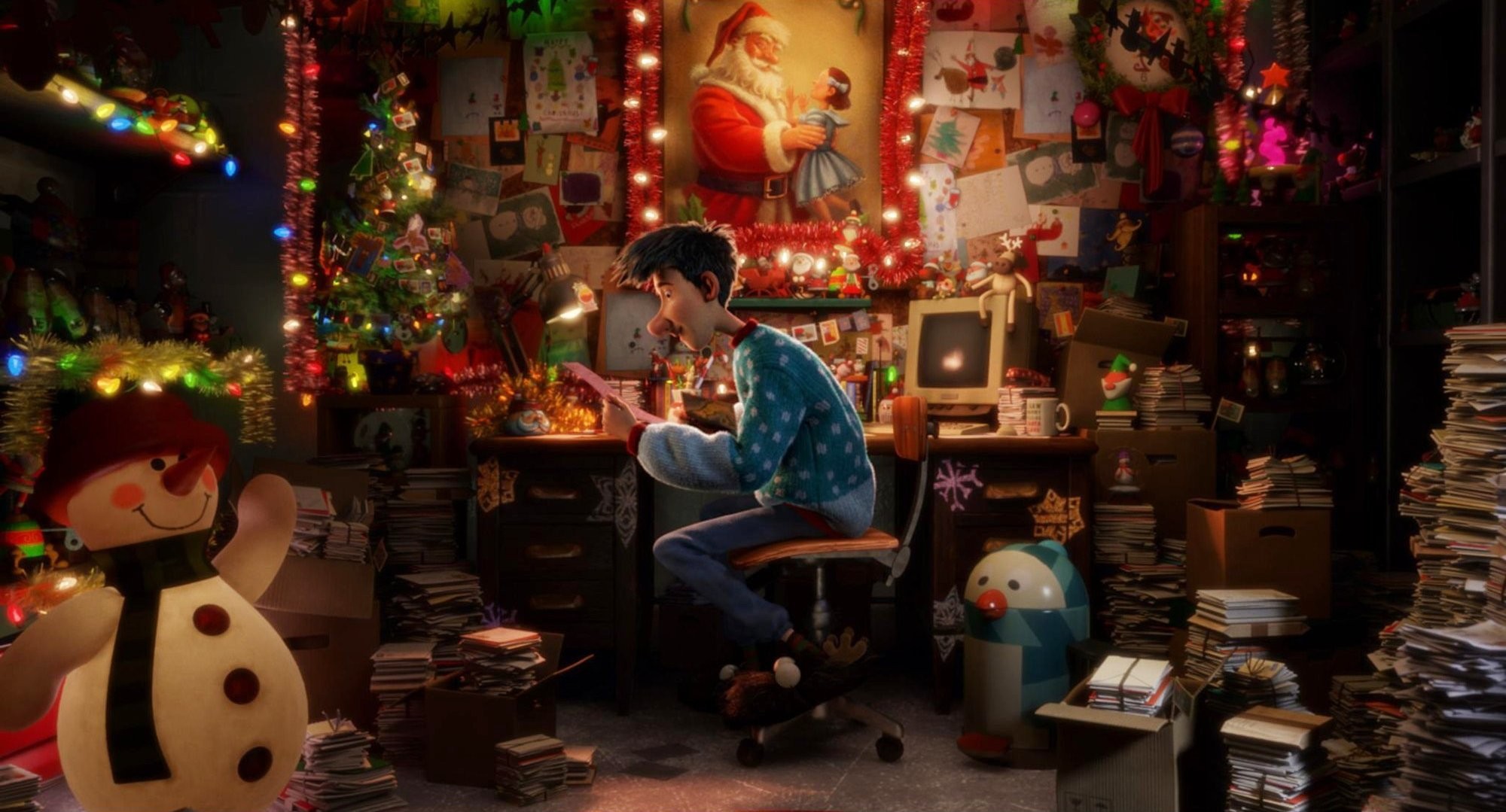
Arthur Christmas is the best Christmas movie I’ve ever seen.

Arthur Christmas

Seriously, go watch it.

Time is running out for TMTF’s Christmas fundraisers!

The Living Water fundraiser will run for a couple of months after Christmas, but I’d love to hit its goal by the end of December. The Child’s Play fundraiser will conclude at the end of the month, so time is running out!

If you’re not sure why I’m blathering about fundraisers, please see here for details.

Working together, we can make this Christmas truly awesome for people in need. Please consider giving!

We wish you a happy Christmas!

My typewriter monkeys and I—well, mostly I—wish you the best of all possible Christmases, and a bright start to the new year!