Why Nintendo Is the Best Company in the World

Top Banana

Meet Satoru Iwata, the chief executive officer of Nintendo. You could call him Nintendo’s top banana. (I’m sorry; I couldn’t resist.) The image above is taken from one of Nintendo’s official press conferences. It was a serious event involving journalists, executives and software developers… and tropical fruit, apparently.

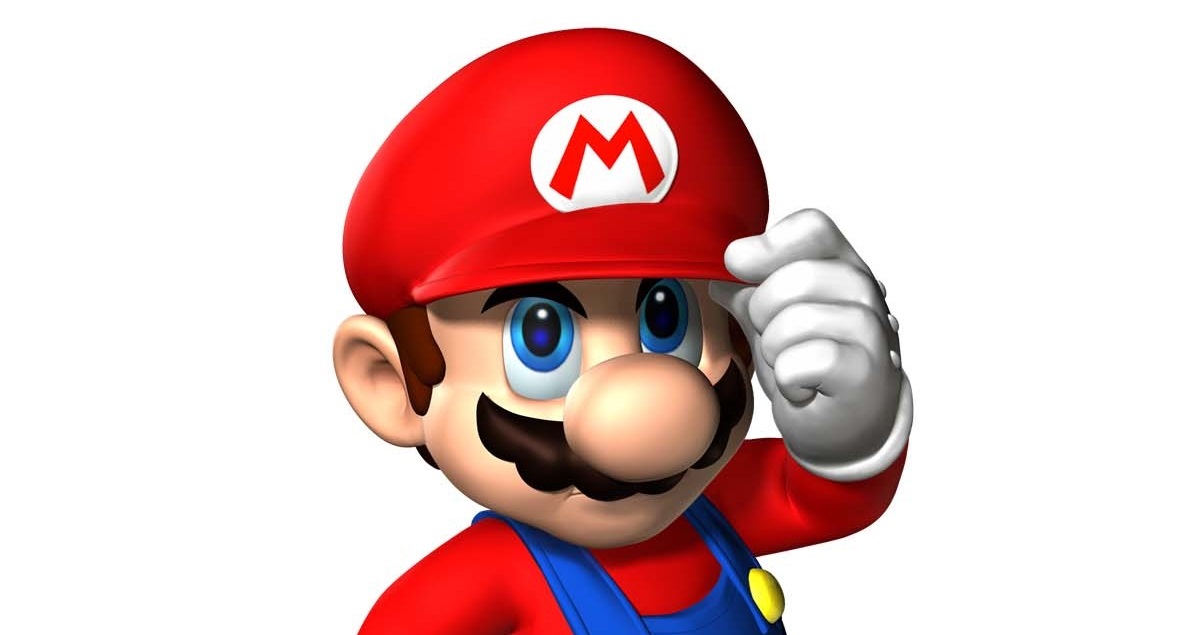
Nintendo is a video game developer, the creator of Mario and Zelda and many other famous franchises. It is also my favorite company, surpassing even Pixar and Studio Ghibli in my esteem.

Why is Nintendo a good company? Let me count the ways.

Nintendo has a great heritage

This company saved the entire industry from the video game crash of 1983, which nearly killed video games as a medium. The popularity of the Nintendo Entertainment System and its classic games allowed the video game industry to recover and advance. It could be argued we have video games today because of Nintendo. Moreover, the company’s older games set all kinds of standards for the industry and helped define game design in general. Heck, Nintendo’s history has even been immortalized in song.

Nintendo keeps making excellent games

The company has never rested on its laurels. Twenty-five years after its first masterpieces, Nintendo’s latest games are really, really fun.

Nintendo innovates

While Sony and Microsoft have tried for the past decade to outdo each other with consoles that do pretty much all the same things, Nintendo has innovated with motion controls, touch screens, asymmetrical gameplay and other creative concepts… which Sony and Microsoft have shamelessly copied. Not all of Nintendo’s innovations have been wildly successful—I’m looking at you, Virtual Boy—but at least it’s trying!

Nintendo cares for its employees

Through financial crises, the company’s top executives have repeatedly taken salary cuts to save money instead of firing employees. I admire that.

Nintendo appreciates families

Sony and Microsoft showcase most of the really gory, raunchy, edgy video game franchises: God of WarGears of War, Grand Theft Auto, etc. ad nauseum. By contrast, Nintendo games star goofy apes, portly plumbers and noble swordsmen. If I ever have kids (a frightening thought, to be sure) I’ll feel comfortable letting them enjoy classics like Zelda and Mario Kart.

Nintendo has a sense of humor

Bananas. That is all.

In conclusion: Bravo, Nintendo. Bravo.

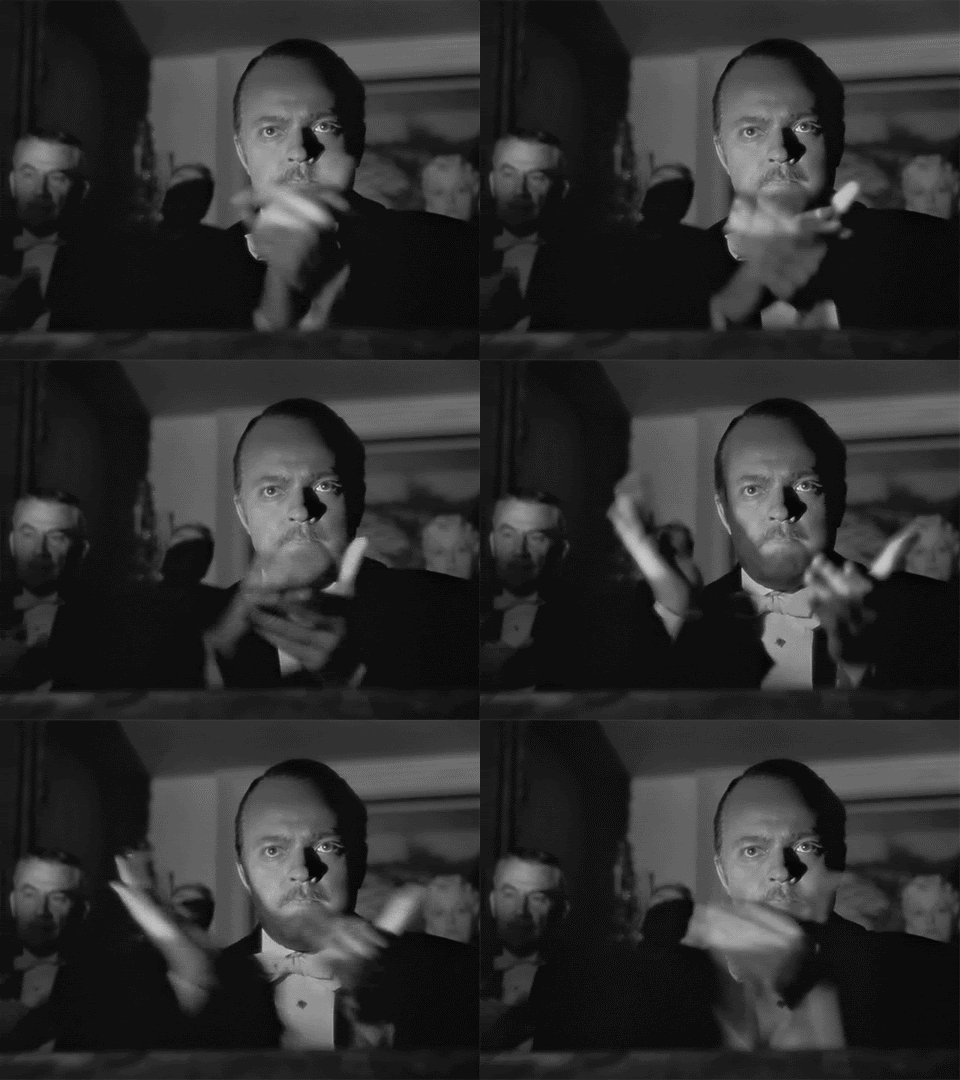
Bravo (GIF)

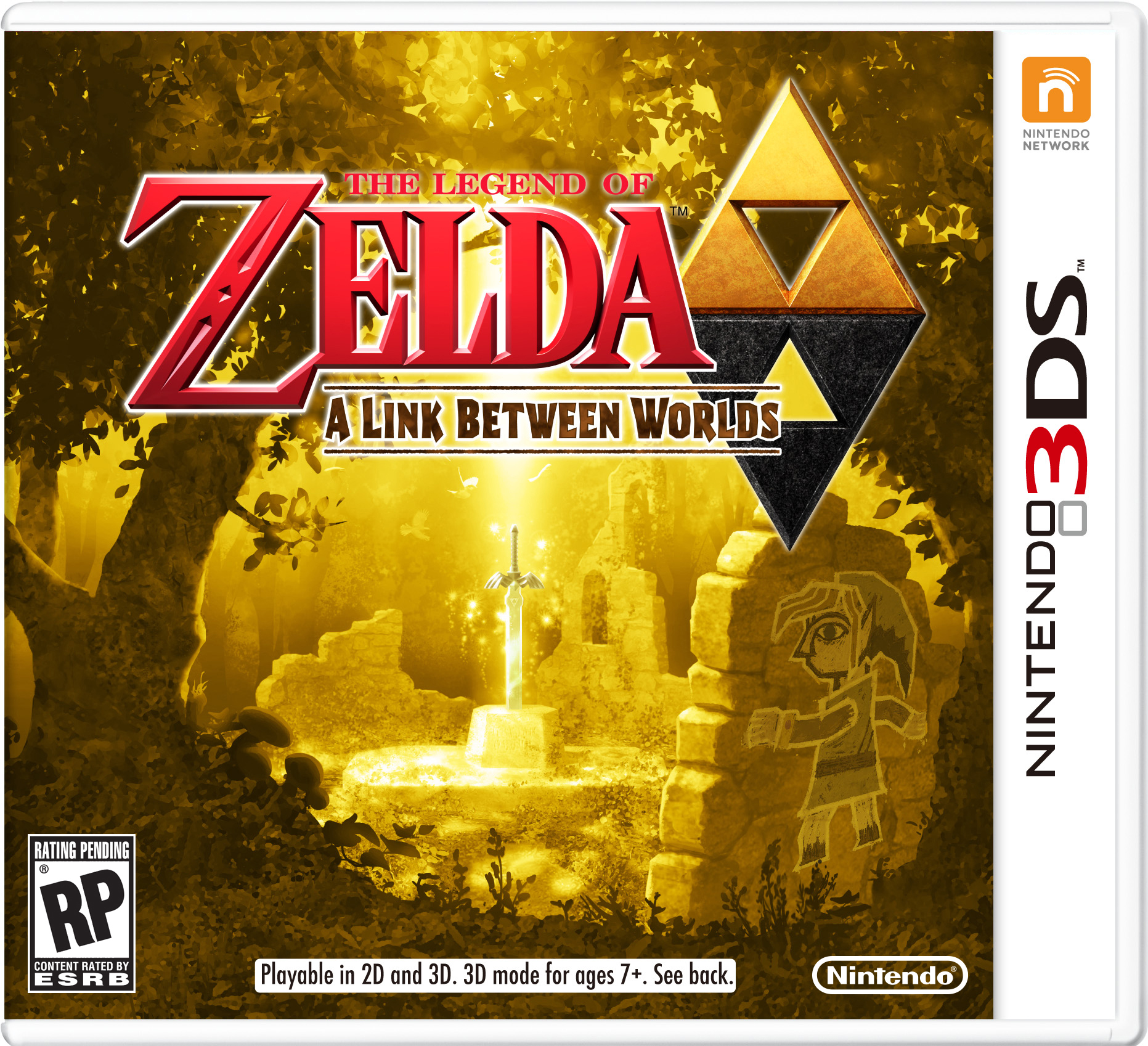
234. TMTF Reviews: The Legend of Zelda – A Link Between Worlds

This blog now reviews video games, because Zelda. I believe no further explanation is needed.

Well, I suppose a little explanation won’t hurt. The Legend of Zelda is a series of games by Nintendo in which a green-clad hero named Link explores the fantasy world of Hyrule: fighting monsters, solving puzzles, conquering dungeons and occasionally rescuing princesses. The Zelda series, which spans over twenty-five years and more than a dozen games, is possibly the most critically-acclaimed in the video game industry. Zelda games are generally classics at worst, and masterpieces at best.

(Except for… those games. We don’t speak of them.)

The Legend of Zelda: A Link Between Worlds for the Nintendo 3DS is the first new Zelda game in a couple of years. As a devoted fan of Zelda games, I was… not very excited.

A Link Between Worlds is an indirect sequel to The Legend of Zelda: A Link to the Past, a game released for the Super Nintendo Entertainment System more than twenty years ago. Even though the game is an undisputed masterpiece, I didn’t enjoy A Link to the Past as much as, well, pretty much any other game in the Zelda series.

I expected A Link Between Worlds to cash in on the longstanding popularity of A Link to the Past. I didn’t like the new game’s art style. What concerned me most of all were the game’s two biggest innovations: a new gameplay mechanic that seemed like a lame gimmick, and a largely nonlinear structure.

In short, I expected not to be impressed by A Link Between Worlds. I knew it would be a good game—heck, it’s Zelda, and Zelda never disappoints—but my expectations were (relatively) low.

How wrong I was. How very, very wrong.

A Link Between Worlds

In all the best possible ways, The Legend of Zelda: A Link Between Worlds feels like a very old game. There are no overbearing tutorials (a problem in recent Zelda games); rather, the player learns by doing, which is much more fun than being told what to do. A Link Between Worlds, like the earliest Zelda games, also takes a minimalistic approach to story. As much as I love a complex plot and nuanced characters, I’ll be the first to admit the game’s narrative simplicity works in its favor.

The game’s production values—music, graphics and all that sort of thing—are top-notch. Advanced graphics have never been Nintendo’s strong suit, but the game’s visuals have a charming storybook quality to them. (They’re especially lovely when viewed in 3D.) As for the music, well, Zelda music has always been superb. This game is no exception.

The basic gameplay in A Link Between Worlds is typically effective Zelda stuff: walk, swing sword, raise shield, etc. This game adds the usual oddball assortment of weapons and tools—bombs, boomerangs, magic rods and so on—but with a twist: they are now rented and bought.

See, there’s this longstanding Zelda tradition of each dungeon containing a tool of some kind, along with puzzles that can only be solved with that tool. It’s kind of a lock-and-key dynamic.

This game throws that tradition out the window. Almost every weapon, tool and item can be rented or bought right from the start of the game. I was skeptical at first of such a system—and frankly, I missed the joy of discovering each dungeon’s new tool—but it worked pretty well.

Since most tools are available to the player from the beginning, dungeons no longer have to be completed in any particular order. The player, after a certain point in the game, is given a map marked with a bunch of red Xs and told, “Those are dungeons. Have fun!” Now, I don’t mind linearity in games. There’s satisfaction in completing linear objectives, and I find it almost reassuring to have a set path to follow. Having such freedom in A Link Between Worlds, however, was awesome. I could go anywhere. With two kingdoms to explore—one light, one dark—that’s a lot of freedom.

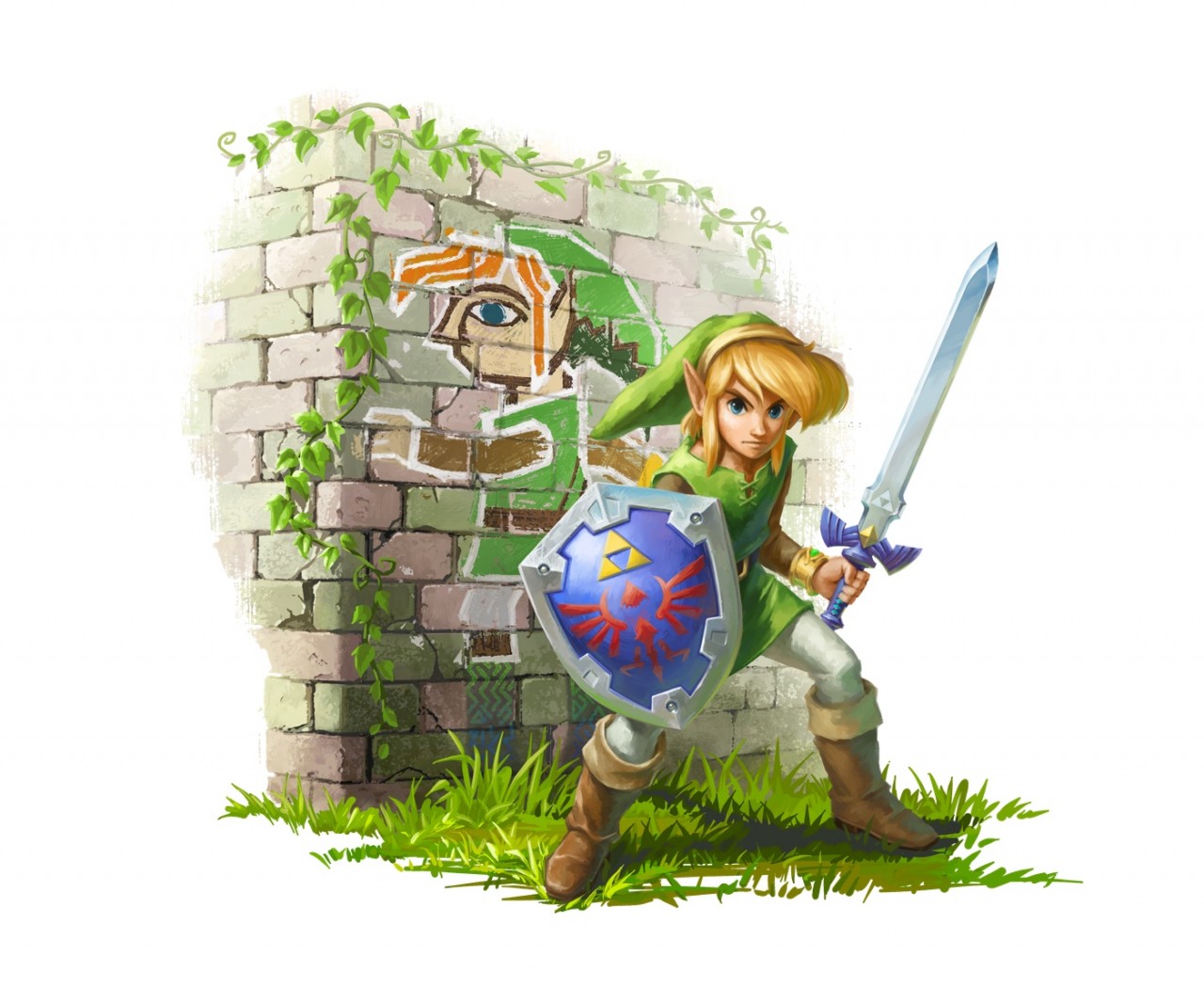
Heck, I could even switch dimensions. Players of A Link Between Worlds can merge into flat surfaces to become two-dimensional paintings.

Link with PaintingThis gimmick seemed really lame at first. Becoming a painting? Bah! Boring! Upon actually trying it, however, I realized this gameplay mechanic is brilliant. As painting, players can move around, pop in and out of walls and reach all kinds of unexpected places. Like the portals in the Portal games, this mechanic totally changed my perspective. It’s even used to switch universes; appropriately to the game’s title, it serves as a literal link between worlds.

The dungeons in A Link Between Worlds are, like all Zelda dungeons, excellent: packed with puzzles and monsters and treasures, with a boss (i.e. a uniquely challenging enemy) at the end.

This is not a game for players who hope simply to hack and slash their way to victory. No puzzle is painfully difficult, and there’s an unobtrusive hint system, but most players will do much more thinking than fighting.

And, of course, there’s the usual slew of minigames, side quests and stuff to collect. I should also mention how easy the map and item interfaces are to use; while buttons are used for most gameplay, the 3DS touchscreen is utilized for maps and menus.

Ironically, considering how low my expectations were at first for A Link Between Worlds, I can’t find much to complain about. The game seems just a bit short. I would have liked to have seen the setting and backstory fleshed out more, and the plot lacked the emotional oomph of other Zelda games. This game is one to be remembered for the gameplay, not the story or characters.

The Legend of Zelda: A Link Between Worlds is a great game—not merely a good game, but a truly great one. My only lasting regrets are that it’s over so soon, and I shall have to wait at least a couple of years for the next Zelda.

231. TMTF’s Top Ten Mad Scientists in Video Games

We’re all a little crazy.

Some of us, of course, are crazier than others. In video games, the craziest people generally fall into three categories: villains, mad scientists or both.

I find mad scientists particularly interesting. They abandon morality (and occasionally their own humanity) in their frenzied pursuit of knowledge or power. Like Adam and Eve snatching the forbidden fruit of Eden, these lunatics rebel against God and nature in the name of progress.

Mad scientists may not be good people, but they sure are good characters!

In listing ten remarkable mad scientists in video games, my usual rules apply: I won’t include characters from games I haven’t played (with one notable exception) and will include only one character per game series.

Let’s get crazy, ladies and gentlemen, as TMTF presents…

The TMTF List of Top Ten Mad Scientists in Video Games!

Be ye warned, here there be minor spoilers.

10. Andross (Star Fox series) Andross Andross was once a brilliant scientist, but experiments damaged his sanity and ruined his body. Although he doesn’t have much personality, Andross establishes himself as a notable villain by killing the father of the games’ protagonist and declaring himself emperor of the solar system. I also want to point out that Andross is apparently comfortable with sacrificing his body and becoming a disembodied head. That’s pretty crazy.

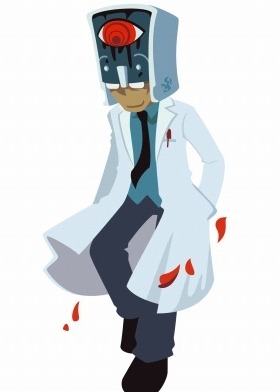
9. The Doctor (Cave Story) The Doctor (Cave Story) No, not that Doctor. This Doctor is actually a medical practitioner, albeit one with a terrifying lust for power and a violent disregard for the Hippocratic Oath. The Doctor is merciless, selfish and cruel. He also gets bonus points for using himself as a test subject and becoming a hideous mutant. Besides, I love that he carries around a pen. More villains need pens sticking out of their pockets.

8. E. Gadd (Super Mario Bros. series) E. Gadd Egad! This nutty little gentleman has the distinction of being pretty much the only good guy on this list. Professor Elvin Gadd is an inventor and paranormal researcher whose crowning achievement is a vacuum cleaner that sucks up ghosts. He’s cheerful, egotistical and blithely inconsiderate. He also sounds exactly like an Ewok from the Star Wars films. Coincidence? Yeah, probably. All the same, this pint-sized prof definitely has a few screws loose.

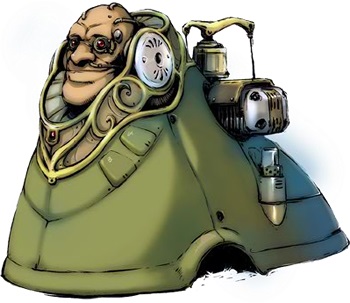
7. Fennel (Radiant Historia) Fennel Fennel is the head of a military research and development team. He’s also just a head. (There might be a body inside that slug-like machine, but I’m not sure.) Working for the warlike nation of Alistel, Fennel develops thaumatechnology: an arcane sort of machinery consisting mostly of weapons and other stuff that can kill you. He’s in love with his work, which takes place in a dim, ironclad labyrinth of underground chambers. Seriously, Fennel is kind of creepy.

6. Jean Descole (Professor Layton series) Jean Descole I haven’t actually played any of the games in which Jean Descole appears, but my brother insisted I put him on the list. (I’ll finish the Professor Layton series sooner or later.) Descole is cold, calm and cunning… except when he’s angry. Then he’s kind of scary. This archaeologist, master mechanic and self-proclaimed scientist manipulates others, shows no remorse and stops at nothing to achieve his goals. Don’t be fooled by that detached smile. Descole is not a sane man.

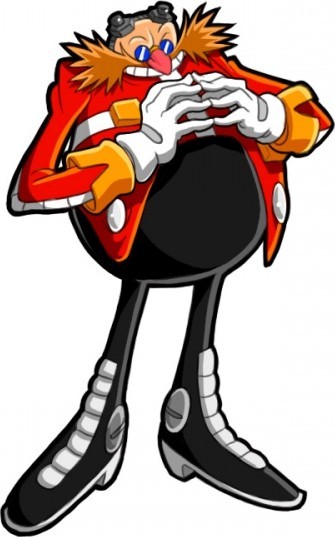
5. Doctor Eggman (Sonic the Hedgehog series) Doctor Eggman As his name and title suggest, Doctor Eggman is a doctor shaped like an egg. Despite being extremely intelligent, he is not particularly bright; his schemes for world domination are invariably foiled by either a hedgehog or his own incompetence. Eggman is short-tempered, egotistical and prone to bouts of maniacal laughter: defining characteristics of a mad scientist. Besides, dat stache.

4. Pamela’s Father (Legend of Zelda: Majora’s Mask) Pamela's Father This poor fool, who is never given a proper name, is so devoted to his study of supernatural phenomena that he moves to a desolate, haunted valley to study ghouls and ghosts… and takes his young daughter Pamela with him. When his research causes him to deteriorate into a monster, she traps him in the basement and bars the front door against the ghouls circling the house. Terrifying? Heck yes. Pamela and her father are eventually rescued and his humanity restored. Regardless, any scientist crazy enough to drag his daughter to an isolated wasteland to study monsters is, well, really crazy.

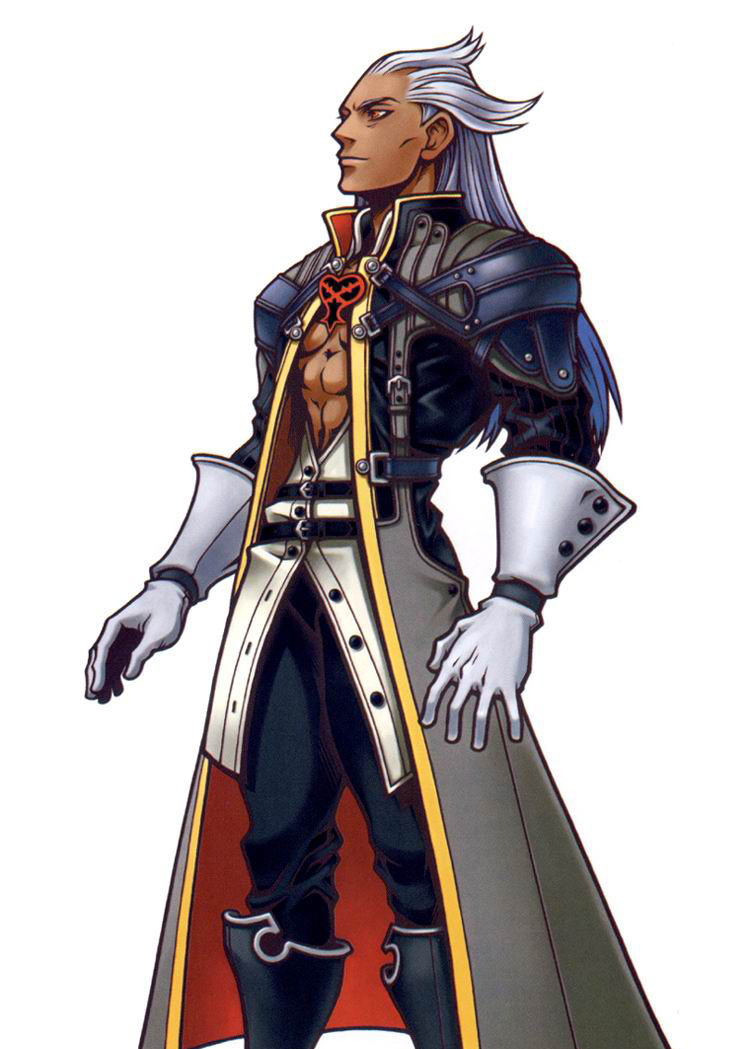
3. Ansem (Kingdom Hearts series) Ansem Without delving too deep into the convoluted lore of the Kingdom Hearts universe, I can confidently declare this man a lunatic. His research into the darkness of the human heart leads to the creation of Heartless, shadowy monsters that swarm across the universe to devour worlds. Ansem himself becomes a Heartless. Then—in the time-honored tradition of mad scientists—he tries to conquer everything. This tanned, stylish scientist gets extra points for inverting the stereotype of the pallid researcher in a lab coat.

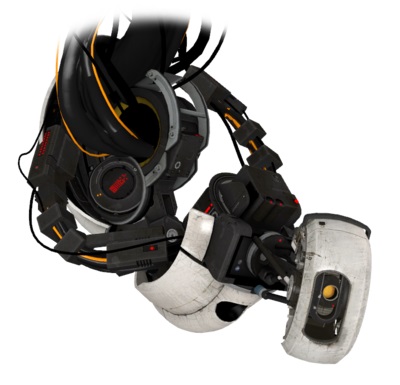
2. GLaDOS (Portal series) GLaDOSThis psychopathic artificial intelligence builds death traps and forces test subjects to solve them. Why? For science, of course! So what if her research methods kill a few people now and then? GLaDOS believes her experiments are worth the cost: “The science gets done and you make a neat gun for the people who are still alive!” I love how this AI becomes unhinged throughout the games, eventually stooping to ranting and petty insults. For complexity of character and degree of insanity, GLaDOS is wonderful.

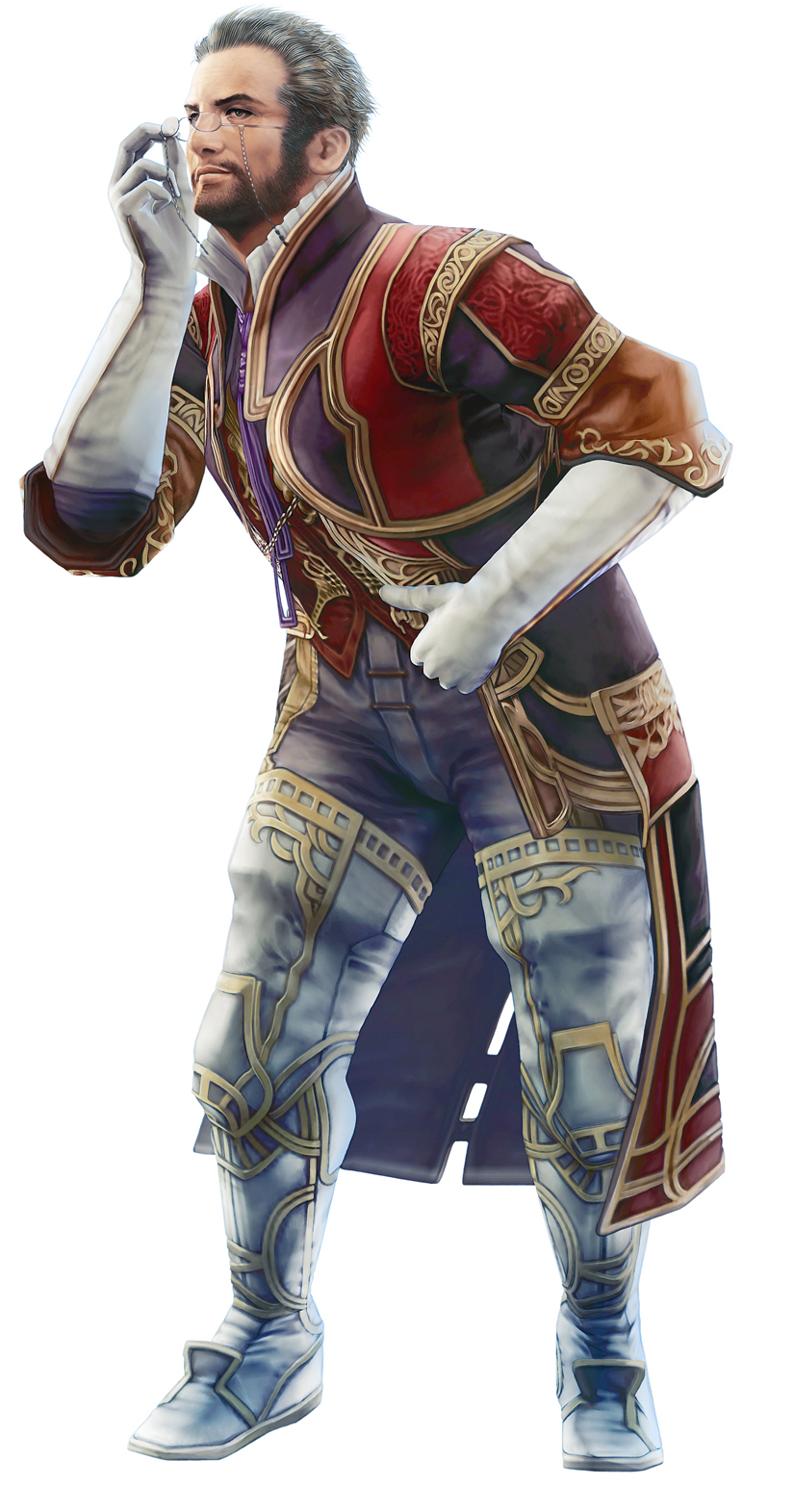
1. Cidolfus Demen Bunansa (Final Fantasy XII) Doctor Cid Cidolfus Demen Bunansa is one of the best video game characters I’ve ever seen: supercilious, brilliant, arrogant, foppish and seemingly insane. He treats tyrants with casual disrespect and talks aloud to an imaginary friend named Venat. I would call Cid a delusional lunatic, except for one minor detail—he’s actually sane. Cid is a rational man obsessed with defying the gods and putting “the reigns of history back in the hands of man,” abetted by the mysterious, invisible Venat. Of course, on his noble quest to liberate humankind, Cid doesn’t mind shedding a little innocent blood: this man ordered the obliteration of an entire city with the magical equivalent of an atomic bomb as a scientific experiment. Cid is fabulous, fascinating, evil, despicable, astonishing and awesome.

O people of the Internet, what video game mad scientists would you add to this list? Let us know in the comments!

224. More Thoughts on Girls in Video Games

Video games often do a lousy job of respecting women. I’m no feminist, but I do believe women should be treated with respect.

One of the major problems I see in video games is sexual objectification, the deplorable practice of making people mere objects to be ogled. People are people. Treating them as anything less is demeaning, yet women in video games are often reduced to little more than slim waists, big breasts and curvy figures.

What about characters who are merely attractive? We like our heroes and heroines to be beautiful, and I don’t think there’s anything wrong with that. Good looks are a good thing. When does a character cross the line? At what point does an attractive character become a sexual object?

After thinking about it, I hit upon a few basic principles.

Appearance: Does a character have a realistic appearance or exaggerated physical proportions?

Attire: Are a character’s clothes appropriate or inappropriate?

Character: Is a character given a genuine personality or merely a shallow persona?

Context: Does a character’s appearance make sense in context?

Let’s put these principles to the test and take a look at some video game girls.

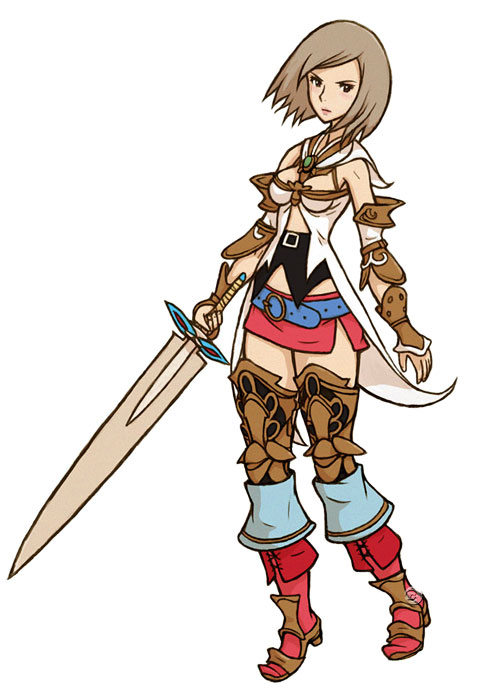
Ashe (Final Fantasy XII)

Ashe

Despite wearing the shortest of all possible miniskirts, the princess of Dalmasca in Final Fantasy XII is definitely not a sexual object. Ashe is a driven, intelligent person who fights for her subjects and earns the respect of her companions. Even her less-than-modest clothes are standard for Dalmasca, a kingdom enveloped by arid deserts. Ashe’s outfit is, in a literal as well as a figurative sense, cool.

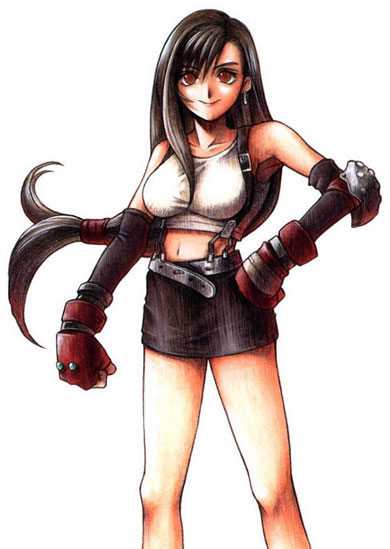
Tifa (Final Fantasy VII)

Tifa

Tifa Lockhart is a wonderful person, but her personality fails to save her from becoming a victim of sexual objectification. She wears a miniskirt and mini-shirt, even into battles against vicious monsters. How she avoids death and injury—not to mention charges of indecent exposure—I can’t imagine. Tifa is a strong woman with an empathetic, motherly nature… but too many gamers remember her only as the babe from Final Fantasy VII with the long legs and huge bust.

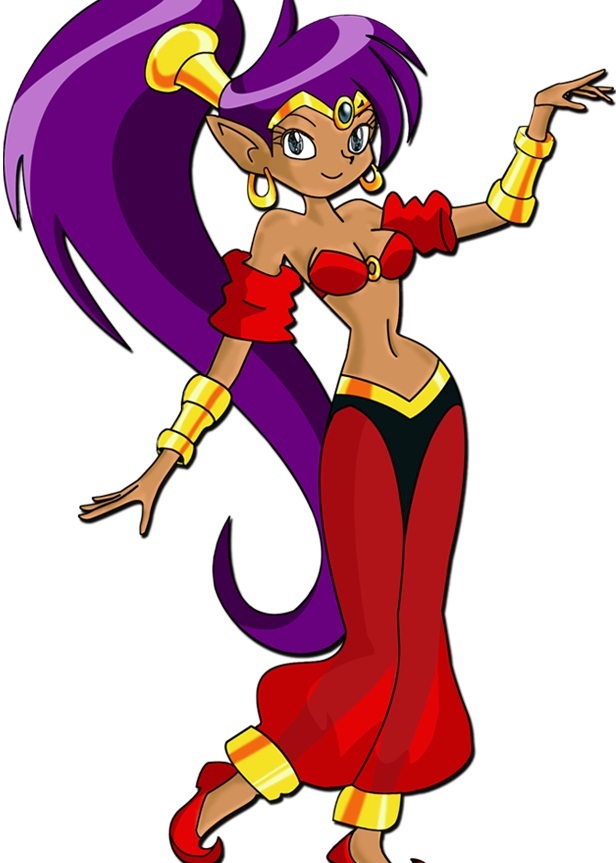
Shantae (Shantae series)

Shantae

Some women in video games look uncomfortably like strippers. Shantae looks more like someone in pajamas. Her clothes are revealing, but Shantae is no less modest than some of Disney’s kid-friendly princesses. Shantae is an upbeat, well-developed character, and only one of her physical features is greatly exaggerated… her ears. Even her outfit makes sense given the context of her hometown’s blazing climate. Shantae is definitely a person, and an adorable one at that.

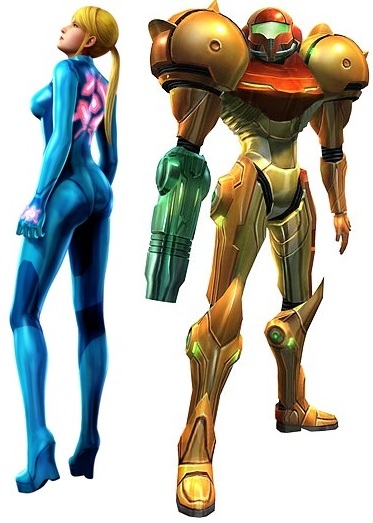
Samus (Metroid series)

SamusSamus Aran, the solitary bounty hunter from the Metroid series, is an interesting case. In most of her games, she’s a silent protagonist without much personality—yet she’s treated respectfully as an independent, capable person with the good sense to wear full body armor into battle. However, upon removing her armored suit, Samus becomes a babe in pointlessly revealing or form-fitting clothes. Whether Samus can be considered a victim of sexual objectification depends mostly on whether she’s on or off duty.

Physical beauty is a very good thing. Sexuality is an amazing gift, which is exactly why it shouldn’t be flaunted or cheapened by flagrantly sexualized characters. People are people. All people—even video game characters—should be respected.

The Best History Lesson in the History of History

Never before has video game history been so awesome… or so darn catchy.

Fun Fact: Nintendo existed for nearly a century before it began producing video games. It dabbled in everything from card games to cab services before striking gold with franchises like Donkey Kong, Super Mario Bros. and Legend of Zelda in the eighties.

194. The Trouble with Girls (in Video Games)

I am not a feminist. Heck, I couldn’t be a feminist even if I wanted to be. As I learned during my studies in college of literary criticism, the stricter philosophies of feminism disqualify men from being feminists. What a shame.

I may not be a feminist, but I do consider it my business to respect people. That said, I’m bothered by the way ladies are depicted in video games. Never mind touchy issues like gender empowerment—I’m talking about common courtesy.

Here are some of the problems with girls in video games.

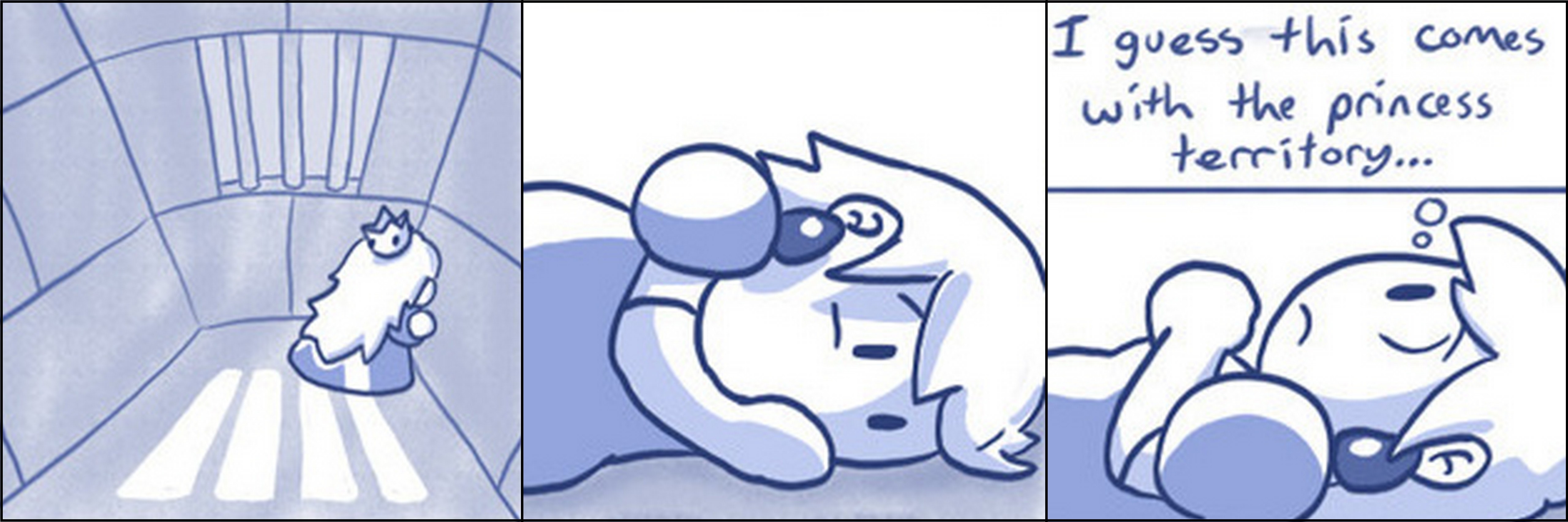
Damsels in distress

I just covered this trope in my last post. Ladies in video games tend to be helpless victims who must be rescued by male heroes. Now, this isn’t such a bad thing. Heroes clearly respect these ladies enough to risk their own lives rescuing them. Damsels in distress are also a wonderfully simple plot device. Need a story for your game? The princess was kidnapped and the hero must save her! No further details are needed; we have all the story we need.

Comic adapted from Brawl in the Family.

Art adapted from Brawl in the Family.

While the damsel in distress trope isn’t atrociously disrespectful, it does suggest women are powerless: all they can do is sit around waiting for strong men to rescue them. This implication is unfair. Intelligence, courage and strength are not limited by sex or gender.

I think the video game industry is getting better about this one. The Mario and Zelda series still feature damsels in distress, but Princesses Peach and Zelda have become clever, resourceful characters—they don’t just sit around waiting to be rescued. Meanwhile, female protagonists like Samus Aran from the Metroid series and Chell from the Portal games prove ladies can take care of themselves, thank you very much.

Sexual objectification

I’m not sure how to put this tactfully: ladies in video games tend to be… curvy. They’re often impossibly slim and buxom, and not particularly shy about showing it. These ladies tend to flaunt their curves, say flirtatious things and generally do things most self-respecting women don’t do.

There is nothing wrong with having an attractive character in a video game. Beauty is a good thing. Sexual objectification—stripping away a lady’s dignity and treating her as an object—is not a good thing.

(For the record, I also object to the sexual objectification of men in video games: those absurdly muscular, super-macho dudes who have no personalities and refuse to wear shirts.)

Treating a person as less than a person, as merely an object to be ogled, is utterly disrespectful—even if the person happens to be a video game character.

Chain mail bikinis

I’ve mentioned this one before. When male characters are completely covered by heavy armor, female characters wear… swimsuits and lingerie. (I’d cite examples to prove my point, but none of those pictures would be appropriate for this blog.) There is no tactical advantage for ladies to expose legs, midriffs or bosoms in battle. None.

Where are the heroines?

Not many video games feature ladies as the lead characters. There are a few, sure, such as the aforementioned Metroid and Portal games. For the most part, however, video game protagonists are men.

Why?

Does the video game industry believe all gamers are prejudiced males who won’t buy games with female protagonists? Does the video game industry think women are not as capable as men? Seriously, what gives?

O people of the Internet, what bothers you about video games? Let us know in the comments!

191. TMTF’s Top Ten Weapons in Video Games

I love video games. I enjoy making top ten lists. Finally—despite my loathing for real-life violence—I like weapons.

This blog post was inevitable.

This top ten list, which includes weapons only from games I’ve played, defines a weapon as an object used to inflict damage on someone or something in a video game. Power-ups, vehicles and powered armor suits don’t count. (Sorry, Samus.) Weapons that originated in media apart from video games, such as lightsabers from Star Wars or the golden gun from James Bond films, will not be included.

Duck for cover, ladies and gentlemen, as TMTF presents…

The TMTF List of Top Ten Weapons in Video Games!

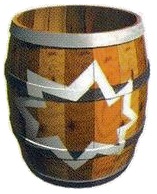
10. Barrel Cannon (Donkey Kong series)

Barrel Cannon

What’s more devastating than heavy artillery? Why, heavy artillery that fires gorillas, of course! The barrel cannon can be used not only as a form of transportation for Donkey Kong, but also as a way to turn the ape into a high-speed projectile. If only it fired sharks…

9. Masamune (Chrono Trigger)

Masamune

This legendary sword, the blade of a brave knight who, er, also happens to be a frog, is a powerful and storied weapon despite its plain appearance. It carries tremendous sentimental value for its amphibious owner. Finding and repairing the Masamune is a major feat, requiring the game’s heroes to travel through time from prehistory to the modern age. Later in the game, a sidequest unlocks the sword’s full potential and transforms it into an extremely powerful weapon.

8. Satellite Gun (Shadow the Hedgehog)

Satellite Gun

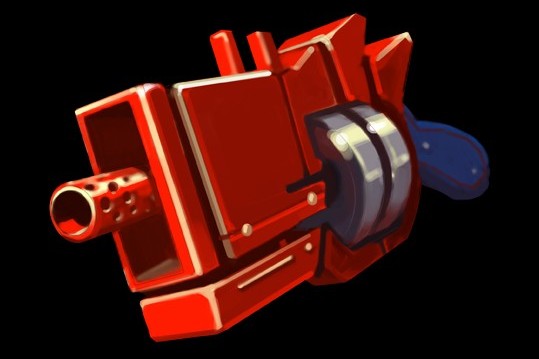
Shadow the Hedgehog is a terrible game. Apart from its bad level design, lousy writing and atrocious acting, the game is a poor attempt to make the bright, whimsical Sonic series seem dark and gritty. There is at least one good thing about this game, however: the Satellite Gun. This weapon, which looks a bit like a television remote, uses a targeting system to lock onto enemies and signals an orbiting satellite to annihilate them with a freaking laser beam from outer space. That’s cool.

7. Poltergust 3000 (Luigi’s Mansion)

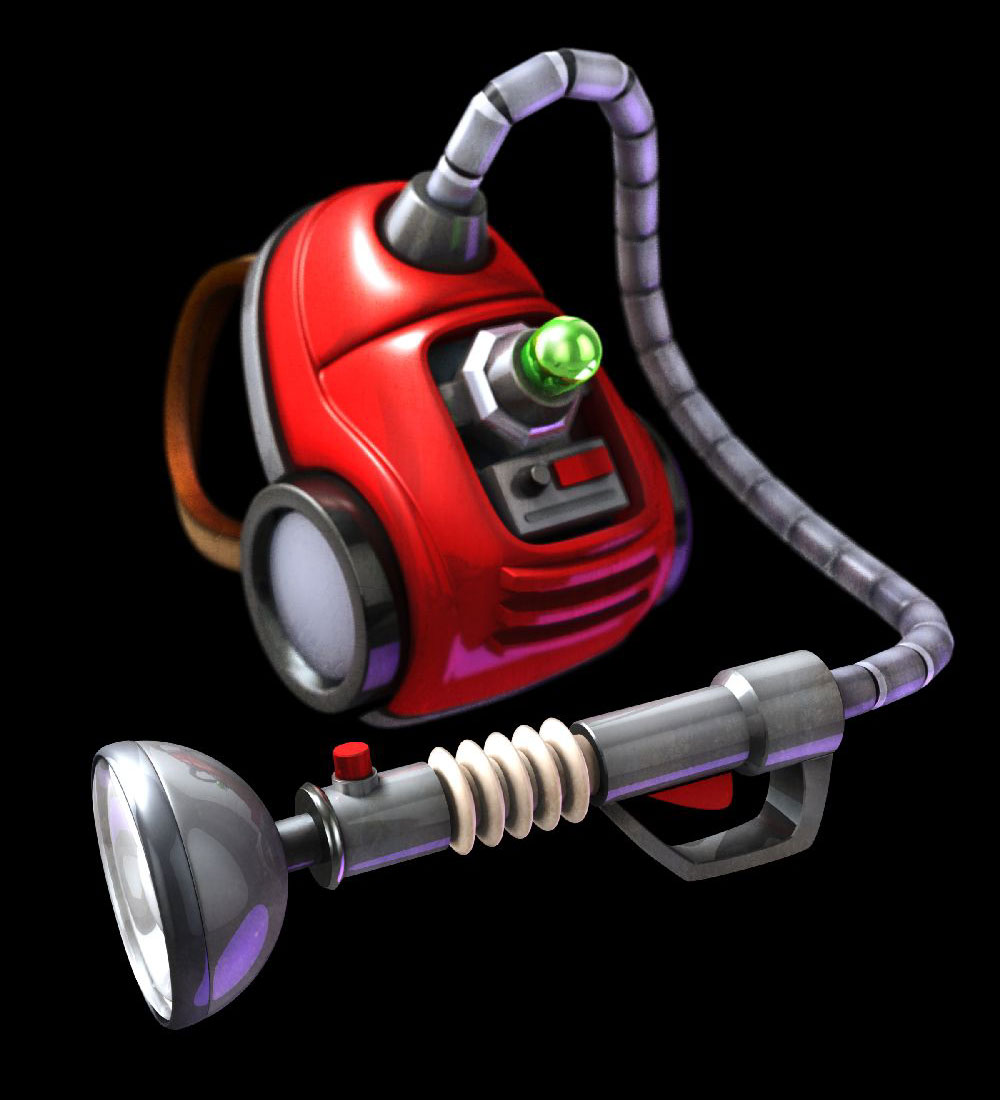
Poltergust 3000

This is a vacuum cleaner that sucks up ghosts, used by Luigi to rescue his brother Mario from a mansion teeming with spooks. (The image above is actually an advanced Poltergust from another game, but I’ve used it for this list because it’s much cooler than the original model.) Besides trapping phantoms, the Poltergust 3000 is capable of collecting cash from hard-to-reach nooks and blasting foes with fire, water or ice. All this begs the question: Who you gonna call?

6. Enchanted Arrows (Legend of Zelda series)

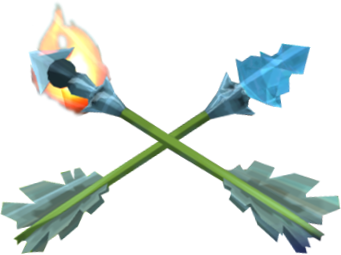
Enchanted Arrow

Bows and arrows are pretty neat, but the Legend of Zelda series offers several variations thereupon that are nothing short of awesome. Players can use the three standard varieties of magical projectiles—fire, ice and light arrows—not only to damage enemies, but also to solve puzzles and navigate environments. Fire arrows burn away obstacles. Ice arrows freeze water, creating solid platforms for a player to cross. Light arrows activate switches to flip one particular dungeon entirely upside down, turning ceilings into floors and sky into an endless abyss. Bomb arrows (which are, yes, arrows with bombs attached) are cool, but enchanted arrows are nothing short of amazing.

5. Portal Gun (Portal series)

Portal Gun

The Aperture Science Handheld Portal Device, also called the portal gun, is capable of creating interdimensional portals on flat surfaces. Enter into one portal and you instantly exit the other. (Here’s a thirty-second video to demonstrate how it works.) Used correctly, the portal gun can harness physical laws like momentum and gravity to destroy enemy targets. Used incorrectly, the portal gun can use those physical laws to destroy the player. Look before you leap!

4. Keyblade (Kingdom Hearts series)

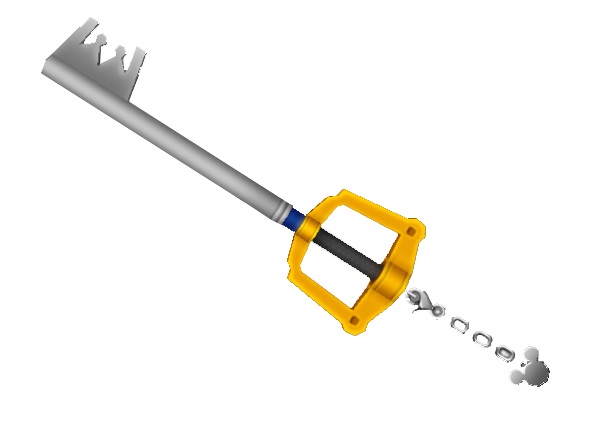
Keyblade

I’ve already shared my thoughts on this one, so I haven’t much to add. This creative, unorthodox weapon plays a huge role in the story of the Kingdom Hearts games. The Keyblade is transfigured into a new weapon by each token (keychain?) attached to its handle, and it can channel all kinds of magical abilities. Most importantly, the Keyblade is useful for smashing things.

3. Machine Gun (Cave Story)

Machine Gun

Indie classic Cave Story transforms a generic firearm, one that is practically a video game cliché, into one of the most empowering weapons I’ve ever used in a game. The machine gun’s rapid rate of fire is handy for mowing down enemies, but the weapon’s greatest value lies in its navigational uses. Fully upgraded, the machine gun functions as a jet pack when fired toward the ground, giving the player the power of flight. Awesome.

2. Buster Sword (Final Fantasy VII)

Buster Sword

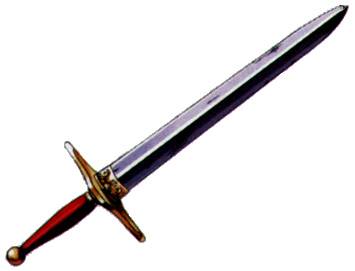
Look at this sword. Look at it. Tetsuya Nomura, the artist who designed this weapon, referred to it as “the giant kitchen knife.” Its blade is freaking huge. The Buster Sword has no special attributes besides two circular slots for Materia (crystallized magic) that enable its wielder to cast spells. No, the weapon’s true worth is in its sentimental value. For Cloud Strife, to whom it belongs, it symbolizes the self-sacrifice of its former owner. For players everywhere, it represents a glorious, bygone era of role-playing games.

1. Master Sword (Legend of Zelda series)

Master Sword

This is it. The Master Sword. The Blade of Evil’s Bane. This is the iconic weapon that has become synonymous with the Legend of Zelda series, itself a legendary success of the video game industry. I can think of no other video game weapon with such a wealth of lore or backstory. Depending on which game you play, the Master Sword harbors a beneficent spirit, alters the flow of time or seals away the corrupting influence of evil. No matter which game you play, the Master Sword is one heck of a weapon.

O people of the Internet, what great video game weapons would you add to this list? Let us know in the comments!

A Collection of Fabulous Video Game Mustaches

Stache Stash

Clockwise, beginning at the top right: Yang (Final Fantasy), Mario (Super Mario Bros.), Dr. Eggman (Sonic the Hedgehog), Dr. Wily (Mega Man), Wario (Super Mario Bros.), Naked Snake (Metal Gear Solid), Don Paolo (Professor Layton) and Marvin Grossberg (Ace Attorney).

This is a collection of magnificent video game mustaches: a stache stash, if you will. Which is best? My money is on Mario’s mustache. It lacks the extravagant flair and staggering size of the competition, yet it boasts an understated charm.

174. TMTF’s Top Ten Hats in Video Games

I recently learned of an indie game titled Fez. The game’s protagonist wears a fez, presumably because fezzes are cool. (We all know this.) This game reminded me that characters in video games have some pretty sweet hats.

As a gamer, blogger and proud owner of several hats, I believe it’s my solemn duty to decide which video game hats are the best.

The following rules apply: I’ll choose hats only from games I’ve played, and I’ll select no more than one hat from any game series. Only original video game hats are permitted: no hats from licensed characters like Indiana Jones or Donald Duck. Hoods, helmets, headbands, ribbons and all headgear except hats and caps are disqualified from this list.

Now, ladies and gentlemen, hats off as TMTF proudly presents…

The TMTF List of Top Ten Hats in Video Games!

10. Quote’s Baseball Cap (Cave Story)

Quote's Baseball Cap

Quote, the amnesiac hero of indie classic Cave Story, manages to look quite heroic in a simple baseball cap. The hat isn’t particularly fancy or elegant, but its bright white and red design helps Quote’s pixelated figure stand out against the muted blacks and browns of Cave Story‘s subterranean locales. On an entirely different note, do the buttons on Quote’s hat remind anyone else of Mickey Mouse’s shorts?

9. Cormano’s Sombrero (Sunset Riders)

Cormano's Sombrero

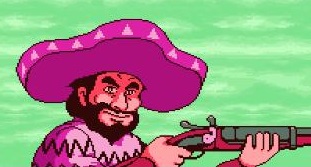
This Mexican gunslinger, who has been described as “either groundbreakingly inclusive or an offensive stereotype, take your pick,” is a playable character from Sunset Riders for the SNES. The game consists mostly of shooting stuff. Cormano’s skill with a rifle is belied by his sombrero, which is colored bright magenta and shaped like a taco. Never has the Old West been so fabulous!

8. Shadi Smith’s Pork Pie Hat (Apollo Justice: Ace Attorney)

Shadi Smith's Pork Pie Hat

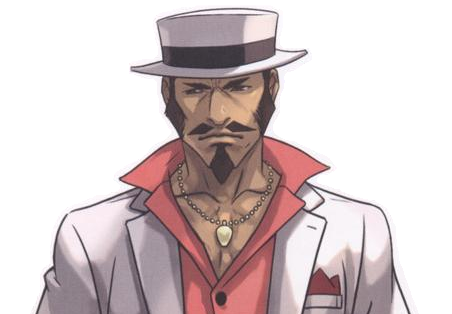
Not since Buster Keaton has anyone looked so good in a pork pie. Despite being a shifty character with questionable ethics, Shadi Smith is a really sharp dresser. There are many fantastic hats in the Ace Attorney series, from magician’s top hats to policewomen’s berets, but none seems more stylish or elegant than Shadi Smith’s classy pork pie hat.

7. Carmen Sandiego’s Fedora (Where in the World is Carmen Sandiego?)

Carmen Sandiego's Fedora

As a child, I played Where in the World Is Carmen Sandiego? on my family’s ancient black-and-white Apple Macintosh. (I’m pretty sure the above picture of Ms. Sandiego comes from another game in the series, but it’s the best I could find.) It was educational gaming at its finest: besides learning about geography and national flags, I got a taste of fashion from Carmen Sandiego’s criminally fabulous fedora.

6. Red’s Baseball Cap (Pokémon FireRed)

Red's Baseball Cap

This one was a toss-up between the hats worn by Red from Pokémon and Ness from Earthbound. Red won because his baseball cap is quite a bit cooler. (Besides, Red’s cap in the original Pokémon Red was the inspiration for Ash Ketchum’s iconic hat in the Pokémon anime.) Like Quote, Red takes a common item of casual apparel and makes it seem dashing and even heroic.

5. Agent Chieftain’s Stetson (Elite Beat Agents)

Agent Chieftan's Stetson

Elite Beat Agents is a wonderful rhythm game for the Nintendo DS in which government secret agents assist people in desperate need by invoking the inspirational power of song and dance. (Yes, the game is every bit as weird—and awesome—as it sounds.) Agent Chieftain, a senior agent of the Elite Beat Agency, flaunts a flashy Stetson that adds a dash of cowboy flair to his plain suit and tie.

4. Red Mage’s Wizard Hat (Final Fantasy III)

Red Mage's Wizard Hat

Although the Black Mages from the Final Fantasy series have neat hats, the Red Mages earn this place on the list with their gorgeous crimson hats adorned with snowy feathers. Other Final Fantasy characters have clunky helmets, dull hats or plain hoods. Red Mages alone uphold the lofty standards of fashion while defending their worlds from demons, dragons and other monsters.

3. Mario’s Flat Cap (Super Mario 64)

Mario's Flat Cap

How could I not include Mario’s cap? It’s indisputably the most famous video game hat in the world, and definitely one of the neatest. Mario’s cap from Super Mario 64 deserves special mention for giving Mario superpowers, including flight. Few things in video games have been more fun for me than soaring around the game’s locales with Mario’s winged cap. Like its owner, this hat is remarkable.

2. Professor Layton’s Top Hat (Professor Layton and the Curious Village)

Livewire-AGE

I have absolutely nothing to add.

1. Link’s… Cap? (The Legend of Zelda: The Minish Cap)

Link's... Cap

Link’s cap is one of the most iconic elements of the Legend of Zelda series. It’s instantly recognizable—seriously, how many legendary heroes wear green pointed caps? Link achieves an incredible feat in every Zelda game by looking cool in a hat that wouldn’t seem out of place on one of Santa’s elves. As much as I like it, I wouldn’t give Link’s cap the number one spot on this list if it weren’t for one detail: it talks. In The Legend of Zelda: The Minish Cap, Link is joined on his quest by Ezlo, an enchanted hat who gives advice, grumbles, cracks jokes and turns out to be one of the most engaging characters in the entire Zelda series. For its iconic status, surprisingly cool appearance and amusing dialogue—I can’t believe I’m saying this about a hat—Link’s cap is TMTF’s pick for the best hat in a video game.

O people of the Internet, what great video game hats would you add to this list? Let us know in the comments!

126. TMTF’s Top Ten RPGs Everyone Should Play

What is an RPG, you ask?

Maybe you don’t ask, but I’ll tell you anyway.

An RPG, or Role-Playing Game, is a genre of video game in which the player controls a character or group of characters that becomes stronger by vanquishing enemies. Besides fighting, most RPGs feature great music, engaging stories and vast worlds to explore.

I love RPGs. They offer deep, challenging gameplay and some of the best storytelling I’ve seen in video games. Since TMTF features top ten lists occasionally, I decided to list the top ten RPGs every person on Earth—well, every gamer on Earth—should play.

A few discerning readers may note an egregious lack of The Elder Scrolls, Dragon Age and other Western RPG franchises.

Western RPGs tend to be non-linear, allowing the player to create the story with his or her actions. Japanese RPGs tend to be linear, giving the player fewer opportunities to shape the story. Both approaches are valid, but I prefer the powerful, carefully-scripted stories of Japanese RPGs to the malleable—but often weaker—stories of Western RPGs.

This top ten list demonstrates my preference for Japanese RPGs. My apologies in advance to all the gamers whose favorites didn’t make the cut.

Without further explanation, TMTF is proud to present…

The TMTF List of Top Ten RPGs Everyone Should Play!

10. Final Fantasy VII (PlayStation)
This game hasn’t aged as gracefully as the others on this list, but I had to include it anyway. Despite poor graphics, a slightly confusing story and horrendous localization, Final Fantasy VII is a classic, featuring a huge world to explore, memorable characters, impossibly large (and proportionately awesome) swords and several really touching moments.

9. Mario & Luigi: Bowser’s Inside Story (Nintendo DS)

This is a good game with things like music and graphics and gameplay, but Fawful is the best thing. Fawful, a villain who is evil, stylishly mangles the language of English. His dialogue sparkles with the brilliance of shiny goldfish. Quirky, funny writing is the ham on the delicious sandwich of this game, and Fawful is the mustard on that ham—the mustard of awesome! Fawful guarantees that a winner is you if you play Mario & Luigi: Bowser’s Inside Story.

8. EarthBound (Super Nintendo Entertainment System)

RPGs almost always feature either a medieval or steampunk setting, with a few futuristic sci-fi games rounding out the genre. EarthBound is different. Its world is very much like our own, and its hero is a boy named Ness who goes on a journey with his friends—children wielding baseball bats, frying pans, bottle rockets and psychic powers—to save the world from a malevolent entity known as Giygas. Bright visuals, quirky humor and some surprisingly dark turns make EarthBound one of the most memorable games I’ve ever played.

7. Radiant Historia (Nintendo DS)

With a creative take on time travel, Radiant Historia gives a secret agent named Stocke the ability to travel between two alternative timelines, exploring possible futures in his quest to find “true history” and prevent the world from turning to sand. The story begins slowly and characterization could be stronger, but Radiant Historia gives players clever battle mechanics and two intriguing plotlines. The game feels both new and familiar, blending tradition and innovation in one truly excellent adventure.

6. Final Fantasy Tactics Advance (Game Boy Advance)

In Final Fantasy Tactics Advance, a tactical RPG, a boy named Marche and several of his friends are transported by a magic book into an illusory world imagined into existence by—metafictional plot twist!—a gamer who loves Final Fantasy games. Marche resolves to dispel the illusion, confronting friends and enemies alike in his quest to restore the real world. A compelling story, endless side quests and remarkably deep gameplay make this game a masterpiece.

5. Final Fantasy XII (PlayStation 2)
A refreshing change from turn-based RPGs, Final Fantasy XII uses a simple game mechanic to let players “program” characters to fight automatically and allows players to jump in at any instant and take direct control. This approach has met with mixed reactions, but I think it works well: it cuts out tedious fighting without sacrificing the need for strategy. Besides efficient battle mechanics, this game boasts exotic areas to explore, dangerous monsters to hunt, well-developed characters, superb acting and the best writing I’ve ever seen in a video game.

4. Kingdom Hearts (PlayStation 2)
I won’t lie: Kingdom Hearts is weird. This action RPG throws Disney films and Final Fantasy characters together into a bizarre, strangely captivating story. Its sequels feature gameplay improvements, but I recommend Kingdom Hearts because it’s the first chapter of the series. (The story is complicated enough without the player jumping in partway through.) The game’s presentation is superb, with great acting and catchy music. The gameplay is deeply satisfying. Even the confusing story has a number of poignant moments—and putting Cloud Strife and Donald Duck in a game together is nothing short of brilliant!

3. Paper Mario: The Thousand-Year Door (Nintendo GameCube)
It must be very hard to dislike this game. Bright, paper-like visuals and hilarious writing bring to life a story that never takes itself too seriously yet manages to be compelling. The turn-based battles never become tedious; players are kept engaged by timed button presses and quick tilts of the control stick. Apart from solid gameplay and delightful dialogue, Paper Mario: The Thousand-Year Door stands out as the only game in the world to turn the gaming industry’s most recognizable character into a paper airplane.

2. Final Fantasy VI (Super Nintendo Entertainment System, Game Boy Advance)

It’s hard to know even where to begin. This game refines the traditional turn-based battles of the Final Fantasy series. The characters—ranging from a world-weary gambler to an inquisitive feral child—are characterized brilliantly and developed carefully throughout the game. The music, from “Terra’s Theme” to “Battle,” is incredible. The story is haunting: a tale of friends searching for hope and for each other in a world gone mad. Although it may be a bit old-fashioned for gamers raised on modern RPGs, I can hardly recommend Final Fantasy VI enough. (Play the Game Boy Advance version; the localization of the original SNES release is notoriously bad.)

1. Chrono Trigger (Super Nintendo Entertainment System, Nintendo DS)
I thought long and hard about Chrono Trigger, trying to find some fault to complain about. In the end, the best I could come up with is that the original localization was weak—a problem fixed in the Nintendo DS rerelease—and the bonus content in the rerelease fails to live up to the excellence of the original game. That’s it. Everything else is perfect: epic music, ingenious battle mechanics, beautiful graphics, an eclectic cast of well-developed characters and a unique time-traveling story. Dinosaurs? Check. Enchanted knights? Check. Derelict robot factories? Check. Ancient civilizations and islands floating in the sky? Check and check. This game has everything. Play it!
O people of the Internet, what RPGs would you add to this list? Let us know in the comments!