204. My Childhood Fantasy

As a kid, I loved fantasy stories. My budding imagination teemed with dragons, hobbits, wizards, weapons and those octopus-monsters from The Legend of Zelda that spit rocks. It was only natural, I suppose, for me to build a fantasy of my own.

The hero of this fantasy was an orphan (of course) with a tragic past (naturally) who overcame adversity to become a mighty swordsman, wizard and defender of the innocent. My fantasy hero was—like all true heroes—named after a character in a video game. Inspired by Link from the Legend of Zelda games, named for a challenger from the Pokémon games, my hero was Lance: a green-clad warrior for whom no quest, challenge or cup of tea was too big.

For a childish fantasy, Lance was ahead of his time. He fit the pattern of the wanderer-hero in almost every detail more than a decade before I recognized the archetype in fiction. Years before I knew anything about Doctor Who, Lance traveled through time and space with a box that was bigger on the inside. (However, unlike the Doctor, Lance didn’t travel in his box. Lance kept stuff in it.)

I didn’t feel the slightest qualm as a child about plagiarizing other stories. Lance used magic to travel anywhere, which included Middle-earth from The Lord of the Rings, Hyrule from the Legend of Zelda games, Hogwarts from Harry Potter and a few more copyrighted realms from books, films and games. (How fortunate that imagination is beyond the reach of lawsuits.) Lance rubbed shoulders, bumped elbows and occasionally sparred with many famous fantasy heroes.

After two years of vivid adventures, Lance slipped quietly into retirement when I entered my early teens. It was coincidence that the protagonist of the story I began writing a couple of years later—which grew into my novel, The Trials of Lance Eliot—had the same name as the hero of my childhood fantasy. Lance Eliot was given his name because the plot demanded it, as readers of the novel know.

I think the coincidence is rather funny. Lance the all-powerful hero and Lance Eliot the wry college student could hardly be more different. I suppose they have at least one thing in common… they like tea.

My imagination is less exuberant and more wary than it used to be. When I read, write or see a story, I find myself looking for inconsistencies, holes and weaknesses. Things have to make sense now that I’ve grown up.

All the same, I hope I never lose that spark of imagination. Making up stuff is fun.

J.R.R. Tolkien and the Baffling Plot Hole

Seriously, Tolkien?

Let me make something clear: I love the books of J.R.R. Tolkien. Besides The Hobbit and The Lord of the Rings, I’ve read The Silmarillion and many of Tolkien’s obscurer works, not to mention two or three biographies of the man and several books about his mythos. (I once went through a Tolkien/Lewis phase.) There are few people in all history who fascinate me more than the reclusive, disheveled Oxford professor who created a universe in his spare time.

As much as I love Tolkien’s works, I have to wonder how he could have overlooked the eagles as a way to carry the cursed Ring to Mount Doom. He had no qualms about using them as a deus ex machina to rescue Sam and Frodo from Mount Doom after they’d walked hundreds of miles through dangerous enemy territory to cast the Ring into the volcano’s molten depths. Why not just fly the Ring there in the first place? If the villain’s domain were completely eagle-proof, couldn’t the eagles have carried the heroes at least to its border? And if there were a good reason, why not mention it?

Tolkien was incredibly meticulous about his writing. As he drafted The Lord of the Rings, he kept track of things like the phases of the moon and how long it takes to travel distances on foot. I’m surprised he overlooked (or ignored) so great a plot hole as the eagles as an alternative to walking the whole freaking way.

Incidentally, How It Should Have Ended is a remarkably funny, clever YouTube series that’s worth checking out. Its writers have a gift for pointing out inconsistencies and plot holes in films, and the series is pretty darn funny.

192. Running Like Frodo

Today’s post was written by Zak Schmoll, a graduate from the University of Vermont with a double major in Accounting and Statistics. (For me, an English major, mathematical arcana like Accounting and Statistics inspire perplexity, fear and wonder.) On July 23, 2012 Zak undertook an epic quest: writing about one chapter of the Bible every day from start to finish. Check out his progress here!

Wherefore seeing we also are compassed about with so great a cloud of witnesses, let us lay aside every weight, and the sin which doth so easily beset us, and let us run with patience the race that is set before us, looking unto Jesus the author and finisher of our faith; who for the joy that was set before him endured the cross, despising the shame, and is set down at the right hand of the throne of God.

~ Hebrews 12:1-2

When I think about adventures, one of my favorite literary examples is Frodo Baggins, a reasonably comfortable hobbit who was thrown into the epic saga of The Lord of the Rings.

He carried the one Ring, the only thing separating the land of Middle-Earth from the evil domination of Sauron. Frodo wasn’t looking for an adventure, but one dropped in his lap out of nowhere.

I think we can see something similar in our Christian journey.

We are told that our life is a race. According to Strong’s numbers entry for this word race, there’s definitely an indication that this is not just going out for a jog. Some of the alternative words that are suggested are contest or contention. In other words, there is a definite opponent in this competition with real stakes.

We certainly have an adversary in the world, just like Frodo did. We are on a mission to overcome that opposition. For Frodo, that mission involved throwing the Ring into the fires of Mount Doom to destroy it forever. For us, our mission involves running this race successfully. Implicit in both of these statements is that we both have a target. Ours is not necessarily a geographic location, but it is certainly a place where we are in a good relationship with God.

How do we go about running successfully and making it to that destination?

Jesus himself pointed out a few pretty basic guidelines in Mark 12:30-31 that should govern all of our actions. First, we need to love God, and second, we need to love other people. The more we follow these two guidelines, the closer we will be walking to God.

Of course, I should mention that having a relationship with God in the first place is the most important thing. Without that relationship, all of the works in the world and love that we try to display don’t mean a whole lot.

Running successfully also means that we overcome stumbling blocks that are put in our way. Frodo had to fight through fatigue, betrayal, stress and anxiety in order to finally make it to his destination. Similarly, our lives will never be perfect either. There will always be problems that pop up. However, we are promised that through God, we can do all things (Philippians 4:13).

Our race does not stop because of roadblocks, but they do us to rely on God.

Our lives might not quite compare to the epic quest of Frodo Baggins, but we are in the middle of a race, a race run by being in a relationship with God and living with love. We need to love God and to love other people.

That is an adventure in itself.

149. Why I Watch Cartoons

As many of my readers have probably noticed, I like cartoons.

Well, I like some cartoons. Others I would watch only on pain of death, and perhaps not even then. (I’m looking at you, SpongeBob SquarePants.) Besides loving many animated films—for example, classic Disney movies and everything directed by Hayao Miyazaki—I enjoy television shows produced for kids.

I also like literature, especially the classics. Explosions? Car chases? Sultry romances? Bah! Humbug! To blazes with such nonsense! Give me meaningful themes, compelling characterization and well-crafted plots.

Thus I decided to take no fewer than three literature classes in one semester when I was in college. (Where was Admiral Ackbar when I needed him?) For months, I was hammered by grim novels like Silence, a bleak story about the silence of GodOne Hundred Years of Solitude, a fantastical history of a disturbing, sordid society; The Penelopiad, a cynical postmodern perspective on The Odyssey; and several more depressing books.

It was not a happy semester.

Some notable literature is lighthearted—I thank God for cheerful authors like P.G. Wodehouse—but the good stuff is mostly depressing. Even stories by humorists like Mark Twain and James Thurber have tragic undertones. Thurber once wrote, “To call such persons ‘humorists,’ a loose-fitting and ugly word, is to miss the nature of their dilemma and the dilemma of their nature. The little wheels of their invention are set in motion by the damp hand of melancholy.”

I like cartoons because they’re innocent, bright and funny, and they’re unapologetic about it.

Do cartoons give a balanced view of the world? Of course not—but then, neither does much of the best literature. Cartoons remind me that the world can be a pleasant, cheerful place, even as literature reminds me that it can be a dreadful, hopeless one.

For me, cartoons are a kind of escapism.

Is escapism wrong? When balanced with realism, I don’t believe it is. To quote J.R.R. Tolkien, who is awesome, “I do not accept the tone of scorn or pity with which ‘Escape’ is now so often used. Why should a man be scorned if, finding himself in prison, he tries to get out and go home? Or if he cannot do so, he thinks and talks about other topics than jailers and prison-walls?”

A Farewell to Arms tells me there is suffering in the world. My Little Pony: Friendship Is Magic tells me there is good in it. The Great Gatsby tells me happiness can’t be bought with money or popularity. Phineas and Ferb tells me happiness can be found by two kids sitting in the shade of a tree on a summer day. Animal Farm tells me the good guys sometimes lose. Avatar: The Last Airbender tells me the good guys sometimes win.

The other reason I watch cartoons is because, well, they’re fun to watch.

139. The Wanderer-Hero

I’ve been watching Doctor Who. Besides kindling a strong desire in my heart to own a fez, the show has reminded me of my very favorite character archetype: a rare, strange and wonderful kind of character, comic and tragic, plain and mysterious—the Wanderer-Hero.

(I should wear a fez. Fezzes are cool.)

The Wanderer-Hero is my favorite kind of character in fiction, and a very rare one. I can think of only four characters that fit the description perfectly: the Doctor from Doctor Who, Gandalf from The Lord of the Rings, Vash the Stampede from Trigun and Father Brown from the stories by G.K. Chesterton.

These four—a time-traveling alien, a wizard, a gunslinger and a priest—have hardly anything in common, or so it seems at first glance. They actually share quite a number of traits, all of which characterize the archetype of the Wanderer-Hero.

For fun, let’s take a look at just a few.

The Wanderer-Hero wanders

There is no home for the Wanderer-Hero, whose destiny is to roam.

The Doctor travels in time and space with no home but his TARDIS, a spaceship and time machine. Gandalf wanders across Middle Earth. Vash roams the deserts of Gunsmoke. Even Father Brown, who supposedly lives in Essex and later in London, spends a surprising amount of time rambling throughout England, stumbling onto crime scenes wherever he goes.

The Wanderer-Hero is comic

Outwardly, the Wanderer-Hero is cheerful, witty or clever.

When confronted with deadly peril, the Doctor’s first reaction is to make a joke. Gandalf has a wry sense of humor. Vash makes a fool of himself at every opportunity; for example, while bravely defending a town from bandits, he wears a trash can lid for a hat. Father Brown possesses a gentle wit and a comically unorthodox manner of solving mysteries.

The Wanderer-Hero is tragic

Inwardly, the Wanderer-Hero endures terrible agonies.

The Doctor suffers from deep loneliness, guilt and self-doubt, besides the sorrow of being the only surviving member of his race. Gandalf fights a long, lonely, thankless battle against a nearly invincible enemy. Wherever Vash goes, innocent people die; these tragedies tear him apart. Father Brown admits to solving crimes by possessing a profound, painful understanding of human wickedness.

The Wanderer-Hero is more than human

In some way, the Wanderer-Hero is superhuman.

The Doctor is a Time Lord, the last survivor of an ancient race of extraterrestrials. Gandalf is one of the Maiar: divine beings sent into Middle Earth in the guise of mortals. Vash is a Plant, a humanoid creature possessing incredible power. Father Brown is only a human being, but his gentleness, wisdom and compassion are almost angelic.

The Wanderer-Hero is old

The courage of the Wanderer-Hero is balanced by the wisdom of age.

The Doctor is roughly nine hundred and nine years old. Gandalf spends centuries wandering Middle Earth. Vash is one hundred thirty-one. Father Brown is the only one whose age isn’t numbered in the hundreds, and even he gives the impression of being an ancient saint.

The Wanderer-Hero always happens to be in the right place at the right time

The character is called the Wanderer-Hero, after all.

Quite by accident, the Doctor always finds himself in exactly the right time and place to avert a catastrophe. Gandalf regularly appears just in time to rescue his companions. Vash helps people wherever he goes. By solving every crime he encounters, Father Brown saves the day—and sometimes the criminal.

I suppose the reason I like the Wanderer-Hero so much is that the character is a paradox: funny and sad, silly and wise, plain and mysterious, ordinary and extraordinary. The Wanderer-Hero has a little bit of everything.

Who is your favorite Wanderer-Hero? Should I acquire a fez? Let us know in the comments!

135. Why J.R.R. Tolkien Is Awesome

When I decided to start writing these Why [Insert Author Name] Is Awesome blog posts, I wasn’t sure with whom to begin. At first I considered G.K. Chesterton, and then James Herriot, and then P.G. Wodehouse.

In the end, of course, I realized there was only one author with whom to begin this exciting new series of posts. One author to rule them all.

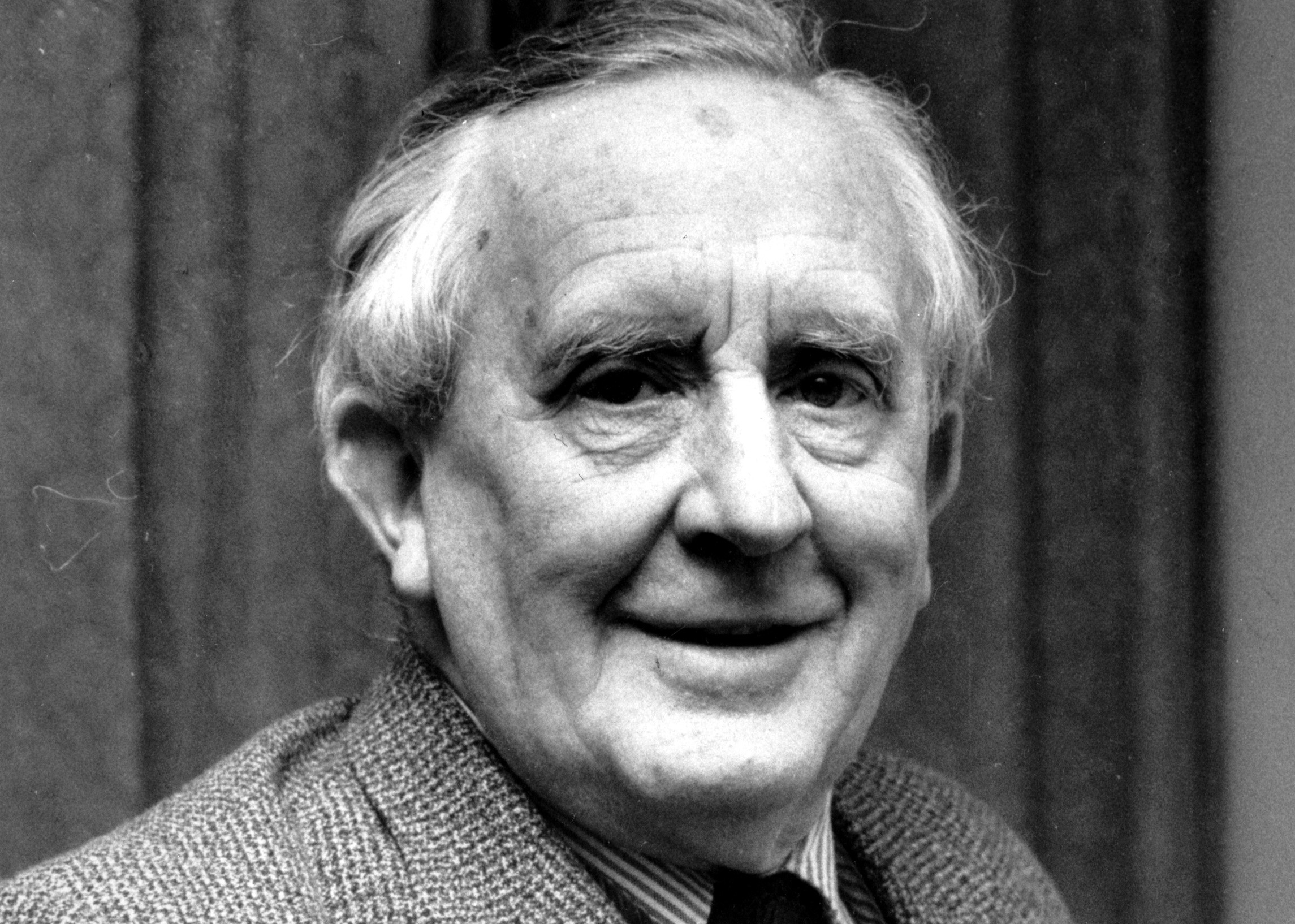
Ladies and gentleman, I give you the man who created a universe on the backs of letters and exam papers, writing in his study late at night when the world was asleep, reinventing mythology for the modern age—and doing it in his spare time.

I give you John Ronald Reuel Tolkien, my childhood hero and the father of the fantasy genre.

J.R.R. Tolkien

Of course, Tolkien didn’t invent fantasy. As I noted in my short, untidy and highly idiosyncratic history of the genre, its inventor was probably a Scottish minister named George MacDonald. Don’t be surprised if you haven’t heard of him. Not many people have. He may have invented the fantasy genre, but Tolkien was the man who made it famous.

Enough preamble. Let’s get down to business.

What makes Tolkien awesome?

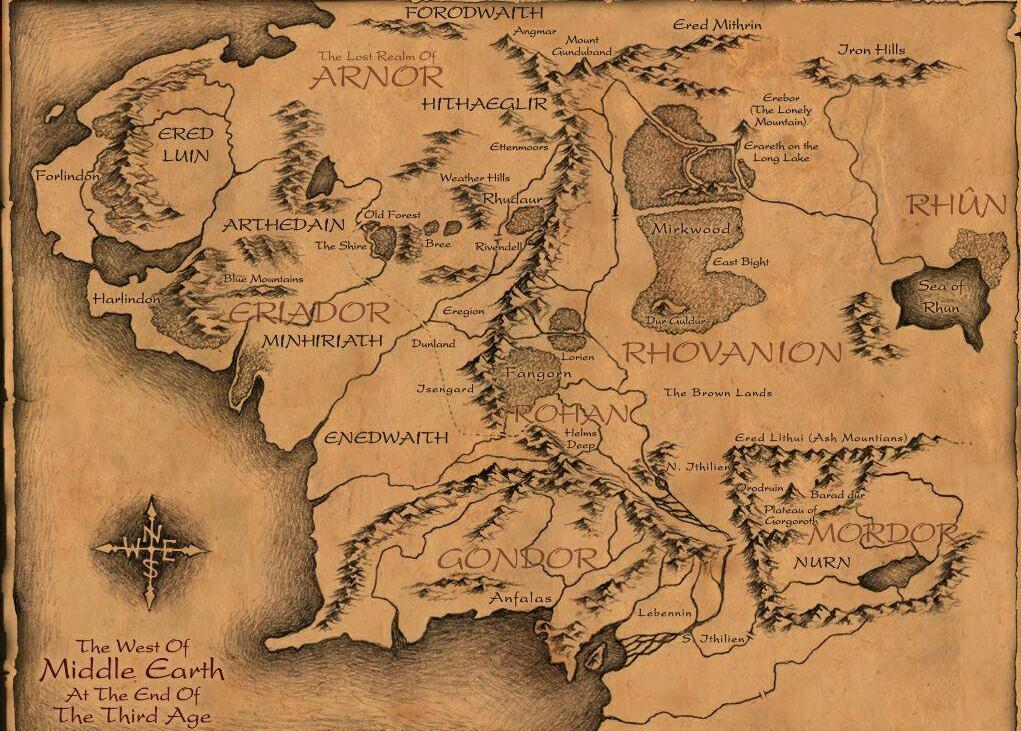
The thing that amazes me most about Tolkien is that the world he created is vast—vaster than vast—vastly vast. Tolkien’s world, Middle-earth, is huge. Worlds like Narnia are tiny by comparison.

Middle-earth

The history of Middle-earth, meticulously chronicled, spans tens of thousands of years. Its geography (which changes over the centuries) is recorded in maps. Tolkien created languages, cultures, genealogies and even legends—myths within his myth. I once read that Tolkien holds the record for creating the largest fictional universe ever devised by a single person.

Tolkien’s literary style is sometimes a bit ponderous, and many readers are discouraged by the slow pace of the early chapters of The Lord of the Rings, his masterpiece. It’s not a fast-paced, action-packed novel. It takes its time creating a world for its characters to inhabit, and patient readers are rewarded with a story made more powerful by its fullness.

Personally, I love Tolkien’s style. It’s not flashy or funny or avant-garde, but does a beautiful job of conveying images and experiences vividly.

Tolkien weaves many familiar images and archetypes into his world. Gandalf reminds us of Merlin. Rohan comes straight out of Beowulf. The elves and dwarves are borrowed from Norse mythology, and the Shire is unmistakably English. While Aragorn wears armor and wields a sword, Bilbo wears a waistcoat and wields an umbrella. These disparate elements somehow never clash.

Although many of Tolkien’s characters are superb, some lack depth and intricate characterization. With three or four exceptions, the fourteen dwarves in The Hobbit (the prequel to The Lord of the Rings) are so undeveloped that they blur together.

The villain, Sauron, isn’t really a character. Although he’s mentioned frequently, he never actually makes an appearance in The Hobbit or The Lord of the Rings. Sauron is more like a threat, an unseen presence haunting these stories like a shadow.

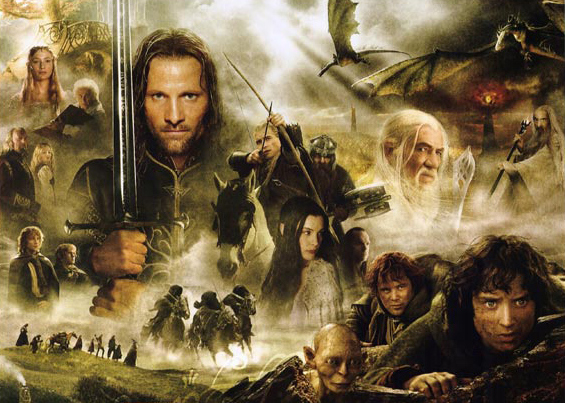
Gollum, by contrast, is developed brilliantly: a minor villain whose slow, faltering steps toward redemption make him a surprisingly compelling character. Gandalf, a wizard, is unforgettable: gruff, powerful, impatient and kind. Bilbo, a timid hobbit, demonstrates a unique sort of courage—not showy heroism, but a quiet, determined bravery built upon resourcefulness and common sense.

Tolkien's Characters

Even Tolkien’s dialogue is memorable. It lacks clever quips and one-liners, but succeeds on a much deeper level: it’s believable. Kings speak with grace and elegance. Samwise Gamgee, a gardener, talks with colloquial simplicity. Tolkien’s books are populated by an enormous range of characters, from ageless sages to degenerate monsters, and their dialogue is no less diverse.

Perhaps the most striking thing about Tolkien’s books is their moral strength. Tolkien never preaches. He doesn’t need to. Loyalty, courage, honesty and self-sacrifice shine throughout his stories. Without ever saying it, Tolkien makes one thing crystal clear: good is better than evil, and good wins.

For someone new to Tolkien, I recommend starting with The Hobbit. It’s a fine introduction to Tolkien’s world and literary style. The Hobbit is a simple story of adventure, like a fairy tale. The Lord of the Rings is more like a myth, featuring a more mature style and a much deeper story.

The Silmarillion, a history of Middle-earth published after Tolkien’s death, isn’t a particularly compelling book. I recommend it only to the most devoted of Tolkien’s readers. The Silmarillion reads like a history textbook: occasionally interesting, but seldom engaging.

For readers who are interested in Tolkien’s other works, Roverandom is a delightful book for children. Farmer Giles of Ham is a funny story about a farmer who tames a dragon, and Leaf by Niggle is a beautiful allegory of a struggling artist.

In conclusion, ladies and gentlemen, J.R.R. Tolkien is awesome.

125. Literary Criticism and Nonsense

When my academic adviser in college signed me up for a literary criticism course, I assumed it would teach me to criticize literature. I’m a literary snob, so I figured passing judgment on written works would be easy. Just give me a textbook and any book in the Twilight series and I’d be ready to roll.

As I soon found out, literary criticism is actually an attempt to find meaning in literature. In my (admittedly biased) opinion, it’s also an attempt in some cases to invent meaning and superimpose it on literary works.

There are many kinds of criticism, each with a distinct focus. Mythic criticism finds symbols and allegories in literature. Biographical criticism studies the writer’s personal experiences, and deconstructionist criticism tries to prove that everything is meaningless.

In my studies of literary criticism, I discovered two varieties that were kind of hilarious.

The first was Marxist criticism, which views literature through the red-tinted lens of Communist theory. To heck with myth, morality and religion. The working class shall prevail! Down with the bourgeois!

The other funny perspective was Freudian criticism, which finds sexual innuendo in everything. Is something longer than it is wide? It’s a phallic symbol. Is a man unhappy? At some level, he’s sexually frustrated.

What’s that? You disagree? Ha! I laugh at you, person of lesser intellect! Do you think you’re smarter than Sigmund Freud?

I was quick to discover that half of literary criticism was analyzing literature carefully, and the other half was making up stuff that sounded plausible.

You don’t believe me? I’ll prove it.

My final paper was a four-part analysis of The Lord of the Rings by J.R.R. Tolkien. I examined it from four perspectives: mythic, biographical, moral and gender studies. Much to my surprise, each approach illuminated some fascinating facet of Tolkien’s masterpiece. My appreciation for The Lord of the Rings, and for literary criticism, was deepened.

Weeks before, I wrote an essay on The Magician’s Nephew by C.S. Lewis. Just for the fun of it, I decided to pit Sigmund Freud against my favorite author and see what happened.

The resulting analysis determined the Wood Between the Worlds to be a place of sexual balance, Queen Jadis to be a faux mother figure and the three elements of the psyche—id, ego and superego—to be represented by Uncle Andrew, Digory and Aslan, respectively.

The essay, which received a B, was ridiculous, but not much more so than some of the Freudian analyses in my textbook.

My studies, silly and serious, impacted me deeply. Literary criticism even became a recurring theme in the novel I was writing at the time, The Trials of Lance Eliot. Its protagonist was a literary critic because it fit his character perfectly, and it gave me an opportunity to poke fun at the nonsensical side of literary criticism.

I’ll finish up this post with a friendly warning.

Watch out for phallic symbols. They’re everywhere.

115. TMTF’s Top Ten Manly Men in Literature

We here at TMTF are experts on manliness. Some of us have the undeniable advantage of actually being men, giving us considerable insight into the manly virtues of loyalty, courage, honesty, bravery, integrity, humility and resourcefulness.

I personally possess a fascination for bladed weapons, an appreciation for beards and a liking for cartoons about magical rainbow ponies—all manly attributes.

Today’s top ten list features some of the manliest men in literature. A few rules apply to this list. Characters from books I’ve not read are not allowed on the list, and only one character is allowed per author. For the purposes of this list, manliness is defined as characterized by virtues generally associated with men.

By this definition, literary characters such as Odysseus and James Bond are not manly. They are intelligent, strong and brave, but their moral flaws (arrogance, dishonesty, lustfulness and disregard for the value of human life, to name but a few) disqualify them for this list.

Without further introduction, TMTF is excited to present…

The TMTF List of Top Ten Manly Men in Literature!

10. Sydney Carton (A Tale of Two Cities by Charles Dickens)
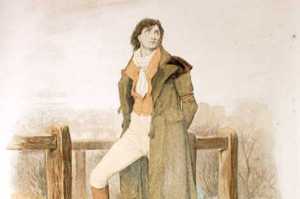
Sydney Carton being wistful.

Sydney Carton is a hopeless mess of a man who wallows endlessly in self-pity. Although an interesting character, he wouldn’t even come close to making this list if it were not for his incredibly manly, stoic, selfless sacrifice in the final chapters of the novel. Heroism often seems pretentious, but true heroes quietly accept the burden of their fate. Sydney atones for a lifetime of unmanly weakness with one powerful act of heroism.

9. Domovoi Butler (Artemis Fowl series by Eoin Colfer)
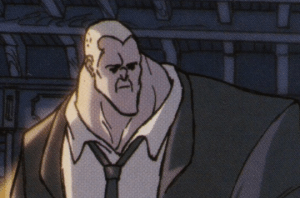
That’s a lot of neck.

The Artemis Fowl books are not sophisticated literature. In fact, they’re on roughly the same literary plane as the Twilight novels. I must confess to liking the Artemis Fowl books anyway. What they lack in substance and style, they provide in charm, whimsy and delightful absurdity. Domovoi Butler is the, er, butler of Artemis Fowl, an Irish criminal mastermind who also happens to be a twelve-year-old boy. Butler is not only a manservant, but also a bodyguard and a very dangerous man. Apart from his fierce and selfless loyalty to Artemis, he consistently manages to save the life of every person in the room every time there’s a crisis—which, in the Artemis Fowl books, is pretty much every chapter.

8. Remus Lupin (Harry Potter series by J.K. Rowling)
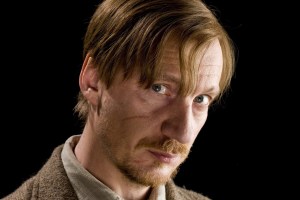
That is one manly ‘stache.

In spite of his strength, girth and massive beard, I don’t consider Rebeus Hagrid the manliest man in the Harry Potter books. (He’s not even a man, technically speaking.) No, that honor goes to Remus Lupin. (He’s also not exactly a man, but I’ll bend the rule this time.) Lupin is an eccentric, disheveled professor who turns out to possess remarkable kindness, humility, courage and common sense. Lupin also possesses a dark secret, a tragic burden which never seems to prevent him from being friendly and cheerful.

7. Radcliffe Emerson (Amelia Peabody series by Elizabeth Peters)
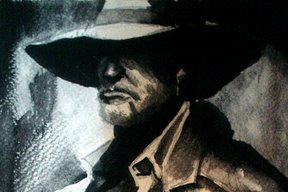
I couldn’t find an image of Emerson, so have a picture of Sean Connery being a gaucho.

Known to Europeans as a noted Egyptologist and to Egyptians as “the Father of Curses,” Radcliffe Emerson is notorious for losing his temper, swearing constantly and making fantastic archeological discoveries. Emerson may be gruff, but he loves his family and treats Egyptians with deep respect—unlike most of his nineteenth-century European colleagues, whose prejudice toward “the locals” frustrates him deeply. Beyond Emerson’s ostentatious masculinity—he’s a handsome, muscular man who dislikes wearing more clothes than absolutely necessary—he demonstrates many virtues of true manliness.

6. Gabriel Syme (The Man Who Was Thursday by G.K. Chesterton)
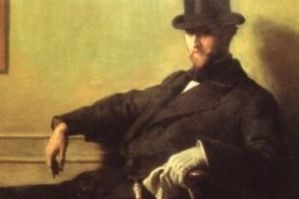
That is a fabulous hat.

The Man Who Was Thursday begins with a poet stumbling upon a secret society of anarchists, and promptly convincing them to elect him into their council of supreme leaders. The poet, who also happens to be a police detective, embarks on a mad journey to protect innocent people from the nihilistic terrorist known only as Sunday. In the face of danger, despair and absurdity, Syme never loses his resolve to do the right thing. His calm bravery in the face of extreme danger is incredible, and his response to tragedy is to maintain his hope and sense of humor. As a bonus, Syme is delightfully witty.

5. Ned Land (20,000 Leagues Under the Sea by Jules Verne)
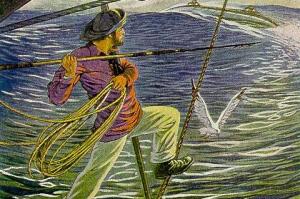
That seagull is toast.

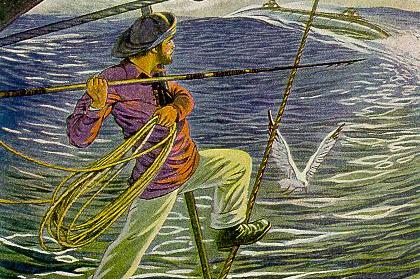
As I’ve mentioned before, 20,000 Leagues Under the Sea has basically four characters, three of whom are obsessed to various degrees with science. The fourth, Ned Land, is a refreshing exception. A sensible, short-tempered harpooner, Land keeps his companions grounded (forgive the pun) every time their resolve falters. Despite disliking his host, Captain Nemo, Land doesn’t hesitate to save his life. Add bravery and a fierce love of life, and Ned Land turns out to be quite a manly fellow.

4. Adam Bede (Adam Bede by George Eliot)
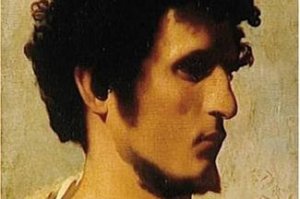
Adam Bede being even more wistful than Sydney Carton.

Stoicism is a manly virtue—not the absurd idea that men should go out of their way to suffer, nor the equally ridiculous notion that men must always hide their feelings, but the decision not to embitter the lives of others by complaining about troubles that can’t be avoided. Adam Bede has it rough. His life seems to be one tragedy after another. He perseveres, never complaining, always working, doing his best to provide for his loved ones and calmly accepting every blow dealt him.

3. Jean Valjean (Les Misérables by Victor Hugo)
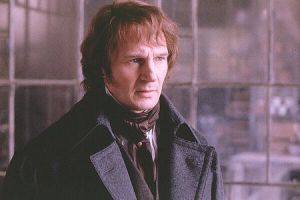
Take notes, Batman.

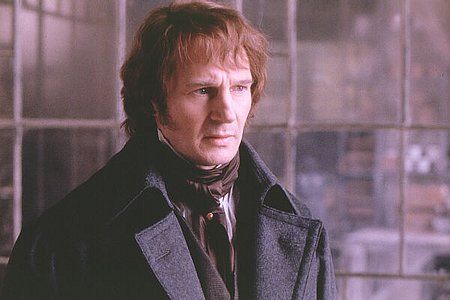
Jean Valjean is more awesome than Batman, and they’re both awesome for exactly the same reasons: courage, stoicism, resourcefulness, compassion and an undying obsession with atoning for a mistake. What makes both characters so compelling is that they pay for their sins many times over and yet can’t overcome their guilt. They consider themselves monsters when they’ve become saints. Jean Valjean is humble to the point of self-effacement, unable to see what is plain to almost everyone else in the book: he is a great man, not to mention a manly one.

2. Aragorn (The Lord of the Rings by J.R.R. Tolkien)
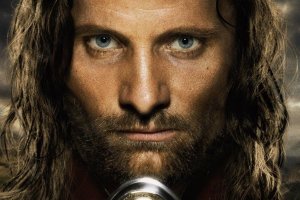
Another manly man with fine facial hair.

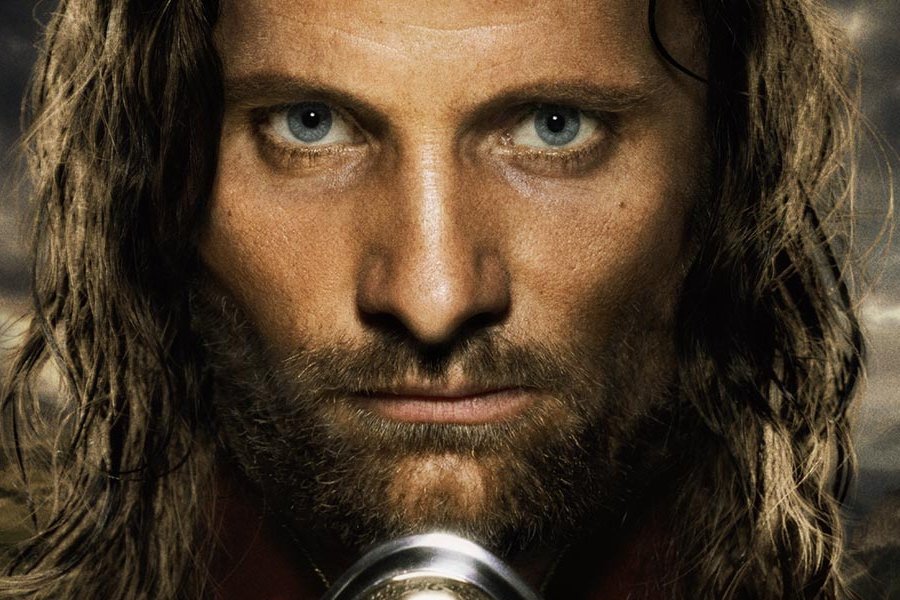
Aragorn has a troubled past, but he’s too busy defending Middle Earth from the looming threat of Sauron to waste time brooding over it. (Pay attention, Cloud Strife.) Aragorn is almost messianic in his heroism: a brave warrior, gentle healer and strong leader. He does not succumb to the temptations of the Ring, a powerful but evil relic, but humbly does his best to ensure its destruction. Ironically, the greatest hero of The Lord of the Rings isn’t Aragorn. An ordinary little person named Frodo destroys the Ring. Aragorn is quick to praise Frodo’s heroism over his own, and that is part of what makes Aragorn one of the manliest men on this list.

1. Atticus Finch (To Kill a Mockingbird by Harper Lee)
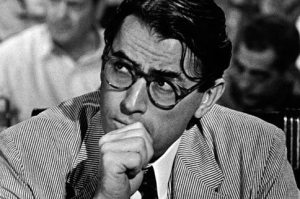
Ladies and gentlemen, men don’t come manlier than this.

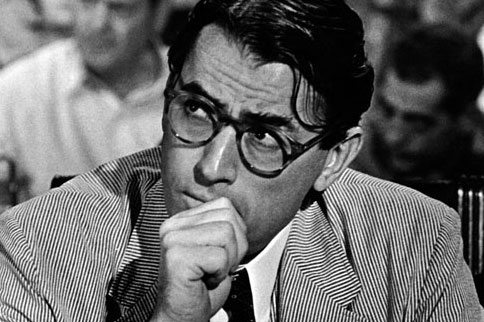
I can think of no manlier man in all literature than Atticus Finch, the soft-spoken lawyer from To Kill a Mockingbird. Where do I even begin? Atticus can fire a gun with incredible accuracy, a skill of which his children are unaware because he dislikes violence and refrains from showing off. Atticus does his best to respect and understand every human being, and risks his safety to protect a prisoner from a mob. Most significantly, he willingly throws away his reputation as a lawyer to defend an innocent man. Blinded by racial prejudice, most white people assume the defendant, a black man, to be guilty. Knowing the trial will almost certainly end in a guilty verdict for the defendant, Atticus defends him anyway. Through all this, Atticus doesn’t complain once. He bears every burden patiently, doing the right thing and never losing hope—a true paragon of manliness.

O people of the Internet, what manly literary characters would you add to this list? Let us know in the comments!

109. Science Fiction Vs. Fantasy

The title of this post may be a little misleading. If you were expecting an epic death battle between two literary genres, I’m afraid you will be disappointed. The purpose of this post is to take a quick look at why science fiction and fantasy—two literary genres often associated with each other—are different.

There are similarities, of course. The most striking is that fantasy and science fiction aren’t realistic. Fantasy is unrealistic because of supernatural elements such as magic and monsters. Science fiction, however, doesn’t involve the supernatural. Its unrealism comes from scientific discoveries or developments in technology, society and history that haven’t occurred.

Let’s start with science fiction.

Since the emphasis of science fiction is naturalistic, the genre focuses on the development of human society. Robots, spacecraft and laser weapons reflect the evolution of the human race.

The lack of supernatural elements in science fiction precludes any kind of divinity or absolute morality. Because of this, the genre doesn’t usually depict struggles between good and evil. The ultimate goal of characters in science fiction is usually survival, not moral triumph. What matters is the continued existence of the human race.

Due to this lack of absolute morality, the themes of science fiction are usually psychological, ethical and existential, not moral or religious.

Although it’s often paired with science fiction, fantasy is fundamentally different.

Since the emphasis of fantasy is the supernatural, the genre traditionally places little importance upon the development of human society. Cars, computers and guns are replaced with horses, scrolls and swords.

The supernatural elements in fantasy often indicate some kind of absolute morality, whether a standard good-versus-evil morality (e.g. The Lord of the Rings), a morality based upon maintaining cosmic balance (e.g. A Wizard of Earthsea) or some other moral system. The typical goal of fantasy characters isn’t merely survival, but moral or cosmic victory.

Due to the presence of absolute morality, the themes of fantasy are usually philosophical, moral and religious, not psychological or ethical.

In a previous post presenting a short, untidy and highly idiosyncratic history of fantasy, I made the observation that many of fantasy’s greatest authors have been Christians: George MacDonald, J.R.R. Tolkien, C.S. Lewis and Madeleine L’Engle, among others. I think it’s no coincidence that Christians, who believe in the existence of the supernatural and an absolute moral law, should leave such a profound mark upon a literary genre defined by supernatural phenomena and moral struggles.

Science fiction and fantasy are both unrealistic, but for opposite reasons. Fantasy is characterized by the supernatural, science fiction by a naturalistic worldview. These genres are opposite sides of the same coin.

What about stories like Star Wars or Star Trek that are considered science fiction and yet involve the supernatural? Consider the Force in Star Wars. It isn’t merely a scientific phenomenon, but a spiritual force. The Jedi aren’t scientists, but monks. Even so, Star Wars is usually considered a science fiction franchise. It has aliens and space battles, after all.

I think stories like these are sort of a hybrid genre. Let’s call it science fantasy. Stories in this mixed-up genre tend to demonstrate the outward characteristics of science fiction—advanced technology, space travel and so on—while expressing the moral and philosophical themes typical of fantasy fiction. Final Fantasy is a fine example of science fantasy: magic, lasers, swords, spacecraft and an unmistakable struggle of good against evil.

In the end, I believe science fiction and fantasy belong together. These genres represent radically different approaches to the same concept: a world unlike our own.

Which genre do I prefer?

Fantasy, of course. It has dragons.

93. About Writing: Setting

Setting is one of the most important elements of a story. Besides supporting plot and characterization, it anchors fiction in reality.

The Lord of the Rings takes place in Middle Earth, an imaginary world full of magic and monsters, but Tolkien describes its woods and fields so vividly that the fantastical story becomes believable. In the case of more realistic fictions, the setting does even more to make the story seem true.

Here are a few things I’ve learned about creating settings.

Settings must be consistent

If you introduce details about a setting, stick to those details. Inconsistent settings are a jarring reminder to the readers that the story they’re reading is made up.

Know your setting

As mentioned before, The Lord of the Rings has an amazing setting. Tolkien didn’t just write a story. He created a world. For decades, he worked out every detail of Middle Earth, devising languages, drawing maps, creating numerous cultures and inventing tens of thousands of years of history, including minor touches like legends and genealogies.

You don’t have to be as meticulous as Tolkien, of course, but he sets a fantastic example to follow. Your story may depict only a few scenes within a larger setting, but you should have some idea of what’s going on beyond them. There’s a problem when the storyteller knows no more about the setting than the reader.

Research your setting

I hate research. One of the reasons I enjoy writing fantasy is that I get to make up stuff instead of confirming every background detail. Even for fantasy writers, however, research is important. How tall are oak trees? What does it take to forge a sword? If real-life details aren’t believable, imaginary ones won’t be. For writers of historical or literary fiction, research is even more imperative. Every inaccuracy distracts from the story.

Consider drawing a map

Tolkien was a master of setting, which is why I’m using his work to illustrate so many of my points. (I’m also using him as an example because he is awesome.) I once read somewhere that Tolkien offered this advice to writers: When creating a story, draw a map. It doesn’t have to be an artistic masterpiece. Readers may never see them, yet maps are invaluable because they help writers keep track of details.

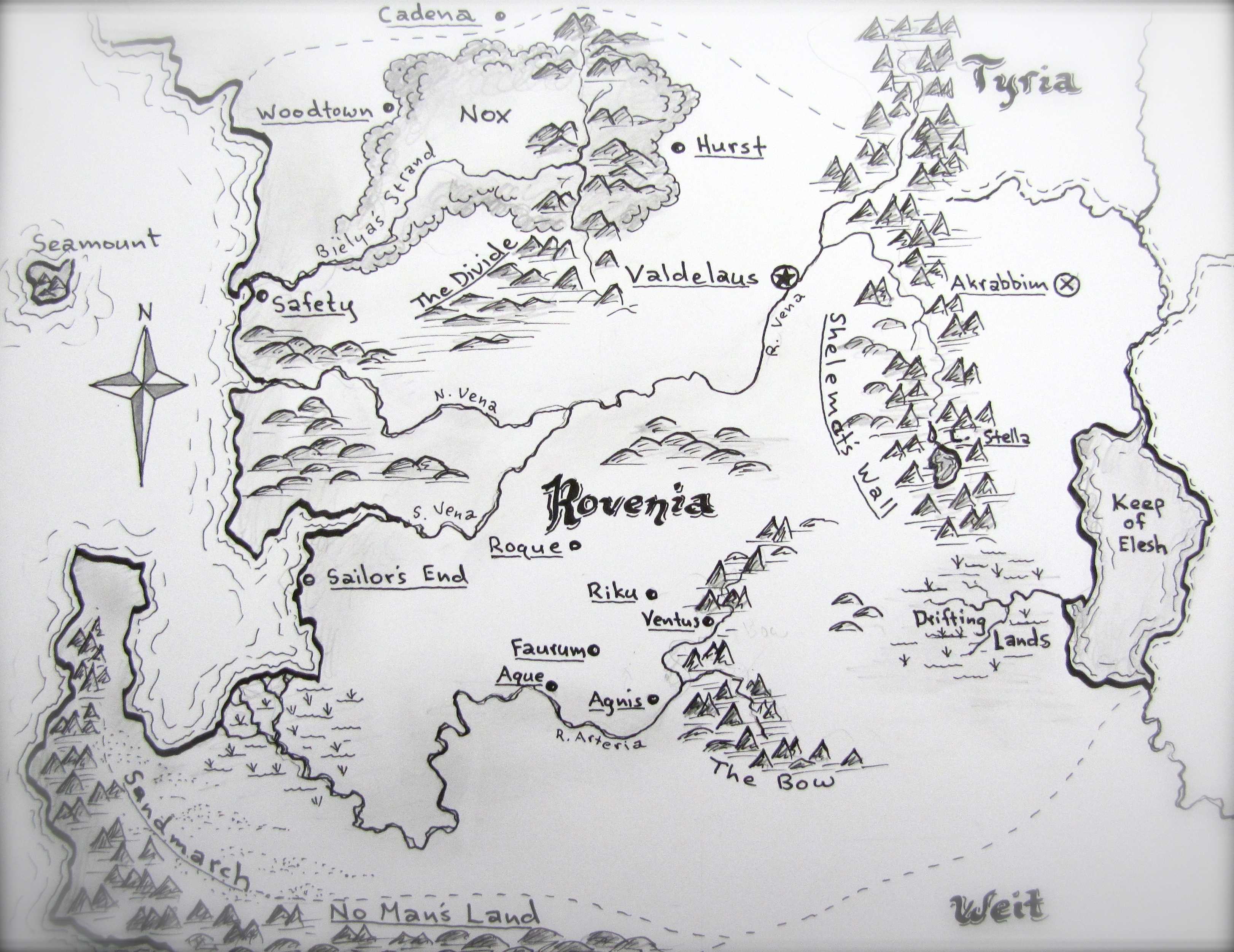
For my novel, The Trials of Lance Eliot, I sketched a rough map, which my old man recently transformed into this work of art:

I hope the map will intrigue readers and allow them to visualize the country described in the novel. In the end, however, I created this map for my own benefit. It was important for me to know how long it would take a person to travel between certain locations, and essential to know the relation of towns and landmarks to each other.

Convey more than visual details

When you step onto a farm, what are your first impressions? Yes, you might notice the red barns or the silos glinting in the sunshine, but the first things you notice are probably the smells: fresh earth, manure, grain, wood smoke or other scents. When writers describe scenes using only visual details, they’re giving a picture. However, when writers use all five senses, they’re conveying more than a picture—they’re conveying an experience.

Give impressions, not descriptions

There are writers (like Tolkien) whose long descriptions are interesting enough to be worth reading, but in most cases fewer details are best. In describing a scene, choose the most important and striking details. (The same principle applies to describing characters.) Your reader usually needs impressions, not exhaustive descriptions. Give your readers the significant details, and their imaginations will fill in the blanks.

The analogy is a little clichéd, but if writing a story is like building a house, the setting is the foundation. In a way, every other element of the story depends on it.

Do you have any advice for creating settings for stories? Let us know in the comments!