268. Haircuts Are Evil

Like taxes, haircuts are are a necessary evil.

Every few months, I glance in the mirror and despair, for my hair needs to be cut. It’s pretty easy for me to tell when I should hit the hair salon. When my hair starts to look like Justin Beiber’s iconic (and idiotic) hair helmet, I know it needs to be cut.

I’m sometimes tempted to ignore the Beiber resemblance and let my hair keep growing, but one thought pulls me back to safety from the brink of madness.

I will never, ever have a mullet.

My hair has generally been a mess. Once, in middle school, I tried styling it with gel: a mistake that shattered my fragile self-esteem into tiny, tiny pieces. Since then, I’ve occasionally attacked my hair with a comb and left it at that.

If you tell me I need a haircut, I will glare at you with cold, bitter fury. And then I'll go get a haircut.

If you tell me I need a haircut, I will glare at you with cold, bitter fury. And then I’ll probably go get a haircut.

The problem with haircuts is that they bring scissors, razors and other sharp objects very close to my eyes, ears and other things I’d rather not have cut off or gouged out. My fears are not baseless. At least one hair stylist has drawn blood—repeatedly—giving me good reason to fear anyone who brandishes bladed implements anywhere near my face.

Are haircuts evil? Yes. I will prove it. Let us turn to Scripture, brethren, for our answers.

Most of us know the story of Samson, who let his hair grow as a symbol of devotion to God. When his hair was cut, Samson lost his divinely-given strength. He was surrounded, powerless to resist. His tormentors blinded and enslaved him. In the end, Samson ended his own life. (This is all in Judges 16.) All of this happened because Samson got a haircut. A haircut killed him!

Don’t even get me started on Absalom. He was a really bad dude. He also had his hair cut regularly. An evil man who got haircuts? Coincidence? Coincidence?!

With this vast and comprehensive wealth of Scriptural evidence, I believe I’ve proved that haircuts are evil.

(No, I’m not being serious. Please put down your Bibles and/or heavy stones before someone gets hurt.)

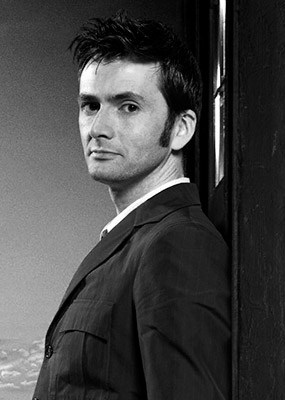
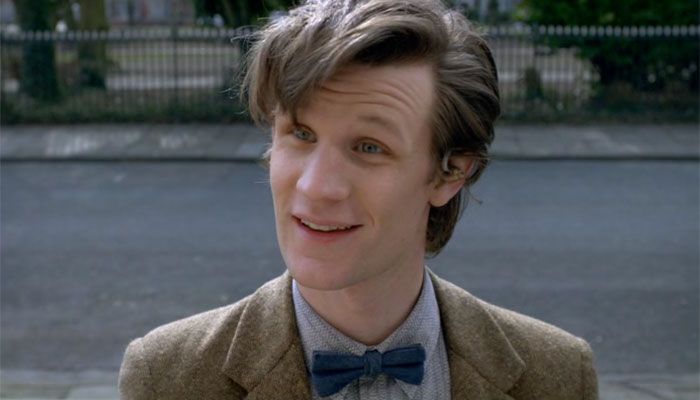
In the past two years, I have found one consolation to make haircuts bearable. The Tenth Doctor from Doctor Who has some sweet, sweet sideburns. Although my paltry sideburns are not worth comparing to the good Doctor’s, they’ve definitely grown on me. (Pun intended. I’m so, so sorry.) Haircuts are awful, yet they keep my sideburns neatly trimmed. Neat sideburns put me ever so slightly closer to achieving the splendor of the Tenth Doctor’s hairstyle.

Saving the universe? Bah! A negligible accomplishment compared to having such awesome hair.

THOSE SIDEBURNS.

Maybe haircuts are worth it after all.

Then again… maybe they’re not.

252. About Storytelling: Endearing Quirks

When I was in high school, I had a teacher named Mr. Quiring whose legendary silliness I have mentioned one or twice before on this blog.

For example, he once removed his necktie and unbuttoned his shirt during class to reveal a T-shirt emblazoned with the Batman logo. (He wasn’t really Batman, sadly.) At various times, Mr. Quiring pelted me with chocolate, brandished a meat cleaver and leaped off a chair shouting “To infinitives and beyond!”

The reason Mr. Quiring’s antics amused me so much is that he is not a silly person. Quite the contrary: Mr. Quiring is one of the most intelligent, dignified gentlemen I have ever known. It’s as though he compressed all the humor and silliness of ordinary people into short, intense bursts. Every time he did something outrageous, he reverted immediately afterward to his solemn self.

Mr. Quiring provides fine examples of endearing quirks: those funny little habits of real people or fictional characters that make us love them.

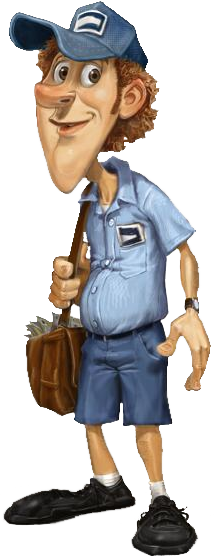
Some fictional characters are simply masses of endearing character quirks. Wooton Bassett, the mailman from Adventures in Odyssey, has too many odd habits to count: collecting fast food toys, expressing his feelings by the color of his slippers, baking jellybean casseroles and exiting his house via a slide. Wooton is fully capable of thoughtful introspection, but he’s mostly just hilarious.

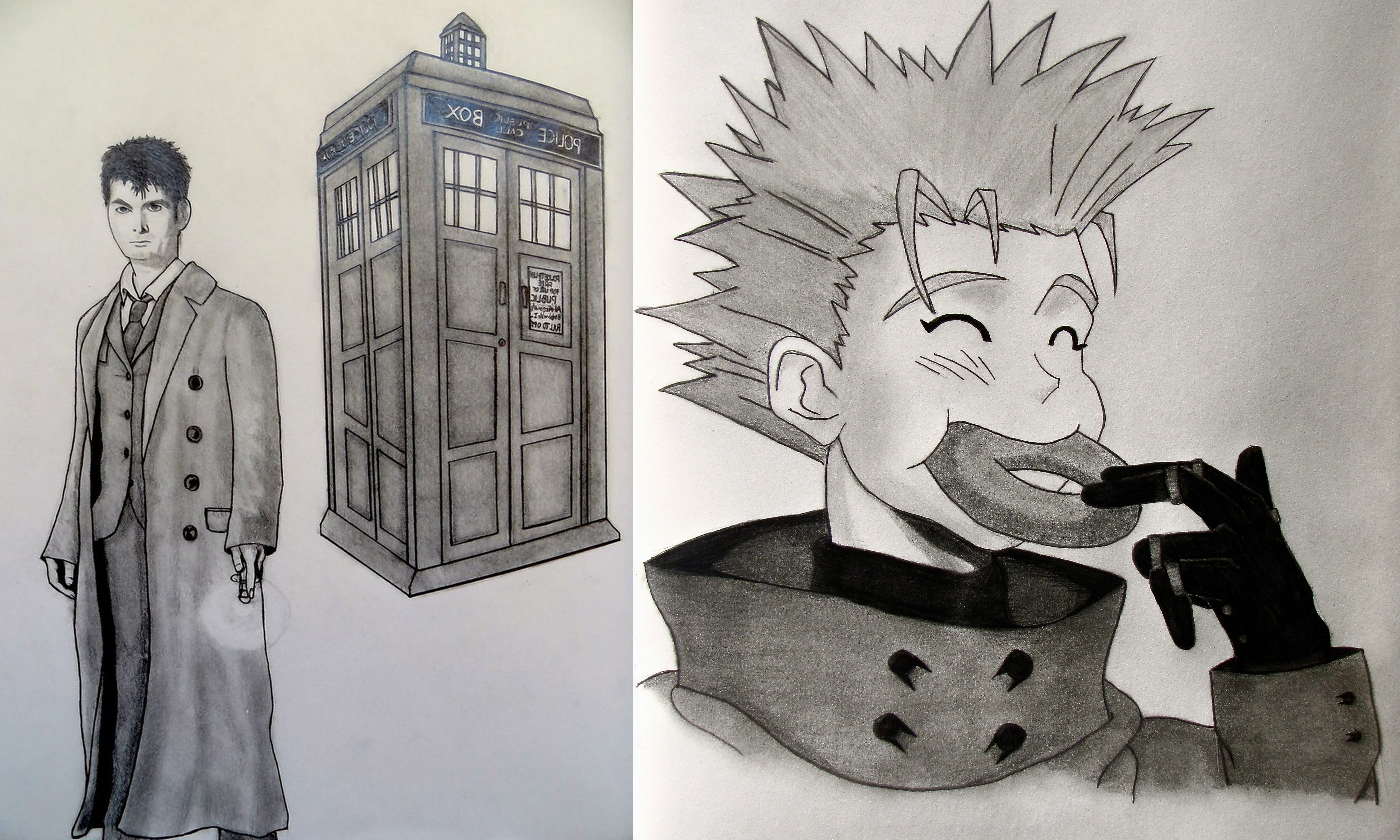
Wooton BassettSome characters are less silly, balancing funny quirks with tragic flaws or struggles. Consider the Doctor from Doctor Who and Vash the Stampede from Trigun. The Doctor is an intergalactic goofball, bouncing around the universe with a beaming face and a slew of witty remarks. Vash is a gunslinger who obsesses over doughnuts, whines like a child and walks into a firefight with a trashcan lid on his head.

My thanks to my younger bro for permission to use his artwork!

My thanks to my younger bro for permission to use his artwork!

Vash and the Doctor seem sillier than Wooton, but their quirks mask profound inner turmoil. The Doctor despises himself. His travels throughout space and time are not a careless vacation, but his way of running away from past mistakes. Vash also has a lot to hide. The body beneath the overcoat is covered in horrific scars, and the man behind the goofy grin is tormented by regret for the lives he couldn’t save.

In the case of Wooton, endearing quirks are a form of comedy. The quirks of Vash and the Doctor serve a different purpose. Their odd habits hide sad struggles, and make the viewer feel more when their stories take turns for the tragic. After all, it’s easier to feel sorry for funny characters than for serious ones.

Then there is Miles Edgeworth, the friendly rival of Phoenix Wright from the Ace Attorney series. Like Mr. Quiring, Edgeworth is dignified, composed and intelligent.

Miles Edgeworth

Edgeworth also has a secret.

This respected prosecutor is secretly a fan of Steel Samurai, a cheesy show for kids about a futuristic warrior and his neverending fight for justice. Edgeworth vehemently denies liking the show, of course… but there’s his inexplicable knowledge of Steel Samurai trivia and the Steel Samurai action figure in his office.

In the case of super-serious people like Mr. Edgeworth, a single quirk can make a cold, distant character seem a little more human. Liking Steel Samurai is a weakness, but not a sin. We can respect Edgeworth, and we can also laugh at him.

Carelessly loading a character with endearing quirks is a mistake: too many odd habits, or quirks that seem out of place, are irritating. Used intentionally, however, endearing quirks can develop great characters—and make us laugh!

250. Life Lessons from a Thirsty Blogger

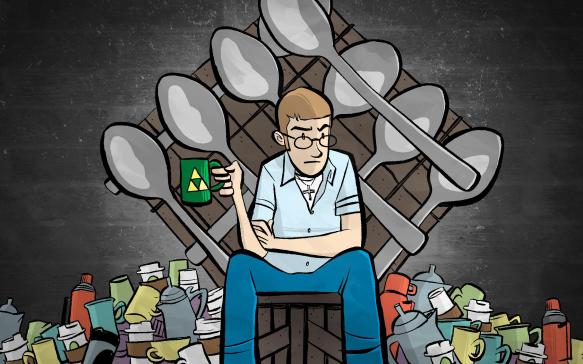
So I drink a lot of coffee. Don't judge me.

Yes, I drink a lot of coffee. Don’t judge me.

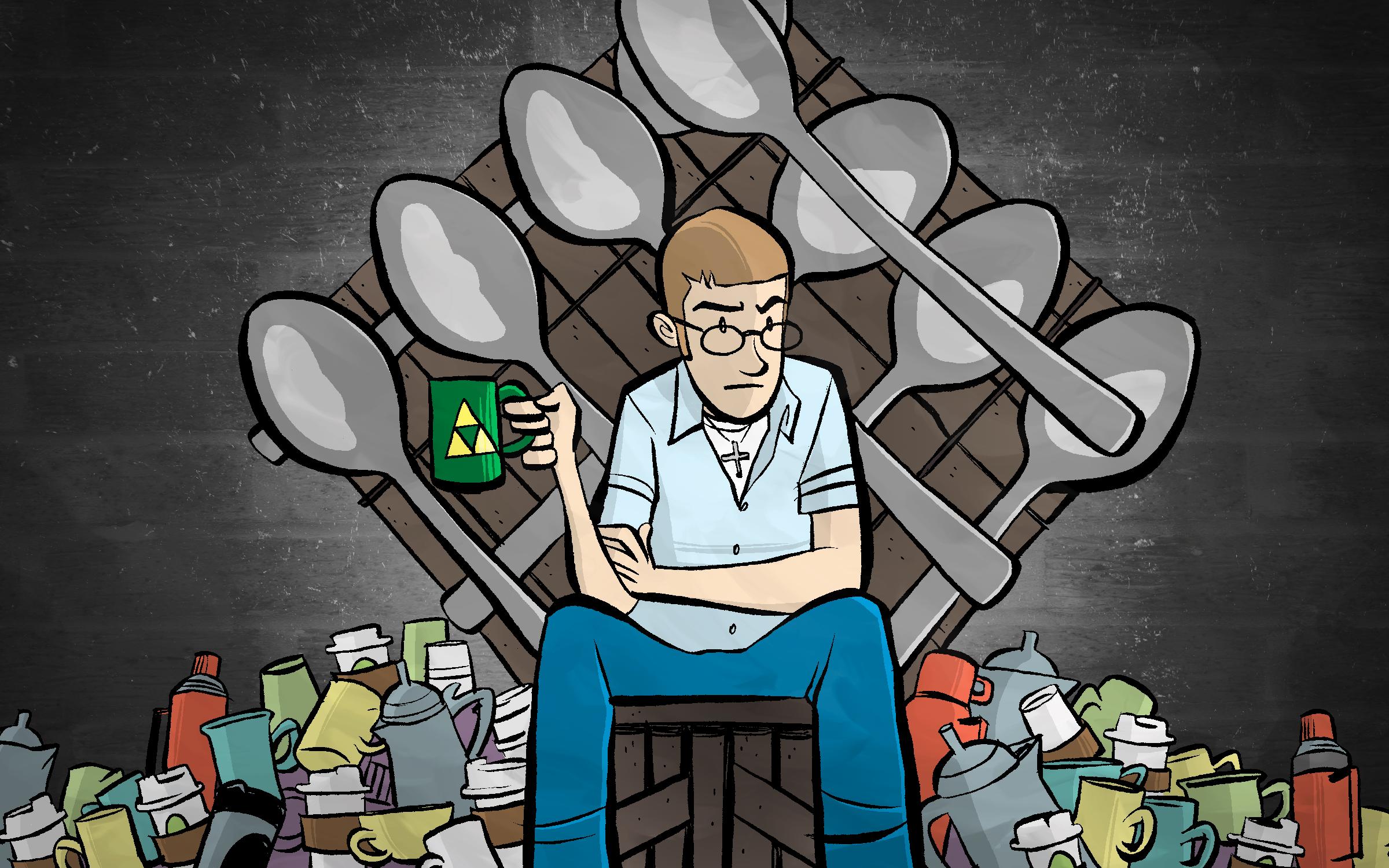
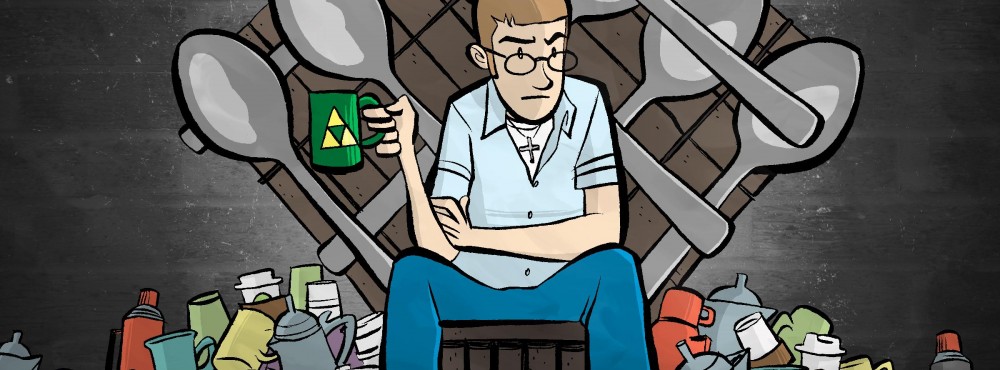
If anyone has ever wondered how I come up with ideas for this blog, the picture above tells the whole story: I sit and drink coffee and wait for something to happen. What can I say? Blogging is thirsty work.

(Due credit to the inimitable Wes Molebash for the splendid caricature, which has become my official Internet profile picture and a new banner for this blog.)

Today marks another milestone in the sunny existence of Typewriter Monkey Task Force: a blog fueled by coffee, sustained by geeky enthusiasm and buoyed by the support of loved ones. This blog has allowed me to share my passion for everything from God to tea to Tolkien. In good times and in bad, working on TMTF has brought me no end of satisfaction, comfort, encouragement, joy and pleasure. It has also given me the privilege of connecting with many fascinating, creative, generous people—writers, bloggers, artists and others—whom I would otherwise never have known.

In the two and a half years since starting this silly blog, I have gained a number of personal insights about life, the universe and everything. Today—as my typewriter monkeys and I celebrate this milestone with banana shakes and coffee, respectively—I’d like to share ten of the best lessons I’ve learned since TMTF began.

I must focus on today

I’m really good at brooding about the past, worrying about the future and generally thinking about all times but the present. God has given me today. Yesterday and tomorrow are in his hands, and I need to leave them there. My business isn’t to be burdened by worries or regrets, but to make the most of the time I have been given.

What matters is not what I feel, but what I do

For a long time, I made a simple assumption: If I felt bad, I was doing badly; if I felt good, I was doing well. I was wrong. Feelings are mostly beyond my control and largely unconnected to how well or badly I’m living my life. Depression isn’t proof of failure, nor does success does guarantee happiness. I should do my best under all circumstances, no matter what I feel.

I need sleep

I hate to say it, but I can’t shrug off sleep deprivation. Those late nights playing Ace Attorney or reading random Wikipedia articles seriously affect my concentration, mood and overall health. A long sleep can totally brighten my day; a short sleep can tip me over the brink into sickness or severe depression. In fact, I would go so far as to say sleep is almost as important as coffee.

Prayer and Scripture really, really make a difference

The past two years have taught me that prayer and Scripture are anchors. These commitments to God keep me rooted in my faith and focused on things that matter. When I quit praying and reading Scripture, I drift away from God. When I drift away from God, I become kind of a jerk. When I become kind of a jerk, everybody loses. Prayer and Scripture make an incredible difference in my life for good—even more than coffee, which is saying something.

I am not a great writer

I’m a pretty good writer, I think. Writing is one of my greatest talents, along with drinking coffee and having magnificent sideburns. I’m a good writer—but not a great one. When I was younger, I assumed my writing was brilliant. Working on this blog, failing to make The Eliot Papers a success and (above all) reading fantastic works by truly great writers have given me healthy doses of perspective and humility.

Things don’t fall apart

Heck, I wrote an entire post about this. No matter how I try to keep things together, I shall sometimes fail. It is well, then, that God is there to hold things together when my best efforts can’t keep them from falling apart.

I can’t fix people, but I can love them

If Doctor Who has taught me one thing, it is the importance of having epic sideburns. If the series has taught me a second thing, however, it is the value in simply showing kindness. “The way I see it, every life is a pile of good things and bad things,” the good Doctor reminds us. “The good things don’t always soften the bad things, but vice versa, the bad things don’t necessarily spoil the good things or make them unimportant.” The world is full of hurting people. I may not be able to take away their bad things, but nothing will ever prevent me from adding to their good ones.

I must be focused and intentional

It is so hard—so darn hard—to stay focused. I seem to live in a disorienting fog of distractions, diversions and complications. Depression and obsessive-compulsive impulses are only slightly greater obstacles to productivity than the Internet and its endless wealth of interesting articles and funny cat pictures. A useful, meaningful life doesn’t just happen. It takes intention, self-control and (in my case) a good deal of caffeine.

People are awesome

Human beings are amazing, awful, odd, ordinary, selfish, selfless creatures. In general, they’re pretty awesome. I’ve realized it’s worth getting to know people, and important to respect even those I don’t know.

I have good reasons for believing in God

When I began this blog, I felt conflicted about God and life and the universe in general. Many of my questions about God were unanswered. Some of them still are. It was while working on this blog that I reached a fundamentally important conclusion: I have my doubts about God and Christianity, but my evidence in their favor definitely outweighs my evidence against them. No worldview makes perfect sense to me, but Christianity makes the most sense.

Well, dear reader, thanks for reading this blog, putting up with our shenanigans and generally being awesome. My sincere thanks to everyone who has supported this blog, and to God for grace and coffee and stuff. Here’s to many more cheerful ramblings about faith, writing, video games, literature, life, the universe and everything!
235. My (Old) New Year’s Resolutions

Twelve months ago, I made some new year’s resolutions. Did I keep them? Was this year of our Lord two thousand thirteen an epoch of marked self-improvement or abysmal failure?

Let’s find out.

These were my resolutions for 2013.

I will be focused, intentional and self-disciplined

For the most part, I kept this resolution. I occasionally wasted time, but less time than in years past. That’s an improvement, right?

I will finish the manuscript for The Wanderings of Lance Eliot

This… this was a resolution I couldn’t keep.

I will not be anxious, insecure or obsessive-compulsive

I’m still working on this one, but I made great progress this year. My anxieties and obsessive-compulsive tendencies were once debilitating struggles; they are now minor nuisances.

I will improve my Spanish

I worked a bit on my Spanish this year, but not as much as I had planned. My preferred method of study, watching cartoons in Spanish, was hindered by my laptop’s less-than-stellar DVD software. I’ll keep working on this one.

I will grow sideburns like the Tenth Doctor’s

The Tenth Doctor from Doctor Who boasted incomparable sideburns. Mine, though not as neat, weren’t bad. I consider this resolution kept, insofar as any mere mortal can keep an impossible resolution like equaling the majesty of the Tenth Doctor’s hairstyle.

I will take steps forward

I… sort of kept this resolution. I’m living in the same place, working the same job and generally living the same life, but I feel a good deal more assured and… well… grown up. For the moment, I believe I am exactly where I need to be.

So much for my old new year’s resolutions. What are my new new year’s resolutions? What are my plans for becoming a stronger, nicer, better person in 2014? Does anyone really care?

Find out next time!

Fifty Years of Doctor Who

Doctor Who, the British sci-fi television program, has been around for fifty years. That’s a long time for a television show to exist. Heck, that’s a long time for anything to exist.

The long-awaited Doctor Who fiftieth anniversary special airs this Saturday. (Awesomely, the premier for the newest season of My Little Pony: Friendship Is Magic, for which I am unashamedly excited, airs on the same day.) The Doctor Who special promises homicidal aliens, majestic sideburns and answers to longstanding questions about the good Doctor.

Doctor Who is a wonderful show. The acting and writing are superb, and the premise is (as the Doctor himself would put it) absolutely fantastic. Simply put, Doctor Who is the tale of an eccentric, cheerful, cheeky traveler and the blue box in which he roams the whole of time and space. Storytelling opportunities are endless. After fifty years, Doctor Who continues to amaze.

In celebration of fifty years of quirky British science fiction, here’s an epic song about the not-quite inexorable passage of time. Enjoy!

204. My Childhood Fantasy

As a kid, I loved fantasy stories. My budding imagination teemed with dragons, hobbits, wizards, weapons and those octopus-monsters from The Legend of Zelda that spit rocks. It was only natural, I suppose, for me to build a fantasy of my own.

The hero of this fantasy was an orphan (of course) with a tragic past (naturally) who overcame adversity to become a mighty swordsman, wizard and defender of the innocent. My fantasy hero was—like all true heroes—named after a character in a video game. Inspired by Link from the Legend of Zelda games, named for a challenger from the Pokémon games, my hero was Lance: a green-clad warrior for whom no quest, challenge or cup of tea was too big.

For a childish fantasy, Lance was ahead of his time. He fit the pattern of the wanderer-hero in almost every detail more than a decade before I recognized the archetype in fiction. Years before I knew anything about Doctor Who, Lance traveled through time and space with a box that was bigger on the inside. (However, unlike the Doctor, Lance didn’t travel in his box. Lance kept stuff in it.)

I didn’t feel the slightest qualm as a child about plagiarizing other stories. Lance used magic to travel anywhere, which included Middle-earth from The Lord of the Rings, Hyrule from the Legend of Zelda games, Hogwarts from Harry Potter and a few more copyrighted realms from books, films and games. (How fortunate that imagination is beyond the reach of lawsuits.) Lance rubbed shoulders, bumped elbows and occasionally sparred with many famous fantasy heroes.

After two years of vivid adventures, Lance slipped quietly into retirement when I entered my early teens. It was coincidence that the protagonist of the story I began writing a couple of years later—which grew into my novel, The Trials of Lance Eliot—had the same name as the hero of my childhood fantasy. Lance Eliot was given his name because the plot demanded it, as readers of the novel know.

I think the coincidence is rather funny. Lance the all-powerful hero and Lance Eliot the wry college student could hardly be more different. I suppose they have at least one thing in common… they like tea.

My imagination is less exuberant and more wary than it used to be. When I read, write or see a story, I find myself looking for inconsistencies, holes and weaknesses. Things have to make sense now that I’ve grown up.

All the same, I hope I never lose that spark of imagination. Making up stuff is fun.

183. A Lesson from Doctor Who

I often discover lessons in unexpected places. True, I learn from the Bible and wise people, but I also learn from Batman and webcomics about video games.

The Doctor from Doctor Who is not particularly wise—in fact, he has all the tact and maturity of a twelve-year-old boy—but he recently taught me an invaluable lesson.

This is not the face of a wise man.

This is not the face of a wise man.

I work in a group home for gentlemen with mental and physical disabilities. As you can imagine, my job is often amusing, sometimes heartbreaking and never predictable.

When I began working in a group home, I felt pity for some of its residents. Their lives are often dark and difficult. Some endure chronic physical pain. Most suffer from depression. Few are ever visited by friends or family. All of them are hurting in some way and few of them understand why.

At first I pitied only these gentlemen, but as months passed I realized they aren’t the only ones deserving of compassion.

Most of my coworkers are hurting. Some are divorced. Some have family issues. Many struggle with financial woes or health problems. I’ve heard tearful stories, bitter complaints and vicious arguments I wish I could forget.

Apart from work, I have friends facing heartrending difficulties: divorce, debt, depression, loneliness and grief.

I’m constantly surrounded by people whose problems I can’t solve, and I hate it.

At one point in Doctor Who, the Doctor and his friend learn that a person whose life they tried to save committed suicide. The Doctor’s companion is overwhelmed with grief. “We didn’t make a difference at all,” she says.

“I wouldn’t say that,” replies the Doctor, blinking back tears. He adds:

The way I see it, every life is a pile of good things and bad things. The good things don’t always soften the bad things, but vice versa, the bad things don’t necessarily spoil the good things or make them unimportant. And we definitely added to his pile of good things.

I may not be able to fix someone’s life, but nothing will ever prevent me from adding to his pile of good things.

I can’t fix my coworker’s marriage. I can’t take away the pain of the gentleman with arthritis or the hopelessness of the gentleman with depression. I can’t promise healing to a hurting friend.

I can, however, be patient. I can listen. I can pray. I pretend to be terrified when the gentlemen with whom I work tell me there are mummies in the cupboards or a mouse in my shoe.

On an afternoon a few weeks ago, just a day or two after I remembered this lesson from the Doctor, I was administering medications at work when a resident of the group home ambled up to me.

“This is for you,” he said with a grin, holding out a cup of coffee.

It occurred to me in that moment that I’m not the only one trying to add to the piles of good things around me.

Sometimes other people, even hurting people, add to mine.

170. Batman Syndrome

I have Batman Syndrome.

I wish this meant I were as cool, skilled or accomplished as Batman. It does not. It most certainly does not. What it means is that Batman and I have something in common: we obsess over our mistakes.

If you or someone you love suffers from Batman Syndrome... I feel your pain.

If you or someone you love suffers from Batman Syndrome… I feel your pain.

I like fictional characters who overlook their victories and overemphasize their failures. There’s something compelling about characters who are heroic without realizing it. Take the Doctor from Doctor Who, who has saved every planet in the universe roughly twenty-seven times. In all his travels through space and time, he never leaves behind his insecurity, self-loathing or guilt. Consider Jean Valjean from Les Misérables, who atones for a few petty crimes by spending years serving the poor and helpless. They bless him as a saint. He despises himself as a criminal.

Then we have Batman, the eponymous sufferer of Batman Syndrome, who is so blinded by guilt that he fails to recognize one all-important fact: he is freaking Batman. No matter how many thousands of people he rescues, he remains obsessed with the two he failed to save.

I’m not a savior like the Doctor or a saint like Jean Valjean. I’m certainly not a superhero like Batman. Even so, I occasionally do things right. I also do things wrong. In my mind, the wrong things eclipse the right ones. A mistake cancels out all successes.

This isn’t always such a bad thing. I feel driven by my mistakes to try harder, to be better, to get it right. In the short term, it helps.

In the long term, however, Batman Syndrome wears away my confidence. It also makes me anxious. Dash it all, does it ever make me anxious. Doing anything is hard for someone desperately afraid of making mistakes. Perfection is a lousy minimum standard.

Batman Syndrome haunts me with one dreadful question.

You’ll never get it right, so why even try?

I write a lot about grace and stuff. In the end, I suppose it’s because I’m amazed (and sometimes incredulous) that God loves me. I’ve made a lot of mistakes. More to the point, I make a lot of mistakes. It’s easy for me to accept God’s forgiveness for a sin committed ten years ago. What’s hard for me to accept is forgiveness for a sin committed ten minutes ago.

It can also be hard for me to acknowledge my victories. I want to be humble, but there’s a difference between true humility and false modesty. I’m often reminded of my weaknesses. I think I must also allow myself to be reminded of the strengths God has given me. I’ve a long way to go, but I mustn’t overlook how far I’ve come.

I’m not Batman, and I think I’m finally beginning to accept that I don’t have to be.

160. The Wonderful Weirdness of Life

If I were a preacher, I would use the geekiest sermon illustrations Christendom has ever known.

I once joked about using the Millennium Falcon as the basis for a sermon. As a pastor, I probably wouldn’t go that far… but then I might. I’m sure there are parallels between Han Solo’s dilapidated starship and the profound truths of Christianity. I just haven’t found any. At least not yet.

I was recently reminded of a great lesson by Doctor Who. The Doctor has become one of my favorite fictional characters, surpassing even literary greats like Anne Shirley and Bertie Wooster in my esteem.

One of my favorite things about the Doctor is the way he responds to commonplace things—humans, for example—with amazement.

“Look at these people, these human beings,” he exclaims. “Consider their potential! From the day they arrive on the planet, blinking, step into the sun, there is more to see than can ever be seen, more to do than—no, hold on. Sorry, that’s The Lion King.”

Pop culture allusions aside, the point is made: humans are pretty darn awesome.

At one point, the Doctor runs into a research team investigating an unprecedented phenomenon. Their curiosity delights him. “So when it comes right down to it, why did you come here?” he inquires. “Why did you that? Why? I’ll tell you why—because it was there! Brilliant! Excuse me,” he adds, beaming. “Just stand there, because I’m going to hug you.”

In his travels through space and time, the Doctor never fails to appreciate how weird and wonderful they are. Plain old people astound him no less than the greatest marvels of the universe.

Like the Doctor, G.K. Chesterton looked at ordinary things and pronounced them extraordinary. “I do not generally agree with those who find rain depressing,” he wrote. “A shower-bath is not depressing; it is rather startling. And if it is exciting when a man throws a pail of water over you, why should it not also be exciting when the gods throw many pails?”

Michael Card, my favorite songwriter, has this to add: “If you must see a miracle, then just look in the mirror!”

Too often, I live without thinking. I follow a mechanical routine of habits and repetitions without pausing to consider how brilliantly strange my life has been—and is.

With my computer and its microphone, I can carry on conversations with people thousands of miles away. With the flip of a switch or the touch of a button, I can summon light, heat or water instantly to my apartment. With a digital camera, I can create near-perfect images of anything: pictures that are stored securely in a tiny chip of metal and plastic.

My life is weird in ten thousand glorious ways—and I take it for granted. I shouldn’t. Thoughtless repetition leads to ennui, ennui to discontent and discontent to discouragement, ungratefulness and all kinds of nasty things.

How much better it is to appreciate the wonder of simply being alive!

148. New Year’s Resolutions

In Ecuador, people celebrate the new year by burning effigies in the streets.

Good times, good times.

Ah, sweet memories.

In Indiana, however, the local authorities frown upon such celebrations. It’s too bad. Since setting things on fire is out of the question, I’ve decided to begin the new year by making some resolutions.

I’m sharing these resolutions on TMTF in order to make them official. After all, a resolution is much harder for me to forget (or ignore) once I’ve announced it publicly.

I will be focused, intentional and self-disciplined

I’ve squandered countless hours on the Internet: reading trivial articles, watching pointless videos and generally wasting time. I’ve also lost many hours due to procrastination, poor planning and sheer aimlessness. This year I intend to invest my time, not merely to spend it.

I will finish the manuscript for The Wanderings of Lance Eliot

I wrote about this resolution in my last post, so there’s not much left to say. This year Lance Eliot shall resume his journey. I hope we both survive it.

I will not be anxious, insecure or obsessive-compulsive

I can’t control my feelings. However, I can control my actions. This year I’ll try to remember what the Apostle Paul wrote about love, which “always trusts, always hopes, always perseveres.” That’s a good example to follow.

I will improve my Spanish

My grasp of the Spanish language—a dodgy thing at the best of times—has weakened severely since my graduation from high school. How do I intend to study the language? By watching cartoons in Spanish, of course.

I will grow sideburns like the Tenth Doctor’s

Saving the universe? Bah! A negligible accomplishment compared to having such awesome hair.

Saving the universe? Bah! A negligible accomplishment compared to having such awesome hair.

During his tenure as the protagonist of Doctor Who, David Tennant boasted some splendid sideburns. This year I’ll strive to grow sideburns of comparable majesty.

I will take steps forward

Now that my life has settled down, I must start planning for years ahead. This year I intend to look into future career options.

Have a truly fantastic new year, dear reader!

Do you have any resolutions for the new year that you’re willing to share? Let us know in the comments!