207. A Postmodern Prayer

Our Parent of Unspecified Gender,

Hallowed be your name—which is, naturally, whatever we want it to be.

Your kingdom come, but only if you make it a democracy.

Your will be done, but only if it doesn’t interfere with ours,

On earth as it is in heaven, the latter being a quaint metaphor.

Give us this day our daily bread (which we deserve)

And don’t bother forgiving our debts

Because we have no debts—after all, sin is just an outdated philosophy.

Don’t feel obligated to keep us out of temptation, because it’s just natural instinct;

Or evil, since discriminating against anything is intolerant.

For yours is the kingdom (just democratize it!)

And the power (just don’t use it!)

And the glory forever,

But only if you acknowledge you’re no more special than the rest of us.

Amen.

206. TMTF’s Top Ten Jerks in Literature

Jerks. They’re everywhere. Read any comments section on the Internet and you’ll see what I mean. Wherever there are people, there are jerks. (Except possibly in Canada.)
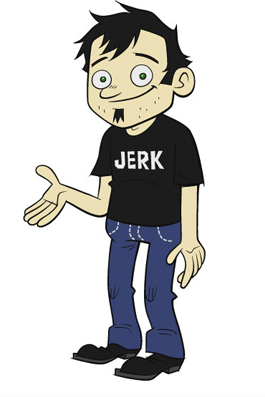
Dan Vs.

There are plenty of jerks in literature, and TMTF has chosen ten of the worst. The usual rules apply: I’ll include characters only from books I’ve read, and only one character per author. This list defines a jerk as a person who possesses unlikable qualities such as selfishness, cruelty, hypocrisy, rudeness or a tendency to kick small animals.

Be ye warned, here there be minor spoilers.

Brace yourselves, ladies and gentlemen, as TMTF presents…

The TMTF List of Top Ten Jerks in Literature!

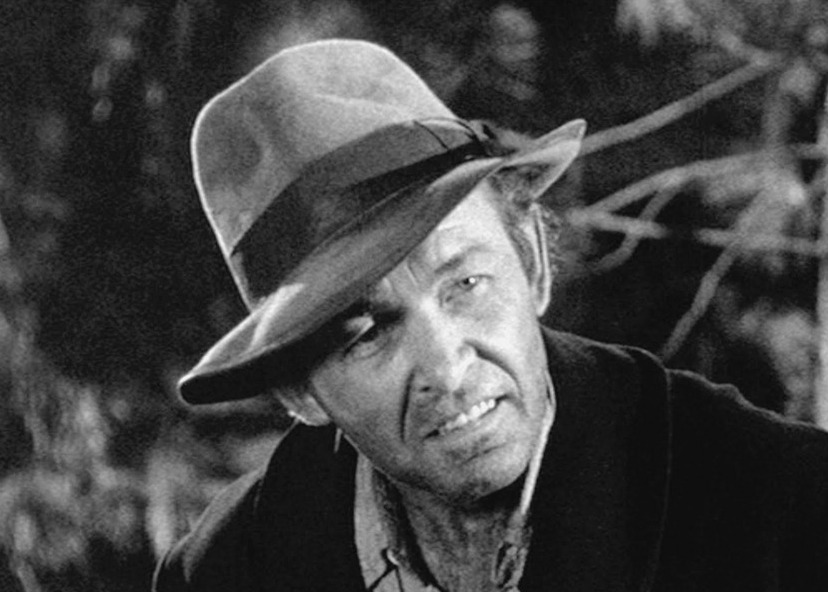
10. Pap Finn (The Adventures of Huckleberry Finn by Mark Twain)
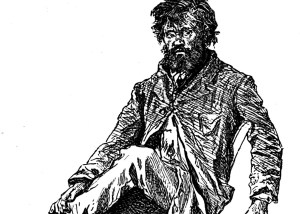
Pap Finn

Huckleberry Finn’s father is abusive, greedy, drunken, heartless, filthy, violent, wheedling, dishonest, neglectful, ruthless, irresponsible and utterly devoid of conscience, charm or deodorant. I could go on, but I don’t think there’s any need. Pap Finn is a jerk.

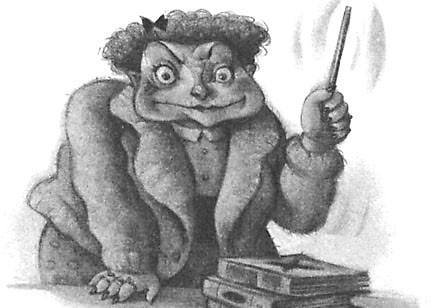
9. Dolores Umbridge (Harry Potter series by J.K. Rowling)
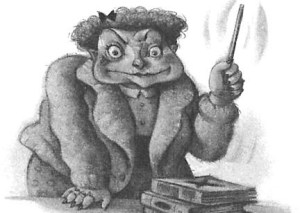
Frightening.

My introduction to Ms. Umbridge was a description of her as a character with a personality “like poisoned honey.” This description proved to be extraordinarily apt. Dolores Umbridge is sickeningly sentimental, cheerful and twee… and also bigoted, sadistic and evil. With smiles and giggles, she inflicts horrible punishments on students and taunts her colleagues. Really, Dolores Umbridge is a jerk.

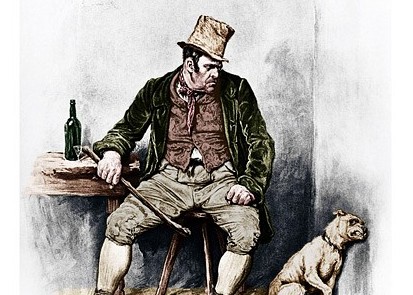
8. Bill Sikes (Oliver Twist by Charles Dickens)

Bill Sykes

There are many great Dickensian jerks, but none worse than Bill Sikes. Even Fagin—himself a notorious jerk—is afraid of this guy. Sikes is barbaric and violent, beating his lover to death, hitting his dog and stopping at nothing to get what he wants. He also has no fashion sense. Bill Sikes is a particularly nasty jerk.

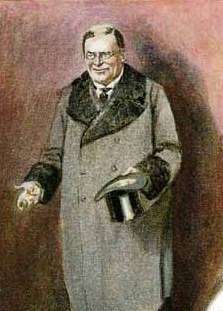
7. Charles Augustus Milverton (“The Adventure of Charles Augustus Milverton” by Sir Arthur Conan Doyle)
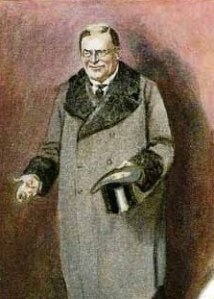
Charles Augustus Milverton

I’ll let Sherlock Holmes handle this one: “Do you feel a creeping, shrinking sensation, Watson, when you stand before the serpents in the Zoo, and see the slithery, gliding, venomous creatures, with their deadly eyes and wicked, flattened faces? Well, that’s how Milverton impresses me . . .  I have said that he is the worst man in London, and I would ask you how could one compare the ruffian, who in hot blood bludgeons his mate, with this man, who methodically and at his leisure tortures the soul and wrings the nerves in order to add to his already swollen money-bags?” Sherlock Holmes has spoken: Charles Augustus Milverton is a jerk.

6. Bob Ewell (To Kill a Mockingbird by Harper Lee)
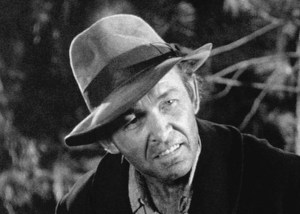
Mr. Ewell

Bob Ewell is basically Pap Finn, except more viciously racist and (the novel implies) guilty of sexually abusing his daughter. Mr. Ewell also attempts to murder a couple of children. This is becoming something of a refrain for this list, but Mr. Ewell is drunken, disheveled and filthy. (Umbridge and Milverton may be evil, but at least they take baths.) Bob Ewell is, without question, a jerk.

5. Heathcliff (Wuthering Heights by Emily Brontë)

Heathcliff

Heathcliff has the notable distinction of being the only fictional character whom I have ever wanted to punch in the face. He’s horrible: a man whose resentment and poisonous love for a childhood friend drive him to exact slow, cruel, methodical vengeance on everyone who slighted him. Heathcliff goes so far as to marry someone he despises as part of his plan to hurt as many people as he can. Seriously, Heathcliff is a jerk.

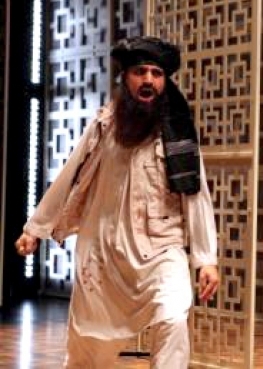
4. Assef (The Kite Runner by Khaled Hosseini)
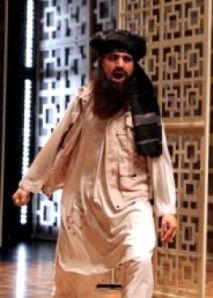
Assef

Assef begins a bully, becomes a rapist and ends up a sociopathic jihadist, all with contemptuous arrogance and not a single shred of guilt. Many literary jerks have some tiny gleam of goodness to provoke sympathy, compassion or pity from the reader. Not this guy. Assef is simply a jerk.

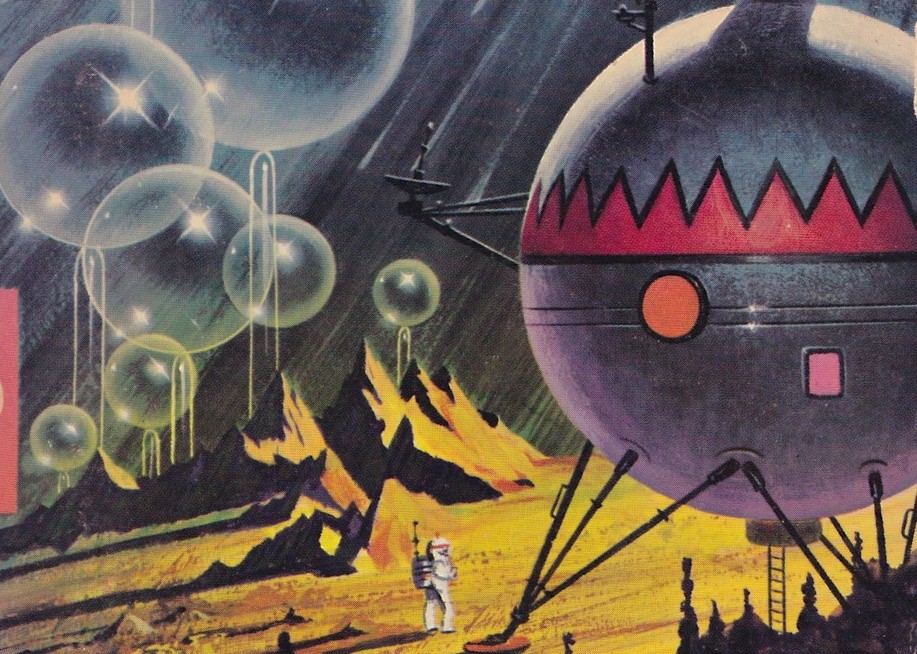
3. Professor Edward Rolles Weston (Space Trilogy by C.S. Lewis)
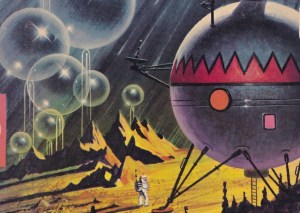
Professor Weston

Professor E.R. Weston is doubly a jerk. In his first appearance in Out of the Silent Planet, Weston is a ruthless believer in survival of the fittest: he calls a half-witted local boy “incapable of serving humanity and only too likely to propagate idiocy” and admits his intention to commit genocide to serve his own ends. In Perelandra, a later novel, Weston has transformed from an amoral humanist to an amoral spiritualist; he is implied eventually to be possessed by a satanic spirit. Thus it is proved: Weston is a jerk.

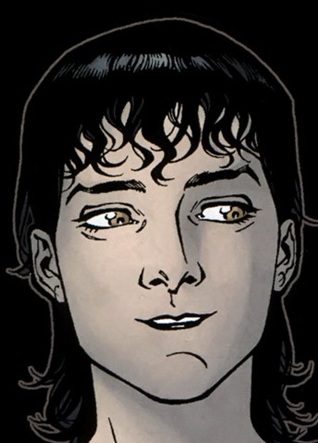
2. Dodge (Locke & Key series by Joe Hill and Gabriel Rodriguez)
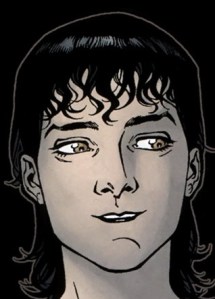
Dodge

An absolutely evil person isn’t necessarily a jerk. Thieves and murderers can be respectful, charming and even polite. Dodge is an absolutely evil person and a jerk. He lies, steals, manipulates, betrays, rapes and murders with calculated precision, sadistic glee and not even the faintest hint of remorse. Whether taunting mentally handicapped teens or shoving kids in front of buses, Dodge is an irredeemable jerk.

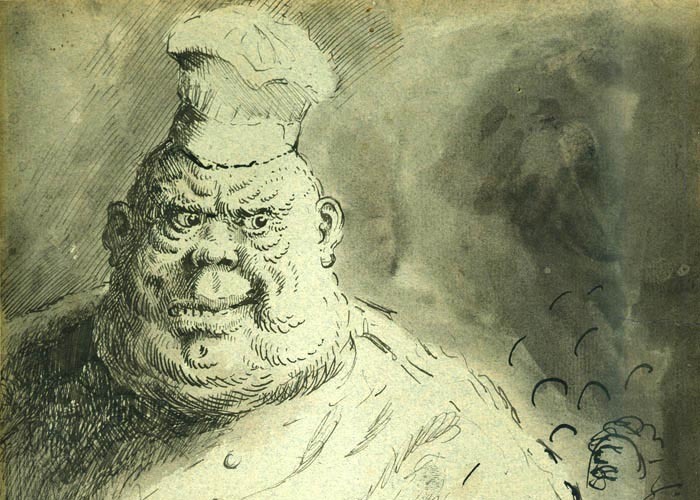
1. Abiatha Swelter (Titus Groan by Mervyn Peake)
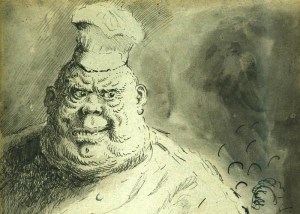
Abiathar SwelterThis hideously obese, “drunken, arrogant and pedantic” man is the chef of Gormenghast castle, a horribly… well… horrible man. Well, man may be too polite a word. In a book packed with awful people, Swelter is the worst: cruel, short-tempered, disgusting, resentful, demented and murderous. He may not be the most evil character on this list, but I think he’s the most odious. In conclusion, I have only one thing to add—and I’m sure you’ve guessed it. Swelter is a jerk.

O people of the Internet, what despicable literary jerks would you add to this list? Let us know in the comments!

205. An Open Letter to Hollywood

Dear Hollywood Executives,

You all read this blog, right? Yes? Excellent. I know you’re all very busy, so I’ll get right down to business. There are some things we need to discuss.

First of all, stop remaking films and television shows from the eighties. I know building on existing franchises is easier than creating new ones, but your remakes are tired and predictable.

Instead of remaking lousy old shows, why not make more literary adaptations? I’ve got a list for you right here. (Good job making Ender’s Game happen, by the way. It was about freaking time!) Literature is packed with stuff your viewers would love. You’ve just got to give it to them.

Since you’re so good at adapting existing works into movies, why not target the gaming demographic with video game movies that, you know, don’t totally stink? Not every game can be made into a good movie—ahem, Super Mario Bros.—but there are plenty of franchises with endless potential. Take video games seriously. Give us characters, not men with big muscles and women with big busts. Give us stories, not predictable plots riddled with clichés.

This next issue is a touchy one, but we’ve got to face it.

Hollywood, your Christians stink.

Seriously. Do your research. Find out what authentic Christians look like, and stop insulting us with shameless hypocrites, arrogant bigots and sociopathic lunatics. Christianity has its share of awful people, but we’re not all that bad. Just as most Muslims aren’t terrorists, most Christians aren’t your offensive stereotypes. Come on, Hollywood. It ain’t that darn hard.

Heck, I’ll even give you a good example. Look at Joss Whedon. He’s an atheist, and also a phenomenally successful director. (The Avengers is the third-highest earning film of all time. I’m just saying.) In Firefly, his highly-acclaimed show about lawless scoundrels, Whedon included a Christian character called Shepherd Book. This character isn’t a stereotype. As a Christian, he’s actually Christlike—and simply likable. Shepherd Book is a well-developed character with a dry sense of humor. Fans appreciate him.

Learn from Joss Whedon, Hollywood.

Speaking of Christians, we’re quite a sizable demographic. Have you considered, you know, actually making big-budget Christian films? The Passion of the Christ, which everyone expected to fail, earned roughly twenty times its budget. More recently,The Bible, a television miniseries, became a huge commercial success. Believe it or not, people want to see good Christian media. We need moviemakers with the courage (and cash) to make some.

With superhero movies being so popular, can we get a decent Deadpool movie? Please?

Finally, for heaven’s sake, stop letting Michael Bay and M. Night Shyamalan direct movies. That is all.

Peace,

Adam

P.S. We’re tired of vampires and zombies, Hollywood. Find some new monsters.

The Awesome Word I Can’t Use

badass: (noun, adj.) an individual considered admirable for having an extreme appearance, attitude or behavior; the quality of being a badass

Ah, swearwords. Offensive language is everywhere: offending conservatives, keeping censors busy and puzzling grammarians.

(In a stunning coincidence, expletive can refer either to a dirty word or a word with a particular syntactic function; swearwords can be both kinds of expletives at the same time!)

I don’t think swearwords are inherently wrong. All the same, foul language demonstrates a lack of respect for people offended by it. Swearing may not be wrong, but disrespect is.

This prevents me from using a really awesome word: badass, the latter half of which comprises a vulgar noun. I can’t find any other word that means the same thing. Most swearwords have euphemistic equivalents. Instead of swearing, I use words like heck and blazes and (when I need an extra-strong intensifier) freaking.

Badass has no such equivalent. It represents the absolute pinnacle of awesomeness, unmarred by even the slightest hint of insecurity, ambivalence or self-consciousness. No other word in the English language does the concept justice: not impressive or cool or even gnarly. Censoring the word for everyday use—bad-ss or bad@$$, for example—is just silly.

Constrained by courtesy, I may never have an inoffensive word for this wonderful idea. Alas!

204. My Childhood Fantasy

As a kid, I loved fantasy stories. My budding imagination teemed with dragons, hobbits, wizards, weapons and those octopus-monsters from The Legend of Zelda that spit rocks. It was only natural, I suppose, for me to build a fantasy of my own.

The hero of this fantasy was an orphan (of course) with a tragic past (naturally) who overcame adversity to become a mighty swordsman, wizard and defender of the innocent. My fantasy hero was—like all true heroes—named after a character in a video game. Inspired by Link from the Legend of Zelda games, named for a challenger from the Pokémon games, my hero was Lance: a green-clad warrior for whom no quest, challenge or cup of tea was too big.

For a childish fantasy, Lance was ahead of his time. He fit the pattern of the wanderer-hero in almost every detail more than a decade before I recognized the archetype in fiction. Years before I knew anything about Doctor Who, Lance traveled through time and space with a box that was bigger on the inside. (However, unlike the Doctor, Lance didn’t travel in his box. Lance kept stuff in it.)

I didn’t feel the slightest qualm as a child about plagiarizing other stories. Lance used magic to travel anywhere, which included Middle-earth from The Lord of the Rings, Hyrule from the Legend of Zelda games, Hogwarts from Harry Potter and a few more copyrighted realms from books, films and games. (How fortunate that imagination is beyond the reach of lawsuits.) Lance rubbed shoulders, bumped elbows and occasionally sparred with many famous fantasy heroes.

After two years of vivid adventures, Lance slipped quietly into retirement when I entered my early teens. It was coincidence that the protagonist of the story I began writing a couple of years later—which grew into my novel, The Trials of Lance Eliot—had the same name as the hero of my childhood fantasy. Lance Eliot was given his name because the plot demanded it, as readers of the novel know.

I think the coincidence is rather funny. Lance the all-powerful hero and Lance Eliot the wry college student could hardly be more different. I suppose they have at least one thing in common… they like tea.

My imagination is less exuberant and more wary than it used to be. When I read, write or see a story, I find myself looking for inconsistencies, holes and weaknesses. Things have to make sense now that I’ve grown up.

All the same, I hope I never lose that spark of imagination. Making up stuff is fun.

203. TMTF Reviews: The Best of H.P. Lovecraft

Before Stephen King and Ray Bradbury, before The Exorcist and Dawn of the Dead, before Resident Evil and Silent Hill existed the horrors of H.P. Lovecraft.

Don’t be fooled by his pleasant-sounding name—Lovecraft is one of the most famous horror writers in history. He created an entire mythology, later dubbed the Cthulhu Mythos, which represents our world as a speck adrift in a cosmos of madness, horror and chaos. Lovecraft’s vision of the world is named after Cthulhu, the ancient, tentacle-faced abomination which slumbers in a hellish city beneath the sea.

Cthulhu, more or less.

Cthulhu, more or less.

The Cthulhu Mythos is a minor phenomenon, influencing everything from modern literature to pop culture. Now, I dislike horror fiction. It’s grim and gross and creepy. All the same, I decided to give H.P. Lovecraft’s short stories a try.

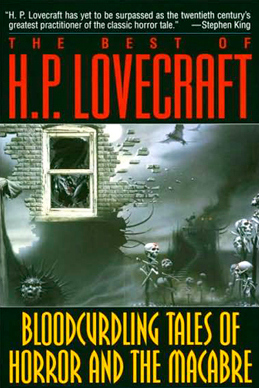
The Best of H.P. LovecraftThe Best of H.P. Lovecraft, cheerfully subtitled Bloodcurdling Tales of Horror and the Macabre, is a collection of some of Lovecraft’s most famous stories. It’s also quite a good read, with two great strengths.

First is the dark existential background of the stories. They feature pretty much the sort of scares you’d expect from horror fiction—insanity, cannibalism, monsters, aliens, gruesome and highly creative deaths—but they’re mostly depicted against the stark backdrop of an unknown, unfriendly cosmos seething with God knows what dreadful things.

Yes, declares Lovecraft, there’s a monster in the attic, but what really matters is that the universe is full of monsters.

The story that unsettled me most was the only one that was not a horror story. “The Silver Key” has some supernatural elements, but it’s not overtly scary. No one goes insane. There are no monsters. Nobody dies. What makes the story disturbing is its oppressively nihilistic worldview, its vision of a blind cosmos that “grinds aimlessly on from nothing to something and from something back to nothing again, neither heeding nor knowing the wishes or existence of the minds that flicker for a second now and then in the darkness.”

Lovecraft’s monsters are mildly scary, but what really puts me on edge is his philosophy of an empty existence in which life is fleeting and futile: a spark that flares for an instant in the darkness and illuminates nothing.

The second great strength of Lovecraft’s stories is their variety. There’s psychological horror in spades, from madness to cannibalism. Fantasy horror shows up in the form of demonic entities, ancient cults and dark magic. Much to my surprise, sci-fi horror makes appearances in the form of extraterrestrial creatures and eerie technology. Despite differences of genre, most of these stories are consistent with Lovecraft’s mythos, and the lines between genres are sometimes wonderfully vague.

Lovecraft’s literary style is plain and mostly unimpressive, and he occasionally tries too hard to convey a sense of horror by describing it openly. Dark hints would have been scarier than matter-of-fact phrases such as “Now, indeed, the essence of pure nightmare was upon me.” As Lovecraft himself pointed out, “the oldest and strongest kind of fear is fear of the unknown.” His stories might have benefited from fewer explanations and more haunting implications.

It is worth noting Lovecraft’s stories aren’t scary in the way, say, most horror movies are. There are few, if any, abrupt scares. The terror lies in the slow, steady buildup of tension. Impatient readers will be disappointed.

If horror is your cup of tea, H.P. Lovecraft delivers some genuinely creepy stories. If you’re sensitive to blood, existential angst or old-fashioned prose, Lovecraft is a good writer to skip.

Video Game Wedding Music

I’m not planning to get married, but I don’t deny the possibility. Stranger things have happened.

If I get married, I hope my wife doesn’t mind me choosing video game music for the wedding ceremony. Maybe I’ll just make her to listen to songs without telling her they’re from video games. Yeah, that might work.

How can she refuse the stirring notes of the prologue from Final Fantasy in the video above? Or this touching ballad from the latest Legend of Zelda game? Or some slow, sweet piano from Final Fantasy VI? What about this melody from the Kingdom Hearts series? Heck, the song is even titled “Dearly Beloved,” the words which began so many wedding ceremonies.

If my wife rejects all of these lovely songs, maybe I can persuade her to allow a nice, um, upbeat arrangement of “Pachelbel’s Canon.” The melody is a wedding classic, and therefore immune to all objections. I love loopholes!

202. Church Grumps

I am a grouchy churchgoer.

Every Sunday morning, I find myself griping about something or other: the music, the sermon or some other aspect of church culture.

For example, it bothers me that churches in America spend tens of thousands of dollars on unnecessary, self-indulgent stuff when Christians in poorer countries can hardly afford to rent tiny buildings for church services. (My favorite church in the world met in a disused soccer stadium: pretty much the only building it could afford.)

Instead of building a church gymnasium which will be used twice a week for potlucks and basketball, why not build five new churches in Vietnam or support ten pastors for a year in Colombia or feed thousands of children in India? Come on, fancy churches! There’s a world out there, you know, and it needs food and Bibles a heck of a lot more than you need new carpets or stained glass windows!

See what I mean? There I go: ranting like a madman, shaking my fists and being a church grump.

I miss the old hymns. (Many of the newer songs are, um, strange.) The lack of emphasis on international problems like poverty and religious persecution frustrates me deeply, and I’m appalled at the haphazard way the Bible is taught. Don’t even get me started on short-term missions trips.

I’m not usually irritable, and I’m not sure why church makes me grouchy. During college, I grumbled about mandatory chapel services and tried to avoid mainstream church culture. For months I’ve found something to bother me every Sunday morning.

Then, a number of weeks ago, as I mumbled my way through yet another contemporary song that seemed very emotional and completely meaningless, I remembered something.

The Lord Jesus once told a pleasant little story about two men, one of whom showed definite signs of being a church grump.

To some who were confident of their own righteousness and looked down on everyone else, Jesus told this parable: “Two men went up to the temple to pray, one a Pharisee and the other a tax collector. The Pharisee stood by himself and prayed: ‘God, I thank you that I am not like other people—robbers, evildoers, adulterers—or even like this tax collector. I fast twice a week and give a tenth of all I get.’

“But the tax collector stood at a distance. He would not even look up to heaven, but beat his breast and said, ‘God, have mercy on me, a sinner.’

“I tell you that this man, rather than the other, went home justified before God. For all those who exalt themselves will be humbled, and those who humble themselves will be exalted.”

All churches have problems. However, as I stand in self-righteous (and grumpy) judgment of these churches, I generally forget one all-important fact.

I have problems. I have a lot of problems.

As the Apostle Paul pointed out, “You, therefore, have no excuse, you who pass judgment on someone else, for at whatever point you judge another, you are condemning yourself, because you who pass judgment do the same things.”

I have no right to be a church grump. Some of my complaints are legitimate, sure, but I don’t have much authority to make them. A man with a plank in each eye is hardly the chap to go pointing out specks in the eyes of others.

More to the point, being a church grump won’t help anybody.

Acknowledging my faults and trying to be humble seem like good ways to start. Then, perhaps, without shouting or shaking my fists, I can suggest how churches can be better.

201. And We’re Back!

My typewriter monkeys have dusted off their typewriters. I’ve brewed some coffee, fired up my laptop and spent roughly half an hour trying to think of a really clever way to start off this blog post.

Ah, it’s good to be back.

Truth be told, I really needed the break. TMTF had become an obligation, and getting away from it for a few weeks was exactly what I needed to renew my enthusiasm for rambling about faith, writing, video games, literature, life, the universe and everything.

Having cherished a private hope that my typewriter monkeys would make their month-long vacation in Tijuana a permanent stay, I was disappointed. My monkeys have returned. They brought back a baffling collection of souvenirs: three sacks of coconuts, a Velvet Elvis and a hideous false mustache. (I know better than to ask questions.) My monkeys are annoyed to be back, and I’m annoyed they’re back, so at least we agree on something.

In other news, my break gave me an opportunity to make plans for my writing.

At some point, for example, I may put Geeky Wednesdays on hold for a dozen weeks and republish The Infinity Manuscript as a serial. Hardly anyone has read The Infinity Manuscript, which is rather a shame. I put quite a lot of work into it. Rerunning the story seems like a great option if I become temporarily too busy to handle the pressure of writing new Geeky Wednesday posts every week.

I didn’t exactly devote my month off to soul-searching, but it hit me more clearly than ever before that I need to have a better, brighter outlook. I’m a pessimist. As often as I’ve pointed out the importance of being positive, I haven’t been consistent in having a hopeful attitude.

Few things are drearier than forcing or faking cheerfulness. Artificial happiness is a poor alternative to honest pessimism. Father Brown, G.K. Chesterton’s great detective, called an outlook of false optimism “a cruel religion.”

It finally struck me that having a cheerful outlook is not the same as merely pretending to be cheerful. Without making the slightest effort to feel a certain way, I can choose to focus on the positive over the negative instead of succumbing to Batman Syndrome and letting the negative eclipse everything else.

All this to say: I’ve been more positive lately. It’s nice. I recommend it.

The past year was an adventure. I found a job, settled down, learned some invaluable lessons, ate a lot of cookies and discovered coffee tastes great with bourbon.

This was the year I grew up.

I remain grateful to God for bringing me so far, excited to press onward and upset with my typewriter monkeys for cluttering up my apartment with coconuts. I wish they had stayed in Tijuana.