220. Wishing I Had Something Wise to Say

This was a rough week. First of all, there was snow. I don’t like snow. It’s wet and cold and awful. There’s a reason Dante put snow—well, ice, which is almost the same thing—in the innermost circle of hell.

Snow was the least of my concerns this week. I suffered from depression. This was no surprise. Depression afflicts me occasionally. Sometimes it lasts only a few hours. Sometimes it lasts a week or more.

At its worst, depression is very much like a cold. These conditions share some symptoms, such as tiredness and lethargy. Depression also inflicts apathy, mild panic, feelings of hopelessness and an inability to focus. Both conditions last anywhere from a few days to more than a week, and they’re generally infrequent—thank God.

When paralyzed by depression, I watch helplessly as chores and commitments pile up. (Yes, these sometimes include blog posts.) I huddle in my armchair when depressed, unable to focus, dreading work, wishing I could just curl up in my sleeping bag and wait for my depression to go away… and wondering whether it ever will.

Depression sucks.

This week, I stumbled through a suffocating fog of stress and fatigue. I slept a lot, and forced myself to eat, and watched some Batman videos on YouTube, and then shuffled reluctantly out the door to go to work. For the most part, I didn’t live. I merely functioned.

Then I awoke on Thursday and felt fine. My depression disappeared overnight… as always.

Every time I have bad experiences, I try to learn from them. It comforts me to find to find lessons or blessings in unpleasant circumstances. I’ve used my struggles with depression to illustrate discussions about things like grace, compassion and the importance of a positive outlook.

Not today. I wish I had something wise to say. I’d love to wrap up this week with some neat, tidy lesson, but I can’t. It was a hard week, and God carried me through it, and that’s all there is. As much as I wish I could share some profound insight, I’ve got nothing.

I’m simply thankful today. I’m thankful my depression hasn’t ever become a permanent affliction. I’m thankful for family and warm clothes and God’s grace and rest and Batman and chocolate-covered espresso beans.

Whether or not my life seems to make perfect sense, I’m thankful to be alive.

Phoenix Wright Is Back

Dash it, Phoenix. I missed you. Welcome back.

It’s been more than five years since Phoenix Wright, the sarcastic and spiky-haired star of the (surprisingly fun) Ace Attorney games, has defended the innocent in court. Tomorrow marks his triumphant return to the courtroom as a defense attorney in the latest Ace Attorney game. I expect it to be full of clever crimes, plot twists, great music, sarcastic quips and melodramatic objections.

In celebration of this long-awaited occasion, here’s a brief recap of Wright’s early years.

219. TMTF Reviews: CTRL+ALT+DUETS

I was recently asked whether I might be interested in reviewing an album of geeky music. Upon receiving this unexpected offer, I quickly arrived at my decision by the following three steps.

1. I know nothing about music.

2. I am totally a geek.

3. LET’S DO THIS THING.

Thus, with apologies to my musical friends and a rousing cheer for geeks everywhere, TMTF is delighted to review CTRL+ALT+DUETS, an EP of parody music.

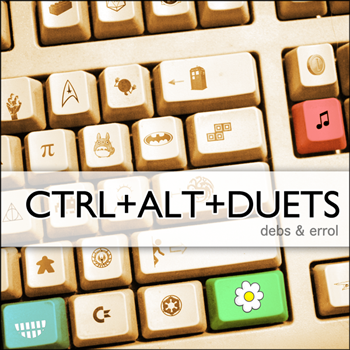
Debs & Errol - CTRL+ALT+DUETS - coverBefore I discuss any of the songs on this EP, I want to mention how much I love its cover. Any design that brings together Batman, Portal, Totoro and the TARDIS is a good one in my book. All it needs, really, is a Triforce and a Poké Ball. The title of the EP is also pretty clever, though the names of the musicians puzzle me. Isn’t Errol an owl from the Harry Potter books? Am I imagining things?

Debs & Errol

I see Debs, but where is Errol? Who is the guy with glasses? WHERE IS THE OWL?!

All right, let’s face the music.

CTRL+ALT+DUETS features seven tracks: all parodies of popular songs. I was strongly reminded of Weird Al Yankovic, who does a phenomenal job of juxtaposing silly lyrics with sad or emotional melodies. This EP does the same. The most striking thing about its songs is how humorously the lyrics contrast with the melodies.

The first song, “Tribbles,” is a glorious riff on Taylor Swift’s “I Knew You Were Trouble.” The defiant bitterness of the original song is redirected toward the furry creatures called tribbles from the Star Trek franchise. The singer—whom I presume to be Debs, since she doesn’t sound like the Harry Potter owl—delivers a solid, believably poppish performance.

Moving on to another major science fiction franchise: the next song, “TIE After TIE,” puts panicked lyrics to a slow, smooth melody to describe a frenetic Star Wars space battle. I recognized the song as a parody of “Time After Time,” with a bit of the Star Wars theme woven in for good measure. Debs is joined on this one by Errol, who has a surprisingly deep, masculine voice for an owl. As with “Tribbles,” I love the contrast between pop melodies and sci-fi scenarios.

Next, a Disney song! We’ve all heard “A Whole New World,” the magic carpet song from Aladdin. “A Virtual World” is much the same, except the girl really isn’t interested in what the guy wants her to see. The guy extols the merits of MMORPGs. The girl complains about them. The listener—at least, this listener—laughs.

I haven’t the faintest idea what song “Falling Quickly” parodies, but that doesn’t keep me from from appreciating its melancholy description of Tetris addiction.

More Disney? I won’t complain. “My Partner’s a Nerd” snarkily inverts “Part of Your World” from The Little Mermaid. In the original, the singer describes her treasured possessions and wishes her life were less ordinary. In “My Partner’s a Nerd,” the singer complains about the geeky junk cluttering her home and wishes her significant other were more ordinary.

“Commodore 64” is neither a familiar tune nor a familiar topic. (The Nintendo 64 will always be the console of my childhood; no other video game system with 64 in its name will usurp its coveted place in my memory!) “Commodore 64” is a catchy, bouncy love letter to that classic video game system and its software. Most of its gaming references went way over my head—hey, I was born in the nineties—but I like the blending of an Elvis Presley-style tune with snatches of chiptune music.

The EP concludes with “If I Were an Undead Crawler,” a deceptively cheerful acoustic piece in which the singers describe the things they would do if they were zombies—namely maiming, mangling and devouring their listeners. (Once again, I haven’t an inkling what song is parodied.) For me, the real charm of this song is when Errol realizes halfway through that he doesn’t really want to be a zombie.

Debs is a fantastic singer, and Errol has a pretty good voice. Their harmonies are lovely; their banter is even better. As parodies of existing works, the melodies in CTRL+ALT+DUETS are familiar and catchy. Musical arrangements are quite good, though a few synthesized instruments sound painfully fake.

The lyrics are consistently clever and humorous… provided you’re a geek. The references to Star Wars, zombies and classic gaming will make no sense to listeners not steeped in nerd culture. This EP fits a particular niche. Those who understand its jokes and catch its references will enjoy it much, much more than those who don’t.

Barring Errol’s role in the Harry Potter books, I’d never heard of Debs and Errol. (I’m pretty sure the Harry Potter Errol and the geeky musician Errol are the same guy—I mean, how many Errols can there be in the world?) When I began listening to CTRL+ALT+DUETS, I knew only that it would be geeky. I wasn’t sure what to expect.

I wasn’t disappointed. The EP turned out to be pretty awesome… and extremely geeky. For six Canadian dollars—because American dollars just ain’t good enough, I guess—these seven songs are a pretty good deal. If you’re a geek, CTRL+ALT+DUETS is absolutely worth checking out. If you’re not a geek, don’t feel guilty giving it a miss.

Biblical Poetry Is Weird

How beautiful you are, my darling! Oh, how beautiful! Your eyes behind your veil are doves. Your hair is like a flock of goats descending from the hills of Gilead. Your teeth are like a flock of sheep just shorn, coming up from the washing. Each has its twin; not one of them is alone.

Song of Songs 4:1-2

Protip: If you’re dating a woman, don’t compare her physical features to farm animals.

The Bible is full of weird poetry. Take Song of Songs, also called Song of Solomon. Its original audience may have found it moving or beautiful, but the past three millennia have not been kind to its similes. What must have been romantic in Solomon’s day seems very strange to us.

Reading Song of Songs is an amusing and educational experience. In praising a woman’s beauty, for example, the book compares her nose to a tower and her breasts to young gazelles. Sweet, sexy or just weird? I prefer not to think about it.

Song of Songs describes the woman’s lover in slightly less bizarre terms. Parts of the man’s body are likened to doves, gold, jewels, flowers and spices. These may not be the most masculine comparisons, but at least the man doesn’t sparkle in the sunlight like a certain vampire.

Biblical or otherwise, what’s your favorite strange bit of poetry? Let us know in the comments!

218. Another Post About Grace

I write a lot about grace. You may have noticed.

I suppose the reason I write so much about grace is that I’m amazed—staggered—almost incredulous—that God puts up with us. I sin. I struggle with selfishness and pride and insecurity every freaking day. Besides my personal faults, I sometimes feel overwhelmed by the myriad pressures and responsibilities of life. Have I mentioned my chronic struggle with anxiety and depression?

Yeah, life can be a mess.

Throughout this messy life of mine, I have often hoped to attain a sort of near-perfection. Someday, I thought, I will get it together once and for all. There will be no more insecurities, sins or mistakes. I hoped to reach a kind of godly plateau, a spiritual condition with very little room for improvement. With God’s help, I will finally get things right.

I know now that’s not going to happen.

Last month, I spent an amazing week relaxing with my family by a lake. It was a sabbath rest: seven days packed with blessings. I felt refreshed and strengthened by that week. My time at the lake was, I felt sure, a cure for at least some of my problems, and the beginning of a better, brighter chapter of my life.

It wasn’t.

The next two weeks were rough. Work was hard. For several days, I blundered through a fog of anxiety and depression. It was almost as though the week at the lake had never happened.

In the end, of course, God helped me through those weeks. That was no surprise. Whatever my problems, God never fails to help me—and that’s the point.

I don’t think I’m ever really going to get it together. I shall always struggle. Perfect holiness and complete awesomeness will elude me. Until I shuffle off this mortal coil, I’ll have problems.

In my experience, God doesn’t make us self-sufficient. He helps us do better. He helps us be better. When we inevitably make mistakes, he forgives.

As much as I wish I could get it together and keep it together, I don’t believe I ever shall.

It is well, then, that our God is a God of grace.

217. TMTF Reviews: Have His Carcase

People in detective stories have a way of finding dead bodies. Really, it’s ridiculous. Anyone would think from reading mysteries that murder is more common than speeding.

Harriet Vane, being a character in a detective story, naturally stumbles upon a dead body soon after the novel begins. She is quick to report the incident to the local police, and Lord Peter Wimsey—able to resist neither Harriet nor an interesting murder—wades into a case involving missing gold, deadly razors and sentimental old ladies.

Should readers, like Lord Peter, entangle themselves in this mystery?

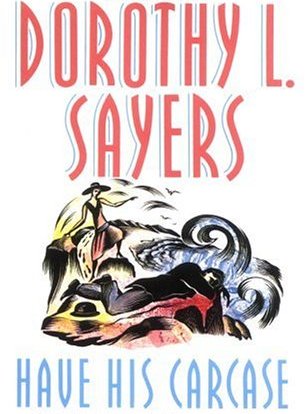
Have His Carcase

I’m all for interesting murders—in fiction, I mean—but this is definitely one to skip.

There are basically two kinds of detective stories. They can be called magician stories and policeman stories. I prefer call them great stories and dull stories.

In the first kind of story, the detective is like a magician. As a magician produces rabbits from empty hats, the detective produces answers from clues that appear meaningless. When the detective weaves these clues into a brilliant solution, it seems almost magical.

In the second kind of story, the detective is like a policeman. As a policeman does dreary procedural stuff, the detective does the same: checking alibis, comparing timetables, interviewing suspects and eliminating options until a solution is reached. This kind of story is more realistic, and also less interesting.

Have His Carcase is a policeman story, and a dull one. There are few surprises or interesting revelations. I recall only one clever plot twist in the entire novel. This twist came right at the end of the novel, after many chapters of slow, realistic, boring investigation. It wasn’t worth it.

As an example of how tedious the novel can be, Lord Peter and Harriet spend an entire chapter solving a complex encrypted message and outlining every single step of the process. That’s pages and pages of dense, nigh-unreadable explication. After one or two paragraphs, I gave up trying to understand any of it.

There’s some interesting chemistry between Lord Peter and Harriet, but it’s mostly lost in the dull minutiae of their investigations. Apart from those two—and Lord Peter’s wonderful butler, Bunter, who I swear must be related to Jeeves from the novels by P.G. Wodehouse—the characters in the book are pretty forgettable.

In fact, the entire novel is forgettable. Dorothy Sayers wrote some great short stories starring Lord Peter Wimsey—true magician stories—but Have His Carcase is a disappointment.

216. Lance Eliot Is Dead

This is a hard post to write.

I suppose I should start with a clarification. Lance Eliot isn’t completely dead. He’s mostly dead. As the creepy old man from The Princess Bride reminds us, “There’s a big difference between mostly dead and all dead.”

Long ago, I resolved to write and publish a novel. I wanted to be an author. It was my dream. For years, I worked on several versions of a story about a college student named Lance Eliot and his unexpected adventures in another world.

I sort of succeeded more than a year ago with the publication of The Trials of Lance Eliot, the first novel in a trilogy called The Eliot Papers. I had done it! I was a novelist! The first book was published, and all that was left was to finish its two sequels.

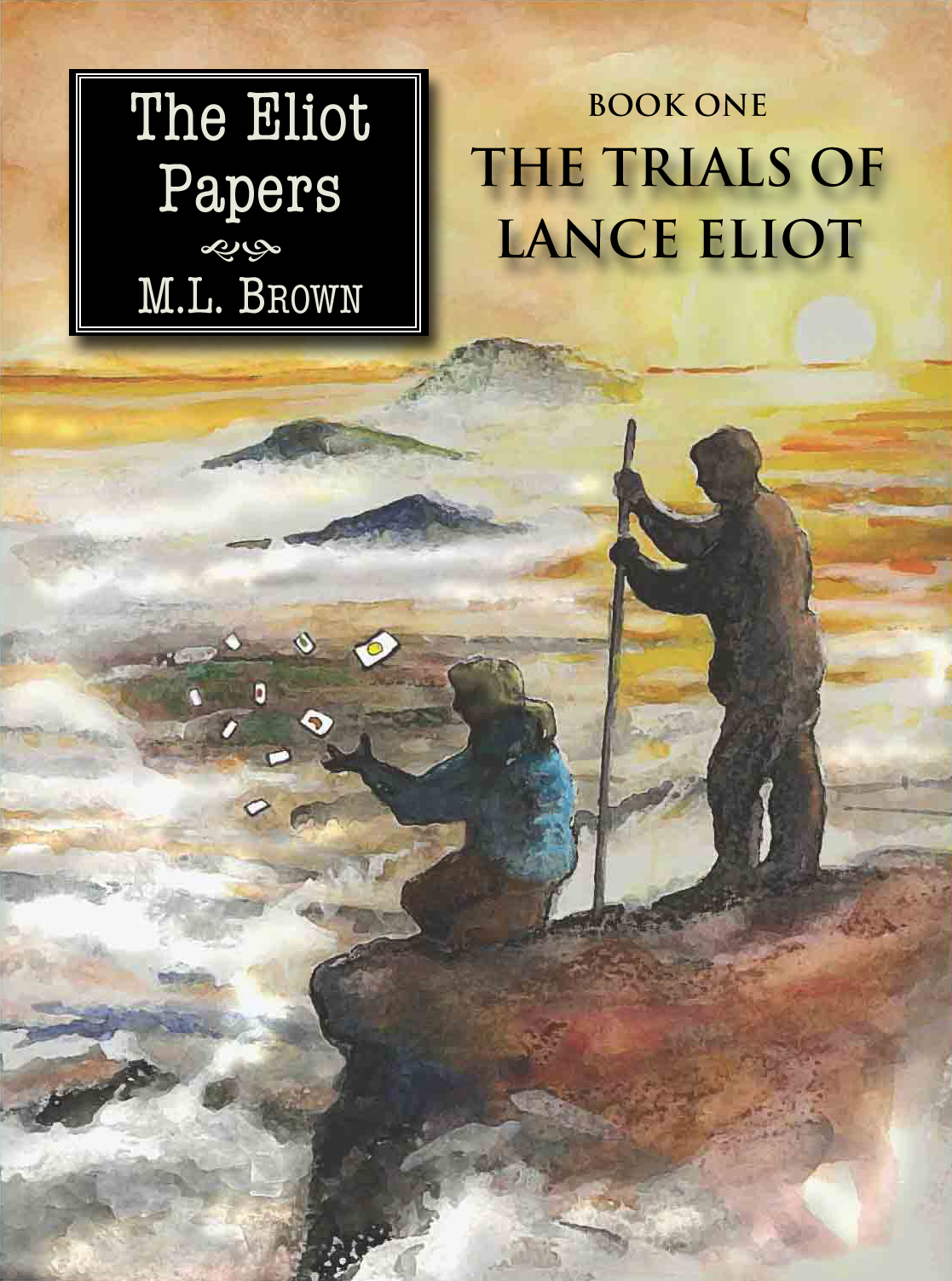
The Trials of Lance Eliot

At the moment, I don’t think I can.

For nearly eight years, Lance Eliot’s story has been my greatest passion as a writer. I’ve invested so much in it. I want to have it finished. It hurts to abandon it.

All the same, I think the time has come for me to let it go.

To clarify: I don’t intend to abandon The Eliot Papers forever. I hope to finish the trilogy someday. It just won’t happen anytime soon.

Most of my readers probably don’t care, but I know a few have enjoyed The Trials of Lance Eliot and want to read its sequels. I owe those readers an explanation and an apology.

The apology is shorter, so I’ll start there.

I’m so sorry to keep you waiting.

If you’ve enjoyed The Trials of Lance Eliot and want to know the rest of Lance’s story, feel free to contact me with questions. I’m happy to share plot details with readers who want to know how Lance’s story ends.

As for the explanation: I think Hergé, the creator of The Adventures of Tintin, put it best: “Right now, my work makes me sick. Tintin is no longer me . . . If Tintin continues to live, it is through a sort of artificial respiration that I must constantly keep up and which is exhausting me.”

At this time, I feel the same about Lance Eliot as Hergé felt about Tintin. I love the character and his world and his story. I simply can’t keep them up. They’re exhausting me. What began as a dream has become a burden.

I have other reasons for setting aside The Eliot Papers. I have a job and a blog and many other commitments. I sometimes suffer from depression. At the best of times, writing fiction is hard. Working on a massive project like The Eliot Papers is exhausting and stressful. The addition burden of author stuff—updating a book blog, maintaining a Facebook page, gathering reviews and promoting my writing—is simply more than I can handle.

There is one final problem: The Trials of Lance Eliot hasn’t sold well. I regret to say the novel hasn’t even recouped the money its publisher invested in its publication. This is mostly my fault; I should have been much more active in promoting the book. All the same, it’s definitely a deterrent from investing endless time and effort in sequels.

In the end, I was left with two options. I could, in addition to many other commitments, keep working on The Eliot Papers: an exhausting, discouraging project without much chance of success. My other option was to let it go.

After much coffee and even more careful, prayerful consideration, I’ve chosen the second option.

My publisher has graciously accepted my decision. I’ve already deleted the book’s blog and my Goodreads author page. My Facebook author page is in the process of being deleted, and I’ve made many tweaks to this blog to eliminate inconsistencies and links to sites that no longer exist.

My decision to let go of The Eliot Papers has left me sad and discouraged. It’s hard to see a dream die. At the same time, I feel free. My life has become simpler. I can work on other projects, and I can spend free time reading and gaming without feeling guilty. That vague, constant burden of anxiety is gone. I can be a writer again without being an author.

Lance Eliot’s story has been quite a journey for us both. Working on The Eliot Papers taught me pretty much everything I know about writing. It was exciting, challenging, fulfilling and fun. In spite of its discouragements and failures, I thank God for The Eliot Papers. It was definitely an adventure.

Lance Eliot isn’t all dead, and I hope he returns someday.

For now, though, I have my own life to live.

215. A Brief Glossary of Handy Video Game Words

The world of video games is a vast and complicated place, littered with coins and spikes and bottomless pits, and discussed using a unique vocabulary: a lexicon packed with abbreviations, technical terms and snippets of Japanese. Video game words can be daunting or confusing to the uninitiated.

We’re here to help.

Here is a brief glossary of handy video game words. May it never be said TMTF has not done its part to promote the spread of knowledge and the betterment of humankind!

Action RPG: An RPG featuring real-time action instead of turns, e.g. Kingdom Hearts; see Turn-based RPG

Boss: A powerful enemy, usually fought at the end of a stage or dungeon

Co-op: A form of multiplayer in which players cooperate to complete an objective

Combo: In fighting games, an unbroken combination of moves or attacks

Console: A device for playing video games; generally connected to a television

Cutscene: A scripted visual sequence used to advance a game’s story

Developer: The person, group or company that makes a game

DLC: Downloadable Content, extra features in a game for which players pay an additional fee

Dungeon: A kind of stage fraught with enemies, puzzles, treasures and challenges; often concluded with a boss

Dungeon-crawler: A game with a strong focus on traversing dungeons

Easter egg: A hidden feature, often of a humorous or frivolous nature; sometimes a reference to another work; tragically, not actually made of chocolate

Escort quest: An objective requiring the player to protect an object or character; for most players, an excruciating nuisance

EXP: Experience, also abbreviated XP, generally awarded to the player in the form of points, which make characters stronger by causing them to level up; common in RPGs

Extra lives: Additional chances for a player to play without incurring a game over

Fetch quest: An objective requiring a player to retrieve an item or character; generally very tedious

Final boss: A powerful boss fought at the end of a game

FPS: First-Person Shooter, a genre of game in which the player wields a weapon from a first-person perspective, e.g. Halo

G: Gold, a standard form of currency in games

Game over: The point at which a player runs out of chances to play, and must begin the game from the beginning or a save point

Gameplay: The player’s interactions with a game; the interactive aspects of a game

Gameplay mechanic: A specific gameplay aspect

Gamer: A person who plays video games

Graphics: A game’s visuals

Hadouken: A colloquial term for projectile attacks in fighting games; named for a move in the Street Fighter series

Handheld: A portable video game device

HP: Health Points or Hit Points, a numerical representation of how much damage can be sustained by an object or character; see Life bar

Inn: In most RPGs, a location in towns where players can restore the HP and MP of their characters

Item: An object usable by the player; often depleted upon use

JRPG: Japanese Role-Playing Game, a style of RPG traditionally associated with Japanese developers, e.g. Final Fantasy; characterized by a linear narrative and stylized visuals; see WRPG

Level up: An increase in a character’s strength or ability, generally earned by accruing a predetermined amount of EXP

Life bar: A visual representation, typically in the form of a horizontal gauge, of how much damage can be sustained by an object or character; see HP

Metroidvania: A kind of platformer with RPG elements and a strong emphasis on exploration; named for Metroid and Castlevania, game series which exemplify the genre

Miniboss: A less powerful boss fought partway through a stage or dungeon

Minigame: A small, simple game within a larger, more complex one

MMORPG: Massive Multiplayer Online Role-Playing Game, an RPG that connects multiple gaming systems and hosts numerous players in a single virtual world, e.g. World of WarCraft

MP: Magic points or Mana points, a renewable asset that can be spent to perform special moves

Multiplayer: A game feature that allows for multiple players to play the same game simultaneously

NPC: Non-Player Character, a character not controlled by any player

Open-world: A kind of game stage in which the player is given freedom to roam a large virtual world and flexibility in approaching game objectives

Overworld: The space connecting dungeons, towns or stages

Pixel: One of many tiny squares or dots that make up a larger image

Platformer: A genre of games in which gameplay usually consists of traversing platforms, pitfalls and other obstacles, e.g. Super Mario Bros.

Power-up: An object which temporarily grants a character greater strength or a new ability

Production values: All aspects of a game apart from gameplay; e.g. music, writing and graphics

Quick time event: An interactive cutscene in which a player must press a button or sequence of buttons displayed on screen; generally a terrible game mechanic

Random encounter: In RPGs, a gameplay mechanic that puts players at risk in certain areas of being ambushed by enemies and having to fight

Respawn: When a defeated character disappears from the game and reappears at a predetermined point

RPG: Role-Playing Game, a genre of game in which player controls a character or group of characters who become stronger as the game progresses; generally emphasizes storytelling and strategic gameplay

RTS: The Real-Time Strategy genre, which puts the player in command of a group of units and emphasizes micromanagement of resources, e.g. StarCraft

Save point: A checkpoint at which the player’s progress is recorded

Shovelware: Badly-designed games fit only for taking up space in landfills

Side quest: An optional objective or set of objectives available for the player to complete

Sprite: A two-dimensional image or animation integrated into a larger scene

Stage: A self-contained area in a game featuring a specific objective; also called a level, course, act or zone

Superboss: An optional boss, often more powerful than the final boss; a challenge for expert players

Town: A space in a game, generally neutral and free of enemies, offering services to the player such as shops, inns and save points

Turn-based RPG: An RPG featuring sequential moves or turns instead of real-time action, e.g. Final Fantasy; see Action RPG

Tutorial: A section of a game that instructs the player how to play

Vaporware: A game supposedly in development that shows no signs of imminent release

WRPG: Western Role-Playing Game, a style of RPG traditionally associated with Western developers, e.g. The Elder Scrolls; characterized by a nonlinear narrative and realistic visuals; see JRPG