259. What Blogs Should I Follow?

Some time ago, I tweeted a question to my fabulous followers on Twitter: I’d like to follow more blogs. What are your recommendations?

This tweet, like the voice of one crying in the wilderness, went unheard and unanswered. I would like some answers to my question, though, so today I’m asking you.

I’d like to follow more blogs. What are your recommendations?

Specifically, what great blogs delve into subjects like culture, Christianity, writing, video games, literature, film and media?

If you enjoy a blog, or think I might like a blog, or write a blog, share it!

What blogs do you recommend? Let us know in the comments!

258. TMTF Reviews: Orthodoxy

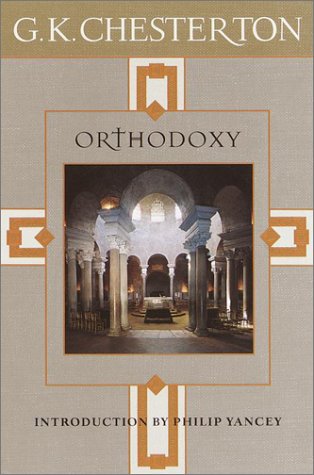
I received some lovely presents for Christmas last year: an Edgeworth-colored coffeemaker, a few gift cards, a picture of ponies drinking milkshakes and a paperback copy of G.K. Chesterton’s Orthodoxy.

I loved Chesterton’s novels and stories, but I had never read any of his nonfiction. Orthodoxy and Heretics had been recommended to me for years by friends and teachers. It was clear there was no getting out of it. My unalterable destiny was to read at least one of these books, and so I settled upon Orthodoxy as a Christmas gift when my loving mum insisted on buying me something for the holidays.

Was Orthodoxy worth all those recommendations? Is this spiritual memoir a worthy read, or should Chesterton have stuck to writing stories?

Orthodoxy

Orthodoxy was thoughtful, engaging and lively—but not at all the book I expected it to be.

You see, I had assumed Orthodoxy would be a work of either apologetics or lay theology. I expected either a focused defense of Christianity or something along the lines of The Gospel According to ChestertonOrthodoxy turned out to be something much different, and much more interesting.

In his book, Chesterton lays out a sort of spiritual quest—no, a spiritual ramble, which began with his basic beliefs about existence. His views of the world required a certain set of facts or principles. No existing worldview seemed to fit his revolutionary ideas. Every ideology he tested rang false; every philosophy had some damning flaw.

It was with great surprise he realized his daring new ideals were perfectly matched to one very ancient worldview—Christianity.

Chesterton loved paradoxes: things that seem contradictory yet are true. It came as absolutely no surprise to me that Orthodoxy is packed with fascinating paradoxes from start to finish. Christianity, despite its ancient heritage and old traditions, is the most revolutionary creed on the market, maintains Chesterton. It is a system of ludicrous extremes, and it is the only system to make sense.

I wondered at the beginning whether Chesterton would try to prove any of his assertions by logic. He does not. In fact, he cheerfully confesses, “This is not an ecclesiastical treatise but a sort of slovenly autobiography.” Orthodoxy is not a work of lay theology. It’s more like a wandering essay packed with poetic prose and cheerful sarcasm.

Anyone looking for a concise defense or explication of religion in Orthodoxy won’t find it. The book is a lively discussion, not a lecture or sermon. For those contented to read a clever set of perspectives on faith and modern worldviews, Orthodoxy is absolutely a worthwhile read: thought-provoking, unapologetic and witty.

My only notable criticism of the book is the way Chesterton constantly alludes to thinkers ancient and contemporary (for his time) without explaining their philosophies. He tosses out names like Zola and Bellec, apparently expecting his readers to know exactly who they were and giving only the faintest hints of their ideologies. I recognized a few of these allusions, but most of them sailed over my sad, ignorant head. Chesterton clearly assumed I would be a good deal better educated than I am.

Its frequent allusions to random thinkers aside, Orthodoxy is a fascinating exploration of ancient doctrines, modern philosophies and the strange habit old things seem to have of being more revolutionary than new ones. Readers expecting structured arguments will be disappointed, but anyone looking for a wry discussion of ideologies sacred and secular is in for a superb read.

RiffTrax

Update: The video I originally shared was removed from YouTube, so here are a few scenes of RiffTrax poking fun at The Wizard of Oz. You’re welcome.

The good folks at RiffTrax have possibly the best job in the world. They’re paid to make fun of movies, and they’re really good at it.

RiffTrax is a company that produces, well, riff tracks: funny commentaries in which comedians riff movies. It’s the same concept as Mystery Science Theater 3000—in fact, the three regulars on RiffTrax are MST3K veterans. The founder, Mike Nelson, is a fan of both C.S. Lewis and P.G. Wodehouse, and therefore a man worthy of my utmost regard.

RiffTrax commentaries are eclectic mixes of improvised dialogue, pop culture references and general silliness. The range of RiffTrax’s humor is surprising. In one moment, they might make sophisticated quips about classic literature or film history. In the next, they might make fart noises.

RiffTrax is often witty, sometimes a little bawdy and always exuberant in its ridiculousness. I like RiffTrax. The extravagances of Hollywood should be kept in check by healthy doses of mockery. After all, as RiffTrax reminds the viewer, “Some movies have it coming.”

257. Everything Is Awesome?

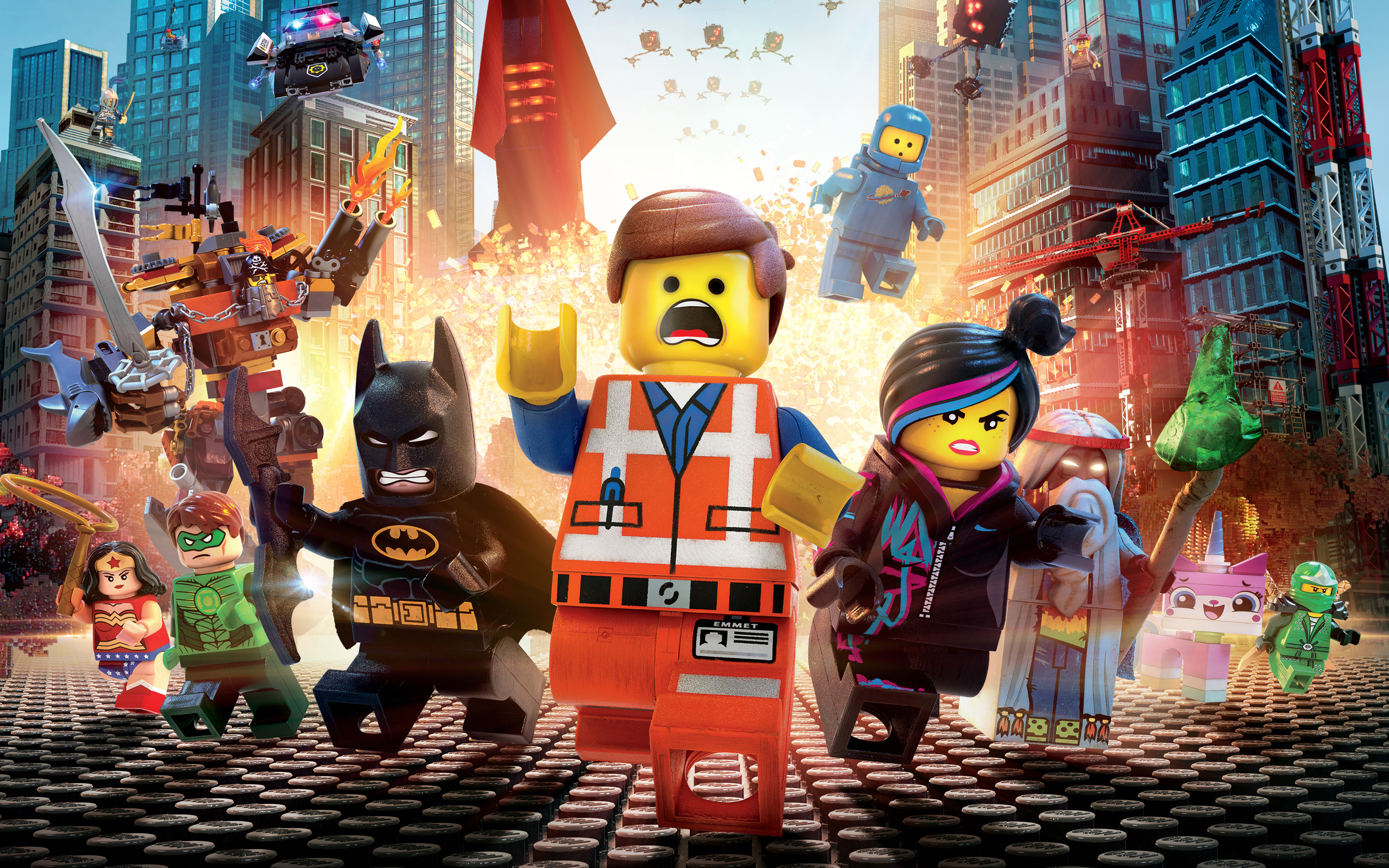
I saw The Lego Movie not long ago. Now, I know other bloggers have already discussed this strange, wonderful, colorful film, but I have a few things of my own to say.

On a Saturday evening weeks ago, I stepped out my front door into chilly gloom, clambered into Tribulation (my rickety car) and sped into the dark, forbidding unknown. Depression, anxiety and vague panic had burdened me all afternoon. It was hard to take those first few steps away from home. I wanted to stay, but I had a mission and dash it all, I was going to complete it.

I was going to see The Lego Movie.

The Lego Movie

I’m really glad I did.

The film was excellent, but I’m not really going to talk about it. I’ll just point out that it features an upbeat, poppish song titled “Everything Is Awesome,” which pretty much sums up the movie.

The Lego Movie is a bright, cheerful, clever film, and it did me good. Getting out did me good. Defying depression and exploring new places and driving along dark, cold roads in a dilapidated car did me good. These things were different. Some were pleasant. Some were a little scary. For a few hours, I left everything behind.

It helped me see things a little differently.

My life is governed by routines and repetition. Mind, that isn’t a bad thing. Routines are efficient. Doing things differently is challenging, risky and sometimes costly. However, routines have a cost of their own. They lull me into a stupor. Repetition makes me forget there is a wide, wide world beyond my narrow day-to-day experiences.

In a manner of speaking, The Lego Movie is right: everything is awesome. The things repetition make me take for granted are amazing—I just don’t realize it until I leave them behind for a little while.

G.K. Chesterton wrote a story in which a man abandons his children, wife and home and embarks on a long journey. He exclaims, “I won’t stay here any longer. I’ve got another wife and much better children a long way from here. My other wife’s got redder hair than yours, and my other garden’s got a much finer situation; and I’m going off to them.”

The man walks and walks and walks. He walks all the way around the world, and finally comes to his “better” home and “better” family. They are exactly the same ones he left behind… yet they are better. His home and family are better because he has learned to appreciate them. By leaving behind his home and its routines, the man has the exquisite pleasure of coming back to them. He realizes everything is awesome.

Weeks ago, I realized the same.

I guess this means I’ll be going to the cinema sometimes, and varying my route back from work, and ordering more than one kind of sandwich at Subway, and generally finding more excuses to get away. Everything is awesome. Sometimes, I just need to do things a little differently to see it.

256. Zen and the Art of Baking Muffins

Today’s post was written by my dear dad. When he’s not being an awesome missionary or drawing pictures of monkeys, he spends a fair bit of time in the kitchen… on occasion, actually cooking. Following is a list of practical tips á la Steve Smith (of Red Green fame) compiled during my dad’s first attempt at baking zucchini muffins.

1. It’s always good to find a recipe that includes instructions as well as ingredients, unless you’re really good at culinary improvisation.

2. Whatever your temperament, stress can be avoided by removing the battery from the smoke detector before starting.

3. It saves time to search for ingredients where you’d least expect to find them first.

4. If, like myself, you hate washing muffin pans, use small cake pans instead. A muffin is a muffin, irrespective of size or shape.

5. They may look the same and share a first name, but baking powder and baking soda are not interchangeable. Also, if you end up (through no fault of your own) dumping in a whole teaspoon instead of the requisite half, you can skim most of the baking soda (or powder, as the case may be) off the top of the mix with a teaspoon. This maneuver grows steadily more complicated in direct proportion to the amount of time it takes for you to notice your mistake.

6. Throw in some raisins. That way, if your muffins turn out really gooey, you can always pass them off as bread pudding.

7. Mixing the batter by hand (i.e. with your fingers) guarantees a smooth blend, saves wear-and-tear on kitchen utensils, and makes for less washing up later. Another small economy: After dealing with the zucchini, keep the vegetable grater handy. You can use it to scrape the finished product out of the pans at the end and save yourself the trouble of messing with a spatula.

8. If your kitchen, like mine, doesn’t boast hot running water and you happen to be boiling broccoli while you bake, drain the vegetable water into the mixing bowl with a little detergent (after removing the batter, of course) for effective pre-wash, grease-removing action.

9. Some gas ovens refuse to light unless you hold the control knob down for a bit. (Contentious old buzzards, what?) Apparently, this information can be found in the “manual,” whatever that is.

10. If your oven isn’t spacious, your pans may tilt. This transforms the contents into something akin to the windswept dunes of the Sahara Desert. Caught in time, however, a judicious readjustment will return your muffin batter to the smooth, flat Death Valley it was meant to be—a strictly topographical reference, naturally.

11. Dish towels double very nicely as hot-pads as long as (a) your wife is well out of range, (b) you can take second-degree burns like a man and (c) you’ve remembered to remove the smoke-alarm battery as per Step 2.

12. Muffins in the oven can bubble like the Ugbischú Tar Pits. How cool is that?

13. If the recipe neglects to elucidate upon the precise temperature of your oven or the exact baking time, dial the knob around to about eight o’clock and then shut the blighted thing down when the finish goes from glossy to matte—I refer to the muffins, of course, not the paint on the stove.

14. If you’re out of toothpicks, a sliver from the wicker basket in the laundry room works just as well… especially if you haven’t the foggiest idea what the point of sticking it in the muffins is anyway.

15. There are very few baking errors that can’t be effectively masked by the generous application of melted butter, brown sugar and cinnamon before giving away your baked goods—or in the less fortunate cases, baked bads—to neighbors.

And remember that you’ll always have recourse to the admirable advice enshrined in the official motto of the Possum Lodge:

Quando omni flunkus moritati

When all else fails play dead

The Bible Sure Can Be Nasty

With the payment he received for his wickedness, Judas bought a field; there he fell headlong, his body burst open and all his intestines spilled out.

Acts 1:18

For being the all-important text of a religion considered pure and gentle, the Bible sure can be nasty.

Seriously, the writers of Scripture pulled no punches in describing scenes of violence. These range from morbidly amusing, such as the death of Absalom, to sickeningly brutal, like the death of Sisera and the suicide of Judas mentioned above.

Heck, even some of the stories we consider kid-friendly are really violent. Noah’s Ark and David’s duel with Goliath are tales we tell children in Sunday school, which is odd considering the flood snuffed out nearly all humanity and David cut off Goliath’s head.

The Bible also has some disturbing stories about sex. Not halfway through Genesis, the Bible’s very first book, we get attempted gang rape and drunken incest. Absalom, whose violent death I mentioned in the preceding paragraph, had sex in public with his father’s lovers to make a political point before his grimly humorous demise. Absalom’s sister Tamar was raped by her half-brother Amnon.

Even the holy prophets had off-putting things to say about sex. The sixteenth and twenty-third chapters of Ezekiel describe the lewd idolatry of Judah and Israel using strong sexual language.

There’s also a lot of drunkenness in the Bible, not to mention demon-possession and other satanic elements. Seriously. If the Bible were a film, it would have a stiff R rating. This is the book we teach in Sunday school.

I think that’s a good thing.

Granted, we should probably spare kids the most graphic bits of the Bible until they’re old enough to handle them. The Bible itself, however, needs to be taught as it is. God didn’t give us the sentimental, fluffy, family-friendly book some people believe the Bible to be. He gave us a book that describes war and death and sexual assault.

Why?

In the end, I think the Bible is honest. Its historians don’t idealize its history and its prophets don’t tone down their prophecies. This dark, broken world isn’t perfect, and God’s Word doesn’t paint it that way. Even the nasty parts of Scripture have a purpose, and that purpose is pointing humankind toward the grace of God.

After all, how can we appreciate grace and peace and beauty until we’ve seen the alternatives?

255. TMTF Reviews: Metal Gear Solid 2

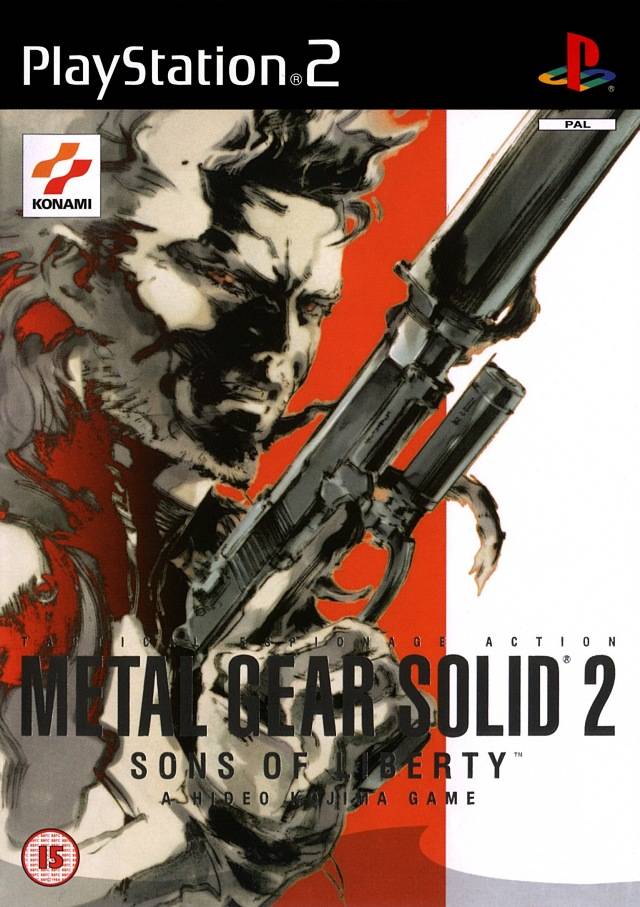
Not long ago, I played (and reviewedMetal Gear Solid, a game about war, loss, duty, giant robots and cardboard boxes. Now its chain-smoking hero, the stealth operative known as Solid Snake, is back for Metal Gear Solid 2: Sons of Liberty: a sequel packed with explosions, conspiracies, politics, over-the-top bad guys and—you guessed it!—stuff in which to hide.

Two years have passed since the Shadow Moses Incident, in which terrorists nearly got their devious hands on Metal Gear REX—a colossal armored vehicle equipped with nuclear warheads. Solid Snake stopped the terrorists, but the design for REX was leaked. Now military groups everywhere are building their own off brand Metal Gears. In response, Snake and his techie friend Otacon have founded Philanthropy, an organization devoted to stopping the proliferation of Metal Gear weapons. How does Snake achieve this goal? By sneaking around in a cardboard box, of course!

I enjoyed Metal Gear Solid so much that I was eager to dive into its sequel on the PlayStation 2. Is this game, like the first, an enjoyable experience of sneaking, shooting and fighting huge robots? Is this game an unplayable mess with an incoherent story? Is it a bit of both?

Metal Gear Solid 2This game is better than its predecessor. It’s also worse. As a game, it refines and polishes the gameplay of the original Metal Gear Solid and puts the player through some really creative challenges (and a few brief, regrettable sections of tedious gameplay). As a story, Metal Gear Solid 2: Sons of Liberty begins well but slowly loses track of itself and becomes a mess.

The first thing I’ll say about MGS2 is that a Major Plot Twist happens a couple of hours into the game. I won’t reveal it for two reasons. First, it’s an interesting turn for the story (and gameplay) to take; I don’t want to ruin it for anyone who might actually play the game. Second, I’m afraid that if I spoil the twist, the game’s director, Hideo Kojima, will sneak into my apartment and snap my neck while I’m sleeping.

Much of what I could say about this game I’ve said before. The player must sneak around, hiding in lockers, destroying security cameras, killing (or tranquilizing) enemy guards and avoiding detection at all costs. If the enemy finds the player, he is toast. Soldiers flood into the area with guns blazing during an alarm, leaving the player either to run and hide or to die with honor. The player’s chances of survival are helped by a arsenal of handy guns, gadgets and unconventional gear—including twice the number of cardboard boxes as in MGS1. Now you’re playing with power!

While the gameplay hasn’t changed much from MGS1, the game finds clever ways to use it. The first game gave players a pointless camera. This one requires players to take photos of a Metal Gear to expose its existence. MGS1 gave players a sniper rifle and hardly any open spaces in which to use it. MGS2 has an entire section in which the player must spot sensors rigged to bombs and shoot them out with the sniper rifle. Bravo, Kojima!

Not all of the gameplay twists in the game are positive, however. The player must explore flooded hallways, and swimming controls are horrendous. The player must also escort a cowardly hostage who is terrified of water, bugs and bullets. Guess what the player encounters? Flooded corridors, sea roaches and soldiers with guns. It is a truth universally acknowledged that escort missions are horrible. Why, Kojima? Why?

Then, in its final hours, the game gives the player a sword. Why? I don’t know. What I know is that the sword handles very differently from the guns and explosives the player has used for the entire game. Oh, and the player is forced to use this strange new weapon to defeat the game’s final boss. Bad idea, Kojima.

The story is a wonderful mixture of spy thriller cleverness and comic book nonsense. For every intelligent discussion of military tactics or nuclear proliferation, there’s a cyborg ninja or a bomber on roller skates. Sadly, the supervillain-esque bad guys of MGS2 are a bore compared to the ridiculous (and awesome) villains of MGS1.

Unfortunately, the story begins to unravel in its final chapters. MGS2 examines an astonishing number of complex ideas—social engineering, media censorship, virtual reality and existential angst, to name just a few—and they get muddled toward the end. Things begin to happen so quickly, with explosions and plot twists and colossal robots, that the player (at least, this player) is left asking, “What just happened?”

There are also moments that are simply odd. For example, the president of the United States grabs the player character’s crotch at one point in the game. It makes sense in context, but… still. Every time something bizarre happens in a Metal Gear game, my younger brother and I shake our heads philosophically and say, “Kojima wills it.” There can be no other explanation.

Anyone who enjoyed the strategic gameplay and engaging story of MGS1 will probably enjoy its sequel: the expanded gameplay and interesting plot more than make up for the tedious and confusing bits. Players new to the series will be perplexed by the story; I strongly recommend starting with the first Metal Gear Solid and taking it from there.

Will I play (and review) Metal Gear Solid 3: Snake Eater, the next game in the series? Yes. I must. Kojima wills it.

254. On Homosexuality: Let Us Only Handle Love

Today’s post was written by the talented TMZ—Thomas Mark Zuniga, I mean, not the celebrity tabloid—as a response to my thoughts on homosexuality. For more wise words and wanderings from Tom, check out his blog and his book, Struggle Central.

When my blogging friend, Adam (or as I’ve long regarded him, “That Monkey Guy”), asked me to contribute a post on homosexuality to his blog, I knew I wanted to write something. I just didn’t know where to start. Homosexuality is, after all, a Pandora’s Box of an issue lined with nettles and littered with landmines.

I really latched onto something Adam wrote recently. He talked about how his convictions and sympathies often seem to oppose each other. Oddly enough, I often find myself in a similar stance regarding homosexuality—though from a more unique, complicating perspective.

You see, it’s been almost a year that I’ve been publicly “out” as a “gay Christian”—or whatever you’d label me. First, I wrote a book, and then I wrote a blog post.

When I initially “came out” on my blog, I wrote that despite my male attractions, I cannot mentally reconcile a homosexual relationship and my walk with Jesus. Given the choice of one or the other, I’ve staked everything on Christ; without Him, I am nothing.

What about other gay people though? What about other gay Christians who don’t do what I do and believe what I believe?

Honestly, I used to feel angry toward other gay people. But I used to feel really angry toward other gay Christians who claimed to pursue Jesus and same-sex partnerships.

Not sad. Not disappointed. Angry. I hated that these particular gay Christians had somehow found this theological “loophole” and were able to reconcile the two while I remained “holy” in my struggles through singleness.

In recent years, however, I’ve been learning the process of not letting my beliefs necessarily dictate my reactions. I know, I’m a horrible Christian, right?

Whether we like it or not, there exist gay people and gay Christians in homosexual relationships. While homosexuals certainly experience discrimination, homosexuality and gay marriage are gradually becoming more normalized, both inside Christianity and out.

Our evolving culture has often left me wondering in this question mark-sized boat:

How do you believe one thing yet still show love and grace toward others—human and spiritual siblings alike—who live quite the opposite?

I suppose my answer hearkens back to something else That Monkey Guy mentioned. Where is the outrage over poverty, homelessness, sex trafficking, child abuse, the failed foster system, and the disheartening list trails on?

Are we naive to think that homosexuality and gay marriage is the biggest “threat” facing America? The world? Is our time really best invested in endless vociferous debates?

As a non-confrontational person, I’ve long been “over” the debate. I’ve already stated what I believe on my blog, and I’m going to leave it at that. Moving forward, I just want to tell my story—my messy, miraculous story.

Contrary to what many naysayers have “advised” me, God has indeed used my conviction on homosexuality for good. He’s introduced me to some of the most solid brothers I could ever know, both online and off. He’s moved me across an entire continent for a fresh new life. He’s given me a voice to speak for the voiceless among whom I lived for over two decades.

I’d have never gained so many of my current blessings were I not attracted to the same sex.

I’m not saying my entire road has been paved with peace, but God has certainly used the apparent “bad” of this conviction for His good. I’m convinced He’s in the business of writing similar redemptive stories for homosexuals and heterosexuals alike.

Since my book’s release, I’ve exchanged numerous conversations with people of all ages on all sides of this contentious issue: young and old and gay and straight and religious and nonreligious. It’s becoming more of a “normal” thing for total strangers to confide in me their sacred sexual secrets. I am touched that people would entrust me with their problems and pain.

I love them all.

And so while my convictions may reside on one side of the homosexuality hotbed, I’m learning to plant my sympathies across both sides. I figure if God wants to convict somebody about his or her sexual proclivities, heterosexual or homosexual, His Spirit is capable. God doesn’t need my blog or my Twitter account to draw people into His arms.

My advice to others struggling at the crossroads of their convictions and sympathies is actually quite simple. Regardless the complicating “issue” at hand, just love people. Open up your phone; open up your home. Treat someone to breakfast, or let them cry into your chest.

Hear their stories. Uncover your similarities and differences alike. Connect. We were wired for love, I’m convinced.

God can handle the homosexuality issue. He is big enough; He can do it.

Let us only handle love.

You Have to Burn the What?

Geeky Wednesday posts on this blog generally feature a song, picture, video or literary excerpt. Today’s post is a little different.

This particular Geeky Wednesday features a video game. Most games are far too long for this blog, but this one can be completed in a couple of minutes. If you don’t want to play it, that’s fine; I’ll explain in just a moment why this weird, wonderful little game is significant.

If you’ve ever played a video game, spare a few minutes of your life and give You Have to Burn the Rope a try. The game’s controls are up arrow key to jump, down arrow key to throw axes and left and right arrow keys to move left and right, respectively. (As with YouTube videos, a brief ad may play before the game begins.)

Go forth, brave reader, and burn the rope!

You Have to Burn the Rope is a joke, a critique of the video game industry or an exercise in postmodernism. I’m honestly not sure which it is.

Right from the start, the game gives the player the following facts:

  1. There’s a boss at the end of this tunnel
  2. You can’t hurt him with your weapons
  3. To kill him you have to burn the rope above

Thus the player proceeds along the tunnel and finds the game’s one and only boss, the Grinning Colossus. This towering enemy can’t be hurt by the player’s axes, leaving the player to snatch a torch from the wall and burn the rope above the boss. Burning the rope sends a chandelier crashing down upon the boss’s head… and that’s the game. You have burned the rope. The end.

As the credits roll, the player is rewarded extravagantly by this wonderful song.

“Congratulations!” exclaims the song. “You’re the hero we all wish we could be! You made it through the tunnel and grabbed that fire from the wall! You burned the rope and saved us all! Now you’re a hero! You managed to beat the whole damn game!”

The irony here is obvious. This short, easy game gives the player step-by-step instructions on how to overcome its only obstacle—heck, the game’s title gives away the only strategy needed to beat it—and then congratulates the player as though completing the game were an extreme challenge.

Since a friend of mine recommended You Have to Burn the Rope a long time ago, I’ve wondered what its developer is trying to say. Is the game an elaborate joke? Is it a protest of how modern video games are becoming too easy and rewarding players for negligible achievements? Is it a postmodern deconstruction of traditional video game design?

I don’t get it. All I know is that you have to burn the rope.

253. A Post About Homosexuality

A number of weeks ago, I walked in on an acquaintance of mine and noticed an engagement ring on his finger. “Congratulations!” I exclaimed, beaming. “Who’s the lucky lady?”

My acquaintance, whom I’ll call Socrates, looked away and replied quietly, “Well, he’s actually a guy.”

Well.

Socrates and I chatted for a bit about his plans. He and his boyfriend hope to marry in Mexico before settling down together in Indiana.

“Mazel tov,” I said as we concluded our chat, and I meant it.

My unexpected talk with Socrates reminded me that I’ve wanted to write this post for a long time. The reason I’ve put it off is that… well… I’m not really sure what to say, and I’m afraid of what will happen when I say it.

Deep breath, guys. Let’s talk about homosexuality.

I’m deeply conflicted about homosexuality and the controversies surrounding it. My convictions are squarely on one side of the debate; my sympathies are squarely on the other. The prejudice and bitter hatred of some so-called Christians toward LGBT (Lesbian, Gay, Bisexual, Transgender) persons appalls and angers me. On a personal note, I have several gay acquaintances, and I appreciate them. They’re all good fellows.

All the same, I can’t support homosexuality on moral or spiritual grounds. Scripture seems inescapably clear upon the point: the first chapters of Romans and 1 Timothy condemn acts of physical homosexuality.

(Interestingly, Scripture never mentions sexual orientation; the concept apparently wasn’t current at the time. The Bible addresses same-sex acts, not same-sex attraction.)

I’m angered by Christians who use Scripture as a license for intolerance or cruelty. At the same time, I’m troubled at the way accusations of ignorance or bigotry are sometimes hurled at people who believe, sincerely and respectfully, that homosexuality is wrong. Tolerance is a fine philosophy, but only when it goes both ways.

I suppose the thing that troubles me most is how homosexuality is becoming the issue of American Christianity, eclipsing discussions of urgent problems like poverty and religious persecution. The recent Duck Dynasty controversy dominated the media for weeks. Where is the outrage for abuse and starvation and human rights violations?

It’s a mess.

I don’t have much more to say, which is why I’m going to yield the floor to a blogger who is much better qualified than I to discuss the issue. Check in next time for his thoughts!