329. The Post of Resolutions Yet to Come

All right. I’ve reviewed my resolutions for 2014. What of the year ahead? What resolutions have I made for being a better, nicer, wiser person?

Here are my resolutions for 2015.

I will be more intentional in keeping my New Year’s resolutions.

Full disclosure: I make an effort at the start of each year to keep my New Year’s resolutions, and I forget by the end of each year whatever the heck it was that I had resolved to do. I often keep New Year’s resolutions by dint of trying generally to be a better person, not by remembering and keeping specific goals. In the new year, I’ll be intentional in keeping my resolutions—this one included!

I will work on my Spanish.

This is an old resolution, which I mostly failed to keep. My grasp of the Spanish language was never a strong one, and it has only weakened in the six and a half years since I left Ecuador. This will be the year I dust off my old Avatar: The Last Airbender DVDs, pop ’em in my laptop, and watch the Spanish dub of the entire series. After all, cartoons make learning fun bearable!

Spanish teacher

Yes, I will learn Spanish from this irresponsible cartoon twelve-year-old. Teach me, O bald one!

I will practice spinning an old broomstick.

A few people know of my talent for twirling old broomsticks like some sort of janitorial ninja. I haven’t really practiced this useless gift in the past few years. It’s high time I get some regular fresh air and exercise spinning my broomstick in the local park… even if it means little Amish children lining up in a neat, silent row to stare at me. (This really happened, and it was even more awkward than it sounds.)

I will have a more positive attitude.

I am a pessimist, and also a cheerful person. At the root of my paradoxical pessimism is the fact that cheerfulness and hopefulness are not the same thing. Beneath my silliness and sense of humor there is generally a negative outlook and an attitude of defeat. (It’s no coincidence that many humorists, from Mark Twain to James Thurber, were deeply melancholy men.) I will try in the new year not merely to be cheerful, but to trust, and to hope, and to persevere.

The face of a pessimist

This is truly the face of a pessimist.

I will research career options.

Despite having an English Education degree and a teacher’s license, I’ve finally admitted to myself that I don’t want to be a teacher—at least not in a US public school setting. Fortunately, there are other options open for someone with experience in English Education and a writing addiction. While I’m not planning to move on quite yet, this will be the year I figure out where I might go from here.

I will value prayer more.

I don’t value prayer enough. As an orthodox Christian, I believe it’s the single most important thing I do every day. However, in years past, I’ve made prayer just another item on my daily to-do list—and generally the first thing to be cut when I get busy. In the new year, I mean to honor God by honoring prayer.

Do you have any resolutions for the new year that you’re willing to share? Let us know in the comments!

Thanks for reading! If you have a moment, please check out TMTF’s charity fundraisers this month and make the new year awesome for a person in need!

328. The Post of Resolutions Past

Christmas is over, but this is no time for gloom! A new year is nearly here! We must face 2015 with hope, caffeine, and courage. After all, the start of each new year is an opportunity for self-reflection and self-improvement… or despair and apathy, if you’re a pessimist. It’s also a time for reminiscence, celebration, and setting stuff on fire.

Well, I suppose that last one only applies in Ecuador, where effigies are burned in the streets on New Year’s Eve. Every December I remember this tradition fondly, and then make new year’s resolutions instead. I would be arrested for arson if I built a bonfire on the streets of my quiet Indiana town.

Good times, good times.

Oh, Ecuador, how I miss you. Your traditions an inspiration, like a beacon burning brightly—a blazing beacon doused in kerosene and likely to burn down entire city blocks.

Before I list my resolutions for the new year, I should take a few moments to review my goals for the old one. After all, what good are resolutions if I don’t try to keep them?

These were my resolutions for 2014.

I will value variety.

I enjoyed some new things this year, from culinary surprises (who knew fresh spinach made such a good salad?) to gaming discoveries (Metal Gear Solid is pretty rad). However, for the most part, I stuck to familiar comforts. I must consider this resolution a failure.

I will live with confidence.

Much to my own surprise, I kept this resolution. I’m still an anxious person, but I’m learning to have fake greater confidence in myself.

I will be a people person.

I… sort of kept this one, I guess? I didn’t go out of my way to meet people, but I made a couple of new friends and did a slightly better job of keeping in touch with old ones.

I will keep up with this lousy blog.

This resolution was mostly successful. TMTF took a few breaks, but I’m pretty sure it was more consistent this year than before. If it wasn’t, blame my typewriter monkeys. Always blame my typewriter monkeys. (I need that slogan on a T-shirt.)

I will drink tea and coffee while they’re still hot.

I nailed this one.

I will be consistent and faithful in fulfilling my spiritual commitments.

I didn’t spend as much time praying and reading the Bible this year as in years past, but I was also busier this year with work, blogging, and other commitments. Although the quantity of time spent with God was less, I think its quality was improved; I’m getting better at reflecting on Scripture and praying prayers that aren’t completely awful. Let’s call this one a draw.

I have half a dozen new resolutions lined up for next year… but that’s for the next post on this blog.

Speaking of the blog, this was an interesting year for TMTF. I revamped its reviews, embraced the Oxford comma, turned into the Hulk, had an insightful discussion (in an animated video!) with a well-dressed wolf, and reviewed all those Metal Gear Solid games. In fact, I played even more of those games than I reviewed. I may declare 2014 the Year of Metal Gear Solid… or Metal Year Solid for short. (I’m sorry. I’m so, so sorry.)

Now, if you’ll excuse me, I’m going to go daydream about setting fire to stuff in the streets.

Thanks for reading! If you have a moment, please check out TMTF’s charity fundraisers this month and make the new year awesome for a person in need!

The Foolish Wise Men

I’ve always liked the Wise Men.

I think the Magi are one of the most fascinating things about the Christmas story. These Wise Men arrived from the east to worship Jesus, and then vanished as mysteriously as they appeared. Christian tradition tells us there were three Magi and even gives their names, but history offers few clues as to the number or identity of these enigmatic pilgrims. The Magi are popularly called kings and widely believed to have been scholars. Who were the Wise Men?

I don’t think it matters.

I like the Magi because I relate to them. They were men searching for truth, following a star in a quixotic search for light and meaning in a bleak, meaningless world. Their pilgrimage, beginning God-knows-where and ending at the dirty feet of a little child, resonates with me. Amid my doubts and struggles, I sometimes feel like a man stumbling in the dark, following a star and trusting I’ll find peace at the end of the journey.

Am I a fool for chasing so faint and distant a star as faith in a Savior? I may be. If I am a fool, then so are the Wise Men, ironically enough.

The Wise Men found what they sought, and another wise man wrote at the end of his life, “I have fought the good fight, I have finished the race, I have kept the faith.” For my part, I can only echo Robert Frost: “I have promises to keep, and miles to go before I sleep.” I have my own journey ahead, and I hope I shall finish it well.

Happy Christmas, everyone.

327. Thoughts on Christmas

As we draw near Christmas, I’m surrounded by colored lights, holiday decorations, snow flurries, advertisements, and peppermint-flavored things. I’ve wrapped gifts, played Christmas music, grumbled about the cold, drunk too much coffee, and fled in horror from the tawdry inflatable snowmen standing, smiling and sinister, on the front lawns of neighborhood homes. (Those things are evil, man.)

Evil snowmen

The horror! The horror!

I’ve thought a lot about Christmas this year, but none of my thoughts are substantial enough to deserve their own posts on this blog. Thus I’ve decided to throw all of my Christmas musings into a single post. Here we go!

I’m becoming less cynical about the holidays.

A few years ago, I wrote a blog post in which I grumbled about the frivolity of the Christmas season:

I have mixed feelings about Christmas. I enjoy the traditions, the nostalgia, the delicious food, the beautiful lights, the exciting gifts and some of the music. I despise the unapologetic, matter-of-fact way companies use the holiday to make money. I’m also pained by the growing superficiality of Christmas. The birth of Christ has become an afterthought.

Nietzsche informed us that God is dead. I disagree, but suspect Christmas might be dying—slowly passing away in a blaze of colored lights and cacophony of seasonal music.

I’m still a cynical grump about the Christmas season—in fact, I’m grumpy and cynical about a lot of things—but my attitude toward Christmas has softened over the past year or two.

Christmas is a time of peace and goodwill even among nonreligious people. It’s a time for reminiscence, family, forgiveness, generosity, and eating lots of cookies. Apart from the holiday’s spiritual significance, many of its secular aspects are beautiful, good, and meaningful.

Not relevant to this blog post, but adorable.

I certainly don’t consider the secular aspects of Christmas equal to its spiritual ones. For all its warm feelings and bright colors, Christmas is pretty empty without Christ. I cherish the fun traditions of Christmas because of the hope underlying them.

All the same, I’m learning to respect that Christmas has value even as a secular holiday, and I should sometimes keep my sneers and cries of “Humbug!” to myself.

A lot of Christmas music is really stupid.

Amy Green, a phenomenal blogger and aspiring heretic, has already discussed lousy Christmas songs. I will add only one observation. There are sane human beings who enjoy songs like “Here Comes Santa Claus,” “Frosty the Snowman,” and “Grandma Got Run Over by a Reindeer,” and this fact is an appalling indictment of the human race.

Nobody ever seems to remember the historical context of Christmas.

We all know Christmas celebrates the birth of Christ. We’re familiar with the characters and set pieces of the Nativity: the inn, shepherds, angels, and all the rest. What we forget is that Christ’s birth was an event in history. It didn’t have a simple beginning or a neat happily-ever-after ending.

Christmas began in ancient Israel. Prophets hinted vaguely at the arrival of the Messiah, God’s chosen hero, and then prophecies ceased. God’s people were scattered and exiled. For centuries, the descendants of Israel watched empires rise and fall around them, and waited—probably without much hope—for their Messiah.

Jesus Christ was born into a remote corner of the vast Roman empire. He wasn’t the hero anyone expected or wanted. In fact, he baffled everyone, including his own parents, his followers, and the authorities who eventually sentenced him to death. Christ lived, died, and was raised to life by the power of God. He became the founder of a new faith, which has rocked the world for two millennia.

That’s what Christmas is all about, Charlie Brown.

We think of Christmas as merely the Nativity, and that’s a shame. The broader historical context and religious significance of Christ’s birth are fascinating.

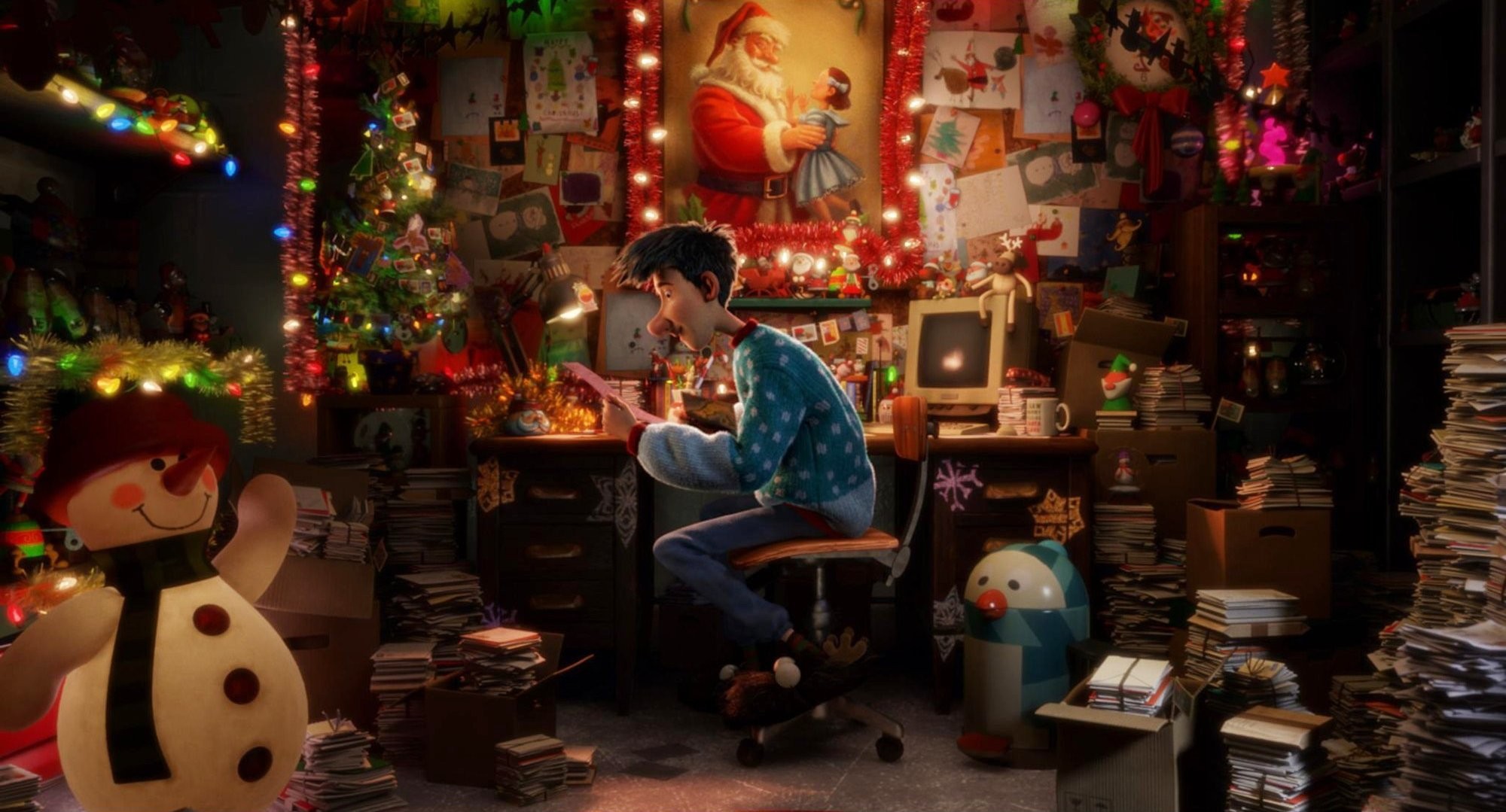
Arthur Christmas is the best Christmas movie I’ve ever seen.

Arthur Christmas

Seriously, go watch it.

Time is running out for TMTF’s Christmas fundraisers!

The Living Water fundraiser will run for a couple of months after Christmas, but I’d love to hit its goal by the end of December. The Child’s Play fundraiser will conclude at the end of the month, so time is running out!

If you’re not sure why I’m blathering about fundraisers, please see here for details.

Working together, we can make this Christmas truly awesome for people in need. Please consider giving!

We wish you a happy Christmas!

My typewriter monkeys and I—well, mostly I—wish you the best of all possible Christmases, and a bright start to the new year!

A Most Unusual Nativity Scene

Today’s Geeky Wednesday post features Mr. Bean and a delightfully odd Nativity scene. Yes, I know today is Friday.

This blog just had a Geeky Wednesday post a couple of days ago—you know, on Wednesday—but some unexpected complications this week have prevented me from writing a proper blog post for today.

Please accept my apologies, along with the weirdest/best Nativity scene I’ve ever witnessed. It comes from Mr. Bean, a comical British television program about a bumbling man child. (Despite his many faults, Mr. Bean still acts with more thoughtfulness, tact, and common sense than most celebrities.) In the video above, Mr. Bean takes a humble Nativity scene and elevates it to dizzying heights of weirdness.

Since I was a little kid, this was my favorite scene from any Mr. Bean episode. Now that I recognize its marauding robot as a Dalek from Doctor Who, my amusement has only increased.

To conclude on a more serious note, I’ve always loved well-crafted Nativity scenes. (Those garish inflatable ones are dreadful.) Depictions of the Nativity are a quiet reminder of the hope and meaning underlying Christmas.

I Really Don’t Hate Christmas

I can be a bit of a grump when it comes to Christmas, but I can’t find it in the darkest corners of my cynical heart to resist the joys of the season for long. The hope and beauty of Christmas outweigh the frivolous nonsense of the holiday it has become. Not even Ebenezer Scrooge or the misanthropic Dr. Doofenshmirtz can really hate Christmas.

Yes, the good Doctor—well, the bad Doctor—from Disney’s Phineas and Ferb is back, this time lamenting the fact he can’t seem to work up a nice, healthy hatred for America’s favorite holiday. Doofenshmirtz is one my favorite television characters, and I applaud him for flinging about words like ambivalenceinvective, and animosity in a kid’s cartoon. A large vocabulary is most admirable… even if it’s mostly spent griping about the holidays.

326. TMTF Reviews: Socrates Jones – Pro Philosopher

Philosophy is a daunting subject.

Believe me, I know. One of my uncles is a philosophy professor. He has a tremendous beard, an office full of books, and a tendency to use words like epistemology in everyday conversation. I also have a bunch of cousins who studied philosophy. When my relatives on that side of the family gather for a meal or holiday, their conversations can get really academic.

(These relatives also talk a lot about football—I refer to soccer, by the way, not that violent American sport. Their discussions of sports are even harder for me to understand than their talks about philosophy.)

I’ve studied some philosophy, but I’m no expert. Thus I was intrigued when a reader of this blog graciously recommended a video game titled Socrates Jones: Pro Philosopher. As the name suggests, it’s an homage to Phoenix Wright: Ace Attorney. I love the Ace Attorney games, which bring together clever mysteries and bombastic melodrama, and the idea of a game in the same style about philosophy interested me very much.

That said, I must echo Hamlet and ask a big philosophical question: To play or not to play?

Socrates Jones title

Socrates Jones: Pro Philosopher (Available online, 2013)

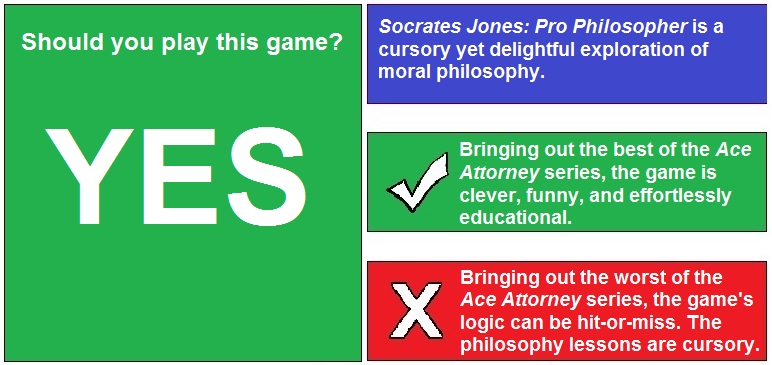
Bringing out both the best and worst of Ace Attorney games, Socrates Jones: Pro Philosopher is a cursory yet clever and entertaining exploration of moral philosophy.

TMTF Reviews - Socrates Jones

Give Me Philosophy or Give Me Death!

Socrates Jones, a simple accountant with an ordinary life, can’t understand his family’s obsession with philosophy. He prefers crunching numbers to arguing about abstract ideas. However, when a car crash lands him and his daughter Ariadne in an afterlife reserved for philosophers, Socrates gets one chance to reclaim their lives. He must debate a series of famous philosophers and resolve one of the Big Questions: What is morality and where does it come from?

I’ll be honest: Socrates Jones is basically a short Ace Attorney game that replaces attorneys with philosophers. Do you know what? That’s a really good thing.

For those unfamiliar with Ace Attorney, I should mention that each game has two main components: crime investigations and legal trials. Socrates Jones borrows the mechanics of the trials and makes a few key changes. Philosophers take the place of attorneys; philosophical theories are submitted instead of witness testimonies; ideas, not physical evidence, are presented as rebuttals. The courtroom structure of Ace Attorney works astonishingly well for philosophy.

Socrates Jones imitates not just the mechanics of Ace Attorney, but also its exaggerated style and sense of humor. Socrates and his opponents are funny, memorable, and well-written. I love how Ace Attorney‘s iconic cries of “OBJECTION!” are replaced in Socrates Jones by indignant exclamations of “NONSENSE!”

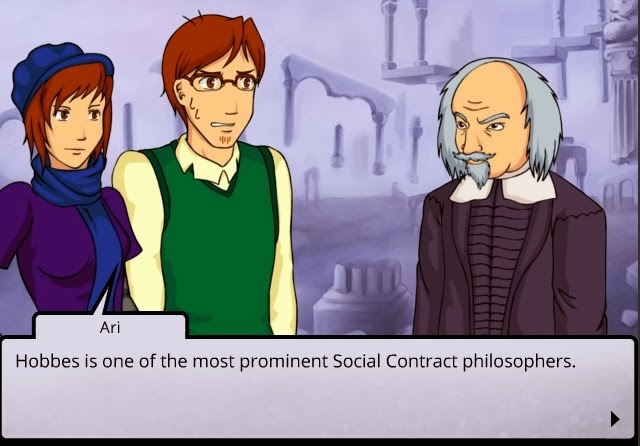
Socrates Jones screenshot

The philosophers themselves are a quirky bunch. When Socrates meets Thomas Hobbes, that famous thinker says gruffly, “You should know, Mr. Jones, that my mother gave birth to twins. Myself, and FEAR. By the end of the day, you will be thoroughly acquainted with both of us.” Immanuel Kant introduces himself in a similarly grandiose manner, only to add that he felt boasting was necessary “to fulfill the prerequisite grandstanding.”

For a game developed by philosophy students and Ace Attorney fans, Socrates Jones is remarkably well-crafted. The game even innovates upon its source material by adding a more robust system for questioning statements. In Ace Attorney, the player can question each statement in a testimony. Socrates Jones takes the system several steps farther by allowing players to ask three questions: Would you clarify your statement? Can you back up this statement? How is this statement related to your argument? By asking the right questions, Socrates trims away the flaws and irrelevancies of his opponents’ arguments.

This game is more than just a game—it’s the Sophie’s World of video games, a set of philosophy lessons wrapped in the appealing package of a good story. Socrates Jones does a pretty good job of setting up the arguments of historical philosophers, and then poking holes in them.

Speaking of poking holes in things….

The Value of the Imperfect

Toward the end of the game, Socrates makes a point that even flawed things can be good. “Things do not have to be ‘perfect’ to add value to the world,” he insists, and he’s absolutely right—fortunately for him. Socrates Jones: Pro Philosopher has two kind of problems. It’s imperfect as a game, and it’s also incomplete as a philosophy lesson.

The game’s faults aren’t severe—in fact, they’re the exact faults of the Ace Attorney series. Deconstructing a statement can be a matter of trial and error; the “right” questions and “correct” rebuttals, as decided by the game’s developers, may be counterintuitive to the player’s way of thinking.

Socrates Jones is a philosophy lesson, not just a game. The game’s arguments aren’t bad, but they have one unavoidable problem: they are scripted. The player is on rails, able to ask only preselected questions and reach predestined conclusions. Socrates Jones excels as brief exploration of moral philosophy, but it’s no substitute for a real discussion.

Short, Sweet, Funny Philosophy

Socrates Jones: Pro Philosopher is a short, fun foray into moral philosophy. It isn’t perfect as either a game or a philosophy lesson, yet succeeds in being both entertaining and educational.

Anyone interested in philosophy, the Ace Attorney series, or an enjoyable exercise in critical thinking should take two or three hours to play through the game. After all, Socrates Jones and his daughter are philosophizing for their lives, and they could use a little help!

Thanks for reading! If you have a moment, please check out TMTF’s charity fundraisers this month and make this Christmas awesome for a person in need!
325. TMTF Reviews: The Book of the Dun Cow

It sure has been a while since TMTF reviewed a book, hasn’t it? I blame Les Misérables. That novel is roughly the size of Alaska.

Some time ago, I set aside Les Misérables in order to read some books on loan from friends and relatives. (I’ll finish and review Les Mis eventually.) One of these borrowed works is The Book of the Dun Cow. This fantasy novel chronicles an ancient war against Wyrm, a colossal beast imprisoned beneath the earth. All that stands in the way of this unspeakable evil is… a pack of farm animals.

Was it worth putting down the story of Jean Valjean for the tale of some barnyard animals, or should I have continued Lez Mizzy and let the creatures of The Book of the Dun Cow fend for themselves?

The Book of the Dun Cow

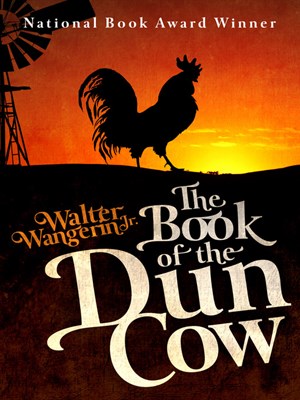
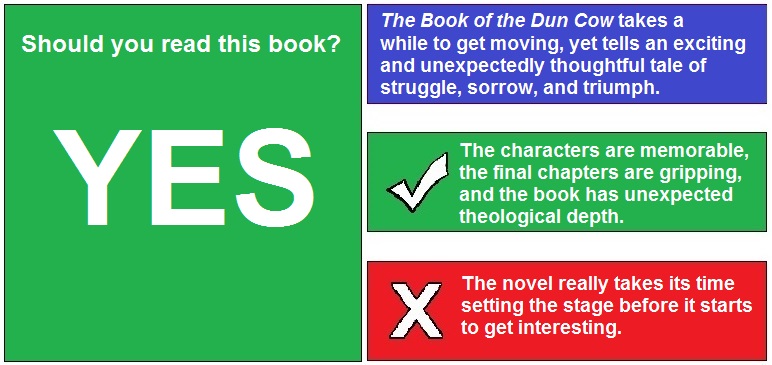
Despite a slow start, Walter Wangerin, Jr.’s The Book of the Dun Cow is an engaging, original, and surprisingly thoughtful fantasy.

TMTF Reviews - The Book of the Dun Cow

Ordinary, Extraordinary Heroes

When the world was new, God imprisoned Wyrm, a creature of absolute evil and unimaginable size, deep inside the earth. God’s creatures, oblivious to the peril beneath their feet, live their precious little lives in peace… until Wyrm begins to break free. As his land is threatened by horrors he can’t understand, Chaunticleer the Rooster prepares his fellow animals for battle. There is only one gleam of hope: the mysterious and angelic Dun Cow.

The Book of the Dun Cow is quite an original work, though some of its elements are familiar. I saw a lot of Aesop’s Fables and a bit of The Chronicles of Narnia in this tale of animals struggling against an ancient evil.

One of the most striking things about the book is its avoidance of the sword-and-sorcery clichés common in fantasy. There are no swords, wizards, princesses, prophecies, or any of the other tired trappings of fantasy fiction. Like Watership Down, which spins an epic around ordinary rabbitsThe Book of the Dun Cow tells its story without depending on flashy fantasy tropes. It’s an extraordinary tale of ordinary creatures.

The novel does three things outstandingly well.

First, its characters are simple yet memorable. The author has a Dickensian gift for creating characters that are more like caricatures. Individually, they would quickly become tiresome. All together, alongside a few well-developed protagonists, they make for a colorful cast. The names chosen for characters are inspired—John Wesley Weasel, for example.

The second thing at which The Book of the Dun Cow excels is building up a sense of dread and unrelenting tension. This is not a story in which the heroes are guaranteed to win. Heck, its heroes are farm animals. Their struggle is desperate. Every battle brings tragedy and the risk of failure… and failure means unleashing an unstoppable evil upon the universe.

This brings us to the third thing: the novel has an unexpected theological bent. It doesn’t preach or moralize. It merely depicts the harsh reality of a world in which God seems absent, and the roundabout ways he works his will. (I would add this book to my list of novels that contemplate the silence of God.) This is a book echoing Job and Ecclesiastes, a novel that seems to cry out: “My God, my God, why have you forsaken me?” The Book of the Dun Cow isn’t just a fantasy. In its own understated, roundabout way, it’s a meditation upon the inscrutable workings of God.

Slow and Steady Wins Races, Not Novels

The style of The Book of the Dun Cow is excellent, wasting no words yet conveying vivid impressions. The dialogue is particularly enjoyable. Many of the animals have their unique habits and mannerisms. John Wesley Weasel, bless him, butchers proper grammar. Lord Russel Fox rambles with self-conscious verbosity, the Turkeys gobble with nonsensical extra syllables, and the Dog loses himself in such bitter self-reproach that it’s hard for other characters to get a few plain words out of him.

My chief complaint about the novel is that it takes a long time to get going. As much as I appreciate a slow, steady approach to telling a story, The Book of the Dun Cow hardly begins moving until nearly halfway through. The excitement of the second half is belied by chapters and chapters of meticulous and largely unnecessary buildup in the first. A few early chapters foreshadow the sinister events of later ones, but most of the novel’s first half is forgettable.

The Review of the Done Book

In the end, although it takes a long time to set the stage, The Book of the Dun Cow tells an exciting, original, and oddly contemplative story. After spending so much time in Les Misérables, I felt satisfied to finish a book for a change.

Now that I’ve finished The Book of the Dun Cow, I have just half a dozen or so more books to read before picking up Less Misery where I left off. This is going to take a while.

Thanks for reading! If you have a moment, please check out TMTF’s charity fundraisers this month and make this Christmas awesome for a person in need!

Shotgun Shrimp

I’ve heard of pistol shrimp, but this is ridiculous—and by ridiculous, I mean awesome. What better way is there to prepare fried shrimp than shooting it out of a cannon? That’s right: there is none. The shrimp shotgun wins.

This culinary triumph is part of a Japanese ad for high-speed Internet service or some such, but the specifics hardly matter. What matters is that shrimp is cooked with kitchen artillery, large machinery, and billowing flames.

(Yes, I know the video above was staged. Don’t ruin the moment.)

324. I Want to Hug These Games

I don’t care much for hugs.

Well, I suppose some hugs aren’t so bad. I give my younger brother awkward sibling hugs all the time. For the most part, though, I’m about as easy to hug as a cactus. Hugs are a little too close and personal for me; I much prefer an affable fist bump.

However, I keep bumping into video games that are madly original and gloriously unique, and I want to hug them.

As much as I enjoy video games, I’m disappointed to see so many of them fall into the same clichéd categories. There are Games about Cars, Games with Guns, Games about Sports, Games with Swords and Magic, and games to fit nearly every other exhausted genre. The same problem is found in other media, from books to movies to music. New titles are hardly distinguishable from old ones; there is nothing new under the sun.

It’s important for me to make clear that genres aren’t necessarily bad. In fact, some of the best games I’ve ever played (including most of my favorites) fall into the broad categories mentioned above. All the same, I appreciate game developers who boldly go where no one has gone before, bringing color and creativity to a tired industry.

There are thousands of games about guns, zombies, cars, sports, or princesses in need of rescuing… and then there are a few odd, endearing games like Octodad.

I seldom borrow from other sources when writing for this blog, but nothing does Octodad justice like this understated description from its Wikipedia page: “The game consists of controlling the protagonist Octodad in completing chores typical of the mundane suburban father, but complicated by the fact that he is an octopus in disguise.”

Octodad, wryly subtitled Dadliest Catch, is the whimsical tale of a loving husband and father who happens to be an octopus pretending to be a human being. The fact that “nobody suspects a thing” when Octodad is clearly an octopus only makes the game that much funnier.

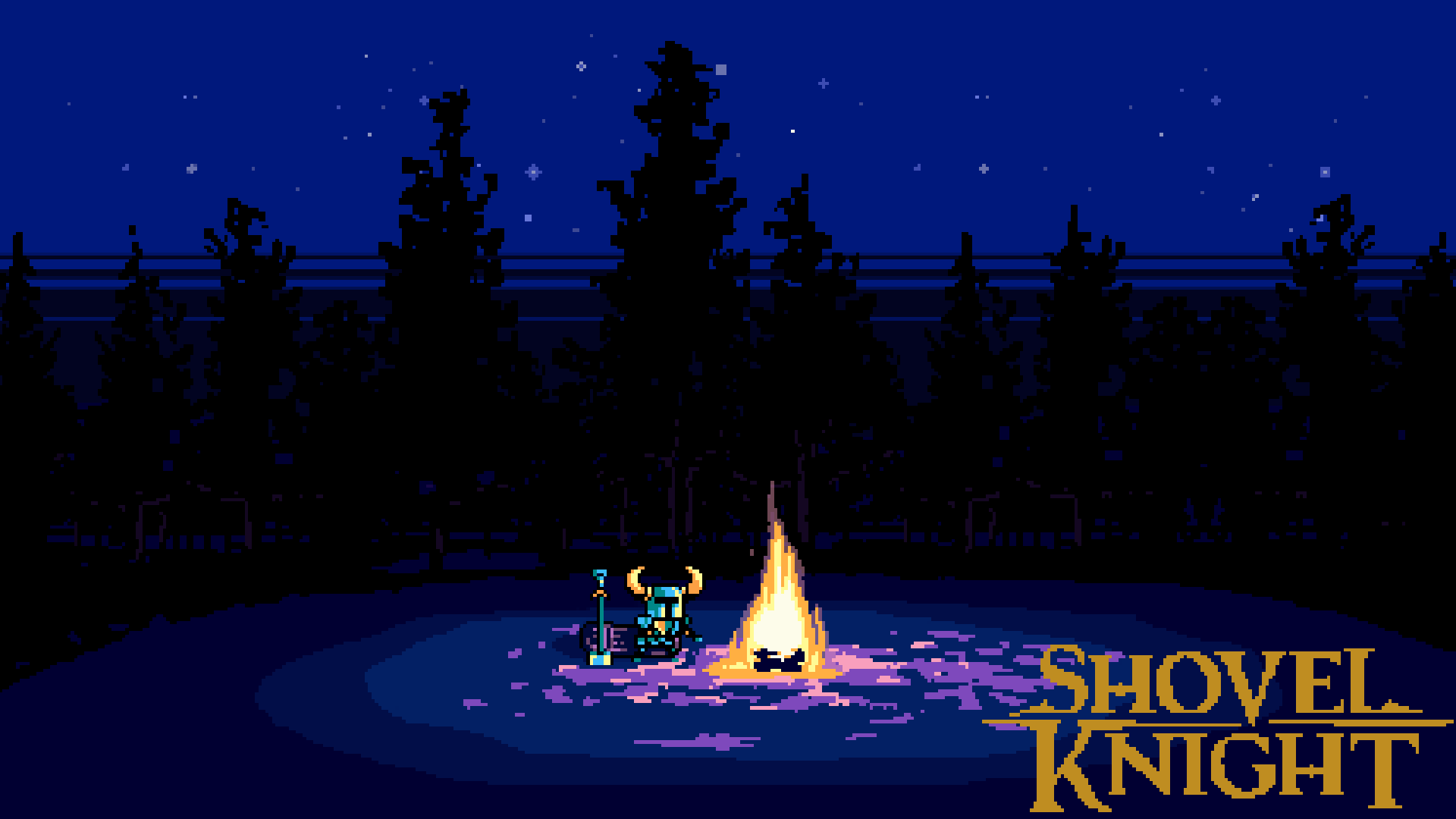
Shovel Knight is another title that caught my attention. It’s exactly what it sounds like: a game about a knight with a shovel.

Shovel Knight

I’m really digging this game. (Pun intended. I’m so, so sorry.)

Well, to be more precise, Shovel Knight is a retro-styled adventure game, in the tradition of Mega Man and Metroid, starring a warrior whose weapon of choice is a shovel. The knight valiantly swings, hacks, bounces, and yes, digs his way to victory. Swords? Bah! Who needs swords?

Then there’s Five Nights at Freddy’s and its sequel. These are horror titles, but they lack ghosts, zombies, demons, aliens, or any of the other monsters you’d expect from a scary game. No, these games have those animatronics from arcades and restaurants—you know, the ones designed to entertain defenseless little kids.

In these games, which I’m too nervous to play, the player assumes the role of a night watchman at Freddy Fazbear’s Pizza: a restaurant for kids and obvious nod to Chuck E. Cheese’s. The hapless watchman remains in his office, checking security cameras and monitoring the restaurant’s malfunctioning robotic mascots in order to avoid being murdered by them. The game looks terrifying.

I haven’t actually played any of these titles. To tell the truth, I don’t seem to have much time anymore for games what with work, household chores, and sundry commitments. (This blog won’t write itself!) It still delights me to see creative people defying conventions and making awesome, offbeat video games.

In conclusion, the game industry needs fewer guys with cars or guns, and more guys who are secretly octopuses.

Thanks for reading! If you have a moment, please check out TMTF’s charity fundraisers this month and make this Christmas awesome for a person in need!