My Neighbor Baymax

My Neighbor BaymaxBravo, Disney. Bravo.

This lovely art was drawn by Jin Kim, a character designer for Walt Disney Animation Studios. It uses the Japan-inspired setting of Disney’s Big Hero Six to pay homage to Japan’s greatest animation studio, the amazing Studio Ghibli.

For comparison, here’s the image from My Neighbor Totoro on which Kim’s picture is based.

Totoro in the rainI really enjoyed Big Hero Six, the first animated Disney movie based on Marvel comic book characters. In fact, it’s one of my favorite films of the past five years. Its story hit all the right notes for me, and its visuals are jaw-dropping. Despite being much more Disney than it is Marvel, Big Hero Six avoids most of Disney’s clichés. There are no princesses; there is no romance; the villain is not pointlessly evil. Big Hero Six is a film about brotherly love, coping with loss, and the futility of revenge. It’s pretty deep stuff… for Disney, anyway.

Anyway, if you haven’t seen Big Hero Six, you should go watch it. And then, regardless of whether you’ve already seen it, you should watch My Neighbor Totoro. You’ll thank me later.

331. TMTF Strikes Back!

After a two-week hiatus, TMTF is back with new content! My typewriter monkeys and I have resumed… whatever it is we do around here. I don’t know.

Before I get carried away with new posts, there’s some stuff we need to discuss—mostly following up on last month’s charity fundraisers, and also asking an urgent question about hats. Prepare yourself, dear reader, for some Important Business Things. We’ll cover them one at a time. Here we go!

TMTF’s charity fundraisers were a success!

Because of your support, TMTF’s charity fundraisers last month were successful!

Charity logos

The Child’s Play fundraiser didn’t quite reach its goal, yet contributed a respectable $75 toward purchasing toys and video games for kids in hospitals. (I like to think that every cent of our donations was spent on Legend of Zelda games, but that’s just me.) While the Child’s Play fundraiser didn’t meet its goal, I’m thankful we were able to give as much as we did.

The Living Water International fundraiser, which is ongoing, surpassed its goal. Thanks to you, we’ve given $375 toward providing clean water to people in impoverished areas! That’s one hundred twenty-five percent of the fundraiser’s original goal, which is just bonkers.

When we started raising funds last month for charity, I honestly wasn’t sure we would meet our goals. You guys have amazed me. Thank you so much for making this possible. You are my heroes. Well done.

Bravo (GIF)The Living Water International fundraiser is still going strong!

Even though the clean water fundraiser was meant to be a Christmas project, it won’t end for another few weeks. (I didn’t have much flexibility in planning its duration.) For as long as it’s up and running, this blog’s rewards for donors will remain in effect, so feel free to give!

I’m still working on donor rewards, and I will get them to donors as soon as I can.

If you haven’t received your rewards for donating to one or both of TMTF’s fundraisers, I haven’t forgotten you! I’m still working on them, and I’ll send them your way as soon as I can.

By the way, there were a few anonymous donations. If you donated anonymously and would like to receive donor rewards, it’s not too late to contact me. I want to say thank you!

Should charity fundraisers become a Christmas tradition for this blog?

I don’t know. What do you think?

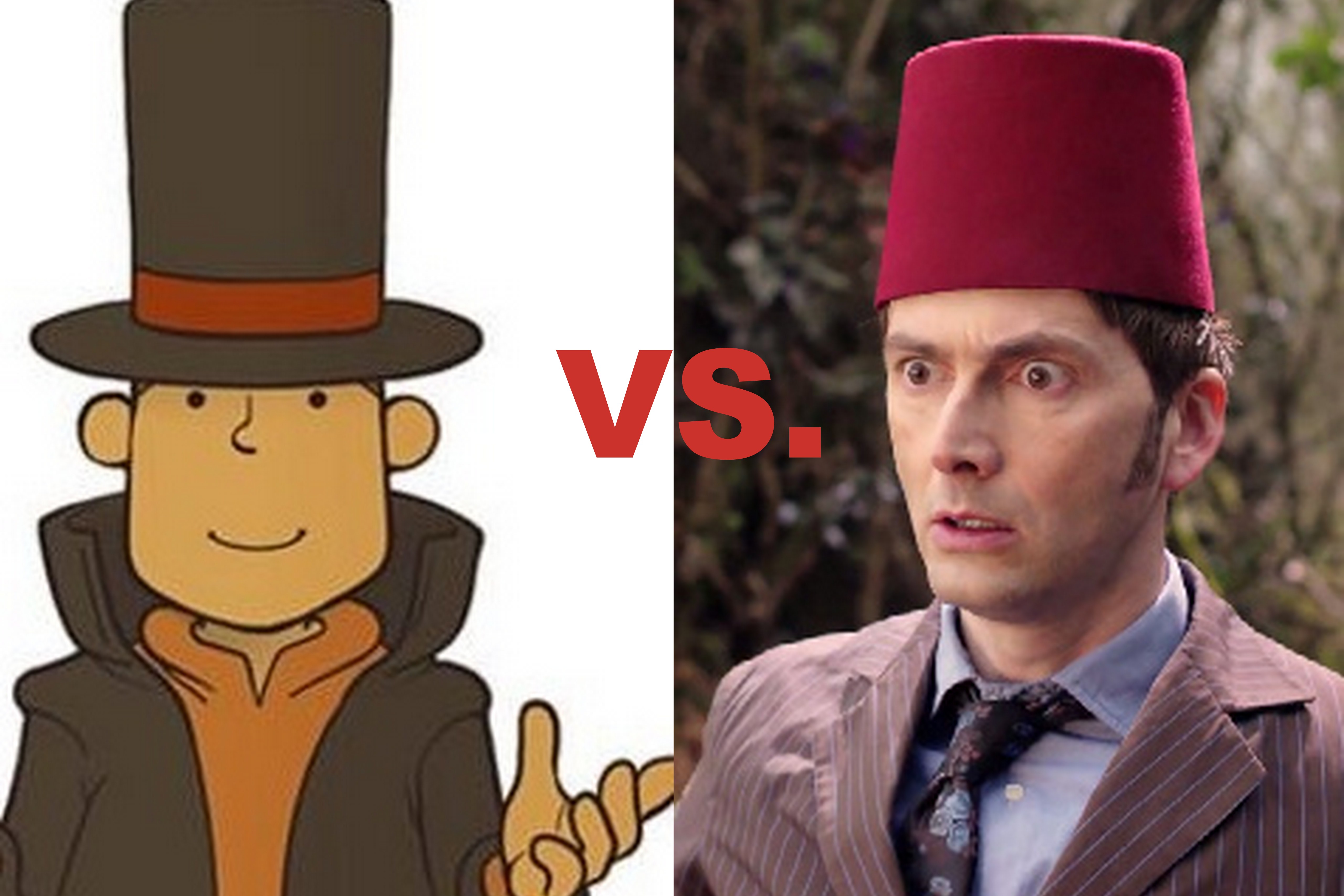
All right, enough talk about fundraising. Let’s discuss hats.

Top hats or fezzes?

Top hats vs. fezzes

Discuss.

I think that’s everything!

I guess those are all the Important Business Things we have to discuss for now. Thanks again, dear readers, for making last month’s charity events a success!

In conclusion, fezzes are less expensive, but top hats lend a certain dignity to any aspiring gentleman. They’re both pretty great.

Mangling Spanish: A Beginner’s Guide

One of my new year’s resolutions was to improve my Spanish, and I’ve finally resumed my linguistic studies. How have I chosen to study? In the same way all great scholars do, of course.

I’m watching cartoons.

Specifically, I’m watching the Spanish language dub of Avatar: The Last Airbender, my all-time favorite show. It’s a wonderful way to study. Just hearing spoken Spanish again is working wonders for my vocabulary, grammar and syntax.

My studies have reminded me of the linguistic horror stories (or comedies, depending on your point of view) I’ve heard from acquaintances in my homeland of Ecuador.

For example, there was a gentleman who asked for sopa to wash his hands. He meant soap. He received soup.

There was a lady who tried to explain that she had been embarrassed by a pastor, and used the word embarazada because of its similarity to the English word embarrassed. What she announced by mistake was that the pastor had made her pregnant.

Another lady wanted to ride a horse without a rope attached to its bridle, and asked the owner whether she might have permission to mount his horse without the ropa. This greatly alarmed the owner, since ropa is Spanish for clothes.

My favorite story comes from the husband of one of my middle school teachers. One day a group of Jehovah’s Witnesses came to his door. He informed them in faltering Spanish that he did not care to hear about Jehovah’s Witnesses, and was baffled at how angrily they departed.

Only later did he realize that instead of calling them Testigos de Jehová, Jehovah’s Witnesses, he had mistakenly called them Testículos de Jehová—Jehovah’s Testicles.

Not every story is a painful one. A favorite of mine is that of an interpreter asked to translate the following joke into Spanish for an audience: “What did the ocean say to the beach? Nothing. It just waved.”

This awful joke, a play on words, works only in English.

That brilliant interpreter didn’t let that stop him. Without missing a beat, he translated the question into Spanish and answered it with a new punchline: “Hola!”

This Spanish word for hello sounds exactly like ola, the word for wave. That, dear reader, is pretty dashed clever.

I haven’t made any truly memorable mistakes in Spanish, but that’s all right. I’m already quite good enough at making a fool of myself in English.


This post was originally published on September 2, 2013. TMTF shall return with new content on January 19, 2015!

Cartoon Anatomy Is Weird

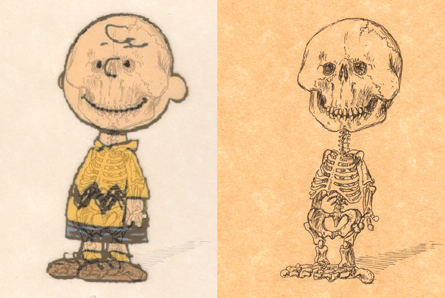
Cartoon anatomyI’m no expert on human anatomy, but I’m pretty sure Charlie Brown’s neck wouldn’t support his head. He’s always seemed a bit… top-heavy.

The same is true for Mabel Pines, and her neck isn’t the only problem—I’m pretty sure those legs wouldn’t carry her weight. Speaking of which, I consider it a miracle that Doctor Eggman can stand at all. His slender needle-legs wouldn’t hold up his mustache, let alone his, um, bulbous physique.

Yes, I’m overthinking things. Cartoons aren’t supposed to be realistic. Character designs are highly stylized. I get that, and I like cartoony proportions. (Would Snoopy from Peanuts be one-half as adorable with a proportionately-sized head? I didn’t think so.) All the same, I find myself occasionally scrutinizing cartoon characters and wondering which bones would be the first to break.

Consider the following image of Charlie Brown, courtesy of Michael Paulus.

Charlie Brown's skeletonFor someone frequently addressed as “blockhead,” Charlie Brown’s gargantuan dome is quite spherical. No way on God’s green earth would a few spindly vertebra hold up a skull like that.

I suppose cartoon anatomy joins the ability to pull stuff from nowhere as one of animation’s greatest mysteries.


This post was originally published on October 8, 2014. TMTF shall return with new content on January 19, 2015!

Batman Syndrome

I have Batman Syndrome.

I wish this meant I were as cool, skilled or accomplished as Batman. It does not. It most certainly does not. What it means is that Batman and I have something in common: we obsess over our mistakes.

If you or someone you love suffers from Batman Syndrome... I feel your pain.

If you or someone you love suffers from Batman Syndrome… I feel your pain.

I like fictional characters who overlook their victories and overemphasize their failures. There’s something compelling about characters who are heroic without realizing it. Take the Doctor from Doctor Who, who has saved every planet in the universe roughly twenty-seven times. In all his travels through space and time, he never leaves behind his insecurity, self-loathing or guilt. Consider Jean Valjean from Les Misérables, who atones for a few petty crimes by spending years serving the poor and helpless. They bless him as a saint. He despises himself as a criminal.

Then we have Batman, the eponymous sufferer of Batman Syndrome, who is so blinded by guilt that he fails to recognize one all-important fact: he is freaking Batman. No matter how many thousands of people he rescues, he remains obsessed with the two he failed to save.

I’m not a savior like the Doctor or a saint like Jean Valjean. I’m certainly not a superhero like Batman. Even so, I occasionally do things right. I also do things wrong. In my mind, the wrong things eclipse the right ones. A mistake cancels out all successes.

This isn’t always such a bad thing. I feel driven by my mistakes to try harder, to be better, to get it right. In the short term, it helps.

In the long term, however, Batman Syndrome wears away my confidence. It also makes me anxious. Dash it all, does it ever make me anxious. Doing anything is hard for someone desperately afraid of making mistakes. Perfection is a lousy minimum standard.

Batman Syndrome haunts me with one dreadful question.

You’ll never get it right, so why even try?

I write a lot about grace and stuff. In the end, I suppose it’s because I’m amazed (and sometimes incredulous) that God loves me. I’ve made a lot of mistakes. More to the point, I make a lot of mistakes. It’s easy for me to accept God’s forgiveness for a sin committed ten years ago. What’s hard for me to accept is forgiveness for a sin committed ten minutes ago.

It can also be hard for me to acknowledge my victories. I want to be humble, but there’s a difference between true humility and false modesty. I’m often reminded of my weaknesses. I think I must also allow myself to be reminded of the strengths God has given me. I’ve a long way to go, but I mustn’t overlook how far I’ve come.

I’m not Batman, and I think I’m finally beginning to accept that I don’t have to be.


This post was originally published on March 18, 2013. TMTF shall return with new content on January 19, 2015!

Emoticons

Emoticons—those short combinations of letters, numbers and punctuation marks that sort of resemble little faces if you look at them sideways—have crept over the Internet like an army of tiny pictographic soldiers.

When I was a student teacher, some of my students even used emoticons in their homework. This annoyed and perplexed me greatly. Apart from being childish and unprofessional, putting emoticons in hand-written assignments seemed pointless. I can’t imagine why my students made the effort to write out emoticons when they could have just drawn little faces.

Though I seldom use emoticons, I have nothing against them. They’re an interesting development of written English, and they can give informal writing a certain charm.

For the sake of Internet People everywhere, I’ve compiled (with a little help from Dave Barry) a list of useful emoticons.

Typewriter Monkey Task Force is proud to present…

The Official TMTF List of Eminently Practical Emoticons for Convenient, Everyday Usage!

: )         Happy person

: (         Sad person

: – )       Happy person with a nose

: – (       Sad person with a nose

: — (     Person who is sad because he has such a big nose

: /          Frustrated person

: D        Overjoyed person

. (         Person who ran with scissors

X D        Amused person

<l : )      Gandalf the Grey

:’ (         Weeping person

: P        Cheerful person

:V: (      Person with an alligator on her head

:-3         Cat

; )          Wry person

: o )       Clown

XO        Person who is afraid of clowns

: o          Slightly surprised person

8 O        Very surprised person

: ) ?        Captain Hook

: I           Person who has eaten too much

: ) ~D     Person about to drink a calming cup of Jasmine tea

: ^ (        Cyrano de Bergerac

O Internet People, it is now up to you to use these emoticons with creativity, discernment and wisdom.

Just don’t use any of them on homework assignments, all right?

What emoticons did I miss? What are your favorites? Let us know in the comments!


This post was originally published on January 20, 2012. TMTF shall return with new content on January 19, 2015!

The Man Who Fixed the Internet

The Internet is a wonderful, nay, miraculous, invention. This intangible web of information, media and funny cat pictures transforms my laptop, a humble slab of plastic and silicon, into a window unto worlds real and imagined.

There are times—dark times—when the Internet fails. Some dark, vile sorcery makes the Internet disappear by severing its connection to my laptop. It is at times such as these, dear reader, that we who use the Internet have three options. We can live without Internet: a lamentable fate. We can attempt to restore it ourselves: a venture fraught with frustration and difficulty. Our best and final option is to seek a hero to fix our Internet for us.

The video above is the epic tale of such a man, a story worthy of a place among the myths and legends of old, to be handed down to future generations and never forgotten.

Behold, dear reader, the Ballad of a WiFi Hero.


This post was originally published on April 9, 2014. TMTF shall return with new content on January 19, 2015!

Gangster Pastors

One of my most prized possessions is a weather-stained, gray cloth cap. If my residence ever burns down, this cap is one of the first things I will try to rescue from the flames. I call it my gangster cap, not because it fits the so-called gangster style, but because a gangster—or rather, an ex-gangster—gave it to me.

I was touched when my ex-gangster friend, whom I’ll call Miguel, gave me his cap, because it has great sentimental value for him. He had once lost it while plunging into a gully to escape from a rival gang. It lay at the bottom of the ravine for four months until he sneaked back to retrieve it.

Miguel was a car thief and a gang leader in Quito, the capital of Ecuador and the city of my birth. Besides his other crimes, Miguel occasionally worked for Mama Lucha, a notorious criminal kingpin. (I guess she should actually be called a queenpin since she was a woman.)

On one occasion, Miguel and his comrades tried to steal a long sheet metal sign welded to a pedestrian bridge. Unfortunately for them, they weren’t able to divide the sign into pieces as they’d planned. In the end they had to carry it whole through the streets of Quito, weaving furtively through city streets like some sort of monstrous metal centipede.

Miguel is currently happily married, working at a government job in Quito and ministering as a lay leader in his church.

It is a source of amazement, amusement and wonder to me how many of the church leaders I knew in Ecuador are former gangsters, thieves or occultists.

I’m not using real names in this post in order to protect the privacy of the leaders whose stories I’m sharing. I assure you, however, that to the best of my knowledge all of these stories are accurate, factual and true.

Paco is a kind, gentle and fiercely amiable pastor from the coast of Ecuador. Like King Saul in the Old Testament, Paco is about a head taller than everyone around him. His skin is black, his frame is muscular and his cheek is scarred by a gash from a knife. He used to be a thief on the streets.

Armed with a knife, Paco once accosted a girl at night with the intention of taking her money. The girl, who was a Christian, began talking with him about God. Although it was a long time before Paco would know Christ, he eventually put away the knife and escorted the girl to her home because—as he explained—it was a dangerous neighborhood and he didn’t want her to get robbed.

Paco eventually wound up in prison. Some of his fellow prisoners were personal enemies who wanted to kill him. However, before they had the opportunity, Paco was released. He didn’t know how or why—the only hint he received was a vague explanation that “some lawyer” had made all the necessary arrangements. What those arrangements were, and who the lawyer was, he doesn’t know to this day. It has been suggested to him that the lawyer might have been an angel. He doesn’t deny the possibility.

Then there’s Luís, another ex-criminal from the Ecuadorian coast. His skin is black, which makes his dazzling white smile all the more striking. Luís is a fantastic storyteller, and my dad has been privileged to hear accounts of several of his escapades.

Luís, while stoned on drugs, once tried to murder another man, also stoned. Having crept up on him from behind, Luís put a pistol to the man’s head and pulled the trigger. The gun misfired. Luís examined the pistol, peering blearily into its barrel, while his victim sat peacefully unaware of the attempt being made on his life. Luís tried again to murder his victim. The gun didn’t go off, but this time the man realized what was happening and fled shrieking while Luís resumed his bewildered examination of the gun.

On another occasion, Luís entered a church and sat down—only for a huge army knife to fall out of his shirt and hit the concrete floor with a thunk. Nearly every head turned to look at him, and a little old lady sitting nearby picked up the knife and sweetly gave it back to him.

A turning point came when a taxi crashed into a light pole as Luís leaned against it. The pole absorbed most of the impact, but Luís flew a considerable distance and landed hard. Just a few minutes later he met a Christian lady from his neighborhood. “Did something just happen to you?” she asked. “God told me to pray for you five minutes ago, so I did.”

After Luís became a Christian, two attempts were made on his life, once with a pistol and once with a sawed-off shotgun. The guns misfired both times—two more miraculous interventions.

All three of these church leaders have told my dad that they’re grateful to God for never letting them kill anybody. They all came frighteningly close to it. Looking back, they can see the hand of God at work in their lives, even when they didn’t care for him.

I believe, if we look hard enough, most of us can see the hand of God at work in our own lives.

I know I can.


This post was originally published on January 17, 2012. TMTF shall return with new content on January 19, 2015!

330. Gone Writing, Back Soon!

Due to writing commitments and threats of arson, TMTF will be taking a two-week break.

I suppose I’d better start with the threats. My typewriter monkeys, my reluctant assistants for this blog, want to visit Costa Rica for some reason. (I suppose it must be the bananas and warm weather.) They’re demanding a vacation, and threatening to burn down my apartment building if I refuse their demands.

For the readers fortunate enough never to have met my monkeys, I should mention their terrifying ability to set fire to anything under any conditions. I don’t recall how many times they’ve been arrested for arson; I think the number is in the high sixties. My monkeys’ rap sheet is nearly as long as the unabridged works of Shakespeare, and that’s just for the time I’ve spent in Berne, Indiana. A complete collection of their criminal records would fill a library… which they would probably burn down.

Many Are Cold, Few Are Frozen

This is a fragment from a fire started by my monkeys last winter. I’m surprised anything survived that fire. Heck, I’m surprised survived that fire.

My point is that my monkeys like burning down buildings, and I like having a home. I have surrendered and accepted their demands.

My typewriter monkeys are on their way to Costa Rica. With any luck, they’ll stay there. TMTF will be on break until they return—or else until I hire some new animal assistants. I’ve always liked squirrels. Typewriter Squirrel Task Force has a nice ring to it, don’t you think?

In the meantime, I plan to spend my two-week break from blogging catching up with backer rewards from last month’s charity fundraisers. I have some writing to do!

(The Living Water fundraiser will be up and running for nearly two more months, by the way, so please feel free to donate to provide clean water to people in need! This blog’s rewards for donors will remain in effect for the duration of the fundraiser!)

This blog will not go dark during the break! For the next two weeks, TMTF will rerun previous posts on the usual schedule (Monday, Wednesday, and Friday) because recycling is good for the environment.

As we begin a new year, I’m going to have a Serious Adam Moment and thank you for reading. Seriously. Thank you so much. As I’ve said before, the greatest joy of a writer is to be read. I would like also to give extra-special thanks to everyone who participated in the charity fundraisers last month. You guys are awesome.

TMTF will resume with new content on Monday, January 19. Happy New Year! Stay fabulous!

Annum Novum Faustum Felicem!

Annum Novum Faustum Felicem! Thus I wish you cheer.

Annum Novum Faustum Felicem in the coming year!

Annum Novum Faustum Felicem, as I said before;

Annum Novum Faustum Felicem now and evermore!

I presume I’ve now made plain this Yuletide wish to you.

Explication would make it mundane: a fate I fain eschew.

Ergo, Annum Novum Faustum Felicem! How so well expressed!

Annum Novum Faustum Felicem simply says it best.

Id est: Happy New Year!

~ Eugene Meltsner, Adventures in Odyssey

I would like to share these warm wishes from Eugene Meltsner, even though his words are so, well, wordy. A number of them are in Latin, and even some of the ones in English are a little hard to follow.

When I was a child, I delivered unto my listeners the following pronouncement: “People don’t always understand me when I use big words, but say let ’em learn ’em!” (At any rate, my relatives tell me I made such a statement; I don’t remember it, but that’s hardly a surprise.) Even as an adult, I sympathize with Anne from Anne of Green Gables, who declares, “People laugh at me because I use big words. But if you have big ideas you have to use big words to express them, haven’t you?”

I like wordy words, but I’ll be the first to admit they have two faults. First, the purpose of language is communication, and fancy-sounding words don’t always fulfill that purpose. What’s the point of using those words if nobody understands them?

The second problem with a large vocabulary is that is gives an impression of self-conceit. People who use big words seem like they’re showing off. In college, a classmate once accused me of shaming others by flaunting my vocabulary. His criticisms really stung. After all, I don’t consider it a personal insult if other people are more skilled than I at dancing or baseball or repairing cars. Why should anyone be outraged if I use big words? My classmate and I argued about it until a professor shut us up.

In the end, as much as I appreciate fancy-sounding words for their power to convey precise shades of meaning, I acknowledge they aren’t suitable for many contexts. The value of language is in being understood, not in seeming smart.

That said, instead of repeating Mr. Meltsner’s unintelligible benedictions, I’ll just say, “Happy New Year,” and leave it at that.