232. About Storytelling: The Unexpected Hero

I love it when heroes don’t start that way.

Some of the most popular heroes in fiction began their journeys as normal people. Luke Skywalker. Bilbo Baggins. Harry Potter. Bruce Wayne. Link from the Legend of Zelda games. The girl from those ridiculous Twilight books. All these characters have something in common: they’re ordinary. At the very least, they seem ordinary. They’re normal people with normal lives who stumble into something extraordinary, and we love them for it.

Why do we like unexpected heroes so much?

Unexpected heroes are relatable

Look at Batman. If he were just a man with a cape and a bunch of gadgets, we might be mildly impressed. The reason we love Batman is because we see the man behind the mask: Bruce Wayne, the child whose parents were murdered, the loner burdened with guilt, the hero determined to make a difference. We can wish we were Batman, but we can’t relate to him—not really. Batman is just a persona. Bruce Wayne is the one to whom we relate: the person whose struggles give depth and meaning to Batman’s adventures.

Heroes are hard for us to understand. Most of us are ordinary people. We can’t relate to good-looking, all-powerful, super-smart adventurers and superheroes. Only when heroes have a human side—or better yet, start out as ordinary people—can we relate to them.

Unexpected heroes inspire us

I find it hard to be inspired by Nelson Mandela, who recently passed away. He was a very great man—so great, in fact, that I can’t imagine how I could ever make one-hundredth as great a difference as he. I find it much easier to be inspired by people I know: my parents, for example, and my grandparents. I look at Nelson Mandela and see unattainable greatness. I look at my grandfather and see a man whose greatness I may someday achieve.

Unexpected heroes begin as ordinary people. When they go on to do amazing things, their example gives us hope that perhaps we can accomplish something worthwhile in our own ordinary lives.

Unexpected heroes are exciting

I don’t like Superman. It’s nothing personal, I just find it hard to get excited about a guy who is practically invincible. He flies, he shoots lasers from his eyes and oh, yeah, he’s nearly invulnerable. With only one weakness, Superman is boring. Batman is another story. He has no superpowers; every one of his strengths could feasibly belong to an ordinary human being. Batman is breakable, which makes him interesting.

When a hero starts off brave or powerful, it’s hard for us to care. We know they’ll win. There’s little excitement, little tension and little interest. When our protagonist is just an ordinary person, however, we wonder whether they’ll succeed. We sympathize with them. We cheer for them. As they grow and mature, we find satisfaction in their progress. At last, when they triumph, we’re overjoyed—because we know they’ve earned it.

O people of the Internet, who is your favorite unexpected hero? Let us know in the comments!
229. A Christmas Story (with Assassins)

I’ve decided to share one of my old stories on TMTF this month, because recycling is good for the environment.

I wrote “Zealot: A Christmas Story” because there are not enough Christmas stories about assassins. It’s the tale of Jehu, a Jewish revolutionary bent on driving the Roman Empire out of Palestine. His life of hatred and bloodshed is interrupted by an astonishing series of people: a cowardly traveler, some crazy shepherds, a grouchy scholar and a rabbi whose teachings would transform the world.

The story of the Nativity is a familiar one. We all remember the stable, the manger, the angels and the shepherds. What we forget is the historical context. For centuries, the Jews had been subjugated by powerful empires. Ancient prophecies of the Messiah, a hero chosen by God to restore Israel, must have seemed empty and distant.

Jesus was born in an era of hopelessness and disillusionment. Since God seemed to be doing nothing to rescue Israel from Rome, a number of Jews decided to take matters into their own hands. They became zealots: revolutionaries fighting a hopeless battle, struggling to survive and awaiting the Messiah whom God had promised.

In the end, the Messiah came. He lived and died not to rescue Israel from Rome, but to free humankind from death.

“Zealot: A Christmas Story” is the tale of a revolutionary, and how he witnessed the beginning of a revolution infinitely greater than any he could imagine.

Throughout December and early January, chapters of this story will be published on TMTF on Wednesdays, replacing my weekly ramblings about geeky things. Never fear! Geeky Wednesdays will return next month.

I hope you enjoy “Zealot: A Christmas Story.” Have a bright, beautiful December!

227. The Return of the Anti-Adam

Hello, Adam. It’s nice to see you. Wait, did I say nice? I meant nauseating. It’s nauseating to see you.

You again? If someone has to annoy me while I’m trying to write blog posts, can’t it be the other guy?

If you’re talking about the Pro-Adam, he couldn’t make it. Don’t act surprised. You know I visit you much more often than he does.

I know, but I hoped for some variety. His empty praise is a refreshing change from your undeserved insults. What is it this time?

There are a few things, actually. May I sit?

No.

I’ll take the armchair, thank you. First of all, I think some congratulations are in order. You’ve finally given up trying to write novels. Well done! It’s about time you took my advice and stopped embarrassing yourself.

I don’t think I’m a bad writer, and I haven’t given up on The Eliot Papers. I’ve just put the project on hold indefinitely. I believe my circumstances made it necessary.

When you say “my circumstances,” I presume you’re referring to your lack of ambition and talent as a writer. I understand completely. Well, at least you have your blog.

Yes. Yes I do.

Sure, I can understand giving up your lifelong dream of being an author, and instead writing blog posts about exploding tomatoes and video game mustaches and girly cartoons with ponies and rainbows. It’s not as though you could actually be writing thoughtful posts about meaningful things.

do write about meaningful things… occasionally.

When you’re not busy being a frivolous idiot, that is.

I’m allowed to be frivolous! Heck, life would be awful if we had to be serious all the time. It’s the little things that make life livable, and the little blessings that help us appreciate the great ones.

Great blessings? Like grace? You write a lot about grace, expressing the same ideas again and again, like a lunatic muttering to himself. It’s almost as though you were trying to convince yourself of something you don’t really believe.

Belief is hard. “I do believe; help me overcome my unbelief.”

And you quote somebody! It was only a matter of time. Do you have even one original idea rattling around in your head, or just a lot of quotes?

I have ideas, really. Quoting people helps me express them.

Your memory stinks. How do you keep track of so many quotes?

I have no idea.

I suppose I can’t blame you for having a bad memory. Fortunately, I can still blame you for lots of other things. Like working a menial job.

It may not pay well, but there are worse jobs than serving persons with disabilities.

And doing absolutely nothing with your college degree.

I plan to use my teaching degree sooner or later—I just renewed my educator’s license, after all!

And being antisocial.

Being introverted and being antisocial aren’t the same thing.

And being afraid of life.

Life is scary!

And making the same stupid mistakes again and again and again.

Well, I’m a human being. We all make mistakes.

Excuses, excuses. You sound awfully confident for someone who spends a lot of his time being depressed.

You’re not going to blame me for that, are you? Lots of great people have suffered from depression. Abraham Lincoln, for example, and also my dear old dad. And have you counted how many good people in the Bible showed symptoms of depression?

You’re glorifying your depression by comparing yourself to great people. That’s classy.

I’m not saying we’re alike because we’re great. I’m saying we’re alike because we’ve suffered from depression. Depression does not a great person make, but it certainly doesn’t make a person any less important or valuable.

I’ve had enough of your prattle for one day. Don’t forget what I’ve told you, Adam. I’ll be back.

Of course you will. Something tells me you’ll never be far away. It’s a good thing you’re not the only one. “The Lord is my shepherd,” and all that.

I’m leaving.

Good. On your way out, would you mind getting me a sandwich?

222. NaNoWriMo

Today’s post was written by Kristi Drillien as we stand upon the brink of the splendid, terrifying adventure known as NaNoWriMo. (I’m too busy for NaNoWriMo this year, but… someday, maybe.) Take it away, Kristi!

Have you ever had a story to tell, but didn’t know how to tell it? Ever thought about writing a book, but didn’t think you could? Ever just wanted to write for fun, but couldn’t really find the time, motivation or reason to do it?

If your answer to any of these is yes—or even if it’s not—let me tell you about NaNoWriMo.

NaNoWriMo

First, from the NaNoWriMo website, here is a description:

National Novel Writing Month (NaNoWriMo) is a fun, seat-of-your-pants approach to creative writing. On November 1, participants begin working towards the goal of writing a 50,000-word novel by 11:59 p.m. on November 30. Valuing enthusiasm, determination, and a deadline, NaNoWriMo is for anyone who has ever thought fleetingly about writing a novel.

NaNoWriMo is a yearly event taking place in November in which participants attempt to write a novel in thirty days. Sounds scary, right? Fortunately, there’s a lot more to it, so I’m going to share some of the finer points of NaNoWriMo.

The words

Let me start by saying that yes, 50,000 words sounds like a lot. And it is a lot. (It’s closer to a novella than a novel, though). Fortunately, participants have thirty days to reach that goal. If you do the math, that works out to 1666.66667 words per day, which doesn’t sound so scary (unless you try to figure out how to write 0.66667 of a word). It takes commitment, but it is definitely possible. Ask the 300,000 people who participated last year!

The story

NaNoWriMo is all about quantity, not quality. One of the biggest keys to succeeding at NaNo is not to edit. You are not writing a wonderful novel to share with friends or submit to publishers… at least, not right away. December is for editing. November is for writing. If you give into the urge to go back and fix what you have written, you likely won’t finish.

I met someone earlier this year who declared he could never participate in NaNoWriMo because he didn’t see the point of writing all month expecting to produce a bad manuscript. I suppose he makes a fair point. But unless you already write on a regular basis, churning out a novel that isn’t very good is better than doing nothing. Most people who do NaNo are doing it just for fun and for the challenge.

The people

One of the biggest elements of NaNoWrimo is the social aspect. When you sign up on the website, you can find your home region, where you will almost definitely find in-person events going on during (and even a bit before and after) November. You may be surprised to find so many people living in your area who are also crazy enough to do this. It can be incredibly helpful to have that system of support.

There is also a huge community on the forums you can be part of. If you think you can’t participate because you don’t have time, don’t have ideas or simply aren’t ready, there are many people who are or have been in the same situation as you. They are always willing to share tips, ideas and suggestions or just share your agony. You can find forums specific to your genre or age group, and forums where people can go to get help with plot, characters or help coming up with a title.

Something I’ve never tried but may try this year is a word war. In a word war, two or more people set a time limit and write as many words as they can in that time. Whoever writes the most wins. It can be a great way to push yourself to write without thinking too hard or hesitating (and definitely without editing).

The challenge

Writing 50,000 words in thirty days is a challenge. It really is. Many people do not finish. However, failure is not the end of the world. You may just find that you’re proud of what you’ve done, even if it wasn’t the full 50K. And if you do reach that goal, you can be truly amazed that you accomplished the impossible—writing a novel in thirty days.

And if 50,000 words is not enough of a challenge, you can join the crazy people in the “Beyond 50K” forum, where they discuss things like writing 100K or even 150K in one month… or writing 50K in one day.

NaNoWriMo begins today! For more information, check out the official site.

221. About Writ—I Mean, Storytelling

There was a time when this blog featured About Writing posts, which consisted of my rambling advice on how to write fiction. I wrote about stuff like characterization, style, setting and attitude.

After giving it some thought, I’ve decided to discontinue About Writing posts. I’ve covered pretty much every topic I wanted to discuss. Besides, I’m no longer sure I’m really qualified to give advice about writing fiction.

All the same, fiction fascinates me. I’m intrigued by storytelling. I can’t help it. That said, I want to continue discussing (read: rambling about) fiction on this blog. I won’t blather any more in About Writing posts on how to write stories, but I’d like to discuss narrative tricks and techniques in a new feature: About Storytelling posts.

What is Chekhov’s gun? Is objectionable content ever acceptable in fiction? What is retconning? (It sounds highly illegal, whatever it is.) Who cares about symbolism? What about character quirks? And why is Batman clearly the best superhero when he has no superpowers?

These are Burning Questions. We here at TMTF consider it our duty to answer them.

216. Lance Eliot Is Dead

This is a hard post to write.

I suppose I should start with a clarification. Lance Eliot isn’t completely dead. He’s mostly dead. As the creepy old man from The Princess Bride reminds us, “There’s a big difference between mostly dead and all dead.”

Long ago, I resolved to write and publish a novel. I wanted to be an author. It was my dream. For years, I worked on several versions of a story about a college student named Lance Eliot and his unexpected adventures in another world.

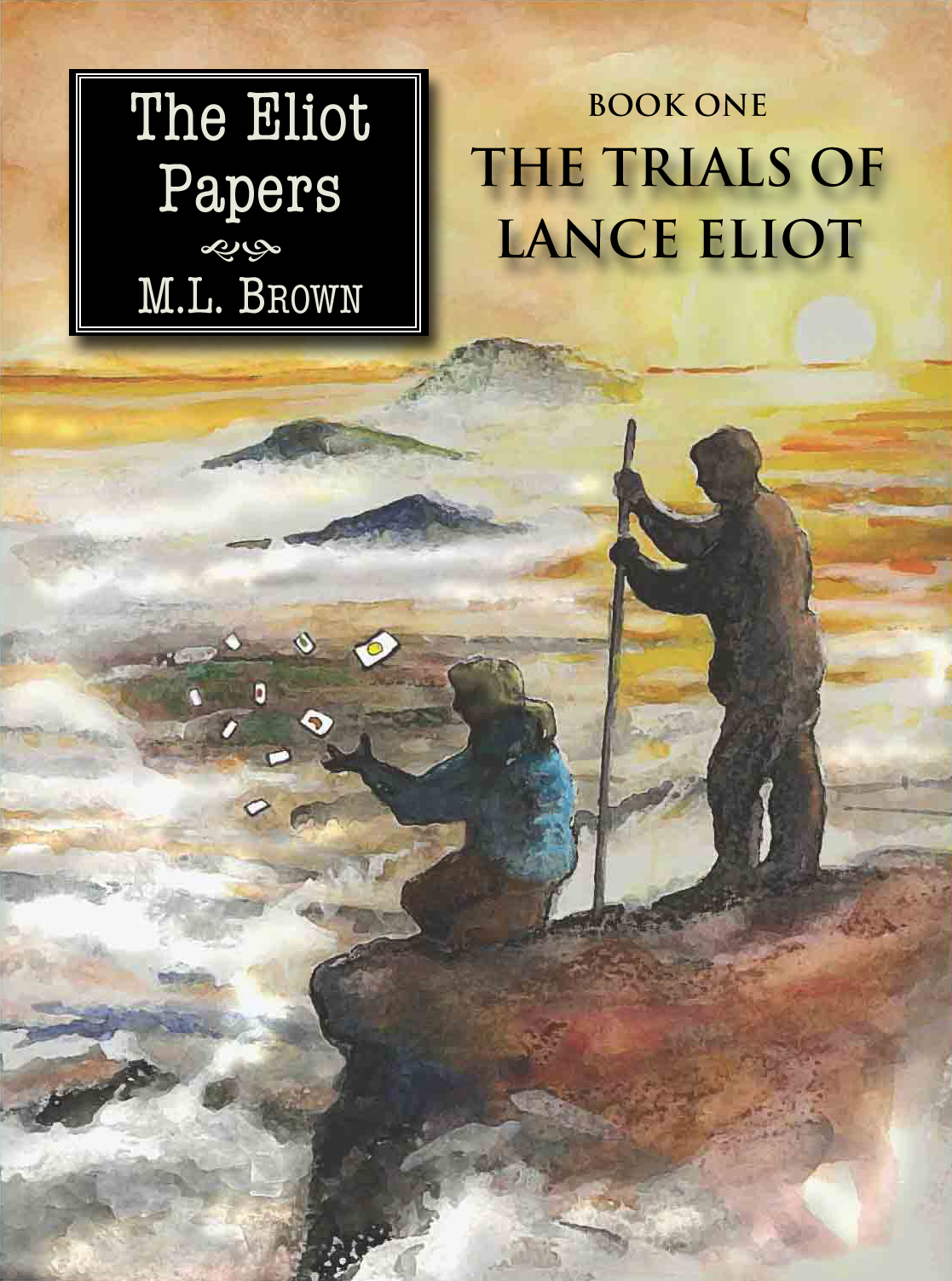
I sort of succeeded more than a year ago with the publication of The Trials of Lance Eliot, the first novel in a trilogy called The Eliot Papers. I had done it! I was a novelist! The first book was published, and all that was left was to finish its two sequels.

The Trials of Lance Eliot

At the moment, I don’t think I can.

For nearly eight years, Lance Eliot’s story has been my greatest passion as a writer. I’ve invested so much in it. I want to have it finished. It hurts to abandon it.

All the same, I think the time has come for me to let it go.

To clarify: I don’t intend to abandon The Eliot Papers forever. I hope to finish the trilogy someday. It just won’t happen anytime soon.

Most of my readers probably don’t care, but I know a few have enjoyed The Trials of Lance Eliot and want to read its sequels. I owe those readers an explanation and an apology.

The apology is shorter, so I’ll start there.

I’m so sorry to keep you waiting.

If you’ve enjoyed The Trials of Lance Eliot and want to know the rest of Lance’s story, feel free to contact me with questions. I’m happy to share plot details with readers who want to know how Lance’s story ends.

As for the explanation: I think Hergé, the creator of The Adventures of Tintin, put it best: “Right now, my work makes me sick. Tintin is no longer me . . . If Tintin continues to live, it is through a sort of artificial respiration that I must constantly keep up and which is exhausting me.”

At this time, I feel the same about Lance Eliot as Hergé felt about Tintin. I love the character and his world and his story. I simply can’t keep them up. They’re exhausting me. What began as a dream has become a burden.

I have other reasons for setting aside The Eliot Papers. I have a job and a blog and many other commitments. I sometimes suffer from depression. At the best of times, writing fiction is hard. Working on a massive project like The Eliot Papers is exhausting and stressful. The addition burden of author stuff—updating a book blog, maintaining a Facebook page, gathering reviews and promoting my writing—is simply more than I can handle.

There is one final problem: The Trials of Lance Eliot hasn’t sold well. I regret to say the novel hasn’t even recouped the money its publisher invested in its publication. This is mostly my fault; I should have been much more active in promoting the book. All the same, it’s definitely a deterrent from investing endless time and effort in sequels.

In the end, I was left with two options. I could, in addition to many other commitments, keep working on The Eliot Papers: an exhausting, discouraging project without much chance of success. My other option was to let it go.

After much coffee and even more careful, prayerful consideration, I’ve chosen the second option.

My publisher has graciously accepted my decision. I’ve already deleted the book’s blog and my Goodreads author page. My Facebook author page is in the process of being deleted, and I’ve made many tweaks to this blog to eliminate inconsistencies and links to sites that no longer exist.

My decision to let go of The Eliot Papers has left me sad and discouraged. It’s hard to see a dream die. At the same time, I feel free. My life has become simpler. I can work on other projects, and I can spend free time reading and gaming without feeling guilty. That vague, constant burden of anxiety is gone. I can be a writer again without being an author.

Lance Eliot’s story has been quite a journey for us both. Working on The Eliot Papers taught me pretty much everything I know about writing. It was exciting, challenging, fulfilling and fun. In spite of its discouragements and failures, I thank God for The Eliot Papers. It was definitely an adventure.

Lance Eliot isn’t all dead, and I hope he returns someday.

For now, though, I have my own life to live.

207. A Postmodern Prayer

Our Parent of Unspecified Gender,

Hallowed be your name—which is, naturally, whatever we want it to be.

Your kingdom come, but only if you make it a democracy.

Your will be done, but only if it doesn’t interfere with ours,

On earth as it is in heaven, the latter being a quaint metaphor.

Give us this day our daily bread (which we deserve)

And don’t bother forgiving our debts

Because we have no debts—after all, sin is just an outdated philosophy.

Don’t feel obligated to keep us out of temptation, because it’s just natural instinct;

Or evil, since discriminating against anything is intolerant.

For yours is the kingdom (just democratize it!)

And the power (just don’t use it!)

And the glory forever,

But only if you acknowledge you’re no more special than the rest of us.

Amen.

204. My Childhood Fantasy

As a kid, I loved fantasy stories. My budding imagination teemed with dragons, hobbits, wizards, weapons and those octopus-monsters from The Legend of Zelda that spit rocks. It was only natural, I suppose, for me to build a fantasy of my own.

The hero of this fantasy was an orphan (of course) with a tragic past (naturally) who overcame adversity to become a mighty swordsman, wizard and defender of the innocent. My fantasy hero was—like all true heroes—named after a character in a video game. Inspired by Link from the Legend of Zelda games, named for a challenger from the Pokémon games, my hero was Lance: a green-clad warrior for whom no quest, challenge or cup of tea was too big.

For a childish fantasy, Lance was ahead of his time. He fit the pattern of the wanderer-hero in almost every detail more than a decade before I recognized the archetype in fiction. Years before I knew anything about Doctor Who, Lance traveled through time and space with a box that was bigger on the inside. (However, unlike the Doctor, Lance didn’t travel in his box. Lance kept stuff in it.)

I didn’t feel the slightest qualm as a child about plagiarizing other stories. Lance used magic to travel anywhere, which included Middle-earth from The Lord of the Rings, Hyrule from the Legend of Zelda games, Hogwarts from Harry Potter and a few more copyrighted realms from books, films and games. (How fortunate that imagination is beyond the reach of lawsuits.) Lance rubbed shoulders, bumped elbows and occasionally sparred with many famous fantasy heroes.

After two years of vivid adventures, Lance slipped quietly into retirement when I entered my early teens. It was coincidence that the protagonist of the story I began writing a couple of years later—which grew into my novel, The Trials of Lance Eliot—had the same name as the hero of my childhood fantasy. Lance Eliot was given his name because the plot demanded it, as readers of the novel know.

I think the coincidence is rather funny. Lance the all-powerful hero and Lance Eliot the wry college student could hardly be more different. I suppose they have at least one thing in common… they like tea.

My imagination is less exuberant and more wary than it used to be. When I read, write or see a story, I find myself looking for inconsistencies, holes and weaknesses. Things have to make sense now that I’ve grown up.

All the same, I hope I never lose that spark of imagination. Making up stuff is fun.

201. And We’re Back!

My typewriter monkeys have dusted off their typewriters. I’ve brewed some coffee, fired up my laptop and spent roughly half an hour trying to think of a really clever way to start off this blog post.

Ah, it’s good to be back.

Truth be told, I really needed the break. TMTF had become an obligation, and getting away from it for a few weeks was exactly what I needed to renew my enthusiasm for rambling about faith, writing, video games, literature, life, the universe and everything.

Having cherished a private hope that my typewriter monkeys would make their month-long vacation in Tijuana a permanent stay, I was disappointed. My monkeys have returned. They brought back a baffling collection of souvenirs: three sacks of coconuts, a Velvet Elvis and a hideous false mustache. (I know better than to ask questions.) My monkeys are annoyed to be back, and I’m annoyed they’re back, so at least we agree on something.

In other news, my break gave me an opportunity to make plans for my writing.

At some point, for example, I may put Geeky Wednesdays on hold for a dozen weeks and republish The Infinity Manuscript as a serial. Hardly anyone has read The Infinity Manuscript, which is rather a shame. I put quite a lot of work into it. Rerunning the story seems like a great option if I become temporarily too busy to handle the pressure of writing new Geeky Wednesday posts every week.

I didn’t exactly devote my month off to soul-searching, but it hit me more clearly than ever before that I need to have a better, brighter outlook. I’m a pessimist. As often as I’ve pointed out the importance of being positive, I haven’t been consistent in having a hopeful attitude.

Few things are drearier than forcing or faking cheerfulness. Artificial happiness is a poor alternative to honest pessimism. Father Brown, G.K. Chesterton’s great detective, called an outlook of false optimism “a cruel religion.”

It finally struck me that having a cheerful outlook is not the same as merely pretending to be cheerful. Without making the slightest effort to feel a certain way, I can choose to focus on the positive over the negative instead of succumbing to Batman Syndrome and letting the negative eclipse everything else.

All this to say: I’ve been more positive lately. It’s nice. I recommend it.

The past year was an adventure. I found a job, settled down, learned some invaluable lessons, ate a lot of cookies and discovered coffee tastes great with bourbon.

This was the year I grew up.

I remain grateful to God for bringing me so far, excited to press onward and upset with my typewriter monkeys for cluttering up my apartment with coconuts. I wish they had stayed in Tijuana.

200. TMTF RAP BATTLE!

My typewriter monkeys have finally revealed their sinister plans for this blog’s two hundredth post. They’ve hired some guy called Ice Kream to humiliate me in a rap battle. I’m not sure what a rap battle is, but I know one thing.

This is my blog, and I will defend it!

I should have seen this coming. Oh, well. Live and learn.

I want to thank Kevin McCreary from The Ceiling Fan Podcast. I sent him an email asking to use a rap beat he’d written for his show; he replied by offering to write a brand-new beat and record guest lyrics for this rap battle. His generosity is amazing, and it has been an honor to work with him.

To hear more excellent music from Kevin and the Ceiling Fan crew, check out M’Kalister Park, a silly and wonderful album available on Amazon.com. I highly recommend it, especially if you’ve ever listened to Adventures in Odyssey.

Next, a word to my typewriter monkeys: If you ever do this again, I will donate you to the zoo. That is all.

I would like to thank my father for supporting this blog since before it began. His fantastic artwork, lavish encouragement and gentle criticism have been extremely helpful. Thanks, old man. You’re a Stout Fella.

I’m truly grateful to everyone else who has supported TMTF by writing guest posts, sharing artwork, leaving comments, celebrating Be Nice to Someone on the Internet Day, following the blog, adding it to their blogrolls, linking to it via social media or simply reading it. I deeply appreciate every bit of support!

I guess I should give a shout out to my typewriter monkeys—Sophia, Socrates, Plato, Hera, Penelope, Aristotle, Apollo, Euripides, Icarus, Athena, Phoebe and Aquila—for occasionally helping out with this blog. Thanks, guys.

TMTF ain’t much, but soli Deo gloria all the same.

I’m not sure what lies ahead for this blog. Heck, I haven’t the slightest idea of what my own future holds.

As always, I’m comforted by these words from the old hymn: “Through many trials, toils and snares I have already come. ‘Tis grace hath brought me safe thus far, and grace will lead me home.”

I believe it, and I hope TMTF will be there to chronicle every serious, strange and silly thing along the way.

TMTF shall return on August 9, 2013. In the meantime, please feel free to check out my novel, past posts in the Archive or the fantasy novella I published as a serial on this blog.

Thanks for reading! We’ll be back!