329. The Post of Resolutions Yet to Come

All right. I’ve reviewed my resolutions for 2014. What of the year ahead? What resolutions have I made for being a better, nicer, wiser person?

Here are my resolutions for 2015.

I will be more intentional in keeping my New Year’s resolutions.

Full disclosure: I make an effort at the start of each year to keep my New Year’s resolutions, and I forget by the end of each year whatever the heck it was that I had resolved to do. I often keep New Year’s resolutions by dint of trying generally to be a better person, not by remembering and keeping specific goals. In the new year, I’ll be intentional in keeping my resolutions—this one included!

I will work on my Spanish.

This is an old resolution, which I mostly failed to keep. My grasp of the Spanish language was never a strong one, and it has only weakened in the six and a half years since I left Ecuador. This will be the year I dust off my old Avatar: The Last Airbender DVDs, pop ’em in my laptop, and watch the Spanish dub of the entire series. After all, cartoons make learning fun bearable!

Spanish teacher

Yes, I will learn Spanish from this irresponsible cartoon twelve-year-old. Teach me, O bald one!

I will practice spinning an old broomstick.

A few people know of my talent for twirling old broomsticks like some sort of janitorial ninja. I haven’t really practiced this useless gift in the past few years. It’s high time I get some regular fresh air and exercise spinning my broomstick in the local park… even if it means little Amish children lining up in a neat, silent row to stare at me. (This really happened, and it was even more awkward than it sounds.)

I will have a more positive attitude.

I am a pessimist, and also a cheerful person. At the root of my paradoxical pessimism is the fact that cheerfulness and hopefulness are not the same thing. Beneath my silliness and sense of humor there is generally a negative outlook and an attitude of defeat. (It’s no coincidence that many humorists, from Mark Twain to James Thurber, were deeply melancholy men.) I will try in the new year not merely to be cheerful, but to trust, and to hope, and to persevere.
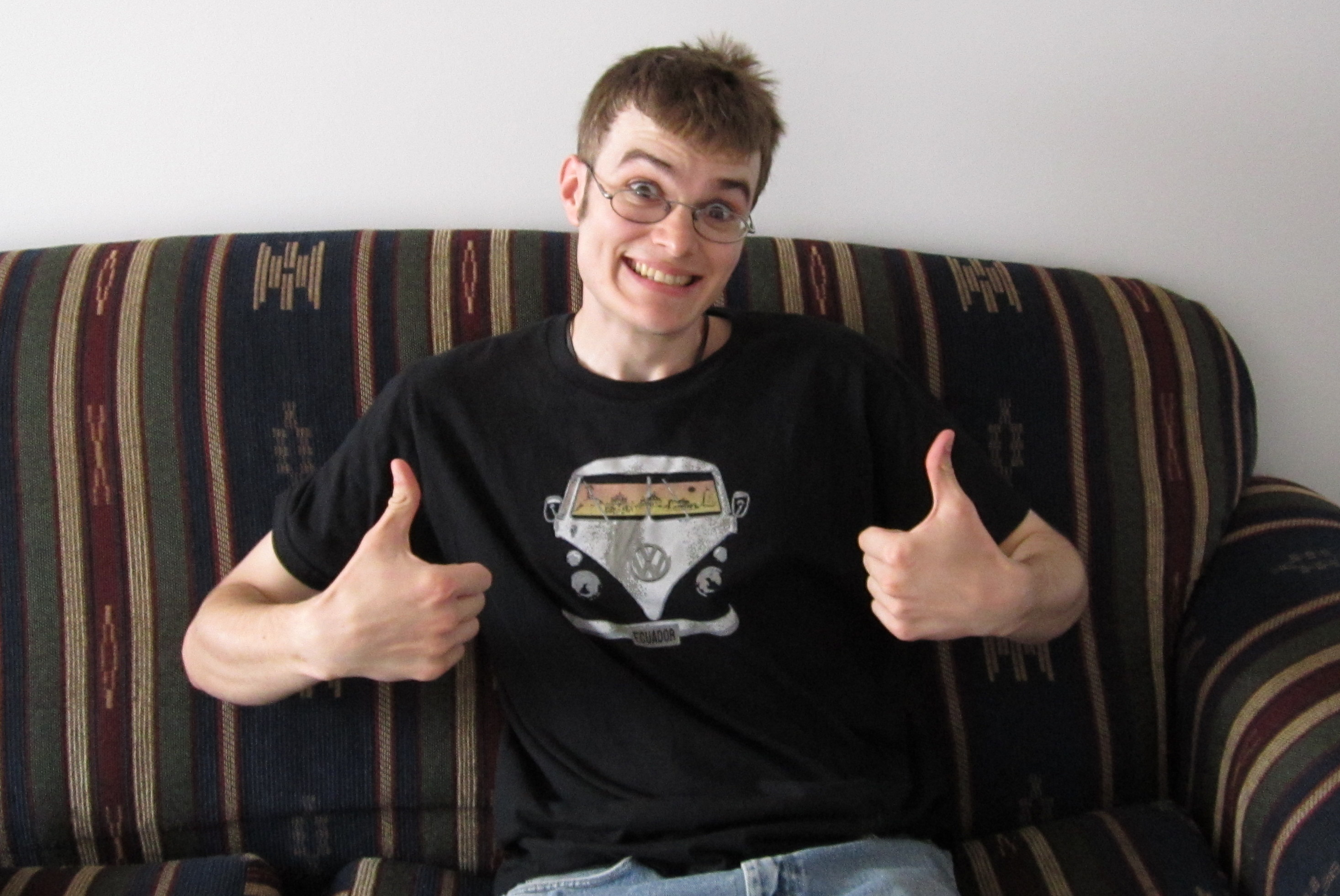
The face of a pessimist

This is truly the face of a pessimist.

I will research career options.

Despite having an English Education degree and a teacher’s license, I’ve finally admitted to myself that I don’t want to be a teacher—at least not in a US public school setting. Fortunately, there are other options open for someone with experience in English Education and a writing addiction. While I’m not planning to move on quite yet, this will be the year I figure out where I might go from here.

I will value prayer more.

I don’t value prayer enough. As an orthodox Christian, I believe it’s the single most important thing I do every day. However, in years past, I’ve made prayer just another item on my daily to-do list—and generally the first thing to be cut when I get busy. In the new year, I mean to honor God by honoring prayer.

Do you have any resolutions for the new year that you’re willing to share? Let us know in the comments!

Thanks for reading! If you have a moment, please check out TMTF’s charity fundraisers this month and make the new year awesome for a person in need!
317. About Storytelling: Deus Ex Machina

Be sure to vote in this week’s poll!

There come moments when storytellers feel trapped. A story has a problem with no easy solution. The hero is cornered by ravenous wolves, pushed off a cliff, or given a toothpick for a duel instead of a sword. No happy ending is possible.

This is when storytellers use a dirty little trick called deus ex machina. This fancy-sounding phrase is used to describe contrived or impossible resolutions in storytelling.

In the first problem mentioned above, the hero might be saved by the wolves dropping dead of simultaneous heart attacks. The second problem can be solved by an angel catching the hero in midair, and the third by the hero’s opponent abruptly putting down his sword and becoming a pacifist.

These solutions are ridiculously improbable, and that’s the point: deus ex machinas (or dei ex machinis if you want to be really fancy) are not believable. They are jarring reminders that fiction is completely made-up.

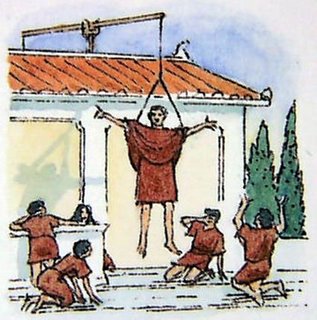
The phrase deus ex machina is Greek for god from the machine. In ancient Greek theater, actors representing gods entered the stage using literal machines, such as platforms that raised them up through trapdoors or lifts that lowered them down from above. These “gods from machines” represented divine beings capable of doing anything. Was the hero stuck in a problem with no solution? Presto! Here came a god to solve his problem miraculously!

Deus Ex Machina

Fear me, mortals! Be awed by my divine splendor! Pretend not to notice the crane!

Thanks to this theatrical convention, deus ex machina has entered the vocabularies of writers everywhere.

One of the most infamous deus ex machinas in recent history is the convenient arrival of giant eagles to save the heroes at the last possible moment in The Lord of the Rings. In The Adventures of Tintin, the hero is frequently saved by lucky coincidences such as landmines turning out to be duds when he drives over them. Charles Dickens, bless him, used deus ex machinas all the time to give his characters happy endings.

Aspiring writers should be familiar with the concept of deus ex machina for two reasons. First, they can avoid using it unnecessarily. Nothing ruins the excitement or verisimilitude of a good story like a cheap deus ex machina. Second, writers aware of the concept can use it meaningfully.

Yes, it can actually be a good thing for problems to be resolved in a contrived fashion. Deus ex machinas can be used for ironic or humorous effect, such as heroes escaping a monster because its animator has a sudden heart attack. They can also be used seriously to make a point, as in the final scenes of the movie Signs. In the climax of the film, a family survives a crisis due to an incredible set of coincidences… which begs a question asked earlier in the movie: “What if there are no coincidences?”

(Signs was quite a good film, but I will never forgive its director for what he later did to The Last Airbender. That movie, based on a truly superb television show, is a disaster no deus ex machina could save.)

Why am I writing about deus ex machinas? Well… I’m writing this post less than a day before it’s due. The subject of last-minute resolutions seems appropriate!

312. Gritty or Glittery?

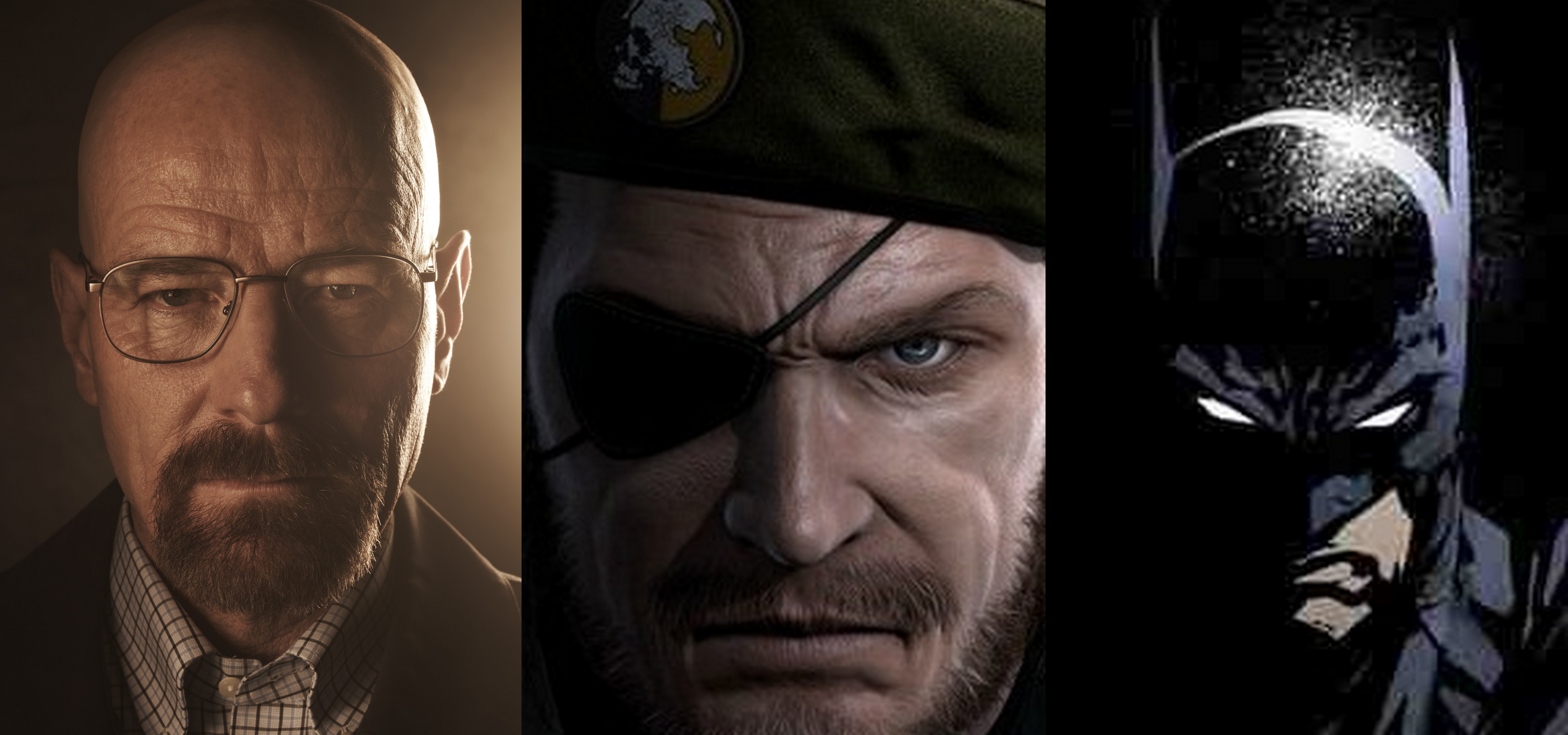
In the past few years, we’ve seen a lot of gritty media: books, films, and video games characterized by darkness, angst, violence, and square-jawed men brooding over inner conflicts. From Wolverine to Walter White, we’ve seen plenty of angsty characters on the large and small screens. Books—even young adult literature—feature people killing (and dying!) in all sorts of creative ways. The video game industry continues making games with guns, gore, and roughly one in every five words of dialogue being the f-bomb.

Angst! Darkness! Square jaws!

Angst! Darkness! Square jaws!

Why is gritty media popular? That’s a tough question to answer. I suppose there’s some truth to the darkness and violence in these media, and it resonates with people. We all feel sadness, discouragement, and anger. Some face depression, abuse, self-destructive impulses, or equally “gritty” problems.

Finally, gritty media often seems mature, sophisticated, or “grown-up.” All of this begs the question: Is it?

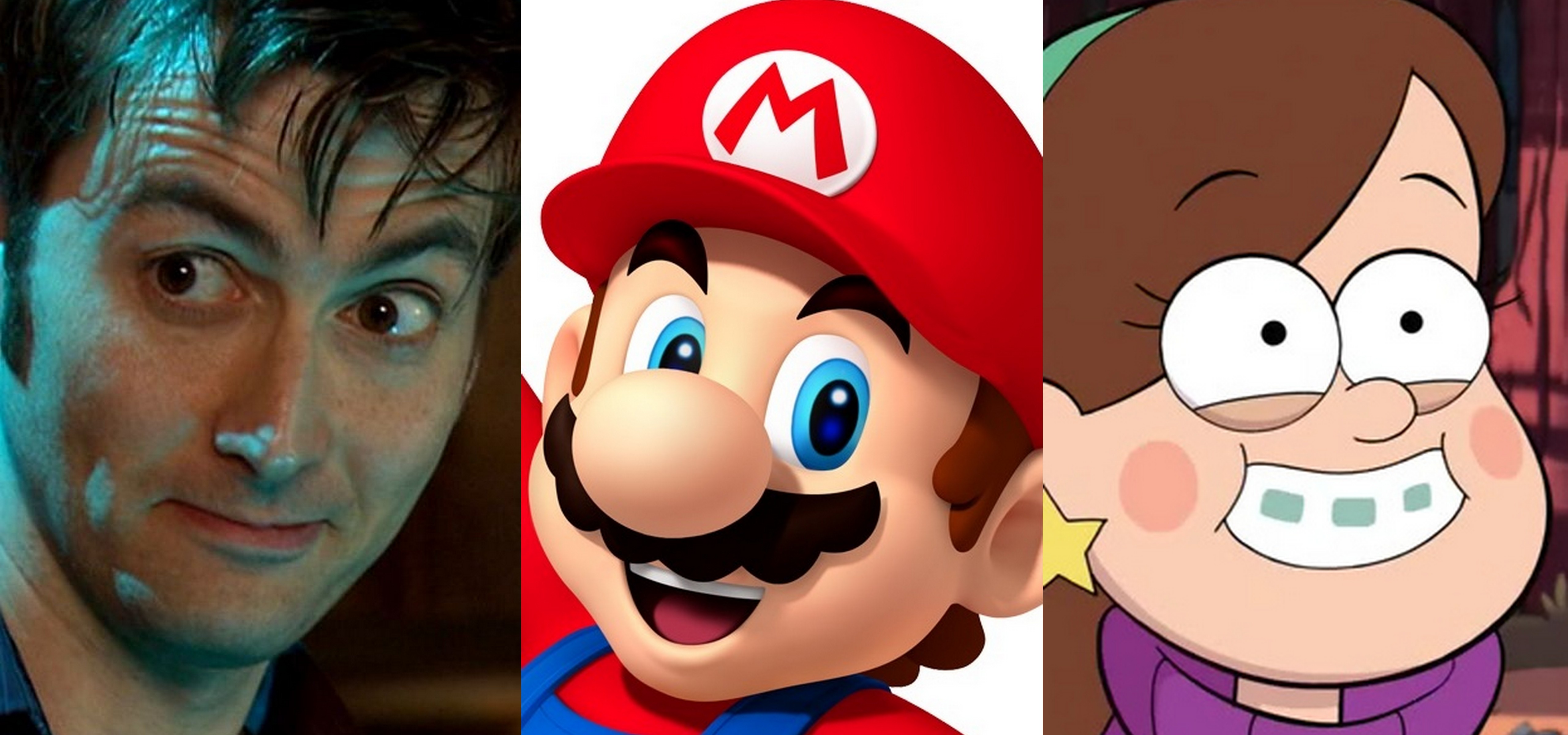
While gritty media has become more popular in past years, there are still plenty of lighthearted books, films, and video games: “glittery” media, so to speak.

Light! Smiles! Goofy braces!

Light! Smiles! Goofy braces!

Throughout history, comedy has nearly always taken a backseat to tragedy. Shakespeare’s most famous plays are his tragedies; Mark Twain’s cynical Adventures of Huckleberry Finn is celebrated over his cheerfuller books; P.G. Wodehouse’s clever comedies are largely eclipsed by the gloomy writings of his contemporaries. It seems humor and optimism can’t be taken seriously.

While there are certainly good things to say for gritty narratives, I don’t believe grittier is necessarily better. A purpose of art is to reflect or represent truth; the truth is that life isn’t always gloomy. A Farewell to Arms or The Things They Carried may be brilliant depictions of the horrors of war, but peace is no less real than violence. I think it’s absurd to suppose, say, Anne of Green Gables is necessarily an inferior book because it reflects joy and sentiment instead of pain and despair.

In the end, it’s a mistake to judge the quality of a thing by whether it’s gritty or glittery, tragic or comic, cynical or optimistic. That said, I would love to see people take glittery media more seriously. Can we study humorists like P.G. Wodehouse or James Thurber more widely in schools? I’m sure students wouldn’t mind putting down The Lord of the Flies. Can we have fewer gritty superhero movies and have more like Marvel’s quirky Guardians of the Galaxy? We could use a break from gloom and doom.

The world is an awfully dark place, but there’s a little light left. Some stories remember that, and I think they’re worth taking seriously.

310. Obsessing over English

I love the English language. It’s a weird one, to be sure, but I love it anyway.

English began as a Germanic language called Anglo-Saxon. The Norman invasion of England in 1066 stirred in some French, eventually resulting in the sing-song language known as Middle English. Over the centuries, shifts in grammar, spelling, syntax, and pronunciation, along with words and phrases from other languages, have added up to the glorious mess we call English.

I’ve heard of two approaches to English and language in general. The first is a prescriptivist approach, which says, “This is how English must work, and everyone who disagrees is wrong.” I think this approach is hopeless, not to mention silly. Language changes constantly. A person may as well try to impose immutable order on the clouds above as on the English language.

(Of course, some formal standards are necessary for certain kinds of writing. It improves communication for professionals in the same profession to follow the same rules. What I frown upon is a universally prescriptivist approach to the English language.)

I prefer a descriptivist view, which says, “This is how English actually works right now. Let’s roll with it.” I disapprove of sloppy writing, but I don’t mind other people following different rules of grammar, spelling, and syntax. If other writers want to split infinitives, use sentence fragments, or end sentences in prepositions—and they’re consistent about it—who am I to argue?

When it comes to my own writing, however, I think I have linguistic OCD. Is that a thing? Let’s assume linguistic OCD is a thing. Obsessive-compulsive disorder can afflict anyone, even linguists.

As relaxed as I am about writing in general, I’m obsessive about my own. I seldom begin sentences with And or But. I never split infinitives, even though the rule about not splitting them is (according to an old college professor) an obsolete leftover from Latin. Heck, I even hate ending sentences with a parenthesis or the letter because I think these symbols look untidy next to a period.

I… I think I need help.

All right, not really. But I sure could loosen up a bit.

That last sentence was a little hard to write. I’ll keep working on it.

303. About Storytelling: Temporary Death

Death is one of life’s few absolute certainties. Others include taxes and the fact that every person will, at some point, step in a puddle of water on the bathroom floor while wearing socks. Yes, life can be cruel.

Death is inevitable. For the most part, even fiction acknowledges this. What some stories don’t guarantee is that characters will stay dead. I’ve discussed how to kill off fictional characters, and even mentioned temporary death as a video game cliché, but I think it’s still worth taking a look at how characters in some stories recover from death as easily as getting over a cold.

There are endless possibilities for cheating death in fiction, going all the way back to classical mythology. In Greco-Roman myths, death was a literal place from which a surprising number of people managed to escape: Heracles and Orpheus, among others.

The past few decades have given us an endless array of methods for cheating death, especially in geekier media like comics, video games, and fantasy fiction.

Here are some of my favorites.

Be ye warned, here there be minor spoilers.

Time travel

How often dead characters have been restored to life because someone went back in time to rescue them! Thanks to the butterfly effect, tiny decisions in the past can have huge consequences in the future. Probably my favorite example of time travel resurrecting a dead character comes from Chrono Trigger, pretty much the greatest RPG ever made, in which characters travel to the exact moment of a man’s death to save his life.

Superhero comics

There is no single explanation for this one—comic book characters are revived in such a staggering variety of ways that I can’t even begin to list them all. A mutant’s seeming death triggers her evolution into a more advanced mutant. A superhero’s innate healing abilities pull him back from the brink of death. A villain fakes his death by a stupidly elaborate scheme. Really, the possibilities are countless.

Magic

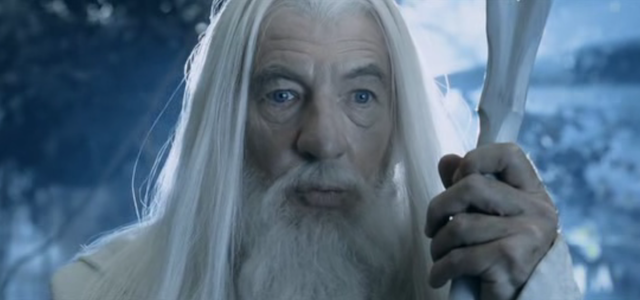
When in doubt, magic is the ultimate deus ex machina. Magic is mysterious and inexplicable by its very nature. If a writer resurrects characters by magic, who is there to argue? Miracles, such as the triumphant return of Aslan or Gandalf, fall into this category, which also includes medicines like the chocolate-coated pill from The Princess Bride.

Supposed to be dead

What? I’m supposed to be dead? Well, this is awkward.

Technology

By technology I mean magic as it is called in sci-fi stories. Let’s face it: advanced technology and supernatural magic are practically the same thing in some science fiction.

Reincarnation

This metaphysical concept has been lifted from various religions and adapted to everything from Avatar: The Last Airbender to Doctor Who. (The Doctor’s regeneration is basically sci-fi reincarnation.) Characters may technically die, but reincarnation allows the narrative to bring them back.

Afterlives

This brings us to ghosts, phantoms, and other not-alive states of being. Again, even if the story considers characters dead, they’re still fulfilling the roles of living persons by lingering as spirits.

Fake deaths

This one annoys me. (All the same, I’ve used it more often in my writing than I care to admit!) When a character seems to die, the narrative treats them as dead… until they turn out to have been alive all along. Fake deaths generally cheapen the reactions of living characters. Responses like mourning, grief, and anger become less meaningful when they’re revealed to have been unnecessary. Besides, fake deaths are generally predictable.

I think temporary death is a valid storytelling trope, but I prefer death in fiction to be permanent. Death is more realistic, and carries much more weight, when it’s treated as an everlasting reality instead of a fleeting condition.

Anyone who knows anything about video games probably knows that Aerith dies in Final Fantasy VII. Partway through the story, this cheerful flower vendor is impaled by the villain. That’s it. There’s no resurrection, no last-minute deus ex machina. In the game, she is dead. The other characters mourn her… and so does any player whose heart isn’t made of stone.

Death is tragic. It often seems meaningless. However, in storytelling, that miraculous medium which makes all things meaningful, death matters—especially when it lasts more than a few minutes.

302. TMTF Reviews: TMTF Reviews

A long time ago, I began reviewing books. It’s a vice, I know. I can’t help it. Some time later, I started reviewing video games. Look, I know I have a problem. Don’t judge me for judging things.

I’ve been thinking lately of how to improve TMTF Reviews. It occurred to me that they could be more streamlined and better organized. It’s time for a change.

That said, today’s review is a little different. It’s shorter than usual, bizarrely meta, and unexpectedly significant. We’re going to figure out how to make these reviews more helpful and easier to read.

This time, TMTF reviews TMTF Reviews.

Wait, what?

TMTF Reviews

The Good…

Up to this point, TMTF Reviews have been bleak, black-and-white blocks of words broken only by the occasional picture. We’re adding titles! Besides breaking up the monotony of prose, titles will make navigating reviews quicker and easier.

The style and content of reviews shan’t change. I’ve always tried to give thoughtful evaluations of things. My reviews aren’t great, but at least they give unique, honest perspectives and impressions of books and video games.

We’re making one more major change to TMTF Reviews, but I’ll get to that one in just a bit.

The Bad…

TMTF Reviews have plenty of problems. I’m neither a gaming pro nor a literary expert, and my reviews are far from professional. In fact, TMTF Reviews mostly consist of me rambling about stuff I’ve read and played, and throwing my ramblings into the lives of innocent, unsuspecting readers.

And the Fabulous

All in all, TMTF Reviews are as much a part of this blog as personal reflections and Legend of Zelda references. I can hardly imagine TMTF without its reviews, despite their faults, and I’m excited to make them a little easier to read.

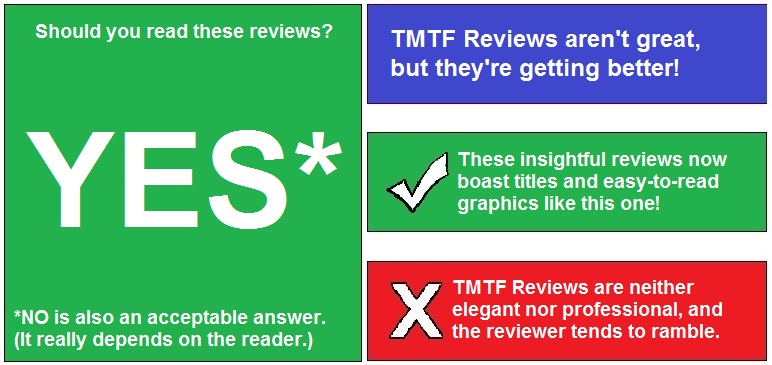
This brings me to that final change I mentioned before. Inspired by the superb reviewing format used by Kotaku, I’ve decided to summarize each TMTF Review in a simple, colorful, fabulous graphic!

TMTF Reviews - TMTF Reviews

All right, the graphic isn’t that fabulous. Still, I hope it helps. Now you don’t even have to read TMTF Reviews anymore! You can just skip to the summary for the most important information!

Wait… it’s probably a bad thing if readers quit reading my reviews. Ah, well. Alea iacta est. (That’s Latin for “Such is the price for fabulous things,” or something like that. I could be wrong.)

Having improved the format for reviews, I’m eager to review the heck out of things… but I suppose I’ll have to go read a book or a play a game first.

I should probably get a start on that.

301. Blogging Anarchy

In some distant, dusty corner of my mind, there is a list titled What Adam Wants to Be When He Grows Up.

I’ve spent the past half a decade or so crossing things off this list. Voice actor was the first to go, followed by Author and Professional blogger years later. My list seems to get a little smaller every year; at this point, it consists of English teacherCopy editor, C.S. Lewis, and G.K. Chesterton. Those last two probably aren’t realistic options, since they’ve already been taken by other people.

The latest profession to be removed from What Adam Wants to Be When He Grows Up was Video game journalist. Yes, video game journalism is a thing. Someone has to review all those games, interview game developers, and cover events like E3, after all!

In the past few years, I’ve delved into the fascinating world of video game journalism and found it awesome… and also kind of awful.

I love writing. I love video games. Video game journalism unites two of my greatest interests in one exciting career. For a few months, I seriously considered looking into the profession. Like voice acting all those years ago, video game journalism seemed almost too good to be true.

Well, like voice acting, video game journalism turns out to be a heck of a lot harder than it looks. It takes more than a knack for writing and a passion for gaming. Video game journalism has extremely tight deadlines and not much job security. The job requires extensive research, technical know-how, and a high tolerance for brutal, abusive reactions.

The video game industry seems to have more than its fair share of spiteful people: gamers prowling around like roaring lions seeking whom they may devour. Every controversy in the video game industry, and media coverage thereof, gets messy. Insults, accusations, and—I hate to say this—death threats are not uncommon.

Some gamers don’t even need controversies to be cruel. All it takes to kindle their fury is a dissenting opinion. Vicious arguments are started by mild statements like “I think Majora’s Mask is a better game than Ocarina of Time,” and woe to the journalist brave enough to discuss touchy subjects like religion or feminism in video games!

In this journalistic minefield, video game journalists are wary. They follow complicated regulations about transparency and conflicts of interest. (These rules are good, fair, and necessary, but definitely a headache.) Some journalists have been publicly shamed, and had to apologize, for honest opinions.

All of this makes me especially thankful for the anarchy of blogging.

Well, anarchy may not be the best word; freedom is probably a more positive one. As the world of video game journalism is shaken by GamerGate, a recent mess of controversies involving feminist criticisms and alleged conflicts of interest, I find myself more thankful than ever for the freedom to write whatever the heck I want to write.

One of many things that makes blogging fun is that is has so few regulations. Nearly every rule for this blog is self-imposed. TMTF has deadlines and guidelines and whatnot, but they’re all the ones I chose for it. Blogging isn’t a minefield whose navigation requires strict rules. All it takes to write a blog is passion, a little experience, and maybe just a hint of insanity.

I admire video game journalists. I hope the problems of GamerGate are quickly and peacefully resolved.

Most of all, I am so, so thankful for the anarchy of blogging.

300. Creative Counseling with DRWolf

In past months, I’ve felt burned out. Writing has been harder. I realized it was time for this blog to get some help, so I met with DRWolf—a creative thinker known for his work in the brony community—to discuss the problem. He was friendly, polite, and helpful. What I didn’t expect was for the good doctor actually to be… you know… a wolf.

I want to thank DRWolf for his time, consideration, and advice. I was sincerely interested in finding some answers, and he gave some really good ones. Keep up the fine work, Doctor. It was an honor to work with you.

I also want to thank Crowne Prince, animator extraordinaire, for the superb video. It’s absolutely fantastic, Ms. Prince. I appreciate your time and expertise!

As usual whenever I stumble over a blogging milestone, I have a few more words to say.

I owe a great debt of gratitude to my parents for their support and encouragement, and especially to my father for his tips and artwork. Without him, TMTF would probably not have lasted long. Thanks, old man. You’re the stoutest of Stout Fellas.

Next, a word to my typewriter monkeys: If you ever do that again, I will donate you to the zoo. I mean it this time.

Speaking of my monkeys, I guess they deserve some credit. Despite their laziness, pyromania, and extensive criminal record, I don’t know how I would keep TMTF up and running without my dirty dozen: Sophia, Socrates, Plato, Hera, Penelope, Aristotle, Apollo, Euripides, Icarus, Athena, Phoebe, and Aquila. Thanks, guys.

(I’m serious about the zoo, though. Behave yourselves for once!)

My readers have been far kinder to this blog than my monkeys ever have. To every person who has supported TMTF by commenting on it, sharing it, liking posts here or on Facebook, writing guest posts, celebrating Be Nice to Someone on the Internet Day, or simply reading the blog occasionally—thank you. Thank you so much. The greatest joy of a writer is to be read, and I appreciate every single one of you.

Finally—insofar as a blog about video games, Doctor Who, and exploding tomatoes can honor anybody—soli Deo gloria. Whatever my struggles, I hope these three words will always be my guiding principle for creativity.

On a less spiritual note… if I had a penny for every post I’ve written for this blog, I’d have enough money to go out and buy a cup of coffee. That’s pretty neat. All in all, thanks to all of you, it seems I haven’t quite run out of reasons to be creative.

I’d better keep writing.

292. Why I Failed as an Author

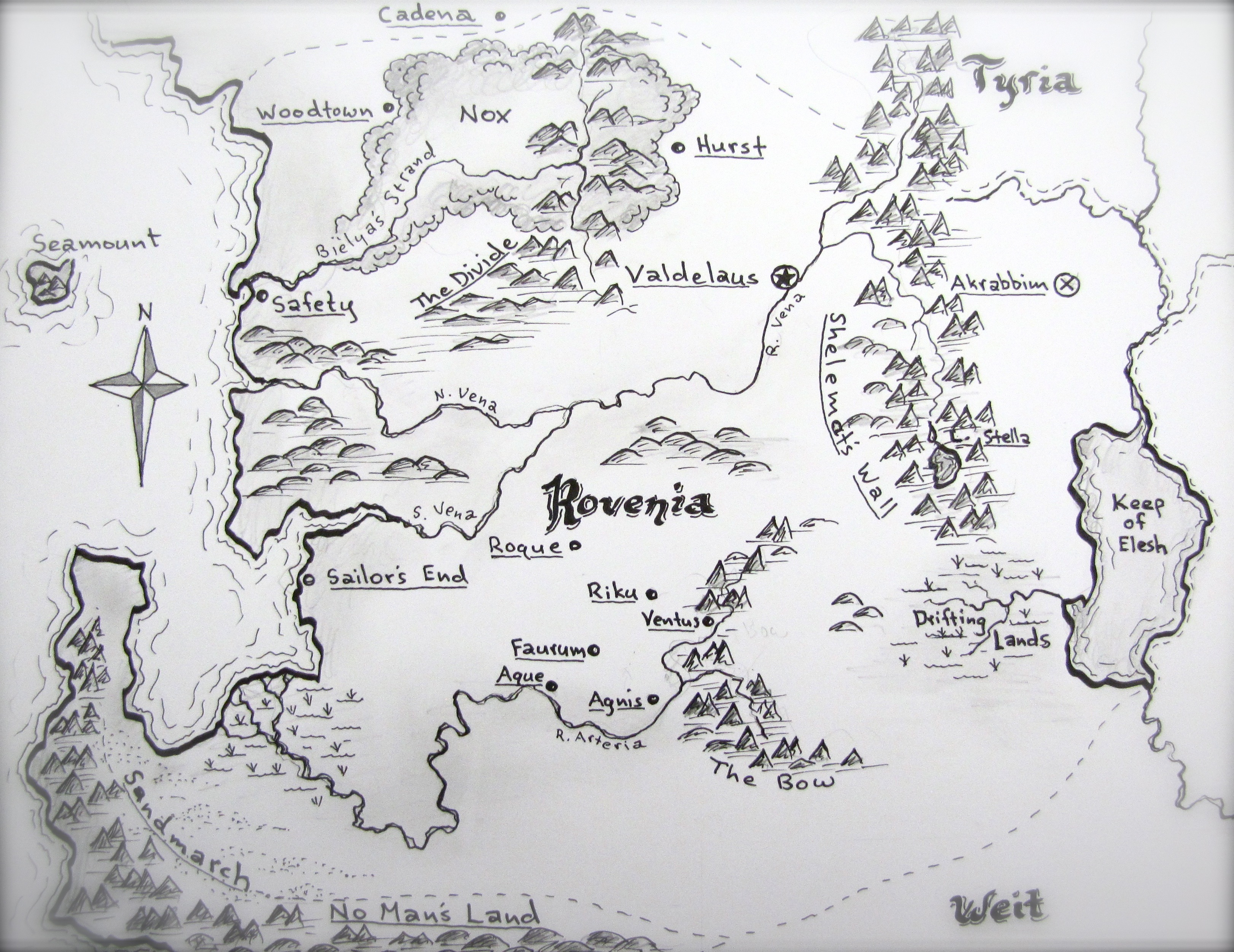
A number of days ago, I noticed a map on my bedroom wall.

Rovenia

I have several maps in my room besides this one: a map of the world, a map of Middle-earth, and a map of Skyrim that was a gift from someone at work. This one, a map of Rovenia, was lurking above my window. I’d nearly forgotten it was there.

What’s that? You’ve never heard of a place called Rovenia? Of course you haven’t, because I made it up.

Rovenia was the setting for a novel titled The Trials of Lance Eliot, the first book of a planned trilogy. I published it about two years ago—a little less than a year after buying typewriter monkeys (what a mistake!) and starting this blog.

Fifteen months later, I pronounced Lance Eliot dead. My short, stressed career as an author was ended.

I may pick up The Eliot Papers sometime. Lance Eliot’s story is certainly one I want to finish. At the moment, however, I don’t think it’s terribly likely. I’m busy enough with work and blogging and all the responsibilities that come from being a grownup.

My map of Rovenia set me thinking about why I failed as an author. I came up with a few reasons, which I toss out today as friendly warnings to all the aspiring authors out there. Don’t make my mistakes. Learn from them, and rise to success!

I didn’t do my research

When I took my first few, tentative steps into the publishing industry, I had absolutely no idea of what I was doing. My ideas of what it meant to publish a book and be an author were hopelessly naïve. A little research would have saved me a lot of time, effort, and discouragement.

I didn’t use my real name

When I began working on The Eliot Papers, I had the romantic notion of using a pen name. It was part of an elaborate frame story for the novels, in which Lance Eliot’s “memoirs” were “discovered” by an “editor,” who published them in the guise of fiction. It wasn’t a terrible idea—Lemony Snicket did pretty much the same thing—but it had one fatal flaw. Without a major publisher to market my book for me, I had to use my real name to promote it. Using both a real identity and an assumed one during the book’s release was a headache, and probably confused people.

I didn’t promote my book effectively

Oh, how I tried to promote The Trials of Lance Eliot. It had its own blog. I had an author page on Facebook and account on Goodreads. Readers submitted reviews, which I shared. It wasn’t enough. Looking back, I realize I should have done more: book blog tours, giveaways, submitting the book to more reviewers, and perhaps even setting up readings in the local library.

I didn’t set realistic goals

As I worked on the manuscripts for The Eliot Papers, I expected way too much of myself. I set impossible deadlines and tried to juggle my book, this blog, a full-time job, and a handful of other projects. There was no way I could do it all.

I didn’t work far enough ahead

When I published The Trials of Lance Eliot, I had written a few chapters of its sequel. Those chapters are pretty much all I have written. After the first book came out, I was far too busy promoting it and writing this blog to work on a sequel. I should have finished, or at least nearly finished, my manuscripts for the entire trilogy before publishing the first part. It would have allowed me to market the book without diverting some of my time and energy to its sequels.

I didn’t plan time for writing

It was a mistake to think I could make steady progress on a book and a blog. This blog has deadlines. My book didn’t. Guess which one was neglected! I also dabbled in a few other personal projects, none of which succeeded. Those could have waited—the book should have taken priority.

I did buy typewriter monkeys

I blame my monkeys for all of my failures. All of them.

Do I regret trying to be an author? No. What I regret is doing it so badly. All the same, the years I put into writing and publishing The Eliot Papers gave me much invaluable experience as a writer and editor. It also taught me lessons about managing my time, setting reasonable goals, and enjoying creativity for its own sake.

If any of my dear readers are writing books or hoping to become authors, keep going! Don’t give up!

Just don’t make my mistakes… and don’t ever buy typewriter monkeys.