287. About Storytelling: Intertextuality

As long as we’re talking about The Avengers, I want to point out that Marvel’s superhero stories have a lot in common with the Bible, Little Women and the Teenage Mutant Ninja Turtles.

Why, you can hardly tell them apart!

The similarities here are obvious… aren’t they?

(I also want to point out for the record that Jo and Donatello are the best March sister and Ninja Turtle, respectively. I’m just throwing that out there.)

These stories are extremely different, but they share at least one notable characteristic: intertextuality. This fancy (and somewhat dirty-sounding) word refers to the way an artistic work is shaped by another artistic work.

Still confused? I sure am. Let’s make it simpler by looking at these stories one by one.

Little Women is a novel by Lousia May Alcott about sisters growing up and getting married. It’s basically Pride and Prejudice, but better. (Fans of Jane Austen, please spare my family.) The first half of the book, which follows the March sisters as they become young ladies, loosely parallels The Pilgrim’s Progress by John Bunyan. As these little women read Bunyan’s allegory, they find it mirrored in their own pilgrimages from childhood to adulthood.

The Bible is packed with intertextuality. The number of times Scripture references itself is practically beyond count. The New Testament alludes constantly to the Old. Many books of Scripture cite passages from other books. Jesus Christ, as he hung dying upon the cross, quoted a phrase from the Psalms. Stephen, in turn, repeated some of Christ’s final words during his own execution. The Bible echoes itself constantly.

The Avengers is a tale woven from several different stories. Every one of its heroes has some kind of history; the film is built upon the foundation of other films. Without Iron Man and Thor and all those other Marvel movies, The Avengers probably wouldn’t even exist.

As for my favorite band of crime-fighting reptiles, well, the Ninja Turtles began as a parody of several gritty comics popular at the time. Even its details were drawn from the works it parodied: the Turtles’ teacher Splinter was a jab at a comic book character named Stick, and the villainous Foot Clan poked fun at a supervillain group called The Hand. The Teenage Mutant Ninja Turtles exist as a lighthearted response to darker comics.

All these stories are shaped by other stories. So what?

Intertextuality can be either a brilliant asset or a horrible nuisance. It can give a story depth or make it incomprehensible.

The benefits of intertexuality are too many to list in a single blog post, so I’ll mention just a few. Referring to other works can establish a strong narrative framework, as in Little Women. The Bible shows how intertexuality can help explain and clarify ideas. In The Avengers, the way separate narratives converge in one big adventure is, if I may express it so bluntly, really freaking sweet. Finally, intertextuality can provide humor or insight in the form of parody or satire of existing works.

Of course, intertextuality can go wrong. G.K. Chesterton is probably my favorite author, and also really awesome, but he sometimes makes the mistake of assuming all his readers are just as smart and educated as he is. His book Orthodoxy is full of allusions to other thinkers, but without context or background these references only confuse ignorant readers like me.

We’re all shaped by other people. It’s only natural, then, for our ideas and stories to be shaped by those of other people.
275. TMTF’s Top Ten Chase Scenes in Film

Do you know what’s exciting in movies? Chase scenes. I love chase scenes. Chase scenes are wonderful.

Whether the heroes are fleeing in fear from something dangerous or bravely pursuing an important objective, the high-speed, action-packed, adrenaline-pumping excitement of chase scenes is glorious. I’m no film expert, but I like movies as much as anyone, and today we’re looking at some of my favorite chase scenes in film.

The usual one-per-series rule applies here, of course, and I’ve included YouTube links to chase scenes wherever possible. Observant readers will notice a lack of scenes from the James BondDie Hard and Bourne movies. This isn’t due to any personal prejudice against action thrillers. It’s because I’ve seen hardly any of those movies I wanted this list to have some variety!

On your marks, ladies and gentlemen, as TMTF presents…

The TMTF List of Top Ten Chase Scenes in Film!

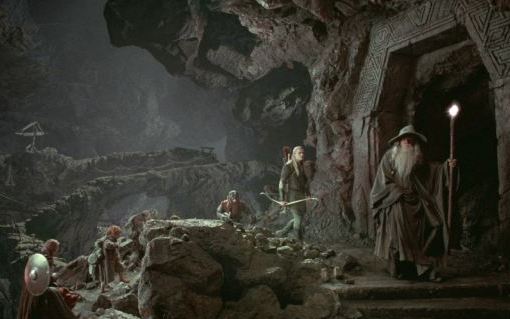
10. The Mines of Moria (The Lord of the Rings: The Fellowship of the Ring, 2001)

Mines of Moria

Although this chase isn’t as action-packed as others on this list, the Fellowship’s flight from the Balrog in the Mines of Moria ramps up the tension with an awesome musical score and a moment at which they must leap over a chasm as the unseen menace of the Balrog draws nearer. The monster doesn’t appear until the end of the chase, but the mere noise of its approach is enough to send Gandalf, a powerful wizard, running like a spooked cat. When the Balrog finally catches up with the Fellowship, it’s an epic conclusion to a thrilling chase.

I couldn’t find the scene on YouTube, so you’ll just have to watch the movie.

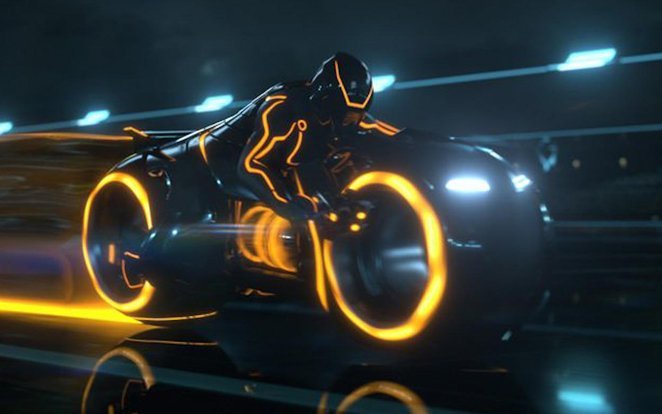
9. Light cycle chase (Tron: Legacy, 2010)

Light cycle chase

Short, sweet and colorful, this race between a Blue Guy and a Yellow Guy is great fun. The lack of music lends an understated realism to the scene; it reminds me of the podrace from the first Star Wars movie, but with brighter visuals and no annoying commentary. This chase also gets an honorable mention because Jeff Bridges.

You can watch this scene here.

8. Escaping the Reavers (Serenity, 2005)

Reaver chase

I was going to put the iconic speeder bike chase from Star Wars Episode VI: Return of the Jedi on this list, but then I remembered this little gem from Joss Whedon’s Serenity. It has all the excitement of the Star Wars chase, and also boasts wonderful dialogue and much higher stakes. As an all-or-nothing escape from vicious cannibals, it’s a tense scene… but not so tense as to exclude one or two really funny lines.

You can watch this scene here.

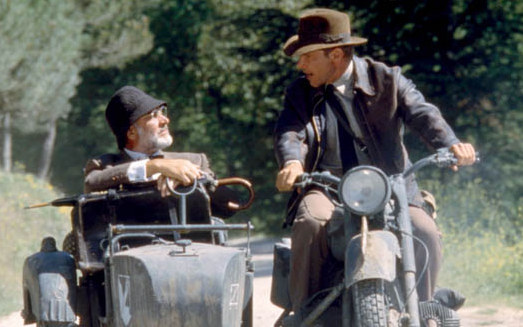
7. Motorcycle chase (Indiana Jones and the Last Crusade, 1989)

Motorcycle chase

Indiana Jones is practically synonymous with exciting chase scenes. Every film starring this intrepid grave robber archaeologist has him running away from something. This chase is by far my favorite. I mean, it has motorcycle jousting. It also has Henry Jones’s deadpan reactions to his son’s violent tactics. These disapproving glances, like the relics Indiana Jones picks up on his adventures, are simply priceless.

You can watch this scene here.

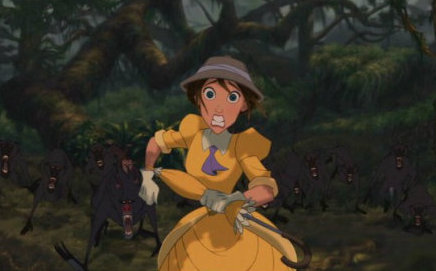
6. Fleeing baboons (Tarzan, 1999)

Fleeing baboons

This wonderful chase has Tarzan rescue Jane as she flees a hoard of angry baboons. Sprinkled with droll humor and backed by a lively musical score, this chase also features CG effects that were pretty impressive for the time. My favorite part of this chase? Tarzan’s facial expressions.

You can watch this scene here.

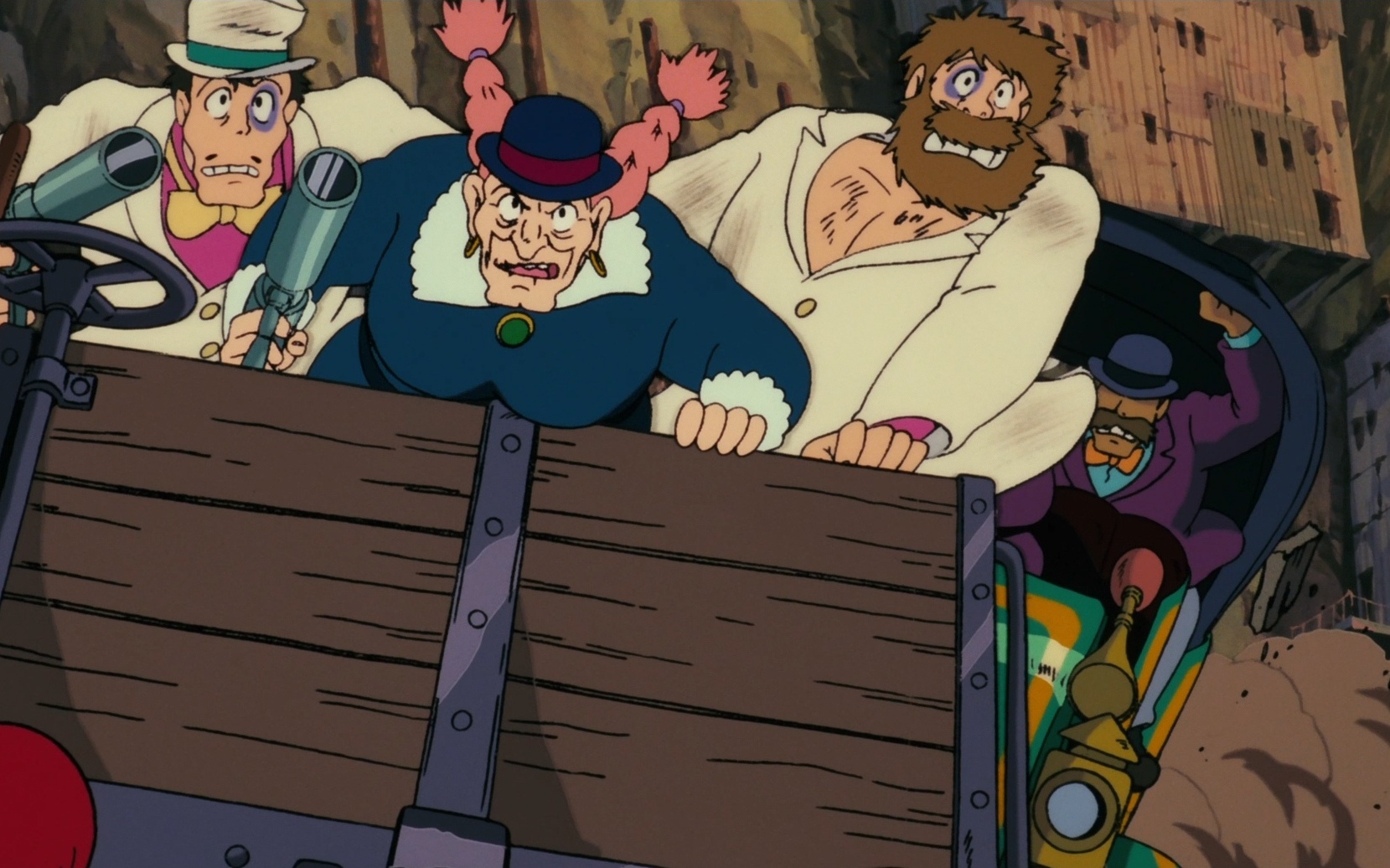
5. Pirate pursuit (Castle in the Sky, 1986)

Pirate pursuit

This chase is one of the best scenes in what may be my all-time favorite film, a classic from the legendary Studio Ghibli. The Dola Gang, a notorious band of sky pirates, pursue an innocent boy and girl into a canyon. When the children hop onto a train on raised tracks, the pirates follow in a rickety automobile. This beautifully-animated scene would be wonderful even without the pirates’ dialogue, which is hilarious.

I couldn’t find the scene on YouTube, so you’ll just have to watch the movie. Seriously, go watch it. Stop reading this blog post and go watch the movie!

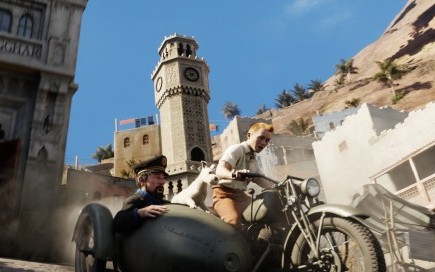
4. Race through Bagghar (The Adventures of Tintin, 2011)

Race through Bagghar

Steven Spielberg, bless him, sure knows a thing or two about directing great chase scenes. This chaotic rush down the streets of Bagghar, a fictional Moroccan city, is a joy to watch as Tintin crashes through buildings and over rooftops in a motorbike, trying to snatch a scroll from the talons of a hawk. There’s also a tank and a zip line and some accidental cross-dressing. Really, it’s quite a chase.

You can watch this scene here, but the quality of the clip is very poor; you may be better off just watching the movie.

3. Motorcycle duel (Final Fantasy VII: Advent Children, 2005)

Motorcycle duel

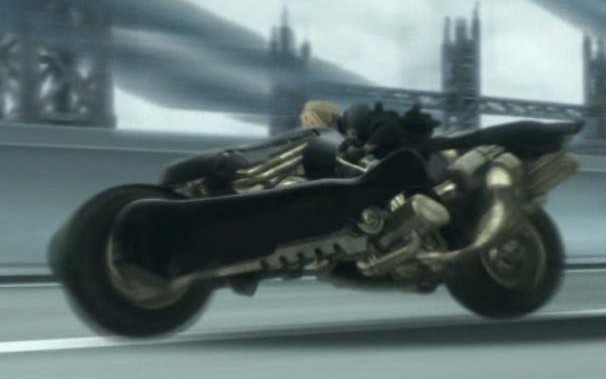
Despite a nonsensical plot, Final Fantasy VII: Advent Children is probably the best video game movie I’ve seen, and a personal favorite of mine. Why? Because it’s packed with scenes like this one, in which the hero wields an oversized sword to fend off bad guys while hurtling down a highway on a motorcycle. Everyone in this scene has superhuman agility and reflexes. There are gratuitous slow-motion shots. Explosions and gunshots punctuate a frenetic musical score. (It’s basically The Matrix, but better.) And this, an extended version of the scene, throws in some helicopters because why not.

You can watch this scene here.

2. Locomotive chase (The General, 1926)

Locomotive chase

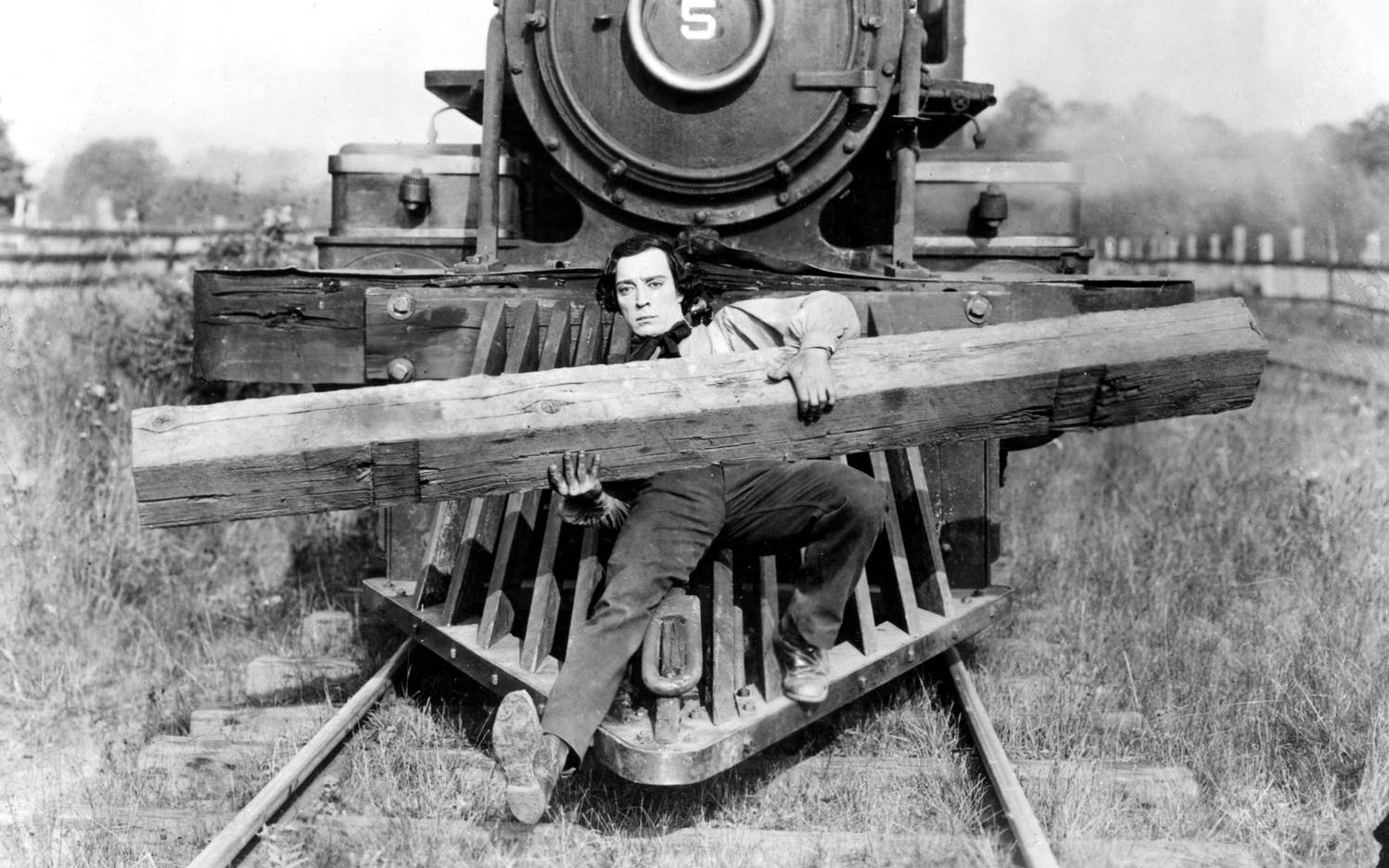
Chase scenes are generally frantic, but they don’t have to be. The General, Buster Keaton’s masterpiece, has two phenomenal chase scenes that last at least ten minutes each. In the first, the protagonist chases a train on foot, and then on a handcar, and then on an old-fashioned bicycle, and finally on his own locomotive. In the second, the protagonist’s locomotive is pursued by enemy trains. Everything about these chases is perfect, from Keaton’s deadpan expressions to his ingenious solutions for overcoming obstacles. They may not be fast or furious, but these chase scenes are outstanding.

You can watch part of the first chase here, and you should go watch The General in its entirety. It’s a great film.

1. Toy train shenanigans (The Wrong Trousers, 1993)

Toy train shenanigans

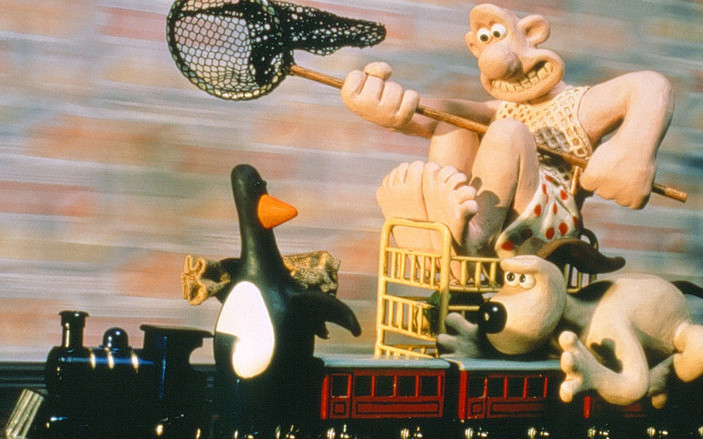
My favorite chase scene in film history has no guns or explosions. What it has is a penguin, a dog, a toy train, a pair of mechanical trousers and a middle-aged man in his underpants. This scene, animated painstakingly in clay, is superb. As I worked on this top ten list, my younger brother asked me if this scene was number one, and added that he would slap me in the face if it was not. It’s that good. This brief, bizarre, brilliant chase through an ordinary English residence is my favorite in all of film.

You can watch this scene here. Please do.

What is your favorite chase scene in film? Let us know in the comments!

261. About Storytelling: Nazis

Nazis are bad. If you carry away one thing from this blog post, it’s that Nazis are bad.

Nazis Swastika

Protip: This is not a good design for interior decorating.

In fact, Nazis have become a handy shortcut in storytelling for representing evil. Need a bad guy? Make him a Nazi. No reader of books or viewer of films or player of video games thinks twice if Nazis die. They are evil. They are all evil!

There’s only one problem with this convenient idea.

Not all Nazis are evil—rather, Nazis are not all evil.

You see, people are complicated. No person—Nazi or not—is absolutely, one hundred percent wicked. No person is completely good, either. Bad people have virtues, and good people have flaws.

As satisfying as black-and-white moral struggles are in storytelling, they’re not very realistic. It’s hardly ever as simple as “good versus evil.” It’s usually “something versus a different something.” Even in cases of clear-cut good and bad, it tends to be “something mostly good versus something mostly bad.”

It’s hardly ever good storytelling to make the good guys perfect and the bad guys irredeemable. In real life, when does that ever happen?

Granted, it can work. J.R.R. Tolkien, who somehow managed to write great books while ignoring a lot of basic rules for storytelling, pits (mostly) good and selfless hobbits, men, elves and dwarves against orcs—twisted creatures damned to an existence of pain, war and cruelty. Tolkien’s black-and-white struggles work because they’re sort of symbolic. Orcs seem almost like Tolkien’s fairy-tale representation of absolute evil in his fairy-tale realm of Middle-earth. The villain, Sauron, is more like the concept of badness than an actual bad guy. (I should note that Tolkien did manage some morally ambiguous characters, such as Gollum and Boromir.)

For the most part, however, the best stories have good guys that are sort of bad and bad guys that are sort of good. Consider Avatar: The Last Airbender, the fantastic fantasy show. In its world, the Fire Nation is a lot like Nazi Germany. It attempts to conquer, exploit and control other countries: in this case, the Water Tribe and Earth Nation.

Guess what? The “good” countries have their fair share of bad guys. A psychotic criminal belongs to the Water Tribe. The Earth Kingdom is the home of thugs and thieves, not to mention a corrupt official and the merciless secret police under his control. The “evil” Fire Nation is populated largely by innocent, well-meaning citizens.

Iroh

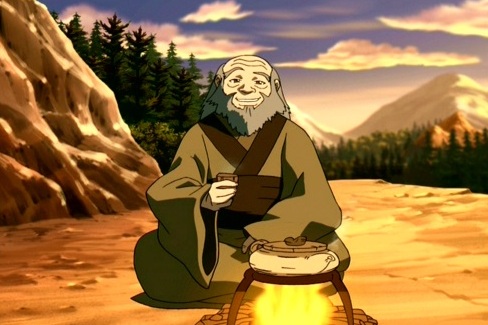
The Fire Nation also has this guy.

Hayao Miyazaki also does a great job of creating morally ambiguous characters. Probably his best films in this regard are Princess Mononoke and Spirited Away, in which the villains are… no one, really. Princess Mononoke has a bunch of characters fighting selfishly for their own survival and prosperity; they’re self-centered, but not really evil. Spirited Away has characters that seem bad, but when you get to know them you realize they’re just gruff and insensitive.

People are hardly ever all good or all bad, and conflicts are usually more complicated than “good versus evil.” Ambiguity and subtlety are invaluable assets for any story or character!

257. Everything Is Awesome?

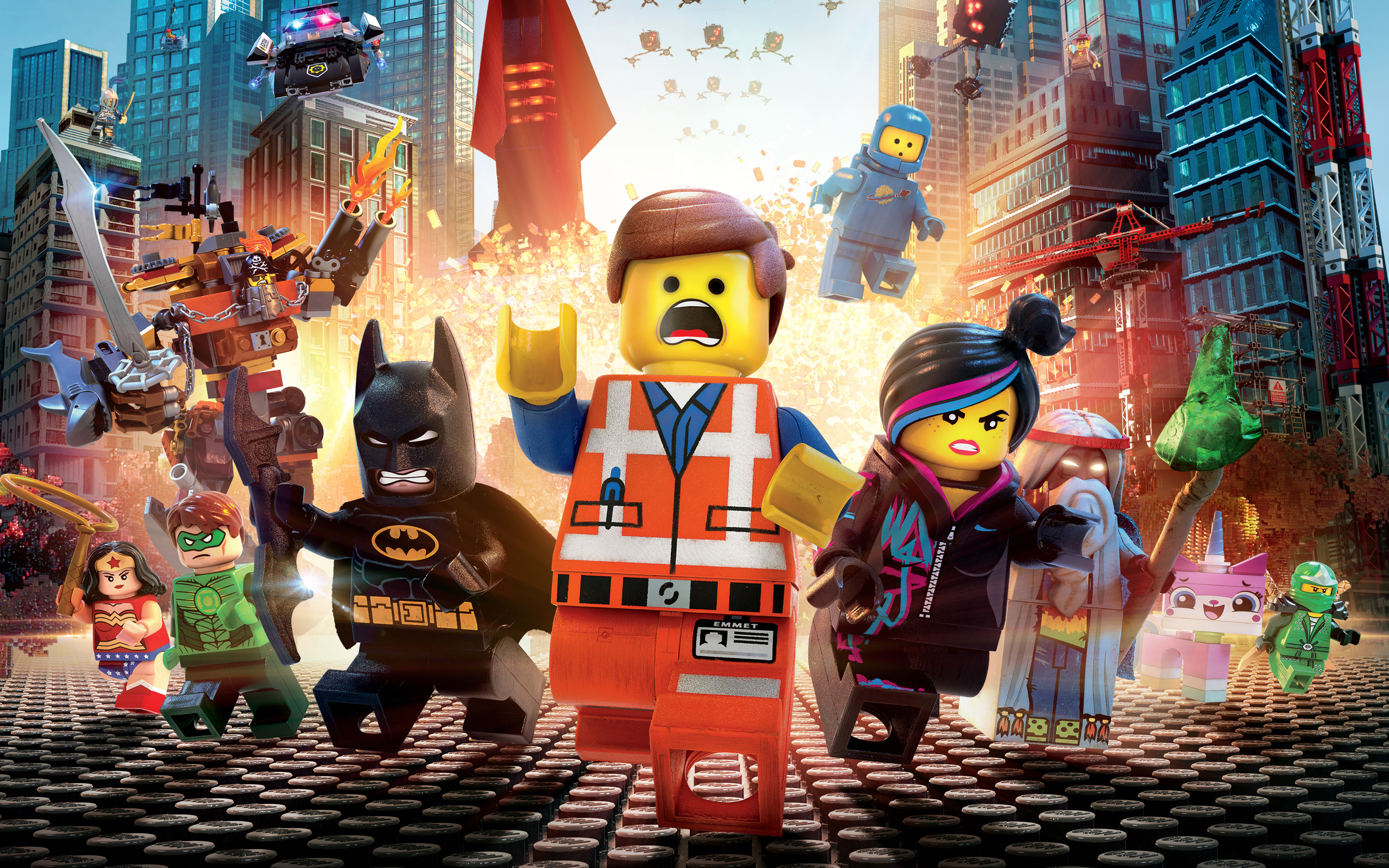
I saw The Lego Movie not long ago. Now, I know other bloggers have already discussed this strange, wonderful, colorful film, but I have a few things of my own to say.

On a Saturday evening weeks ago, I stepped out my front door into chilly gloom, clambered into Tribulation (my rickety car) and sped into the dark, forbidding unknown. Depression, anxiety and vague panic had burdened me all afternoon. It was hard to take those first few steps away from home. I wanted to stay, but I had a mission and dash it all, I was going to complete it.

I was going to see The Lego Movie.

The Lego Movie

I’m really glad I did.

The film was excellent, but I’m not really going to talk about it. I’ll just point out that it features an upbeat, poppish song titled “Everything Is Awesome,” which pretty much sums up the movie.

http://www.youtube.com/watch?v=vx5n21zHPm8

The Lego Movie is a bright, cheerful, clever film, and it did me good. Getting out did me good. Defying depression and exploring new places and driving along dark, cold roads in a dilapidated car did me good. These things were different. Some were pleasant. Some were a little scary. For a few hours, I left everything behind.

It helped me see things a little differently.

My life is governed by routines and repetition. Mind, that isn’t a bad thing. Routines are efficient. Doing things differently is challenging, risky and sometimes costly. However, routines have a cost of their own. They lull me into a stupor. Repetition makes me forget there is a wide, wide world beyond my narrow day-to-day experiences.

In a manner of speaking, The Lego Movie is right: everything is awesome. The things repetition make me take for granted are amazing—I just don’t realize it until I leave them behind for a little while.

G.K. Chesterton wrote a story in which a man abandons his children, wife and home and embarks on a long journey. He exclaims, “I won’t stay here any longer. I’ve got another wife and much better children a long way from here. My other wife’s got redder hair than yours, and my other garden’s got a much finer situation; and I’m going off to them.”

The man walks and walks and walks. He walks all the way around the world, and finally comes to his “better” home and “better” family. They are exactly the same ones he left behind… yet they are better. His home and family are better because he has learned to appreciate them. By leaving behind his home and its routines, the man has the exquisite pleasure of coming back to them. He realizes everything is awesome.

Weeks ago, I realized the same.

I guess this means I’ll be going to the cinema sometimes, and varying my route back from work, and ordering more than one kind of sandwich at Subway, and generally finding more excuses to get away. Everything is awesome. Sometimes, I just need to do things a little differently to see it.

252. About Storytelling: Endearing Quirks

When I was in high school, I had a teacher named Mr. Quiring whose legendary silliness I have mentioned one or twice before on this blog.

For example, he once removed his necktie and unbuttoned his shirt during class to reveal a T-shirt emblazoned with the Batman logo. (He wasn’t really Batman, sadly.) At various times, Mr. Quiring pelted me with chocolate, brandished a meat cleaver and leaped off a chair shouting “To infinitives and beyond!”

The reason Mr. Quiring’s antics amused me so much is that he is not a silly person. Quite the contrary: Mr. Quiring is one of the most intelligent, dignified gentlemen I have ever known. It’s as though he compressed all the humor and silliness of ordinary people into short, intense bursts. Every time he did something outrageous, he reverted immediately afterward to his solemn self.

Mr. Quiring provides fine examples of endearing quirks: those funny little habits of real people or fictional characters that make us love them.

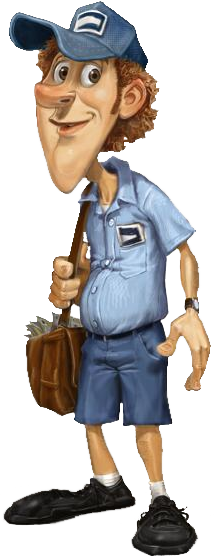
Some fictional characters are simply masses of endearing character quirks. Wooton Bassett, the mailman from Adventures in Odyssey, has too many odd habits to count: collecting fast food toys, expressing his feelings by the color of his slippers, baking jellybean casseroles and exiting his house via a slide. Wooton is fully capable of thoughtful introspection, but he’s mostly just hilarious.

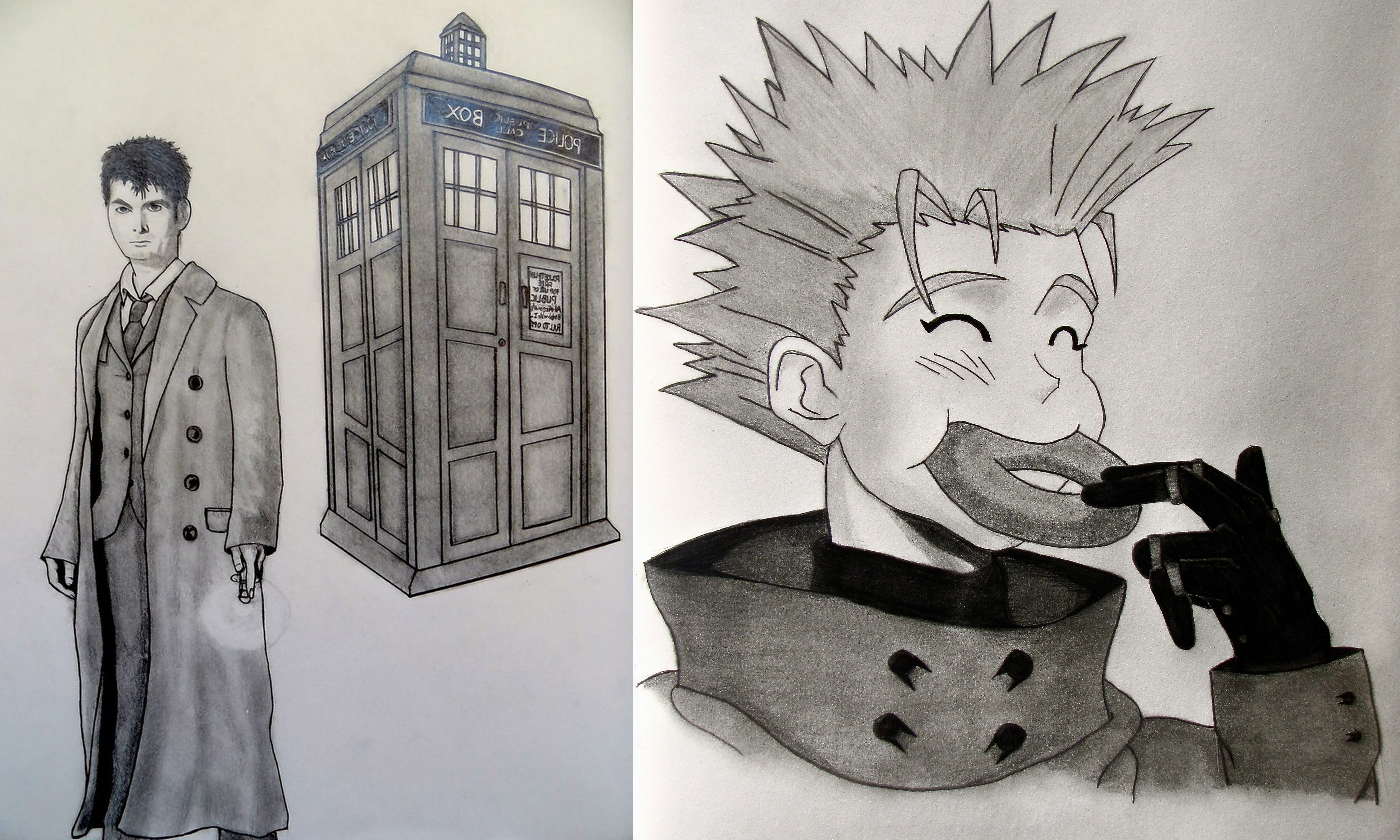
Wooton BassettSome characters are less silly, balancing funny quirks with tragic flaws or struggles. Consider the Doctor from Doctor Who and Vash the Stampede from Trigun. The Doctor is an intergalactic goofball, bouncing around the universe with a beaming face and a slew of witty remarks. Vash is a gunslinger who obsesses over doughnuts, whines like a child and walks into a firefight with a trashcan lid on his head.

My thanks to my younger bro for permission to use his artwork!

My thanks to my younger bro for permission to use his artwork!

Vash and the Doctor seem sillier than Wooton, but their quirks mask profound inner turmoil. The Doctor despises himself. His travels throughout space and time are not a careless vacation, but his way of running away from past mistakes. Vash also has a lot to hide. The body beneath the overcoat is covered in horrific scars, and the man behind the goofy grin is tormented by regret for the lives he couldn’t save.

In the case of Wooton, endearing quirks are a form of comedy. The quirks of Vash and the Doctor serve a different purpose. Their odd habits hide sad struggles, and make the viewer feel more when their stories take turns for the tragic. After all, it’s easier to feel sorry for funny characters than for serious ones.

Then there is Miles Edgeworth, the friendly rival of Phoenix Wright from the Ace Attorney series. Like Mr. Quiring, Edgeworth is dignified, composed and intelligent.

Miles Edgeworth

Edgeworth also has a secret.

This respected prosecutor is secretly a fan of Steel Samurai, a cheesy show for kids about a futuristic warrior and his neverending fight for justice. Edgeworth vehemently denies liking the show, of course… but there’s his inexplicable knowledge of Steel Samurai trivia and the Steel Samurai action figure in his office.

In the case of super-serious people like Mr. Edgeworth, a single quirk can make a cold, distant character seem a little more human. Liking Steel Samurai is a weakness, but not a sin. We can respect Edgeworth, and we can also laugh at him.

Carelessly loading a character with endearing quirks is a mistake: too many odd habits, or quirks that seem out of place, are irritating. Used intentionally, however, endearing quirks can develop great characters—and make us laugh!

205. An Open Letter to Hollywood

Dear Hollywood Executives,

You all read this blog, right? Yes? Excellent. I know you’re all very busy, so I’ll get right down to business. There are some things we need to discuss.

First of all, stop remaking films and television shows from the eighties. I know building on existing franchises is easier than creating new ones, but your remakes are tired and predictable.

Instead of remaking lousy old shows, why not make more literary adaptations? I’ve got a list for you right here. (Good job making Ender’s Game happen, by the way. It was about freaking time!) Literature is packed with stuff your viewers would love. You’ve just got to give it to them.

Since you’re so good at adapting existing works into movies, why not target the gaming demographic with video game movies that, you know, don’t totally stink? Not every game can be made into a good movie—ahem, Super Mario Bros.—but there are plenty of franchises with endless potential. Take video games seriously. Give us characters, not men with big muscles and women with big busts. Give us stories, not predictable plots riddled with clichés.

This next issue is a touchy one, but we’ve got to face it.

Hollywood, your Christians stink.

Seriously. Do your research. Find out what authentic Christians look like, and stop insulting us with shameless hypocrites, arrogant bigots and sociopathic lunatics. Christianity has its share of awful people, but we’re not all that bad. Just as most Muslims aren’t terrorists, most Christians aren’t your offensive stereotypes. Come on, Hollywood. It ain’t that darn hard.

Heck, I’ll even give you a good example. Look at Joss Whedon. He’s an atheist, and also a phenomenally successful director. (The Avengers is the third-highest earning film of all time. I’m just saying.) In Firefly, his highly-acclaimed show about lawless scoundrels, Whedon included a Christian character called Shepherd Book. This character isn’t a stereotype. As a Christian, he’s actually Christlike—and simply likable. Shepherd Book is a well-developed character with a dry sense of humor. Fans appreciate him.

Learn from Joss Whedon, Hollywood.

Speaking of Christians, we’re quite a sizable demographic. Have you considered, you know, actually making big-budget Christian films? The Passion of the Christ, which everyone expected to fail, earned roughly twenty times its budget. More recently,The Bible, a television miniseries, became a huge commercial success. Believe it or not, people want to see good Christian media. We need moviemakers with the courage (and cash) to make some.

With superhero movies being so popular, can we get a decent Deadpool movie? Please?

Finally, for heaven’s sake, stop letting Michael Bay and M. Night Shyamalan direct movies. That is all.

Peace,

Adam

P.S. We’re tired of vampires and zombies, Hollywood. Find some new monsters.

193. About Writing: Tropes

There is a website called TV Tropes, and it has gobbled up more of my time than I care to admit.

TV Tropes is a fascinating and highly informal collection of articles on tropes in storytelling. What are tropes, you ask? A trope is a recurring convention, element or device in a particular genre or type of fiction.

Take horror movies. I’ve never seen one all the way through, but even know that when the power goes out in a horror film, bad things happen to the person who goes into the basement to check the circuit breakers. Cabins in the woods are dangerous places to be in horror movies, and clowns are evil. We all know these things. They are tropes of the horror genre.

Although tropes are not necessarily good or bad, they can easily degenerate into clichés—conventions that are overused and become trite.

Take the damsel in distress trope: the convention of a female character (often a princess) being rescued by a male character. This trope is everywhere. Consider the Star Wars films, or games in the Mario and Zelda series, or pretty much any animated film produced by Disney. Princesses Leia, Peach, Zelda, Jasmine and Rapunzel are all bona fide damsels in distress.

(I laughed when, in a recent Legend of Zelda game, Princess Zelda—a character descended from a long line of damsels in distress—told the hero, “I will wait for you here. That’s what princesses have always done. From what I understand, it’s kind of a family tradition.”)

While tropes can easily become clichés, they can also be subverted or inverted in clever ways. What happens when the damsel in distress escapes on her own? What if the damsel rescues the hero?

Defying tropes is a wonderful way to surprise readers. We all expect specific things from certain kinds of stories, and it’s a delightful shock to have our expectations shattered.

We’re all familiar with bad guys. Whatever else they may be, they are… well… bad. The trope is simple. Villains are evil. Bad guys are bad. It’s common sense.

Right?

Quite a number of recent films disagree. Despicable Me and Megamind turn villains into good guys. Dr. Horrible’s Sing-Along Blog goes a step farther, making a bad guy out of a “good” superhero. Disney’s Wreck-It Ralph stars a video game villain who decides he wants to be the good guy for a change.

These films toy with our preconceived ideas about heroes and villains, blurring the lines between our notions of “good” and “bad” characters. These films are also tons of fun to watch.

If you’re writing a story, ask yourself: “Has this been done before?”

Working tropes into your story isn’t a crime; some tropes are so general there’s practically no escaping them. In many cases, however, a story can be much improved by avoiding—or defying—the expectations set by all the stories that came before.

183. A Lesson from Doctor Who

I often discover lessons in unexpected places. True, I learn from the Bible and wise people, but I also learn from Batman and webcomics about video games.

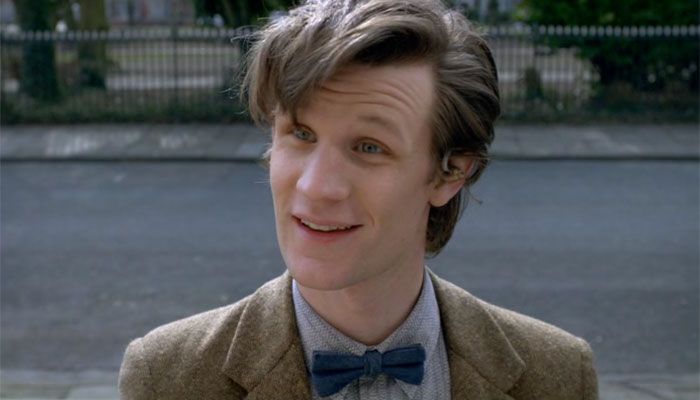
The Doctor from Doctor Who is not particularly wise—in fact, he has all the tact and maturity of a twelve-year-old boy—but he recently taught me an invaluable lesson.

This is not the face of a wise man.

This is not the face of a wise man.

I work in a group home for gentlemen with mental and physical disabilities. As you can imagine, my job is often amusing, sometimes heartbreaking and never predictable.

When I began working in a group home, I felt pity for some of its residents. Their lives are often dark and difficult. Some endure chronic physical pain. Most suffer from depression. Few are ever visited by friends or family. All of them are hurting in some way and few of them understand why.

At first I pitied only these gentlemen, but as months passed I realized they aren’t the only ones deserving of compassion.

Most of my coworkers are hurting. Some are divorced. Some have family issues. Many struggle with financial woes or health problems. I’ve heard tearful stories, bitter complaints and vicious arguments I wish I could forget.

Apart from work, I have friends facing heartrending difficulties: divorce, debt, depression, loneliness and grief.

I’m constantly surrounded by people whose problems I can’t solve, and I hate it.

At one point in Doctor Who, the Doctor and his friend learn that a person whose life they tried to save committed suicide. The Doctor’s companion is overwhelmed with grief. “We didn’t make a difference at all,” she says.

“I wouldn’t say that,” replies the Doctor, blinking back tears. He adds:

The way I see it, every life is a pile of good things and bad things. The good things don’t always soften the bad things, but vice versa, the bad things don’t necessarily spoil the good things or make them unimportant. And we definitely added to his pile of good things.

I may not be able to fix someone’s life, but nothing will ever prevent me from adding to his pile of good things.

I can’t fix my coworker’s marriage. I can’t take away the pain of the gentleman with arthritis or the hopelessness of the gentleman with depression. I can’t promise healing to a hurting friend.

I can, however, be patient. I can listen. I can pray. I pretend to be terrified when the gentlemen with whom I work tell me there are mummies in the cupboards or a mouse in my shoe.

On an afternoon a few weeks ago, just a day or two after I remembered this lesson from the Doctor, I was administering medications at work when a resident of the group home ambled up to me.

“This is for you,” he said with a grin, holding out a cup of coffee.

It occurred to me in that moment that I’m not the only one trying to add to the piles of good things around me.

Sometimes other people, even hurting people, add to mine.

179. Of Pink Ponies and Civil War Nurses

I like making top ten lists. (You may have noticed.) For whatever reason, I enjoy organizing the best (or worst) things together in groups.

I once made a list of my top ten favorite books. The Bible was there, of course, along with classics like The Lord of the Rings and The Innocence of Father Brown (because J.R.R. Tolkien and G.K. Chesterton are awesome). In fact, there was only one surprise: a very short, very impromptu series of autobiographical sketches by a nurse who called herself Tribulation Periwinkle.

Hospital Sketches

Tribulation Periwinkle may be the best name ever.

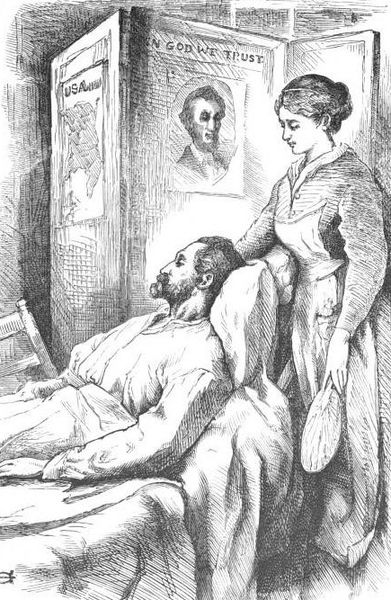
Tribulation Periwinkle was really Louisa May Alcott, who is best known for her novel Little Women. When the American Civil War broke out, she enlisted to care for wounded soldiers in Washington D.C. as a volunteer nurse: an experience she described in a cheerful little book titled Hospital Sketches.

War is horrible. I’ve never been in a battle, but I’ve seen and read and heard enough to understand that armed conflicts are unspeakably dreadful things. General Sherman, who fought in the American Civil War, famously declared, “I tell you, war is hell!”

Written from such tragic circumstances, Hospital Sketches is unexpectedly hilarious. It may not be very accessible for modern readers—the book is crammed with old-fashioned words, archaic idioms and references to classical literature—but I find it hysterically funny.

What really impresses me is how Alcott found humor in the bleakest situations. When confronted with an unappetizing meal, she cheerfully compared the bread to sawdust and observed how much the stewed blackberries looked like preserved cockroaches. Listening to her injured patients snore late at night, she declared them a “band of wind instruments” and restrained herself from breaking out in John Brown’s favorite hymn: “Blow ye the trumpet, blow!”

This incredible optimism and humor in the face of difficulty reminds me of something G.K. Chesterton once wrote: “Always be comic in a tragedy. What the deuce else can you do?”

It also reminds me of a certain pink pony.

Pinkie Pie

I’m pretty sure real ponies don’t come in pink, but whatevs.

Pinkie Pie is a character from a popular cartoon called My Little Pony: Friendship Is Magic, of which I am a fan. She breaks the fourth wall, blurts out non sequiturs and generally does things that make me laugh.

Pinkie also finds humor in miserable circumstances. Surrounded by horrific demon trees? She giggles at their twisted expressions and makes faces at them. Trapped in a surreal nightmare by an ancient spirit of discord? She points out the advantages: “Eternal chaos comes with chocolate rain, you guys! Chocolate rain!”

I’m a pessimist. A pessimist is not a fun thing to be. Louisa May Alcott and Pinkie Pie seem to have discovered a brighter outlook: finding glimmers of hope and humor in dark times.

Perhaps I should try to be positive, even when my circumstances are not.

167. About Writing: Narrative Structure

Two brief personal notes: First, my ever-changing schedule has reverted to normal. For now, I’m back to working during the day and sleeping at night like an ordinary person. Second, my thanks to everyone who took part in Be Nice to Someone on the Internet Day! It’s totally happening again on March 4 next year!

This blog hasn’t had a proper About Writing post since… October. Ouch.

Let’s fix that.

Narrative structure is a phrase I use to describe the way a story is told: a catch-all term for those fun, creative storytelling techniques that make a story different.

There are many ways to tell a story. Most stories begin at the beginning and end at the end. Many stories use only one narrator.

These are great ways to tell a story, but they aren’t the only ones.

Consider the following story: A, B, C. Let’s pretend is the start of the story, chronologically speaking. That makes the middle and the conclusion. My story is linear: it happens in order.

What if I want to tell my story out of order? It could be B, A, C. The reader can be introduced to a story in progress, with earlier events in the narrative revealed through flashbacks and the conclusion at the end. I could even tell my story backwards—C, B, A—as movie director Christopher Nolan (who is famous for films like The Dark Knight and Inception) did in Memento, a disturbing yet excellent film about a man with short-term memory loss.

Let’s consider another aspect of narrative structure: perspective.

One of my favorite narrative tricks is to switch perspectives as I tell a story. Two stories I’ve posted on this blog, The Infinity Manuscript and Zealot: A Christmas Story, give each chapter from the perspective of a different character. As a writer, it’s refreshing to bounce from one perspective to another as the story unfolds.

Things get even more fun when stories use multiple first-person narrators with different voices. A single scene can be described or interpreted in many different ways. It all depends on who does the describing or interpreting!

Then there are side stories. I love side stories.

There’s a word I like in Japanese: gaiden, the romaji form of the word rendered がいでん in hiragana and kana syllabaries. (This is what Wiktionary tells me. I don’t actually know Japanese.) A gaiden is a side story: a narrative that supplements or completes another narrative.

Call it a gaiden or a side story or whatever else you like: it’s awesome.

Orson Scott Card published a novel titled Ender’s Game, in which a boy named Ender is trained by the military to be humanity’s greatest asset in an interstellar war. Fourteen years later, Card published a companion novel: Ender’s Shadow.

The later novel tells roughly the same story as the first, but Ender is no longer the protagonist. The spotlight follows Bean, a supporting character from Ender’s Game. It’s the same story from a completely new perspective: introducing new characters, expanding the role of familiar ones and introducing fascinating subplots.

By intersecting with the original story at key points, Ender’s Shadow greatly improves Ender’s Game while being a fantastic novel on its own.

Here’s a geekier example: one of my favorite games in the Ace Attorney series is the criminally underappreciated Ace Attorney Investigations: Miles Edgeworth. This game takes the two most important characters in the series, Phoenix Wright and his assistant Maya Fey, and relegates them to the briefest of background cameos. Supporting characters Miles Edgeworth and Dick Gumshoe become the protagonists.

The other games in the Ace Attorney series merely lengthen its story. This particular game broadens its story. By giving center stage to secondary characters, the game gives a delightful alternate take on the series… and proves its story is compelling enough to survive without its usual protagonists.

There are all kinds of clever narrative tricks, but I’ll mention just one more.

My all-time favorite episode of my all-time favorite television show is, without question, “Tales of Ba Sing Se” from Avatar: The Last Airbender. Up to that point, nearly every episode of the show follows a predictable pattern: a primary plot following the protagonists interweaves (and sometimes intersects) with one or two secondary plots following the antagonists. This narrative structure is simple and effective—and “Tales of Ba Sing Se” throws it out the window.

“Tales of Ba Sing Se” is a series of vignettes or character sketches. There are no great adventures, just glimpses of the characters’ daily lives. Some of these tales are funny. One character gets caught up in a haiku contest that seems suspiciously like a rap battle. Some of these tales are sad. One character visits his son’s grave to wish him a happy birthday.

Tragic or comic, these tales develop the characters and give the viewer a wonderful break from the plot-heavy episodes that come before. “Tales of Ba Sing Se” is a deep breath before the show plunges into a season finale: a chance to get to know the characters a little better before they’re swept off again by their adventures. I love it.

Innovative narrative structures can make a story refreshingly different, but they can also sabotage it. Not every story needs to be a gaiden told in a nonlinear way from multiple perspectives. Some stories are best told straight. It’s easy for a creative narrative structure to become a distracting gimmick.

In certain cases, however, a clever narrative structure can make a story brilliant.