188. TMTF Reviews: The Inspired Wisdom of Abraham Lincoln

When I read a book, it’s generally for one of three reasons.

1. The book has literary significance or has impacted society in some way.

2. The book was written by an author whose other books I enjoy or appreciate.

3. The book was shoved in my face by a friend or relative who commanded me to read it.

For the most part, the books in the third category prove to be good reads. I discovered classics like Beau Geste and Peace Like a River only because my relatives quite literally pushed them into my hands.

My grandfather, a kindly gentleman of tremendous intelligence, gave me a book last month titled The Inspired Wisdom of Abraham Lincoln. As far as I understand, the book impressed him so much that he purchased a brand-new copy for every one of his grandchildren—that’s roughly a dozen books.

If a book is good enough to buy nearly a dozen copies, I decided, it’s probably worth a look.
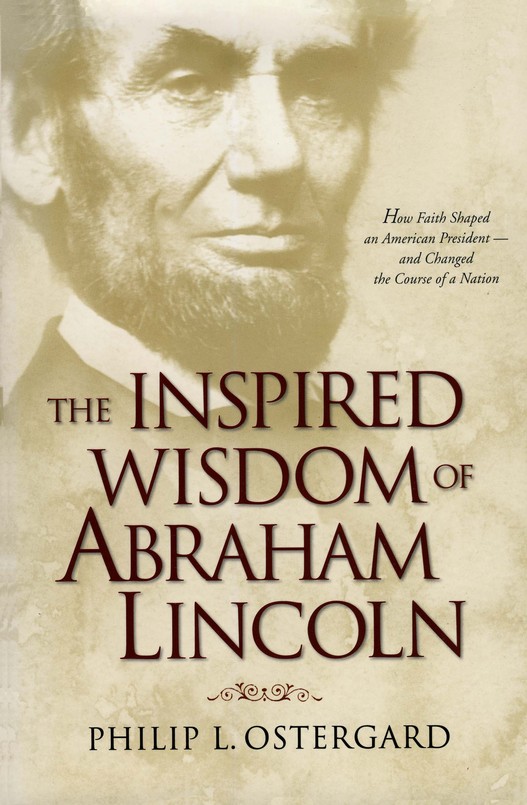
The Inspired Wisdom of Abraham LincolnThe Inspired Wisdom of Abraham Lincoln is a biography of the man who held the United States of America together when its dissolution seemed inevitable. More specifically, the book traces the development of Lincoln’s religious thought throughout his life by examining his speeches, letters and memorandums.

Was Abraham Lincoln, perhaps the greatest leader in American history, a believer or a skeptic? Did the fiery trial (as he put it) of devastating battles and political infighting destroy or strengthen a faith in a living God?

I won’t spoil the book’s answers to those questions—you’ve probably guessed them already—but I will say this: The Inspired Wisdom of Abraham Lincoln is an excellent read. The book mostly refrains from using second sources; the author writes, “I make my case stronger if the reader can be certain that he or she is reading the words of Lincoln.” Every major inference about Lincoln’s religious thought is drawn directly from his recorded statements.

These statements—contained in excerpts from memorandums, letters and speeches by Lincoln—are woven into a basic outline of his life. The author provides commentaries upon Lincoln’s statements, clarifying allusions to Scripture and giving historical and biographical context.

I knew about Abraham Lincoln. Don’t we all? He led the United States through the American Civil War! He saved the Union! He freed the slaves! Some of us are familiar with the images of the young man splitting rails in the Illinois frontier or the top-hatted politician pacing the halls of the White House. Beyond these vague ideas, however, I knew very little.

In the end, Abraham Lincoln turns out to be someone to whom I strongly relate. For much of his life, he suffered from intense depression. He loved literature. He wrestled with doubts about Christianity and religion in general. In many ways, he reminds me of myself. Lincoln and I even share a thing for hats.

The thing that impressed me most when I read The Inspired Wisdom of Abraham Lincoln is the way he kept calm and carried on. The country was falling apart—no, it was being actively pulled apart—and he held it together. His depression never left him. Lincoln and his wife lost a son during the Civil War; somehow, he pushed through his grief and kept making the shrewd decisions that saved his country. Lincoln’s sufferings would have broken an ordinary man. They would certainly have broken me.

In the end, Lincoln expressed a principle that may have carried him, and the Union, through the Civil War: “Without the assistance of the Divine Being . . . I cannot succeed. With that assistance I cannot fail.”

The Inspired Wisdom of Abraham Lincoln is a fine work of scholarship. It’s hardly a gripping read, but its conclusions are well-written and meticulously backed up with clear, unambiguous statements from Lincoln himself. Amid these statements and the biographical details surrounding them, the book includes occasional anecdotes that give a vivid picture of a fascinating man.

Inspired? Yes, I rather think so.
187. TMTF’s Top Ten Adjectives in the English Language

I like words. (You may have noticed I tend to use quite a lot of them.) There are several kinds of words, and adjectives are one of my favorites. An adjective is a word that describes something. Hot and dark and caffeinated are adjectives.

Some adjectives are particularly evocative, fun or colorful. Today I’ve decided to share ten adjectives that are, for one reason or another, delightful.

TMTF is excited, proud, satisfied, exhilarated, happy and honored to present…

The TMTF List of Top Ten Adjectives in the English Language!

10. Soporific

Tending to induce sleep or sleepiness

Looking at this word makes me yawn.

9. Awesome

Evoking awe or amazement

Compared to the other words on this list, awesome seems rather bland. I include it because of its endless usefulness. In a literal sense, it denotes something that inspires awe, such as the starry heavens or the Tenth Doctor’s sideburns. In a figurative sense, awesome is an emphatic way to express extreme admiration for something. Incidentally, did you know awesome and awful once meant exactly the same thing?

8. Sepulchral

Suggestive of graves or tombs

I’m not sure why I find this word so evocative, but it makes me think of crows, gray skies and weathered mausoleums. It’s also a splendid word for describing certain professors, classrooms or schools in general. Writers, take note.

7. Abominable

Hateful, loathsome or extremely bad

Bad is a plain, common word. No one cares about bad. If something is abominable, however, take warning! Despite its invariable association with snowmen, abominable is a wonderful way to disparage something.

6. Ghastly

Shocking or horrifying

This adjective, suggestive of grim words like ghost, is a stronger way of describing something than unimpressive words like scary. This particular adjective is best when emphasized or spoken loudly. “That Twilight book was simply ghastly.”

5. Quixotic

Noble or romantic in an unrealistic, deluded manner

I like Don Quixote. More importantly, quixotic is fun to say: quik-SOT-ik. Ain’t it great?

4. Brobdingnagian

Big

The word big is actually quite small. The word Brobdingnagian is enormous. That is all.

3. Mephistophelean

Showing the cunning or wickedness of a devil

This word makes me think of pitchforks, pointed goatees and red tights. On a more sophisticated note, it’s a great word to throw around when discussing politics: “I think that politician has a streak of Mephistophelean hubris. What do you think?”

2. Lush

Vibrant, teeming with life

A word doesn’t have to be Brobdingnagian in size to be a good adjective. In a single syllable, lush evokes (at least in my imagination) vibrant scenes of green jungles or reefs swarming with colorful fish.

1. Pulchritudinous

Possessing great physical beauty

This one makes me smile because it’s so dashed ugly. I mean, look at it. Pulchritudinous. It’s ghastly. The adjective sounds like a description of some revolting, misshapen medical anomaly. “His untreated wounds, which had begun to ooze, were sickeningly pulchritudinous.” This is, without question, the most delightful adjective in the English language. Just… don’t ever use it to describe your spouse or romantic interest, all right?

O people of the Internet, what are your favorite adjectives? Let us know in the comments!

179. Of Pink Ponies and Civil War Nurses

I like making top ten lists. (You may have noticed.) For whatever reason, I enjoy organizing the best (or worst) things together in groups.

I once made a list of my top ten favorite books. The Bible was there, of course, along with classics like The Lord of the Rings and The Innocence of Father Brown (because J.R.R. Tolkien and G.K. Chesterton are awesome). In fact, there was only one surprise: a very short, very impromptu series of autobiographical sketches by a nurse who called herself Tribulation Periwinkle.

Hospital Sketches

Tribulation Periwinkle may be the best name ever.

Tribulation Periwinkle was really Louisa May Alcott, who is best known for her novel Little Women. When the American Civil War broke out, she enlisted to care for wounded soldiers in Washington D.C. as a volunteer nurse: an experience she described in a cheerful little book titled Hospital Sketches.

War is horrible. I’ve never been in a battle, but I’ve seen and read and heard enough to understand that armed conflicts are unspeakably dreadful things. General Sherman, who fought in the American Civil War, famously declared, “I tell you, war is hell!”

Written from such tragic circumstances, Hospital Sketches is unexpectedly hilarious. It may not be very accessible for modern readers—the book is crammed with old-fashioned words, archaic idioms and references to classical literature—but I find it hysterically funny.

What really impresses me is how Alcott found humor in the bleakest situations. When confronted with an unappetizing meal, she cheerfully compared the bread to sawdust and observed how much the stewed blackberries looked like preserved cockroaches. Listening to her injured patients snore late at night, she declared them a “band of wind instruments” and restrained herself from breaking out in John Brown’s favorite hymn: “Blow ye the trumpet, blow!”

This incredible optimism and humor in the face of difficulty reminds me of something G.K. Chesterton once wrote: “Always be comic in a tragedy. What the deuce else can you do?”

It also reminds me of a certain pink pony.

Pinkie Pie

I’m pretty sure real ponies don’t come in pink, but whatevs.

Pinkie Pie is a character from a popular cartoon called My Little Pony: Friendship Is Magic, of which I am a fan. She breaks the fourth wall, blurts out non sequiturs and generally does things that make me laugh.

Pinkie also finds humor in miserable circumstances. Surrounded by horrific demon trees? She giggles at their twisted expressions and makes faces at them. Trapped in a surreal nightmare by an ancient spirit of discord? She points out the advantages: “Eternal chaos comes with chocolate rain, you guys! Chocolate rain!”

I’m a pessimist. A pessimist is not a fun thing to be. Louisa May Alcott and Pinkie Pie seem to have discovered a brighter outlook: finding glimmers of hope and humor in dark times.

Perhaps I should try to be positive, even when my circumstances are not.

178. TMTF Reviews: Hyrule Historia

As an avid gamer, I love the Legend of Zelda series. Its charming blend of adventure, exploration, combat, quirky humor and killer chickens is truly amazing. When Hyrule Historia—a book released to celebrate twenty-five years of Zelda—hit Western shores, I was quick to snag a copy.

Is Hyrule Historia a worthy celebration of one of the greatest legends in the gaming industry, or is it merely a mediocre mess of video game trivia?

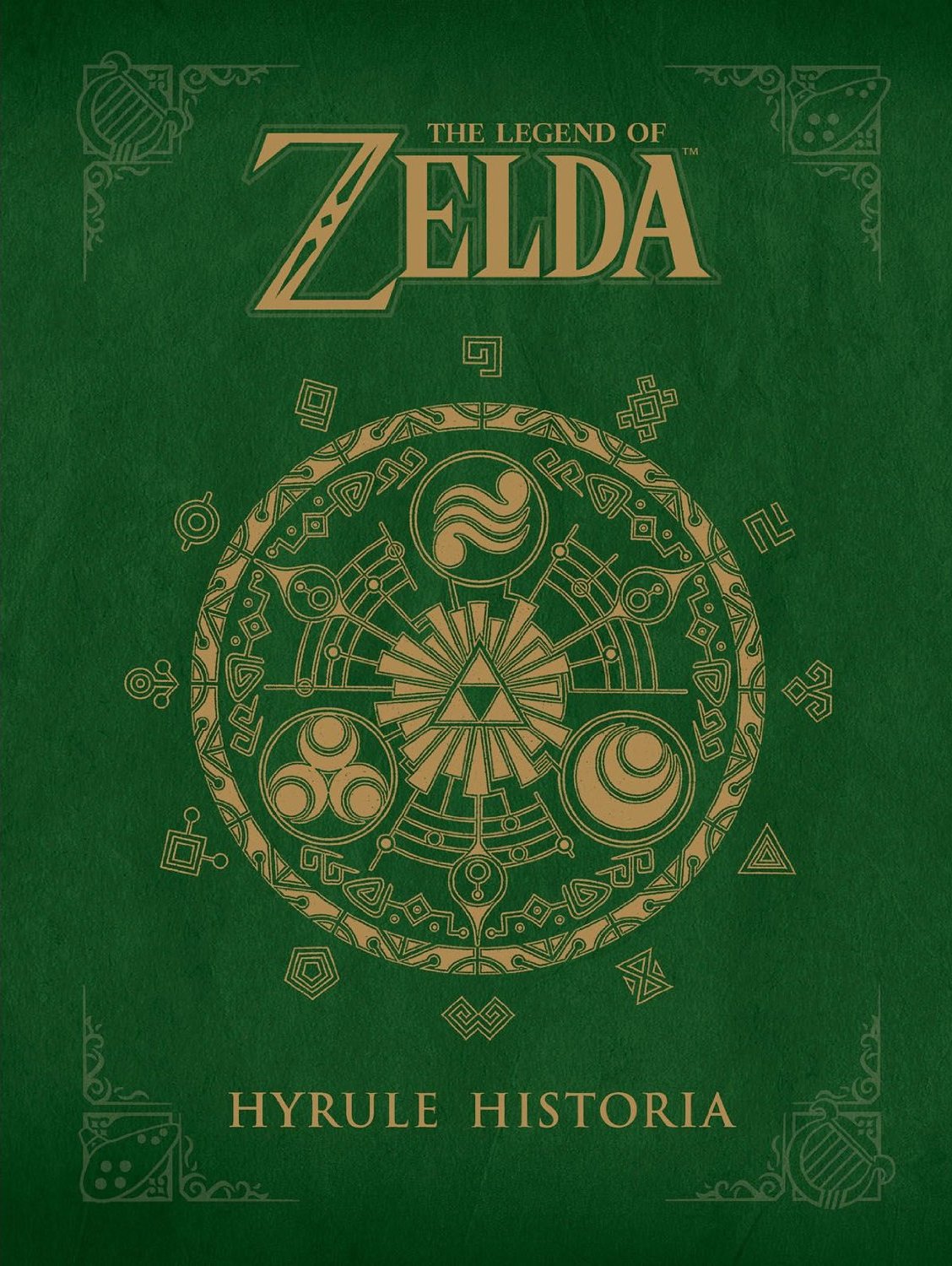
Hyrule Historia

As I expected, Hyrule Historia is a must-have book for anyone interested in Zelda: beautifully designed and packed with fun stuff for fans of the series.

I was surprised at the size of the book. For the price (about twenty dollars) I had expected something fairly small. Hyrule Historia is a whopping great hardback, about the size of my high school yearbooks and a bit thicker. The cover design is glossy and elegant. I’d totally put the book on my coffee table if, you know, I had a coffee table.

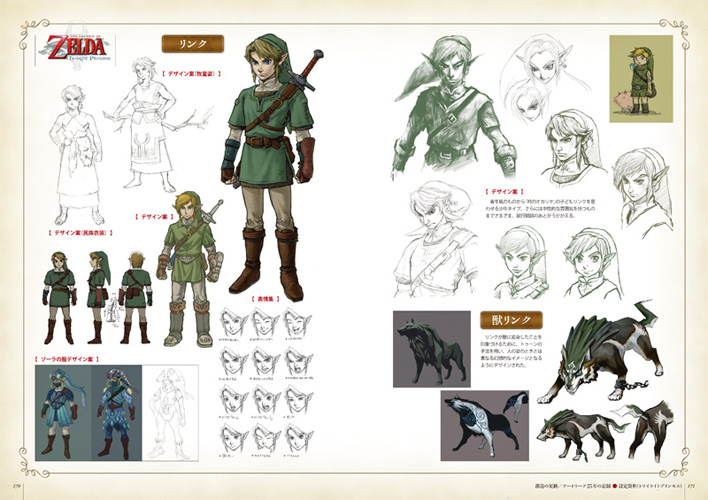
Hyrule Historia has two great assets. First is its vast wealth of concept art, reproduced in vibrant color. Second is its complete history of Hyrule, the world in which Legend of Zelda games take place. The official timeline of the games in the series—a subject of endless debate among fans and a mystery for more than two decades—is finally unveiled, along with detailed and precise (if slightly inconsistent) synopses for the games and explanations of what happens between them.

I found this pseudo-history almost as fascinating as the actual history of the series, chronicled in artwork and notes spanning twenty-five years. From the moment a strange old man handed Link a sword to Link’s latest adventure in the skies, it’s all there.

These pages are taken from the Japanese version of the book; I couldn't find images of the English version.

These pages are taken from the Japanese version of the book; I couldn’t find images of the English version.

A brief manga (Japanese comic) concludes Hyrule Historia: an exciting end to a thoroughly interesting book.

The writing in Hyrule Historia is rather weak, but that hardly matters since the book’s value is in its beautiful artwork and fascinating trivia. The thing that really puzzles me is the diffidence of the writers. They seem strangely uncertain. In describing the history of Hyrule and the development of the Legend of Zelda series, they often use phrases such as perhapsit seems and it is thought that. I expected the official guide to the Zelda series to seem a little more… official.

Strangers to Zelda won’t find much to interest them in Hyrule Historia. For fans of the series, however, the book is an absolute treasure. And you don’t even have to conquer a dungeon or defeat a boss to get it!

177. Why Dave Barry Is Awesome

This blog’s recent contest has been concluded, and the winners chosen at random from the Fez of Destiny have been notified. My thanks to everyone who participated!

Dave Barry was given a Pulitzer Prize in 1988 for writing about boogers. With that, I think I can wrap up my explanation of why he is awesome.

All right, he wasn’t given a Pulitzer specifically for writing about boogers. It was for “his consistently effective use of humor as a device for presenting fresh insights into serious concerns.” By serious concerns, the people who administered the Pulitzer evidently meant exploding whales, owl regurgitation and yes, boogers.

Ladies and gentlemen, I give you the man respected for being snarky and immature in the most hilarious, brilliant, wonderful ways possible.

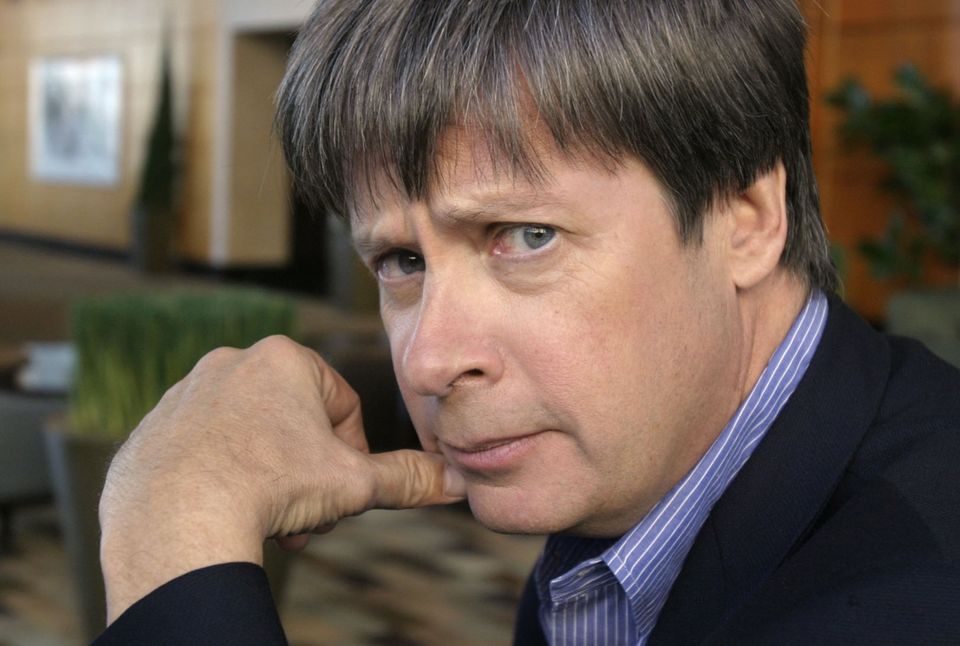
I give you Dave Barry, whose commentaries have never failed to make me smile.

Dave Barry

Dave Barry was a columnist for The Miami Herald and currently writes books. In his days as a columnist, he tackled such important issues as exploding livestock with quick wit and even quicker subject changes. Barry writes the way some people think, bouncing from one topic to the next like a mountain goat leaping from peak to peak.

Like James Thurber, the writer who claimed his sense of humor was “set in motion by the damp hand of melancholy,” Dave Barry has an unexpectedly bitter philosophy: “A sense of humor is a measurement of the extent to which we realize that we are trapped in a world almost totally devoid of reason.”

Fortunately, Barry’s writing is anything but philosophical. He points out the absurdities we overlook, such as silly government spending and cultural phenomena, and mocks the heck out of them.

Barry is the one from whom I picked up the bad habit of coining names for rock bands. To assist him in his endless efforts to invent band names, he uses the acronym WBAGNFARB: Would Be A Good Name For A Rock Band. Another common phrase, following a description of something truly ridiculous, is the straight-faced assertion: “I am not making this up.”

Besides humor columns, Dave Barry has written some fiction and a number of books on government, travel, history and other subjects. I disliked his novel, Big Trouble, but his nonfiction books—well, supposedly nonfiction books—are delightful.

Dave Barry informed me that Indiana, my state of residence, is called the Hoosier State because hoosier is the noise pigs make when they sneeze.

When Dave Barry visited Japan, his major objectives changed immediately from things like “try to determine attitude of average salaried worker toward government industrial policy” to “try to find food without suckers on it.”

Dave Barry gave this illuminating commentary on a fundamental right of Americans: “The Second Amendment states that, since a well-regulated militia is necessary to the security of a free state, you can buy high-powered guns via mail order and go out into the woods with your friends and absolutely vaporize some deer.”

In conclusion, ladies and gentlemen, Dave Barry is awesome.

173. TMTF Reviews: Don Quixote

An angry airline passenger once wrote a humorous letter complaining about the meal he had been served. (I highly recommend reading the entire letter; it’s absolutely hilarious.) The letter gives what may be the best description I’ve ever read of crushing disappointment.

I’ll try and explain how this felt. Imagine being a twelve year old boy Richard. Now imagine it’s Christmas morning and you’re sat their with your final present to open. It’s a big one, and you know what it is. It’s that Goodmans stereo you picked out the catalogue and wrote to Santa about.

Only you open the present and it’s not in there. It’s your hamster Richard. It’s your hamster in the box and it’s not breathing. That’s how I felt.

I can give no better description of how I felt upon nearing the end of my copy of Don Quixote and realizing it was an abridged version. Who knows how many wonderful, hilarious adventures I missed?

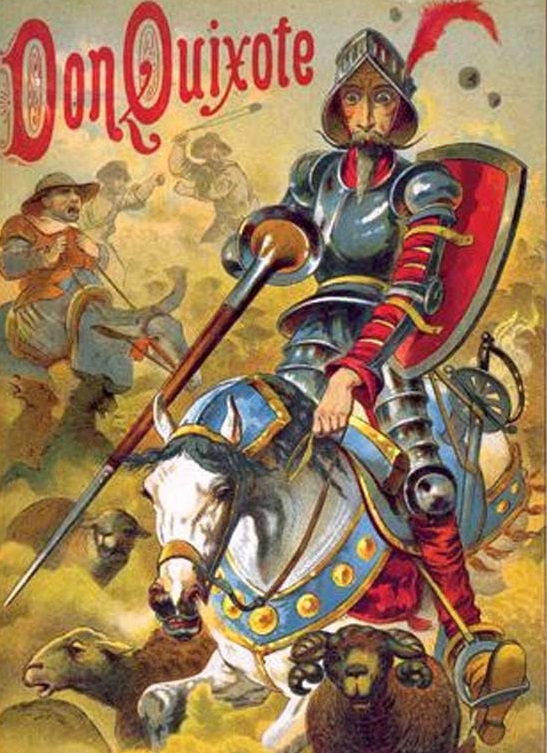
Don Quixote

When beginning a literary classic, I always check the covers and title page for those dreaded words: Abridged Version. If I’m going to read a book, I want to read the whole darn thing. My copy of Don Quixote had no such warning. I only discovered it was an abridged version by comparing it to an online synopsis of the novel.

When I made this discovery, I felt betrayed. Don Quixote is one of the funniest novels I’ve ever read. How dare its editor remove parts of it without warning me!

Don Quixote is a hilarious book. (This surprised me, since most literary classics are either dull or depressing.) The novel’s humor comes from the solemnity with which its author describes the ridiculous misadventures of Don Quixote and Quixote’s even more ridiculous excuses for them. With the seriousness of a historian, the narrator describes absurdity after absurdity.

The novel tells the tragicomic story of a middle-aged Spanish man who, after spending days and nights poring over books of chivalry and adventure, loses his mind and decides to becoming a wandering knight-errant. He chooses the name Don Quixote, puts on some rusty armor and selects a local peasant girl to be the elegant lady in whose name he performs amazing feats. Thus prepared, he sallies forth on his quest for fame and glory. Don Quixote later recruits Sancho Panza, a gullible peasant who often swallows his master’s fantastical explanations for mundane (and often painful) misadventures.

The narrative is episodic. No complicated plots here: just a stupid old man and his stupid companion getting into scrape after scrape. (The most famous of these is Quixote’s famous assault upon unsuspecting windmills, which he insists are giants enchanted by a sorcerer to seem like windmills.) Don Quixote’s misadventures become gradually more complex as the novel progresses, but the story never becomes hard to follow.

As much as I enjoyed Don Quixote’s silly escapades, I found his commentaries upon them funnier still. He never failed to find a fairy-tale explanation for an ordinary event.

Don Quixote is a fascinating meditation on the dichotomy between stories and real life. Stories are often exciting, romantic and neat. By comparison, real life is usually dull, prosaic and messy. Don Quixote is the story of a man who tries to exchange a humdrum existence for a glorious tale of adventure.

In the end, what he gets is a hilarious comedy of mistakes and misadventures, and I think that is the great strength of Don Quixote. Apart from its value as a literary classic, it’s simply a funny book.

The only potential obstacle for readers is the novel’s literary style. It’s an old novel. Centuries old. Some of its language may be hard for modern readers to understand. This difficulty can be solved by finding a translation of the novel in contemporary English. A legendary classic like Don Quixote has almost certainly been adapted for casual readers.

In the meantime, I suppose I will have to find an unabridged version of the novel. I want to find out what I’ve missed!

171. Quirky Bible Translations

During Holy Week, TMTF will feature the Help, I’m a Christian! series, beginning on Palm Sunday, March 24, and concluding on Holy Saturday, March 30. Regular posts will resume on Monday, April 1.

There are many English translations of God’s Word. How many? I’m not sure, but I prefer not to spend years of my life counting.

I often read the Bible, and when I do, I prefer the 1984 New International Version.

Yes, I'm this guy.

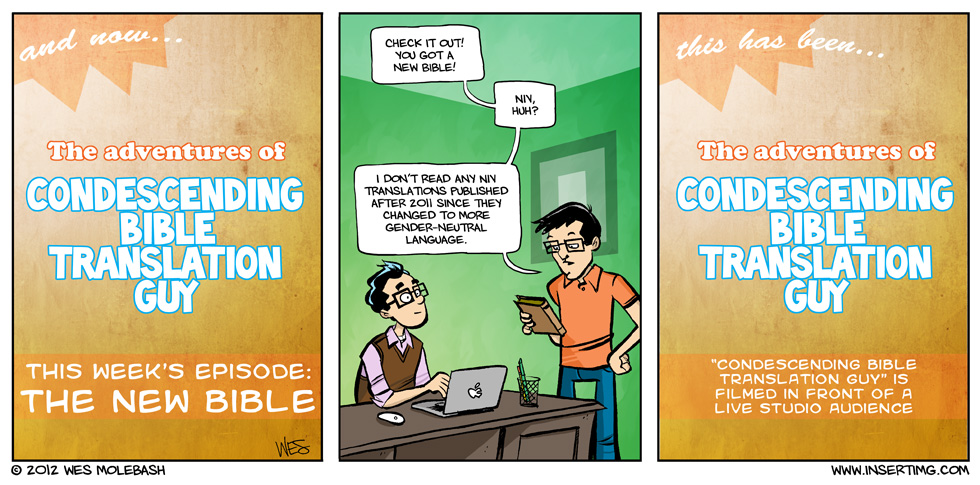
Confession: I am a Condescending Bible Translation Guy.

In my twenty-two years, I’ve stumbled upon some Bible translations that are best described as… quirky.

Here’s part of 1 Corinthians 13 in the plain English of the New International Version.

Love never fails. But where there are prophecies, they will cease; where there are tongues, they will be stilled; where there is knowledge, it will pass away.  For we know in part and we prophesy in part, but when completeness comes, what is in part disappears. When I was a child, I talked like a child, I thought like a child, I reasoned like a child. When I became a man, I put the ways of childhood behind me. For now we see only a reflection as in a mirror; then we shall see face to face. Now I know in part; then I shall know fully, even as I am fully known.

And now these three remain: faith, hope and love. But the greatest of these is love.

Here’s the same passage in the HWP Bible. That’s the Hawaiian Pidgin Bible, in case you were wondering. Read this excerpt aloud. Read slowly. Savor it.

Wen you get love an aloha, dat no goin pau eva. Da guys dat talk fo God, bumbye no need fo da tings dey say. Wen peopo talk diffren kine, bumbye nobody goin talk lidat. Da stuff da smart guys know, no matta, bumbye no need. You know, we ony know litto bit. Wen we talk fo God, we get ony litto bit fo tell. Bumbye, goin come da time wen everyting stay perfeck. Dat time, no need fo da litto bit kine stuff no moa. Small kid time, I wen talk jalike one small kid. I wen tink jalike one small kid. I wen figga everyting jalike one small kid. Now, I big, dass why I no do da tings da same way da small kids do um.

Right now, us guys can see stuff, but ony jalike wit one junk mirror. Hard fo figga wat we see dea. But bumbye, goin be clear. Us guys goin see everyting jalike was right dea in front our face. Right now, I ony know litto bit. But bumbye, I goin undastan everyting, jalike God undastan everyting bout me.

So now, get three tings dat stay: we can trus God, an we can know everyting goin come out okay bumbye, an we get love an aloha. From da three tings, da love an aloha kine, dass da main ting, an da bestes way.

Then there’s my favorite offbeat translation of Scripture… the lolcat version.

Luv no haz endingz. Tellin the futurez, tungz, an alla stuffz u know wil die. We haz knowingz a bit, an we haz profacy a bit. We no haz two much tho. O, wait. Win teh perfict coemz, teh not perfict will dyez, lolol. Wen i wuz a kitten, i meweded leik a kitten, thinkded liek a kittenz, an I chazed strings liek a kittenz. Wen i wuz becomez a cat, i NO WANT kitten waiz ne moar. For nao we see in teh foggy mirorr like when teh human gets out of teh shower, but tehn we see faec tow faec. Nao i haz knowingz just a bit, tehn i will haz all teh knowingz, as i haz been knownz.

Nao faithz an hoepz an luvz r hear, theses threes, but teh bestest iz teh luv. srsly.

Yes, this is a real translation. The entire Bible has been translated into lolspeak, the Internet language of funny cat picture captions. After all, the Apostle Paul did write about becoming “all things to all people.”

 What’s your preferred version of the Bible? Are you a Condescending Bible Translation Person or do you prefer idiomatic versions like The Message? Let us know in the comments!

170. Batman Syndrome

I have Batman Syndrome.

I wish this meant I were as cool, skilled or accomplished as Batman. It does not. It most certainly does not. What it means is that Batman and I have something in common: we obsess over our mistakes.

If you or someone you love suffers from Batman Syndrome... I feel your pain.

If you or someone you love suffers from Batman Syndrome… I feel your pain.

I like fictional characters who overlook their victories and overemphasize their failures. There’s something compelling about characters who are heroic without realizing it. Take the Doctor from Doctor Who, who has saved every planet in the universe roughly twenty-seven times. In all his travels through space and time, he never leaves behind his insecurity, self-loathing or guilt. Consider Jean Valjean from Les Misérables, who atones for a few petty crimes by spending years serving the poor and helpless. They bless him as a saint. He despises himself as a criminal.

Then we have Batman, the eponymous sufferer of Batman Syndrome, who is so blinded by guilt that he fails to recognize one all-important fact: he is freaking Batman. No matter how many thousands of people he rescues, he remains obsessed with the two he failed to save.

I’m not a savior like the Doctor or a saint like Jean Valjean. I’m certainly not a superhero like Batman. Even so, I occasionally do things right. I also do things wrong. In my mind, the wrong things eclipse the right ones. A mistake cancels out all successes.

This isn’t always such a bad thing. I feel driven by my mistakes to try harder, to be better, to get it right. In the short term, it helps.

In the long term, however, Batman Syndrome wears away my confidence. It also makes me anxious. Dash it all, does it ever make me anxious. Doing anything is hard for someone desperately afraid of making mistakes. Perfection is a lousy minimum standard.

Batman Syndrome haunts me with one dreadful question.

You’ll never get it right, so why even try?

I write a lot about grace and stuff. In the end, I suppose it’s because I’m amazed (and sometimes incredulous) that God loves me. I’ve made a lot of mistakes. More to the point, I make a lot of mistakes. It’s easy for me to accept God’s forgiveness for a sin committed ten years ago. What’s hard for me to accept is forgiveness for a sin committed ten minutes ago.

It can also be hard for me to acknowledge my victories. I want to be humble, but there’s a difference between true humility and false modesty. I’m often reminded of my weaknesses. I think I must also allow myself to be reminded of the strengths God has given me. I’ve a long way to go, but I mustn’t overlook how far I’ve come.

I’m not Batman, and I think I’m finally beginning to accept that I don’t have to be.

159. TMTF’s Top Ten Reasons to Read The Trials of Lance Eliot

So… I wrote a novel.

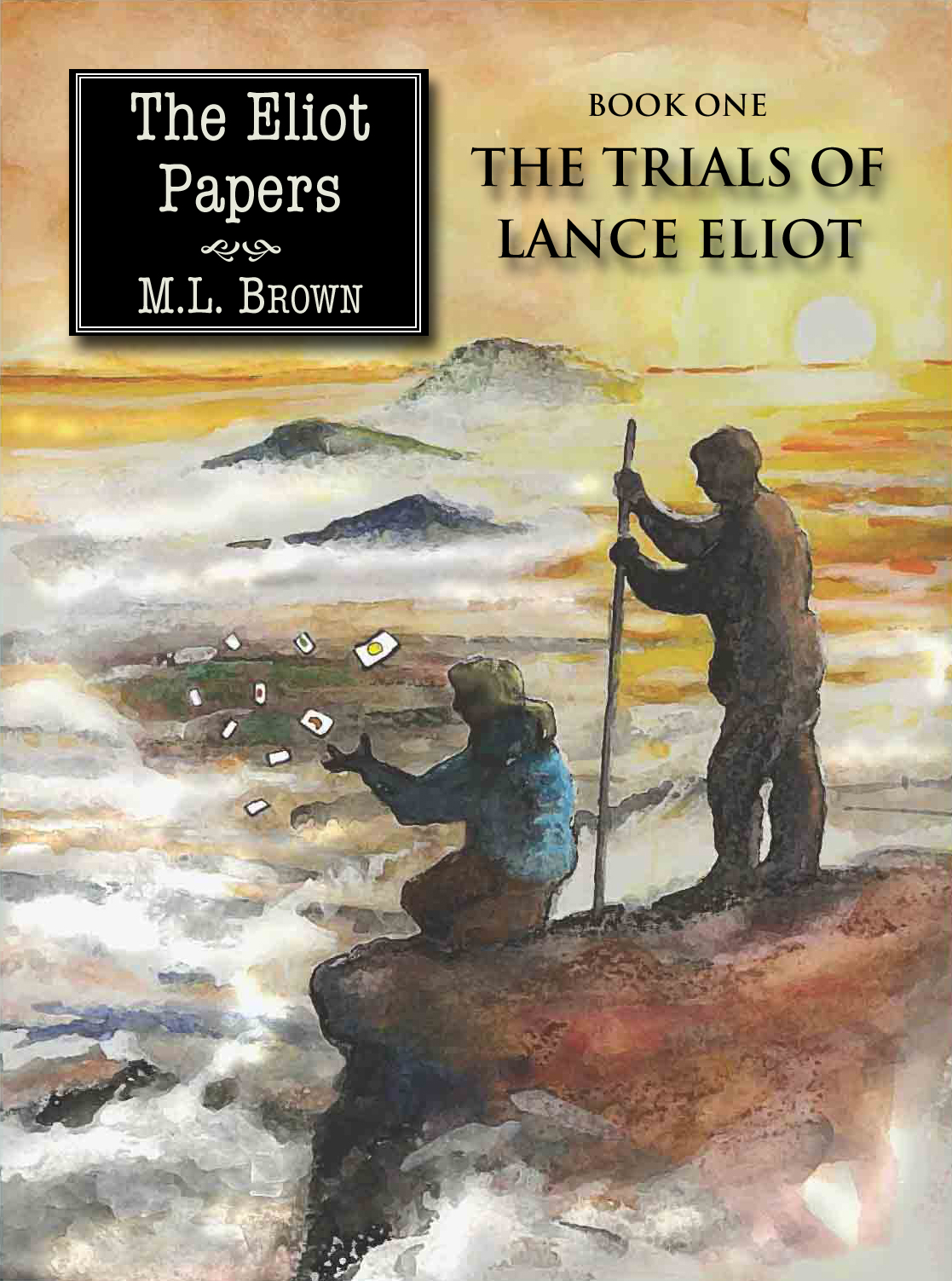
The Trials of Lance Eliot is the story of a college student who is mistaken for Lancelot, the legendary knight of Camelot, and swept off by magic to another world.

As the author of The Trials of Lance Eliot, it’s my solemn duty to make people read it.

The Trials of Lance Eliot

In seriousness, I believe it’s an exciting, funny, meaningful novel. Therefore, I am thrilled to present…

TMTF’s Top Ten Reasons to Read The Trials of Lance Eliot!

10. It has dragons.

Need I say more?

9. The characters are believable.

Upon arriving in an unfamiliar world, Lance Eliot experiences culture shock. His adventures take an emotional toll. Neither he nor his companions shrug off traumatic experiences or personal losses. No character is perfect. No character is invincible. In a story bursting with unbelievable events, characters act believably.

8. The book has literary chops.

The Trials of Lance Eliot is loosely based on Dante’s Inferno, from which it borrows structure and story elements. It also has parallels with Greek mythology and the Old Testament. Understanding these literary underpinnings isn’t necessary to enjoy the story, but some readers may appreciate them anyway.

7. The story takes place in a vast, unique world.

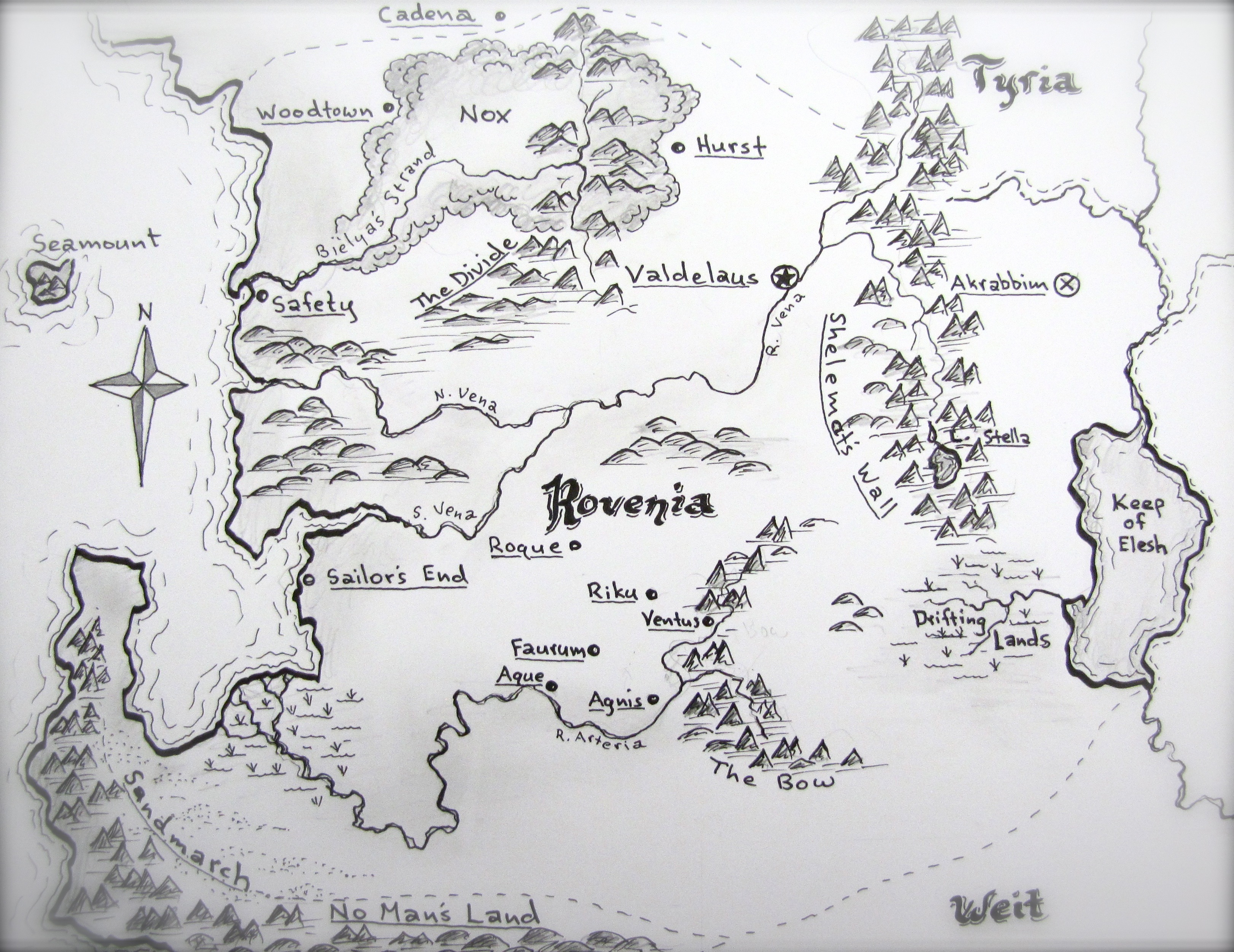
Lance Eliot’s adventures give glimpses of a kingdom with its own geography, history, folklore, culture and religion. They may not boast the exhaustive depth of, say, Tolkien’s Middle Earth, but Rovenia and the world beyond its borders are full of fascinating details.

Behold the kingdom of Rovenia in its monochromatic glory!

Behold the kingdom of Rovenia in its monochromatic glory!

6. A humorous subplot runs throughout the adventure.

At first glance, Lance Eliot’s goal in his adventures seems to be saving the world. A closer look, however, reveals the true purpose of Lance’s quest: working up the courage to face a particularly grouchy professor. Lance is haunted throughout his adventures by fear of his professor, with whom a confrontation is inevitable.

5. Characters face inward conflicts, not just outward ones.

Lance Eliot confronts many dangers, but none are more difficult to overcome than his own faults. Other characters have burdens to carry and sins for which to atone. In the end, these victories are the ones that matter most. Any fool can stand up to an army or a dragon. Only a hero can stand up to himself.

4. The novel is framed by an intriguing story.

You’ve probably noticed, but my name isn’t really M.L. Brown. I chose to publish my novel under that name to lend verisimilitude—the characteristic of seeming real—to its frame story, which states the book is actually the first volume of Lance Eliot’s memoirs. These are published posthumously by his friend Mr. Brown, the book’s “editor,” who discovered an incredible connection between Lance’s stories and a manuscript penned by Lancelot. This frame story gives the novel an element of intrigue.

3. The narrator has a sense of humor.

When I decided to write The Trials of Lance Eliot from Lance’s perspective, I made a resolution: Lance’s voice would give the novel something an impersonal narrator could not. That something turned out to be a wry sense of humor. Lance doesn’t merely tell his story—he comments, jokes, digresses, reflects and reminisces. Lance’s humor is tempered with pathos, and his voice is probably my favorite thing about the novel.

2. The story has meaning.

The Trials of Lance Eliot began as a silly, shallow fantasy about swords and dragons and stuff. Over the years, however, it became something more significant. That’s all I’m going to say about this one—the rest is for the readers of the novel to figure out.

1. Readers like the book!

Responses to The Trials of Lance Eliot have been—to my great relief—overwhelmingly positive: full of phrases like beautiful imagery, sardonic wit, pensive storytelling and gripping narration. Readers of all kinds (high school students, college professors, published authors and more) have praised the novel.

Here’s what readers are saying about the book!

If you’re interested in reading the novel, you can buy it here and support an aspiring writer!

If you’d like to give the novel a boost, please consider sharing this blog post via Facebook or Twitter. Every bit of support helps!

154. Why G.K. Chesterton Is Awesome

Why is G.K. Chesterton awesome?

I can answer that question in one word, and that word is mooreeffoc.

I once mentioned that Chesterton pointed out how astonishing it is to see the word mooreeffoc in a shop window until one realizes one is looking at the words coffee room from the wrong side of the glass.

Ladies and gentlemen, I give you the man whose books are remarkable for showing things from the wrong side of the glass and making even the most ordinary things extraordinary.

I give you Gilbert Keith Chesterton, whom George Bernard Shaw called “a man of colossal genius.”

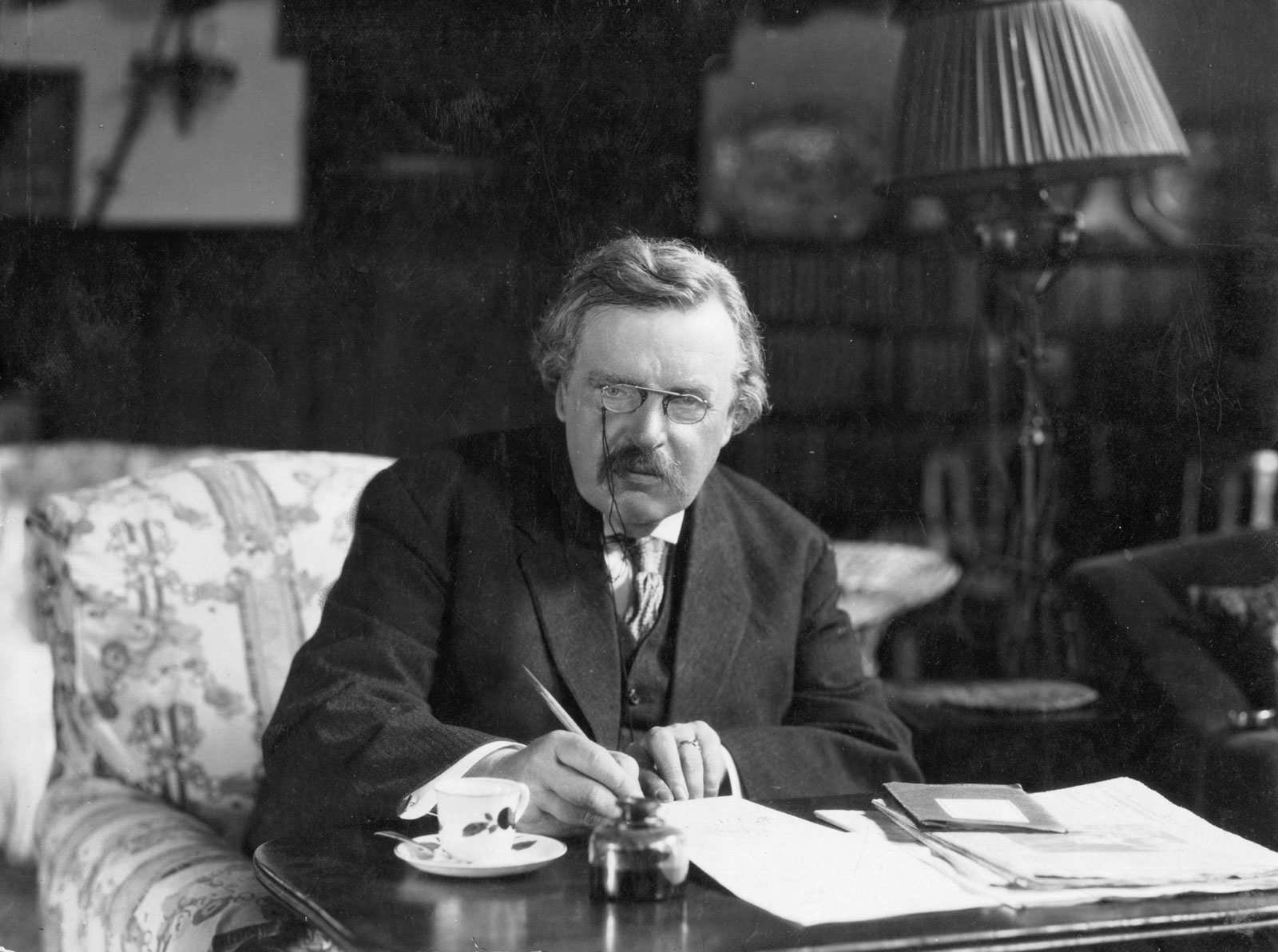
G.K. Chesterton

Chesterton was also a man of colossal size. He once told Shaw, who was evidently a thin gentleman, “To look at you, anyone would think a famine had struck England.” Shaw replied, “To look at you, anyone would think you have caused it.”

Fortunately, Chesterton’s imagination and sense of humor were no less impressive than his weight.

As I’ve pointed out, good literature is generally depressing. We live in a sad, dark, broken world. Chesterton didn’t deny it. His books acknowledge the darkness in the world, but they never take it lying down.

The heroes of Chesterton’s novels and stories struggle to find light in darkness and meaning in emptiness. One of my favorite sayings—one I quote in my novel, in fact—comes from Chesterton: “Always be comic in a tragedy. What the deuce else can you do?” Chesterton’s poets, priests and revolutionaries never lose their courage, hope or sense of humor.

Chesterton has a fantastic trick of setting up circumstances that seem bizarre or impossible, and then providing a staggeringly simple explanation. I can’t give examples without spoiling surprises, so you’ll just have to take my word for it. Read nearly any Father Brown story and you’ll see what I mean.

The characters in Chesterton’s books occasionally do ridiculous things very seriously. They often know something the reader does not, and an action that seems absurd may turn out to be quite sensible when an explanation is given. The reactions of other characters to these sanely insane people is delightful.

Perhaps the most remarkable thing about Chesterton is his passion for paradoxes. In his books, the villain may turn out to be a good person. The detective might be the criminal, or the criminal might be an innocent man. Things are seldom what they seem.

Chesterton’s literary style is marvelous. Some readers may find his writing a little dense—he doesn’t hesitate to use words like conviviality and attenuated—but his novels manage to be both comfortably prosaic and vividly poetic.

No writer is perfect, and Chesterton has his weak points. While his dialogue is clever, it’s usually clever in exactly the same way from character to character. In one of his novels, there’s a chapter in which testimonies are given from unrelated people on several continents—a French innkeeper, a Russian stationmaster, an Asian monk and an American tavern-keeper—and they’re all meditatively poetic.

Chesterton also values ideas over perfect realism, and some of his stories are a bit unbelievable.

In the end, however, minor flaws like these are pardonable. Chesterton’s characters may sound too much like Chesterton, but he’s such an engaging writer that it hardly matters. Chesterton’s stories may not be strictly realistic, but they’re awfully good stories.

I occasionally listen to audiobooks on my iPod as I work overnight shifts at my job. About a week ago, I was listening to The Napoleon of Notting Hill, in which one of Chesterton’s characters is able, so to speak, to see everything from the wrong side of the glass.

In that character’s eyes, a fence is not a fence, but a row of iron spears guarding a house from intruders. A drugstore is not a drugstore, but an alchemist’s storeroom bursting with mysterious remedies and miraculous cures. A toyshop is not a toyshop, but an allegory of everything important in life: families, expressed by dolls; conflict, symbolized by tin soldiers; survival, represented by Noah’s Arks; work, embodied in building blocks; and more.

I finished the audiobook, put away my iPod and decided to take a break from my work. Sitting beside a window, I gazed out into the rainy night. A storefront across the street was lit by a lonely light bulb.

As I looked at it, the storefront was not a storefront. It was a defiant spark burning against the cold, wet night. It was an island of light in vast, empty ocean of darkness. It was a welcoming beacon for the wet, weary traveler.

I didn’t mean to be poetic. Chesterton had rubbed off on me. Quite by accident, I saw that storefront from the wrong side of the glass.

For someone who has never read anything by G.K. Chesterton, I recommend the Father Brown stories: particularly the early ones. Father Brown is my favorite fictional character—period. He’s generally taken for a well-intentioned but superstitious simpleton. Then, when dark mysteries baffle everyone, he humbly, almost apologetically, solves them.

Chesterton also wrote some excellent novels. I recommend The Man Who Was Thursday (which has a manly protagonist and needs to be made into a movie), a thriller bursting with intrigue, swordfights, conspiracies, high-speed chases and… theological allegory. I’ve read many books, and not one has kept me hooked quite like The Man Who Was Thursday.

For those who prefer their novels less metaphysical, The Club of Queer Trades is a lighter story about a man’s odd encounters with a club with one rule for membership: every member must make his living by inventing an entirely unique kind of work.

In conclusion, ladies and gentlemen, G.K. Chesterton is awesome.