466. Hugs

I’ve often thought of my cat, Pearl, during my vacation this week. As I’ve traveled with my family, the Pearl-cat has valiantly guarded my apartment, Mole End, protecting it from burglars.

…Nah, whom am I kidding? Pearl has probably spent the week napping, with brief breaks to freak out over nothing and run around the apartment like a cheetah on fire. This is what she does. It is her way.

Pearl-cat

When I get home, I’ll sweep up Pearl into my arms for Mandatory Cuddles. The Pearl-cat doesn’t like Mandatory Cuddles. As I snuggle her to my chest, she generally glances away with an expression of pained dignity, and occasionally claws and scratches until I put her down.

That’s more or less my reaction when people hug me, except with less clawing and scratching. A little less.

I don’t like hugs. Who invented hugging anyway? At some point in human history, someone must have said, “Here, let me show my affection by smooshing my upper body against your upper body and wrapping my arms around you.” Am I the only one who thinks that’s weird and a little bit uncomfortable?

While I’m a bit of a curmudgeon, I accept hugs from acquaintances without complaint. My friends know me better… and they hug me anyway. I respond to these hugs with pained expressions and mild grumbling. My friends take these in stride, God bless them.

I don’t mind hugs from close family members; in fact, my younger brother and I share awkward sibling hugs all the time. (The pats are essential.) Since I know my family so well, I feel less uncomfortable when they awkwardly press their bodies against mine.

Someone once proposed a theory that human beings demonstrate affection according to five basic methods, known as the Five Love Languages: Quality Time, Acts of Service, Thoughtful Gifts, Words of Affirmation, and Physical Touch. (My parents and I practice a sixth Love Language: Cups of Coffee.) For many people, hugs and other forms of physical touch are simply expressions of love.

For me, hugs are just kinda awkward.

I have no right to be upset when people hug me, of course. I give my cat Mandatory Cuddles even though she doesn’t like them, so it’s only fair that I endure a little discomfort, too. That won’t stop me from grumbling about it. Grumbling is what I do. It is my way.

In conclusion, if you ever see me, maybe give me a fist bump? A fist bump will be great.

465. The Five-Step Writing Conference

I recently attended a professional writing conference. It was… well, it was a lot of things. I’ll outline my experience at the conference in five steps.

1. Early Misgivings

I hit the road a few days ago. My car, Eliezer, is dependable but dilapidated—after all, you can’t spell trusty without rusty. Eliezer lacks such vain frills as air conditioning. I call it a car, but it’s more like an oven on wheels. Thus it was a hot, disheveled Adam who arrived at the conference, sweating like a traveler in the mighty Kalahari, and having second thoughts.

Kalahari

Artist interpretation of writing conference weather.

I should also mention that my jeans kept creeping stealthily toward my ankles. This utterly baffled me. These jeans had previously fit me just fine, and their tag claimed they were my size. They insisted nonetheless on their downward trajectory. I found myself frequently hitching up my jeans until I was able to change into another pair in the privacy of my room.

The conference was held on the campus of a university. It gave me repeated flashbacks to my own college career, which began with severe depression and ended with existential dread. Speaking of which….

2. Crushing Despair

As I attended the conference’s early sessions—which were excellent, by the way—I slid slowly but inexorably into depression, guilt, hopelessness, and acute social anxiety.

This really surprised me. I suffer from chronic depression, as you’ve probably noticed if you’ve followed my blog for more than five minutes, but it usually comes and goes gradually. At the writing conference, it crushed me with the steady force of a steamroller. I was also surprised by the social anxiety. I’m an introvert, but I can usually deal with social events.

The guilt and hopelessness were worst of all.

Depressed Adam

Artist interpretation of depressed Adam. (In case you were wondering, I didn’t actually make faces like this at the writing conference… I don’t think.)

I was surrounded by people with serious aspirations of professional writing, and people who actually write professionally. By comparison, I’m half a writer. I know a few things about writing as a craft, but hardly anything about writing as a profession.

In those early sessions of the conference, with their unfiltered insights into a tough and competitive industry, my bravado and optimism were quick to evaporate. I felt seriously out of my depth. I felt like a fraud.

3. Redeeming Peace

As a pragmatic (and sadly skeptical) follower of Christ, my faith leans more toward intellect than emotion. I don’t often have those moments of raw emotion sometimes called “religious experiences,” and I talk about them still less often, but halfway through the conference, I found one.

Having retreated to my room (which I had formally christened the Introvert Cave), I switched on the air conditioner, sat on the bed, and prayed. I told God that as I held on to faith in him, I had to believe he had brought me to that conference for a reason. I asked him to help me find it, and to see him at work.

I immediately felt a profound peace—a sudden, absolute conviction that everything was going to be okay. This peace carried me through the rest of the day, redeeming it, and giving me a little hope.

4. Shower Misadventures

The showers at the conference deserve a mention. They were lined up along a hallway in a communal bathroom, and guarded from the public eye only by flimsy and ill-fitted curtains. After a long day in the summer sun, I really needed a rinse. I had no choice. Casting off my misgivings, I cast off my clothes. I would not be conquered by a public shower.

I immediately ran into another problem. It was my old enemy, the Tiny Hotel Soap.

My old enemy

We meet again.

Have you ever stayed in a hotel and tried washing yourself with those itty-bitty bars of soap? It’s impossible. The Tiny Hotel Soap provided at the conference was roughly the size and shape of a saltine cracker, with the density of carbon steel. I tried to work up a lather with the Tiny Hotel Soap. It would have been easier to work up a lather with a soap-sized slab of sculpted marble.

I finally concluded my shower, only to realize I had forgotten my towel. (Forgive me, Douglas Adams.) It was a wet and abashed Adam who sneaked back to his room. It was a good thing God had given me peace, or that shower may just have broken me.

5. Caffeinated Resignation

I blundered through the rest of the conference with a kind of resigned determination, fueled by coffee. I learned a lot, actually, and took pages of notes. I also hung out with an old friend, a fellow blogger, and a couple of nice ladies from Argentina, so that was cool.

In the end, the writing conference made me seriously question my vague pretensions of someday being a professional writer. It would be a radical shift, and would take tons of hard work and research for no guaranteed payoff. If I ever make that plunge, I’ll have to go all in.

The conference also reminded me that there are so many other dedicated writers out there, many of whom are admirably ambitious, successful, and gifted. I must keep a healthy sense of perspective. I am, to echo Gandalf, only quite a little fellow in a wide world after all!

Gandalf

When in doubt, quote Tolkien or Doctor Who.

A speaker at the conference made a good point: “A hobbyist writes for himself. A professional writes for his audience.” I’m a hobbyist. I write for fun, and God only knows whether that will ever change. If it does, I now have a slightly clearer idea of what to expect. If it doesn’t, I now have some idea of what I’m missing.

Either way, it’s nice to know.

I never tire of quoting the good Doctor from Doctor Who. (My readers probably tire of it, but I don’t.) As he might have put it, while the conference itself was excellent, my experiences there were a pile of good things and bad things. The good things didn’t always soften the bad things, but vice versa, the bad things didn’t necessarily spoil the good things or make them unimportant.

And the conference definitely added to my pile of good things.

463. Goodbye, Beatrice

I’ve been reading about hell, and thinking of the girls I liked in my younger days. There’s a connection here, but… probably not the one you think.

In preparation for my story project, I’ve been rereading Dante’s Inferno, a centuries-old poem about a man who journeys through hell. The poem starts with Dante meeting the soul of Virgil, an ancient Roman poet. Virgil rescues Dante from a dark wood, giving him both good and bad news.

Inferno

Oh, hell.

The bad news is that they must pass through the nightmarish depths of hell. The good news is that Dante’s love, the dearly departed Beatrice, has interceded for him from heaven. After braving hell and purgatory, Dante will meet her there.

In the poem, Dante represents Beatrice as a savior: a lady of perfect beauty and saintly goodness. In real life, Dante apparently met Beatrice twice. He barely knew her as a person. Instead, he obsessed over her as an idea—a vision that had poetic power but was disconnected from reality.

Beatrice married another man, and died young. Dante obsessed over her memory for the rest of his life, thinking of her even after marrying another woman and having children. He himself acknowledged Beatrice as “the glorious lady of my mind,” a vision barely grounded in reality. In Dante’s mind, Beatrice was an angelic being of compassion and redemption.

Beatrice

To Dante, Beatrice was all clouds and halos.

It makes me wonder what Beatrice was like in real life. Did she think twice about Dante? Did she even read poetry? What were her favorite foods? Did she have a secret crush of her own?

Beatrice is a fascinating character in Dante’s work—a fictional character. She plays an invaluable role in Dante’s Divine Comedy, of which Inferno is the first part, but the role owes everything to Dante’s imagination and practically nothing to Beatrice herself. Dante’s Beatrice was an idea, not a person.

Like Dante, I’ve had secret crushes on gals I’ve known. Most of them are now happily married to other dudes, and good for them. I wish them the best.

It’s just hard to let go sometimes.

There’s one gal in particular—I’ll call her Socrates—who is rather like my own Beatrice. I could share more details, but won’t in case she ever reads my blog. How awkward would that be? (Answer: Soul-rendingly awkward.) I haven’t seen my old crush in years, but when I think of Dante’s Beatrice, I imagine her looking just like Socrates.

Penguin!

I won’t post a picture of Socrates, so please accept this photo of a penguin instead.

I’m a sentimental person. It’s hard for me not to treasure my memories of Socrates, and even to idealize them. She has become my own “glorious lady of my mind,” disconnected from the real Socrates. The real Socrates, wherever she is now, is a living person. She has her own likes and plans and interests. She has her own life. At this point, it isn’t romantic for me to idealize Socrates—it’s disrespectful, really. It makes for great poetry but lousy living.

I sometimes can’t help but wonder whether my life would be different if I had told Socrates that I liked her all those years ago. This can become just as disrespectful as idealizing her, and for the same reason. It replaces a person with an idea. I stop thinking of Socrates as an actual person, and think of her instead as a missed opportunity. It isn’t respectful, and it frankly isn’t healthy.

I’m still a stubbornly single dude. Even so, I figured that at some point I would grow up and stop having crushes on pretty girls. I haven’t. (Of course, I still watch cartoons and occasionally make faces in the mirror, so maybe I failed the whole growing-up thing.) At the moment, I’m letting go of another crush on another Beatrice. Like Socrates, she is also an actual person with her own life to live, and I need to respect that.

I live in a complicated world. It’s tempting to reduce human beings to trite, comforting ideas, but it isn’t right. People are people. They deserve to be respected as people, not reimagined according to my own romantic notions.

Dante wrote some great stuff, but I have to wonder whether he was happy. He was haunted by the memory of a girl he met twice. Is that any way to live?

My Beatrices have their own lives to live, and I have mine. I had better live it.

I’m now going to eat peppermint fudge and watch Steven Universe. Take that, Dante.

461. Adam Does Dark Rock

Yeah, this song again. What can I say? I like it.

The band Disturbed produced a dark rock cover of “The Sound of Silence,” and when I stumbled upon a karaoke track for it, I took a stab at recording a cover of my own. My timing isn’t very consistent, and the key change partway through doesn’t sound great, but I’ve sung worse.

Toward the end of the track, there are prerecorded background vocals for a single line. I tried to mask them with vocals of my own, but they still sound out of place. Ah, well. I prefer the original version anyway.

Speaking of which, at some point my dad and I may sit down and record a cover closer to Simon & Garfunkel’s original, with a guitar and two voices. My cover above is either a warm-up or a consolation project, depending on whether we actually get around to recording.

I read somewhere that it’s best to record standing up, so I perched my microphone atop a stack of books to give it some height. The summer heat was fierce—I kept the door and window shut to keep out ambient noise—so I blasted my laptop with a cooling breeze from my fan at intervals to keep it from overheating. Thanks to the experience I picked up from my last recording session, this one was a lot easier despite the ungodly heat.

My dad snapped the photo in the video somewhere in Uruguay—Punta Colorada, I think, but I don’t remember for sure. I’m the silhouette on the right, gazing out over the gleaming sea, and probably thinking of sandwiches.

In other news, it is so flipping hot outside. In fact, looking out the window, I think I just saw one of the local geese burst into flame.

I’d better turn on that fan again.

459. That Time I Started a Church Ministry by Accident

Today’s story is a testimony, I suppose, but not mine. It’s the story of a pastor who founded a ministry, and of a congregation that supported it. My part in the story is actually very small. It’s kind of an anti-testimony, really.

Once upon a time, my laziness inspired the creation of a church ministry called Change the World. It gathers donations in the form of spare change and small bills, and then uses this money to support charity projects across the world.

At one point, when I was in college, I acquired about forty-five dollars in loose change. That’s a lot of coins, guys. Seriously, that’s like five flipping pounds of money, stuffed haphazardly into a sagging resealable bag.

Spare change

Spare change is kind of a nuisance, really.

This little fortune was more of a nuisance than a blessing. Where was I going to spend five pounds of change? I couldn’t use it at a store or restaurant—no sane server or salesclerk would accept a bag of coins. I was too lazy to put them in paper wrappers for deposit at the bank. How was I going to get rid of them?

In the end, I sheepishly handed over the bag of change to my pastor. In my defense, I was transparent about my own laziness. Giving the money to my church was the easiest option; I didn’t pretend otherwise.

My pastor—I’ll call him Socrates—accepted the coins, apparently unfazed by my laziness and ineptitude at being a capable adult. Instead, he realized how much spare change people tend to have scattered around, and decided to redeem it for the kingdom of heaven.

Together with the church’s leadership team, Socrates founded Change the World, which redirects donations of loose change toward a new charitable project every month. A number of church members supported the project enthusiastically. It continues to this day.

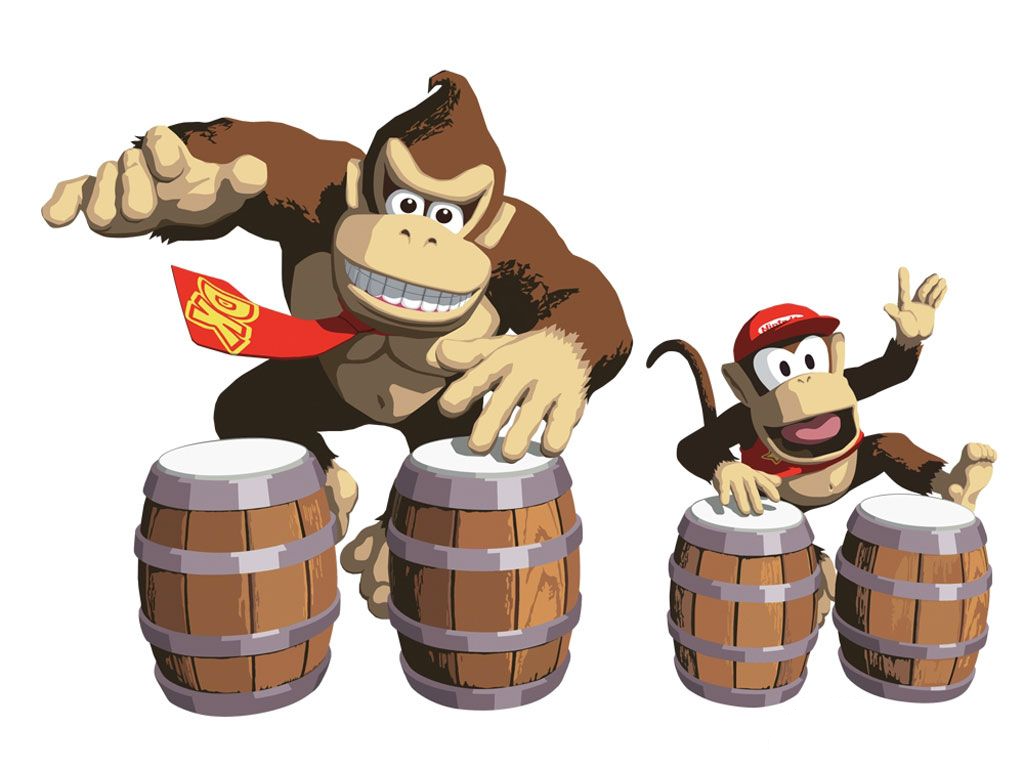
In college, I served that church in a number of capacities, from mowing its lawn to running its soundboard to whacking bongo drums during its worship services. I find it hilarious that my only enduring impact on that church was not only completely accidental, but openly lazy.

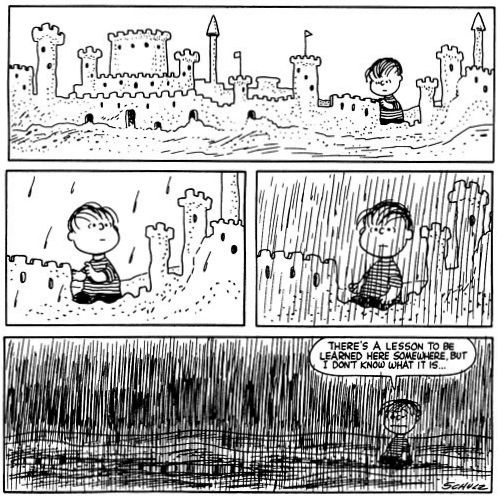
As Linus from the Peanuts comic once put it, “There’s a lesson to be learned here somewhere, but I don’t know what it is.”

A lesson here somewhere

Peanuts by Charles Schulz.

My accidental involvement in the Change the World project reminds me of a story from the book of Numbers. It’s the tale of the wicked prophet Balaam, who was sharply criticized by a donkey. (It’s a funny story.) That donkey probably wasn’t planning to get involved in the work of God, but then neither was I.

My legacy of laziness endures to this day. I hope it has done the world a little good.

Welp, I’m going to take a nap or something.

455. Thoughts on Extremism

A few days ago, John Cleese showed up on my Twitter homepage—a video of him, I mean, not the man himself. (That would have been pretty cool, though.) I think the video, a brief discussion of extremism, is worth sharing.

Extremism is a vague term, but it generally describes a cause or belief—or, alternatively, support for a cause or belief—so extreme as to be harmful or irrational.

In just a few words, Mr. Cleese lists benefits of extremism, which are more or less synonymous with some of its flaws:

Well, the biggest advantage of extremism is that it makes you feel good, because it provides you with enemies.

Let me explain. The great thing about having enemies is that you can pretend that all the badness in the whole world is in your enemies, and all the goodness in the whole world is in you. Attractive, isn’t it?

So if you have a lot of anger and resentment in you anyway, and you therefore enjoy abusing people, then you can pretend that you’re only doing it because these enemies of yours are such very bad persons! And if it wasn’t for them, you’d actually be good-natured, and courteous, and rational, all the time. So if you want to feel good, become an extremist!

That’s a problem with extremism, isn’t it? It’s often nothing more than an oversimplification, or a deflection of blame. It deflects the blame for vast, complicated problems toward anyone with whom the extremist strongly disagrees. This enables both wrath and pride, allowing an extremist to act like a jerk and feel like a saint: an appalling hypocrisy.

Most extremists are easily controlled. They want to deflect blame on others. If someone tells them others are to blame, most extremists are only too eager to agree. After all, it’s satisfying to point out a speck in someone else’s eye. It’s much harder to acknowledge that I might have something in my own.

Extremism is alive and well in the world today. It provokes conflicts great and small, from massive terrorist attacks to petty political insults. I like to think I’m not an extremist, but Mr. Cleese’s video touches a nerve—I understand the mindset he describes. It’s easier to blame others than to figure out to whom the blame really belongs… especially if it ends up belonging to me.

It’s so easy to point fingers, isn’t it?

I mean, just for example, I could say, “Those extremists! They ruin everything, and I have nothing but contempt for them.”

If I said this, I would admittedly make a valid point: Extremists generally make the world a worse place. However, I would also overlook a point of great significance: By griping about extremists, I’m not exactly making the world any better, am I?

It begs the question: How is my contempt for extremists any different than their contempt for others?

It’s all rather complicated. The world tends to be a mess, after all, which may be why Jesus Christ made a point of summing up so neatly: “So in everything, do to others what you would have them do to you, for this sums up the Law and the Prophets.”

This doesn’t mean that I must accept every point of view. What it means is that I must do my best to respect and understand everyone, even if I don’t agree with them. Disagreement is fine. Extremism—demonizing those who disagree—is never acceptable.

On a personal note, I do tend to blame my typewriter monkeys for all of this blog’s problems. Maybe, instead of deflecting that blame, I should acknowledge that some of it belongs to me. I make mistakes, too. Maybe I should try to respect and understand my monkeys instead of assuming the worst of them.

I’ll think about it.

453. Fans, Geeks, and Cosplay: A Momentary Study

Geeks are fascinating creatures. In a perfect world, someone would make a nature documentary about them, and it would be narrated by Morgan Freeman. Tragically, since I don’t own a video camera and can’t afford to employ Mr. Freeman, I’ll have to keep writing blog posts about geeks instead of producing that well-deserved documentary.

Yes, it’s time for another brief exploration of geek culture. Today’s subject is cosplay, the hobby (or art, depending on your point of view) of dressing up like characters from movies, comics, video games, or other media. It’s sort of like wearing Halloween costumes, but really… hardcore.

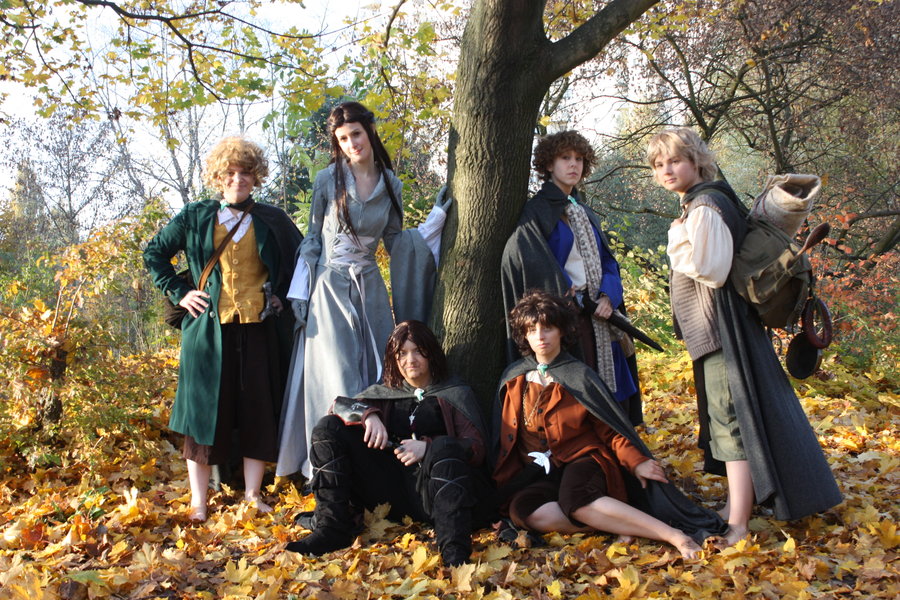
Lord of the Rings cosplay

Here’s some Lord of the Rings cosplay.

The word cosplay is a portmanteau of costume and play; it denotes not only the hobby, but also specific examples of it.

Dedicated cosplayers often create their own cosplays. This sounds easy, but flipping heck, some cosplays are complicated. Depending on the complexity of the costume, a cosplayer may need the expertise of a tailor, makeup artist, leatherworker, blacksmith, or even computer modeler (for 3D printing).

Cosplayers show off their creations by attending geeky events (such as conventions) in costume, or by holding photo shoots and sharing the photos via blogs or social networks. Some fans are so good at cosplay that they do it professionally. In order to promote their brands or products, companies may hire professional cosplayers to mingle or manage booths at conventions, trade shows, or other events. Some cosplayers don’t merely dress as characters, but act and speak like them in improvised performances.

While some cosplay strives for perfect authenticity to its source material, other styles may feature creative twists on familiar characters, or gender swaps.

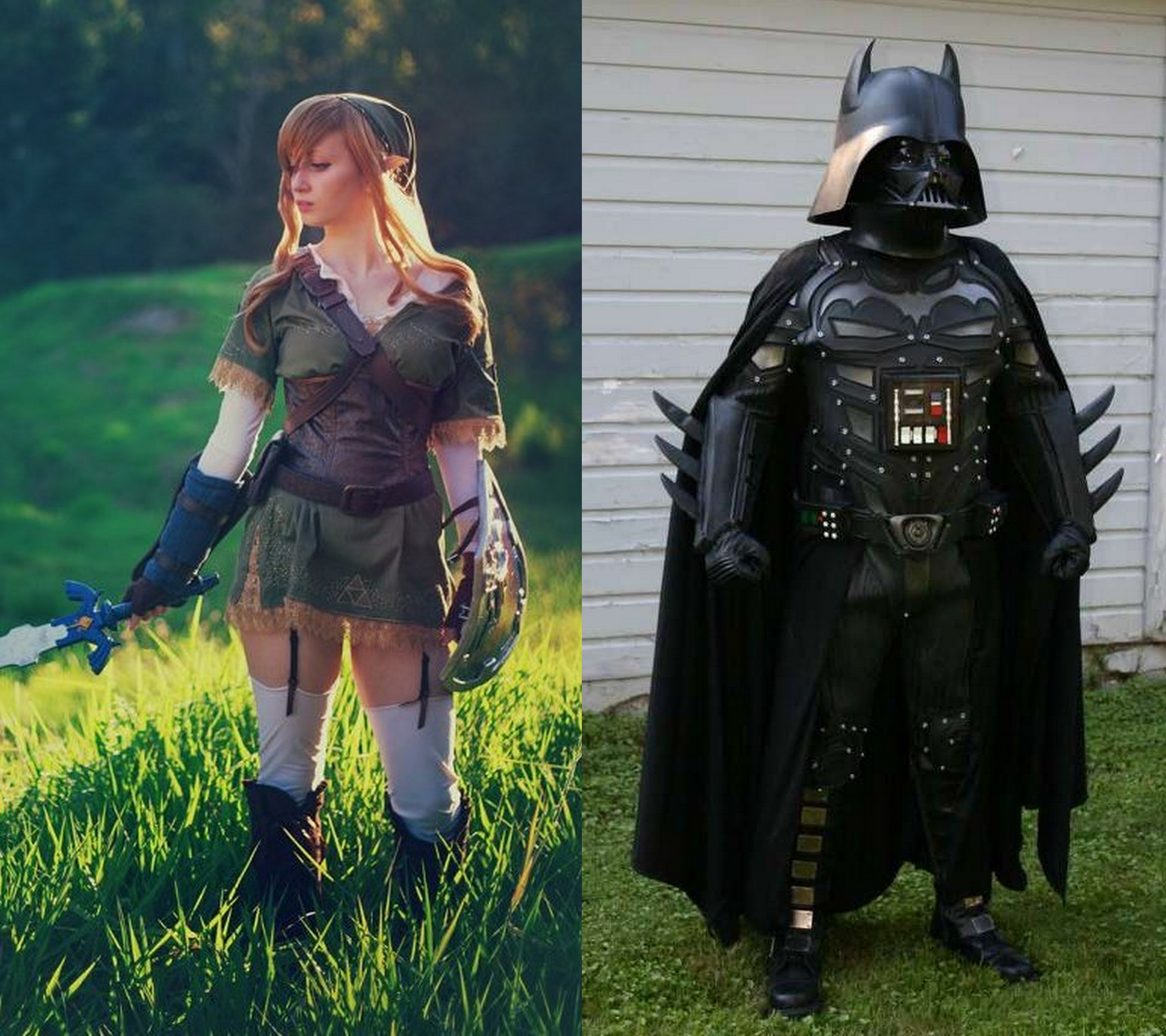
Darth Batman and Lady Link

On the left is a gender-swapped Link from The Legend of Zelda. On the right is… wait, is that Darth Batman? That is AWESOME!

What separates cosplay from other forms of dressing up? Costumes feature in some holidays and cultural events, but their purpose is nearly always rooted in tradition, religion, or symbolism. Cosplay, by contrast, is an expression of enthusiasm for a particular work or character. (Halloween costumes can be a bit cosplay-ish.)

Aided by the spread of the Internet, cosplay has gained prominence in just the past few decades; the term itself originated in the eighties. However, dressing up as fictional characters has a long and rich history. For example, just off the top of my head, I recall a scene in Little Women by Louisa May Alcott in which a couple of its characters dress up as literary figures for a fancy dress ball. Cosplay has evolved as a hobby in recent times, but its roots are firmly planted in centuries of human history.

Like many geeky hobbies, cosplay sometimes carries social stigmas. Cosplay may be considered childish, creepy, or inappropriate.

I’m not a cosplayer, but I usually disagree with these stereotypes. Cosplay is a creative hobby. It often requires superb dedication and all kinds of specialized skills. Like dressing up for Halloween, it’s fun for a lot of people. It can be inappropriate, certainly—but generally as a reflection of inappropriate media or characters. If a cosplay is in poor taste, it’s probably because the media it represents was in poor taste first.

Sadly, not all of the stigmas against cosplay come from outside its community. Fans and geeks can be as cruel as anybody. Over the years, some cosplayers have been criticized or insulted for having the wrong body type, skin color, or physical features for cosplaying certain characters. That’s dumb.

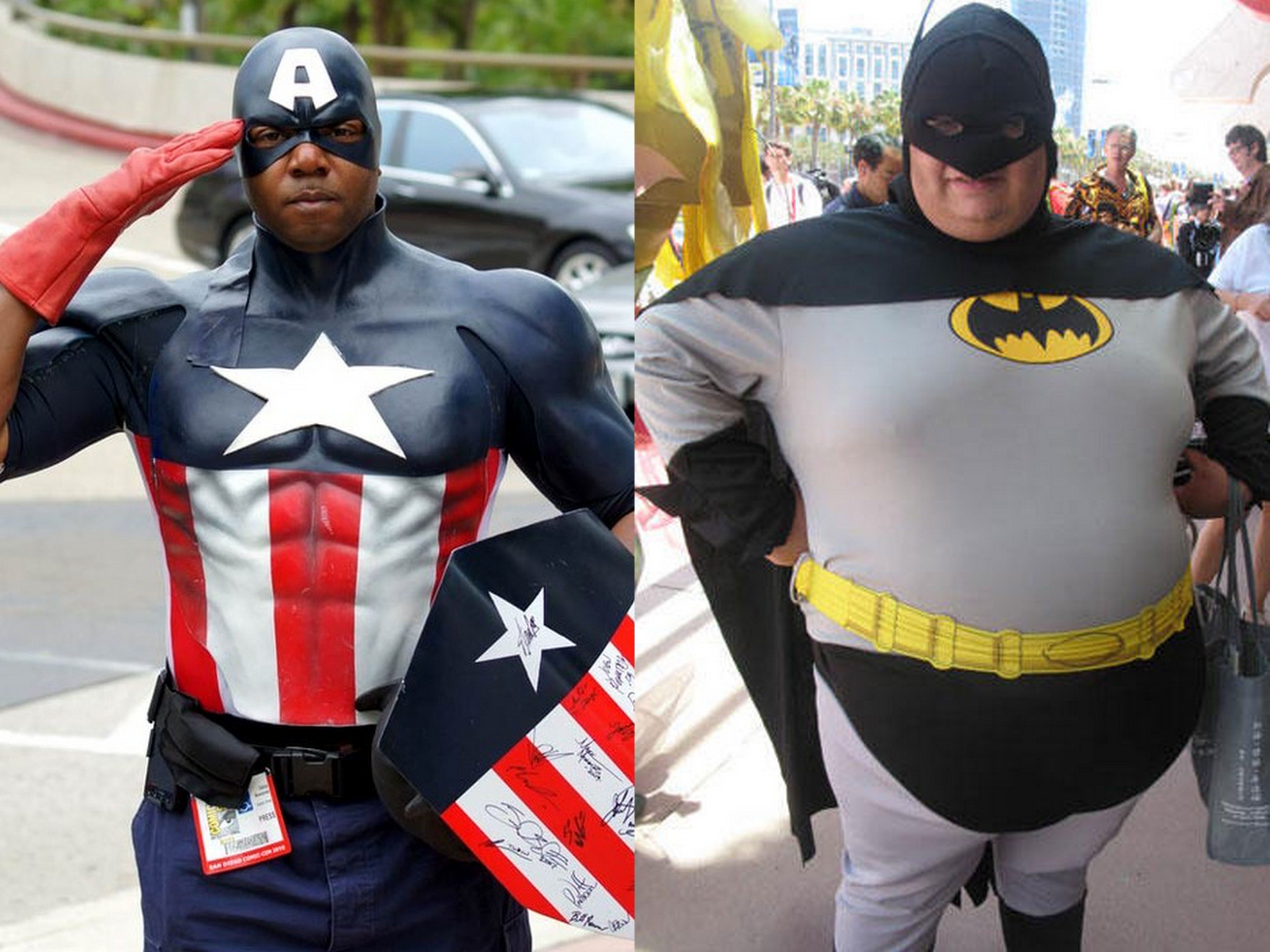
Perfectly fine cosplay

Black Captain America? Plus-size Batman? Cool. I see no problem here.

Do you see that black guy cosplaying Captain America, a traditionally white character? He’s a cosplayer. He’s not actually Captain America. It’s okay. Everyone can stop freaking out. The chubby fellow cosplaying Batman? He isn’t Batman. He lacks Batman’s muscular physique, and he’s smiling happily, which isn’t terribly Batman-like. Does it matter? He’s having a good time. So is the black gentleman in the Captain America suit, and the lady rocking Link’s iconic green tunic, and whatever mad genius created Darth Batman.

Cosplay isn’t about rules. It’s about fun, acceptance, and coming together as geeks to wear goofy costumes. Anybody should be able to cosplay as whatever the heck they want. After all, isn’t that the point of cosplay? Isn’t cosplay a chance to be an actor without a stage, becoming a completely different person, if only for a little while?

I don’t cosplay, but I understand why so many people have embraced it as a hobby. I respect them. I wish more people did. In fact, generally speaking, I wish more people respected geeks instead of assuming the worst of them. Heck, while I’m at it, I wish more people respected other people. That would be a great start.

I’m not planning ever to cosplay… but if I did, I bet I’d make a pretty good Hiccup from How to Train Your Dragon, or even a tolerable Tenth Doctor. Just a thought.

451. The Sordid Story of My Typewriter Monkeys

For nearly five years, I have run this blog with the reluctant help of a dozen typewriter monkeys. What exactly, you ask, is a typewriter monkey? It’s a monkey with a typewriter, of course. They aren’t the best assistants, but my monkeys were cheaper than hiring a secretary, so here we are.

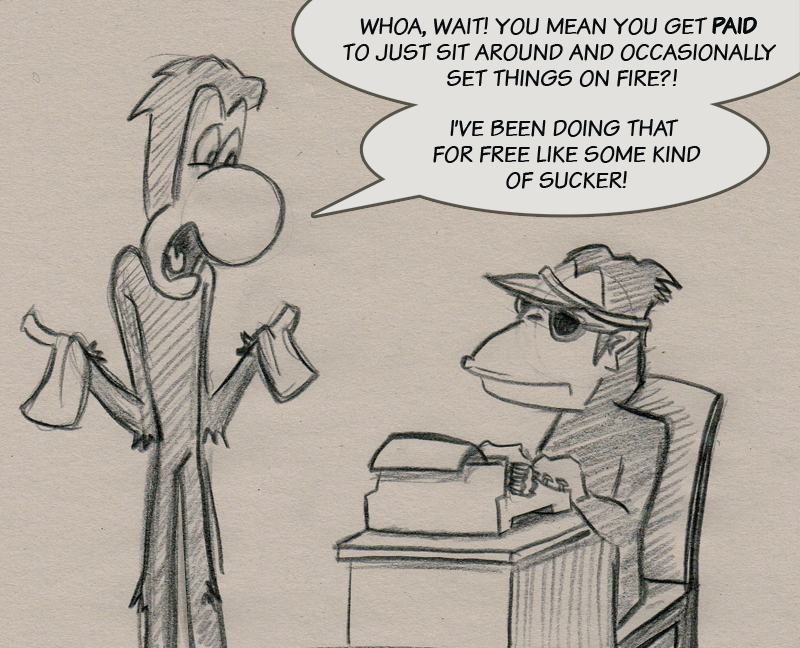
Some time ago, one of my readers expressed interest in learning more about my monkeys. His comment made me realize how little I knew about them. In fact, all I knew for sure was that they liked setting stuff on fire. I was a bit nervous to dig any deeper.

Typewriter monkeys (1 of 2)

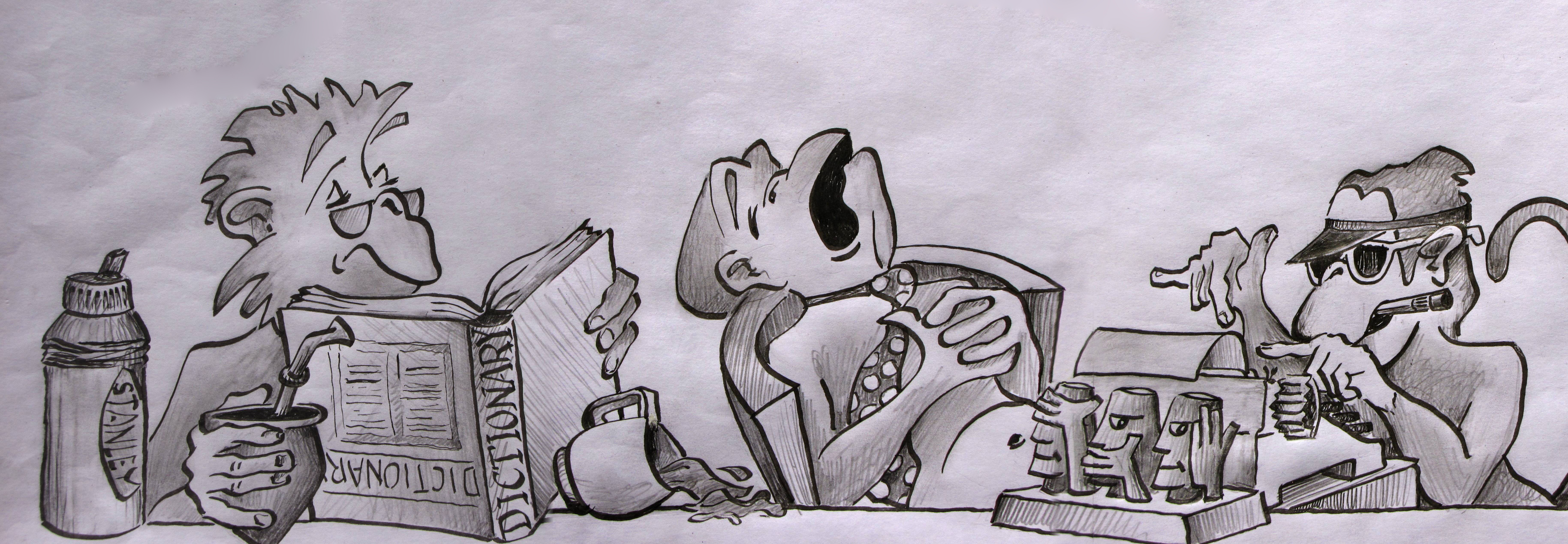
The monkey on the right looks a bit like Hunter S. Thompson, which is completely appropriate: “fear and loathing” is a phrase often used in describing my monkeys.

All the same, I feel I owe my readers some answers, so I recently did some research into my monkeys’ sordid past. What I found was… not surprising, actually. I found not solid facts, but a patchwork of dark hints and sinister rumors. How many are true? I don’t know, and I would rather not. I can sleep at night not knowing.

Here at last, dear reader, is the story of my typewriter monkeys. Here is the shameful tale of Sophia, Socrates, Plato, Hera, Penelope, Aristotle, Apollo, Euripides, Icarus, Athena, Phoebe, and Aquila. Don’t say I didn’t warn you.

Typewriter monkeys (2 of 2)

Here my monkeys are “fixing” a typewriter. May it rest in peace.

(In case anyone is interested, here’s the true story behind my typewriter monkeys. It isn’t nearly as interesting as the made-up one.)

I bought my typewriter monkeys on Amazon.com back in 2011 from a company called Press Paws, Inc. (It seemed like a good idea at the time.) It didn’t take me long to realize my mistake, but when I tried to contact the seller, it remained mysteriously out of reach. I didn’t pursue the matter any further at the time; I was too busy putting out fires and mopping up puddles of typewriter ink.

More recent attempts to locate Press Paws led me nowhere. However, after digging around some of the darker corners of the Internet, I stumbled upon a man who claimed to have known my monkeys before Press Paws acquired them.

This man requested anonymity, so I’ll call him Socrates. He claimed to have worked as a janitor for Tough Nut, a high-security wildlife refuge “somewhere in the Amazon.” (I assume he meant the geographical area, not the online store.) According to Socrates, Tough Nut is where conservationists send the wildlife too, um, wild to be kept anywhere else.

Of all the animals living in Tough Nut, none were tougher (or nuttier) than the twelve monkeys known as the Dirty Dozen. They came from all corners of the world. None of the staff at Tough Nut knew much about them, but there were plenty of rumors.

One of the monkeys was rumored to be el Bandido Peludo de Sonora, a legendary outlaw who terrorized tourists to Mexico’s Sonora state. He was notorious for never actually holstering his weapon, keeping a banana in the holster instead.

Another member of the Dirty Dozen had once belonged to Somali pirates. Another was once a pickpocket in Mumbai, and yet another had been the mascot of a dive bar in the Bronx. I wasn’t even slightly surprised to hear that one of them had been sentenced to Tough Nut for blowing up a deserted firework warehouse.

Boom, baby.

Of all these shameful reputations, the worst belonged to a monkey who had once worked for TMZ.

Surrounded by ominous rumors, the Dirty Dozen gained a fearsome reputation among the other animals in Tough Nut. Even the bears and tigers feared them. The Dirty Dozen committed such dreadful crimes as starting fires, inciting riots, and talking too loudly during movies.

In the end, the monkeys were so unmanageable that Tough Nut sold them to Press Paws for the equivalent of seventeen United States cents. Press Paws managed to sell the Dirty Dozen (for quite a bit more than seventeen cents) to an unsuspecting college student, before shutting down and apparently erasing all traces of its existence.

I was that college student, of course. I renamed my gang of monkeys the Typewriter Monkey Task Force, finished putting out the fires, and started a blogthis blog, in fact, which I named after my typewriter monkeys in an optimistic attempt to earn their respect. (It obviously didn’t work.)

This comic still makes me chuckle. Thanks, JK.

My typewriter monkeys have spent nearly half a decade working for me, and these years have been bright. I mean that literally—I can’t count how many times my monkeys have set stuff on fire. Fortunately, my monkeys set fires only when they’re sober, so I don’t have to worry on weekends and holidays. (Thanks to its fireworks, July Fourth is the exception to this rule. Wait, that’s in two weeks, isn’t it? Flipping heck.)

There you have it, dear reader: the sordid story of my typewriter monkeys. I hope to finish this blog before the year ends, and to send my monkeys packing. Where will they go? I don’t care, so long as it’s far from here.

I smell something burning. I had better end here.

450. Adam Answers

As TMTF hits its last fifty-post milestone before the end, I want to pause a moment, thank everyone who has been a part of this blog’s journey, and declare my opinion that Empire Strikes Back is the best Star Wars movie.

Empire Strikes Back

The greatness was strong with this one.

All right, with that out of the way, here are my answers to the questions submitted by readers for today’s Q&A. Here we go!


JK asks: In spite of your down-playing your abilities, I think your singing is quite lovely. Do you have any music related experience/training, or is it just natural know how? Play any instruments to go along with the vocals? Follow up, can we get another serenade while you’re at it?

Aw, thanks, JK! I sang in choir a couple of years in high school, and performed with a few worship teams over the years, but I’ve never taken lessons or anything.

I am a little proud of my vibrato: that wobble in the pitch of my singing voice. As a kid, I heard other singers perform the vibrato technique. I thought it was neat, so I trained myself to do it. Mine is a bit forced, but hey, I’ll take what I can get.

The only instrument I’ve ever played is the bongo drum, for which I have no training whatsoever, and on which I performed with more enthusiasm than skill.

Bongos

None of my typewriter monkeys play bongos, thank heaven. Imagine the racket!

I’ve thought about doing one or two more song covers, but for an amateur like me, they take a ton of trial and error. I’d rather spend my non-blogging free time relaxing! I did cover “Baba Yetu” karaoke-style a while back, though, singing over the original track. I’m really pleased with how that one turned out.


Sarah asks: How much time per week do you and your monkeys put into the blog? And how has that changed since you started the site? Of all the places you could have chosen to live, why Indiana?

Good questions! My time spent blogging varies wildly from week to week, and I don’t really keep track of it, but I estimate three to eight hours.

Depending on the kind of post I write, I might dash off it in an hour or slave away at it for three to five. Personal reflections and silly thoughts on random subjects are quicker and easier to write; serious treatises take tons of time and effort. Posts involving audio recording or image editing take extra time.

I’m probably spending less time on the blog these days than when I started, thanks to my decision long ago to publish a short, geeky commentary every Wednesday instead of another numbered post. The shorter mid-week updates require much less effort, and they let me share stuff I think is cool.

Your final question is a familiar one! When people ask me why I settled in Indiana after living overseas, I tell them, “It’s a really long story, but I’ll give you the really short version.”

Here’s that short answer: I live in the United States because, of all the countries in the world, it’s the only one for which I currently have the legal paperwork required for a job; I live in Indiana because, of the few roots I have in this country, most are here; and I live in the little town of Berne because, when I was looking for a job years ago, it had the only place that would hire me.

Berne ain’t a bad place to live.

I’m fond of Berne, but it really could use a movie theater, some mountains, a beach or two, a Japanese noodle stand, and a Starbucks. Ah, well. Nowhere is perfect, I guess.


JS asks: What about pants?

A most profound question. I cannot offer an answer worthy of it, for I am but a foolish mortal. How can I, or any of the humans who live their short lives upon this fading earth, match a question of such wisdom with an answer equally wise?

The word pants can be traced back through the English, French, and Italian languages to Pantalone, the character stereotype in commedia dell’arte, a form of performance art popular in sixteenth-century Italy. This stereotype, which caricatured Venetians, was named for Saint Pantaleon, a saint popular in Venice.

By following these tangled skeins of history and etymology, we trace pants to a legendary saint. Does its connection to an ancient martyr make pants the holiest of clothes?

Speaking of holey clothes, why do some stores sell torn jeans? Who actually buys pants that, as Dave Barry put it, appear to have been ripped to shreds by crazed wolverines? That’s another question for which I have no good answer.

Wolverine

Not that kind of wolverine, guys.

Returning to my reader’s question, a character in Avatar: The Last Airbender, my all-time favorite show, offers this unfathomable wisdom: “Pants are an illusion, and so is death.”

My own view on pants is that a gentleman shouldn’t leave home without them.


That concludes today’s Q&A post! I’m grateful to everyone who submitted questions; without you, this post would have been embarrassingly short. Thanks, guys.

With fifty posts left, TMTF is hitting the final stretch at last. I could say a lot, but I’ll save it for some other time. For now, I will only say this: Onward!

449. Everything You Ever Wanted to Know about Introverts (but Were Afraid to Ask)

I’m currently gathering questions for a blog Q&A this Friday. I’ve received questions from exactly one person so far. (God bless him.) Friday’s post will be really short if no one else speaks up! If you’ve ever wanted to ask me anything about my life, blog, book project, or anything else, ask away!

I plan to attend a writing conference later this summer. It will probably be an educational experience. It shall certainly be a caffeinated one. I plan to drink a lot of coffee, that very present help in trouble. After all, as an introvert at a crowded social event, I’ll need all the help I can get.

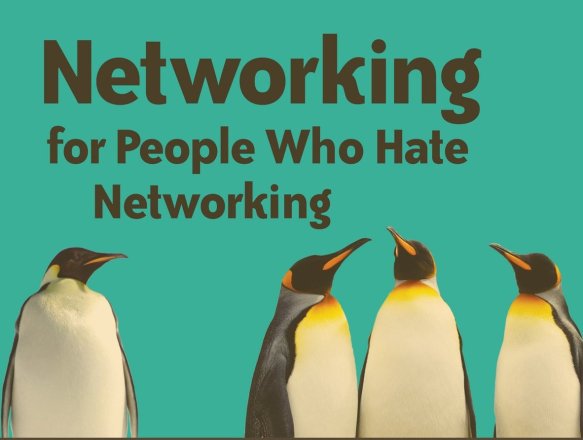
That said, I recently picked up a book titled Networking for People Who Hate Networking on my latest visit to the bookstore. The book was on sale, is marketed to introverts, and has penguins on the cover. Penguins, guys. How could I refuse?

Networking with penguins

Professional Networking: Now with 100% More Penguins!

The book hasn’t offered any spectacular insights, but it has served (so far) as a solid introduction to introverts, extroverts, and ways both groups can connect with new people.

A few of the book’s points are well worth sharing, so I am going to share them.

Misconceptions shall be shattered! Stereotypes shall be broken! A sword day, a red day, and the sun rises! Ride now! Ride—wait, sorry, that’s Théoden’s speech from The Return of the King. I got a bit carried away. Let me try again.

For introverts and extroverts alike—and for all of those people who don’t know the difference—here is everything you ever wanted to know about introverts, but were afraid to ask.

Trying to cope

I’m an introvert. You may have noticed.

Introverts are not necessarily shy or quiet.

Many introverts can be talkative; this introvert, especially so. Introverts are often labeled shy because we tend to be guarded around people we don’t know well. Once we feel comfortable around others, we drop our guard and speak up.

Extroverts, by contrast, often feel comfortable talking around others, even people whom they don’t know well. That can be a great gift. Good for you, extroverts.

I’m generally very quiet around new people. Once I get to know them, they sometimes can’t shut me up.

Introverts are not necessarily negative.

Introverts tend to be less impulsive than extroverts. We need time to consider circumstances and process decisions. Thus, when given a request or invitation for which an immediate response is expected, we tend to say, “No.”

If we have a little time to think about an invitation or request, and to make up our minds without being rushed, introverts are much more likely to respond positively.

Introverts need time alone.

I use the word need here deliberately. We don’t merely want it—we need time alone in order to function well. Without opportunities to regain our mental balance, away from distractions and other people, we become stressed, anxious, or grumpy.

This, dear reader, this is why it bothers me so much when people interrupt me when I’m reading a book on break at work. It isn’t really about the book. In my job, which consists of working with dementia patients whose behaviors are often exhausting, I need time alone, immersed in a book, without coworkers dragging me into inane conversations. I get enough tiring human interactions when I’m working; I don’t need them on break.

Not that I’m bitter or anything.

(I may be a little bitter.)

Introverts tend to weigh their words carefully.

I typically choose my words with near-obsessive care. I want to say exactly what I mean, and to mean everything I say. Nuances matter to me. Like most introverts, I think to talk.

Extroverts, by contrast, often talk to think. Talking is how they reach their conclusions. They think out loud. This means their views and opinions can change wildly from one conversation to the next, and even from one moment to the next. This makes it easy for introverts to label extroverts thoughtless or indecisive. It’s important for introverts and extroverts alike to understand these differences in mental processing.

Introverts excel at depth, not quantity.

Extroverts often have vast social circles. Introverts tend to have a close circle of dear friends. Extroverts go wide; introverts go deep. With fewer social commitments, introverts can spend more time and effort developing those closest relationships.

These principles can be applied in the context of networking. Introverts can be aware of different communication styles, plan opportunities to recharge, and focus on making a few key connections instead of using up their energy on small talk. As I’ve read the Guide to Networking with Penguins, or whatever that book is titled, I’ve been rather gratified to see that it also recommends some of my own strategies for coping with social events.

When I attend that writing conference later this summer, I will add to the book’s admirable list of tips my own tried-and-true strategy: liquid courage. It is for such times, after all, that God made coffee.