100. An Important Post

Typewriter Monkey Task Force has featured one hundred regular posts! Today, my friends, is a great and solemn day. At least it would have been if my typewriter monkeys hadn’t gotten their paws on some fireworks.
This milestone post gives me the opportunity to revisit a few important posts and to make some announcements.

Beginning today, my monkeys and I are taking a week off from TMTF. Regular posts will resume next Monday, July ninth. I’m taking a break in order to focus on a bigger project, which brings us to the next announcement.

The Trials of Lance Eliot—my debut novel—comes out today!

Six years ago, I began working on the novel that would grow into The Trials of Lance Eliot, the first volume of a trilogy titled The Eliot Papers. The project has been my greatest passion as a writer, so I’m excited finally to be able to share it!

The novel is available for purchase!

A few months ago, I published The Infinity Manuscript, a fantasy in twelve parts, as a serial on this blog. The Infinity Manuscript isn’t nearly as polished as The Trials of Lance Eliot, but it’s available to read for free!

I also wrote a short but significant series of posts titled Help, I’m a Christian! in which I shared some of the most valuable lessons I’ve learned about relationships, faith and Christian living.

In addition to TMTF and the blog for my novel, I maintain a blog called Solidarity that shares reports of persecution against Christians. Please feel free to check out Solidarity or my explanation of why it matters.

I’d love to feature more guest posts on TMTF! If you’d like to write a post for this blog, check out these guidelines.

I’ve also been privileged to write a few guest posts for other blogs, including Stuff Christians Like, Social Biblia and Thomas Mark Zuniga’s blog. My typewriter monkeys and I are always delighted to write guest posts, so feel free to contact me if you’re ever in search of a guest blogger!

Finally, I need to thank some people for their assistance, encouragement and support.

Thanks to my typewriter monkeys—Sophia, Socrates, Plato, Hera, Penelope, Aristotle, Apollo, Euripides, Icarus, Athena, Phoebe and Aquila—for their work on the blog. I could never have kept up TMTF without you. Thanks, guys. Don’t ever buy fireworks again, okay?

Thanks to my parents for proofreading many of my posts, and special thanks to my old man for providing TMTF’s artwork. You guys are fabulous.

Thanks to the bloggers who have written guest posts for TMTF, and to my younger bro for allowing me to feature his drawings. I’ve been honored to share your work.

Thanks to God, whose love, grace and kindness are rocking awesome.

Finally, thanks to the readers and followers of this blog! Your likes and comments are so much appreciated. There is no greater honor for a writer than having his work read.

We’ll be back!
99. Pencil Drawings

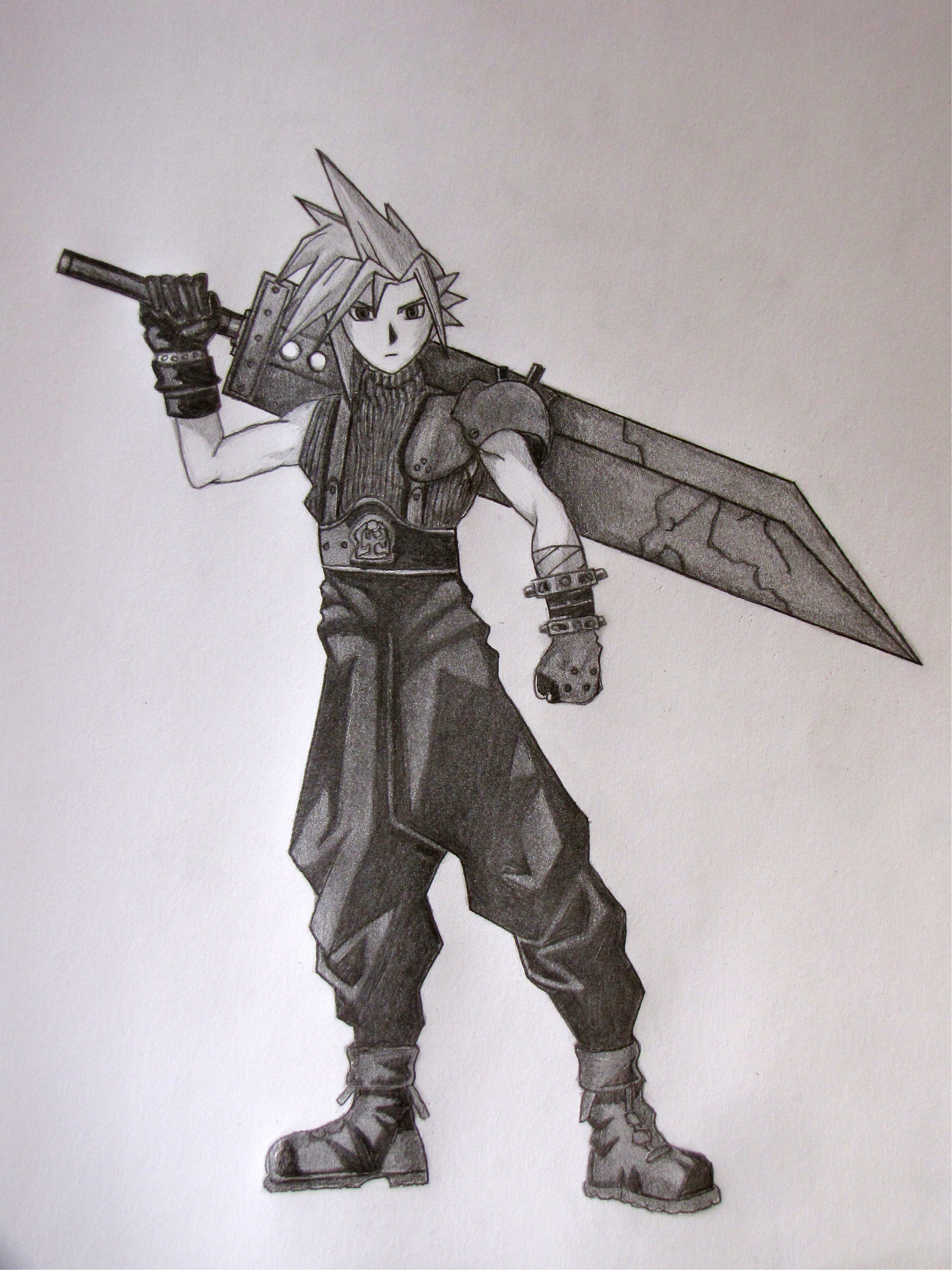
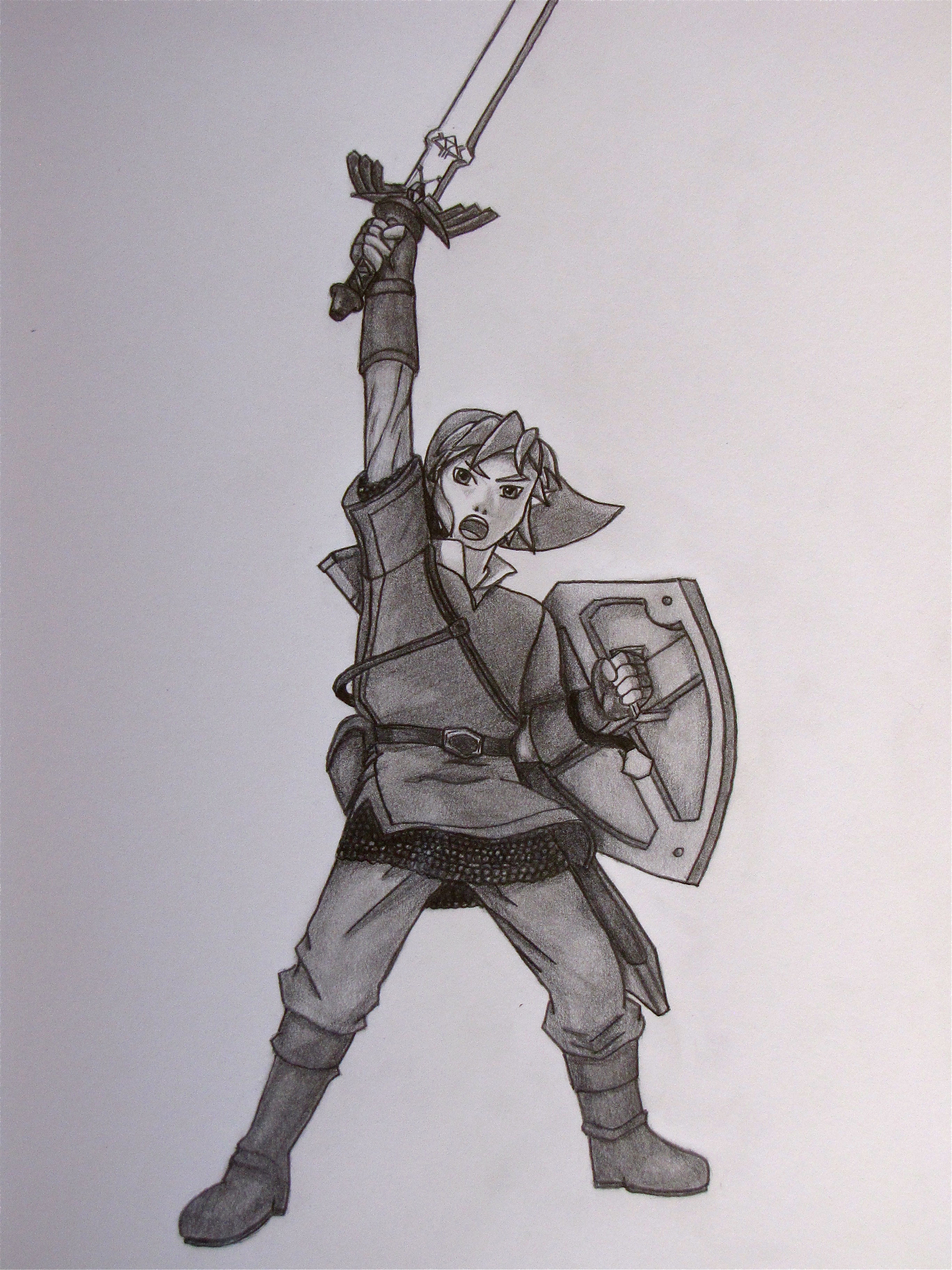
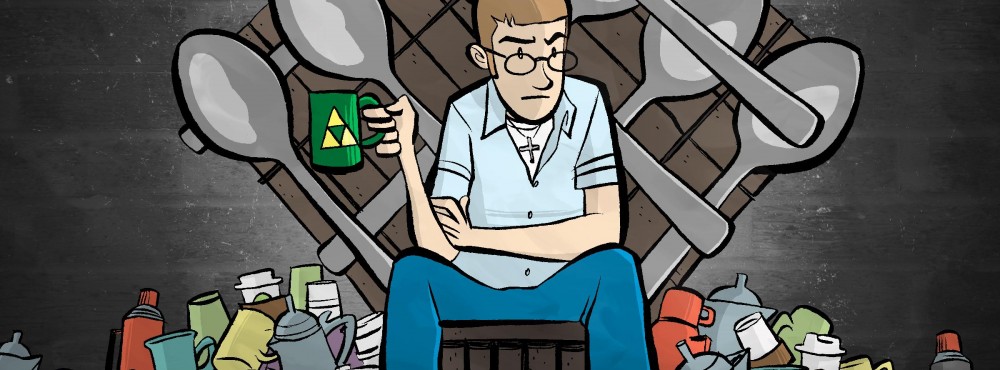
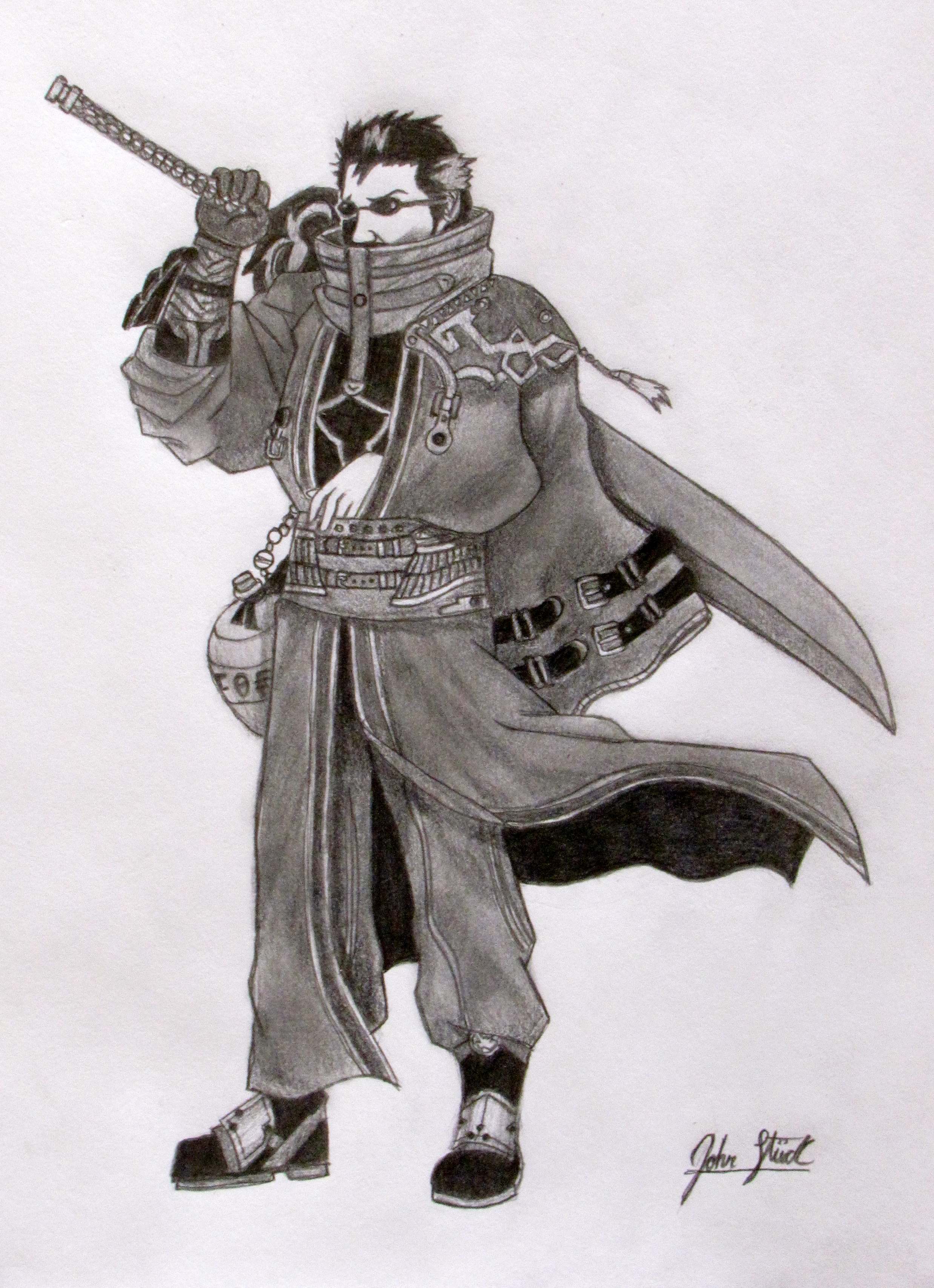
My old man is a great artist, and his portrait of my typewriter monkeys at work—work being a relative term—graces TMTF’s banner. Sadly, neither I nor my older brother inherited any of my old man’s artistic skill. My younger brother, however, is turning into an excellent artist, and I’m proud today to share some of his work. Check out his deviantART page for more awesome artwork!

I’m not sure why he needs the sunglasses or the sake jug, but Auron is one cool dude.

This excellent portrait of Cloud Strife leaves me with one question: Which is sharper, the sword or the hair?

Besides being brave and noble, Link has a great fashion sense.

Featuring Vash the Stampede, a legendary outlaw, this may be the most awesome wanted poster in the history of history.

98. Just Try to Relax

The past month has been pretty hectic.

Four weeks ago, I began packing my worldly goods and possessions for the five thousand-mile journey from Montevideo to Fort Wayne.

Three weeks ago, I arrived at my brother and sister-in-law’s home in Indiana, burdened with several suitcases and a dozen typewriter monkeys.

Since then, I’ve learned to drive, purchased a car, failed a driver’s test, done some author stuff, worked on my blogs, applied for jobs and busied myself with dozens of miscellaneous tasks, responsibilities, errands, duties, obligations, commitments and chores.

Until a few days ago, I kept myself almost constantly busy. I refused to give myself much time to relax. I told myself I didn’t need to rest, but to get everything done. When I had fulfilled my obligations—all of them—I could consider taking some time off.

Then, earlier this week, I stopped functioning.

I was paralyzed mentally, exhausted emotionally and tired physically. I couldn’t stay focused.

I had broken down.

At last, unable to work, I retreated to my bedroom with a cup of tea and a video game. For several hours, I set aside my self-imposed obligations and relaxed—and it was awesome.

That long rest was calming, refreshing and fun. Hour by hour, I could feel myself regaining my composure and focus.

I’ve attempted to cope with the stress and difficulty of the past few weeks by acting busy, trying to persuade myself that everything was under my control.

Everything is not under my control. That’s the bad news.

The good news is that everything is under God’s control.

He commands us to rest. It’s even one of the Ten Commandments: “Remember the Sabbath day by keeping it holy. Six days you shall labor and do all your work, but the seventh day is a Sabbath to the LORD your God. On it you shall not do any work.”

We honor the Sabbath day by resting—trusting God to work things out instead of exhausting ourselves trying to keep everything under control.

The Lord Jesus himself said, “Come to me, all you who are weary and burdened, and I will give you rest.”

It is now my intention to drink some tea and play a video game.

92. Impressions from a Cynical Traveler

My typewriter monkeys and I made it safely to Indiana, much to my own surprise. Things go wrong when I travel, you see. Missed flights, misplaced luggage, sleepless nights, broken boarding ramps, typewriter monkeys misdirected to Vietnam—as far as I’m concerned, the magic has gone out of international travel.

This time there was only one problem. The computers weren’t working in the Montevideo airport, which meant luggage was checked and boarding passes written without the help of machines. (I’ve typed out blog posts without help from my monkeys or their typewriters, so I know how hard it can be to do by hand what’s supposed to be done automatically.) My mum, a marvelously patient lady, stood in line with me as I waited to check my bags and receive a pass.

I checked my suitcases, commending them to God, and pocketed my boarding pass. The time had come to me to say goodbye to my mum, old man and younger brother. I did, wishing goodbyes weren’t so hard.

I spent part of the flight from Montevideo to Miami conversing with a nice old gentleman who works in the education department of a university in Philadelphia. We discussed the works of C.S. Lewis and J.R.R. Tolkien, the premise of my novel, his impressions of Uruguay and a few other things. I never did get his name, though.

After I arrived at the Miami airport, a customs official informed me that I look like Harry Potter. It wasn’t the first time I’d heard that comparison. I’ve taught three groups of students on three different continents, and each time at least one kid told me I looked like Harry. (In South Korea, a number of students addressed me as “Harry Potter Teacher.”) It’s a mystery to me how anyone can draw any connection between a skinny, black-haired, green-eyed Briton like Harry and a stocky, brown-haired, brown-eyed American like me. I suppose I should count my blessings. At least people aren’t comparing me to, say, Charlie Sheen.

From Miami I flew to Dallas, where I spent an eight-hour layover drinking coffee, wandering around the terminal and working on The Wanderings of Lance Eliot, the sequel to my novel. Although I was severely tempted to try out my Matthew McConaughey impression, I refrained. I’m pretty sure they shoot you for McConaughey impressions in Texas.

From Dallas I flew to Fort Wayne, where my older brother picked me up. My typewriter monkeys and I have taken up residence in his spare bedroom until I find an apartment of my own. Needless to say, my room smells strongly of bananas.

I’m glad to see my brother, sister-in-law and nephew again, and less glad to be used as a sidewalk by their cats. (Why the cats choose to walk all over me, when they have the whole house to roam, is a mystery.)

As usual, leaving loved ones and moving to a new place has been hard. It’s emotionally exhausting, with depression, excitement, homesickness, anxiety, hope and despair all taking turns. For now, I can only remember dear old Paul’s word’s in the twelfth chapter of Romans: “Be joyful in hope, patient in affliction, faithful in prayer.”

I also need to keep an eye on my typewriter monkeys. I’m afraid they’ll pick a fight with the cats if I’m not careful.

91. Life in Uruguay

For months, my old man has been suggesting I write a post about life in Uruguay. “People love travel blogs,” he said. I’ve put it off because writing about other things—heroic bunnies and bladed weapons, for example—has been more fun.

Today is my last full day in Uruguay, however. My packing is done. Tomorrow I must endure the horrors of international travel. This is my last opportunity to write about my sojourn in Montevideo before it comes to an end.

I’ll start with the parrots.

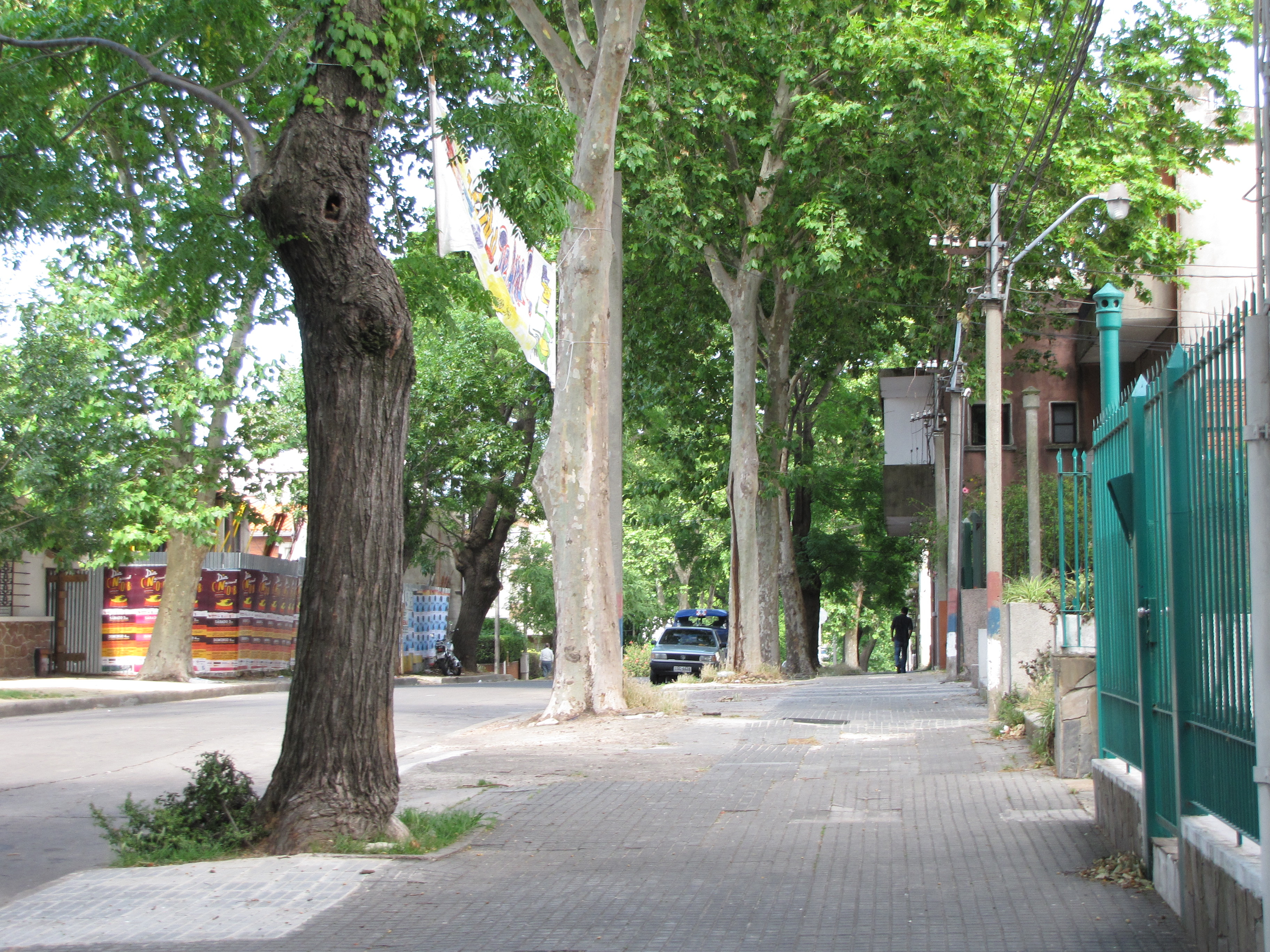
Montevideo, the capital of Uruguay, is full of trees, and those trees are full of parrots. They aren’t as common as, say, pigeons, but it’s not unusual while strolling along the sidewalk to hear parrots squawking overhead. My parents love them, but most Uruguayans consider them to be pests.

My parents’ neighborhood in Montevideo

Apart from the ubiquitous trees, Montevideo features many old buildings. Some of these have stood for centuries, dating from the colonial period. Others are fashionably old. Many are merely decrepit. These crumbling, rusting, peeling structures seem to have accepted their fate, and are now patiently awaiting the inevitable.

Montevideo stands beside a large body of water. I assumed it was the Atlantic ocean, but my old man informed me it’s actually an estuary: a cross between a river mouth and an ocean bay. An avenue called la Rambla runs along the water. It’s the backbone of the city. Turning off la Rambla plunges an unwary traveler into a maze of one-way streets.

The fanciest neighborhoods feature European-style buildings, bright flowers and beautiful views of the water. The seedier neighborhoods are decorated by graffiti and weeds. Most buildings are at least two or three stories tall.

The system for numbering floors in Uruguay is different than in America. A four-story building in America would be called a three-story building in Uruguay; the floor at ground level is simply called “ground level,” and “first floor” refers to the first floor above ground level.

Two other striking differences between America and Uruguay are electrical outlets and keys. The prongs on electrical plugs in Uruguay are round, not flat. The voltage in Montevideo is high, so low-power appliances get fried if they’re plugged in without an adapter. Uruguayan keys are charming because they’re designed in the old-fashioned way, complete with long barrels and teeth. Car keys are an exception, being identical to their American counterparts

Since Uruguay is located south of the equator, its seasons run in an opposite cycle to seasons in the northern hemisphere. January, February and March are summer months in Uruguay, while July, August and September are winter months. While it doesn’t snow in Montevideo, my parents tell me it can turn bitterly cold.

Most Uruguayans drink yierba mate, a kind of herbal tea. My old man and I like it. My mum insists it tastes “like pasture where cows have been recently.”

Uruguayans drink yierba mate from cups (usually fashioned from gourds or cow horns) called mates. The yierba is sipped through metal filters called bombillas that look a bit like straws. A single mate full of yierba leaves can last an entire day, provided the drinker refills the mate regularly with hot water. Many Uruguayans carry leather satchels called materas around with them, containing mates, bombillas, yierba mate and thermoses of hot water. As an avid drinker of tea, I wholeheartedly applaud Uruguay’s devotion to its favored brew.

A thermos, a mate and a bombilla

Everyone in Uruguay eats meat. (Sorry, vegan friends.) My mum once told me even the salad bar at a local restaurant featured meat. My favorite local cuisine is the chivito, a dish served al pan (as a sandwich) or al plato (on a plate) consisting of beef, bacon, eggs, lettuce, tomatoes and other trimmings. The literal meaning of chivito is small male goat, which seems appropriate.

The atmosphere in Uruguay is oddly European. Cities like Montevideo are populated by cultured, classy people. By contrast, the countryside is full of farms, ranches and small towns. Some of Uruguay’s major exports are beef, leather, yierba mate and amethysts. Tourism is also a major industry.

Spanish is the primary language spoken in Uruguay. The local dialect is different from the language I learned as a child in Ecuador. For example, impecable (impeccable) and divino (divine) are the Uruguayan equivalent of cool or awesome. Strangely, bárbaro (barbarous) is an informal synonym for good. It gave me quite a shock when a dentist in Montevideo inspected my teeth and proclaimed, “I’ve checked your teeth, and they’re barbarous.”

Uruguay is extremely secular. Christianity is considered foolish or quaint by most Uruguayans. Easter Week is known as Tourism Week by government decree. Despite its secular outlook, the country is full of superstitions and pagan practices. My old man sometimes finds coins, candles, decapitated chickens or other sacrifices set out to appease gods, idols or possibly Cthulhu.

In spite of sea, sunshine and beautiful scenery, the general mood of Uruguay is one of pessimism. My mum described the country as “a nation of Puddleglums,” alluding to the gloomy character from the Narnia books.

My favorite thing about Uruguay is that my parents and younger brother live there.

I thank God for my time in Montevideo. While I’m not quite sure what lies ahead of me, I’m hoping for the best.

My typewriter monkeys are excited for the trip back to the United States. I hope they find their suitcase comfortable.

90. TMTF at a Turning Point

My typewriter monkeys are on strike. This is no surprise, since their union requires its members to strike at least once a month regardless of their work situation. Curse you, Society for the Protection and Advancement of Typewriter Monkeys!

This strike comes at a bad time, since TMTF is approaching a turning point. The Infinity Manuscript is less than a week away from completion. My first novel, The Trials of Lance Eliot, will be released next month—I hope. In a month or so, TMTF will reach its hundredth post. Finally, I’ll be leaving Montevideo in less than two weeks and settling in central Indiana, embarking upon a new stage of life.

Some things are coming to an end. Others are just beginning.

It seems like a good time for me to clean up the blog. Many posts on TMTF would benefit from revision. Moreover, I want to create an Archive page that lists posts topically instead of chronologically. At the moment, regular posts are mixed up with installments of The Infinity Manuscript and the Help, I’m a Christian! series in the Archive. Being a tidy, borderline obsessive-compulsive sort of person, I want to arrange TMTF’s posts neatly.

These revisions and rearrangements will take some time—especially since I’ll have to make them myself. (I never thought I’d say it, but I miss my typewriter monkeys.) For that reason, there will be no new post on TMTF on Monday. The blog will resume its regular updates on Wednesday with the final part of The Infinity Manuscript.

Since TMTF is taking a brief break from regular updates, this seems like a good opportunity to recommend a few older posts!

Regarding faith, you can read about gangster pastors, the problem of pain or the greatest lesson I ever learned from a webcomic.

On the subject of writing, you can read reflections upon characterization, brevity or the three platinum rules of writing.

About video games, you can reflect upon the surprising excellence of game music, the iniquities of ten terrifying villains or the golden rules for success when playing RPGs.

Concerning literature, you can ponder the humorous faults of modern worship music, the dazzling beauty of literary gems or what novels ought to be made into movies.

As for life, the universe and everything, you can consider such fascinating subjects as anime hair, facial hair and the sacred art of packing.

For the truly brave of heart, I also recommend the thrilling accounts of That Time I Tangled with Barbed Wire, That Time I Was Trapped in a Stage Kiss or That Time I Held a Severed Human Arm.

As TMTF moves beyond this turning point, I’m excited for its future. I just hope my typewriter monkeys stop striking soon.

89. That Time I Encountered a Giant Mutant Killer Jungle Ant

In the jungles of Ecuador there exist enormous ants called congas. Their scientific name is Paraponera clavata, but I prefer to call them Giant Mutant Killer Jungle Ants.

These insects put the ant in giant. Not only are they freakishly large—about an inch long—but also very dangerous.

Here’s an extract from Wikipedia:

Paraponera is a genus of ant consisting of a single species, commonly known as the lesser giant hunting antconga ant, or bullet ant (Paraponera clavata), named on account of its powerful and potent sting, which is said to be as painful as being shot with a bullet. It inhabits humid lowland rainforests from Nicaragua south to Paraguay. The bullet ant is called “Hormiga Veinticuatro” or “24 (hour) ant” by the locals, referring to the 24 hours of pain that follow being stung.

My old man tells me congas bite their victims to secure a firm hold before stinging, and their sting can put a strong man in bed with a fever for as much as a few days.

To wit: nasty little beasts, those congas.

There’s a river in Ecuador called Río Baba: a ribbon of crystal-clear water that winds its way through the jungle. Translated from Spanish, Río Baba means Drool River. Why anyone would give it such a nasty name, I can’t fathom. At the age of nine or ten, I was baptized in this river of tranquil beauty and dubious name.

Río Baba was also the setting of my epic escape from the Giant Mutant Killer Jungle Ant.

Santo Domingo de los Colorados, the town in which I spent much of my childhood, is just a few hours away from Río Baba. My family and I sometimes visited the river for picnics, camping trips and church events.

The river runs beneath a high, steep bank, at the top of which stands a tree with spreading branches. At that point the water is only three or four feet deep. I used to wade near the riverbank, pretending to be a jungle explorer or picking up rocks and throwing them.

On one memorable occasion, as I was playing in the clear water beneath the tree, I felt a prickling on my right shoulder. I turned my head and found myself nose-to-nose with a conga.

At the time, oblivious to the ant’s sinister intent, I brushed it off my shoulder, picked it up from the surface of the water with a leaf and carried it to my old man for his inspection.

I don’t remember whether he swatted the leaf out of my hand or merely commanded me to drop it. Either way, the leaf fell to the ground—the conga holding on for dear life—and I was spared a fate worse than death.

Well, worse than death is a bit melodramatic. Being stung would have been painful, but not as bad as, say, reading Twilight cover to cover.

My old man put the conga in an empty soda bottle and later reprimanded me sternly when I tried to get a close look at it. When we got home, he drowned the ant in alcohol and pinned it to a piece of foam.

The conga was eventually given away to some missionary colleagues, and I was left with only the memory of my dangerous encounter with the Giant Mutant Killer Jungle Ant.

I was spared the pain of a conga sting. However, I did read Twilight a couple of years ago, so I guess the two experiences sort of cancel each other out.

87. Keeping Pace

I’ve never been physically fit, but I came close during my senior year of high school. Those were the days I spent in the class of Mr. Socrates, a Physical Education teacher of whose legendary exploits I’ve already written.

Mr. Socrates made every one of his classes run a mile to warm up. This was in the Andes, remember, at an elevation of more than nine thousand feet. Running a mile at a high altitude is tough. After his students had finished the mile, they began whatever activity he had planned for the day.

I hated that mile.

I always had a strong start, passing most of the other students while running the first lap around the soccer field. Then I realized I had five laps left to run, and gradually slowed to a walk.

I was always one of the last to finish the mile.

Perhaps, I mused at last, Aesop’s fable about the tortoise and the hare may have some truth in it. Instead of running the first lap, I jogged. Pretty soon I was jogging all six laps and sprinting the final stretch. After a few months, I finished the mile in less than six and a half minutes—a laughable time for an athlete, but not bad for a bookish student.

I learned to keep the pace. Slow and steady is better than quick and sporadic. It was discouraging to be passed by almost every other runner on the first lap, but I finished the final lap ahead of many of them.

I think we sometimes approach things the way I approached the mile. We throw ourselves into things, wear ourselves out and quit.

My catalysts for personal growth haven’t been emotional experiences. Emotions wear off quickly. The biggest advances have been when I’ve learned something and applied it consistently to my life. I haven’t changed overnight, but a little at a time.

If you experience a rush of spiritual fervor at a church revival, or feel a burst of enthusiasm as you finish the first chapter of your novel, or plunge into some other endeavor with wild optimism, don’t take things too quickly. Set realistic goals, and stick to them. When you’ve mastered one step, move on to the next.

A slow, permanent change is infinitely better than an instantaneous, temporary one.

Keep the pace.

84. Another Bend in the Road

“My future seemed to stretch out before me like a straight road. I thought I could see along it for many a milestone. Now there is a bend in it. I don’t know what lies around the bend, but I’m going to believe that the best does.”

These bold words (spoken by Anne Shirley in Anne of Green Gables) were a comfort to me some months ago. I was about to graduate from college, you see, and I didn’t know where to go next.

I’ve spent much of my life moving from place to place. When it came time to figure out where to invest the next few years of my life, I didn’t know even where to begin looking. The United States? Ecuador? Uruguay? Japan?

In the end, I was given an opportunity to visit my family in Montevideo for a few months.

My time in Uruguay has been ridiculously blessed. I’ve made progress with my writing, recovered the sleep I lost during my college years and shared many pleasant weeks with some of my favorite people in the world.

In a month, however, I must move onward.

My plan is to return to Indiana at the end of May and settle down for at least a year or two. I hope eventually to find a teaching position overseas or to make a living as a writer, but I’m going to take things one at a time.

Once again, my future stretches out before me like a road. There’s a bend in it. I have only a vague idea of what lies beyond the bend, but I’m going to believe that the best does. As I’ve said before, ’tis grace that brought me safe thus far and grace will lead me home.

I believe it will, wherever home may be, and I continue to hope there will be coffee shops along the way.

81. The Lunacy of My High School Teachers

One of my high school teachers was probably the closest thing to a lunatic I’ll ever meet.

This teacher, whom I’ll call Mr. Socrates, coached the soccer team and taught Physical Education. A full record of his insane exploits would take at least half a dozen blog posts, so I’ll limit myself to recounting just three of his misadventures.

(While I saw none of these events myself, I have the assurance of trustworthy witnesses that they are true.)

Mr. S was once rappelled down a cliff beside a waterfall in Ecuador called Pailón del Diablo—Devil’s Cauldron. As he lowered himself down, he slipped off his rappelling rope and plummeted into the abyss. Incredibly, he managed to grab a strong branch and climb up the rock face with his bare hands.

On another occasion, Mr. S decided his soccer team wasn’t running laps fast enough, so he borrowed a lawnmower vehicle from a school groundskeeper and chased his team around the field.

Once, while playing soccer, his son kicked him in the shin by mistake. Mr. S fell to the ground, clutching his leg. (For those of my readers who have never received a hard kick from a cleated foot, it ranks just above red-hot pokers on any dependable list of painful experiences.) After half a minute or so, Mr. S rose shakily, grabbed his son by the collar and shouted, “Why, you—you son of a great person, you!”

Apart from Mr. S, some of the most eccentric/awesome people I’ve ever met have been teachers at my high school.

My Spanish teacher regularly accused her students of being drunk, stoned, in love or under the influence of some other strong intoxicant. She also suspected her students of salacious behavior and told them, “I will have to send you to the school counselor so that she can take those perverse thoughts out of your head.” This same teacher once, upon looking at one of my baby pictures, exclaimed, “Aw, you were so cute. What happened to you?”

My history teacher, who once worked part-time as an Elvis impersonator, did amazing impressions of historical figures. He also reenacted presidential assassinations, leaping from a chair to represent John Wilkes Booth jumping from the theater box where Lincoln was killed, and rolling around the classroom in an office chair to represent John F. Kennedy’s vehicle just before the president was shot.

My biology teacher, a former employee of a shrimp farm, sometimes abandoned his lectures to describe the mating habits of shrimp. (This was the same teacher who took us to see the cadaver whose arm I held.)

In describing the lunacy of my high school teachers, this blog post has hardly scratched the surface of the tip of the iceberg, so to speak. I’ve had to leave many interesting stories left untold. Suffice it to say, some of my high school teachers were among the strangest/greatest people I have ever known.