Why Nintendo Is the Best Company in the World

Top Banana

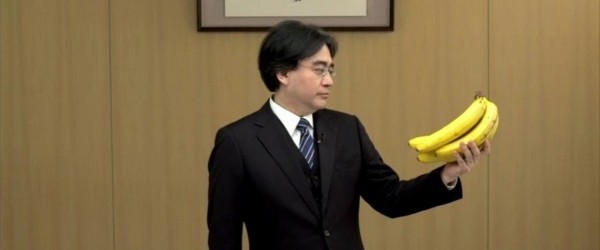
Meet Satoru Iwata, the chief executive officer of Nintendo. You could call him Nintendo’s top banana. (I’m sorry; I couldn’t resist.) The image above is taken from one of Nintendo’s official press conferences. It was a serious event involving journalists, executives and software developers… and tropical fruit, apparently.

Nintendo is a video game developer, the creator of Mario and Zelda and many other famous franchises. It is also my favorite company, surpassing even Pixar and Studio Ghibli in my esteem.

Why is Nintendo a good company? Let me count the ways.

Nintendo has a great heritage

This company saved the entire industry from the video game crash of 1983, which nearly killed video games as a medium. The popularity of the Nintendo Entertainment System and its classic games allowed the video game industry to recover and advance. It could be argued we have video games today because of Nintendo. Moreover, the company’s older games set all kinds of standards for the industry and helped define game design in general. Heck, Nintendo’s history has even been immortalized in song.

Nintendo keeps making excellent games

The company has never rested on its laurels. Twenty-five years after its first masterpieces, Nintendo’s latest games are really, really fun.

Nintendo innovates

While Sony and Microsoft have tried for the past decade to outdo each other with consoles that do pretty much all the same things, Nintendo has innovated with motion controls, touch screens, asymmetrical gameplay and other creative concepts… which Sony and Microsoft have shamelessly copied. Not all of Nintendo’s innovations have been wildly successful—I’m looking at you, Virtual Boy—but at least it’s trying!

Nintendo cares for its employees

Through financial crises, the company’s top executives have repeatedly taken salary cuts to save money instead of firing employees. I admire that.

Nintendo appreciates families

Sony and Microsoft showcase most of the really gory, raunchy, edgy video game franchises: God of WarGears of War, Grand Theft Auto, etc. ad nauseum. By contrast, Nintendo games star goofy apes, portly plumbers and noble swordsmen. If I ever have kids (a frightening thought, to be sure) I’ll feel comfortable letting them enjoy classics like Zelda and Mario Kart.

Nintendo has a sense of humor

Bananas. That is all.

In conclusion: Bravo, Nintendo. Bravo.
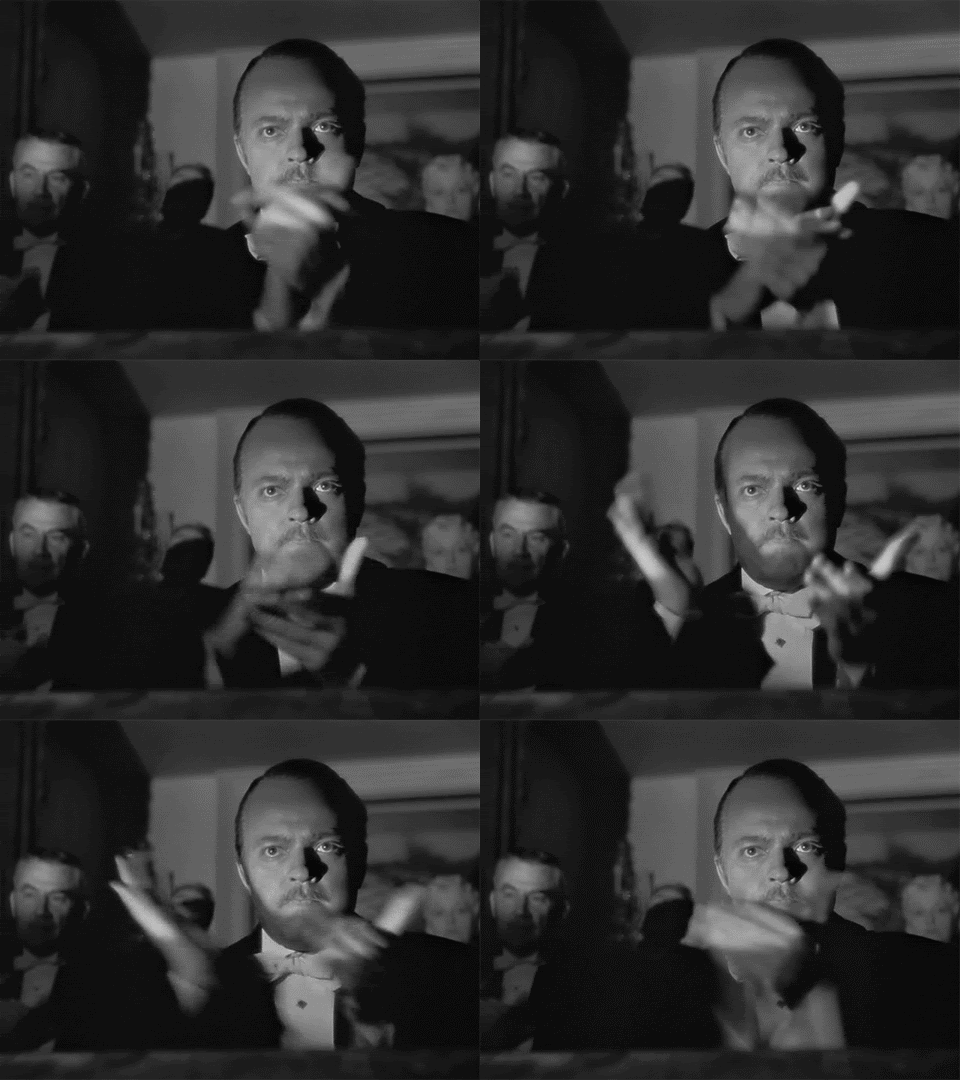
Bravo (GIF)

An Honest Look at Disney’s Frozen

The following trailer contains spoilers for Disney’s Frozen. If you haven’t seen the film yet, go watch it. Watch it now. The trailer also contains one or two mildly vulgar jokes. Sensitive persons should probably look at funny cat pictures instead.

When I heard about Frozen, I rolled my eyes. It was, I cynically assumed, a knockoff of Tangled. How could it not be? A Disney film, animated by computer, based on a traditional fairy tale, titled with an adjective, starring the Tangled assortment of familiar Disney characters: the plucky princess, the endearingly flawed man, the goofy sidekicks, etc.

Then Frozen came out and people started comparing it to The Lion King and Beauty and the Beast. Reviewers loved it. Bloggers approved of it. It was hailed as a great film.

Honestly, it is.

Enjoy this honest look at Disney’s Frozen, and, seriously, go watch it if you haven’t.

The Man Who Fixed the Internet

The Internet is a wonderful, nay, miraculous, invention. This intangible web of information, media and funny cat pictures transforms my laptop, a humble slab of plastic and silicon, into a window unto worlds real and imagined.

There are times—dark times—when the Internet fails. Some dark, vile sorcery makes the Internet disappear by severing its connection to my laptop. It is at times such as these, dear reader, that we who use the Internet have three options. We can live without Internet: a lamentable fate. We can attempt to restore it ourselves: a venture fraught with frustration and difficulty. Our best and final option is to seek a hero to fix our Internet for us.

The video above is the epic tale of such a man, a story worthy of a place among the myths and legends of old, to be handed down to future generations and never forgotten.

Behold, dear reader, the Ballad of a WiFi Hero.

The Ability to Pull Stuff from Nowhere

Art by iangoudelock on deviantART.

Art by iangoudelock on deviantART.

I’m sure you’ve seen it. As you watch a movie or play a video game, a character pulls out something from nowhere. Bugs Bunny and Wakko Warner reach behind their backs and bring out anvils or sledgehammers. Solid Snake and Link produce an endless assortment of gear and weapons from thin air. As Link demonstrates in the clever picture above, actually carrying around all that stuff is a physical impossibility.

The ability to pull stuff from nowhere is sometimes called the back pocket, a wry suggestion that the things characters pull from behind their backs were in their pants pockets the whole time. (This concept is particularly amusing in the case of characters that don’t wear pants.) In anime, the concept is called hammerspace. A comedic trope in Japanese animation is for characters to express anger by hitting something (or someone) with a large hammer produced from nowhere, making hammerspace the hypothetical place where all those hammers are kept.

The back pocket concept is usually played for comic effect in animation. Pinkie Pie, an exuberant character from a surprisingly awesome show about ponies, produces a wide assortment of items (including freaking cannons) from nowhere. Other characters know better than to question Pinkie’s defiance of physics.

In fact, when back pockets are used in any show or film, no one ever seems surprised.

In video games, back pockets are utilitarian rather than comedic in nature. The fact of the matter is that Link from the Legend of Zelda games needs his gear—all of it. Limiting his inventory would be a hindrance to the player, who would have to backtrack every time she needed something Link didn’t happen to be carrying at the moment. Constantly retrieving items, or plodding slowly under their weight, would be horribly annoying.

Thus Link carts around enormous shields and heavy explosives and iron-shod boots without any trouble. (Humorously enough, the iron boots only weigh down Link when he’s actually wearing them.) Solid Snake somehow sneaks through enemy territory burdened with cardboard boxes, sensor equipment and an entire arsenal of weapons (including massive rocket launchers). Every Final Fantasy character carries up to ninety-nine of every kind of weapon, armor and potion.

Where is all that stuff kept? Where does it come from?

Some questions, dear reader, are simply beyond answering.

RiffTrax

Update: The video I originally shared was removed from YouTube, so here are a few scenes of RiffTrax poking fun at The Wizard of Oz. You’re welcome.

The good folks at RiffTrax have possibly the best job in the world. They’re paid to make fun of movies, and they’re really good at it.

RiffTrax is a company that produces, well, riff tracks: funny commentaries in which comedians riff movies. It’s the same concept as Mystery Science Theater 3000—in fact, the three regulars on RiffTrax are MST3K veterans. The founder, Mike Nelson, is a fan of both C.S. Lewis and P.G. Wodehouse, and therefore a man worthy of my utmost regard.

RiffTrax commentaries are eclectic mixes of improvised dialogue, pop culture references and general silliness. The range of RiffTrax’s humor is surprising. In one moment, they might make sophisticated quips about classic literature or film history. In the next, they might make fart noises.

RiffTrax is often witty, sometimes a little bawdy and always exuberant in its ridiculousness. I like RiffTrax. The extravagances of Hollywood should be kept in check by healthy doses of mockery. After all, as RiffTrax reminds the viewer, “Some movies have it coming.”

The Bible Sure Can Be Nasty

With the payment he received for his wickedness, Judas bought a field; there he fell headlong, his body burst open and all his intestines spilled out.

Acts 1:18

For being the all-important text of a religion considered pure and gentle, the Bible sure can be nasty.

Seriously, the writers of Scripture pulled no punches in describing scenes of violence. These range from morbidly amusing, such as the death of Absalom, to sickeningly brutal, like the death of Sisera and the suicide of Judas mentioned above.

Heck, even some of the stories we consider kid-friendly are really violent. Noah’s Ark and David’s duel with Goliath are tales we tell children in Sunday school, which is odd considering the flood snuffed out nearly all humanity and David cut off Goliath’s head.

The Bible also has some disturbing stories about sex. Not halfway through Genesis, the Bible’s very first book, we get attempted gang rape and drunken incest. Absalom, whose violent death I mentioned in the preceding paragraph, had sex in public with his father’s lovers to make a political point before his grimly humorous demise. Absalom’s sister Tamar was raped by her half-brother Amnon.

Even the holy prophets had off-putting things to say about sex. The sixteenth and twenty-third chapters of Ezekiel describe the lewd idolatry of Judah and Israel using strong sexual language.

There’s also a lot of drunkenness in the Bible, not to mention demon-possession and other satanic elements. Seriously. If the Bible were a film, it would have a stiff R rating. This is the book we teach in Sunday school.

I think that’s a good thing.

Granted, we should probably spare kids the most graphic bits of the Bible until they’re old enough to handle them. The Bible itself, however, needs to be taught as it is. God didn’t give us the sentimental, fluffy, family-friendly book some people believe the Bible to be. He gave us a book that describes war and death and sexual assault.

Why?

In the end, I think the Bible is honest. Its historians don’t idealize its history and its prophets don’t tone down their prophecies. This dark, broken world isn’t perfect, and God’s Word doesn’t paint it that way. Even the nasty parts of Scripture have a purpose, and that purpose is pointing humankind toward the grace of God.

After all, how can we appreciate grace and peace and beauty until we’ve seen the alternatives?

You Have to Burn the What?

Geeky Wednesday posts on this blog generally feature a song, picture, video or literary excerpt. Today’s post is a little different.

This particular Geeky Wednesday features a video game. Most games are far too long for this blog, but this one can be completed in a couple of minutes. If you don’t want to play it, that’s fine; I’ll explain in just a moment why this weird, wonderful little game is significant.

If you’ve ever played a video game, spare a few minutes of your life and give You Have to Burn the Rope a try. The game’s controls are up arrow key to jump, down arrow key to throw axes and left and right arrow keys to move left and right, respectively. (As with YouTube videos, a brief ad may play before the game begins.)

Go forth, brave reader, and burn the rope!

You Have to Burn the Rope is a joke, a critique of the video game industry or an exercise in postmodernism. I’m honestly not sure which it is.

Right from the start, the game gives the player the following facts:

  1. There’s a boss at the end of this tunnel
  2. You can’t hurt him with your weapons
  3. To kill him you have to burn the rope above

Thus the player proceeds along the tunnel and finds the game’s one and only boss, the Grinning Colossus. This towering enemy can’t be hurt by the player’s axes, leaving the player to snatch a torch from the wall and burn the rope above the boss. Burning the rope sends a chandelier crashing down upon the boss’s head… and that’s the game. You have burned the rope. The end.

As the credits roll, the player is rewarded extravagantly by this wonderful song.

“Congratulations!” exclaims the song. “You’re the hero we all wish we could be! You made it through the tunnel and grabbed that fire from the wall! You burned the rope and saved us all! Now you’re a hero! You managed to beat the whole damn game!”

The irony here is obvious. This short, easy game gives the player step-by-step instructions on how to overcome its only obstacle—heck, the game’s title gives away the only strategy needed to beat it—and then congratulates the player as though completing the game were an extreme challenge.

Since a friend of mine recommended You Have to Burn the Rope a long time ago, I’ve wondered what its developer is trying to say. Is the game an elaborate joke? Is it a protest of how modern video games are becoming too easy and rewarding players for negligible achievements? Is it a postmodern deconstruction of traditional video game design?

I don’t get it. All I know is that you have to burn the rope.

The Legendary Hayao Miyazaki

Art by Orioto on deviantART.

Art by Orioto on deviantART.

Hayao Miyazaki. If you’ve never heard of him, you’re most likely wondering who he is and why he’s important. If you’ve seen any of his films, however, you’re probably one of two things: a fan of his work, or else a person allergic to joy, creativity and childlike wonder.

Miyazaki is a Japanese filmmaker and one of the most influential animators of all time. There are a lot of adjectives I could apply to Miyazaki’s movies—breathtaking and awe-inspiring come to mind—but the best word for them is beautiful. Hayao Miyazaki makes beautiful films.

Miyazaki’s work is notable for its thematic complexity as well as its stunning animation. The conflicts in his stories are seldom black-and-white clashes of good and evil, but subtler disputes among flawed characters. Environmentalism, feminism and Japanese folklore are woven throughout Miyazaki’s movies—along with airplanes and airships, for some reason.

Miyazaki and his colleagues founded Studio Ghibli, the animation company behind movies such as My Neighbor TotoroKiki’s Delivery Service, Academy Award-winning Spirited Away and my all-time favorite film Castle in the Sky. (Studio Ghibli’s mascot is the adorable Totoro.) Miyazaki’s latest movie, The Wind Rises, was just released in the West and I want to see it so much.

This is supposedly Miyazaki’s final feature before his retirement, but I hope he continues working. He has “retired” at least two or three times since the release of Princess Mononoke, his first “last film,” in the late nineties. Whether or not he keeps making movies, his creativity and vision will continue to influence filmmakers all over the world.

Consider John Lasseter, director of classics like Toy Story and chief creative officer at Pixar and Walt Disney Animation Studios. Lasseter declared of Miyazaki’s work, “It is unbelievable, it is hand-drawn animation at its finest. Unbelievable.” (May it also be known that Toy Story 3 included a plush Totoro as an homage to Miyazaki.) Thanks to Lasseter and the good folks at Disney, Studio Ghibli’s films have escaped the hack localization and lousy dubbing from which so many foreign films suffer. The American versions of Studio Ghibli’s films are superb.

If you like animated movies and/or have a soul, I recommend watching at least one of Studio Ghibli’s films. Castle in the Sky is an epic fantasy adventure; My Neighbor Totoro and Kiki’s Delivery Service are slow, gentle family films; Grave of the Fireflies, directed by Isao Takahata, will break your heart; Spirited Away is Japan’s lovely answer to Alice’s Adventures in Wonderland; and Porco Rosso stars a flying pig. (Hey, don’t laugh! The hero of Porco Rosso is a legendary fighter pilot, thank you very much.) Watch just one of these films. Everyone needs a little Studio Ghibli.

Better yet, watch all of these movies!

The Best Is Yet to Come

I listen to music when working on this blog. My musical tastes are eclectic, eccentric and not very sophisticated, ranging from Relient K to My Little Pony to Peter, Paul and Mary. In past weeks, however, I’ve listened to a lot of music from the Metal Gear games.

The Metal Gear series is very cinematic, and much of its soundtrack is composed by Harry Gregson-Williams, the composer for films like Shrek and The Chronicles of Narnia: The Lion, the Witch and the Wardrobe. The Metal Gear games also feature some vocal music, such as the song above.

This song, “The Best Is yet to Come,” plays during the credits of Metal Gear Solid, a game I enjoyed. The song’s haunting melody and Irish lyrics hardly make sense in the context of the game, but they’re absolutely beautiful.

Other great Metal Gear melodies I’ve enjoyed include the incredible MGS2 theme and the faux-sixties “Snake Eater.” The latter is notable for its James Bond flair and memorable lyrics, such as “someday you feed on a tree frog.” My younger brother and I unanimously agree this is the best lyric ever penned by humankind.

Songs like “The Best Is yet to Come” encourage me to keep writing and blogging and being creative. They make me want to go out and do stuff. Despite their baffling references to amphibians, songs like these inspire me.

A Video Game Character, Lost and Found

Larry and Cid

These are two unrelated video game characters… or are they?!

Yeah, they really are.

All the same, my younger brother and I couldn’t help but notice a distinct similarity. On the left we have Larry Butz: the short-tempered, dimwitted Casanova wannabe from the Ace Attorney series. On the right, we have the well-meaning but cowardly Cid Randell from Final Fantasy Tactics Advance, a tragically underrated strategy game. Both men are losers, and their resemblance is striking. What if, we wondered, they were the same person?

I mean, just look at their in-game portraits.

Larry and Cid (Portraits)

Coincidence? Yes—they come from games developed by separate companies—but it’s still fun to imagine these losers are the same guy. I’ll be the first to admit our theory is absurd, but it springs from the same great question that lies at the heart of all great stories…

What if?