159. TMTF’s Top Ten Reasons to Read The Trials of Lance Eliot

So… I wrote a novel.

The Trials of Lance Eliot is the story of a college student who is mistaken for Lancelot, the legendary knight of Camelot, and swept off by magic to another world.

As the author of The Trials of Lance Eliot, it’s my solemn duty to make people read it.
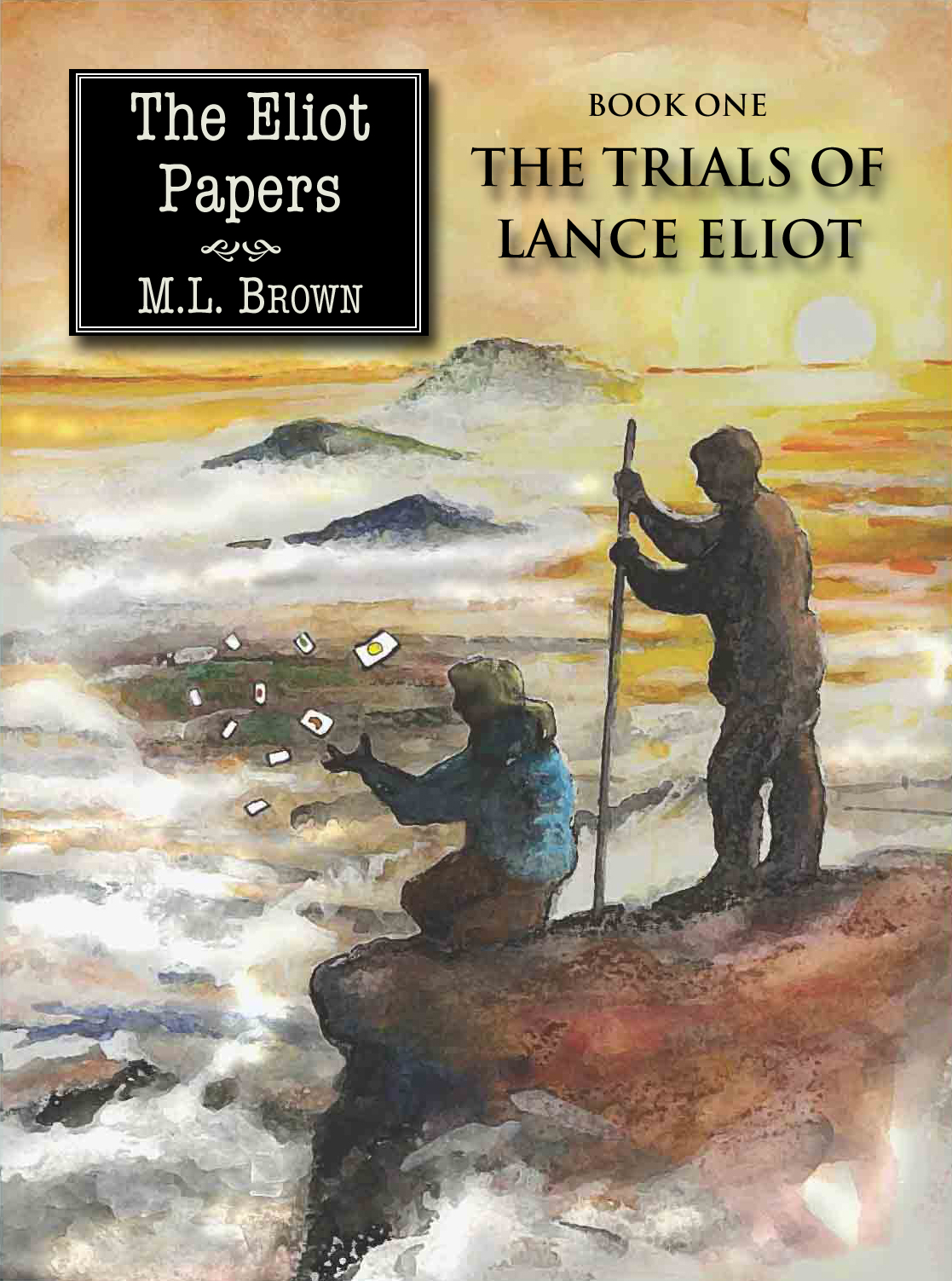
The Trials of Lance Eliot

In seriousness, I believe it’s an exciting, funny, meaningful novel. Therefore, I am thrilled to present…

TMTF’s Top Ten Reasons to Read The Trials of Lance Eliot!

10. It has dragons.

Need I say more?

9. The characters are believable.

Upon arriving in an unfamiliar world, Lance Eliot experiences culture shock. His adventures take an emotional toll. Neither he nor his companions shrug off traumatic experiences or personal losses. No character is perfect. No character is invincible. In a story bursting with unbelievable events, characters act believably.

8. The book has literary chops.

The Trials of Lance Eliot is loosely based on Dante’s Inferno, from which it borrows structure and story elements. It also has parallels with Greek mythology and the Old Testament. Understanding these literary underpinnings isn’t necessary to enjoy the story, but some readers may appreciate them anyway.

7. The story takes place in a vast, unique world.

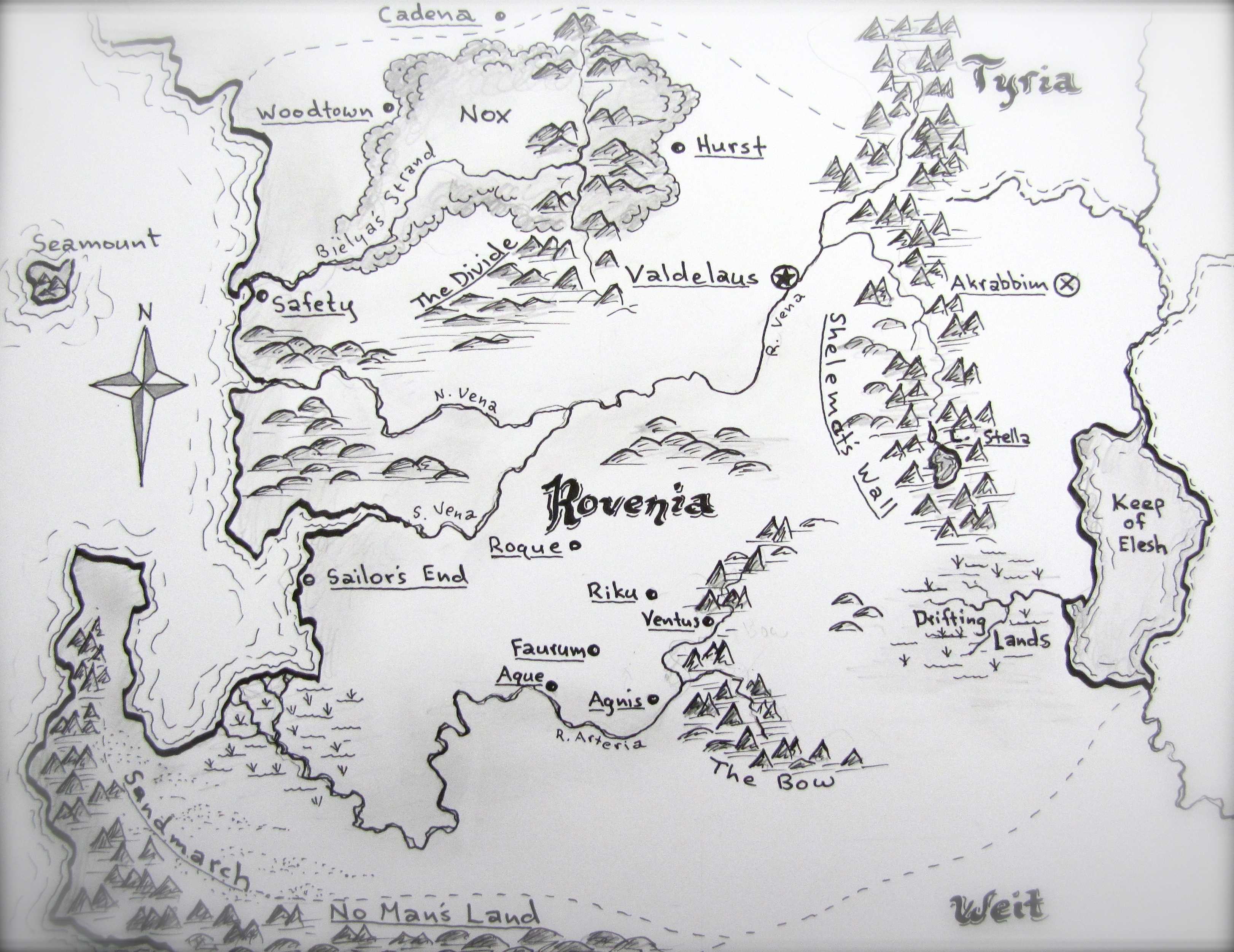
Lance Eliot’s adventures give glimpses of a kingdom with its own geography, history, folklore, culture and religion. They may not boast the exhaustive depth of, say, Tolkien’s Middle Earth, but Rovenia and the world beyond its borders are full of fascinating details.
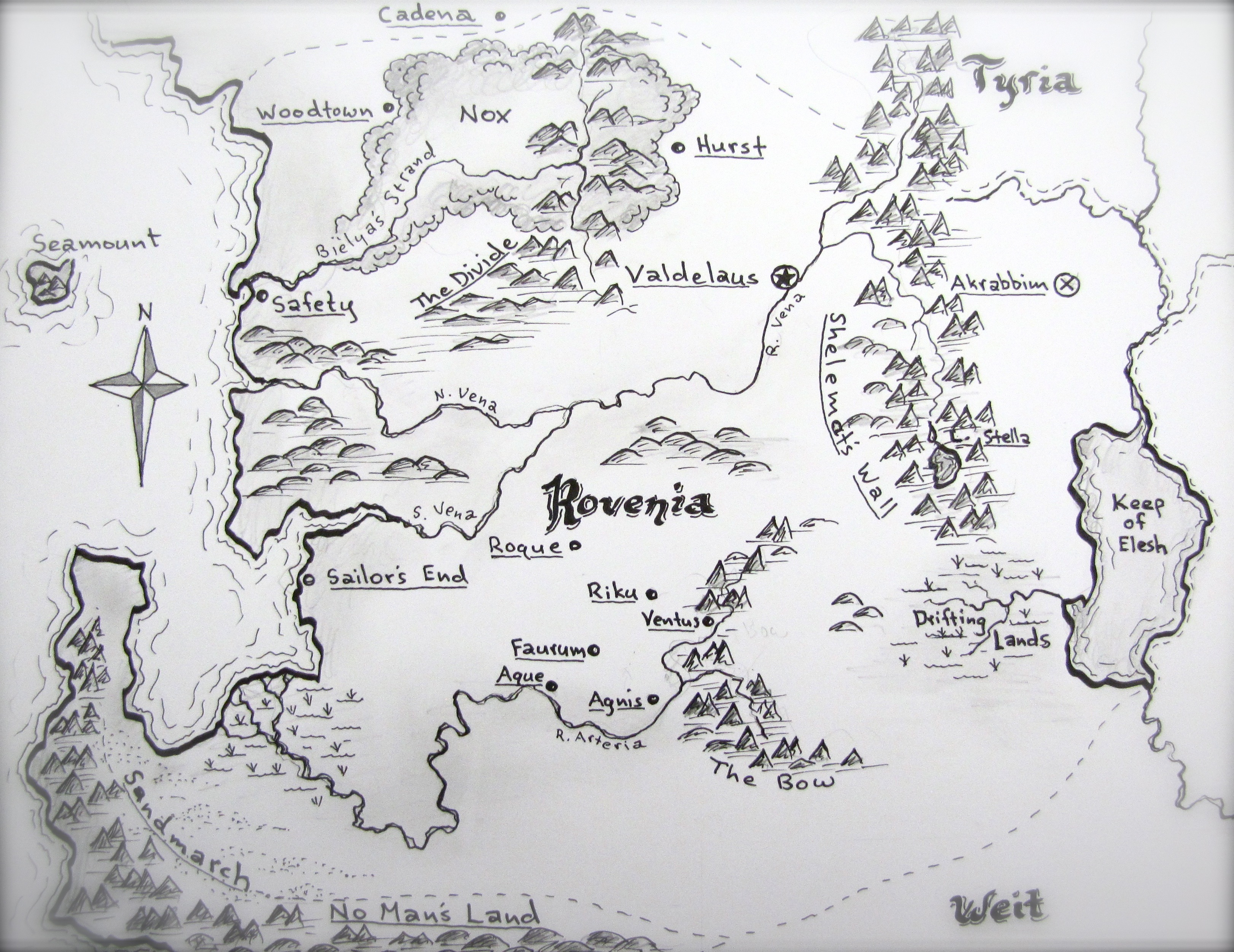
Behold the kingdom of Rovenia in its monochromatic glory!

Behold the kingdom of Rovenia in its monochromatic glory!

6. A humorous subplot runs throughout the adventure.

At first glance, Lance Eliot’s goal in his adventures seems to be saving the world. A closer look, however, reveals the true purpose of Lance’s quest: working up the courage to face a particularly grouchy professor. Lance is haunted throughout his adventures by fear of his professor, with whom a confrontation is inevitable.

5. Characters face inward conflicts, not just outward ones.

Lance Eliot confronts many dangers, but none are more difficult to overcome than his own faults. Other characters have burdens to carry and sins for which to atone. In the end, these victories are the ones that matter most. Any fool can stand up to an army or a dragon. Only a hero can stand up to himself.

4. The novel is framed by an intriguing story.

You’ve probably noticed, but my name isn’t really M.L. Brown. I chose to publish my novel under that name to lend verisimilitude—the characteristic of seeming real—to its frame story, which states the book is actually the first volume of Lance Eliot’s memoirs. These are published posthumously by his friend Mr. Brown, the book’s “editor,” who discovered an incredible connection between Lance’s stories and a manuscript penned by Lancelot. This frame story gives the novel an element of intrigue.

3. The narrator has a sense of humor.

When I decided to write The Trials of Lance Eliot from Lance’s perspective, I made a resolution: Lance’s voice would give the novel something an impersonal narrator could not. That something turned out to be a wry sense of humor. Lance doesn’t merely tell his story—he comments, jokes, digresses, reflects and reminisces. Lance’s humor is tempered with pathos, and his voice is probably my favorite thing about the novel.

2. The story has meaning.

The Trials of Lance Eliot began as a silly, shallow fantasy about swords and dragons and stuff. Over the years, however, it became something more significant. That’s all I’m going to say about this one—the rest is for the readers of the novel to figure out.

1. Readers like the book!

Responses to The Trials of Lance Eliot have been—to my great relief—overwhelmingly positive: full of phrases like beautiful imagery, sardonic wit, pensive storytelling and gripping narration. Readers of all kinds (high school students, college professors, published authors and more) have praised the novel.

Here’s what readers are saying about the book!

If you’re interested in reading the novel, you can buy it here and support an aspiring writer!

If you’d like to give the novel a boost, please consider sharing this blog post via Facebook or Twitter. Every bit of support helps!
155. Caution: Monkeys at Work

Have you ever seen those signs that announce how many days have passed since the last workplace accident? TMTF has one of those signs, but but we go by minutes instead of days.

Even so, we hardly ever break double digits.

Yes, caution is necessary whenever my typewriter monkeys are at work. We’ve been working behind the scenes for a couple of days, and I’ve been very cautious. I’m alive and injuries have been minimal, so I think we’re doing well.

Besides reworking TMTF’s tags and tagging old posts, we’ve standardized formatting, replaced broken links, made revisions, fixed errors and generally done our best to make this blog beautiful.

TMTF now boasts a Tags feature! Tags classify posts more specifically than categories. Scroll to the bottom of TMTF’s homepage or any post and you’ll find a handy list of tags; clicking one will take you to the posts marked by that tag. It’s a convenient way to navigate this blog’s posts without plodding through the Archive.

We also held board meetings to discuss things like marketing, budgeting and future plans. Since I detest wearing formal clothes and sitting through tedious discussions, these meetings were pretty awful. (I can’t believe I had to dress nicely when my typewriter monkeys didn’t wear anything.) It took many hours and quite a lot of coffee, but we reached some important decisions.

Trying to cope

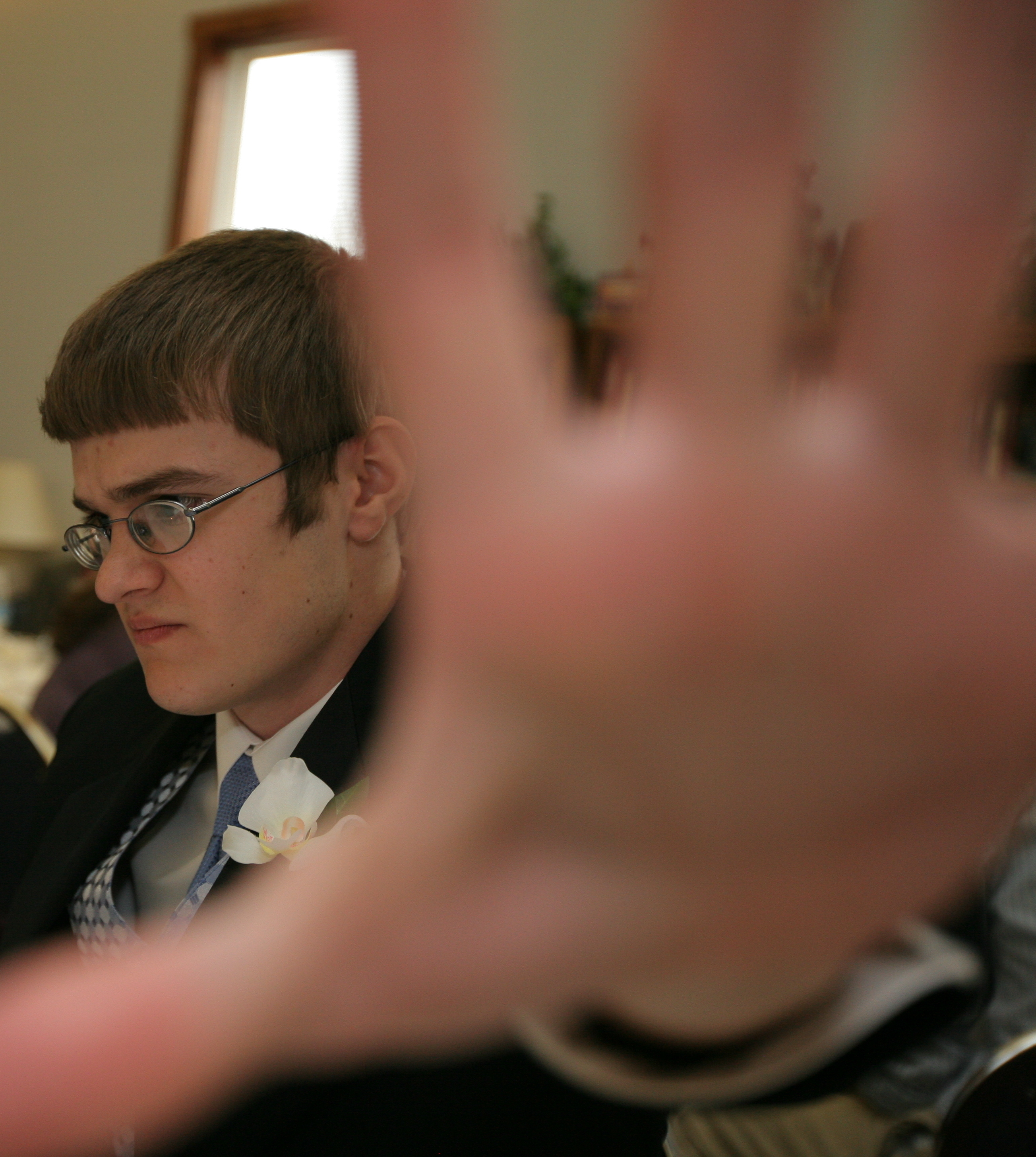
This photo, snapped during one of our board meetings, sums up my feelings about business stuff.

Last year, TMTF shared a crazy idea called Be Nice to Someone on the Internet Day. The idea was, well, to be nice to someone on the Internet: to leave a sincere, encouraging comment or compliment on someone’s Facebook profile, blog page, YouTube channel, deviantART account, Twitter profile or Tumblr account.

I think it was a great idea, but I was too hasty in springing it on my readers. I’d like to do it properly this year: spreading the word and getting other bloggers involved. Although last year’s Be Nice to Someone on the Internet Day took place in August, we’ve decided to celebrate it on March 4 this year.

Moving on: my younger bro, whose fantastic artwork has previously been featured on TMTF, now has a deviantART page! An online art community, deviantART exhibits work from millions of artists—including my bro, whose beautiful pencil-and-paper reproductions of art and photographs are now on display.

Check out his deviantART page and be amazed!

What are you waiting for? Go check out that deviantART page!

“What are you waiting for? Go check out that deviantART page!”

Well, I suppose I’d better get back to work… cautiously, of course. It’s been twenty-two minutes since our last accident, and I’m expecting another at any moment.

147. Confessions of a Tired Writer

On the coast of Ecuador lies a little town called Same. (In Spanish, it’s pronounced with two syllables: sah-meh.) Although Same boasts a lovely beach, it’s also disfigured by one of the saddest sights I’ve ever seen.

Someone once planned to build a resort on the Same beach, and construction began of a huge hotel. That plan failed. I don’t know the details. The half-finished building looms over the beach, pathetic, silent, empty: a vacant shell of weathered concrete and rusted metal.

I hate to think how many hundreds of thousands of dollars were invested in this aborted hotel. The sight is an ugly one, and unspeakably sad. Someone’s dream died. The ruin isn’t merely an unfinished building. It’s a tombstone. A monument to failure.

That reminds me of something. Something personal.

When I was a kid, I decided to write a trilogy of fantasy novels. In high school, I started a story about a college student named Lance Eliot. At first it was nothing more than a shallow tale of journeys and dragons and sundry fantasy clichés. Early on, it even featured steampunk airships and motorcycles!

Years passed. More than once, I gave up on Lance Eliot and worked on something else. I wrote a couple of detective stories. (In a truly unexpected turn of events, one of them earned a scholarship that paid much of my college tuition!) I tried writing a crime novel. In the end, however, I always came back to Lance Eliot’s journey.

My silly story about swords and sorcerers became something more meaningful: the journey of a man searching for something—the trials of a traveler longing for home—the awakening of a hero from within a selfish, cynical coward. Of course, I kept the magic and dragons and people getting drunk. Lance Eliot’s story remained a fantasy.

It’s not a great story. I know that, but I hope it’s a good one. It has certainly become the most intensely personal project I’ve ever undertaken as a writer. I may not smoke or drink or use dated British idioms, but Lance Eliot and I are very nearly the same person.

It took four attempts over five years, but I finally finished the first part of Lance’s story: The Trials of Lance Eliot. A kindly author introduced me to a literary agent, whose invaluable assistance (and infinite patience) eventually brought my novel to publication as an e-book and later as a paperback.

At the moment, that’s where Lance Eliot’s story ends.

It’s hard to write a novel. It’s harder to publish one. After publishing The Trials of Lance Eliot, I was tired of writing. My life at that time was uncertain and stressful. Having just returned to the United States of America after six months in Uruguay, I had no job, no apartment, no driver’s license and no self-confidence.

Lance Eliot could wait. Once my life had settled down and The Trials of Lance Eliot had sold some copies, I could get back to work on the manuscript for its sequel.

It’s taken a long time for my life to settle down, and I’m pretty sure no more than a few dozen copies of The Trials of Lance Eliot have been sold. I have a job and several blogs and ten thousand other things to keep me busy. The manuscript for the novel’s sequel has been mostly untouched for many months.

Every now and then, however, I think of an empty concrete ruin looming over the town of Same.

The Eliot Papers, the trilogy of which The Trials of Lance Eliot is the first part, has been my greatest passion as a writer for almost as long as I’ve been writing.

Dash it to blazes, I’ve got to finish this thing.

(All right, maybe I do sometimes use dated British idioms.)

Besides my desire to get the deuced story written, I owe it to my agent and publisher to complete the trilogy. He’s invested much time and money in The Eliot Papers. For both our sakes, Lance Eliot must finish his journey.

This brings me to an important announcement.

When I decided to publish miscellaneous creative writing on this blog, I didn’t realize how great a commitment I was making. Posting “Zealot: A Christmas Story” has forced me to make some very hasty revisions and rewrites. It’s been stressful, and I’m not satisfied with the final result.

I can’t keep posting creative writing and regular blog posts if I’m going to make any progress on The Eliot Papers.

Thus, with apologies to my readers, I’m no longer publishing creative writing on this blog.

I’ll post the final chapter of “Zealot: A Christmas Story,” of course, and there’s a brief dramatic sketch I’ll put up on the blog next month. After that, however, TMTF shall revert to its old two-post-a-week schedule until further notice.

I hope that sad old hotel in Same is finished someday. In the end, though, it’s not my concern. Lance Eliot’s story is.

I hope that’s finished someday too.

131. My Novel Is Now Available as a Paperback!

My typewriter monkeys and I are excited to announce that The Trials of Lance Eliot, my debut novel, is now available as a paperback!

(Well, I’m excited. My typewriter monkeys really don’t care.)

When I was a child, I wanted to write a book—a tangible, ink-and-paper novel that could sit on a bookshelf with The Hobbit and The Chronicles of Narnia and The Wind in the Willows. My novel was published a few months ago as an e-book for Nook and Kindle devices, but I really wanted to see it released as an old-fashioned book. Thanks to my publisher’s patience and expertise, The Trials of Lance Eliot has finally become a proper novel.

Many years ago, I decided to write a fantasy. I wanted the hero to be an average person who stumbled into another world, but I faced a perplexing challenge. How could the hero move from one world to another? I didn’t want him to blunder through a wardrobe or a looking-glass or something else that has already been done.

At last it occurred to me that magicians are always summoning things from one place to another. The Pevensie children are transported from their world into Narnia in C.S. Lewis’s Prince Caspian, and Aladdin invokes a couple of genies from who-knows-where in the Middle Eastern folk tale.

It made me wonder: What if the magician summoned the wrong person?

With that, more than six years ago, a story began that would grow into The Trials of Lance Eliot, the first chapter of The Eliot Papers.

In the novel, Lance Eliot, a timid college student, is snatched up by magic and thrown into another world by a mage who mistook him for Lancelot, the legendary knight of Camelot. Now stranded, Lance must embark upon journey to return home, meeting heroes and scoundrels (and possibly a dragon or two) along the way, and becoming—much to his own surprise—a hero.

For more than a quarter of my life, The Trials of Lance Eliot and The Eliot Papers have been my greatest passion as a writer. I’m extremely excited to share Lance’s story as an old-fashioned paperback, and I hope you’ll consider checking it out!

125. Literary Criticism and Nonsense

When my academic adviser in college signed me up for a literary criticism course, I assumed it would teach me to criticize literature. I’m a literary snob, so I figured passing judgment on written works would be easy. Just give me a textbook and any book in the Twilight series and I’d be ready to roll.

As I soon found out, literary criticism is actually an attempt to find meaning in literature. In my (admittedly biased) opinion, it’s also an attempt in some cases to invent meaning and superimpose it on literary works.

There are many kinds of criticism, each with a distinct focus. Mythic criticism finds symbols and allegories in literature. Biographical criticism studies the writer’s personal experiences, and deconstructionist criticism tries to prove that everything is meaningless.

In my studies of literary criticism, I discovered two varieties that were kind of hilarious.

The first was Marxist criticism, which views literature through the red-tinted lens of Communist theory. To heck with myth, morality and religion. The working class shall prevail! Down with the bourgeois!

The other funny perspective was Freudian criticism, which finds sexual innuendo in everything. Is something longer than it is wide? It’s a phallic symbol. Is a man unhappy? At some level, he’s sexually frustrated.

What’s that? You disagree? Ha! I laugh at you, person of lesser intellect! Do you think you’re smarter than Sigmund Freud?

I was quick to discover that half of literary criticism was analyzing literature carefully, and the other half was making up stuff that sounded plausible.

You don’t believe me? I’ll prove it.

My final paper was a four-part analysis of The Lord of the Rings by J.R.R. Tolkien. I examined it from four perspectives: mythic, biographical, moral and gender studies. Much to my surprise, each approach illuminated some fascinating facet of Tolkien’s masterpiece. My appreciation for The Lord of the Rings, and for literary criticism, was deepened.

Weeks before, I wrote an essay on The Magician’s Nephew by C.S. Lewis. Just for the fun of it, I decided to pit Sigmund Freud against my favorite author and see what happened.

The resulting analysis determined the Wood Between the Worlds to be a place of sexual balance, Queen Jadis to be a faux mother figure and the three elements of the psyche—id, ego and superego—to be represented by Uncle Andrew, Digory and Aslan, respectively.

The essay, which received a B, was ridiculous, but not much more so than some of the Freudian analyses in my textbook.

My studies, silly and serious, impacted me deeply. Literary criticism even became a recurring theme in the novel I was writing at the time, The Trials of Lance Eliot. Its protagonist was a literary critic because it fit his character perfectly, and it gave me an opportunity to poke fun at the nonsensical side of literary criticism.

I’ll finish up this post with a friendly warning.

Watch out for phallic symbols. They’re everywhere.

111. About Writing: Theme

All great works of fiction have one thing in common.

What is that, you ask?

They mean something.

Granted, most stories mean something whether the storyteller intends to convey meaning or not. A cheesy romantic novel may be awful, but it still expresses something—probably something shallow and clichéd—about romance.

A clever reader can sometimes discern meaning in a bad story, but it’s not very rewarding. It’s like sifting through a ton of sand to find an ounce of gold dust.

Good stories are different. Finding meaning in good stories can be exciting and satisfying, like digging into a cave to find heaps of dazzling jewels.

From Aesop to Jesus Christ, great storytellers have used stories to teach powerful lessons. However, storytellers must use caution and discernment when trying to convey ideas. Stories must not become propaganda. Storytellers must not be preachy. After all, one of the most important rules of writing is to show, not simply to tell.

What are themes?

A theme is a thread or pattern of meaning in a story. If that definition sounds vague, it’s because it is! Themes can be highly subjective. A reader might discern themes in a story that the storyteller never imagined. Consider the hundreds of interpretations of Shakespeare’s plays! Many good storytellers, however, are intentional in weaving themes into their work.

Let’s get practical. I want to write a story about, say, a young man named Socrates going on a blind date. How can I figure out the theme of the story? Where do I begin?

There are several ways to figure out themes. In this blog post, I’ll mention two of the most common.

The first is to use a particular theme (or several themes) as a starting point, and write the story around it. Let’s choose a theme for Socrates and his blind date. Destiny. That’s a good one. As I write the story, I’ll try to make it consistent with the theme I’ve chosen. Soc’s destiny might be to fall in love at first sight, or possibly to have the worst night of his life. Either way, his destiny—not his choices—must guide his blind date.

Personally, I don’t like this approach to figuring out themes. It seems too technical.

I prefer the second approach, which is simply to write the story and figure out its theme afterward. How can a storyteller know a story’s theme until the story is written?

Once the storyteller has discerned themes in his story, he can go back and revise the story to develop those themes. In the case of our friend Socrates, I’ll write his story and let it go wherever it wants to go. There will be time enough once his story is written to discover what it’s about.

I’ll use another example, this time from my novel. When I began writing The Trials of Lance Eliot long ago, I had no intention of giving it any kind of meaning. My only intention was to write a fantasy with swords and dragons and stuff.

As I worked on the novel, however, themes crept in, ninja-like, and wove themselves stealthily into the story. Instead of ignoring them or trying to uproot them, I decided to develop them. It was a good decision. Emphasizing existing themes was much, much easier than forcing the story to fit themes chosen arbitrarily.

Every good story means something. If you’re a storyteller, the meaning of your story is mostly up to you. Make sure it matters!

100. An Important Post

Typewriter Monkey Task Force has featured one hundred regular posts! Today, my friends, is a great and solemn day. At least it would have been if my typewriter monkeys hadn’t gotten their paws on some fireworks.

This milestone post gives me the opportunity to revisit a few important posts and to make some announcements.

Beginning today, my monkeys and I are taking a week off from TMTF. Regular posts will resume next Monday, July ninth. I’m taking a break in order to focus on a bigger project, which brings us to the next announcement.

The Trials of Lance Eliot—my debut novel—comes out today!

Six years ago, I began working on the novel that would grow into The Trials of Lance Eliot, the first volume of a trilogy titled The Eliot Papers. The project has been my greatest passion as a writer, so I’m excited finally to be able to share it!

The novel is available for purchase!

A few months ago, I published The Infinity Manuscript, a fantasy in twelve parts, as a serial on this blog. The Infinity Manuscript isn’t nearly as polished as The Trials of Lance Eliot, but it’s available to read for free!

I also wrote a short but significant series of posts titled Help, I’m a Christian! in which I shared some of the most valuable lessons I’ve learned about relationships, faith and Christian living.

In addition to TMTF and the blog for my novel, I maintain a blog called Solidarity that shares reports of persecution against Christians. Please feel free to check out Solidarity or my explanation of why it matters.

I’d love to feature more guest posts on TMTF! If you’d like to write a post for this blog, check out these guidelines.

I’ve also been privileged to write a few guest posts for other blogs, including Stuff Christians Like, Social Biblia and Thomas Mark Zuniga’s blog. My typewriter monkeys and I are always delighted to write guest posts, so feel free to contact me if you’re ever in search of a guest blogger!

Finally, I need to thank some people for their assistance, encouragement and support.

Thanks to my typewriter monkeys—Sophia, Socrates, Plato, Hera, Penelope, Aristotle, Apollo, Euripides, Icarus, Athena, Phoebe and Aquila—for their work on the blog. I could never have kept up TMTF without you. Thanks, guys. Don’t ever buy fireworks again, okay?

Thanks to my parents for proofreading many of my posts, and special thanks to my old man for providing TMTF’s artwork. You guys are fabulous.

Thanks to the bloggers who have written guest posts for TMTF, and to my younger bro for allowing me to feature his drawings. I’ve been honored to share your work.

Thanks to God, whose love, grace and kindness are rocking awesome.

Finally, thanks to the readers and followers of this blog! Your likes and comments are so much appreciated. There is no greater honor for a writer than having his work read.

We’ll be back!

96. Author Stuff

My novel, The Trials of Lance Eliot, is less than a month away from publication, and I’m suddenly busy with author stuff. These miscellaneous tasks—setting up a book blog, creating a Facebook page, gathering reviews and so on—are essential to launching a writing career.

To be honest, author stuff and self-promotion make me feel uncomfortable. However, Doug TenNapel, a writer and artist, once made a statement that has helped me to see things in a different light.

“I have no problem with shameless self-promotion. It’s not for my good, it’s for you. I like making stuff. It’s not as fun to make stuff if people don’t see it. Entertainers entertain.”

No other project on which I’ve ever worked has been so important to me as The Trials of Lance Eliot, and I’d love for people to read it.

Even though self-promotion is kind of awkward, I’ve decided to throw myself wholeheartedly into author stuff. If the novel is successful, it will give me the freedom to keep writing novels—which would be amazing.

I began writing The Trials of Lance Eliot six years ago, when I was just a high school sophomore. The first draft was terrible, so I quit halfway through and started over. I actually finished the second draft of the novel. Realizing I could do much better, I set aside the second draft and began again. The third draft was nearly half done when I realized it had some major flaws. I started a fourth draft, which grew into the novel soon to be released.

I’ve invested a lot in The Trials of Lance Eliot—and I’m not the only one. My agent pitched the novel to a number of publishers. My old man created the novel’s artwork. Writers gave me critiques, readers gave me reviews and one kindly professor gave me a coffee cup.

Most recently, I’ve been honored and touched by the support my friends and acquaintances on Facebook have shown for the novel.

I want to make The Trials of Lance Eliot a success, but I can’t do it alone.

If you’re interested in giving the novel a boost—awesome. Spread the word! The novel is tentatively scheduled to be released on July 2 as an e-book online, and later as a paperback through Amazon.com.

One last thing: Lance Eliot would never have made it this far without the encouragement, help and support of many people. To all those people I’d like to say two things.

You’re awesome, and Thank you.

93. About Writing: Setting

Setting is one of the most important elements of a story. Besides supporting plot and characterization, it anchors fiction in reality.

The Lord of the Rings takes place in Middle Earth, an imaginary world full of magic and monsters, but Tolkien describes its woods and fields so vividly that the fantastical story becomes believable. In the case of more realistic fictions, the setting does even more to make the story seem true.

Here are a few things I’ve learned about creating settings.

Settings must be consistent

If you introduce details about a setting, stick to those details. Inconsistent settings are a jarring reminder to the readers that the story they’re reading is made up.

Know your setting

As mentioned before, The Lord of the Rings has an amazing setting. Tolkien didn’t just write a story. He created a world. For decades, he worked out every detail of Middle Earth, devising languages, drawing maps, creating numerous cultures and inventing tens of thousands of years of history, including minor touches like legends and genealogies.

You don’t have to be as meticulous as Tolkien, of course, but he sets a fantastic example to follow. Your story may depict only a few scenes within a larger setting, but you should have some idea of what’s going on beyond them. There’s a problem when the storyteller knows no more about the setting than the reader.

Research your setting

I hate research. One of the reasons I enjoy writing fantasy is that I get to make up stuff instead of confirming every background detail. Even for fantasy writers, however, research is important. How tall are oak trees? What does it take to forge a sword? If real-life details aren’t believable, imaginary ones won’t be. For writers of historical or literary fiction, research is even more imperative. Every inaccuracy distracts from the story.

Consider drawing a map

Tolkien was a master of setting, which is why I’m using his work to illustrate so many of my points. (I’m also using him as an example because he is awesome.) I once read somewhere that Tolkien offered this advice to writers: When creating a story, draw a map. It doesn’t have to be an artistic masterpiece. Readers may never see them, yet maps are invaluable because they help writers keep track of details.

For my novel, The Trials of Lance Eliot, I sketched a rough map, which my old man recently transformed into this work of art:

I hope the map will intrigue readers and allow them to visualize the country described in the novel. In the end, however, I created this map for my own benefit. It was important for me to know how long it would take a person to travel between certain locations, and essential to know the relation of towns and landmarks to each other.

Convey more than visual details

When you step onto a farm, what are your first impressions? Yes, you might notice the red barns or the silos glinting in the sunshine, but the first things you notice are probably the smells: fresh earth, manure, grain, wood smoke or other scents. When writers describe scenes using only visual details, they’re giving a picture. However, when writers use all five senses, they’re conveying more than a picture—they’re conveying an experience.

Give impressions, not descriptions

There are writers (like Tolkien) whose long descriptions are interesting enough to be worth reading, but in most cases fewer details are best. In describing a scene, choose the most important and striking details. (The same principle applies to describing characters.) Your reader usually needs impressions, not exhaustive descriptions. Give your readers the significant details, and their imaginations will fill in the blanks.

The analogy is a little clichéd, but if writing a story is like building a house, the setting is the foundation. In a way, every other element of the story depends on it.

Do you have any advice for creating settings for stories? Let us know in the comments!

79. Working on the Novel

I had planned the post the next part of The Infinity Manuscript today, but I’ve been too busy to work on it. I apologize for the delay.

One of the reasons I didn’t finish the next part of The Infinity Manuscript is that I’ve been working on my novel, The Trials of Lance Eliot, as it moves slowly toward publication. Since I wasn’t able to update the serial today, I decided to share some concept art my artist and I came up with for the cover of my novel.

'Trials' Polished Concept Art

The artist who sketched this concept art is none other than my old man, whose portrait of my typewriter monkeys graces the homepage of this blog. Materials used for this concept art include printer paper, permanent markers, mechanical pencils and several cups of tea.

The picture depicts a scene from The Trials of Lance Eliot, which is the first novel of a trilogy titled The Eliot Papers. I’ve chosen to publish the novel under the name of M.L. Brown; it will, I hope, be released sometime this year.

Now I’d better get back to work!