257. Everything Is Awesome?

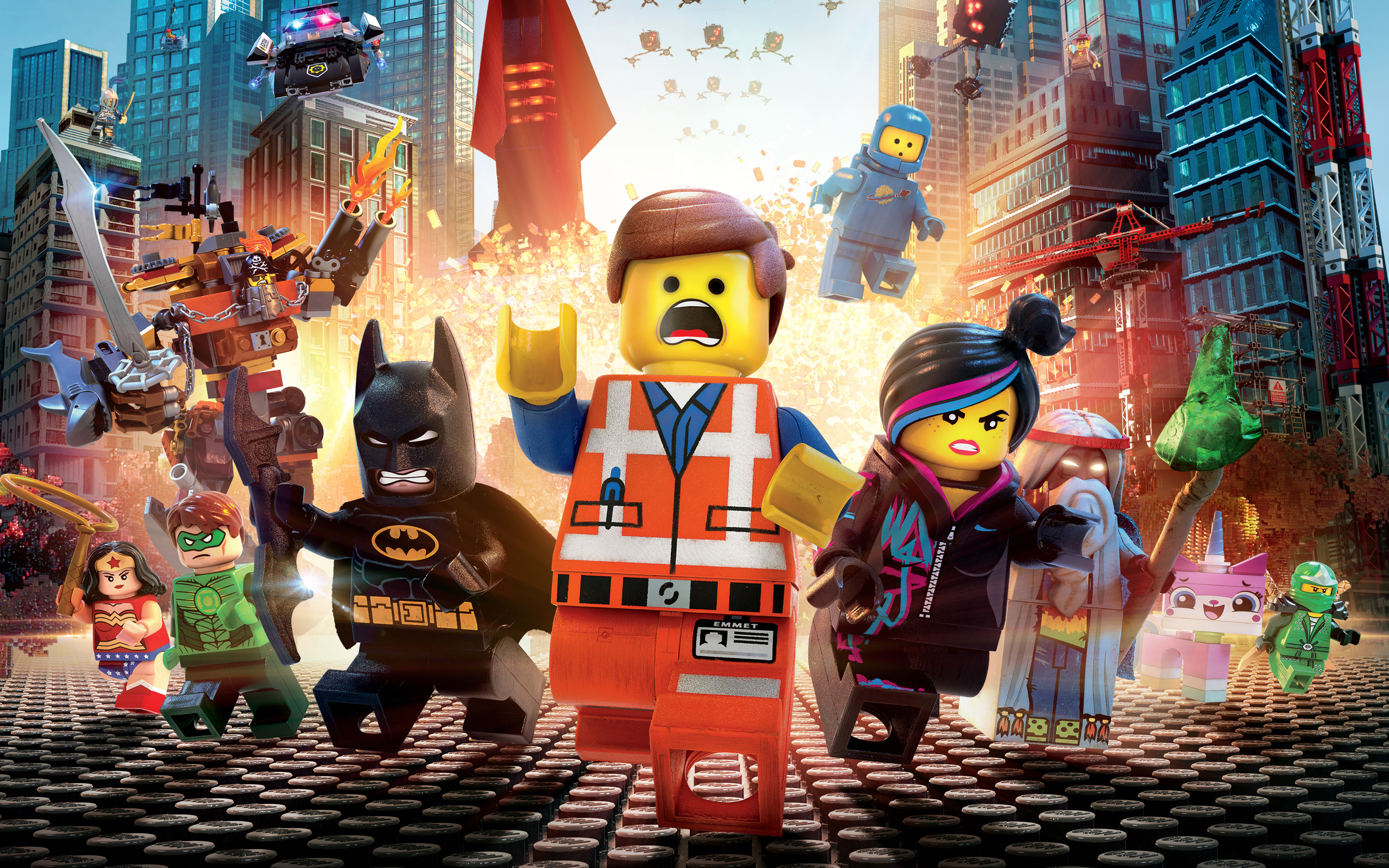
I saw The Lego Movie not long ago. Now, I know other bloggers have already discussed this strange, wonderful, colorful film, but I have a few things of my own to say.

On a Saturday evening weeks ago, I stepped out my front door into chilly gloom, clambered into Tribulation (my rickety car) and sped into the dark, forbidding unknown. Depression, anxiety and vague panic had burdened me all afternoon. It was hard to take those first few steps away from home. I wanted to stay, but I had a mission and dash it all, I was going to complete it.

I was going to see The Lego Movie.

The Lego Movie

I’m really glad I did.

The film was excellent, but I’m not really going to talk about it. I’ll just point out that it features an upbeat, poppish song titled “Everything Is Awesome,” which pretty much sums up the movie.

The Lego Movie is a bright, cheerful, clever film, and it did me good. Getting out did me good. Defying depression and exploring new places and driving along dark, cold roads in a dilapidated car did me good. These things were different. Some were pleasant. Some were a little scary. For a few hours, I left everything behind.

It helped me see things a little differently.

My life is governed by routines and repetition. Mind, that isn’t a bad thing. Routines are efficient. Doing things differently is challenging, risky and sometimes costly. However, routines have a cost of their own. They lull me into a stupor. Repetition makes me forget there is a wide, wide world beyond my narrow day-to-day experiences.

In a manner of speaking, The Lego Movie is right: everything is awesome. The things repetition make me take for granted are amazing—I just don’t realize it until I leave them behind for a little while.

G.K. Chesterton wrote a story in which a man abandons his children, wife and home and embarks on a long journey. He exclaims, “I won’t stay here any longer. I’ve got another wife and much better children a long way from here. My other wife’s got redder hair than yours, and my other garden’s got a much finer situation; and I’m going off to them.”

The man walks and walks and walks. He walks all the way around the world, and finally comes to his “better” home and “better” family. They are exactly the same ones he left behind… yet they are better. His home and family are better because he has learned to appreciate them. By leaving behind his home and its routines, the man has the exquisite pleasure of coming back to them. He realizes everything is awesome.

Weeks ago, I realized the same.

I guess this means I’ll be going to the cinema sometimes, and varying my route back from work, and ordering more than one kind of sandwich at Subway, and generally finding more excuses to get away. Everything is awesome. Sometimes, I just need to do things a little differently to see it.

The Bible Sure Can Be Nasty

With the payment he received for his wickedness, Judas bought a field; there he fell headlong, his body burst open and all his intestines spilled out.

Acts 1:18

For being the all-important text of a religion considered pure and gentle, the Bible sure can be nasty.

Seriously, the writers of Scripture pulled no punches in describing scenes of violence. These range from morbidly amusing, such as the death of Absalom, to sickeningly brutal, like the death of Sisera and the suicide of Judas mentioned above.

Heck, even some of the stories we consider kid-friendly are really violent. Noah’s Ark and David’s duel with Goliath are tales we tell children in Sunday school, which is odd considering the flood snuffed out nearly all humanity and David cut off Goliath’s head.

The Bible also has some disturbing stories about sex. Not halfway through Genesis, the Bible’s very first book, we get attempted gang rape and drunken incest. Absalom, whose violent death I mentioned in the preceding paragraph, had sex in public with his father’s lovers to make a political point before his grimly humorous demise. Absalom’s sister Tamar was raped by her half-brother Amnon.

Even the holy prophets had off-putting things to say about sex. The sixteenth and twenty-third chapters of Ezekiel describe the lewd idolatry of Judah and Israel using strong sexual language.

There’s also a lot of drunkenness in the Bible, not to mention demon-possession and other satanic elements. Seriously. If the Bible were a film, it would have a stiff R rating. This is the book we teach in Sunday school.

I think that’s a good thing.

Granted, we should probably spare kids the most graphic bits of the Bible until they’re old enough to handle them. The Bible itself, however, needs to be taught as it is. God didn’t give us the sentimental, fluffy, family-friendly book some people believe the Bible to be. He gave us a book that describes war and death and sexual assault.

Why?

In the end, I think the Bible is honest. Its historians don’t idealize its history and its prophets don’t tone down their prophecies. This dark, broken world isn’t perfect, and God’s Word doesn’t paint it that way. Even the nasty parts of Scripture have a purpose, and that purpose is pointing humankind toward the grace of God.

After all, how can we appreciate grace and peace and beauty until we’ve seen the alternatives?

254. On Homosexuality: Let Us Only Handle Love

Today’s post was written by the talented TMZ—Thomas Mark Zuniga, I mean, not the celebrity tabloid—as a response to my thoughts on homosexuality. For more wise words and wanderings from Tom, check out his blog and his book, Struggle Central.

When my blogging friend, Adam (or as I’ve long regarded him, “That Monkey Guy”), asked me to contribute a post on homosexuality to his blog, I knew I wanted to write something. I just didn’t know where to start. Homosexuality is, after all, a Pandora’s Box of an issue lined with nettles and littered with landmines.

I really latched onto something Adam wrote recently. He talked about how his convictions and sympathies often seem to oppose each other. Oddly enough, I often find myself in a similar stance regarding homosexuality—though from a more unique, complicating perspective.

You see, it’s been almost a year that I’ve been publicly “out” as a “gay Christian”—or whatever you’d label me. First, I wrote a book, and then I wrote a blog post.

When I initially “came out” on my blog, I wrote that despite my male attractions, I cannot mentally reconcile a homosexual relationship and my walk with Jesus. Given the choice of one or the other, I’ve staked everything on Christ; without Him, I am nothing.

What about other gay people though? What about other gay Christians who don’t do what I do and believe what I believe?

Honestly, I used to feel angry toward other gay people. But I used to feel really angry toward other gay Christians who claimed to pursue Jesus and same-sex partnerships.

Not sad. Not disappointed. Angry. I hated that these particular gay Christians had somehow found this theological “loophole” and were able to reconcile the two while I remained “holy” in my struggles through singleness.

In recent years, however, I’ve been learning the process of not letting my beliefs necessarily dictate my reactions. I know, I’m a horrible Christian, right?

Whether we like it or not, there exist gay people and gay Christians in homosexual relationships. While homosexuals certainly experience discrimination, homosexuality and gay marriage are gradually becoming more normalized, both inside Christianity and out.

Our evolving culture has often left me wondering in this question mark-sized boat:

How do you believe one thing yet still show love and grace toward others—human and spiritual siblings alike—who live quite the opposite?

I suppose my answer hearkens back to something else That Monkey Guy mentioned. Where is the outrage over poverty, homelessness, sex trafficking, child abuse, the failed foster system, and the disheartening list trails on?

Are we naive to think that homosexuality and gay marriage is the biggest “threat” facing America? The world? Is our time really best invested in endless vociferous debates?

As a non-confrontational person, I’ve long been “over” the debate. I’ve already stated what I believe on my blog, and I’m going to leave it at that. Moving forward, I just want to tell my story—my messy, miraculous story.

Contrary to what many naysayers have “advised” me, God has indeed used my conviction on homosexuality for good. He’s introduced me to some of the most solid brothers I could ever know, both online and off. He’s moved me across an entire continent for a fresh new life. He’s given me a voice to speak for the voiceless among whom I lived for over two decades.

I’d have never gained so many of my current blessings were I not attracted to the same sex.

I’m not saying my entire road has been paved with peace, but God has certainly used the apparent “bad” of this conviction for His good. I’m convinced He’s in the business of writing similar redemptive stories for homosexuals and heterosexuals alike.

Since my book’s release, I’ve exchanged numerous conversations with people of all ages on all sides of this contentious issue: young and old and gay and straight and religious and nonreligious. It’s becoming more of a “normal” thing for total strangers to confide in me their sacred sexual secrets. I am touched that people would entrust me with their problems and pain.

I love them all.

And so while my convictions may reside on one side of the homosexuality hotbed, I’m learning to plant my sympathies across both sides. I figure if God wants to convict somebody about his or her sexual proclivities, heterosexual or homosexual, His Spirit is capable. God doesn’t need my blog or my Twitter account to draw people into His arms.

My advice to others struggling at the crossroads of their convictions and sympathies is actually quite simple. Regardless the complicating “issue” at hand, just love people. Open up your phone; open up your home. Treat someone to breakfast, or let them cry into your chest.

Hear their stories. Uncover your similarities and differences alike. Connect. We were wired for love, I’m convinced.

God can handle the homosexuality issue. He is big enough; He can do it.

Let us only handle love.

253. A Post About Homosexuality

A number of weeks ago, I walked in on an acquaintance of mine and noticed an engagement ring on his finger. “Congratulations!” I exclaimed, beaming. “Who’s the lucky lady?”

My acquaintance, whom I’ll call Socrates, looked away and replied quietly, “Well, he’s actually a guy.”

Well.

Socrates and I chatted for a bit about his plans. He and his boyfriend hope to marry in Mexico before settling down together in Indiana.

“Mazel tov,” I said as we concluded our chat, and I meant it.

My unexpected talk with Socrates reminded me that I’ve wanted to write this post for a long time. The reason I’ve put it off is that… well… I’m not really sure what to say, and I’m afraid of what will happen when I say it.

Deep breath, guys. Let’s talk about homosexuality.

I’m deeply conflicted about homosexuality and the controversies surrounding it. My convictions are squarely on one side of the debate; my sympathies are squarely on the other. The prejudice and bitter hatred of some so-called Christians toward LGBT (Lesbian, Gay, Bisexual, Transgender) persons appalls and angers me. On a personal note, I have several gay acquaintances, and I appreciate them. They’re all good fellows.

All the same, I can’t support homosexuality on moral or spiritual grounds. Scripture seems inescapably clear upon the point: the first chapters of Romans and 1 Timothy condemn acts of physical homosexuality.

(Interestingly, Scripture never mentions sexual orientation; the concept apparently wasn’t current at the time. The Bible addresses same-sex acts, not same-sex attraction.)

I’m angered by Christians who use Scripture as a license for intolerance or cruelty. At the same time, I’m troubled at the way accusations of ignorance or bigotry are sometimes hurled at people who believe, sincerely and respectfully, that homosexuality is wrong. Tolerance is a fine philosophy, but only when it goes both ways.

I suppose the thing that troubles me most is how homosexuality is becoming the issue of American Christianity, eclipsing discussions of urgent problems like poverty and religious persecution. The recent Duck Dynasty controversy dominated the media for weeks. Where is the outrage for abuse and starvation and human rights violations?

It’s a mess.

I don’t have much more to say, which is why I’m going to yield the floor to a blogger who is much better qualified than I to discuss the issue. Check in next time for his thoughts!

250. Life Lessons from a Thirsty Blogger

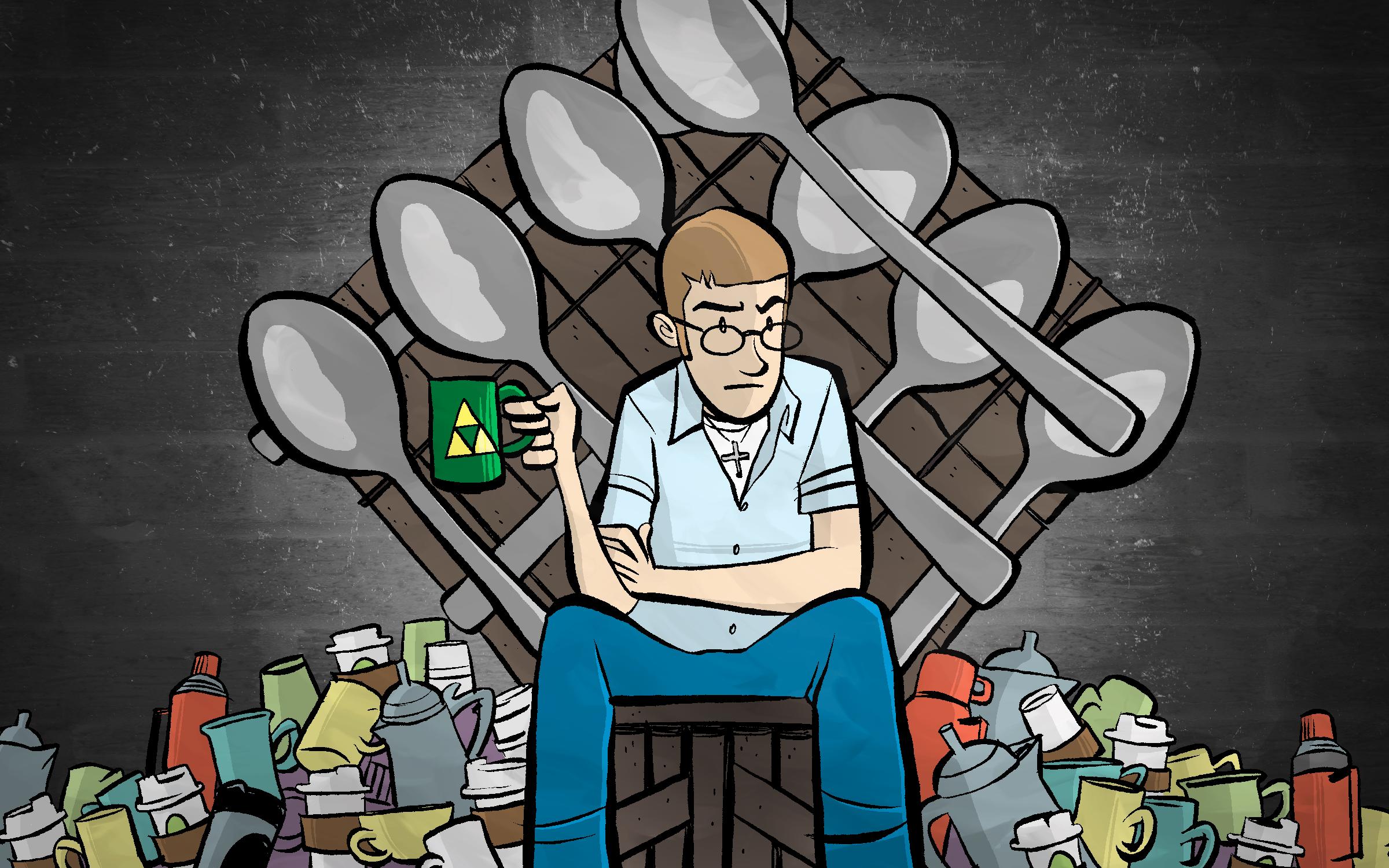
So I drink a lot of coffee. Don't judge me.

Yes, I drink a lot of coffee. Don’t judge me.

If anyone has ever wondered how I come up with ideas for this blog, the picture above tells the whole story: I sit and drink coffee and wait for something to happen. What can I say? Blogging is thirsty work.

(Due credit to the inimitable Wes Molebash for the splendid caricature, which has become my official Internet profile picture and a new banner for this blog.)

Today marks another milestone in the sunny existence of Typewriter Monkey Task Force: a blog fueled by coffee, sustained by geeky enthusiasm and buoyed by the support of loved ones. This blog has allowed me to share my passion for everything from God to tea to Tolkien. In good times and in bad, working on TMTF has brought me no end of satisfaction, comfort, encouragement, joy and pleasure. It has also given me the privilege of connecting with many fascinating, creative, generous people—writers, bloggers, artists and others—whom I would otherwise never have known.

In the two and a half years since starting this silly blog, I have gained a number of personal insights about life, the universe and everything. Today—as my typewriter monkeys and I celebrate this milestone with banana shakes and coffee, respectively—I’d like to share ten of the best lessons I’ve learned since TMTF began.

I must focus on today

I’m really good at brooding about the past, worrying about the future and generally thinking about all times but the present. God has given me today. Yesterday and tomorrow are in his hands, and I need to leave them there. My business isn’t to be burdened by worries or regrets, but to make the most of the time I have been given.

What matters is not what I feel, but what I do

For a long time, I made a simple assumption: If I felt bad, I was doing badly; if I felt good, I was doing well. I was wrong. Feelings are mostly beyond my control and largely unconnected to how well or badly I’m living my life. Depression isn’t proof of failure, nor does success does guarantee happiness. I should do my best under all circumstances, no matter what I feel.

I need sleep

I hate to say it, but I can’t shrug off sleep deprivation. Those late nights playing Ace Attorney or reading random Wikipedia articles seriously affect my concentration, mood and overall health. A long sleep can totally brighten my day; a short sleep can tip me over the brink into sickness or severe depression. In fact, I would go so far as to say sleep is almost as important as coffee.

Prayer and Scripture really, really make a difference

The past two years have taught me that prayer and Scripture are anchors. These commitments to God keep me rooted in my faith and focused on things that matter. When I quit praying and reading Scripture, I drift away from God. When I drift away from God, I become kind of a jerk. When I become kind of a jerk, everybody loses. Prayer and Scripture make an incredible difference in my life for good—even more than coffee, which is saying something.

I am not a great writer

I’m a pretty good writer, I think. Writing is one of my greatest talents, along with drinking coffee and having magnificent sideburns. I’m a good writer—but not a great one. When I was younger, I assumed my writing was brilliant. Working on this blog, failing to make The Eliot Papers a success and (above all) reading fantastic works by truly great writers have given me healthy doses of perspective and humility.

Things don’t fall apart

Heck, I wrote an entire post about this. No matter how I try to keep things together, I shall sometimes fail. It is well, then, that God is there to hold things together when my best efforts can’t keep them from falling apart.

I can’t fix people, but I can love them

If Doctor Who has taught me one thing, it is the importance of having epic sideburns. If the series has taught me a second thing, however, it is the value in simply showing kindness. “The way I see it, every life is a pile of good things and bad things,” the good Doctor reminds us. “The good things don’t always soften the bad things, but vice versa, the bad things don’t necessarily spoil the good things or make them unimportant.” The world is full of hurting people. I may not be able to take away their bad things, but nothing will ever prevent me from adding to their good ones.

I must be focused and intentional

It is so hard—so darn hard—to stay focused. I seem to live in a disorienting fog of distractions, diversions and complications. Depression and obsessive-compulsive impulses are only slightly greater obstacles to productivity than the Internet and its endless wealth of interesting articles and funny cat pictures. A useful, meaningful life doesn’t just happen. It takes intention, self-control and (in my case) a good deal of caffeine.

People are awesome

Human beings are amazing, awful, odd, ordinary, selfish, selfless creatures. In general, they’re pretty awesome. I’ve realized it’s worth getting to know people, and important to respect even those I don’t know.

I have good reasons for believing in God

When I began this blog, I felt conflicted about God and life and the universe in general. Many of my questions about God were unanswered. Some of them still are. It was while working on this blog that I reached a fundamentally important conclusion: I have my doubts about God and Christianity, but my evidence in their favor definitely outweighs my evidence against them. No worldview makes perfect sense to me, but Christianity makes the most sense.

Well, dear reader, thanks for reading this blog, putting up with our shenanigans and generally being awesome. My sincere thanks to everyone who has supported this blog, and to God for grace and coffee and stuff. Here’s to many more cheerful ramblings about faith, writing, video games, literature, life, the universe and everything!

246. TMTF Reviews: Heart of Darkness

A few days ago, a coworker and I had an interesting discussion about lunatic asylums, survival horror games and Joseph Conrad’s Heart of Darkness.

My coworker had just finished a survival horror game set in an insane asylum. (Survival horror is a scary genre of video games.) It reminded me of an article that questioned the use of lunatics in horror fiction. While some victims of mental illness are certainly dangerous, it’s unfair to stereotype them all as murderers, cannibals or psychopaths. Most lunatics are innocent people suffering from mental disorders. Compassion, not fear, is the appropriate response.

My coworker’s game was apparently an excellent (and terrifying) artistic work, but its scares came at the cost of demonizing and dehumanizing an entire group of people.

That reminds me of something.

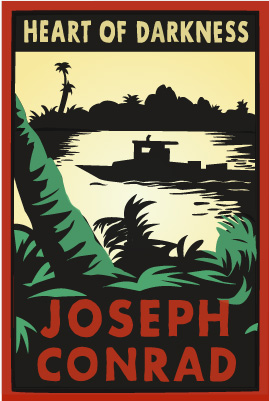
Heart of DarknessJoseph Conrad’s Heart of Darkness is a great book, but not a good one. Its impressive style and thematic complexity come at the cost of human dignity.

Heart of Darkness is the tale of Charles Marlow, a nineteenth-century sailor who tells of his fateful trip up an African river in search of ivory. Marlow captained a steamboat deep into the dark, wild heart of the inscrutable African continent, meeting indolent Europeans and barbaric Africans—and one very terrible man, the tortured Mr. Kurtz. It is Kurtz who embodies the eloquence of Europe and the savagery of Africa, and Kurtz whose ambition and cruelty are finally summed up in four whispered words: “The horror! The horror!”

As I told my coworker, I thought Heart of Darkness was a fine artistic work, just like his game. My book made its point about human depravity; his game was very scary; both works achieved their ends. However, both works accomplished their goals only by exaggerating and debasing a group of people. His demonized the lunatic. Mine demonized the African.

At first, I didn’t think twice about Conrad’s stereotyped Africans. Racism was almost universal among the Europeans of his day. It was my cousin who recommended this thought-provoking essay by Chinua Achebe. Achebe, an African, showed me how Heart of Darkness creates a stark, racist contrast between the white European and the black African. Kurtz is horrifying because he—a cultured European—descends into the savage brutality of those wild Africans.

I get it. For Heart of Darkness to work, it needs that contrast. For savagery to seem savage, it must be compared to sophistication. Kurtz has fallen from Point A to Point B, and the reader can’t appreciate how far he falls unless she sees both points. Sane, sensible Marlow is Point A. There must be a cruel, primitive Point B—and Heart of Darkness makes Africans its Point B. The book debases Africa’s people not out of malice, but out of necessity.

That doesn’t make it right.

That is my fundamental criticism of the book. How could it have been fixed? Well, Marlow might not have sought Kurtz in the dark heart of Africa—the dark heart of London would have sufficed. There were plenty of debased, primitive Europeans in Conrad’s day.

Heart of Darkness makes its point very well. Kurtz is a fascinating character, and he’s prefigured so well throughout the story that I was almost as eager as Marlow to meet him. While the book’s contrast of Europe and Africa is morally questionable, I’ll be the first to admit that it’s artistically excellent.

The book’s style is either great or horrible, depending on the reader. Conrad’s writing is dense and slow. Thoughtful readers will probably savor it. Impatient readers will hate it. Conrad has a tendency to wax meditative for pages and then say something crucial to the plot in just a few sentences. I repeatedly overshot important information because Conrad’s style had lulled me into a literary stupor.

Heart of Darkness is a great literary work—but is it a good book? I don’t think so.

237. Three Great Novels About the Silence of God

I could write pages about the silence of God, but it would all boil down to just a few words.

I don’t get it, and it troubles me.

Some of my doubts and questions about the Christian faith have been resolved. Some have not. Why does God let kids get hurt? Why does he allow us to make innocent mistakes? Why does he permit headaches and cockroaches and Fifty Shades of Grey to exist? Why, God? Why?

Yes, I know about sin and death and the fall of humankind. I know, darn it! Those things still don’t explain why God doesn’t, well, explain. Couldn’t he at least make his existence more clearly known? It seems unfair for God to penalize people for failing to believe in him when he seems intangible, invisible and… silent.

I don’t know why God remains silent. In the end, I believe because my evidence for God outweighs my evidence against him. There remain dark doubts and unanswered questions.

Since I don’t have any answers regarding the silence of God, here are what three great novels have to say upon the subject.

Be ye warned: Here there be spoilers for SilenceThe Chosen and The Man Who Was Thursday.

The Man Who Was Thursday by G.K. Chesterton

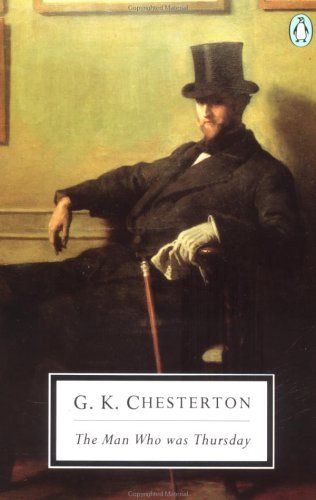
The Man Who Was ThursdayThe Man Who Is Thursday is the exciting tale of Gabriel Syme, a poet-turned-detective, and his attempts to stop a band of nihilistic terrorists. There’s a sword duel, and some thrilling chases, and at least one good discussion of poetry.

The novel takes a turn for the surreal in its final chapters, in which Syme and his companions realize their elaborate intrigues against the terrorist organization were actually orchestrated by its leader, the enigmatic man known only as Sunday.

Syme and his friends demand to know why Sunday, who is apparently not an evil man, allowed them to suffer so much pain and fear in their pursuit of him. One of Syme’s companions says, with the simplicity of a child, “I wish I knew why I was hurt so much.”

Sunday does not reply.

The silence is broken by the only sincere member of the nihilist organization, who accuses Syme of apathy and ignorance. It is then Syme realizes that his pain qualifies him to refute all accusations. He and his friends suffered by Sunday’s silence. No matter how wretched or tormented their accuser, the agonies they endured bought them the right to reply, “We also have suffered.”

The Chosen by Chaim Potok

The Chosen

The Chosen tells the story of two young Orthodox Jews in New York during the final years of World War II. During a baseball game, Reuven Malter meets a gifted student named Danny Saunders. They become friends, despite their dissimilar cultures and upbringings within the Orthodox Jewish community.

Reuven is astonished to learn Danny’s father, Reb Saunders, speaks to him only during religious discussions. At other times, Reb Saunders says nothing to his son. This cold silence baffles Danny and Reuven. What kind of father refuses to talk with his children?

The novel follows Danny and Reuven as they grow up and progress in their studies. In the wider world, the horrors of the Holocaust are revealed and Jews fight for the restoration of Israel as a nation. At last, as young men, Danny and Reuven learn the truth behind the silence of Reb Saunders.

Reb Saunders knew his son’s intelligence outweighed his concern for others. In order to teach Danny compassion, Reb Saunders distanced himself from his son. Silence, he hoped, would give Danny an understanding of pain and a greater empathy toward other people.

Danny had learned compassion, and so the silence was broken. Speaking of Reb Saunders, Danny tells Reuben at the end of the novel, “We talk now.”

Silence by Shusaku Endo

Silence

This is it: the definitive novel about the silence of God. Heck, the book is even titled Silence. This gloomy masterpiece tells of Sebastião Rodrigues, a Portuguese Jesuit sent to seventeenth-century Japan. He hopes to encourage the tiny population of Japanese Christians, and is willing to die for his mission.

What he doesn’t expect is to watch others die for his mission. When he is captured by Japanese authorities, Rodrigues is not martyred. Instead, he watches as the authorities martyr other Christians because of his religion. Rodrigues expected to suffer for his faith. He did not imagine he would cause others to suffer for it.

In this darkness and brutality, God says nothing. There is only silence.

At last, as Rodrigues recants his faith to spare the lives of other Christians, the image of Christ he is forced to trample seems to break the silence: “Trample! Trample! I more than anyone know of the pain in your foot. Trample! It was to be trampled on by men that I was born into this world. It was to share men’s pain that I carried my cross.”

For me, this is the most powerful answer in these three novels to the question of God’s silence. God may seem silent, but he has shattered the silence once for all with a single word—rather, a single Word: the Word who became flesh and made his dwelling among us. Whatever the sufferings in this world, Jesus shared them. However little God may seem to say to us now, Jesus said plenty.

Do I understand the silence of God? No. I do, however, find great comfort in these books, which offer tentative answers to a great and terrible question.

What Makes Christmas Special

I was planning to write a new post, but my typewriter monkeys drank too much eggnog last night and passed out on the floor of my apartment. Since they’re not awake to type out a new post, here’s one from last year about what makes Christmas special. Happy Christmas! Stay away from the eggnog!

Christmas.

What comes to your mind? Snow? Colored lights? Gift cards?

When I think of Christmas, what comes to my mind are palm trees, beaches at twilight and dusty houses built of cinder blocks.

Nothing says Christmas like a beach at twilight.

Nothing says Christmas like a beach at twilight.

As a missionary kid in Ecuador, I spent many Christmas vacations with my family at the beach. We’d pile into our car, crank up Adventures in Odyssey on our CD player and drive for hours: descending from the heights of the Andes, passing banana plantations, stopping at derelict gas stations for fuel and ice cream, winding among low hills and finally arriving at the beach.

Towns and villages are scattered across the Ecuadorian coast. Most of them are small, dirty, unimpressive places. Ecuador is a poor country. In December, however, these little communities are brightened with fake Christmas trees and cheap colored lights.

Not relevant to this blog post, but adorable.

What really sticks in my memory is the way people celebrated. My dad and I once passed a merry gathering of children in a little town on Christmas Eve. Many were barefooted; most were dirty; nearly everyone was smiling. It was a scene Charles Dickens would have been proud to write.

In Ecuador, Christmas is a time for celebration. It’s a time for fireworks, family get-togethers and three-liter bottles of Coca-Cola. (Yeah, we’ve got those in Ecuador. Be jealous, Americans.) It’s a time for celebration.

Of course, in many ways, Christmas in Ecuador isn’t much different from Christmas in the United States of America. There are the same silly commercials. The same packed shopping malls. The same frenzied media trying to squeeze as much money as they can out of the holiday season.

All the same, when I see the extravagant displays of holiday decorations around my current home in Indiana, I miss the cinderblock houses on the Ecuadorian coast with tacky tinsel in the windows. The dusty Nativity sets in the corners of living rooms. The cheap ornaments hung from two-foot Christmas trees. The flimsy plastic cups of Coca-Cola.

Most of all, I miss the joy.

What makes the holiday special isn’t the gifts or the decorations or the music or the food. Even the Grinch understands (eventually) that Christmas means more than stuff. Joy and celebration and being together with loved ones are what make Christmas special. The other stuff is nice, of course. The holiday stuff is like pretty wrapping paper and shiny ribbons covering the gifts under the Christmas tree.

In the end, though, who wants just the ribbons and wrapping paper without the presents?

227. The Return of the Anti-Adam

Hello, Adam. It’s nice to see you. Wait, did I say nice? I meant nauseating. It’s nauseating to see you.

You again? If someone has to annoy me while I’m trying to write blog posts, can’t it be the other guy?

If you’re talking about the Pro-Adam, he couldn’t make it. Don’t act surprised. You know I visit you much more often than he does.

I know, but I hoped for some variety. His empty praise is a refreshing change from your undeserved insults. What is it this time?

There are a few things, actually. May I sit?

No.

I’ll take the armchair, thank you. First of all, I think some congratulations are in order. You’ve finally given up trying to write novels. Well done! It’s about time you took my advice and stopped embarrassing yourself.

I don’t think I’m a bad writer, and I haven’t given up on The Eliot Papers. I’ve just put the project on hold indefinitely. I believe my circumstances made it necessary.

When you say “my circumstances,” I presume you’re referring to your lack of ambition and talent as a writer. I understand completely. Well, at least you have your blog.

Yes. Yes I do.

Sure, I can understand giving up your lifelong dream of being an author, and instead writing blog posts about exploding tomatoes and video game mustaches and girly cartoons with ponies and rainbows. It’s not as though you could actually be writing thoughtful posts about meaningful things.

do write about meaningful things… occasionally.

When you’re not busy being a frivolous idiot, that is.

I’m allowed to be frivolous! Heck, life would be awful if we had to be serious all the time. It’s the little things that make life livable, and the little blessings that help us appreciate the great ones.

Great blessings? Like grace? You write a lot about grace, expressing the same ideas again and again, like a lunatic muttering to himself. It’s almost as though you were trying to convince yourself of something you don’t really believe.

Belief is hard. “I do believe; help me overcome my unbelief.”

And you quote somebody! It was only a matter of time. Do you have even one original idea rattling around in your head, or just a lot of quotes?

I have ideas, really. Quoting people helps me express them.

Your memory stinks. How do you keep track of so many quotes?

I have no idea.

I suppose I can’t blame you for having a bad memory. Fortunately, I can still blame you for lots of other things. Like working a menial job.

It may not pay well, but there are worse jobs than serving persons with disabilities.

And doing absolutely nothing with your college degree.

I plan to use my teaching degree sooner or later—I just renewed my educator’s license, after all!

And being antisocial.

Being introverted and being antisocial aren’t the same thing.

And being afraid of life.

Life is scary!

And making the same stupid mistakes again and again and again.

Well, I’m a human being. We all make mistakes.

Excuses, excuses. You sound awfully confident for someone who spends a lot of his time being depressed.

You’re not going to blame me for that, are you? Lots of great people have suffered from depression. Abraham Lincoln, for example, and also my dear old dad. And have you counted how many good people in the Bible showed symptoms of depression?

You’re glorifying your depression by comparing yourself to great people. That’s classy.

I’m not saying we’re alike because we’re great. I’m saying we’re alike because we’ve suffered from depression. Depression does not a great person make, but it certainly doesn’t make a person any less important or valuable.

I’ve had enough of your prattle for one day. Don’t forget what I’ve told you, Adam. I’ll be back.

Of course you will. Something tells me you’ll never be far away. It’s a good thing you’re not the only one. “The Lord is my shepherd,” and all that.

I’m leaving.

Good. On your way out, would you mind getting me a sandwich?

213. TMTF’s Top Ten Life Lessons in Video Games

Wisdom can be found in unexpected places.

As we search for truth in literature, faith, philosophy and the lives of great people, we mustn’t overlook the lessons to be learned from BatmanDoctor Who, cartoon ponies and webcomics about video games. Speaking of which, video games have invaluable lessons to impart: useful principles that can be applied for success in real life.

What? You don’t believe me?

All right, then! Ladies and gentlemen, consider these practical principles as TMTF presents…

The TMTF List of Top Ten Life Lessons in Video Games!

10. Be Creative in Solving Problems

As tempting as it can be for gamers to try solving everything with violence, some obstacles can’t be shot, hacked or blown away. Puzzles require critical thinking. Some enemies require timing and strategy, not brute force, to conquer. Players have to be creative in solving problems, and creativity is an invaluable gift.

9. Observation Is Important

Anyone who plays a Legend of Zelda game quickly learns to keep his eyes open for cracked walls. Apply explosives to a damaged wall and—boom!—a way is opened. In video games, good things come to those who notice stuff. Video games teach players not merely to hear and see, but to listen and observe.

8. Appreciate Beauty

I love solving puzzles and defeating enemies as much as the next gamer. All the same, one of my favorite things about video games is how darn pretty they can be. (Yes, video games can be beautiful. Like brushstrokes or pencil shading, pixels can make lovely pictures.) Players are treated to sunrises and forests and ocean views, and appreciating beauty in artificial environments is a step toward appreciating it in natural ones.

7. Plan Ahead

Bad things happen to those who are unprepared. The person playing a Final Fantasy game will be annihilated by a tough boss if she hasn’t leveled up her characters or stocked up on healing potions. The person playing a Mario Kart game will lose if he hasn’t bothered figuring out the controls. This brings us to the real world, where the person taking a test or applying for a job will fail if she hasn’t planned ahead and made necessary preparations. Once again, video games reflect how things work in real life.

6. Stay Calm

The player who panics and starts mashing buttons will most often lose, and gamers get plenty of opportunities to panic. It can be hard to stay calm when facing that tricky jump or twisty racetrack or nigh-invincible boss, but rational decision-making is more likely to lead to success than wild overreaction. People who learn to keep cool under pressure while playing video games are better equipped to keep cool under pressure while doing everything else.

5. Practice Makes Perfect

I stink at fighting games: kicks and combos and Hadoukens baffle me. There is, however, one kind of fighting game in which I will destroy you: a Super Smash Bros. game. (My younger brother is a rare exception to this rule; he defeats me effortlessly.) As a kid, I resolved to learn to play Super Smash Bros. to enjoy the game with friends. Mastering the game took time and effort and many failures… and it was totally worth it. Practice makes perfect. At the very least, practice makes better. Video games remind us of the fact.

4. It’s Dangerous to Go Alone

With these cautionary words, the first Legend of Zelda game echoes something in another famous work: a book called the Bible. Quoth the Teacher in Ecclesiastes, “Two are better than one, because they have a good return for their labor: If either of them falls down, one can help the other up. But pity anyone who falls and has no one to help them up.” In other words, It’s dangerous to go alone.

3. You Reap What You Sow

So you’re playing a Final Fantasy game, slaying monsters, saving the world, when your quest is interrupted by some woman who wants you to gather medicines to heal a wounded traveler. A nuisance? Yes. You gather the medicines, the traveler recovers—and your kindness is rewarded. Another example: You take a break from your adventure in a Legend of Zelda game to attack a chicken. You’re enjoying yourself—after all, hacking away at defenseless fowl is fun—until the chicken decides to fight back, and your cruelty is punished with death. Seriously. For better or for worse, we reap what we sow. This biblical principle is common in video games.

2. Success Is an Investment

You can’t traverse that treacherous pitfall in a Mario game? Keep trying. You can’t conquer that unbeatable boss in a Kingdom Hearts game? Keep fighting. You can’t get your client acquitted in an Ace Attorney game? Keep gathering evidence. Sooner or later, you’ll pass that pitfall or flatten that boss or prove your client’s innocence. Now consider the real world. You can’t pass a class? Keep studying. You can’t afford something? Keep saving. You can’t achieve a goal? Keep working at it. No matter where you turn, success is an investment.

1. Good Guys Win

The world is full of terrible, selfish people who seem to succeed. Video games are no different. There are monsters, jerks and villains who triumph by lying, cheating and backstabbing. In the end, an overwhelming majority of those bad guys are brought to justice. The good guys—the guys who strive and fight and sacrifice to help others—win. You know what? In our world, the same thing happens. We need to be reminded that good guys sometimes win.

O people of the Internet, what useful lessons have you learned from video games? Let us know in the comments!