184. An Explosion of Pink

A tree has stood outside my apartment all winter: an empty, skeletal tangle of bare twigs and branches. There were brief moments when this tree was lovely—its intricate silhouette looked quite nice against the rising sun—but it seemed bleak and ugly most of the time.

One day, about two weeks ago, I was astonished to glance out my window and see this:

002This transformation happened almost overnight. A skeleton of weathered wood had burst into a fountain of blossoms, swaying in the breeze and sending petals fluttering to the ground. Something dead had exploded into bright, beautiful, exuberant life.

So yeah, that’s what’s been happening with me.

April was not a good month. My work schedule, ever as capricious and unpredictable as the clouds, changed repeatedly, forcing me to switch between daytime and nighttime shifts. I suffered from severe sleep deprivation. At work, I was compelled to handle unexpected responsibilities on short notice. I lost my appetite. My recurring struggle with depression became a constant battle.

All the while, my obligations and commitments kept coming with the unstoppable regularity of ocean waves. I felt about three seconds away from a breakdown on at least two occasions. To paraphrase the words of Lincoln, it seemed impossible for me to remain as I was. I could recover or break down, but I couldn’t keep going.

Then, around the beginning of May, things changed with the suddenness of a tree exploding into bloom.

My depression disappeared as quickly as it came. I managed to get some sleep. My appetite returned. Work became easier and my schedule eventually returned to normal. (I doubt it will stay that way, but I can hope!) I watched a couple of movies and some YouTube videos and actually enjoyed them.

I’m taking a break from work this week, starting tomorrow. Fueled by cookies and coffee, I’ll travel north to watch Iron Man 3 with my uncle, discuss Abraham Lincoln with my grandfather, play Mario Kart with my cousins and generally have a good time visiting friends and relatives.

My life is looking better and brighter by the day.

I knew the tree outside my apartment wouldn’t stay bare forever, but I didn’t think it would resurrect so suddenly. I definitely didn’t expect it to be pink.

I was sure my life would get better eventually, but my recovery still astonished me. I certainly didn’t expect it to be so overwhelming.

My sufferings are trivial compared to those faced by other people in the world. I have enough to eat. My family is awesome. I have no desire to hang myself, read the Twilight series or end my own life in any other way. I’m ridiculously blessed even through difficulties.

All the same, my difficulties last month seemed quite bad enough, thank you.

It has been endlessly comforting to look back over those dark weeks in April and realize they were not without purpose. Unlike poor old Job, who probably never knew why God made him suffer, I can see at least some meaning in last month’s trials.

Never before have I had such an appreciation for not being depressed. Freedom from anxiety and hopelessness is something I no longer take so much for granted. I’m getting more sleep and worrying less about the future.

More importantly, I learned last month to stop blaming myself for bad days. Neither bad nor good days are usually my doing.

This makes my life less complicated. I don’t have to figure out what I’m doing wrong on bad days or right on good ones. I can simply persevere through the bad and be thankful for the good, giving God my best through every kind of day. My best will be better on some days than on others. That’s all right. I may be inconsistent, but God’s grace is not.

The tree outside my window has faded to dull green. My life will sometimes seem hopeless and difficult. I’m not giving up. After all, every desolate, skeletal tree may soon become an explosion of pink.


004

183. A Lesson from Doctor Who

I often discover lessons in unexpected places. True, I learn from the Bible and wise people, but I also learn from Batman and webcomics about video games.

The Doctor from Doctor Who is not particularly wise—in fact, he has all the tact and maturity of a twelve-year-old boy—but he recently taught me an invaluable lesson.

This is not the face of a wise man.

This is not the face of a wise man.

I work in a group home for gentlemen with mental and physical disabilities. As you can imagine, my job is often amusing, sometimes heartbreaking and never predictable.

When I began working in a group home, I felt pity for some of its residents. Their lives are often dark and difficult. Some endure chronic physical pain. Most suffer from depression. Few are ever visited by friends or family. All of them are hurting in some way and few of them understand why.

At first I pitied only these gentlemen, but as months passed I realized they aren’t the only ones deserving of compassion.

Most of my coworkers are hurting. Some are divorced. Some have family issues. Many struggle with financial woes or health problems. I’ve heard tearful stories, bitter complaints and vicious arguments I wish I could forget.

Apart from work, I have friends facing heartrending difficulties: divorce, debt, depression, loneliness and grief.

I’m constantly surrounded by people whose problems I can’t solve, and I hate it.

At one point in Doctor Who, the Doctor and his friend learn that a person whose life they tried to save committed suicide. The Doctor’s companion is overwhelmed with grief. “We didn’t make a difference at all,” she says.

“I wouldn’t say that,” replies the Doctor, blinking back tears. He adds:

The way I see it, every life is a pile of good things and bad things. The good things don’t always soften the bad things, but vice versa, the bad things don’t necessarily spoil the good things or make them unimportant. And we definitely added to his pile of good things.

I may not be able to fix someone’s life, but nothing will ever prevent me from adding to his pile of good things.

I can’t fix my coworker’s marriage. I can’t take away the pain of the gentleman with arthritis or the hopelessness of the gentleman with depression. I can’t promise healing to a hurting friend.

I can, however, be patient. I can listen. I can pray. I pretend to be terrified when the gentlemen with whom I work tell me there are mummies in the cupboards or a mouse in my shoe.

On an afternoon a few weeks ago, just a day or two after I remembered this lesson from the Doctor, I was administering medications at work when a resident of the group home ambled up to me.

“This is for you,” he said with a grin, holding out a cup of coffee.

It occurred to me in that moment that I’m not the only one trying to add to the piles of good things around me.

Sometimes other people, even hurting people, add to mine.

181. My Battle with Depression

I am now the most miserable man living. If what I feel were equally distributed to the whole human family, there would not be one cheerful face on the earth. Whether I shall ever be better I can not tell; I awfully forebode I shall not. To remain as I am is impossible; I must die or be better, it appears to me.

~ Abraham Lincoln

I don’t often write about depression. It’s not a pleasant subject, and I make an effort to be optimistic. Quoth Louisa May Alcott, a ridiculously cheerful person: “I can only say that it is a part of my religion to look well after the cheerfulnesses of life, and let the dismals shift for themselves.”

Besides, depression is kind of embarrassing. It’s easier not to talk about it.

I’ve struggled throughout my life with periods of anxiety and hopelessness—I once wrote a post about the worst of them—but depression isn’t usually a severe problem.

Recently, however, it has been more of a struggle. More than once in past weeks depression has impaired my ability to function… and today is one such occasion. Earlier today—not today today, but the day I wrote this post—I made some last-minute arrangements and came home early from work.

I just couldn’t do it.

There was no way on God’s green earth I could spend eight hours in a group home administering medications, washing dishes, changing soiled undergarments or doing whatever the heck else needed to be done. It was hard to do anything except keep breathing.

Thank God, I’m feeling much recovered—well enough, at least, to write a blog post. (Tea, rest and Brawl in the Family are fine cures for depression.) This is a post I’ve wanted to write for some time: not as a complaint or a plea for attention, but an honest acknowledgment of a personal struggle.

Dash it all, personal posts are the hardest to write… except for top ten lists and book reviews. But I digress.

I’m thankful not to have any troubles worse than depression, and extremely grateful for the loving support of friends and family.

Several people in my family suffer from depression. My old man, for example, has battled it throughout his life. Do you know what else?

My old man is awesome.

I will consider mine a life well spent if I grow up to be just like him. My old man is consistently cheerful, funny and kind. People are always surprised when they learn he suffers from intermittent depression and chronic physical pain. He gives me hope that I too can live a cheerful, useful life despite my own struggles with depression.

I wonder sometimes why God allows me to experience anxiety, fatigue and hopelessness. Wouldn’t I be a good deal more effective doing good things if I were not occasionally burdened with debilitating depression? I mean, really, God?

In the end, I always come back to the passage in the New Testament in which the Apostle Paul suffers a paralyzing problem of his own:

I was given a thorn in my flesh, a messenger of Satan, to torment me. Three times I pleaded with the Lord to take it away from me. But he said to me, “My grace is sufficient for you, for my power is made perfect in weakness.”

Depression might be a thorn in my flesh. It’s certainly a nuisance. Nevertheless, God’s answer to me has been the same as his answer to Paul. The grace of God is sufficient. That, as they say, is that.

God may not have spared me depression today, but he enabled me to pull some strings to come home early from work. He didn’t give me the strength for which I asked. Instead, he gave me tea and rest and funny webcomics.

I continue doing what I can to prevent depression: eating fruits and vegetables, drinking too much tea, working out (often while listening to music from My Little Pony: Friendship Is Magic, which is either really stupid or really awesome), watching cheerful cartoons, trying to get enough sleep and asking God for his help.

I have good days. I have bad days.

Through every kind of day, God’s grace is sufficient. Always.

180. Thoughts on Job and Ecclesiastes

I like some books of the Bible much less than others.

Take Ezekiel. I dislike Ezekiel. Paradoxically, it manages to be both trippy and tedious. It also paints an uncomfortably harsh picture of God.

Then there are the books I love, like Job and Ecclesiastes. Job is a meditation on punishment, pain and the authority of God. Ecclesiastes describes a philosopher’s search for the meaning of life. (Ecclesiastes is not to be confused with Eccleston, who played the Ninth Doctor in Doctor Who.)

These books fascinate me. They put the story of Scripture on hold to ponder some of the deep questions that have frustrated, tantalized and challenged thinkers for millennia: Why do good people suffer? Is God fair? What matters in life? What is the outcome of death?

These books come to the same conclusion, broadly speaking.

Most of us are familiar with the story of Job. At Satan’s request, God torments a righteous man named Job as a test of faith. Will Job remain faithful to God through his afflictions, or will he curse God for making him suffer?

Job’s friends arrive and say some stuff. Job says some stuff. A bystander named Elihu says some stuff. And just when the reader thinks everyone has finished talking, God himself shows up to say some stuff.

Job’s questions remain: “If I have sinned, what have I done to you, you who see everything we do? Why have you made me your target? Have I become a burden to you?”

Now that God has revealed himself to speak directly to Job, it’s time for answers.

Except it’s not.

God’s response to Job is to emphasize his own absolute power and authority over everything. From lightning bolts to ostriches, God has it all under control. Even though God answers none of Job’s questions, he resolves them. Job acknowledges God’s greatness, and God goes on to restore Job’s life.

While the book of Job ends on a comforting note, it’s not a very satisfying one. Job lived happily ever after, but he never (as far as we know) discovered the truth behind the cosmic contest that caused his suffering. Job’s agonies remained a mystery to him for the rest of his life.

The book of Ecclesiastes ends on an even gloomier note. Its author comes to the conclusion that life is beyond understanding, and it’s best simply to live and to work and to be happy. “Meaningless! Meaningless!” he declares. “Everything is meaningless!” Remember, this is the Bible I’m quoting here; these statements seem strangely agnostic to be included in the Word of God.

In the end, as we live in world we can’t understand, we’re left with one guiding principle: “Now all has been heard; here is the conclusion of the matter: Fear God and keep his commandments, for this is the duty of all mankind.”

I like Job and Ecclesiastes because they’re honest. They’re not bright, cheerful Sunday School lessons that pretend to make sense of everything. They struggle to find meaning in a world that seems meaningless, and conclude it can’t always be found. The most sensible option is to trust someone to whom nothing is meaningless: the God for whom there are no mysteries.

I once wrote a post for this blog, one of the best I’ve ever written, in which I admitted I have my doubts about Christianity. Some things don’t make sense to me. I’m a Christian anyway because these doubts are outweighed by evidence supporting the twofold idea that God is and that he is good.

God hasn’t answered my doubts and questions—but he has resolved them. Like Job and the author of Ecclesiastes, I must believe that God knows what he’s doing, even when I haven’t the faintest clue.

179. Of Pink Ponies and Civil War Nurses

I like making top ten lists. (You may have noticed.) For whatever reason, I enjoy organizing the best (or worst) things together in groups.

I once made a list of my top ten favorite books. The Bible was there, of course, along with classics like The Lord of the Rings and The Innocence of Father Brown (because J.R.R. Tolkien and G.K. Chesterton are awesome). In fact, there was only one surprise: a very short, very impromptu series of autobiographical sketches by a nurse who called herself Tribulation Periwinkle.

Hospital Sketches

Tribulation Periwinkle may be the best name ever.

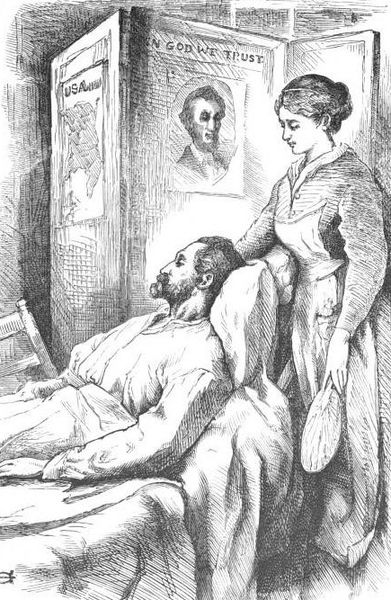
Tribulation Periwinkle was really Louisa May Alcott, who is best known for her novel Little Women. When the American Civil War broke out, she enlisted to care for wounded soldiers in Washington D.C. as a volunteer nurse: an experience she described in a cheerful little book titled Hospital Sketches.

War is horrible. I’ve never been in a battle, but I’ve seen and read and heard enough to understand that armed conflicts are unspeakably dreadful things. General Sherman, who fought in the American Civil War, famously declared, “I tell you, war is hell!”

Written from such tragic circumstances, Hospital Sketches is unexpectedly hilarious. It may not be very accessible for modern readers—the book is crammed with old-fashioned words, archaic idioms and references to classical literature—but I find it hysterically funny.

What really impresses me is how Alcott found humor in the bleakest situations. When confronted with an unappetizing meal, she cheerfully compared the bread to sawdust and observed how much the stewed blackberries looked like preserved cockroaches. Listening to her injured patients snore late at night, she declared them a “band of wind instruments” and restrained herself from breaking out in John Brown’s favorite hymn: “Blow ye the trumpet, blow!”

This incredible optimism and humor in the face of difficulty reminds me of something G.K. Chesterton once wrote: “Always be comic in a tragedy. What the deuce else can you do?”

It also reminds me of a certain pink pony.

Pinkie Pie

I’m pretty sure real ponies don’t come in pink, but whatevs.

Pinkie Pie is a character from a popular cartoon called My Little Pony: Friendship Is Magic, of which I am a fan. She breaks the fourth wall, blurts out non sequiturs and generally does things that make me laugh.

Pinkie also finds humor in miserable circumstances. Surrounded by horrific demon trees? She giggles at their twisted expressions and makes faces at them. Trapped in a surreal nightmare by an ancient spirit of discord? She points out the advantages: “Eternal chaos comes with chocolate rain, you guys! Chocolate rain!”

I’m a pessimist. A pessimist is not a fun thing to be. Louisa May Alcott and Pinkie Pie seem to have discovered a brighter outlook: finding glimmers of hope and humor in dark times.

Perhaps I should try to be positive, even when my circumstances are not.

176. Another Conversation with Myself

This post is the sequel to a previous conversation with myself. I just can’t seem to catch a break, can I? On a brighter note, check out this opportunity to win a free copy of my novel!

Hey, Adam!

For once, can I write a blog post without being interrupted? Is that too much to ask?

Sorry, I didn’t know you were busy. Blog post, eh? It must be for your amazing typewriter monkey blog.

Go away.

Your blog is great, and I love your novel. How many people are published authors? Not many. You’re really something special, dude. And your sideburns are fantastic. Way better than the Tenth Doctor’s.

Blasphemy! Nobody has better sideburns than the Tenth Doctor.

Except for you, Adam. You’re a good-looking guy, you know. And you’ve got a great sense of humor.

Thank you. Now would you kindly shut up and go away?

There’s no need to be so huffy, dude. I was just trying to be nice.

Really? I assumed you were trying to be a pest.

I’ve never tried to be a pest.

Well, I must say you’re doing dashed well for a beginner.

Ha! That was a brilliant comeback. You clever guy, you!

I was plagiarizing P.G. Wodehouse and you know it. Stop being a shameless sycophant.

Dude, I’m just trying to let you know you’re awesome. Totally awesome.

I’m also annoyed. Totally annoyed. Go away!

What’s the problem? You’re so down on yourself, and that other guy is always tearing you apart. He’s like an evil version of you—the Anti-Adam. I just want to build you up. Call me the Pro-Adam.

There’s a difference between building up someone’s confidence and puffing up someone’s ego. The Anti-Adam exaggerates my faults, but you exaggerate my virtues. You’re just as bad.

The Anti-Adam makes fun of you, dude! At least I’m trying to help.

You and the Anti-Adam have different stories, but you’re equally wrong. If you drive a car off the road and crash, it doesn’t matter much whether you’ve gone too far to the right or too far to the lefta wreck is still a wreck.

The Anti-Adam is wrong, but I’m totally legit. Seriously, you’re a great guy.

I don’t want to hear it. “A man who flatters his neighbor spreads a net for his feet.”

Quoting the Bible. That’s classy. I love how you quote people all the time, dude. You’re really smart.

Nah, I’m just really good at faking it.

There you go putting yourself down again! Listen, dude, you can’t deny you’ve got some mad skills. Like playing Mario Kart. Nobody beats you at Mario Kart.

I concede that.

And you’re generous with your money. And you spend forty freaking hours every week serving mentally handicapped men. That’s a tough job. And you’re good at it. You’re really patient—I’ve hardly ever seen you lose your temper. I could go on and on.

Leaving out all the unpleasant bits, of course. You haven’t mentioned that I’m selfish and insecure and sometimes kind of a jerk.

Everyone is, dude. It’s called being human. On the whole, I think you’re a really good person. Don’t pretend you’re not a good writer or a patient guy.

Do you think I should be congratulated for being a decent writer or having a patient temperament? These talents aren’t mine. They’re God’s. At the moment, they’re on loan.

You learned to be a good writer! You learned to be patient! Give yourself some credit!

My gifts and skills and things are like seeds. I didn’t make them grow. All I did was water them. God made them growand he was the one who planted them in the first place.

What about your virtues? You’re kind and respectful and honest.

Only because I’ve been conditioned to be. If I came from a background of abuse or neglect or poverty, I’d be a mess. That’s not what happened. I come from a background of kindness and faith and love, so that’s who I am. I’ve spent my life with good people. They’ve rubbed off on me.

You’re not just naturally a good person, dude. You’ve had to work at it.

I’ve built up some good things, sure, but the foundation was already there.

You’re being modest.

I’m being honest. Whatever goodness I have is borrowed. That’s really all there is to it. Now go away and let me work on my blog. It’s too late to write a new post… but that might not be a problem.

I love your blog, but, um, don’t post this conversation.

Why not? Now then, if you really want to be help, go heat up some water. I don’t know about you, but I could use a cup of tea.

170. Batman Syndrome

I have Batman Syndrome.

I wish this meant I were as cool, skilled or accomplished as Batman. It does not. It most certainly does not. What it means is that Batman and I have something in common: we obsess over our mistakes.

If you or someone you love suffers from Batman Syndrome... I feel your pain.

If you or someone you love suffers from Batman Syndrome… I feel your pain.

I like fictional characters who overlook their victories and overemphasize their failures. There’s something compelling about characters who are heroic without realizing it. Take the Doctor from Doctor Who, who has saved every planet in the universe roughly twenty-seven times. In all his travels through space and time, he never leaves behind his insecurity, self-loathing or guilt. Consider Jean Valjean from Les Misérables, who atones for a few petty crimes by spending years serving the poor and helpless. They bless him as a saint. He despises himself as a criminal.

Then we have Batman, the eponymous sufferer of Batman Syndrome, who is so blinded by guilt that he fails to recognize one all-important fact: he is freaking Batman. No matter how many thousands of people he rescues, he remains obsessed with the two he failed to save.

I’m not a savior like the Doctor or a saint like Jean Valjean. I’m certainly not a superhero like Batman. Even so, I occasionally do things right. I also do things wrong. In my mind, the wrong things eclipse the right ones. A mistake cancels out all successes.

This isn’t always such a bad thing. I feel driven by my mistakes to try harder, to be better, to get it right. In the short term, it helps.

In the long term, however, Batman Syndrome wears away my confidence. It also makes me anxious. Dash it all, does it ever make me anxious. Doing anything is hard for someone desperately afraid of making mistakes. Perfection is a lousy minimum standard.

Batman Syndrome haunts me with one dreadful question.

You’ll never get it right, so why even try?

I write a lot about grace and stuff. In the end, I suppose it’s because I’m amazed (and sometimes incredulous) that God loves me. I’ve made a lot of mistakes. More to the point, I make a lot of mistakes. It’s easy for me to accept God’s forgiveness for a sin committed ten years ago. What’s hard for me to accept is forgiveness for a sin committed ten minutes ago.

It can also be hard for me to acknowledge my victories. I want to be humble, but there’s a difference between true humility and false modesty. I’m often reminded of my weaknesses. I think I must also allow myself to be reminded of the strengths God has given me. I’ve a long way to go, but I mustn’t overlook how far I’ve come.

I’m not Batman, and I think I’m finally beginning to accept that I don’t have to be.

164. Awake, Alive and Highly Caffeinated

Do you remember the recent post in which I announced I would be switching from the overnight shift at my job back to a daytime shift?

Yeah, that didn’t happen. I guess that’s what I get for expecting my life to be predictable.

On the day I published that post, I switched back to my old schedule at work: working a daytime shift instead of an overnight one. The very next morning I received a phone call from my employer asking me to switch back to the overnight shift… at a completely different workplace.

Having just inverted my sleeping pattern completely, I was somewhat annoyed at having to invert it again after one day. I was also apprehensive about adjusting to a new workplace. It has taken me half a year to learn the ins and outs of the group home where I work, and I didn’t think I could possibly adapt to an unfamiliar workplace in just a few nights.

However, to paraphrase dear old Alfred Tennyson, mine not to make reply, mine not to reason why, mine but to do and die. I agreed to my employer’s request.

Having made such a fuss about my switch from overnight shifts back to daytime ones, I wanted to come clean on this blog and announce that I wasn’t switching after all. However, the two weeks that followed my move to the new workplace were… challenging, to put it euphemistically.

My new schedule is a strange mix of daytime and overnight shifts. (I want to smack whoever thought it was a good idea to put daytime and overnight shifts together in the same weekly schedule.) It has taken me a long time to figure out a healthy sleeping pattern.

In the meantime, sleep deprivation made work difficult and kept me from getting things done at home. I’m thankful to have had posts prepared in advance for this blog and grateful to Josh Hamm for his recent post, which spared me from writing one!

Adjusting to a new workplace turned out not to be so difficult after all, and things have finally gone back to normal… or whatever passes for normal in this weird, wonderful life of mine.

I’m not sure when I’ll be returning to my old schedule at my usual workplace. My employer told me it would be several weeks, but I’m not sure what to expect.

For the moment, I’m thankful simply to be awake, alive and highly caffeinated.

161. A Conversation with Myself

Hello, Adam.

Go away. Trying to write a blog post here.

Ah, yes. A post for your typewriter monkey blog—the one that’s read by tens of people. Some of them may even be mildly interested in what you have to say.

I happen to like my blog, thank you very much.

Of course. I suppose you must. I mean, who else will?

Seriously, go away.

Why don’t you take a break from your blog and work on your novel? Oh, that’s right. You’re still stuck on that chapter. The one you started six months ago.

Hey! The past six months have been crazy and busy and stressful. Survival comes before creative writing. To quote Louisa May Alcott, “First live, then write.”

Ah, it was only a matter of time before you quoted somebody. You really, really enjoy quoting people, don’t you? You think it makes you seem smart and bookish. I think it makes you sound like a pretentious twit.

Yes, I like quoting people. So what? I haven’t given up on my novel, by the way. This is the year I finish the deuced thing.

We don’t use words like deuced in America, son.

I like dated British idioms.

I know, and I think it’s really cute that you use them. Wait, did I say cute? I meant annoying.

Do you know what? I kind of hate you.

That’s funny, Adam, because you and I happen to be the same person. Therefore, if you dislike me, who is it you really dislike?

I wouldn’t mind so much if you were… you know… cooler. A shadow version of me with glowing red eyes, maybe. The Shadow Adam. The Anti-Adam. My evil doppelganger. But you’re not any of these things. You’re just annoying.

The truth is sometimes annoying, but that doesn’t make it any less true. I’m here to give you healthy doses of realism when you get drunk on excitement and optimism. I’m here, Adam, because I care.

You’re twisting the truth and you know it. You’re exaggerating the nasty facts and hiding the good ones and generally making things seem much worse than they are.

Just listen to you! I know you like big words, so here’s one for you to chew on: pontificating. More to the point, stop pontificating!

Would you kindly go away? I need to finish this blog post.

You’ll never be Jon Acuff, you know.

Go away.

You’ll certainly never be C.S. Lewis.

Go away!

You won’t make a difference.

That’s it. Listen here! I will make a difference. It may not be a big difference. It may be a very small difference, but even a small difference can cause a whole lot of good.

Why do I get the feeling I’m about to hear another one of your fancy quotes?

Well, you are. “Sometimes you can feel like what you have to offer is too little to make a difference, but today I learned that every pony’s contribution is important, no matter how small.”

Wait. Wait. Are you quoting that stupid cartoon about rainbow ponies? That’s pathetic, Adam.

Hey! You can’t blame me for being pretentious, and then fault me for being childish.

I can, because you’ve somehow managed to be both. Congratulations.

Dash it, at least I’m trying to do something worthwhile!

Yes, yes you are. Trying and failing.

“Next to trying and winning, the best thing is trying and failing.”

Ah! Do you never stop quoting people?

Shut up and listen. In the vast scheme of things, I might not have much to offer. Individually, few people can change the world. But what if everybody tries? What then?

What if everybody fails?

God used a little boy’s lunch to feed thousands of people. What might he do with a person who tries to be useful?

Fine. Keep trying. See how little difference you make.

I will. Now tell me something. What are you doing to make a difference?

That’s a stupid question.

You don’t have an answer, do you? That’s what I thought. Now go away. It’s too late for me to finish this blog post, so I guess I’ll have to improvise… or maybe not.

You’re going to post this conversation on your blog, aren’t you?

Yup.

Your readers will think it’s an awkward confession or a plea for attention or something. Besides, this has been a really lame conversation.

Hey! That’s as much your fault as mine! I have to post something today. This conversation is better than nothing. Who knows? Maybe it’ll encourage someone to make a difference—or at least to try. Now go make us some coffee, will you?

158. A Personal Post

I struggle with two temptations as I write this blog.

The first is to be too vulnerable. I sometimes write about my struggles, mistakes, feelings and hopes, but I try not to overdo it. This blog wouldn’t be much fun to read if it were awkwardly personal. It would be even less fun to write.

The second temptation is to make the opposite error and make this blog impersonal. Being vulnerable is hard. It’s easier to ramble about vampires and cartoons and stuff.

Today is a good day for me to be personal.

After two months of working the overnight shift at my job, I revert to my old schedule today. I’ll be working during the day and sleeping at night like an ordinary person.

Starting today, I’ll no longer work peacefully through the night. I’ll no longer enjoy a structured schedule with straightforward responsibilities. I’ll no longer glance out the windows at starry skies and spectacular sunrises.

Starting today, I’ll be cringing as my coworkers lose their tempers and shout at the gentlemen with whom we work. I’ll be coming home exhausted and stressed from complicated, unpredictable workdays. I’ll be trying to stay awake through dull, dreary afternoons.

Working the overnight shift was wonderful, and it’s hard to return to my old schedule.

This time, however, things are different.

During the two months I worked the overnight shift, God put my life in order. My financial situation became much more stable. I picked up some healthy habits, such as eating more vegetables and spending more time reading. I made great progress on my personal projects—repairing and renovating this blog, for example.

I also learned some invaluable lessons. Well, maybe learned isn’t quite the right word. I finally understood some invaluable lessons.

It’s easy to learn the rules of tennis, but becoming a tennis champion takes experience. In the same way, some lessons are easy to learn but difficult to practice. Understanding such lessons can be hard. My time working the overnight shift made it a little easier.

I’m learning to spend my time intentionally, not aimlessly. I’m praying more consistent, meaningful prayers. I’m not overcommitting myself—at least, not as much.

In the past few years, I’ve struggled with an obsessive-compulsive tendency to overthink and overanalyze everything. I’ve also suffered from depression, anxiety and other dreadful things. My attempts to understand, classify, organize and control my feelings have failed. Depression does not listen to reason.

I won’t go into all the details, but my experiences working the overnight shift helped me to understand—not merely to know, but to understand—something fundamentally important: What matters isn’t how I think or what I feel, but what I do.

Instead of overthinking everything, I can focus on doing whatever needs to be done. Instead of getting tangled up in emotions, moods, impulses and all the rest of that wibbly-wobbly, feely-weely stuff, I can accept that it’s mostly beyond my control.

I’m finally beginning to understand these simple lessons, and they’re making all the difference in the world.

Today will be hard. I know that, but I feel oddly hopeful. God has brought me this far, right?

Now then, I’d better drink more coffee. It’s going to be a long day.