169. Kingdom Hearts

Do you remember when I claimed the Super Mario Bros. games are weird?

Forget about them. For video game weirdness, look no further than Kingdom Hearts.

Kingdom Hearts

I may have mentioned this series once or twice before, but it’s worth taking an entire post just to examine how incredibly strange it is.

In fact, the only thing stranger than the Kingdom Hearts games is that they’re actually pretty awesome.

I won’t even try to explain the story of Kingdom Hearts. Frankly, I’m not sure I understand it. The plot is endlessly convoluted, hinging on a complicated cosmology that’s never really explained. Locations in the Kingdom Hearts games might be illusions, memories, computer-generated virtual realities or even real places. Characters might be Heartless, which are ex-people; Nobodies, which are pseudo-people; computer programs, which aren’t any kind of people; or even—wonder of wonders!—ordinary people.

Odd as these things are, they don’t begin to compare to the thing that’s strangest about the Kingdom Hearts games: they’re a collaboration between Disney and Square Enix, which means Final Fantasy characters rub shoulders and bump elbows with characters from classic Disney films.

Yes, this means a murdering, genocidal psychopath like Sephiroth is in the same game as Winnie-the-Pooh. Complex, brooding heroes like Cloud Strife and Auron interact with Goofy and Donald Duck.

Oh, and did I mention the protagonists of the Kingdom Hearts games fight with oversized keys?

I'm desperately resisting the urge to make several key-related puns.

I’m desperately resisting the urge to make key-related puns.

Even though the story of the Kingdom Hearts games is all but incomprehensible, it manages to deliver many surprisingly touching moments. The plot may be confusing, but the characters are easy enough to understand. Wonderful character moments such as poignant goodbyes and tragic sacrifices leave the player misty-eyed. At least, they left this player misty-eyed.

The Kingdom Hearts series belongs to the genre known as hack and slash, in which gameplay consists mostly of hitting things with swords… or keys. Fortunately, the series adds exploration, platforming, role-playing elements, minigames and other gameplay mechanics to prevent the games from becoming stale.

Although its story is hard to follow, the Kingdom Hearts games have some of the best presentation I’ve ever seen in video games. The music is fantastic, whether it happens to be upbeat or heart-rending, and the voice acting is superb. (Disney got most of the voice actors for its classic characters to reprise their roles for the Kingdom Hearts games.) The cutscenes are impressive and occasionally a bit trippy.

You know, trippy is a fine word for the Kingdom Hearts series. The games are trippy in the best possible way. If you ever play a Kingdom Hearts game, don’t try to understand it. Just enjoy the ride, and try not to lose your keys.

165. Wishing I Had My Own Theme Music

This Monday, March 4, is Be Nice to Someone on the Internet Day. That said, follow the good (or bad?) example of Scar from The Lion King and be prepared!

People in video games get their own theme music. I envy them.

Take Princess Zelda from the Legend of Zelda games. She has a wonderful musical theme. Seriously, check it out on YouTube. It’s beautiful. The soft, lovely notes of this song reflect Zelda’s character: kind, pure and gentle.

On the other end of the scale we have charming psychopaths like Sephiroth, a truly daunting villain. His musical theme is… not beautiful. It’s actually kind of terrifying. Somewhere between the chanting choir and the screaming guitars, the player gets a strong impression that Sephiroth is not a nice person.

I wish I had a leitmotif, my own personal musical theme that accompanied me everywhere. I would, of course, want to be able to switch it on and off at will. An epic musical theme might not be the best thing to have, say, during a church service.

If I could have my own theme music, here are a few possibilities.

“I Can Do It When It Counts, Pal!”

Dick Gumshoe is an incompetent, good-natured, ramen noodle-munching detective from the Ace Attorney games. This upbeat arrangement of his musical theme is simply fantastic. (Seriously, just listen to dat bass.) I’m generally a cheerful person, so I think the song fits. Besides, I really like ramen noodles.

“Detective Conan Theme”

This song is similar to the last one, but bigger and more exciting. The exuberant bass is toned down and replaced with cheerful brass, epic strings and (why not?) some electric guitar. I’m no detective, but I wish this theme were mine.

“Skyrim Theme”

All right, I admit it. I included this song simply because it’s awesome. It doesn’t fit my personality at all, but I still kind of wish it were my leitmotif. Honestly, who wouldn’t?

“BRODYQUEST”

Yes, I’m joking. Well, sort of joking.

If you could have your own personal musical theme, what would it be? Let us know in the comments!

126. TMTF’s Top Ten RPGs Everyone Should Play

What is an RPG, you ask?

Maybe you don’t ask, but I’ll tell you anyway.

An RPG, or Role-Playing Game, is a genre of video game in which the player controls a character or group of characters that becomes stronger by vanquishing enemies. Besides fighting, most RPGs feature great music, engaging stories and vast worlds to explore.

I love RPGs. They offer deep, challenging gameplay and some of the best storytelling I’ve seen in video games. Since TMTF features top ten lists occasionally, I decided to list the top ten RPGs every person on Earth—well, every gamer on Earth—should play.

A few discerning readers may note an egregious lack of The Elder Scrolls, Dragon Age and other Western RPG franchises.

Western RPGs tend to be non-linear, allowing the player to create the story with his or her actions. Japanese RPGs tend to be linear, giving the player fewer opportunities to shape the story. Both approaches are valid, but I prefer the powerful, carefully-scripted stories of Japanese RPGs to the malleable—but often weaker—stories of Western RPGs.

This top ten list demonstrates my preference for Japanese RPGs. My apologies in advance to all the gamers whose favorites didn’t make the cut.

Without further explanation, TMTF is proud to present…

The TMTF List of Top Ten RPGs Everyone Should Play!

10. Final Fantasy VII (PlayStation)
This game hasn’t aged as gracefully as the others on this list, but I had to include it anyway. Despite poor graphics, a slightly confusing story and horrendous localization, Final Fantasy VII is a classic, featuring a huge world to explore, memorable characters, impossibly large (and proportionately awesome) swords and several really touching moments.

9. Mario & Luigi: Bowser’s Inside Story (Nintendo DS)
This is a good game with things like music and graphics and gameplay, but Fawful is the best thing. Fawful, a villain who is evil, stylishly mangles the language of English. His dialogue sparkles with the brilliance of shiny goldfish. Quirky, funny writing is the ham on the delicious sandwich of this game, and Fawful is the mustard on that ham—the mustard of awesome! Fawful guarantees that a winner is you if you play Mario & Luigi: Bowser’s Inside Story.

8. EarthBound (Super Nintendo Entertainment System)

RPGs almost always feature either a medieval or steampunk setting, with a few futuristic sci-fi games rounding out the genre. EarthBound is different. Its world is very much like our own, and its hero is a boy named Ness who goes on a journey with his friends—children wielding baseball bats, frying pans, bottle rockets and psychic powers—to save the world from a malevolent entity known as Giygas. Bright visuals, quirky humor and some surprisingly dark turns make EarthBound one of the most memorable games I’ve ever played.

7. Radiant Historia (Nintendo DS)

With a creative take on time travel, Radiant Historia gives a secret agent named Stocke the ability to travel between two alternative timelines, exploring possible futures in his quest to find “true history” and prevent the world from turning to sand. The story begins slowly and characterization could be stronger, but Radiant Historia gives players clever battle mechanics and two intriguing plotlines. The game feels both new and familiar, blending tradition and innovation in one truly excellent adventure.

6. Final Fantasy Tactics Advance (Game Boy Advance)

In Final Fantasy Tactics Advance, a tactical RPG, a boy named Marche and several of his friends are transported by a magic book into an illusory world imagined into existence by—metafictional plot twist!—a gamer who loves Final Fantasy games. Marche resolves to dispel the illusion, confronting friends and enemies alike in his quest to restore the real world. A compelling story, endless side quests and remarkably deep gameplay make this game a masterpiece.

5. Final Fantasy XII (PlayStation 2)
A refreshing change from turn-based RPGs, Final Fantasy XII uses a simple game mechanic to let players “program” characters to fight automatically and allows players to jump in at any instant and take direct control. This approach has met with mixed reactions, but I think it works well: it cuts out tedious fighting without sacrificing the need for strategy. Besides efficient battle mechanics, this game boasts exotic areas to explore, dangerous monsters to hunt, well-developed characters, superb acting and the best writing I’ve ever seen in a video game.

4. Kingdom Hearts (PlayStation 2)
I won’t lie: Kingdom Hearts is weird. This action RPG throws Disney films and Final Fantasy characters together into a bizarre, strangely captivating story. Its sequels feature gameplay improvements, but I recommend Kingdom Hearts because it’s the first chapter of the series. (The story is complicated enough without the player jumping in partway through.) The game’s presentation is superb, with great acting and catchy music. The gameplay is deeply satisfying. Even the confusing story has a number of poignant moments—and putting Cloud Strife and Donald Duck in a game together is nothing short of brilliant!

3. Paper Mario: The Thousand-Year Door (Nintendo GameCube)
It must be very hard to dislike this game. Bright, paper-like visuals and hilarious writing bring to life a story that never takes itself too seriously yet manages to be compelling. The turn-based battles never become tedious; players are kept engaged by timed button presses and quick tilts of the control stick. Apart from solid gameplay and delightful dialogue, Paper Mario: The Thousand-Year Door stands out as the only game in the world to turn the gaming industry’s most recognizable character into a paper airplane.

2. Final Fantasy VI (Super Nintendo Entertainment System, Game Boy Advance)
It’s hard to know even where to begin. This game refines the traditional turn-based battles of the Final Fantasy series. The characters—ranging from a world-weary gambler to an inquisitive feral child—are characterized brilliantly and developed carefully throughout the game. The music, from “Terra’s Theme” to “Battle,” is incredible. The story is haunting: a tale of friends searching for hope and for each other in a world gone mad. Although it may be a bit old-fashioned for gamers raised on modern RPGs, I can hardly recommend Final Fantasy VI enough. (Play the Game Boy Advance version; the localization of the original SNES release is notoriously bad.)

1. Chrono Trigger (Super Nintendo Entertainment System, Nintendo DS)
I thought long and hard about Chrono Trigger, trying to find some fault to complain about. In the end, the best I could come up with is that the original localization was weak—a problem fixed in the Nintendo DS rerelease—and the bonus content in the rerelease fails to live up to the excellence of the original game. That’s it. Everything else is perfect: epic music, ingenious battle mechanics, beautiful graphics, an eclectic cast of well-developed characters and a unique time-traveling story. Dinosaurs? Check. Enchanted knights? Check. Derelict robot factories? Check. Ancient civilizations and islands floating in the sky? Check and check. This game has everything. Play it!

O people of the Internet, what RPGs would you add to this list? Let us know in the comments!

109. Science Fiction Vs. Fantasy

The title of this post may be a little misleading. If you were expecting an epic death battle between two literary genres, I’m afraid you will be disappointed. The purpose of this post is to take a quick look at why science fiction and fantasy—two literary genres often associated with each other—are different.

There are similarities, of course. The most striking is that fantasy and science fiction aren’t realistic. Fantasy is unrealistic because of supernatural elements such as magic and monsters. Science fiction, however, doesn’t involve the supernatural. Its unrealism comes from scientific discoveries or developments in technology, society and history that haven’t occurred.

Let’s start with science fiction.

Since the emphasis of science fiction is naturalistic, the genre focuses on the development of human society. Robots, spacecraft and laser weapons reflect the evolution of the human race.

The lack of supernatural elements in science fiction precludes any kind of divinity or absolute morality. Because of this, the genre doesn’t usually depict struggles between good and evil. The ultimate goal of characters in science fiction is usually survival, not moral triumph. What matters is the continued existence of the human race.

Due to this lack of absolute morality, the themes of science fiction are usually psychological, ethical and existential, not moral or religious.

Although it’s often paired with science fiction, fantasy is fundamentally different.

Since the emphasis of fantasy is the supernatural, the genre traditionally places little importance upon the development of human society. Cars, computers and guns are replaced with horses, scrolls and swords.

The supernatural elements in fantasy often indicate some kind of absolute morality, whether a standard good-versus-evil morality (e.g. The Lord of the Rings), a morality based upon maintaining cosmic balance (e.g. A Wizard of Earthsea) or some other moral system. The typical goal of fantasy characters isn’t merely survival, but moral or cosmic victory.

Due to the presence of absolute morality, the themes of fantasy are usually philosophical, moral and religious, not psychological or ethical.

In a previous post presenting a short, untidy and highly idiosyncratic history of fantasy, I made the observation that many of fantasy’s greatest authors have been Christians: George MacDonald, J.R.R. Tolkien, C.S. Lewis and Madeleine L’Engle, among others. I think it’s no coincidence that Christians, who believe in the existence of the supernatural and an absolute moral law, should leave such a profound mark upon a literary genre defined by supernatural phenomena and moral struggles.

Science fiction and fantasy are both unrealistic, but for opposite reasons. Fantasy is characterized by the supernatural, science fiction by a naturalistic worldview. These genres are opposite sides of the same coin.

What about stories like Star Wars or Star Trek that are considered science fiction and yet involve the supernatural? Consider the Force in Star Wars. It isn’t merely a scientific phenomenon, but a spiritual force. The Jedi aren’t scientists, but monks. Even so, Star Wars is usually considered a science fiction franchise. It has aliens and space battles, after all.

I think stories like these are sort of a hybrid genre. Let’s call it science fantasy. Stories in this mixed-up genre tend to demonstrate the outward characteristics of science fiction—advanced technology, space travel and so on—while expressing the moral and philosophical themes typical of fantasy fiction. Final Fantasy is a fine example of science fantasy: magic, lasers, swords, spacecraft and an unmistakable struggle of good against evil.

In the end, I believe science fiction and fantasy belong together. These genres represent radically different approaches to the same concept: a world unlike our own.

Which genre do I prefer?

Fantasy, of course. It has dragons.

99. Pencil Drawings

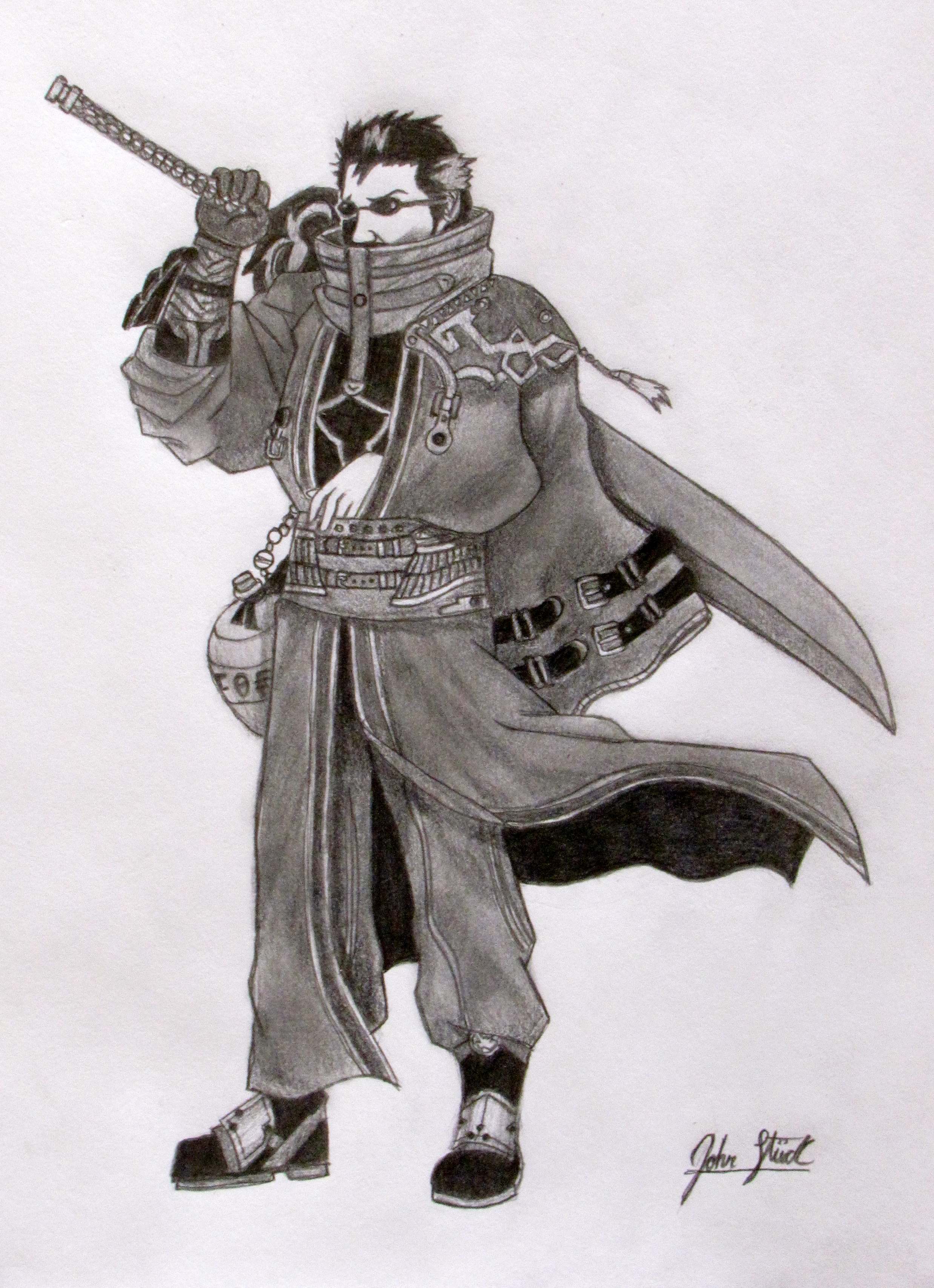
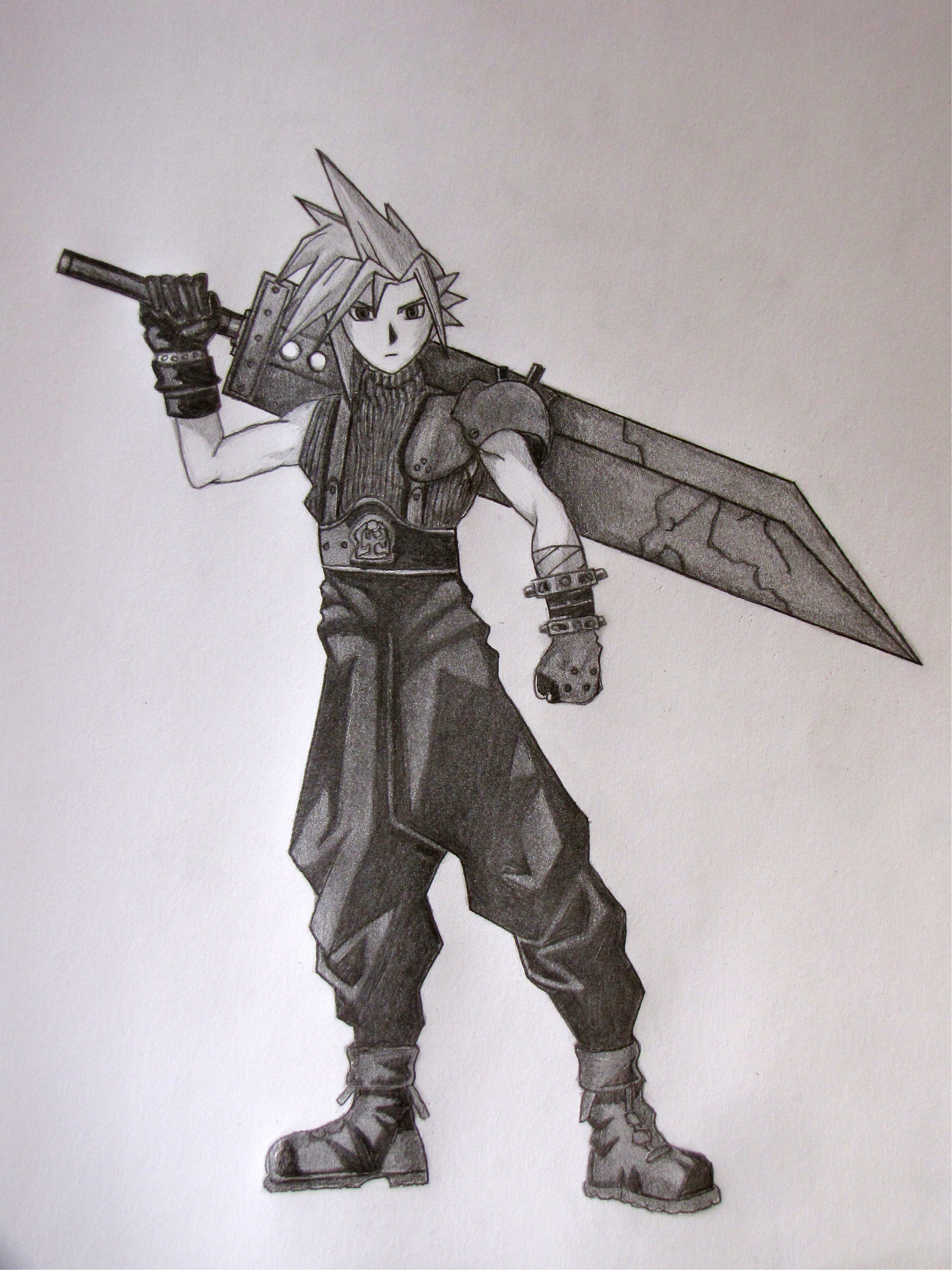
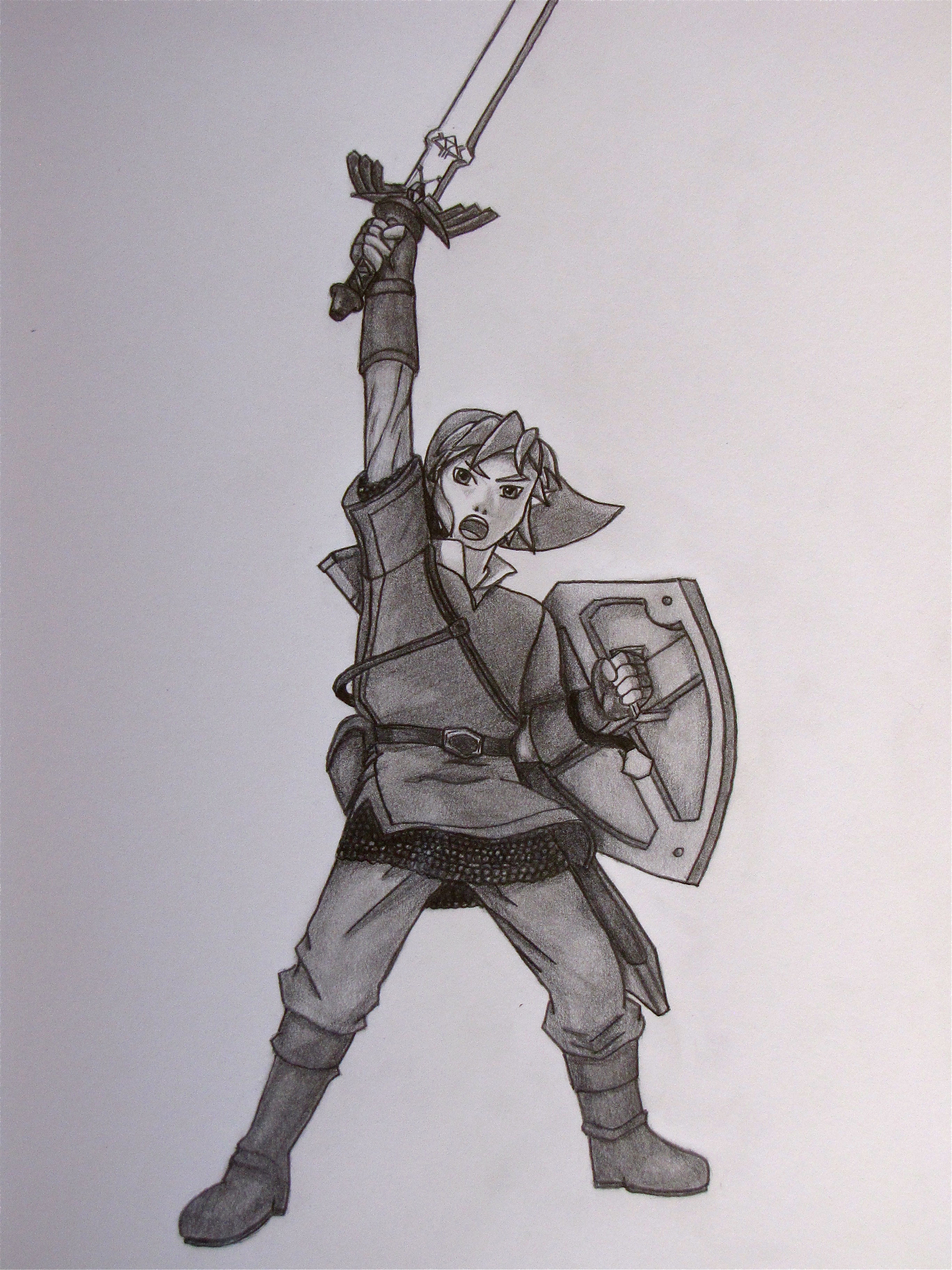
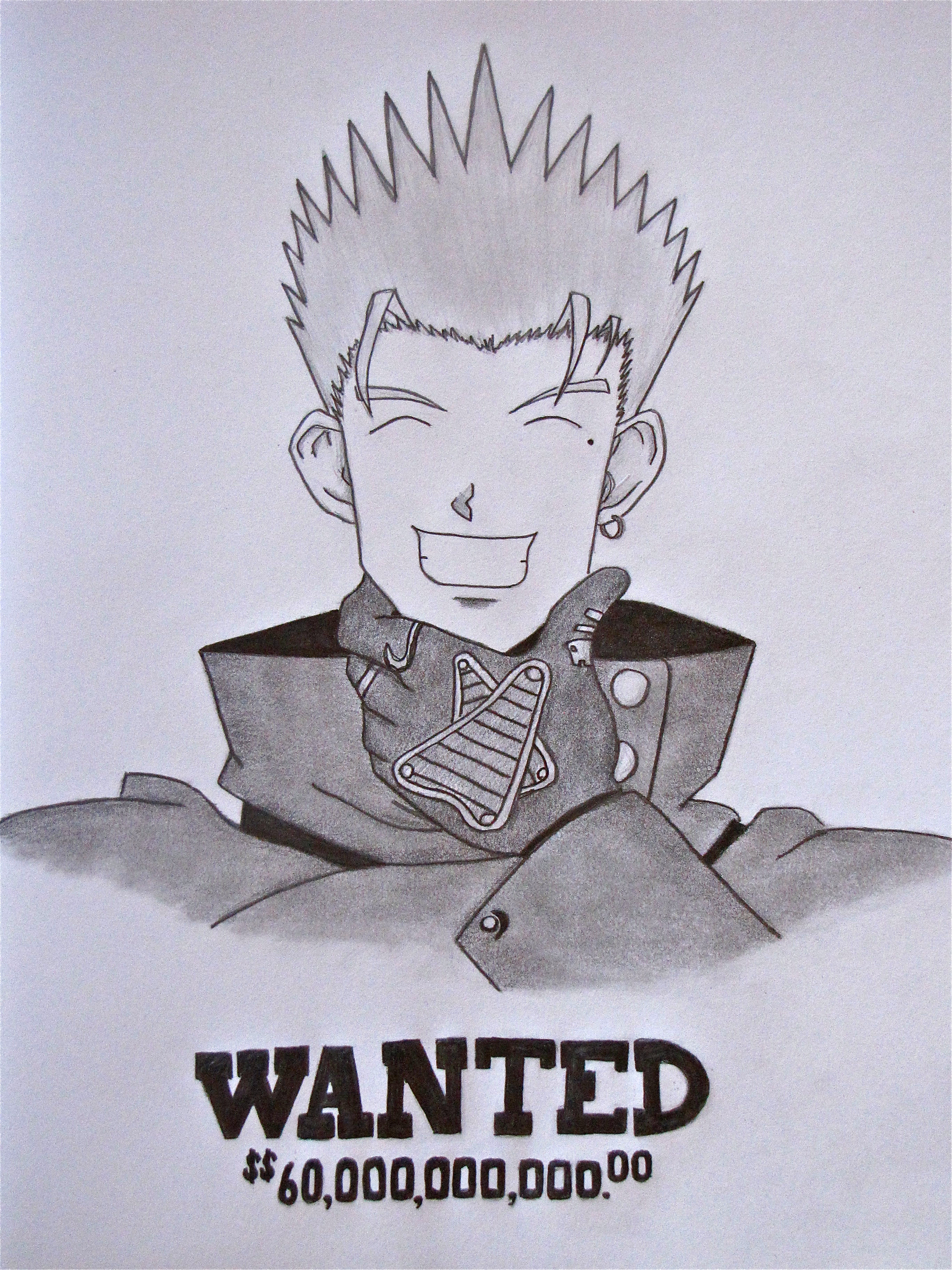
My old man is a great artist, and his portrait of my typewriter monkeys at work—work being a relative term—graces TMTF’s banner. Sadly, neither I nor my older brother inherited any of my old man’s artistic skill. My younger brother, however, is turning into an excellent artist, and I’m proud today to share some of his work. Check out his deviantART page for more awesome artwork!

I’m not sure why he needs the sunglasses or the sake jug, but Auron is one cool dude.

This excellent portrait of Cloud Strife leaves me with one question: Which is sharper, the sword or the hair?

Besides being brave and noble, Link has a great fashion sense.

Featuring Vash the Stampede, a legendary outlaw, this may be the most awesome wanted poster in the history of history.

97. TMTF’s Top Ten Video Game Heroes

Having previously posted a top ten list of video game villains, I felt obligated to put together a list for video game heroes, thus restoring equilibrium.

According to the standards of this list, a video game character must be playable in order to qualify as a hero.

Without further preamble, TMTF is excited to present…

The TMTF List of Top Ten Video Game Heroes!

10. Mario (Mario series)

The first thing to be said about Mario is that he has a fabulous ’stache. Equally impressive are his inexhaustible heroism and wide range of talents. When he’s not busy racing karts, competing in athletic events or curing viruses, Mario can usually be found trying to rescue his beloved Princess Peach, whose fate is to be kidnapped pretty much every time she steps outside. Apart from his mustache, chivalry and mad skills, Mario deserves a place on this list because…well…he’s Mario.

9. Samus Aran (Metroid series)

Unlike many women in video games, Samus Aran is no damsel in distress. Ms. Aran, a skilled bounty hunter, is quite comfortable fighting hostile extraterrestrials and exploring the uncharted depths of alien planets. Samus Aran’s high-tech armor is another good reason to give her a place on this list. Her suit is packed with all sorts of nifty weapons, tools and gadgets. It’s also modest and sensible—unlike many of the outfits women in video games are forced to wear.

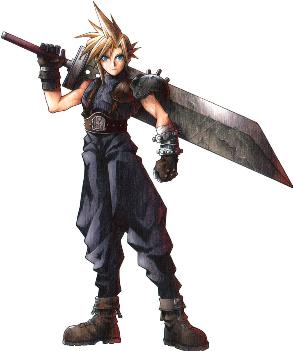
8. Cloud Strife (Final Fantasy VII)

Introduced as an aloof soldier, Cloud is revealed to be a man with a tragic past, struggling to forgive himself and atone for his mistakes. He’s also kind of a jerk, which is why I debated putting him on this list. Cloud won me over in the end: partly because he’s a compelling character, and mostly because he’s ridiculously cool. Although his redemption is a major theme of Final Fantasy VII, most players remember Cloud for his impossibly large sword.

7. Sora (Kingdom Hearts series)

The protagonists in many RPGs are bitter, taciturn outcasts. (Ahem, Cloud Strife.) Sora is a refreshing exception to the rule: cheerful, friendly, fiercely loyal to his friends and always ready to help. Chosen by destiny to wield a weapon called the Keyblade, Sora is thrown into a universe in which all worlds are under attack by dark, mysterious creatures known as the Heartless. Sora never loses hope, no matter how desperate the situation, and he’s a genuinely nice guy.

6. Marche Radiuju (Final Fantasy Tactics Advance)

Yes, Marche Radiuju is an obscure character. Yes, his outfit is absurd. No, I don’t know how to pronounce his last name. Setting aside these concerns, Marche is quite a hero. When he and his friends become trapped in a fantasy world, he takes it upon himself to open a way for them to go home. Marche grows from a timid boy into a fearless leader, exploring new places, conquering vicious foes and even confronting his friends in order to do what he believes is right. He might not be as famous as some of the other heroes on this list, but Marche Radiuju is no less heroic.

5. Balthier (Final Fantasy XII)

The self-proclaiming leading man of Final Fantasy XII, Balthier is a sky pirate with a fabulous fashion sense. He was a powerful politician years ago, but he’s cleaned up his act (as he would put it) and become an honest brigand. Balthier has a strong sense of justice and loyalty, which he’s careful to hide behind an indifferent manner, a sharp wit and a truly staggering ego. In a story full of bitterness and betrayal, Balthier shines like the star he claims to be.

4. Frog (Chrono Trigger)

Although he appears to be a monstrous amphibian, Frog was once a brave lad named Glenn. A sorcerer called Magus murdered Glenn’s mentor and cursed the unlucky lad with a frog’s shape, ruining his ambitions of becoming a knight. Glenn abandoned his name and took up the lonely life of a vigilante. As the kingdom comes under attack, he joins the battle to defend it from Magus and his minions. Frog’s bravery, chivalry, unique appearance, intriguing characterization and epic musical theme earn him a place on this list.

3. Aerith (Final Fantasy VII)

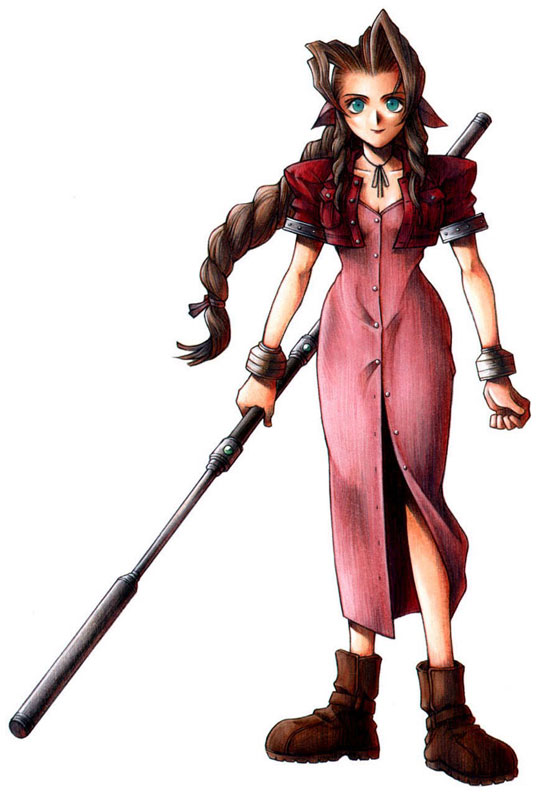
Aerith is a paradox. She’s angelic and ethereal, yet down-to-earth and friendly. In the slums of Midgar—a dark, dirty place full of trash, monsters and ruined buildings—Aerith keeps a garden and sells flowers to make a living. The heroes of Final Fantasy VII are mostly embittered, tough and cynical. Aerith is cheerful, hopeful and compassionate. She has a beautiful musical theme, too. Then, halfway through the game, Aerith dies. Even though her dying actions help save the world, her companions (not to mention gamers everywhere) are left with a profound sense of loss.

2. Phoenix Wright (Ace Attorney series)

Objection! Lawyers are not nearly so interesting as warriors, knights and bounty hunters. A mere lawyer does not deserve so high a place on this list of video game heroes… or does he? In the case of this particular lawyer, I overrule all objections and present the court with the following statement: Phoenix Wright is awesome. A rookie defense attorney, Phoenix defends his clients with perseverance, sarcasm, luck, spiky hair and an unshakable belief that everyone deserves a fair trial.

1. Link (Legend of Zelda series)

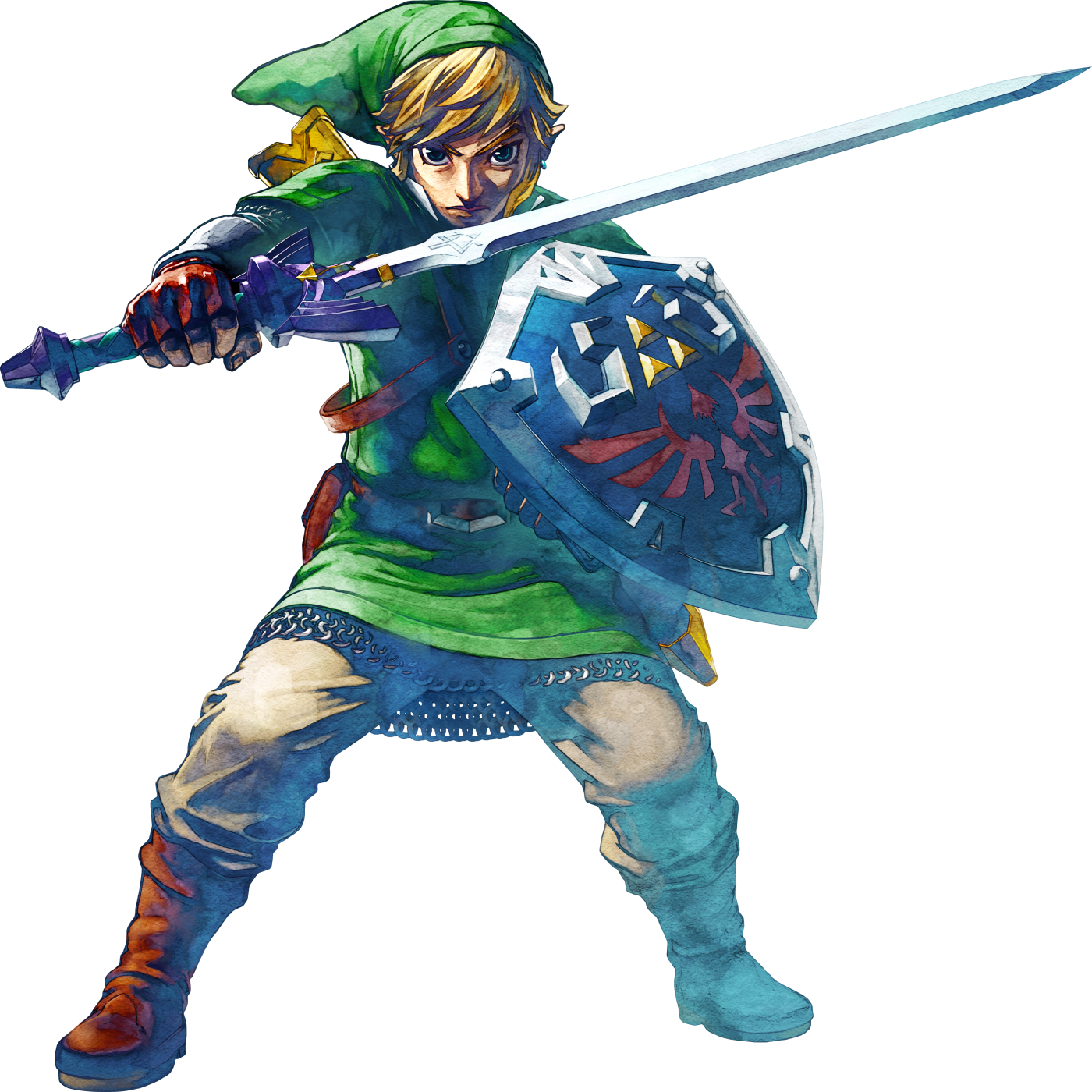
Link lacks any intricate characterization or complicated backstory. He’s a silent protagonist, without so much as a word of dialogue. Why have I put him first on this list? Link isn’t merely a character—he’s an archetype. He is the Everyman, the unexpected hero who is snatched from a peaceful life, thrown into an adventure and pitted against a ruthless enemy. Link is a simple character, but his simplicity serves him well. Right from the beginning, the player gets it. No elaborate explanations are needed. Link is an ordinary guy who overcomes evil and becomes a hero. It’s an old story, and one that strikes a universal chord to this day.

O people of the Internet, what great video game heroes would you add to this list? Let us know in the comments!

85. TMTF’s Top Ten Video Game Villains

TMTF has already featured a top ten list, but the old impulse to categorize things has stirred again deep within my blogger’s heart. This time, the object of my top-ten-list-mania is video game characters.

We cheer for the heroes, naturally, but—let’s be honest—the villains are usually much more interesting. Thus TMTF is excited to present…

The TMTF List of Top Ten Video Game Villains!

10. Dahlia Hawthorne (Ace Attorney: Trials and Tribulations)

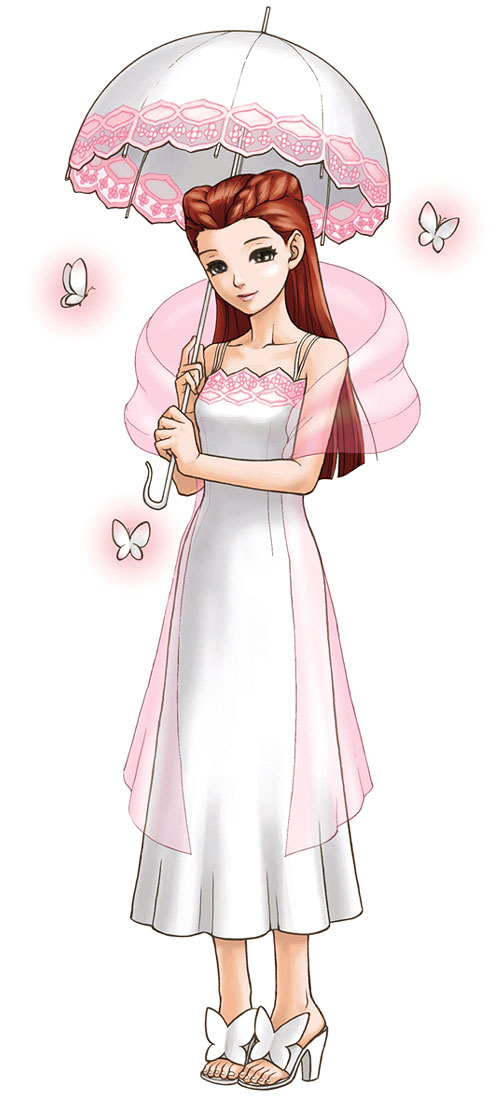
Ace Attorney villains aren’t typical video game baddies: they don’t breathe fire, wield chainsaws or threaten to inflict any other kind of bodily harm. No, their villainy is much more insidious. The player must corner them in court and prove their guilt with hard evidence. Of all these criminals, none is creepier than Dahlia Hawthorne, a dainty young lady with a parasol and a lacy dress. Behind that fair façade lurks a vindictive, selfish and manipulative murderer. Although she wears a sweet smile, Hawthorne betrays her true nature by glaring murderously at any attorney foolish enough to cross her.

9. Bowser (Mario series)

Bowser may not be the most threatening villain—or even the most competent—but his tenacity is remarkable. After twenty-five years of trying to defeat Mario, he’s still at it. Bowser is delightfully self-conceited. At one point, he announces his entrance by roaring, “Did somebody page the king of awesome?” In spite of his shortcomings, he can also be pretty scary. Giga Bowser, anyone?

8. Majora (Legend of Zelda: Majora’s Mask)

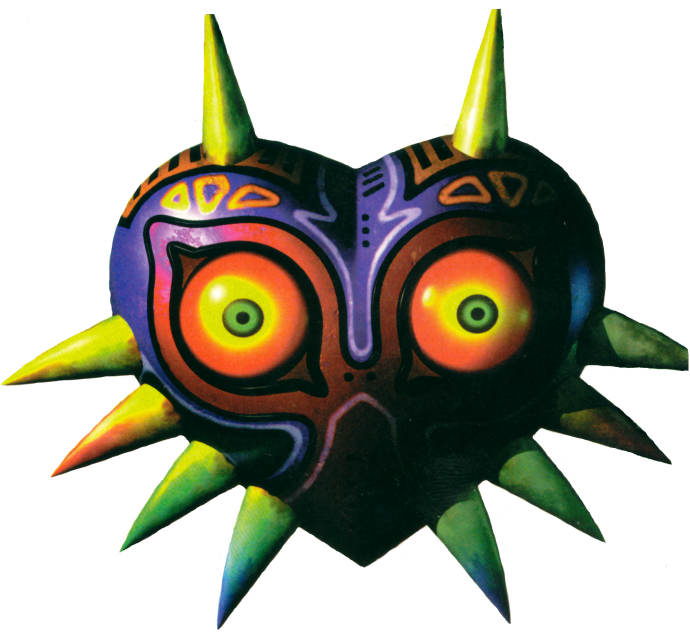
Before reading further, go back and spend fifteen seconds looking at Majora’s Mask. Go on. I’ll wait for you. I could write lots about Majora, but everything I have to say is expressed much more eloquently in the mad, nihilistic stare of those horrible yellow eyes. Majora is demented, with no apparent motivation other than bringing the world to ruin. Ambitious, power-hungry villains are scary, but at least we understand them. Truly terrifying are villains like Majora, who are driven by nothing more than a detached, inexplicable determination to see the world burn.

7. Sarah Kerrigan (StarCraft series)

Sarah Kerrigan isn’t a villain at first—in fact, she’s hardly a major character. Kerrigan is introduced as an insurgent fighting to topple an oppressive government, and she seems like a pretty decent person. Then she’s betrayed by her superior, left to die and assimilated into the hostile extraterrestrial species known as the Zerg. Now a superhuman creature, she begins a campaign to conquer the sector, betraying allies and showing no mercy. Kerrigan’s unexpected descent into evil earns her a place on this list, along with the cool, casual way she grinds her enemies into the dust.

6. Giygas (Earthbound)

Earthbound is not a typical RPG. Its heroes aren’t warriors with swords and lances, but kids with baseball bats and frying pans. The game is cheerful, full of bright visuals and quirky humor. All this stands in stark contrast to its villain, possibly the freakiest enemy to appear in any video game ever. Giygas is… an extraterrestrial entity driven insane by its own power, maybe? Whatever it is, it looks terrifying and can speak only in the fragmented phrases expected of a creature whose consciousness has been dissolved by evil. The fact that it’s impossible to defeat without using a strange trick makes it that much scarier.

5. Lavos (Chrono Trigger)

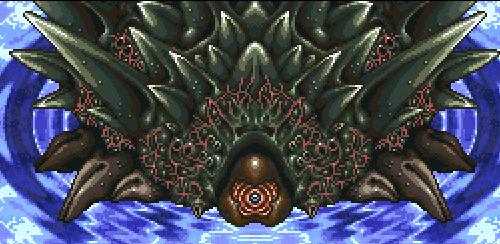
Chrono Trigger is another unusual RPG, not to mention a masterpiece. The hero travels through time from prehistory to the far future, and his companions—a medieval knight, a cave woman and a dilapidated robot, among others—span the whole of the world’s history. Their enemy? An extraterrestrial parasite called Lavos that burrows into the world’s crust, spends millennia draining the planet’s life and emerges to reduce it to ashes. Lavos isn’t so much a character as a deadly force, a cross between a plague and a thousand atomic weapons, destined to destroy the world—unless the player can stop it first, of course.

4. GLaDOS (Portal series)

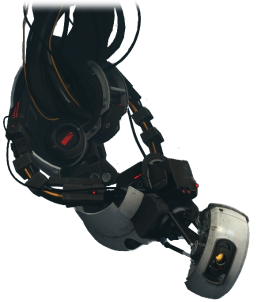
GLaDOS, a computer developed by Aperture Science, is childish, sarcastic, spiteful and surprisingly likable. It puts the game’s protagonist through a series of tests, promising her a slice of cake if she succeeds in passing them all. Only partway through the game does it become clear that GLaDOS is trying to kill her. Even after its sinister nature is revealed, the computer remains an engaging character. For an amoral machine, GLaDOS earns quite a lot of respect—and perhaps even sympathy—from the player. Plus, GLaDOS sings “Still Alive.” Need I say more?

3. Kefka Palazzo (Final Fantasy VI)

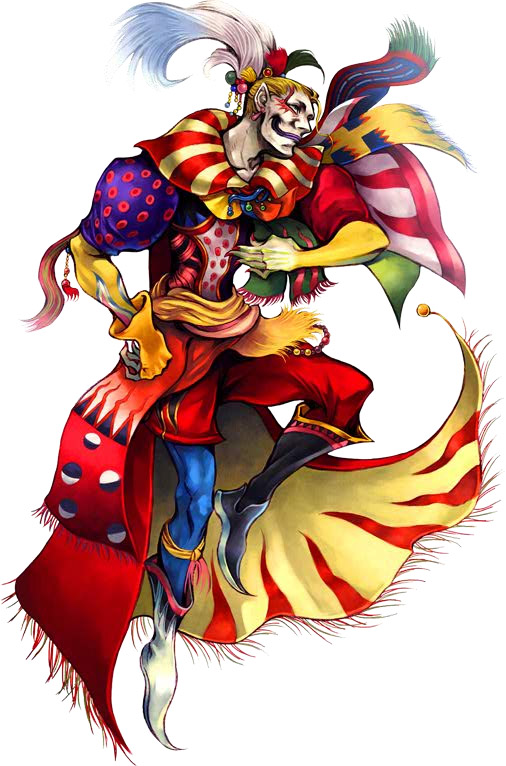
Yes, he looks a bit like Joker from the Batman franchise, and yes, he shares the same twisted sense of glee, but Kefka is unforgettable. Before Kefka, most RPG villains were distant, predictable tyrants, who relied upon minions to eliminate the protagonists and sometimes made brief appearances to taunt the player. Then Kefka appears on the scene—as a lackey. A servant of the evil Emperor Gestahl, Kefka runs like a coward every time the player confronts him. Through betrayal and deception, however, Kefka attains an ancient power and devastates the earth. In the end, the protagonists don’t save the world—they save what’s left of it. Besides his memorable rise to power, Kefka is notable for his nihilistic views and fantastic musical theme, the four-part, twelve-to-seventeen-minute “Dancing Mad.”

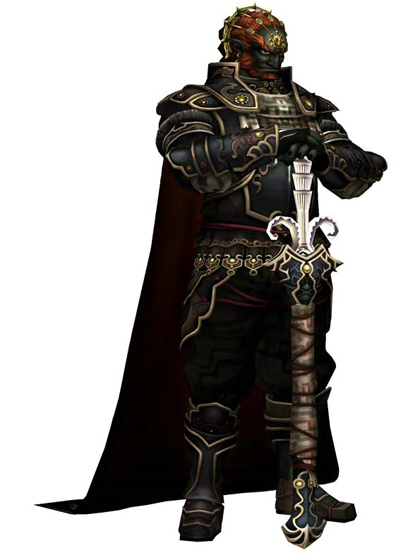
2. Ganon (Legend of Zelda series)

Ganon, also called Ganondorf, is one stubborn guy. Generations of heroes rise to confront him, yet he manages to press on, century after century, relentlessly seeking the powerful relic known as the Triforce. Each game gives a slightly different spin on Ganon’s character. In Ocarina of Time, he’s a thief: arrogant, treacherous and cruel. Wind Waker introduces us to a sorrowful, bitter Ganon, and Twilight Princess gives us a Ganon pulling strings from the shadows. In every game, whether controlling fiends, transforming into monsters or facing the hero in single combat, Ganon is a force with which to be reckoned.

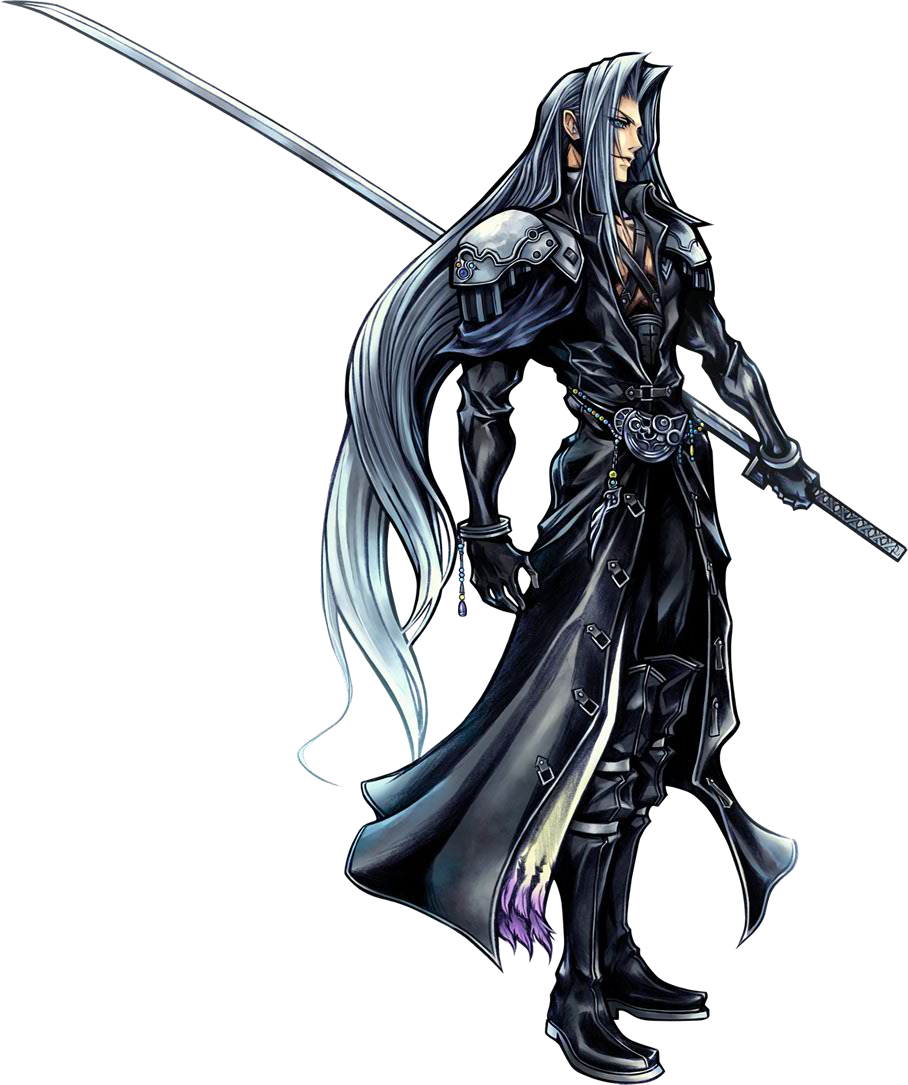
1. Sephiroth (Final Fantasy VII)

Don’t be fooled by the long silver hair and stylish coat—Sephiroth is about as evil as a villain can get. Tragic backstory full of disastrous misunderstandings? Check. Delusions of godlike grandeur? Check. Utter disregard for morality, conscience or decency? Check. Tendency to massacre innocent, unsuspecting people? Check. Driven by a lust for power and revenge, Sephiroth manipulates one protagonist, brutally murders another and casually inflicts all kinds of havoc upon the world. Add his epic musical leitmotif, “One Winged Angel,” and you’ve got a villain to give the bravest hero second thoughts.

O people of the Internet, what great video game villains would you add to this list? Let us know in the comments!

57. Final Fantasy

I have a fascination for the fantasy genre. Fantasy provides a unique medium through which to explore themes like redemption and destiny and objective morality. Fantasy also teems with dragons and wizards and heroes. In other words, it’s got pretty much everything.

As I’ve mentioned in a previous post, fantasy has branched out into roughly several million subgenres: high fantasy, low fantasy, dark fantasy, steampunk fantasy, urban fantasy, magic realism, paranormal romance—the list goes on and on and on.

One of my favorite subgenres of fantasy also happens to be a series of video games. I speak, of course, of Final Fantasy.

Fantasy might have a ridiculous number of subgenres, but Final Fantasy doesn’t seem to fit any of them. It basically creates its own.

A good word to describe the Final Fantasy games would be eclectic. The games take many wildly different elements—elements that simply should not make sense in the same story—and somehow weave them together into compelling narratives. Soldiers wielding swords ride motorcycles. Scientists in research facilities study magic and genetic engineering in neighboring laboratories. Heroes are confronted by robots one moment and dragons the next. A hodgepodge of elements from fantasy and science fiction are combined to create worlds that seem quite believable.

I saw worlds, plural, because each Final Fantasy game takes place in an entirely different world. This means each game features a new plot, setting and cast of characters more or less unrelated to any other game in the series. Each game is its own adventure.

There are a few common threads throughout the Final Fantasy series. Reoccurring elements include creatures, names, terminology, plot devices and themes.

The themes of Final Fantasy are noteworthy as being surprisingly deep. The series deals with diverse moral, philosophical and ethical themes: everything from nihilism to environmentalism.

Apart from the fact that the games are fun to play, arguably the best thing about Final Fantasy is the characters. Whether seeking revenge, striving for redemption or grappling with existential angst, the characters of Final Fantasy are usually complex, dynamic and memorable.

The characters are also pretty cool. Consider Cloud Strife, equally renowned for his complex characterization and massive sword. Note also his spiky hair.

Massive swords tend to be another recurring feature of Final Fantasy games, by the way.

In regard to gameplay, the Final Fantasy games are quite good, though not as inspired as, say, the Legend of Zelda series. Final Fantasy offers massive worlds to explore and endless quests to accomplish, but the RPG-style battles can get a little tedious. It should be noted that the Final Fantasy games have amazing music.

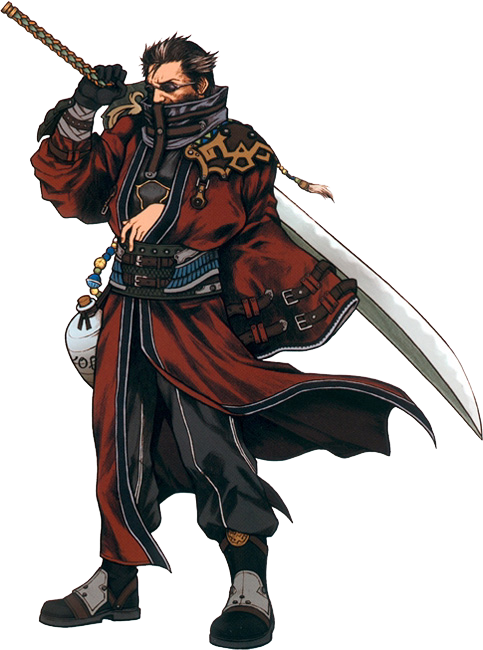
I can hardly resist including one more image, this time a striking portrait that goes a long way to illustrate the essence of Final Fantasy.

This character represents pretty much everything there is to know about Final Fantasy. His design represents the strangely coherent blend of old and new prevalent through the series, combining stylish sunglasses with clothes that wouldn’t look out of place in feudal Japan. His face hints at deep internal struggles—in his case, unfulfilled promises—typical of Final Fantasy characters. His sword is, of course, improbably large.

Although some critics argue that Final Fantasy has declined in recent years, I argue that it’s still one of the best video game series in existence. It also brings a number of excellent narratives to the fantasy genre: a contribution not to be overlooked.

15. Video Game Music

I love video game music. As I’ve mentioned previously, video games have an unfortunate (and mostly unmerited) reputation for being lowbrow or even harmful. Video game music is not generally considered to be of much value.

This is sad, since much of the music from video games is absolutely superb.

In addition to the great music in video games, there are thousands of remixes created by musicians who rearrange, reinterpret and reinvent video game melodies.

There are four things I particularly like about video game remixes.

They’re creative

I’ve heard the main theme from Super Mario Bros. remixed as electronica, performed by a string quartet, scatted a cappella and played on a piano. A single song might be interpreted in a hundred different ways. It’s delightful to find a new perspective on a familiar melody—rather like looking at a painting in a museum and recognizing the view out of my own bedroom window.

They cover pretty much every musical genre

I’ve heard at least one song rearranged with bagpipes in the style of traditional Scottish music. Need I say more?

They’re often amazing

Composers of video game music have commented on the surpassing quality of remixes they’ve heard. David Wise and Christopher Tin, among others, have spoken positively about remixes of their music. (Christopher Tin, by the way, won a Grammy for a song he composed for a video game.) I’ve heard many remixes of professional quality, sometimes with vocals or live instruments.

They’re free

Most video game remixes are available for download—legally—for free. Because remixes are based on music owned by video game developers, those who make them aren’t usually able to sell them without breaking copyright law. The alternative is to distribute remixes for free, which is legal and totally awesome.

In order to demonstrate the quality, variety and grandeur of video game music, I’ve decided to give a few examples—or rather, one example remixed in several ways. The remixes are taken from OverClocked Remix, an organization “dedicated to the appreciation and promotion of video game music as an art form.”

First is the original song, “Valley of the Fallen Star” from Final Fantasy VII. The song has sort of a Native American feel to it, with muted percussion providing rhythm and a woodwind carrying the melody.

Next we have “Red XII Redux,” a straightforward rock remix—nothing fancy or extravagant, just a smooth arrangement of the song recorded live.

Moving from laid-back rock to frantic guitar shredding, “Lunatic Moon” combines rock and electronica in a song that practically radiates energy and aggression.

We finish with “Ascension to Cosmo Canyon.” The song is simply beautiful, every bit as peaceful as “Lunatic Moon” was frenetic, with piano and strings leading into a woodwind melody backed by drums and a male chorus. The song is lovely and has a decidedly cinematic feel.

These are just a few examples of how one song can be interpreted in many ways. Video game music is wonderful on its own merits—especially in these days when so many games include music from choirs and live orchestras—and remixes present endless interpretations and reinventions of video game melodies.

Remixes are also free. You can’t beat that!

8. An Unapologetic Apology for Video Games

I like knives. To be honest, I like sharp objects in general: knives, daggers, sabers, katanas, broadswords, machetes, claymores and pretty much every other kind of blade devised by mankind.

(It would be more politically correct to say humankind, but in this case mankind is probably more accurate since men are the ones responsible for most of the blades in the world.)

Used correctly, knives can be useful for everything from peeling oranges to creating works of art. Used incorrectly, knives can kill and hurt and destroy. Knives are inherently neither good nor bad. Whether they’re good or bad depends on how they’re used.

I’ll return to the exciting subject of knives in a moment, but I should mention first that I’m student teaching at a local high school. The other day I glanced through a book for teachers about the problems of apathy and disrespect in the classroom. I was a little disheartened when the book blamed video games for the lethargy of unmotivated students.

Why was I disheartened?

Because it’s often true.

Video games can be addictive. Some are horribly violent. Many are painfully shallow or stupid. Finally, while I’m no expert in psychology, I think the satisfaction of accomplishing goals in video games can become an unhealthy substitute for the satisfaction of accomplishing goals in real life. Why bother working hard at school when you can save—or conquer—the world in a video game?

Video games can definitely be harmful. So can knives. But knives can also be beneficial, and I think video games can be too.

There are two kinds of apologies. First is an expression or remorse or regret. Second is a justification or defense. This post is the second kind of apology.

If you will, consider the following.

It’s not fair to judge an entire medium by a few bad examples

Yes, there are video games like Grand Theft Auto and God of War that glorify violence, profanity and sexual depravity. There are also books and films and songs that are just as bad or even worse. We don’t condemn all books or films or songs because some are bad. Why then do we assume all video games are harmful because some happen to be?

Video games are a unique form of storytelling

I’ve read many books and played many games. To be honest, some of those games are a lot better than some of those books. The Final Fantasy games, for example, consistently provide fantastic settings, clever plots, superb characterization, interesting themes and (in the later titles) good writing and acting.

Some games even give players the freedom to influence the story by their decisions: the player and the storyteller become partners in bringing the story to its conclusion.

Video games have artistic value

There are people—including some game developers—who would challenge this assertion, but I think video games can be a valid form of artistic expression. Graphic design, animation, writing, music and acting are acknowledged to be forms of art.

Video games bring together some or all of these artistic forms and add the unique element of gameplay, the finely-tuned mechanics that allow a player to interact with the game. How is that not artistic?

Video games are fun

‘Nuff said.

Video games can be thought-provoking

Although we expect them to be intellectually vapid, video games can be quite profound. Final Fantasy Tactics Advance, for example, has some fascinating moral dilemmas: Is a harmless illusion better than a painful reality? At what point does a person have the right to make decisions for another person?

The Final Fantasy series deals with all sorts of serious moral, political and ecological themes, and there are many other games that wrestle with issues of equal importance.

Video games bring people together

The stereotypical gamer is a lonely misfit with pale skin and no social experience. However, as is often the case, the stereotype is usually wrong. Most of the gamers I’ve met are cheerful, well-adjusted people. In my own experience, video games have actually strengthened friendships by giving friends something to do together. It’s hard not to enjoy spending time with other people when you’re tossing green shells at each other in Mario Kart or trying to knock each other off the screen in Super Smash Bros.

Is there more to a meaningful friendship than video games? Of course. Can video games be part of a meaningful friendship? Absolutely.

Video games inspire creativity

I’ve seen beautiful artwork inspired by video games and listened to amazing arrangements of video game music. There are many online comics centered on the oddities of games and gaming culture; some of them are really fun to read.

Video games have inspired many creative people to exercise their creativity, and that’s a very good thing.

What are your thoughts? Are video games a good thing? Are they evil? Let us know in the comments!