328. The Post of Resolutions Past

Christmas is over, but this is no time for gloom! A new year is nearly here! We must face 2015 with hope, caffeine, and courage. After all, the start of each new year is an opportunity for self-reflection and self-improvement… or despair and apathy, if you’re a pessimist. It’s also a time for reminiscence, celebration, and setting stuff on fire.

Well, I suppose that last one only applies in Ecuador, where effigies are burned in the streets on New Year’s Eve. Every December I remember this tradition fondly, and then make new year’s resolutions instead. I would be arrested for arson if I built a bonfire on the streets of my quiet Indiana town.

Good times, good times.

Oh, Ecuador, how I miss you. Your traditions an inspiration, like a beacon burning brightly—a blazing beacon doused in kerosene and likely to burn down entire city blocks.

Before I list my resolutions for the new year, I should take a few moments to review my goals for the old one. After all, what good are resolutions if I don’t try to keep them?

These were my resolutions for 2014.

I will value variety.

I enjoyed some new things this year, from culinary surprises (who knew fresh spinach made such a good salad?) to gaming discoveries (Metal Gear Solid is pretty rad). However, for the most part, I stuck to familiar comforts. I must consider this resolution a failure.

I will live with confidence.

Much to my own surprise, I kept this resolution. I’m still an anxious person, but I’m learning to have fake greater confidence in myself.

I will be a people person.

I… sort of kept this one, I guess? I didn’t go out of my way to meet people, but I made a couple of new friends and did a slightly better job of keeping in touch with old ones.

I will keep up with this lousy blog.

This resolution was mostly successful. TMTF took a few breaks, but I’m pretty sure it was more consistent this year than before. If it wasn’t, blame my typewriter monkeys. Always blame my typewriter monkeys. (I need that slogan on a T-shirt.)

I will drink tea and coffee while they’re still hot.

I nailed this one.

I will be consistent and faithful in fulfilling my spiritual commitments.

I didn’t spend as much time praying and reading the Bible this year as in years past, but I was also busier this year with work, blogging, and other commitments. Although the quantity of time spent with God was less, I think its quality was improved; I’m getting better at reflecting on Scripture and praying prayers that aren’t completely awful. Let’s call this one a draw.

I have half a dozen new resolutions lined up for next year… but that’s for the next post on this blog.

Speaking of the blog, this was an interesting year for TMTF. I revamped its reviews, embraced the Oxford comma, turned into the Hulk, had an insightful discussion (in an animated video!) with a well-dressed wolf, and reviewed all those Metal Gear Solid games. In fact, I played even more of those games than I reviewed. I may declare 2014 the Year of Metal Gear Solid… or Metal Year Solid for short. (I’m sorry. I’m so, so sorry.)

Now, if you’ll excuse me, I’m going to go daydream about setting fire to stuff in the streets.

Thanks for reading! If you have a moment, please check out TMTF’s charity fundraisers this month and make the new year awesome for a person in need!

311. Strange American Pumpkin Rituals

I’ve spent a few years in Indiana, one of the United States of America. Indiana is extremely different from my homeland of Ecuador. The season of autumn brings all sorts of strange cultural customs. In fact, as we approach the holiday known as “Halloween,” I’ve seen disconcerting rituals take place in my very neighborhood.

Today TMTF delves into anthropology and investigates strange American pumpkin rituals. For science.

I’m baffled by the bizarre, violent, and highly dubious custom of carving pumpkins into facsimiles of severed heads. These gruesome gourds are known as “jackal lanterns,” or some such.

Nothing brightens up a porch like grotesque facsimiles of severed heads!

Nothing brightens up a home like grotesque facsimiles of severed heads!

I recently witnessed the creation of jackal lanterns firsthand. First, the pumpkins were eviscerated and their innards piled in slimy heaps. Seeds were extracted from these heaps, seasoned, and cooked in an oven. I gathered that roasted pumpkin seeds are a seasonal delicacy, and tried a small handful—for science. The seeds tasted like buttered wood chips and were more or less completely indigestible. Americans must lack taste buds and have ironclad stomachs—but that’s research for another time.

After they were emptied of seeds and pulp, the hapless pumpkins had faces carved in them. These were grotesque. Further researches on my part yielded some interesting information: although jackal lanterns are generally patterned after severed heads, they can feature words, portraits, logos, cartoon ponies, interstellar weapons of mass destruction, and other forms of visual art.

Once completed, jackal lanterns are usually placed upon porches or in front yards. Lights or candles are placed inside them, shining through apertures and places where the sides of the pumpkins have been pared to a translucent thinness. This explains the lantern part of jackal lantern, but my researches have yet to explain the jackal part. Is the purpose of displaying these lanterns to frighten away jackals?

My other hypothesis is that jackal lanterns are deployed outside homes as protective charms to ward off gnomes, trolls, or evil spirits.

Halloween brings many more peculiar rituals, such as the custom of donning disguises, accosting strangers on their doorsteps, and demanding sweets. This ritual is apparently call “triquertreting.” (I haven’t actually seen the word written, so I’ve transcribed it phonetically here.) I can only presume the word is derived from the French triquer (cudgel) and the German treten (trample). Thus triquertreting can be loosely translated to cudgeling and trampling, which confirms my worst fears about Halloween and its customs.

All this makes me long for Ecuador’s peaceful and sensible customs for the Día de los Difuntos (Day of the Dead) on November 2, a couple of days after Halloween. Ecuadorians eat guaguas de pan, children made of bread; slurp colada morada, a soupy hot drink made with spiced fruit; and dine atop the graves of dead ancestors. What’s weird about that?

308. On the Shoulders of Giants

I recently spent a few days traveling with my parents and younger brother. It was quite a trip: exciting, exhausting, sentimental, and rife with unexpected ups and downs. Tolkien was right: It’s a dangerous business, going out your door. There’s no telling what will happen.

At one point, we had dinner with relatives and a family friend. Our conversations during and after the meal were of a kind common in my family: full of nostalgia, peppered with Spanish, ringing with laughter, and rich in stories of distant times and faraway places.

I heard anecdotes of adventures (and misadventures) in Ecuador, Portugal, Morocco, Fiji, and Antarctica, among other countries. I lounged on a sofa, looking round a cozy room lit by soft lamps, and listened contentedly to wild tales of grass skirts, bus breakdowns, shifty carpet merchants, and thieving penguins.

Penguin!

He may look innocent, but this bird is a stone-cold criminal. (Pun intended. I’m so, so sorry.)

For that one evening, I forgot the quiet, comfortable, soundly American life I’ve lived for the past two years. I remembered places long forgotten: gray beaches strewn with shells and driftwood; low hills studded with weathered trees; water cascading down cliffs covered in moss and ferns; mountains towering green and silent against the sky. As places were mentioned that I hadn’t visited, my imagination filled in the gaps.

Some of the stories that night told took me back decades to a time when the coast of Ecuador, my homeland, was a wilderness. There were hardly any cars or paved roads in those days. People traveled on foot, in canoes, and on rickety buses. My grandfather, a missionary to Ecuador’s coast many decades ago, was a pioneer in his time.

Those conversations opened windows in my imagination and memory, giving glimpses of things dimly seen or half-forgotten.

All of this reminded me of three things.

I am such a softy.

As I enjoy a life of incredible luxury, I often take for granted blessings like clean water, hot showers, fast Internet, video games, a comfortable home, a steady income, a safe neighborhood, and a steady supply of coffee. While I gripe about chilly weather and minor car troubles, a staggering number of people survive in harsh conditions with very few luxuries.

It’s my responsibility to be grateful and generous… and also to toughen up a bit!

I panic over little things.

I feel extremely stressed by small things, from the everyday pressures of my job to minor problems like my Internet connection failing. It helps to recall those tales of risks, perils, and painful misadventures. Things could always be much worse.

I need to keep a proper sense of perspective.

I mustn’t get too comfortable.

I get so comfortable in my quiet Indiana life that I often forgot my all-important purpose of loving people. Love is hard. It leaves behind cozy armchairs, warm lamps, and cups of tea. It braves darkness, cold, and awkward pauses to reach out. Love makes me uncomfortable, but that shouldn’t ever stop me from trying to love people. It didn’t stop my grandfather. It doesn’t stop my parents. I mustn’t let it stop me.

All said, it was quite a trip.

All said, it was quite a trip.

I stand, as the saying goes, upon the shoulders of giants. I’m related to some remarkable people, and they’ve done some remarkable things. As I live out this unremarkable chapter of my life, I mustn’t ever lose sight of the things that matter most—the things I can’t see.

306. Ghost Stories

I don’t like Halloween.

Well, to be fair, it isn’t just Halloween. I’m a cynical grump when it comes to most holidays. I hate how they’re commercialized, I dislike the cutesy decorations, and I abhor how celebrations I cherish are overshadowed by twee nonsense.

Thanksgiving, the day we celebrate our blessings, is followed immediately by Black Friday, the day we celebrate our greed. The Christmas season has become two months of corporations clamoring for our attention, capitalizing on our nostalgia, and taking our money.

Halloween used to be the prelude to All Saints’ Day: a celebration of some of the most courageous men and women of the past two millennia. It’s now the time of year for bloody horror films, cheap candy, and decorations of the same blinding shade of orange as marine rescue equipment. No one remembers All Saints’ Day.

It makes me sad.

A horrible, horrible pumpkin

Stop grinning at me, you maniac! You’re horrible, cheap, and orange. Why on God’s green earth are you so happy about it?!

All the same, there are good things to be said for Halloween. I’m fascinated by scary stuff, and I like pumpkin spice-flavored everything. (This is odd, considering pumpkin spice exists only to make pumpkin taste less awful.) I’m also interested by ghost stories, notwithstanding my firm belief they’re pretty much all false.

(Yes, I believe in God and angels and the supernatural, but faith is not superstition. There is evidence for these things, but hardly any to back up tales of haunted houses or the Slenderman.)

A couple of coworkers and I shared ghost stories the other day. As we talked, I mentioned the most frightening moment of my life.

I once walked into my parents’ living room at night and saw what appeared to be a man hanged from the ceiling—I clearly saw the silhouette of legs against the pale light of the streetlamps outside. The hanged man turned out to be a pair of pants hung to dry, but it was still quite a shock.

I told one other story. It’s a tale of pale apparitions floating in the darkness, and it’s absolutely true.

There was once a student studying in a seminary on the coast of Ecuador. I don’t remember his name, so I’ll call him Socrates. This man arose from sleep one night to get a drink or use the bathroom in his dormitory. As he stumbled down the hall, fumbling in the dark, he was stunned by the sight of a ghostly thing floating toward him.

The apparition was the size of a small dinner plate and shaped vaguely like a half moon. It seemed to float about three feet above the ground. No sooner had Socrates registered this phenomenon than another came out of the darkness.

It was a smile.

Gleaming in the dark, a broad white smile appeared like the grin of the Cheshire Cat. It hung a couple of feet above the half moon. The two ghostly phenomena moved together along the hall. As they neared Socrates, he realized what they were.

The pale apparitions belonged to a very black man in a pair of very white underpants, smiling in greeting as he passed Socrates and returned to his bedroom in the dormitory.

I don’t expect to see any ghostly phenomena this October, but I shall certainly see hideous holiday decorations, and that will be quite bad enough.

305. That Time My Vacation Held Me Prisoner

I begin a long vacation tomorrow, and I’m thankful. For weeks, work has been an exhausting, stressful, thankless grind. Dash it all, I am so, so thankful for a long break.

While musing upon vacations I had as a kid in Ecuador, I recently recalled That Time My Vacation Held Me Prisoner: an adventure equally restful and stressful, when my family and I were prevented from going home by barricades of burning tires. Ah, Ecuador, why did I ever leave you?

OLYMPUS DIGITAL CAMERA

Ecuador: land of dazzling natural beauty, diverse cultures, superb cuisine… and horrible, horrible cockroaches. I knew I had a reason for leaving.

In the jungles of Ecuador, east of the Andes, there is a little town called Shell Mera. (This tiny settlement made national news in the fifties due to the Auca incident, in which five missionaries were killed.) Near Shell Mera is a camp called Mangayacu. This motley collection of cabins, pastures, and the world’s best swimming pool was one of my family’s favorite vacation spots until we left Ecuador in 2008.

Mangayacu pool

Seriously, this pool is awesome: no chlorine, no life guards, and the exciting possibility of cutting open your feet on sharp rocks!

My family and I were once stranded in Mangayacu. This was a long time ago; I was somewhere between first and fourth grade, which would put this adventure in the late nineties. I’d nearly forgotten it; I’m very gifted at forgetting things.

My parents and brothers and I had finished our visit to Mangayacu and reluctantly packed up our things. After saying goodbye to our cabin, we took off in our dusty car and bumped along dirt roads in the direction of the town of Baños. (Yes, this happens to be Spanish for bathrooms. The word also means baths; the town is named after its hot springs.)

We were stopped by piles of burning tires. It was a paro (workers’ strike) shutting down the road. My dad got out of the car and pleaded our case to the strikers. They didn’t let us pass.

Back we went to the cabin we’d just left, delighted to enjoy a longer vacation, and apprehensive at how our vacation suddenly held us prisoner.

Mangayacu cabin view

I suppose there are worse prisons than the cabins at Mangayacu. At least the view is nice!

I don’t remember how many extra days we stayed at Mangayacu, but it was at least two or three. We scoured one or two tiny local shops for necessities like bread, and had a few meals at a local restaurant. I recall their stock running low because of the paro. As fun as it was at first to be stranded in a cozy jungle cabin, we felt more stressed with each new day. We wanted to go home!

At last, after my brother and I had missed at least a couple of school days, we made it safely back to our home in Santo Domingo de los Colorados. My older brother returned to Quito for school, and I resumed my studies at home.

Later visits to Mangayacu were undisturbed by paros and flaming tires. It was kind of fun to be held prisoner by our vacation, but I’m thankful it never happened again.

Every time I’m afraid I’ve run out of stories for these That Time I _____ posts, a memory of some odd adventure drifts back to me from the brightly-colored blur of the past twenty-something years. It’s surreal, and sweetly nostalgic. It makes me wonder what else I’ve forgotten.

Ah, well. It doesn’t matter. My latest vacation begins tomorrow, and I can’t wait. Here’s hoping this one doesn’t take me prisoner!

295. In Defense of the Fist Bump

In my twenty-odd years, I’ve done some traveling and been immersed in many different cultures. It’s been fascinating to observe different customs for greetings, goodbyes, and displays of respect or affection.

In Ecuador, where I grew up, it’s common for men and women to greet each other with hugs or kisses on the cheek. Uruguay, where my parents work, can be a little more effusive: men often greet other men with cheek kisses. The US, where I currently reside, generally frowns upon such intimate displays of affection; waves and handshakes are the norm. In South Korea, where I spent a month teaching, slight bows are used to demonstrate respect or gratitude.

Yes, I’ve seen all kinds of greetings. Which is the best? My all-time favorite greeting, by far, is the gentleman’s gesture known as the fist bump.

http://www.youtube.com/watch?v=UttmsTo_hFU

The fist bump is quick, friendly, informal, and surprisingly healthy. Handshakes spread germs like nobody’s business. Besides, palms perspire and that’s gross. There’s also the discomfort that comes from knowing neither how hard to grip a hand nor for how long to hold it.

Hugs, especially with strangers or distant acquaintances, aren’t much better. Am I the only person who finds it awkward to press my body up against someone whom I don’t know well? It was also uncomfortable in Ecuador and Uruguay when people swooped in to kiss me.

I… actually have no criticisms for slight bows. I bow to people occasionally. It’s a pity bowing hasn’t caught on in the West.

Fist bumps are definitely my favorite greeting, though. They represent a kind of warm, casual friendliness while never getting too up close and personal. Fist bumps are quick, easy, and sanitary. As I work in a group home for gentlemen with disabilities—an environment in which no one washes his hands without being asked—fist bumps are an especially welcome alternative to handshakes.

If you ever happen to run into me, dear reader, feel free to give me a fist bump.

When Philosophers Play Football

As the World Cup draws to a close, we at TMTF wonder what would happen if philosophers played football, the glorious sport known as fútbol in my country and soccer in the US.

Fortunately, this is a question answered many years ago by Monty Python, a British comedy group made up of insane, brilliant gentlemen. Their decision to put Greek and German philosophers on a football field together was nothing short of genius.

Speaking of the World Cup, I have a confession to make. I haven’t watched it. Having grown up in Ecuador, I know I should like fútbol. I admire the game, I love the passion of its fans and I enjoyed playing it as a kid, but… I don’t like watching sports. Not even fútbol can cure my aversion to athletics.

I kind of like philosophy, though.

280. By Faith

My older brother and his family are moving to the Dominican Republic.

I suppose it should have come as no surprise. My family and I and most of our relatives grew up in Ecuador and traveled regularly between the Americas. Relatives on both sides of my family, Stücks and Erdels, are wanderers. We are foreigners and strangers on earth. We bounce from place to place with practiced ease.

Many of my relatives, however, have settled more or less permanently in one place. I had assumed my brother Andrew and his family were among them.

I guess I was wrong.

Andrew and his wife Sarah own a house in Indiana. When they bought the place, it was kind of a wreck. They worked tirelessly to fix it up. They planted an enormous garden, which they diligently pruned and weeded. (Heck, even I spent more than a dozen hours yanking weeds out of their garden.) My brother and sister-in-law built a hen house and raised at least one or two generations of chickens. I haven’t even mentioned their cats, of which there were three at last count.

For all appearances, Andrew and Sarah and their little ones had settled in to stay.

At this moment, Andrew and Sarah are in the process of selling their house, giving away their possessions, obtaining passports for their three children—their youngest, by the way, is just a few weeks old—and preparing to move to some country they’ve never visited in their lives.

They are doing all this by faith.

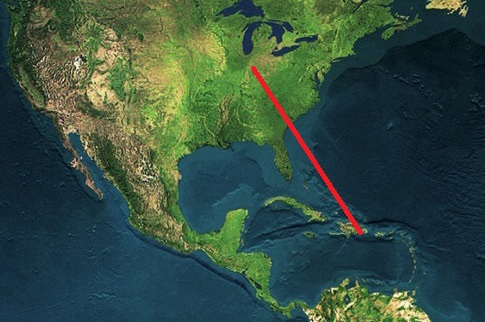
That little red line? Yeah, that's about seventeen hundred miles.

That little red line from Indiana to the Dominican Republic? Yeah, that’s about seventeen hundred miles.

When I talked with Andrew about their decision over the phone, I told him he should follow wherever God led. I could not, however, hold back my opinion that dropping everything abruptly and moving to another country seemed “ill-advised.”

I think Sarah found a better word for it in one of her emails: “crazy.”

Andrew and Sarah believe this crazy, ill-advised decision also happens to be the right one. I agree with them. They have good reasons to believe going to the DR is God’s will… and they have the faith to go.

They amaze me, and I’m proud of them.

I’m also not sure I have that kind of faith.

I was recently asked whether it took faith to grow up on the mission field in Ecuador. I replied, honestly, that it didn’t take much. My family was always there. My future always seemed secure. Ironically, it was when I stepped off the mission field and came to Indiana in the US that I found myself really depending on God.

Surrounded by strangers, disoriented by culture shock, out of place, uncertain of the future and feeling very much alone, it was hard for me to begin college in Indiana after leaving Ecuador six years ago. It was just as hard to leave Uruguay and return to Indiana two years ago.

Moving forward is still hard, and I’m settled comfortably. If God told me to leave everything—my cozy apartment, my fast Internet connection, my peaceful neighborhood, my endless supply of coffee and Cheez-Its from the local Wal-Mart—would I go? If a three-hour drive overwhelms me with anxiety, how would I handle moving, say, to Kenya? If depression makes my life in Indiana a challenge, how would I survive depression in some unfriendly, faraway place?

If God tells me to go, will I go?

One day after Andrew and Sarah confirmed their decision, my Scripture reading took me to Hebrews eleven. Yes, this is the By faith chapter. It lists all these great biblical heroes and the great things they did—things done by faith, of course—and then…

These people all died having faith in God.

How cheerful.

The chapter goes on.

They did not receive what God had promised to them. But they could see far ahead to all the things God promised and they were glad for them. They knew they were strangers here. This earth was not their home. People who say these things show they are looking for a country of their own. They did not think about the country they had come from. If they had, they might have gone back. But they wanted a better country. And so God is not ashamed to be called their God. He has made a city for them.

My brother and his family, like our dear parents and so many of the wonderful people in my life, have chosen to be strangers on earth. They’ve given up safe, permanent homes and faced all kinds of difficulties for rewards they’ll never see in this life. They live by faith. And so God is not ashamed to be called their God.

By faith, my family follows God.

I’m trying to do the same. It scares me, especially on the days I suffer from severe depression or anxiety, to wonder where God may lead me.

Wherever it is, I’ll follow. By faith, I’ll follow. At the very least, by faith, I’ll try.

After all, as I never tire of saying, “Through many trials, toils and snares I have already come. ‘Tis grace hath brought me safe thus far, and grace will lead me home.”

270. That Time I Fathered a Watermelon

High school was a strange chapter of my life. I moved repeatedly, attended schools on separate continents, became a writer, discovered my love of coffee and broke down on the Ecuadorian coast in the rain at night in an area infested with bandits. Good times, good times.

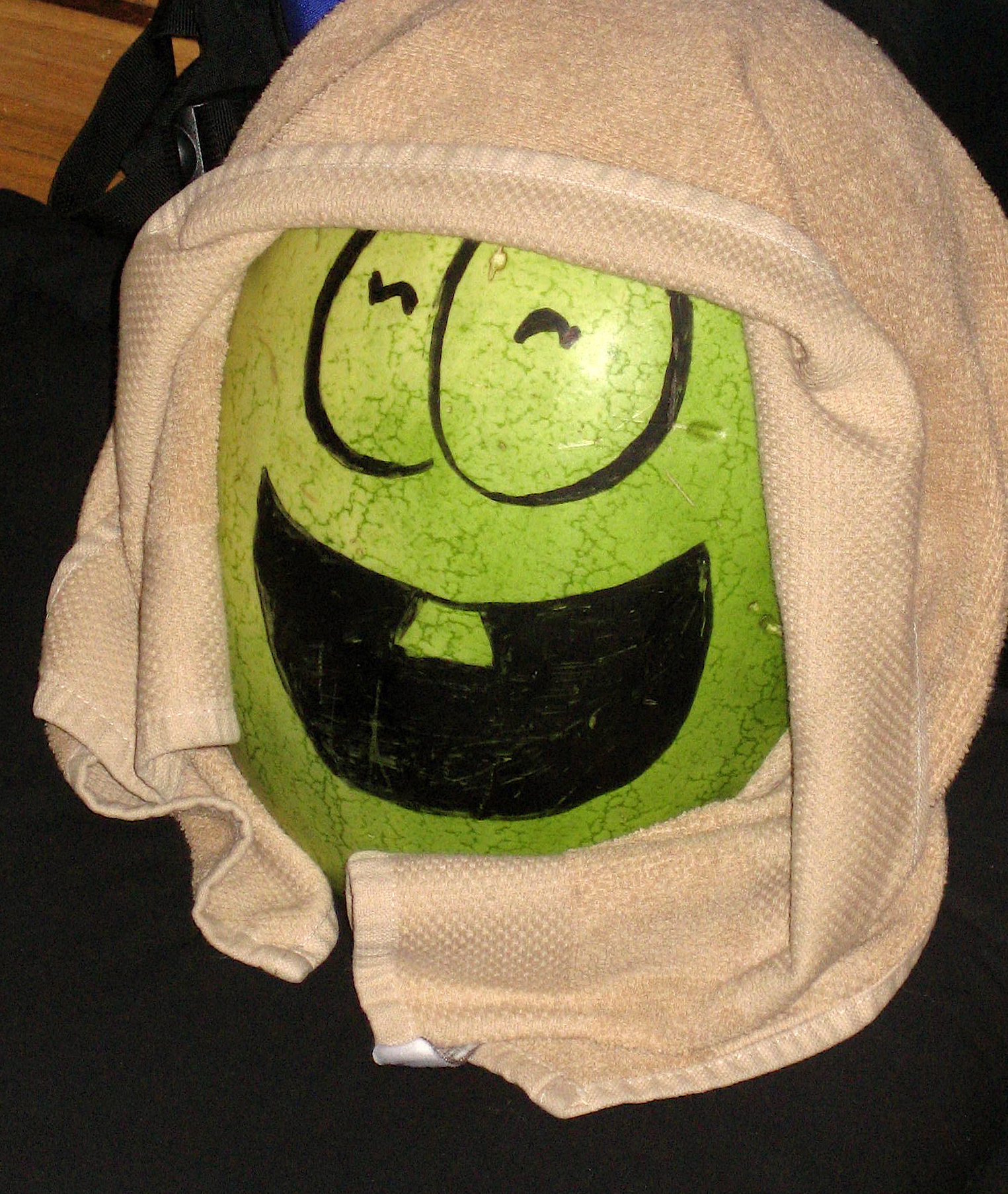
Some of my best high school memories come from the Alliance Academy International in Quito, the capital of Ecuador. The school offered an excellent education, and its faculty consisted largely of lunatics. It was at this school that I became the father of a small, rotund, green-skinned child. His mother and I named him Hakkatan Melchizedek Stück.

Watermelon Child

He had his father’s, um… dish towel.

My egg-shaped offspring was the result of a project in my senior year in which students were put in pairs, given watermelons and required to spend a week nurturing them as loving parents. This was meant to teach us all about parenting. I’m not sure exactly how that was supposed to work, except that babies and watermelons are both kind of heavy and don’t respond well to being dropped.

My wife for the project, whom I’ll call Socrates, wanted to name our child Hakkatan. I wanted to name him Melchizedek. In the end, in the spirit of matrimonial harmony, we compromised and gave him both names. Our classmates gave their children boring names, except for one young gentleman who called his melon Triton Quincy McFarland.

Hakkatan was a quiet, cheerful child. He never cried, always grinned and gave his parents hardly any trouble.

Of course, the same wasn’t true of all my classmates’ kids. At least one watermelon met a grim end when his parents abandoned him in a dorm room for several hours. According to the story I heard, they returned to find half the melon smashed on the floor, the other half stuck full of knives and a note that read NEVER LEAVE YOUR CHILD ALONE.

Some of my classmates really got into parenting their melons, dressing them up in baby clothes and wheeling them everywhere in strollers. I don’t recall how Socrates and I handled Hakkatan; we may have carried him around in a basket, but I don’t really remember. There is one thing I remember clearly: how Hakkatan met his end.

You see, the parenting project lasted only a week. Hakkatan was my child for seven days. After that, he was merely a watermelon. Some of my classmates celebrated the end of the project by eating their melons. That seemed a bit morbid, so I settled for chopping up Hakkatan with a machete and disposing of his body in a trash bag.

Socrates and I each received a good grade for the project, after which we dissolved our week-long marriage. She and I remained on good terms until our graduation from the Alliance Academy International; I haven’t seen her since. As for Hakkatan, well, his rounded figure and beaming face nearly faded from my memory. It was only as I browsed old photos recently that I stumbled upon the picture above: my child, smiling at me from across the years, neither bitter nor resentful at his violent demise.

Requiescat in pace, my son. Flights of angels sing thee to thy rest!

Please, Have a Llama

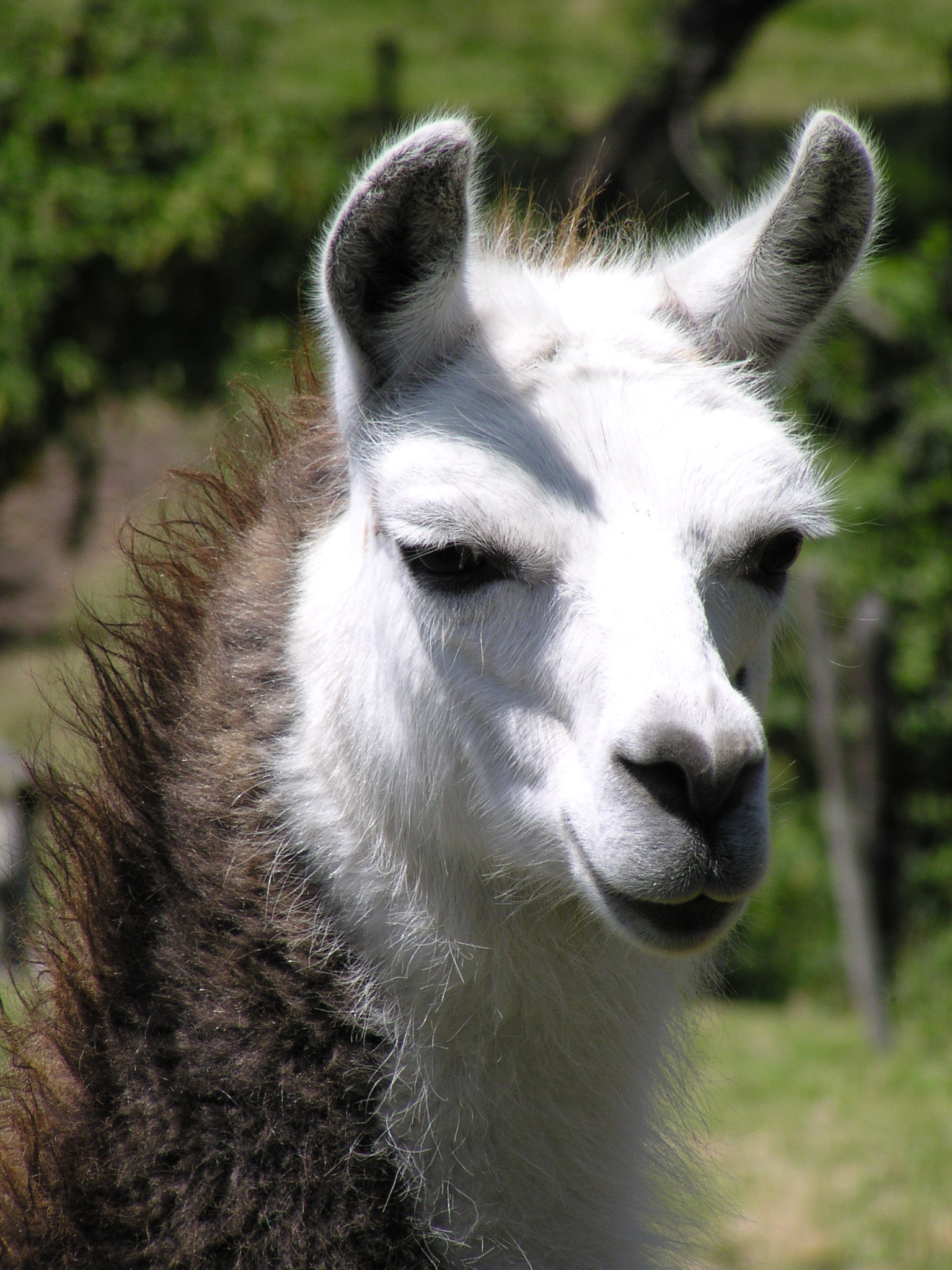
OLYMPUS DIGITAL CAMERAThere are times, dear reader, when I run out of ideas for blog posts. As a cloud is consumed and vanisheth away, so my creativity evaporates. I am left destitute, desperate for some spark of inspiration, groping blindly through an impenetrable fog of fatigue and mental paralysis.

Today is such a day. I can think of nothing more to say, so please accept this photo of a llama.