390. An Open Letter to Content Creators

Dear Content Creators,

I’m afraid content creator is a boring title, but it’s the best one I could find for all of you. (I considered creative people on the Internet, but that’s kind of a mouthful.) The title of content creator is the one given to all of you artists, bloggers, actors, video makers, musicians, animators, commentators, cartoonists, gamers, photographers, creative writers, and other creative people who make stuff and throw it at the Internet.

For example, consider the artist who reimagined the Fellowship of the Ring as a bunch of cats:

The Fellowship of the Cats

She’s a content creator. So are these video makers who try to explain Doctor Who in sixty seconds:

There’s this guy rocking out on a guitar to the best song from Mario Kart.

He’s a content creator, alongside this hipster Calvinist and all the other people who say funny things on social media:

https://twitter.com/coolvinism/status/646322751490252805

Then there’s, um, whatever this guy is doing:

You people are awesome.

If you’re anything like me, your content-creating experience is a roller coaster. Sometimes it’s fun and exhilarating. Sometimes it’s dull and exhausting. There are days when you feel an incredible sense of accomplishment, and days when you think you’ve accomplished nothing at all. All of it—the highs and lows and twists and loops—takes determination, effort, vision, and (occasionally) a touch of obsessive lunacy.

Most of you don’t make much money, if any, from your work. You create because you enjoy it. You create because you are an artist. Whether you have an audience of one or one million, I admire your creative spirit. If you do make a living as a content creator, I congratulate you all the more. That takes a lot of dedication.

And here’s the thing. I don’t just respect you—I really, really enjoy the work of content creators. A staggering amount of my music library consists of songs not from professionals, but from amateurs on the Internet. I read several blogs and webcomics, follow a few artists, and spend quite a lot of time on YouTube.

So much of the entertainment, laughter, insight, inspiration, excitement, and happiness in my life comes from the work of content creators—people like you.

I’m not the only one whose life is better because of content creators and their work. In fact, millions of people across teh internetz enjoy the humor and creativity of content creators—but they don’t always take time to say “I really enjoyed this,” or “This was brilliant,” or simply “Thank you.”

It is so easy for content creators to become discouraged. When their work doesn’t receive a positive response, they tend to assume the worst. They think their work wasn’t worth the effort.

I’m here to say: Your work matters, and thank you.

Thank you, content creators, for brightening my everyday life with moments of amusement and understanding. Thank you for being hilarious, honest, insightful, vulnerable, creative, clever, witty, weird, and wonderful. Thank you for being you, and for sharing your creativity with the rest of us.

Oh, and keep up the good work.

Peace,

Adam

Out of Ideas

Creativity is hardThe struggle is real.

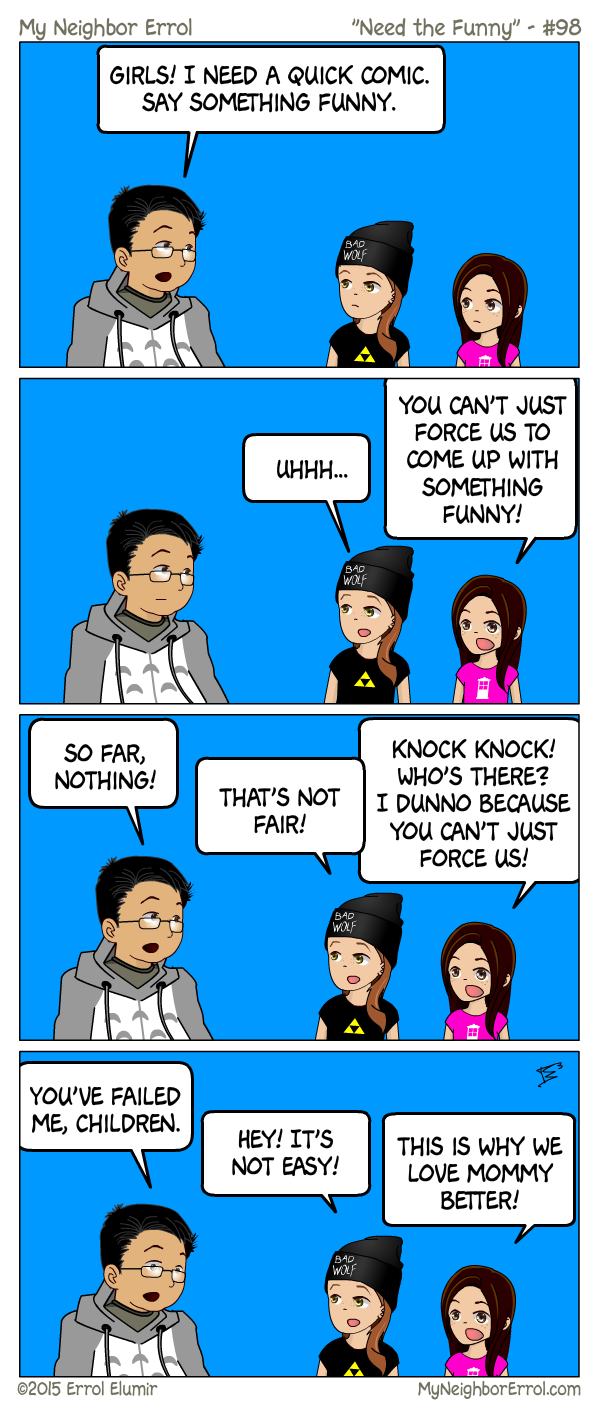
Errol Elumir is a geek, and formerly the owlish half of musical duo Debs & Errol. He draws a daily webcomic, My Neighbor Errol, chronicling his day-to-day life with his crabby daughters and ever-patient wife. The comic is written with self-aware humor and sprinkled with geeky references. (Yes, there’s quite a lot of My Neighbor Totoro, which is how it should be.) While the art is simple, relying on reused assets and plain backgrounds, I enjoy my daily dose of humor from the Elumir family.

Heck, Errol’s enthusiasm for Studio Ghibli’s mascot led me earlier this year to acquire a new neighbor of my own.

This is your fault, Mr. Elumir.

This is your fault, Mr. Elumir.

Blogging and web cartooning are different media, but they have a lot in common. For example, they update consistently, requiring a steady stream of ideas for new comics or blog posts. Like Errol, I sometimes run out of ideas.

However, every time I think I’ve finally exhausted my options, something new occurs to me. Necessity is called the mother of invention, but it’s more like an aunt. The mother of invention is desperation.

Errol pokes fun at himself for exploiting his daughters for comedy, but I think there’s quite a difference between exploiting something and merely saying of it, as I often say of things, “Heh, that’s pretty funny.” My Neighbor Errol is a funny webcomic, and gave me one more idea of something to write for this blog.

That said, now I’m out of ideas. Flipping heck.

340. TMTF’s Top Ten Things Learned in Ten Years of Animation

Today’s post was written by JK Riki: animator, blogger, and creator of Fred the Monkey, who is probably a bad influence on my typewriter monkeys. All the same, Typewriter Monkey Task Force is honored to share JK’s reflections on what he’s learned from ten years as an animator. For more great stuff from JK, check out his blog and Twitter. You may also want to swing by Animator Island, for which he writes.

After I sent my first guest post to Adam, he responded positively: “It’s good stuff.” Two sentences later came a spirit-crushing qualification: he was more interested in my creative process, particularly from the class of “animator” in which I dwell.

“Surely you can do better than this last, terrible post,” he noted in his email, though it may have actually been written, “I think your thoughts on the creative process may be even more valuable.” (I can read between the lines, you see. I know what he meant.)

[Editor’s note: What I, Adam, really meant was, “I think your thoughts on the creative process may be even more valuable, and I could really use a cup of coffee.” That last part is subtext to nearly everything I say or write, so I left it out.]

So fine, I’ll set aside my deeper thoughts on philosophy and the universe and give the audience what it wants. Plus I’ll do it in a time-honored tradition of TMTF: a top ten list!

That said, please consider…

The Top Ten Things I’ve Learned From Ten Years as an Animator!

10. Mediocre entertainment > unrealized genius

I can’t tell you the amount of time I’ve wasted waiting to get “good enough” to do certain projects. “This is a brilliant idea,” I’ve thought, “but I really need to up my skill level to pull it off properly. Back you go into the Sack of Potential Greatness!”

Poor Sack. It’s been bursting at the seams for years now.

The truth is, a brilliant idea unrealized is pointless. Isn’t an inferior version that exists better than a wasted concept that, let’s face it, will never be made? Honestly, it’s unlikely you’ll ever be “good enough.” You’ll never reach that standard. It’s not worth the wait; go do it now. Save perfection for the next life!

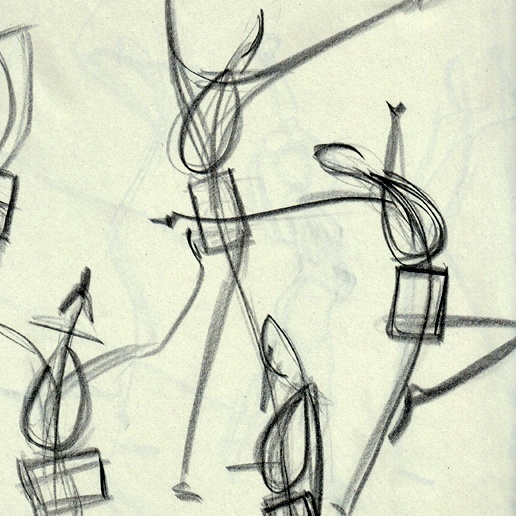
Even the best animations start as rough, quick sketches!

Even the best animations start as rough, quick sketches!

That said, 10b. Always strive to do better!

9. Enthusiasm fades

Animation is a brilliant form of art for one unique reason: It takes forever. Because it takes forever, you have millions of opportunities to tweak things or change directions or quit and become an accountant. When you work on a single piece of art that takes weeks, months, or years for what seems like very little return, at some point you question what you’re doing.

The thing that divides the people who have done great animation (or really, anything at all) from those who only wish they could is pushing past this doldrum and pressing on, enthusiasm or no enthusiasm. Those days happen, and it’s up to you to not let them string together day after day, week after week.

8. Animation is hard

It does not take much physical effort to drag a wooden stick affixed with graphite across compressed tree pulp. It doesn’t even take much physical effort to do that billions of times so you can photograph them in sequence and watch the lines dance across a screen.

Despite the lack of physical energy required, animation is so, so hard.

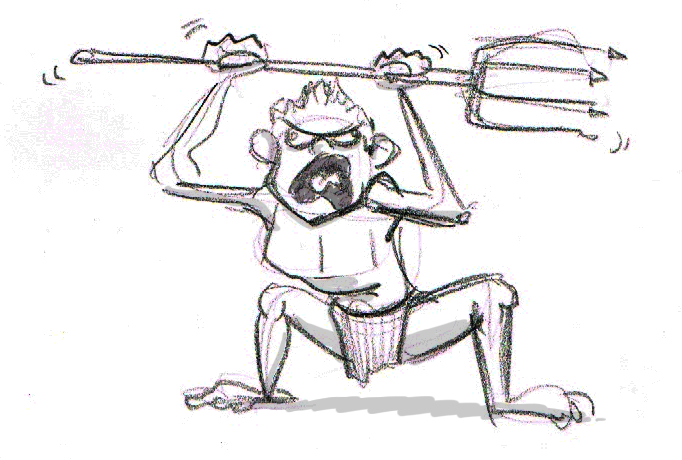
JK's inner animator expresses the difficulties of the craft in the most eloquent way possible: shaking a sharp, pointy object.

JK’s inner animator eloquently expresses the difficulties of his craft.

People are used to watching movement. When you’re attempting to mimic that movement they know so well with pencil or 3D model, your audience are all experts. If you make a mistake, they’ll know about it, because it doesn’t match the decades of real-world experience they have with movement.

At the same time…

7. People are forgiving

In animation, you cheat. A lot. One of my favorite descriptions of animation is from Pixar director Peter Docter, who said “Animation is life with the volume turned up.”

As animators, we’re called to go beyond reality and create things that “look right.” Sometimes, in order to get something to look right, you have to throw all the rules out the window and make things up. The wonderful thing about this process is that people will accept your made up nonsense if it looks right. They’ll forgive your strange motion blurs and broken joints just as long as it feels the way it should. It’s because of this that…

6. Mistakes aren’t as huge as you think

One of the greatest moments in animation is when you finish roughing out a shot and you hate it with every fiber of your being. You look at the individual drawings and think “This is garbage. I should quit and become an accountant!” Then you play it in real time and oh! The beauty! The majesty! The countless hours were worth it, and for reasons unknown it works. There is reason to live again!

Life is long, and it’s a process. The mistakes of a “single frame” that seem overwhelming at the time may just work in unison with the images around it and turn out beautifully. Then the key becomes remembering that even the close-up errors really aren’t as dooming as they seem.

5. Things change
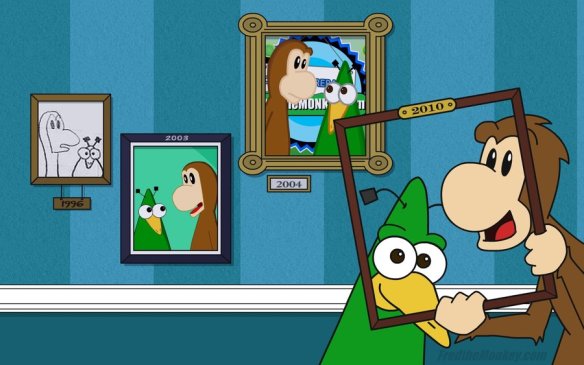
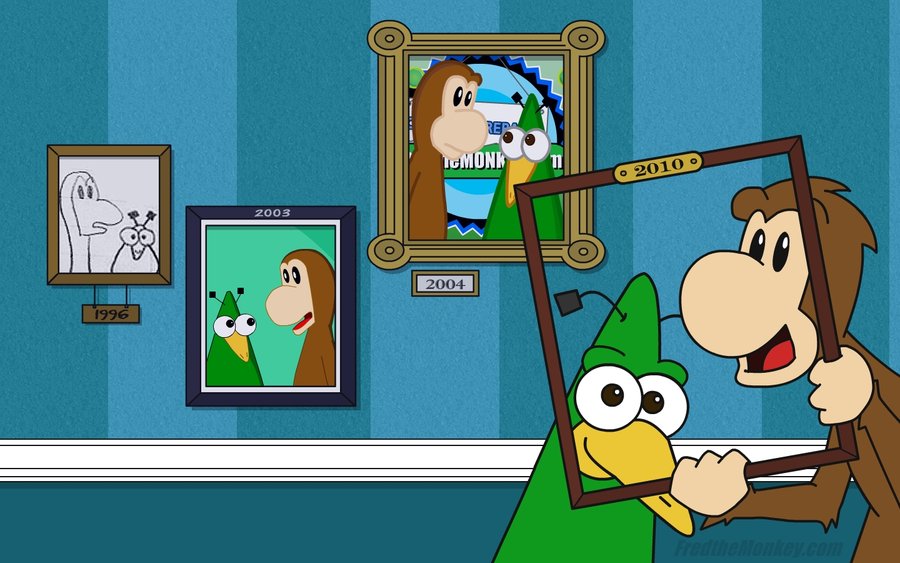
Fred the Monkey sure has changed over the years!

Fred the Monkey affirms that yes, things sure change!

If you aren’t growing as a person, you’re doing life wrong. We’re here to grow, to learn, and to become better every day. Knowing this, one should expect to change over time. When we expect this change to happen, we can better deal with the feelings of “failure” when it arrives. I once kicked myself for failing to keep FredtheMonkey.com updated consistently. Wait, to be fair, I kicked myself for that dozens of times.

The longer I live, the more I see that the goals I set at twenty-two are not the goals I have today. As the Bible says in Ecclesiastes, “There is a time for everything, and a season for every activity under the heavens: A time to make Flash cartoons about monkeys, and a time to focus on family life and remodeling a house.” (Paraphrasing here a bit, so go look up the full non-cartoon-including list in Ecc. 3.)

Things change; it’s part of life. When we know this, we can…

4. Manage expectations to find happiness

Consider this scenario. You decide to go see a film this weekend. You’ve seen a trailer, and it looks absolutely terrible, but a friend/family/cute member of the opposite sex really wants to go, so you oblige. After two hours in the theater, the film turns out to be pretty average, but certainly not completely awful, and you realize, “Hey, that wasn’t as bad as I thought!”

Using the power of hypothetical situations, let’s go back in time. (Time travel is fun!) This time, a friend has told you about the film and how it’s the most incredible work of movie making ever crafted by human hands. Your heart beats quicker as the previews rush by and finally the film begins. Your hands grip the plastic theater chair arms in anticipation. Your knees tremble in spite of your feet being glued to the floor by soda and popcorn grease. This is it!

And… it’s decidedly average.

Now what? Chances are you’re going to walk out of the theater this time grumbling, “That wasn’t amazing at all, what were they thinking? I counted a dozen plot holes and the main character was an idiot. What a waste of two hours….”

What’s the difference here? Spoiler alert: It’s not the film, it’s your expectations.
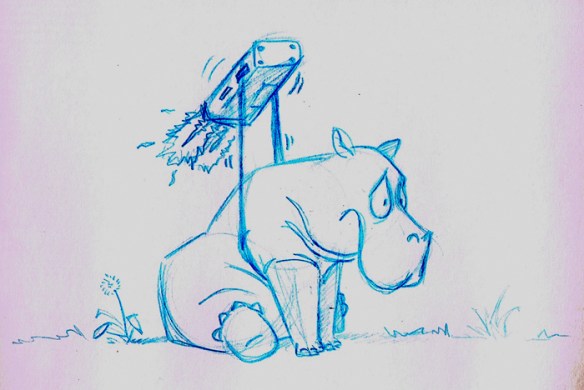
Hippo with a jet pack

It’s easy to be disappointed when your expectations aren’t realistic!

Over ten years of animating, I’ve had many expectations. Some cartoons I knew were great, and would do so well on Newgrounds.com. They flopped. Some animations were rushed and I almost didn’t release them because they weren’t ready (see point #10, though). Reviews were glowing, and they made front page. Lol, what?

I’ve learned (and continue to learn) to manage expectations. There’s nothing wrong with hope, or wanting things to be wonderful. There’s a big difference between hoping for good things and expecting them. If you manage the expectation part, life goes so, so much better.

3. Edit well

Cut out all things you don’t need in order to make your point or tell your story.

[Author’s note: I’m still learning this one, because Adam had to edit this post for clarity and to remove most of my ramblings. The original was 518 words longer in total. Clearly there’s still work for me to do regarding Lesson #3.]

2. There is nothing like doing what you love

I have held several jobs in my life, ranging from things I’ve enjoyed to “I’d really rather be having teeth pulled, thank you.” For me, animation is a passion. It goes beyond enjoyment to a very strange place that shares borders with the lands of “Obsession” and “Madness.”

Someone once asked me if animation was fun. I thought about it for a moment and then said “No, not at all.” At the time I was surprised by my response, but if I could go back in time, I’d add, “I can’t imagine not doing it, though.”

I love animation. It is one of the things I think I was put on this Earth to do. As a result, no matter how difficult it becomes (see #8), I am filled with joy when I’m engrossed in it. It’s not about “having fun” as much as it is “bathing in the joy of purpose and meaning.” Do what you love and life becomes awe-inspiring every dang day.

1. Understanding the why is the most important thing

We devalue the why in our world today. We’ve gotten so caught up in the who, what, when, and where that we’ve forgotten all about the final W of the Big 5. It’s rather ironic, actually, because when something big (often tragic) happens our first reaction is “Why is this happening?!”

In animation, you must understand the why. Why is this character doing what he’s doing? Why is this prop in the scene? Why didn’t I go to school to become an accountant?

Life is the same way.

When I started FredtheMonkey.com more than a decade ago, I had conflicting dreams for it. On the one hand, I wanted to make the world a better place by producing funny cartoons that brightened someone’s day.

At the same time, I wanted HomestarRunner-level success. If I could just reach that level of popularity, boy, I could sure make this planet a better place. I could change people, convince them of things, and have influence. No doubt the money I’d make could help millions as well. Yes, that would be the day it all came together!

The further I unconsciously veered towards the second why during those ten years of animating poor-quality Flash cartoons, the more miserable I was. The more it was work, instead of joy. The more I didn’t want to keep doing it. I had lost the purpose that drove my initial creative process. I burned out a lot.

Each time I remembered my mantra of “If I make one person’s life better with this cartoon, it will have been worth it,” the peace and love of what I was doing came rushing back. I had to constantly stave off the allure of fame and wealth so I could be content with whatever came from my efforts.

And that contentment was far better than anything I’ve ever gained materialistically. Know the why of what you do, and remind yourself of it always.

I hope that these lessons I’ve learned can be of some help to someone out there. If it gives hope or inspiration to a single person, the decade of struggles will be worth every effort.

324. I Want to Hug These Games

I don’t care much for hugs.

Well, I suppose some hugs aren’t so bad. I give my younger brother awkward sibling hugs all the time. For the most part, though, I’m about as easy to hug as a cactus. Hugs are a little too close and personal for me; I much prefer an affable fist bump.

However, I keep bumping into video games that are madly original and gloriously unique, and I want to hug them.

As much as I enjoy video games, I’m disappointed to see so many of them fall into the same clichéd categories. There are Games about Cars, Games with Guns, Games about Sports, Games with Swords and Magic, and games to fit nearly every other exhausted genre. The same problem is found in other media, from books to movies to music. New titles are hardly distinguishable from old ones; there is nothing new under the sun.

It’s important for me to make clear that genres aren’t necessarily bad. In fact, some of the best games I’ve ever played (including most of my favorites) fall into the broad categories mentioned above. All the same, I appreciate game developers who boldly go where no one has gone before, bringing color and creativity to a tired industry.

There are thousands of games about guns, zombies, cars, sports, or princesses in need of rescuing… and then there are a few odd, endearing games like Octodad.

I seldom borrow from other sources when writing for this blog, but nothing does Octodad justice like this understated description from its Wikipedia page: “The game consists of controlling the protagonist Octodad in completing chores typical of the mundane suburban father, but complicated by the fact that he is an octopus in disguise.”

Octodad, wryly subtitled Dadliest Catch, is the whimsical tale of a loving husband and father who happens to be an octopus pretending to be a human being. The fact that “nobody suspects a thing” when Octodad is clearly an octopus only makes the game that much funnier.

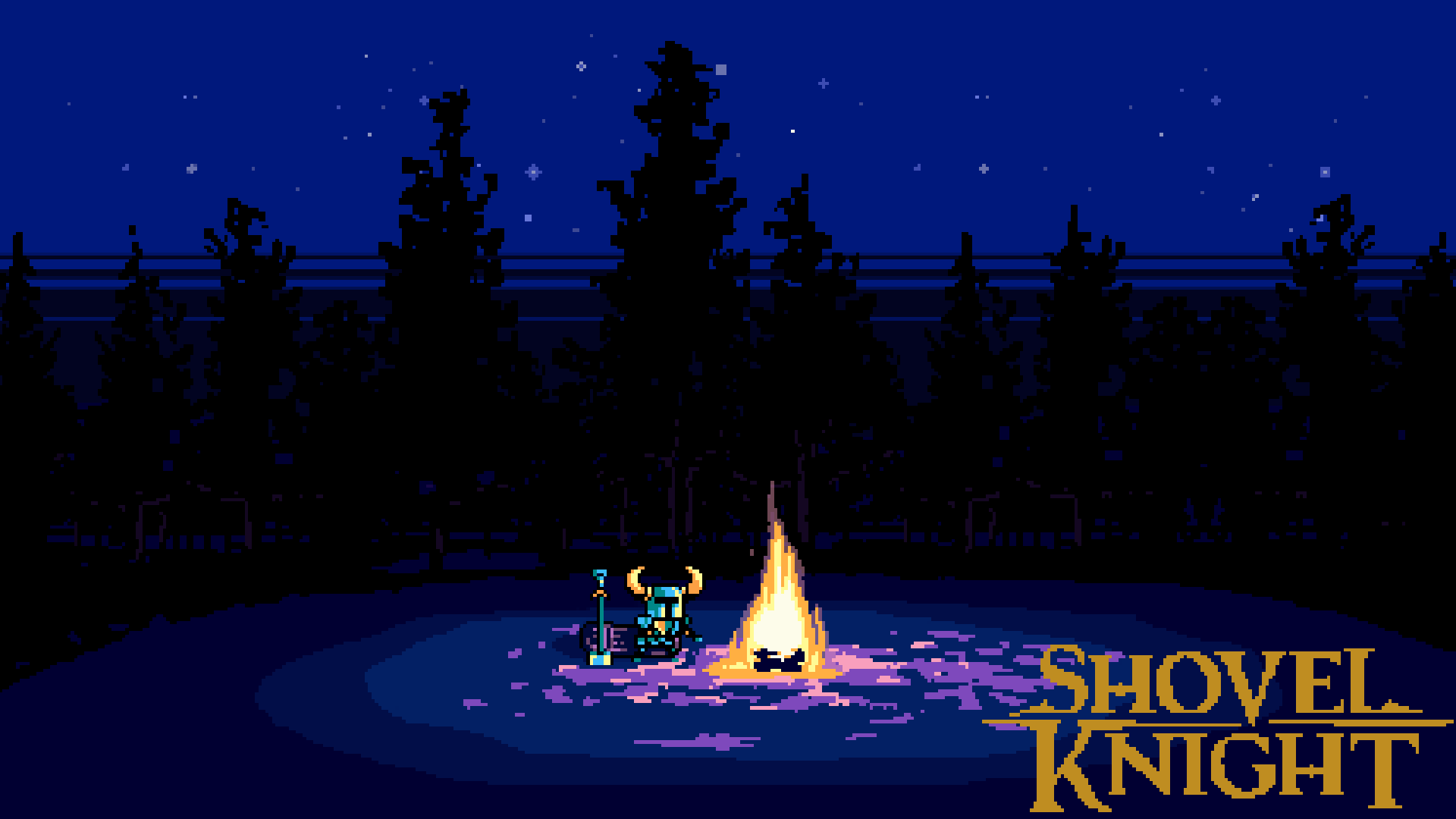
Shovel Knight is another title that caught my attention. It’s exactly what it sounds like: a game about a knight with a shovel.

Shovel Knight

I’m really digging this game. (Pun intended. I’m so, so sorry.)

Well, to be more precise, Shovel Knight is a retro-styled adventure game, in the tradition of Mega Man and Metroid, starring a warrior whose weapon of choice is a shovel. The knight valiantly swings, hacks, bounces, and yes, digs his way to victory. Swords? Bah! Who needs swords?

Then there’s Five Nights at Freddy’s and its sequel. These are horror titles, but they lack ghosts, zombies, demons, aliens, or any of the other monsters you’d expect from a scary game. No, these games have those animatronics from arcades and restaurants—you know, the ones designed to entertain defenseless little kids.

In these games, which I’m too nervous to play, the player assumes the role of a night watchman at Freddy Fazbear’s Pizza: a restaurant for kids and obvious nod to Chuck E. Cheese’s. The hapless watchman remains in his office, checking security cameras and monitoring the restaurant’s malfunctioning robotic mascots in order to avoid being murdered by them. The game looks terrifying.

I haven’t actually played any of these titles. To tell the truth, I don’t seem to have much time anymore for games what with work, household chores, and sundry commitments. (This blog won’t write itself!) It still delights me to see creative people defying conventions and making awesome, offbeat video games.

In conclusion, the game industry needs fewer guys with cars or guns, and more guys who are secretly octopuses.

Thanks for reading! If you have a moment, please check out TMTF’s charity fundraisers this month and make this Christmas awesome for a person in need!

300. Creative Counseling with DRWolf

In past months, I’ve felt burned out. Writing has been harder. I realized it was time for this blog to get some help, so I met with DRWolf—a creative thinker known for his work in the brony community—to discuss the problem. He was friendly, polite, and helpful. What I didn’t expect was for the good doctor actually to be… you know… a wolf.

I want to thank DRWolf for his time, consideration, and advice. I was sincerely interested in finding some answers, and he gave some really good ones. Keep up the fine work, Doctor. It was an honor to work with you.

I also want to thank Crowne Prince, animator extraordinaire, for the superb video. It’s absolutely fantastic, Ms. Prince. I appreciate your time and expertise!

As usual whenever I stumble over a blogging milestone, I have a few more words to say.

I owe a great debt of gratitude to my parents for their support and encouragement, and especially to my father for his tips and artwork. Without him, TMTF would probably not have lasted long. Thanks, old man. You’re the stoutest of Stout Fellas.

Next, a word to my typewriter monkeys: If you ever do that again, I will donate you to the zoo. I mean it this time.

Speaking of my monkeys, I guess they deserve some credit. Despite their laziness, pyromania, and extensive criminal record, I don’t know how I would keep TMTF up and running without my dirty dozen: Sophia, Socrates, Plato, Hera, Penelope, Aristotle, Apollo, Euripides, Icarus, Athena, Phoebe, and Aquila. Thanks, guys.

(I’m serious about the zoo, though. Behave yourselves for once!)

My readers have been far kinder to this blog than my monkeys ever have. To every person who has supported TMTF by commenting on it, sharing it, liking posts here or on Facebook, writing guest posts, celebrating Be Nice to Someone on the Internet Day, or simply reading the blog occasionally—thank you. Thank you so much. The greatest joy of a writer is to be read, and I appreciate every single one of you.

Finally—insofar as a blog about video games, Doctor Who, and exploding tomatoes can honor anybody—soli Deo gloria. Whatever my struggles, I hope these three words will always be my guiding principle for creativity.

On a less spiritual note… if I had a penny for every post I’ve written for this blog, I’d have enough money to go out and buy a cup of coffee. That’s pretty neat. All in all, thanks to all of you, it seems I haven’t quite run out of reasons to be creative.

I’d better keep writing.

282. Blog Burnout

Blogging has been kind of hard lately.

Mind, I’m not complaining. Blogging is fun, and I have no one to blame for TMTF but myself and my typewriter monkeys. (I mostly blame my monkeys.) I don’t ever want to gripe, and I’m certainly not looking for sympathy. I just want to admit, for the sake of honesty, that it’s been harder lately for me to get excited about TMTF and this whole blogging thing.

This worries me.

I love writing. It’s sort of an addiction, really. Now that I’ve almost-but-not-really given up on writing fiction, blogging is pretty much all I’ve got. I want TMTF to be something I get to do, not something I have to do.

That said, I’m going to hand over the discussion to my dear readers and go drink some coffee.

How do you stay passionate about your hobbies and creative projects? How do you deal with burnout? Send us a message or let us know in the comments!

37. Everything I Know about Creativity I Learned from The Legend of Zelda

Today’s post was written by Wes Molebash, blogger and cartoonist extraordinaire. It came at the perfect time, since The Legend of Zelda: Skyward Sword is coming out in a couple of days. Check out his website for more awesome artwork and insights on creativity!

Like most people my age, I grew up playing the Legend of Zelda video game series. I loved every minute of those games, and Ocarina of Time played a defining role in my young adulthood.

Now I like to consider myself a “creative person.” What I mean by this is that I love to create art and I’m always scheming of my next “big” project. Ideas are cheap; art is work, and I’m absolutely in love with the creative process.

That being said, I realized the other day as I was toiling in my basement office that everything I know about creativity was learned from playing the Legend of Zelda video games.

For instance:

It doesn’t matter how small you are or what tools you are using

In several of the Zelda games, Link starts his journey as a little boy who wields a measly wooden sword and a Deku shield. A DEKU shield! No one is afraid of a Deku shield. But he doesn’t let this stop him. He goes straight into his first dungeon and defeats the baddie with his slingshot David-and-Goliath-style. The journey has begun. He’s received his first taste of victory, and he’s off to the next dungeon.

So what does this tell me about the creative process? Simple: It doesn’t matter how skilled you are or how big your platform is or how expensive your tools are, just create! Don’t be hindered by your limited experience or lack of resources. I know famous cartoonists who draw awesome cartoons on three-thousand-dollar computer tablets. I also know a lot of amateur cartoonists who draw awesome cartoons using Ticonderoga No. 2 pencils and Sharpie markers. Take the resources you have and use them to the best of your ability.

Every obstacle has a weak spot—exploit it!

The Legend of Zelda series has been around since the eighties and it continues to follow a familiar formula: go into dungeons, collect maps and compasses and special weapons, and fight seemingly indestructible beasts who all have a glaring Achilles heel. Does the beastie have one huge, rolling eyeball? It’s a safe bet that you’ll want to shoot some arrows into the beast’s ocular cavity. Does the baddie occasionally stop to roar for a prolonged period of time? I’d grab some bombs and make it rain inside that guy’s maw. No matter how big the monster is, his weak point is right there in front of you begging to be struck.

The same holds true with our creative obstacles. They seem impossible to topple, but—the fact is—they’re quite easy to destroy! If I had to guess, I’d say that 99% of our creative obstacles can be toppled by simply CREATING. Are you having a hard time motivating yourself? Get out your tools and create. Do you have some naysayers telling you that you suck at life? Tune them out and create. Are you swimming in a sea of rejection letters from agents and publishers? Take the critiques and criticism with a grain of salt and create.

It really is that simple. Once you get started it’ll be hard to stop. The weak spot of your obstacle is right there staring you in the face. Exploit it.

You’re going to get better

As I said above, when Link starts his journey he is just a little boy with a crappy sword and shield and three hearts in his life meter. However, as he continues his quest he gets better. He collects more weapons. He becomes more resilient. He ages. By the end of the game he’s got the Hyrule Shield, the Master Sword, some rad magic powers, a pair of flippers that help him swim and hold his breath under water, a bunch of sweet weapons in a bag that would be impossible to carry in the real world, and eighteen hearts in his life meter. He finally ends up at Ganon’s door and he’s ready to—as they say in the UFC—“bang.”

The same is true for your creative endeavors. The more you create, the better you’ll get. You’ll also acquire new tools and awesome advice from other creators. Most importantly, you’ll gain experience. No longer will you feel completely daunted by project proposals, pitches, and rejections. It’s all part of the process and you’ll get better and better at those things.

So wipe your brow, keep creating, and—when you need to take a break—dust off your N64, pop in Ocarina of Time, and wander around Hyrule Field for a spell.

What have you learned from video games? Let us know in the comments!