99. Pencil Drawings

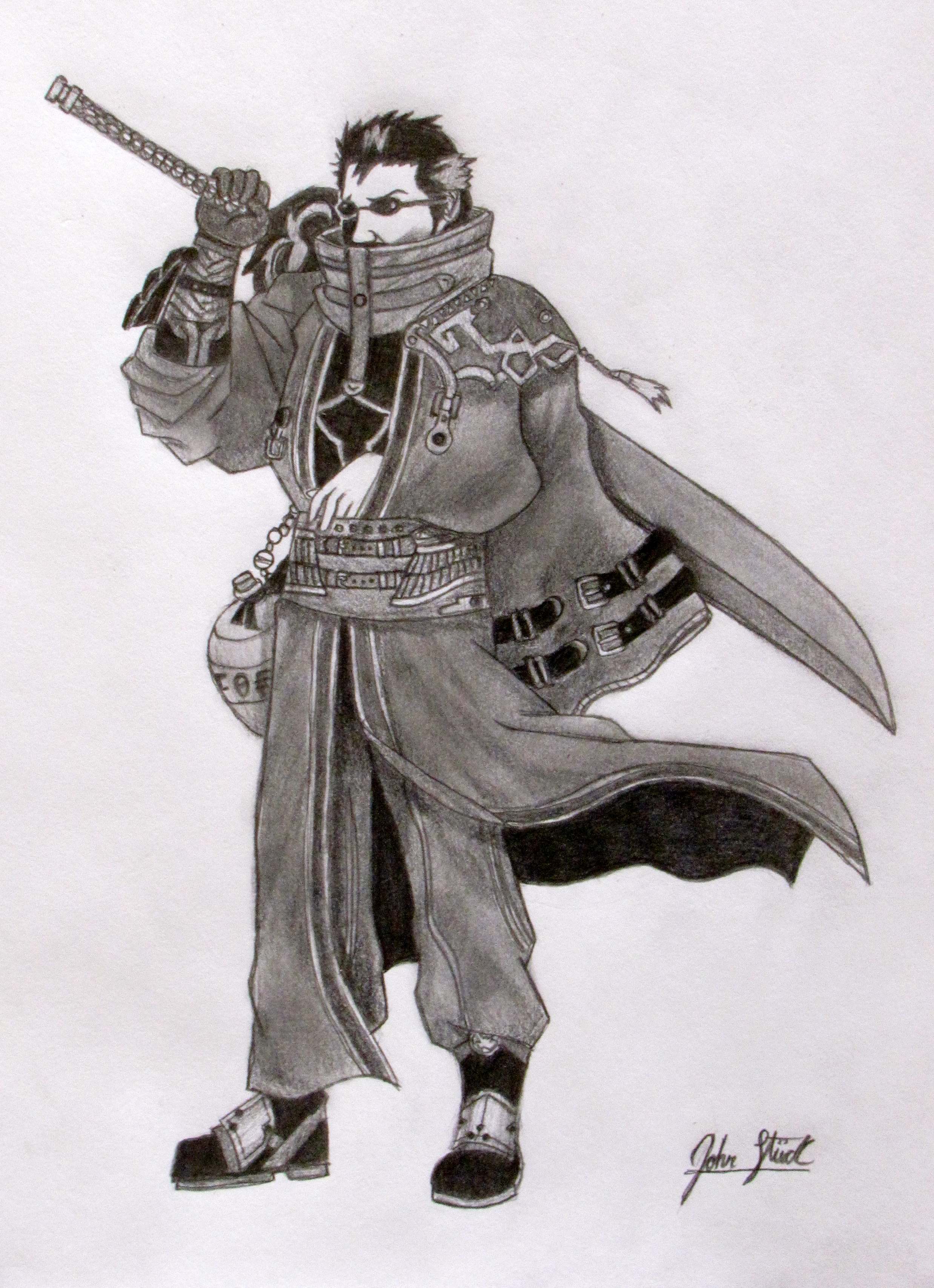
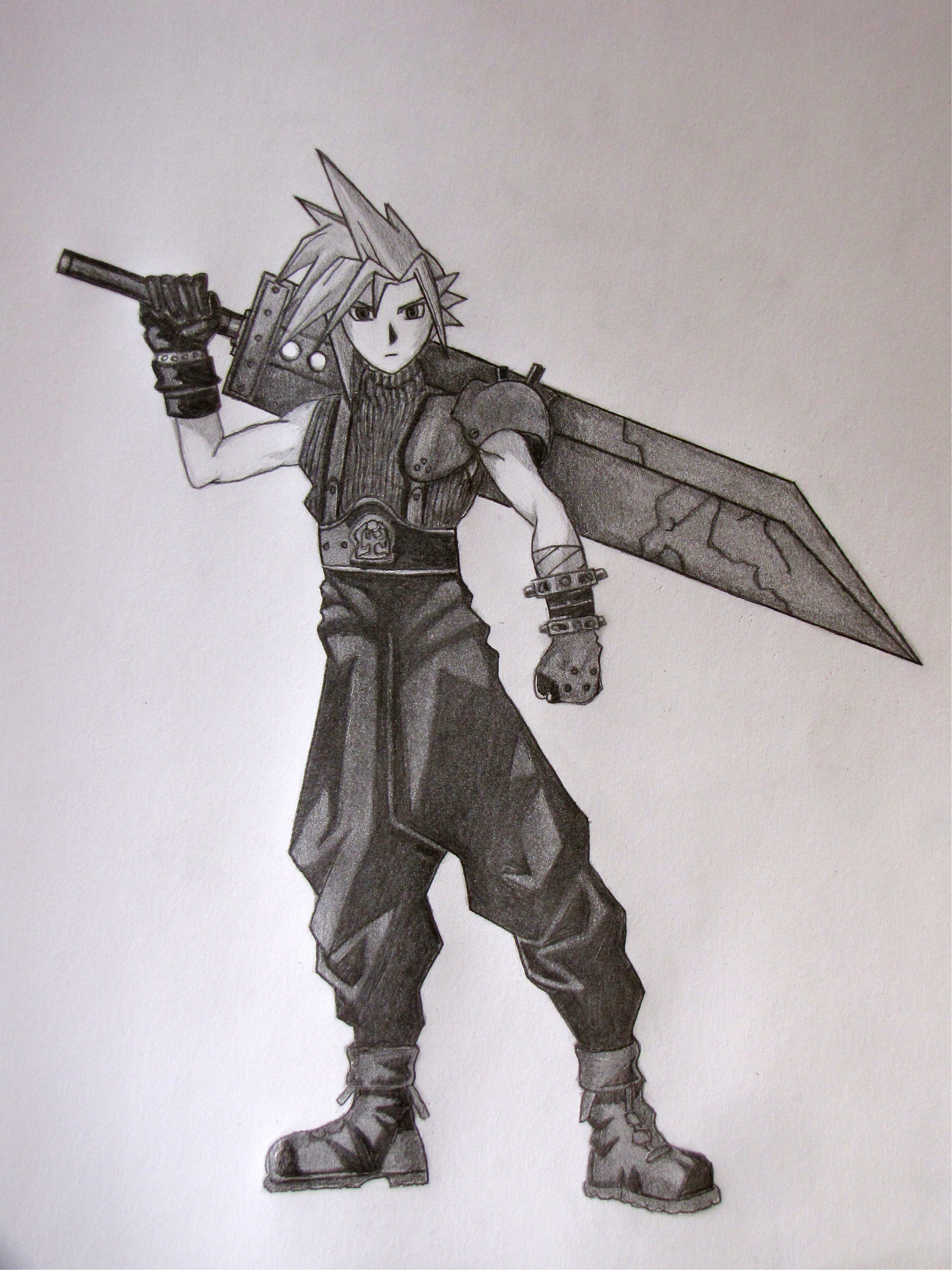
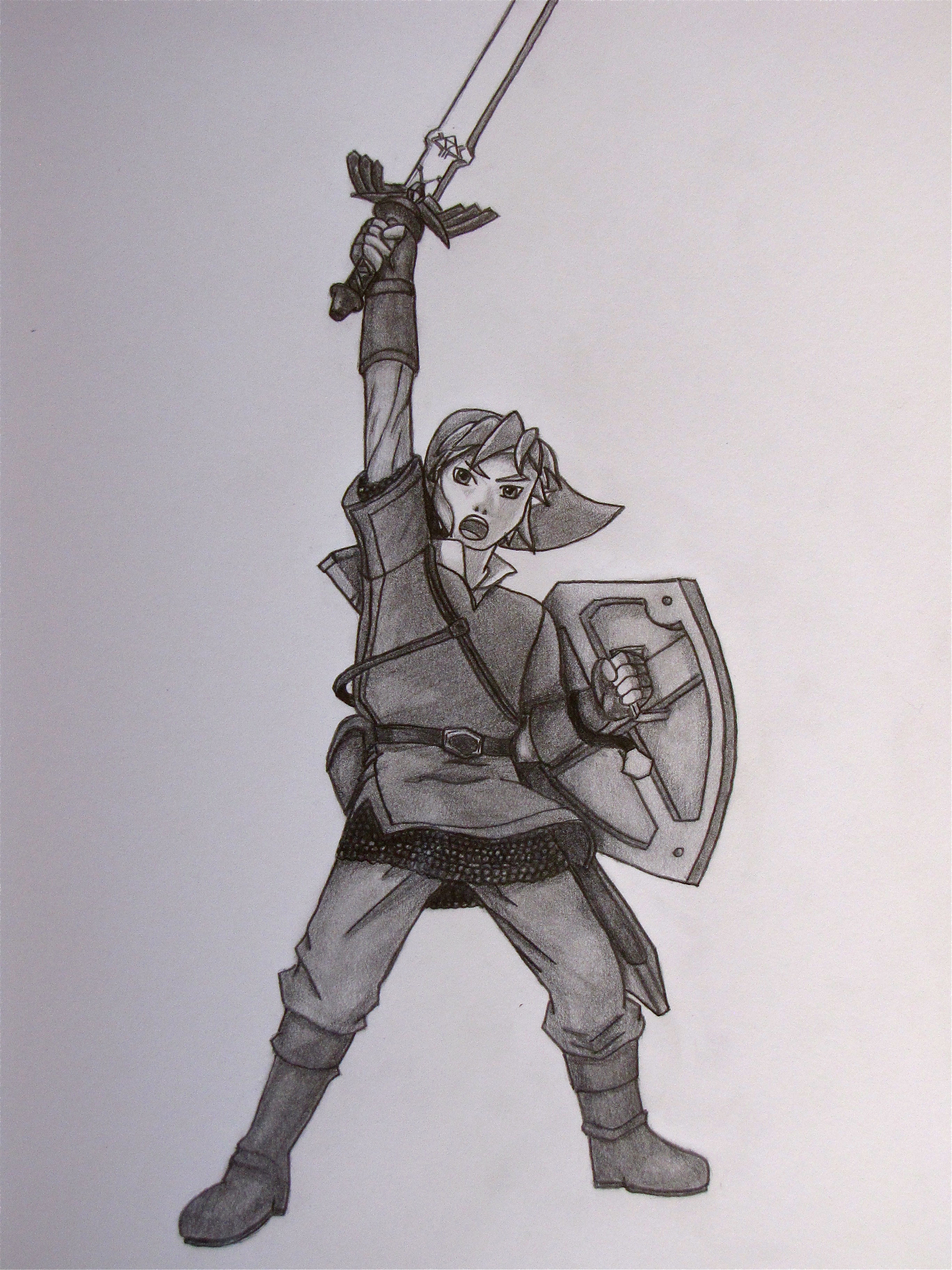
My old man is a great artist, and his portrait of my typewriter monkeys at work—work being a relative term—graces TMTF’s banner. Sadly, neither I nor my older brother inherited any of my old man’s artistic skill. My younger brother, however, is turning into an excellent artist, and I’m proud today to share some of his work. Check out his deviantART page for more awesome artwork!

I’m not sure why he needs the sunglasses or the sake jug, but Auron is one cool dude.

This excellent portrait of Cloud Strife leaves me with one question: Which is sharper, the sword or the hair?

Besides being brave and noble, Link has a great fashion sense.

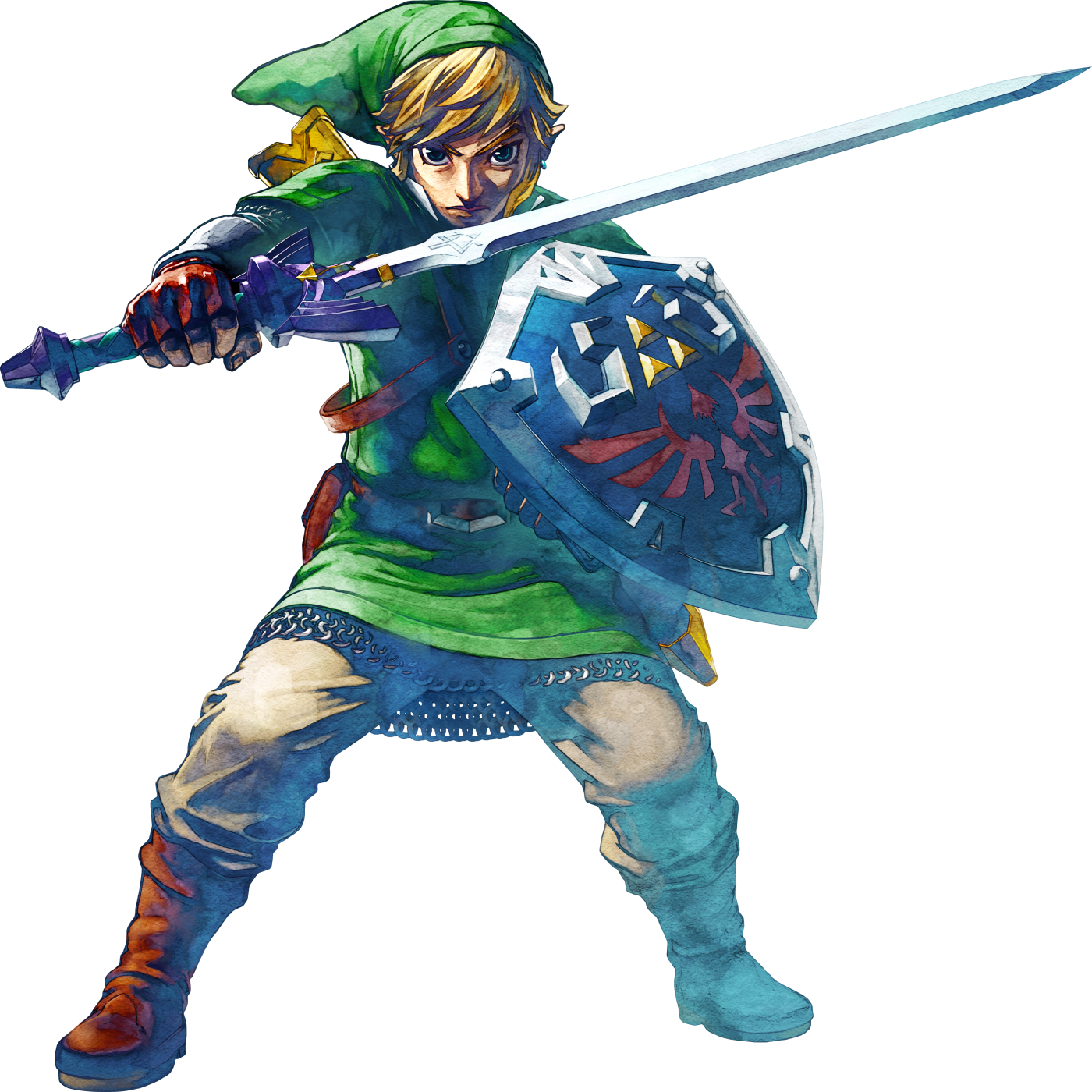
Featuring Vash the Stampede, a legendary outlaw, this may be the most awesome wanted poster in the history of history.

98. Just Try to Relax

The past month has been pretty hectic.

Four weeks ago, I began packing my worldly goods and possessions for the five thousand-mile journey from Montevideo to Fort Wayne.

Three weeks ago, I arrived at my brother and sister-in-law’s home in Indiana, burdened with several suitcases and a dozen typewriter monkeys.

Since then, I’ve learned to drive, purchased a car, failed a driver’s test, done some author stuff, worked on my blogs, applied for jobs and busied myself with dozens of miscellaneous tasks, responsibilities, errands, duties, obligations, commitments and chores.

Until a few days ago, I kept myself almost constantly busy. I refused to give myself much time to relax. I told myself I didn’t need to rest, but to get everything done. When I had fulfilled my obligations—all of them—I could consider taking some time off.

Then, earlier this week, I stopped functioning.

I was paralyzed mentally, exhausted emotionally and tired physically. I couldn’t stay focused.

I had broken down.

At last, unable to work, I retreated to my bedroom with a cup of tea and a video game. For several hours, I set aside my self-imposed obligations and relaxed—and it was awesome.

That long rest was calming, refreshing and fun. Hour by hour, I could feel myself regaining my composure and focus.

I’ve attempted to cope with the stress and difficulty of the past few weeks by acting busy, trying to persuade myself that everything was under my control.

Everything is not under my control. That’s the bad news.

The good news is that everything is under God’s control.

He commands us to rest. It’s even one of the Ten Commandments: “Remember the Sabbath day by keeping it holy. Six days you shall labor and do all your work, but the seventh day is a Sabbath to the LORD your God. On it you shall not do any work.”

We honor the Sabbath day by resting—trusting God to work things out instead of exhausting ourselves trying to keep everything under control.

The Lord Jesus himself said, “Come to me, all you who are weary and burdened, and I will give you rest.”

It is now my intention to drink some tea and play a video game.

97. TMTF’s Top Ten Video Game Heroes

Having previously posted a top ten list of video game villains, I felt obligated to put together a list for video game heroes, thus restoring equilibrium.

According to the standards of this list, a video game character must be playable in order to qualify as a hero.

Without further preamble, TMTF is excited to present…

The TMTF List of Top Ten Video Game Heroes!

10. Mario (Mario series)

The first thing to be said about Mario is that he has a fabulous ’stache. Equally impressive are his inexhaustible heroism and wide range of talents. When he’s not busy racing karts, competing in athletic events or curing viruses, Mario can usually be found trying to rescue his beloved Princess Peach, whose fate is to be kidnapped pretty much every time she steps outside. Apart from his mustache, chivalry and mad skills, Mario deserves a place on this list because…well…he’s Mario.

9. Samus Aran (Metroid series)

Unlike many women in video games, Samus Aran is no damsel in distress. Ms. Aran, a skilled bounty hunter, is quite comfortable fighting hostile extraterrestrials and exploring the uncharted depths of alien planets. Samus Aran’s high-tech armor is another good reason to give her a place on this list. Her suit is packed with all sorts of nifty weapons, tools and gadgets. It’s also modest and sensible—unlike many of the outfits women in video games are forced to wear.

8. Cloud Strife (Final Fantasy VII)

Introduced as an aloof soldier, Cloud is revealed to be a man with a tragic past, struggling to forgive himself and atone for his mistakes. He’s also kind of a jerk, which is why I debated putting him on this list. Cloud won me over in the end: partly because he’s a compelling character, and mostly because he’s ridiculously cool. Although his redemption is a major theme of Final Fantasy VII, most players remember Cloud for his impossibly large sword.

7. Sora (Kingdom Hearts series)

The protagonists in many RPGs are bitter, taciturn outcasts. (Ahem, Cloud Strife.) Sora is a refreshing exception to the rule: cheerful, friendly, fiercely loyal to his friends and always ready to help. Chosen by destiny to wield a weapon called the Keyblade, Sora is thrown into a universe in which all worlds are under attack by dark, mysterious creatures known as the Heartless. Sora never loses hope, no matter how desperate the situation, and he’s a genuinely nice guy.

6. Marche Radiuju (Final Fantasy Tactics Advance)

Yes, Marche Radiuju is an obscure character. Yes, his outfit is absurd. No, I don’t know how to pronounce his last name. Setting aside these concerns, Marche is quite a hero. When he and his friends become trapped in a fantasy world, he takes it upon himself to open a way for them to go home. Marche grows from a timid boy into a fearless leader, exploring new places, conquering vicious foes and even confronting his friends in order to do what he believes is right. He might not be as famous as some of the other heroes on this list, but Marche Radiuju is no less heroic.

5. Balthier (Final Fantasy XII)

The self-proclaiming leading man of Final Fantasy XII, Balthier is a sky pirate with a fabulous fashion sense. He was a powerful politician years ago, but he’s cleaned up his act (as he would put it) and become an honest brigand. Balthier has a strong sense of justice and loyalty, which he’s careful to hide behind an indifferent manner, a sharp wit and a truly staggering ego. In a story full of bitterness and betrayal, Balthier shines like the star he claims to be.

4. Frog (Chrono Trigger)

Although he appears to be a monstrous amphibian, Frog was once a brave lad named Glenn. A sorcerer called Magus murdered Glenn’s mentor and cursed the unlucky lad with a frog’s shape, ruining his ambitions of becoming a knight. Glenn abandoned his name and took up the lonely life of a vigilante. As the kingdom comes under attack, he joins the battle to defend it from Magus and his minions. Frog’s bravery, chivalry, unique appearance, intriguing characterization and epic musical theme earn him a place on this list.

3. Aerith (Final Fantasy VII)

Aerith is a paradox. She’s angelic and ethereal, yet down-to-earth and friendly. In the slums of Midgar—a dark, dirty place full of trash, monsters and ruined buildings—Aerith keeps a garden and sells flowers to make a living. The heroes of Final Fantasy VII are mostly embittered, tough and cynical. Aerith is cheerful, hopeful and compassionate. She has a beautiful musical theme, too. Then, halfway through the game, Aerith dies. Even though her dying actions help save the world, her companions (not to mention gamers everywhere) are left with a profound sense of loss.

2. Phoenix Wright (Ace Attorney series)

Objection! Lawyers are not nearly so interesting as warriors, knights and bounty hunters. A mere lawyer does not deserve so high a place on this list of video game heroes… or does he? In the case of this particular lawyer, I overrule all objections and present the court with the following statement: Phoenix Wright is awesome. A rookie defense attorney, Phoenix defends his clients with perseverance, sarcasm, luck, spiky hair and an unshakable belief that everyone deserves a fair trial.

1. Link (Legend of Zelda series)

Link lacks any intricate characterization or complicated backstory. He’s a silent protagonist, without so much as a word of dialogue. Why have I put him first on this list? Link isn’t merely a character—he’s an archetype. He is the Everyman, the unexpected hero who is snatched from a peaceful life, thrown into an adventure and pitted against a ruthless enemy. Link is a simple character, but his simplicity serves him well. Right from the beginning, the player gets it. No elaborate explanations are needed. Link is an ordinary guy who overcomes evil and becomes a hero. It’s an old story, and one that strikes a universal chord to this day.

O people of the Internet, what great video game heroes would you add to this list? Let us know in the comments!

96. Author Stuff

My novel, The Trials of Lance Eliot, is less than a month away from publication, and I’m suddenly busy with author stuff. These miscellaneous tasks—setting up a book blog, creating a Facebook page, gathering reviews and so on—are essential to launching a writing career.

To be honest, author stuff and self-promotion make me feel uncomfortable. However, Doug TenNapel, a writer and artist, once made a statement that has helped me to see things in a different light.

“I have no problem with shameless self-promotion. It’s not for my good, it’s for you. I like making stuff. It’s not as fun to make stuff if people don’t see it. Entertainers entertain.”

No other project on which I’ve ever worked has been so important to me as The Trials of Lance Eliot, and I’d love for people to read it.

Even though self-promotion is kind of awkward, I’ve decided to throw myself wholeheartedly into author stuff. If the novel is successful, it will give me the freedom to keep writing novels—which would be amazing.

I began writing The Trials of Lance Eliot six years ago, when I was just a high school sophomore. The first draft was terrible, so I quit halfway through and started over. I actually finished the second draft of the novel. Realizing I could do much better, I set aside the second draft and began again. The third draft was nearly half done when I realized it had some major flaws. I started a fourth draft, which grew into the novel soon to be released.

I’ve invested a lot in The Trials of Lance Eliot—and I’m not the only one. My agent pitched the novel to a number of publishers. My old man created the novel’s artwork. Writers gave me critiques, readers gave me reviews and one kindly professor gave me a coffee cup.

Most recently, I’ve been honored and touched by the support my friends and acquaintances on Facebook have shown for the novel.

I want to make The Trials of Lance Eliot a success, but I can’t do it alone.

If you’re interested in giving the novel a boost—awesome. Spread the word! The novel is tentatively scheduled to be released on July 2 as an e-book online, and later as a paperback through Amazon.com.

One last thing: Lance Eliot would never have made it this far without the encouragement, help and support of many people. To all those people I’d like to say two things.

You’re awesome, and Thank you.

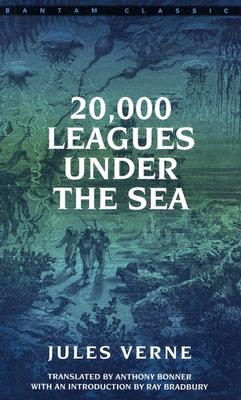
95. TMTF Reviews: 20,000 Leagues Under the Sea

Long ago, when Victor Hugo was writing masterpieces like Les Misérables, another French author was writing novels about submarines, prehistoric creatures and hot-air balloons: Jules Verne, called the Father of Science Fiction.

20,000 Leagues Under the Sea is widely considered to be Verne’s greatest work.

Is it?

20,000 Leagues Under the Sea is a superb novel, blending adventure, fascinating themes and the intriguing characterization of the man who calls himself Nemo—Latin for Nobody.

The novel begins in the year 1866 with the appearance of an enormous seagoing creature. Larger than any whale, it glows with a strange light and eventually tears a hole in the hull of a ship. Professor Aronnax, the narrator of the novel, sets out on a ship with his faithful valet Counseil and a crew devoted to finding and destroying the menace of the sea. When Aronnax, Counseil and a harpooner named Ned Land end up stranded on the back of the creature, they discover it’s actually a submarine. Its captain, the enigmatic Captain Nemo, welcomes them aboard, and so begins an incredible journey under the sea.

20,000 Leagues Under the Sea is a gripping read for at least three reasons.

First, Verne paints a fantastic picture of the underwater world, a world teeming with wondrous creatures and marvelous landscapes—a world as strange as another planet, yet just beneath the surface of the ocean.

Second, the Nautilus, Nemo’s submarine, is fascinating. The reader is privileged along with Aronnax and his companions to discover the secrets of the submarine little by little, with Nemo patiently explaining each of its major components. How could such a machine be built in secret? How did Nemo assemble a crew, and who are his mysterious crewmembers? Why did Nemo build the Nautilus in the first place?

This brings us to the third element of suspense in the novel: Who in blazes is Captain Nemo?

Nemo’s characterization is amazing. The polite, brilliant, sardonic engineer to whom the reader is introduced early in the book is gradually revealed to be—well, I won’t say anymore here. As his motivations become clearer, he himself changes before the reader’s eyes. More than the wonders of the sea and the submarine, Nemo kept me interested in the novel.

Sadly, apart from Captain Nemo, there aren’t many engaging characters in the novel. In fact, there aren’t many characters at all.

Nemo, Aronnax, Counseil and Ned Land are pretty much the only people in the novel. One or two other characters are introduced in the early chapters before Aronnax and his companions board the Nautilus, but they’re forgettable. Nemo’s crew is faceless and voiceless; the only member who makes any lasting impression is Nemo’s second-in-command, a short, incomprehensible man who makes few appearances.

Aronnax is mildly interesting. Ned Land is more engaging, with a down-to-earth personality (as his surname implies) and a quick temper; he’s an excellent foil to the bookish Aronnax and idealistic Nemo. Counseil is disappointing: an impassive, unchanging, self-effacing manservant whose entire personality seems to consist of a compulsive tendency to classify biological specimens.

That brings us to my other objection to the novel: too many lists! Admittedly, part of the science fiction genre is to list facts and technical details; as Stephen Baxter observes in an introduction to my edition of the novel, “This veneer of plausible detail [is] a technique well-known in fantastic fiction.” However, Verne’s novel takes it to an extreme.

The first time I encountered one of Aronnax’s exhaustive lists of marine fauna, I found it interesting and even applauded Verne’s use of real-life detail to enhance his work. Halfway through the novel—about half a dozen lists later—I was becoming jaded. I didn’t want to read about every single species of fish in the Mediterranean—I wanted to read about Captain Nemo and the Nautilus!

Although it would have benefited from a larger cast of characters (and fewer lists), 20,000 Leagues Under the Sea is an excellent book and a must-read for aficionados of science fiction, steampunk stories or adventure novels.

94. For When the World Seems Dark

In the centuries since the invention of the printing press, Christians everywhere have perfected the fine art of writing in their Bibles.

Some readers of Scripture create complex systems involving symbols or different colors of highlighter markers. Others cram notes, observations and questions into the margins.

I write in my Bible, though my notations are pretty simple. A couple of years ago, for example, I labeled the psalms in order to keep track of them. I came upon the seventy-seventh psalm a few days ago. Its label intrigued me.

For when the world seems dark

The psalm begins: I cried out to God for help; I cried out to God to hear me. When I was in distress, I sought the Lord; at night I stretched out untiring hands and my soul refused to be comforted.

Well, that’s cheerful.

Moving forward a few verses: Will the Lord reject forever? Will he never show his favor again? Has his unfailing love vanished forever? Has his promise failed for all time? Has God forgotten to be merciful? Has he in anger withheld his compassion?

What a bright, happy psalm this is turning out to be.

As I read the first few verses, I was wondered why I’d given Psalm 77 a title like For when the world seems dark. When the world seems dark, I want it to seem lighter—not more depressing!

Then the theme of the psalm takes an abrupt turn: I will remember the deeds of the Lord; yes, I will remember your miracles of long ago. I will meditate on all your works and consider all your mighty deeds.

The psalmist goes on to describe one of God’s great miracles, and ends with these words: You led your people like a flock by the hand of Moses and Aaron.

Some great Christian thinker (I don’t remember which) once wrote, “Do not forget in the darkness what you have learned in the light.”

The psalmist didn’t forget. When God seemed far away, he paused to remember two things: the great deeds God had done, and the great love God had shown.

Psalm 77 came at a good time. At the moment, I’m under some emotional strain. Leaving loved ones, adjusting to a new place, facing an uncertain future—these things are hard. It’s easy to lose perspective and become lost in depression, anxiety or fear.

It’s at times like these that I must stop and remind myself of two things: the great deeds God has done for me, and the great love he’s shown toward me.

I remember those scholarships that allowed me to graduate from Bethel College. I remember how, when I was depressed during my third semester, I enjoyed the much-needed blessing of a long, solitary Thanksgiving break spent writing, watching Disney movies and playing Final Fantasy VII. I remember the glorious evenings spent watching Avatar: The Last Airbender and drinking tea with my friends from college. I remember all those mornings my old man brought me coffee in bed, and all those times my mum told me, “You’re a treasure.”

I remember how often God has made things right.

When the world seems dark, remember what you’ve learned in the light.

93. About Writing: Setting

Setting is one of the most important elements of a story. Besides supporting plot and characterization, it anchors fiction in reality.

The Lord of the Rings takes place in Middle Earth, an imaginary world full of magic and monsters, but Tolkien describes its woods and fields so vividly that the fantastical story becomes believable. In the case of more realistic fictions, the setting does even more to make the story seem true.

Here are a few things I’ve learned about creating settings.

Settings must be consistent

If you introduce details about a setting, stick to those details. Inconsistent settings are a jarring reminder to the readers that the story they’re reading is made up.

Know your setting

As mentioned before, The Lord of the Rings has an amazing setting. Tolkien didn’t just write a story. He created a world. For decades, he worked out every detail of Middle Earth, devising languages, drawing maps, creating numerous cultures and inventing tens of thousands of years of history, including minor touches like legends and genealogies.

You don’t have to be as meticulous as Tolkien, of course, but he sets a fantastic example to follow. Your story may depict only a few scenes within a larger setting, but you should have some idea of what’s going on beyond them. There’s a problem when the storyteller knows no more about the setting than the reader.

Research your setting

I hate research. One of the reasons I enjoy writing fantasy is that I get to make up stuff instead of confirming every background detail. Even for fantasy writers, however, research is important. How tall are oak trees? What does it take to forge a sword? If real-life details aren’t believable, imaginary ones won’t be. For writers of historical or literary fiction, research is even more imperative. Every inaccuracy distracts from the story.

Consider drawing a map

Tolkien was a master of setting, which is why I’m using his work to illustrate so many of my points. (I’m also using him as an example because he is awesome.) I once read somewhere that Tolkien offered this advice to writers: When creating a story, draw a map. It doesn’t have to be an artistic masterpiece. Readers may never see them, yet maps are invaluable because they help writers keep track of details.

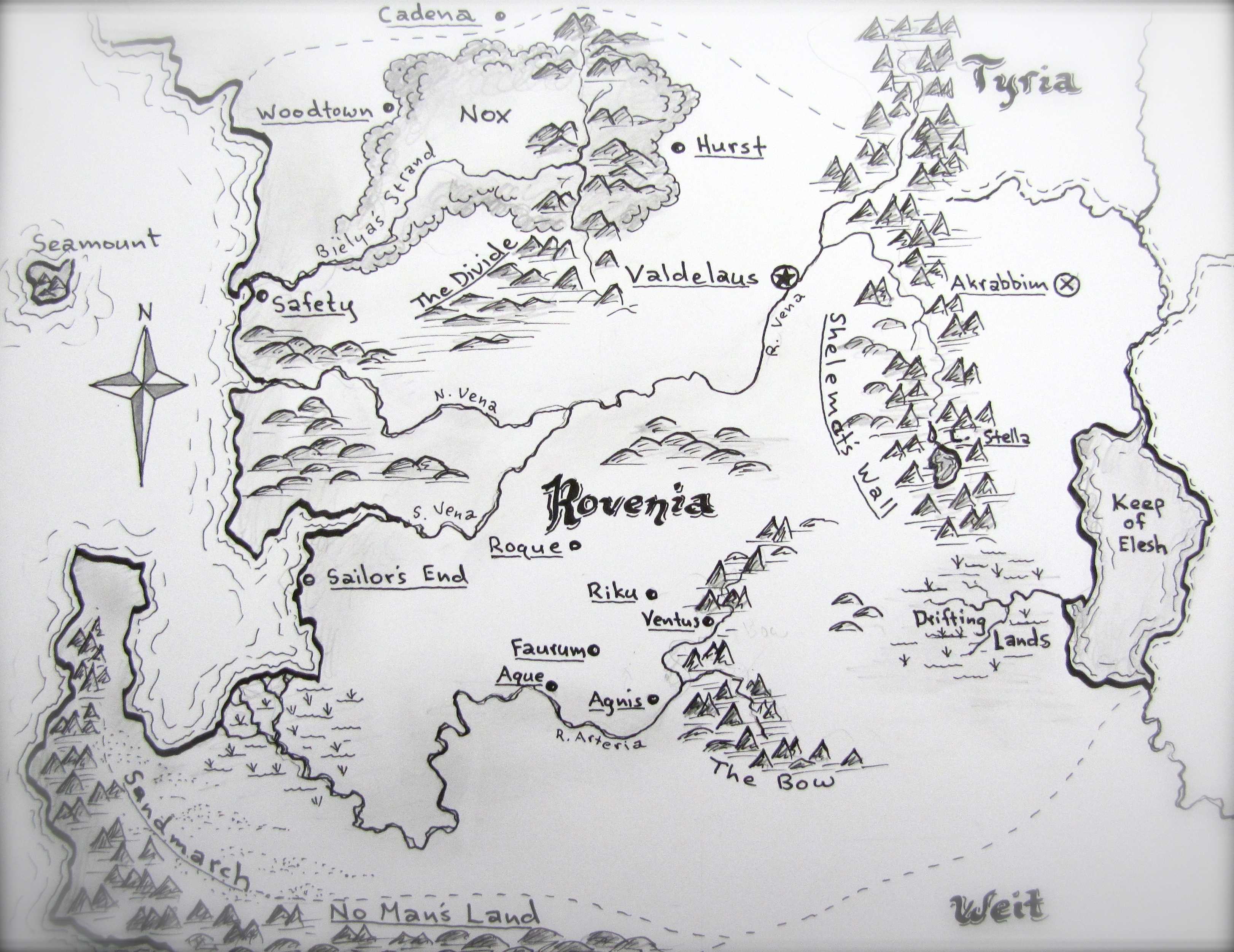
For my novel, The Trials of Lance Eliot, I sketched a rough map, which my old man recently transformed into this work of art:

I hope the map will intrigue readers and allow them to visualize the country described in the novel. In the end, however, I created this map for my own benefit. It was important for me to know how long it would take a person to travel between certain locations, and essential to know the relation of towns and landmarks to each other.

Convey more than visual details

When you step onto a farm, what are your first impressions? Yes, you might notice the red barns or the silos glinting in the sunshine, but the first things you notice are probably the smells: fresh earth, manure, grain, wood smoke or other scents. When writers describe scenes using only visual details, they’re giving a picture. However, when writers use all five senses, they’re conveying more than a picture—they’re conveying an experience.

Give impressions, not descriptions

There are writers (like Tolkien) whose long descriptions are interesting enough to be worth reading, but in most cases fewer details are best. In describing a scene, choose the most important and striking details. (The same principle applies to describing characters.) Your reader usually needs impressions, not exhaustive descriptions. Give your readers the significant details, and their imaginations will fill in the blanks.

The analogy is a little clichéd, but if writing a story is like building a house, the setting is the foundation. In a way, every other element of the story depends on it.

Do you have any advice for creating settings for stories? Let us know in the comments!

92. Impressions from a Cynical Traveler

My typewriter monkeys and I made it safely to Indiana, much to my own surprise. Things go wrong when I travel, you see. Missed flights, misplaced luggage, sleepless nights, broken boarding ramps, typewriter monkeys misdirected to Vietnam—as far as I’m concerned, the magic has gone out of international travel.

This time there was only one problem. The computers weren’t working in the Montevideo airport, which meant luggage was checked and boarding passes written without the help of machines. (I’ve typed out blog posts without help from my monkeys or their typewriters, so I know how hard it can be to do by hand what’s supposed to be done automatically.) My mum, a marvelously patient lady, stood in line with me as I waited to check my bags and receive a pass.

I checked my suitcases, commending them to God, and pocketed my boarding pass. The time had come to me to say goodbye to my mum, old man and younger brother. I did, wishing goodbyes weren’t so hard.

I spent part of the flight from Montevideo to Miami conversing with a nice old gentleman who works in the education department of a university in Philadelphia. We discussed the works of C.S. Lewis and J.R.R. Tolkien, the premise of my novel, his impressions of Uruguay and a few other things. I never did get his name, though.

After I arrived at the Miami airport, a customs official informed me that I look like Harry Potter. It wasn’t the first time I’d heard that comparison. I’ve taught three groups of students on three different continents, and each time at least one kid told me I looked like Harry. (In South Korea, a number of students addressed me as “Harry Potter Teacher.”) It’s a mystery to me how anyone can draw any connection between a skinny, black-haired, green-eyed Briton like Harry and a stocky, brown-haired, brown-eyed American like me. I suppose I should count my blessings. At least people aren’t comparing me to, say, Charlie Sheen.

From Miami I flew to Dallas, where I spent an eight-hour layover drinking coffee, wandering around the terminal and working on The Wanderings of Lance Eliot, the sequel to my novel. Although I was severely tempted to try out my Matthew McConaughey impression, I refrained. I’m pretty sure they shoot you for McConaughey impressions in Texas.

From Dallas I flew to Fort Wayne, where my older brother picked me up. My typewriter monkeys and I have taken up residence in his spare bedroom until I find an apartment of my own. Needless to say, my room smells strongly of bananas.

I’m glad to see my brother, sister-in-law and nephew again, and less glad to be used as a sidewalk by their cats. (Why the cats choose to walk all over me, when they have the whole house to roam, is a mystery.)

As usual, leaving loved ones and moving to a new place has been hard. It’s emotionally exhausting, with depression, excitement, homesickness, anxiety, hope and despair all taking turns. For now, I can only remember dear old Paul’s word’s in the twelfth chapter of Romans: “Be joyful in hope, patient in affliction, faithful in prayer.”

I also need to keep an eye on my typewriter monkeys. I’m afraid they’ll pick a fight with the cats if I’m not careful.

91. Life in Uruguay

For months, my old man has been suggesting I write a post about life in Uruguay. “People love travel blogs,” he said. I’ve put it off because writing about other things—heroic bunnies and bladed weapons, for example—has been more fun.

Today is my last full day in Uruguay, however. My packing is done. Tomorrow I must endure the horrors of international travel. This is my last opportunity to write about my sojourn in Montevideo before it comes to an end.

I’ll start with the parrots.

Montevideo, the capital of Uruguay, is full of trees, and those trees are full of parrots. They aren’t as common as, say, pigeons, but it’s not unusual while strolling along the sidewalk to hear parrots squawking overhead. My parents love them, but most Uruguayans consider them to be pests.

My parents’ neighborhood in Montevideo

Apart from the ubiquitous trees, Montevideo features many old buildings. Some of these have stood for centuries, dating from the colonial period. Others are fashionably old. Many are merely decrepit. These crumbling, rusting, peeling structures seem to have accepted their fate, and are now patiently awaiting the inevitable.

Montevideo stands beside a large body of water. I assumed it was the Atlantic ocean, but my old man informed me it’s actually an estuary: a cross between a river mouth and an ocean bay. An avenue called la Rambla runs along the water. It’s the backbone of the city. Turning off la Rambla plunges an unwary traveler into a maze of one-way streets.

The fanciest neighborhoods feature European-style buildings, bright flowers and beautiful views of the water. The seedier neighborhoods are decorated by graffiti and weeds. Most buildings are at least two or three stories tall.

The system for numbering floors in Uruguay is different than in America. A four-story building in America would be called a three-story building in Uruguay; the floor at ground level is simply called “ground level,” and “first floor” refers to the first floor above ground level.

Two other striking differences between America and Uruguay are electrical outlets and keys. The prongs on electrical plugs in Uruguay are round, not flat. The voltage in Montevideo is high, so low-power appliances get fried if they’re plugged in without an adapter. Uruguayan keys are charming because they’re designed in the old-fashioned way, complete with long barrels and teeth. Car keys are an exception, being identical to their American counterparts

Since Uruguay is located south of the equator, its seasons run in an opposite cycle to seasons in the northern hemisphere. January, February and March are summer months in Uruguay, while July, August and September are winter months. While it doesn’t snow in Montevideo, my parents tell me it can turn bitterly cold.

Most Uruguayans drink yierba mate, a kind of herbal tea. My old man and I like it. My mum insists it tastes “like pasture where cows have been recently.”

Uruguayans drink yierba mate from cups (usually fashioned from gourds or cow horns) called mates. The yierba is sipped through metal filters called bombillas that look a bit like straws. A single mate full of yierba leaves can last an entire day, provided the drinker refills the mate regularly with hot water. Many Uruguayans carry leather satchels called materas around with them, containing mates, bombillas, yierba mate and thermoses of hot water. As an avid drinker of tea, I wholeheartedly applaud Uruguay’s devotion to its favored brew.

A thermos, a mate and a bombilla

Everyone in Uruguay eats meat. (Sorry, vegan friends.) My mum once told me even the salad bar at a local restaurant featured meat. My favorite local cuisine is the chivito, a dish served al pan (as a sandwich) or al plato (on a plate) consisting of beef, bacon, eggs, lettuce, tomatoes and other trimmings. The literal meaning of chivito is small male goat, which seems appropriate.

The atmosphere in Uruguay is oddly European. Cities like Montevideo are populated by cultured, classy people. By contrast, the countryside is full of farms, ranches and small towns. Some of Uruguay’s major exports are beef, leather, yierba mate and amethysts. Tourism is also a major industry.

Spanish is the primary language spoken in Uruguay. The local dialect is different from the language I learned as a child in Ecuador. For example, impecable (impeccable) and divino (divine) are the Uruguayan equivalent of cool or awesome. Strangely, bárbaro (barbarous) is an informal synonym for good. It gave me quite a shock when a dentist in Montevideo inspected my teeth and proclaimed, “I’ve checked your teeth, and they’re barbarous.”

Uruguay is extremely secular. Christianity is considered foolish or quaint by most Uruguayans. Easter Week is known as Tourism Week by government decree. Despite its secular outlook, the country is full of superstitions and pagan practices. My old man sometimes finds coins, candles, decapitated chickens or other sacrifices set out to appease gods, idols or possibly Cthulhu.

In spite of sea, sunshine and beautiful scenery, the general mood of Uruguay is one of pessimism. My mum described the country as “a nation of Puddleglums,” alluding to the gloomy character from the Narnia books.

My favorite thing about Uruguay is that my parents and younger brother live there.

I thank God for my time in Montevideo. While I’m not quite sure what lies ahead of me, I’m hoping for the best.

My typewriter monkeys are excited for the trip back to the United States. I hope they find their suitcase comfortable.

The Infinity Manuscript, Part 12: The Tale of the Servant

The eleventh part of this story can be found here.

The servant boy called himself Gilbert Sleight, but no one in the Emperor’s Palace remembered his name. They were content to address him as boy and refer to him as the housekeeper’s urchin. The Emperor had many servants. Few people ever took the trouble to tell them apart, and no one bothered learning names.

For days, gossip had spread among the servants of a secret meeting to be held between the Emperor and Jerem the Plague. What a sensational idea! As though His Excellency Cecil the Immortal, who did not deign to speak with common citizens, would confer with the most infamous criminal ever to have lived!

Taking the rumors seriously, Sleight began haunting the corridors near the Emperor’s study. He had spent only two weeks in the palace, but he knew there was no other place His Excellency would choose to meet secretly with guests.

Sure enough, an hour before noon one sunny morning, Sleight heard the soft tinkle of a bell. This was a signal for all servants in the vicinity to disappear. Apart from his personal attendants, the Emperor hated the sight of servants.

An attendant appeared, ringing a silver bell and looking around. “Boy!” he hissed. “His Excellency is on the way to his study with guests. Clear the way of servants, and then get out of sight. Quickly, boy! The Emperor’s mood today is vicious.”

Sleight sprinted to the Emperor’s study, motioning to the servants along the way to withdraw from sight. Clutching rags, mops and buckets, maids and housekeepers ducked into spare rooms.

Upon reaching the door to the study, Sleight paused to look around. Everyone was gone. He slipped inside. A fire blazed in the hearth and a table was loaded with refreshments. Sleight had intended to hide under the Emperor’s desk, but the table seemed like a safer alternative.

He ducked beneath it and waited, hidden from view by the tablecloth.

The door opened.

“Here we are,” said the Emperor. “Attendant, go away. Anyone I see lurking in the hall when I open the door ends up on the executioner’s block.”

Listening intently, Sleight heard the attendant scuttle away and several people enter the room.

“Your Excellency,” said a woman’s voice he did not recognize. “I’ve brought the prisoner as you ordered. Do you have any further instructions?”

“You’re dismissed, Paladin Fey,” said the Emperor.

“May I be allowed to stay?”

“I said you’re dismissed.”

“Then permit me to send in your personal guard, Your Excellency. With due respect, Jerem the Plague—”

“Shut up and get out,” said the Emperor.

Sleight heard a click as the woman snapped her boots together in a salute, and then the sound of footsteps as she moved toward the door.

“Goodbye, Viv,” said a familiar voice. “I’m sorry for everything, and thank you.”

The footsteps paused at the door.

“Get out!” shouted the Emperor.

The door shut, and the woman’s footsteps faded.

“I wish I could say I was glad to see you, Cecil,” said a man’s voice. “To be honest, I’m mostly annoyed. Seven years, man. Seven years! You’ve spent seven years spreading lies about me.”

Sleight guessed the voice must belong to Jerem the Plague. He sounded younger than Sleight had expected.

“Quiet, Jerem,” snapped the Emperor, and added in a gentler voice, “Innocent, what stories has this wretch told you?”

“I’ll sum it up quickly, Your Excellency,” said the familiar voice. “Jerem told me this world is a fantasy, created when you wrote in the Infinity Manuscript. You’re both immortal because illusions can’t hurt you. He wants to destroy the Manuscript to dispel this fake world and send you both back to the real one. You want to stay, so you’ve hidden the only remaining page of the Manuscript.”

“Filthy lies,” exclaimed the Emperor. “You asked for an appointment, Innocent. I gave it to you so that I could explain everything. Jerem, you scum, don’t interrupt.”

“You got it, Cecil,” said Jerem. “I can’t wait to hear the explanation you’ve cooked up.”

The Emperor cleared his throat. “A long time ago, Innocent, the gods created the world by writing in the Infinity Manuscript. This much you’ve already heard. What you don’t know is that the gods appointed me as the Manuscript’s guardian. That’s why I’m immortal, see?

“As for Jerem, a god of discord chose him to wreck the world by burning the Manuscript. That’s why I split up the Manuscript’s pages and hid them all over the Orofino Empire, see? That malevolent god made Jerem immortal, and we’ve been enemies since the beginning of history.

“I’ve failed as a guardian. Jerem has managed to destroy all the pages but one. He’s here today to burn that last page. You can’t let him, Innocent! He’s lying to you. This world is real. He wants to ruin it. I guess it’s only a matter of time till he succeeds, but I want as many people as possible to live out their lives in peace before he does. Listen to me. Don’t believe him.”

There was a long silence, broken only by the crackling of the fire.

“Well, Innocent?” said Jerem. “You’ve heard both sides of the story. Which do you believe?”

“His Excellency’s explanation intrigues me,” said Innocent. “It makes sense of the facts. If it’s true, this world is real. If it’s true, I really exist. I want to believe it.”

“But do you believe it?” asked Jerem.

Innocent sighed. “What I want to believe and what I truly believe are different things, I’m afraid.”

“What if you’re wrong?” demanded the Emperor. “Millions of lives are at stake, Innocent! This isn’t your decision to make.”

“It’s Jerem’s decision, and he’s made it. The only decision I’ve made is to believe him.”

The Emperor laughed. “Fine. Believe whatever you want. This is all hypothetical, because you’re never going to find the last page.”

Innocent raised his voice and spoke a single word.

“Gil.”

Like a stone from a sling, Sleight shot out from under the table and darted across the study. “Here you go,” he said, handing over a piece of paper to Innocent.

“I’m afraid it’s not hypothetical, Your Excellency,” said Innocent, holding up the paper. “This is the final page.”

For an instant, the Emperor stood perfectly still with his mouth open. Then he slumped into his chair and sat blinking and gulping. “How—how did you—how?” he stammered at last.

“I’m sorry for giving you such a shock, Your Excellency,” said Innocent, unable to repress a smile. “Years ago, when I was a Paladin, I had friends all over the Empire—people who owed me favors. While traveling with Jerem, I sent letters to some of those people.”

He gestured toward Sleight. “This is a friend of mine from Green Isle.”

“Gilbert,” said Sleight, grinning. “Most people back home called me Gil.”

“I persuaded one of my old friends to bring Gil to the Emperor’s City,” continued Innocent. “Gil became a servant in an official’s house. He was transferred to this palace within a week, thanks to the influence of another old friend of mine.”

“That’s when I met Mist the Plunderer,” said Sleight.

Innocent chuckled. “You might remember him better as Theobald Loxley, Your Excellency. Before Jerem and I left Paladin Fey and her team, I gave Loxley a letter. It instructed him to travel immediately to the Emperor’s City and stay until someone made contact with him.”

“One of Innocent’s old friends arranged for Mist and me to meet,” said Sleight. “I grew up hearing stories about Mist, so meeting him was a dream come true. One night we snuck into the palace together and went looking for the missing page.”

“How did you know I had it?” rasped the Emperor.

Jerem laughed. “We used to be friends, remember? I remembered you were a nervous guy and figured you’d keep at least one page in a place where you could check on it.”

“I’d never have found the page on my own,” said Sleight. “It was a good thing Mist is a pro. I told him everything I knew about you, Your Excellency. Right away he figured out you’d keep the page in the place where you feel safest, and everyone in the palace knows it’s this study.”

“But the hiding place,” said the Emperor, and faltered.

“Mist knew that too. He took one look around the study and said, ‘It’s in a book.’ When I asked why, he told me, ‘The best place to hide a pebble is on the beach, and the best place to hide a page is in a book.’ It took hours, but we found the page. I’ve kept it with me since, waiting for Innocent to show up. Here he is, and there’s the page.”

“Where is Loxley?” asked Innocent. “I’d like to say goodbye.”

“He’s probably kicking back at a tavern,” replied Sleight. “After we found the page, he told me he was retiring.”

“Listen to me, son,” said the Emperor, sweating. “You heard my explanation, right? I’m the guy the gods appointed to protect the Manuscript. Jerem wants to destroy it, and the world with it. If you let him take the page, you’ll be responsible for millions of deaths.”

“Not if you’re lying,” said Sleight.

“Even if I were lying—hypothetically speaking—you’ll stop existing the second that page is gone. Don’t you want to live?”

Sleight felt a lump in his throat, but swallowed it and took Innocent’s hand. “Your Excellency, I’ve been a thief all my life. Other children threw sand at me. Merchants yelled at me. Everyone else ignored me. Only one person ever helped me, and he’s right here.”

“You can’t believe him!” screeched the Emperor. “That man is working for Jerem the Plague. He’s a criminal—a monster—a murderer!”

“He’s Innocent,” said Sleight. “He’s the same man who helped me in Green Isle, and I trust him. If he says burning the page is best, it’s best.”

After giving Jerem the page, Innocent knelt next to Sleight and put an arm around his shoulders.

“You did great, Gil.”

The Emperor had gathered himself up in his chair and looked ready to spring.

Jerem held the paper over the fire in the hearth. “Hold it, Cecil. One move and the page is toast. Stay in your chair while I say goodbye, and then we go home.”

“Stop him!” squealed the Emperor. “Innocent, stop him!”

“I’ll burn the page the instant I hear another word out of you,” grumbled Jerem. “Seriously, Cecil, stop being a jerk and let me say goodbye. Listen, you guys,” he added to Sleight and Innocent. “There’s no way I can—I mean, you’re just—dang it, I’m not good at this kind of thing. Gil, you’re awesome. Thanks.”

Sleight wiped his eyes and said, “Just go already, will you?”

Jerem took a deep breath. “This is it, Innocent. If I were in your place, I’d be furious at the unfairness of it all. I’d hate the guy who said the world was fake, but you never blamed me.”

“It’s not too hard to give up what was never really mine,” said Innocent. Tears ran down his face, but he was smiling.

“I’ll never forget you, Innocent. I’m so sorry for your loss.”

“All fantasies have to end sooner or later, I suppose. This world and its people can’t exist, but I’m happy to know they’ll remain as memories. You’re a good man, Jerem. Now go. Live your life. Think of me when you drink coffee, will you?”

Jerem nodded, sniffled once and dropped the last page of the Infinity Manuscript into the fire.

Sleight felt Innocent’s arm tighten around his shoulders as the world faded to white.

The End