118. Video Game Clichés

Video games operate by their own quirky rules, most of which differ wildly from real life. Consider how Mario, a portly plumber with short legs, can jump roughly ten feet into the air without a running start. In real life, Mario might manage ten inches, but not much more.

Many of these strange video game rules have become patterns repeated over the years, and some of these patterns have been worn to clichés. Here are just a few.

Spikes

In video games, deadly spikes are everywhere. A villain’s lair? Spikes. An ancient castle? Spikes. An ordinary meadow? Spikes. Along with bottomless pits, spikes are the standard obstacle in video games.

It would be nice to see some alternatives to spikes. Electric fences, perhaps? Buried explosives? Buckets of piranhas?

On a logistical note, I wonder who installs spikey obstacles in video games. Maybe villains outsource to construction companies for spike installations.

Big swords

I’ve already written about this one, and I don’t really have anything to add except for one brief observation: they may be clichéd, but huge swords are awesome.

Revealing outfits

Ladies in video games often wear tight, revealing outfits. Even when male warriors are clad from head to foot in heavy armor, females charge into battle with bosoms, legs or midriffs exposed. There may be some significant tactical advantage to fighting in a swimsuit, but I can’t imagine what it might be.

Death as a temporary condition

Unlike real life, in which death is permanent, many video games present death as a temporary affliction—much like the common cold. Administer a one-up mushroom, some phoenix down or a fairy in a bottle, and death is cured.

Variations include reviving characters through magic, time travel, advanced science or some other implausible means. Another version of this cliché is to fake the death of important characters.

Not to be cruel, but it’s always a bit of a relief when characters actually die. You know, permanently.

Puppet villains

Too many video game bad guys are revealed to be pawns controlled by greater villains. It’s almost more surprising to me when there’s no unexpected plot twist and the obvious villain turns out to be the bad guy after all!

Ice levels

There’s even a song about this one.

Cheerful, perky sidekicks

From a storytelling perspective, giving the hero a happy, optimistic companion makes sense. Such sidekicks can provide comic relief, act as a foil to more serious characters or brighten the mood of scenes that might otherwise be too bleak.

Even so, I’m tired of cheerful companions. I want a cynical sidekick: one who is pessimistic, sarcastic, gloomy, unsentimental and dryly humorous.

Breaking and entering

People in video games don’t seem to mind you entering their houses and stealing their stuff. As the hero of the game, you’re permitted trespass on private property and take whatever items are left conveniently lying around.

Link, the hero from the Legend of Zelda games, is notorious for smashing pots belonging to other people in his relentless search for cash. Almost every RPG I’ve ever played allows the player to loot the homes of innocent civilians.

What video game clichés have we missed? Let us know in the comments!

117. How to Kill Off Fictional Characters

Be ye warned: Here there be spoilers; specifically, plot details for Radiant Historia, the Harry Potter books and To Kill a Mockingbird.

Every fiction writer, no matter how inexperienced, possesses an ability with the potential to make readers rejoice or rage or weep. Although this ability can be powerful, too many writers fail to use it well.

Fiction writers can kill off their characters.

I’m currently playing Radiant Historia, a delightfully well-crafted RPG for the Nintendo DS. The story is set in a fantasy world in which two nations are at war over their continent’s dwindling supply of fertile land. Stocke, a secret agent, is given the task of saving the world using a magical book called the White Chronicle.

Early on, Stocke meets a young soldier named Kiel who hero-worships him. Although insecure, overenthusiastic and awkward, Kiel longs to serve his country and become a hero like Stocke.

Kiel, Stocke and their companion Rosch are suddenly plunged into a crisis. Rosch is critically injured. Enemy soldiers are patrolling the area, and it’s only a matter of time before Stocke and his companions are found and executed on the spot.

After hesitating for a moment, Kiel proclaims, “I’ll go and draw their attention!” Stocke objects, offering himself as a decoy in order to let Rosch and Kiel escape. Rosch insists they save themselves and leave him to die.

Kiel responds by shouting: “Sergeant Stocke! Thank you for everything!”

Then he’s gone.

In the end, Stocke and Rosch escape to safety. Kiel is surrounded by enemy soldiers and brutally executed.

I was staggered. Kiel was dead. The story fooled me into thinking he was just a background character, and then ended his life in a scene that made me want to cry.

That, dear reader, is how to kill a fictional character.

In the Harry Potter books, Dumbledore seems invincible, untouchable, immortal. He’s too good to die. He dies.

In To Kill a Mockingbird, Atticus Finch defends Tom Robinson with all his heart and soul. When Tom is convicted, Atticus resolves to appeal the sentence. He never has the chance. Tom makes a break from prison and is gunned down. Just like that, Tom Robinson, whom Atticus has spent the entire novel trying to save, is dead.

I’m not an expert when it comes to murdering characters in fiction. I kill off too many people in my novel—and spare one or two characters that probably should have died—but there is at least one death that matters. Those who’ve read The Trials of Lance Eliot know exactly to what I’m referring. One character dies who does not deserve to die.

Killing off characters should not be done lightly. If too many characters are killed, the reader is desensitized to death. Consider action films, in which dozens or hundreds of people are killed (in highly stylized and carefully choreographed scenes) and nobody cares.

Let me give just one more example of how to kill off characters.

There is an excellent anime called Trigun featuring Vash the Stampede (whose beaming face has already been featured on this blog). Despite his unmatched skill as a gunslinger, Vash is a pacifist. He resolves conflicts without killing anybody. When faced with two violent solutions to a problem, he invents a peaceful third solution.

One of the best things about Trigun is how Vash slowly unravels as he witnesses the carnage around him. People die. Lots of people die. Trigun has just as many fights as any action movie. For Vash, however, every casualty is a tragedy. Every death tears him apart. In the end, Trigun is a story about Vash coming to terms with himself and the violent world in which he lives.

When watching Trigun, the viewer comes to care about the victims, even the nameless background characters, because Vash does. He reminds the viewer that each death matters.

Asleep yet? No? Good. Let’s get practical.

Characters should not be killed off lightly

Don’t kill off a character just because you can. Death matters in real life. It should matter in fiction.

Don’t kill off too many undeveloped characters

Let’s face it. Nobody cares about the minor characters. Kill them off when the plot requires it, but don’t get too carried away. Deaths lose their emotional impact if they happen too often. When possible, save it for characters that matter.

The death of characters works well when it’s totally unexpected—or when it’s totally expected

Consider the examples of Kiel and Dumbledore. Part of what makes their deaths so powerful is that they’re unexpected. They happen suddenly, without much warning. Most players and readers are unprepared for them.

At the same time, however, foreshadowing can be a great way to make readers feel for a character. We feel pity when we’re sure a good character is going to die. A doomed character’s actions are poignant, and that character’s death is more moving when it comes.

What writers should avoid is killing off people whom readers suspect might die simply for being a certain type of character. If an obnoxious jerk is featured early in a detective story, for example, he often turns out to be the murder victim.

Quick, brutal deaths work well

There are enough slow, overdramatic deaths in fiction. People don’t usually die in the arms of loved ones after uttering beautiful last words. It’s a mistake to make every death in fiction emotionally satisfying. In real life, how many are?

Killing off minor characters can be a good way to develop major characters

When a military officer executes a civilian for stepping on his toe, we might not be moved by the death of the civilian—but you can bet we learn something about the military officer.

What’s your advice for killing off fictional characters? Let us know in the comments!

No Internet

There was no new post on Monday, for which I apologize. My typewriter monkeys and I recently moved into a new apartment, and there have been unexpected delays in obtaining an Internet connection.

This blog will resume its usual posts on Monday… I hope. Thanks for your patience!

UPDATE:

A representative from an Internet company came to install Internet stuff in my apartment, but one of my monkeys bit him and now the company won’t send another representative. I’m trying to work things out, but I’m afraid this means there will be no new post on this blog on Monday, September 10.

Internet or no Internet, regular TMTF posts will resume on Friday. Adam has spoken, and so shall it be.

In the meantime, I suggest you go check out Just the Fiction, Ma’am immediately. It’s a blog about writing and faith, and it’s awesome.

116. Because I Am a Christian

While my command of the English language is redoubtable—well, adequate—my knowledge of Spanish is weak. I’ve read very little Latin American literature, and understood very little of what I’ve read.

There is one story, however, I will never forget.

Juan León Mera, the man who wrote the lyrics to Ecuador’s national anthem, penned a story titled “Porque Soy Cristiano,” which translates to “Because I Am a Christian.” I had to read it for one of my Spanish classes in middle school.

It’s the story of a man whom a military officer treats brutally during one of South America’s many civil wars. The officer eventually cuts off the man’s arm with a machete and abandons him. Many years later, the officer is injured (or becomes sick; I don’t recall exactly) and is rescued by a one-armed peasant.

Of course, the peasant is the man whom the officer had maimed years before. Although he recognizes the officer, the peasant chooses to care for him instead of exacting revenge. When the officer learns the identity of his rescuer, he’s staggered.

“Why have you helped me?” he asks.

The peasant replies, “Because I am a Christian.”

It’s only a few words, but it’s enough. Everyone understands. Christian means forgiveness. Christian means compassion. Christian means love—not romantic nonsense, but a simple resolve to treat other people decently.

Things have changed.

To many people today, Christian means hypocrisy. Christian means superstition. Christian means homophobia, prejudice, legalism, ignorance, arrogance and prudishness. Christian means spending an hour sitting in church every Sunday.

Many followers of Christ have abandoned the word Christian due to its negative connotations. I don’t blame them, and yet I don’t agree. I think the word Christian can be redeemed. How can we redeem it? What can we do?

Do we even have to ask?

Let’s redefine Christian. Better yet, let’s stop redefining it. Its original meaning was awesome.

Why do I read those boring prophecies and genealogies in the Bible? Why do I refrain from lying and swearing and being an Internet troll? Why do I even try to treat other people with kindness and respect?

Because I am a Christian.

115. TMTF’s Top Ten Manly Men in Literature

We here at TMTF are experts on manliness. Some of us have the undeniable advantage of actually being men, giving us considerable insight into the manly virtues of loyalty, courage, honesty, bravery, integrity, humility and resourcefulness.

I personally possess a fascination for bladed weapons, an appreciation for beards and a liking for cartoons about magical rainbow ponies—all manly attributes.

Today’s top ten list features some of the manliest men in literature. A few rules apply to this list. Characters from books I’ve not read are not allowed on the list, and only one character is allowed per author. For the purposes of this list, manliness is defined as characterized by virtues generally associated with men.

By this definition, literary characters such as Odysseus and James Bond are not manly. They are intelligent, strong and brave, but their moral flaws (arrogance, dishonesty, lustfulness and disregard for the value of human life, to name but a few) disqualify them for this list.

Without further introduction, TMTF is excited to present…

The TMTF List of Top Ten Manly Men in Literature!

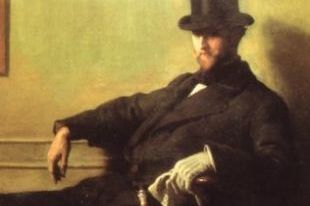
10. Sydney Carton (A Tale of Two Cities by Charles Dickens)
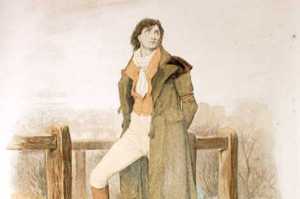
Sydney Carton being wistful.

Sydney Carton is a hopeless mess of a man who wallows endlessly in self-pity. Although an interesting character, he wouldn’t even come close to making this list if it were not for his incredibly manly, stoic, selfless sacrifice in the final chapters of the novel. Heroism often seems pretentious, but true heroes quietly accept the burden of their fate. Sydney atones for a lifetime of unmanly weakness with one powerful act of heroism.

9. Domovoi Butler (Artemis Fowl series by Eoin Colfer)
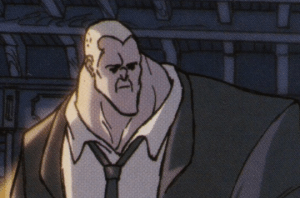
That’s a lot of neck.

The Artemis Fowl books are not sophisticated literature. In fact, they’re on roughly the same literary plane as the Twilight novels. I must confess to liking the Artemis Fowl books anyway. What they lack in substance and style, they provide in charm, whimsy and delightful absurdity. Domovoi Butler is the, er, butler of Artemis Fowl, an Irish criminal mastermind who also happens to be a twelve-year-old boy. Butler is not only a manservant, but also a bodyguard and a very dangerous man. Apart from his fierce and selfless loyalty to Artemis, he consistently manages to save the life of every person in the room every time there’s a crisis—which, in the Artemis Fowl books, is pretty much every chapter.

8. Remus Lupin (Harry Potter series by J.K. Rowling)
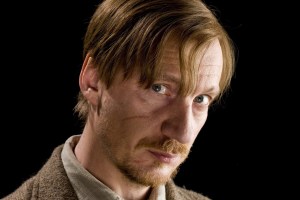
That is one manly ‘stache.

In spite of his strength, girth and massive beard, I don’t consider Rebeus Hagrid the manliest man in the Harry Potter books. (He’s not even a man, technically speaking.) No, that honor goes to Remus Lupin. (He’s also not exactly a man, but I’ll bend the rule this time.) Lupin is an eccentric, disheveled professor who turns out to possess remarkable kindness, humility, courage and common sense. Lupin also possesses a dark secret, a tragic burden which never seems to prevent him from being friendly and cheerful.

7. Radcliffe Emerson (Amelia Peabody series by Elizabeth Peters)
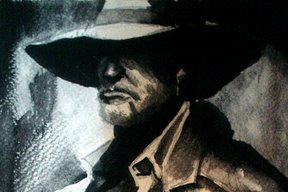
I couldn’t find an image of Emerson, so have a picture of Sean Connery being a gaucho.

Known to Europeans as a noted Egyptologist and to Egyptians as “the Father of Curses,” Radcliffe Emerson is notorious for losing his temper, swearing constantly and making fantastic archeological discoveries. Emerson may be gruff, but he loves his family and treats Egyptians with deep respect—unlike most of his nineteenth-century European colleagues, whose prejudice toward “the locals” frustrates him deeply. Beyond Emerson’s ostentatious masculinity—he’s a handsome, muscular man who dislikes wearing more clothes than absolutely necessary—he demonstrates many virtues of true manliness.

6. Gabriel Syme (The Man Who Was Thursday by G.K. Chesterton)
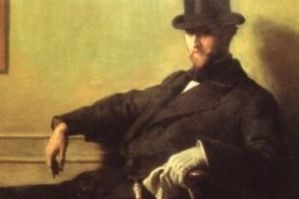
That is a fabulous hat.

The Man Who Was Thursday begins with a poet stumbling upon a secret society of anarchists, and promptly convincing them to elect him into their council of supreme leaders. The poet, who also happens to be a police detective, embarks on a mad journey to protect innocent people from the nihilistic terrorist known only as Sunday. In the face of danger, despair and absurdity, Syme never loses his resolve to do the right thing. His calm bravery in the face of extreme danger is incredible, and his response to tragedy is to maintain his hope and sense of humor. As a bonus, Syme is delightfully witty.

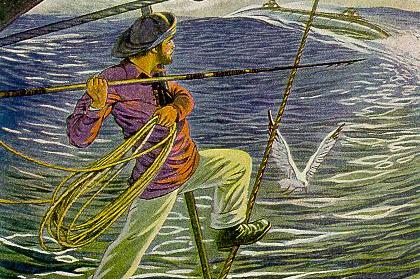
5. Ned Land (20,000 Leagues Under the Sea by Jules Verne)
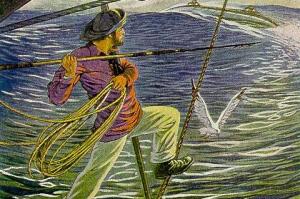
That seagull is toast.

As I’ve mentioned before, 20,000 Leagues Under the Sea has basically four characters, three of whom are obsessed to various degrees with science. The fourth, Ned Land, is a refreshing exception. A sensible, short-tempered harpooner, Land keeps his companions grounded (forgive the pun) every time their resolve falters. Despite disliking his host, Captain Nemo, Land doesn’t hesitate to save his life. Add bravery and a fierce love of life, and Ned Land turns out to be quite a manly fellow.

4. Adam Bede (Adam Bede by George Eliot)

Adam Bede being even more wistful than Sydney Carton.

Stoicism is a manly virtue—not the absurd idea that men should go out of their way to suffer, nor the equally ridiculous notion that men must always hide their feelings, but the decision not to embitter the lives of others by complaining about troubles that can’t be avoided. Adam Bede has it rough. His life seems to be one tragedy after another. He perseveres, never complaining, always working, doing his best to provide for his loved ones and calmly accepting every blow dealt him.

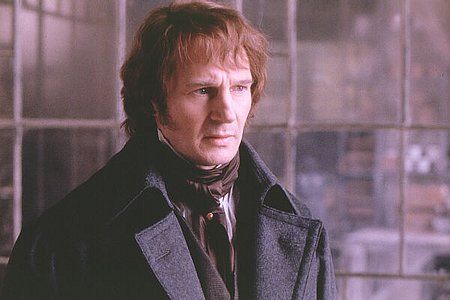
3. Jean Valjean (Les Misérables by Victor Hugo)
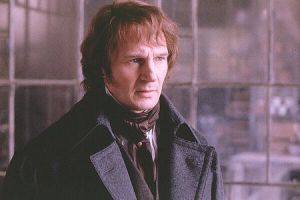
Take notes, Batman.

Jean Valjean is more awesome than Batman, and they’re both awesome for exactly the same reasons: courage, stoicism, resourcefulness, compassion and an undying obsession with atoning for a mistake. What makes both characters so compelling is that they pay for their sins many times over and yet can’t overcome their guilt. They consider themselves monsters when they’ve become saints. Jean Valjean is humble to the point of self-effacement, unable to see what is plain to almost everyone else in the book: he is a great man, not to mention a manly one.

2. Aragorn (The Lord of the Rings by J.R.R. Tolkien)
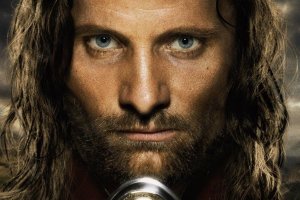
Another manly man with fine facial hair.

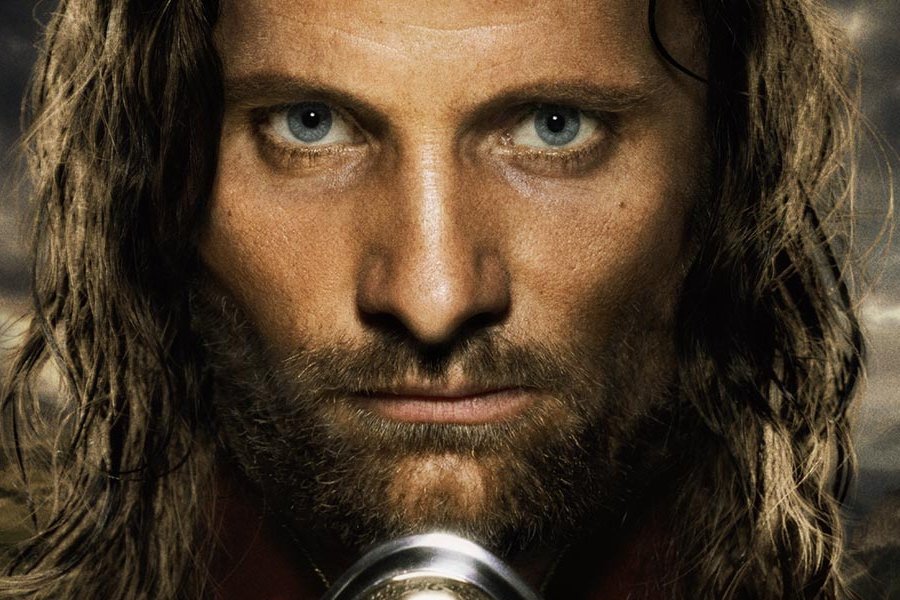
Aragorn has a troubled past, but he’s too busy defending Middle Earth from the looming threat of Sauron to waste time brooding over it. (Pay attention, Cloud Strife.) Aragorn is almost messianic in his heroism: a brave warrior, gentle healer and strong leader. He does not succumb to the temptations of the Ring, a powerful but evil relic, but humbly does his best to ensure its destruction. Ironically, the greatest hero of The Lord of the Rings isn’t Aragorn. An ordinary little person named Frodo destroys the Ring. Aragorn is quick to praise Frodo’s heroism over his own, and that is part of what makes Aragorn one of the manliest men on this list.

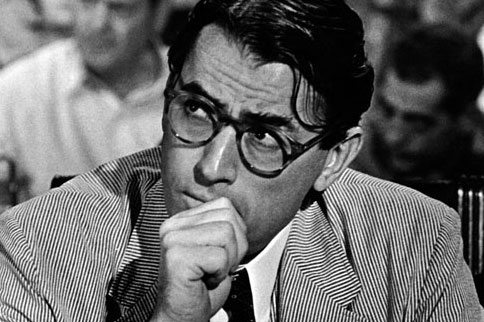
1. Atticus Finch (To Kill a Mockingbird by Harper Lee)

Ladies and gentlemen, men don’t come manlier than this.

I can think of no manlier man in all literature than Atticus Finch, the soft-spoken lawyer from To Kill a Mockingbird. Where do I even begin? Atticus can fire a gun with incredible accuracy, a skill of which his children are unaware because he dislikes violence and refrains from showing off. Atticus does his best to respect and understand every human being, and risks his safety to protect a prisoner from a mob. Most significantly, he willingly throws away his reputation as a lawyer to defend an innocent man. Blinded by racial prejudice, most white people assume the defendant, a black man, to be guilty. Knowing the trial will almost certainly end in a guilty verdict for the defendant, Atticus defends him anyway. Through all this, Atticus doesn’t complain once. He bears every burden patiently, doing the right thing and never losing hope—a true paragon of manliness.

O people of the Internet, what manly literary characters would you add to this list? Let us know in the comments!
114. Communion Anxiety

Christians know all about Communion. Seriously, we’ve got it covered. Call it the Lord’s Supper, Eucharist, whatever you like, we know our stuff. We partake of little crackers and juice from plastic cups that look like shot glasses. The pastor reads a few verses we’ve all heard before. “This is my body given for you; do this in remembrance of me.” It’s all pretty familiar, right?

Then the pastor says, “So then, whoever eats the bread or drinks the cup of the Lord in an unworthy manner will be guilty of sinning against the body and blood of the Lord.”

Wait, what?

“Everyone ought to examine themselves before they eat of the bread and drink from the cup,” continues the pastor. “For those who eat and drink without discerning the body of Christ eat and drink judgment on themselves.”

Judgment? That sounds serious. I’d better see what the Bible says. That’s usually a good start.

Paul writes, “For those who eat and drink without discerning the body of Christ eat and drink judgment on themselves. That is why many among you are weak and sick, and a number of you have fallen asleep.”

Fallen asleep? That doesn’t sound so bad—unless by fallen asleep Paul means died. That does sound bad. Paul’s going all Mafia on us. “Dat’s why many o’ youse is weak an’ sick, see? Some o’ youse is fallen asleep, if youse catch my drift.”

So we, um, fall asleep if we eat and drink judgment on ourselves? And we eat and drink judgment on ourselves by failing to discern the symbolism of Christ’s death in the crackers and Communion cups?

Well, there’s no need to panic. I’ll just partake of Communion in a manner worthy of the Lord. That’s not so hard. Christians do it every Sunday.

Is anyone else stressing out in church today? I mean, everyone looks calm and earnest, like it’s no big deal. Except for that guy who has fallen asleep. Really fallen asleep, I mean, not…you know…fallen asleep.

It’s better not to think about that. Okay. Do this in remembrance of me. Manner worthy of the Lord. I can do this. Ah! The pastor is telling us to partake of the bread! Wait, please! I’m not ready! I’m too young to die!

All right, I’m exaggerating for dramatic effect. Slightly exaggerating. The Lord’s Supper is an amazing sacrament, a powerful reminder of God’s love in Jesus Christ. Communion isn’t really this nerve-wracking. Not quite.

What stresses you out in worship services? Let us know in the comments!
113. Let’s Make the Internet Awesome

Today is the day, ladies and gentlemen.

Please consider taking two minutes to brighten someone’s life today. And spread the word! Together, let’s make this the best Be Nice to Someone on the Internet Day the world has ever seen!

(Yes, today will have been the only Be Nice to Someone on the Internet Day the world has ever seen. That’s not the point. Stop being logical and go be nice to someone on the Internet!)

112. Be Nice to Someone on the Internet Day

People on the Internet can be awfully cruel.

Simple disagreements about religion, politics, television shows, video games or sparkly vampires become vicious arguments full of insults, slander and accusations that make no sense. Look at the comments on YouTube, news websites, popular blogs or online forums. All too often, they ain’t pretty.

Why is this? One possible reason is that cruelty is easy. Explaining, supporting and defending one’s views can be difficult. It’s hard to be patient and respectful.

It may be that certain people are fundamentally biased, and blindly assume anyone with conflicting views must be wrong—and is therefore not worth respecting.

Others may be insecure in their beliefs. They’re afraid they’ll be proved wrong in an argument, and so they use insults to deflect serious debates.

Of course, another possibility is simply that some people are angry jerks. With the anonymity of the Internet, being an angry jerk has never been easier.

Things seem grim, but my typewriter monkeys and I have come up with an idea.

We propose the establishment of a new holiday. Let us celebrate Monday, August 20, as the first ever Be Nice to Someone on the Internet Day.

On Monday, go to someone’s Facebook profile, blog page, YouTube channel, deviantART page, Twitter profile or Tumblr account and leave an encouraging comment, sincere compliment or gentle word of constructive criticism.

If these suggestions don’t appeal to you, be creative! Find some other way to be nice to someone on the Internet, and uphold the noble cause of balancing the nastiness of online cruelties with the awesomeness of online kindnesses!

(If you plan to take part in Be Nice to Someone on the Internet Day, please be nice to someone who isn’t me or one of my typewriter monkeys. We’re not trying to fish for compliments.)

On Monday I’ll publish a brief reminder for those who want to participate. In the meantime, if you’d like to get a head start, feel free to go ahead and write something awesome on someone’s online page, post or profile.

Spread the word! Monday is going to be the best Be Nice to Someone on the Internet Day the world has ever seen!

111. About Writing: Theme

All great works of fiction have one thing in common.

What is that, you ask?

They mean something.

Granted, most stories mean something whether the storyteller intends to convey meaning or not. A cheesy romantic novel may be awful, but it still expresses something—probably something shallow and clichéd—about romance.

A clever reader can sometimes discern meaning in a bad story, but it’s not very rewarding. It’s like sifting through a ton of sand to find an ounce of gold dust.

Good stories are different. Finding meaning in good stories can be exciting and satisfying, like digging into a cave to find heaps of dazzling jewels.

From Aesop to Jesus Christ, great storytellers have used stories to teach powerful lessons. However, storytellers must use caution and discernment when trying to convey ideas. Stories must not become propaganda. Storytellers must not be preachy. After all, one of the most important rules of writing is to show, not simply to tell.

What are themes?

A theme is a thread or pattern of meaning in a story. If that definition sounds vague, it’s because it is! Themes can be highly subjective. A reader might discern themes in a story that the storyteller never imagined. Consider the hundreds of interpretations of Shakespeare’s plays! Many good storytellers, however, are intentional in weaving themes into their work.

Let’s get practical. I want to write a story about, say, a young man named Socrates going on a blind date. How can I figure out the theme of the story? Where do I begin?

There are several ways to figure out themes. In this blog post, I’ll mention two of the most common.

The first is to use a particular theme (or several themes) as a starting point, and write the story around it. Let’s choose a theme for Socrates and his blind date. Destiny. That’s a good one. As I write the story, I’ll try to make it consistent with the theme I’ve chosen. Soc’s destiny might be to fall in love at first sight, or possibly to have the worst night of his life. Either way, his destiny—not his choices—must guide his blind date.

Personally, I don’t like this approach to figuring out themes. It seems too technical.

I prefer the second approach, which is simply to write the story and figure out its theme afterward. How can a storyteller know a story’s theme until the story is written?

Once the storyteller has discerned themes in his story, he can go back and revise the story to develop those themes. In the case of our friend Socrates, I’ll write his story and let it go wherever it wants to go. There will be time enough once his story is written to discover what it’s about.

I’ll use another example, this time from my novel. When I began writing The Trials of Lance Eliot long ago, I had no intention of giving it any kind of meaning. My only intention was to write a fantasy with swords and dragons and stuff.

As I worked on the novel, however, themes crept in, ninja-like, and wove themselves stealthily into the story. Instead of ignoring them or trying to uproot them, I decided to develop them. It was a good decision. Emphasizing existing themes was much, much easier than forcing the story to fit themes chosen arbitrarily.

Every good story means something. If you’re a storyteller, the meaning of your story is mostly up to you. Make sure it matters!

110. That Time I Melted a Screwdriver

I like fireworks, except when they’re unexpected and burst out of light switches. Then they’re scary.

You see, I once melted the tip of a screwdriver. With electricity. By accident. There were fireworks, and not the good kind.

I spent a few summers during my college years painting walls, doors and miscellaneous fixtures on campus. Before painting a wall, I had to remove the plastic covers from light switches and electrical outlets. These plastic covers sometimes adhered to the wall after the screws had been removed, so I tapped them gently with the tip of the screwdriver to knock them loose.

In a bathroom in the dining commons, there was a particular light switch. The Light Switch of Death. I gave the plastic cover a gentle tap with the tip of the screwdriver, and—fireworks.

A blinding flash! A shower of sparks!

I reeled backward, blinking and clutching my screwdriver. Once my eyes had refocused, I noted with detached interest that the tip of the screwdriver had melted. A few moments passed. Then, gathering my courage, I examined the Light Switch of Death. I expected to find a blackened crater or some other kind of damage.

The plastic cover had fallen off. That was all. Apart from the missing cover, the light switch seemed unaltered in any way. Later, when the screwdriver’s tip had cooled and I had regained my composure, I cautiously flipped the switch. The lights turned off. I turned on the lights. There were no problems.

The screwdriver’s tip, which had hardened into a misshapen mess, was eventually filed down in order to make the tool usable again. As far as I know, the Light Switch of Death never gave anyone further trouble. It’s there to this day, lurking in a bathroom in the dining commons, concealing its menace behind an immaculate plastic mask.

I’m still not sure what happened. I think the tip of the screwdriver must have slipped behind the plastic cover and touched an exposed wire or something. Fortunately, the handle of the screwdriver was made of plastic. Had I been touching the metal part of the tool, I’m not sure how much damage I may have sustained.

As much as I wanted to end this post with a clever electricity-related pun, I can’t think of any. (If one occurs to you, feel free to leave it in the comments.) I’ll conclude with a word of warning. Be cautious when removing the covers of light switches and electrical outlets. If you’re careless, fireworks may ensue.