The Field Where No Flowers Grow

A Short Story

On an island not far from my village there is a field where no flowers grow. It has neither grass nor trees. It’s a dead place, like a scar, covered in mud and studded with wooden crosses. Someone started a graveyard there long before I was born.

The island, which we call the Cache, is one of several, which huddle together in the dark sea as though trying to stay warm. I visit them almost every day. It takes about two hours’ hard rowing from my village to the islands, assuming the boat doesn’t leak. (It does. A lot.) Merlin and I have spent our lives exploring the islands and the waters around them.

Merlin is my… guardian? I would call him my dad, but my dad either ran away or died at sea when I was little. He sailed away on a Union ship and never came back. When my mum died, Merlin took me in. I was about eight: a gangly girl with dark eyes and freckles.

Merlin was a tough old guy with salt-and-pepper hair, huge arms, and a bit of a belly. Although he looked surly, he was a kind man. The only time I ever saw him angry was when someone made fun of his name. Merlin has always been a bit sore about it. He told me his parents meant to name him Marlin, after the fish, but mixed up the names.

These days, Merlin has a little more gray in his beard, yet rows out to the islands with me as often as the weather allows. We’re relic hunters. Believe me when I tell you the job is a lot less exciting than it sounds.

The Cache and its neighboring islands are littered with ruins and relics of the Age of Lights. Most of the really valuable stuff was carried off by other hunters decades ago, but there are still crumbling buildings with mountains of rubbish for us to sift. On a good day, we find an unbroken dish or trinket. The stuff is hundreds of years old. We have no use for it, but rich people inland apparently like collecting old junk, so we sell it.

When the weather is too stormy for us to visit the islands, we take care of chores around the home. We’re fortunate enough to have a two-room house: a sturdy shelter of sandy boards and shingles, eternally damp from the salty sea air. We even have the luxury of a glass window. Like every other building in our village, our house is built on stilts and reached by a ladder. Floods are common in the stormy seasons. Only idiots build on ground level.

Our most important chore is cleaning and restoring the stuff we find on the islands. Most of it is filthy. We’ve even had to pry barnacles off relics before. Twice a month, when the weather is fair, Merlin puts on his best clothes, rents a horse and wagon, and takes our latest batch of relics twenty miles inland to the city of Safehold. There, in the market square, he sets up a stall and sells our stuff.

Most of his buyers are merchants and Union officials. I suppose the merchants resell the relics at higher prices in bigger cities. The officials must like the allure of antiquities from Age of Lights, or else they just enjoy spending cash. Heaven knows they’ve got lots to spend. The Union treats its officials well, which must be its excuse for ignoring the rest of us.

When Merlin goes to Safehold, I stay in the village. I went with him a few times, but it was infuriating to deal with overfed city people, and Safehold was no place for a girl to go exploring on her own. I prefer to stay in the village. The local preacher is teaching me to read from his two tattered books, and one of the barmaids at the tavern gives me stale sweets.

Our village is not a nice place, but I’m fond of it. When the Union discovered our little settlement, it declared us part of its domain and named our village Silver Sands. It’s a stupid name. The beaches around here look more like ash.

My name is Pearl. Not that it matters. I was born in the village. I’ll spend my life in the village. I’ll die in the village… if I’m lucky. Otherwise, I’ll die at sea, unless the Union decides to execute me as a spy or criminal. The Union has a habit of executing people on vague charges. I suppose it feels insecure, and has to boost its own confidence by killing off public enemies on a regular basis. If it can’t find any, it improvises.

Since I was a little girl, the flowerless field on the Cache fascinated me. I asked Merlin about it a few months ago as we rowed to the island. “Merlin,” I said, speaking a few words at a time between strokes, “I have a question—about that field—on the Cache. The field—with the graveyard.”

Merlin stopped rowing, and I followed suit. We sat for a minute under the gray sky, breathing deeply as our boat bobbed up and down in the water.

“It’s an evil place,” he said at last, frowning.

“There are sometimes new graves,” I said. “I’ve noticed. When we split up on the island, I sometimes visit the field, and I see crosses that weren’t there before.”

“You visit the field? Well, stop. You should be hunting for junk, anyhow, not exploring.”

“I know nobody from the village has died lately,” I persisted. “Who’s buried in the new graves?”

“Nobody,” spat Merlin. For once, his tone matched his looks.

“It’s a graveyard! What do you mean, nobody is buried there?”

“It is a graveyard, Pearly, but not for the dead.”

I couldn’t let it go. “Then who’s it for, Merlin? Who’s buried there?”

“Death is buried there. Stay away from it. Do you understand, Pearl? Don’t go there. That field is a dangerous place. Some things are best left buried.”

I didn’t go back to the graveyard. Something in Merlin’s tone scared me. Whatever lay beneath the field of no flowers, I wanted no part of it.

Then, a little more than a month ago, a team of Union officials arrived in our village. It was almost comical to see them, dressed in their tri-color uniforms, surrounded by servants and guards, standing awkwardly outside our house.

“Stay away from the window,” growled Merlin, pulling me back. “Listen, Pearl. Listen to me! Whatever happens, give short answers and leave the rest of the talking to me. If they ask about the Cache—listen carefully, Pearl—if they ask about the graveyard on Cache, tell them the dead of our village are buried there.”

Someone outside shouted, “Hello! Open up in the name of the Union!”

Merlin gave me one last look and then opened the door, squinting down at our visitor with a strained smile. “Ah, yes. Welcome! What can I do for you?”

“May we come up?” The voice was of a young man.

“Of course,” said Merlin. “Do you need a hand up the ladder?”

“I’ll manage,” replied the voice. Within moments, a slender man appeared in the doorway. He wore the uniform of the Union, white with a sash of red and blue, and a pair of glasses. “What a fine home,” he said, dusting his hands and looking around with a smile. “I suppose the stilts keep it high and dry? Splendid, splendid.”

Our visitor was joined by two guards, whose swords bumped against each rung of the ladder as they climbed up into the house.

“To what do we owe this honor?” asked Merlin.

A member of our guest’s entourage tossed up some cushions to one of the guards, who set them on our floor. They looked so odd against the sandy boards. Our visitor sat cross-legged on one of the out-of-place cushions and motioned toward the others. “Please, sit.”

Merlin and I sat and waited.

“I’ll get straight to business,” said our guest pleasantly. “I don’t mean to waste your—” He coughed politely. “—valuable time. My name is Simon, and I am a scholar of history. I’m particularly interested in the Age of Lights, of whose relics and artifacts you have—” He gave another cough. “—extensive knowledge.”

Merlin shrugged. “You’re too kind, Mr. Simon, but we’re not educated. We find the stuff, clean it, and sell it. We leave the history to the historians.”

Simon laughed. “Ah, but hands-on education is the best kind, Mr.…?”

“Merlin.”

“Mr. Merlin. And what is your name, young Miss?”

It took me a moment to realize he was speaking to me. “Pearl,” I blurted.

“Your, ahem, father is very modest, Ms. Pearl, but I’m sure you both know quite a lot about the Age of Lights from its artifacts. What can you tell me?”

Simon had apparently decided that of the two of us, I was more likely than Merlin to let slip sensitive information. I was determined to prove him wrong.

“It had beautiful dishes and figurines and pictures,” I said, trying to sound childish. “The people in the Age of Lights were lucky to have such pretty things.”

“Indeed, Ms. Pearl, but their luck didn’t stop there. They had better things yet. Here, for example.” Simon held out a piece of paper. It had a drawing of what looked like a bulbous metal barrel with tapered ends and fins on one end like a fish.

“What is this?” I asked.

“A barrel containing great treasure,” said Simon, and held up another picture. It was of a metal canister with words painted on its side. He apparently didn’t know I can read a bit, because he asked, “Do you want to know the meaning of those letters?”

I played along. “Yes, please.”

“They spell ‘Contains diamonds: Handle with care.’ These are ancient jewel containers.”

I nodded, but it was a lie.

The letters on the canister spelled Sulphur mustard: Toxic chemical hazard. I didn’t know what these words meant, but they gave me reason not to trust our visitor.

“The Union is interested in finding and preserving the greatest treasures of the Age of Lights,” continued Simon, taking back the pictures and showing them to Merlin. “We believe these valuable relics can be found on the islands off the coast of Silver Sands, where you do your hunting. Have you seen any such treasures?”

Merlin shook his head.

“Ms. Pearl?”

“No,” I said.

Simon sighed. Behind him, one of the guards shifted on his feet and put a hand on the hilt of his sword.

“We are quite sure these artifacts, and others, are somewhere on the islands,” said Simon. “We don’t, ahem, disbelieve you, but we need to see for ourselves. I place you both under house arrest.

“Relax,” he added, grinning. “You’re not in any trouble… yet. The Union sent scholars to Silver Sands with me. We’re going to spend a month searching the islands. If you’ve told the truth and we don’t find anything, we’ll let you carry on with your business. If you’ve lied and we do find something—” Simon coughed yet again. “—it won’t end well for you, I’m afraid.

“Let me ask you both one last time: Have you found any relics that match these pictures, or any that you have not reported?”

“No,” said Merlin and I together.

Simon crossed his arms. “We shall see.”

In the month that followed, Simon and his entourage lived in luxurious tents outside Silver Sands, entering town only at night to drink at the tavern.

A watch of two guards kept watch on me and Merlin. We weren’t allowed to leave the house. The guards gave us meager rations of food and water, but Merlin’s friends in the village—that is, nearly everyone in the village—brought us meals regularly. Some supported us to protest the Union’s intrusion into our village; others simply wanted to help. Nobody could afford to give much, but everyone gave a little, so we were never hungry.

One night, my friend from the tavern brought us some cake and this bit of gossip: “The Union scholars haven’t found anything on the islands, and they’re losing patience.” The village preacher dropped by every Sunday with words of encouragement, and even loaned me one of his books.

Our guards were sulky young men, unhappy at spending a month in such a desolate corner of the Union. They rejected all attempts at conversation, and spent their days in sullen silence. I spent my time reading, napping, and staring out our window. I saw Simon’s scholars set out in boats every morning for the islands, and return emptyhanded at twilight.

Our arrest ended a few days ago. Instead of leaving for the islands as usual, Simon came to our house in the morning and offered us seats upon his cushions, smiling as though our arrest had never happened.

“Well, I guess you were telling the truth after all,” he said. “We didn’t find any of the relics we wanted, and we looked everywhere… almost everywhere, I should say. There is an area of interest on the largest island—I believe you call it the Cache?”

Merlin nodded.

“An unusual name.”

“Relic hunters found a lot of loot there in the old days,” explained Merlin. “I was just a kid then. We called it the Cache because so many relics were discovered there.”

Simon leaned forward. “Does the graveyard on the Cache belong to your village?”

“Yes.”

“A funny place to bury your dead.” Simon turned to me. “Isn’t it?”

“I—I never thought about it,” I stammered.

“Ms. Pearl, why do you think someone dug a graveyard on the Cache? Isn’t it a long way to carry the bodies of your dead? It seems, ahem, unlikely.”

It was at that moment, by God’s grace or sheer good luck, that I invented a perfect lie.

“There was a plague,” I said. “It killed a lot of folks before I was born. Merlin told me about it. The bodies were diseased, so they were buried on the Cache, far from the village.”

Simon made a face. “Dear me. I suppose that would explain it. Well, I’ve enjoyed my stay in your—” His cough was almost painfully polite. “—delightful village, but I must move on. I have other corners of the Union to search, and other relics to find. There’s just one more thing. The Union has just made a new law. It’s a bit wordy, so listen carefully.”

Simon took a letter from a pocket of his uniform, unfolded it, and read: “The Union, formally known as the Reunited States of America, does hereby set forth the following as federal law.

“All hunters, buyers, and sellers of relics from the twentieth to the twenty-second centuries—those,” he added, looking up at us, “are the years you call the Age of Lights—must catalogue and report all findings to designated officials of the Union.

“Failure to do so will result in arrest and summary execution. Relics of concern to the Union shall be immediately declared its property, and the former owners of the relics offered due compensation.

“In other words,” concluded Simon, putting the letter back in his pocket, “show your relics to certain Union officials before you sell them, or else die. If you find anything the Union wants, it will buy it from you, and you’ll get to live. All clear?”

“Yes, yes,” said Merlin.

Simon peered at me through his glasses, and I nodded.

“Excellent,” he said. “Good day and good luck.” Turning to the guards, he told them, “We’re done here. Let’s get out of this godforsaken dump.”

The Union team packed up its camp and left. As it passed out of earshot, a cheer rose from all around us. We were not the only ones happy to see Simon and his entourage leave.

Merlin and I sat for a while, saying nothing, looking at everything but each other. At last, he began to chuckle, and then to laugh. “God above, they didn’t find it. They didn’t find it, the idiots! So much for the power and glory of the Reunited States of America.”

“Merlin,” I said. “Merlin, what the hell just happened?”

He stopped laughing and looked out the door at the blue morning sky. “We dodged a bullet, Pearly.”

“We dodged a what?”

“Never mind that. Listen, Pearl, I wasn’t planning on telling you any of this for another few years, but then I wasn’t exactly planning to spend the past month under house arrest. It’s time you know the truth.”

“About the Cache?”

Merlin’s grin returned. “That was a clever lie you told Simon about the graveyard. I suppose you’re ready to know what’s buried there, if you haven’t already guessed it.”

I had.

“The graveyard on the Cache is where the missing relics are buried—the canisters and that funny-looking metal barrel.”

“Among other things,” admitted Merlin. “We live on the ashes of a great civilization. In the Age of Lights, hundreds of years ago, this country was called the United States of America. Its people had lamps that burned not with fire, but with electricity—the stuff lightning is made of. Soldiers fought with weapons that shot bits of metal at blazing speeds. There were even machines that could think. It was an amazing time.”

I looked around our house, with its greasy candles and gritty wooden furniture, and tried to imagine thinking machines and lamps full of lightning.

“What happened to the Age of Lights?” I asked.

“People have always wrecked things, but the Age of Lights made them better at it. They made weapons called bombs that burst into storms of fire. The barrel-looking relic with the fins is what they called an atom bomb. It unleashed a mountain of fire and smoke.”

“And the canisters?”

“They were filled with deadly gas. People invented even more weapons, each worse than the last, and someone finally used the worst ones of all. The Age of Lights ended in dying embers and warm ashes. The lights went out.

“We’re only just rebuilding all these centuries later. The leaders of the Union want to remake the United States of America according to their own twisted notions, and they want weapons from the Age of Lights.”

“Why?”

“Because they’re damned greedy bastards, that’s why! The relic hunters who founded this village knew that, so when they began finding weapons, they buried them on the Cache.”

“The field where no flowers grow.”

“Yes. I think a few of the canisters leaked, and their chemicals killed the grass and trees around the graveyard. The Cache contains all the weapons we ever found on the islands. There are enough, I think, to turn cities to ash.”

“Why are there so many?” I wondered.

“There must have been a navy base on one of the islands.” Merlin walked to our open doorway and looked out on our village. “It doesn’t matter now, does it? It’s long gone. This village and its people have kept it that way since before you were born.”

I joined Merlin in gazing out over the village. The fishermen were piling nets and gear into their canoes on the beach. My friend from the tavern was gossiping with a neighbor hanging clothes to dry in the morning sun. The preacher moseyed along amiably in the direction of his little chapel.

I giggled.

“What’s funny, Pearly?”

“Oh, just the ambitions of the Reunited States of America ruined by one stubborn little village.”

Merlin put a hand on my shoulder. “It’ll be your turn someday, you know.”

“Hmm?”

“I won’t be around forever. If you turn up any more weapons when I’m gone, it’ll be up to you to decide what to do with them.”

It has been a few days since the Union scholars left our village. Merlin and I went hunting for relics yesterday on the Cache, and I spent a few minutes in the field where no flowers grow. The place no longer scares me. It’s just sad. The weapons of the bloodstained past are covered by mud, sealed away from thieves and tyrants, rusting in their graves.

Today is my birthday, and Merlin gave me a present: his shovel. “This is yours now,” he said. “The future is yours. It’s up to you to bury the past, or to dig it up. From today onward, Pearly, you decide.”

I tapped him playfully with the shovel, and said, “I’ll bury it, thanks.”


Author’s Note:

I wrote this story for a friend, who asked for one “set on an island.” On the rare occasions I’ve written short fiction, I haven’t followed writing prompts, so this one was a pleasant challenge.

My first idea was the tale of a shipwreck survivor who washes up on an island only to find a grouchy hermit already in residence. As much as I liked the “odd couple” concept, I couldn’t think of a good story to build on it, and eventually set it aside.

The story I wound up writing was inspired partly by the new Star Wars movie, in which a character scavenges technology from ruined spaceships. I love the idea of a primitive society built on the ruins of a technologically advanced past. It made me wonder: If our own society went up in flames, what would we leave behind?

A story gradually took shape, informed by my friend’s writing prompt and influenced by Future Boy Conan, an early work by Japanese filmmaker Hayao Miyazaki.

The protagonist of this story is, of course, named after my cat.

437. My Name Is Adam Stück, and I’M FINE!

Once upon a time, three friends—a surgeon, an architect, and a lawyer—argued over which of their professions came first.

The surgeon declared, “Come on, guys, surgery was obviously the first profession. God performed surgery on Adam to remove his rib, which he used to create Eve. It’s right there in the Bible.”

The architect shook her head. “No, no, God was an architect before he was ever a surgeon! ‘In the beginning God created the heavens and the earth.’ It’s literally the first verse in the book.”

At this, the lawyer crossed his arms and smirked. “You’re both wrong,” he declared. “There was a lawyer before any of that.” His friends stared. “Before God made the world, there was only darkness and confusion,” he explained. “Of course lawyers came first. Who do you think caused all that darkness and confusion?”

Matt Murdock and Foggy Nelson

Yes, lawyers have a reputation for dishonesty. They probably don’t deserve it, but then I don’t know any lawyers, so I’m not sure. Honest or not, lawyers are certainly a bit intimidating. It was Dave Barry who identified Fear of Attorneys as one of the six basic human emotions, along with Anger, Lust, Greed, Envy, and the Need to Snack.

My own experience of lawyers is limited mostly to Rumpole of the Bailey, Marvel’s Daredevil, and the Ace Attorney series of video games: none of which are terribly realistic in their depiction of the law.

I can think of at least one lawyer, however, whose insight I value. In Ace Attorney, an up-and-coming lawyer prepares for each trial by repeating the same statement over and over.

“I’m fine!”

I’m fine!

“My name is Apollo Justice, and I’M FINE!

(His name really is Apollo Justice; I can’t decide whether it’s stupid, awesome, or both.)

I'M FINE!

In every trial, no matter how much he wants to throw up or run away and hide, Apollo tells himself that he’s going to be okay. He reminds himself that no matter how difficult the trial, no matter how bad it gets, he’s fine.

As anyone knows who has followed this blog for a while, I live with mild chronic depression and anxiety. They aren’t severe enough to warrant medication, and they’ve improved greatly since I left a toxic work situation about a year ago, but they’re definitely a nuisance.

My malaise comes and goes. On good days, I forget it completely; on bad days, it’s hard to think of anything else. For years, I’ve occasionally felt close to breaking down or giving up—yet here I am. I’m fine. I’m fine.

As a family member once pointed out, for all the times I felt like I couldn’t make it through another day, my survival rate has been one hundred percent so far. That’s pretty good, all things considered. I’ve made it this far by God’s grace, and I have every reason to suppose his grace won’t ever fail.

For years, I hoped to figure out some perfect strategy for coping with the bad days. I’m beginning to think there isn’t one. The bad days seem just as dreary and hopeless as they ever have, and I feel just as unprepared for them. I shall probably always feel unprepared for them. There are no magic words or foolproof plans for dealing with certain problems.

Maybe I should just remind myself every so often that I’m fine. I may not feel fine, but I’ve made it this far, and today shan’t be my last. I’ll make it. With God’s help, I’ll make it. Things will get better. They always do.

I'M (also) FINE!

For the record, I don’t feel bad at the time of publishing this post. It’s just something I’ve been meaning to write for a while, and I’m only just getting around to it.

I’m fine, really!

I’m fine!

My name is Adam Stück, and I’M FINE!

436. I’m Pretty Sure My Cat Is a Buddhist

I acquired a cat some time ago. She’s a sweetie, and apparently a devout Buddhist.

Pearl-cat

Pearl is the cutest Buddhist I know.

I have four reasons for thinking Pearl has chosen Buddhism as her way of life.

My cat practices meditation.

Pearly spends much of every day sitting on the windowsill, gazing serenely upon worldly things as earth and sky, lost in contemplation of the cosmic infinite. Meditation is an essential doctrine of Buddhism, and one the Pearl-cat practices faithfully.

At any rate, I’m pretty sure that’s what she’s doing. Why else would she spend so much time staring blankly out the window?

My cat practices yoga.

Yoga is another important expression of Buddhist belief. Given her mastery of the physical aspects of yoga—stretching, contortion, forms, and postures—I can only assume that Pearly has also mastered the discipline’s mental and spiritual aspects.

Cat yoga

This is a picture of another cat, not of Pearl. Out of respect for my cat’s devotion to her religious disciplines, I decided not to share photos of them on this blog.

The Pearl-cat frequently stretches, strikes graceful poses, or contorts her body with astonishing flexibility. I assume it’s all part of some esoteric yoga routine, albeit one that involves licking oneself.

My cat practices feng shui.

The ancient Chinese art of feng shui arranges a household to achieve an optimal flow of chi (spiritual energy) and harmonize with the surrounding environment.

This channeling of spiritual energy is a concept similar to bending in Avatar: The Last Airbender, the classic animated series… but much less likely to flood my home, tear it down, or set it on fire. (For that, I have my typewriter monkeys.)

Firebending

So far, my cat has limited herself to feng shui. I sure hope she doesn’t get any other bright ideas for redirecting spiritual energy.

Feng shui owes more to Taoism than to Buddhism, yet related concepts appear in certain schools of Buddhist belief, so it’s not much of a stretch to suppose my cat dabbles in it.

Pearly frequently rearranges my apartment in mysterious ways: knocking over seashells on display, batting magnets off the refrigerator door, and trying to eat the Legend of Zelda poster over my bookcase, among other things. She also carries her toys (stuffed mice which my younger brother and I have named “the Plague Rats”) around the apartment, depositing them in unexpected places.

These baffling rearrangements of my living space have no better explanation. The Pearl-cat is apparently practicing feng shui to redirect my apartment’s spiritual energy. I suppose I should be grateful. After all, some people pay for this sort of thing.

My cat practices zen gardening.

Zen gardens are a form of artistic and spiritual expression at temples of Zen Buddhism. These pebbly works of art, crafted from scattered rocks and rippling gravel, are meant to suggest nature and help meditation.

Pearly’s zen garden is an ever-changing tapestry of sand, into which she etches designs whose meanings I can’t even begin to guess.

Zen garden

My cat’s zen garden isn’t quite this artistic, but I’m certain its scrapes and scratches represent some unfathomable meaning.

The Pearl-cat’s zen garden doubles as her litter box. Despite her lofty contemplations of spiritual things, she’s really quite pragmatic.

I’m not sure how to respond to my Buddhist cat. As a Christian, I feel I really ought to do something. Should I take her to church on Sunday? (My church might not appreciate that.) Should I give her a Bible? (I don’t think she can read.) I don’t know, guys.

If anyone is curious about the religious views of my typewriter monkeys, they’re a mixed bag. A few of my monkeys are Darwinists, appropriately enough. Another says he’s a Roman Catholic “like Daredevil and the Judge from The Hunchback of Notre Dame,” which are not encouraging comparisons. At least one of my monkeys worships the Helix Fossil from Twitch Plays Pokémon. Now that my cat has embraced Buddhism, my blogging team has become even more diverse.

I may not agree with my cat’s religious beliefs, but at least she doesn’t worship the sun.

All things considered, it could be worse.

Twitch Plays Pokémon; Anarchy Reigns

Cute little Helix

The Internet is a strange place. No, seriously—the Internet is weird, man. A couple of years ago, a social experiment took place that proved, beyond all shadow of possible doubt, that the Internet is really freaking weird.

This experiment, which enlisted hundreds of thousands of participants and amassed many millions of views, pitted anarchy against democracy, wove a surreal narrative of loss and victory, and gave rise to a god.

I speak of Twitch Plays Pokémon, that epic microcosm of Internet weirdness.

You can find the whole story on Wikipedia, so I’ll provide an abridged version. An anonymous programmer launched a “social experiment” on Twitch, a video streaming website. The experiment streamed a version of an old Nintendo Game Boy game, Pokémon Red, which the programmer modified to be controlled entirely by commands typed into the stream’s chat room.

Twitch Plays Pokémon [GIF]

Anyone could join the crowd playing the game by typing in commands, which the game carried out one at a time. As days passed and Twitch Plays Pokémon went viral, thousands of people participated, all typing in commands at the same time to play the game. Chaos and anarchy reigned. It was nuts.

The difficulties of thousands of people all controlling a game at once soon became obvious. Insignificant obstacles such as ledges became insurmountable setbacks. New Pokémon were caught and released more or less at random. (For those who don’t know, the game revolves around catching, training, and battling friendly monsters called Pokémon.)

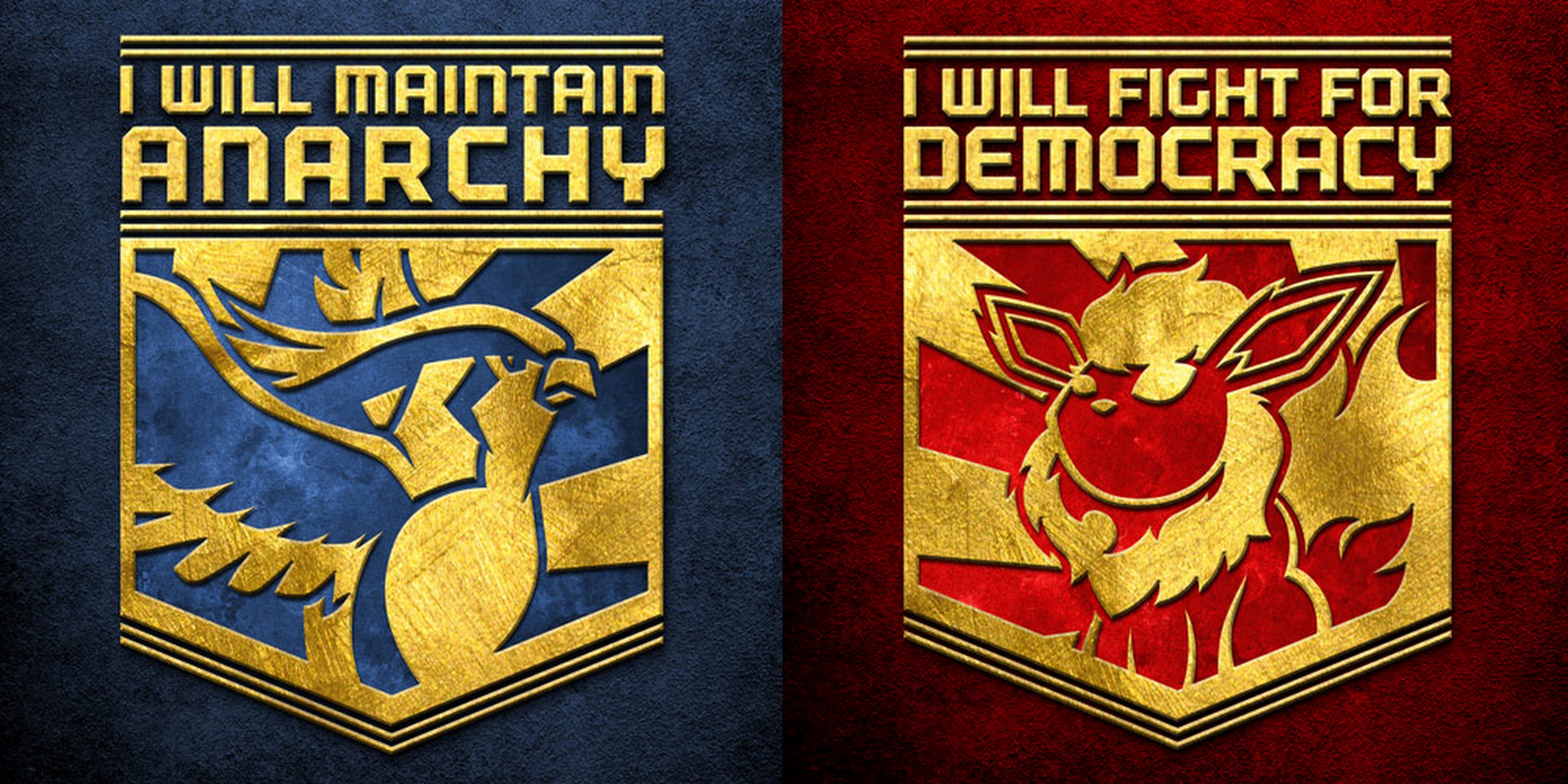
As the days wore on, the stubbornness of sincere players was matched against the sabotage of online trolls. Tweaks were made to Twitch Plays Pokémon to inject elements of democracy into the chaos, to the relief of some and the ire of others. Factions of players rose to support either side. Anarchy and democracy were each assigned specific Pokémon as emblems, and both factions fought for control of the game.

Anarchy Vs. Democracy

The actions of the game’s protagonist, Red, were understandably random and erratic. For example, due to the conflicting commands that poured into the game, Red frequently checked a useless item called the Helix Fossil during battles instead of fighting. This gave rise to the in-joke among players that he was consulting it for guidance. In turn, this led to the concept of the Helix Fossil as an idol or deity.

When the Fossil was finally revived into a living Pokémon later in the game, players declared the rebirth of a god.

Praise the Helix!As a narrative emerged from Twitch Plays Pokémon, players and viewers alike watched each new development with the obsessive interest of sports fans on the day of a big game. A number of valuable Pokémon were accidentally released in a debacle that became known as Bloody Sunday. New Pokémon were given names, backstories, and allegiances to the factions of Democracy or Anarchy. Memes, fan art, and in-jokes spread like goofy viruses.

All the while, dedicated players kept typing commands into the experiment’s chat box. Red inched ever closer to victory, persevering through all mishaps. Even the loss of the Helix Fossil, his guiding deity, didn’t faze him.

At last, Twitch Plays Pokémon ended in spectacular fashion—Twitch finished Pokémon.

I was vaguely aware of Twitch Plays Pokémon as it unfolded, but never wasted time watching Red’s halting progress through the game. A few days ago, however, I took time to read a brief history of the event, and was struck by its glorious weirdness.

In a way, Twitch Plays Pokémon is a perfect microcosm of many aspects of Internet culture. It was random, unpredictable, and packed with memes and wacky humor. Like YouTube or Wikipedia, it was driven by the involvement of ordinary people. It spawned endless conflicts. Finally, it inspired many intelligent people to treat something totally inane with resolute dedication and seriousness.

After playing Pokémon Red, that Twitch channel went on to play (and replay) many other Pokémon games. I’m pretty sure the Twitch Plays Pokémon project is still going, albeit with a diminished audience. Now that the novelty has worn off, most of the viewers and players have moved on to new things. There are always new things.

After all, this is the Internet.

435. Getting Old

I have a birthday this month. I’ll be twenty-something. Don’t ask me how old exactly, because I’ve forgotten. I’m getting old, guys.

I’m reaching the decrepit stage of life at which my memories fade like the flowers of the field. My senses dim. The sun and moon and stars go dark. My mind falters. My strength ebbs away. I can almost see the vultures circling over me. “Soon,” they tell each other. “Soon.”

Circling vultures

Given the amount of coffee I drink, any vulture that eats me will end up with quite a caffeine buzz.

All right, I may be exaggerating a little; twenty-something isn’t so old. After all, I work with old folks, so I should know.

I work in the memory care unit of a nursing home, assisting dementia patients and forgetful retirees. My own memory is abysmal, so I fit right in. Besides, I can tell the same jokes every day and the residents never tire of them. I know that I too shall be a forgetful old person someday. I’m already a forgetful young person, so I have a terrific head start.

I sometimes wonder what my life will be like when I’m an old man… assuming, of course, I don’t perish in the Mad Max-style wasteland America will become if Donald Trump wins the presidential election. (I’m joking.)

Immortan Trump

Seriously, though, are we quite sure that Donald Trump and Mad Max’s Immortan Joe aren’t the same person?

Getting old is rough, guys. The guy who wrote Ecclesiastes knew it. The mind and body, not just the memory, stop working as well as they should. Independence becomes difficult. Pain becomes all too common. The world, with its changing culture and evolving technology, seems ever farther and farther beyond comprehension. No one else seems to understand or remember the old things, the good things.

As the residents at the nursing home play bingo and watch reruns of Green Acres and The Lawrence Welk Show, I ask myself: How will members of my own generation spend their declining years? Will we sit around surfing the Internet? Will we watch reruns of Breaking Bad and The Walking Dead on future-Netflix? Will we play games on antique systems like the PlayStation 2 and Nintendo 64? How old-fashioned and out of touch will we seem to young people sixty years from now?

Heck, for all I know, in sixty years senior citizens might be plugged into Matrix-style computers to spend their final years in the comforting embrace of virtual reality. My own job as a nursing assistant might be outsourced to robots like Baymax from Big Hero Six. (I would be okay with that, honestly.)

If Baymax cared for me in my old age, I’m sure I would be satisfied with my care.

As another birthday comes and goes, and I inch ever closer to my inevitable demise, I can’t help but wonder what the future holds. If I reach the age of the folks at the nursing home, what will the world look like?

I’ll face the world one day at a time, I suppose. “Do not worry about tomorrow, for tomorrow will worry about itself. Each day has enough trouble of its own.”

Of course, it doesn’t hurt to plan ahead. I had better keep piling up canned food and clean water in case Trump wins this year’s election. In the wasteland, fortune favors the well-prepared.*


*For the record, all of my jabs at Donald Trump are in good fun, and not to be taken seriously. Please don’t deport me.

434. Reviving Lance Eliot

I recently declared my intention of resurrecting the Lance Eliot saga. With that announcement out of the way, I was free to sit back, swallow a feeling of rising panic, and ask myself, “Now what?”

I won’t begin working on a new manuscript for The Trials of Lance Eliot until after this blog bites the dust later this year, but I have plenty of groundwork to lay in the meantime. Not much research or planning went into my previous attempts to tell Lance Eliot’s story. This time, as I prepare for one last do-or-die effort, I want to give it a solid foundation.

In case anyone is interested in getting a glimpse into my creative process, here are some of my early preparations for reviving Lance Eliot.

Flipping heck, when did I get to be so old?

Figure 1: A writer hard at work in the conceptual stage of stage of writing.

Background reading

Reading is often a deceptively vast part of the writing process. Before returning to Lance Eliot’s story, I want to revisit some of the works that influenced it. One of these is Dante’s Divine Comedy, upon which the Lance Eliot saga is (very) loosely based. Another is Reading for Redemption, a book by one of my college professors. It posits a theory of literary criticism that informed the Lance Eliot character.

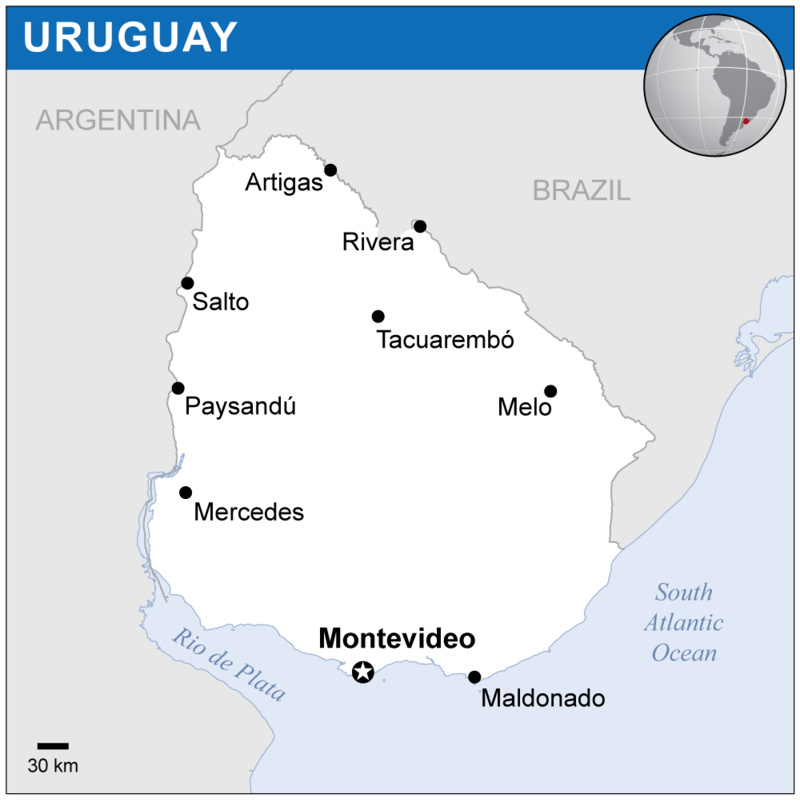
I also need to do some research. In previous drafts of the story, the setting is simplistic: a kingdom tucked between two empires, quietly minding its own business. I want to create a more precarious political situation by making the kingdom a reluctant player in a rivalry between its neighbors. When I explained this idea to my dad, he suggested I look into the history of Uruguay, which was apparently caught in a conflict between Brazil and Argentina. I clearly have some reading to do.

Uruguay

Figure 2: Real-world inspirations can be helpful.

I’ll also have to reread the latest version of The Trials of Lance Eliot because, honestly, I’ve forgotten most of it. There was a character called Tsurugi, wasn’t there? I’m pretty sure there was. And Lancelot came into it somehow? I could use a review.

Story planning

I need to begin fitting together the pieces of the story long before I start writing. Some writers are able to get away with making things up as they go along, but when I do that, I generally end up with a lot of fluff.

I want to streamline the story this time, making sure every scene and character contributes something meaningful. That will take a lot of careful planning. I’m not yet sure how I’ll keep track of everything—a notebook? Index cards? Desk graffiti?—but I’ll try to craft a more focused story.

World-building

In previous attempts to write Lance Eliot’s story, I felt too impatient to do any more world-building than absolutely necessary. If Lance Eliot doesn’t see it, I thought, the reader won’t see it, and I won’t have to make it up.

Sadly, my apathy toward the world I had created made it a bland, generic place. I need to start asking myself more questions. What’s the history of my fictional kingdom? What sort of holidays does it celebrate? What are its cultural influences? How high are its tables? I need to answer these kinds of questions even though some of my answers won’t make it into the story.

High vs. low tables

Figure 3: Table height. It matters, guys.

The reader’s image of the world I create will be much vaguer than my own. If I have only a faint concept of Lance Eliot’s world, how much fainter will the reader’s be!

Reader feedback

The Trials of Lance Eliot has been rattling around in my head for so many years that my view of it is deeply subjective. I could use some objective views from other people. What works in the story? What doesn’t? What needs to change?

If you’ve read the book, and if you can offer any feedback, please feel free to send it my way!

These early preparations for writing a story are, for me, the fun part. It’s when the writing starts, and I have to put my ideas onto paper, that things get tough.

I suppose I’ll worry about that when I get there.

Try Everything (Except Jelly Beans)

Many of Disney’s greatest hits have been musicals, from the early days of Snow White and the Seven Dwarfs to the golden age of The Lion King to the modern era of Frozen.

Disney’s latest animated movie, Zootopia, is definitely not a musical—in fact, at one point, its protagonist is even told, “Life isn’t some cartoon musical where you sing a little song and your insipid dreams magically come true.” Zootopia does feature one notable song, however: “Try Everything,” a pop number sung by the film’s least necessary character. (Did Disney’s executives assign the film a pop star quota? We may never know.)

“Try Everything,” like “Everything Is Awesome” from The Lego Movie, is simplistic but catchy. It doesn’t soar to the heights of Disney’s great musical numbers, but I like it anyway.

The fan-made version above swaps out the thudding beat and pop influences of the original for brisk percussion and a tropical vibe. I’m pretty sure I heard some marimba and bongos in there, and that’s definitely a samba whistle toward the end. (There’s also a bit of electric guitar, because electric guitars make nearly everything better.) This cover of “Try Everything” is uplifting and airy, and I dig it.

Here’s another take on “Try Everything,” this time as a rock song. Spoilers: It’s still really catchy.

In case anyone is inspired by this song actually to try everything, I recommend giving jelly beans a miss. They’re nasty. Try almost everything. Skip the jelly beans.

433. I Nearly Left My Faith Last Year

I have put off writing this post for a long time. I was afraid it might cause some of the religious people in my life to shout, “ADAM WHAT IS WRONG WITH YOU HAVE MORE FAITH,” and some of my nonreligious friends to shout, “LET IT GO ADAM BE ENLIGHTENED,” and shouting stresses me out.

That said, this post is an extremely personal one, and I’ll be grateful for sensitivity in the comments. Advice or criticism, however gentle or well-intentioned, probably won’t help today. I’m not asking for any of that.

I’m just telling a story.

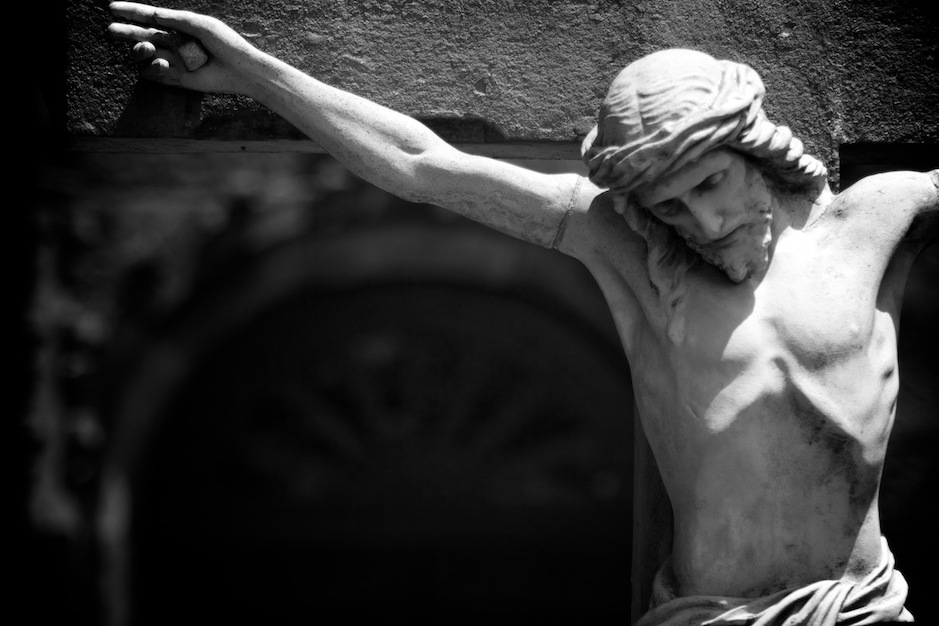
I considered leaving my faith last year. I didn’t actually leave it, in case you were wondering. For better or worse, Adam Stück remains a follower of Jesus Christ.

Crucifixion statue

The year 2015 was, all things considered, a memorable one. I quit my old job, started a new one, went on an unexpected adventure, switched job positions, lost a dear friend, grew a scruffy jaw-beard, and got a cat. As I blogged about the turbulent changes of 2015, there was one I didn’t mention.

I have long wrestled with doubts about the existence of God. Of all the posts on this blog, probably the most important to me is the one in which I discussed my uncertain faith. “If I’m a fool,” I wrote long ago, “at least I have the consolation of being God’s fool.”

I’ve been a dedicated Christian since 2004, when I began taking Christ seriously. Faith was effortless in high school, and even college (despite my Thursday Afternoon of the Soul and other rough patches) didn’t dampen my devotion to God. I was convinced he had a plan for my life, and I was following it, and everything would work out if I kept the faith and worked hard.

Cathedral

Then, around the time I started this blog, I realized I didn’t want to follow the career I had studied in college. I panicked, uncertain of where to go next. My plans, which I had always assumed were really God’s plans, suddenly seemed mistaken.

Less than a year later, my most cherished writing project, a little book titled The Trials of Lance Eliot, crashed and burned. I had wondered before whether I had wasted three and a half years of college; now I asked myself whether I had wasted twice that time working on a failed novel.

My career plans had gone awry. My book plans had failed. I was stuck in a really bad job situation. However, I didn’t give up. I assumed my situation was some sort of spiritual desert: a test after which God would lead me to my “real” future. I clung to faith. I endured.

Then, when I finally left that lousy old job last year, I didn’t arrive at my long-sought promised land—I just reached another dead end. (Sure, it was a much nicer dead end, but just as dead.)

It made me question things.

Was there ever a bigger plan?

What if there never was?

Where is God?

Along with these questions came the all of the familiar ones with renewed urgency: Why does Scripture seem so inconsistent and self-contradictory? Why has Christ’s life been followed by two thousand years of empty silence? Why is the world so broken? Why do so many religious people seem hypocritical or out of touch?

As I set aside my long-held religious preconceptions, a naturalistic worldview began to seem more rational than a religious one. I asked myself, “If I give up faith in Christ, what happens?” Do I put in two weeks’ notice? Is there paperwork? Do I sing “Let It Go” on a snowy mountaintop somewhere, or what?

As I pondered who I would become without Christ, an ugly picture emerged: a bitter, self-centered geek wrapped in a cocoon of video games, television, and other anesthetics, reveling in theretofore forbidden pleasures like porn and alcoholism, grieving the death of his faith, and pursuing his own comfort and happiness at any cost.

I didn’t like that picture.

Jerk [resized]

I don’t want to believe in Christianity because it’s convenient or well-intentioned. I want to believe in it because it’s true. Is it? I wish I knew. A lot of evidence supports it, but no conclusive proof. I hope Christianity is true. I choose to believe it is, and I’m trying to live my life according to that belief.

Whatever good I’ve done, I’ve done because of my Christian faith. Whatever good I’ve done, I’ve done for Christ. There’s something in that, even if my beliefs turn out to be mistaken. I would rather live for Christ, and die in hope, than live for myself, and die miserable.

I conclude with a scene from one of the Chronicles of Narnia by C.S. Lewis. (Spoilers, I guess?) In one of the books, the heroes are trapped deep underground with a beautiful witch. She enchants them into believing the world has no surface. There is no sky, she says, and no sun. There is no land called Narnia, and no king named Aslan. The only world is underground, the only lights are lamps, and the only ruler is the witch herself.

Everyone falls under the witch’s spell, except an old grump named Puddleglum, who has this to say:

One word, Ma’am. One word. All you’ve been saying is quite right, I shouldn’t wonder. I’m a chap who always liked to know the worst and then put the best face I can on it. So I won’t deny any of what you said. But there’s one thing more to be said, even so.

Suppose we have only dreamed, or made up, all those things—trees and grass and sun and moon and stars and Aslan himself. Suppose we have. Then all I can say is that, in that case, the made-up things seem a good deal more important than the real ones. Suppose this black pit of a kingdom of yours is the only world. Well, it strikes me as a pretty poor one. And that’s a funny thing, when you come to think of it.

We’re just babies making up a game, if you’re right. But four babies playing a game can make a play-world which licks your real world hollow. That’s why I’m going to stand by the play-world. I’m on Aslan’s side even if there isn’t any Aslan to lead it. I’m going to live as like a Narnian as I can even if there isn’t any Narnia.

I’m less certain of my faith than ever before, but I’m going to stand by it. I’m on Christ’s side even if Christ doesn’t live to lead it. I’m going to live as a Christian even if Christianity isn’t true—and I believe it is.

Either way, for better or worse, I’ll stand by Jesus Christ.

432. Strange American Trickster Rituals

On this first of April, TMTF dives again into the fascinating world of anthropology. We have already studied Halloween, with its gruesome ritual of carving jackal lanterns; Thanksgiving, with its sacrificial turkeys and gladiatorial sports; and St. Valentine’s Day, with its sentimental celebrations of a saint’s violent martyrdom. As we research holidays and share our findings on this blog, we pride ourselves upon the unflinching accuracy and trustworthiness of our investigations.

Today we turn our inquisitive gaze toward April Fools’ Day.

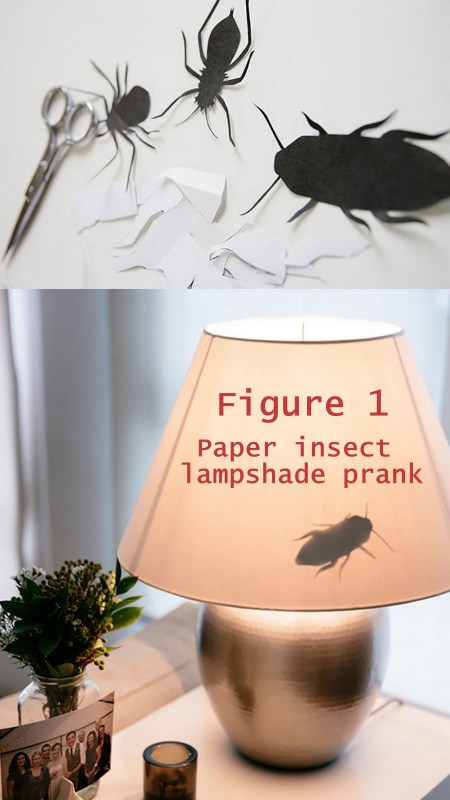
Insect lamp

In many parts of the world, one day of the year is set aside for playing harmless pranks upon friends and neighbors. April Fools’ Day is the most famous variation of this event, observed in the United States and elsewhere. It is celebrated with tricks, pranks, and hoaxes.

As historical context for the holiday is relatively scarce, we must begin our investigation with its name. The possessive case of the noun phrase April Fools’ in the holiday’s appellation is intriguing. The simplest interpretation suggests a day in April belonging to simpleminded people. A more specific theory, however, posits that April Fools is a formal title.

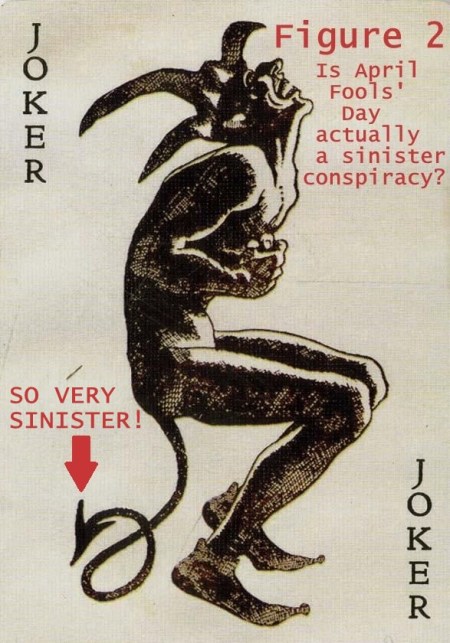
The latter interpretation of the holiday begs a number of questions. Who are the April Fools? What claim do they make upon April 1, and by what authority? Are the April Fools some sort of secret society? Why do they promote and encourage mayhem in the form of pranks and hoaxes on April Fools’ Day? Is it all a sinister conspiracy?!

Joker card

Caution prevents us from investigating this theory any further. If April Fools’ Day does belong to some secret society, we have no intention of exposing it. We know better than to provoke shadowy syndicates. If we wanted to put our lives on the line, we would be investigative journalists, not bloggers.

It may be unsafe for us to discuss the dubious origins of April Fools’ Day, but we can probably discuss the holiday’s customs without fear of reprisal. April Fools’ Day is an excuse to pull pranks and tell lies—it’s rather disgraceful, if you think about it. The holiday makes liars and tricksters of sane, respectable people.

Nowhere are there more casualties than on the Internet, which is already a fairly dishonest place. Only fools—not April Fools, mind you, but plain, non-secret society fools—swallow everything the Internet offers on April Fools’ Day. False news, spurious announcements, and fake media trailers abound. As Homestar Runner, the noted philosopher, observed, April 1 is “the day the Internet gets on the Internet to make inside jokes about the Internet!”

Yes, April 1 is an occasion for healthy skepticism… except for when you read this blog, of course. TMTF would never, on any day of the year, stoop to such shameful silliness, especially not on April Fools’ Day.

You can trust us.*

Be safe out there, everyone. Happy April Fools’ Day!


*Yeah, no. We’re making up all of this nonsense, yo. Don’t take any of it seriously! I would acknowledge today’s silliness by saying “April Fool,” but most of my posts about holidays are unashamed nonsense, so what would be the point?

A Painting a Day Keeps the Art Block at Bay

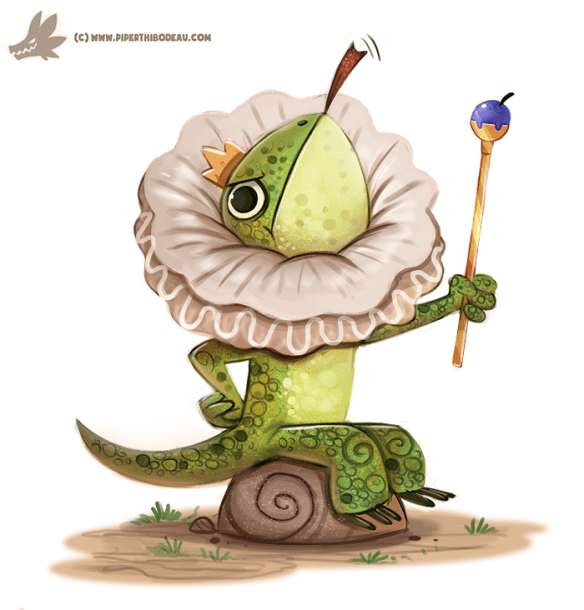
Frilled lizard

Yep, that sure is a frilled lizard. (Art by Piper Thibodeau.)

Art is hard. Art is really, really hard, yet here is an artist who paints a new picture every flipping day. There is a word for such people: dedicated.

Wait, that’s not the word I meant. Masochistic. That’s it. This artist is masochistic.

Nah, I’m only joking. I have nothing but respect for Piper Thibodeau, the artist who creates a brand-new digital painting every day to keep her artistic skills sharp. That’s just bonkers. I mean, heck, I thought writing two and a half blog posts a week was hard! It must take quite an imagination to come up with a new idea for a painting every single day.

A lot of Ms. Thibodeau’s paintings are visual puns. Some of my favorites include crab apples, a Capuchin’o monkey, a pheasant peasant, and a guaca’ mole. Cute art, impressive creativity, silly puns—what more can you ask for?