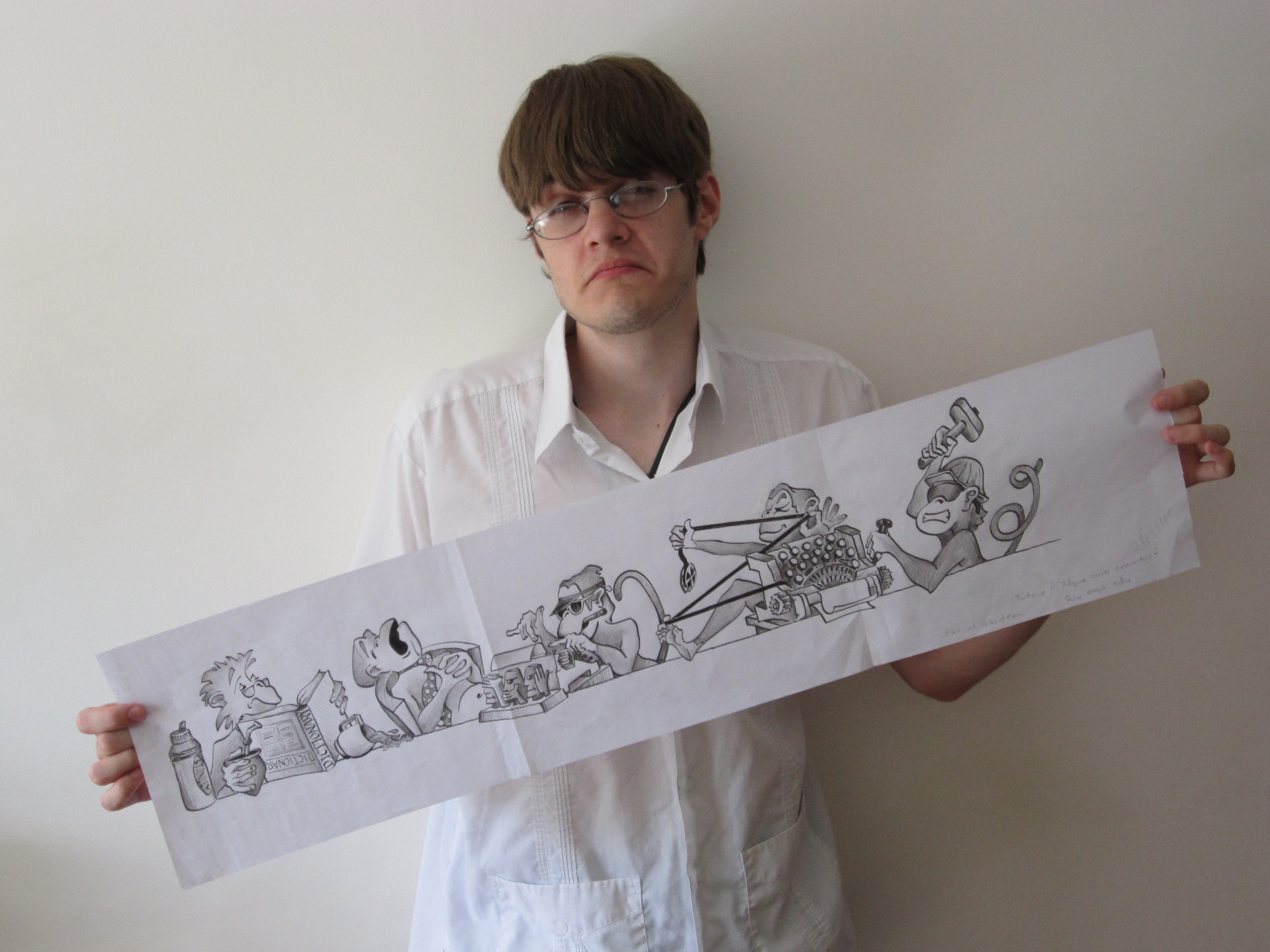
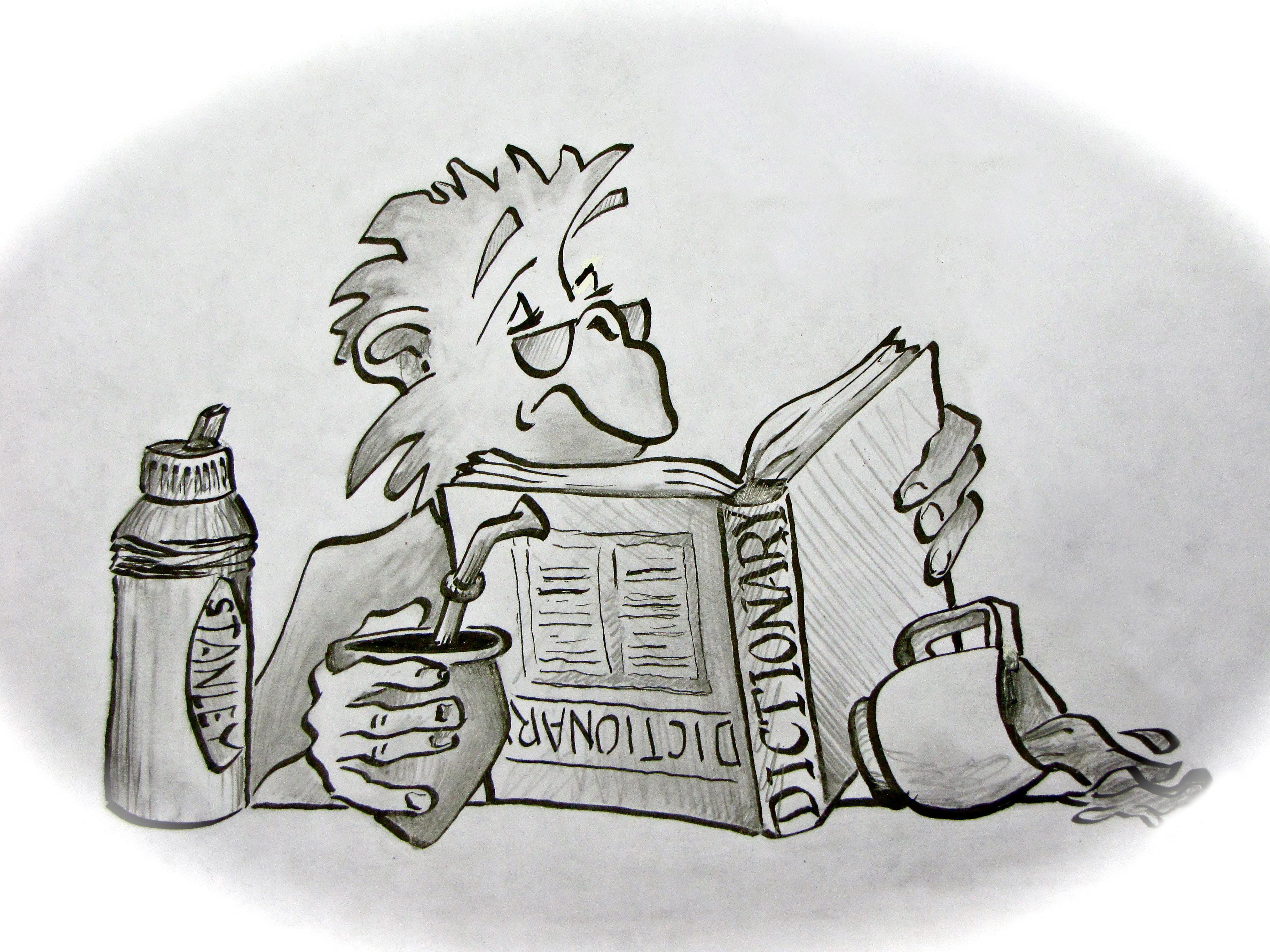
167. About Writing: Narrative Structure

Two brief personal notes: First, my ever-changing schedule has reverted to normal. For now, I’m back to working during the day and sleeping at night like an ordinary person. Second, my thanks to everyone who took part in Be Nice to Someone on the Internet Day! It’s totally happening again on March 4 next year!

This blog hasn’t had a proper About Writing post since… October. Ouch.

Let’s fix that.

Narrative structure is a phrase I use to describe the way a story is told: a catch-all term for those fun, creative storytelling techniques that make a story different.

There are many ways to tell a story. Most stories begin at the beginning and end at the end. Many stories use only one narrator.

These are great ways to tell a story, but they aren’t the only ones.

Consider the following story: A, B, C. Let’s pretend is the start of the story, chronologically speaking. That makes the middle and the conclusion. My story is linear: it happens in order.

What if I want to tell my story out of order? It could be B, A, C. The reader can be introduced to a story in progress, with earlier events in the narrative revealed through flashbacks and the conclusion at the end. I could even tell my story backwards—C, B, A—as movie director Christopher Nolan (who is famous for films like The Dark Knight and Inception) did in Memento, a disturbing yet excellent film about a man with short-term memory loss.

Let’s consider another aspect of narrative structure: perspective.

One of my favorite narrative tricks is to switch perspectives as I tell a story. Two stories I’ve posted on this blog, The Infinity Manuscript and Zealot: A Christmas Story, give each chapter from the perspective of a different character. As a writer, it’s refreshing to bounce from one perspective to another as the story unfolds.

Things get even more fun when stories use multiple first-person narrators with different voices. A single scene can be described or interpreted in many different ways. It all depends on who does the describing or interpreting!

Then there are side stories. I love side stories.

There’s a word I like in Japanese: gaiden, the romaji form of the word rendered がいでん in hiragana and kana syllabaries. (This is what Wiktionary tells me. I don’t actually know Japanese.) A gaiden is a side story: a narrative that supplements or completes another narrative.

Call it a gaiden or a side story or whatever else you like: it’s awesome.

Orson Scott Card published a novel titled Ender’s Game, in which a boy named Ender is trained by the military to be humanity’s greatest asset in an interstellar war. Fourteen years later, Card published a companion novel: Ender’s Shadow.

The later novel tells roughly the same story as the first, but Ender is no longer the protagonist. The spotlight follows Bean, a supporting character from Ender’s Game. It’s the same story from a completely new perspective: introducing new characters, expanding the role of familiar ones and introducing fascinating subplots.

By intersecting with the original story at key points, Ender’s Shadow greatly improves Ender’s Game while being a fantastic novel on its own.

Here’s a geekier example: one of my favorite games in the Ace Attorney series is the criminally underappreciated Ace Attorney Investigations: Miles Edgeworth. This game takes the two most important characters in the series, Phoenix Wright and his assistant Maya Fey, and relegates them to the briefest of background cameos. Supporting characters Miles Edgeworth and Dick Gumshoe become the protagonists.

The other games in the Ace Attorney series merely lengthen its story. This particular game broadens its story. By giving center stage to secondary characters, the game gives a delightful alternate take on the series… and proves its story is compelling enough to survive without its usual protagonists.

There are all kinds of clever narrative tricks, but I’ll mention just one more.

My all-time favorite episode of my all-time favorite television show is, without question, “Tales of Ba Sing Se” from Avatar: The Last Airbender. Up to that point, nearly every episode of the show follows a predictable pattern: a primary plot following the protagonists interweaves (and sometimes intersects) with one or two secondary plots following the antagonists. This narrative structure is simple and effective—and “Tales of Ba Sing Se” throws it out the window.

“Tales of Ba Sing Se” is a series of vignettes or character sketches. There are no great adventures, just glimpses of the characters’ daily lives. Some of these tales are funny. One character gets caught up in a haiku contest that seems suspiciously like a rap battle. Some of these tales are sad. One character visits his son’s grave to wish him a happy birthday.

Tragic or comic, these tales develop the characters and give the viewer a wonderful break from the plot-heavy episodes that come before. “Tales of Ba Sing Se” is a deep breath before the show plunges into a season finale: a chance to get to know the characters a little better before they’re swept off again by their adventures. I love it.

Innovative narrative structures can make a story refreshingly different, but they can also sabotage it. Not every story needs to be a gaiden told in a nonlinear way from multiple perspectives. Some stories are best told straight. It’s easy for a creative narrative structure to become a distracting gimmick.

In certain cases, however, a clever narrative structure can make a story brilliant.
162. A Day in the Life of a Writer

Today’s post was written by Josh “The Scholar” Hamm. For more great stuff from Josh, check out his previous guest post for this blog!

“I don’t know why you would be reading this. I don’t know why anyone would be reading this.”

That’s the kind of thing I tend to think others would say when they read my work. I’ve been writing for a long time. I still have the first story I wrote when I was six, a story brilliantly titled “A Knight at Night.”

At least that explains why I’ve always had a penchant for bad puns.

But even with all the writing I’ve done, and all the reading, and deciding that I wanted to be a writer since I was fifteen, I am a terrible writer.

Well, at least I tend to think of myself as a terrible writer. I have somewhat of a self-confidence problem regarding my writing. For the longest time, I wouldn’t let anyone read anything I wrote.

I lived in a state of fear that whatever I did would be mocked by others.

I could live with criticism in essays and such, but in creative works, if anything other than my grammar was corrected without helpful advice on how to improve, I felt hurt. Like my work was worthless drivel.

The problem is that I couldn’t accept praise either. I came to a point where I didn’t think that any work of mine is good enough to receive compliments.

But the real reason I was scared of writing, and of being praised for my writing, is because I was completely terrified that I wouldn’t be able to meet people’s expectations.

My solution?

I stopped writing.

Because if I don’t write, then I can’t suck at writing, because I haven’t written anything to be judged.

Yes, of course, absolutely brilliant. I should give myself a pat on the back for that
idea. Genius.

So I can go around thinking in my head, “Yeah, I’m a writer—maybe even a good writer if I try.” But I don’t try because I’m scared of not being a good writer. See the problem here? If I don’t write, I’m a bad writer, but I don’t write because I’m scared of being a bad writer.

The irony is hilarious. I love it.

So I started writing again. I write personal essays, music and movie reviews. I write about culture, society, religion, philosophy. I’ve started two novels (and have twenty thousand words in one) and various short stories. Some of it makes to my blog, some of it doesn’t.

And guess what?

Almost everything I write is awful.

And I’m (almost) completely all right with that.

Writing isn’t something you can just be good at. No one can write a bestselling novel without a bit of practice. Sure, some people have natural talent, but it’s worthless without practice.

Even though lots of authors like to look smart and say they write things on a whim, inspired by their muse on the “viewless wings of poesy,” nine out of ten times it takes months or years of hard work.

Many renowned English poets claim to be inspired by a moment of nature and able to write an entire poem in a single sitting.

Coleridge claimed this for his poem “The Eolian Harp,” but he actually spent twenty-five years editing and refining it. William Butler Yeats published poems and then tinkered with them throughout his life.

Alexander Pope, in an excerpt from “An Essay on Man,” writes:

“True ease in writing comes from art, not chance, / As those move easiest who have learn’d to dance.”

What I’m trying to say is that you’re not a writer just because you say you are. You actually have to write.

Practice doesn’t make perfect, but it makes you competent. Your first book is not going to be a bestseller, your blog isn’t going to be frequented by millions of people, and you’re not going to be rich and famous, but you may get good enough to make a living doing something you love. That’s my dream: to make a living writing in some form or fashion.

If you share a similar vision, you have to stop being passive and take action: Write, write, read, write, read, and write some more.

It can’t hurt. Unless you get carpal tunnel syndrome. That might hurt a bit.

And here are some words of wisdom from one of my favourite writers, Thomas Merton:

“If you write for God you will reach many men and bring them joy. If you write for men—you may make some money and you may give someone a little joy and you may make a noise in the world, for a little while. If you write for yourself, you can read what you yourself have written and after ten minutes you will be so disgusted that you will wish that you were dead.”

Keep that in mind when you’re writing.

161. A Conversation with Myself

Hello, Adam.

Go away. Trying to write a blog post here.

Ah, yes. A post for your typewriter monkey blog—the one that’s read by tens of people. Some of them may even be mildly interested in what you have to say.

I happen to like my blog, thank you very much.

Of course. I suppose you must. I mean, who else will?

Seriously, go away.

Why don’t you take a break from your blog and work on your novel? Oh, that’s right. You’re still stuck on that chapter. The one you started six months ago.

Hey! The past six months have been crazy and busy and stressful. Survival comes before creative writing. To quote Louisa May Alcott, “First live, then write.”

Ah, it was only a matter of time before you quoted somebody. You really, really enjoy quoting people, don’t you? You think it makes you seem smart and bookish. I think it makes you sound like a pretentious twit.

Yes, I like quoting people. So what? I haven’t given up on my novel, by the way. This is the year I finish the deuced thing.

We don’t use words like deuced in America, son.

I like dated British idioms.

I know, and I think it’s really cute that you use them. Wait, did I say cute? I meant annoying.

Do you know what? I kind of hate you.

That’s funny, Adam, because you and I happen to be the same person. Therefore, if you dislike me, who is it you really dislike?

I wouldn’t mind so much if you were… you know… cooler. A shadow version of me with glowing red eyes, maybe. The Shadow Adam. The Anti-Adam. My evil doppelganger. But you’re not any of these things. You’re just annoying.

The truth is sometimes annoying, but that doesn’t make it any less true. I’m here to give you healthy doses of realism when you get drunk on excitement and optimism. I’m here, Adam, because I care.

You’re twisting the truth and you know it. You’re exaggerating the nasty facts and hiding the good ones and generally making things seem much worse than they are.

Just listen to you! I know you like big words, so here’s one for you to chew on: pontificating. More to the point, stop pontificating!

Would you kindly go away? I need to finish this blog post.

You’ll never be Jon Acuff, you know.

Go away.

You’ll certainly never be C.S. Lewis.

Go away!

You won’t make a difference.

That’s it. Listen here! I will make a difference. It may not be a big difference. It may be a very small difference, but even a small difference can cause a whole lot of good.

Why do I get the feeling I’m about to hear another one of your fancy quotes?

Well, you are. “Sometimes you can feel like what you have to offer is too little to make a difference, but today I learned that every pony’s contribution is important, no matter how small.”

Wait. Wait. Are you quoting that stupid cartoon about rainbow ponies? That’s pathetic, Adam.

Hey! You can’t blame me for being pretentious, and then fault me for being childish.

I can, because you’ve somehow managed to be both. Congratulations.

Dash it, at least I’m trying to do something worthwhile!

Yes, yes you are. Trying and failing.

“Next to trying and winning, the best thing is trying and failing.”

Ah! Do you never stop quoting people?

Shut up and listen. In the vast scheme of things, I might not have much to offer. Individually, few people can change the world. But what if everybody tries? What then?

What if everybody fails?

God used a little boy’s lunch to feed thousands of people. What might he do with a person who tries to be useful?

Fine. Keep trying. See how little difference you make.

I will. Now tell me something. What are you doing to make a difference?

That’s a stupid question.

You don’t have an answer, do you? That’s what I thought. Now go away. It’s too late for me to finish this blog post, so I guess I’ll have to improvise… or maybe not.

You’re going to post this conversation on your blog, aren’t you?

Yup.

Your readers will think it’s an awkward confession or a plea for attention or something. Besides, this has been a really lame conversation.

Hey! That’s as much your fault as mine! I have to post something today. This conversation is better than nothing. Who knows? Maybe it’ll encourage someone to make a difference—or at least to try. Now go make us some coffee, will you?

155. Caution: Monkeys at Work

Have you ever seen those signs that announce how many days have passed since the last workplace accident? TMTF has one of those signs, but but we go by minutes instead of days.

Even so, we hardly ever break double digits.

Yes, caution is necessary whenever my typewriter monkeys are at work. We’ve been working behind the scenes for a couple of days, and I’ve been very cautious. I’m alive and injuries have been minimal, so I think we’re doing well.

Besides reworking TMTF’s tags and tagging old posts, we’ve standardized formatting, replaced broken links, made revisions, fixed errors and generally done our best to make this blog beautiful.

TMTF now boasts a Tags feature! Tags classify posts more specifically than categories. Scroll to the bottom of TMTF’s homepage or any post and you’ll find a handy list of tags; clicking one will take you to the posts marked by that tag. It’s a convenient way to navigate this blog’s posts without plodding through the Archive.

We also held board meetings to discuss things like marketing, budgeting and future plans. Since I detest wearing formal clothes and sitting through tedious discussions, these meetings were pretty awful. (I can’t believe I had to dress nicely when my typewriter monkeys didn’t wear anything.) It took many hours and quite a lot of coffee, but we reached some important decisions.

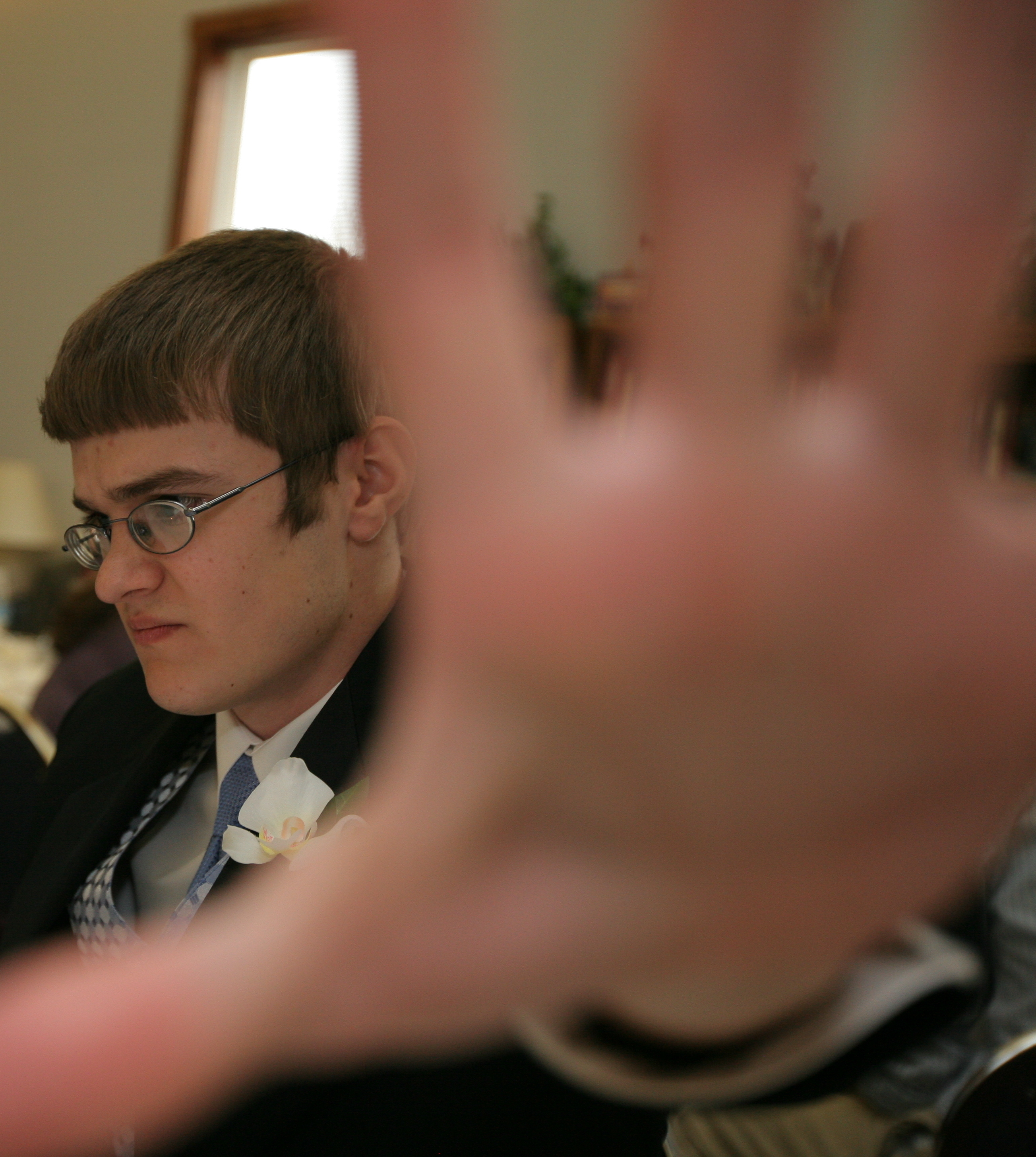
Trying to cope

This photo, snapped during one of our board meetings, sums up my feelings about business stuff.

Last year, TMTF shared a crazy idea called Be Nice to Someone on the Internet Day. The idea was, well, to be nice to someone on the Internet: to leave a sincere, encouraging comment or compliment on someone’s Facebook profile, blog page, YouTube channel, deviantART account, Twitter profile or Tumblr account.

I think it was a great idea, but I was too hasty in springing it on my readers. I’d like to do it properly this year: spreading the word and getting other bloggers involved. Although last year’s Be Nice to Someone on the Internet Day took place in August, we’ve decided to celebrate it on March 4 this year.

Moving on: my younger bro, whose fantastic artwork has previously been featured on TMTF, now has a deviantART page! An online art community, deviantART exhibits work from millions of artists—including my bro, whose beautiful pencil-and-paper reproductions of art and photographs are now on display.

Check out his deviantART page and be amazed!

What are you waiting for? Go check out that deviantART page!

“What are you waiting for? Go check out that deviantART page!”

Well, I suppose I’d better get back to work… cautiously, of course. It’s been twenty-two minutes since our last accident, and I’m expecting another at any moment.

152. Nor Can We Be What We Recall

Today’s post was written by Josh Hamm, also known as The Scholar. (I need a title like that; it’s a pity “The Doctor” is taken.)

“Nor can we be what we recall, / Nor dare we think on what we are.”

I like to quote people in my writing. I like to sprinkle references as if Tinker Bell were a little tipsy and got too free with the magic pixie dust. Maybe it’s a remnant from school, where we have to integrate all sorts of quotations. I distinctly remember a teacher in Grade Twelve telling the class that we should quote authors because anything they’ve said is better than whatever we could up with.

I enjoy it though; it’s an act of sharing secrets that were never meant to be secrets. It’s the same as when you feel the urge to start exchanging YouTube videos, but I prefer to exchange the thoughts of influential authors I’ve read. I tend to drop a few specific names in most of my writing.

People like G.K. Chesterton, Thomas Merton, C.S. Lewis, Frederick Buechner and Marilynne Robinson. I don’t solely quote these guys. I read a lot, so I’ve got a lot of wells to draw from, but these are some of my favorites. Besides, let’s be serious, I’ve never met a Christian who doesn’t profess love for C.S. Lewis.

(I’m pretty sure that when Martin Luther declared Sola Scriptura he included a little caveat for C.S. Lewis.)

But sometimes I disagree with what my teacher said. It seems so defeatist, as if we may as well not try to write anything at all, because it’s all been said, and said better and more profoundly than we could ever hope to write.

Now, I rarely use this word, and I’m sorry to use such strong language, but that is just utter balderdash.

Sure, in most cases these authors have extremely profound phrases and witty turns of speech, but whatever we write has value too. We may never become half the writer that Chesterton or Merton was, but that doesn’t render my voice or your voice useless.

Don’t just outsource your thinking.

Don’t check your brain at the door because you’ve given up and assume that others have already taken your place.

Come up with your own viewpoint, your own writing, and then supplement it with authors you like. Quote those that you love, those authors you’ve read or read about and feel a connection to. Then add your own flavor. Add some meaning, some of yourself into their words and ideas.

But whatever you do, don’t blindly accept what they say or regard everything they’ve written as a work of genius. It’s not.

Remember that other writers do not define what kind of writer you are. I read great novels or great autobiographies, or philosophies, or poetry, and I wonder in jealous despair why I will never write like they do.

Then I’ll remember, it’s not my job to write like them. It’s my job to write like myself.

Don’t feel like your message is diluted just because writers and thinkers before you said similar things in brilliant ways. Share their thoughts if you think it will enhance your message, but remember that’s just what it is at the end of the day—your message.

150. Stuff I Wish I Had Known When I Started This Blog

As TMTF reaches its one hundred and fiftieth post, I wonder what would happen if I traveled back in time and visited myself. Would the resulting temporal paradox tear apart the universe, or would I merely offer my younger self a cup of tea and tell him how to write a blog?

Assuming the universe held together, here’s the advice Future Adam would give his younger self about blogging.

Listen up, Adam. You think you're so cool with your typewriter monkey picture, but you've got a lot to learn about writing a blog. Let your older, wiser self give you some advice.

Listen up, youngster. You think you’re so cool with your typewriter monkey picture and supercilious smirk, but you’ve got a lot to learn about blogging. Let your older, wiser self give you some advice.

Keep it short

When I began this blog, I wrote way too much. Nothing discourages a reader like massive blocks of text. Instead of rambling like an academic or a drunkard, I should have written shorter paragraphs and avoided needless repetition.

Plan for the future, and write blog posts ahead of time

Only recently have I begun planning out blog posts weeks in advance. It has made all the difference. It’s easier to follow a schedule than to make rushed decisions, and simply clicking the Publish button when a post is due is much better than writing one at the last minute!

Do not, under any circumstances, give your typewriter monkeys the blog’s password

I learned this the hard way.

Use visuals!

Early on, I hardly ever included pictures. That was a mistake. Illustrations entice readers to check out blog posts that would otherwise go unnoticed. Visuals also break up the monotony of black text against a white background. Finally, writing silly captions is fun.

Make it your blog, not an imitation of someone else’s

TMTF began as an imitation of Stuff Christians Like by Jon Acuff, except my blog was about topics other than, well, stuff Christians like. I tried to copy Acuff’s approach and style.

It took me a long time, but I finally accepted an important truth: I am not Jon Acuff. I am Adam, a guy with glasses who drinks too much coffee and writes about faith and grammar and severed human arms. Despite my faults and failures, no one does a better job of being Adam than I.

Success and popularity aren’t the same thing

When I began TMTF, I secretly hoped it would become as popular as Stuff Christians Like and other notable blogs. It hasn’t, and that’s okay. I enjoy writing this blog. I hope other people enjoy reading it. I hope it honors God. If I and others and God are all fine with TMTF, I think it’s a success.

Be encouraged

Since I began blogging, my writing has improved so much. I’ve learned a lot, and it’s been fun despite its challenges and frustrations. For every time I wanted to bang my head against a hard, flat surface, there was a time I flung up my arms and shouted “Yes!

Like life, faith and breaking records in Mario Kart, writing is hard.

Like life, faith and breaking records in Mario Kart, writing is totally worth it.

As we head into a new year—and as TMTF moves beyond one hundred and fifty posts—my typewriter monkeys and I would like to add just one more thing.

Thanks for reading!

147. Confessions of a Tired Writer

On the coast of Ecuador lies a little town called Same. (In Spanish, it’s pronounced with two syllables: sah-meh.) Although Same boasts a lovely beach, it’s also disfigured by one of the saddest sights I’ve ever seen.

Someone once planned to build a resort on the Same beach, and construction began of a huge hotel. That plan failed. I don’t know the details. The half-finished building looms over the beach, pathetic, silent, empty: a vacant shell of weathered concrete and rusted metal.

I hate to think how many hundreds of thousands of dollars were invested in this aborted hotel. The sight is an ugly one, and unspeakably sad. Someone’s dream died. The ruin isn’t merely an unfinished building. It’s a tombstone. A monument to failure.

That reminds me of something. Something personal.

When I was a kid, I decided to write a trilogy of fantasy novels. In high school, I started a story about a college student named Lance Eliot. At first it was nothing more than a shallow tale of journeys and dragons and sundry fantasy clichés. Early on, it even featured steampunk airships and motorcycles!

Years passed. More than once, I gave up on Lance Eliot and worked on something else. I wrote a couple of detective stories. (In a truly unexpected turn of events, one of them earned a scholarship that paid much of my college tuition!) I tried writing a crime novel. In the end, however, I always came back to Lance Eliot’s journey.

My silly story about swords and sorcerers became something more meaningful: the journey of a man searching for something—the trials of a traveler longing for home—the awakening of a hero from within a selfish, cynical coward. Of course, I kept the magic and dragons and people getting drunk. Lance Eliot’s story remained a fantasy.

It’s not a great story. I know that, but I hope it’s a good one. It has certainly become the most intensely personal project I’ve ever undertaken as a writer. I may not smoke or drink or use dated British idioms, but Lance Eliot and I are very nearly the same person.

It took four attempts over five years, but I finally finished the first part of Lance’s story: The Trials of Lance Eliot. A kindly author introduced me to a literary agent, whose invaluable assistance (and infinite patience) eventually brought my novel to publication as an e-book and later as a paperback.

At the moment, that’s where Lance Eliot’s story ends.

It’s hard to write a novel. It’s harder to publish one. After publishing The Trials of Lance Eliot, I was tired of writing. My life at that time was uncertain and stressful. Having just returned to the United States of America after six months in Uruguay, I had no job, no apartment, no driver’s license and no self-confidence.

Lance Eliot could wait. Once my life had settled down and The Trials of Lance Eliot had sold some copies, I could get back to work on the manuscript for its sequel.

It’s taken a long time for my life to settle down, and I’m pretty sure no more than a few dozen copies of The Trials of Lance Eliot have been sold. I have a job and several blogs and ten thousand other things to keep me busy. The manuscript for the novel’s sequel has been mostly untouched for many months.

Every now and then, however, I think of an empty concrete ruin looming over the town of Same.

The Eliot Papers, the trilogy of which The Trials of Lance Eliot is the first part, has been my greatest passion as a writer for almost as long as I’ve been writing.

Dash it to blazes, I’ve got to finish this thing.

(All right, maybe I do sometimes use dated British idioms.)

Besides my desire to get the deuced story written, I owe it to my agent and publisher to complete the trilogy. He’s invested much time and money in The Eliot Papers. For both our sakes, Lance Eliot must finish his journey.

This brings me to an important announcement.

When I decided to publish miscellaneous creative writing on this blog, I didn’t realize how great a commitment I was making. Posting “Zealot: A Christmas Story” has forced me to make some very hasty revisions and rewrites. It’s been stressful, and I’m not satisfied with the final result.

I can’t keep posting creative writing and regular blog posts if I’m going to make any progress on The Eliot Papers.

Thus, with apologies to my readers, I’m no longer publishing creative writing on this blog.

I’ll post the final chapter of “Zealot: A Christmas Story,” of course, and there’s a brief dramatic sketch I’ll put up on the blog next month. After that, however, TMTF shall revert to its old two-post-a-week schedule until further notice.

I hope that sad old hotel in Same is finished someday. In the end, though, it’s not my concern. Lance Eliot’s story is.

I hope that’s finished someday too.

143. I Can Has Guest Post?

Update: This blog is finished, and no longer accepts guest posts. Thanks all the same!

A while back, I expressed my intention to feature more guest posts on this blog.

I love guest posts. They strengthen a sense of community among writers. “No blog is an island,” wrote John Donne, or something like that. Guest posts deliver new perspectives and refreshing changes of style.

On a more pragmatic (read: selfish) note, it’s always nice to have someone else write blog posts for me.

“I don’t always write posts for other blogs, but when I do I write them for Typewriter Monkey Task Force.”

“I don’t always write posts for other blogs, but when I do I write them for Typewriter Monkey Task Force.”

TMTF has featured posts from a number of distinguished guests, from Wes Molebash to Paul McCusker. (I’m still psyched that Mr. McCusker authored a post for this blog; he’s a writer whom I admire very much.) Even my typewriter monkeys have written a guest post! (It was a mistake to leave my blog’s password where they could find it.) Yes, guest posts are awesome, and I’d love to share more of them.

Here’s the exciting part: you can write a guest post. Yes, dear reader, you.

The time has come for me to delve into this blog’s dusty archives and bring forth the ancient, sacred principles of Writing a Guest Post for Typewriter Monkey Task Force.

What criteria are needed for a guest post to be featured on TMTF?

It should be about faith, writing, video games or literature

Possible topics for guest posts include creative writing tips, spiritual insights, literary musings or humorous observations about gaming culture. Posts about celebrity hairstyles, trigonometry or rubber bands will be instantly rejected.

It should be well-written

Guest posts should be coherent, succinct and easy to read. Between four hundred to eight hundred words is the ideal length. Grammatical errors and spelling mistakes shall be met with the full fury of my righteous indignation.

It should be funny, insightful or both

I try to make every post on TMTF entertaining or edifying. I don’t always succeed. That makes it even more important for guest posts to succeed where I fail!

It should be pleasant

TMTF is not an edgy or controversial blog, and there are already enough disputes, arguments and insults on the Internet without adding more. The purpose of this blog is “to impart hope or understanding or inspiration—or at the very least a healthy laugh—to someone who needs it.” Guest posts should honor that purpose.

If you’re interested in submitting a guest post, let me know via the Contact page!

I may not accept all submissions. Some guest posts, however well-written, may not be well-suited for this blog. I may suggest changes or edits to guest posts. In all cases, I’ll do my very best to be respectful of the work submitted.

There are many possible topics for guest postage. (Is guest postage a valid phrase? Having already upset grammarians and English professors with the title of this blog post, I can’t be too careful.) These include About Writing posts, Why [Insert Author Name] Is Awesome posts, book reviews, humorous top ten lists and spiritual reflections.

Why write a guest post for this blog? Well, if you have a website, blog, Twitter page or website, it can be featured along with your post.

More importantly, you can become an honorary member of the Typewriter Monkey Task Force! (There are no rules, responsibilities or rewards associated with membership—just bragging rights.) Honorary members of the TMTF include Curious George, Diddy Kong, Fred the Monkey and Matthew McConaughey.

Honorary membership to the TMTF is such an exclusive privilege that most of its lucky recipients aren’t even aware of having been made honorary members. It doesn’t get any classier than that!

Incidentally, my typewriter monkeys and I are always delighted to write posts for other blogs. If you’re in need of some guest postage, let us know!

139. The Wanderer-Hero

I’ve been watching Doctor Who. Besides kindling a strong desire in my heart to own a fez, the show has reminded me of my very favorite character archetype: a rare, strange and wonderful kind of character, comic and tragic, plain and mysterious—the Wanderer-Hero.

(I should wear a fez. Fezzes are cool.)

The Wanderer-Hero is my favorite kind of character in fiction, and a very rare one. I can think of only four characters that fit the description perfectly: the Doctor from Doctor Who, Gandalf from The Lord of the Rings, Vash the Stampede from Trigun and Father Brown from the stories by G.K. Chesterton.

These four—a time-traveling alien, a wizard, a gunslinger and a priest—have hardly anything in common, or so it seems at first glance. They actually share quite a number of traits, all of which characterize the archetype of the Wanderer-Hero.

For fun, let’s take a look at just a few.

The Wanderer-Hero wanders

There is no home for the Wanderer-Hero, whose destiny is to roam.

The Doctor travels in time and space with no home but his TARDIS, a spaceship and time machine. Gandalf wanders across Middle Earth. Vash roams the deserts of Gunsmoke. Even Father Brown, who supposedly lives in Essex and later in London, spends a surprising amount of time rambling throughout England, stumbling onto crime scenes wherever he goes.

The Wanderer-Hero is comic

Outwardly, the Wanderer-Hero is cheerful, witty or clever.

When confronted with deadly peril, the Doctor’s first reaction is to make a joke. Gandalf has a wry sense of humor. Vash makes a fool of himself at every opportunity; for example, while bravely defending a town from bandits, he wears a trash can lid for a hat. Father Brown possesses a gentle wit and a comically unorthodox manner of solving mysteries.

The Wanderer-Hero is tragic

Inwardly, the Wanderer-Hero endures terrible agonies.

The Doctor suffers from deep loneliness, guilt and self-doubt, besides the sorrow of being the only surviving member of his race. Gandalf fights a long, lonely, thankless battle against a nearly invincible enemy. Wherever Vash goes, innocent people die; these tragedies tear him apart. Father Brown admits to solving crimes by possessing a profound, painful understanding of human wickedness.

The Wanderer-Hero is more than human

In some way, the Wanderer-Hero is superhuman.

The Doctor is a Time Lord, the last survivor of an ancient race of extraterrestrials. Gandalf is one of the Maiar: divine beings sent into Middle Earth in the guise of mortals. Vash is a Plant, a humanoid creature possessing incredible power. Father Brown is only a human being, but his gentleness, wisdom and compassion are almost angelic.

The Wanderer-Hero is old

The courage of the Wanderer-Hero is balanced by the wisdom of age.

The Doctor is roughly nine hundred and nine years old. Gandalf spends centuries wandering Middle Earth. Vash is one hundred thirty-one. Father Brown is the only one whose age isn’t numbered in the hundreds, and even he gives the impression of being an ancient saint.

The Wanderer-Hero always happens to be in the right place at the right time

The character is called the Wanderer-Hero, after all.

Quite by accident, the Doctor always finds himself in exactly the right time and place to avert a catastrophe. Gandalf regularly appears just in time to rescue his companions. Vash helps people wherever he goes. By solving every crime he encounters, Father Brown saves the day—and sometimes the criminal.

I suppose the reason I like the Wanderer-Hero so much is that the character is a paradox: funny and sad, silly and wise, plain and mysterious, ordinary and extraordinary. The Wanderer-Hero has a little bit of everything.

Who is your favorite Wanderer-Hero? Should I acquire a fez? Let us know in the comments!

136. Vampires

A few days ago, I received a call from my employer asking me to work the overnight shift for a week. I have become a creature of the night, sleeping away the daylight hours and awaking in the evening to revel in my reign of darkness—not unlike a vampire, albeit one who prefers coffee to blood.

As I was working a couple of nights ago, I stumbled upon a vampire picture book belonging to one of the men with whom I work. Early yesterday morning, a coworker rhapsodized about the new Twilight movie.

Vampires are everywhere, and there are so many kinds. Action movies star leather-clad vampires with silver pistols and cool shades. The Twilight series features Edward “Sparkles” Cullen, a pale, irritating excuse for a creature of the night. The novels of Anne Rice depict vampires whose bloody lives are marked by moral quandaries and existential crises, and classics like Bram Stoker’s Dracula give a more traditional interpretation of America’s favorite monster.

Why are vampires so popular? I think part of it must be that vampires are tragic. They live without hope, doomed to survive by draining away the lives of others, hiding from the day, lurking alone in the cold, dark night, unable to die any death but a violent one, forever separated from love and light and happiness.

We sympathize with vampires, especially the ones who seek redemption. Edward from the Twilight series is engaging—well, tolerable—well, not quite one hundred percent awful—because he clings to his humanity. Vampire Hunter D, a character in Japanese media, travels alone, protecting humans from his own kind, never asking for gratitude or recognition.

Characters like these are compelling. Although they’re cursed with the destiny of villains, they choose instead to be heroes. They persevere, alone and misunderstood.

Of course, vampires can also be great bad guys. There’s something truly horrible about a creature that drinks blood, and this brutal bloodlust is often balanced by a cold, refined politeness. A vampire can be both a monster and a gentleman. That duality makes vampires exceptionally sinister villains.

The problem with vampires is that they’ve been done to death. (No pun intended.) Like zombies, vampires are ubiquitous. They’ve lost their novelty. When I see a novel or film or television show featuring vampires, my first response is to think, “Dash it, not another one.”

As I hinted in a recent creative piece, “A Portrait of the Artist as a Performing Monkey,” I dislike most vampire fiction. The genre has become stale, and I detest the violence, sexual perversity and muddy morality often associated with vampires. I miss old-fashioned stories like Dracula, in which evil evokes disgust and good inspires hope.

I must work a few more overnight shifts, and then I shall no longer have to be a vampire. I look forward to seeing the sun again.