400. The Five Stages of Blogging, and Other TMTF Trivia

TMTF will be taking a three-week break, during which it shall republish old posts on its usual schedule. The blog shall return with new content on November 30!

Today we celebrate four hundred posts on TMTF with a rare, behind-the-scenes look at the Five Stages of Blogging.

These describe the creative process experienced by people who write blogs. (They are unrelated to the Kübler-Ross model and its five stages of grief.) Of course, some bloggers may experience more than five stages. Some may experience fewer. The stages may vary from person to person. After all, every blogger is unique!

In writing posts for this blog, I have experienced five distinct stages. The easiest posts took only one or two, whereas the most difficult ones demanded all five.

In this extra-long and extra-special blog post, we’ll take a quick look at the Five Stages of Blogging. (This post took me through all of them.) Then I’ll share a few bits of TMTF trivia before concluding with grateful acknowledgements and a couple of announcements.

Here we go!

Blogging Stage One: Optimism

Blogging Stage 1, OptimismI enjoy thinking of ideas for new blog posts. It’s the effortless part of blogging: the deceptively easy warm-up to sitting down and, y’know, actually writing something.

Blogging Stage Two: Annoyance

Blogging Stage 2, AnnoyanceAt some point, I struggle to translate the exciting ideas in my head to words on a computer screen. Ideas are elusive. They don’t like to be pinned down. Sometimes, when written down, ideas change and grow in alarming ways. This is sometimes an amazing thing to see—except that by “sometimes” I mean “roughly 0.086% of the time.” It’s usually just annoying.

Blogging Stage Three: Frustration

Blogging Stage 3, FrustrationAt some point, annoyance escalates to frustration. I scowl at my laptop, mutter under my breath, brew another pot of coffee, and wish I had chosen a better hobby than blogging. I could have been a cyclist or amateur voice actor, after all. TMTF was an awful idea. At any rate, whatever post I’m trying to write is clearly a stinker. I should really just give it up.

Blogging Stage Four: Depression

Blogging Stage 4, DepressionFrustration darkens to depression, anguish, and bitter regret.

“I just… I just wanted to have a blog, y’know? I didn’t ask for this. This is impossible. I’ve put so much time and stuff, y’know, into this post, this one flipping post, man, and it’s a mess. It’s such a mess.

“Even if I fix it, and I’m not sure I can, it’ll take hours. Hours wasted, man, for one flipping blog post. Then I’ll write another post, and another post, and another flipping post. It never ends. Nothing new under the sun. It’s like that poem, y’know, about the mariner and the albatross. ‘Day after day, day after day, we stuck, no breath nor motion, as idle as a painted ship upon a painted ocean.’ I’m stuck, man. This blog is my albatross.”

Then I stare into my empty coffee cup, crying on the inside.

Blogging Stage Five: Talking to Plush Toys

Blogging Stage 5, Talking to Plush ToysI can’t afford counseling. Don’t judge me.

Everything You Always Wanted to Know About TMTF (but Were Afraid to Ask)

Moving on, here are a few pieces of TMTF trivia in celebration of four hundred posts.

  • This blog was inspired by Jon Acuff’s Stuff Christians Like. His blog used humor to say meaningful things about culture, religion, and side hugs. I wanted to do the same kind of thing as Acuff, but with less hugging and more coffee jokes. I also wanted to build an audience (or as the publishing biz calls it, a platform) for my novel. Although the novel bombed, TMTF has stuck around.
  • At first, I treated blogging the way I treated creative writing. I constantly fussed and tweaked and revised, going so far as to edit old posts long after their release. It took me time to realize that a blog isn’t really a work of art, but a journey. Blog posts are footsteps. They represent a writer’s changing experiences, moods, beliefs, and opinions. Instead of worrying about the past, a blogger should keep moving forward.
  • For every hundred posts on this blog—not counting Geeky Wednesdays and creative writing—I try to do something extra-special. The hundredth post coincided with the release of my ill-fated novel. For the two hundredth post, I collaborated with Kevin McCreary (video and podcast producer) on an EPIC RAP BATTLE. (I had never rapped before, and it was a learning experience.) The three hundredth post featured an original animation by Crowne Prince (self-described rogue animator and antagonist) in which I sought counseling from DRWolf (YouTube personality and literal wolf) for my blogging problems. (The good doctor was a much better counselor than any of my plush toys.) I had planned something more ambitious for today in celebration of four hundred posts, but as Robert Burns reminds us, “The best-laid schemes o’ mice an’ men gang aft agley.” (Translation: Stuff happens.)

Frolicking

I love collaborating with creative people!

  • The format of this blog has changed gradually over time. (I’m a bit obsessive-compulsive about it, actually.) In a recent experiment, I’ve put key points in bold type in an attempt to make this blog more accessible. The idea is to let readers skim through blog posts, reading only the bold text and getting abbreviated versions. I’m honestly not sure how well this is working, and I could really use some feedback. Does the bold text help? Is it annoying? Distracting? Let me know in the comments!
  • My jokes about typewriter monkeys, as well as the name Typewriter Monkey Task Force, began on September 10, 2010 in an email to my family. My monkeys quickly became a running joke. When I decided to start a blog, I settled on typewriter monkeys as a consistent motif. It’s nice to have someone to blame when things go wrong.

TMTF clean (paper)

My dad, God bless him, handles most of the original art for this blog—monkeys and all.

Grateful Acknowledgements and Obligatory Threats

Speaking of typewriter monkeys, I have a few words for my blogging assistants, who have just set fire to a corner of my desk. These words aren’t appropriate for this blog, however, so I’ll have to settle for threats: If you monkeys don’t start behaving and put out that fire right this instant, I will end your employment and donate you to the zoo. I mean it this time.

Besides my usual threats, I guess I owe my dirty dozen a reluctant thank-you. Here’s to you, Sophia, Socrates, Plato, Hera, Penelope, Aristotle, Apollo, Euripides, Icarus, Athena, Phoebe, and Aquila. Thanks for working on my blog. I love you guys. At any rate, I’m trying.

As always, I owe my readers many thanks for their support and encouragement. Thank you so much for reading, commenting, liking posts here or on Facebook, writing guest posts, taking part in Be Nice to Someone on the Internet Day, and generally being wonderful. I appreciate every one of you.
You are awesomeSpecial thanks to my parents for their support over the years. My dad deserves an extra round of thanks for all the kind emails and monkey pictures. Thank you, old man. Special thanks also to JK Riki for being the most thoughtful and supportive reader in the history of people who read things. Seriously, JK, thank you.

As always, as I write about Disney villains, chain mail bikinis, and other nonsense, soli Deo gloria—to God be glory.

What Next?

TMTF will be taking a three-week break, during which I will republish old posts on its usual schedule. The blog shall return with new content on November 30!

In other news, TMTF will sponsor a Christmas fundraiser this December for charity! I’m still working on the details, but it will be very similar to last year’s fundraiser, with donor rewards and whatnot. I’m open to suggestions for rewards and fundraising, so feel free to share ideas via Twitter or the Contact page. I’ll release more information about the Christmas fundraiser at the end of this month.

We’ll be back!

I Was an Action Hero for Halloween

Solid Snake costume

I was a ninja last year for Halloween. This year, I dressed up as someone equally sneaky: Solid Snake, the action hero and stealth operative of Metal Gear Solid fame. What’s that? You can’t see me in the photo above? Of course you can’t. The sneakiest soldiers know there is no better cover on the battlefield than cardboard boxes.

(No, I didn’t really dress up for Halloween this year.)

399. Review Roundup: Stupidly Long Edition

In the past few months, I finished some stupidly long books, films, and video games. Some are truly lengthy; others feel overlong due to tedium or slow pacing. A few are well worth their length. The rest overstay their welcome.

In this Review Roundup, I’ll take a quick look at Les MisérablesMetal Gear Solid 4The Once and Future KingSecret of Mana, Rise of the Guardians, and The Godfather Parts I and II.

I’ll try to keep this short. Spoilers: I’ll probably fail.

Les Misérables

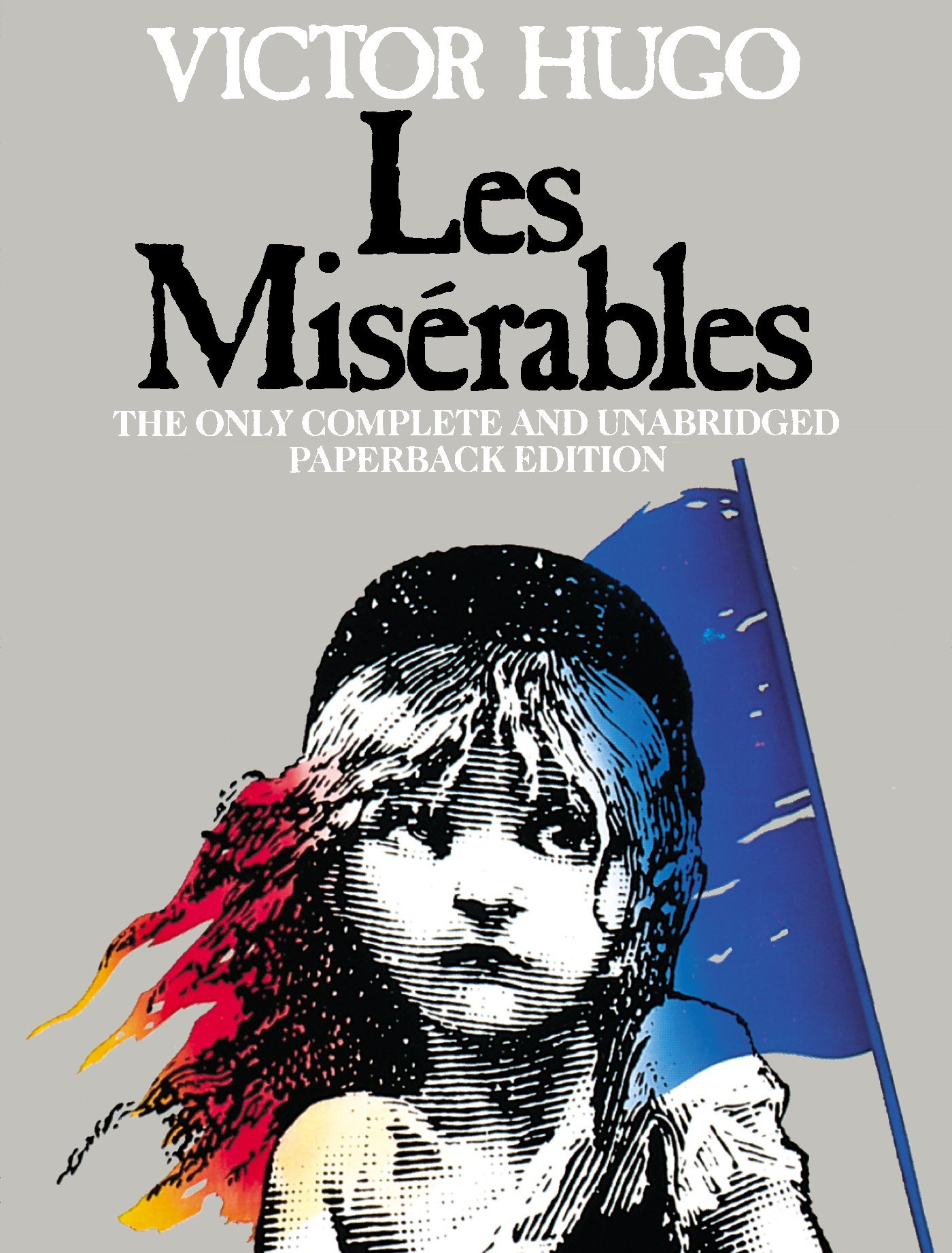
Lez Miz coverI read the abridged Les Misérables a few years ago. It was fantastic. Set in nineteenth-century France, this epic story follows an escaped convict named Jean Valjean. His journey from grief to grace to redemption spans decades, interwoven with tales of war, crime, revolution, and romance. The abridged Les Misérables is one of the finest novels I have ever read.

The complete, unabridged Les Misérables is a badly-paced novel burdened with boring details and jumbled together with a bunch of essays. The story moves with all the grace of a drunken hippo with a blindfold and only three legs.

As a writer, I usually respect an artist’s original vision. Not this time. In this case, I think the artist’s original vision is deeply flawed. The book has too much detail and a number of subplots that go nowhere, but those aren’t its worst faults. At frequent intervals, the novel is interrupted by rambling essays about minor details. How can readers stay invested in the tale of Jean Valjean when it’s constantly derailed by the author’s digressions on street lingo or the Battle of Waterloo?

For example, at the climax of the novel, a band of freedom fighters makes a heroic last stand against the army in Paris as Jean Valjean flees through the sewers. In the next chapter, the author kills the story’s momentum with an essay describing how much money the city of Paris loses by dumping its sewer waste in the river instead of converting it to manure. Never mind Jean Valjean’s sewer escape! Never mind the martyrs of the revolution! All that must wait until the author finishes ranting about sewers several chapters later.

If the author really felt his opinions were so important, he should have published them separately. Les Misérables was written as a serial, but when it was finally published as a complete work, his digressions could have been included as appendices at the back of the book.

Read Les Misérables—the abridged one. For heaven’s sake, don’t waste your time on the unabridged version.

Metal Gear Solid 4: Guns of the Patriots

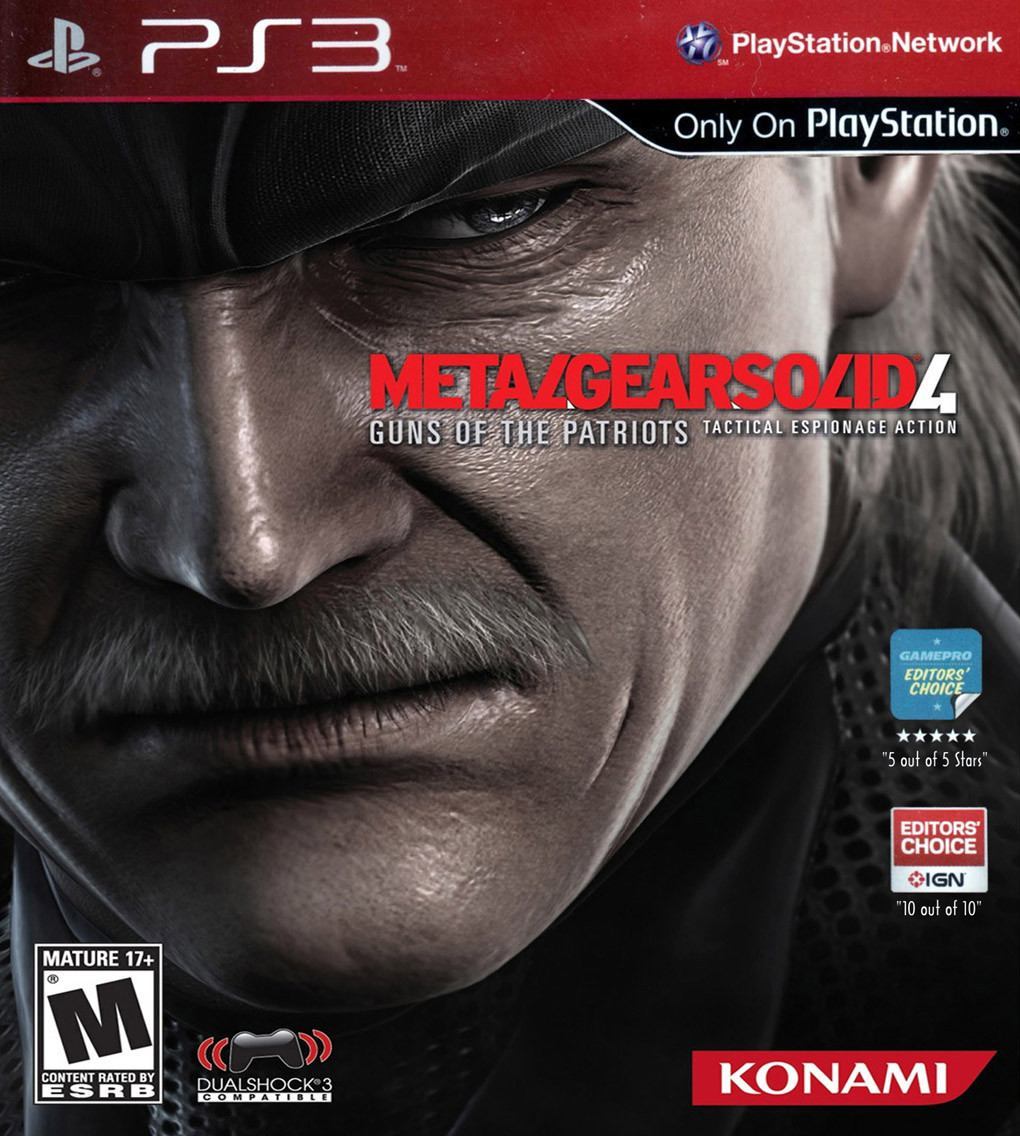
MGS4 coverMetal Gear Solid 4 is a video game that thinks it’s an action movie.

In the, um, distant future of 2014, war has changed. A group called the Patriots has made war a business. Meaningless battles are fought all over the world by privately-owned mercenary companies, fueling a worldwide war economy. Using technology, economics, and the media—and nanomachines, of course—the Patriots control everything.

War has changed, and so has Solid Snake. This legendary soldier has aged prematurely due to a terminal genetic condition. Snake has become, in his thirties or forties, an old man with less than a year to live. When his former commanding officer asks him to undertake one last mission, Snake sets out to bring down the Patriots and end the cycle of war before the whole world burns. After all, what does he have to lose?

In the past couple of years, I’ve come to love the Metal Gear Solid games. I keep comparing them to the films of Quentin Tarantino. Packed with dialogue and populated by larger-than-life characters, they are violent, campy, stylish, contemplative, and frequently ridiculous.

Metal Gear Solid 4 is characteristically Metal Gear Solid-ish, and it does a superb job of pulling everything together. The games that preceded it are radically different in tone and story. Metal Gear Solid is a military thriller with shades of Tom Clancy’s novels and superhero comics. (It would make a great movie.) Metal Gear Solid 2: Sons of Liberty starts as an action game and spirals off into postmodern intrigue. Metal Gear Solid 3: Snake Eater is a James Bond-style adventure set in the sixties. MGS4 somehow ties together plot threads from previous games, uniting them in a triumphant (and surprisingly cohesive) conclusion to Solid Snake’s story.

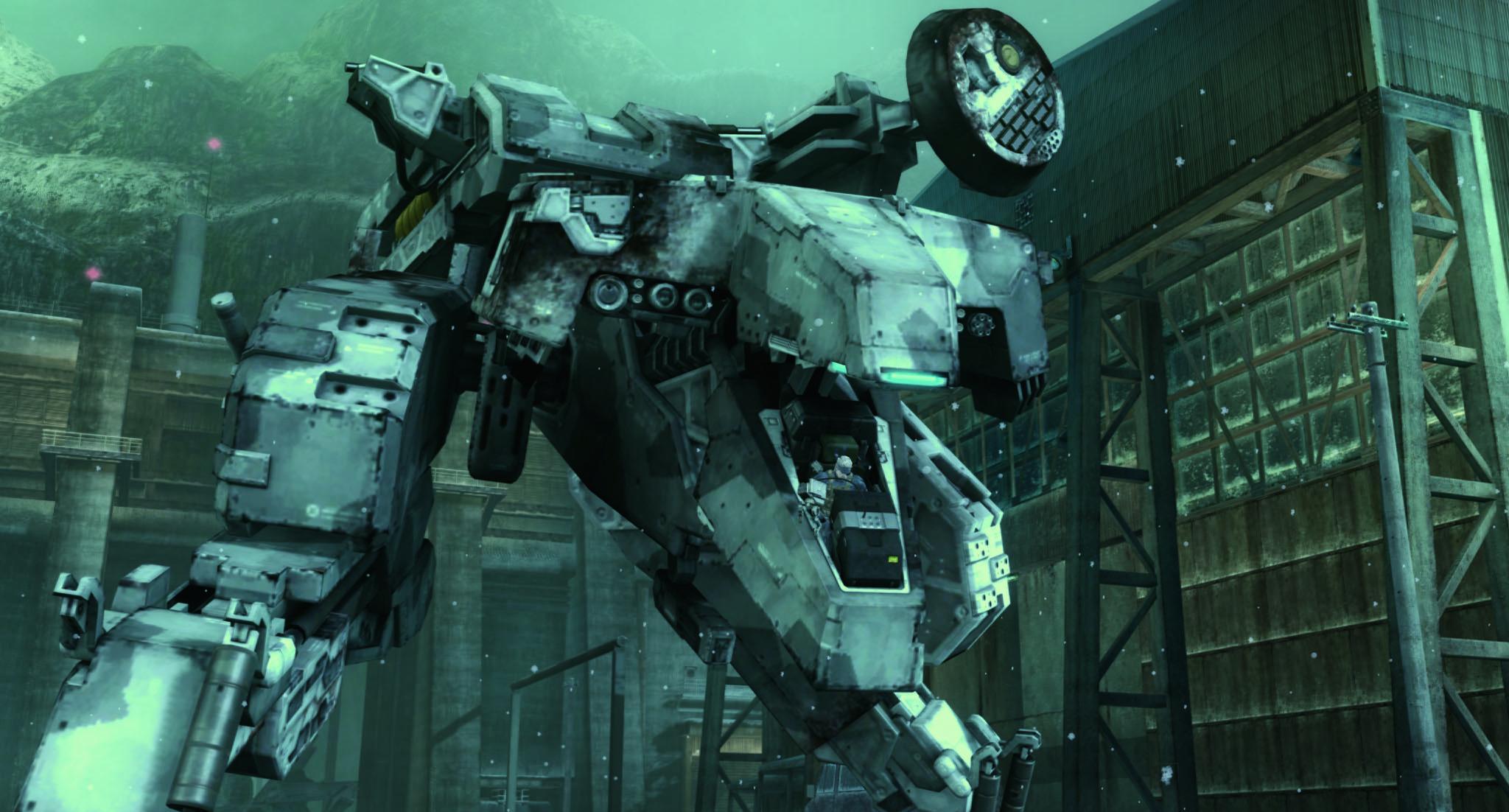
The gameplay and level design of MGS4 are polished for a fairly smooth experience. For the first time in the series, Snake actually pilots one of the eponymous Metal Gears in an exhilarating clash of giant robots. A couple of the other boss fights are brilliantly designed. Tracking and shadowing targets adds a little variety to the usual shooting and sneaking.

Rex Vs. Ray

After three games of sneaking around in the shadows, a giant robot fight was long overdue.

If the game has a problem, it’s the cutscenes—scripted scenes that take away control from the player. These are superbly produced, but also really long. I mean really, really long. I spent probably a quarter of my time with the game watching instead of playing. MGS4 is a movie superimposed on a video game.

I also have a serious problem with the game’s portrayal of women. The Metal Gear Solid series has its share of good-looking ladies, but the babes of MGS4 aren’t sexy spies or cute scientists—they are freaking PTSD victims. Several of the game’s bosses are traumatized women trapped in armored suits and forced back onto the battlefield. When their powered armors are destroyed, these ladies crawl out in skintight bodysuits as the camera ogles their curves. I think it’s supposed to be sexy in a PG-13 kind of way, but it comes off as creepy and insensitive. There are just a few of these scenes, but yeesh.

It had a few disappointments, yet I really enjoyed Metal Gear Solid 4: Guns of the Patriots. The game is a must for fans of the series. For new players, I recommend Metal Gear Solid 3: Snake Eater as a better introduction.

The Once and Future King

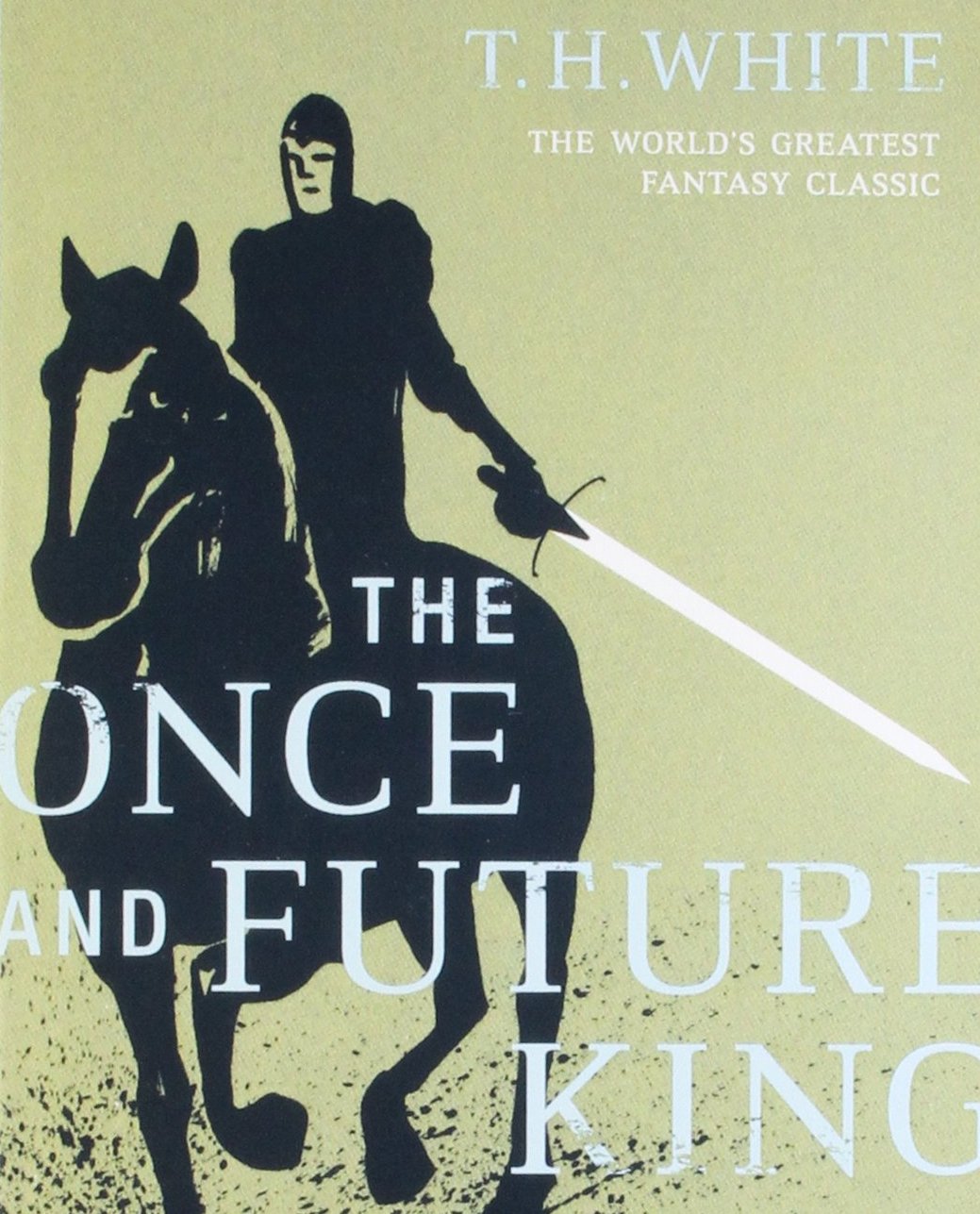
The Once and Future King coverThe Once and Future King is a poignant tale of failure. Based on Arthurian legends, the novel follows King Arthur from his childhood studies under Merlin to his final regrets as an old man. Woven into Arthur’s story is the tale of Lancelot, Arthur’s greatest knight, who follows his own ambitions and makes his own mistakes.

It’s quite a long novel, but unlike Les Misérables, every page is worthwhile. It reinterprets the Arthurian legends, setting them centuries later and giving their characters much greater complexity. Arthur, for example, no longer establishes his Round Table (an order of knights governed by chivalry) for the sake of honor or conquest. The Round Table is reimagined as a redirection of violence from selfish to noble ends. Arthur is more than a king. He is an inventor of civilization.

At first, the novel is lighthearted and often hilarious. In fact, the Disney movie The Sword in the Stone is based on the early chapters of The Once and Future King. The difference is that in the film, Arthur’s coronation is a happy ending, whereas in the book, it’s only the beginning of his struggles. The tone goes from funny to tragic as Arthur grows from a boy to a man.

The Once and Future King is easily the finest book I’ve read so far this year, and the definitive retelling of King Arthur’s story for our age. I highly recommend it.

Secret of Mana

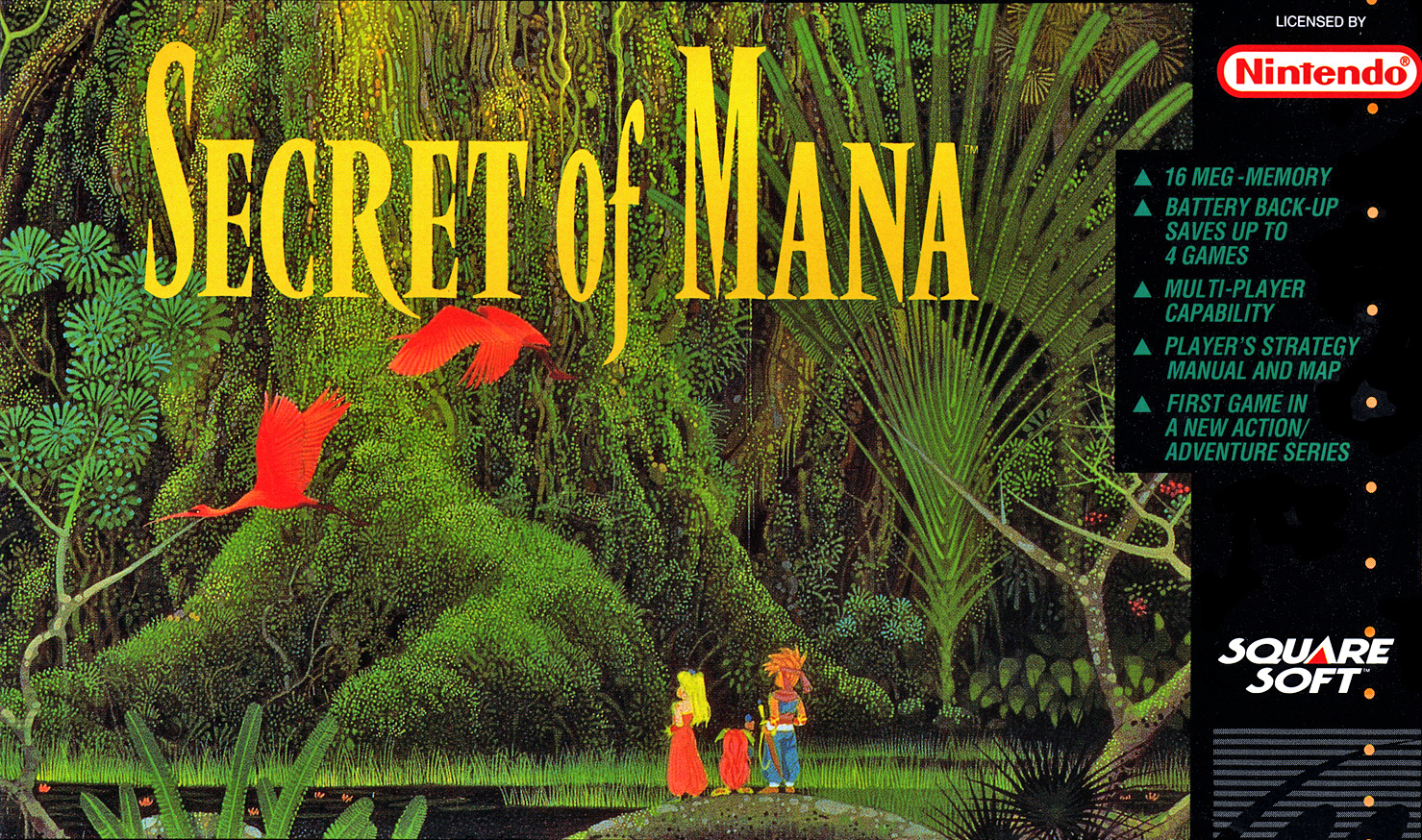
Secret of Mana coverI had wanted to play this game for years. Released around the same time as RPG classics like Chrono Trigger and Final Fantasy VI, for the same system and by the same company, Secret of Mana is widely hailed as a masterpiece of the SNES era.

It’s kind of terrible.

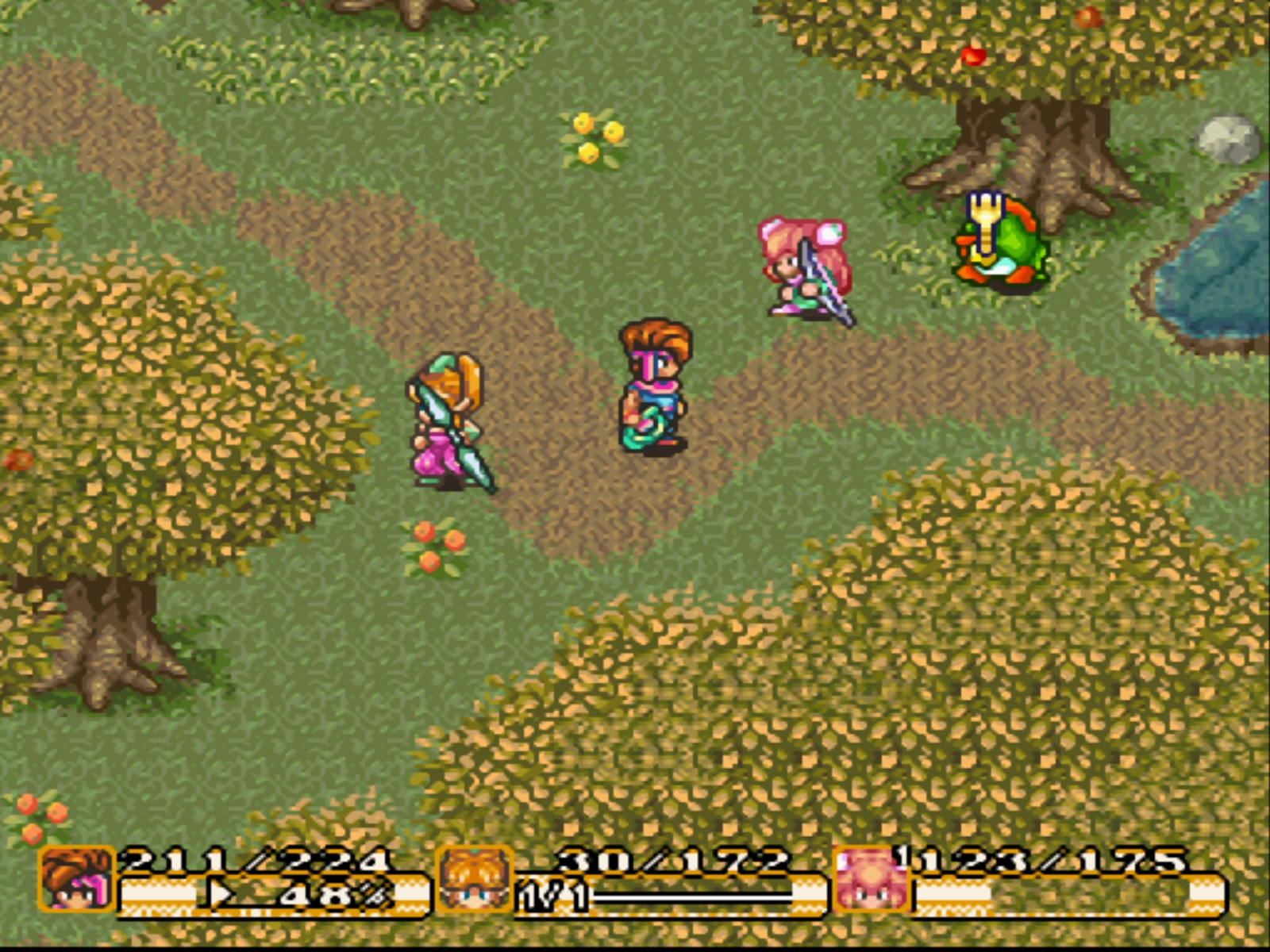
Yeah, it looks nice. Don't be fooled.

Yeah, it looks nice. Don’t be fooled.

There are good things about it. The battle system is robust, engaging, and way ahead of its time. Secret of Mana looks great, with bright colors and attractive old-timey graphics. Its menus are neat. I can understand why the game was so well received in its day. However, its weaknesses greatly outnumber its strengths. The music is forgettable, the story is an undeveloped stream of clichés, the game design is frequently obtuse, and the game settles into a rhythm of dull repetition that lasts way too long.

If you’re looking for an RPG classic, for heaven’s sake play Chrono Trigger and leave Secret of Mana in the nineties where it belongs.

Rise of the Guardians

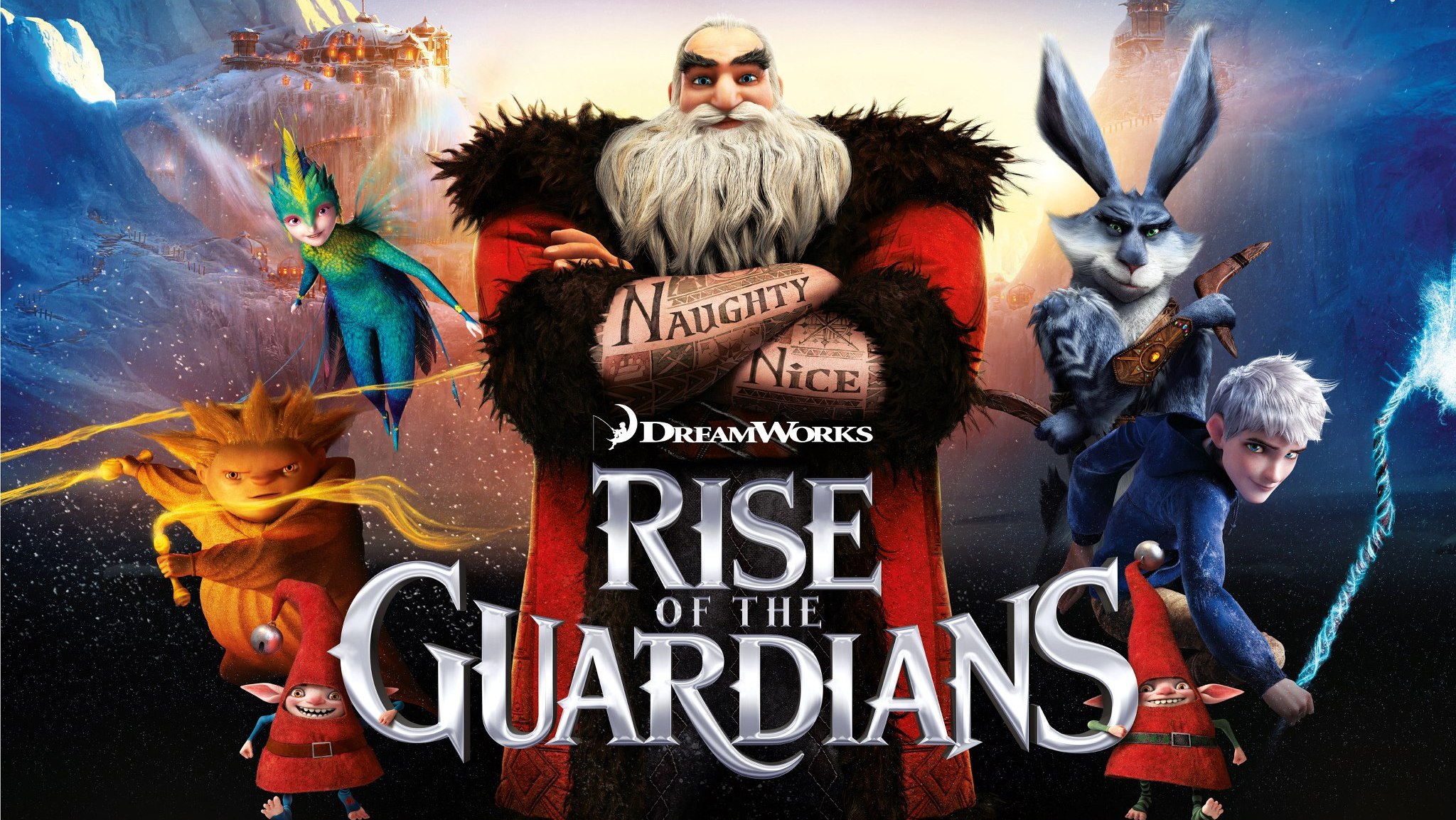
Rise of the Guardians posterI had low expectations for Rise of the Guardians, but it wasn’t bad.

The film recasts Santa Claus, the Easter Bunny, the Tooth Fairy, and other figures of childhood lore as Guardians: members of a league that protects the happiness of children. When the Boogeyman tries to darken the world with nightmares, the Guardians recruit an amnesiac Jack Frost to restore the belief and hope of kids everywhere.

Despite its generic title, Rise of the Guardians is a colorful, well-paced fairy-tale film. (Unlike the other media in this Review Roundup, it doesn’t feel particularly long.) The Guardians are mostly likable; I particularly enjoyed Santa Claus as a gruff Russian and the Sandman as a silent protagonist. The villain is sinister and well-developed. By far the weakest link is Jack Frost, whose angst, amnesia, bland narration, and boy-band looks hit all the wrong notes.

It isn’t a classic, but Rise of the Guardians is all right.

The Godfather Parts I and II

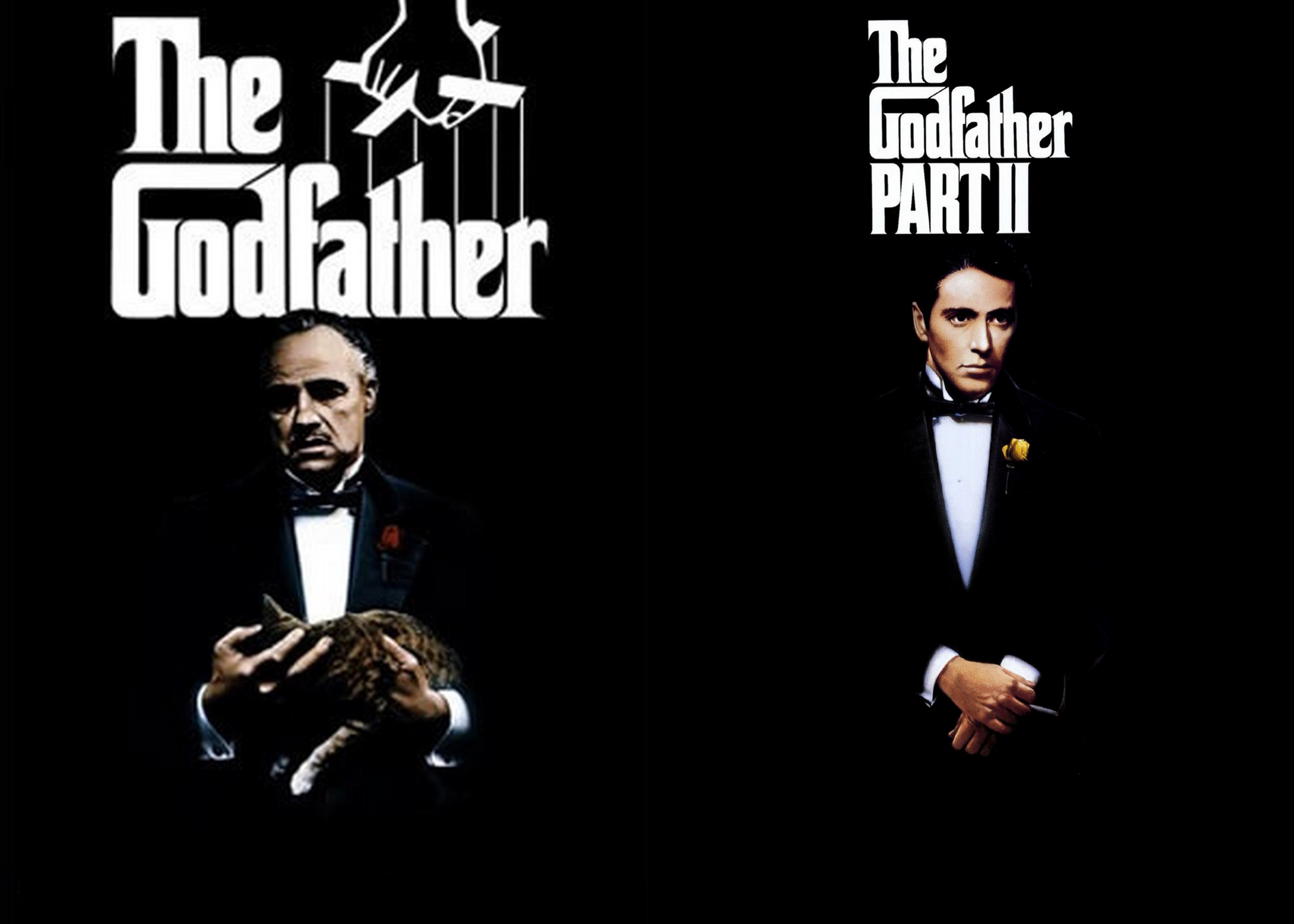
The Godfather covers

The Godfather and The Godfather Part II are allegedly two of the greatest films ever made. I decided I should see them. It was, as the Godfather himself might have put it, a recommendation I could not refuse.

The first Godfather film tells the story of the Corleone family, an Italian-American crime syndicate led by the eponymous godfather, Vito, and later by his son Michael. The second movie follows Michael as he consolidates power, and flashes back to Vito’s arrival in the United States and rise to power as a criminal kingpin.

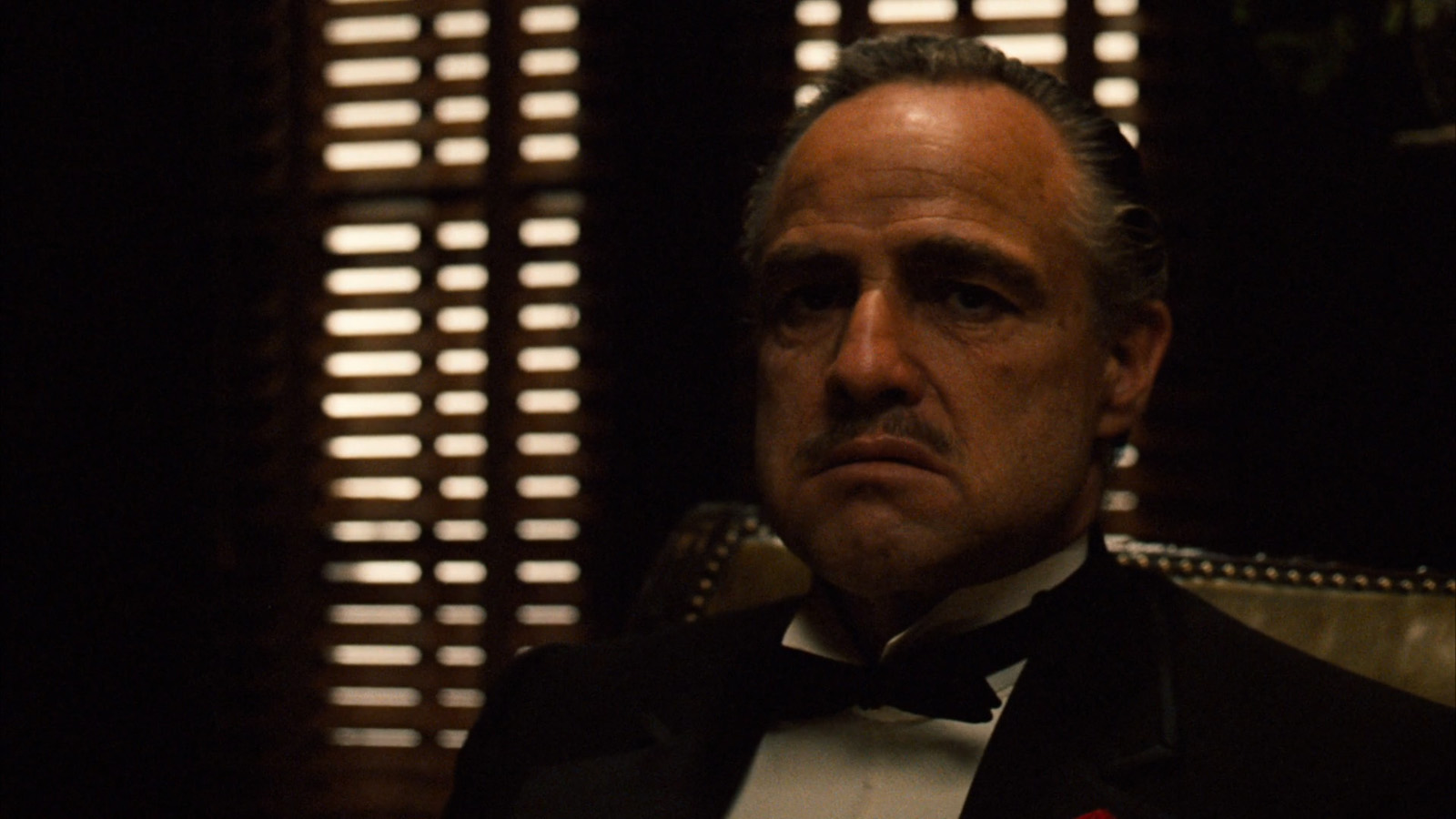
Oh, and the first one consists largely of Marlon Brando making this face:

Marlon Brando scowling

Seriously. This is his default expression.

The Godfather movies are fairly old, and a lot longer and slower than contemporary films. They move at the leisurely pace of novels. (If it were made today, The Godfather would probably be a television miniseries, not a series of films.) The meticulous pacing allows for character development and plenty of subplots, but definitely makes watching the films a chore.

The Godfather movies boast great acting and complex characters. Vito is not just a literal godfather to his godson, but a sort of father-figure to his community. His life of crime is governed by strict rules of honor and loyalty. Michael, at first an innocent young man, hardens into a ruthless mob boss who abandons his father’s principles. In telling their stories, the films touch upon themes such as revenge, responsibility, betrayal, tradition, religion, corruption, and family.

The Godfather and The Godfather Part II reward patient viewers with the epic story of a family’s descent into darkness. If you’re looking for something easy to watch, however, you had better look elsewhere.

What books, films, shows, or video games have you enjoyed lately? Let us know in the comments!