367. Notes from the Road

Well, I’m back.

My journey to Wisconsin was refreshing, wonderful, exhilarating, highly caffeinated, occasionally uncomfortable, and a smashing success. Here, in no particular order, are some of my thoughts from the trip.

The pastor who invited me to speak at his church is a really cool dude.

Rev Kev, the pastor who invited me to Wisconsin, is a tough-looking dude with epic tattoos, pierced ears, manly stubble, and massive biceps. He could probably have snapped my spine with his bare hands.
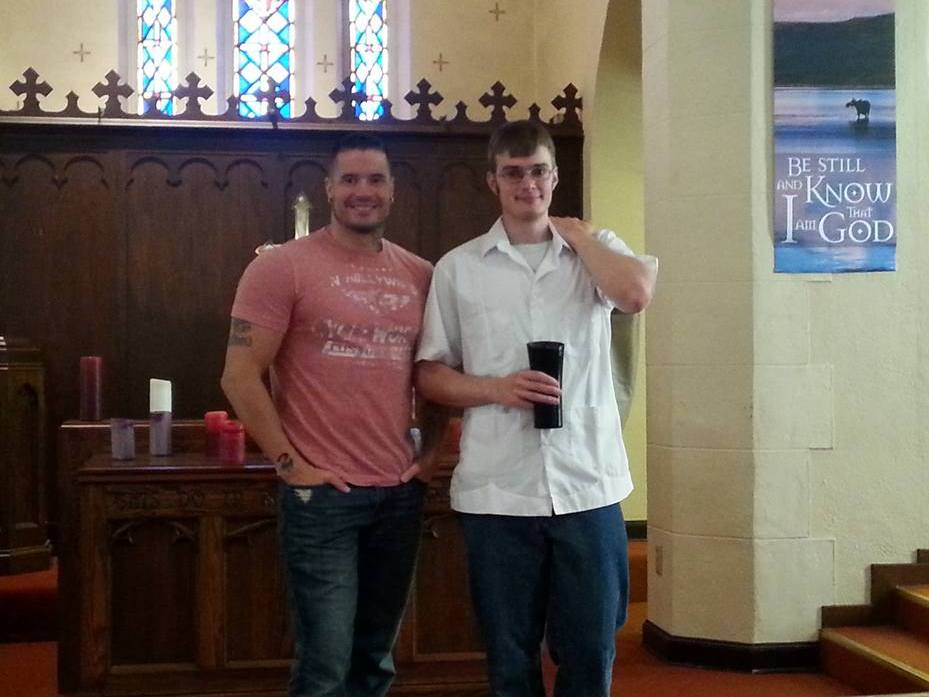
Adam and Rev KevFortunately, the good Reverend turned out to be a true gentleman and total geek. He and his family—which included a dog, three cats, and a colorful assortment of friends and honorary family members—were welcoming and kind. I was treated not as a guest, but as a friend.

Rev Kev has an amazing story. One of the highlights of my trip was sitting in his dining room, drinking coffee and listening to his testimony. His faith and story inspire me.

In other news, Rev Kev has a wonderful church office. Surrounded by Star Wars and comic book posters, a large plastic Hulk stands on his desk, wielding an Adam West Batman action figure like a club. ’Nuff said.

My only concern about the good Reverend is that he might be a Sith Lord. No doctrine in Christianity states a person can’t be a Sith and a pastor, but I still consider it cause for concern.
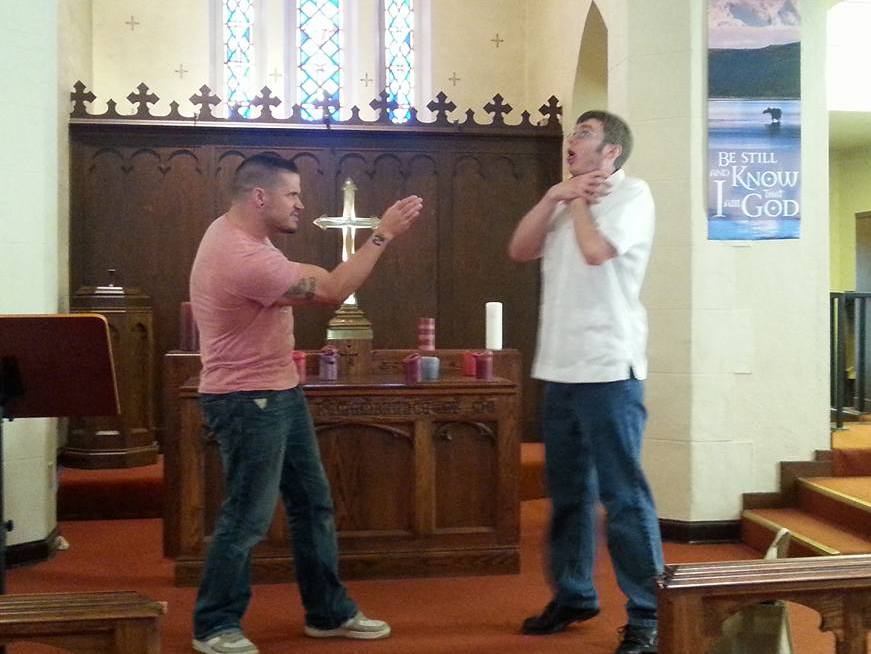
Sith pastor

I drank a lot of coffee.

For all my jokes about coffee, I do really love the stuff. In two days of traveling, I drank roughly eight cups of brewed coffee, two bottled frappuccinos, a latte, and a double shot of espresso. I also drank a masala chai tea latte, because variety is important.

I ate the best burger I’ve ever eaten.

My humble road trip was transformed into a glorious pilgrimage by a quick stop at a tiny burger shack called Wedl’s. This burger vendor serves such good food that it was featured on the Travel Channel. Wedl’s grills its burgers on a skillet that has been in use for nearly a century.

Wedl'sA drunk driver once totaled Wedl’s and broke its skillet. Fortunately for all of humankind, the shattered skillet was repaired. Just as the broken shards of Narsil were reforged into Andúril in The Lord of the Rings, so Wedl’s skillet was restored to its divinely-appointed purpose of grilling tasty burgers.

Rev Kev and I discussed the legend of Wedl’s skillet, weaving a story of how the skillet’s greasy shards were held by a weeping maiden in a lonely meadow, only for a kingly elf to ride up on a stallion and pledge to restore it. He worked in secret, reforging the skill on a magical anvil, his furnaces blazing hotter than ten thousand suns—and it was done. Wedl’s skillet was resurrected, and its noble work continues to this day.

When I bit into my Wedl’s burger, my reaction was pretty much the same as Samuel L. Jackson’s in Pulp Fiction, but roughly seven hundred percent more excited.

Wisconsin has beautiful scenery.

On my way home, I following winding roads past green hills, lovely woods, and beautiful streams. It was fantastic. Indiana occasionally has nice scenery, but approximately ninety-six percent of the state is covered by cornfields. What I saw of southern Wisconsin was breathtaking.

I don’t know how I lived without a GPS.

As usual, I seem to be a decade or two behind everyone else in my generation when it comes to technology. I finally acquired a GPS, and it is amazing. It made traveling so, so much easier. My GPS, GLaDOS, is a gift of God.

Hell has a tenth circle, and its name is Chicago.

As much as I appreciate my GPS, I must quote its namesake, GLaDOS from the Portal games: “Remember when you tried to kill me twice? Oh, how we laughed and laughed, except I wasn’t laughing.” My GPS made two attempts to murder me by taking me through Chicago going and coming back.

I have an embarrassing fear of city driving. (My decision to buy a GPS in the first place was prompted by a stressful visit to Fort Wayne.) For all my travels, I haven’t done much driving in big cities, and I have long made a point of staying away from Chicago. Unfortunately, my GPS took me through Chicago twice.

The Chicago freeways were vast rivers of faded asphalt, channeling streams of vehicles over, under, and through an arid wasteland of concrete, weeds, and rusting metal. The summer sun blazed overhead. (My car lacks air conditioning.) The traffic was predictably slow. My trips through Chicago were all sweat, noise, fumes, desperate prayers, and hopes for the sweet release only death could bring.

This brings me to my next point.

It did me good to work through some of my anxieties.

Besides my fear of city driving, I’m stressed out by traveling alone, public speaking, and prolonged social commitments. My trip to Wisconsin consisted of driving hundreds of miles by myself, hanging out with new people for hours on end, and speaking in front of a church congregation.

My anxieties are silly and irrational, but also very real. I was forced to confront them, and I lived to tell the tale. As George Orwell wrote, “You have talked so often of going to the dogs—and well, here are the dogs, and you have reached them, and you can stand it. It takes off a lot of anxiety.” I survived my anxieties, and that’s encouraging.

It was nice to get away from my typewriter monkeys.

For two glorious days, I didn’t see a single banana peel, hear a single explosion, or smell a single whiff of burning apartment. It was nice.

Now that the trip to Wisconsin is done, what’s next? I wish I knew. I suppose I’ll resume my quiet, caffeinated, day-to-day life, and daydream about my next road trip.


363. About Storytelling: Shock Value Is Overrated

This blog post discusses subjects exploited for shock value in fiction, including atrocities like torture and sexual violence. I have done my best to address these subjects in an appropriate way, yet sensitive readers may want to give this post a miss.

There has been a lot of buzz lately over Game of Thrones and its sexual violence. I’ve never watched Game of Thrones, yet I’ve gathered the impression that it is not—to put it as gently as possible—a family-friendly show.

That looks... familiar.

This picture looks… familiar.

Some weeks ago, the controversy over the show inspired a sensible article explaining why subjects like rape must be handled very carefully by storytellers. (I would link to the article, but I can’t find it.) The gist was that rape is a monstrous crime and should not be taken lightly.

Can such atrocities be used effectively in fiction? Of course they can. Are such atrocities used effectively in fiction? Far too often, they are not. Subjects like rape, torture, and pedophilia are sometimes used by storytellers merely for shock value. Such atrocities are a cheap way to make a villain seem evil, a setting seem dark, or story seem gritty and “mature.”

Here are a few problems with such a shallow approach.

Stories that include heinous crimes too often focus on the criminals and ignore the victims.

If storytellers have the guts to depict a vicious crime, they had better also have the guts to show its effects on its victims. Using an atrocity like rape or torture for shock value, but glossing over its horrific consequences, is not only disrespectful—it’s bad storytelling. The cost of such crimes is too great to be ignored.

Shallow or tasteless use of monstrous crimes in fiction is deeply disrespectful to real-life victims of those crimes.

Before depicting a shocking crime, storytellers should ask themselves: What if anyone in my audience has been a victim of this crime? What will that person think of this scene? Fiction can explore atrocities in a meaningful way, but using them merely for shock value is cruelly disrespectful to those who have suffered them in real life.

There are endless ways to depict evil or depravity in fiction without using horrific atrocities as a cheap shortcut.

In my twenty-something years, I’ve read a lot of disturbing books: Lord of the FliesMausHeart of Darkness, and The Road, among others. (Twilight was equally horrifying, but for entirely different reasons.) These novels are chilling in their depiction of evil. So far as I can remember, none of them relies on torture, sexual perversions, or sexual violence for shock value. The depravity of humankind isn’t limited to these atrocities!

Shock value has its place in storytelling, but it must be treated with caution. Using shock as schlock, treating monstrous crimes as shortcuts to edgy storytelling, is a terrible mistake. Shock value can be used effectively—but it must be used carefully.

362. My Five Strengths (Which I May Not Really Have)

I apparently have personal strengths. Who knew?

A couple of years ago, I took the Gallup StrengthsFinder test: a survey designed to help people identify their gifts. I was aware of my talents—winning Mario Kart races and drinking inordinate amounts of coffee, mostly—but was less certain of my natural strengths. What better way could there be for me to find them than taking an automated test designed by complete strangers?

The test results were… not encouraging.

In seriousness, the results seemed pretty accurate, but I responded with only a flicker of interest before stashing them in a folder on my laptop and forgetting them. They spent two years gathering digital dust before I recalled them a few days ago. Let’s take a look at them, shall we?

My top five personal strengths are apparently consistency, intellection, responsibility, connectedness, and strategic. What are they? Flipping heck, I don’t know. We should check the test results and take them one at a time.

Consistency

The test defines this as a sense of fairness that values people equally and strives for “a consistent environment where the rules are clear and are applied to everyone equally.”

This one is fairly accurate. I believe people—all people—are valuable. Few things anger me more than injustice and inequality. Rich people are no better than poor people. Men and women deserve equal respect, along with the folks whose gender is more complicated. People with mental or physical disabilities are just as valuable as ordinary people. Everyone deserves dignity, respect, and fair treatment.

In practical terms, this consistency makes it a little easier for me to accept and respect people. I may dislike you or disagree with your views, but I will try to love and tolerate the heck out of you.

Intellection

This is a fancy word for mental activity. “You are the kind of person who enjoys your time alone because it is your time for musing and reflection,” declare the test results. “You are introspective. In a sense you are your own best companion.” The results conclude, “This mental hum is one of the constants of your life.”

Of all the strengths ascribed to me by the test, this is by far the most accurate. I’m not quite sure how the test figured out what goes on inside my head, but the results are absolutely correct. Whether or not I like it, I’m always thinking. The phrase “mental hum” is perfect: my mind constantly hums with thoughts about this or that. I analyze, introspect, plan, ponder, and review.

Is this a strength? My hyperactive mind is often a nuisance, but whatevs. I suppose my mental hums fuels this blog, so that’s a plus.

Responsibility

The test makes this one sound like a pathological compulsion: “Your Responsibility theme forces you to take psychological ownership for anything you commit to, and whether large or small, you feel emotionally bound to follow it through to completion.”

This one is fairly true. If I make a commitment, I feel obligated to follow through with it, even if it takes a long time. When I fail to meet a deadline or expectation, I feel crushed by guilt and disappointment.

My obsessive sense of responsibility is generally a good thing. For the most part, it makes me a dependable person, albeit a neurotic one.

Connectedness

“Things happen for a reason,” declares the test. “You are sure of it. You are sure of it because in your soul you know that we are all connected. Yes, we are individuals, responsible for our own judgments and in possession of our own free will, but nonetheless we are part of something larger. Some may call it the collective unconscious. Others may label it spirit or life force. But whatever your word of choice, you gain confidence from knowing that we are not isolated from one another or from the earth and the life on it.”

Flipping heck, the test seems to think I’m some sort of pantheist. I don’t have any strong belief in mystical connections between events or people. As a Christian, I believe in a higher purpose for human beings, but that’s about as far as it goes. God works in mysterious ways. However, I’m skeptical of the vague, esoteric sense of connectedness described by the test.

I have read its explanation several times, but I’m not sure I understand this strength, let alone have it. The test might be mistaken on this one.

Strategic

All right, I have to get this off my chest: Strategic is an adjective, not a noun. The other strengths are all nouns; why isn’t this one? Anyway, it’s a way of thinking that excels at finding patterns and efficient solutions.

The test got this one right. I frequently weigh options in search of the optimal solution, eliminating possibilities until I reach the one that seems best. More often than not, my decisions are guided by logic. I seldom do things impulsively.

This strength is useful for planning, allowing me to work out efficient strategies for getting stuff done.

The Gallup StrengthsFinder test wasn’t infallible, but it did a surprisingly good job of assessing my strengths. At the very least, it didn’t call me a horrible person. (Of course, it wasn’t testing for that.) Now that I’ve reviewed its results, I’ll strive to use the gifts the test seems to think I have.

359. Rain

Rain was falling when I awoke a few days ago. I lay on my floor, tangled up in a sleeping bag and a light blanket, slipping in and out of consciousness, listening to the soft roar of the rain, and remembering.

The sound of the rain took me back to the jungles near Shell Mera, the town famous for Operation Auca and the brave men who lost their lives for the Gospel of Christ. When we lived in Ecuador, my family and I vacationed in a cabin with a corrugated metal roof. The rain thundered when it fell. I drank tea made from fresh hierba luisa leaves, lay in a hammock, and read a book or played a video game as rain beat the metal roof like a titanic drum.

Mangayacu cabin view

The view out of the cabin was beautiful, even when it was blurred by heavy rain.

A few days ago, as I lay listening to the rain, I recalled the rainstorms that hit my grandparents’ home in Florida. Once, after a heavy rain, I saw a rainbow rising from the yard next to the house where my family and I were staying. The rainbow disappeared when I got too close, but I was able to pinpoint more or less where it touched the earth. There was no pot of gold, but it was still exciting.

I was once privileged to visit the Galápagos Islands for my high school biology class. (Being a missionary kid has its perks!) As my classmates and I snorkeled in a rocky bay in a small island, a squall swept over us: driving sheets of warm rain that limited visibility to about fifteen or twenty feet. (It didn’t help that I wasn’t wearing my glasses at the time.) I treaded water, looking in all directions, seeing only water, hearing only the rain. It was one of the most magical moments of my life.

In Montevideo, where my parents now reside, rain is often preceded or followed by spectacular displays of lightning over the horizon. When the rain falls, it falls hard. I used to walk the dog in the rain—well, I used to try. My parents own a dachshund named Sam, known alternatively as Samwise, Samurai, or the Sam-pup. He doesn’t like getting wet, and he hates thunder. During my visits to Montevideo, I had to drag him outside by his leash when it rained. I loved the wet weather. The city blocks, lined with trees, seemed cleaner and lovelier when rain fell.

Rain washed away the grime of this dirty street and made it a corner of Eden.

Rain made this dirty street a corner of Eden.

A few days ago, I lay awake and listened to the rain: remembering, reminiscing, and—if I may borrow my younger brother’s word—nostalgifying. I love the sound of rain. No matter where I go, the gentle roar of rain never changes.

It reminds me of a line from the Kingdom Hearts games. (Although the story of these games is ridiculous, it has many moments of disarming pathos.) In a touching scene, a character raised near the ocean becomes stranded on a dark, deserted island. He has no hope of escape. There is only an empty beach, jagged outcrops of black stone, gloomy fog, and the soft swish of waves. It’s a bleak place, but the castaway finds a shred of comfort.

“At least the waves sound the same.”

A few things in my life have never changed. I love looking up at the stars. I joke that my childhood home is a particular video game, but it’s not really a joke: The Legend of Zelda: Ocarina of Time has been more of a constant in my life than any place on earth.

Then there’s the sound of rain. In all these years, and in all these places, it has never changed. As I recently lay awake, I found myself thinking, “At least the rain sounds the same.”

Rain reminds me of the immutability and faithfulness of God. It exists in a state of constant motion, yet it never changes. Rain is beautiful, and it comforts me.

At any rate, it’s better than snow.

356. princess rescuers r us

Today’s post was written by Matt Hill and originally published on Christian media website Hollywood Jesus. Matt brings something new to TMTF by discussing Ico (which I have not yet played) in free verse (which I never write). Matt is a musician, writer, and pop culture aficionado. You can read more of his free-verse pop-culture wanderings on Hollywood Jesus. (While you do that, I’ll think about playing Ico and its spiritual sequel, Shadow of the Colossus.)

me n my kids totally rescued a princess together yesterday . .
well, kind of . .

the princess was maybe not a real princess
and her name was yorda
and she was a character in this really great video game called *ico*
that originally came out for ps2 (and i played it then)
and then was re-released in hd for ps3 a while back (so i bought it recently)

and i suppose it wasn’t technically us who rescued her . .
it was our onscreen avatar named ico . .

and, if you want to be technical about it, my kids didn’t really
do any of the actual controlling of ico and so technically
didn’t rescue yorda themselves,
just through me – their real life avatar . .

and, technically, is yorda really rescued at the end of that game?

but, however, transition,
on a better/deeper/realer/more interesting level,
my kids and i *totally* completed that game together,
rescuing yorda together,
defeating the wicked queen together,
escaping the castle together,
walking that post-credits
serene and surreal
beach together at the
end
only to discover yorda had accompanied us even there (right?) . . . ….. .. . . .

they experienced what i did: the drama, the struggle, the tension, the
climax,
the resolution . .
they saw what i saw, thought through what i thought through,
asking questions, giving advice along the journey,
loving the adventure of it as i did (twice now) . .

by the end, they knew that escape was imminent (immanent?),
that the queen would soon have to get hers,
that when yorda speaks her final words (in another, untranslated language),
what she said probably meant “thank you” or “i love you,”
which, in my estimation, is right on . .
and good final thoughts to a game, or anything else . .

i made this experience with my kids happen because:
it teaches them creative thinking skills,
problem-solving skills,
how to understand and relate to characters in a story,
how narratives work,
justice and fair play and perseverance and courage and . . .
(on
and
on)

i made this experience happen because:
it’s an experience that we now share,
that we’ll now remember,
together . .

i made this experience happen because:
on a better/deeper/realer/more interesting level,
though i think/hope the above was that too,
a hero-rescuing-the-princess story,
imho,
is *the* story of this universe . .
the story of God becoming man to rescue
us princesses from the clutches
of that wicked queen
(you know the one) . .
the story that,
imho,
all other stories – princess rescuing ones and the rest –
echo and emulate and imitate
on
and
on

and now,
i’m hoping that somehow, someday,
the fact that
me n my kids
(princess rescuers r us)
are actually *in* that story *together*
—– – as you and i are too,
though not as intimately
(it’s happening right now! this is the story! . . you and i are in it! . .
but what do we do with it?! . . ) —— – — –
will be understood by them,
and acted upon by them in faith,
just as,
in faith,
we offed that wicked queen and rescued yorda from the castle together yesterday

354. Get a Grip and Stop Whining

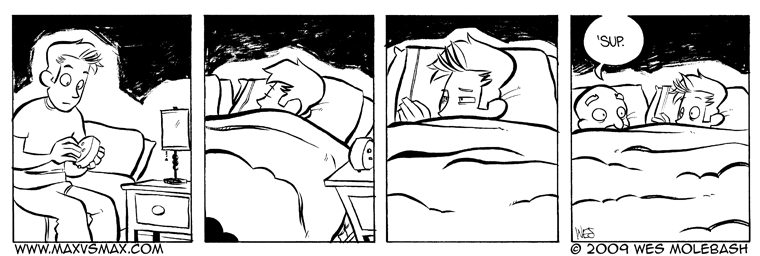
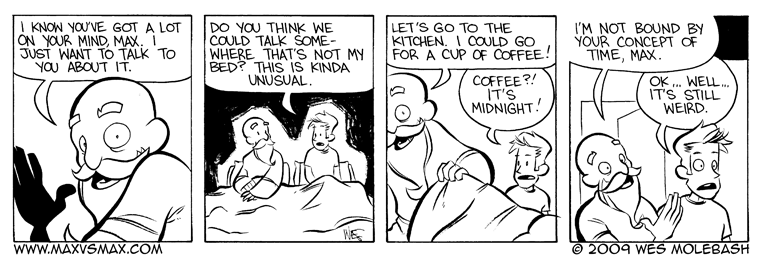
Once upon a time, when this blog was new and I had just finished college, I shared a series of comic strips by the inimitable Wes Molebash. They were part of a comic titled Max Vs. Max: the unexpectedly funny story of a man working through the guilt of his recent divorce. In this series of strips, Max wakes up to find himself in bed with God.

Yup. You read that right.

Max vs. Max, 1Max immediately realizes the whole thing is a dream. “I’m dreaming about sleeping in bed with God,” he mumbles, awestruck. “I think… I probably need therapy.” Fortunately, the Almighty doesn’t seem at all bothered. He just wants to chat.

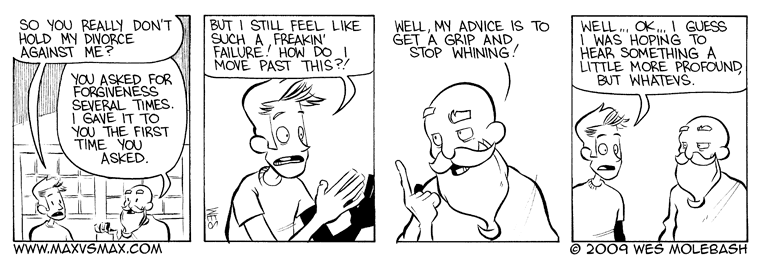
Max vs. Max, 3In the kitchen, Max admits to feeling guilty about his divorce, even though God has forgiven him. “I still feel like such a freakin’ failure!” he exclaims. “How do I move past this?!”

God, in his perfect and infinite wisdom, has one suggestion for Max: “Well, my advice is to get a grip and stop whining.”

Max vs. Max, 6I remembered these fantastic comic strips a few days ago. (If you have not yet read them, leave this post and check them out. Go on. I’ll wait for you.) God’s advice to Max really stood out to me. As Max struggles with feelings of failure, God suggests letting go of self-pity and moving forward. It’s a simple solution, but not an easy one.

God’s advice for Max is, well, for Max. It doesn’t apply universally to every person and circumstance. In the wrong situation, such blunt words cause more harm than good. I won’t presume to offer anyone this advice, with one exception: I know of one person in the world who definitely needs it.

I, of course, am that person. I occasionally suffer from depression, and it sucks. My future seems a bit scary right now, and my faith is often shakier than I care to admit. I wrestle with doubt and fear and selfishness. I sometimes find myself echoing Max and admitting that I feel like such a freakin’ failure.

When I can’t help echoing Max, I must also echo God—well, God as he is imagined by Mr. Molebash: “Get a grip and stop whining.” Sometimes—not always, but sometimes—it is as simple as that. Self-pity is easy. Courage and humility are hard, but they are also necessary to move forward.

Like Max, I am sometimes my own worst enemy. (Adam Vs. Adam has a nice ring to it, don’t you think?) When I find myself wallowing in regret or self-pity, I must get a grip and stop whining—and keep pressing onward.

How It Feels to Grow Up

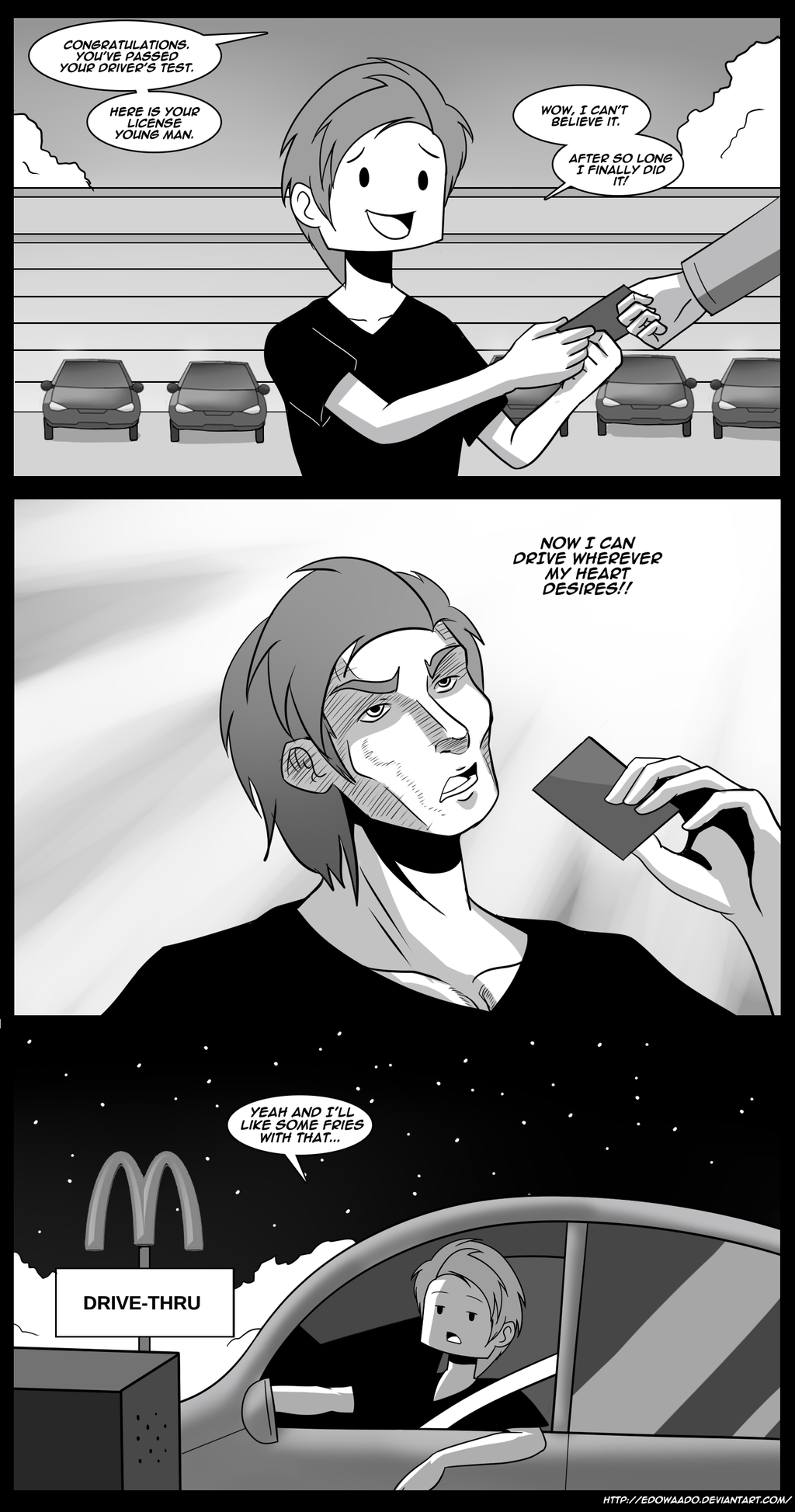
I dislike many things about adulthood, but I’ll be the first to admit it has its perks. As an adult, I get to eat anything I want. (What I want, apparently, is apples, sandwiches, and the occasional pie.) I am the master of my household, free to arrange and decorate my apartment however I like. (What I like, it seems, is machetes, plushies, and video game posters.) Like the young gentleman in the comic above, I have both a car and the license to drive “wherever my heart desires.” (What my heart desires, more often than not, is to stay home.)

Being a grownup is exciting. It brings freedom and independence. In time, however, the privileges of adulthood become commonplace. No longer a triumphant emblem of autonomy, my car has become the quickest way to run errands, get to work, or grab burgers at McDonald’s. While never losing their value, the perks of growing up lose some of their magic.

All the same, I must say, being a grownup is pretty sweet.

Adam Turns into the Hulk and Rants about Church Music

Caution: This blog post contains furious ranting. Sensitive readers, and readers averse to things being smashed, are advised not to continue.

Being a blogger is great fun, but it’s not without risks. In a small number of cases, frequent exposure to wireless Internet connections has caused bloggers to develop unexpected conditions. I am one of these unfortunates. I and at least one other blogger have become tragic victims of HBS (Hulk Blogging Syndrome).

What does this mean? Well, there’s really only one thing about HBS you should know: Don’t make me angry. You wouldn’t like me when I’m angry.

That said, today’s blog post is all about contemporary church music, and the way classic hymns are rewritten with new music or lyrics. Well, rewritten may be too kind a word. Hymns are mutilated. They are trampled upon. They are… ugh… I suddenly don’t feel well…

I… I…

BLOG SMASH!

BLOG SMASH!

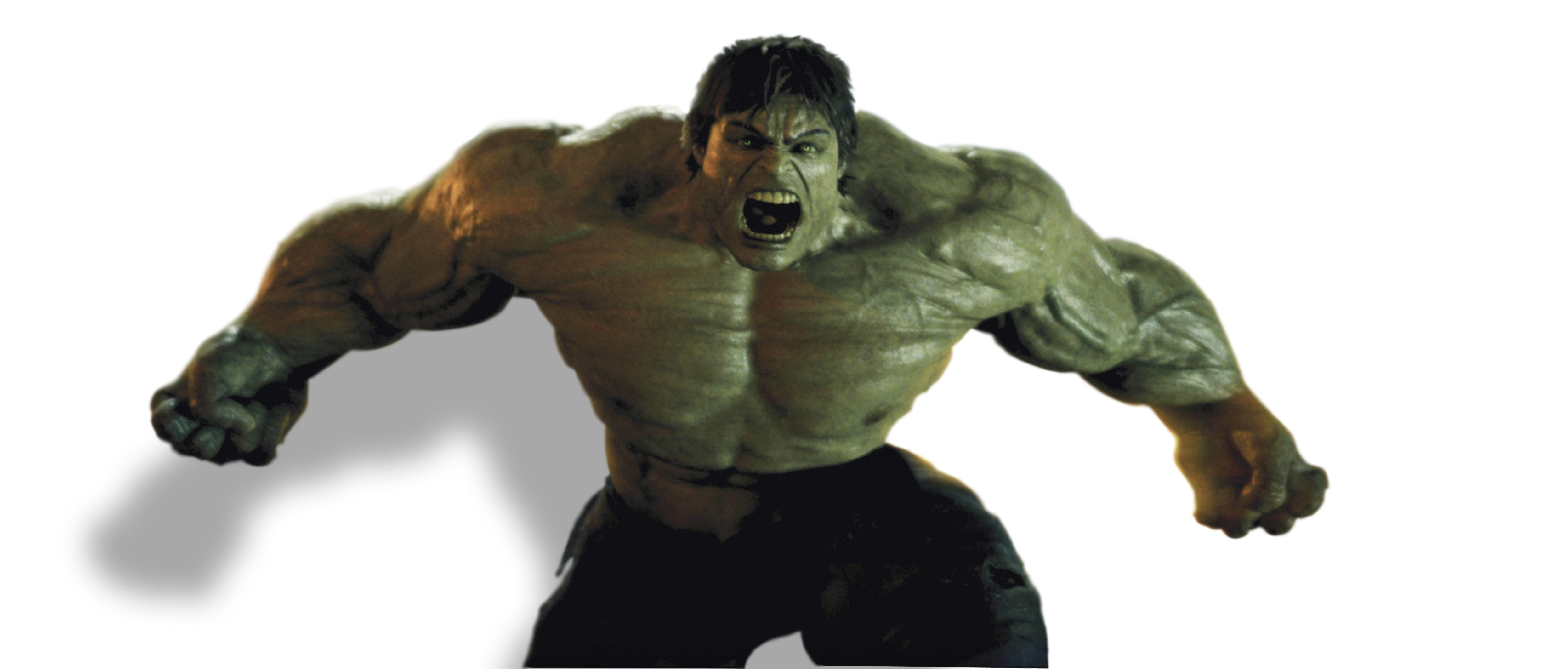
ADAM IS GONE. NOW THERE IS ONLY HULK. HULK HERE TO DISCUSS CHURCH MUSIC. AND TO SMASH.

HULK DOES NOT LIKE MODERN CHURCH MUSIC. ITS SONGS SEEM MUSICALLY WEAK AND NONDISTINCT. THEY ALL SOUND THE SAME TO HULK. THEIR LYRICS ARE OFTEN NOT VERY MEANINGFUL. THEY ARE SOMETIMES DOWNRIGHT STUPID.

(HULK DISCLAIMER: SOME MODERN WORSHIP SONGS ARE FANTASTIC.)

MANY PEOPLE LOVE MODERN CHURCH MUSIC. THAT IS OKAY WITH HULK. HULK DOES NOT WANT TO BE PHARISEE. WHATEVER MUSIC BRINGS PEOPLE CLOSE TO GOD IS GOOD MUSIC.

CHURCHES ARE WELCOME TO THEIR NEW MUSIC… BUT LEAVE OLD MUSIC ALONE!

SOME OF US LIKE OLD HYMNS. “IT IS WELL.” “AMAZING GRACE.” “BE THOU MY VISION.” “COME THOU FOUNT OF EVERY BLESSING.” THESE ARE GOOD SONGS. THEY ARE FINE THE WAY THEY ARE. SOME PEOPLE FIND THEM TOUCHING AND MEANINGFUL, FULL OF BEAUTY AND TRUTH.

STOP TACKING ON NEW VERSES, CHANGING MELODIES, ADDING UNNECESSARY BRIDGES AND MAKING POINTLESS CHANGES.

PLAYING OLD HYMNS IN NEW STYLES IS FINE. HULK LOVE HEARING HYMNS PERFORMED IN CONTEMPORARY STYLES. THAT IS AWESOME. OLD HYMNS ARE AWESOME. GO AHEAD. JAZZ THEM UP. BUT DO NOT CHANGE THEM.

HULK RECENTLY WENT TO CHURCH. CHURCH SANG “IN CHRIST ALONE.” THIS IS NOT OLD HYMN, BUT IT IS BEAUTIFUL IN EXACT SAME WAYS. “IN CHRIST ALONE” HULK’S FAVORITE SONG. EVER.

CHURCH ON SUNDAY CUT OUT AN ENTIRE VERSE OF “IN CHRIST ALONE.” WHY? ADDED BRIDGE WITH WEAK MELODY AND THESE LYRICS: “Oh, Oh, Oh.” HULK NOT MAKING THIS UP. THOSE WERE WORDS ON SCREEN. “Oh, Oh, Oh.”

THOSE WORDS NOT AN IMPROVEMENT OVER THESE WORDS:

In Christ alone, who took on flesh: fullness of God in helpless babe,

This gift of love and righteousness—scorned by the ones he came to save.

Till on that cross as Jesus died the wrath of God was satisfied,

For every sin on him was laid. Here in the death of Christ I live.

THESE WORDS ARE BETTER THAN “Oh, Oh, Oh.” WHY DID CHURCH STRIP AWAY BEAUTIFUL WORDS FROM HYMN AND REPLACE THEM WITH MEANINGLESS NOISES?

HULK NOT KNOW. HULK NEVER KNOWS.

HULK ASK ALL CHURCHES EVERYWHERE. PLEASE. LEAVE OLD HYMNS ALONE. THEY ARE FINE AS THEY ARE. PLAY YOUR NEW MUSIC. HULK GIVE YOU THAT. BUT GIVE HULK THIS ONE THING. MAKE ONE CONCESSION FOR HULK. YOU CAN HAVE NEW SONGS. DON’T RUIN OLD ONES.

PLEASE. PLEASE. HONOR BEAUTY AND TRUTH IN OLD HYMNS.

HULK OUT!

Whoa… I… what just happened? Why is there a mound of splintered wood where my desk used to be? Who ripped apart my shirt? Why are my typewriter monkeys fleeing in terror?

I suddenly feel sick, so I’m afraid I must cut this post short. Sorry. Now I’m going to yell at my monkeys for wrecking my bedroom, and then go put on some clothes.


This post was originally published on June 20, 2014. TMTF shall return with new content on April 20, 2015!

A Lesson from Doctor Who

I often discover lessons in unexpected places. True, I learn from the Bible and wise people, but I also learn from Batman and webcomics about video games.

The Doctor from Doctor Who is not particularly wise—in fact, he has all the tact and maturity of a twelve-year-old boy—but he recently taught me an invaluable lesson.

This is not the face of a wise man.

This is not the face of a wise man.

I work in a group home for gentlemen with mental and physical disabilities. As you can imagine, my job is often amusing, sometimes heartbreaking and never predictable.

When I began working in a group home, I felt pity for some of its residents. Their lives are often dark and difficult. Some endure chronic physical pain. Most suffer from depression. Few are ever visited by friends or family. All of them are hurting in some way and few of them understand why.

At first I pitied only these gentlemen, but as months passed I realized they aren’t the only ones deserving of compassion.

Most of my coworkers are hurting. Some are divorced. Some have family issues. Many struggle with financial woes or health problems. I’ve heard tearful stories, bitter complaints and vicious arguments I wish I could forget.

Apart from work, I have friends facing heartrending difficulties: divorce, debt, depression, loneliness and grief.

I’m constantly surrounded by people whose problems I can’t solve, and I hate it.

At one point in Doctor Who, the Doctor and his friend learn that a person whose life they tried to save committed suicide. The Doctor’s companion is overwhelmed with grief. “We didn’t make a difference at all,” she says.

“I wouldn’t say that,” replies the Doctor, blinking back tears. He adds:

The way I see it, every life is a pile of good things and bad things. The good things don’t always soften the bad things, but vice versa, the bad things don’t necessarily spoil the good things or make them unimportant. And we definitely added to his pile of good things.

I may not be able to fix someone’s life, but nothing will ever prevent me from adding to his pile of good things.

I can’t fix my coworker’s marriage. I can’t take away the pain of the gentleman with arthritis or the hopelessness of the gentleman with depression. I can’t promise healing to a hurting friend.

I can, however, be patient. I can listen. I can pray. I pretend to be terrified when the gentlemen with whom I work tell me there are mummies in the cupboards or a mouse in my shoe.

On an afternoon a few weeks ago, just a day or two after I remembered this lesson from the Doctor, I was administering medications at work when a resident of the group home ambled up to me.

“This is for you,” he said with a grin, holding out a cup of coffee.

It occurred to me in that moment that I’m not the only one trying to add to the piles of good things around me.

Sometimes other people, even hurting people, add to mine.


This post was originally published on May 10, 2013. TMTF shall return with new content on April 20, 2015!

Jesus Broke the Fourth Wall

Truly I tell you, wherever this gospel is preached throughout the world, what she has done will also be told, in memory of her.

~ Matthew 26:13

One of my favorite storytelling tricks is called breaking the fourth wall. There was once a playwright, you see, who insisted on making his stage productions as realistic as possible. In a play performed on a stage with three walls, the audience must be the fourth wall.

Thus the fourth wall became a phrase describing the imaginary boundary between the audience and the performers, or (more broadly) between reality and fiction. When a performer acknowledges the audience, that fourth wall is broken. This trick is often used for comedic effect or even as a clever, self-aware way for fiction to communicate its meaning.

It occurred to me not long ago that Jesus seems to break the fourth wall, so to speak, in the Gospels of Matthew and Mark. The story is a familiar one. Days before his crucifixion, Jesus is anointed with perfume by a woman. His disciples are indignant: “Why this waste? This perfume could have been sold at a high price and the money given to the poor.”

Jesus gives this touching reply: “Why are you bothering this woman? She has done a beautiful thing to me. The poor you will always have with you, but you will not always have me. When she poured this perfume on my body, she did it to prepare me for burial.”

Then things get awesome as Jesus breaks the fourth wall.

“Truly I tell you, wherever this gospel is preached throughout the world, what she has done will also be told, in memory of her.”

In simply speaking those words, recorded in the Gospels of Matthew and Mark and later preached to countless people over many centuries, Jesus made them come true.

As much as I’d like to assume Jesus specifically meant the Gospel of Matthew or the Gospel of Mark when he said “this gospel,” history tells us otherwise. The word translated gospel in this passage—and later applied to the books of Matthew and Mark—means good news. By “this gospel,” Jesus was speaking broadly of the good news of his life, death and resurrection—not of a specific Gospel in the Bible.

All the same, I chuckle every time I read that passage. Jesus was a man of miracles. He walked on water, healed the sick, raised the dead and did what no one (as far as I know) has ever done outside of fiction.

Jesus broke the fourth wall.


This post was originally published on April 17, 2013. TMTF shall return with new content on April 20, 2015!