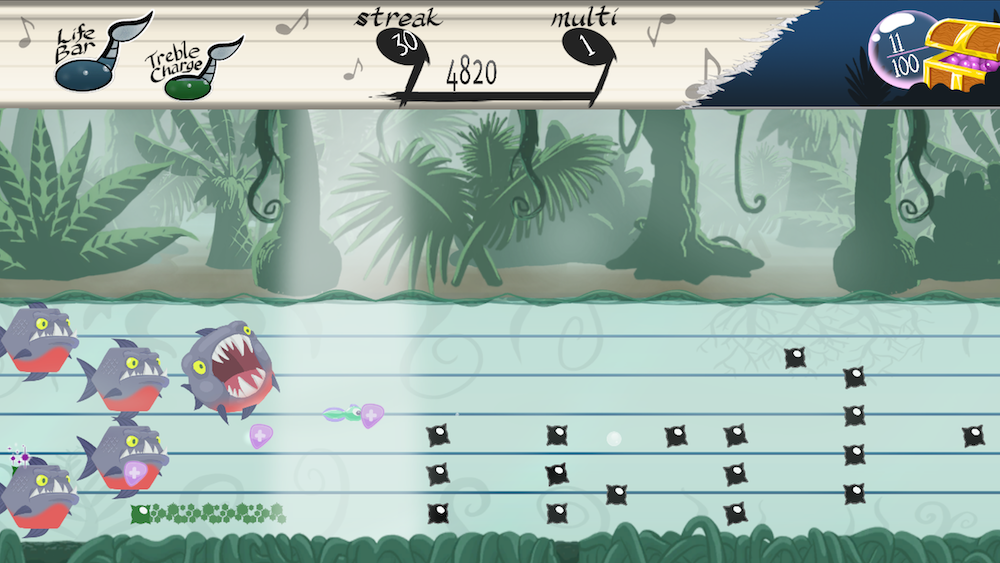
Tadpole Treble is the epic tale of a tadpole lost, alone, and far from home. This tiny amphibian must find her way back, dodging such dangers as piranhas, snapping turtles, and… musical notes.
Huh.
This quirky game is the work of Matthew Taranto, a man whose wise words I literally have framed and displayed on my desk. He created the Nintendo-themed webcomic Brawl in the Family, which ran for about six years. (I mourned its end on this very blog.) Upon concluding the webcomic, Taranto began working full-time on Tadpole Treble.
Each stage of the game is basically a long musical staff, along which players must dodge the notes of the stage’s musical score. It’s a neat intersection of music and gameplay: two elements of game design that are too often disconnected.
The game will be released for Steam (a digital marketplace for video games) in just a couple of days. I’m holding out for the Wii U release later this spring. It was apparently a childhood dream of Taranto’s to make a game for a Nintendo system, and I’m glad he’s finally done it.
In other news, one of the game’s songs, “Thunder Creek,” has been stuck in my head for two weeks.
I don’t usually support indie projects, but when Tadpole Treble showed up on Kickstarter a year or two ago, I tossed a few dollars its way as a small thank-you to Matthew Taranto. Brawl in the Family helped me through one or two really dark days, and he seems like an incredibly nice dude.
If I were a rich man (yubby dibby dibby dibby dibby dibby dibby dum), I would consider donating toward more projects on Kickstarter, and also supporting creative people on Patreon. However, I’m definitely not a rich man, so I’ll have to settle for cheering them on.
Many of Disney’s greatest hits have been musicals, from the early days of Snow White and the Seven Dwarfs to the golden age of The Lion King to the modern era of Frozen.
Disney’s latest animated movie, Zootopia, is definitely not a musical—in fact, at one point, its protagonist is even told, “Life isn’t some cartoon musical where you sing a little song and your insipid dreams magically come true.” Zootopia does feature one notable song, however: “Try Everything,” a pop number sung by the film’s least necessary character. (Did Disney’s executives assign the film a pop star quota? We may never know.)
“Try Everything,” like “Everything Is Awesome” from The Lego Movie, is simplistic but catchy. It doesn’t soar to the heights of Disney’s great musical numbers, but I like it anyway.
The fan-made version above swaps out the thudding beat and pop influences of the original for brisk percussion and a tropical vibe. I’m pretty sure I heard some marimba and bongos in there, and that’s definitely a samba whistle toward the end. (There’s also a bit of electric guitar, because electric guitars make nearly everything better.) This cover of “Try Everything” is uplifting and airy, and I dig it.
Here’s another take on “Try Everything,” this time as a rock song. Spoilers: It’s still really catchy.
In case anyone is inspired by this song actually to try everything, I recommend giving jelly beans a miss. They’re nasty. Try almost everything. Skip the jelly beans.
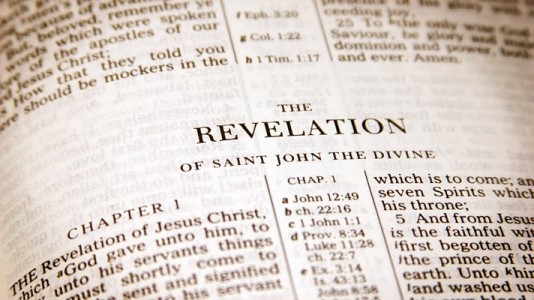
Donald Trump is all over the news these days. He reminds me of the book of Revelation, and of the end of the world.
Nah, I’m just kidding. When the author of Revelation described trumps resounding, I doubt he had this particular Trump in mind. Then again, maybe he did. It is a weird book.
Brace yourself. Things are about to get weird.
A high school teacher of mine once declared, “I hope this doesn’t offend anyone, but Revelation almost makes me wonder if John was tripping on something when he wrote it,” or words to that effect.
Revelation is a bizarre book, full of visions that seem more like hallucinations. A closer look reveals something even stranger. Revelation is a bit like Frankenstein’s monster: a book stitched together from bits of other books. It combines concepts and images from Old Testament prophets like Ezekiel, Daniel, and Zechariah with New Testament events such as the life of Christ and the spread of the Christian Church.
Revelation is weird, man.
The book is a bizarro mixture of warnings, prophecies, and visions, practically all of which are incredibly vague, and some of which are just weird. There are plagues, earthquakes, beasts, angels, demons, and locusts with human faces and scorpion stings. (I’m not making up that last one, I swear.)
This statue from my hometown of Quito represents a vision in Revelation.
Opinions on Revelation are extremely divided. Some interpret these visions and prophecies as literally as possible, which is the basis for the Left Behind books. (They’re pretty terrible.) Others believe the visions are somehow symbolic of world events. A few lunatics believe the mystical “secrets” of Revelation can be somehow “unlocked,” which is rubbish.
I have no idea how to interpret Revelation, but the most sensible theory I’ve read is that its visions and prophecies applied not to events in our own future, but to events that occurred nearly two millennia ago. According to this view, Revelation prophesied imminent events such as the Siege of Jerusalem in 70 AD. This theory isn’t perfect, but it seems more rational than most of the ideas floating around these days.
Of course, there’s more to Revelation than its unanswered questions. Certain elements of Revelation have captured imaginations everywhere and left a huge cultural impact.
Consider the number 666. “This calls for wisdom,” wrote the author of Revelation. “If anyone has insight, let him calculate the number of the beast, for it is man’s number. His number is 666.” Many have tried to solve this riddle, but none have figured it out.
The best theory I’ve heard, based on established traditions of biblical numerical symbolism, is that it represents someone who challenges the sovereignty of God. The number three represents God, who is three Persons, and the number seven symbolizes perfection. The number 666 (three sixes) represents an imperfect trinity that falls short of perfect divinity.
Nowadays, the number 666 is used mostly in horror movies and stuff. Superstitions surround the number to a point at which some people are a little scared of it. This fear is called hexakosioihexekontahexaphobia. (Seriously, I’m not making this up.)
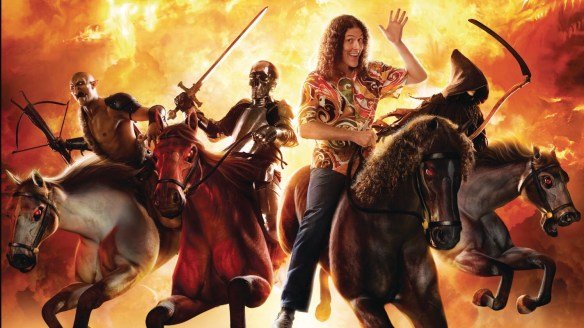
Another popular image from Revelation is the Four Horsemen of the Apocalypse. These bringers of divine judgment ride differently-colored horses and are widely believed to represent cataclysmic events. The riders of the white, red, black, and pale horses are thought to symbolize conquest (or possibly plague), war, famine, and death, respectively.
The Four Horsemen of the Apocalypse, more or less.
The Four Horsemen have been embraced by pop culture, even becoming characters in superhero comics. (Heck, the trailers for the next X-Men movie suggest the Horsemen will make an appearance.) There are even unofficial My Little Pony versions of the Horsemen, because this is the Internet.
Revelation is full of weird images and intriguing concepts, but the note on which it ends is a hopeful one. The final chapters of Revelation paint a picture of a world no longer broken, but restored and renewed. God wipes away the pain, the injustice, the suffering. He makes things right.
The older I get, the more I see the brokenness of the world. In my twenty-something years, I’ve glimpsed the sickening realities of poverty, abuse, depression, mental illness, and addiction—and God only knows what horrors I haven’t seen. It makes me long for everything to be fixed.
This brings me to a song. It is, honestly, the most beautiful song I know. No song in the universe stirs my soul quite so deeply as Michael Card’s “New Jerusalem.” It makes me long for a time when there will be no more hunger, no more child soldiers, no more senseless massacres, and no more pain.
That is the great message of Revelation, which not even its weirdest visions can eclipse: God will someday set things straight.
When Joseph Campbell wrote The Hero with a Thousand Faces, I bet he didn’t think the blank face above would be one of them. It doesn’t burn with determination, glow with compassion, or shine with righteous resolve. It just looks bored.
This face belongs to Saitama, the hero of One Punch Man: an anime series that swept across the geekier corners of Internet a few months ago. Its premise is very simple: Saitama is a superhero who can defeat any foe with a single punch—hence the name One Punch Man.
One would expect a show with such an overpowered hero to be dull, but the storytellers wisely play Saitama’s power for laughs. One Punch Man is delightfully self-aware, at times almost satirical, in how it plays around with anime tropes and superhero clichés. I think the show’s irreverent approach is a secret to its massive popularity.
For example, a common theme in anime is a hero on a journey to become the strongest. Just look at Pokémon—the show’s theme begins with the words, “I wanna be the very best like no one ever was.” I don’t watch a lot of anime, but I get the impression that many of the most popular, from Naruto to One Piece, revolve around a hero’s quest to be stronger.
In One Punch Man, Saitama is already the strongest. (Most of the other characters haven’t realized it yet, but that’s not the point.) As more impressive-looking heroes fail, Saitama destroys his foes with the indifference of a man swatting flies. Saitama doesn’t burn with ambition. He’s bored, good-natured, and a bit clueless. How did he become so powerful? What is the secret that let him surpass hundreds of other superheroes?
In a ridiculous scene, underscored by dramatic music, Saitama finally explains the secret behind his godlike power:
It took me three years to get this strong. One hundred push-ups! One hundred sit-ups! One hundred squats! Then a ten kilometer run. Every single day! And of course, make sure you eat three meals a day. Just a banana in the morning is fine. But the most important thing is to never use the A/C or heat in the summer or winter so that you can strengthen the mind.
There you have it: the secret to absolute physical power.
One Punch Man also has a terrific opening theme. Here’s a fan-made English cover of the original Japanese song:
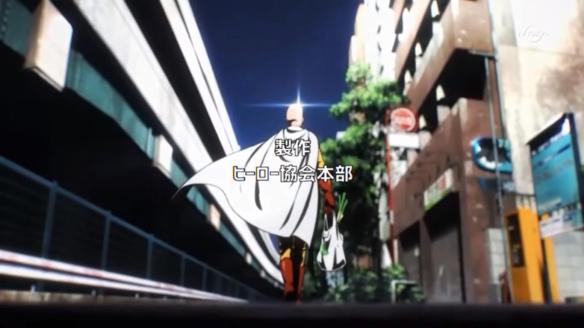
The intro to the show ends with a picture of Saitama dramatically walking home with a bag full of groceries, which pretty much sums up the tone of One Punch Man.
With the media saturated with the same old clichés, it’s nice to see a story that flips so many of them on their heads.
St. Valentine’s Day is coming up. (Yes, I insist on referring to the holiday as St. Valentine’s Day, because I am a grouchy traditionalist.) It’s a time for people in relationships to express their affections, and for single people to feel awkward. St. Valentine’s Day is also a time for coffee, but let’s be honest—it’s always time for coffee.
“Taylor the Latte Boy” is my all-time favorite romantic song. (Well, the video above actually features two songs: “Taylor the Latte Boy” and its response, “Taylor’s Rebuttal.”) What could be more romantic than a guy and a girl falling in love over coffee? The girl’s passionate tale of love, longing, and lattes is only slightly marred by the guy being absolutely not interested.
Coffee, love poetry, and the possibility of a restraining order: “Taylor the Latte Boy” has it all. This two-part song is on the longish side, but if you have time, I absolutely recommend it. The parts of Taylor and his admirer are performed well, and the differences between their points of view are hilarious.
In the end, I think we can all agree that caffeinated romances are the best kind.
This post was originally published on February 11, 2015. TMTF shall return with new content on February 22, 2016!
A friend of a friend of mine writes a blog called The Lingering Lamb, and a recent post reminded me of a song from my college days. “I’m Reading a Book” seemed funny at the time, but now it’s a painful reminder of how irritating it is to be interrupted while reading. (Maybe I should write another Hulk rant.)
I read on break at work, and a coworker has tried to start conversations on inane subjects while, y’know, I’m clearly reading a book. Once or twice, my coworker has entered the room, seen an open book in front of me, and apparently told herself, “Oh, Adam is reading a book! That is obviously an unspoken permission for me to chatter at him for the next ten minutes.”
I don’t want to join a conversation when I’m reading a book. As friend of mine pointed out, when I’m reading a book, I’m already having a conversation. It’s rude to interrupt.
I’m beginning to think I should wear a “DO NOT DISTURB” sign around my neck when I read on break. At the very least, I should look grumpy. (I’m getting pretty good at grouchy expressions; you should see my Power Scowl.) I’ll work on it.
This beautiful arrangement of “Auld Lang Syne” has new lyrics and a deft fusion of two styles. The Irish flute and tin whistle give the song a Celtic feel, while the banjo and southern-accented singers add an acoustic country flavor. Celtic and country music come from separate continents, yet have much in common as styles of folk music. (I wish someone would mix Celtic or country with traditional Andean music… I think Irish flutes or banjos could blend well with pan flutes and charangos.)
I generally frown upon rewriting old songs, but this one’s new lyrics are pretty good. Its message—thinking of family who can’t be here and smiling at good memories of days gone by—strikes a chord with me. Many of my loved ones are scattered across the world, and my quiet Indiana life seems far from my adventures growing up. This song is a celebration of good things past, and it hits me right in the feels.
Christmas music has been rearranged for nearly every conceivable genre, including grittier ones like symphonic rock and heavy metal. “Carol of the Bells” and “God Rest Ye Merry Gentlemen” are popular choices for edgy arrangements, but one song manages to be epic without dubstep wubs or electric guitars.
“Fum Fum Fum,” as performed by Mannheim Steamroller, is a fusion of rock and Renaissance styles. It’s pretty tame for the first minute, and then heats up with a woodwind (I’m guessing a tin whistle) carrying the melody over light synths and some solid percussion. This is my all-time favorite instrumental Christmas tune.
Christmas is nearly here, guys. Prepare yourselves.
So there’s apparently a new Star Wars movie coming out, or something like that. Who knew?
In keeping with the Christmas season, which this year also seems to be the Star Wars season, the video above is one of my favorite Star Wars-themed Christmas songs: “Vader Did You Know,” a parody of “Mary Did You Know.” The Vader version was written by Vic Mignogna, who besides being a popular voice actor seems like a really nice guy.
My other favorite Star Wars-themed Christmas song is “What Can You Get a Wookie for Christmas (When He Already Owns a Comb).”
The original version of this song is excruciatingly terrible, so I’ve shared a (much better) fan arrangement in the video above. The song provides some solid answers to that important question: What can you get a Wookie for Christmas when he already owns a comb? For my part, I suggest simply letting him win.
“Baba Yetu” is one of my all-time favorite songs. Its background is frankly a bit strange: composed by Christopher Tin for a video game, it went on to win a Grammy Award—the first ever video game composition to score at the Grammys. Its lyrics are the Lord’s Prayer in Swahili.
To recap: “Baba Yetu” was composed for a video game, won a Grammy, and features as its lyrics an ancient Christian prayer in flipping Swahili. Yes, this song is a bit of a weird one. I love it so much.
I enjoy singing, but I’m not great at it. As my long-suffering younger brother can confirm, I sing while doing household chores. I was in my high school choir back in the day, but that’s the extent of my singing experience.
I have a decent voice and can force a vibrato. (For my non-musical readers: A vibrato is when the pitch of a note wavers slightly… or in my case, when my voice wobbles.) However, tragically, I don’t have a good ear for music. I struggle to sing harmonies, and occasionally fail even to hit the correct notes or stay in the right key.
For this cover of “Baba Yetu,” I sang over one of Christopher Tin’s original tracks karaoke-style, adding bits here and there. I mixed my recordings in a witch’s cauldron an audio editing program called Audacity. I think my cover turned out all right, but I should mention that for every decent part of my performance, there were at least half a dozen takes that totally sucked. In audio mixing, as in writing, editing is magic.
I had really wanted to record a cover of “Baba Yetu” since singing it at an open mic night at my church. My performance kinda sucked. (I was really nervous.) I wanted to sing it again, to get it right, so I wound up recording it at home when I should probably have been blogging or sleeping.
At one point, shortly before I was ready to finalize the audio, Audacity couldn’t find the necessary files. I thought I had lost hours of work, but I was able to find the files again, thank God. Baba yetu, our Father, indeed.
“Baba Yetu” has become a popular song selection for choirs worldwide, including Procantus, the Uruguayan choir for which my dad sings. After I passed my favorite arrangement of the song on to my dad, he passed it on to his choir director, and the choir began practicing the song shortly thereafter.
(Oh my gosh, guys, I looked up the name of the choir to make sure I was spelling it right, and the very first search result on Google for “procantus montevideo” is a YouTube video of my dad singing “Baba Yetu” with the choir. The Internet can be a bizarrely small place. I would describe my aged parent as “the balding gentleman with the glasses,” but that describes nearly half the choir, so I’ll point him out as the gentleman on the left in the back row around the video’s seven-second mark.)
While finishing up “Baba Yetu,” I tried recording one or two Christmas, um, “carols,” but the recordings weren’t worth keeping. I don’t plan to record any more songs in the foreseeable future, but “Baba Yetu” was fun.
Do you know what’s even better than “Baba Yetu”? Saving lives with clean water! Please take a moment to check out Operation Yuletide! We’re raising money to help people this Christmas. There are even rewards and stuff! The fundraiser is lonely, guys. Check it out here!




 Typewriter Monkey Task Force