The Ability to Pull Stuff from Nowhere

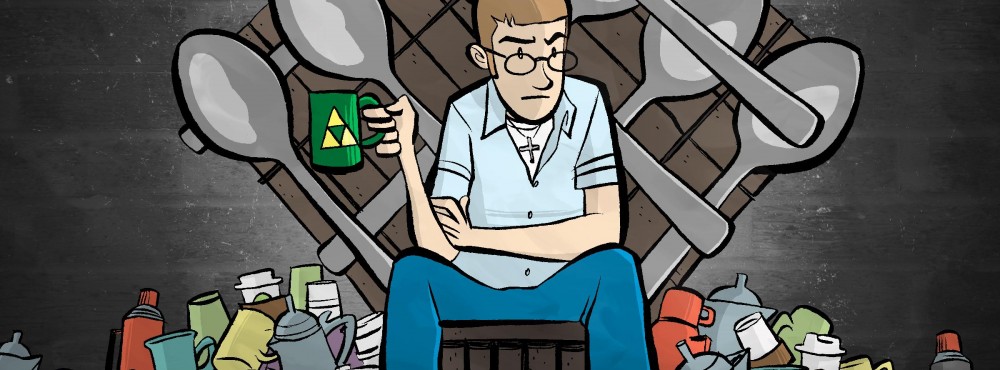
Art by iangoudelock on deviantART.

Art by iangoudelock on deviantART.

I’m sure you’ve seen it. As you watch a movie or play a video game, a character pulls out something from nowhere. Bugs Bunny and Wakko Warner reach behind their backs and bring out anvils or sledgehammers. Solid Snake and Link produce an endless assortment of gear and weapons from thin air. As Link demonstrates in the clever picture above, actually carrying around all that stuff is a physical impossibility.

The ability to pull stuff from nowhere is sometimes called the back pocket, a wry suggestion that the things characters pull from behind their backs were in their pants pockets the whole time. (This concept is particularly amusing in the case of characters that don’t wear pants.) In anime, the concept is called hammerspace. A comedic trope in Japanese animation is for characters to express anger by hitting something (or someone) with a large hammer produced from nowhere, making hammerspace the hypothetical place where all those hammers are kept.

The back pocket concept is usually played for comic effect in animation. Pinkie Pie, an exuberant character from a surprisingly awesome show about ponies, produces a wide assortment of items (including freaking cannons) from nowhere. Other characters know better than to question Pinkie’s defiance of physics.

In fact, when back pockets are used in any show or film, no one ever seems surprised.

In video games, back pockets are utilitarian rather than comedic in nature. The fact of the matter is that Link from the Legend of Zelda games needs his gear—all of it. Limiting his inventory would be a hindrance to the player, who would have to backtrack every time she needed something Link didn’t happen to be carrying at the moment. Constantly retrieving items, or plodding slowly under their weight, would be horribly annoying.

Thus Link carts around enormous shields and heavy explosives and iron-shod boots without any trouble. (Humorously enough, the iron boots only weigh down Link when he’s actually wearing them.) Solid Snake somehow sneaks through enemy territory burdened with cardboard boxes, sensor equipment and an entire arsenal of weapons (including massive rocket launchers). Every Final Fantasy character carries up to ninety-nine of every kind of weapon, armor and potion.

Where is all that stuff kept? Where does it come from?

Some questions, dear reader, are simply beyond answering.

255. TMTF Reviews: Metal Gear Solid 2

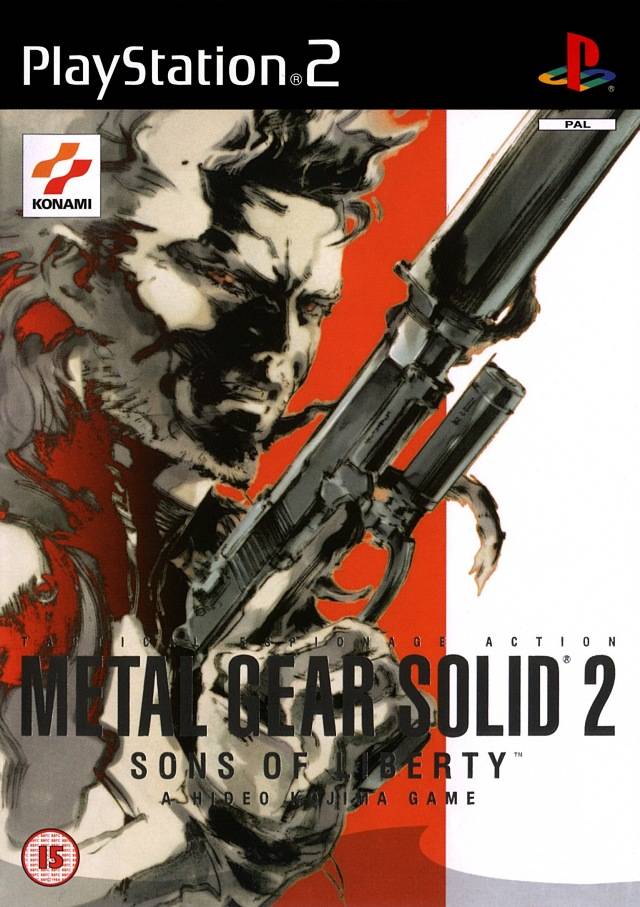
Not long ago, I played (and reviewedMetal Gear Solid, a game about war, loss, duty, giant robots and cardboard boxes. Now its chain-smoking hero, the stealth operative known as Solid Snake, is back for Metal Gear Solid 2: Sons of Liberty: a sequel packed with explosions, conspiracies, politics, over-the-top bad guys and—you guessed it!—stuff in which to hide.

Two years have passed since the Shadow Moses Incident, in which terrorists nearly got their devious hands on Metal Gear REX—a colossal armored vehicle equipped with nuclear warheads. Solid Snake stopped the terrorists, but the design for REX was leaked. Now military groups everywhere are building their own off brand Metal Gears. In response, Snake and his techie friend Otacon have founded Philanthropy, an organization devoted to stopping the proliferation of Metal Gear weapons. How does Snake achieve this goal? By sneaking around in a cardboard box, of course!

I enjoyed Metal Gear Solid so much that I was eager to dive into its sequel on the PlayStation 2. Is this game, like the first, an enjoyable experience of sneaking, shooting and fighting huge robots? Is this game an unplayable mess with an incoherent story? Is it a bit of both?

Metal Gear Solid 2This game is better than its predecessor. It’s also worse. As a game, it refines and polishes the gameplay of the original Metal Gear Solid and puts the player through some really creative challenges (and a few brief, regrettable sections of tedious gameplay). As a story, Metal Gear Solid 2: Sons of Liberty begins well but slowly loses track of itself and becomes a mess.

The first thing I’ll say about MGS2 is that a Major Plot Twist happens a couple of hours into the game. I won’t reveal it for two reasons. First, it’s an interesting turn for the story (and gameplay) to take; I don’t want to ruin it for anyone who might actually play the game. Second, I’m afraid that if I spoil the twist, the game’s director, Hideo Kojima, will sneak into my apartment and snap my neck while I’m sleeping.

Much of what I could say about this game I’ve said before. The player must sneak around, hiding in lockers, destroying security cameras, killing (or tranquilizing) enemy guards and avoiding detection at all costs. If the enemy finds the player, he is toast. Soldiers flood into the area with guns blazing during an alarm, leaving the player either to run and hide or to die with honor. The player’s chances of survival are helped by a arsenal of handy guns, gadgets and unconventional gear—including twice the number of cardboard boxes as in MGS1. Now you’re playing with power!

While the gameplay hasn’t changed much from MGS1, the game finds clever ways to use it. The first game gave players a pointless camera. This one requires players to take photos of a Metal Gear to expose its existence. MGS1 gave players a sniper rifle and hardly any open spaces in which to use it. MGS2 has an entire section in which the player must spot sensors rigged to bombs and shoot them out with the sniper rifle. Bravo, Kojima!

Not all of the gameplay twists in the game are positive, however. The player must explore flooded hallways, and swimming controls are horrendous. The player must also escort a cowardly hostage who is terrified of water, bugs and bullets. Guess what the player encounters? Flooded corridors, sea roaches and soldiers with guns. It is a truth universally acknowledged that escort missions are horrible. Why, Kojima? Why?

Then, in its final hours, the game gives the player a sword. Why? I don’t know. What I know is that the sword handles very differently from the guns and explosives the player has used for the entire game. Oh, and the player is forced to use this strange new weapon to defeat the game’s final boss. Bad idea, Kojima.

The story is a wonderful mixture of spy thriller cleverness and comic book nonsense. For every intelligent discussion of military tactics or nuclear proliferation, there’s a cyborg ninja or a bomber on roller skates. Sadly, the supervillain-esque bad guys of MGS2 are a bore compared to the ridiculous (and awesome) villains of MGS1.

Unfortunately, the story begins to unravel in its final chapters. MGS2 examines an astonishing number of complex ideas—social engineering, media censorship, virtual reality and existential angst, to name just a few—and they get muddled toward the end. Things begin to happen so quickly, with explosions and plot twists and colossal robots, that the player (at least, this player) is left asking, “What just happened?”

There are also moments that are simply odd. For example, the president of the United States grabs the player character’s crotch at one point in the game. It makes sense in context, but… still. Every time something bizarre happens in a Metal Gear game, my younger brother and I shake our heads philosophically and say, “Kojima wills it.” There can be no other explanation.

Anyone who enjoyed the strategic gameplay and engaging story of MGS1 will probably enjoy its sequel: the expanded gameplay and interesting plot more than make up for the tedious and confusing bits. Players new to the series will be perplexed by the story; I strongly recommend starting with the first Metal Gear Solid and taking it from there.

Will I play (and review) Metal Gear Solid 3: Snake Eater, the next game in the series? Yes. I must. Kojima wills it.

The Best Is Yet to Come

I listen to music when working on this blog. My musical tastes are eclectic, eccentric and not very sophisticated, ranging from Relient K to My Little Pony to Peter, Paul and Mary. In past weeks, however, I’ve listened to a lot of music from the Metal Gear games.

The Metal Gear series is very cinematic, and much of its soundtrack is composed by Harry Gregson-Williams, the composer for films like Shrek and The Chronicles of Narnia: The Lion, the Witch and the Wardrobe. The Metal Gear games also feature some vocal music, such as the song above.

This song, “The Best Is yet to Come,” plays during the credits of Metal Gear Solid, a game I enjoyed. The song’s haunting melody and Irish lyrics hardly make sense in the context of the game, but they’re absolutely beautiful.

Other great Metal Gear melodies I’ve enjoyed include the incredible MGS2 theme and the faux-sixties “Snake Eater.” The latter is notable for its James Bond flair and memorable lyrics, such as “someday you feed on a tree frog.” My younger brother and I unanimously agree this is the best lyric ever penned by humankind.

Songs like “The Best Is yet to Come” encourage me to keep writing and blogging and being creative. They make me want to go out and do stuff. Despite their baffling references to amphibians, songs like these inspire me.

242. TMTF Reviews: Metal Gear Solid

I seldom care for spy fiction, war stories or anything involving guns. Tales of modern warfare are uncomfortably familiar in this tragic age of child soldiers and terrorist attacks. Fantasies interest me more than thrillers, especially in video games. I prefer swords over grenades and AK-47s.

Every now and then, however, there comes a war story so fascinating that I can’t help but be interested. Metal Gear Solid is such a story.

It stars this guy.

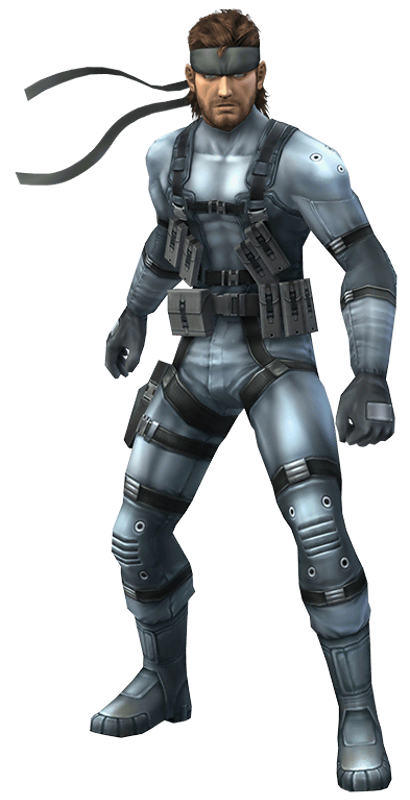
Cardboard SnakeThis may not be the most flattering picture of our hero. Sorry. Let me try again. Metal Gear Solid stars this guy.

Solid SnakeSolid Snake is a retired operative with a cigarette addiction, a penchant for hiding in cardboard boxes and a gift for sneaking around unseen. His retirement comes to an abrupt end when the US government forcibly recruits him for a top-secret mission on Shadow Moses Island, a nuclear weapons disposal facility in Alaska’s Fox Archipelago. Terrorists have seized the facility. Oh, and did I mention Metal Gear—the colossal armored vehicle armed with nuclear warheads? Snake must rescue two hostages and prevent a nuclear strike… and get out alive, if possible.

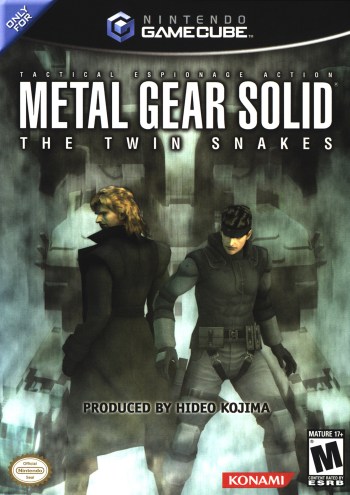
I played the Nintendo GameCube version of the game, Metal Gear Solid: Twin Snakes. (The original game was released for the PlayStation.) My version apparently features better graphics and a few gameplay tweaks, but remains pretty much the same game.

I had a sneaking suspicion I’d like this game, so I decided to give it a try. Is Snake’s mission worth it, or should players keep off Shadow Moses Island?
MGS

For players with a lot of patience, Metal Gear Solid is an absolute gem. Players wanting a fast-paced, action-packed game should look elsewhere. This is not a game for people with short attention spans.

In the first place, Snake does a lot of sneaking. There are firearms in this game—heck, there are even grenades and rockets—but the player who runs around with guns blazing will die very quickly. Metal Gear Solid does not reward brute force. It requires finesse, perseverance and a willingness to hide in ventilation shafts until enemy soldiers give up looking and go away.

Fortunately, Snake has a lot of tools at his disposal. Some of these are what you’d expect from a spy thriller: a silenced pistol, for example, and a sniper rifle. However, some of his gear is a little less… conventional. Snake uses cigarette smoke to detect security lasers. A well-placed magazine distracts hostile guards long enough for him to sneak past them, and let’s not forget his ever-useful cardboard boxes!

Getting past a room full of watchful guards and security cameras is difficult, even with Snake’s arsenal of handy tools. Players will die a lot. All the same, Metal Gear Solid is a fair game. Progressing takes trial and error, but there’s great satisfaction in figuring out a safe route or foolproof strategy.

Snake has some additional help from teammates via his Codec, a covert communications system. Colonel Campbell, Snake’s commanding officer, gives useful directions and tactical advice. Mei Ling, a data analyst, saves Snake’s progress. (She also shares Chinese proverbs and quotations from Western literature.) Other characters offer sundry kinds of advice. When the player gets stuck—and sooner or later, he will get stuck—he can turn to his teammates for help.

These Codec conversations are not just useful, but amusing and interesting. The player gets to know several engaging characters by chatting with them over the Codec.

The game’s story is a weird and wonderful mix of gritty realism and superhero absurdity. Metal Gear Solid is like a cross between a Batman comic and a novel by Tom Clancy. The plot involves genetics, military history and international politics; the story is often believable and remarkably smart. On the other hand, Metal Gear Solid also includes a giant robot, a cyborg ninja and a band of villains with names like Revolver Ocelot and Psycho Mantis.

Speaking of Mr. Mantis, I must mention the game’s tendency to break the fourth wall in really clever ways. Psycho Mantis, a psychic, reads Snake’s mind—and then seems to read the player’s. “You seem to like The Legend of Zelda, don’t you?” he asked me when I played. (The game read the data on my GameCube’s memory card. All the same, it was impressive—and a bit freaky—to hear this fact from a “psychic” villain.) Psycho Mantis also instructs the player to put her controller on a flat surface so that he can demonstrate his “psychokinetic power,” and then causes the controller to move. (The GameCube controller has a built-in vibrator, but still!)

The game is actually a bit too clever for its own good. The fight with Mantis is unbeatable without using an odd trick, and a Codec frequency earlier in the game is inaccessible to players who don’t have the game’s original packaging. (I suppose this is why we have the Internet.)

Although players are encouraged to sneak instead of shooting, Metal Gear Solid is a violent game. People die. There is blood. The bad guys have no aversion to wanton slaughter. One villain specializes in torture. Other negative elements include Snake smoking like a coal train, a cowardly hostage wetting himself and one busty female character braving the frigid Alaskan weather in a skimpy jacket. This is a great game, but not one for kids.

Metal Gear Solid has its rough edges. The game has a steep difficulty curve. Cutscenes are ridiculously long. Voice acting is decent, except for one or two characters whose accents are laughably bad. There’s some tedious, Metroid-style backtracking through familiar areas. Finally, as I pointed out, the game requires a good deal of patience. There’s no rushing through this one.

On the whole, Metal Gear Solid is a fine game. Snake and his boxes will always be welcome in my home, so long as he doesn’t smoke any of those filthy cigs.
A Collection of Fabulous Video Game Mustaches

Stache Stash

Clockwise, beginning at the top right: Yang (Final Fantasy), Mario (Super Mario Bros.), Dr. Eggman (Sonic the Hedgehog), Dr. Wily (Mega Man), Wario (Super Mario Bros.), Naked Snake (Metal Gear Solid), Don Paolo (Professor Layton) and Marvin Grossberg (Ace Attorney).

This is a collection of magnificent video game mustaches: a stache stash, if you will. Which is best? My money is on Mario’s mustache. It lacks the extravagant flair and staggering size of the competition, yet it boasts an understated charm.