308. On the Shoulders of Giants

I recently spent a few days traveling with my parents and younger brother. It was quite a trip: exciting, exhausting, sentimental, and rife with unexpected ups and downs. Tolkien was right: It’s a dangerous business, going out your door. There’s no telling what will happen.

At one point, we had dinner with relatives and a family friend. Our conversations during and after the meal were of a kind common in my family: full of nostalgia, peppered with Spanish, ringing with laughter, and rich in stories of distant times and faraway places.

I heard anecdotes of adventures (and misadventures) in Ecuador, Portugal, Morocco, Fiji, and Antarctica, among other countries. I lounged on a sofa, looking round a cozy room lit by soft lamps, and listened contentedly to wild tales of grass skirts, bus breakdowns, shifty carpet merchants, and thieving penguins.

Penguin!

He may look innocent, but this bird is a stone-cold criminal. (Pun intended. I’m so, so sorry.)

For that one evening, I forgot the quiet, comfortable, soundly American life I’ve lived for the past two years. I remembered places long forgotten: gray beaches strewn with shells and driftwood; low hills studded with weathered trees; water cascading down cliffs covered in moss and ferns; mountains towering green and silent against the sky. As places were mentioned that I hadn’t visited, my imagination filled in the gaps.

Some of the stories that night told took me back decades to a time when the coast of Ecuador, my homeland, was a wilderness. There were hardly any cars or paved roads in those days. People traveled on foot, in canoes, and on rickety buses. My grandfather, a missionary to Ecuador’s coast many decades ago, was a pioneer in his time.

Those conversations opened windows in my imagination and memory, giving glimpses of things dimly seen or half-forgotten.

All of this reminded me of three things.

I am such a softy.

As I enjoy a life of incredible luxury, I often take for granted blessings like clean water, hot showers, fast Internet, video games, a comfortable home, a steady income, a safe neighborhood, and a steady supply of coffee. While I gripe about chilly weather and minor car troubles, a staggering number of people survive in harsh conditions with very few luxuries.

It’s my responsibility to be grateful and generous… and also to toughen up a bit!

I panic over little things.

I feel extremely stressed by small things, from the everyday pressures of my job to minor problems like my Internet connection failing. It helps to recall those tales of risks, perils, and painful misadventures. Things could always be much worse.

I need to keep a proper sense of perspective.

I mustn’t get too comfortable.

I get so comfortable in my quiet Indiana life that I often forgot my all-important purpose of loving people. Love is hard. It leaves behind cozy armchairs, warm lamps, and cups of tea. It braves darkness, cold, and awkward pauses to reach out. Love makes me uncomfortable, but that shouldn’t ever stop me from trying to love people. It didn’t stop my grandfather. It doesn’t stop my parents. I mustn’t let it stop me.

All said, it was quite a trip.

All said, it was quite a trip.

I stand, as the saying goes, upon the shoulders of giants. I’m related to some remarkable people, and they’ve done some remarkable things. As I live out this unremarkable chapter of my life, I mustn’t ever lose sight of the things that matter most—the things I can’t see.
303. About Storytelling: Temporary Death

Death is one of life’s few absolute certainties. Others include taxes and the fact that every person will, at some point, step in a puddle of water on the bathroom floor while wearing socks. Yes, life can be cruel.

Death is inevitable. For the most part, even fiction acknowledges this. What some stories don’t guarantee is that characters will stay dead. I’ve discussed how to kill off fictional characters, and even mentioned temporary death as a video game cliché, but I think it’s still worth taking a look at how characters in some stories recover from death as easily as getting over a cold.

There are endless possibilities for cheating death in fiction, going all the way back to classical mythology. In Greco-Roman myths, death was a literal place from which a surprising number of people managed to escape: Heracles and Orpheus, among others.

The past few decades have given us an endless array of methods for cheating death, especially in geekier media like comics, video games, and fantasy fiction.

Here are some of my favorites.

Be ye warned, here there be minor spoilers.

Time travel

How often dead characters have been restored to life because someone went back in time to rescue them! Thanks to the butterfly effect, tiny decisions in the past can have huge consequences in the future. Probably my favorite example of time travel resurrecting a dead character comes from Chrono Trigger, pretty much the greatest RPG ever made, in which characters travel to the exact moment of a man’s death to save his life.

Superhero comics

There is no single explanation for this one—comic book characters are revived in such a staggering variety of ways that I can’t even begin to list them all. A mutant’s seeming death triggers her evolution into a more advanced mutant. A superhero’s innate healing abilities pull him back from the brink of death. A villain fakes his death by a stupidly elaborate scheme. Really, the possibilities are countless.

Magic

When in doubt, magic is the ultimate deus ex machina. Magic is mysterious and inexplicable by its very nature. If a writer resurrects characters by magic, who is there to argue? Miracles, such as the triumphant return of Aslan or Gandalf, fall into this category, which also includes medicines like the chocolate-coated pill from The Princess Bride.

Supposed to be dead

What? I’m supposed to be dead? Well, this is awkward.

Technology

By technology I mean magic as it is called in sci-fi stories. Let’s face it: advanced technology and supernatural magic are practically the same thing in some science fiction.

Reincarnation

This metaphysical concept has been lifted from various religions and adapted to everything from Avatar: The Last Airbender to Doctor Who. (The Doctor’s regeneration is basically sci-fi reincarnation.) Characters may technically die, but reincarnation allows the narrative to bring them back.

Afterlives

This brings us to ghosts, phantoms, and other not-alive states of being. Again, even if the story considers characters dead, they’re still fulfilling the roles of living persons by lingering as spirits.

Fake deaths

This one annoys me. (All the same, I’ve used it more often in my writing than I care to admit!) When a character seems to die, the narrative treats them as dead… until they turn out to have been alive all along. Fake deaths generally cheapen the reactions of living characters. Responses like mourning, grief, and anger become less meaningful when they’re revealed to have been unnecessary. Besides, fake deaths are generally predictable.

I think temporary death is a valid storytelling trope, but I prefer death in fiction to be permanent. Death is more realistic, and carries much more weight, when it’s treated as an everlasting reality instead of a fleeting condition.

Anyone who knows anything about video games probably knows that Aerith dies in Final Fantasy VII. Partway through the story, this cheerful flower vendor is impaled by the villain. That’s it. There’s no resurrection, no last-minute deus ex machina. In the game, she is dead. The other characters mourn her… and so does any player whose heart isn’t made of stone.

Death is tragic. It often seems meaningless. However, in storytelling, that miraculous medium which makes all things meaningful, death matters—especially when it lasts more than a few minutes.

291. TMTF’s Top Ten Books You Should Probably Read

I love recommending books. This temptation, common to bookish people, seizes me occasionally. I am tempted today beyond what I can bear; there is no way out of this temptation so that I can endure it. That said, here are ten books I think everyone in the world should read.

This list is a mix of great classics, personal favorites, and books with widespread cultural impact. This is not a definitive list of ten books everyone absolutely must read, nor is it a list of my ten all-time favorites. These are simply ten recommendations for the average reader.

Let’s get bookish, ladies and gentlemen, as TMTF presents…

The TMTF List of Top Ten Books You Should Probably Read!

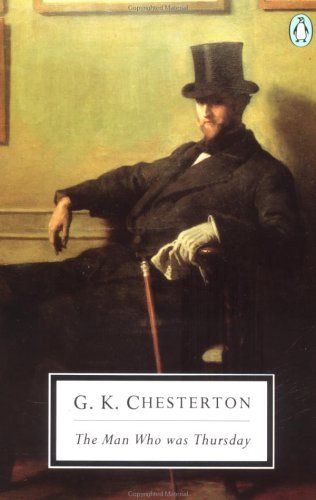
10. The Man Who Was Thursday by G.K. Chesterton

The Man Who Was Thursday

The Man Who Was Thursday is either a gripping spy thriller set in Edwardian era London, or else an eloquent reflection upon the silence of God and the meaning of pain. Either way, it’s fantastic. The dialogue is clever, the plot has some astonishing twists, and the whole book is drenched in intrigue and melancholy romanticism. It’s Thursday himself who says, “Always be comic in a tragedy. What the deuce else can you do?” This desperate courage, along with brilliant surprises and unexpected philosophical depth, make The Man Who Was Thursday a classic.

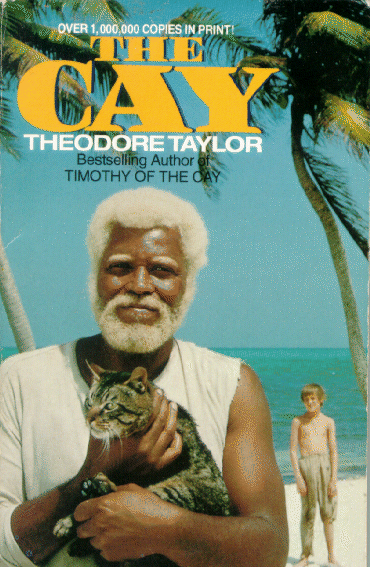
9. The Cay by Theodore Taylor 

The Cay

This book made a strong impression on me as a child. On the surface, The Cay is an exciting tale of survival: the story of a privileged white boy and a poor black man stranded together on a deserted island. A closer look at The Cay reveals themes like bigotry, sacrifice, loss, and cultural differences, all handled with disarming frankness and simplicity. The Cay is a quick, easy read, and a book well worth reading.

8. The Memoirs of Sherlock Holmes by Arthur Conan Doyle

The Memoirs of Sherlock Holmes

Everyone should read this book because freaking Sherlock Holmes. He is the archetypical crime-solver and one of the most famous characters in fiction. The Holmes stories are worth reading if only to understand their cultural impact… and they’re also pretty fun to read. The Memoirs of Sherlock Holmes is a collection of some of the best. While I personally prefer Chesterton’s Father Brown mysteries, there’s no denying the significance or excellence of Sherlock Holmes.

7. Living Poor by Moritz Thomsen

Living Poor

Living Poor is a memoir of Moritz Thomson, a man described as “the finest American writer you’ve never heard of.” After joining the Peace Corps, Thomson found himself living in a remote coastal village in Ecuador. His account of living poor is powerfully written, with jabs of wry humor punctuating a tone of bitter resignation. I grew up in Ecuador, so Thomson’s descriptions of its people and places strike a special chord with me. For all readers, whatever their circumstances, Living Poor is not only a heartrending glimpse of an impoverished community, but a look at the universal problems of poverty, depression, and helplessness.

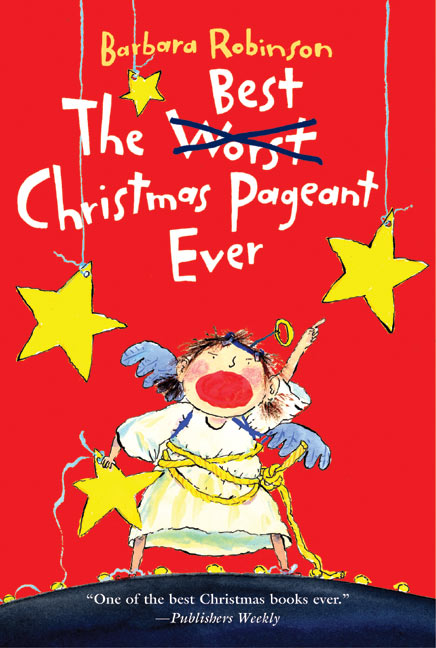
6. The Best Christmas Pageant Ever by Barbara Robinson

The Best Christmas Pageant Ever

Like The Cay, this children’s classic is disarming in its brevity and simplicity. The Best Christmas Pageant Ever is the delightfully funny story of the Herdmans, “the worst kids in the history of the world,” and their unexpected takeover of a church’s Christmas pageant. The book is hilarious. The Herdman kids respond to the Christmas story with suspicion, awe, and curiosity. Not only does this give readers plenty of laughs, but also a fresh, new perspective on an old, tired holiday. The Best Christmas Pageant Ever is two parts funny, one part poignant, and all parts wonderful.

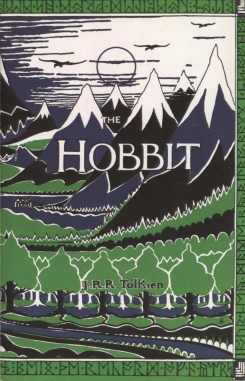
5. The Hobbit by J.R.R. Tolkien

The Hobbit

I mentioned earlier that the Sherlock Holmes stories are worth reading for their cultural impact. The Lord of the Rings is important in exactly the same way. It didn’t invent the fantasy genre, but it sure as heck defined it. While The Lord of the Rings is an amazing work of fantasy, it’s also slow-paced and really long. The Hobbit is a much quicker read: a simpler adventure that shows off Tolkien’s remarkable world and sows the seeds for the bigger tale told in The Lord of the Rings. The story of Bilbo Baggins and his epic journey “there and back again” is a charming read. I can think of no better introduction to the fantasy genre.

4. Silence by Shūsaku Endō

Silence

Silence is the story of a Portuguese Jesuit sent to seventeenth-century Japan, and also one of the most heartbreaking books I’ve ever read. The novel deftly changes perspectives partway through as it follows Sebastião Rodrigues in his journey from religious zeal to anguished perplexity at God’s silence. Silence is not only an elegy on the silence of God, but also a fascinating look at how cultures and their values conflict—much like Things Fall Apart by Chinua Achebe, another book I considered for this list. It’s not a fun or easy read, but Silence is a book to challenge the mind and the heart.

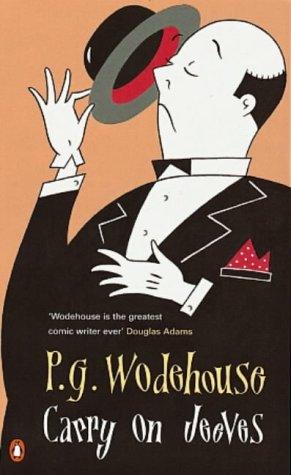
3. Carry On, Jeeves by P.G. Wodehouse

Carry On, Jeeves

This is not a particularly deep book, and it doesn’t have to be. It’s a collection of Jeeves and Wooster stories by P.G. Wodehouse. Really, what higher praise can there be? The book introduces two of Wodehouse’s most enduring characters, bumbling Bertie Wooster and his nigh-omniscient valet Jeeves, in a series of stories penned with Wodehouse’s effortless humor, aplomb, and British wit. Wodehouse’s work belongs on any list of recommended books, and Carry On, Jeeves is a fine place to start.

2. To Kill a Mockingbird by Harper Lee

To Kill a Mockingbird

Many of my dear readers probably had to read this book for school, which is kind of a shame. Nothing sucks the fun out of books like being forced to read them. There’s a reason this one is read so widely in schools—it’s absolutely fantastic. Everything about the book is excellent, from the setting to the characters to its skillful handling of themes like racism, class divides, and the loss of innocence. Like Mark Twain’s Adventures of Huckleberry Finn, another novel that nearly made this list, To Kill a Mockingbird is one of the great classics of Western literature. If you’ve never read this book, read it. If you were forced to read it for school, give it another chance.

1. The Bible

Holy Bible

Along with Greco-Roman mythology, the Bible is the foundation of Western literature. Its cultural and literary impact over two millennia is literally incalculable. The Bible is packed with history, poetry, and philosophy that have inspired people and shaped societies. As literature, the Bible is a little uneven—the Psalms are much better reading than, say, Leviticus—but the work as a whole is an incredible wealth of wisdom, truth, and beauty.

O people of the Internet, what are your top book recommendations? Let us know in the comments!

275. TMTF’s Top Ten Chase Scenes in Film

Do you know what’s exciting in movies? Chase scenes. I love chase scenes. Chase scenes are wonderful.

Whether the heroes are fleeing in fear from something dangerous or bravely pursuing an important objective, the high-speed, action-packed, adrenaline-pumping excitement of chase scenes is glorious. I’m no film expert, but I like movies as much as anyone, and today we’re looking at some of my favorite chase scenes in film.

The usual one-per-series rule applies here, of course, and I’ve included YouTube links to chase scenes wherever possible. Observant readers will notice a lack of scenes from the James BondDie Hard and Bourne movies. This isn’t due to any personal prejudice against action thrillers. It’s because I’ve seen hardly any of those movies I wanted this list to have some variety!

On your marks, ladies and gentlemen, as TMTF presents…

The TMTF List of Top Ten Chase Scenes in Film!

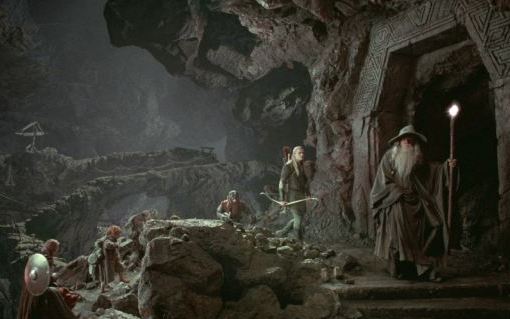
10. The Mines of Moria (The Lord of the Rings: The Fellowship of the Ring, 2001)

Mines of Moria

Although this chase isn’t as action-packed as others on this list, the Fellowship’s flight from the Balrog in the Mines of Moria ramps up the tension with an awesome musical score and a moment at which they must leap over a chasm as the unseen menace of the Balrog draws nearer. The monster doesn’t appear until the end of the chase, but the mere noise of its approach is enough to send Gandalf, a powerful wizard, running like a spooked cat. When the Balrog finally catches up with the Fellowship, it’s an epic conclusion to a thrilling chase.

I couldn’t find the scene on YouTube, so you’ll just have to watch the movie.

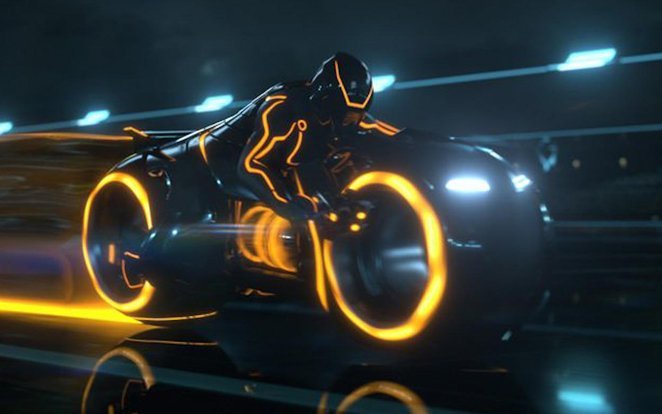
9. Light cycle chase (Tron: Legacy, 2010)

Light cycle chase

Short, sweet and colorful, this race between a Blue Guy and a Yellow Guy is great fun. The lack of music lends an understated realism to the scene; it reminds me of the podrace from the first Star Wars movie, but with brighter visuals and no annoying commentary. This chase also gets an honorable mention because Jeff Bridges.

You can watch this scene here.

8. Escaping the Reavers (Serenity, 2005)

Reaver chase

I was going to put the iconic speeder bike chase from Star Wars Episode VI: Return of the Jedi on this list, but then I remembered this little gem from Joss Whedon’s Serenity. It has all the excitement of the Star Wars chase, and also boasts wonderful dialogue and much higher stakes. As an all-or-nothing escape from vicious cannibals, it’s a tense scene… but not so tense as to exclude one or two really funny lines.

You can watch this scene here.

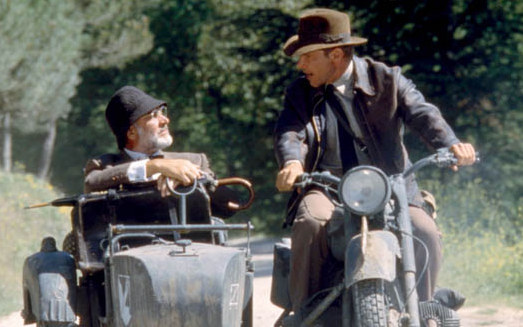
7. Motorcycle chase (Indiana Jones and the Last Crusade, 1989)

Motorcycle chase

Indiana Jones is practically synonymous with exciting chase scenes. Every film starring this intrepid grave robber archaeologist has him running away from something. This chase is by far my favorite. I mean, it has motorcycle jousting. It also has Henry Jones’s deadpan reactions to his son’s violent tactics. These disapproving glances, like the relics Indiana Jones picks up on his adventures, are simply priceless.

You can watch this scene here.

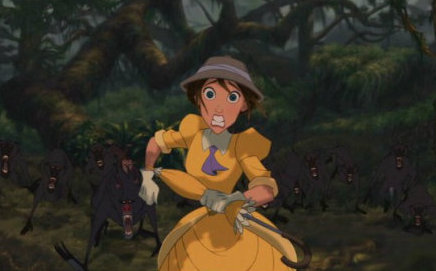
6. Fleeing baboons (Tarzan, 1999)

Fleeing baboons

This wonderful chase has Tarzan rescue Jane as she flees a hoard of angry baboons. Sprinkled with droll humor and backed by a lively musical score, this chase also features CG effects that were pretty impressive for the time. My favorite part of this chase? Tarzan’s facial expressions.

You can watch this scene here.

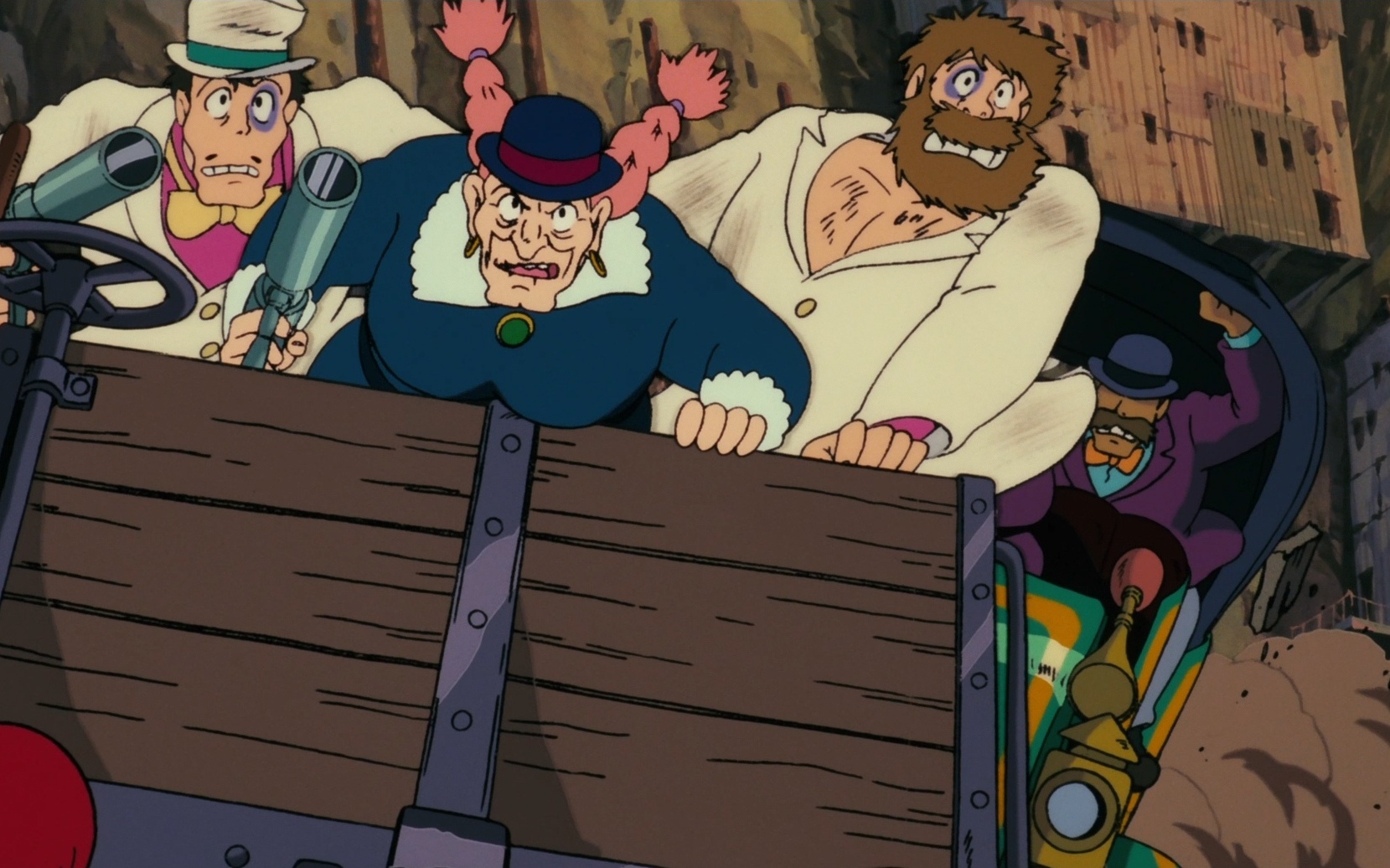
5. Pirate pursuit (Castle in the Sky, 1986)

Pirate pursuit

This chase is one of the best scenes in what may be my all-time favorite film, a classic from the legendary Studio Ghibli. The Dola Gang, a notorious band of sky pirates, pursue an innocent boy and girl into a canyon. When the children hop onto a train on raised tracks, the pirates follow in a rickety automobile. This beautifully-animated scene would be wonderful even without the pirates’ dialogue, which is hilarious.

I couldn’t find the scene on YouTube, so you’ll just have to watch the movie. Seriously, go watch it. Stop reading this blog post and go watch the movie!

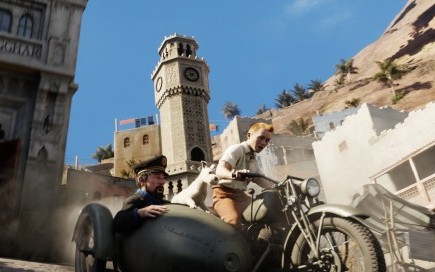
4. Race through Bagghar (The Adventures of Tintin, 2011)

Race through Bagghar

Steven Spielberg, bless him, sure knows a thing or two about directing great chase scenes. This chaotic rush down the streets of Bagghar, a fictional Moroccan city, is a joy to watch as Tintin crashes through buildings and over rooftops in a motorbike, trying to snatch a scroll from the talons of a hawk. There’s also a tank and a zip line and some accidental cross-dressing. Really, it’s quite a chase.

You can watch this scene here, but the quality of the clip is very poor; you may be better off just watching the movie.

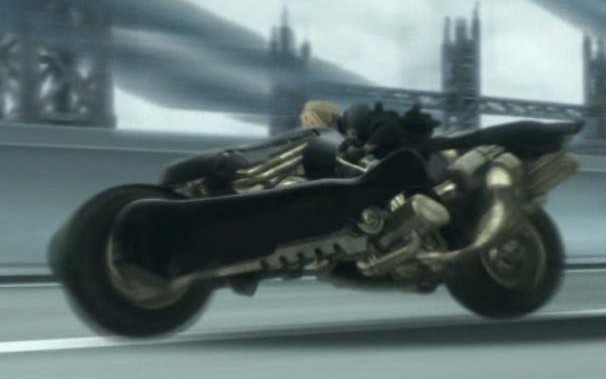
3. Motorcycle duel (Final Fantasy VII: Advent Children, 2005)

Motorcycle duel

Despite a nonsensical plot, Final Fantasy VII: Advent Children is probably the best video game movie I’ve seen, and a personal favorite of mine. Why? Because it’s packed with scenes like this one, in which the hero wields an oversized sword to fend off bad guys while hurtling down a highway on a motorcycle. Everyone in this scene has superhuman agility and reflexes. There are gratuitous slow-motion shots. Explosions and gunshots punctuate a frenetic musical score. (It’s basically The Matrix, but better.) And this, an extended version of the scene, throws in some helicopters because why not.

You can watch this scene here.

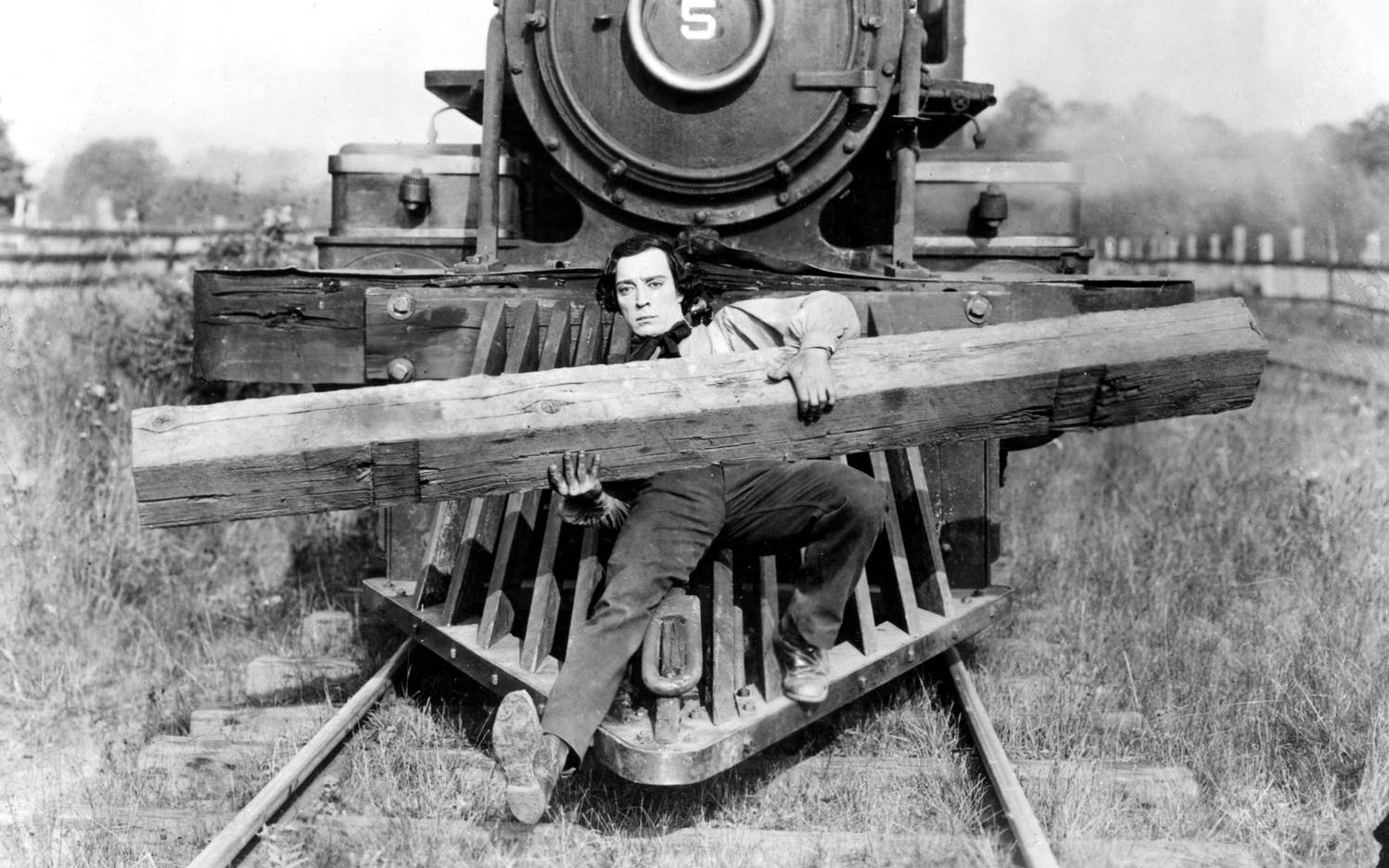
2. Locomotive chase (The General, 1926)

Locomotive chase

Chase scenes are generally frantic, but they don’t have to be. The General, Buster Keaton’s masterpiece, has two phenomenal chase scenes that last at least ten minutes each. In the first, the protagonist chases a train on foot, and then on a handcar, and then on an old-fashioned bicycle, and finally on his own locomotive. In the second, the protagonist’s locomotive is pursued by enemy trains. Everything about these chases is perfect, from Keaton’s deadpan expressions to his ingenious solutions for overcoming obstacles. They may not be fast or furious, but these chase scenes are outstanding.

You can watch part of the first chase here, and you should go watch The General in its entirety. It’s a great film.

1. Toy train shenanigans (The Wrong Trousers, 1993)

Toy train shenanigans

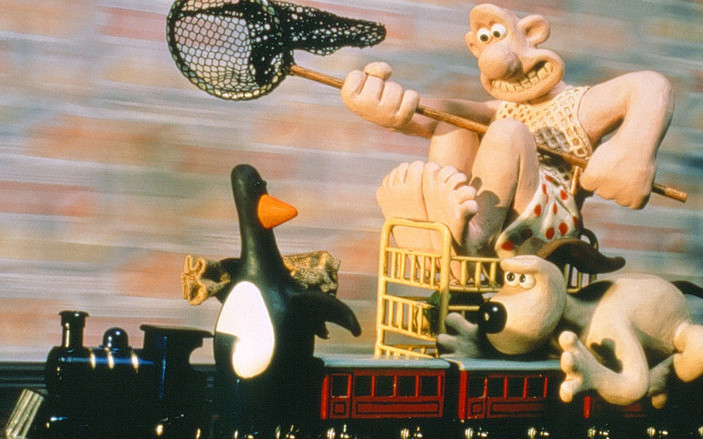
My favorite chase scene in film history has no guns or explosions. What it has is a penguin, a dog, a toy train, a pair of mechanical trousers and a middle-aged man in his underpants. This scene, animated painstakingly in clay, is superb. As I worked on this top ten list, my younger brother asked me if this scene was number one, and added that he would slap me in the face if it was not. It’s that good. This brief, bizarre, brilliant chase through an ordinary English residence is my favorite in all of film.

You can watch this scene here. Please do.

What is your favorite chase scene in film? Let us know in the comments!

274. About Storytelling: Chekhov’s Gun

There was once a writer named Anton Chekhov. Besides writing a play that trapped me in a stage kiss, this contemplative Russian also established the literary principle that has come to be known as Chekhov’s gun.

Chekhov once stated, “Remove everything that has no relevance to the story. If you say in the first chapter that there is a rifle hanging on the wall, in the second or third chapter it absolutely must go off. If it’s not going to be fired, it shouldn’t be hanging there.”

This concept of a background element becoming an important plot point has become known as Chekhov’s gun. Something that seems trivial becomes extremely significant. The thing you forgot from twenty chapters ago defeats the villain or break the hero’s heart.

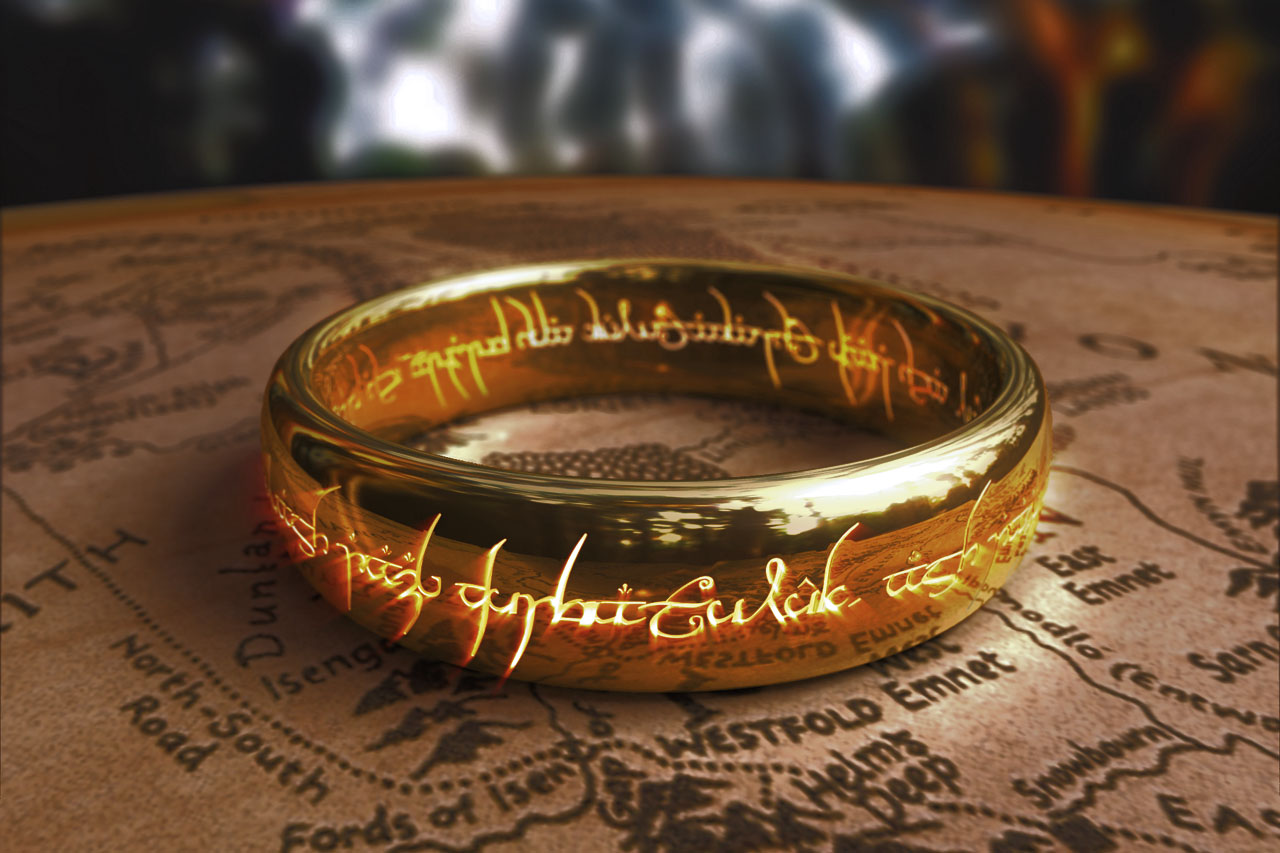
A famous example of this can be found in The Hobbit and The Lord of the Rings by dear old Tolkien. The all-important Ring that ends up driving the whole story starts out as a convenient escape for Bilbo Baggins early in his adventures. When Tolkien brought a magic ring into the story, he originally had no plans for it. The Ring was a handy deus ex machina, a trinket discovered just in time to save Bilbo’s life.

Chekhov's... ring

This is an example of Chekhov’s gun. Yes, I know it’s not really a gun.

Only later did Tolkien decide to make the Ring more than a magical accessory. It became the crux of the story, the thing around which all other things revolved—one Ring to rule them all, so to speak. The rifle had gone off.

Chekhov’s guns tend to be common in plot-driven stories. J.K. Rowling uses this principle all the time in her Harry Potter books, in which later plot developments hinge on minor incidents and random rubbish from earlier books.

Although less common in character-driven stories, Chekhov’s gun can apply to people as well as objects and events. In The Lion, the Witch and the Wardrobe, kindly Professor Kirke seems unperturbed by wild claims of magical worlds inside his furniture. His composure doesn’t make much sense until the reader gets to The Magician’s Nephew. Here it is revealed that Kirke actually visited magical worlds as a child, explaining his lack of surprise as a grownup.

While Chekhov’s gun is a wonderful dramatic technique, it’s best used with subtlety and restraint. It’s a treat for careful readers and devoted fans to notice trivial things becoming important, but overuse of this principle makes stories seem contrived or confusing.

Incidentally, while I haven’t any rifles hanging on my walls, I do have swords. As much as I appreciate the principle of Chekhov’s gun, I hope my assorted blades stay on my walls in later chapters of my life.

261. About Storytelling: Nazis

Nazis are bad. If you carry away one thing from this blog post, it’s that Nazis are bad.

Nazis Swastika

Protip: This is not a good design for interior decorating.

In fact, Nazis have become a handy shortcut in storytelling for representing evil. Need a bad guy? Make him a Nazi. No reader of books or viewer of films or player of video games thinks twice if Nazis die. They are evil. They are all evil!

There’s only one problem with this convenient idea.

Not all Nazis are evil—rather, Nazis are not all evil.

You see, people are complicated. No person—Nazi or not—is absolutely, one hundred percent wicked. No person is completely good, either. Bad people have virtues, and good people have flaws.

As satisfying as black-and-white moral struggles are in storytelling, they’re not very realistic. It’s hardly ever as simple as “good versus evil.” It’s usually “something versus a different something.” Even in cases of clear-cut good and bad, it tends to be “something mostly good versus something mostly bad.”

It’s hardly ever good storytelling to make the good guys perfect and the bad guys irredeemable. In real life, when does that ever happen?

Granted, it can work. J.R.R. Tolkien, who somehow managed to write great books while ignoring a lot of basic rules for storytelling, pits (mostly) good and selfless hobbits, men, elves and dwarves against orcs—twisted creatures damned to an existence of pain, war and cruelty. Tolkien’s black-and-white struggles work because they’re sort of symbolic. Orcs seem almost like Tolkien’s fairy-tale representation of absolute evil in his fairy-tale realm of Middle-earth. The villain, Sauron, is more like the concept of badness than an actual bad guy. (I should note that Tolkien did manage some morally ambiguous characters, such as Gollum and Boromir.)

For the most part, however, the best stories have good guys that are sort of bad and bad guys that are sort of good. Consider Avatar: The Last Airbender, the fantastic fantasy show. In its world, the Fire Nation is a lot like Nazi Germany. It attempts to conquer, exploit and control other countries: in this case, the Water Tribe and Earth Nation.

Guess what? The “good” countries have their fair share of bad guys. A psychotic criminal belongs to the Water Tribe. The Earth Kingdom is the home of thugs and thieves, not to mention a corrupt official and the merciless secret police under his control. The “evil” Fire Nation is populated largely by innocent, well-meaning citizens.

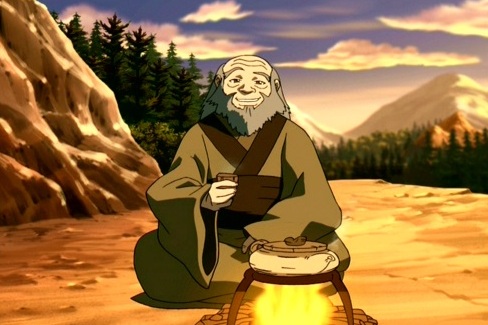
Iroh

The Fire Nation also has this guy.

Hayao Miyazaki also does a great job of creating morally ambiguous characters. Probably his best films in this regard are Princess Mononoke and Spirited Away, in which the villains are… no one, really. Princess Mononoke has a bunch of characters fighting selfishly for their own survival and prosperity; they’re self-centered, but not really evil. Spirited Away has characters that seem bad, but when you get to know them you realize they’re just gruff and insensitive.

People are hardly ever all good or all bad, and conflicts are usually more complicated than “good versus evil.” Ambiguity and subtlety are invaluable assets for any story or character!

A Geek Love Song

A better version of this song sans video can be heard here.

Well, St. Valentine’s Day is nearly upon us. ‘Tis the season for glitter-encrusted cards, nagging advertisements, candy hearts that taste like quinine, romantic comedies and grocery store aisles decked out in pink, red and white. It is a time for single people to feel self-conscious, and for people in relationships to feel stressed.

These are the times that try men’s souls. It is on such dark, hopeless occasions as St. Valentine’s Day—yes I am being sarcastic—we need the encouragement and strength of a love song for geeks. Debs and Errol, geeky musicians extraordinaire, are here to help!

In the video above, Errol sings of how to say I love you in various geeky languages. Anyone can say it in English, but how about Sindarin, Pig Latin, Huttese, lolcat (which I consider a legitimate dialect) or binary?

Geeky humor aside, in this season of candy hearts and commercial hype, I think we sometimes forget to let our loved ones know we love them. It’s no bad thing to be reminded to say “I love you” occasionally… though I suggest saying it in English!

Tolkien on Fantasy

It was a beautiful golden harp, and when Thorin struck it the music began all at once, so sudden and sweet that Bilbo forgot everything else, and was swept away into dark lands under strange moons, far over The Water and very far from his hobbit-hole under The Hill.

J.R.R. Tolkien

There are a few works, just a few, which have given me glimpses of Fantasy.

Sure, I’ve read and seen and played plenty of fantasies. Few have shown me Fantasy. You see, Fantasy is a realm beyond our own: a mysterious, beautiful, dangerous place we are seldom privileged to see. Tolkien called it Faerie.
The realm of fairy-story is wide and deep and high and filled with many things: all manner of beasts and birds are found there; shoreless seas and stars uncounted; beauty that is an enchantment, and an ever-present peril; both joy and sorrow as sharp as swords. In that realm a man may, perhaps, count himself fortunate to have wandered, but its very richness and strangeness tie the tongue of a traveller who would report them. And while he is there it is dangerous for him to ask too many questions, lest the gates should be shut and the keys be lost.

There are worlds we know, the worlds of Tolkien and C.S. Lewis and The Legend of Zelda and Final Fantasy: Middle Earth, Narnia, Hyrule, Spira, Ivalice and others. None of these are Fantasy, yet all of them have given me glimpses of it. Like Thorin’s golden harp, they carried me to faraway places full of danger and beauty and mystery: snowy peaks and tangled forests and mines whose gems shine like stars in the dark heavens.

I enjoy escaping to Fantasy. My brief trips there are never planned, sadly. They just happen, and I think they’re a good thing. Consider these words from Tolkien:

I do not accept the tone of scorn or pity with which ‘Escape’ is now so often used. Why should a man be scorned if, finding himself in prison, he tries to get out and go home? Or if he cannot do so, he thinks and talks about other topics than jailers and prison-walls?

In my ordinary life, I appreciate my fleeting visits to Fantasy. It’s nice to get away!

239. TMTF’s Top Ten Unstoppable Heroes in Literature

Many works of fiction feature unstoppable heroes. These paragons of excellence may not be immune to defeat, but they sure seem like it!

Take Batman. He has no superpowers; Bruce Wayne is just a man with a high-tech suit and some fancy gadgets… and he’s also nigh-invincible. He excels physically, intellectually and morally as a strong fighter, brilliant strategist and champion of justice. I suppose it’s technically possible to kill Batman, but we all know in our heart of hearts that he’s unstoppable.

Literature is full of characters seem physically, intellectually or morally perfect. These are the characters the reader is sure will never be killed or get caught or suffer defeat. They are not invincible, but they may as well be. Some are nearly invulnerable; others are simply too clever or confident to be held down.

Why must I take an entire blog post to list unstoppable heroes from fiction? I can only echo George Mallory and reply: “Because they’re there.” As long as there are things to be ranked in top ten lists, TMTF shall be delighted to oblige!

My usual rules apply to this list: only one character is allowed per author, and characters can be included only from books I’ve read. (Batman would make the list, but I haven’t actually read any of his comics.) An unstoppable hero is defined as a character whose physical, intellectual or moral excellence make him or her seem utterly impervious to defeat.

Be ye warned, here there be minor spoilers.

Prepare to be amazed, ladies and gentlemen, as TMTF presents…

The TMTF List of Top Ten Unstoppable Heroes in Literature!

10. Phileas Fogg (Around the World in Eighty Days by Jules Verne)

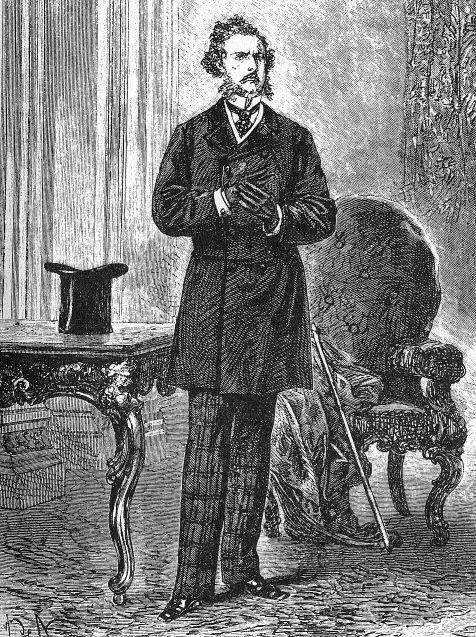
Phileas Fogg

Phileas Fogg is an impassive British gentleman whose life of precision and strict regularity is interrupted by the decision to circumnavigate the world in just eighty days: a feat that seems impossible given the limited technology of the time. Is it even possible to travel so far so fast? The reader must wait for an answer, but one thing is clear from the beginning. If it is humanly possible to travel around Earth in eighty days, Fogg will do it. Nothing—not faulty railways, conniving detectives, Sioux warriors or insufficient fuel—can deter this man.

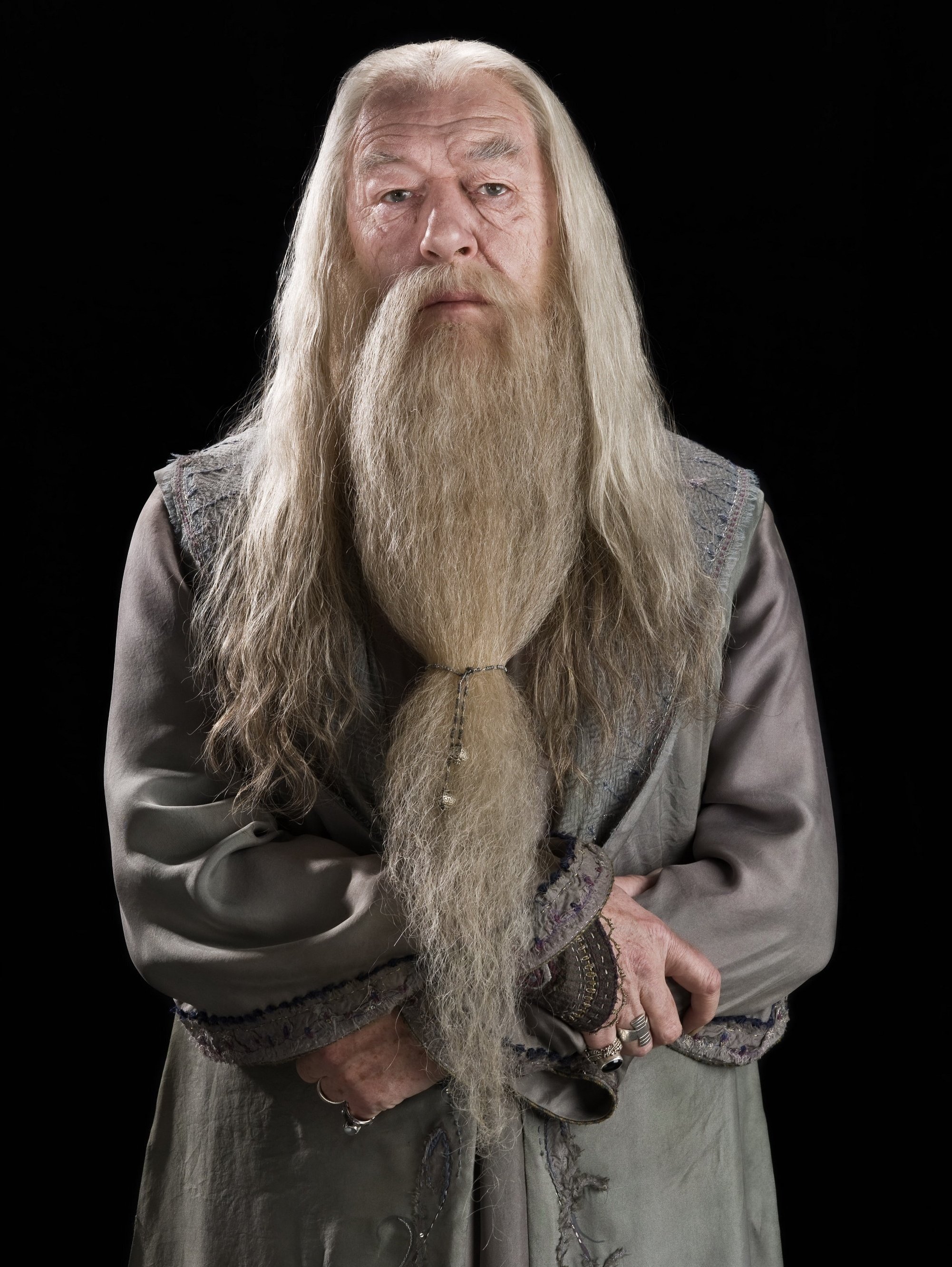
9. Professor Albus Dumbledore (Harry Potter series by J.K. Rowling)

Albus Dumbledore

Gentle, wise, whimsical and rather odd, Professor Albus Dumbledore is the headmaster of Hogwarts School of Witchcraft and Wizardry. Dumbledore’s seeming frivolity and warm sense of humor belie his shrewd mind, powerful magic and terrifying capacity for anger: “There was cold fury in every line of the ancient face; a sense of power radiated from Dumbledore as though he were giving off heat.” Despite his age, Dumbledore seems far too clever, strong and wise to be stopped even by death. Right? Right?

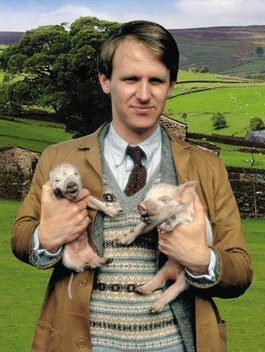
8. Tristan Farnon (All Creatures Great and Small by James Herriot)

Tristan Farnon

In James Herriot’s fictionalized memoirs, Tristan Farnon is an irresistible force of optimism, charm and good-natured mischief. Not even the tyrannical bossiness and short temper of his older brother Siegfried can dampen his cheerful outlook. Tristan drinks too much, plays practical jokes and flirts with every young female in sight—and he nearly always gets away with it.

7. Mr. Great-heart (The Pilgrim’s Progress by John Bunyan)

Mr. Great-heart

Mr. Great-heart is too good to be true. A manservant, Mr. Great-heart is ordered by his master to accompany Christiana and her companions on their journey to the Celestial City. His role for the rest of the story is to slay giants, rescue pilgrims, light dark paths, discuss theology and generally be an impossibly perfect (and mostly uninteresting) blend of warrior, mentor, guide and teacher. Mr. Great-heart is so angelically brave and pure that there’s absolutely no question of getting in his way.

6. Kaito Kid (Detective Conan by Gosho Aoyama)

Kaito Kid

Kaito Kid hails from Detective Conan, a long-running (and ongoing) series of mystery manga (i.e. Japanese comics) also known as Cased Closed. Kid is a gentleman thief, expert magician and master of disguise whose crimes are perfect. Even his habit of announcing heists beforehand never seems to get in his way: no matter how smart the police, Kid is smarter. Kid pulls off tricks that seem supernatural… until Conan, the eponymous detective of the series, figures them out. However, even Conan can’t always stop Kid. It’s fortunate that Kid always returns whatever he steals!

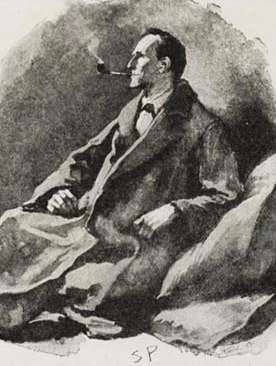
5. Sherlock Holmes (The Adventures of Sherlock Holmes by Sir Arthur Conan Doyle)

Sherlock Holmes

As long as we’re discussing detectives, let’s not forget the father of them all: Sherlock Holmes. How many cases has this man solved? How many juggernauts of crime has he brought to justice? No trick is too tricky nor mystery too mysterious for the incomparable Holmes. Besides being, you know, a freaking genius, Holmes is a skilled fencer, actor, sharpshooter, violinist, martial artist and expert on a bewildering range of subjects from poisons to tobacco ash. No criminal stands a chance against Holmes.

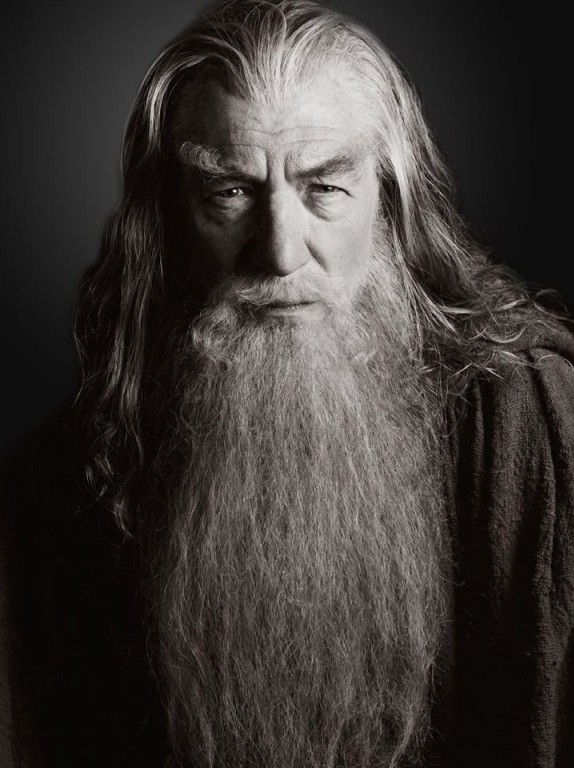
4. Gandalf (The Lord of the Rings by J.R.R. Tolkien)

Gandalf

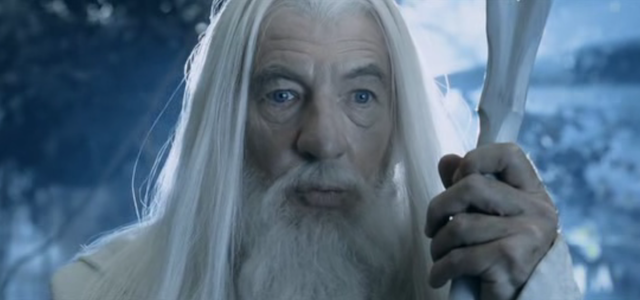
According to Tolkien’s mythology, Gandalf is basically an angel. A freaking angel. So yeah, he’s unstoppable. This short-tempered wizard is ancient, but his age doesn’t stop him from traveling the world, battling monsters and getting in and out of scrapes. Even death can’t stop this man. When Gandalf dies after dueling a demonic beast, some higher power resurrects him and sends him back to save the world. Gandalf recovers from death the way most people recover from colds, and I’m pretty sure there’s no stopping him.

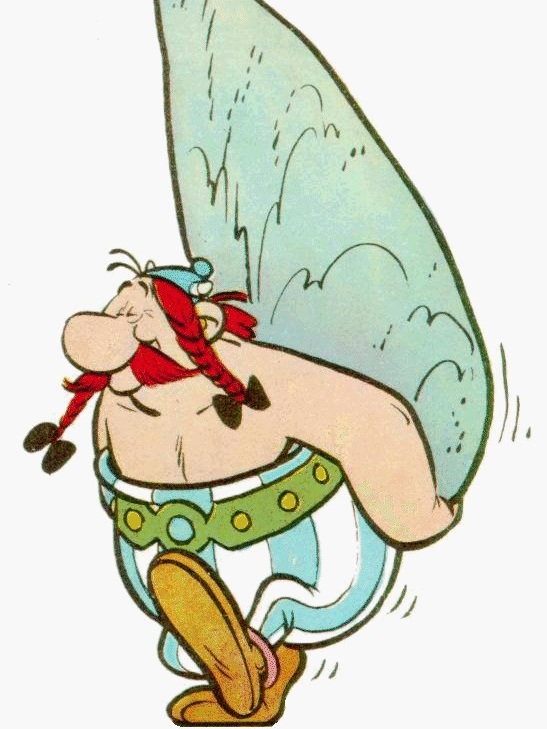
3. Obelix (The Adventures of Asterix by René Goscinny and Albert Uderzo)

Obelix

When the ancient Roman Empire conquers Gaul, a vast region of Western Europe, they don’t conquer all of it. One tiny settlement, “the village of the indomitable Gauls,” remains free. The good-natured residents of this tiny town repel the legions of Rome thanks to a potion that gives them temporary surges of superhuman strength. When young Obelix falls into a cauldron of this potion, it has a permanent effect on him. Obelix grows into a pudgy delivery man who can lift anything, cannot be harmed and is literally unstoppable.

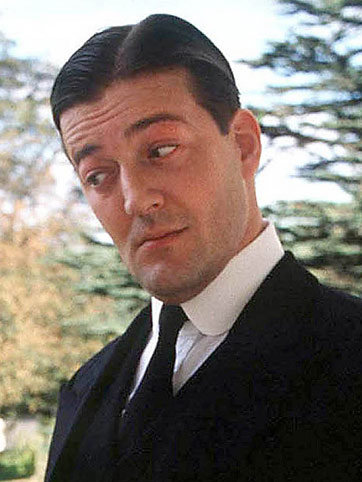
2. Jeeves (Carry On, Jeeves by P.G. Wodehouse)

Jeeves

Imagine Socrates, Confucius and Solomon rolled into one person, and then make that person a polite British valet. Congratulations: you’ve just imagined Jeeves, insofar as human imagination can devise a person as brilliant as he. Jeeves doesn’t contend with giants or monsters or criminals—if he did, they would be toast. No, Jeeves turns his colossal genius toward solving social crises and keeping his wayward employer, well-meaning but dimwitted Bertram Wooster, out of trouble. Jeeves’s dry wit, perfect composure and sheer intelligence make him an inexorable force of peace and order.

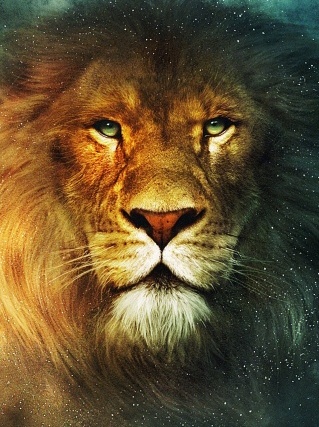
1. Aslan (The Chronicles of Narnia by C.S. Lewis)

Aslan

Aslan is basically Jesus Christ, and also a lion with huge muscles and sharp teeth. You can’t get any more unstoppable than that. What’s that? Aslan dies? Please. Aslan watches Gandalf conquer death and says, “See here, lad, this is how it’s done.” Able to appear anywhere and do anything with his infinite wisdom and boundless power, Aslan is absolutely the most unstoppable hero in any fiction I have ever read.

O people of the Internet, what unstoppable literary heroes would you add to this list? Let us know in the comments!

Adventure? Take This with You!

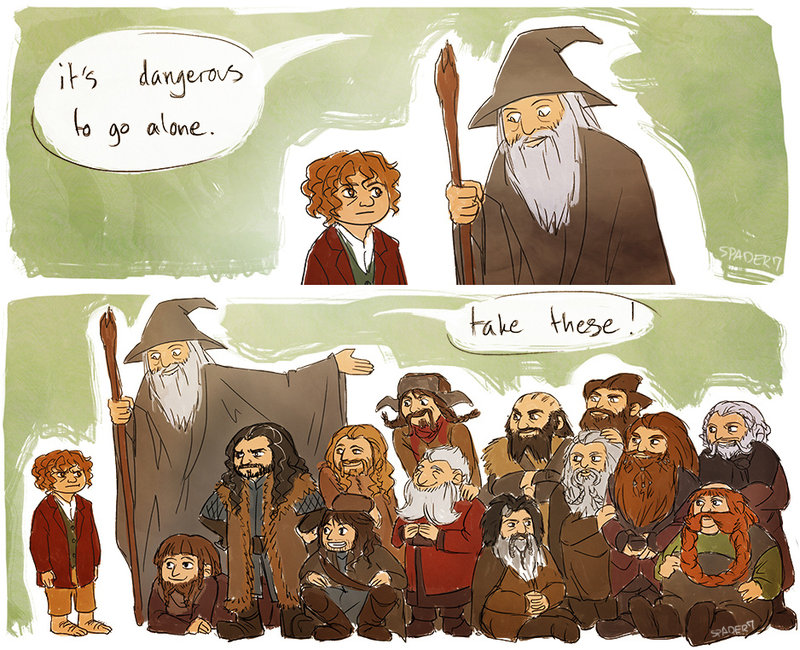
Dangerous to Go Alone

Picture from Spader7 on deviantART.

“It’s dangerous to go alone. Take this.”

These are the famous opening words of The Legend of Zelda, and an age-old motif in mythology, legend, folklore and fantasy. “Going on an adventure? Here, take _____ with you!”

Luke Skywalker got a lightsaber at the start of his journey. Frodo Baggins received a magic ring. The Pevensies (sans Edmund) accepted useful gifts from Father Christmas, and Captain Jack Sparrow was granted a pistol and one shot. Heck, even Perseus got a bunch of neat stuff for his quest from the gods in the old Greek myths.

The hero often seems to get something—a sword, an amulet, a keepsake—at the start of his or her adventure, and whatever it is always turns out to be really useful. A pointless knick-knack is later revealed to be the all-important Map or Key or Talisman of Plot Advancement.

So take my advice. If someone gives you something at the beginning of an adventure, hold on to the darn thing. You’ll be needing it.