299. I Am Not Batman

Yes, I know this may come as a shock to some of my readers. Some may have been so sure that I am secretly the Caped Crusader: the legendary vigilante who dresses as a bat for some reason. It is not so.

I am not Batman.

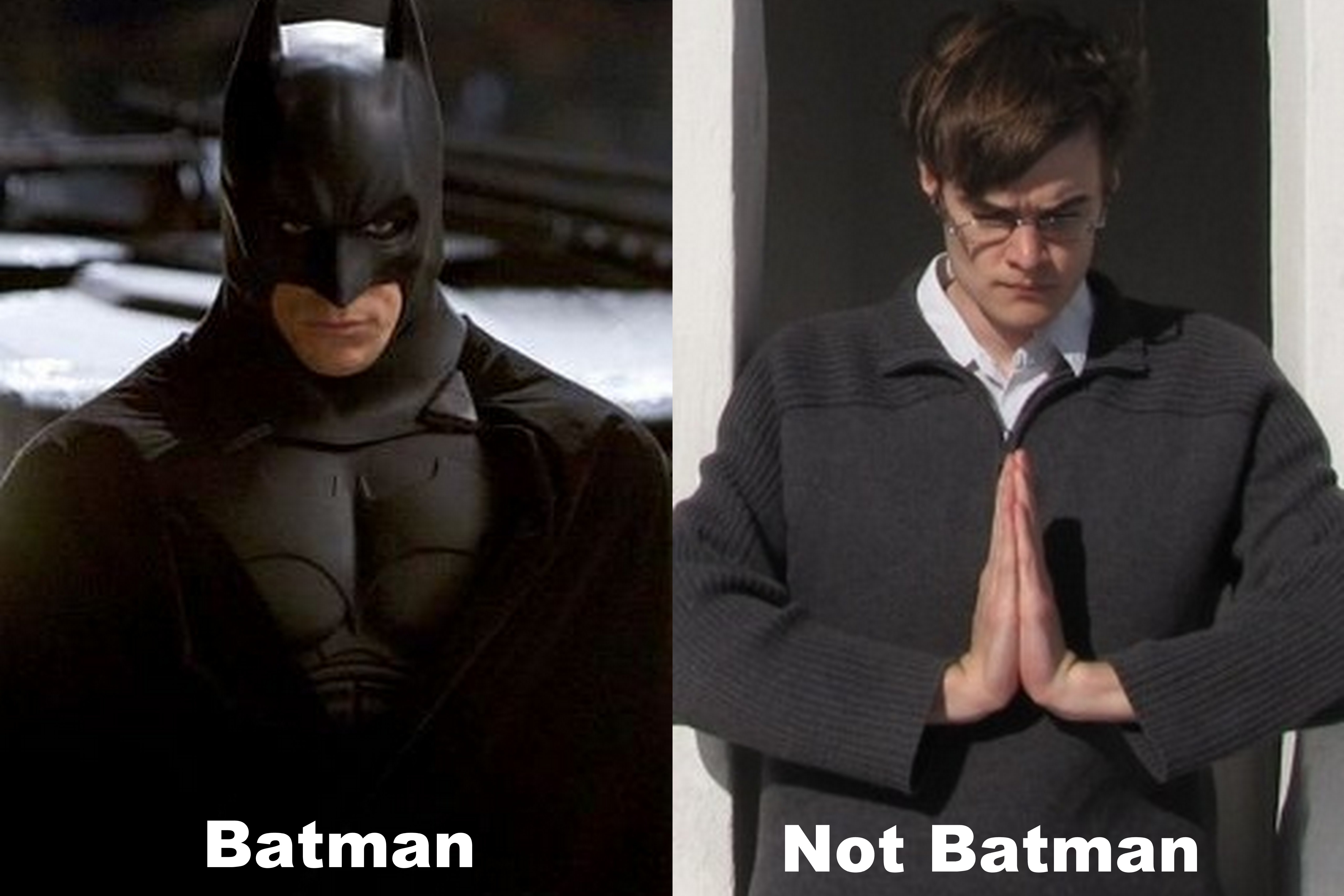
One of These Is Not Batman

All the same, I sometimes hold myself to impossibly high, Batman-esque standards. I also have Batman Syndrome, obsessing over my failures and allowing little mistakes to cancel out great successes. I demand much of myself. I have to be productive. I have to get stuff done.

I forget that I’m not Batman. He may be the pinnacle of human strength, will, and intelligence, but I am not. I’m a guy who needs sleep, gets sick, and needs a day off now and then.

A few days ago, I was reading the latest post from an animator’s blog. Something he said struck a chord with me.

And tomorrow I’m taking the day off from everything and not working on anything . . . It’s been a long time since I took a day completely off, so it’s due. We need downtime. Our society doesn’t like that because we’re not being productive members of society when we don’t do anything, but if we’re always on 24/7, we burn out.

This man has clearly learned a valuable lesson. He understands that he is not Batman. No ordinary person can be on the go all the time, working constantly, never taking a break, expecting nothing less than absolute effort. Normal, non-Batman human beings need days to take naps, read a book, or play Mario Kart. Without those days, we break down. It’s not weakness or self-indulgence to relax occasionally. It’s a necessity.

I’m often busy even when I don’t have to be. More often than I care to admit, I wear myself out working on things that aren’t urgent—things that can wait until I’ve had a cup of tea, a walk to the park, or a good night’s rest. I get so accustomed to being busy that I feel guilty or panicked if I spend too long without doing something “productive.”

There’s something in the Old Testament about taking a day off every week: the Sabbath day. I usually file it away with all those rules about burnt offerings and unclean foods as a religious law that has become obsolete. I’m no longer so sure. Besides being healthy and sensible, taking days off seems like an affirmation of faith—a way of saying, “I trust God enough to give him today.”

Sometimes, determination and coffee aren’t enough: “Man shall not live by caffeine alone,” or something like that. I am not Batman, and I sometimes need a break.

Unless you’re Batman—I’m guessing you’re probably not—you may sometimes need a break, too. Don’t be afraid to take one!

298. TMTF’s Top Ten Cartoons You Should Watch

I spend more time watching cartoons than any grown man should. Needless to say, I regret nothing.

The fact is that cartoons can be innocent, bright, smart, and funny. While the media is often jaded or cynical, cartoons are pleasant, and unapologetic about it. I appreciate them.

That said, some cartoons are much better than others. Today we’re listing ten of the best, because making top ten lists is what we do.

This is a list for Western animation. Anime (Japanese animation) is in a category by itself and deserves a list of its own. Someday, perhaps!

Discerning readers may notice that nearly all of the shows on this list are pretty recent, airing within the past decade or so. This is because I avoided cartoons until a few years ago. Growing up in Ecuador, I watched only the few shows my family had on tape. I mostly rejected cartoons in middle and high school, dismissing them as “too childish,” and only rediscovered them as an adult. (The irony has not escaped me.) Most of the cartoons I’ve watched are recent ones, which is why this list lacks any really old classics.

Let’s take a look, ladies and gentlemen, as TMTF presents…

The TMTF List of Top Ten Cartoons You Should Watch!

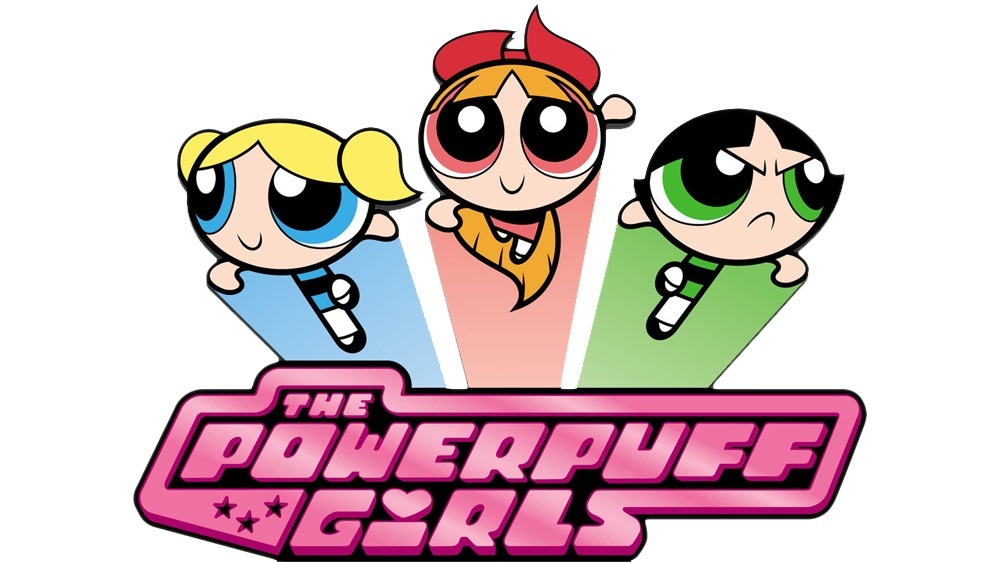
10. The Powerpuff Girls
The Powerpuff Girls

When an absent-minded scientist blends “suger, spice, and everything nice” to create perfect little girls, he spills an untested chemical into the mixture and produces the Powerpuff Girls: a trio of young superheroines who protect the innocent, defend their city from all evil, and attend kindergarten every weekday.

The show pokes fun at superheroes, monster movies, campy science fiction, and pop culture in general. Its playful tone and subversive humor are a blast. The Powerpuff Girls is full of charming little touches, from its hilariously incompetent mayor to the fact its greatest villain is a chimpanzee with an exaggerated Japanese accent.

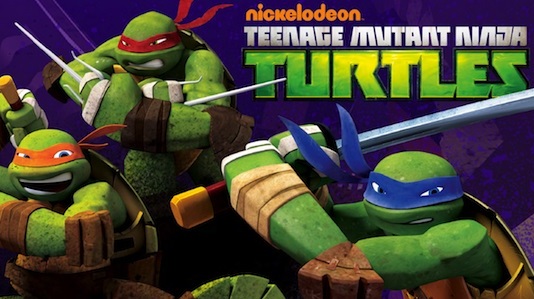
9. Teenage Mutant Ninja Turtles
Teenage Mutant Ninja Turtles

Beneath New York City, in some dark, forgotten sewer tunnel, dwell four fearless fighters. They emerge at night to patrol the streets and protect the innocent. So what if these heroes happen to be turtles?

Nickelodeon’s recent take on the Turtles is refreshingly lighthearted and self-aware. It mixes the whiz-bang style of comic books with the stylish action of old kung fu films, holding it all together with some really good writing. The show never takes itself or its story very seriously… but then its protagonists are nerdy mutant turtles, so that may not be such a bad thing.

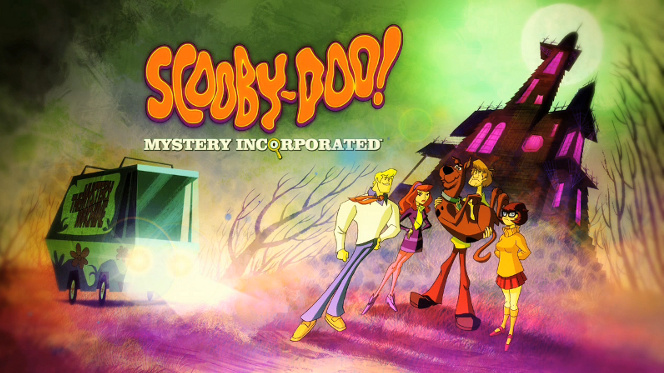
8. Scooby-Doo! Mystery Incorporated
Scooby-Doo! Mystery Incorporated

In Crystal Cove, a touristy town that proclaims itself the “Most Hauntedest Place on Earth,” four teenagers and their dog solve mysteries. These kids, who call themselves Mystery Incorporated, debunk the town’s “supernatural” phenomena as the tricks of frauds and criminals… much to the chagrin of Crystal Cove’s mayor, who wants the town to keep its spooky reputation. When Mystery Inc. is contacted by someone called Mr. E, they find themselves caught up in a bigger mystery than they can imagine.

I saw one or two older Scooby-Doo cartoons as a kid, and they were kind of terrible. Scooby-Doo! Mystery Incorporated astonished me with its excellence. It has character development, a story arc that stretches across the entire series, and an entire episode spoofing the works of H.P. Lovecraft. Best of all, Fred Jones—who was a bland stereotype in every version of Scooby-Doo up to this point—is reimagined as someone cheerful, well-meaning, slightly neurotic, and endearingly inept. I honestly don’t think Scooby-Doo will ever manage to be any better than this show.

7. The Legend of Korra
The Legend of Korra

In a world divided among four nations, a messianic figure called the Avatar arises in each new generation to maintain peace and balance. Each nation represents a classical element—water, earth, fire, or air—and certain people can control or “bend” one of these elements. The Avatar is the only person who can bend all four. This time around, the Avatar is a short-tempered young woman named Korra. She must master her abilities and navigate the political complexities of her world to keep things from falling part.

I’m bending the rules with this one. (Pun intended. I’m so, so sorry.) The Legend of Korra is neither Western animation nor anime, but something in between. Its characters are nuanced and compelling. The action scenes are wonderful, and the animation is some of the best on television. Best of all, the world of The Legend of Korra is a magical mix of Asian culture, steampunk technology, and beautiful scenery. Korra would be much higher on this list, but it never quite achieves its full potential, and an even better show steals its lofty place… but more on that later!

6. Samurai Jack
Samurai Jack

When a young samurai from feudal Japan is flung by a demon into a post-apocalyptic future, he sets off on a surreal journey to return to his own time. The samurai’s travels take him from futuristic cities to lonely jungles, and he meets everything from aliens to crazy Scotsmen. Wherever he goes, the legend spreads of a brave, kind, noble warrior: the samurai known only as “Jack.”

This show is probably the most artsy on this list, and also the most cartoony. It brings together the zany humor of The Powerpuff Girls with elegant action scenes and measured pacing. Samurai Jack uses dialogue sparingly; sometimes whole minutes go by without anyone speaking. The visuals tell the story. The show is strange, stylish, and thoroughly enjoyable.

5. My Little Pony: Friendship Is Magic
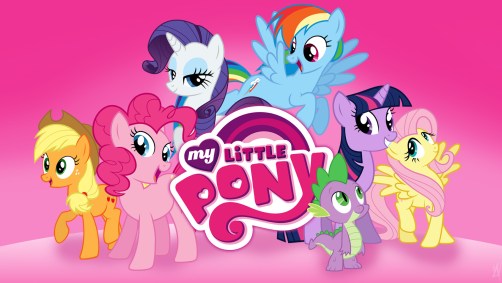
My Little Pony - Friendship Is Magic

In a fairy-tale world populated by candy-colored ponies, a bookish unicorn named Twilight is sent to a small town to “make some friends.” After settling in and meeting the town’s eccentric residents, Twilight begins to understand the importance of friendship. She and her friends live, learn, and occasionally save the world together.

This is a show for little girls, and it’s kind of awesome. (Its fans are also pretty neat.) It has all the sentimental, sappy, twee nonsense one would expect from a show about magical rainbow ponies. It also has some great writing, solid characterization, strong moral values, upbeat humor, and charming innocence. My Little Pony: Friendship Is Magic is a much, much better show than it has any right to be.

4. Phineas and Ferb
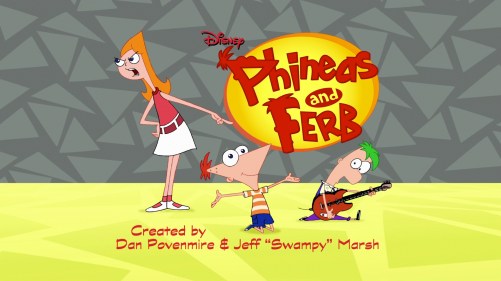
Phineas and Ferb

It’s a beautiful summer day, and stepbrothers Phineas and Ferb know exactly how to spend it: building some outlandish, impossible contraption in the backyard. Their older sister, refusing to allow such reckless behavior, tries vainly to get them in trouble with their mum. Meanwhile, in another part of town, an evil scientist tries to conquer the world—well, that might be overambitious. He’ll settle for the tri-state area. All that stands between him and its innocent residents is an elite secret agent… who happens to be Phineas and Ferb’s pet platypus.

Phineas and Ferb has been around for years, and it’s still finding ways to subvert its simple formula for each episode. It’s the most self-aware show I’ve ever seen, peppered with droll dialogue, clever gags, and catchy music. Among other things, the show’s evil scientist, the lonely and forgetful Dr. Doofenshmirtz, is probably the funniest character I’ve seen on television.

3. Dan Vs.

Dan Vs.

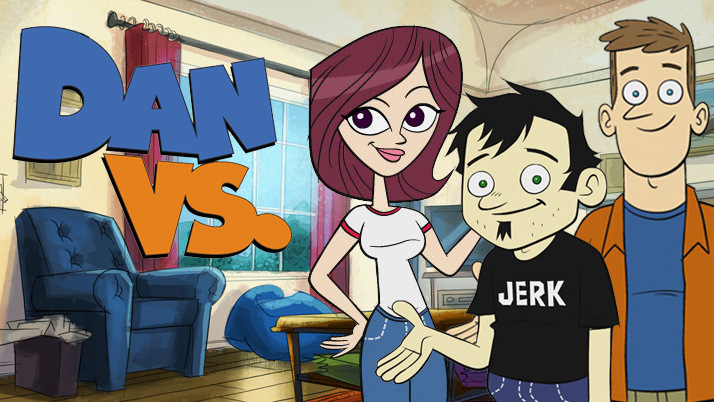
Dan is convinced that everything and everyone in the universe, from his neighbors to modern art, is out to get him. He won’t take it lying down! This jobless misanthrope will go to any lengths to get back at whatever or whoever he thinks has wronged him. Chris and his wife Elise, Dan’s only friends, are often dragged along on his madcap schemes for vengeance.

Dan Vs. manages to be sharp and satirical without ever resorting to vulgarity or profanity. Dan is hilariously unhinged. I wouldn’t want him as a friend, but from a safe distance his schemes are great fun to watch. One of the show’s creators compared him to Calvin from Calvin and Hobbes, saying “I think of the Dan character as Calvin as a grownup, if his life had gone horribly wrong somewhere.” Dan shares Calvin’s paranoia, intelligence, ill temper, and absolute lack of common sense. Dan Vs. is smart, biting, and a joy to watch.

2. Gravity Falls
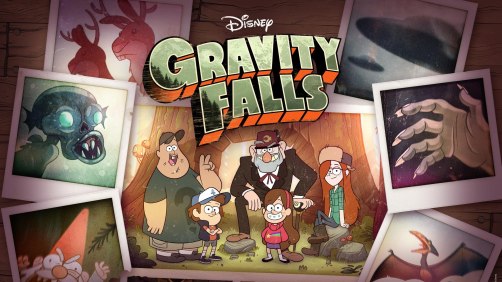
Gravity Falls

Mabel and Dipper Pines, twelve-year-old twins, have been sent by their parents to spend the summer in Gravity Falls, Oregon. They stay with their Great Uncle (or “Grunkle”) Stan, who runs a shady tourist attraction called the Mystery Shack. Although Dipper is disappointed to be stuck in a small town, he soon finds a journal detailing the supernatural monsters and mysteries of Gravity Falls. As Mabel and Dipper begin unraveling the riddles of this sleepy little town, Grunkle Stan, a gruff skeptic and shameless shyster, does his best to swindle the tourists who visit the Mystery Shack.

Gravity Falls has been called “gently twisted,” and I think that’s a good description. The show is equal parts funny, intriguing, heartwarming, outrageous, and weird. I would call it just a good comedy, except that it’s also packed with riddles and ciphers for fans to solve, and held together by a really compelling mystery. I’m not sure what exactly is going on in Gravity Falls, but I can’t wait to find out.

1. Avatar: The Last Airbender
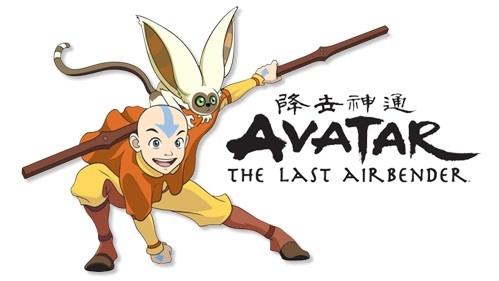
Avatar - The Last Airbender

Before The Legend of Korra, there was an Avatar named Aang. When one of the four nations, the Fire Nation, wars against the others, Aang and his friends must stop it and restore peace before the world burns.

It takes a few episodes to hit its stride, but once it does this show never falters. This not-quite-anime predecessor to The Legend of Korra creates a world as beautiful and fully realized as Tolkien’s Middle-earth, and populates that world with a ridiculous number of memorable characters. Avatar: The Last Airbender isn’t merely a kid’s cartoon. It transcends its medium to become as deep and gripping a story as any I’ve seen… while never losing the gleams of humor and silliness that made it fun in the first place.

O people of the Internet, what cartoons have you enjoyed? Let us know in the comments!

296. A Superhero Debate

I hardly ever quarrel with people, but I once had a heated argument about the religious significance of superhero stories.

We can all agree that some superheroes have higher moral standards that others. Take Batman. Gotham City’s famous vigilante never takes a life. Sure, he shatters bones and causes millions in property damage, but he draws the line at killing people.

Batman will defend you against an army.

Batman will fight for your freedom and safety.

By contrast, consider Deadpool. Marvel’s maverick hitman will kill anyone for the right price, or if he’s bored, or because it’s Tuesday. He’s also a shameless pervert and enjoys blowing up stuff. He may save the day occasionally, but there’s no escaping the fact he’s a scoundrel.

Deadpool will kill you for a chimichanga.

Deadpool will kill you for a chimichanga.

Questions like these are easily answered. Batman is morally superior to Deadpool.

Within the superhero genre, there are many such questions of morality. Some superheroes are nobler than others. Some do what is right; others settle for doing what is “necessary.” Some are unrepentant jerks. We could argue about the morality of specific superheroes, but we face a much bigger question.

What about superheroes in general? What about the entire superhero genre, in which people find great power and accept great responsibility? (Thanks, Uncle Ben.) There’s surely no harm in silly stories of people who fight crime by shooting lasers from their eyes or turning into enormous green rage monsters, is there?

That was my thought, anyway. My opponent, whom I’ll call Socrates, disagreed.

He posited the idea that superhero stories represent humanity’s rebellion against God. Superheroes are faux messiahs: subconscious attempts of sinful human beings to shun divine redemption by redeeming themselves. Who needs Jesus Christ when we’ve got Batman? Superheroes are triumphs of secular humanism. The convoluted cosmologies of their universes leave no room for God.

Having rejected God, said Socrates, humankind created gods.

I disagreed.

I think there’s definitely something messianic in superhero stories, but I don’t believe they’re a rejection of the Messiah. Quite the contrary. Superhero stories are an acknowledgement that we need to be rescued. We need redemption. We need a messiah. Superheroes become, to echo the author of Hebrews, “copies of heavenly things” and “a shadow of the good things that are coming—not the realities themselves.” Batman becomes a symbol of Jesus Christ, not a replacement for him.

In superheroes, I said, humankind has not created idols to be worshiped, but icons pointing to worship of someone greater.

Socrates and I argued for some time, debating intensely and getting nowhere. In the end, a third person stepped in and mildly ended our quarrel by telling us to go to bed. It was for the best, I think. I hardly ever get into debates, but when I do I have a hard time letting them go.

The religious significance of superheroes provides an interesting question, really, and one worth answering.

What’s your take on superheroes? Are they good, bad, or just silly? Let us know in the comments!
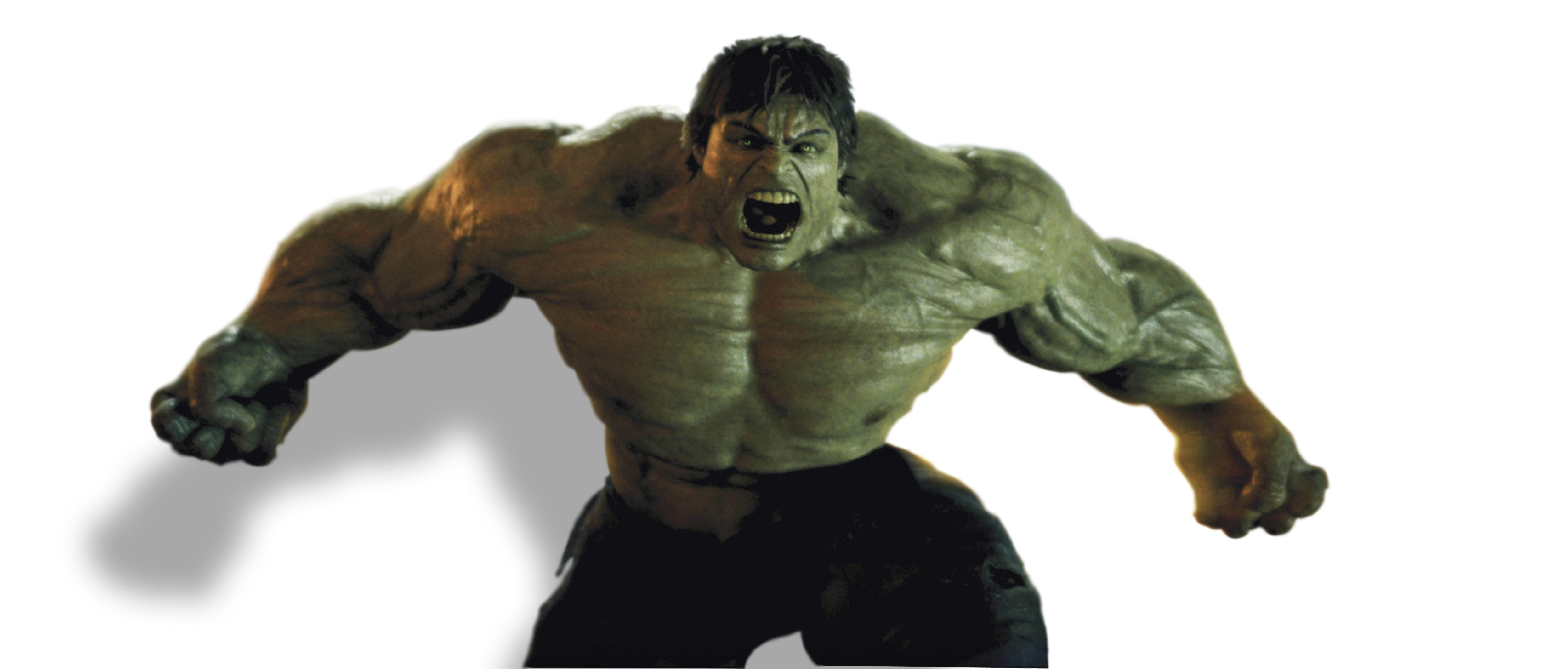
293. Adam Turns into the Hulk and Rants about Internet Ads

Caution: This blog post contains furious ranting. Sensitive readers, and readers averse to things being smashed, are advised not to continue.

Life is full of necessary evils: taxes, dentists, and spinach, to name just a few. Of all these necessities, none are more evil than advertisements. Billboards are an eyesore and television commercials a nuisance, but Internet ads are the worst.

Yes, I understand the necessity of advertisements. Websites, blogs, and email services don’t pay for themselves. I appreciate these services, and I’m thankful to use them for free, but some of the ads they throw at me are abominably bad.

These adverts are misleading, intrusive, insulting, offensive, or simply so stupid as to be painful. They make me angry, and it ain’t pretty when I’m angry. Internet ads are such a blasted bother!

They’re terrible… make me sick… I really don’t feel well… stupid ads… I… I…

BLOG SMASH!

FREAKING ADS. SMASH! SMASH THEM ALL!

HULK HATE ADS. HULK HATE THEM ALL!

WELL, HULK THINK SOME ADS OKAY. SOME ADS CLEVER OR FUNNY. THESE ADS NOT BAD. HULK APPRECIATE TIME, EFFORT, AND CREATIVITY PUT INTO THEM.

(HULK NOW USE OXFORD COMMA. YOU NOTICE? HULK THANKS ALL WHO CHIMED IN ON GRAMMAR DEBATE!)

A FEW ADVERTS OKAY, BUT MANY INSULT HULK, LIKE SHADY ADS PROMISING HIGHER TESTOSTERONE, LARGER PENIS, EASY WEIGHT LOSS, OR BIGGER ABS. (HULK ALREADY HAVE BIG MUSCLES. NO NEED BIGGER ABS!) SUCH ADS ARE BLATANTLY FALSE ADVERTISING AND SHOULD BE SMASHED.

ON SUBJECT OF DISHONEST ADVERTISING, HULK HATE ADS DISGUISED AS COMPUTER UPDATES. SNEAKY ADS SAY THINGS LIKE “Click here to update Windows!” OR “Important updates are ready for download!” BUT ARE OBVIOUS FAKES. WHERE THEY LEAD? VIRUSES? PORN? HULK NOT WANT TO KNOW.

SOME ADS INTRUSIVE. WHEN HULK GO TO EMAIL OR NEWS SITE, AD SOMETIMES EXPAND TO TAKE UP WHOLE SCREEN. HULK MUST STOP, SEARCH FOR TINY “Close” ICON, AND SHUT WRETCHED AD.

ADVERTISEMENTS DESERVE SPACE ON INTERNET. HULK CONCEDE THAT. BUT ADS NOT WELCOME TO TAKE OVER HULK’S COMPUTER SCREEN. IT’S INAPPROPRIATE AS SALESPEOPLE BARGING INTO HULK’S HOME.

AND SOME ADS HAVE “Tweet” OR “Post to Facebook” OPTIONS. WHY WOULD HULK INFLICT ADS ON OTHER PEOPLE? HULK DISGUSTED BY COMPANIES WITH AUDACITY TO ASK HULK TO PROMOTE THEIR PRODUCTS FOR FREE. HULK NOT PAID TO ANNOY PEOPLE WITH ADS.

ADS DON’T HAVE TO INTRUDE TO GET MESSAGE ACROSS.

AND THAT MESSAGE CAN BE AWFUL. FOR EXAMPLE, FACEBOOK GIVE HULK ADS FOR SHADY “Adult game—18+ Years only!” BROWSER GAMES, ADS PLASTERED IN PICTURES OF BIG-BREASTED GIRLS IN DEGRADING POSES AND SILLY LINGERIE.

WHY DO INTERNET ADS ASSUME HULK IS VOYEUR OR PERVERT? WHY DO ADS DISRESPECT WOMEN AND ASSAIL HULK WITH SOFT PORN?

INDIGNANT HULK IS INDIGNANT.

LOOK, HULK KNOW ADS NECESSARY. HULK UNDERSTAND, BUT CAN’T INTERNET HAVE QUALITY CONTROL? CAN’T REPUTABLE WEBSITES RESPECT THEMSELVES AND VISITORS ENOUGH TO RESTRICT SLEAZY, DISHONEST, INTRUSIVE, MISLEADING, OR POTENTIALLY DANGEROUS ADVERTISING?

DOES MONEY MEAN MORE TO INTERNET THAN SAFETY AND DIGNITY OF HUMAN BEINGS?

HULK PLEAD WITH INTERNET. PLEASE. PLEASE BE RESPONSIBLE IN MONITORING, APPROVING, AND DISPLAYING ADVERTISEMENTS.

HULK OUT!

I… ugh, I have a headache, and my room is a mess. Did I just have another Hulk episode, or are my typewriter monkeys to blame? You know, I’m going to blame my monkeys for this one. Freaking primates.

287. About Storytelling: Intertextuality

As long as we’re talking about The Avengers, I want to point out that Marvel’s superhero stories have a lot in common with the Bible, Little Women and the Teenage Mutant Ninja Turtles.

Why, you can hardly tell them apart!

The similarities here are obvious… aren’t they?

(I also want to point out for the record that Jo and Donatello are the best March sister and Ninja Turtle, respectively. I’m just throwing that out there.)

These stories are extremely different, but they share at least one notable characteristic: intertextuality. This fancy (and somewhat dirty-sounding) word refers to the way an artistic work is shaped by another artistic work.

Still confused? I sure am. Let’s make it simpler by looking at these stories one by one.

Little Women is a novel by Lousia May Alcott about sisters growing up and getting married. It’s basically Pride and Prejudice, but better. (Fans of Jane Austen, please spare my family.) The first half of the book, which follows the March sisters as they become young ladies, loosely parallels The Pilgrim’s Progress by John Bunyan. As these little women read Bunyan’s allegory, they find it mirrored in their own pilgrimages from childhood to adulthood.

The Bible is packed with intertextuality. The number of times Scripture references itself is practically beyond count. The New Testament alludes constantly to the Old. Many books of Scripture cite passages from other books. Jesus Christ, as he hung dying upon the cross, quoted a phrase from the Psalms. Stephen, in turn, repeated some of Christ’s final words during his own execution. The Bible echoes itself constantly.

The Avengers is a tale woven from several different stories. Every one of its heroes has some kind of history; the film is built upon the foundation of other films. Without Iron Man and Thor and all those other Marvel movies, The Avengers probably wouldn’t even exist.

As for my favorite band of crime-fighting reptiles, well, the Ninja Turtles began as a parody of several gritty comics popular at the time. Even its details were drawn from the works it parodied: the Turtles’ teacher Splinter was a jab at a comic book character named Stick, and the villainous Foot Clan poked fun at a supervillain group called The Hand. The Teenage Mutant Ninja Turtles exist as a lighthearted response to darker comics.

All these stories are shaped by other stories. So what?

Intertextuality can be either a brilliant asset or a horrible nuisance. It can give a story depth or make it incomprehensible.

The benefits of intertexuality are too many to list in a single blog post, so I’ll mention just a few. Referring to other works can establish a strong narrative framework, as in Little Women. The Bible shows how intertexuality can help explain and clarify ideas. In The Avengers, the way separate narratives converge in one big adventure is, if I may express it so bluntly, really freaking sweet. Finally, intertextuality can provide humor or insight in the form of parody or satire of existing works.

Of course, intertextuality can go wrong. G.K. Chesterton is probably my favorite author, and also really awesome, but he sometimes makes the mistake of assuming all his readers are just as smart and educated as he is. His book Orthodoxy is full of allusions to other thinkers, but without context or background these references only confuse ignorant readers like me.

We’re all shaped by other people. It’s only natural, then, for our ideas and stories to be shaped by those of other people.

284. TMTF’s Top Ten Toughest Dudes in Video Games

It would be tough to live in a video game.

Seriously, I wouldn’t last two minutes. If I were extremely fortunate, I might end up in a nice, nonviolent title like Animal Crossing or Professor Layton. I would more likely blunder into a racing game, fantasy RPG or first-person shooter and be run over, beheaded or blown to bits. Even family-friendly titles like Mario Kart offer plenty of opportunities for violence and mayhem. (Curse you, blue shells!)

With perils, pitfalls, monsters, explosions, blades, bullets, traps, tyrants or bottomless pits at every turn, life as a video game character must be tough. It makes sense, then, for video game characters to be tough dudes. Today, dear reader, we will look at ten of the toughest.

For the purpose of this list, toughness is defined as the quality of being durable, stoic, intimidating and that word I can’t use. The usual top ten list rules apply: only characters from games I’ve played, only one character per game series, no licensed characters from other media (e.g. Han Solo or Indiana Jones) and so forth.

Toughen up, ladies and gentlemen, as TMTF presents…

The TMTF List of Top Ten Toughest Dudes in Video Games!

Be ye warned, here there be minor spoilers.

10. Wobbuffet (Pokémon series)

Wobbuffet

At this point there are more than seven hundred Pokémon, representing all kinds of creatures and concepts. It makes perfect sense, then, that there is a punching bag Pokémon. In battle, Wobbuffet doesn’t ever strike first, but receives blows and then counterattacks. The stoic, patient way it takes its enemies’ attacks is astonishing.

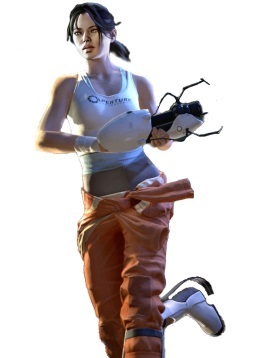
9. Chell (Portal series)

Chell

Chell isn’t a dude, per se, but the mute protagonist of the Portal games is as tough as they come. Unfazed by deadly traps, frightening falls and the childish taunting of a deranged opponent, Chell solves puzzles and cheats death with a deadpan expression and stubborn silence that would make Clint Eastwood proud.

8. Link (Legend of Zelda series)

Tough Link

Link is an all-purpose hero, navigating dark dungeons, solving puzzles, defeating monsters and wielding an endless array of weapons with effortless aplomb. Neither horrifying enemies nor baffling riddles seem to trouble him in the slightest, and no obstacle or pitfall ever derails his adventures. Link would be much higher on this list if he were not so adorable.

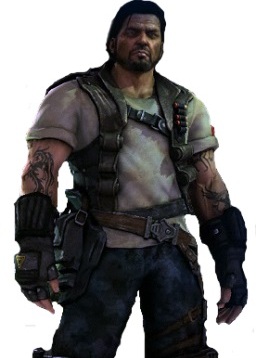
7. Jim Raynor (StarCraft)

Jim Raynor

Jim Raynor—a man covered in tattoos and ammunition, and probably smelling of whiskey, tobacco and engine grease—is a marshal-turned-outlaw-turned-hero. Bringing together the grit of a Wild West lawman and the tactical brilliance of an admiral, this spacefaring marine is betrayed by humans, hunted by space monsters and feared by practically everyone.

6. Bowser (Mario series)

Bowser

Bowser may be surly, self-absorbed and not very bright, but there’s no denying he’s tougher than iron. This hulking monster survives eight plunges into molten lava in his first game alone. The games that follow subject Bowser to falls, beatings and all kinds of injuries, yet the only thing he ever seems to bruise is his ego.

Update: My younger brother corrected me by pointing out that Bowser plunges into lava only once in his first game, not eight times. Notwithstanding this correction, Bowser is a pretty tough dude.

5. Samus Aran (Metroid series)

Samus Aran

Samus Aran, like Chell, isn’t a dude, but that never keeps her from being resourceful, independent and ridiculously tough. Venturing alone onto enemy spaceships and hostile planets, Samus guns down the galaxy’s most dangerous criminals and escapes without a scratch. Truly, hell hath no fury like a woman with a laser cannon.

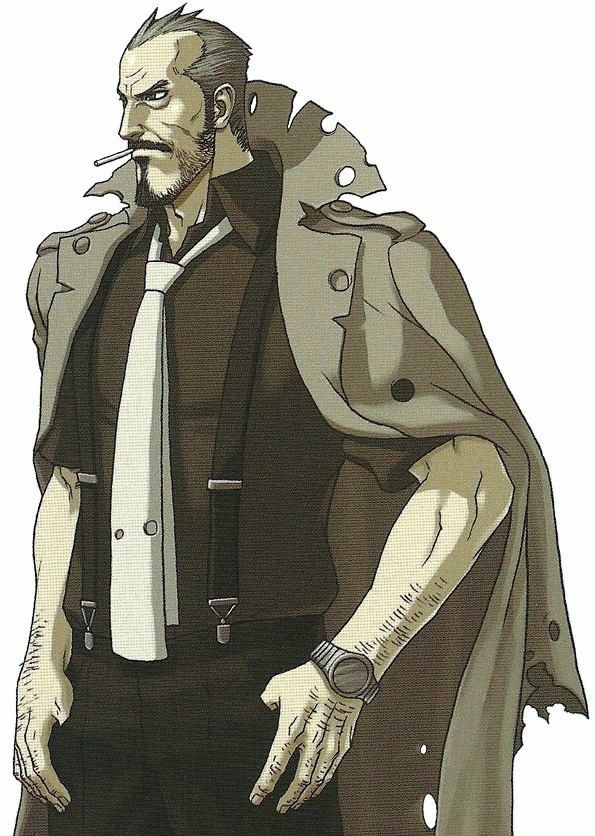
4. Tyrell Badd (Ace Attorney Investigations: Miles Edgeworth)

Tyrell Badd

Look at those bullet holes. Look at them. Even Tyrell Badd’s necktie has bullet holes. I can only surmise that the bullets, after passing through his tie, simply bounced off Badd. This hard-bitten homicide detective is a man of few words. Really, his coat says it all. By the way, that’s not a cigarette in his mouth, nor is he grabbing a gun when he reaches abruptly into his pocket. No, that’s a sucker in his mouth, and he’s reaching for a hand mirror. It’s a testament to his toughness that Badd makes even these effeminate items seem intimidating.

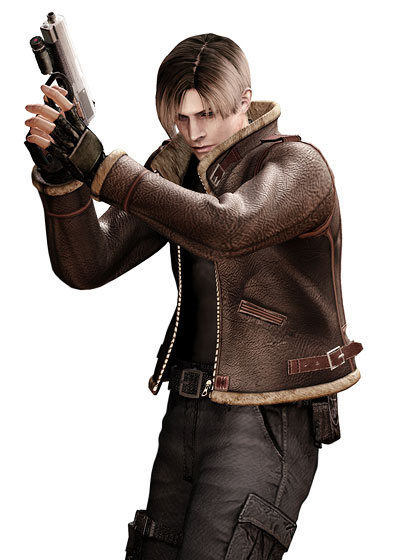
3. Leon S. Kennedy (Resident Evil 4)

Leon S. Kennedy

Nothing seems to faze this tough-as-nails government agent: not homicidal maniacs with chainsaws, not mutated monstrosities, not even the whiny college student he is sent to rescue. Leon S. Kennedy calmly and professionally handles every crisis, making every bullet count, thinking on his feet and suplexing anyone who gets too close. His tireless persistence and grace under pressure are remarkable.

2. Auron (Final Fantasy X)

I’m not sure I even need to say anything about this guy. Auron’s sword is nearly as big as he is, for heaven’s sake! He often fights one-handed simply because he can. His clothes are equal parts samurai and gunslinger, with an awesome pair of shades for good measure. Auron is noble and courteous, but takes no nonsense and will cut any obstacle into very tiny pieces. Oh, and one final thing: Auron is dead. Not even death can stop this man. He lingers for one final adventure simply because he has unfinished business in the land of the living. Heroes hardly get tougher than that!

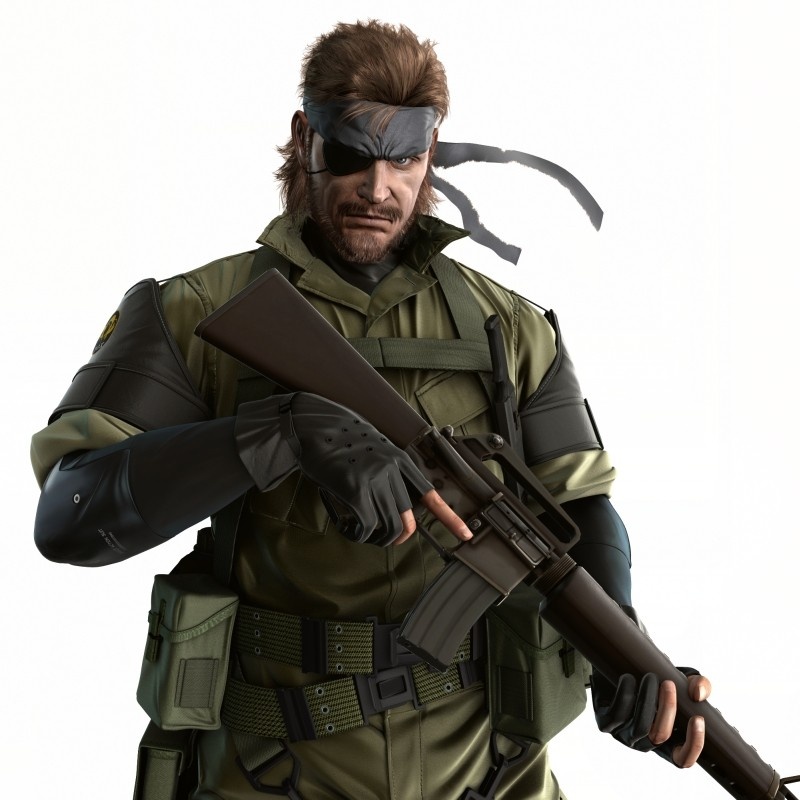
1. Naked Snake (Metal Gear Solid series)

Naked Snake

Naked Snake is the perfect soldier: an unstoppable combination of sniper, spy and infantryman. He sneaks through jungles and military bases, enduring harsh weather, surviving on rats and snakes, digging bullets out of his body with a knife and patching up his wounds before charging (or sneaking) back onto the battlefield. Snake defeats legendary soldiers, destroys massive war machines and prevents worldwide nuclear war at least three times. Then, tired of serving a corrupt government, he becomes a mercenary, creates his own nation-state and nearly conquers the world. (Note also his wicked eye patch.) There is no tougher dude in video games than this man.

O people of the Internet, what tough video game dudes would you add to this list? Let us know in the comments!

279. Adam Turns into the Hulk and Rants about Church Music

Caution: This blog post contains furious ranting. Sensitive readers, and readers averse to things being smashed, are advised not to continue.

Being a blogger is great fun, but it’s not without risks. In a small number of cases, frequent exposure to wireless Internet connections has caused bloggers to develop unexpected conditions. I am one of these unfortunates. I and at least one other blogger have become tragic victims of HBS (Hulk Blogging Syndrome).

What does this mean? Well, there’s really only one thing about HBS you should know: Don’t make me angry. You wouldn’t like me when I’m angry.

That said, today’s blog post is all about contemporary church music, and the way classic hymns are rewritten with new music or lyrics. Well, rewritten may be too kind a word. Hymns are mutilated. They are trampled upon. They are… ugh… I suddenly don’t feel well…

I… I…

BLOG SMASH!

BLOG SMASH!

ADAM IS GONE. NOW THERE IS ONLY HULK. HULK HERE TO DISCUSS CHURCH MUSIC. AND TO SMASH.

HULK DOES NOT LIKE MODERN CHURCH MUSIC. ITS SONGS SEEM MUSICALLY WEAK AND NONDISTINCT. THEY ALL SOUND THE SAME TO HULK. THEIR LYRICS ARE OFTEN NOT VERY MEANINGFUL. THEY ARE SOMETIMES DOWNRIGHT STUPID.

(HULK DISCLAIMER: SOME MODERN WORSHIP SONGS ARE FANTASTIC.)

MANY PEOPLE LOVE MODERN CHURCH MUSIC. THAT IS OKAY WITH HULK. HULK DOES NOT WANT TO BE PHARISEE. WHATEVER MUSIC BRINGS PEOPLE CLOSE TO GOD IS GOOD MUSIC.

CHURCHES ARE WELCOME TO THEIR NEW MUSIC… BUT LEAVE OLD MUSIC ALONE!

SOME OF US LIKE OLD HYMNS. “IT IS WELL.” “AMAZING GRACE.” “BE THOU MY VISION.” “COME THOU FOUNT OF EVERY BLESSING.” THESE ARE GOOD SONGS. THEY ARE FINE THE WAY THEY ARE. SOME PEOPLE FIND THEM TOUCHING AND MEANINGFUL, FULL OF BEAUTY AND TRUTH.

STOP TACKING ON NEW VERSES, CHANGING MELODIES, ADDING UNNECESSARY BRIDGES AND MAKING POINTLESS CHANGES.

PLAYING OLD HYMNS IN NEW STYLES IS FINE. HULK LOVE HEARING HYMNS PERFORMED IN CONTEMPORARY STYLES. THAT IS AWESOME. OLD HYMNS ARE AWESOME. GO AHEAD. JAZZ THEM UP. BUT DO NOT CHANGE THEM.

HULK RECENTLY WENT TO CHURCH. CHURCH SANG “IN CHRIST ALONE.” THIS IS NOT OLD HYMN, BUT IT IS BEAUTIFUL IN EXACT SAME WAYS. “IN CHRIST ALONE” HULK’S FAVORITE SONG. EVER.

CHURCH ON SUNDAY CUT OUT AN ENTIRE VERSE OF “IN CHRIST ALONE.” WHY? ADDED BRIDGE WITH WEAK MELODY AND THESE LYRICS: “Oh, Oh, Oh.” HULK NOT MAKING THIS UP. THOSE WERE WORDS ON SCREEN. “Oh, Oh, Oh.”

THOSE WORDS NOT AN IMPROVEMENT OVER THESE WORDS:

In Christ alone, who took on flesh: fullness of God in helpless babe,

This gift of love and righteousness—scorned by the ones he came to save.

Till on that cross as Jesus died the wrath of God was satisfied,

For every sin on him was laid. Here in the death of Christ I live.

THESE WORDS ARE BETTER THAN “Oh, Oh, Oh.” WHY DID CHURCH STRIP AWAY BEAUTIFUL WORDS FROM HYMN AND REPLACE THEM WITH MEANINGLESS NOISES?

HULK NOT KNOW. HULK NEVER KNOWS.

HULK ASK ALL CHURCHES EVERYWHERE. PLEASE. LEAVE OLD HYMNS ALONE. THEY ARE FINE AS THEY ARE. PLAY YOUR NEW MUSIC. HULK GIVE YOU THAT. BUT GIVE HULK THIS ONE THING. MAKE ONE CONCESSION FOR HULK. YOU CAN HAVE NEW SONGS. DON’T RUIN OLD ONES.

PLEASE. PLEASE. HONOR BEAUTY AND TRUTH IN OLD HYMNS.

HULK OUT!

Whoa… I… what just happened? Why is there a mound of splintered wood where my desk used to be? Who ripped apart my shirt? Why are my typewriter monkeys fleeing in terror?

I suddenly feel sick, so I’m afraid I must cut this post short. Sorry. Now I’m going to yell at my monkeys for wrecking my bedroom, and then go put on some clothes.

Question: Should Hulk rants become a regular feature on this blog? Let us know in the comments!
275. TMTF’s Top Ten Chase Scenes in Film

Do you know what’s exciting in movies? Chase scenes. I love chase scenes. Chase scenes are wonderful.

Whether the heroes are fleeing in fear from something dangerous or bravely pursuing an important objective, the high-speed, action-packed, adrenaline-pumping excitement of chase scenes is glorious. I’m no film expert, but I like movies as much as anyone, and today we’re looking at some of my favorite chase scenes in film.

The usual one-per-series rule applies here, of course, and I’ve included YouTube links to chase scenes wherever possible. Observant readers will notice a lack of scenes from the James BondDie Hard and Bourne movies. This isn’t due to any personal prejudice against action thrillers. It’s because I’ve seen hardly any of those movies I wanted this list to have some variety!

On your marks, ladies and gentlemen, as TMTF presents…

The TMTF List of Top Ten Chase Scenes in Film!

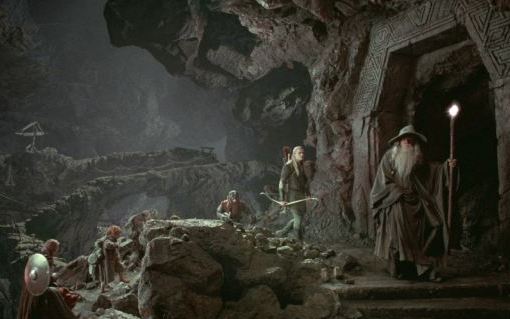
10. The Mines of Moria (The Lord of the Rings: The Fellowship of the Ring, 2001)

Mines of Moria

Although this chase isn’t as action-packed as others on this list, the Fellowship’s flight from the Balrog in the Mines of Moria ramps up the tension with an awesome musical score and a moment at which they must leap over a chasm as the unseen menace of the Balrog draws nearer. The monster doesn’t appear until the end of the chase, but the mere noise of its approach is enough to send Gandalf, a powerful wizard, running like a spooked cat. When the Balrog finally catches up with the Fellowship, it’s an epic conclusion to a thrilling chase.

I couldn’t find the scene on YouTube, so you’ll just have to watch the movie.

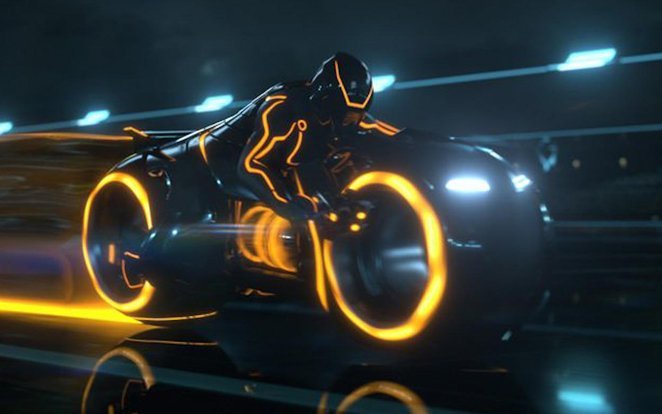
9. Light cycle chase (Tron: Legacy, 2010)

Light cycle chase

Short, sweet and colorful, this race between a Blue Guy and a Yellow Guy is great fun. The lack of music lends an understated realism to the scene; it reminds me of the podrace from the first Star Wars movie, but with brighter visuals and no annoying commentary. This chase also gets an honorable mention because Jeff Bridges.

You can watch this scene here.

8. Escaping the Reavers (Serenity, 2005)

Reaver chase

I was going to put the iconic speeder bike chase from Star Wars Episode VI: Return of the Jedi on this list, but then I remembered this little gem from Joss Whedon’s Serenity. It has all the excitement of the Star Wars chase, and also boasts wonderful dialogue and much higher stakes. As an all-or-nothing escape from vicious cannibals, it’s a tense scene… but not so tense as to exclude one or two really funny lines.

You can watch this scene here.

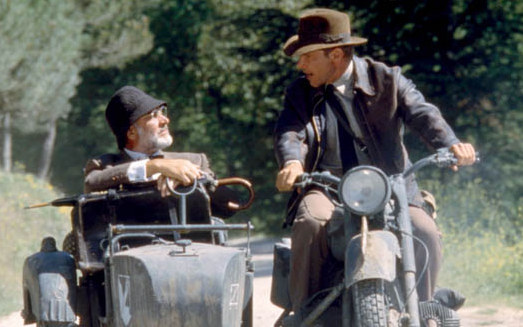
7. Motorcycle chase (Indiana Jones and the Last Crusade, 1989)

Motorcycle chase

Indiana Jones is practically synonymous with exciting chase scenes. Every film starring this intrepid grave robber archaeologist has him running away from something. This chase is by far my favorite. I mean, it has motorcycle jousting. It also has Henry Jones’s deadpan reactions to his son’s violent tactics. These disapproving glances, like the relics Indiana Jones picks up on his adventures, are simply priceless.

You can watch this scene here.

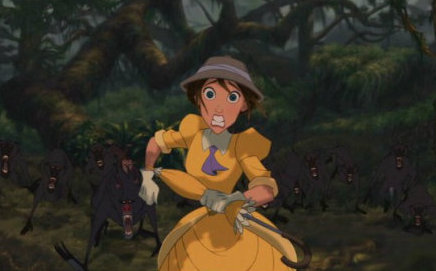
6. Fleeing baboons (Tarzan, 1999)

Fleeing baboons

This wonderful chase has Tarzan rescue Jane as she flees a hoard of angry baboons. Sprinkled with droll humor and backed by a lively musical score, this chase also features CG effects that were pretty impressive for the time. My favorite part of this chase? Tarzan’s facial expressions.

You can watch this scene here.

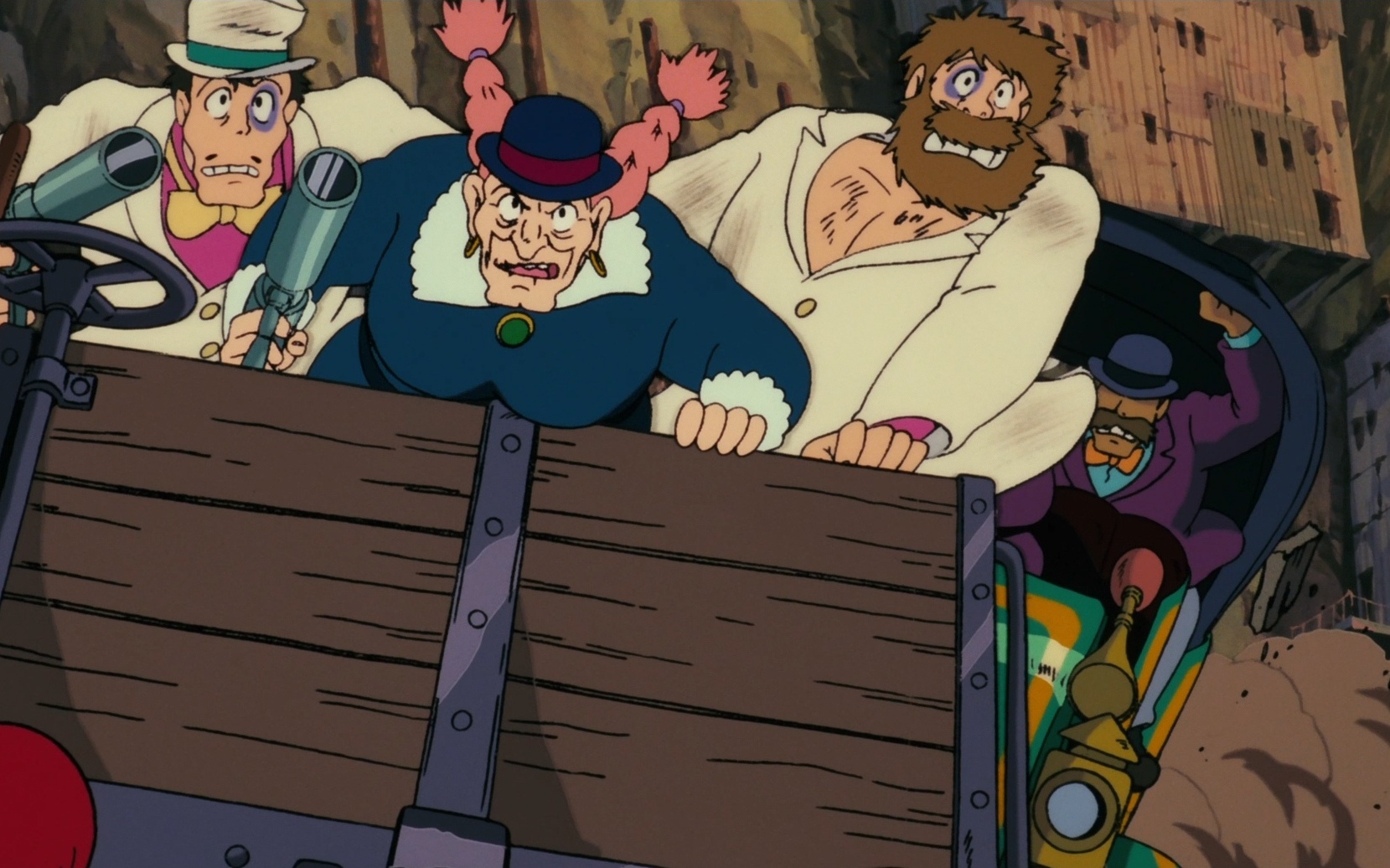
5. Pirate pursuit (Castle in the Sky, 1986)

Pirate pursuit

This chase is one of the best scenes in what may be my all-time favorite film, a classic from the legendary Studio Ghibli. The Dola Gang, a notorious band of sky pirates, pursue an innocent boy and girl into a canyon. When the children hop onto a train on raised tracks, the pirates follow in a rickety automobile. This beautifully-animated scene would be wonderful even without the pirates’ dialogue, which is hilarious.

I couldn’t find the scene on YouTube, so you’ll just have to watch the movie. Seriously, go watch it. Stop reading this blog post and go watch the movie!

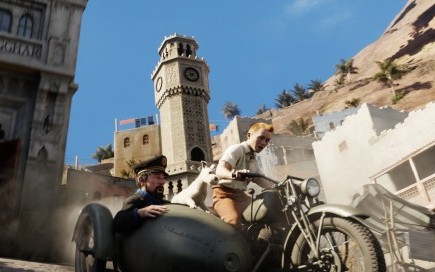
4. Race through Bagghar (The Adventures of Tintin, 2011)

Race through Bagghar

Steven Spielberg, bless him, sure knows a thing or two about directing great chase scenes. This chaotic rush down the streets of Bagghar, a fictional Moroccan city, is a joy to watch as Tintin crashes through buildings and over rooftops in a motorbike, trying to snatch a scroll from the talons of a hawk. There’s also a tank and a zip line and some accidental cross-dressing. Really, it’s quite a chase.

You can watch this scene here, but the quality of the clip is very poor; you may be better off just watching the movie.

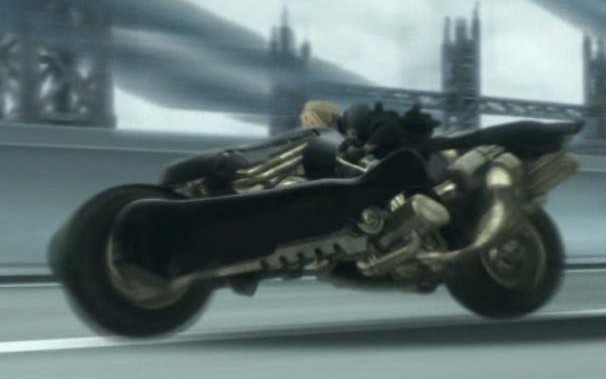
3. Motorcycle duel (Final Fantasy VII: Advent Children, 2005)

Motorcycle duel

Despite a nonsensical plot, Final Fantasy VII: Advent Children is probably the best video game movie I’ve seen, and a personal favorite of mine. Why? Because it’s packed with scenes like this one, in which the hero wields an oversized sword to fend off bad guys while hurtling down a highway on a motorcycle. Everyone in this scene has superhuman agility and reflexes. There are gratuitous slow-motion shots. Explosions and gunshots punctuate a frenetic musical score. (It’s basically The Matrix, but better.) And this, an extended version of the scene, throws in some helicopters because why not.

You can watch this scene here.

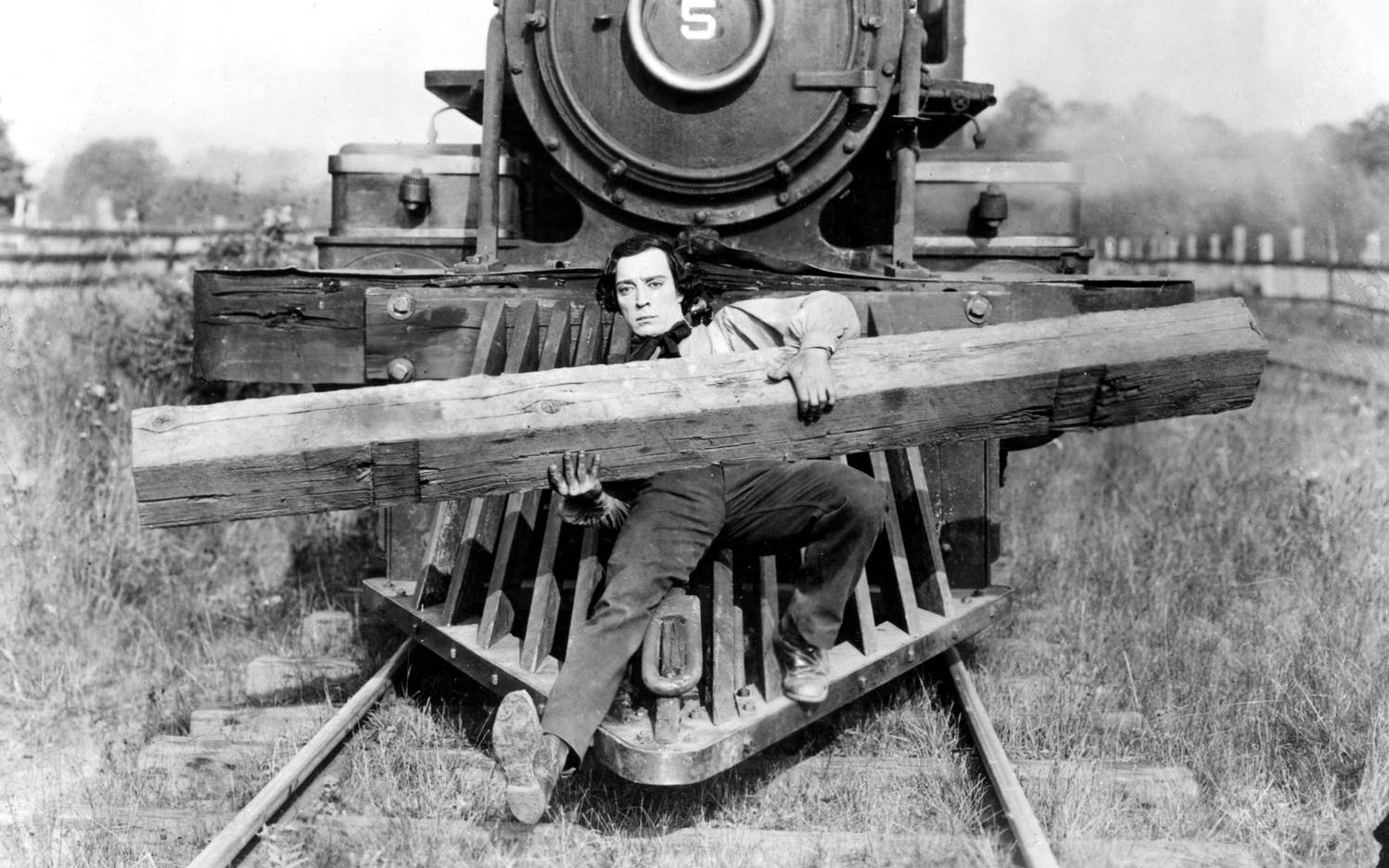
2. Locomotive chase (The General, 1926)

Locomotive chase

Chase scenes are generally frantic, but they don’t have to be. The General, Buster Keaton’s masterpiece, has two phenomenal chase scenes that last at least ten minutes each. In the first, the protagonist chases a train on foot, and then on a handcar, and then on an old-fashioned bicycle, and finally on his own locomotive. In the second, the protagonist’s locomotive is pursued by enemy trains. Everything about these chases is perfect, from Keaton’s deadpan expressions to his ingenious solutions for overcoming obstacles. They may not be fast or furious, but these chase scenes are outstanding.

You can watch part of the first chase here, and you should go watch The General in its entirety. It’s a great film.

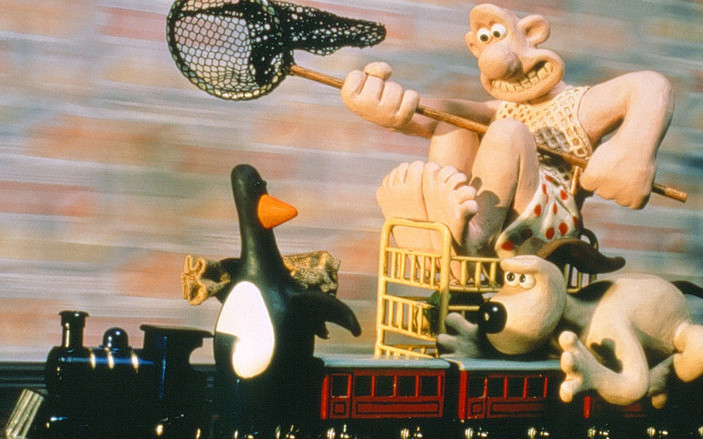
1. Toy train shenanigans (The Wrong Trousers, 1993)

Toy train shenanigans

My favorite chase scene in film history has no guns or explosions. What it has is a penguin, a dog, a toy train, a pair of mechanical trousers and a middle-aged man in his underpants. This scene, animated painstakingly in clay, is superb. As I worked on this top ten list, my younger brother asked me if this scene was number one, and added that he would slap me in the face if it was not. It’s that good. This brief, bizarre, brilliant chase through an ordinary English residence is my favorite in all of film.

You can watch this scene here. Please do.

What is your favorite chase scene in film? Let us know in the comments!

257. Everything Is Awesome?

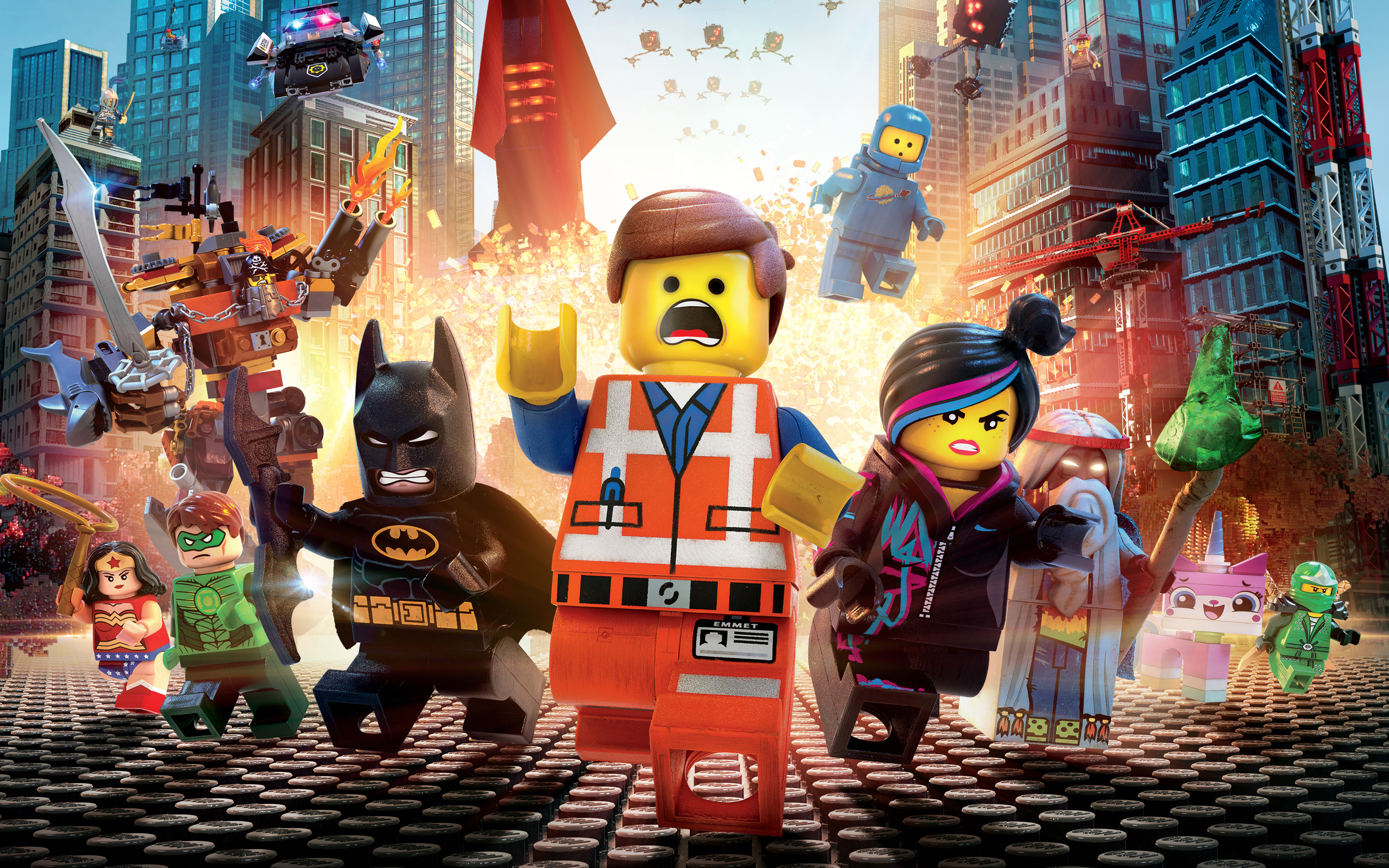
I saw The Lego Movie not long ago. Now, I know other bloggers have already discussed this strange, wonderful, colorful film, but I have a few things of my own to say.

On a Saturday evening weeks ago, I stepped out my front door into chilly gloom, clambered into Tribulation (my rickety car) and sped into the dark, forbidding unknown. Depression, anxiety and vague panic had burdened me all afternoon. It was hard to take those first few steps away from home. I wanted to stay, but I had a mission and dash it all, I was going to complete it.

I was going to see The Lego Movie.

The Lego Movie

I’m really glad I did.

The film was excellent, but I’m not really going to talk about it. I’ll just point out that it features an upbeat, poppish song titled “Everything Is Awesome,” which pretty much sums up the movie.

The Lego Movie is a bright, cheerful, clever film, and it did me good. Getting out did me good. Defying depression and exploring new places and driving along dark, cold roads in a dilapidated car did me good. These things were different. Some were pleasant. Some were a little scary. For a few hours, I left everything behind.

It helped me see things a little differently.

My life is governed by routines and repetition. Mind, that isn’t a bad thing. Routines are efficient. Doing things differently is challenging, risky and sometimes costly. However, routines have a cost of their own. They lull me into a stupor. Repetition makes me forget there is a wide, wide world beyond my narrow day-to-day experiences.

In a manner of speaking, The Lego Movie is right: everything is awesome. The things repetition make me take for granted are amazing—I just don’t realize it until I leave them behind for a little while.

G.K. Chesterton wrote a story in which a man abandons his children, wife and home and embarks on a long journey. He exclaims, “I won’t stay here any longer. I’ve got another wife and much better children a long way from here. My other wife’s got redder hair than yours, and my other garden’s got a much finer situation; and I’m going off to them.”

The man walks and walks and walks. He walks all the way around the world, and finally comes to his “better” home and “better” family. They are exactly the same ones he left behind… yet they are better. His home and family are better because he has learned to appreciate them. By leaving behind his home and its routines, the man has the exquisite pleasure of coming back to them. He realizes everything is awesome.

Weeks ago, I realized the same.

I guess this means I’ll be going to the cinema sometimes, and varying my route back from work, and ordering more than one kind of sandwich at Subway, and generally finding more excuses to get away. Everything is awesome. Sometimes, I just need to do things a little differently to see it.

252. About Storytelling: Endearing Quirks

When I was in high school, I had a teacher named Mr. Quiring whose legendary silliness I have mentioned one or twice before on this blog.

For example, he once removed his necktie and unbuttoned his shirt during class to reveal a T-shirt emblazoned with the Batman logo. (He wasn’t really Batman, sadly.) At various times, Mr. Quiring pelted me with chocolate, brandished a meat cleaver and leaped off a chair shouting “To infinitives and beyond!”

The reason Mr. Quiring’s antics amused me so much is that he is not a silly person. Quite the contrary: Mr. Quiring is one of the most intelligent, dignified gentlemen I have ever known. It’s as though he compressed all the humor and silliness of ordinary people into short, intense bursts. Every time he did something outrageous, he reverted immediately afterward to his solemn self.

Mr. Quiring provides fine examples of endearing quirks: those funny little habits of real people or fictional characters that make us love them.

Some fictional characters are simply masses of endearing character quirks. Wooton Bassett, the mailman from Adventures in Odyssey, has too many odd habits to count: collecting fast food toys, expressing his feelings by the color of his slippers, baking jellybean casseroles and exiting his house via a slide. Wooton is fully capable of thoughtful introspection, but he’s mostly just hilarious.

Wooton BassettSome characters are less silly, balancing funny quirks with tragic flaws or struggles. Consider the Doctor from Doctor Who and Vash the Stampede from Trigun. The Doctor is an intergalactic goofball, bouncing around the universe with a beaming face and a slew of witty remarks. Vash is a gunslinger who obsesses over doughnuts, whines like a child and walks into a firefight with a trashcan lid on his head.

My thanks to my younger bro for permission to use his artwork!
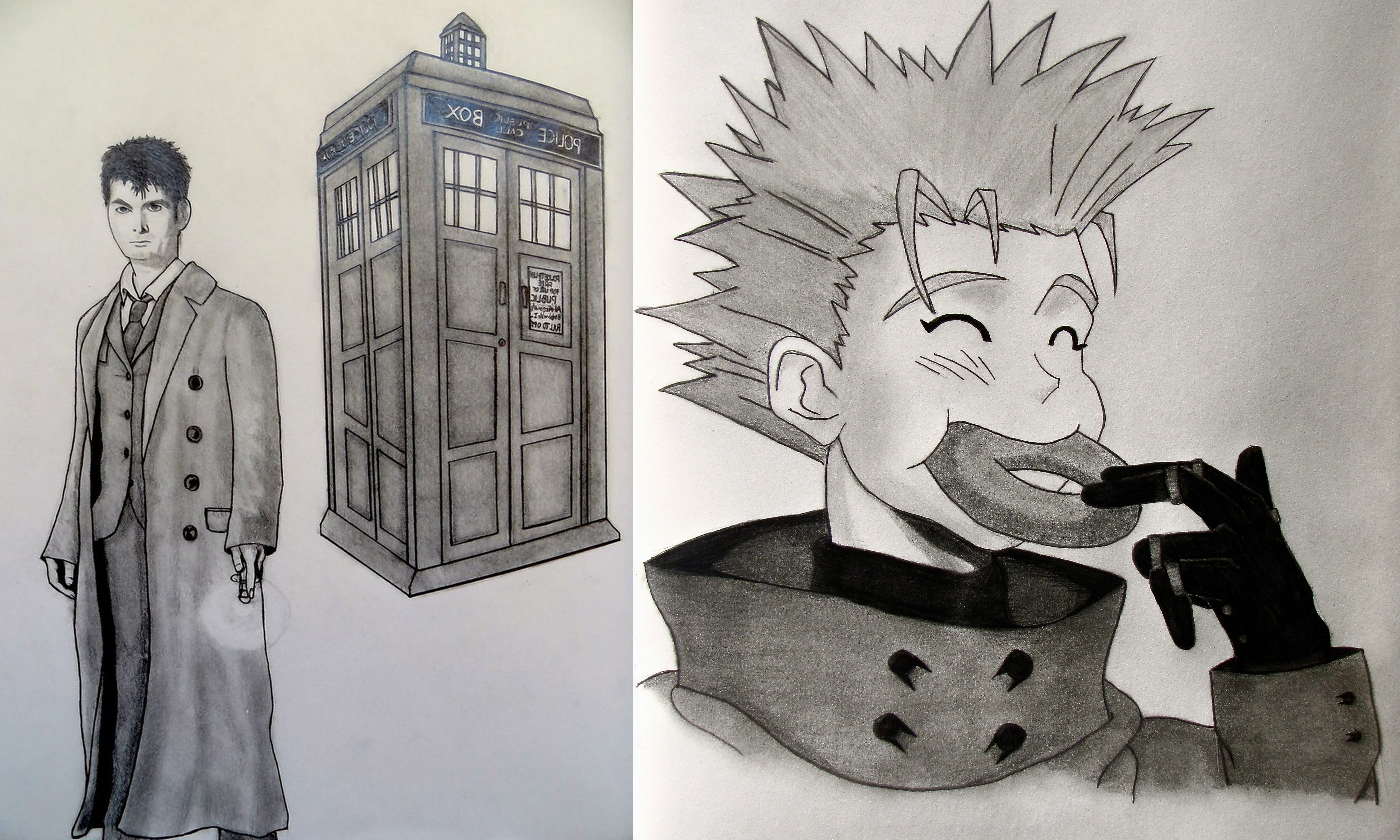
My thanks to my younger bro for permission to use his artwork!

Vash and the Doctor seem sillier than Wooton, but their quirks mask profound inner turmoil. The Doctor despises himself. His travels throughout space and time are not a careless vacation, but his way of running away from past mistakes. Vash also has a lot to hide. The body beneath the overcoat is covered in horrific scars, and the man behind the goofy grin is tormented by regret for the lives he couldn’t save.

In the case of Wooton, endearing quirks are a form of comedy. The quirks of Vash and the Doctor serve a different purpose. Their odd habits hide sad struggles, and make the viewer feel more when their stories take turns for the tragic. After all, it’s easier to feel sorry for funny characters than for serious ones.

Then there is Miles Edgeworth, the friendly rival of Phoenix Wright from the Ace Attorney series. Like Mr. Quiring, Edgeworth is dignified, composed and intelligent.

Miles Edgeworth

Edgeworth also has a secret.

This respected prosecutor is secretly a fan of Steel Samurai, a cheesy show for kids about a futuristic warrior and his neverending fight for justice. Edgeworth vehemently denies liking the show, of course… but there’s his inexplicable knowledge of Steel Samurai trivia and the Steel Samurai action figure in his office.

In the case of super-serious people like Mr. Edgeworth, a single quirk can make a cold, distant character seem a little more human. Liking Steel Samurai is a weakness, but not a sin. We can respect Edgeworth, and we can also laugh at him.

Carelessly loading a character with endearing quirks is a mistake: too many odd habits, or quirks that seem out of place, are irritating. Used intentionally, however, endearing quirks can develop great characters—and make us laugh!