451. The Sordid Story of My Typewriter Monkeys

For nearly five years, I have run this blog with the reluctant help of a dozen typewriter monkeys. What exactly, you ask, is a typewriter monkey? It’s a monkey with a typewriter, of course. They aren’t the best assistants, but my monkeys were cheaper than hiring a secretary, so here we are.

Some time ago, one of my readers expressed interest in learning more about my monkeys. His comment made me realize how little I knew about them. In fact, all I knew for sure was that they liked setting stuff on fire. I was a bit nervous to dig any deeper.
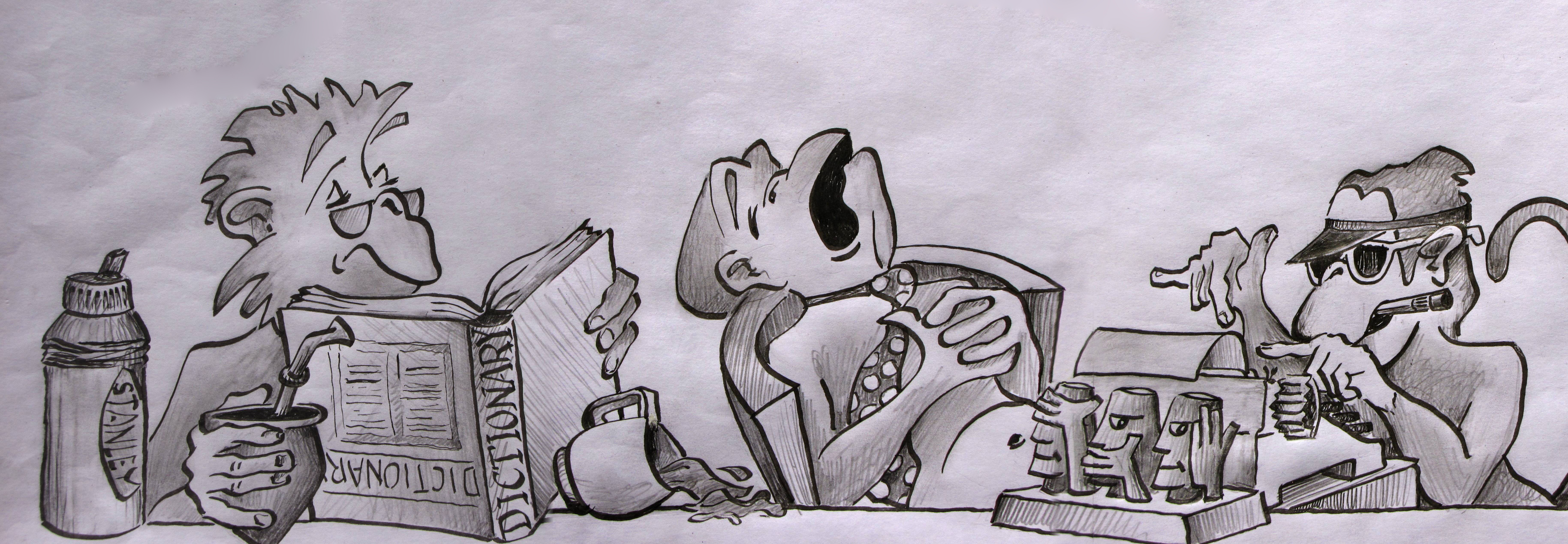
Typewriter monkeys (1 of 2)

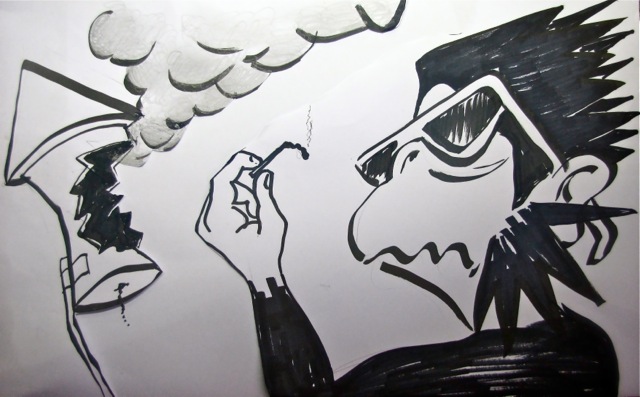
The monkey on the right looks a bit like Hunter S. Thompson, which is completely appropriate: “fear and loathing” is a phrase often used in describing my monkeys.

All the same, I feel I owe my readers some answers, so I recently did some research into my monkeys’ sordid past. What I found was… not surprising, actually. I found not solid facts, but a patchwork of dark hints and sinister rumors. How many are true? I don’t know, and I would rather not. I can sleep at night not knowing.

Here at last, dear reader, is the story of my typewriter monkeys. Here is the shameful tale of Sophia, Socrates, Plato, Hera, Penelope, Aristotle, Apollo, Euripides, Icarus, Athena, Phoebe, and Aquila. Don’t say I didn’t warn you.

Typewriter monkeys (2 of 2)

Here my monkeys are “fixing” a typewriter. May it rest in peace.

(In case anyone is interested, here’s the true story behind my typewriter monkeys. It isn’t nearly as interesting as the made-up one.)

I bought my typewriter monkeys on Amazon.com back in 2011 from a company called Press Paws, Inc. (It seemed like a good idea at the time.) It didn’t take me long to realize my mistake, but when I tried to contact the seller, it remained mysteriously out of reach. I didn’t pursue the matter any further at the time; I was too busy putting out fires and mopping up puddles of typewriter ink.

More recent attempts to locate Press Paws led me nowhere. However, after digging around some of the darker corners of the Internet, I stumbled upon a man who claimed to have known my monkeys before Press Paws acquired them.

This man requested anonymity, so I’ll call him Socrates. He claimed to have worked as a janitor for Tough Nut, a high-security wildlife refuge “somewhere in the Amazon.” (I assume he meant the geographical area, not the online store.) According to Socrates, Tough Nut is where conservationists send the wildlife too, um, wild to be kept anywhere else.

Of all the animals living in Tough Nut, none were tougher (or nuttier) than the twelve monkeys known as the Dirty Dozen. They came from all corners of the world. None of the staff at Tough Nut knew much about them, but there were plenty of rumors.

One of the monkeys was rumored to be el Bandido Peludo de Sonora, a legendary outlaw who terrorized tourists to Mexico’s Sonora state. He was notorious for never actually holstering his weapon, keeping a banana in the holster instead.

Another member of the Dirty Dozen had once belonged to Somali pirates. Another was once a pickpocket in Mumbai, and yet another had been the mascot of a dive bar in the Bronx. I wasn’t even slightly surprised to hear that one of them had been sentenced to Tough Nut for blowing up a deserted firework warehouse.
Boom, baby.

Of all these shameful reputations, the worst belonged to a monkey who had once worked for TMZ.

Surrounded by ominous rumors, the Dirty Dozen gained a fearsome reputation among the other animals in Tough Nut. Even the bears and tigers feared them. The Dirty Dozen committed such dreadful crimes as starting fires, inciting riots, and talking too loudly during movies.

In the end, the monkeys were so unmanageable that Tough Nut sold them to Press Paws for the equivalent of seventeen United States cents. Press Paws managed to sell the Dirty Dozen (for quite a bit more than seventeen cents) to an unsuspecting college student, before shutting down and apparently erasing all traces of its existence.

I was that college student, of course. I renamed my gang of monkeys the Typewriter Monkey Task Force, finished putting out the fires, and started a blogthis blog, in fact, which I named after my typewriter monkeys in an optimistic attempt to earn their respect. (It obviously didn’t work.)
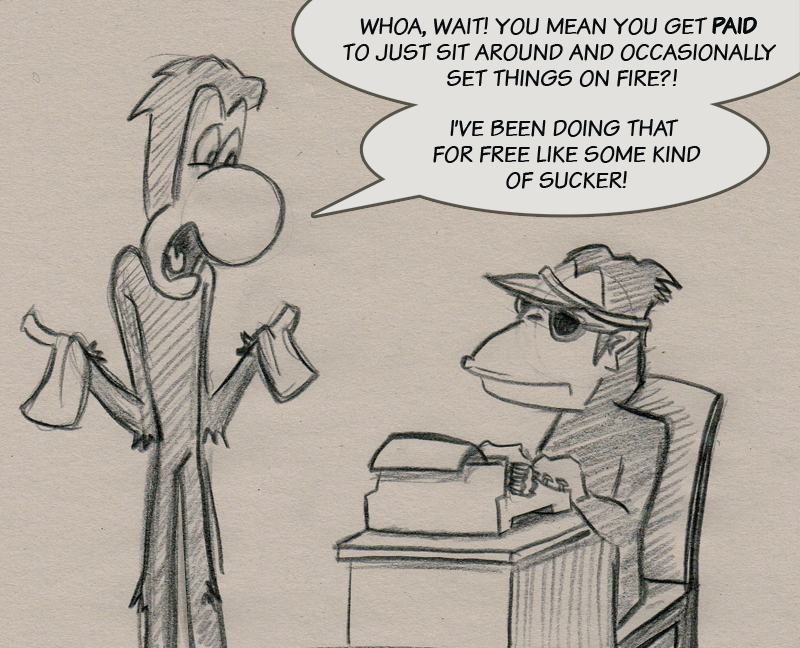
This comic still makes me chuckle. Thanks, JK.

My typewriter monkeys have spent nearly half a decade working for me, and these years have been bright. I mean that literally—I can’t count how many times my monkeys have set stuff on fire. Fortunately, my monkeys set fires only when they’re sober, so I don’t have to worry on weekends and holidays. (Thanks to its fireworks, July Fourth is the exception to this rule. Wait, that’s in two weeks, isn’t it? Flipping heck.)

There you have it, dear reader: the sordid story of my typewriter monkeys. I hope to finish this blog before the year ends, and to send my monkeys packing. Where will they go? I don’t care, so long as it’s far from here.

I smell something burning. I had better end here.
450. Adam Answers

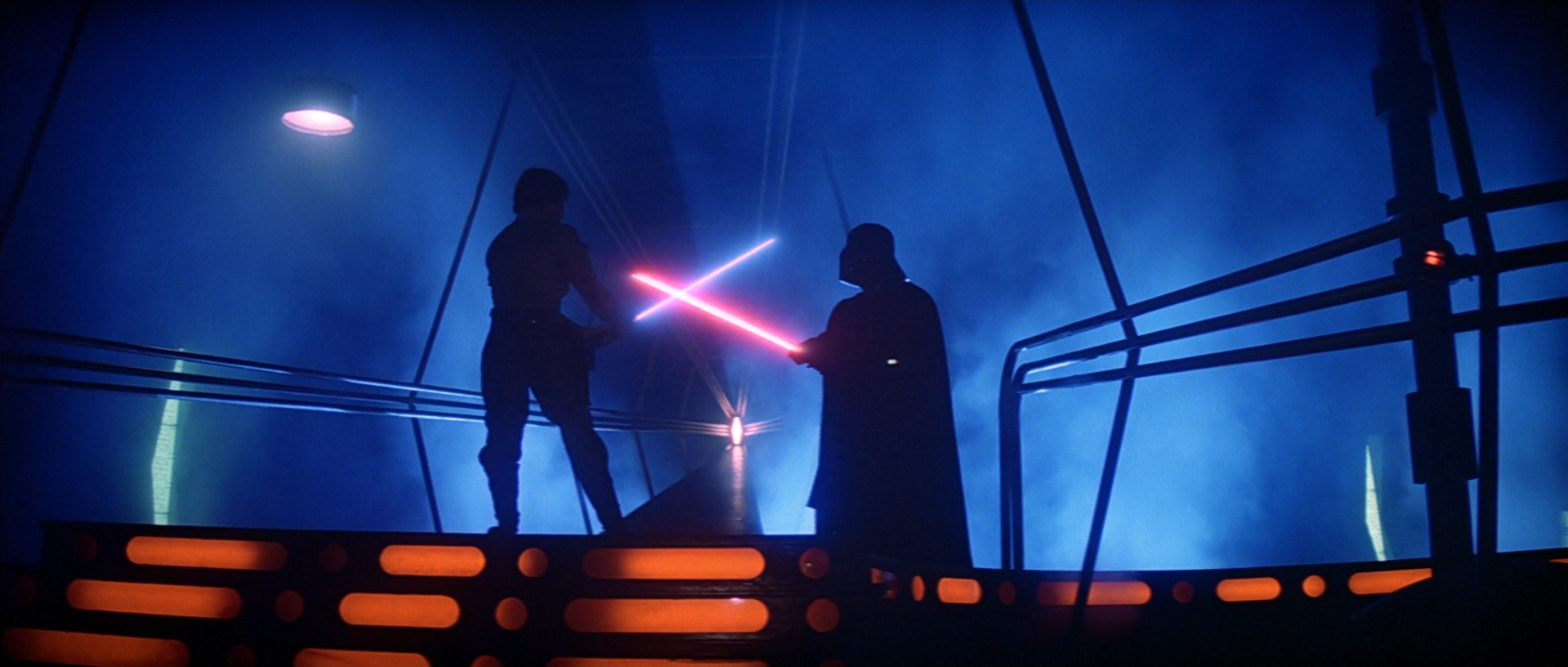
As TMTF hits its last fifty-post milestone before the end, I want to pause a moment, thank everyone who has been a part of this blog’s journey, and declare my opinion that Empire Strikes Back is the best Star Wars movie.

Empire Strikes Back

The greatness was strong with this one.

All right, with that out of the way, here are my answers to the questions submitted by readers for today’s Q&A. Here we go!


JK asks: In spite of your down-playing your abilities, I think your singing is quite lovely. Do you have any music related experience/training, or is it just natural know how? Play any instruments to go along with the vocals? Follow up, can we get another serenade while you’re at it?

Aw, thanks, JK! I sang in choir a couple of years in high school, and performed with a few worship teams over the years, but I’ve never taken lessons or anything.

I am a little proud of my vibrato: that wobble in the pitch of my singing voice. As a kid, I heard other singers perform the vibrato technique. I thought it was neat, so I trained myself to do it. Mine is a bit forced, but hey, I’ll take what I can get.

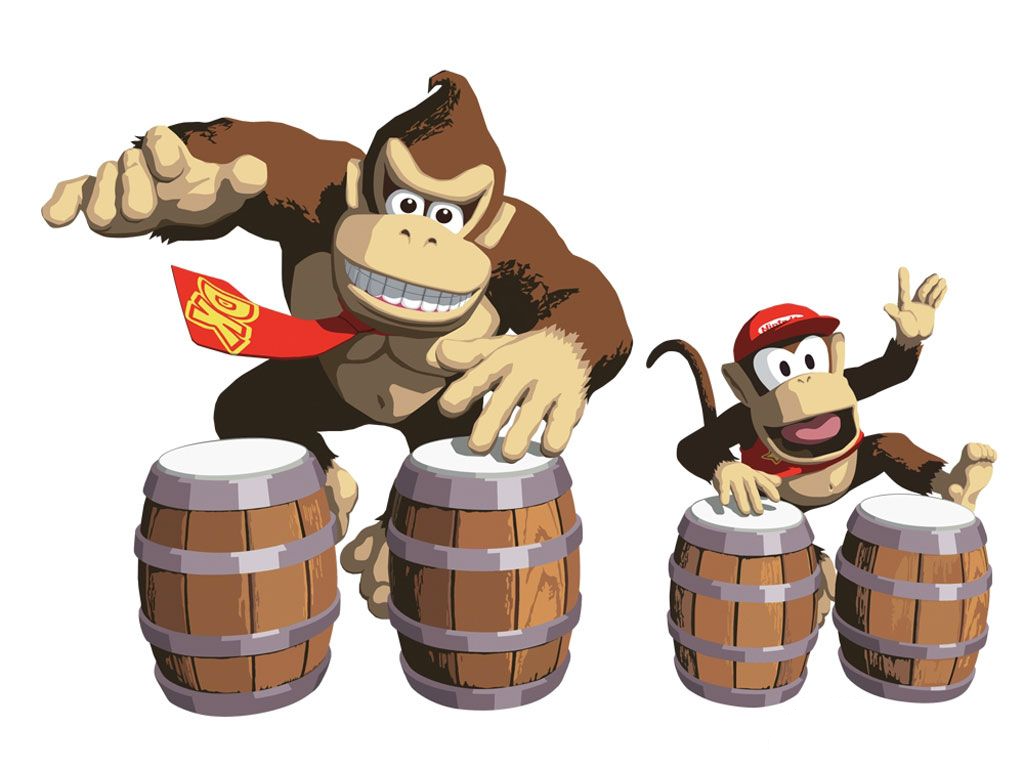
The only instrument I’ve ever played is the bongo drum, for which I have no training whatsoever, and on which I performed with more enthusiasm than skill.

Bongos

None of my typewriter monkeys play bongos, thank heaven. Imagine the racket!

I’ve thought about doing one or two more song covers, but for an amateur like me, they take a ton of trial and error. I’d rather spend my non-blogging free time relaxing! I did cover “Baba Yetu” karaoke-style a while back, though, singing over the original track. I’m really pleased with how that one turned out.


Sarah asks: How much time per week do you and your monkeys put into the blog? And how has that changed since you started the site? Of all the places you could have chosen to live, why Indiana?

Good questions! My time spent blogging varies wildly from week to week, and I don’t really keep track of it, but I estimate three to eight hours.

Depending on the kind of post I write, I might dash off it in an hour or slave away at it for three to five. Personal reflections and silly thoughts on random subjects are quicker and easier to write; serious treatises take tons of time and effort. Posts involving audio recording or image editing take extra time.

I’m probably spending less time on the blog these days than when I started, thanks to my decision long ago to publish a short, geeky commentary every Wednesday instead of another numbered post. The shorter mid-week updates require much less effort, and they let me share stuff I think is cool.

Your final question is a familiar one! When people ask me why I settled in Indiana after living overseas, I tell them, “It’s a really long story, but I’ll give you the really short version.”

Here’s that short answer: I live in the United States because, of all the countries in the world, it’s the only one for which I currently have the legal paperwork required for a job; I live in Indiana because, of the few roots I have in this country, most are here; and I live in the little town of Berne because, when I was looking for a job years ago, it had the only place that would hire me.

Berne ain’t a bad place to live.

I’m fond of Berne, but it really could use a movie theater, some mountains, a beach or two, a Japanese noodle stand, and a Starbucks. Ah, well. Nowhere is perfect, I guess.


JS asks: What about pants?

A most profound question. I cannot offer an answer worthy of it, for I am but a foolish mortal. How can I, or any of the humans who live their short lives upon this fading earth, match a question of such wisdom with an answer equally wise?

The word pants can be traced back through the English, French, and Italian languages to Pantalone, the character stereotype in commedia dell’arte, a form of performance art popular in sixteenth-century Italy. This stereotype, which caricatured Venetians, was named for Saint Pantaleon, a saint popular in Venice.

By following these tangled skeins of history and etymology, we trace pants to a legendary saint. Does its connection to an ancient martyr make pants the holiest of clothes?

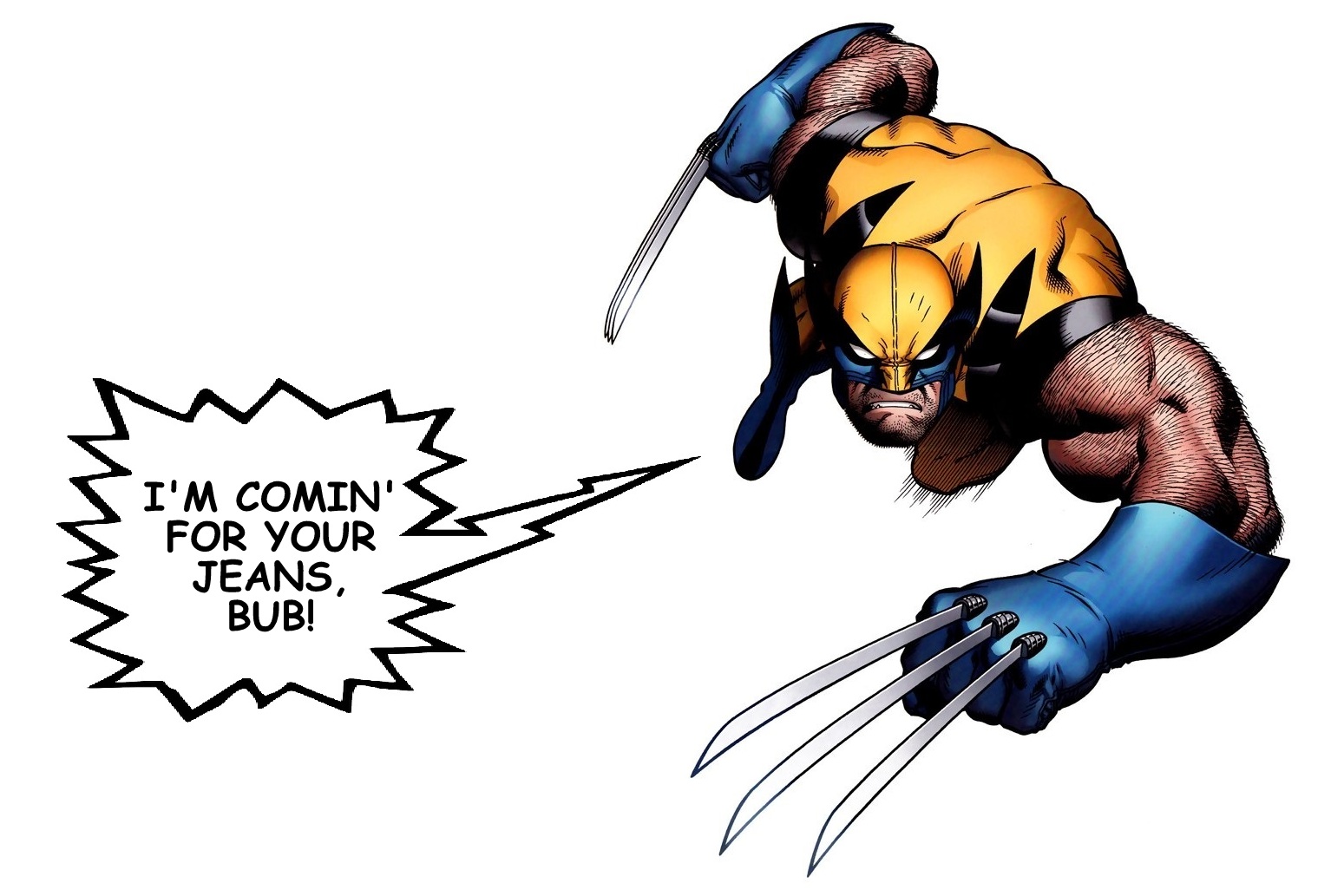
Speaking of holey clothes, why do some stores sell torn jeans? Who actually buys pants that, as Dave Barry put it, appear to have been ripped to shreds by crazed wolverines? That’s another question for which I have no good answer.

Wolverine

Not that kind of wolverine, guys.

Returning to my reader’s question, a character in Avatar: The Last Airbender, my all-time favorite show, offers this unfathomable wisdom: “Pants are an illusion, and so is death.”

My own view on pants is that a gentleman shouldn’t leave home without them.


That concludes today’s Q&A post! I’m grateful to everyone who submitted questions; without you, this post would have been embarrassingly short. Thanks, guys.

With fifty posts left, TMTF is hitting the final stretch at last. I could say a lot, but I’ll save it for some other time. For now, I will only say this: Onward!

449. Everything You Ever Wanted to Know about Introverts (but Were Afraid to Ask)

I’m currently gathering questions for a blog Q&A this Friday. I’ve received questions from exactly one person so far. (God bless him.) Friday’s post will be really short if no one else speaks up! If you’ve ever wanted to ask me anything about my life, blog, book project, or anything else, ask away!

I plan to attend a writing conference later this summer. It will probably be an educational experience. It shall certainly be a caffeinated one. I plan to drink a lot of coffee, that very present help in trouble. After all, as an introvert at a crowded social event, I’ll need all the help I can get.

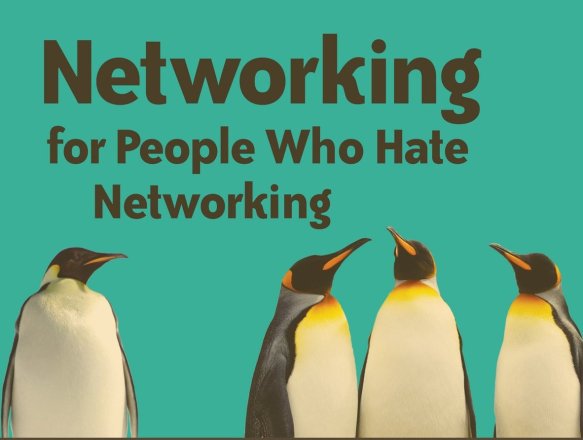
That said, I recently picked up a book titled Networking for People Who Hate Networking on my latest visit to the bookstore. The book was on sale, is marketed to introverts, and has penguins on the cover. Penguins, guys. How could I refuse?

Networking with penguins

Professional Networking: Now with 100% More Penguins!

The book hasn’t offered any spectacular insights, but it has served (so far) as a solid introduction to introverts, extroverts, and ways both groups can connect with new people.

A few of the book’s points are well worth sharing, so I am going to share them.

Misconceptions shall be shattered! Stereotypes shall be broken! A sword day, a red day, and the sun rises! Ride now! Ride—wait, sorry, that’s Théoden’s speech from The Return of the King. I got a bit carried away. Let me try again.

For introverts and extroverts alike—and for all of those people who don’t know the difference—here is everything you ever wanted to know about introverts, but were afraid to ask.

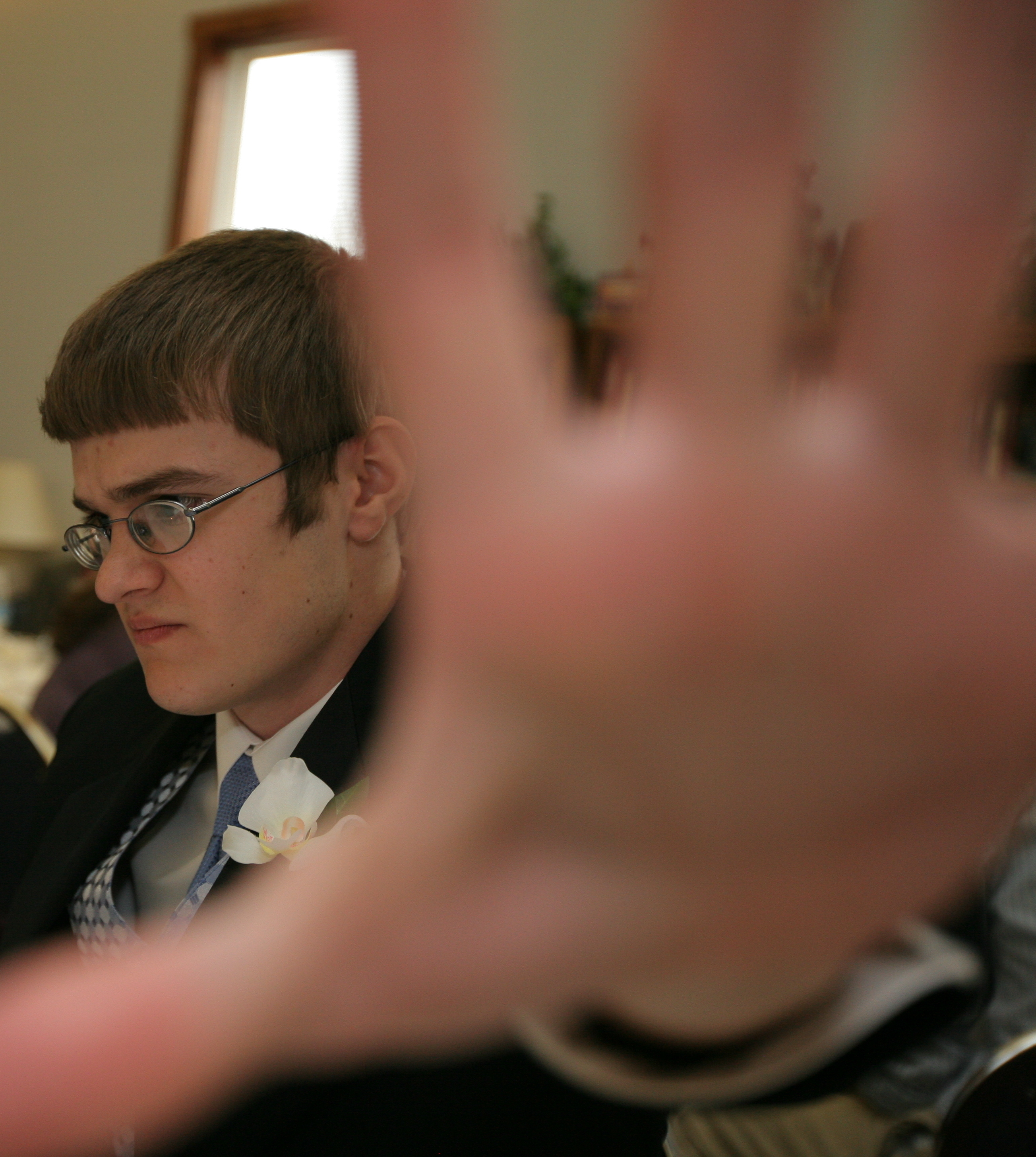
Trying to cope

I’m an introvert. You may have noticed.

Introverts are not necessarily shy or quiet.

Many introverts can be talkative; this introvert, especially so. Introverts are often labeled shy because we tend to be guarded around people we don’t know well. Once we feel comfortable around others, we drop our guard and speak up.

Extroverts, by contrast, often feel comfortable talking around others, even people whom they don’t know well. That can be a great gift. Good for you, extroverts.

I’m generally very quiet around new people. Once I get to know them, they sometimes can’t shut me up.

Introverts are not necessarily negative.

Introverts tend to be less impulsive than extroverts. We need time to consider circumstances and process decisions. Thus, when given a request or invitation for which an immediate response is expected, we tend to say, “No.”

If we have a little time to think about an invitation or request, and to make up our minds without being rushed, introverts are much more likely to respond positively.

Introverts need time alone.

I use the word need here deliberately. We don’t merely want it—we need time alone in order to function well. Without opportunities to regain our mental balance, away from distractions and other people, we become stressed, anxious, or grumpy.

This, dear reader, this is why it bothers me so much when people interrupt me when I’m reading a book on break at work. It isn’t really about the book. In my job, which consists of working with dementia patients whose behaviors are often exhausting, I need time alone, immersed in a book, without coworkers dragging me into inane conversations. I get enough tiring human interactions when I’m working; I don’t need them on break.

Not that I’m bitter or anything.

(I may be a little bitter.)

Introverts tend to weigh their words carefully.

I typically choose my words with near-obsessive care. I want to say exactly what I mean, and to mean everything I say. Nuances matter to me. Like most introverts, I think to talk.

Extroverts, by contrast, often talk to think. Talking is how they reach their conclusions. They think out loud. This means their views and opinions can change wildly from one conversation to the next, and even from one moment to the next. This makes it easy for introverts to label extroverts thoughtless or indecisive. It’s important for introverts and extroverts alike to understand these differences in mental processing.

Introverts excel at depth, not quantity.

Extroverts often have vast social circles. Introverts tend to have a close circle of dear friends. Extroverts go wide; introverts go deep. With fewer social commitments, introverts can spend more time and effort developing those closest relationships.

These principles can be applied in the context of networking. Introverts can be aware of different communication styles, plan opportunities to recharge, and focus on making a few key connections instead of using up their energy on small talk. As I’ve read the Guide to Networking with Penguins, or whatever that book is titled, I’ve been rather gratified to see that it also recommends some of my own strategies for coping with social events.

When I attend that writing conference later this summer, I will add to the book’s admirable list of tips my own tried-and-true strategy: liquid courage. It is for such times, after all, that God made coffee.

448. Neckties Are Evil

I’m currently gathering questions for a blog Q&A next week. If you’ve ever wanted to ask me anything about my life, blog, book project, or anything else, ask away!

Neckties are awful, and the person who invented them should have been hanged. It would have been poetic justice. A necktie is basically a decorative noose, after all. It’s rather morbid if you think about it.

Neckties

One of these things is exactly like the others.

Who decided that a limp strip of cloth, dangling sadly from the throat, should be a formal men’s accessory? Unlike most garments, the necktie doesn’t conform to the shapes and contours of the human body. It just… hangs there.

I can’t tie a necktie to save my life. (I suppose this means I lack any sort of class or social graces, which is fine with me.) A couple of years ago, I turned to YouTube, that inexhaustible fount of knowledge, in search of tutorials. I found many, but none of them helped. My fingers, so agile when tapping away at a computer or video game controller, are rubbish when it comes to tying knots.

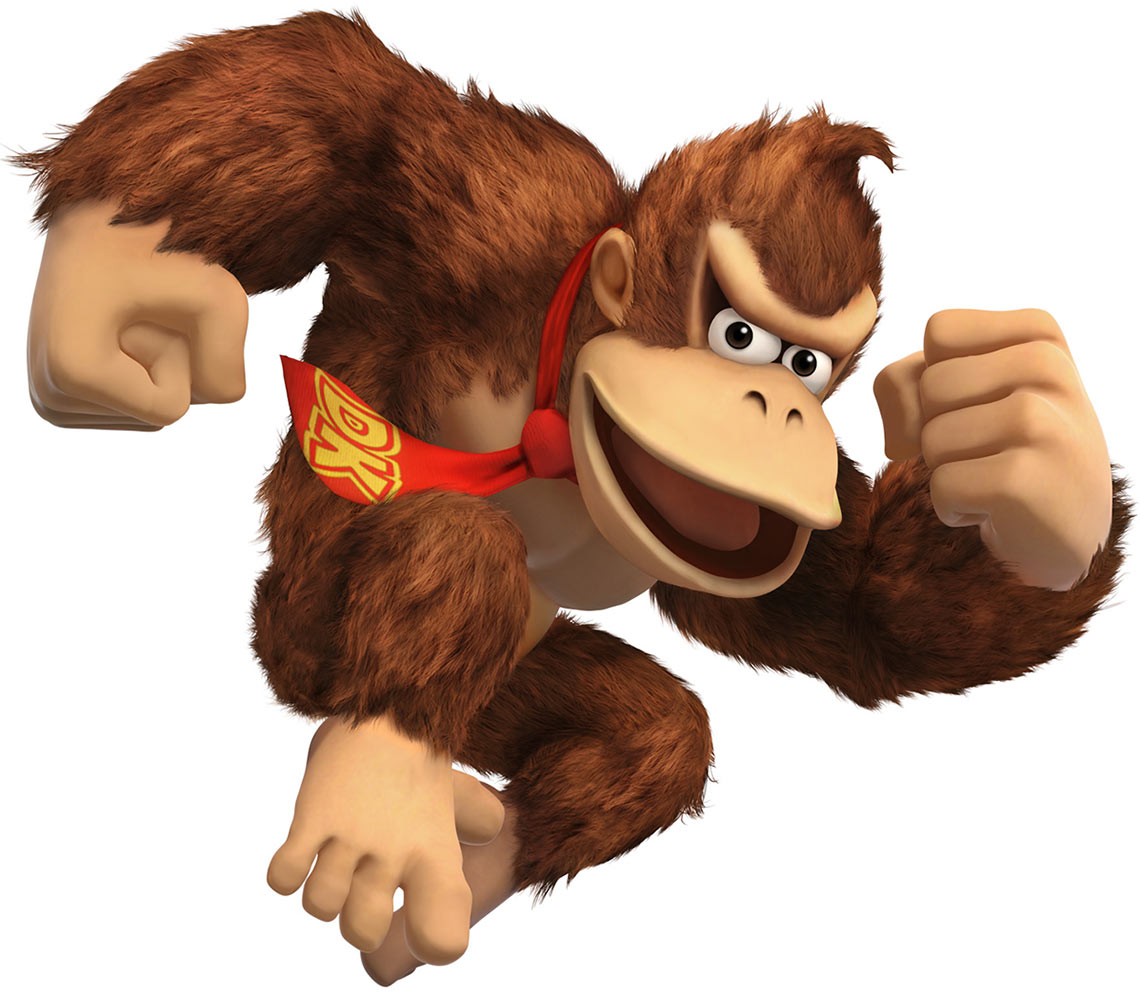
Donkey Kong's necktie

A necktie is unnecessary even if its wearer is wearing nothing else.

Fortunately, none of the jobs I’ve worked have demanded I wear a necktie, so I’ve kept my head out of the noose. Only once that I recall was I ever required to wear a tie.

In the early aughts, I was part of the worship team at my church in Quito. (I banged a pair of bongos; what I lacked in skill, I made up in enthusiasm.) The pastor decided one day that everyone on the worship team should wear a necktie. On the following Sunday, with groans that words cannot express, we showed up wearing neckties.

One young man, whom I’ll call Socrates, rebelled against the pastor’s edict. He wore a necktie knotted neatly around his head like a headband. The pastor was so amused that he allowed Socrates to play with the worship team… but after that Sunday, the pastor was quick to clarify how neckties were supposed to be worn.

I’ll be the first to admit that neckties sometimes look nice—on other people, of course. They add a touch of sophistication when matched with a suit or vest. Alternatively, a mismatched tie gives an untucked shirt a bit of casual, carefree charm. Neckties may be a traditionally masculine accessory, but they can look really cute on ladies.

My favorite kind of necktie, i.e. the kind of necktie I hate the least, is the bow tie. In Doctor Who, the Eleventh Doctor repeatedly insists, “Bow ties are cool,” and I have to agree.

Bow ties are cool

Cool.

He really rocks the look. Bill Nye also looks good in a bow tie.

I admit that neckties can look all right. That said, I blame cultural conditioning for fooling me into thinking that way. Neckties are uncomfortable, useless, and empirically evil. If you’re going to wear a noose, at least keep your neck warm with a scarf!

Waiting for E3

http://www.youtube.com/watch?v=UCExYO-NNMA

E3 happens next week. This annual trade show for the video game industry is like Christmas to gamers like yours truly. New games are shown, game systems unveiled, trailers released online, and announcements made. These exciting videos and headlines are tossed rapid-fire at eager gamers like me, like a stream of crumbs sprinkled among so many hungry goldfish.

This year’s E3 promises news of the new Legend of Zelda game, which was supposed to come out this year but has been delayed to next. In honor of this year’s E3, and because I can’t think of anything else for this week’s Geeky Wednesday post, have eight minutes of beautifully orchestrated Zelda music. The Legend of Zelda games have some rockin’ melodies, and this medley showcases some of the most iconic. Enjoy.

In the meantime, I’ll go back to staring at the calendar. Just six days to go.

447. Ask Me Anything… Again!

This blog hits four hundred and fifty posts next week. I could celebrate this milestone with something extra-special, or else I could be lazy and make my readers do half the work for me. At the moment, that second option sounds pretty good.

Yes, before TMTF bites the dust, I’m going to squeeze in one last AMA. (That stands for Ask Me Anything, in case you didn’t know.) I held one about a hundred posts ago, and to my everlasting surprise, a few people did actually ask me things. I’m not sure whether it’s worth trying again, but I don’t have any other ideas, so it’ll have to do.

From today, June 6, until Thursday, June 16, you may ask me anything! I will accept all kinds of questions by any means of communication: comments on this post, emails, notes via the Contact page, Twitter or Facebook messages, or fortune cookies. (That last one might be a bit tricky.)

On Friday, June 17, I will answer your questions, however many or few. Ask away!

446. Will the Circle Be Unbroken?

I had planned to share this beautiful cover of “Will the Circle Be Unbroken?” at some point, but quixotically decided to record my own cover of the hymn instead. You see, kids, this is why we don’t let Adam near microphones.

My wobbly vocals are propped up by a dynamic piano arrangement from Silas Rosenskjold, who made it freely available on his YouTube channel. The photo in the video, snapped by my dad quite a number of years ago, shows the Basílica del Voto Nacional: a cathedral in Quito renowned for its architecture and hideous gargoyles.

I discovered this lovely hymn in a violent video game, of all places. BioShock Infinite, a first-person shooter, offers the most fascinating take on Christianity I’ve ever seen in a video game. “Will the Circle Be Unbroken?” is part of the game’s soundtrack.

Around the time I shared of how I almost left my faith last year, I found myself often listening to this hymn. Some of its questions seem to be aimed squarely at wavering skeptics like me.

There are loved ones in the glory whose dear forms you often miss; when you close your earthly story, will you join them in their bliss?

You remember songs of heaven, which you sang with childish voice; do you love the hymns they taught you, or are songs of earth your choice?

One by one their seats were emptied, one by one they went away; now the family is parted—will it be complete one day?

One question, the question, stands above the rest: Will the circle be unbroken? Will that legacy of faith, cherished by your loved ones, upheld by generations past, live on in you—or will you break the circle? Will you be the one to shatter this legacy of religious faith?

I know people who’ve broken the circle. I know people who’ve kept it whole. For my part, the circle remains unbroken.

As I work with the elderly, I face regular reminders of the transience and frailty of human life. As James Thurber flatly expressed it, “Even a well-ordered life can not lead anybody safely around the inevitable doom that waits in the skies. As F. Hopkinson Smith long ago pointed out, the claw of the sea-puss gets us all in the end.”

While the skeptical part of me can’t help but question the notion of an afterlife, I rejoice that death is a temporary separation, not a permanent one. I can hardly bear the thought of losing loved ones forever.

When my family is parted, it will yet be reunited one day—thank God.

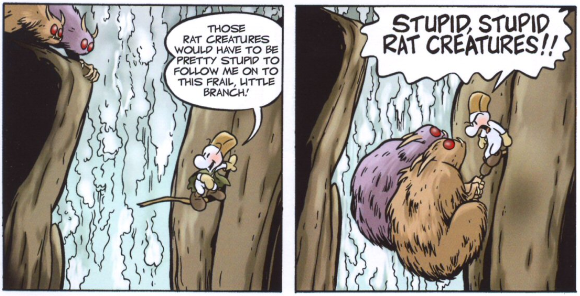
Stupid, Stupid Rat Creatures

Stupid, Stupid Rat Creatures

The panels above mark the exact moment at which I fell in love with Bone, the epic comic book series by Jeff Smith. I could provide story context, but really, none is needed. Stupid, stupid rat creatures.

As an artistic medium, comics face unique challenges, such as depicting action and movement in a limited number of small, silent, static panels. I’m sometimes amazed by the ingenious ways artists bring their comic panels to life, and have noticed a number of visual tricks and techniques used to tell stories in comics.

Absurd sound effects are one way, of course. Others include filter effects, blurred backgrounds, and squashing or stretching to represent movement. In Japanese comics (and animation), symbolic shorthand is common: for example, an oversized bead of sweat to represent anxiety or a throbbing vein to represent anger.

Manga iconography

Manga iconography is a visual shorthand for character emotion.

A thing that delights me in the Bone panels above is how economically the artist tells the story. Several actions must occur between the first and second panels, yet the artist doesn’t bore the reader with them. He sets up the joke and then immediately provides the punchline, assuming the reader is clever enough to infer what occurred between panels without having to be shown. It’s quick, efficient storytelling, and I really dig it.

Bone is an incredible comic series. There’s nothing else quite like it: an unlikely blend of The Lord of the Rings with the Pogo comic strip. It’s at once dark and lighthearted, serious and cartoony, and above all, quirky. There are bloodthirsty rat-monsters in one scene, and jokes about Moby-Dick in the next. Heck, one scene even pits the rat creatures against Melville’s novel. (The rat creatures lose.)

Moby Dick Vs. the Rat Creatures

I adore the rat creatures’ expressions in the third panel.

Jeff Smith self-published the first issues of Bone in the early nineties, helping kick start the indie comics movement, and eventually winning boatloads of awards. I was introduced to the series by the same kindly relative who occasionally sends me random books and comics. (I aspire to be that kind of person.)

I began reading Bone a year or so ago—at this point, I own the entire series—but had to set it aside halfway through due to busyness. At the moment, my reading list is dominated by background reading for my book project, but someday I’ll revisit Bone and read it from start to finish, stupid rat creatures and all.

445. How Much Should I Talk about My Book?

All right, guys. Serious question.

How much should I talk about my book project, the Lance Eliot saga, on this blog?

As TMTF staggers ponderously toward its imminent demise, I’m wondering how to fill its final fifty-something posts. I’m also thinking a lot about the changes I plan to make to Lance Eliot’s story. Should these musings intersect? Should I start sharing some of my plans for the Lance Eliot saga—no major spoilers, mind you, just basic stuff—on this blog?

I’m excited about my book project, and eager to share some of my early ideas. I would appreciate feedback, too. As Neil Gaiman observed, “writing is, like death, a lonely business.” Community is important for creativity. I could use the suggestions, ideas, and enthusiasm of my readers.

Writing is hard

A writer needs all the help he can get.

Another potential benefit of writing about the Lance Eliot saga is the possibility of raising interest in, and awareness for, the project. It would also give me a smoother segue from writing a blog about nothing in particular to writing a book.

However—and this is an important “However,” spoken in a deep voice and with a concerned expression—I don’t want to annoy or alienate any of my readers by talking too much about my writing plans. People read this blog, I assume, for… whatever it is that happens here. (Heck if I know.) Most readers don’t come here to read about unrelated projects.

I don’t want readers who enjoy TMTF for what it is to be disappointed by repeated discussions of a completely separate project. I don’t want anyone to feel that TMTF has become a blog “just for that book project,” especially since there is only a limited number of posts left.

If I wrote about my plans for the Lance Eliot saga, new posts might offer character profiles, an updated geopolitical situation for my imaginary world, stories from its lore, thematic elements, and maybe more.

I’m not sure what to do, so I’m leaving this one to you. What are your thoughts? What would you like to see from this blog? Should I share early ideas from the Lance Eliot saga? Should I stick to… um… whatever this blog is already? At this point, TMTF exists largely because of its readers. (I care about you, believe it or not.)

Should I write occasional posts about my book project, or stick to this blog’s usual topics? Let us know in the comments, or send me a note on social media!