Two Perfect Girls

For the record, I support monogamy. (I also support Pokémon.)

Did you know there was an official Pokémon musical? I haven’t seen it, but I’ve heard most of the songs from its soundtrack, and a few are actually pretty rad. (That said, a few are terrible.) Seriously, though, how cool/weird is it that Pokémon got its own musical?

Heck, they’ll be giving Ace Attorney its own musical at this rate… wait, what? Japan got three separate musicals based on the Ace Attorney series? Of course it did. Of course it did. We’re still waiting on an official Ace Attorney musical in the West, but there’s a fan-made one in the works, and its soundtrack is pretty good. (I was involved with the fan-made musical in a very minor way a long time ago. Good times!)

Returning to the Pokémon musical, the song above, “Two Perfect Girls,” is a bouncy ballad of divided affections. Catching random Pokémon must be a lot easier than wooing the perfect catch.

In other news, Pokémon Go, an augmented reality game, was released a number of days ago. It has flooded my social media with digitally-enhanced pictures of Pokémon in real-life parks, streets, restaurants, churches, and… bathrooms. The world just got a little weirder, guys.

457. The Sirens Are Calling for Me

No man is an island, entire of itself; every man is a piece of the continent, a part of the main. If a clod be washed away by the sea, Europe is the less, as well as if a promontory were, as well as if a manor of thy friend’s or of thine own were: any man’s death diminishes me, because I am involved in mankind, and therefore never send to know for whom the bell tolls; it tolls for thee.

~ John Donne

Nearly every time I think of John Donne, I remember the concluding lyrics of “Can You Feel the Love Tonight” from The Lion King. This is admittedly an odd reaction to a centuries-old English poet, but there’s a reasonable explanation, I swear!

When I was in high school, I did an assignment on a meditation Donne wrote about friendship. (I think Donne wrote it; someone else may have.) He argued that friendship and romance take away from each other: as a man grows closer to his romantic partner, he grows farther from his friends. His affections become divided.

I explained this concept in my assignment. When I received it back from my teacher, I found the following words scribbled in the margin: “And if he falls in love tonight….” These apt lyrics from “Can You Feel the Love Tonight” are easily the best thing anyone has ever written on any of my homework.

In short, their pal is dooooooomed.

I’ve read hardly anything by Donne, but one of his statements is very famous. It provided the title for one of Earnest Hemingway’s novels. Heck, even I’ve quoted it. It’s his statement on our shared humanity: “Never send to know for whom the bell tolls; it tolls for thee.”

In other words: If someone dies, and the funeral bell rings, don’t ask who died. It was a fellow human, and as a member of the human race, you just lost a piece of yourself. The bell rings for you.

On a related note, I’ve been hearing a lot of sirens lately.


I listen to the sirens as they sing me back to sleep.

I pray that no one’s seriously hurt.

It feels like everything is dying at the pivot point of me.

I listen to the sirens tell me things could still be worse.

~ Relient K


I live in a quiet corner of Indiana. There aren’t many violent crimes around my home. Throughout the United States, however, there has recently been a number of shootings. It’s old news at this point, and I won’t rehash the sordid details. It’s enough to know that a lot of people have lost loved ones. A lot of people are angry. A lot of people are scared.

None of this affects me directly. I’m a white dude in a small town in Indiana. I never hear gunshots; the loudest things around here are geese and firecrackers. The tragedies across the US are just headlines on the Internet and blurred articles in the newspaper. My immediate reaction is to say “That’s really sad,” and then to get back to whatever I was doing.

Police siren

I hate the sound of sirens.

It’s exactly the same when I hear sirens. I don’t know whether they’re announcing a medical emergency, a police arrest, or a house on fire—all I know is that sirens are bad news. I often take a moment to pray for those trapped in whatever tragedy summoned the sirens. Beyond that, I’m not affected. Those sirens call for someone else… don’t they?

The truth is that sirens are a lot like Donne’s bells. They’re calling for me. Every siren, online article, and smudged newspaper headline tells me that humankind is broken, and that I’ve lost something.

I’m not sure what to do with that.

456. TMTF’s Top Ten Dragons

A while back, TMTF ran a top ten list of hot guys in fiction—guys who are literally hot, I mean. As I made the list, I was strongly tempted to fill it with fire-breathing dragons. I eventually wrote about other fiery characters, saving the dragons for a future top ten list.

That time has come. Today is a day of dragons.

Well, I won’t let this introduction dragon—sorry; drag on—any longer. There’s no claws, um, cause for further delays. These dragons hail from tails, I mean, tales of all kinds, old and new. (Heck, am I ever ember-rassed—embarrassed, I mean—by these dragon puns. I thought they were clever, but the scales have fallen from my eyes… so to speak.)

Feel the heat, ladies and gentlemen, as TMTF presents…

The TMTF List of Top Ten Dragons!

Be ye warned: Here there be dragons, and also spoilers.

Before we begin, a quick note: I considered including Lewis Carroll’s Jabberwock on this list, but it’s clearly not a dragon. It’s a Jabberwock. There’s a difference… I think.

10. Elliott (Pete’s Dragon)
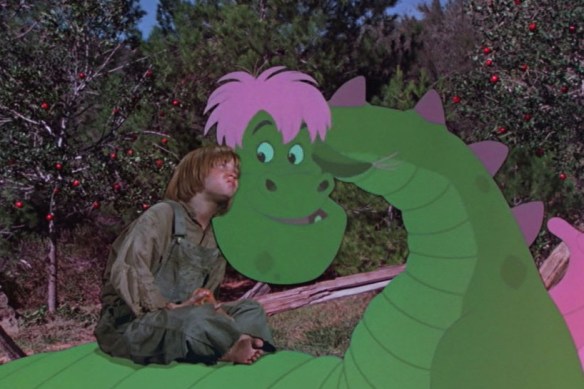
Elliott

In this classic Disney film, Elliott is the dim-witted but well-meaning protector of Pete, an orphaned boy. Elliott communicates in good-natured grumbles, mumbles, and clicks. He can also turn invisible, which allows him to hide from grownups (and made less work for the film’s animators). Nearly everyone assumes Pete’s dragon is an imaginary friend, but that doesn’t stop him from being a faithful one. A remake of Pete’s Dragon will soon be released, but its oddly furry Elliott won’t replace the lovably derpy original.

9. Trogdor the Burninator (Homestar Runner)

Trogdor the Burninator

Have you ever wanted to draw a dragon? It’s easy! Just follow Strong Bad’s simple, step-by-step instructions—and witness the creation of a beloved Internet icon. Trogdor the Burninator began on a sheet of notebook paper as the letter S, followed by teeth, “spinities,” angry eyebrows, and a beefy arm “for good measure.” This silly sketch quickly spawned a cheesy death metal song and a couple of browser games, and went on to become one of the Internet’s most enduring memes. Strong Bad puts it well: “When the land is in ruin … only one guy will remain. My money’s on Trogdor.”

8. Ran and Shaw (Avatar: The Last Airbender)

Ran and Shaw

There are basically two types of dragons. The Western dragon, rooted in European folklore, is a fierce beast. The Eastern dragon, born of Asian mythologies, is nobler and wiser. These dragons are that second type. Ran and Shaw are godlike creatures who guard the secrets of firebending, an ancient martial art. They are silent and mysterious, helping only those who prove themselves worthy, and adding to the fascinating lore of my all-time favorite show.

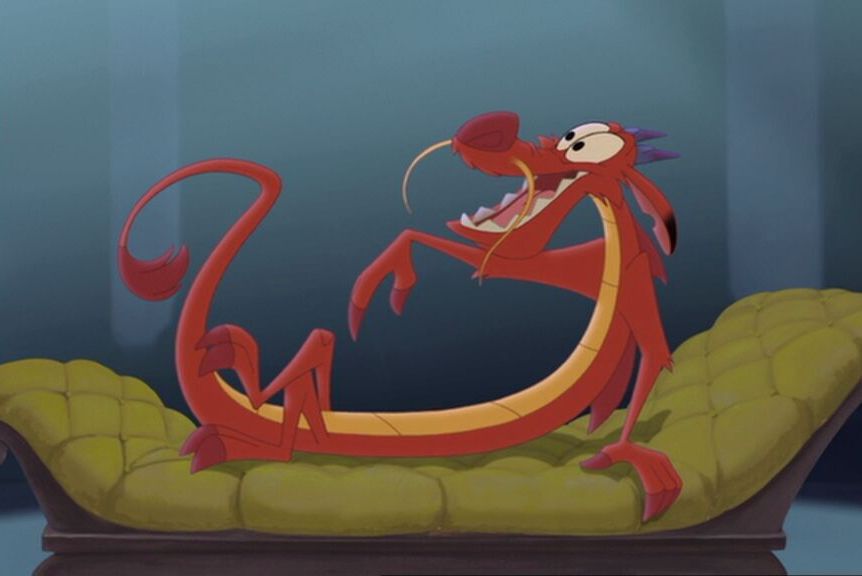
7. Mushu (Disney’s Mulan)

Mushu

I just declared Eastern dragons wise and noble, but Mushu is an exception to the rule. This tiny dragon is sent to aid the heroine of Disney’s Mulan by the spirits of her ancestors. (They meant to send a bigger dragon, but Mushu went instead.) This irreverent spitfire is full of bad ideas, but his heart is in the right place. Forget Malificent. In this story of war and loss, Mushu makes us laugh, and earns his place as Disney’s best dragon.

6. Spike (My Little Pony: Friendship Is Magic)

Spike the dragon

This young dragon is a dude in a world of candy-colored ponies, and he knows it. He survives as any self-respecting male does when surrounded by emotional females: he makes sarcastic remarks. Behind the snark is a kid who is in turn earnest, selfish, thoughtful, and insecure. In a couple of unexpectedly deep episodes, Spike comes to terms with his identity: neither a pony nor a typical dragon, belonging to neither group, yet finding acceptance in both. And did I mention his deadpan snark? Spike may not be the most consistent character ever written, but I like him.

5. Eustace Clarence Scrubb (The Voyage of the Dawn Treader)

Eustace the dragon

By the time the Dawn Treader, a ship battered by wind and waves, reaches the safety of a deserted island, Eustace Clarence Scrubb is sick of everything. This ill-tempered brat abandons his fellow passengers and goes for a long walk, which ends with a nap on a dragon’s abandoned treasure. He awakes, in the fine tradition of Gregor Samsa, transformed into a monstrous vermin—a dragon, actually. This outward change is horrifying, but prompts a positive inward transformation. As a dragon, Eustace finds his humanity, and eventually regains his human form in a scene that echoes the redemptive grace of Jesus Christ. Eustace may be only a temporary dragon, but he’s quite a good one.

4. Hungarian Horntail (Harry Potter and the Goblet of Fire)
Hungarian Horntail

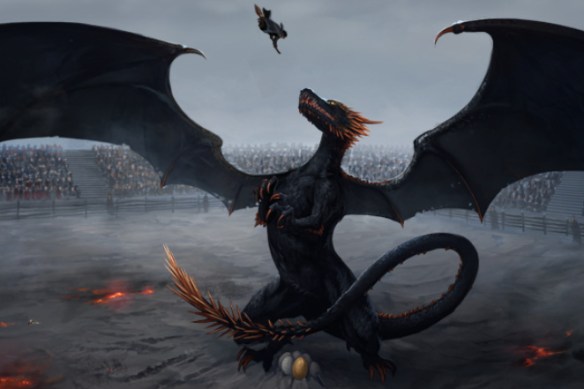
In the Harry Potter series, the Hogwarts School for Witchcraft and Wizardry is notable partly for training witches and wizards, but mostly for child endangerment. (A troll and a three-headed dog in the first book alone? Really?!) By the fourth book, Hogwarts has made child endangerment into a formal competition with the Tri-Wizard Tournament, in which teenagers face giant freakin’ dragons. (No wonder Harry Potter is controversial.) The spiked Hungarian Horntail is the deadliest of these, giving Trogdor some serious competition in the “spinities” department. I love how the various species of dragons in the Harry Potter books seem so believable, with different breeds having different countries of origin; the Hungarian Horntail is the coolest by far.

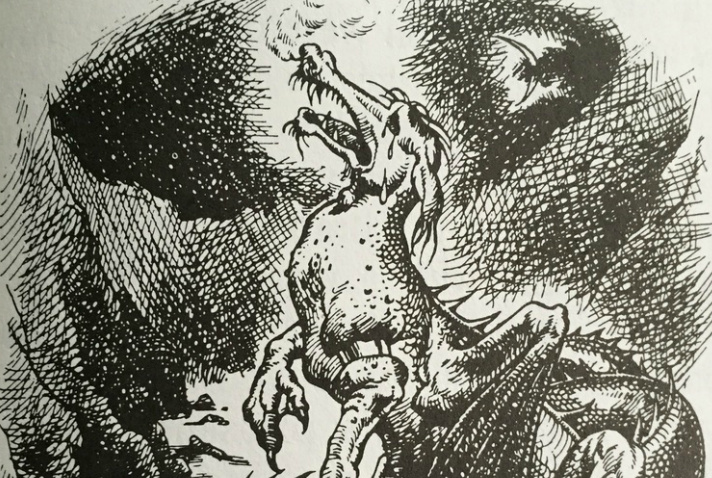
3. The Dragon (Beowulf)

We’re dipping into the classics here with the unnamed dragon from Beowulf, the Old English epic. (I recommend the poem; it’s fairly short, and modern-language translations are surprisingly readable.) After conquering a couple of frightful monsters, Beowulf finally meets his match in this dragon, and dies shortly after killing it. This beast made literary history. According to Wikipedia, it’s an early archetype of the Western dragon, establishing classic traits such as hoarding treasure and breathing fire. John Gardner’s novel Grendel adds its own interpretation of the Beowulf dragon, depicting it as a nihilistic philosopher. Huh.

2. Toothless (How to Train Your Dragon)
Toothless

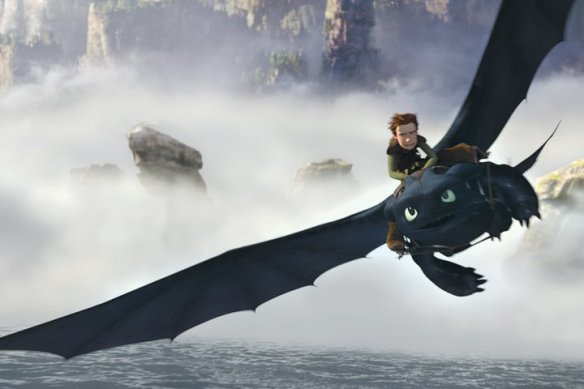
Toothless is basically my cat, but even more adorable. He can also fly and shoot concentrated blasts of explosive energy, which I’m pretty sure my cat can’t do. In the film How to Train Your Dragon, the Viking lad Hiccup defies his culture by refusing to kill this injured dragon. The dragon, which Hiccup names Toothless, rewards his compassion with fierce loyalty and adorable affection. In the original book, Toothless is actually kind of a jerk; this is a rare case in which the movie is way better than the book. Toothless is cuter than your average dragon, which makes him pretty much perfect.

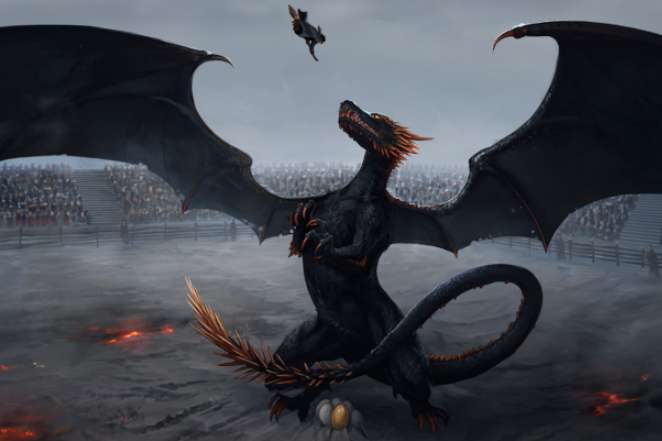
1. Smaug (The Hobbit)

Smaug [alt]

Yes, Smaug is number one on this list. Of course he is. Inspired by the Beowulf dragon, Smaug is the ultimate example of his kind: cruel, vindictive, petty, vicious, powerful, and scary as all heck. After destroying an entire kingdom, he haunts the land for many long years. The entire story of The Hobbit builds up to Smaug, and it doesn’t end with him: Smaug’s death ignites a battle between three armies, which is interrupted by legions of goblins eager to claim the dragon’s hoard. Even in death, Smaug causes all kinds of horror, and I consider him the greatest dragon ever imagined.

Who is your favorite dragon? Fire away in the comments!
The Brutal Art of Speedrunning

This is a special week. America celebrated its Independence Day, sure, but that’s not all: Games Done Quick is currently running its summer marathon for charity.

Games Done Quick, whose current marathon supports Doctors Without Borders, is an event celebrating the art of speedrunning. A speedrun is an attempt to complete a video game as quickly as possible. There are endless variations upon this concept, but they all have one thing in common—they are ridiculously fast.

The video above is a brief feature on a young man nicknamed Darbian, who held (and still holds, I think) the world record for speedrunning the original Super Mario Bros. He beat the game in under five minutes. The entire game. That’s bonkers.

I don’t really follow Games Done Quick or other speedrunning projects, but I’m fascinated by the metagame they create around existing games. They add rules, objectives, and strategies never intended by the games’ developers, building new games upon the old ones. It’s neat.

It’s also pretty brutal—a tiny mistake can derail an entire speedrun. A successful speedrun requires near-perfect timing, comprehensive knowledge of the game, tons of practice, endless patience, and perhaps just a touch of insanity.

I only ever tried speedrunning one game; coincidentally, it was Super Mario Bros. When I was in college, I spent a week or two playing and replaying the game, whittling away the seconds, until I managed to finish it in under ten minutes. I felt quite accomplished. Now, knowing that speedrunners like Darbian can beat the game in less than half that time, I feel… less accomplished.

Ah, well. I suppose what matters is having fun!

455. Thoughts on Extremism

A few days ago, John Cleese showed up on my Twitter homepage—a video of him, I mean, not the man himself. (That would have been pretty cool, though.) I think the video, a brief discussion of extremism, is worth sharing.

Extremism is a vague term, but it generally describes a cause or belief—or, alternatively, support for a cause or belief—so extreme as to be harmful or irrational.

In just a few words, Mr. Cleese lists benefits of extremism, which are more or less synonymous with some of its flaws:

Well, the biggest advantage of extremism is that it makes you feel good, because it provides you with enemies.

Let me explain. The great thing about having enemies is that you can pretend that all the badness in the whole world is in your enemies, and all the goodness in the whole world is in you. Attractive, isn’t it?

So if you have a lot of anger and resentment in you anyway, and you therefore enjoy abusing people, then you can pretend that you’re only doing it because these enemies of yours are such very bad persons! And if it wasn’t for them, you’d actually be good-natured, and courteous, and rational, all the time. So if you want to feel good, become an extremist!

That’s a problem with extremism, isn’t it? It’s often nothing more than an oversimplification, or a deflection of blame. It deflects the blame for vast, complicated problems toward anyone with whom the extremist strongly disagrees. This enables both wrath and pride, allowing an extremist to act like a jerk and feel like a saint: an appalling hypocrisy.

Most extremists are easily controlled. They want to deflect blame on others. If someone tells them others are to blame, most extremists are only too eager to agree. After all, it’s satisfying to point out a speck in someone else’s eye. It’s much harder to acknowledge that I might have something in my own.

Extremism is alive and well in the world today. It provokes conflicts great and small, from massive terrorist attacks to petty political insults. I like to think I’m not an extremist, but Mr. Cleese’s video touches a nerve—I understand the mindset he describes. It’s easier to blame others than to figure out to whom the blame really belongs… especially if it ends up belonging to me.

It’s so easy to point fingers, isn’t it?

I mean, just for example, I could say, “Those extremists! They ruin everything, and I have nothing but contempt for them.”

If I said this, I would admittedly make a valid point: Extremists generally make the world a worse place. However, I would also overlook a point of great significance: By griping about extremists, I’m not exactly making the world any better, am I?

It begs the question: How is my contempt for extremists any different than their contempt for others?

It’s all rather complicated. The world tends to be a mess, after all, which may be why Jesus Christ made a point of summing up so neatly: “So in everything, do to others what you would have them do to you, for this sums up the Law and the Prophets.”

This doesn’t mean that I must accept every point of view. What it means is that I must do my best to respect and understand everyone, even if I don’t agree with them. Disagreement is fine. Extremism—demonizing those who disagree—is never acceptable.

On a personal note, I do tend to blame my typewriter monkeys for all of this blog’s problems. Maybe, instead of deflecting that blame, I should acknowledge that some of it belongs to me. I make mistakes, too. Maybe I should try to respect and understand my monkeys instead of assuming the worst of them.

I’ll think about it.

454. Adam’s Story: Introduction

A new series of posts begins today. As this blog stumbles doggedly toward its final post, I’m planning my next big personal project. I want to rewrite a story. I speak, of course, of the Lance Eliot saga: a trilogy of fantasies, and a dream I’ve chased for more than a decade. At this point, I have no delusions of grandeur, fame, or literary excellence. I just want to get the damned thing written.

Sooner or later, every creative person reaches a point at which he just wants to scream and shake things—preferably sharp, pointy things. (Art by JK Riki.)

A while back, when I wondered whether to discuss my story here, nobody raised any objections, so here we are. I’m not sure how often I’ll publish posts about the Lance Eliot saga, but they won’t take over TMTF or anything. This blog’s regularly scheduled nonsense shall continue!

I’ve decided to title this series Adam’s Story. I considered longer titles, like Adam’s Story Project, and more specific ones, like The Lance Eliot Saga, but settled on a title that’s short, sweet, and personal. After all, Adam’s Story refers to more than a story I want to write. It is also my story, the story of Adam, who has spent (or misspent; the jury’s still out) an alarming number of hours making up stories about a guy named Lance Eliot.

I’m actually really excited to write about the Lance Eliot saga, for at least five reasons.

  1. It will let me work on two things—this blog and story planning—at the same time, and with the same effort. How efficient!
  2. It will provide, I hope, a smooth transition from writing a blog to writing the story itself.
  3. It will force me to be a bit more disciplined. I can’t write about an aspect of the story until I’ve made sufficient progress in planning it, so I won’t be able to skip steps or cut corners!
  4. It will allow me to express my enthusiasm for the Lance Eliot saga, and to spread awareness of it. Every bit helps!
  5. It will allow me to share some of my ideas. Even if I’m not able to finish the Lance Eliot saga, at least I will have gotten some of its details out of my head.

I’m currently rereading the latest version of the story’s first part, the one I published a few years ago, and it… needs a lot of work. Heck, it needs a lot of work.

This is a picture of me throwing away the torn-up pieces of my story’s published version. Hold on, my mistake, it’s actually that version’s cover. How… apropos.

The new version won’t be anything special, but I hope to make it much better than previous ones.

Will I publish my story? I don’t know. I haven’t planned that far ahead. I’ve stopped calling the Lance Eliot saga “my book project,” and begun referring to it as “my story project.” I should probably write it before I think about publication, and I should probably plan it before I start writing.

As I plan the Lance Eliot saga, each post in the Adam’s Story series shall focus on an aspect of it. Relax, there won’t be any huge spoilers here. That said, there will be small spoilers, but nothing past the story’s earlier chapters.

Here are some of my ideas for posts about my fantasy and its world.

Story

I have to lay out the basics at some point, right? There won’t be any massive reveals here: just the early stuff!

Characters

There’s obviously a character named Lance Eliot. This post shall share a few more.

Setting

The setting is changing from previous versions of the story. I hope to make it more unique, with more details from personal experiences, and fewer generic fantasy elements. (There shall still be dragons, though. I can’t bring myself to leave them out.) The geography is changing a bit, too.

Goodbye, old setting. We hardly knew ye.

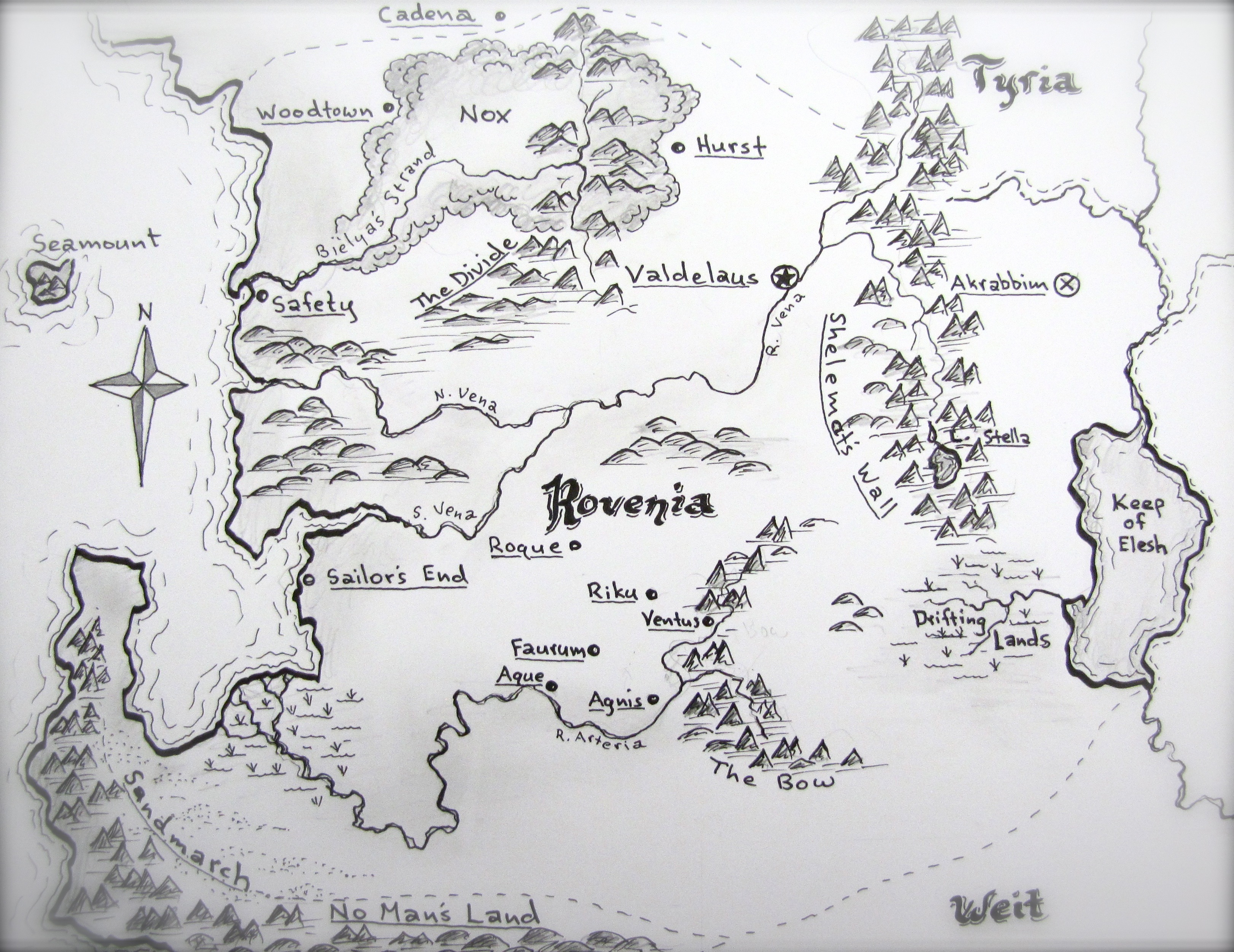
I guess this means my dad and I will need to make a new map. It’s a good thing he’s a patient man.

Politics

Earlier versions of the story didn’t really delve into politics. I want to change that. The simplistic political scene of earlier drafts shall be replaced with a tenser situation, finding such diverse inspirations as the Cold War, The Chronicles of Narnia, and Final Fantasy XII. Lance Eliot’s story shall be an adventure, not a political thriller, but I’m excited to give it some political background.

Lore

Like the story’s politics, its lore shall be more nuanced this time around. In The Lord of the Rings and his other fantasies, J.R.R. Tolkien imagined the God of Christianity in a fantastical context. I plan to do the same, taking cues from the later Old Testament, and borrowing ideas from Greco-Roman mythology and the Legend of Zelda series.

Aer

I really struggled with the concept of magic as I wrote earlier versions of the Lance Eliot saga. At first, I fought to reconcile magic with a Christian worldview, and I think I’ve figured out that part. Now my struggle is to invent a kind of magic that isn’t too vague, generic, or unbelievable. The magic in my story isn’t actually called by that name; for now, I’m calling it aer. What is it? Why aer? You’ll just have to wait and see.

Literary criticism

Yep, this is a theme of my story… but not really. Literary criticism, for all its usefulness, can be a bit silly. Nah, its purpose in my story is to lead to something else… but I’m getting ahead of myself.

Dante’s Divine Comedy

I plan for my story’s three parts to parallel, however loosely, the three parts of the Divine Comedy. The first part of my story shall borrow from Dante’s Inferno, and it’s going to be a hell of a ride. (Alternatively: It’s going to be a damned good time. I can’t resist these puns, guys. I’m so sorry.)

I may cover more aspects of the story; I don’t know. Today’s post covers pretty much everything I have planned for now.

That said, this story won’t plan itself, so I’d better get back to it.

453. Fans, Geeks, and Cosplay: A Momentary Study

Geeks are fascinating creatures. In a perfect world, someone would make a nature documentary about them, and it would be narrated by Morgan Freeman. Tragically, since I don’t own a video camera and can’t afford to employ Mr. Freeman, I’ll have to keep writing blog posts about geeks instead of producing that well-deserved documentary.

Yes, it’s time for another brief exploration of geek culture. Today’s subject is cosplay, the hobby (or art, depending on your point of view) of dressing up like characters from movies, comics, video games, or other media. It’s sort of like wearing Halloween costumes, but really… hardcore.

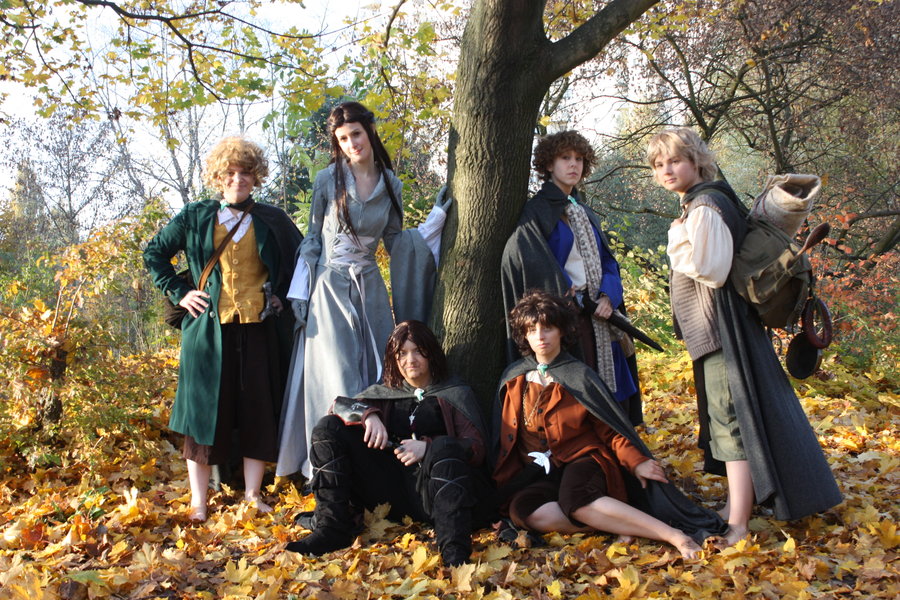
Lord of the Rings cosplay

Here’s some Lord of the Rings cosplay.

The word cosplay is a portmanteau of costume and play; it denotes not only the hobby, but also specific examples of it.

Dedicated cosplayers often create their own cosplays. This sounds easy, but flipping heck, some cosplays are complicated. Depending on the complexity of the costume, a cosplayer may need the expertise of a tailor, makeup artist, leatherworker, blacksmith, or even computer modeler (for 3D printing).

Cosplayers show off their creations by attending geeky events (such as conventions) in costume, or by holding photo shoots and sharing the photos via blogs or social networks. Some fans are so good at cosplay that they do it professionally. In order to promote their brands or products, companies may hire professional cosplayers to mingle or manage booths at conventions, trade shows, or other events. Some cosplayers don’t merely dress as characters, but act and speak like them in improvised performances.

While some cosplay strives for perfect authenticity to its source material, other styles may feature creative twists on familiar characters, or gender swaps.

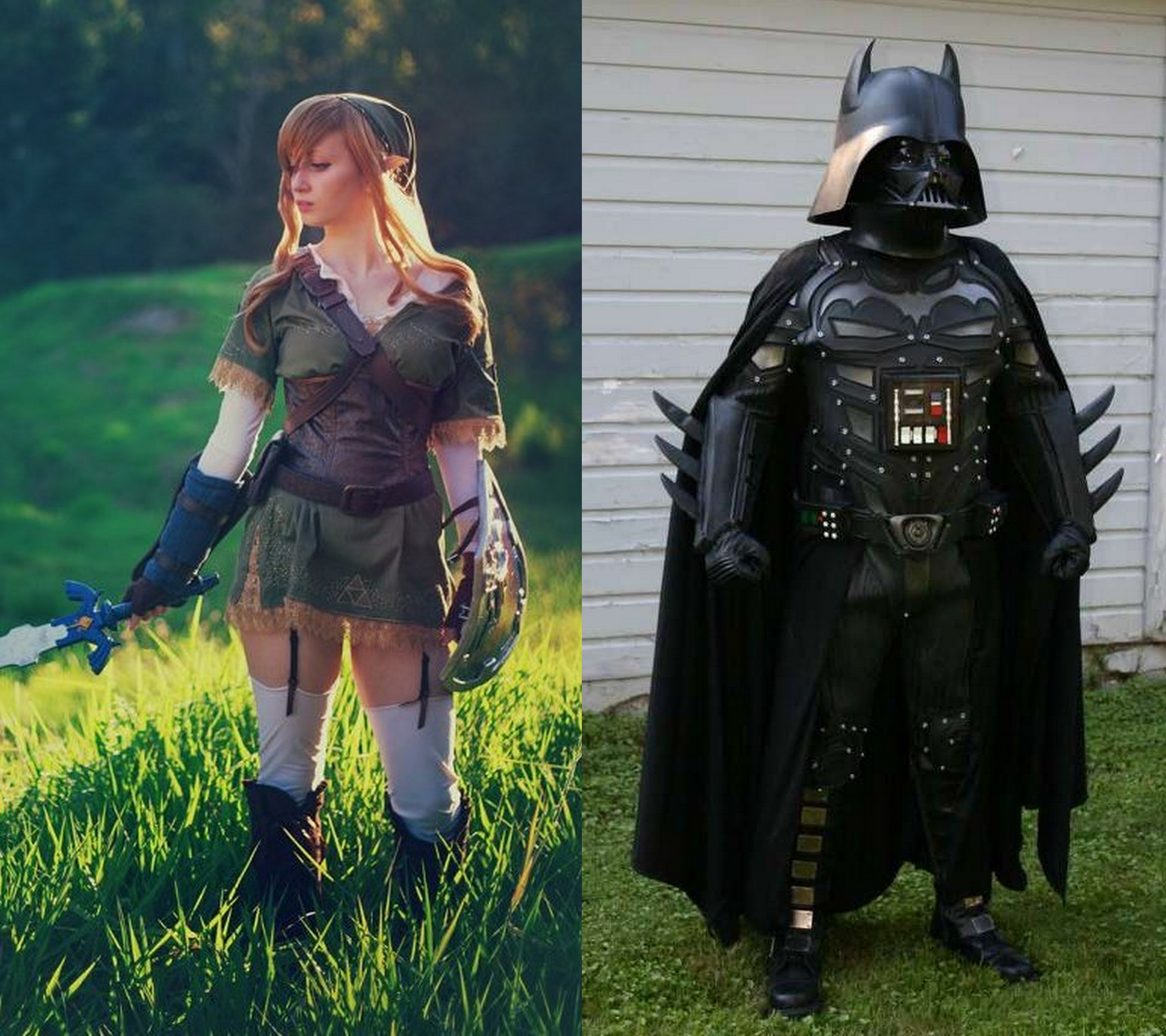
Darth Batman and Lady Link

On the left is a gender-swapped Link from The Legend of Zelda. On the right is… wait, is that Darth Batman? That is AWESOME!

What separates cosplay from other forms of dressing up? Costumes feature in some holidays and cultural events, but their purpose is nearly always rooted in tradition, religion, or symbolism. Cosplay, by contrast, is an expression of enthusiasm for a particular work or character. (Halloween costumes can be a bit cosplay-ish.)

Aided by the spread of the Internet, cosplay has gained prominence in just the past few decades; the term itself originated in the eighties. However, dressing up as fictional characters has a long and rich history. For example, just off the top of my head, I recall a scene in Little Women by Louisa May Alcott in which a couple of its characters dress up as literary figures for a fancy dress ball. Cosplay has evolved as a hobby in recent times, but its roots are firmly planted in centuries of human history.

Like many geeky hobbies, cosplay sometimes carries social stigmas. Cosplay may be considered childish, creepy, or inappropriate.

I’m not a cosplayer, but I usually disagree with these stereotypes. Cosplay is a creative hobby. It often requires superb dedication and all kinds of specialized skills. Like dressing up for Halloween, it’s fun for a lot of people. It can be inappropriate, certainly—but generally as a reflection of inappropriate media or characters. If a cosplay is in poor taste, it’s probably because the media it represents was in poor taste first.

Sadly, not all of the stigmas against cosplay come from outside its community. Fans and geeks can be as cruel as anybody. Over the years, some cosplayers have been criticized or insulted for having the wrong body type, skin color, or physical features for cosplaying certain characters. That’s dumb.

Perfectly fine cosplay

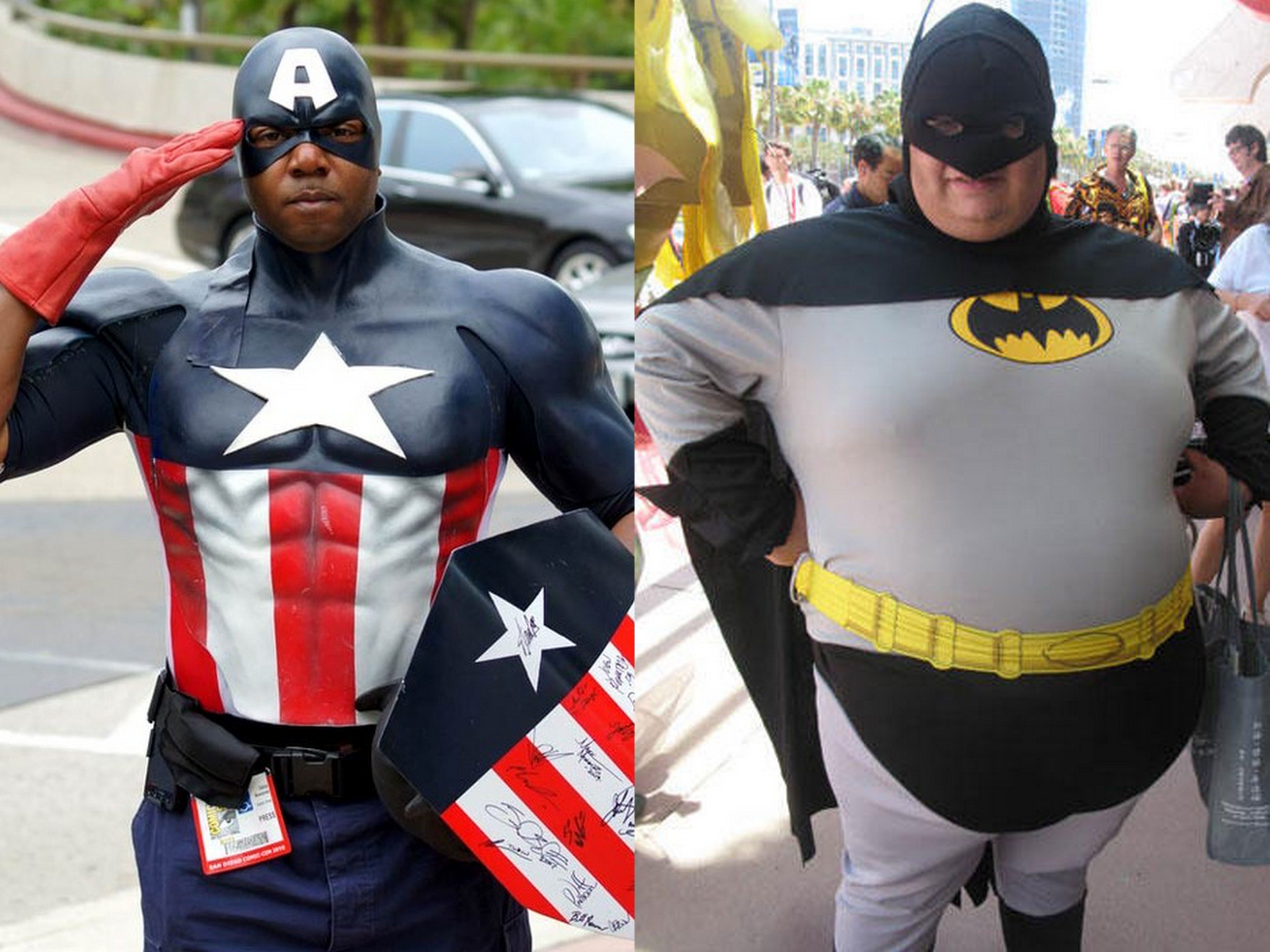
Black Captain America? Plus-size Batman? Cool. I see no problem here.

Do you see that black guy cosplaying Captain America, a traditionally white character? He’s a cosplayer. He’s not actually Captain America. It’s okay. Everyone can stop freaking out. The chubby fellow cosplaying Batman? He isn’t Batman. He lacks Batman’s muscular physique, and he’s smiling happily, which isn’t terribly Batman-like. Does it matter? He’s having a good time. So is the black gentleman in the Captain America suit, and the lady rocking Link’s iconic green tunic, and whatever mad genius created Darth Batman.

Cosplay isn’t about rules. It’s about fun, acceptance, and coming together as geeks to wear goofy costumes. Anybody should be able to cosplay as whatever the heck they want. After all, isn’t that the point of cosplay? Isn’t cosplay a chance to be an actor without a stage, becoming a completely different person, if only for a little while?

I don’t cosplay, but I understand why so many people have embraced it as a hobby. I respect them. I wish more people did. In fact, generally speaking, I wish more people respected geeks instead of assuming the worst of them. Heck, while I’m at it, I wish more people respected other people. That would be a great start.

I’m not planning ever to cosplay… but if I did, I bet I’d make a pretty good Hiccup from How to Train Your Dragon, or even a tolerable Tenth Doctor. Just a thought.

452. Prayer Requests?

It occurred to me lately that I’ve never invited my readers to submit prayer requests so that I could, y’know, pray for ’em specifically.

Today seems like a good day to make that right. How, dear reader, can I pray for you? There’s no catch, I won’t charge a cent, and there’s no fine print. I promise to pray for readers who submit requests, and to keep requests private. (I’ll also try to keep my use of the word just to a minimum; that’s one I wouldn’t mind seeing banished.)

I believe prayer can be powerful and effective, like a water-type move against a fire-type Pokémon. Okay, I admit that analogy is a bit far-fetched… or, dare I say, a bit Farfetch’d. (Wow, that pun was esoteric and lame. I’m so, so sorry.)

Adam used Pray

Life should be more like Pokémon… or maybe it shouldn’t. I dunno.

If I can pray for you in any way, leave a comment or tweet at me—or, if you want to keep your request private, send me a Facebook message or use TMTF’s Contact page.

Now, if you’ll excuse me, I need to get the Pokémon anime theme out of my head. Pray for me, guys.

Abandon Hope, but Save a Little

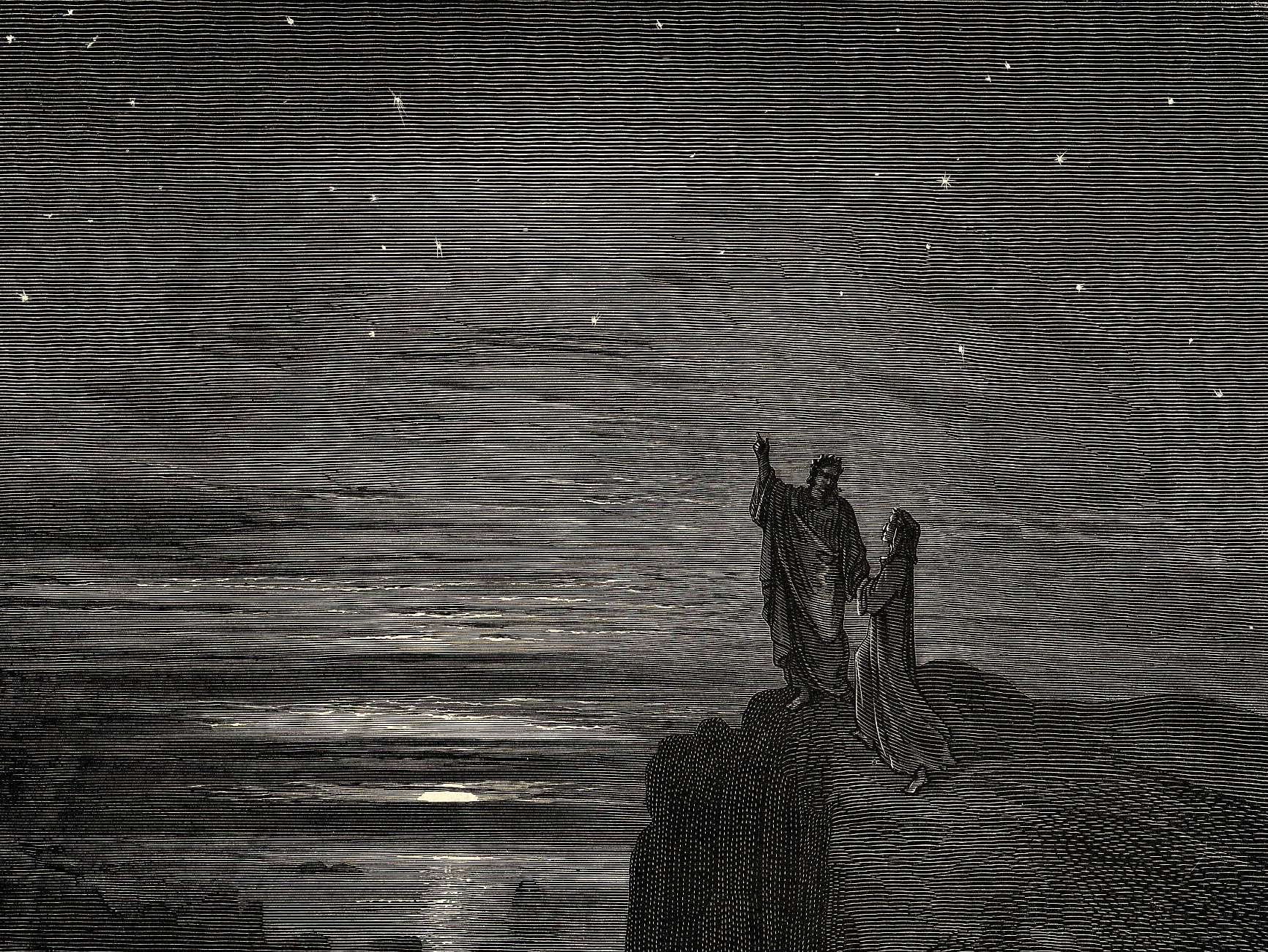
Thence we came forth to see again the stars.

~ Dante Alighieri

Dante’s Inferno is not a cheerful poem. It follows the poet Dante and his guide Virgil through hell, upon whose gate are inscribed these words: Abandon all hope, ye who enter hereThis slogan could just as easily be printed on the poem’s front cover. Inferno isn’t a fun read, unless you happen to enjoy long conversations (all written in archaic language and poetic meter) with the tormented souls of damned sinners.

I once wrote about my favorite opening lines in literature, and more recently considered some of my favorite last lines. For example, A Tale of Two Cities ends on a poignant note: “It is a far, far better thing that I do, than I have ever done; it is a far, far better rest that I go to than I have ever known.” My all-time favorite last line concludes The Lord of the Rings: “‘Well, I’m back,’ he said.”

The final line of the Inferno is right up there with my favorites. For a poem whose most enduring words are “Abandon hope,” it ends hopefully. Dante and Virgil leave hell.

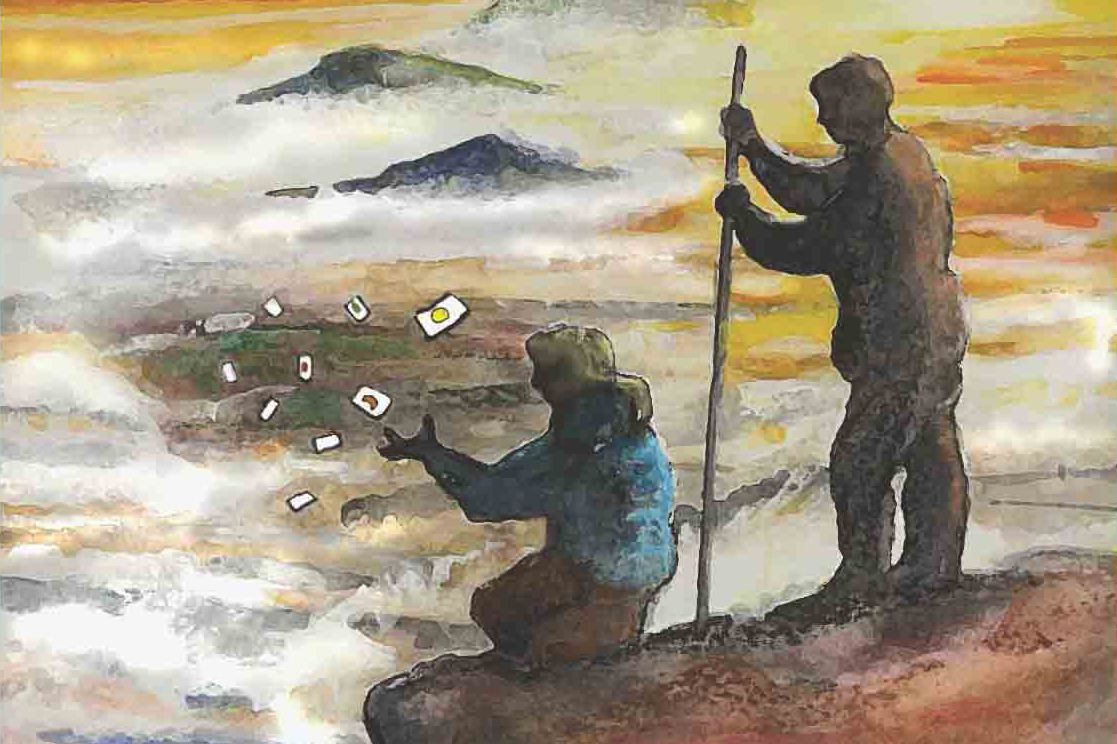
I can imagine it so clearly: disheveled travelers, exhausted from climbing in the endless dark, chilled by the ice of hell’s last circle, disturbed by the horrors of the underworld, glancing upward and seeing a sky alight with stars. I can see them stumbling out of the cave into the fresh air, blinking in the soft light from heaven. I can hear cicadas buzzing and feel a breeze stirring the grass. Hell is behind them. The nightmare is ended. After all the circles of hell, they know they’ve reached safety, for they see again the stars.

Thence we came forth to see again the stars

I’m a bit sentimental, but that’s one of my favorite images in all of literature. After literally going through hell, our heroes are safe. They are no longer trapped beneath stone ceilings. Above them, the heavens declare the glory of God. It’s a touching picture, and an uplifting end to a really bleak poem.

In one of the Chronicles of Narnia by C.S. Lewis, there’s a similar scene in which the protagonists escape an underworld to find themselves beneath a starry sky. J.R.R. Tolkien’s books also feature characters ending underground journeys by stumbling out into the open, such as Bilbo getting out of the Misty Mountains in The Hobbit and the Fellowship fleeing Moria in The Fellowship of the Ring. Escaping the underworld to find oneself beneath the sky has become a literary motif, and I dig it.

To conclude, here’s a bit of trivia: All three parts of the Divine Comedy end with the word stars. Neat, huh?