90. TMTF at a Turning Point

My typewriter monkeys are on strike. This is no surprise, since their union requires its members to strike at least once a month regardless of their work situation. Curse you, Society for the Protection and Advancement of Typewriter Monkeys!

This strike comes at a bad time, since TMTF is approaching a turning point. The Infinity Manuscript is less than a week away from completion. My first novel, The Trials of Lance Eliot, will be released next month—I hope. In a month or so, TMTF will reach its hundredth post. Finally, I’ll be leaving Montevideo in less than two weeks and settling in central Indiana, embarking upon a new stage of life.

Some things are coming to an end. Others are just beginning.

It seems like a good time for me to clean up the blog. Many posts on TMTF would benefit from revision. Moreover, I want to create an Archive page that lists posts topically instead of chronologically. At the moment, regular posts are mixed up with installments of The Infinity Manuscript and the Help, I’m a Christian! series in the Archive. Being a tidy, borderline obsessive-compulsive sort of person, I want to arrange TMTF’s posts neatly.

These revisions and rearrangements will take some time—especially since I’ll have to make them myself. (I never thought I’d say it, but I miss my typewriter monkeys.) For that reason, there will be no new post on TMTF on Monday. The blog will resume its regular updates on Wednesday with the final part of The Infinity Manuscript.

Since TMTF is taking a brief break from regular updates, this seems like a good opportunity to recommend a few older posts!

Regarding faith, you can read about gangster pastors, the problem of pain or the greatest lesson I ever learned from a webcomic.

On the subject of writing, you can read reflections upon characterization, brevity or the three platinum rules of writing.

About video games, you can reflect upon the surprising excellence of game music, the iniquities of ten terrifying villains or the golden rules for success when playing RPGs.

Concerning literature, you can ponder the humorous faults of modern worship music, the dazzling beauty of literary gems or what novels ought to be made into movies.

As for life, the universe and everything, you can consider such fascinating subjects as anime hair, facial hair and the sacred art of packing.

For the truly brave of heart, I also recommend the thrilling accounts of That Time I Tangled with Barbed Wire, That Time I Was Trapped in a Stage Kiss or That Time I Held a Severed Human Arm.

As TMTF moves beyond this turning point, I’m excited for its future. I just hope my typewriter monkeys stop striking soon.

The Infinity Manuscript, Part 11: The Tale of Innocent

The tenth part of this story can be found here.

Innocent Freo arrived at the Diamond Star Café to find his old table occupied.

“You came,” said Vivian Fey.

“I told you I would,” he replied, taking a seat across the table. “Besides, I couldn’t miss my last chance for coffee at the Diamond Star.”

“Your last chance?”

“If Jerem’s plan succeeds, today’s the last day of the world.”

“And if his plan doesn’t succeed?”

“I’ll be executed. Either way, I won’t ever visit the Diamond Star again.” Innocent took a long, loving look around the café. “It’s a pity. How I’ve missed this place! There’s no better coffee in the Emperor’s City, and I spent years looking.”

The Emperor’s City boasted many restaurants. The most exclusive establishments, insulated from the city by acres of gardens, catered only to nobility. Cafés and taverns were available for the middle class. For refugees, prostitutes and other desperate characters, dingy pubs were scattered throughout the slums on the city’s edge.

The Diamond Star Café was unique. Its proprietor, the son of a wealthy merchant, threw its doors open to everyone in the city. Refugees, soldiers, princes, prostitutes: all were welcome, provided they complied with the Diamond Star’s unusual rules.

All bills were paid upfront. Any customer who refused to pay or stirred up trouble was escorted out—that is, thrown into the street—by the doorman, an ex-prizefighter named Locke. He never forgot the face of anyone who had been expelled from the café. No troublemaker had ever dared to return.

The Diamond Star Café was a classy establishment for people of all classes, a place that managed to be both cozy and elegant. Everything was polished wood, sparkling glass, clean white cloth and smooth gray stone. The waiters were polite and friendly. Even Locke wore an amiable grin, except on the rare occasions he was obligated to expel a customer. Sunlight filled the café during the day; at night, candles lit every table.

Now it was morning, and the café was filled with the murmurs of customers and the smells of coffee, bread and bacon. Waiters padded silently to and fro. Locke stood at the door, grinning at passersby in the street and keeping a wary eye on the customers in the café.

Innocent caught the eye of a waiter and ordered coffee. “The whole pot, please, not just a cup,” he said, putting a handful of gold pieces on the table.

“This is too much money, sir,” exclaimed the waiter.

“Keep it,” said Innocent. “I won’t be needing it.”

“Just coffee, sir? May I offer you any breakfast?”

Innocent ruminated. “Why not? Toast, two fried eggs and twelve links of sausage, please. Would you like anything, Viv?”

Vivian shook her head and eyed Innocent critically as the waiter slipped away. “That’s quite a breakfast, Paladin Spike.”

“It is,” admitted Innocent. “Fortunately, I don’t have to worry about my health anymore. This is the first time I’ve ever been free to eat as many sausages as I want, and I’m going to enjoy it.”

Vivian took a note from her pocket and spread it out on the table. Innocent examined it and recognized his own handwriting.

Viv, would you join me for coffee at the Diamond Star Café tomorrow morning? I’ll be waiting at our old table soon after the café opens. We have things to talk about. Innocent.

“Here I am, Paladin Spike,” said Vivian. “You’ve ordered your coffee and your cursed sausages. I’ll give you ten minutes to talk, and then you’re under arrest.”

Innocent sighed. “Ten minutes is enough, I suppose.”

“Where have you been since you abandoned us two months ago in the Amber Plains?”

“Jerem and I traveled to Green Isle as quickly as we could, which was rather slowly. There were a couple of earthquakes. Once our path was destroyed by a landslide, and twice it was blocked by cacti. The Blight turns cacti poisonous, you know, so we were forced to take detours. We also ran into a bear turned vicious by the Blight, but there’s no time to tell you the whole story.

“We finally reached Green Isle, destroyed a page of the Infinity Manuscript and then came here to the Emperor’s City.”

Vivian appeared stunned. “You ruined another page? You fool! Now there’s only one page left, Paladin Spike, one godforsaken page! The last page of the Manuscript is the only thing standing between us and the end of the world.”

“The end of this world, Viv.”

“But how in the name of all the gods did you find a page in Green Isle?”

“It’s too long a story to tell in ten minutes, I’m afraid.”

“What about the last page of the Infinity Manuscript? You don’t know where it is, do you?”

“The Emperor has it, of course. That’s why Jerem and I have an appointment with him this afternoon.”

Vivian stared. “How did you make an appointment with the Emperor? Why did he agree to see you?”

“Jerem sent him a letter, and I don’t know why he agreed. Any more questions, Viv?”

“Where is Jerem?”

“I don’t know. We decided yesterday to part ways until it was time for our appointment with the Emperor. Speaking of which, since Jerem and I are meeting His Excellency today, I’d appreciate it very much if you’d delay my arrest until tomorrow.”

“I can’t do that. All the same, I’ll send someone to consult with the Emperor. If he confirms your appointment, I’ll make sure you don’t miss it.”

“That’s kind of you. Tell me, Viv, how are the others?”

“Fuori, Puck and Loxley?” asked Vivian, and smiled bitterly. “I don’t know. The team fell apart the day you escaped with Jerem. Fuori took it hardest. He thought Jerem must have taken you hostage and forced you to write the note claiming you were going to destroy the world. Fuori really respected you, Paladin Spike. He couldn’t believe you’d betray him.”

“Where is he now?”

“He pursued you and Jerem but lost your trail after Green Isle—trails fade quickly in the desert, he said. After that, he requested a leave of absence and went home. I haven’t seen him since.”

“Fuori is a good fellow. I miss him, and I’m sorry I won’t be able to see him again before it all ends. What about the others?”

“Puck is here in the Emperor’s City. I sent him to press his informants for any news of Jerem. I don’t think he’ll find anything, but I couldn’t bear to have him following me around with his sick, stupid, sycophantic smile. As for Loxley, I have no idea. He disappeared a day or two after you did. I haven’t seen the fool since, and I hope never to see him again.”

The waiter arrived with Innocent’s breakfast and pot of coffee. Vivian said nothing more, but stared stonily out the window. Innocent drank some coffee and started on his sausages.

“Paladin Spike,” said Vivian at last. “What is it you want to talk about?”

Innocent put down a sausage. “That’s up to you, Viv. I’ve asked all my questions. What is it you want to talk about?”

For a moment, Vivian seemed to change before Innocent’s eyes. The ruthless Paladin was gone. Across the table sat the young recruit—hardly more than a girl—he had met in the Imperial Army many years before.

“Paladin Spike, why did you run away? You just left, and now you’re trying to destroy the world, and High Arbiter Sergio is trying to persuade the Emperor to execute me for failing to stop you. The search for Jerem was the greatest responsibility of my life, and I failed. I couldn’t even hold our team together.”

“You didn’t have much of a team,” said Innocent gently. “Puck is a bit of an idiot, bless him, and no force in all creation can restrain Loxley.”

“Why are you helping Jerem? People will die, Paladin Spike. People will die. You’ve decided we’re all illusions, but you’re not giving anyone else the chance to decide. Even if Jerem isn’t lying to you, destroying the Infinity Manuscript isn’t your decision to make.”

For the first time in many years, and much to his own surprise, Innocent cried. So did Vivian. The bustle of the café went on around them. No one, not even the ever-vigilant Locke, seemed to notice their tears.

“You’re right, Viv,” said Innocent at last. He wiped his eyes with the back of his hand, gulped his coffee and filled up his cup again. “Destroying the Infinity Manuscript isn’t my decision to make. It’s Jerem’s.

“If he’s telling the truth, he and the Emperor are the only people in the world. The rest of us are fantasies, illusions without any right to exist. As long as we persist in the delusion that this world is real, Jerem and the Emperor are trapped along with us. Until we give up our fake lives, they can’t resume their real ones.”

“What if Jerem’s lying?” said Vivian. “Will you be guilty of destroying a world full of innocent people?”

“I believe with all my heart he’s not lying. As I told you when I tried to explain why I deserted the Imperial Army—it was the night we were attacked by wolves, remember—I’ve always felt there was something wrong with the world. Everything felt false. My life was falsest of all. Jerem’s story fits. It makes sense of everything, all my feelings and superstitions and dreams.”

“Feelings don’t prove anything! What if you’re wrong? You’re risking the lives of everyone in the world.”

“I know. If I’m mistaken, I’ll accept the guilt. I suppose that makes me a psychopath, doesn’t it?”

“What if you’re not mistaken?”

“Well, I suppose that makes me a martyr.”

Vivian stared desolately at the coffee pot. “I don’t want to die.”

“That makes two of us,” said Innocent. “It’s not fair, is it? Jerem and the Emperor are alive, and we’re not. Never mind what sort of lives they’ll have in their own world. They’ll have the privilege of being alive, and we won’t. I don’t like it any more than you do, Viv, but we’ve got to face it. We don’t matter now. They do.”

He finished his coffee and set down his cup with a soft clink. “I’m not real,” he said. “Even so, I’ve found a purpose that is. My life may be a fantasy, but I’m going to make it count for something.”

Vivian took a deep breath. “Paladin Spike, I’m putting you under arrest. You will remain in my custody until your appointment with the Emperor, at which time he will decide your fate.”

“That’s perfect. Forgive me for sounding so sentimental, Viv, but I’m comforted to spend my last hours with you. Are you sure you don’t want some coffee, or at least a bite of breakfast?”

Vivian did not smile, but Innocent thought she looked less miserable. “Since you’ve paid so much, I guess it would be a shame not to have breakfast.”

“There’s a condition, though.”

“What?”

“Stop calling me Paladin Spike, please. The name’s Innocent.”

The story concludes with the twelfth part, The Tale of the Servant.

89. That Time I Encountered a Giant Mutant Killer Jungle Ant

In the jungles of Ecuador there exist enormous ants called congas. Their scientific name is Paraponera clavata, but I prefer to call them Giant Mutant Killer Jungle Ants.

These insects put the ant in giant. Not only are they freakishly large—about an inch long—but also very dangerous.

Here’s an extract from Wikipedia:

Paraponera is a genus of ant consisting of a single species, commonly known as the lesser giant hunting antconga ant, or bullet ant (Paraponera clavata), named on account of its powerful and potent sting, which is said to be as painful as being shot with a bullet. It inhabits humid lowland rainforests from Nicaragua south to Paraguay. The bullet ant is called “Hormiga Veinticuatro” or “24 (hour) ant” by the locals, referring to the 24 hours of pain that follow being stung.

My old man tells me congas bite their victims to secure a firm hold before stinging, and their sting can put a strong man in bed with a fever for as much as a few days.

To wit: nasty little beasts, those congas.

There’s a river in Ecuador called Río Baba: a ribbon of crystal-clear water that winds its way through the jungle. Translated from Spanish, Río Baba means Drool River. Why anyone would give it such a nasty name, I can’t fathom. At the age of nine or ten, I was baptized in this river of tranquil beauty and dubious name.

Río Baba was also the setting of my epic escape from the Giant Mutant Killer Jungle Ant.

Santo Domingo de los Colorados, the town in which I spent much of my childhood, is just a few hours away from Río Baba. My family and I sometimes visited the river for picnics, camping trips and church events.

The river runs beneath a high, steep bank, at the top of which stands a tree with spreading branches. At that point the water is only three or four feet deep. I used to wade near the riverbank, pretending to be a jungle explorer or picking up rocks and throwing them.

On one memorable occasion, as I was playing in the clear water beneath the tree, I felt a prickling on my right shoulder. I turned my head and found myself nose-to-nose with a conga.

At the time, oblivious to the ant’s sinister intent, I brushed it off my shoulder, picked it up from the surface of the water with a leaf and carried it to my old man for his inspection.

I don’t remember whether he swatted the leaf out of my hand or merely commanded me to drop it. Either way, the leaf fell to the ground—the conga holding on for dear life—and I was spared a fate worse than death.

Well, worse than death is a bit melodramatic. Being stung would have been painful, but not as bad as, say, reading Twilight cover to cover.

My old man put the conga in an empty soda bottle and later reprimanded me sternly when I tried to get a close look at it. When we got home, he drowned the ant in alcohol and pinned it to a piece of foam.

The conga was eventually given away to some missionary colleagues, and I was left with only the memory of my dangerous encounter with the Giant Mutant Killer Jungle Ant.

I was spared the pain of a conga sting. However, I did read Twilight a couple of years ago, so I guess the two experiences sort of cancel each other out.

88. TMTF Reviews: Watership Down

Watership Down is an epic adventure. It’s also a story about bunnies.

Admittedly, before reading Watership Down, I didn’t think it could be an epic adventure and a story about bunnies. It could be one or the other, but not both. Bunnies and epic adventures are mutually exclusive.

At least that’s what I thought.

When I actually read the novel, which has been considered a classic for decades, I was amazed at how gripping a novel about bunnies could be.

The story follows a band of rabbits, led by the sensible Hazel, who abandon their warren and strike out into the vast, dangerous wilderness in search of a new home. For these rabbits, the world is a frightening place. Streams are impassable obstacles. Cats are bloodthirsty enemies. Men are an enigmatic menace, setting traps, carrying guns and trapping rabbits for their own sinister purposes. Even other rabbits can’t be trusted. Hazel and his band must depend on their luck, their wits and a few remarkable tricks to survive.

The most remarkable thing about Watership Down is the way it takes a perfectly ordinary scenario—rabbits establishing a warren in a peaceful English countryside—and transforms it into a quest to rival the best myths and fantasies.

G.K. Chesterton, the great British writer, had a knack for taking the ordinary and making it extraordinary. As he explained it, it’s surprising to see the word mooreeffoc in a shop window until one realizes one is looking at the words coffee room from the wrong side of the glass. In his writing, Chesterton tried to show everyday scenarios from perspectives that made them amazing.

Watership Down, though not written by Chesterton, is thoroughly Chestertonian. Much like The Borrowers and its recent film adaptation from Studio Ghibli, The Secret World of Arietty (which is superb, by the way), Watership Down makes commonplace things wondrous by showing them “from the wrong side of the glass.”

To the rabbits, men are inscrutable, godlike beings whose guns flash fire and inflict wounds from far away. Trains are terrifying apparitions, appearing out of the night with a flash and vanishing into the darkness with a roar. Everything human beings take for granted is shown through the eyes of the rabbits, and made marvelous through those eyes.

The characters in Watership Down, while not as developed as they could have been, are a likable bunch. Descriptions of the countryside are beautiful, and the novel is written in a vivid, matter-of-fact style.

Perhaps my favorite thing about Watership Down are the stories told by the rabbits themselves, legends of rabbit heroes, which are fascinating and add a greater depth to the story.

It’s a long novel, but Watership Down is over all too quickly. I recommend it to anyone, and particularly to those who enjoy stories about animals—from The Wind in the Willows to The Call of the Wild—or to readers who like myths and contemporary fantasies.

For a book about bunnies, Watership Down is quite the heroic epic.

The Infinity Manuscript, Part 10: The Tale of the Old Woman

The ninth part of this story can be found here.

Apart from the priest and the undertaker, only three people attended the burial of the Weaver. Two were his friends, the Tailor and the Cobbler. The third was his landlady, an elderly spinster called Miss Rose.

“Well, lad, this ends the fellowship of the Three Old Men of Green Isle,” said the Cobbler to the Tailor. “Now we’re the Two Old Men, and I’m afraid it’s only a matter of time before you’re the only Old Man left.”

The Tailor did not reply, but watched mournfully as the undertaker shoveled sand into the hole.

“Not even a proper casket,” said Miss Rose. “Just a palm-woven basket for the body. It’s a poor sight. If he hadn’t spent so freely on drink, he might have afforded a better vessel for his journey to the afterlife.”

The priest, overhearing Miss Rose, raised his hands heavenward and said piously, “The gods are gracious. If this man has lived a life of virtue, they will accept him into eternal rest whether he is conveyed by a beautiful coffin or a simple basket.”

“If it’s a matter of virtue, the dear lad hasn’t a chance,” said the Cobbler. “Poor Weaver. He was a dirty scoundrel, but he’d a heart of gold. I’ll miss him, I will.”

“First Gil, now Weaver,” said the Tailor. “People come and go like the clouds.”

Miss Rose started. “Gil is gone? Your apprentice, the lovely boy who worked in your shop? Tailor, you should have told me.”

The Tailor smiled. “Not dead, Miss Rose. Just gone. Gil went to the Emperor’s City. The lad came up to me a week ago with pockets a-jangling and said, all important-like, ‘Tailor, I’m going away. An Imperial scout came to me last night and gave me gold and told me I’m going to be a servant for an official in the Emperor’s City. Tomorrow I’ve leaving Green Isle for good. So long, Tailor, and thanks for everything.’

“Well, I was staggered. Imperial officials do send out scouts into the Empire to find servants, true enough, but it’s not every day those scouts come to places like Green Isle. And for Gil, that light-fingered little imp, to be chosen as a servant in an Imperial household! Such things only happen in fairy tales. Mark my words, Miss Rose, the gods have something special planned for that boy.”

Miss Rose was pleased. Gil had been a filthy urchin and an unapologetic thief, but an honest job had tempered him into a polite, friendly, hard-working young man. It was a relief to hear he was not dead.

It was enough that the Weaver had died. He had been Miss Rose’s only tenant, and therefore her only source of income. Now that he was gone, she would have to find another tenant or else succumb to poverty.

The Weaver had not been a good tenant. His room, littered with empty bottles, reeked of fire-nectar. The Weaver had also tried to be a shameless womanizer. He had failed, since no woman in Green Isle was foolish enough to go near him. When drunk, he had even directed his attentions toward Miss Rose.

Miss Rose, a woman of great shrewdness, locked him in his room whenever he drank, releasing him only when a hangover had blotted out his amorous inclinations.

Despite his faults as a tenant, the Weaver had one great virtue. He paid the rent, consistently and punctually.

Two weeks later, Miss Rose was still looking for a tenant. It was a hopeless search in so small and poor a village as Green Isle. Those not wealthy enough to own a room were too poor to rent one.

A knock on the door lifted her spirits. It made no difference whether it was a potential tenant or a friendly visitor. Either was welcome.

She opened the door and exclaimed, “Constable Freo!”

“Please call me Innocent,” said her visitor. “This is my friend Jerem. May we come in?”

Upon hearing the name of the Empire’s most dangerous enemy, Miss Rose stepped back and raised a hand to her mouth.

“Not the Red Demon,” said Innocent’s companion, a freckled youth with red hair and large ears. “Just a kid called Jerem. The name confuses a lot of people.”

“I’m sorry,” said Miss Rose. “I didn’t mean to offend. Of course you’re not Jerem the Plague. How silly of me! Please come in and make yourselves at home. Coffee, Innocent?”

“Please,” he replied, taking a seat at the iron-wrought table. “You’re very kind, Miss Rose.”

She served her guests coffee and took a seat at the table with them.

“You have a lovely home,” said Jerem, looking around.

Miss Rose blushed. “It’s worn and sandy, but I do my best with what little I have.”

“The wall hangings are beautiful,” said Innocent.

Miss Rose laughed. “They’re covering up the places where the plaster is flaking away from the walls and the mud bricks beneath are showing through. The first rule of housekeeping is to hide what can’t be fixed.”

She became serious. “What can I do for you gentlemen? It’s nice of you to visit an old lady, but I know better than to think that’s the only reason you’ve come. The last I heard, Innocent, was that a High Arbiter had taken you away. We all thought you’d been arrested.”

It was Innocent’s turn to laugh. “You could say that, though recruited is the word the High Arbiter used. I was recruited by the Empire for a mission, and I’m done with it. Jerem and I have come to see the Weaver.”

Miss Rose shook her head. “There are only two Old Men now. The Weaver died of drink two weeks ago.”

Her guests reacted as though she had slapped them. A moment passed, and then Innocent inquired, “Are his belongings still here?”

“Yes, they’re in the room upstairs. What’s this about, Innocent?”

He paused, apparently choosing his words with care. “It’s a long story, Miss Rose. I’ll tell you as much of it as I can. Years ago, you may remember, you sent a neighbor for the police because the Weaver had taken a violent turn.”

“I remember. He was smashing things in his room.”

“Well, I was the constable who came to the scene. The Weaver got a week in jail without a drop of fire-nectar. Seven days of strict sobriety were so harsh a punishment that he never acted violently again.”

“Yes, I was glad of it. For months I was afraid he would start smashing things again, or start smashing people, which would have been worse.”

“Indeed. When I arrested the Weaver, he said some interesting things. Most of it was just nonsense, with some cursing and vulgarity mixed in for good measure, but there were a few words here and there that surprised me. Tell me, Miss Rose. Have you heard of the Silver City Scandal?”

Miss Rose frowned. “Only rumors, and nasty ones. Not long after the Orofino Empire conquered the Old Kingdom, an insurgent killed the family of an Imperial official. The official blamed the Empire for his loss, so he stole some important Imperial treasure and disappeared.”

“Based on what the Weaver said that night, I believe he was the missing Imperial official and the treasure he stole was a page of the Infinity Manuscript.”

For a moment, Miss Rose stared at her guests with an expression of absolute shock. “You mean to say I’ve had a page of the Infinity Manuscript—the Infinity Manuscript—in my house all these years?”

“That’s what we’re here to find out,” said Jerem. “Mind if we take a look?”

“Well—I suppose—Innocent, what’s going on?” stammered Miss Rose. “If there’s really a page of the Manuscript in my house, shouldn’t the whole Imperial Army be standing on my doorstep? If Jerem the Plague found out it’s here, why, he’d raze Green Isle.”

“That’s why I’m here,” said Innocent softly. “To make sure Green Isle isn’t razed. Once the page is gone, the village will be in no danger of being destroyed by the Red Demon or the Imperial Army or anyone else.”

“Can you promise me that, Innocent?”

“Yes, Miss Rose, I can. Barring unforeseen circumstances, if you let me take the page, I promise you that Green Isle will endure until the end of the world.”

Miss Rose was, as mentioned previously, a shrewd woman.

“The end of the world, eh? When might that be?”

“Sooner than you think,” admitted Innocent. “I’ll admit this village is in a nasty position, and I’m sorry. If I were you, Miss Rose, I’d give up the page.”

“Why should I?”

“Because I’m asking nicely. When the Imperial Army shows up on your doorstep, they won’t be bothered to ask.”

No one spoke for two minutes. Innocent sipped his coffee and gazed at the wall hangings. Jerem tapped his fingers impatiently upon the table.

“You may look through the Weaver’s belongings,” said Miss Rose at last. “Tell me something, Innocent. If you suspected the Weaver was the official from the Silver City Scandal, why didn’t you tell the Imperial Consul all those years ago?”

Innocent set down his coffee. “I was trying very, very hard not to be noticed.”

As Innocent slipped upstairs, Jerem stayed behind to help Miss Rose clear the table and wash the dishes.

“Not so much water!” she exclaimed as he rinsed the cups. “This is Green Isle, Jerem. Water is precious.”

“I’m sorry,” he said. “You’ve been so kind. I’m sorry for everything.”

He sounded like he meant it.

Innocent came downstairs, the corner of a piece of paper sticking out of his pocket. “Found it,” he said to Jerem.

Her guests thanked Miss Rose and prepared to leave. On his way out, Innocent asked, “As long as I’m in town, I’d like to visit my favorite thief. Where’s Gil living?”

Miss Rose explained Gil’s unexpected departure from Green Isle.

“Excellent,” said Innocent, smiling. “He always wanted to leave this place. I’m glad he managed it. Thanks again, Miss Rose, and goodbye.”

She watched them walk down the street and disappear around a corner. A vague dread had taken hold of her heart, yet she felt an inexplicable sense of release. It was the sort of feeling a person feels after a near-death experience: strong relief and lingering fear.

“Well,” she said at last, talking to herself, “the world may end, but not for another few hours at the soonest. I’d better get the fire going for supper.”

The story continues with the eleventh part, The Tale of Innocent.

87. Keeping Pace

I’ve never been physically fit, but I came close during my senior year of high school. Those were the days I spent in the class of Mr. Socrates, a Physical Education teacher of whose legendary exploits I’ve already written.

Mr. Socrates made every one of his classes run a mile to warm up. This was in the Andes, remember, at an elevation of more than nine thousand feet. Running a mile at a high altitude is tough. After his students had finished the mile, they began whatever activity he had planned for the day.

I hated that mile.

I always had a strong start, passing most of the other students while running the first lap around the soccer field. Then I realized I had five laps left to run, and gradually slowed to a walk.

I was always one of the last to finish the mile.

Perhaps, I mused at last, Aesop’s fable about the tortoise and the hare may have some truth in it. Instead of running the first lap, I jogged. Pretty soon I was jogging all six laps and sprinting the final stretch. After a few months, I finished the mile in less than six and a half minutes—a laughable time for an athlete, but not bad for a bookish student.

I learned to keep the pace. Slow and steady is better than quick and sporadic. It was discouraging to be passed by almost every other runner on the first lap, but I finished the final lap ahead of many of them.

I think we sometimes approach things the way I approached the mile. We throw ourselves into things, wear ourselves out and quit.

My catalysts for personal growth haven’t been emotional experiences. Emotions wear off quickly. The biggest advances have been when I’ve learned something and applied it consistently to my life. I haven’t changed overnight, but a little at a time.

If you experience a rush of spiritual fervor at a church revival, or feel a burst of enthusiasm as you finish the first chapter of your novel, or plunge into some other endeavor with wild optimism, don’t take things too quickly. Set realistic goals, and stick to them. When you’ve mastered one step, move on to the next.

A slow, permanent change is infinitely better than an instantaneous, temporary one.

Keep the pace.

86. The Turnspike Emails: Misleading Church Leaders

TMTF solemnly presents another hellish look at life from a demon’s perspective. This is an email intercepted from the demon Turnspike to his colleague Goreflak; a previous email from Turnspike and TMTF’s commentary thereupon can be found here.

My Dear Goreflak,

I am curious, my dear devil, as to whether you can do anything without making a mess of it.

Your Patient has joined the leadership committee of his church. I am revolted by your attempts to excuse your mistake by claiming it is “not a serious problem” because your Patient “had been attending church anyway.” It is a very serious problem.

Whereas before your Patient sat harmlessly in a church pew and dozed through sermons, he is now seizing opportunities to work against us. Your Patient was previously a parasite, benefiting from his church and contributing nothing to it. He is now a dangerous enemy.

What we want is a world full of Christians who are contented to do as little as possible—but that is another topic for another email. At present, I must restrain myself to addressing your current blunder.

In dealing with your Patient and his newfound role as a church leader, you have two great tools.

First is lack of perspective. Followers of our Enemy—even those who are far advanced in his service—can become so blinded by the day-to-day minutiae of their lives that they overlook things a child could see.

For example, church leaders, if we put them in the right frame of mind, will devote thousands of dollars to a new carpet (which the church does not really need) without even pausing to consider whether missionaries, who serve our Enemy all over the world, might need funds for living more than the church needs a change of furnishings.

Let us consider an example on a grander scale. A prosperous church builds a gymnasium, where its younger members play games once a week. For the same amount of money, five churches could be built in a poorer country or hundreds of children treated for disease or thousands of Bibles given away. Such uses of the Enemy’s money would have devastating consequences—but, fortunately for us, the money goes to a building that stands empty all but a few hours every week, and our work continues unhindered.

When your Patient is entrusted with church money, let it never occur to him that poorer churches may need a new roof more than his own church needs a new sound system. Our ultimate goal in dealing with church leaders is to equip them with spiritual blinders, rendering them oblivious to the needs of any churches but their own.

The second tool you have in dealing with your Patient is pride. Millennia of study by our best researchers have not uncovered any sin more useful for destroying the Enemy’s workers. Let but a seed of pride be planted in your Patient’s heart, and you will have him doing whatever you please.

A common mistake among inexperienced devils (such as yourself) is to assume pride can only be applied to a person. Pride can be applied to anything. You need not make your Patient believe he is better than everyone else. It is enough to make him believe his ideas are better than everyone else’s ideas.

Of course, for all I know, his ideas might be. That does not matter. What matters is that your Patient believes his ideas, opinions and plans are infallible, and that anyone who disagrees with him must be either ignorant or willfully foolish.

Should your Patient begin to suspect that he is being guilty of pride, remind him that he is not exaggerating his own reputation. Make him think he is merely standing up for ideas that are sensible, correct and useful. Never let him suspect that sinful pride can apply to his own ideas as readily as it applies to your Patient himself.

So much of the strife we have sown among the Enemy’s people is rooted in pride. We convince many Christians that their way of thinking, and only their way of thinking, is correct.

When we get the followers of our Enemy to make outrageous, opinionated statements in the name of Jesus, we have won.

Our Enemy himself advocates humility. He commands his followers to listen to each other, to seek to understand each other and to accept each other in spite of disagreements.

In the case of your Patient, make sure that does not happen.

Do not think, my dear devil, that I will overlook your blunder in allowing your Patient to become actively involved in his church. I have already referred you to the secret police, the high caste of demons devoted to straightening out incompetent devils such as yourself. You may expect a visit from them any day now.

Your affectionate colleague,

Turnspike

The Infinity Manuscript, Part 9: The Tale of the Scoundrel

The eighth part of this story can be found here.

Theobald Loxley was a light sleeper. Experience had taught him to trust no one, least of all his fellow thieves. The stories about noble criminals who robbed the rich and supported the poor were romantic nonsense. When a man became a thief, it was only a matter of time before his conscience wore off.

Several of his colleagues had attempted to murder Loxley in order to claim his share of the loot. At least one had tried to kill him for no other reason than to silence his snoring. Loxley always awoke just in time to escape. It was enough to drive an honest thief to paranoia, but he accepted his fate philosophically.

“Every job’s got problems,” he once observed. “I don’t appreciate guys trying to stick knives into me, but at least I’m never bored.”

Years before, he had tried to rob the headquarters of the Imperial Army. No thief dared go near the place, but Loxley, while very drunk, wagered he could sneak into Paladin Spike’s office, steal his sword and make it out alive.

Loxley later regretted making such a foolish bet, but he never thought of taking it back. Although he had few principles, those he did have were sacred, and none more than the hallowed edict: “A bet’s a bet.”

Paladin Spike had opened a cupboard near his office to find Theobald Loxley crouching among the mops and buckets.

“Paladin Spike, I’m pleased to make your honorable acquaintance, sir,” said Loxley. “May I have your autograph, sir?”

Most Paladins would have executed Loxley on the spot, leaving the mess for the servants to clean. Paladin Spike, however, had laughed, dragged Loxley out of the closet by his collar and taken him to a younger officer.

“Here’s a rogue for you,” said Paladin Spike. “I found him lurking in a broom closet. Would you please take him to the Imperial Prison? Let the warden know I sent you, and tell him to lock up the prisoner for a week or two.”

“Pardon me, sir,” said the officer, confused. “If you caught this man trespassing, shouldn’t he be put to death? That’s the law.”

“I’m bending the law a little,” admitted Paladin Spike. “The Emperor told me, ‘Keep the law when it’s convenient. Use your discretion when it’s not. I trust my Paladins to keep the Empire’s interests at heart.’ In this case, I think it’s to the Empire’s advantage not to slaughter its citizens on charges like trespassing. Prison will be enough for our hairy little friend, I think.”

Paladin Spike took a piece of paper from the officer’s desk, scribbled something on it and gave it to Loxley. “Your autograph, prisoner. Stay out of trouble, or someday you’ll be caught by someone who takes a narrower view of the law.”

Upon his release from prison two weeks later, Loxley went straight to the man with whom he had made the wager and told him it was off.

“A bet’s a bet, but Paladin Spike’s too good a guy to steal from,” said Loxley.

When Paladin Spike deserted, exchanging his reputation as Savior of the Empire for the insulting epithet of Runaway Paladin, citizens everywhere responded with shock and indignation. It was unthinkable that any Paladin—let alone one whose accomplishments were legendary—should flee his duty.

Although his respect for Paladin Spike never waned, Loxley ignored the admonition to stay out of trouble. Instead, he redoubled his efforts to liberate valuables from the ownership of “guys who don’t appreciate the stuff they’ve got.”

Amid dark rumors of Jerem the Plague, the Red Demon who turned towns to ash, there came reports of a cunning thief who could vanish into the air like fog in the sunshine. This daring criminal was called Mist the Plunderer.

Loxley was delighted by his sensational reputation, which owed a little to his exploits and much more to the imaginations of the storytellers who described them.

Mist could rob a nest out from under a bird without its noticing, or so it was said. According to another claim, Mist could steal a lady’s corset from beneath her dress and escape unobserved.

(Put to the test, the second claim proved to be false, as Loxley later testified: “For such an uppity lady, she sure knew how to wield a parasol.”)

The Orofino Empire feared Jerem, and stories of Mist’s cleverness came as a welcome distraction. He became something of a hero to the unlucky refugees whom the Red Demon, the Blight or other catastrophes had driven from their homes.

Unable to contain himself any longer, Loxley revealed one evening—while very drunk, naturally—that he was Mist the Plunderer.

His listeners were so excited that nobody noticed the one who slipped out to inform the police. When officers arrived to take Loxley into custody, his listeners, who expected him to escape miraculously, were disappointed. Loxley rose majestically from his stool, stepped boldly forward and toppled right into the arms of the chief of police.

Loxley was sentenced to be executed, but Sergio, a High Arbiter of the Orofino Empire, intervened and recruited him into a team of specialists. Commissioned by the Emperor himself, their goal was to apprehend Jerem the Plague before he could destroy the Infinity Manuscript, and the world along with it. One of these specialists was Paladin Spike himself.

It was a shock for Loxley to be reunited with Paladin Spike, and a greater shock to discover that his hero had become just an ordinary, middle-aged man.

A few days later, Loxley took him aside and said, “Paladin Spike, sir, you’re not the same guy who yanked me out of a broom closet in the old days.”

“My name is Innocent, and please don’t call me sir anymore,” he replied, smiling. “It makes me feel like I’m back in the Army.”

“I hope you don’t mind the question, Innocent, and if you do, well, answer it anyhow. Why’d you go?”

“I was done being a Paladin,” said Innocent. “That’s all.”

Their travels took them across the Orofino Empire: from the Emperor’s City to the Jade Forest, and from there through the Amber Plains. By the time they reached a river, Loxley was tiring of their mission.

“Paladin Fey’s the worst leader ever,” he complained to Nick Puck, one of his companions.

“You’re just too thick to appreciate good leadership,” said Puck, who was enamored of Paladin Fey.

“Fey’s horrible, and you worry me by liking her so much, Puck. Then there’s Fuori, who’s about as friendly as an icicle. Even Innocent is rubbing me the wrong way. He’s—what’s the word?—cryptic. Innocent’s hiding something, and he’s doing it as cryptically as possible. It’s driving me crazy, Puck.”

“Loxley, I know invading folks’ privacy is what you do best, but give it a rest.”

At last, after many dangers and troubles, they captured Jerem by a river running through the Amber Plains.

Loxley was troubled by their success.

“It’s all wrong,” he told Puck that evening. “I don’t know why, but it’s all wrong.”

The sky was darkening, with scattered stars and a few clouds still stained by the red light of sunset. Paladin Fey had gone looking for more firewood. Innocent had gone for a walk. Fuori was guarding the prisoner, who was bound with ropes. Jerem, the man bent upon the destruction of the world, sat placidly drawing in the dirt with his toes.

“I mean, look at the guy,” continued Loxley. “I don’t think he’s evil.”

“He’s trying to destroy the world,” said Puck. “Seems pretty evil to me.”

“The guy’s deluded, that’s all. He really believes this world’s fake, and destroying the Infinity Manuscript will send him back to the real one. He’s misguided.”

“He’s trying to destroy the world,” repeated Puck. “Misguided or not, this kid has got to be locked up or executed. Think of the Blight, Loxley. Think of the earthquakes and tsunamis and floods. Think of the victims who died painful deaths, and the refugees who live painful lives. This kid has caused all kinds of problems, and it don’t matter whether or not he meant to cause them.”

Loxley spat into the fire. “You know who’s evil? Paladin Fey.”

“Shut your mouth, Loxley.”

“She was going to kill Innocent! How can you defend her, Puck?”

Puck frowned. “She did what she had to do. I like Innocent, but he’s just one person—a disgraced person, by the way. Paladin Fey was protecting every other person in the world.”

“It still wasn’t right,” said Loxley sulkily.

They sat awhile in silence. At length they were joined by Innocent. He was pale, and his hands shook.

“You all right, Innocent?” inquired Loxley.

“Fine,” said Innocent with a weak smile. “Just a little shaken. Near-death experiences do that to a fellow, you know. It was kind of Fuori to brew coffee. I wish there were fire-nectar to put in it, but that’s all right.”

“We’ve a little whiskey,” said Puck. “It’s strictly for medicinal purposes, don’t you know, but I think your case qualifies.”

Innocent nodded. “I’d be grateful.” The instant Puck had gone, he added, “Mist, I have a favor to ask.”

“Anything.”

“Take this and don’t read it till tomorrow morning,” said Innocent, and pressed a folded paper into Loxley’s hands.

“What is it? Why can’t I read it now?”

“You’ll understand once you’ve read it. No peeking, and not a word to the others. Promise me, Mist.”

It took an effort, but Loxley cleared his throat and said, “I promise, Innocent. I haven’t got a lot of principles, you know, but I stick to those I’ve got, and none more than—”

“A promise is a promise.”

“Actually, ‘A bet’s a bet’ is number one, but ‘A promise is a promise’ comes in second.”

Loxley tucked the paper in his pocket as Puck rejoined them.

“About that whiskey,” began Loxley.

Puck cut him short. “Not a drop for you, and I mean it.”

They went to bed soon afterward. Fuori had been assigned to guard the prisoner; Innocent was to relieve him at midnight and keep watch until sunrise.

When Innocent took over from Fuori, Loxley awoke and stretched on the hard ground. Being a light sleeper may have saved his life on occasion, but it could certainly be a nuisance. He dozed for a while and finally fell asleep.

When he awoke again, he was not sure why. Everything was still, except for a faint rustling in the grass far away. Birds were calling. The sky had paled from black to dark blue, and the air was balmy and warm.

“There’s something amiss,” mumbled Loxley to himself, rubbing his eyes. “I don’t wake up for nothing. What could be—by all the gods, he’s done it. Oh, gods, what has he done?” He sat stupefied for a minute, blinking in the dim light, and then shouted, “Lady! Get up, lady!”

Paladin Fey pulled her pillow over her head.

“Where’s a sharp stick when you need one?” muttered Loxley, and then bellowed, “Come on, lady, wake up!”

“What is it now?” inquired Paladin Fey, sitting up.

“Jerem and Innocent are gone.”

Paladin Fey was on her feet in an instant. “There,” she said, pointing. A rock had been placed on the prisoner’s sleeping mat, and a piece of paper stuck out from beneath it.

“What does it say?” asked Fuori, getting up and peering over Paladin Fey’s shoulder as she examined the note.

She read aloud.

“My friends, traveling with you was the greatest privilege an old man could have. Thanks for the conversations, the coffee and the good company. Jerem and I are off to destroy the world. Goodbye, my friends. Innocent.”

Dazed, Loxley let out his breath and put his hands in his pockets. There was the note from Innocent.

As the others argued and cursed and raged, Loxley slipped the note from his pocket and began to read.

The story continues with the tenth part, The Tale of the Old Woman.

85. TMTF’s Top Ten Video Game Villains

TMTF has already featured a top ten list, but the old impulse to categorize things has stirred again deep within my blogger’s heart. This time, the object of my top-ten-list-mania is video game characters.

We cheer for the heroes, naturally, but—let’s be honest—the villains are usually much more interesting. Thus TMTF is excited to present…

The TMTF List of Top Ten Video Game Villains!

10. Dahlia Hawthorne (Ace Attorney: Trials and Tribulations)

Ace Attorney villains aren’t typical video game baddies: they don’t breathe fire, wield chainsaws or threaten to inflict any other kind of bodily harm. No, their villainy is much more insidious. The player must corner them in court and prove their guilt with hard evidence. Of all these criminals, none is creepier than Dahlia Hawthorne, a dainty young lady with a parasol and a lacy dress. Behind that fair façade lurks a vindictive, selfish and manipulative murderer. Although she wears a sweet smile, Hawthorne betrays her true nature by glaring murderously at any attorney foolish enough to cross her.

9. Bowser (Mario series)

Bowser may not be the most threatening villain—or even the most competent—but his tenacity is remarkable. After twenty-five years of trying to defeat Mario, he’s still at it. Bowser is delightfully self-conceited. At one point, he announces his entrance by roaring, “Did somebody page the king of awesome?” In spite of his shortcomings, he can also be pretty scary. Giga Bowser, anyone?

8. Majora (Legend of Zelda: Majora’s Mask)

Before reading further, go back and spend fifteen seconds looking at Majora’s Mask. Go on. I’ll wait for you. I could write lots about Majora, but everything I have to say is expressed much more eloquently in the mad, nihilistic stare of those horrible yellow eyes. Majora is demented, with no apparent motivation other than bringing the world to ruin. Ambitious, power-hungry villains are scary, but at least we understand them. Truly terrifying are villains like Majora, who are driven by nothing more than a detached, inexplicable determination to see the world burn.

7. Sarah Kerrigan (StarCraft series)

Sarah Kerrigan isn’t a villain at first—in fact, she’s hardly a major character. Kerrigan is introduced as an insurgent fighting to topple an oppressive government, and she seems like a pretty decent person. Then she’s betrayed by her superior, left to die and assimilated into the hostile extraterrestrial species known as the Zerg. Now a superhuman creature, she begins a campaign to conquer the sector, betraying allies and showing no mercy. Kerrigan’s unexpected descent into evil earns her a place on this list, along with the cool, casual way she grinds her enemies into the dust.

6. Giygas (Earthbound)

Earthbound is not a typical RPG. Its heroes aren’t warriors with swords and lances, but kids with baseball bats and frying pans. The game is cheerful, full of bright visuals and quirky humor. All this stands in stark contrast to its villain, possibly the freakiest enemy to appear in any video game ever. Giygas is… an extraterrestrial entity driven insane by its own power, maybe? Whatever it is, it looks terrifying and can speak only in the fragmented phrases expected of a creature whose consciousness has been dissolved by evil. The fact that it’s impossible to defeat without using a strange trick makes it that much scarier.

5. Lavos (Chrono Trigger)

Chrono Trigger is another unusual RPG, not to mention a masterpiece. The hero travels through time from prehistory to the far future, and his companions—a medieval knight, a cave woman and a dilapidated robot, among others—span the whole of the world’s history. Their enemy? An extraterrestrial parasite called Lavos that burrows into the world’s crust, spends millennia draining the planet’s life and emerges to reduce it to ashes. Lavos isn’t so much a character as a deadly force, a cross between a plague and a thousand atomic weapons, destined to destroy the world—unless the player can stop it first, of course.

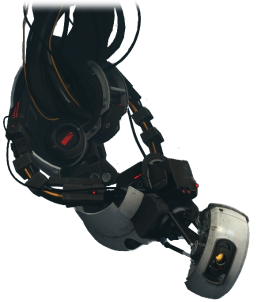
4. GLaDOS (Portal series)

GLaDOS, a computer developed by Aperture Science, is childish, sarcastic, spiteful and surprisingly likable. It puts the game’s protagonist through a series of tests, promising her a slice of cake if she succeeds in passing them all. Only partway through the game does it become clear that GLaDOS is trying to kill her. Even after its sinister nature is revealed, the computer remains an engaging character. For an amoral machine, GLaDOS earns quite a lot of respect—and perhaps even sympathy—from the player. Plus, GLaDOS sings “Still Alive.” Need I say more?

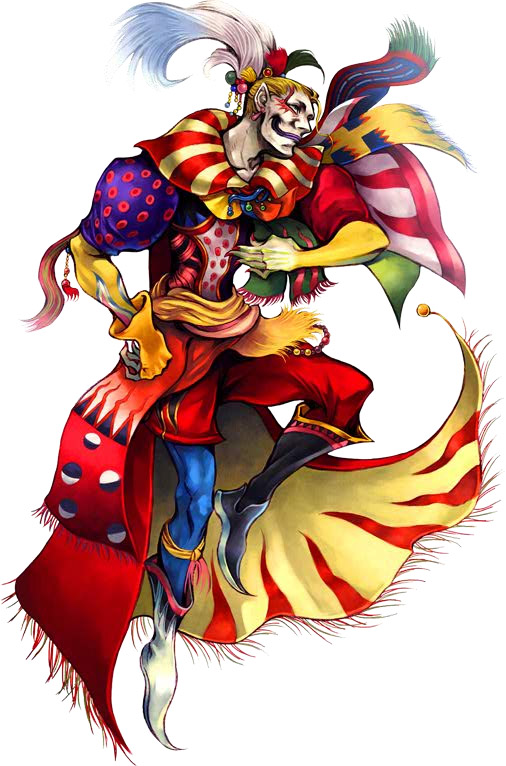
3. Kefka Palazzo (Final Fantasy VI)

Yes, he looks a bit like Joker from the Batman franchise, and yes, he shares the same twisted sense of glee, but Kefka is unforgettable. Before Kefka, most RPG villains were distant, predictable tyrants, who relied upon minions to eliminate the protagonists and sometimes made brief appearances to taunt the player. Then Kefka appears on the scene—as a lackey. A servant of the evil Emperor Gestahl, Kefka runs like a coward every time the player confronts him. Through betrayal and deception, however, Kefka attains an ancient power and devastates the earth. In the end, the protagonists don’t save the world—they save what’s left of it. Besides his memorable rise to power, Kefka is notable for his nihilistic views and fantastic musical theme, the four-part, twelve-to-seventeen-minute “Dancing Mad.”

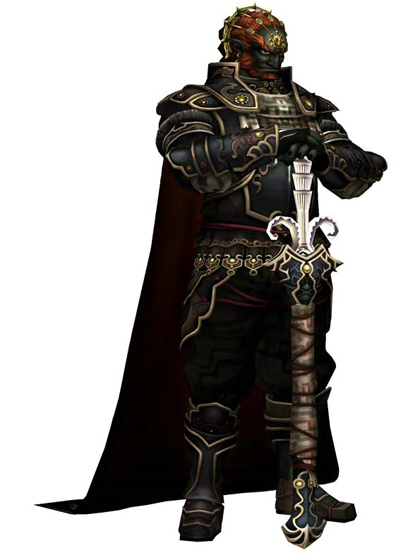
2. Ganon (Legend of Zelda series)

Ganon, also called Ganondorf, is one stubborn guy. Generations of heroes rise to confront him, yet he manages to press on, century after century, relentlessly seeking the powerful relic known as the Triforce. Each game gives a slightly different spin on Ganon’s character. In Ocarina of Time, he’s a thief: arrogant, treacherous and cruel. Wind Waker introduces us to a sorrowful, bitter Ganon, and Twilight Princess gives us a Ganon pulling strings from the shadows. In every game, whether controlling fiends, transforming into monsters or facing the hero in single combat, Ganon is a force with which to be reckoned.

1. Sephiroth (Final Fantasy VII)

Don’t be fooled by the long silver hair and stylish coat—Sephiroth is about as evil as a villain can get. Tragic backstory full of disastrous misunderstandings? Check. Delusions of godlike grandeur? Check. Utter disregard for morality, conscience or decency? Check. Tendency to massacre innocent, unsuspecting people? Check. Driven by a lust for power and revenge, Sephiroth manipulates one protagonist, brutally murders another and casually inflicts all kinds of havoc upon the world. Add his epic musical leitmotif, “One Winged Angel,” and you’ve got a villain to give the bravest hero second thoughts.

O people of the Internet, what great video game villains would you add to this list? Let us know in the comments!

84. Another Bend in the Road

“My future seemed to stretch out before me like a straight road. I thought I could see along it for many a milestone. Now there is a bend in it. I don’t know what lies around the bend, but I’m going to believe that the best does.”

These bold words (spoken by Anne Shirley in Anne of Green Gables) were a comfort to me some months ago. I was about to graduate from college, you see, and I didn’t know where to go next.

I’ve spent much of my life moving from place to place. When it came time to figure out where to invest the next few years of my life, I didn’t know even where to begin looking. The United States? Ecuador? Uruguay? Japan?

In the end, I was given an opportunity to visit my family in Montevideo for a few months.

My time in Uruguay has been ridiculously blessed. I’ve made progress with my writing, recovered the sleep I lost during my college years and shared many pleasant weeks with some of my favorite people in the world.

In a month, however, I must move onward.

My plan is to return to Indiana at the end of May and settle down for at least a year or two. I hope eventually to find a teaching position overseas or to make a living as a writer, but I’m going to take things one at a time.

Once again, my future stretches out before me like a road. There’s a bend in it. I have only a vague idea of what lies beyond the bend, but I’m going to believe that the best does. As I’ve said before, ’tis grace that brought me safe thus far and grace will lead me home.

I believe it will, wherever home may be, and I continue to hope there will be coffee shops along the way.